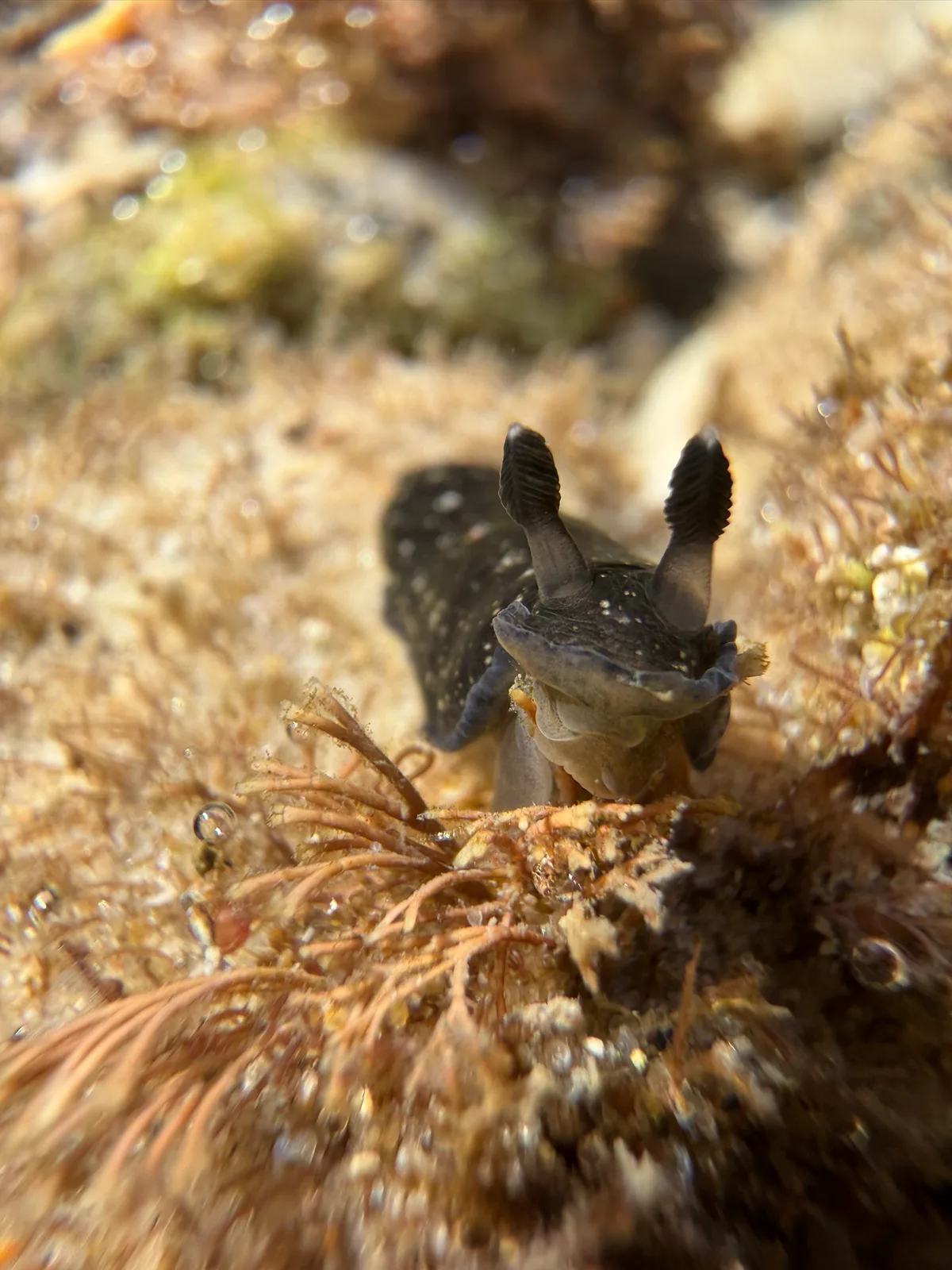
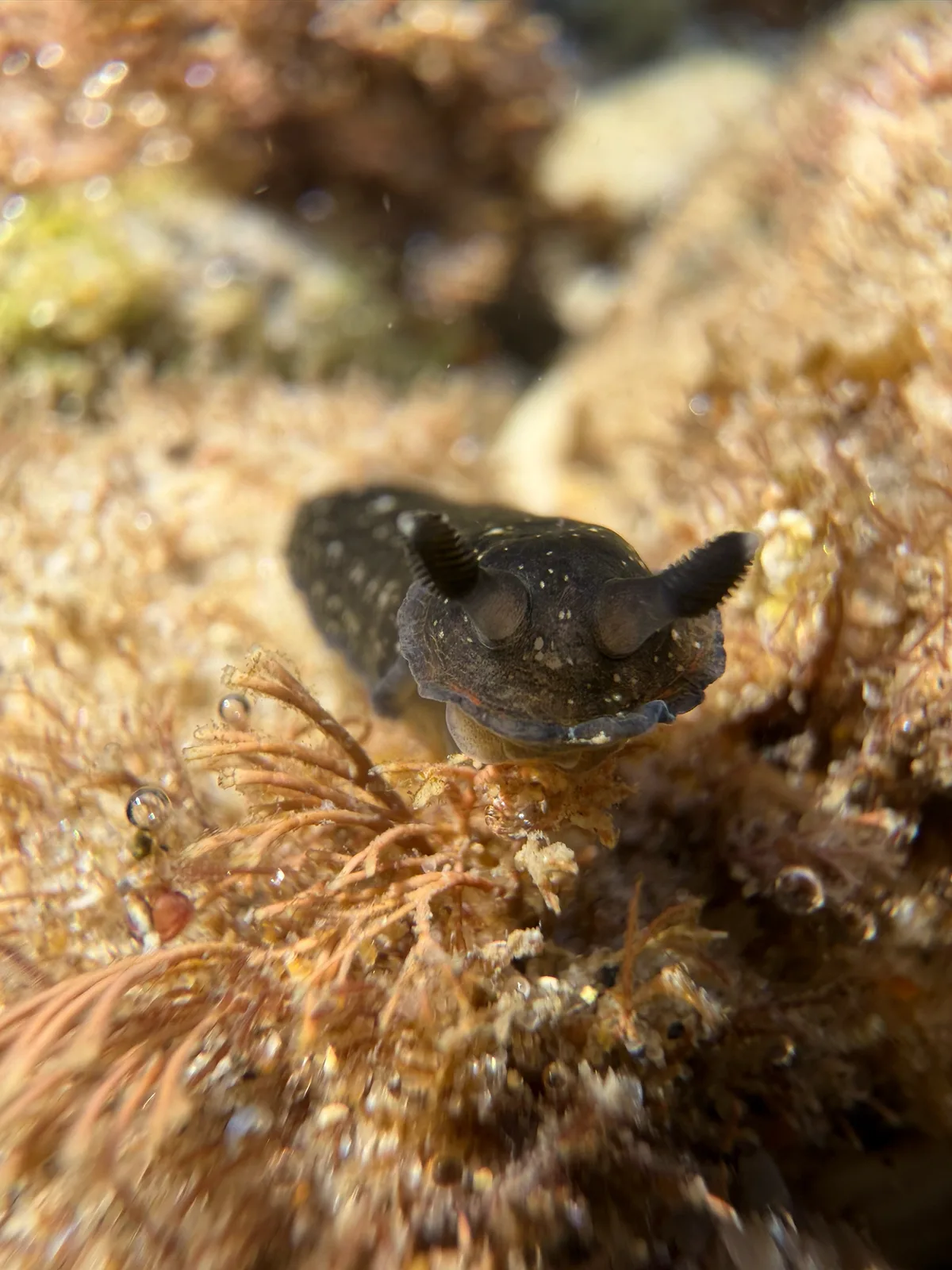
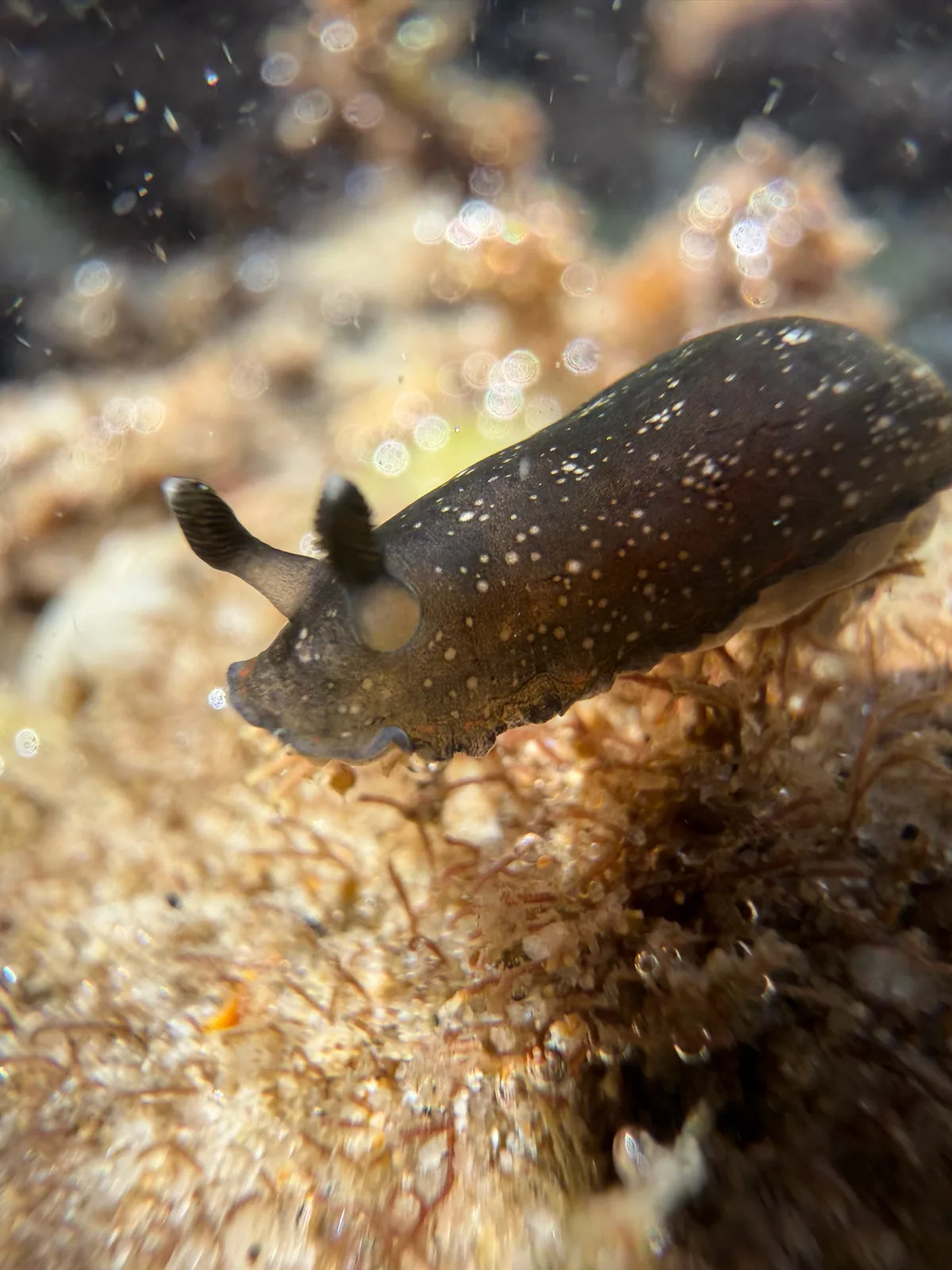
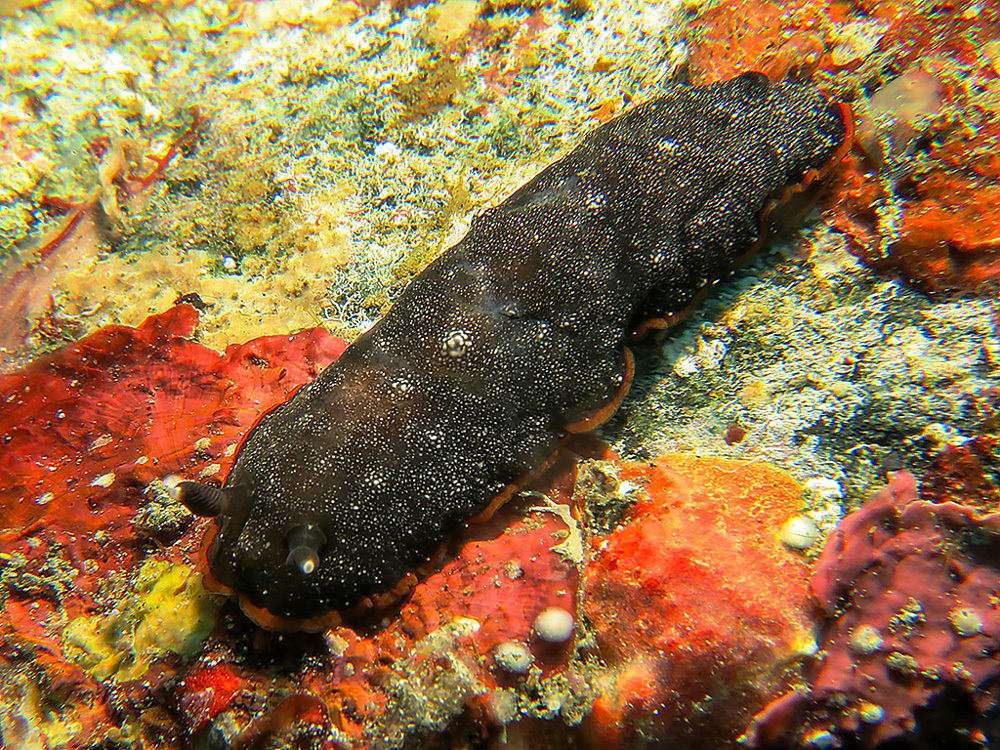
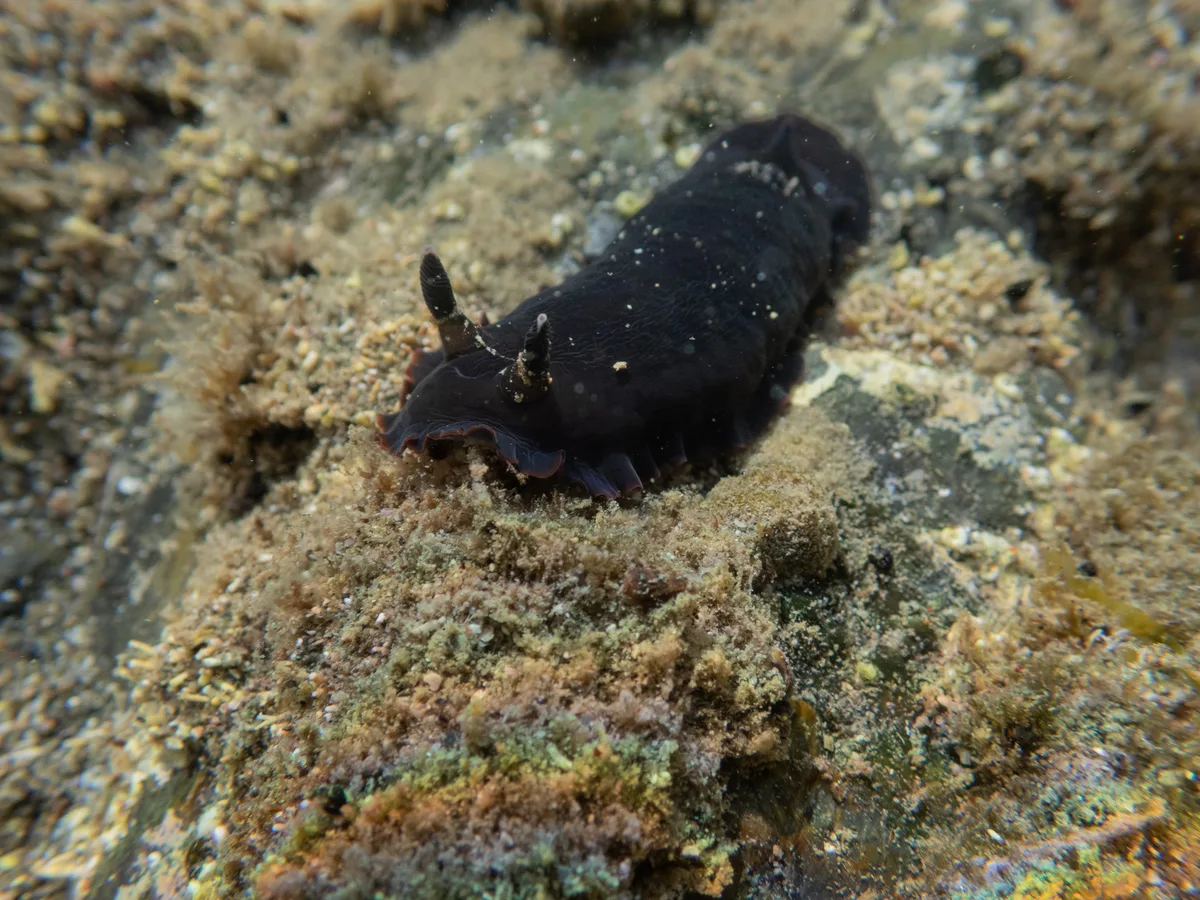
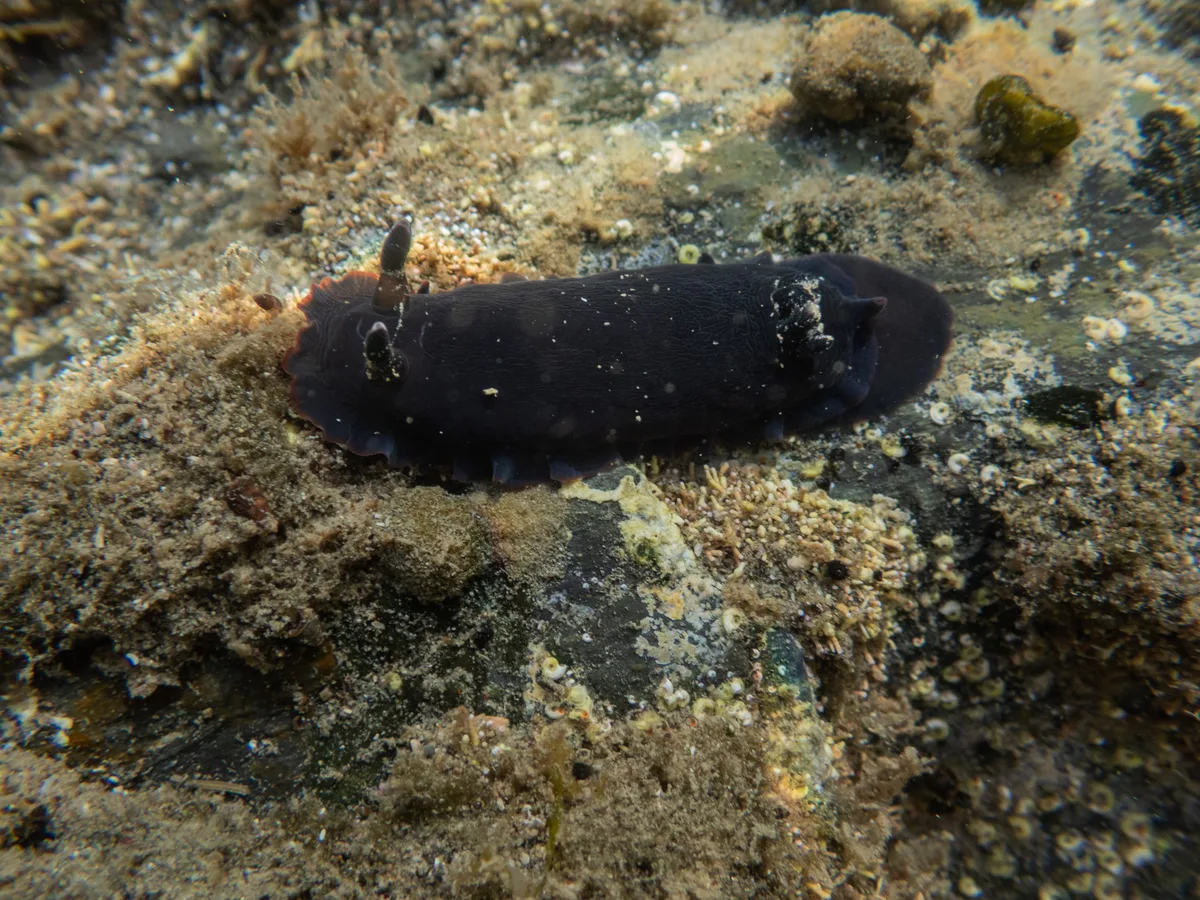
This slug has no teeth. Not worn down, not reduced: the entire rasping ribbon that every other snail and slug feeds with is gone.
A mollusc eats with a radula, a belt of teeth that scrapes food into the mouth, and it is one of the defining structures of the phylum. Dendrodoris dispensed with it. Instead the animal presses its mouth against a sponge, floods it with digestive fluid, and sucks the tissue back up already broken down, digesting its food outside its own body before swallowing it. The English name the databases give the genus records exactly that: sucking dorids.
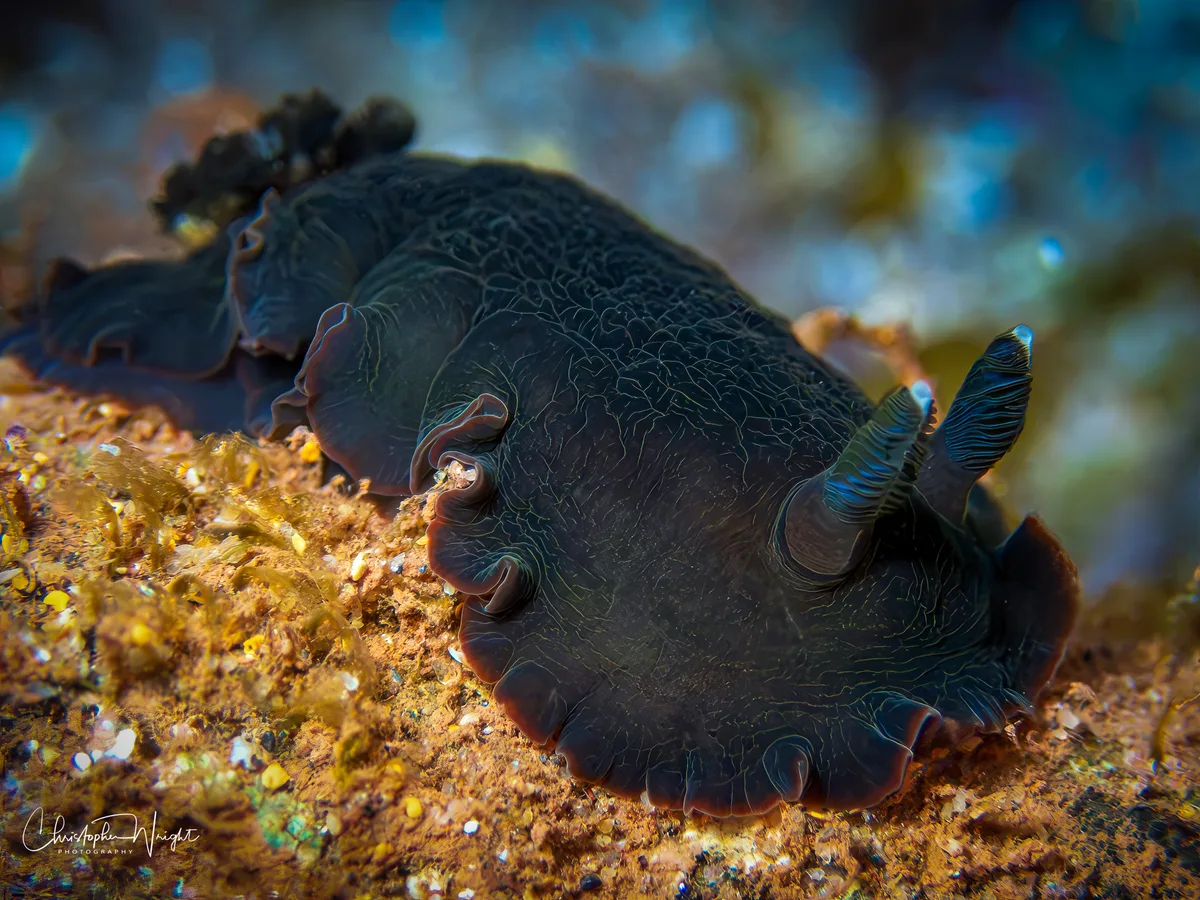
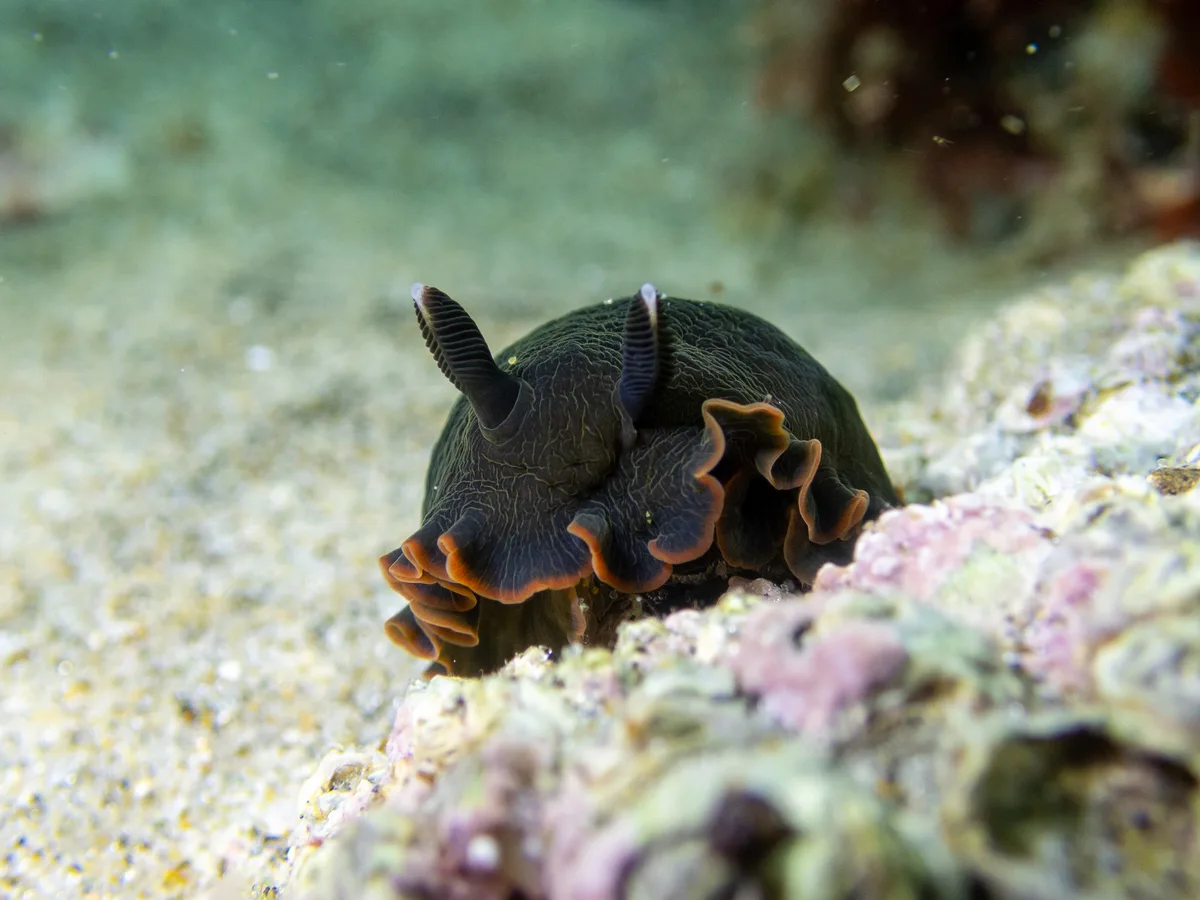
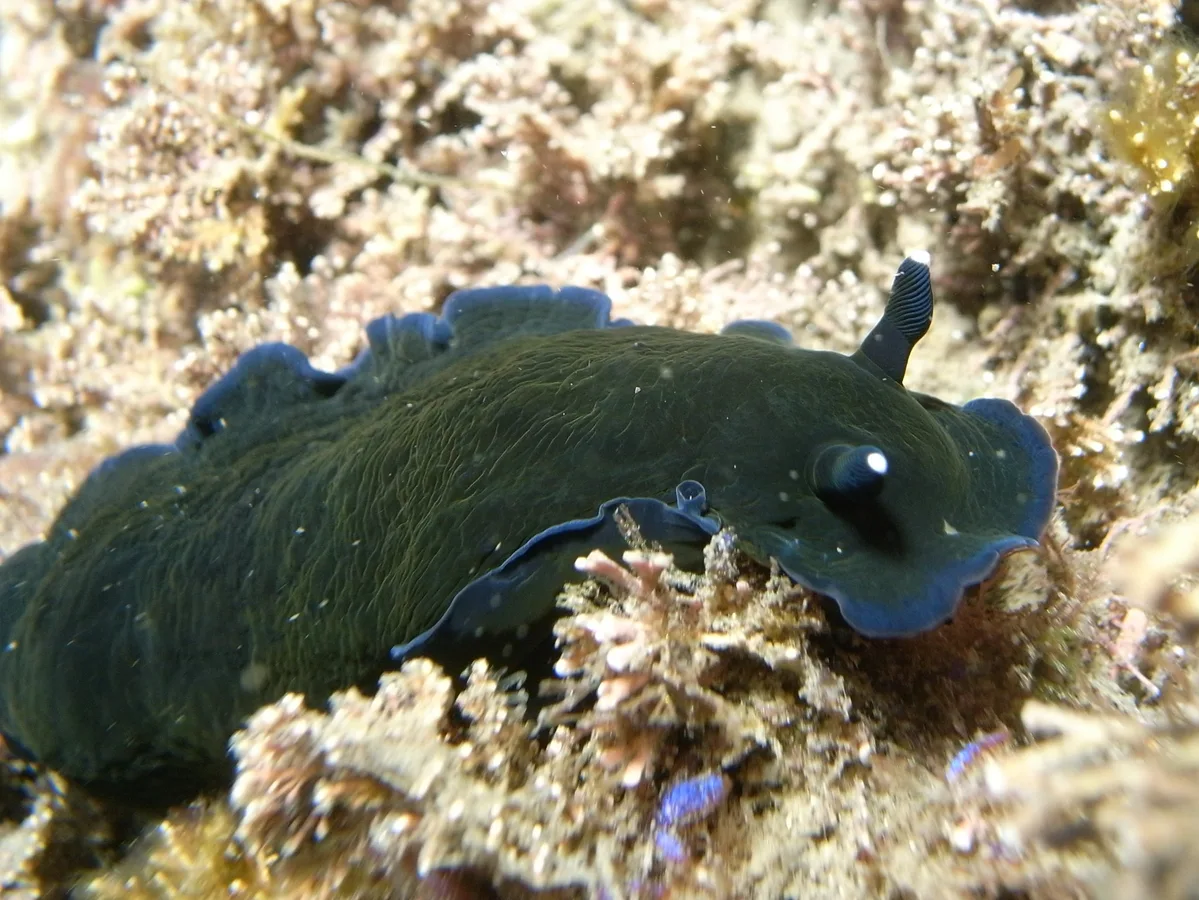
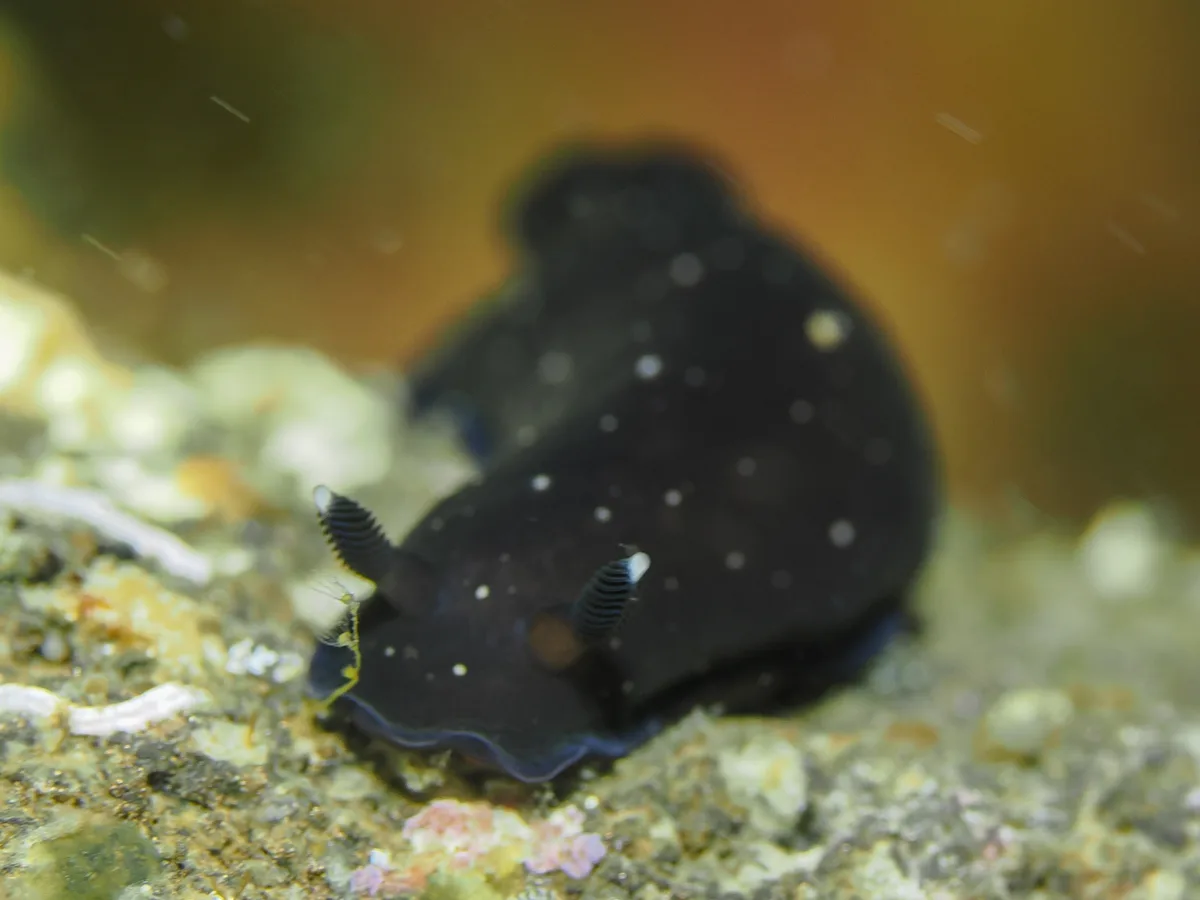
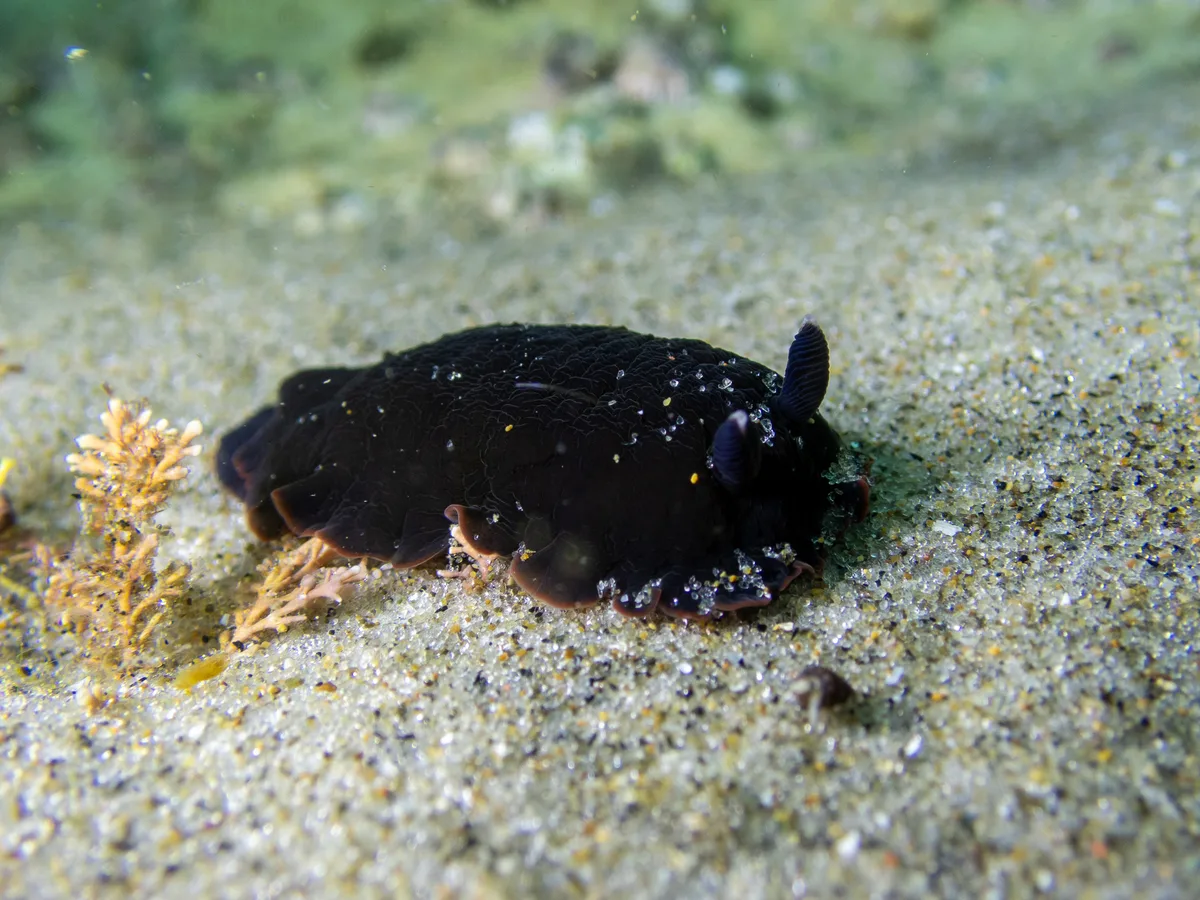
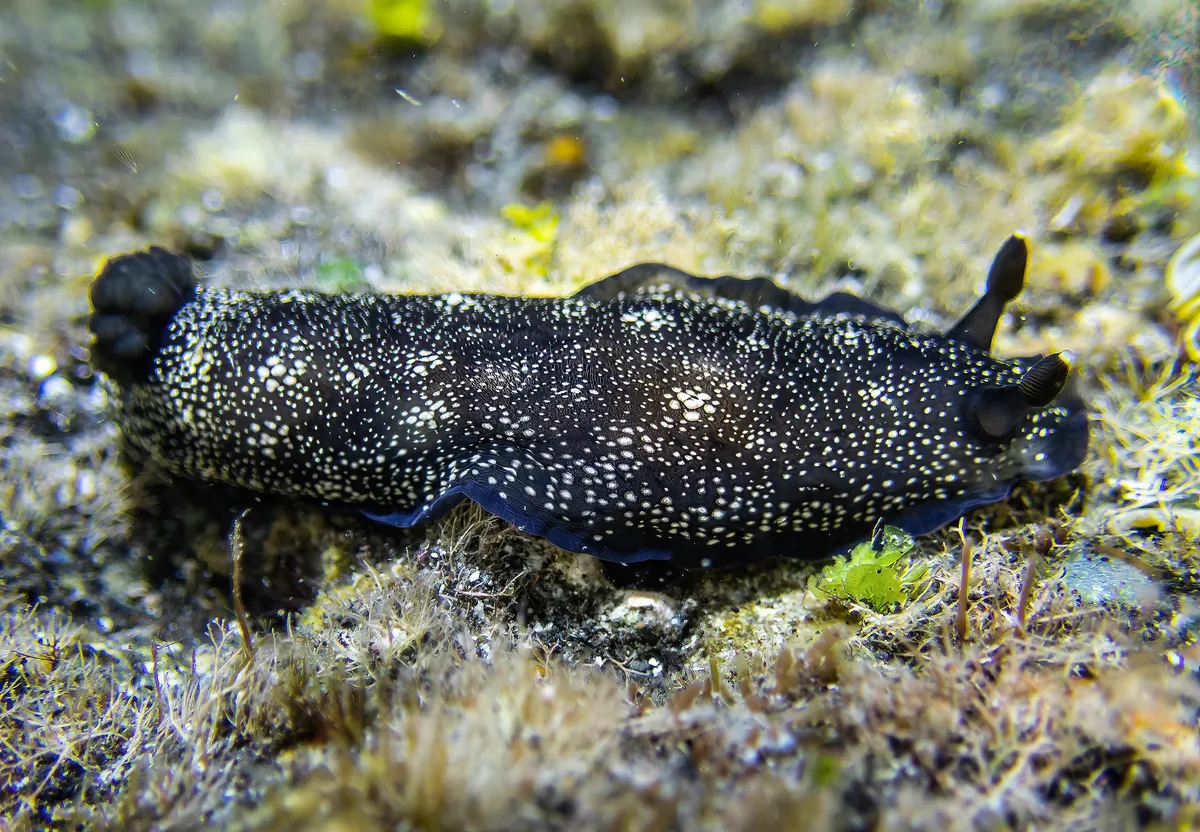
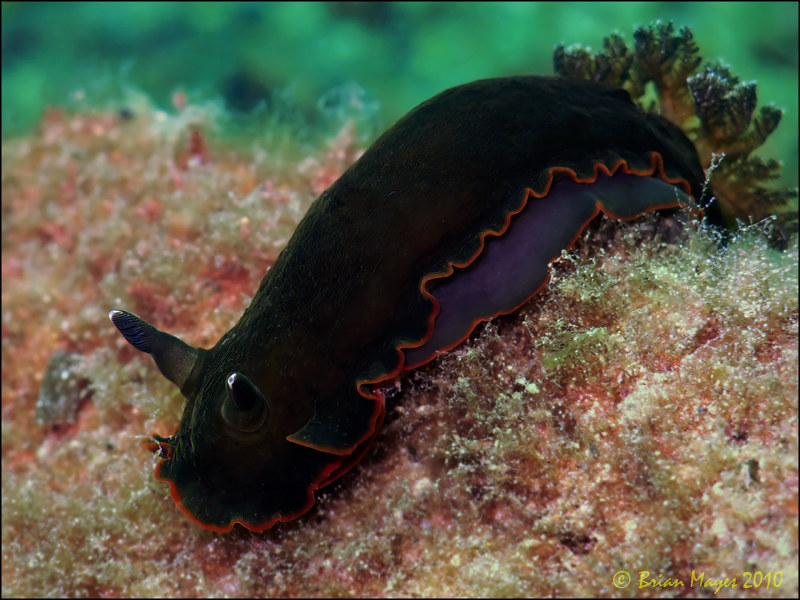
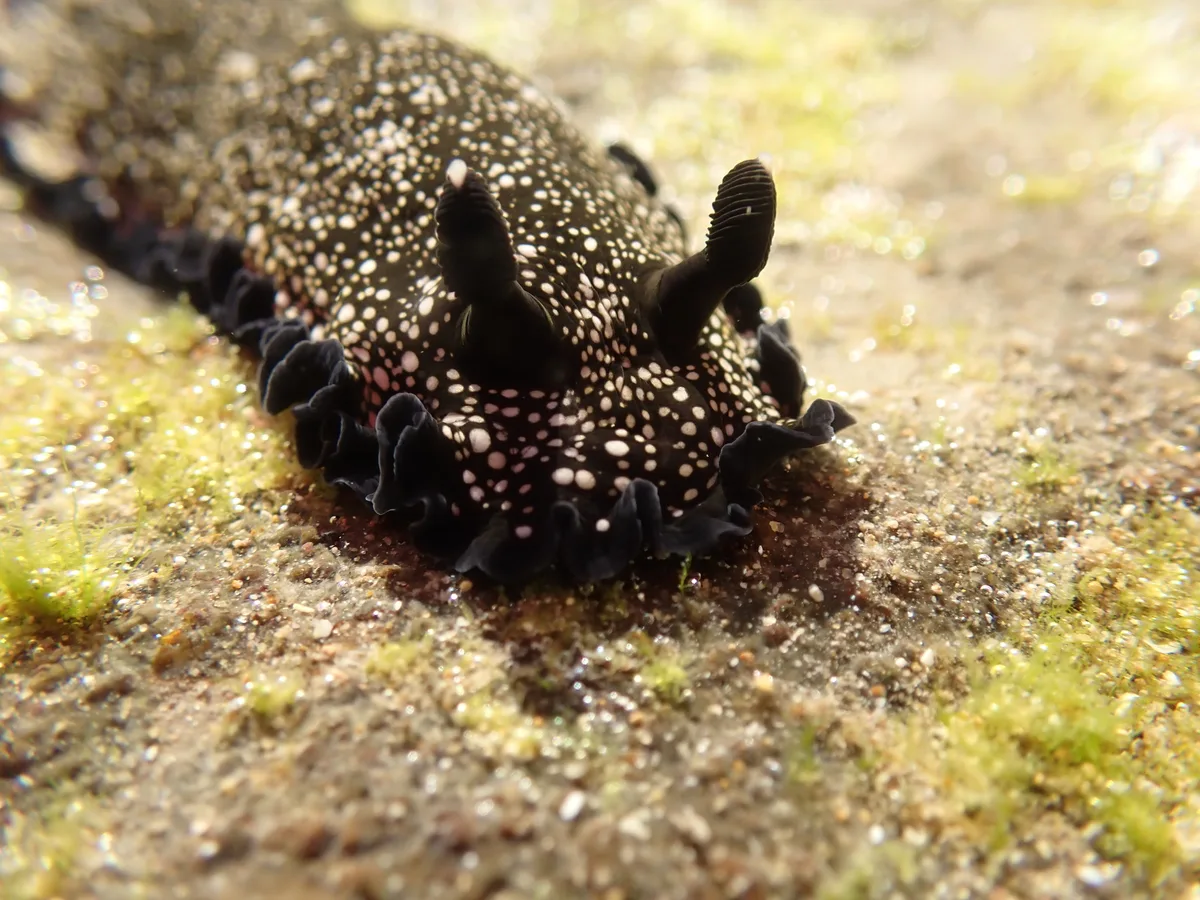
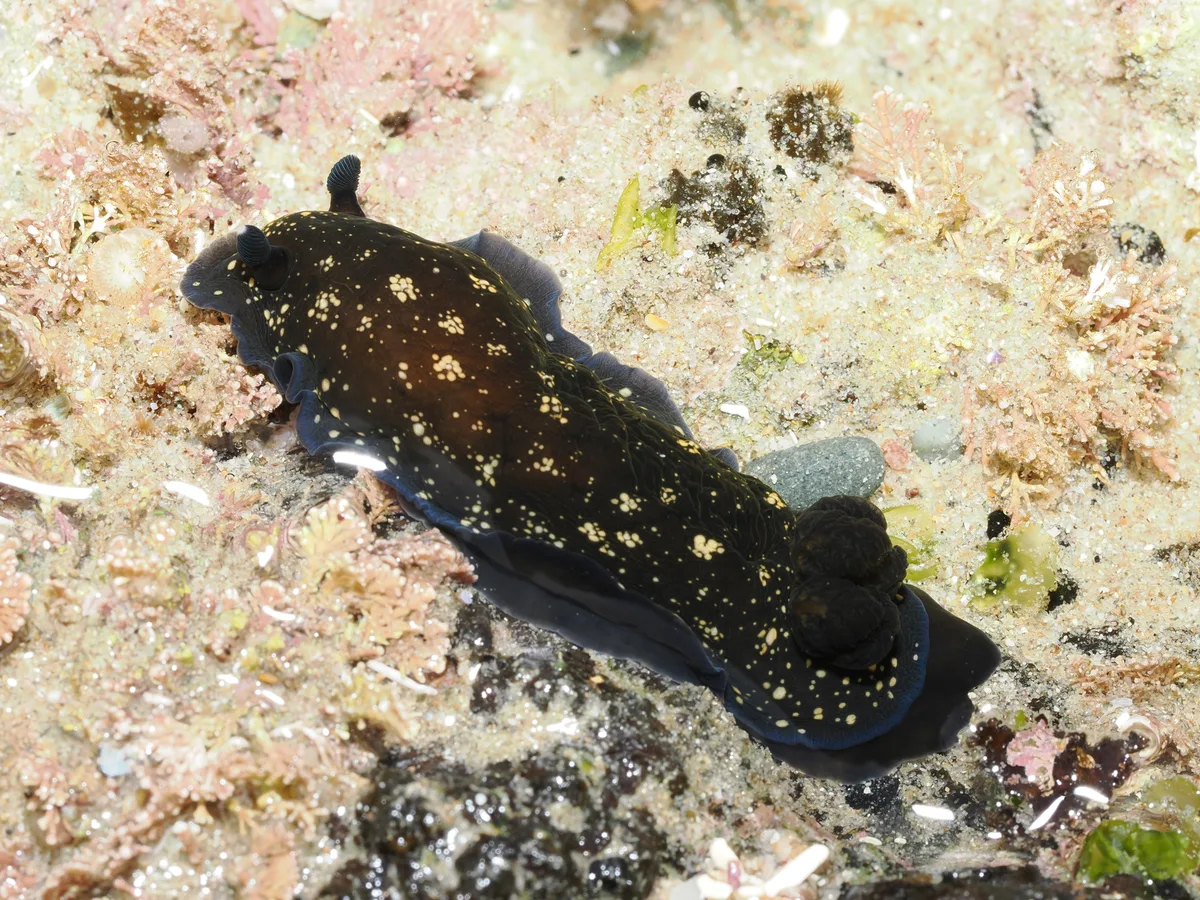
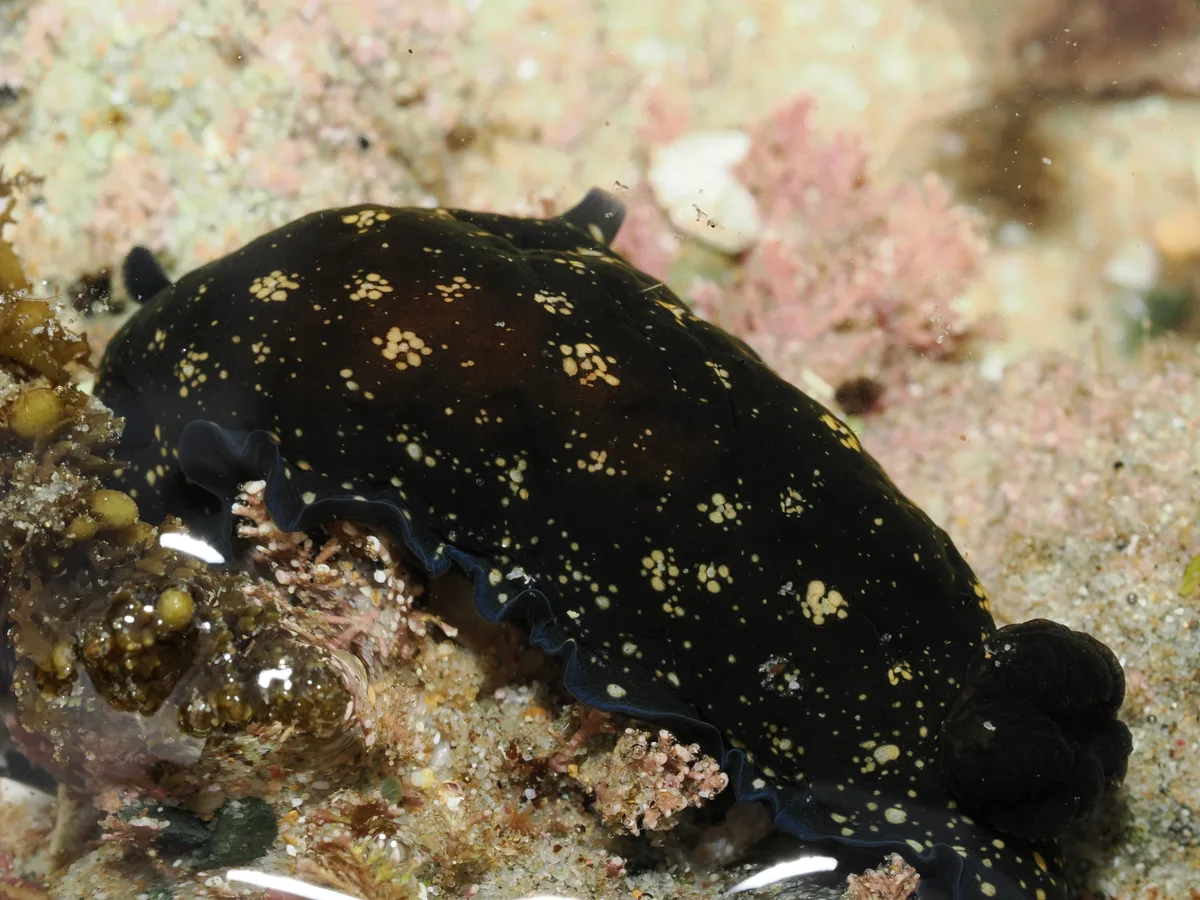
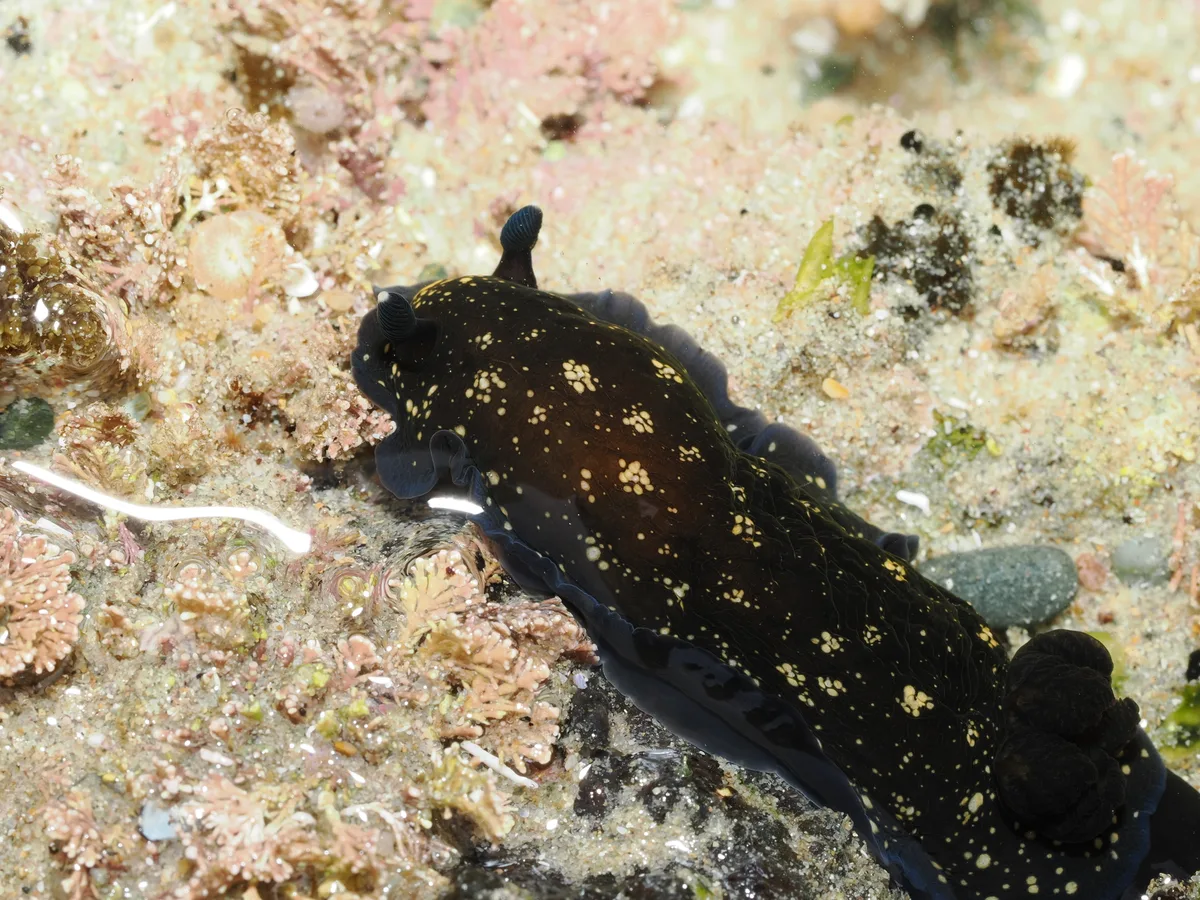
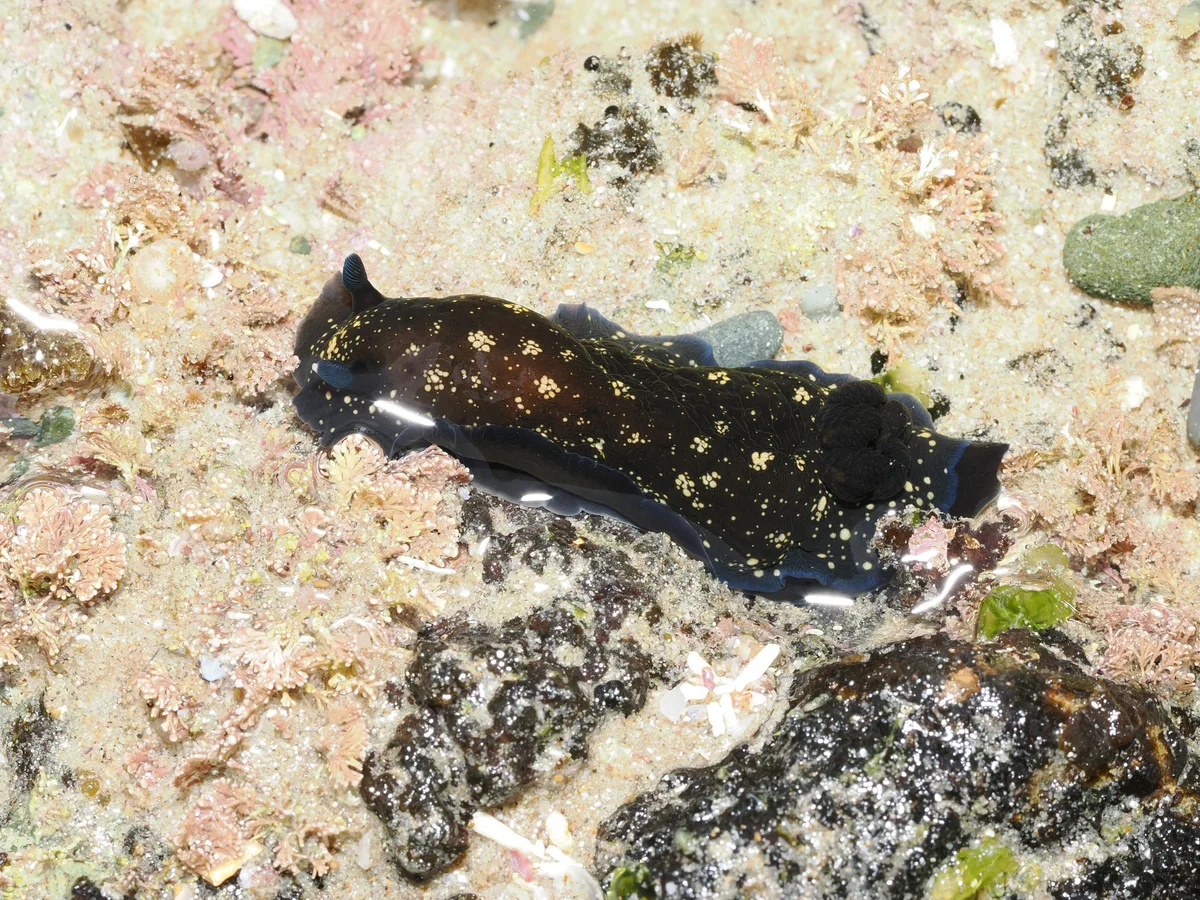
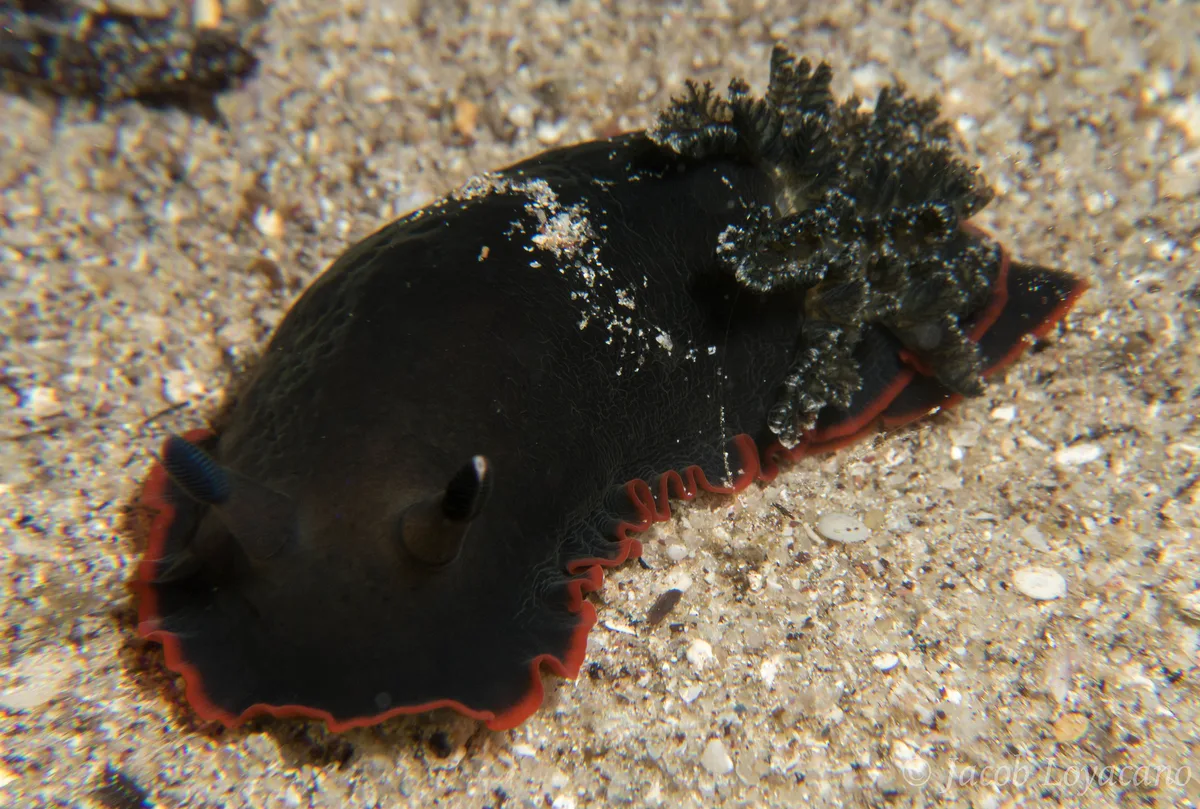
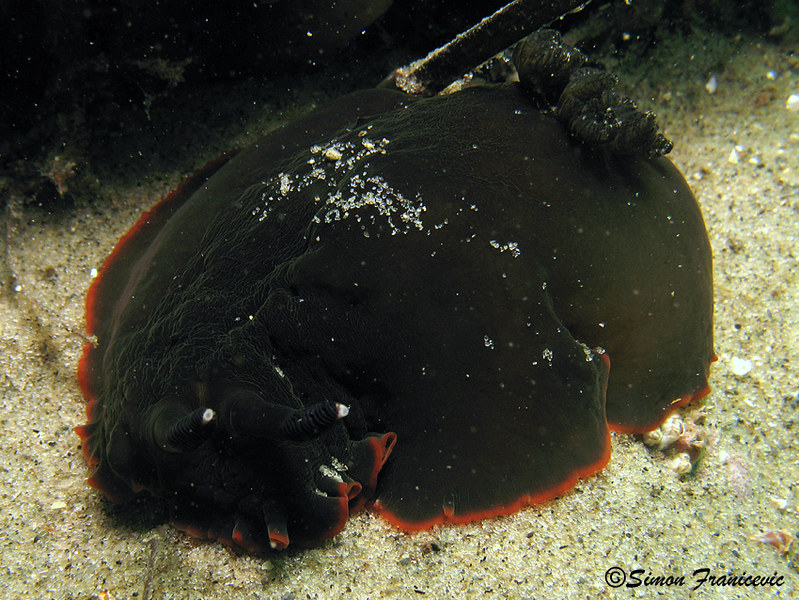
What you see is a soft dark animal with a wavy mantle edge, dark blue to black, often finely speckled, with white tips on the rhinophores. Up to eight centimeters and easy to overlook against dark rock, which is where it usually is.
It is also one of the most widely distributed slugs in this catalogue, recorded from 🇳🇿 New Zealand to 🇲🇿 Mozambique, and it has come through the Suez Canal (🇪🇬 Egypt) into the eastern Mediterranean off 🇮🇱 Israel, joining the long list of 🌊 Red Sea animals now established up there.
Juveniles are often paler and more strongly speckled than the adults, which is why a small spotted one and a large black one on the same rock can be the same species.
- dark blue, deep brown or black, often with fine red or white speckling
- white tips to the rhinophores
- soft and smooth, with a wavy mantle edge, unlike the firm ridged wart slugs
- up to 8 cm