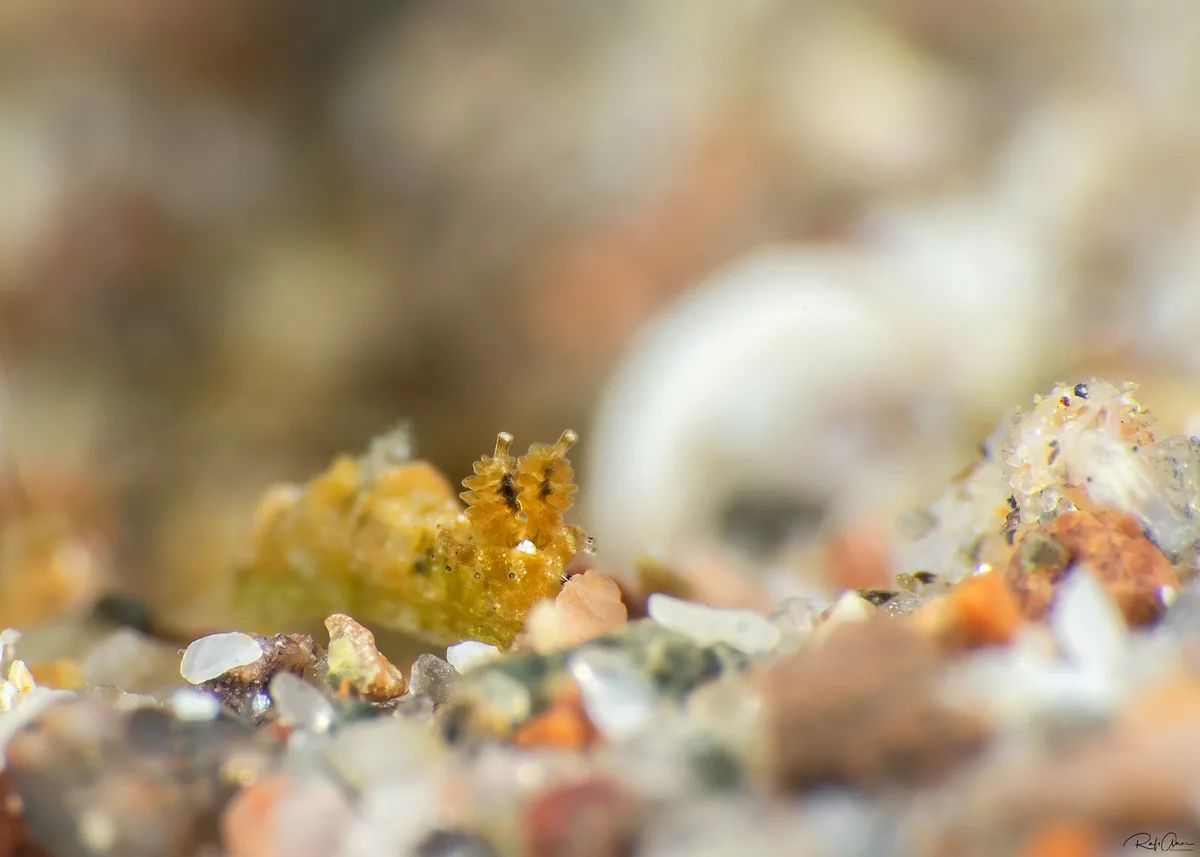
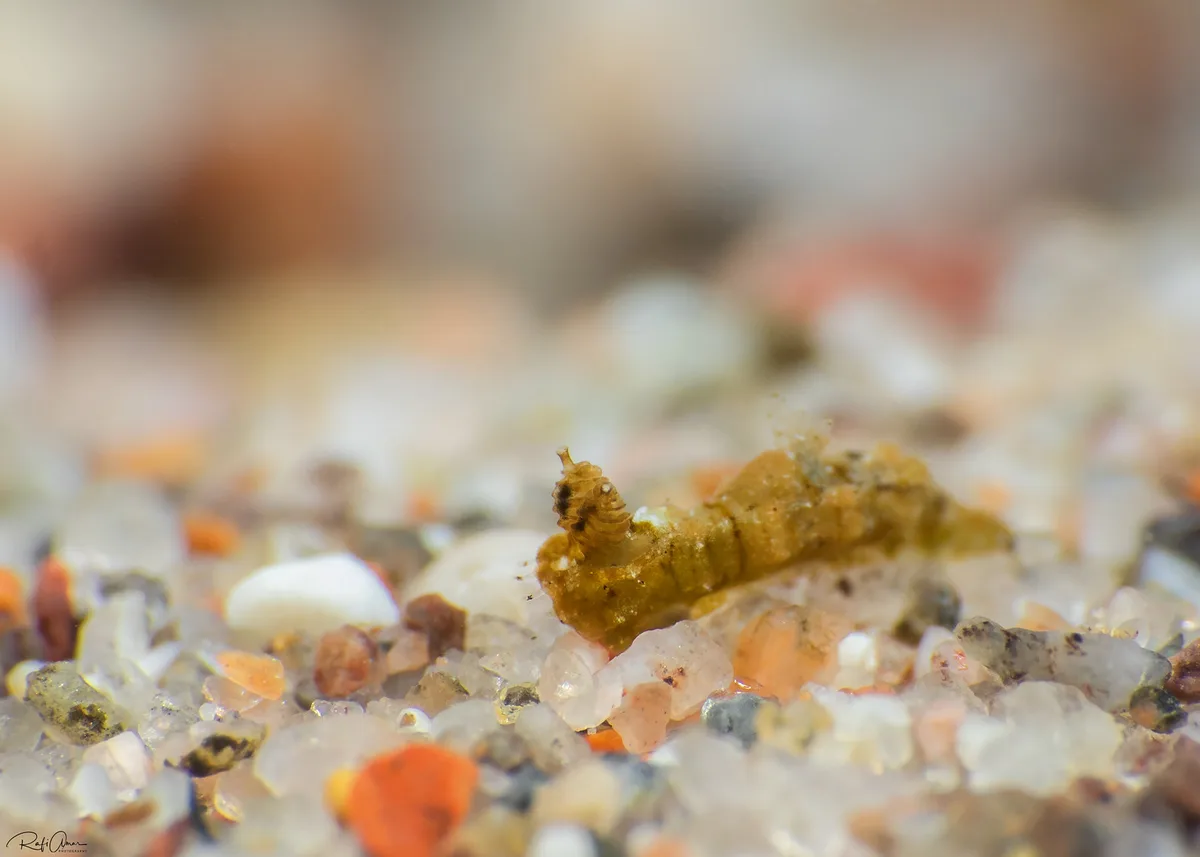
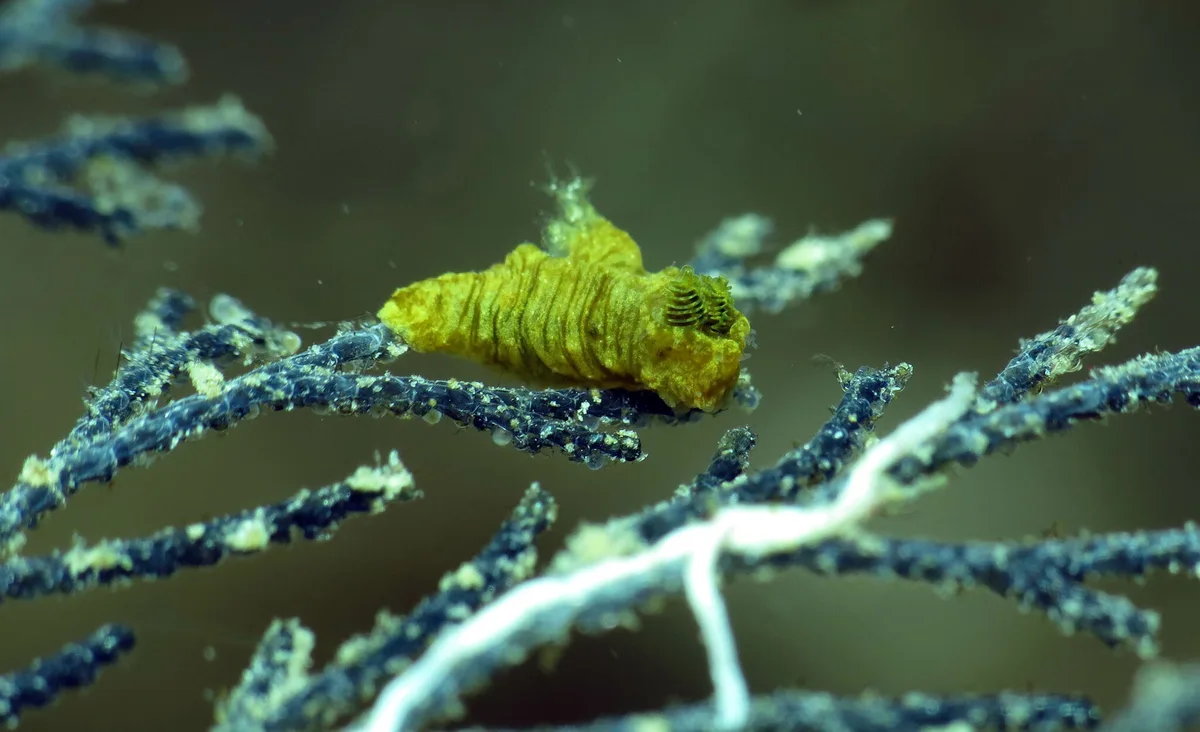
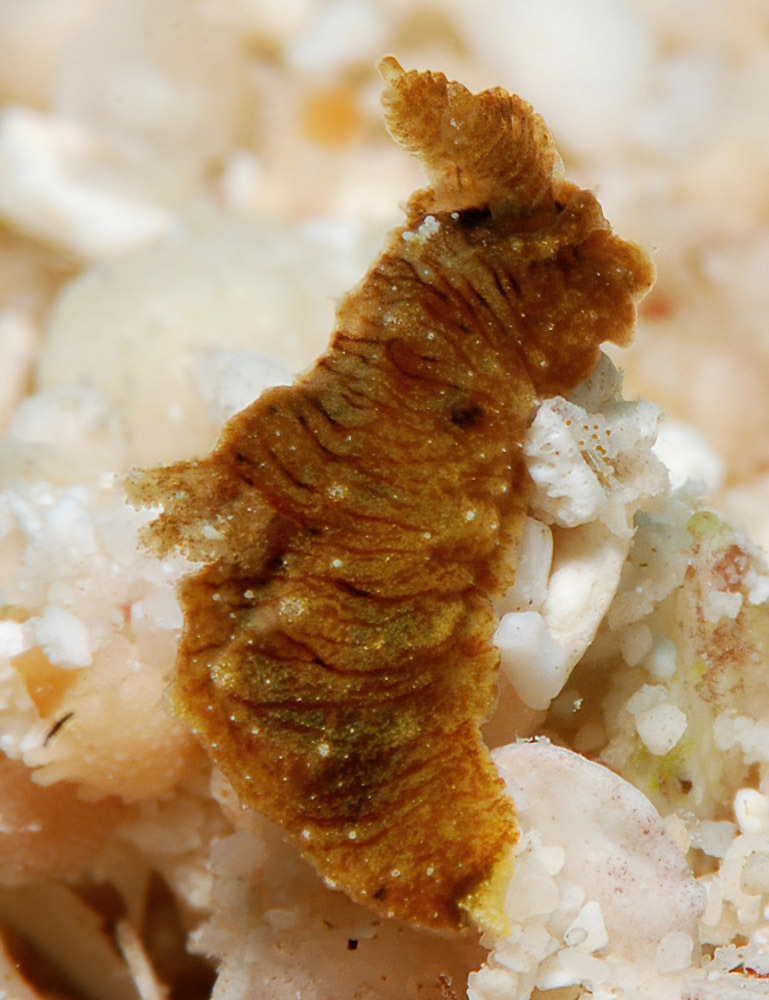
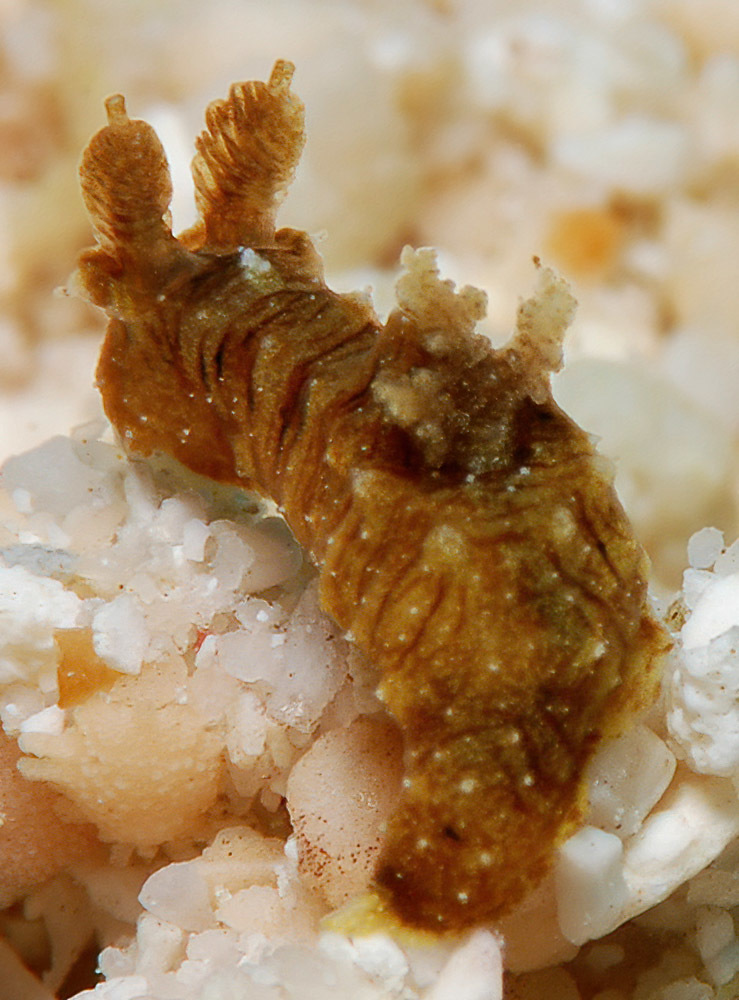
Eight millimeters. That is the length of this animal, and it is the first thing to understand about it, because at that size the question is not what it looks like but whether you would ever resolve it as an animal at all.
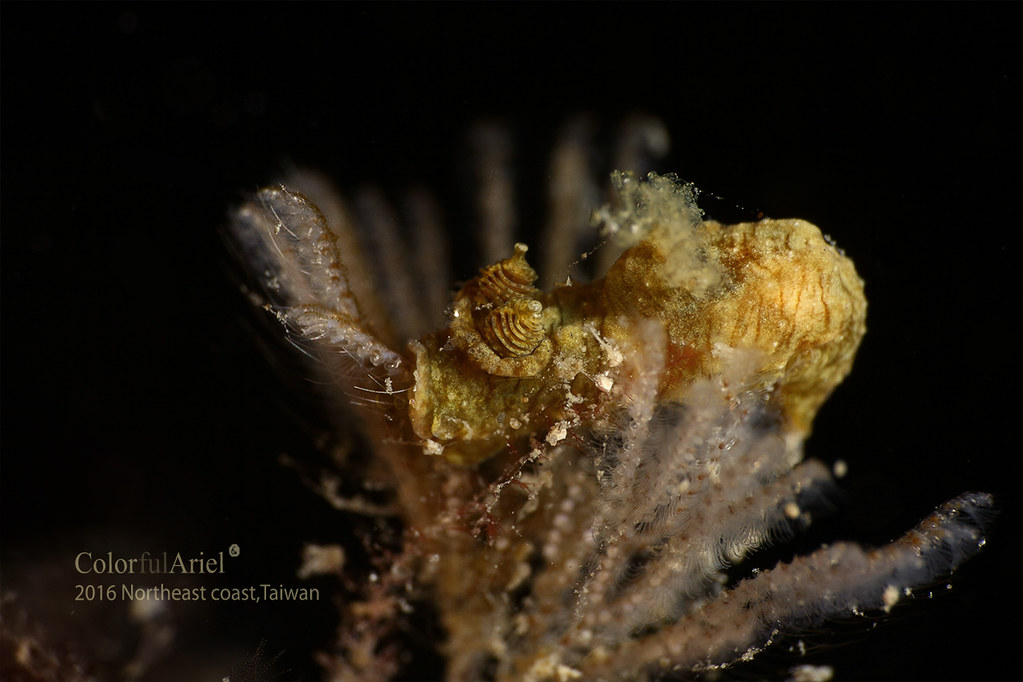
The genus is a bryozoan specialist. Bryozoans are the fine lacy mats and branching tufts encrusting rubble and dead coral, colonies of thousands of tiny animals each sitting in its own calcareous box, and grazing them means rasping out one occupant at a time. It is slow food, it is everywhere, and almost nobody looks at it.
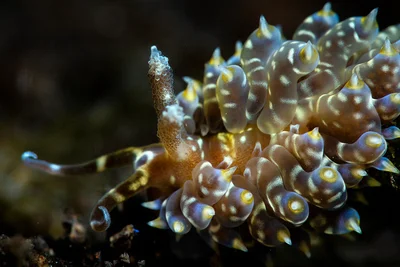
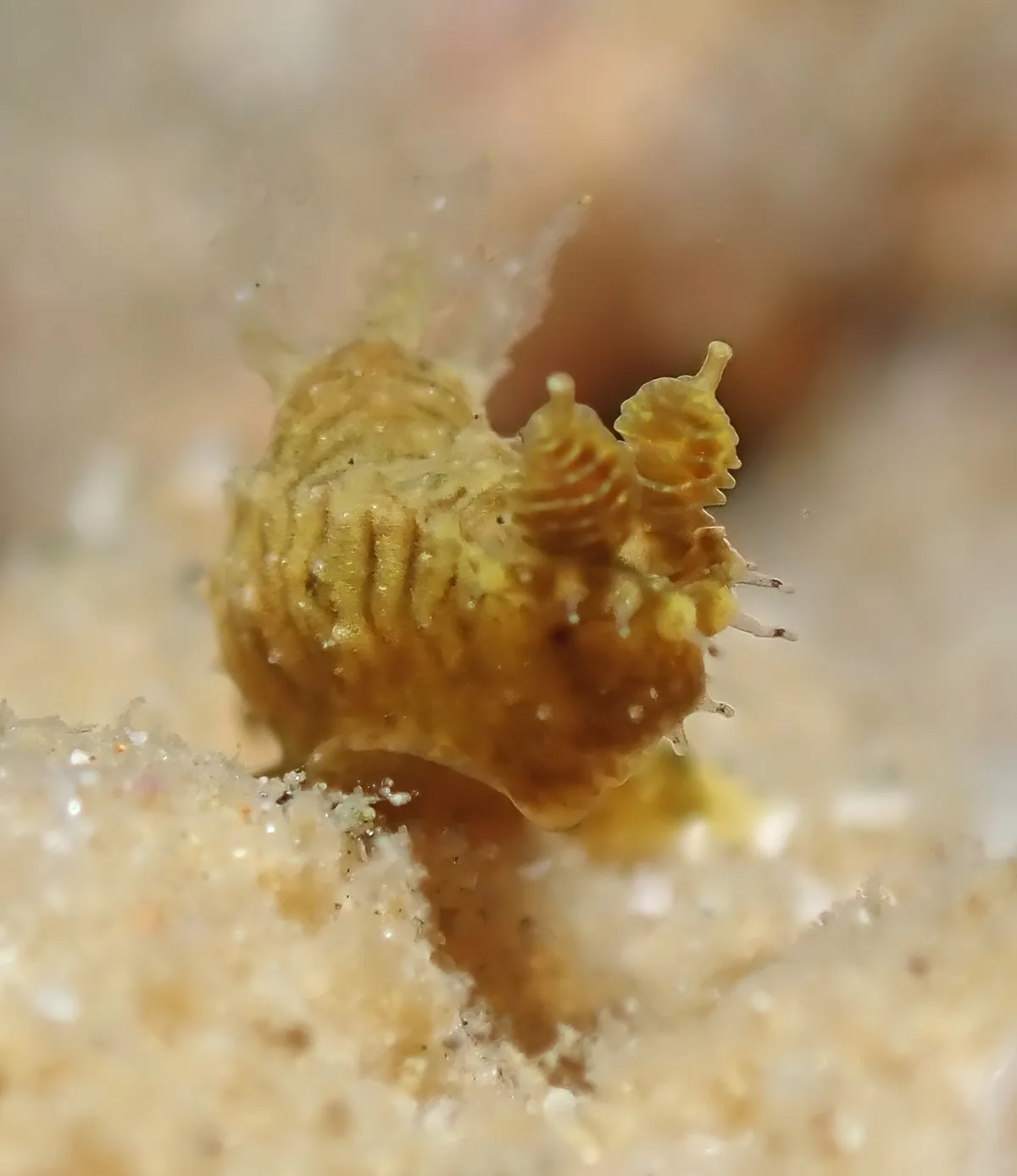
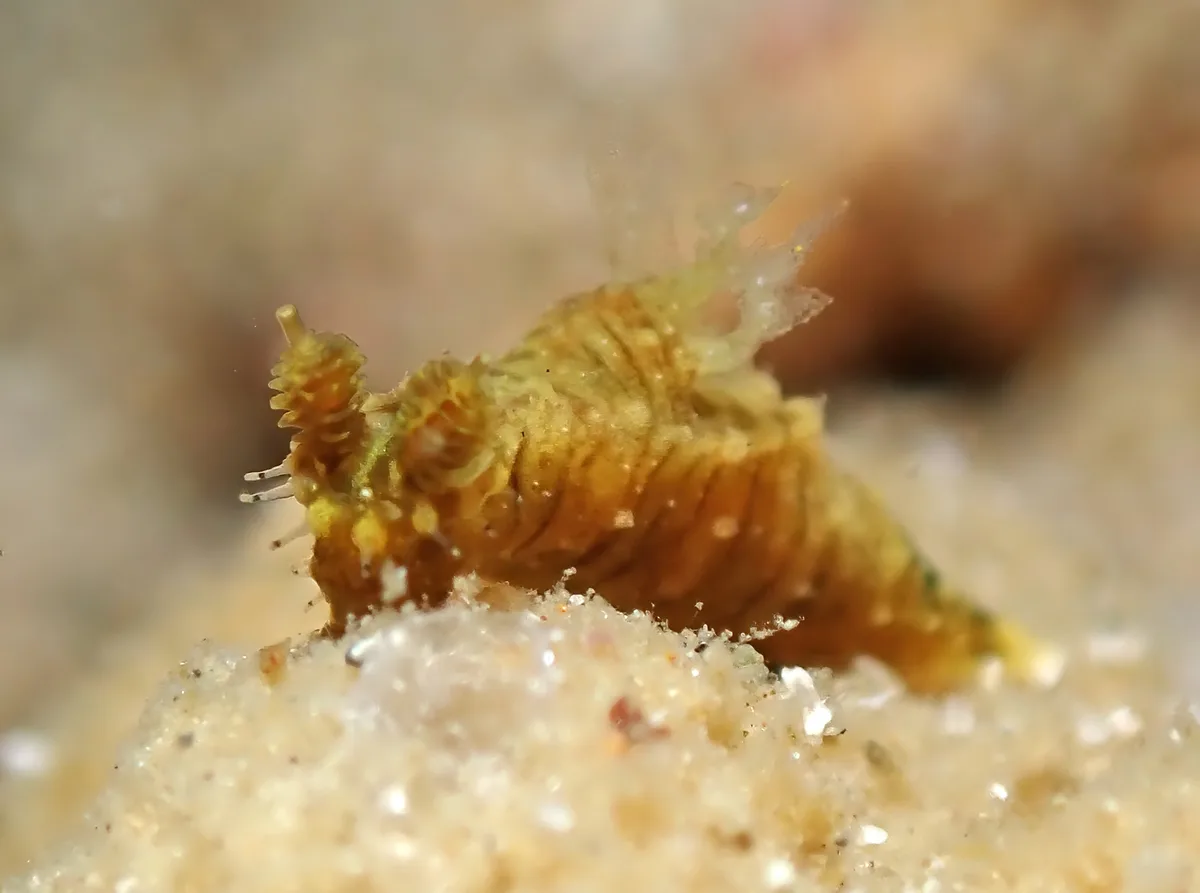
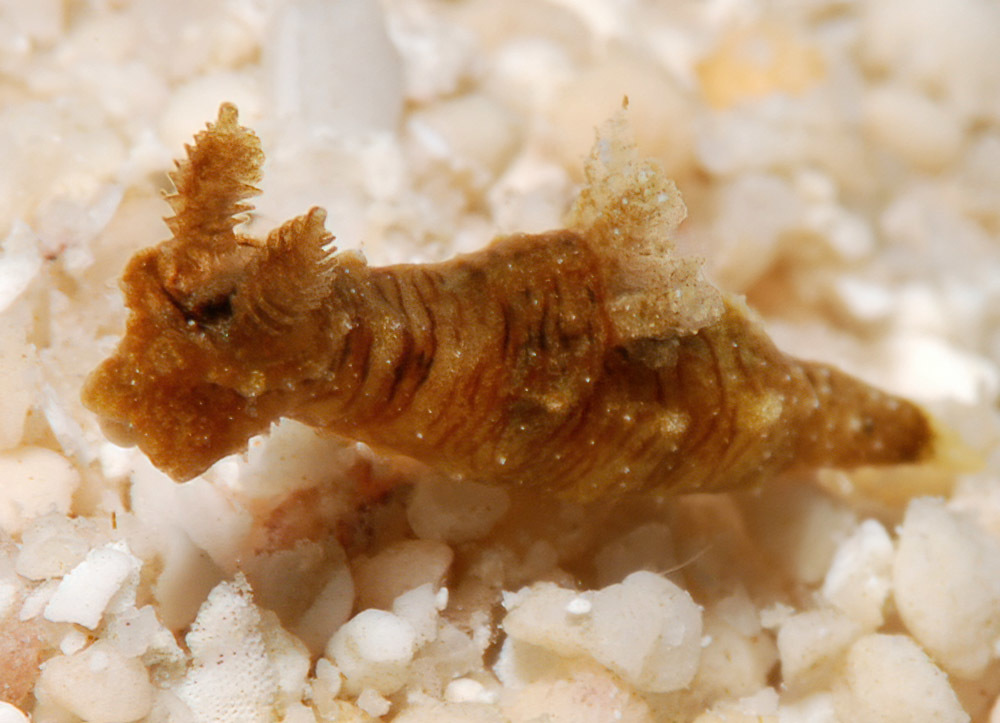
The family signature is on the head. A row of soft finger-like processes stands along the front edge, with more of them flanking the gills at the back. Polycerids cannot pull the gill plume down into a pocket the way most dorids can, so those processes are what they carry instead of one.
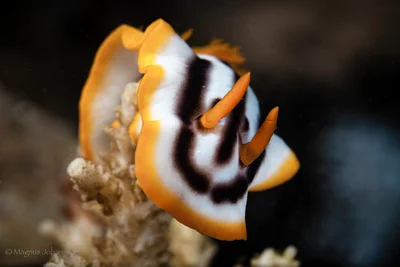
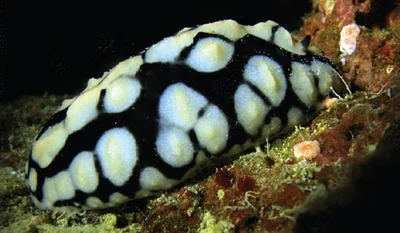
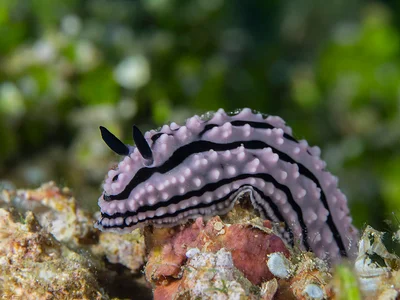
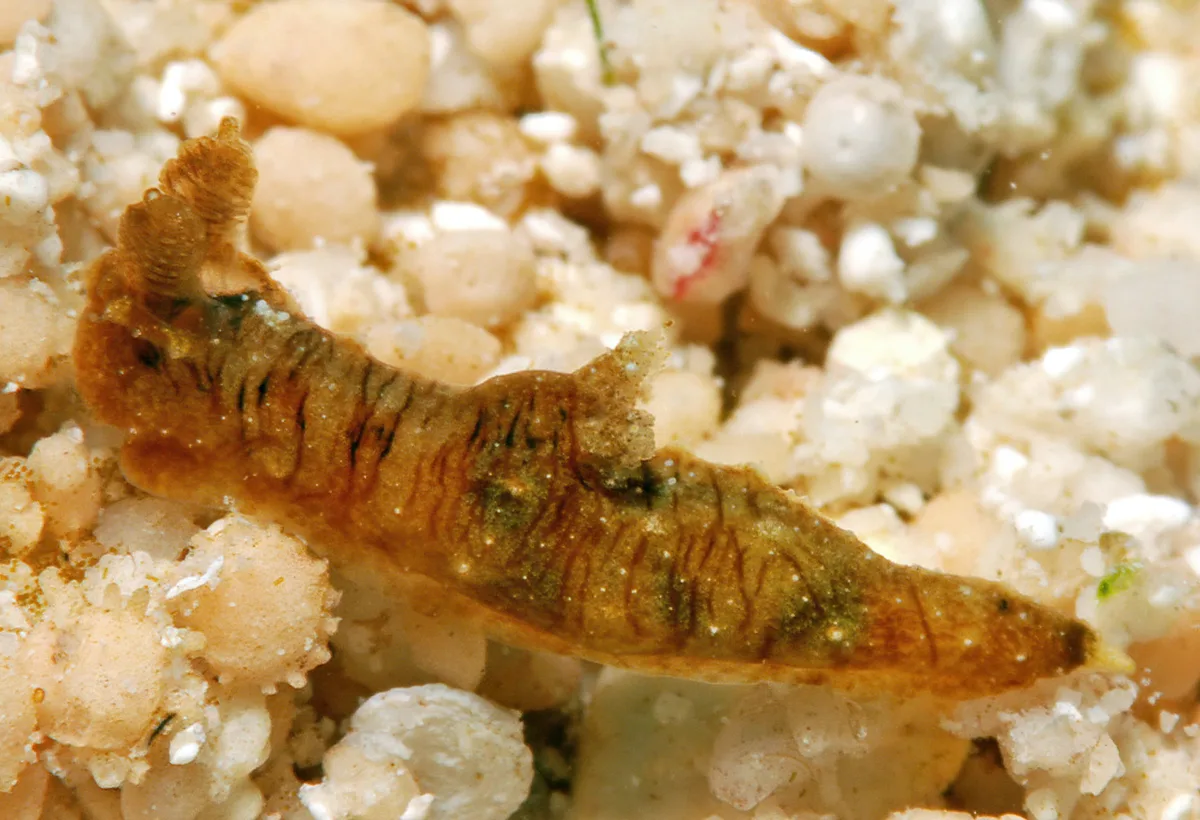
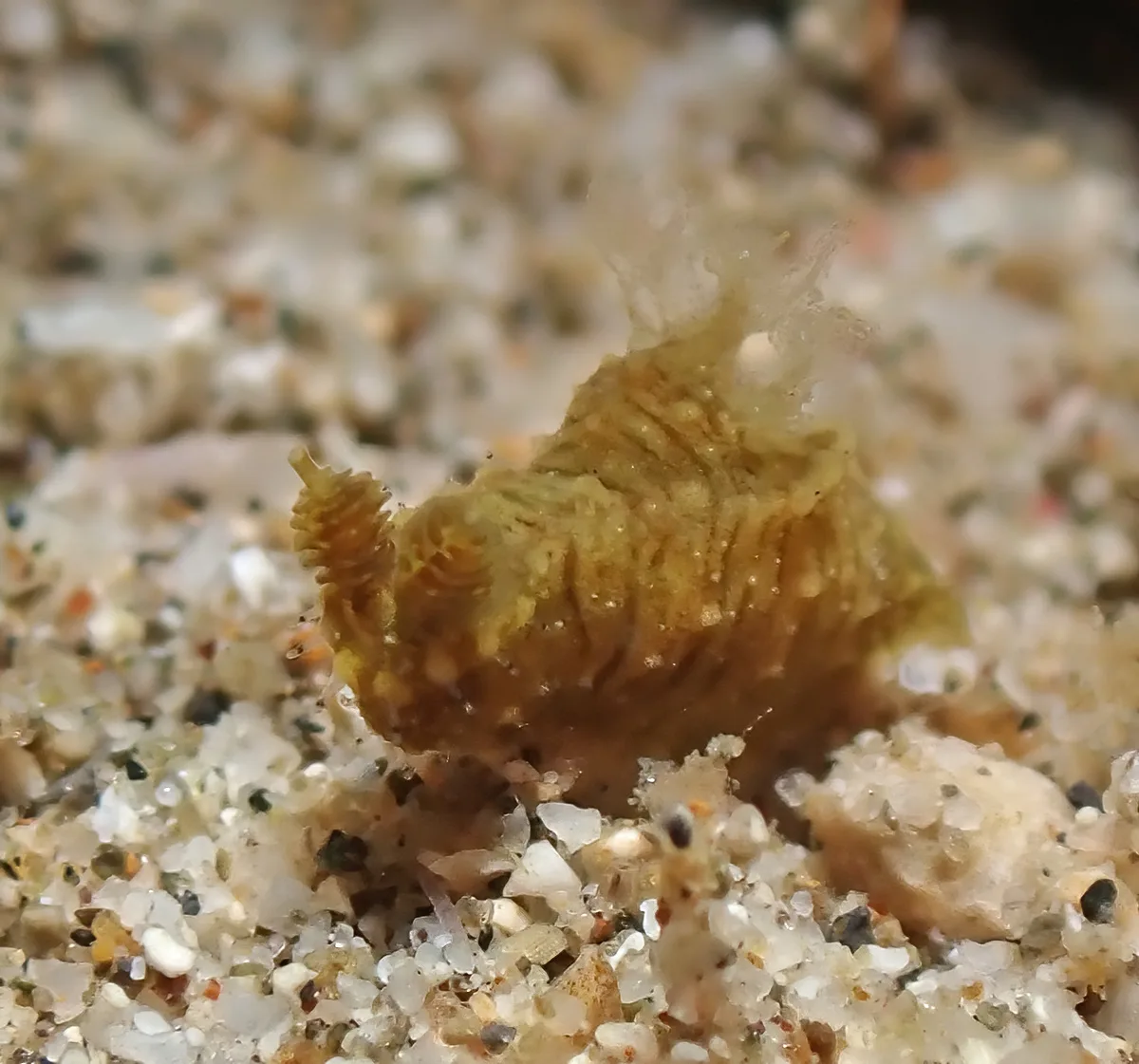
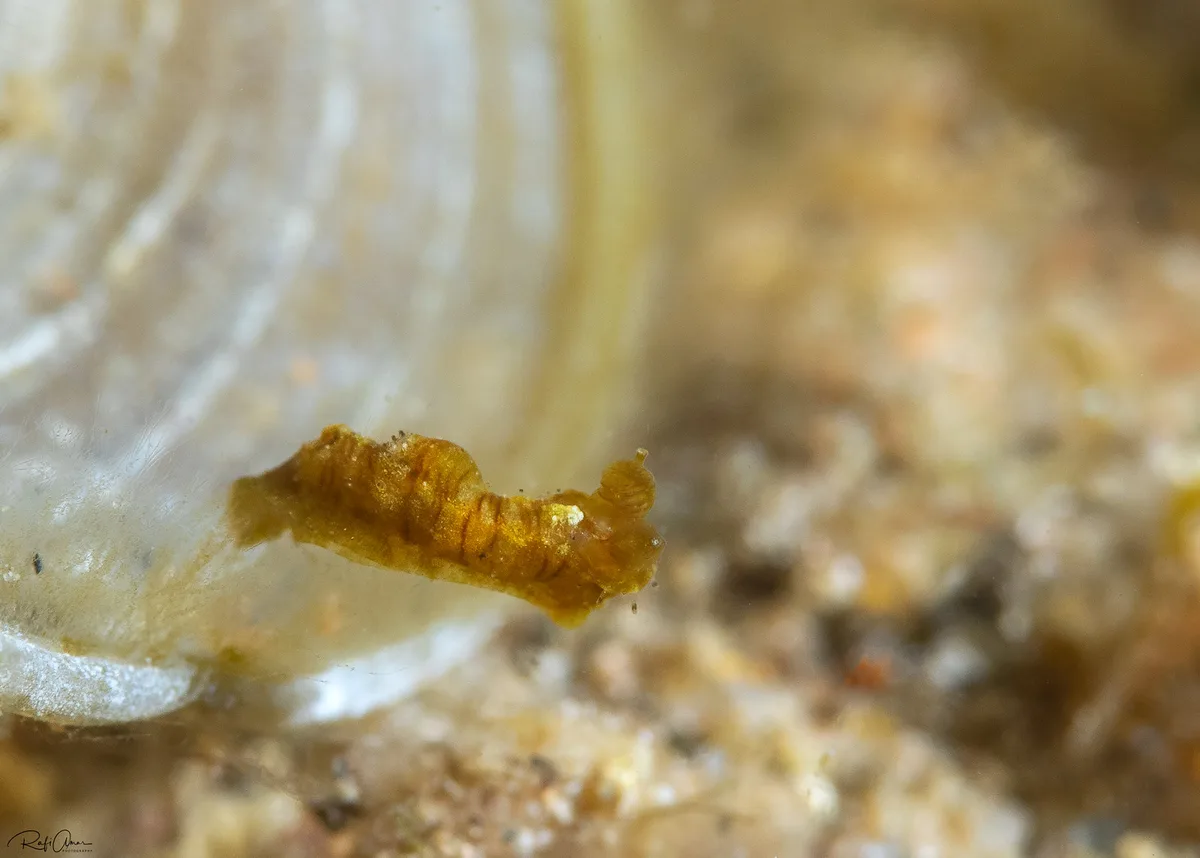
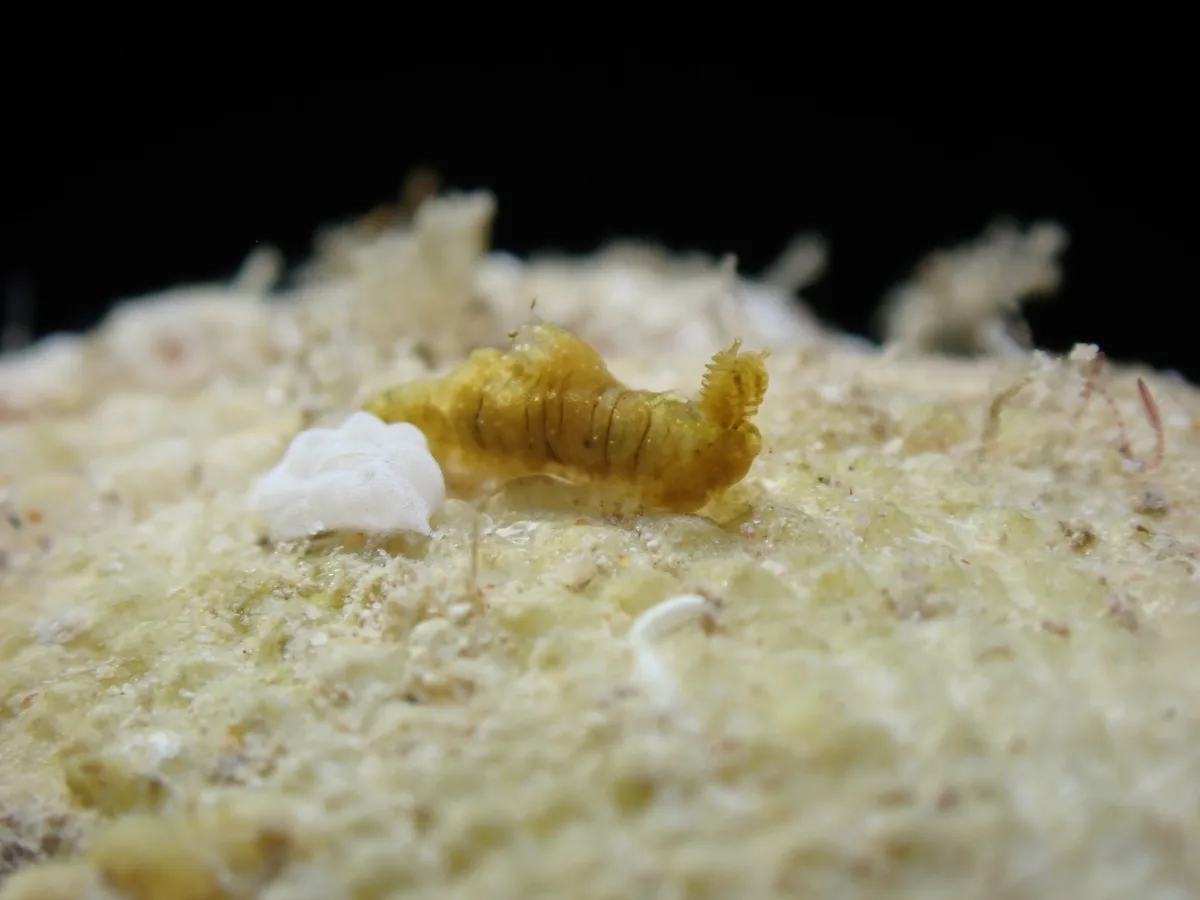
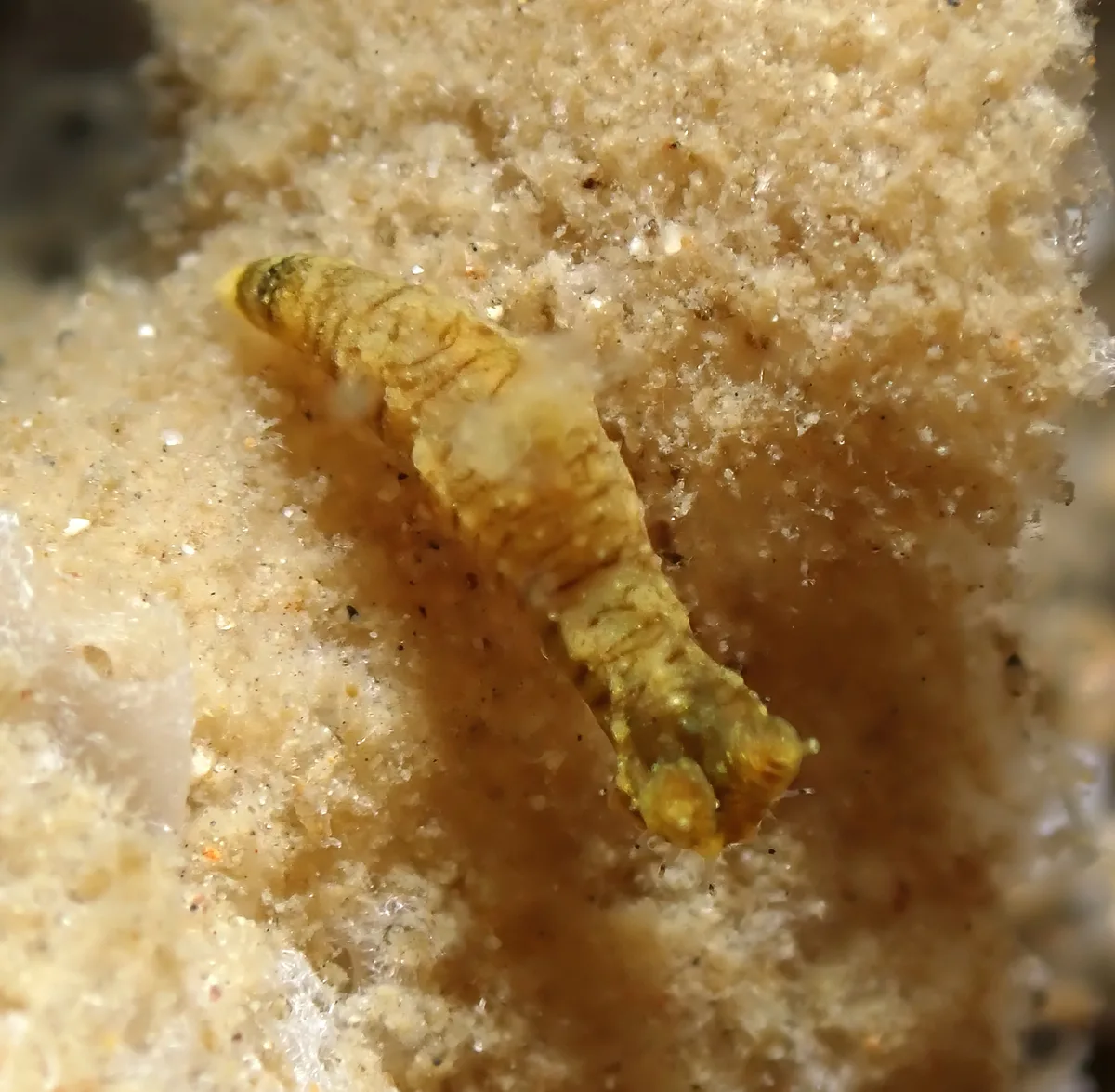
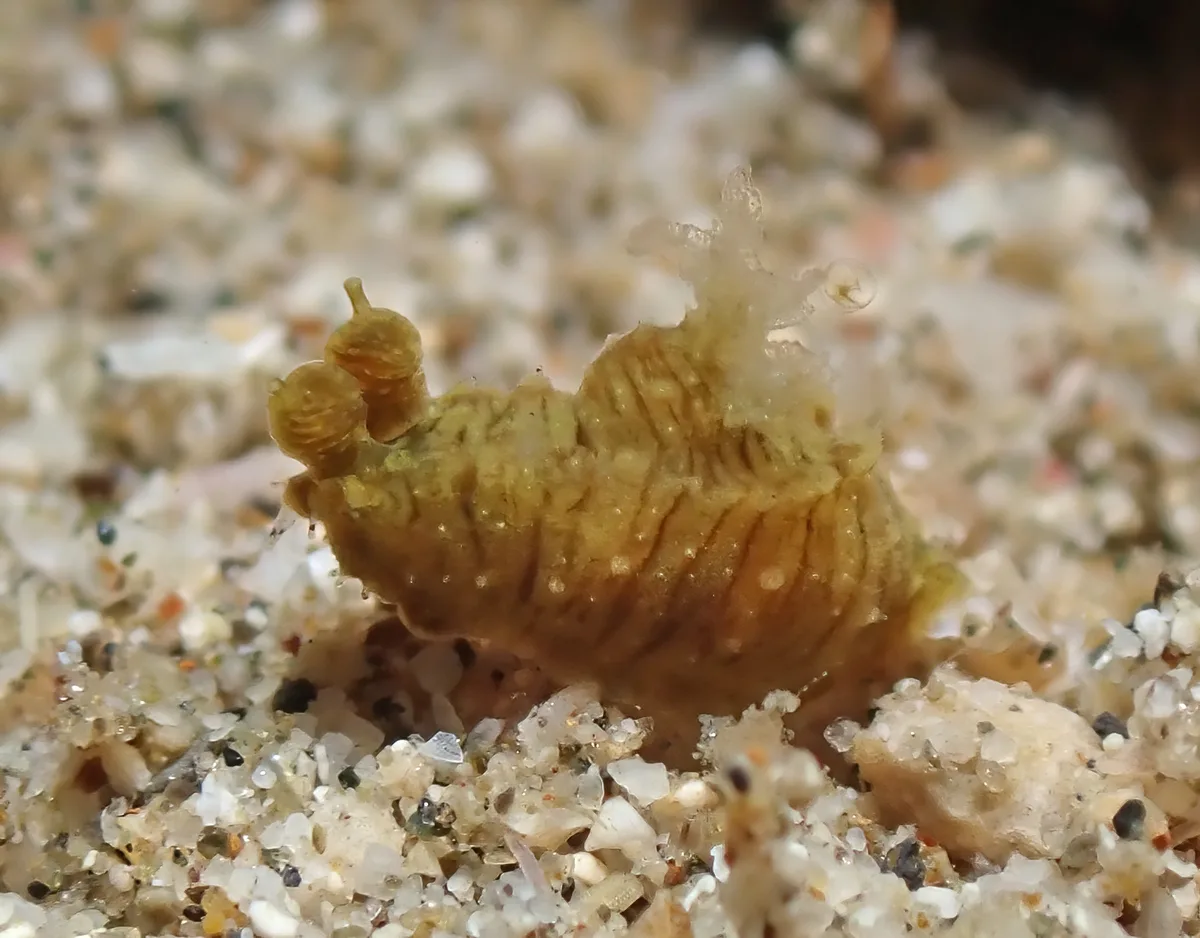
This species is the barred one: a brownish body crossed by dark transverse lines that run across the animal rather than down it. Its relative here is translucent white clouded with gray and dotted black, so once you have either of them in focus they do not confuse.
It is named for Jean Risbec, who worked on the sea slugs of 🇳🇨 New Caledonia (🇫🇷 Overseas France) in the 1920s and 1930s. Half the small animals in this section carry the name of somebody who spent a career on a group most people have never heard of.
- brownish body crossed by dark transverse lines, running across rather than along
- a row of finger-like processes along the front edge of the head
- gills standing exposed at the rear, flanked by more processes
- eight millimeters, which is small even by the standards of this page