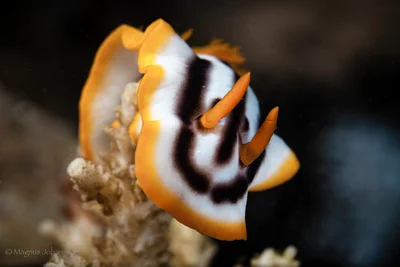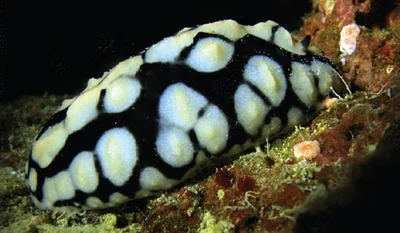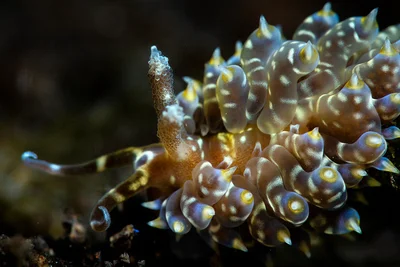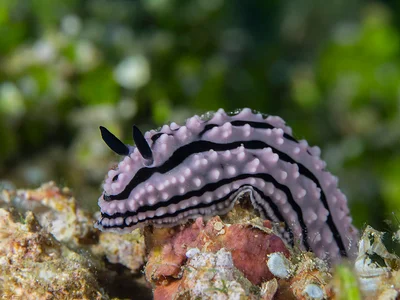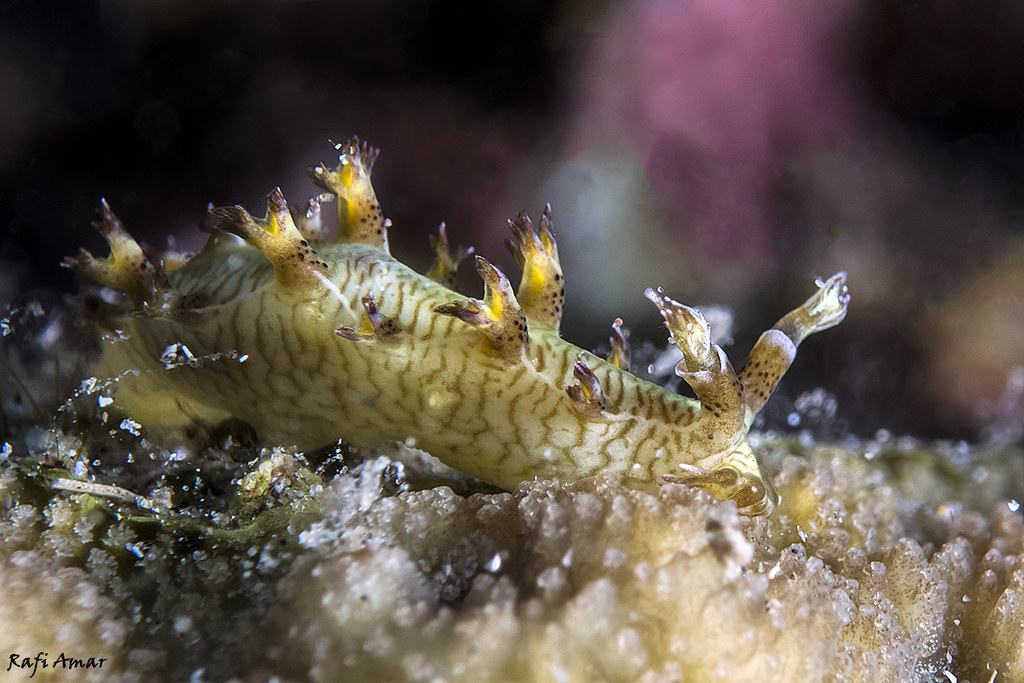
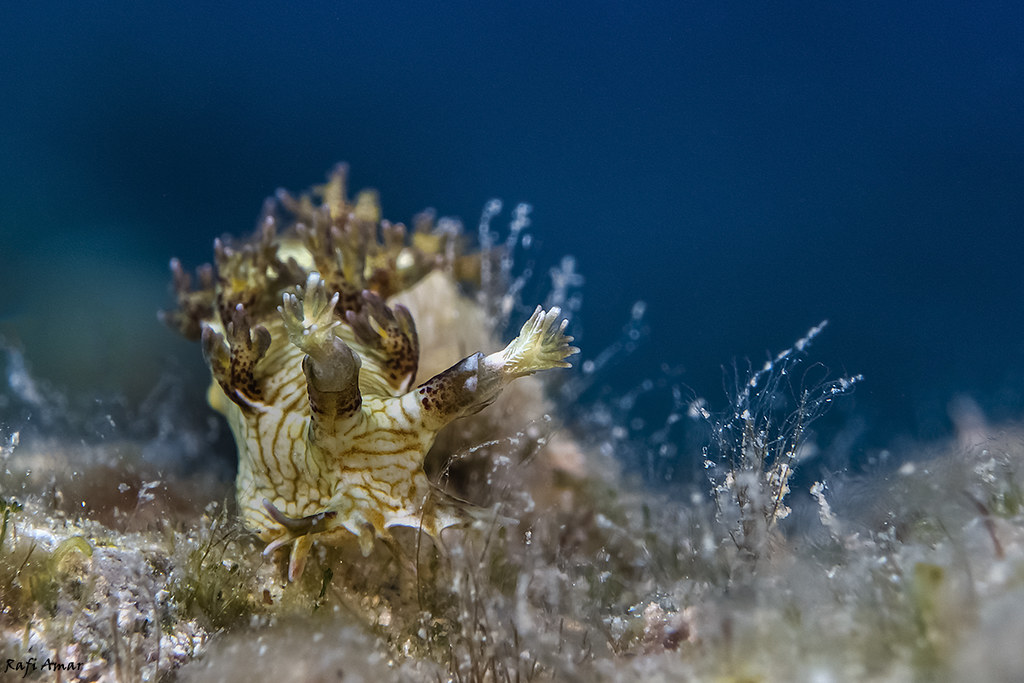
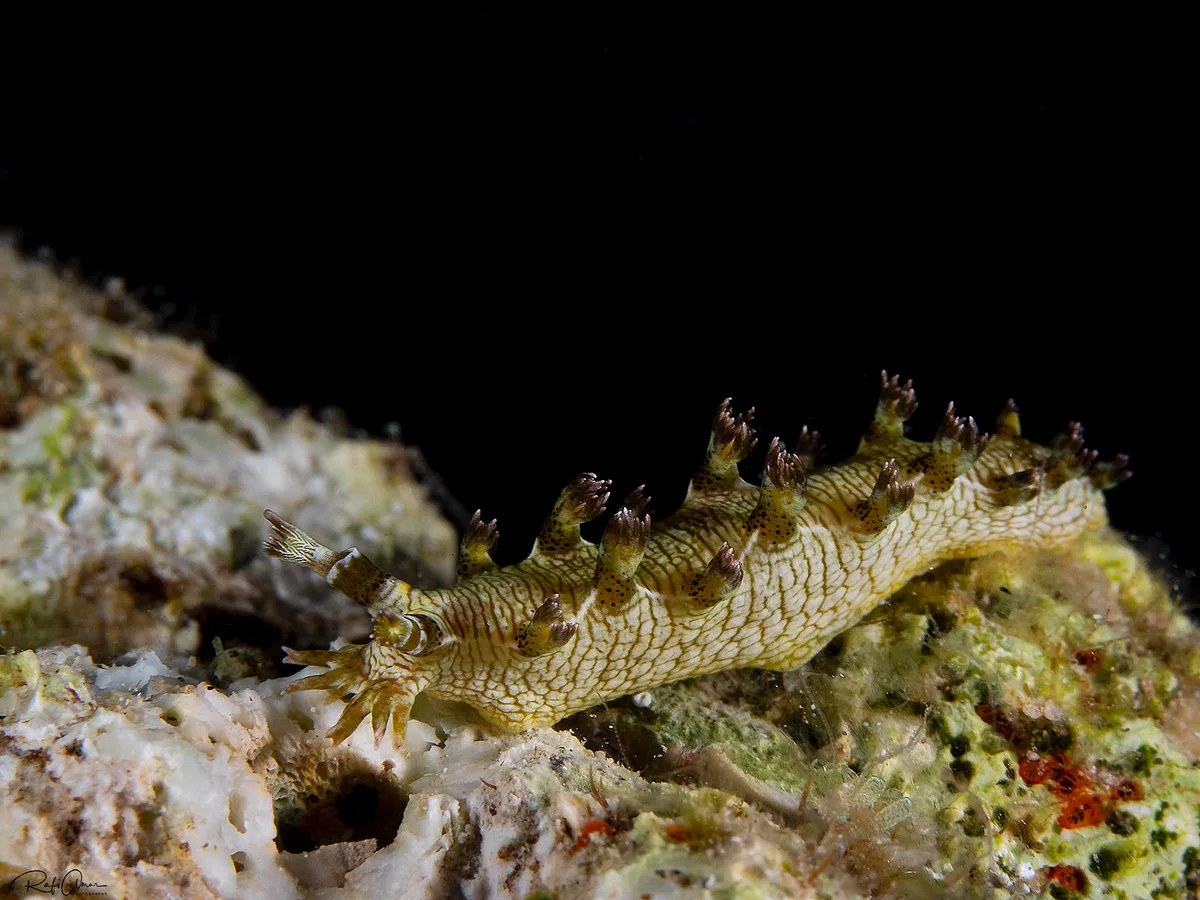
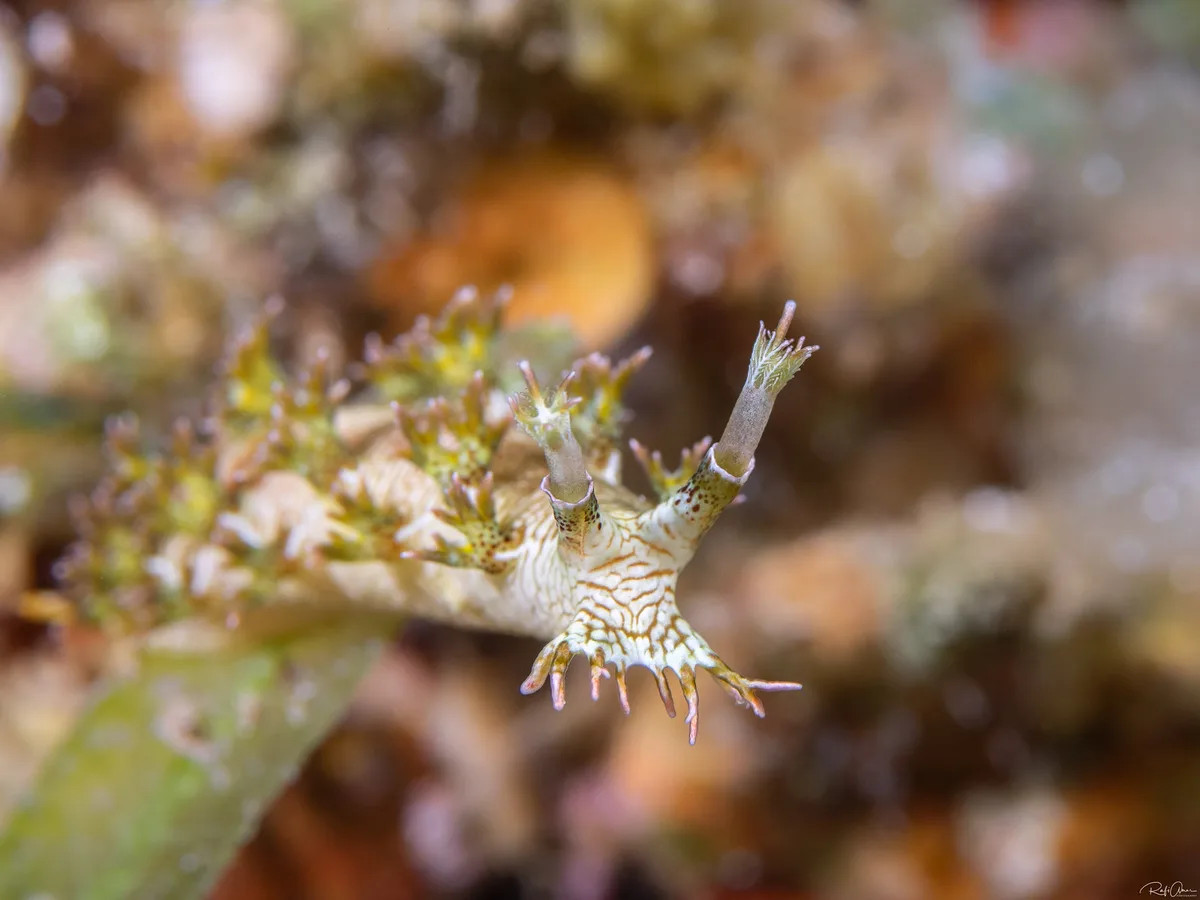
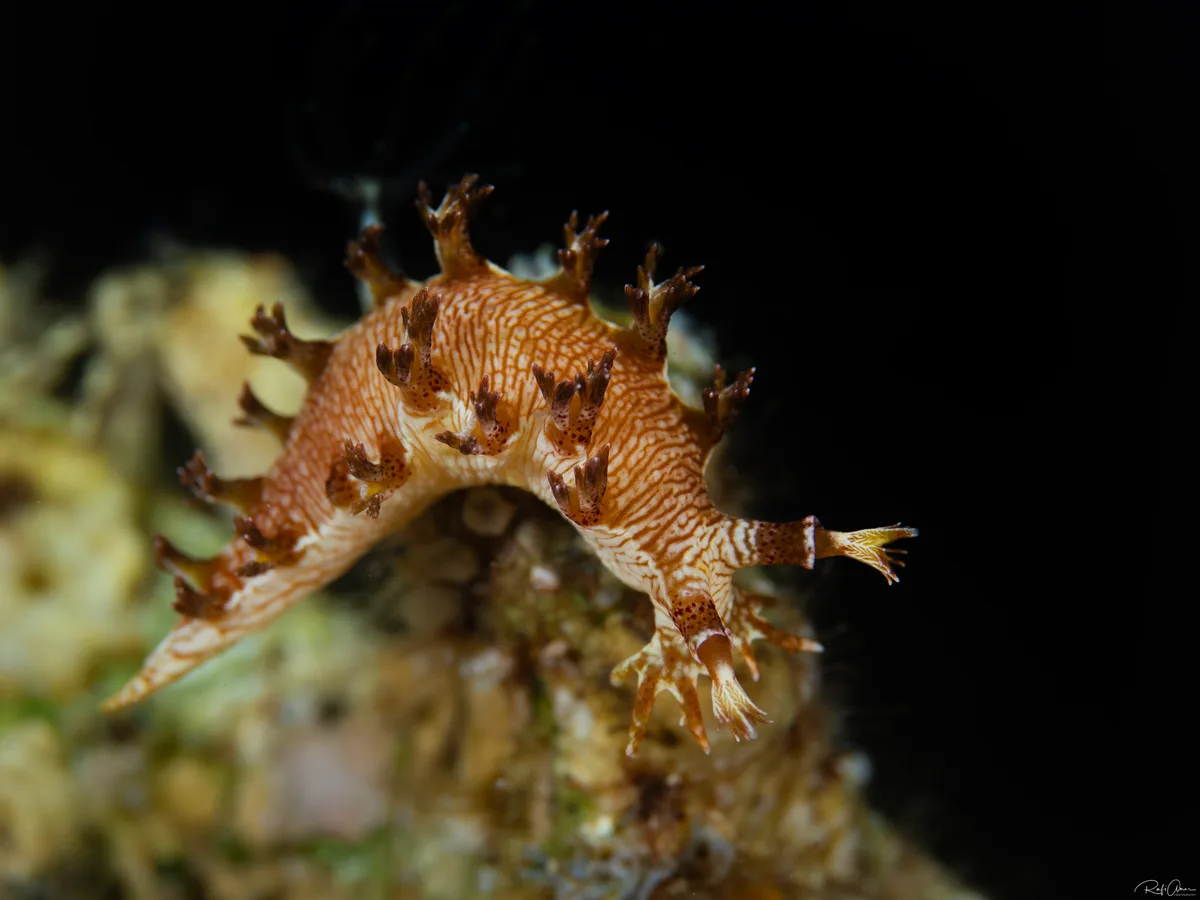
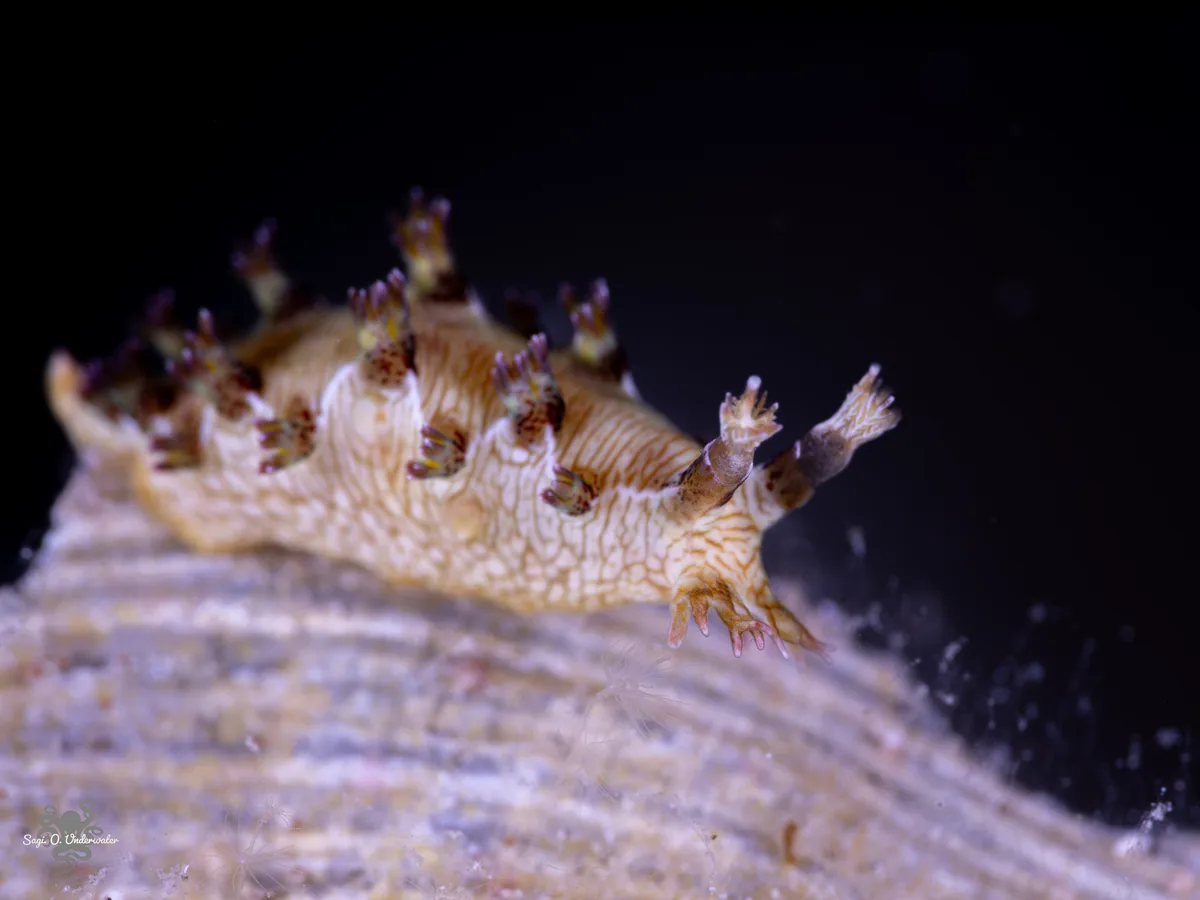
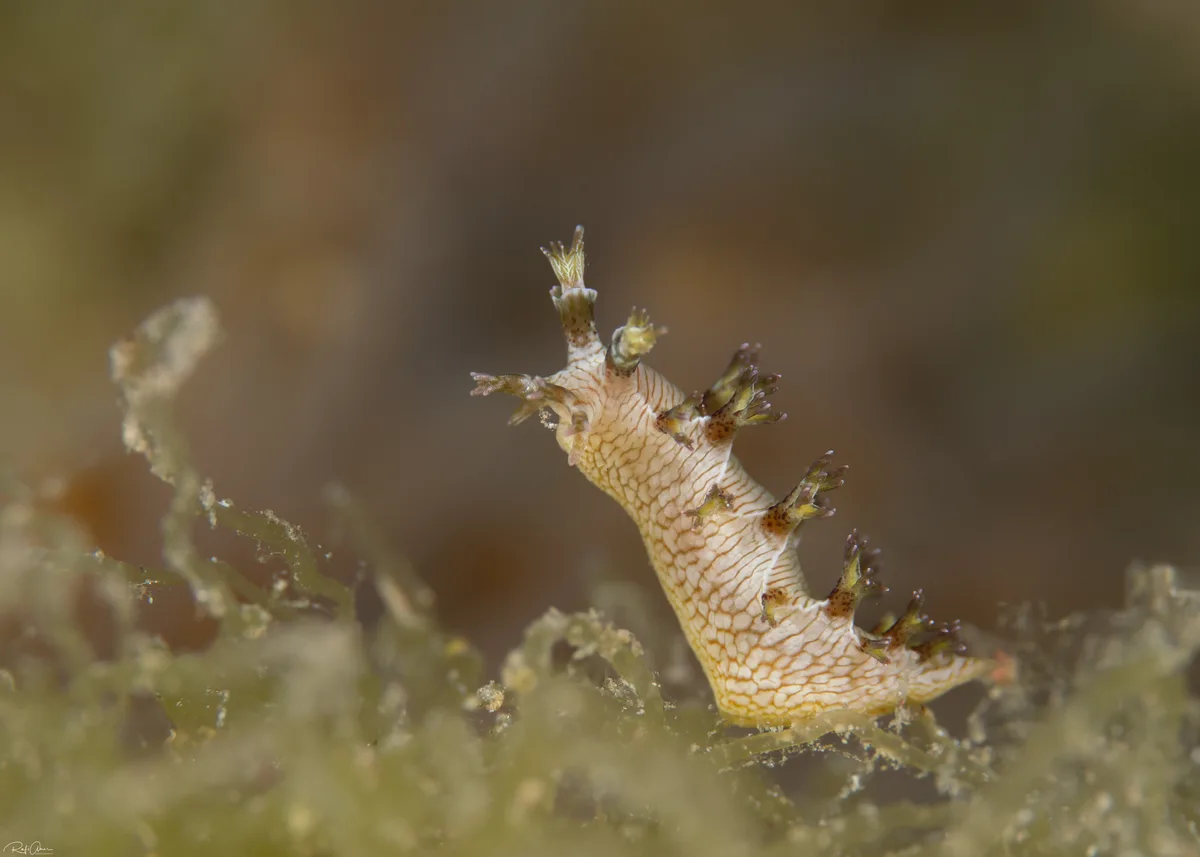
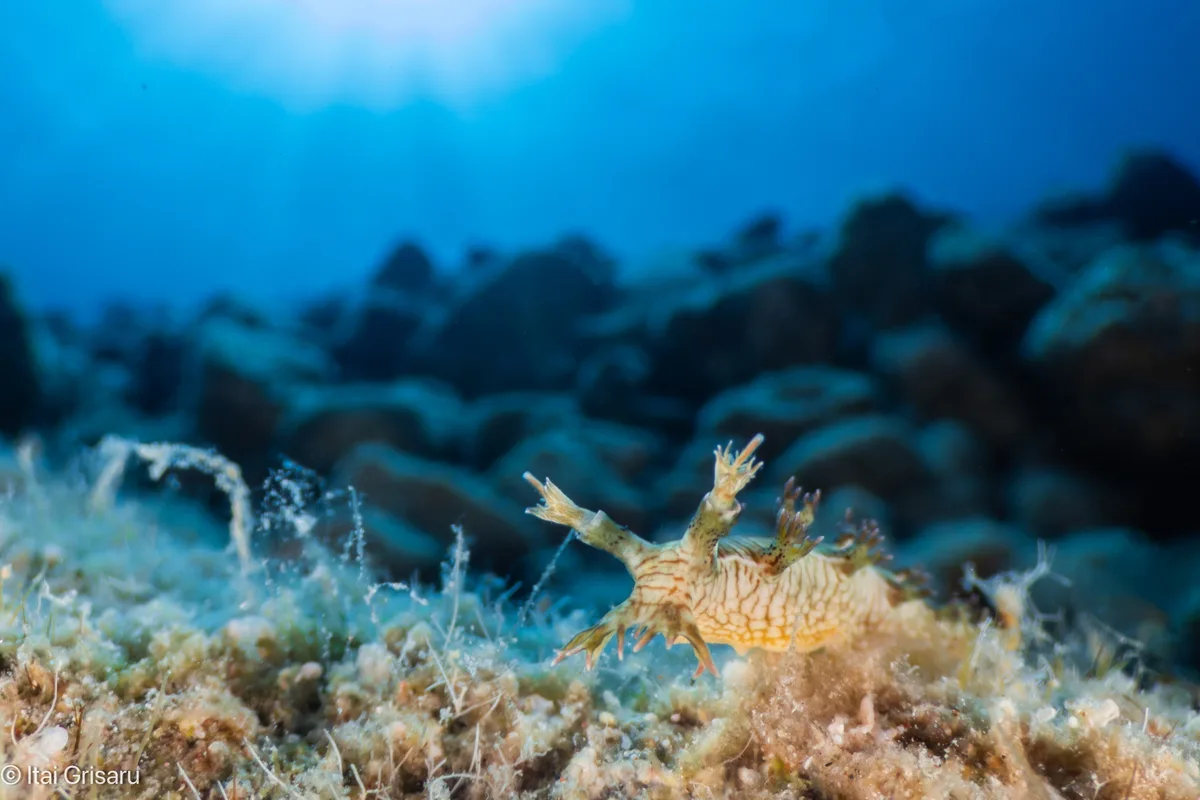
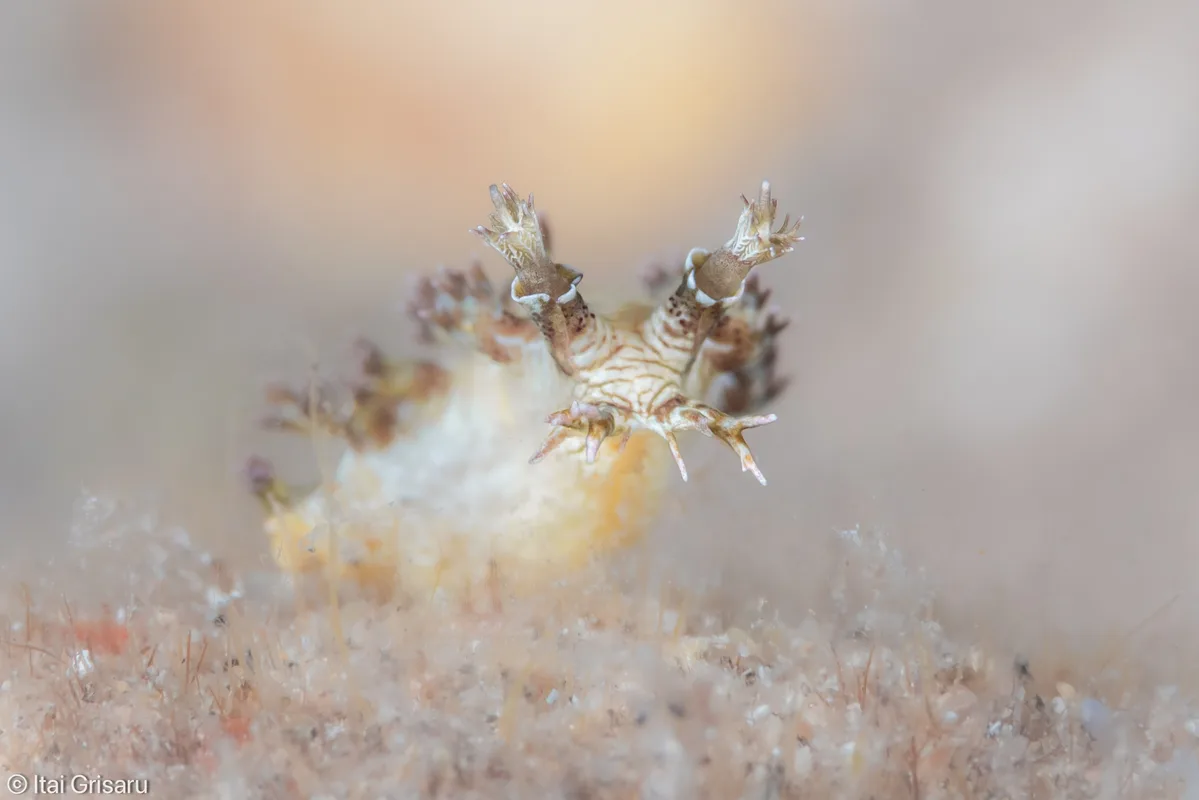
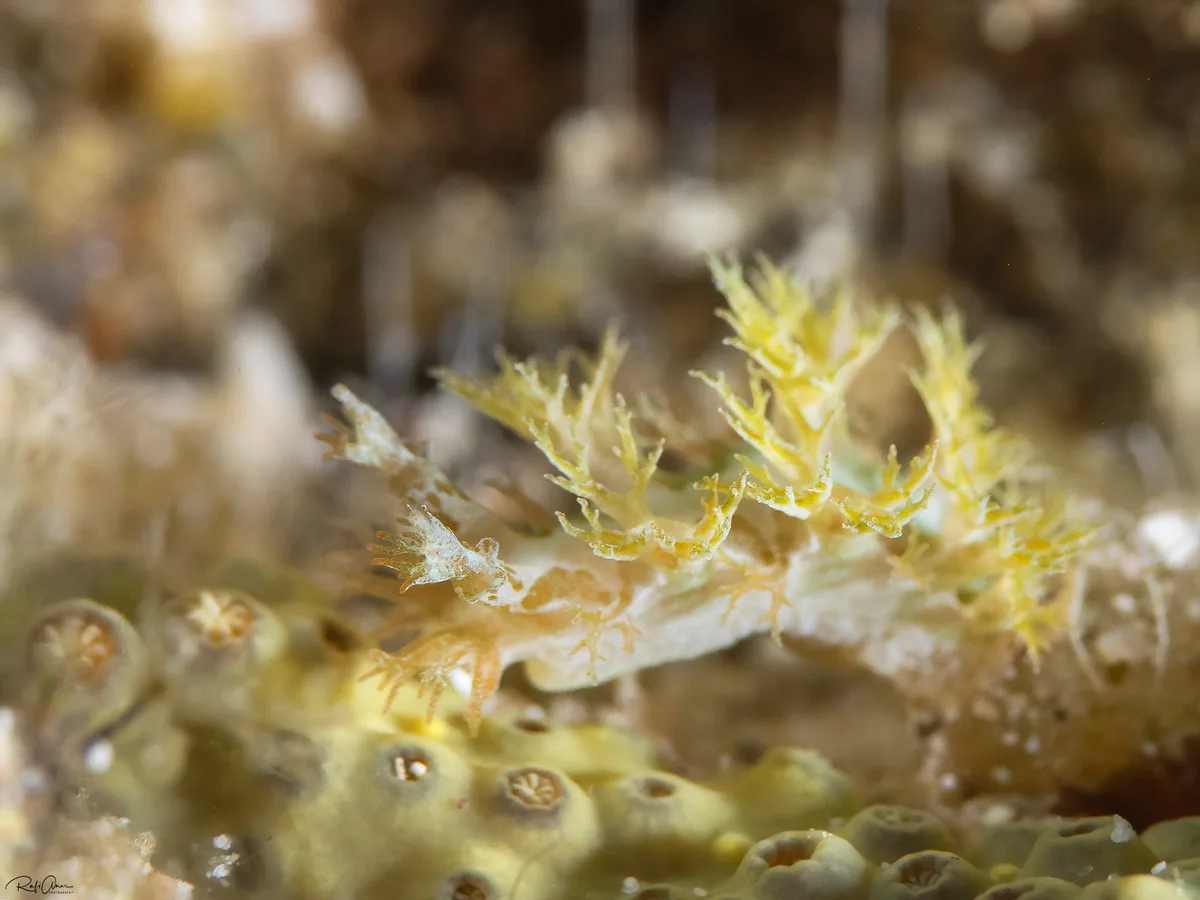
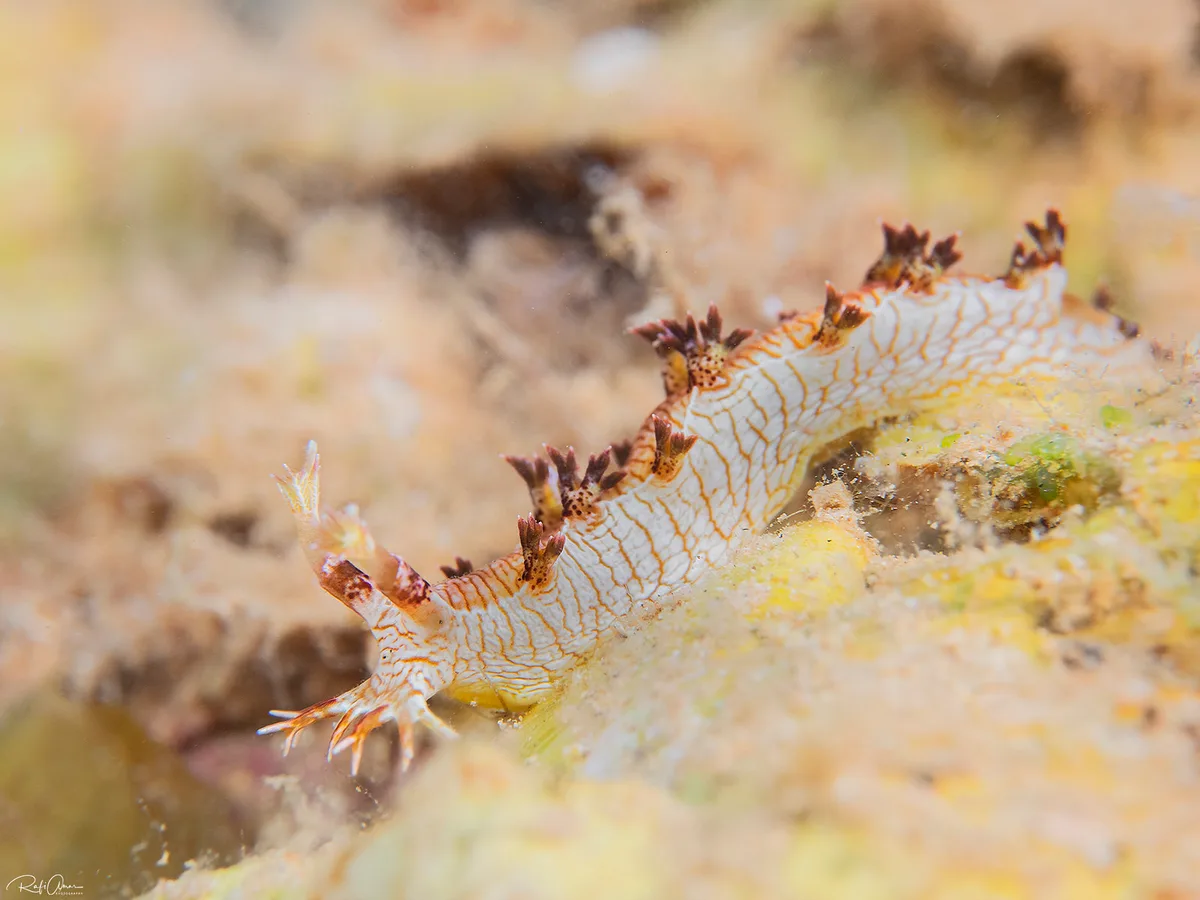
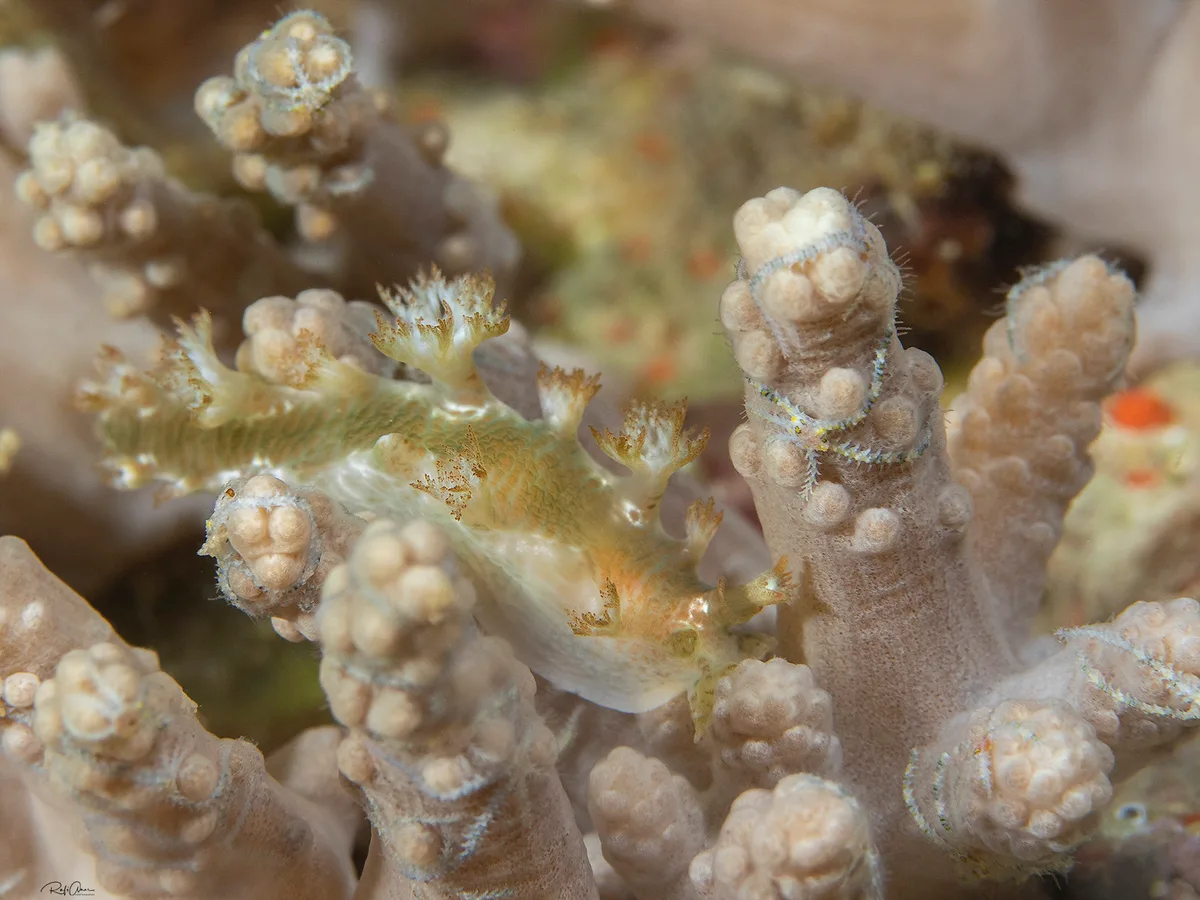
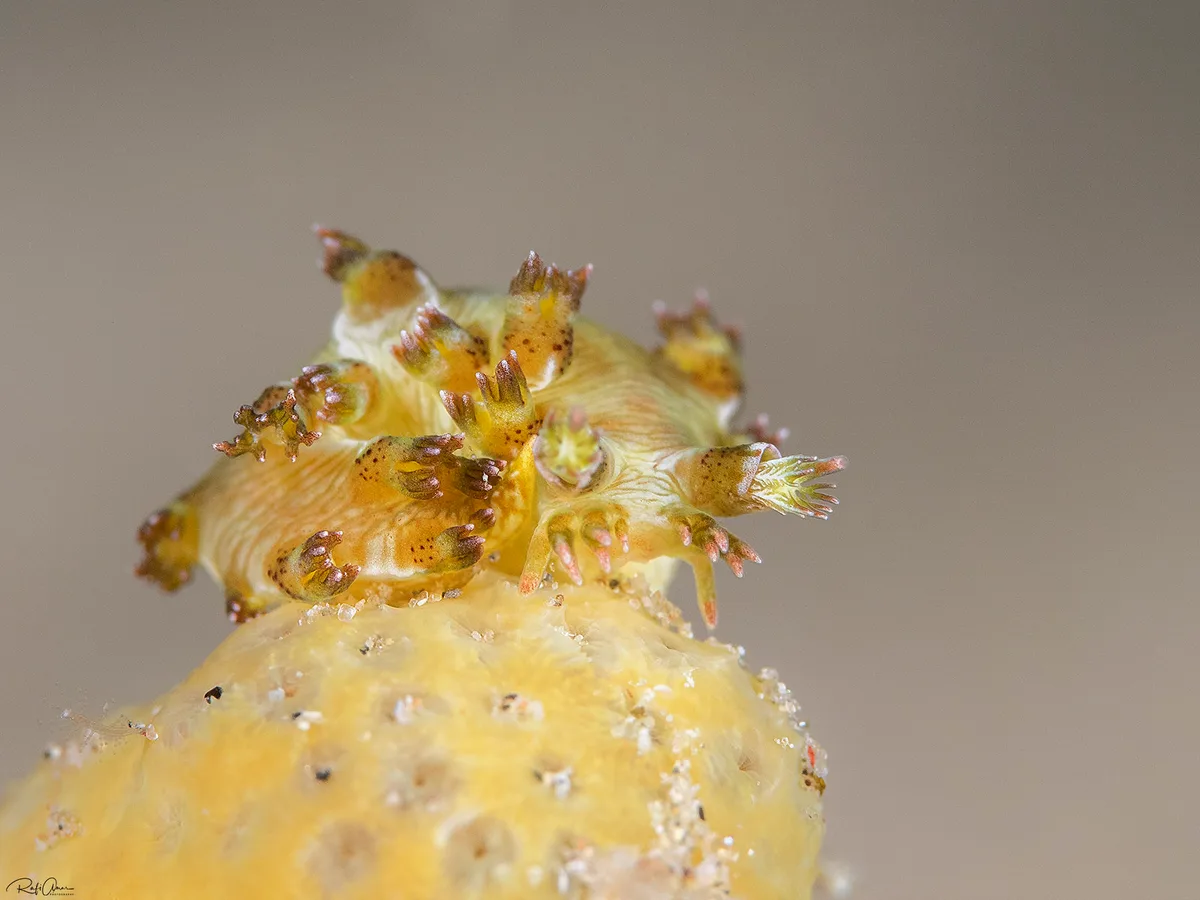
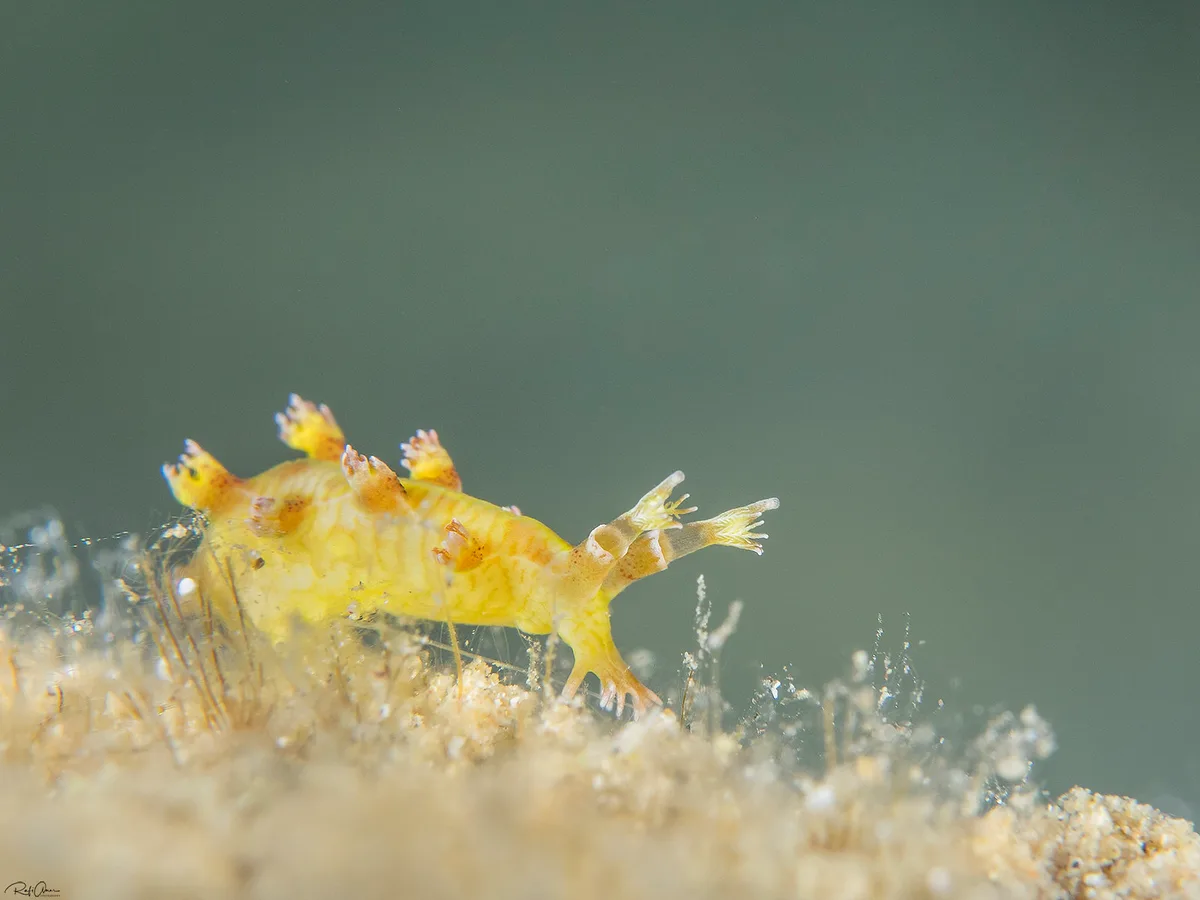
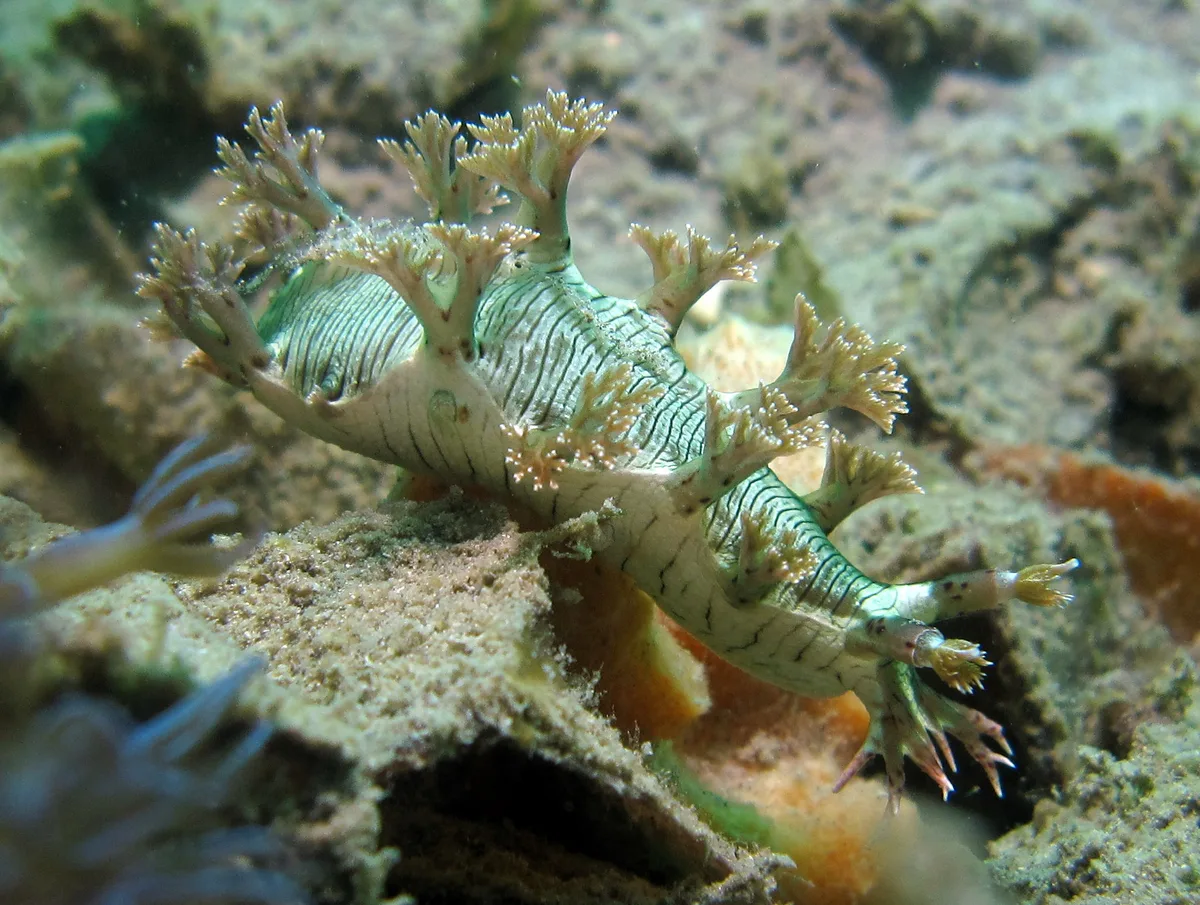
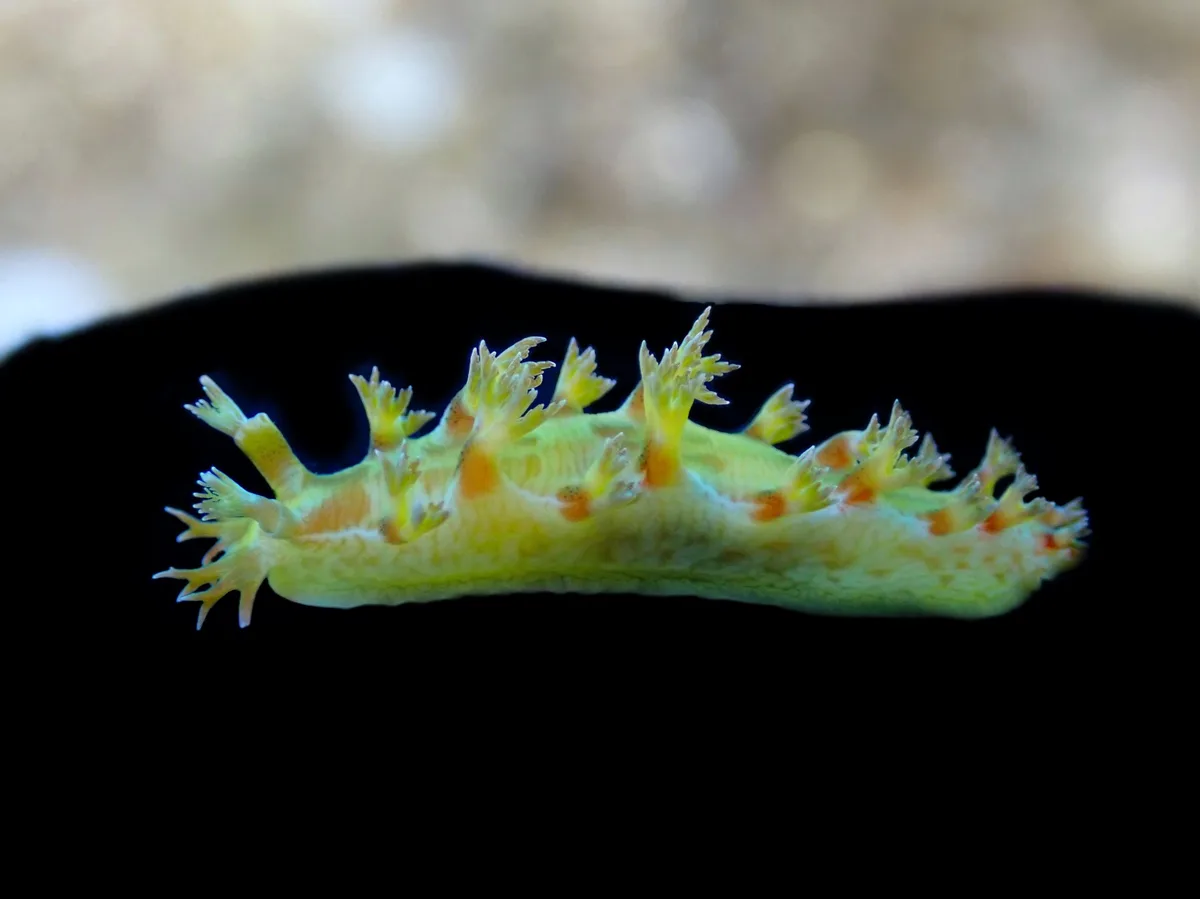
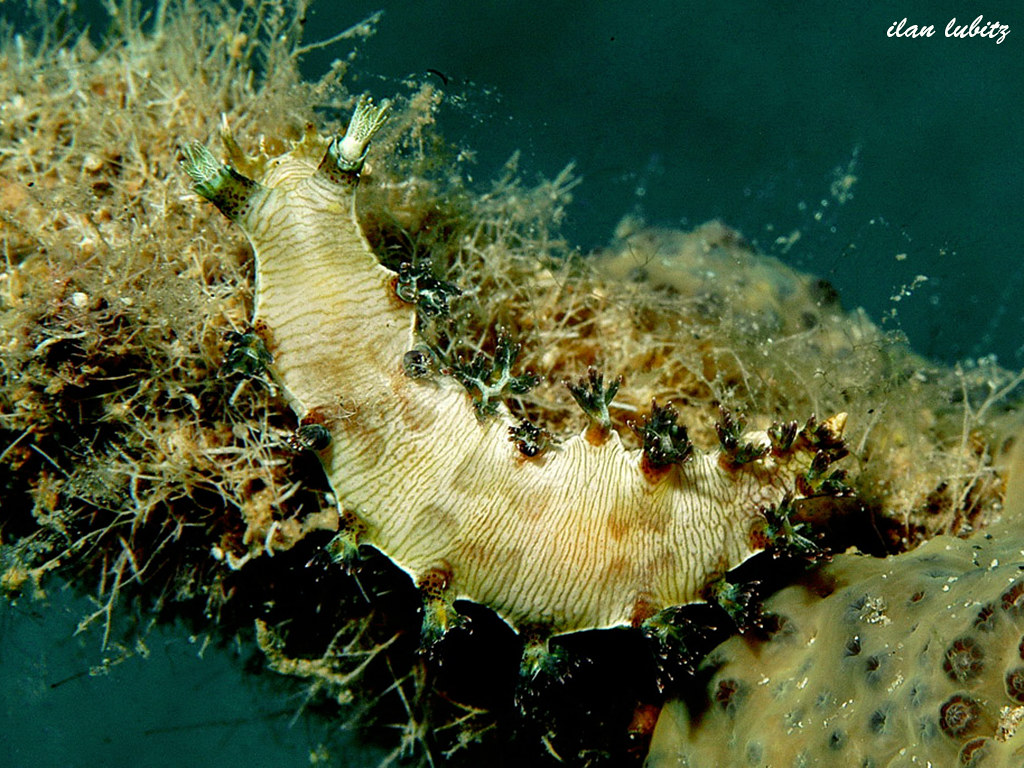
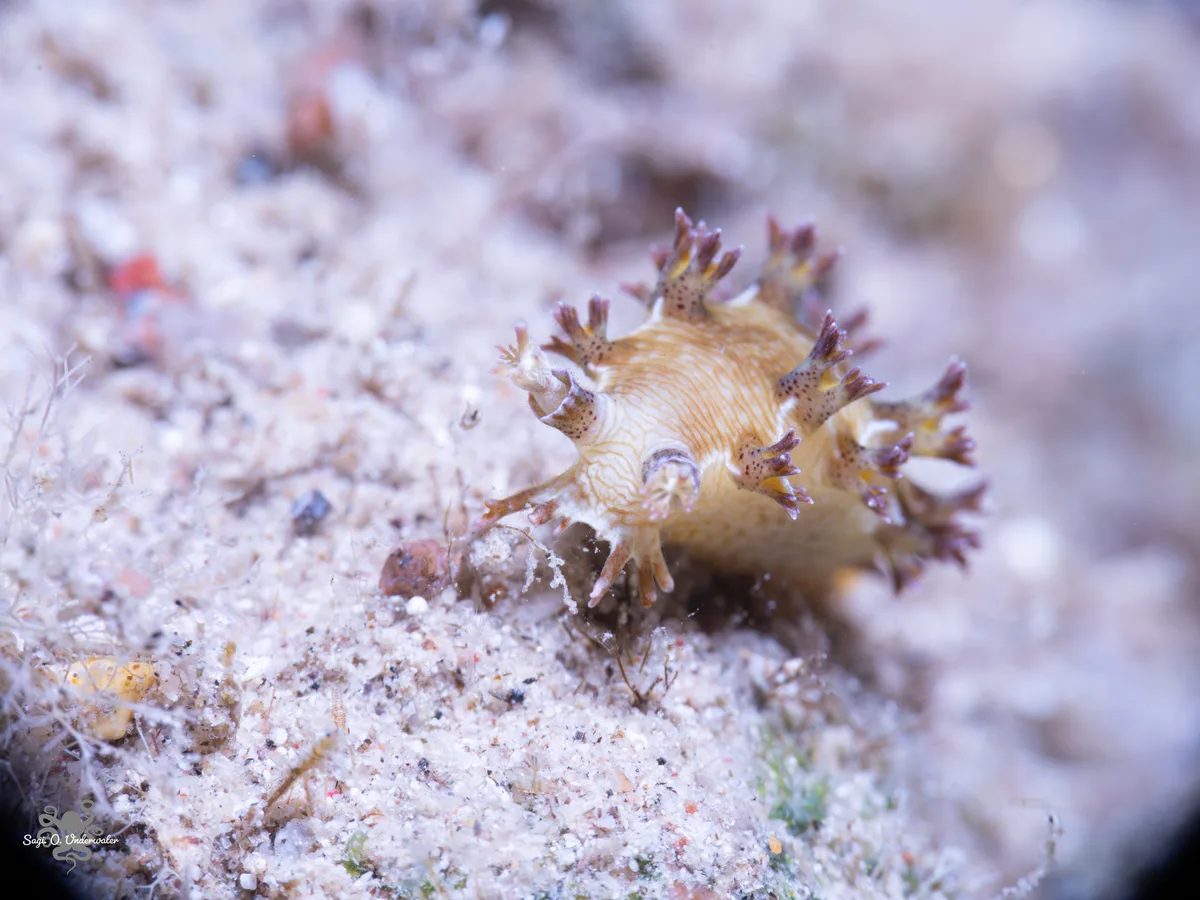
There are now five of these on this reef and they are separated almost entirely by what is drawn on the back, because everything else about them is the same animal.
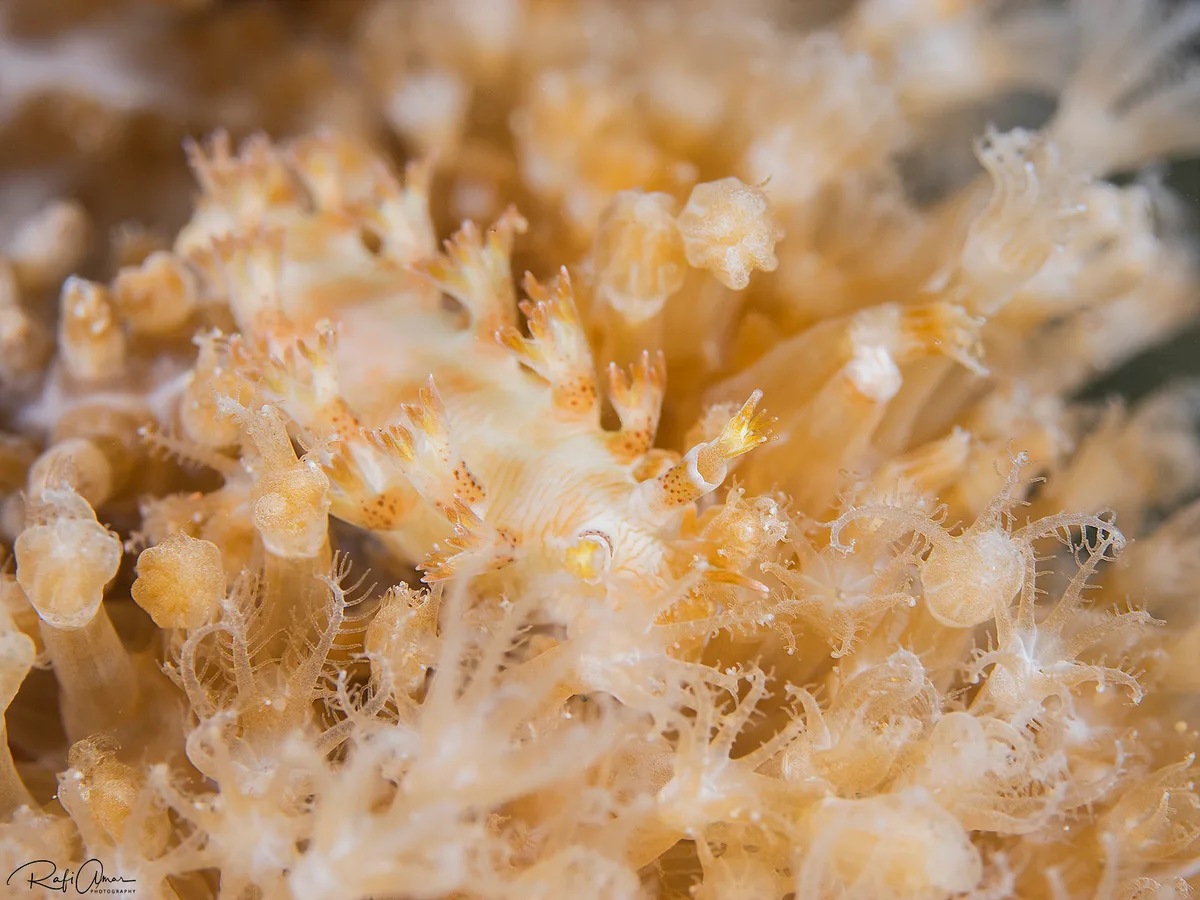
The shared design is the tritoniid one. No gill rosette; instead a row of branched tufts down each flank. A veil across the front of the head, divided into fine branches and packed with chemical sensors, used to find soft corals in the dark. Nocturnal, crevice-bound by day, feeding polyp by polyp through the night on colonies that most grazers will not touch because of the chemistry in them.
Given that, the back is the key. This one carries brown lines running transversely, across the body rather than down it, on a white to light brown ground. Its relatives here carry a raised net between tubercles, symmetrical dark spots with a pale center, green gills and green rhinophores, or simply size. Read the bars and you have this one.
At four centimeters (1.6 in) it is at the small end of the group, which on this reef runs up to twelve and a half.
One note on the label. Taxonomists have moved the species into the genus Marioniopsis. The regional book and the photographic databases still carry it as Marionia, which is the name to search on and the reason it appears that way here.
- brown lines running across the back, not along it
- white to light brown ground color
- gills as a row of branched tufts down each side, not a plume on the back
- four centimeters, on soft coral after dark