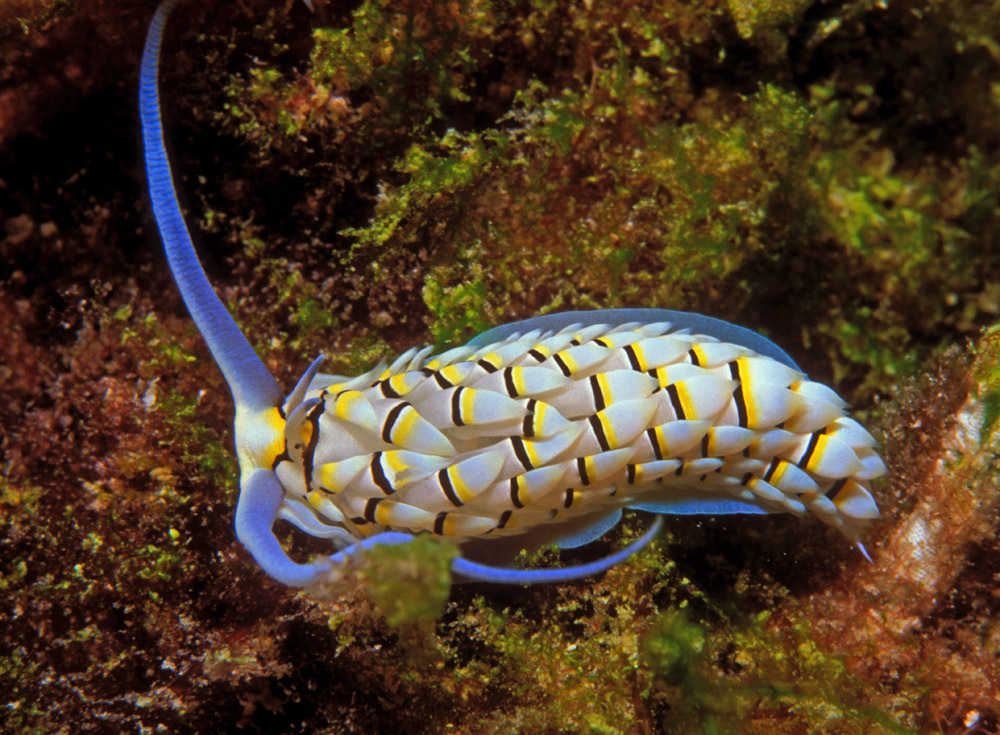
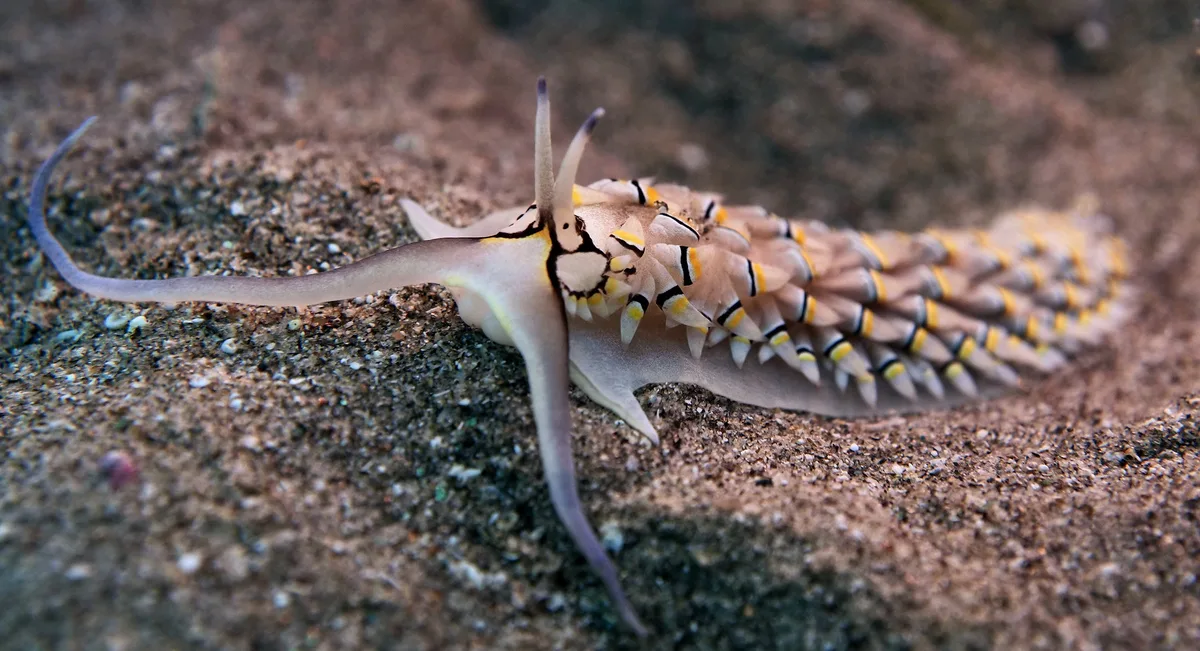
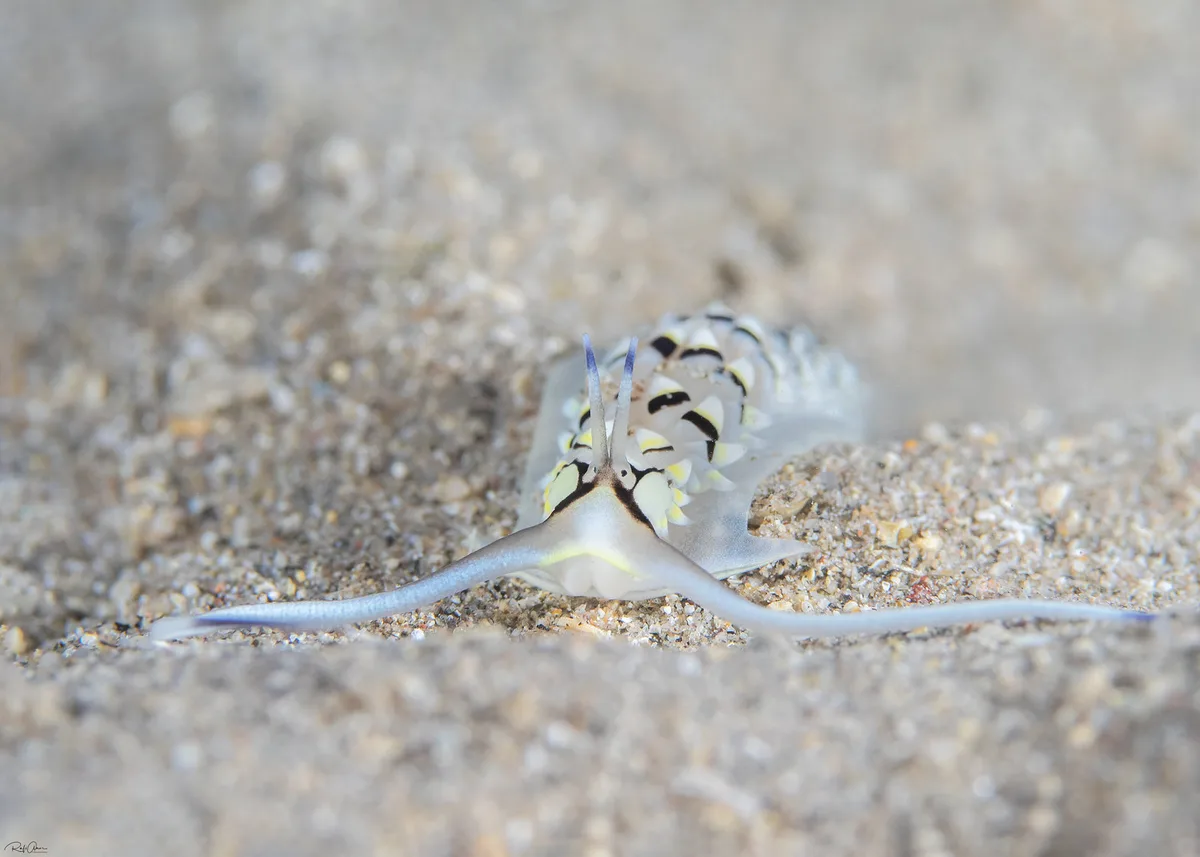
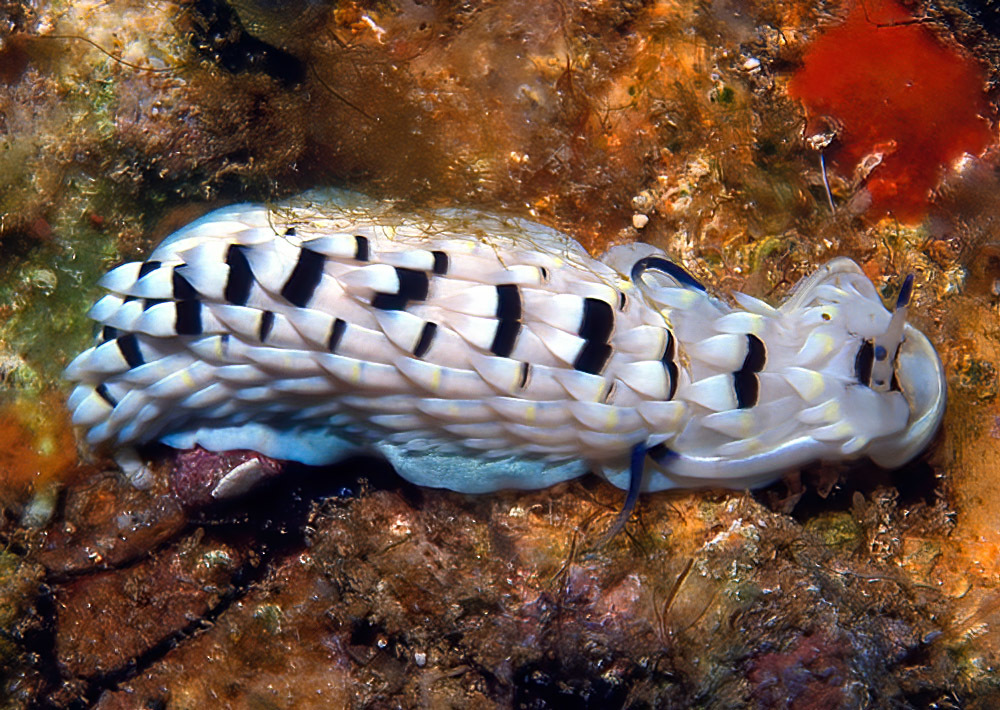
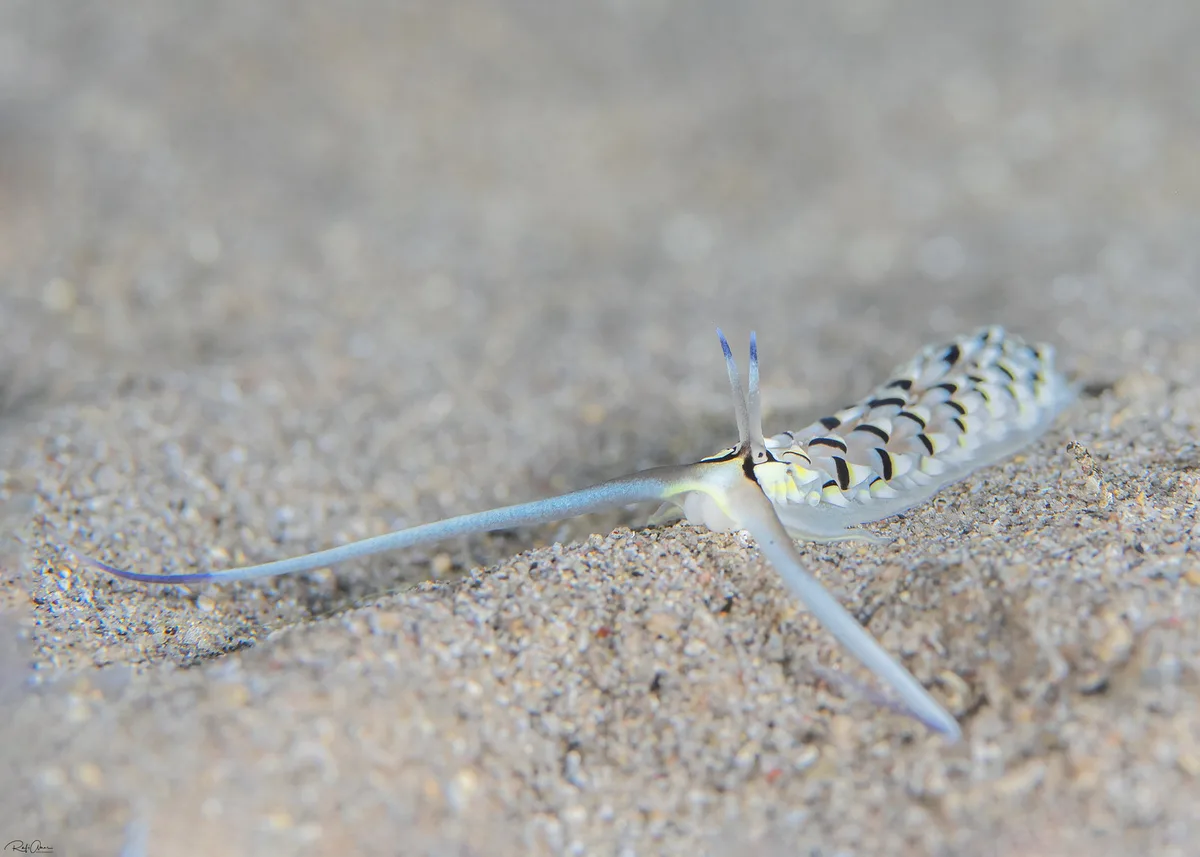
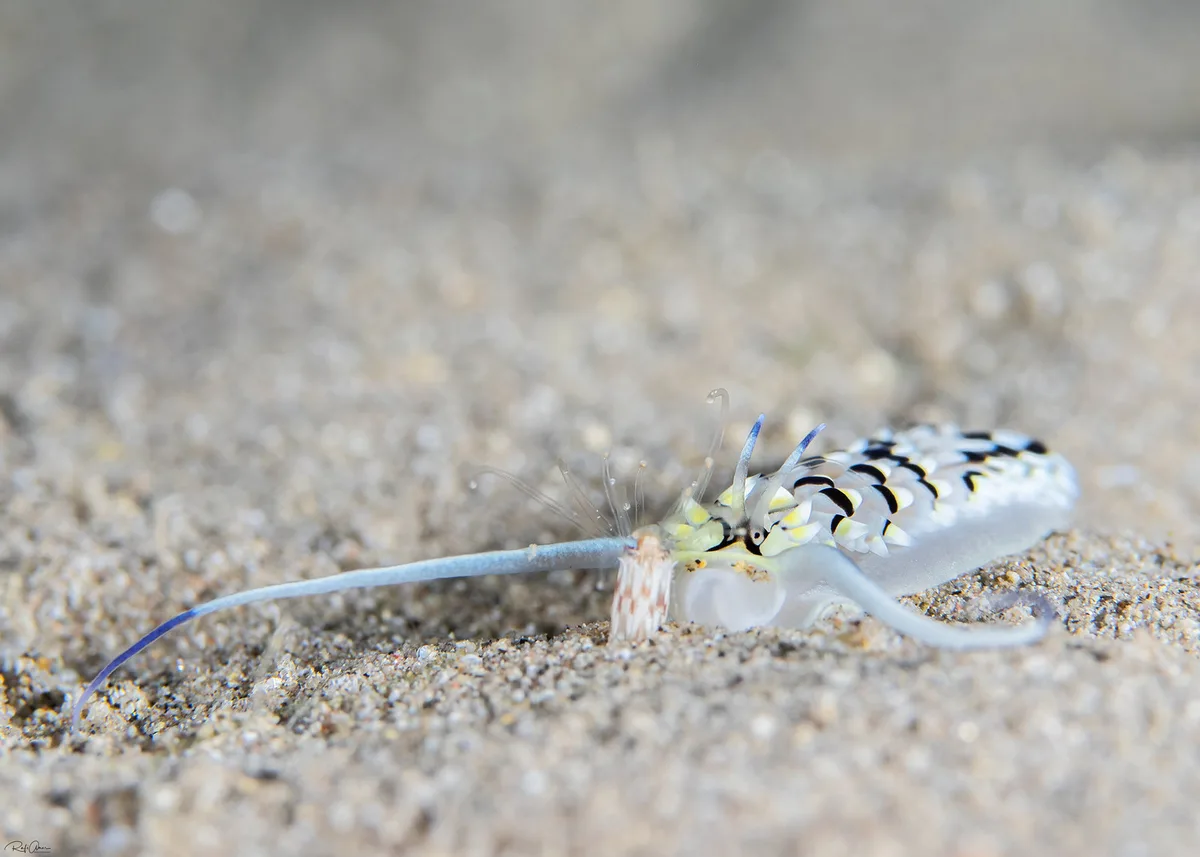
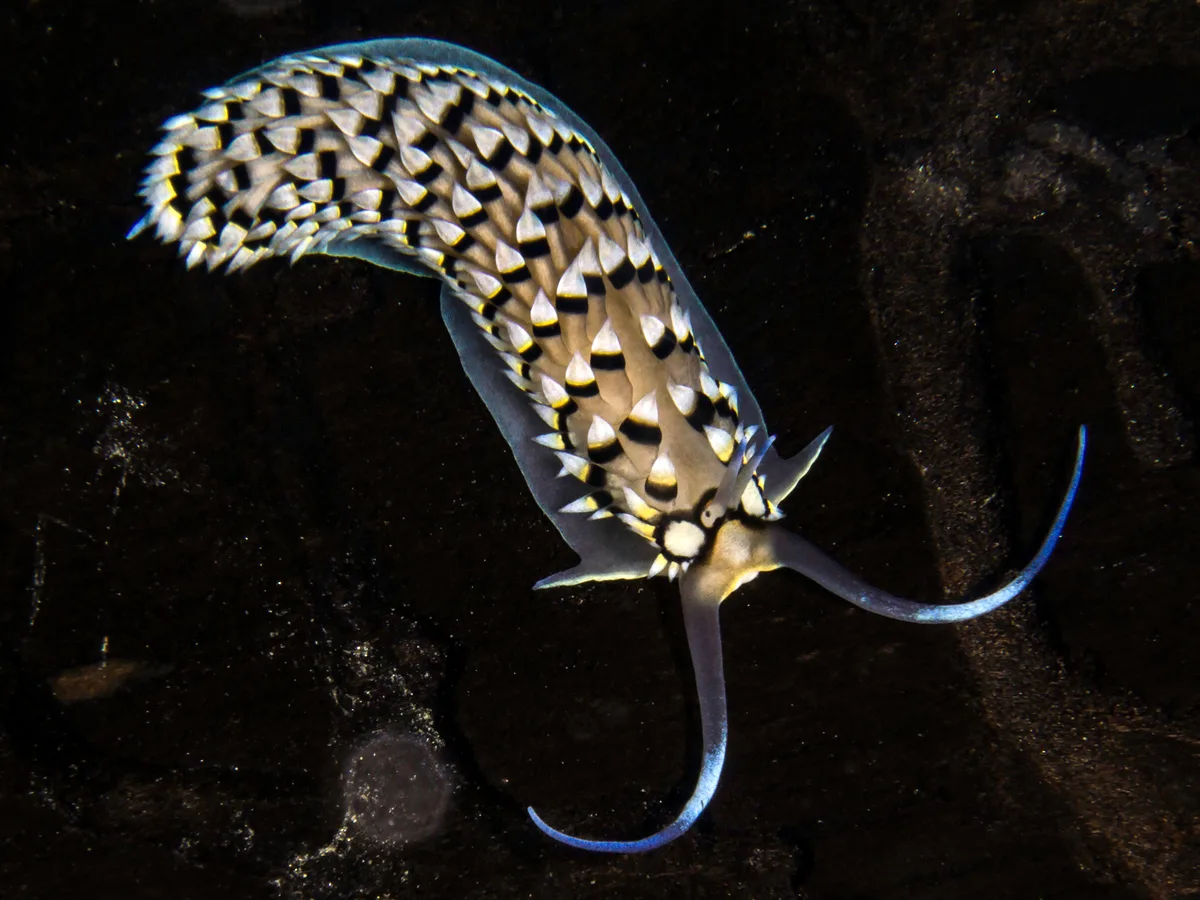
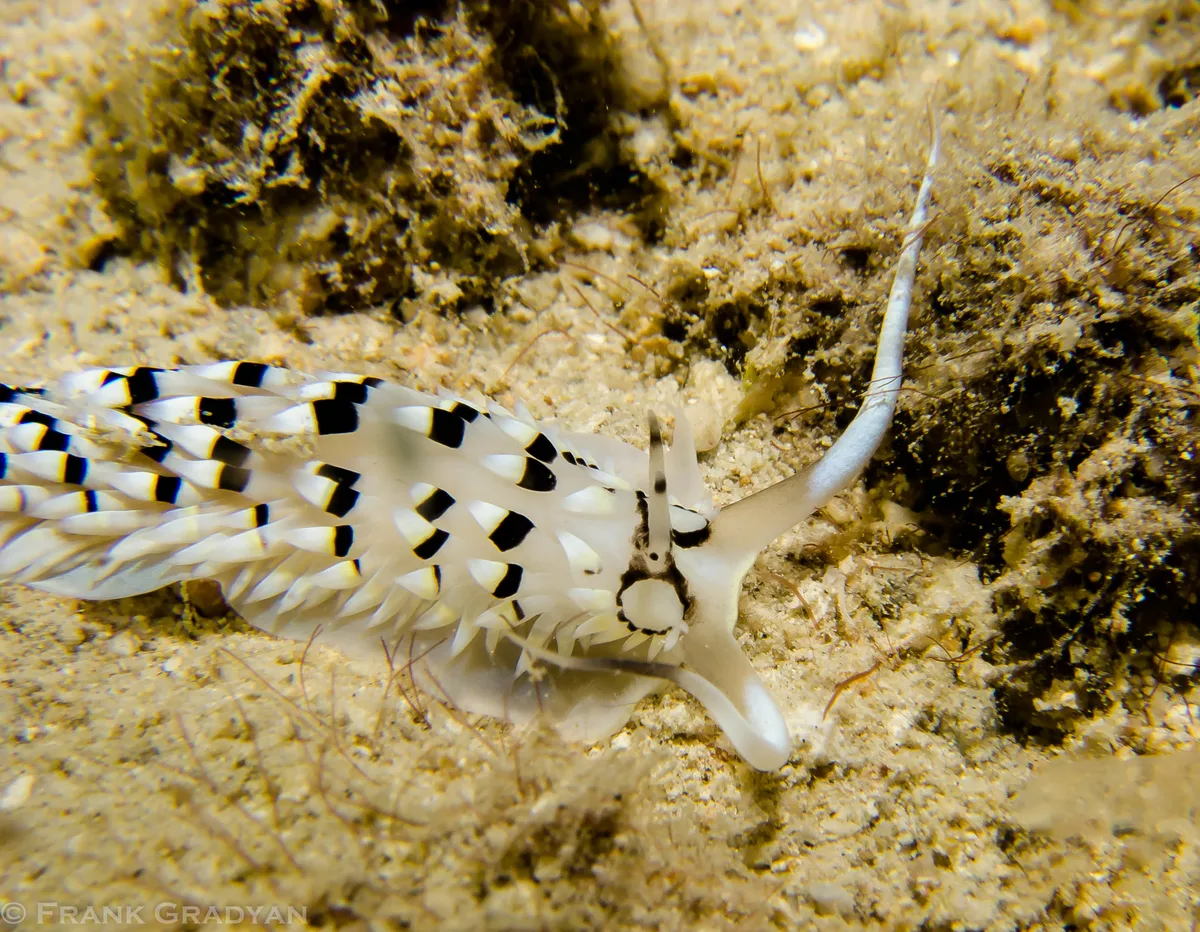
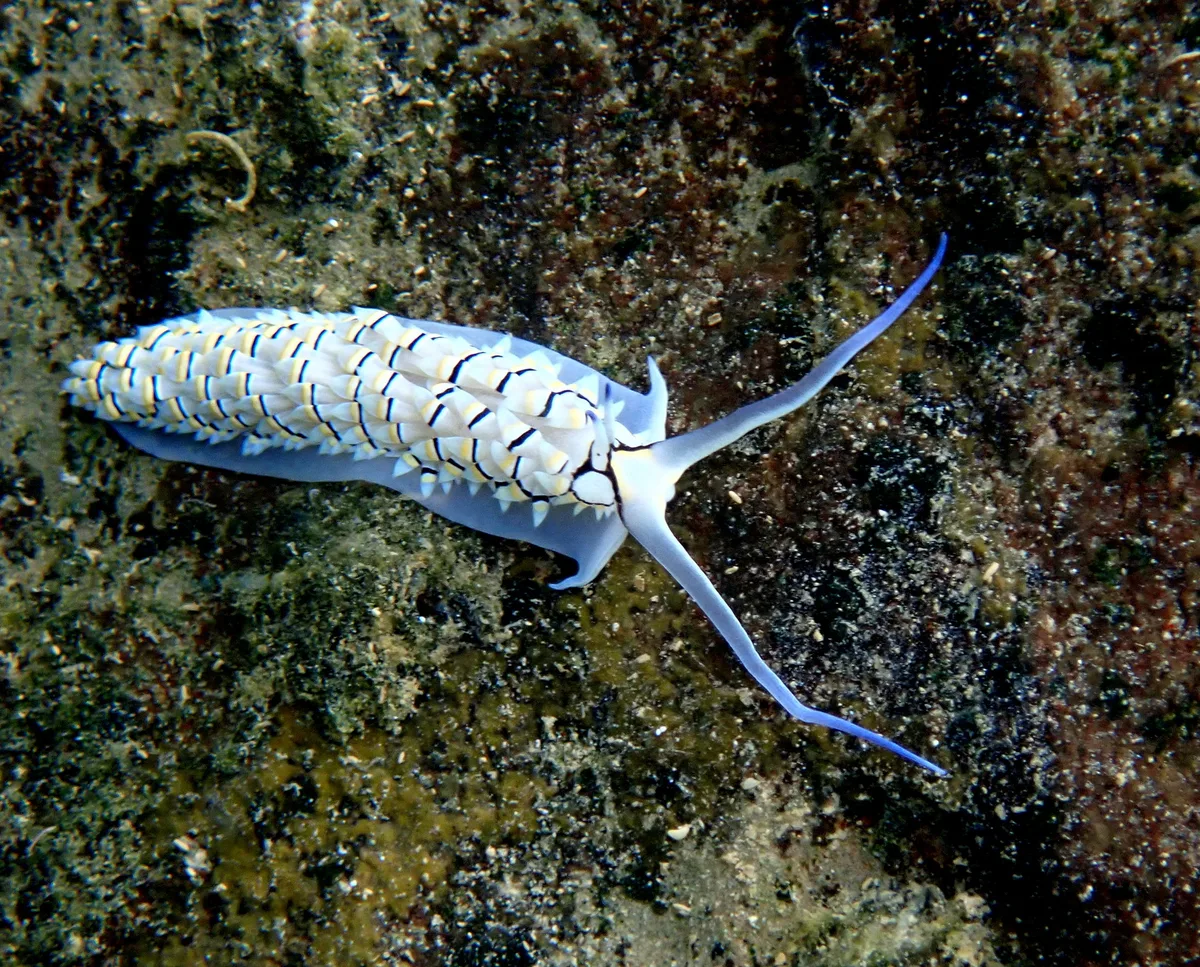
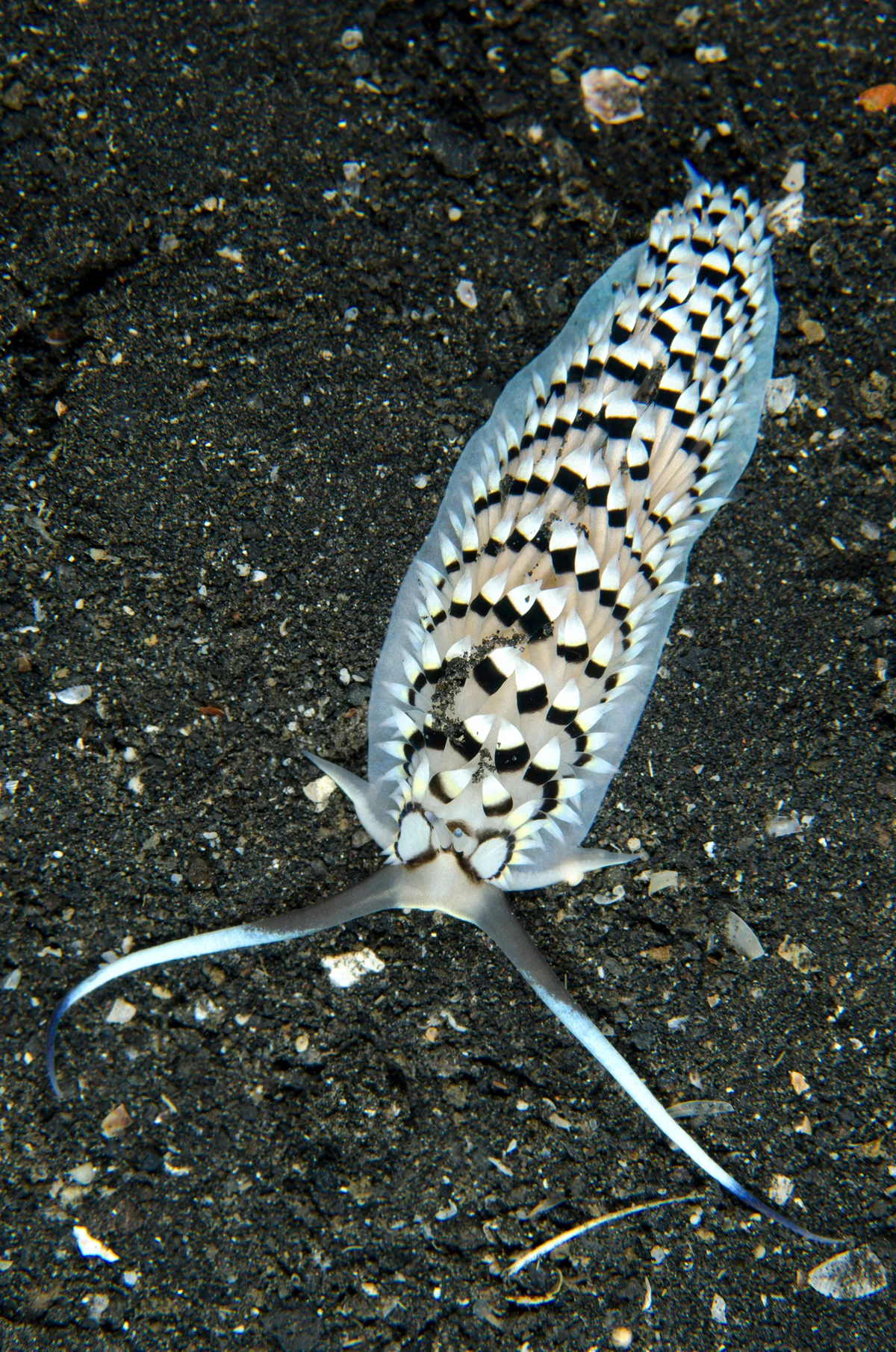
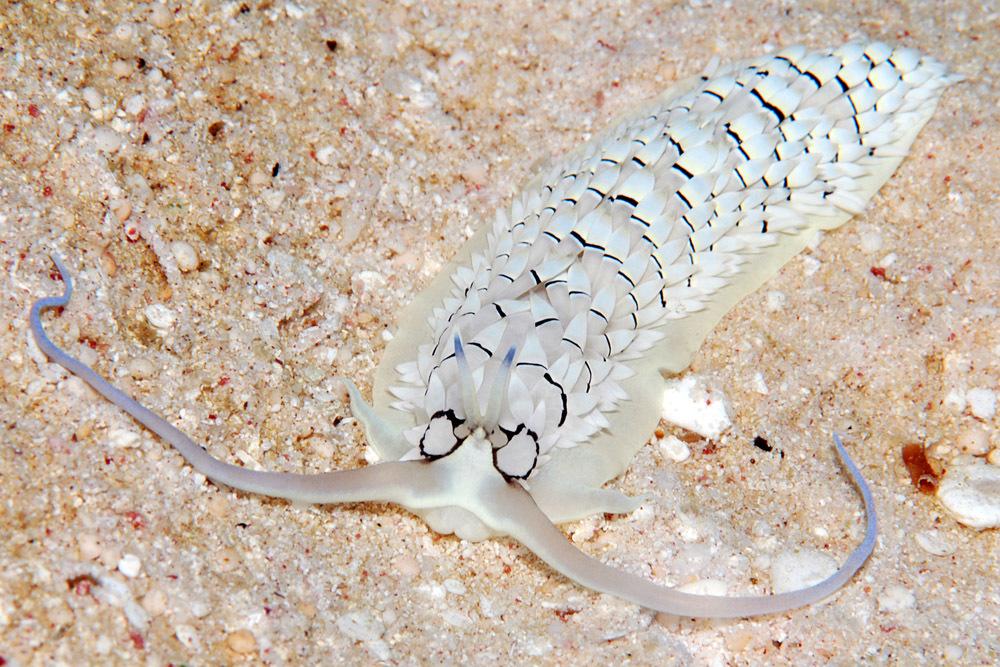
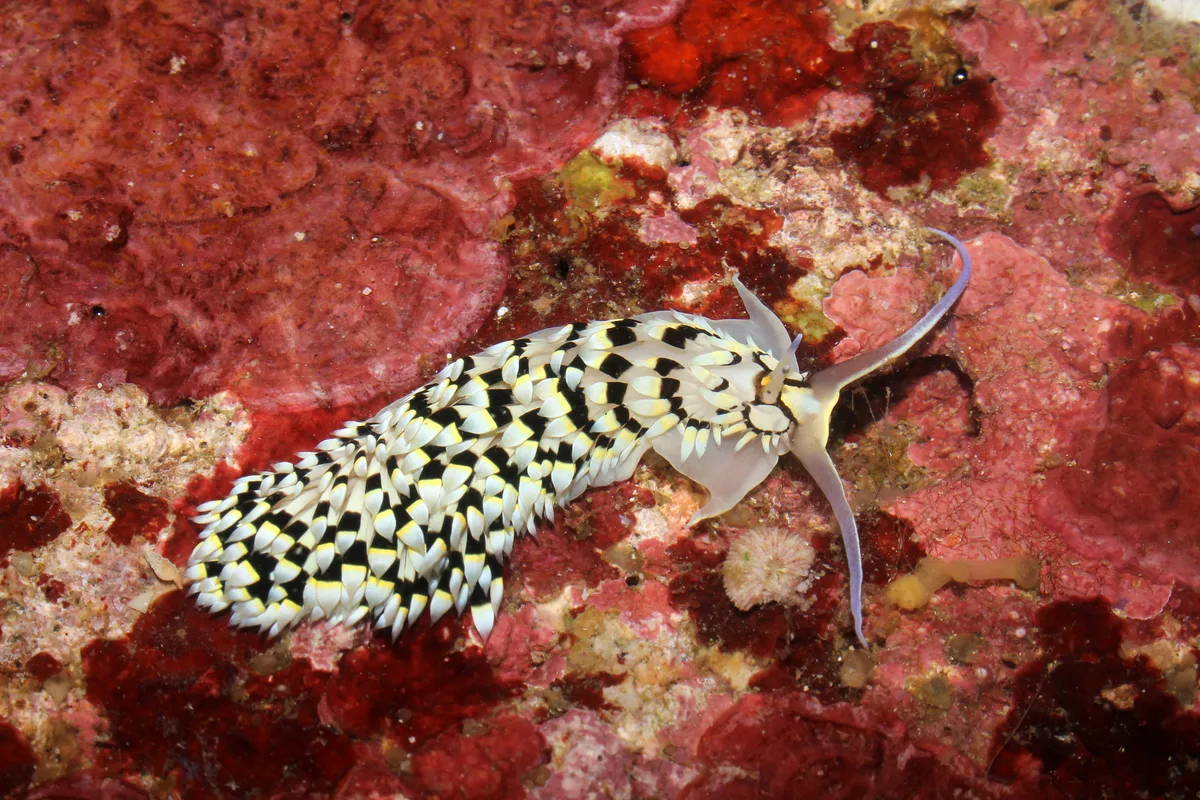
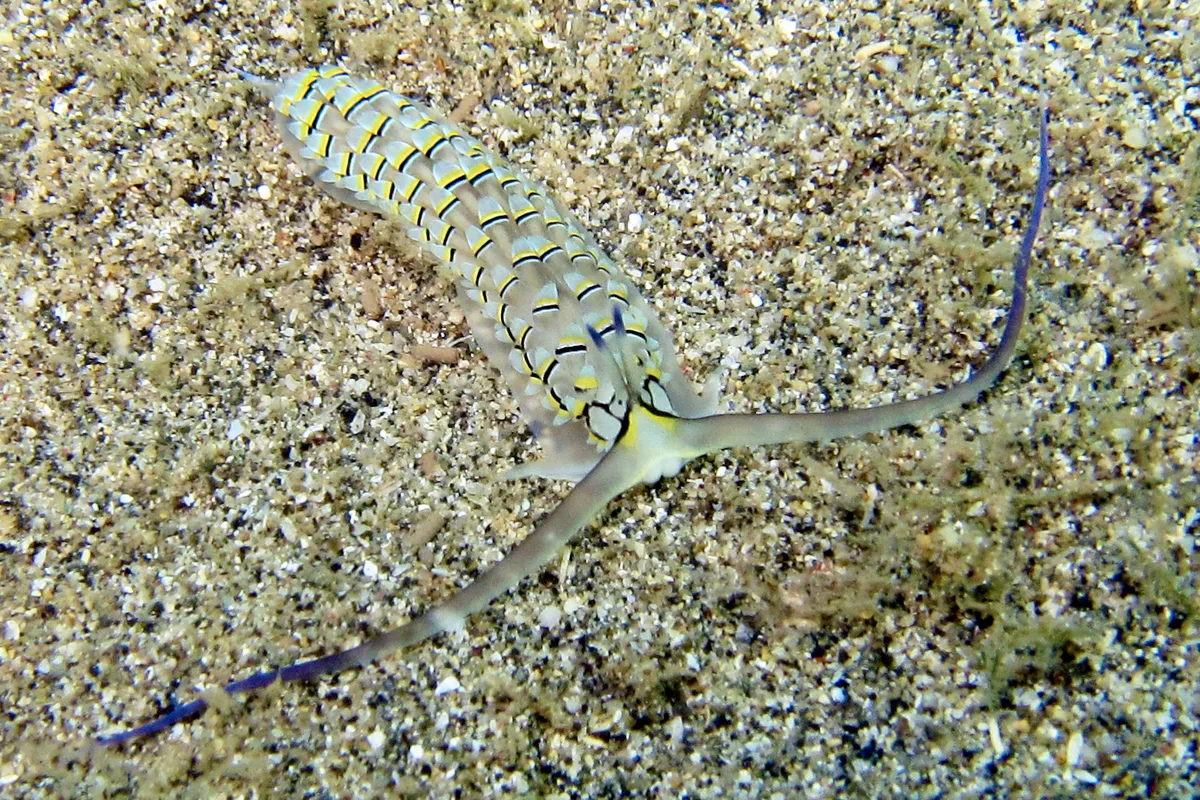
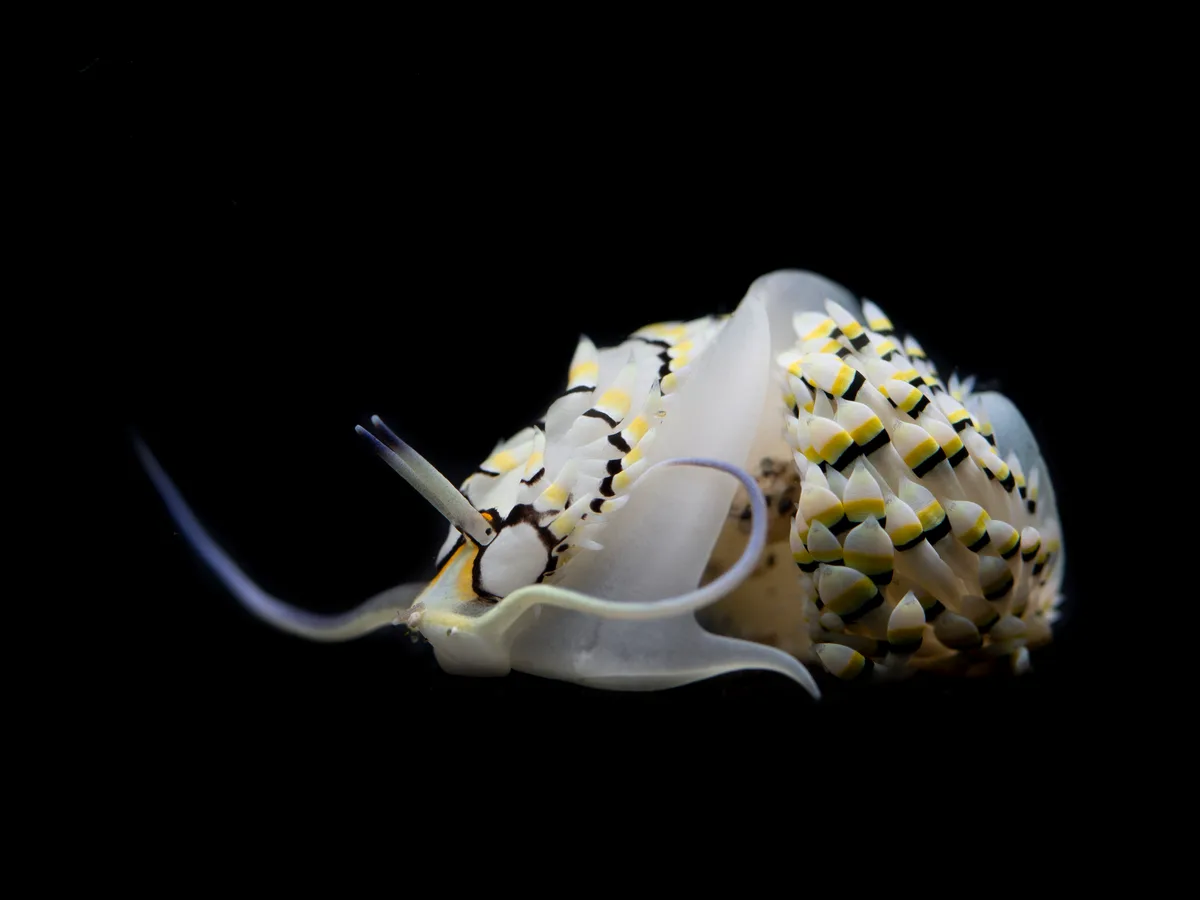
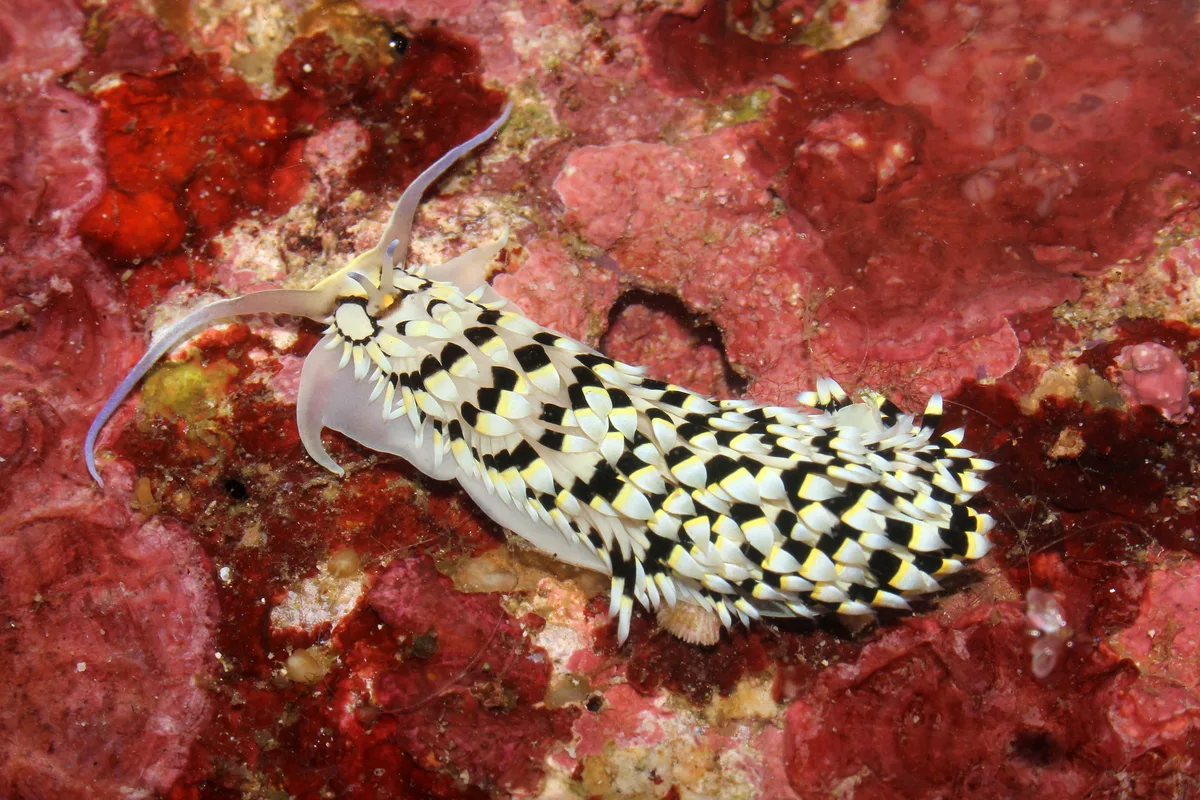
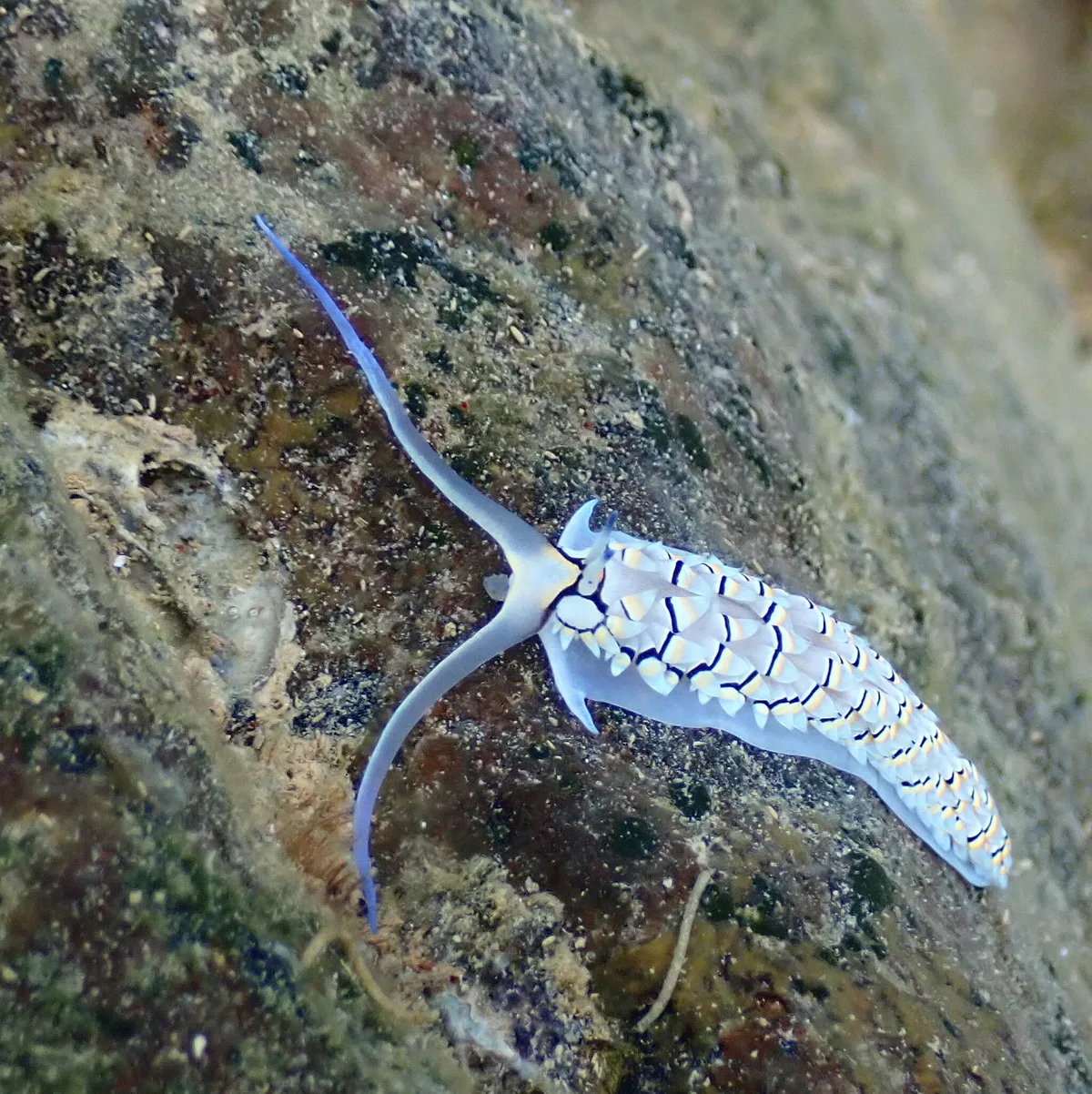
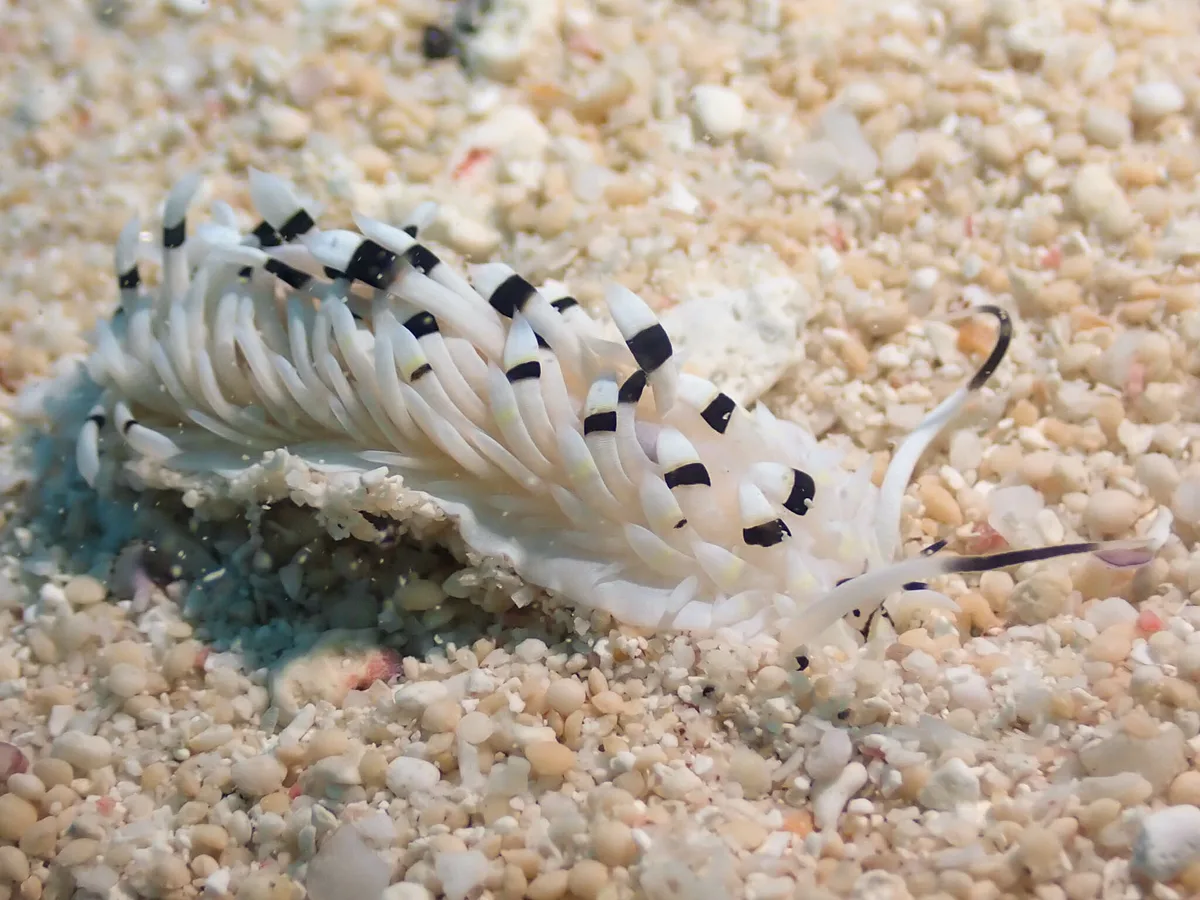
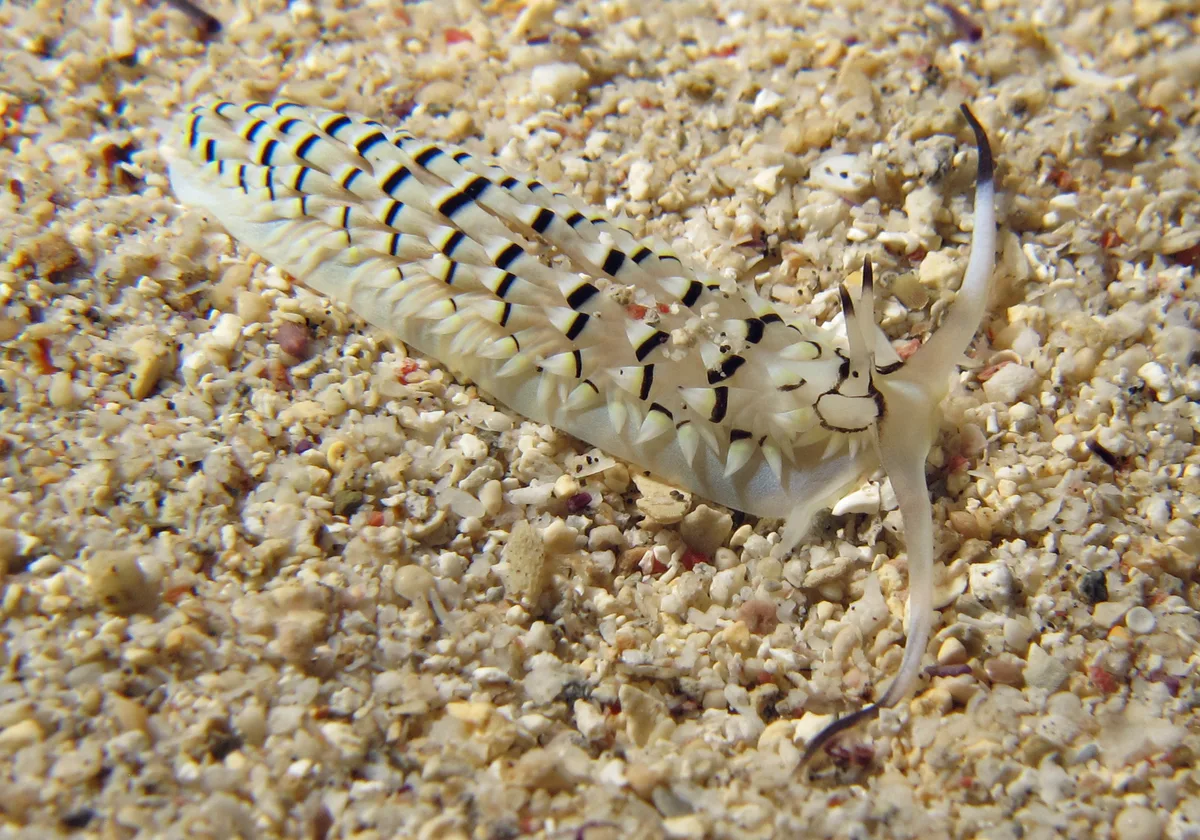
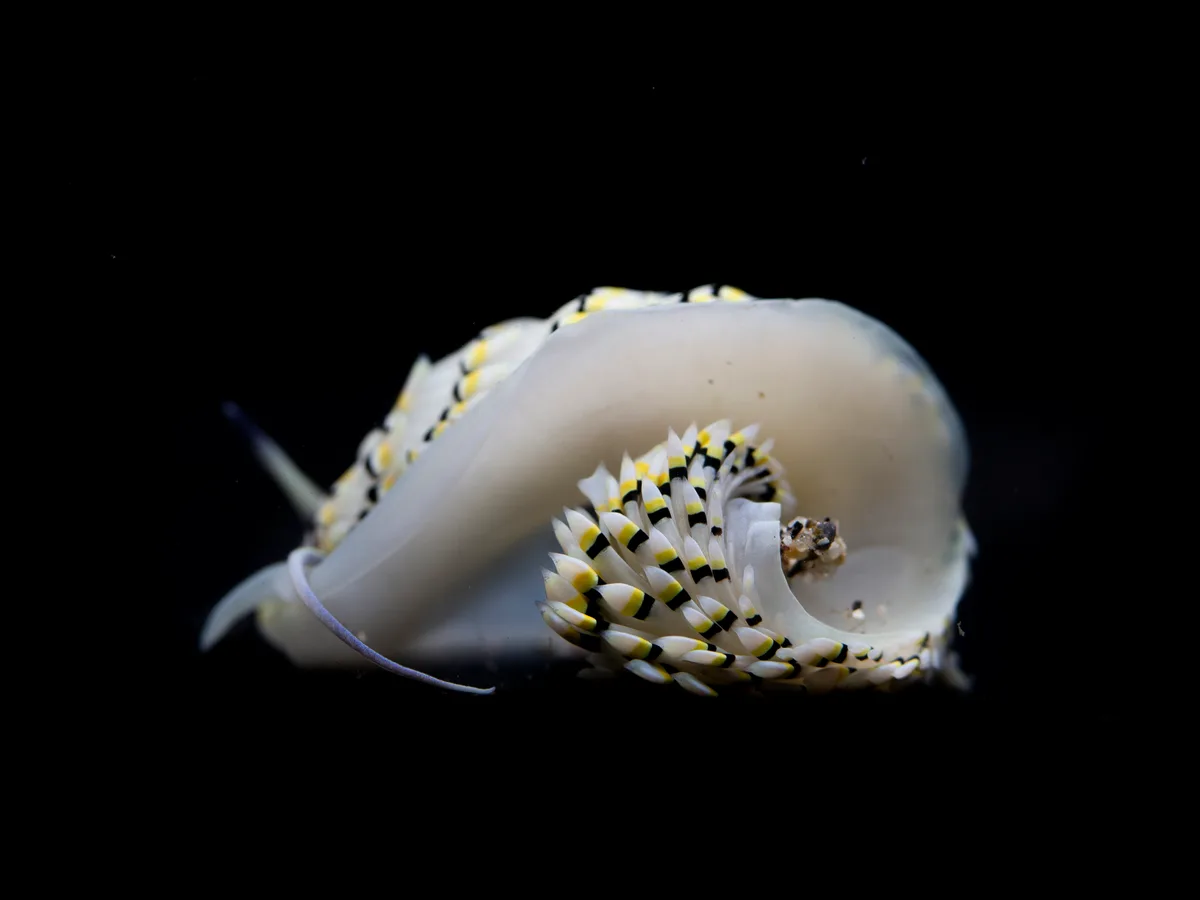
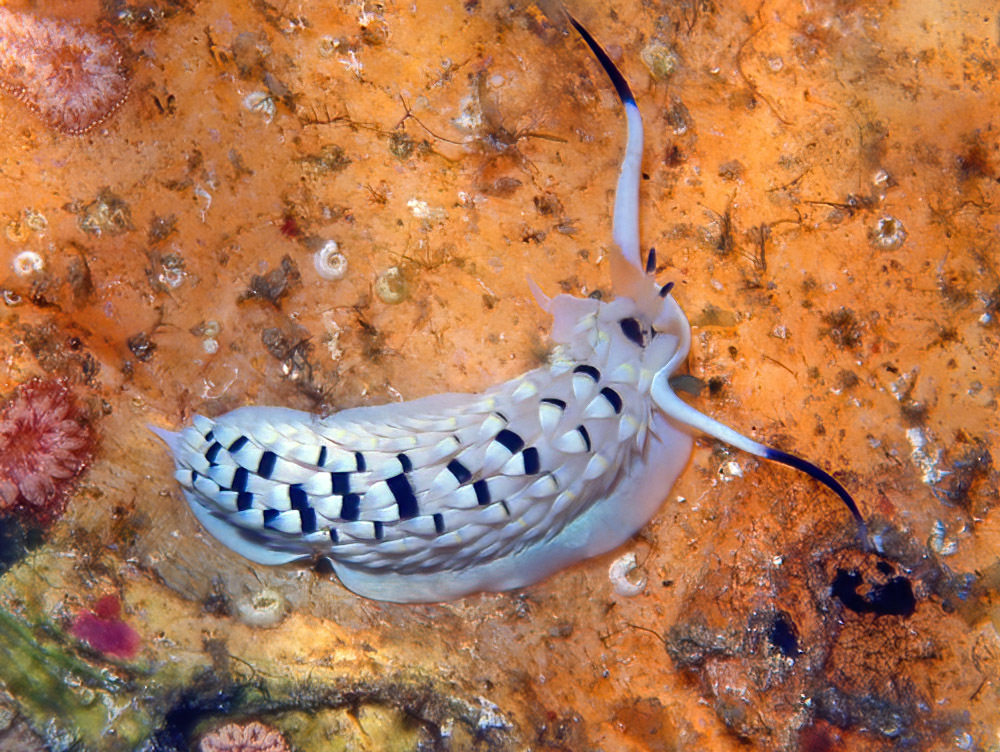
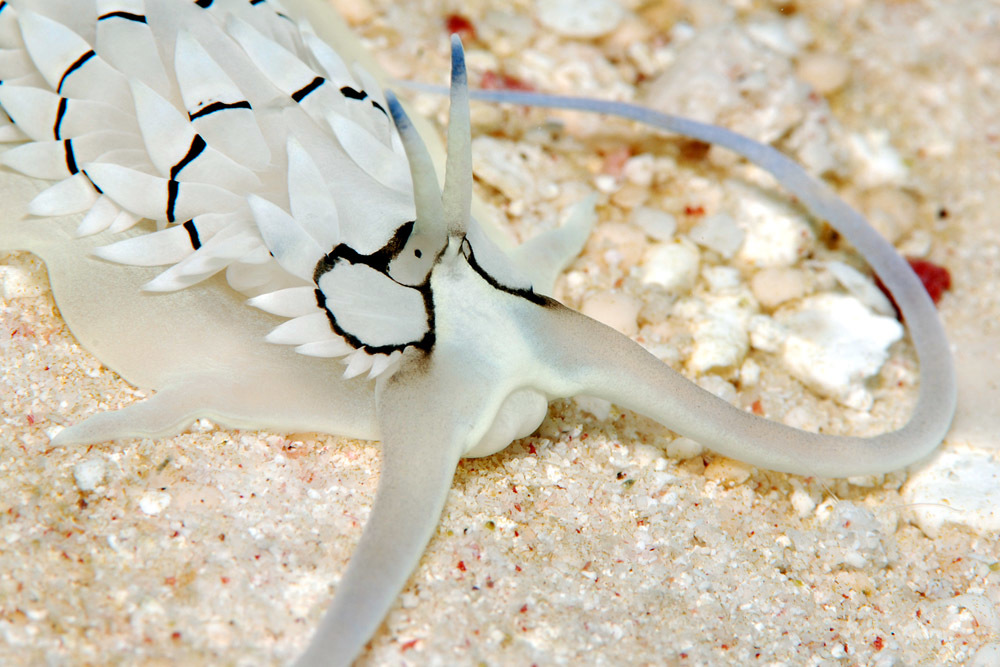
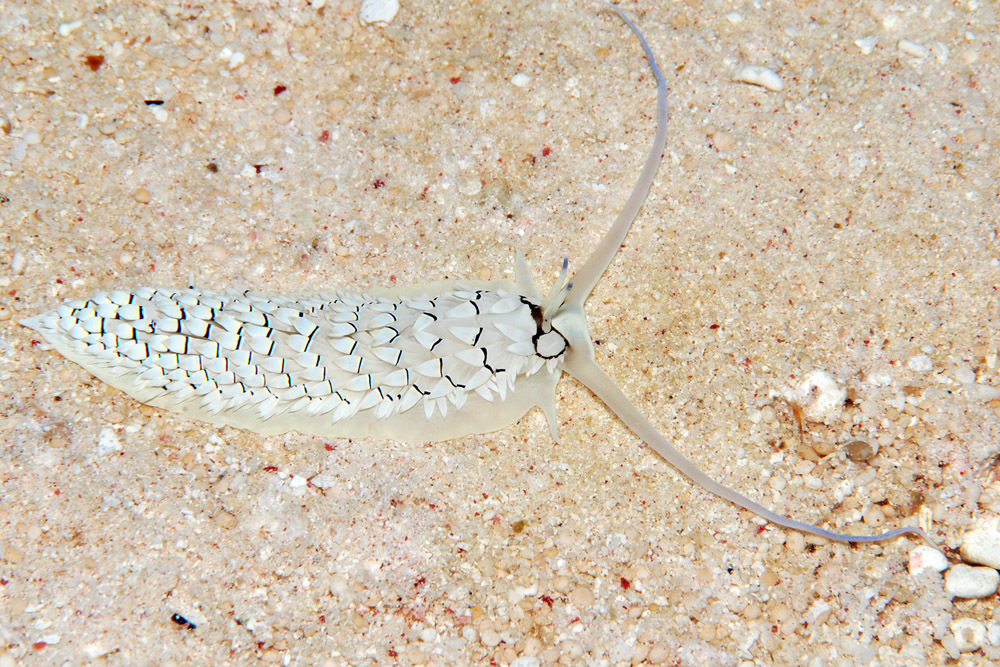
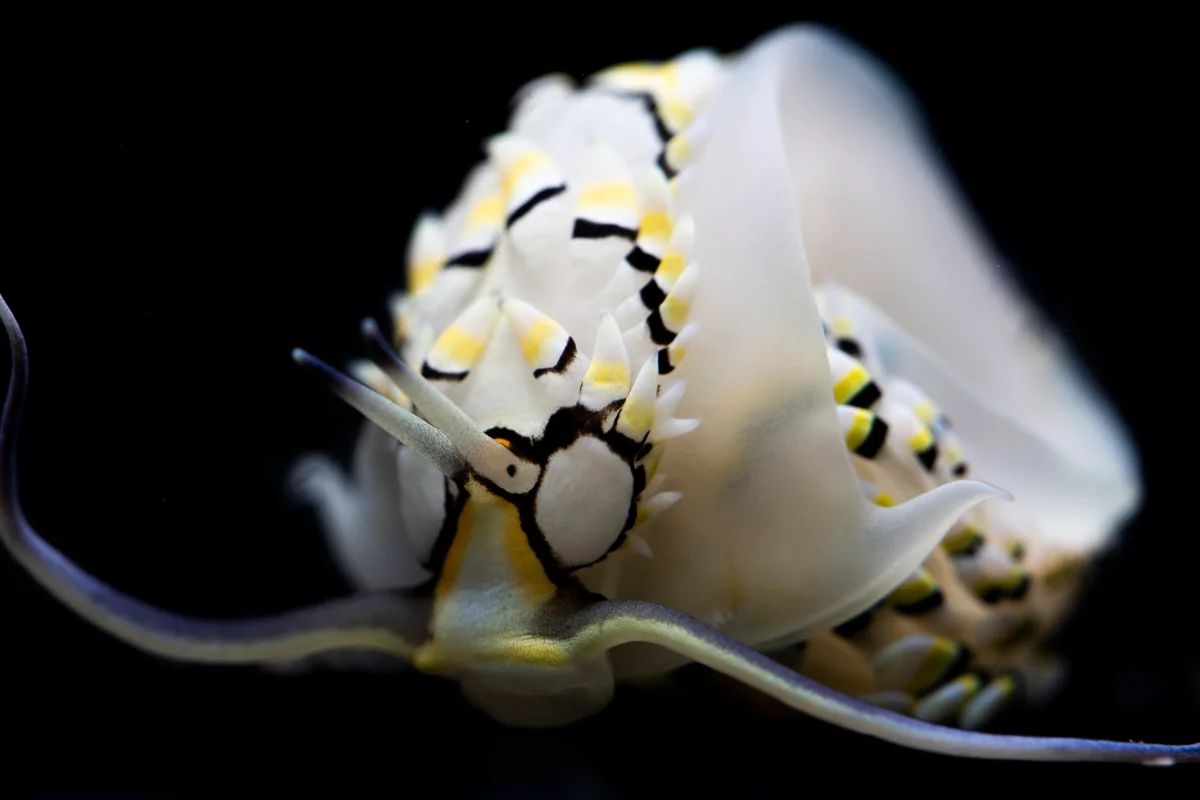
Everything else in this section lives on a hard surface. This one lives inside the sand.
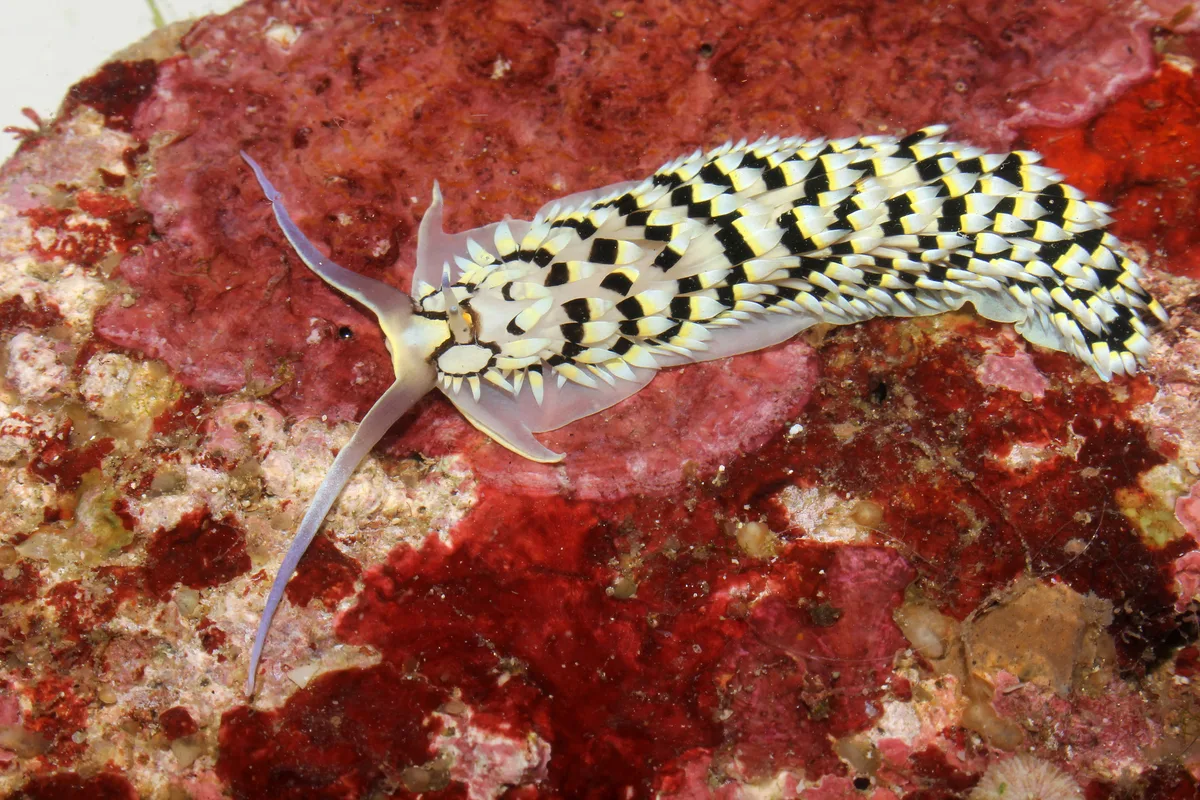
Aeolid sea slugs are built to climb over hydroids and soft corals, and this genus took the same body onto a flat, featureless bottom and rebuilt the underside for it. The foot is enormously widened, and its front corners are pulled out into two long tentacles that reach ahead like a pair of feelers on a plough. The animal drives through the top layer of sand rather than over it, and by day it is completely buried, which is why a seven-centimeter (2.8 in) slug in a busy bay can go years without being photographed.
What it is looking for down there are burrowing anemones, the ones that sit with only a ring of tentacles showing and pull out of sight the moment a shadow crosses them. Hunting from below solves that. It also means the slug is eating an animal made of stinging cells, and like other aeolids it keeps them: the cells pass through the gut without firing and are stored live in sacs at the tips of the cerata, so a defenseless burrower comes up armed with somebody else's weapons.
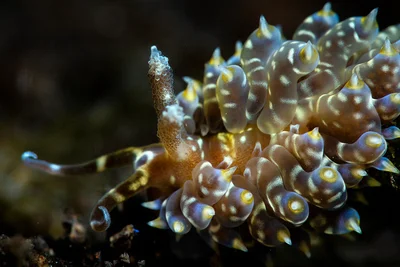
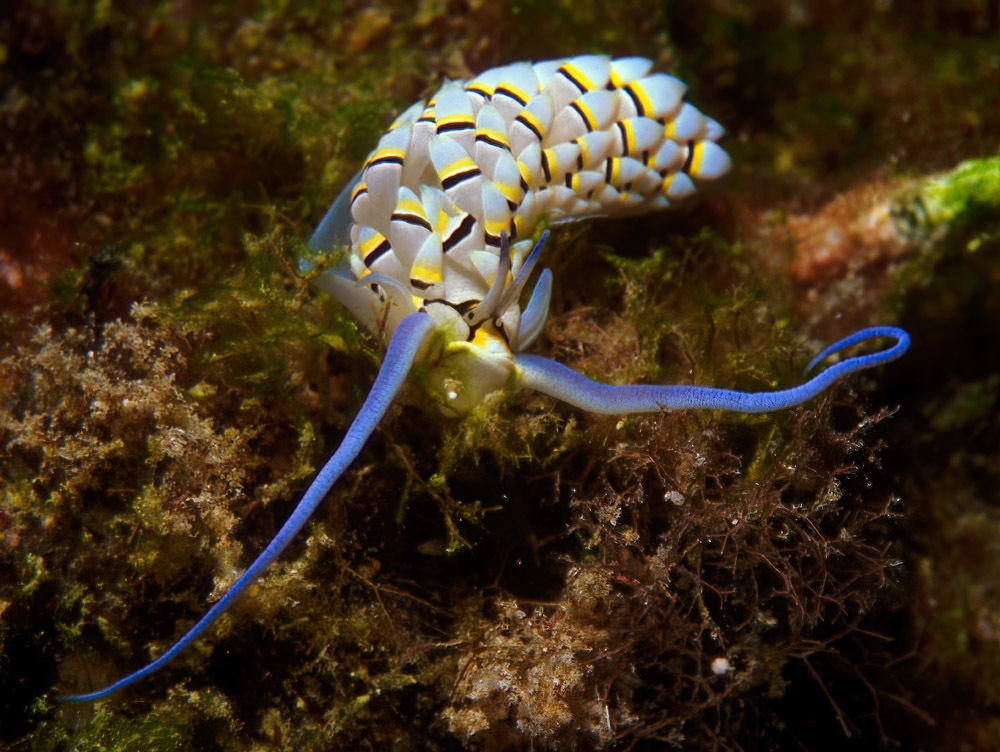
The cerata are the identification. They cover the whole back in dense rows, and each one carries a yellow band and a black band near the tip, which on an animal this size reads as a distinct pattern rather than a wash of color.
Look for it at night on the sand flats where the reef gives out, and look for the track first. A shallow furrow ending in a raised mound is the usual way anyone finds one at all.
- dense cerata over the whole back, each with a yellow and a black band near the tip
- very broad flat foot with two long tentacles reaching forward from its front corners
- found on open sand, not on the reef
- usually seen as a track ending in a mound, with the animal underneath