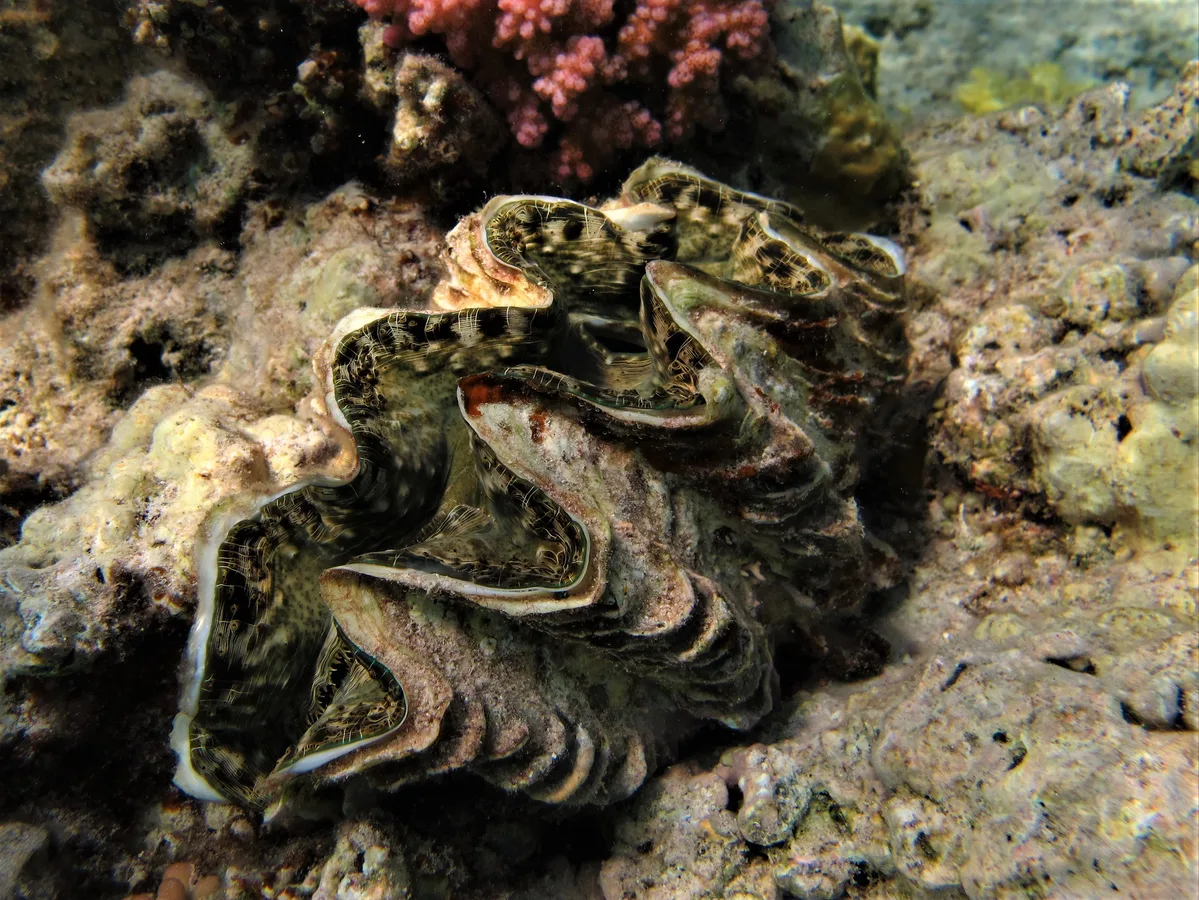
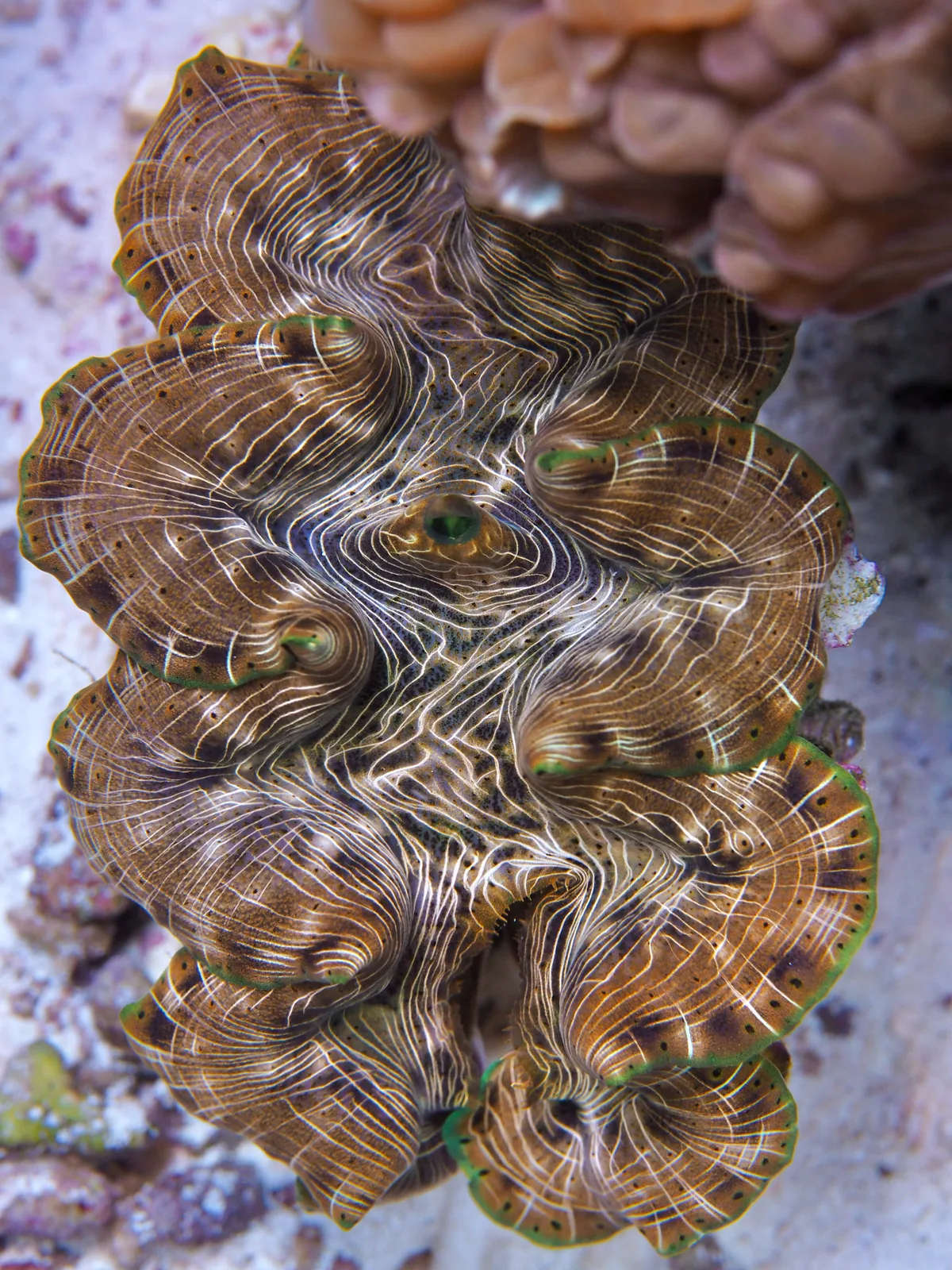
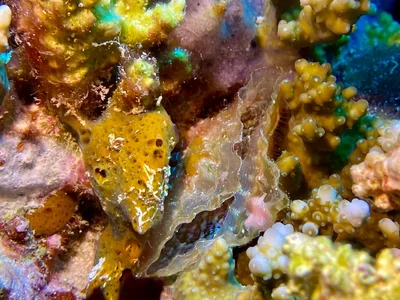
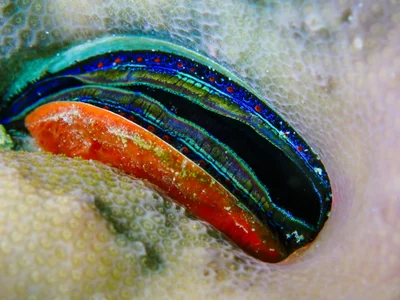
The giant clam that lives nowhere else. Endemic to this sea and the 🌊 Gulf of Aden, it sits on shallow reef tops with its mantle spread to the light, patterned in blue, green or brown, and closes with a slow deliberate movement when a shadow crosses. Six or seven deep radial folds in the shell separate it from its commoner relatives, which have four to six.
Like all giant clams it farms rather than hunts. Symbiotic algae live in the mantle tissue and hand over most of the sugars they make, which is why the animal spreads that mantle in full sunlight and why it cannot live deep. Filtering plankton makes up the difference, but the light is the main meal.
Rarity here is not an accident of nature. The species was described in 1899, then effectively lost for most of a century - long treated as an odd form of another clam - and only confirmed as its own species again in the 2000s. By then it had been fished out of most of its range for meat and shell. Surveys now find it in single figures at sites where it should be ordinary, which makes every individual worth leaving exactly where it is.
How to recognise it
six or seven deep radial folds in the shell, against four to six in other local giant clams
mantle patterned in blue, green or brown, filling the gape
sits free on the reef top rather than buried in coral
This species was said to form an important diet component of the early coastal gatherers (125,000 years) in the Red Sea (Richter et al. 2008). The current low abundance of T. squamosina has been attributed to past overexploitation.
In general, fishing of giant clams continued until the early 2000s, when the Saudi Arabian Wildlife Commission imposed a ban on the collection of giant clams (Rossbach et al. 2021). Consultation with local fishermen at various sites along the Saudi Arabian coastline indicates that giant clams have not been targeted in local fisheries since the ban (S. Rossbach pers. comm. 2022). Large scale harvesting is now limited by previous population declines and protection from CITES. Still, the populations of this species appear to not have recovered from the past overexploitation, which threatens the survival of this endemic Red Sea species.
The Red Sea coral reefs face numerous anthropogenic threats, including unsustainable tourism, habitat destruction, and overfishing, which could lead to poor habitat quality for giant clams (Rossbach et al. 2021). Moreover, the Red Sea is warming at a rate 2.5 times faster than the global average, according to IPCC reports. This rate of rising temperature and the resulting bleaching may become a threat to the survival of this species.
Threat classification from the IUCN Red List.
Comments
Please, sign in to leave a comment
Continue with a social account - yours will be created automatically.