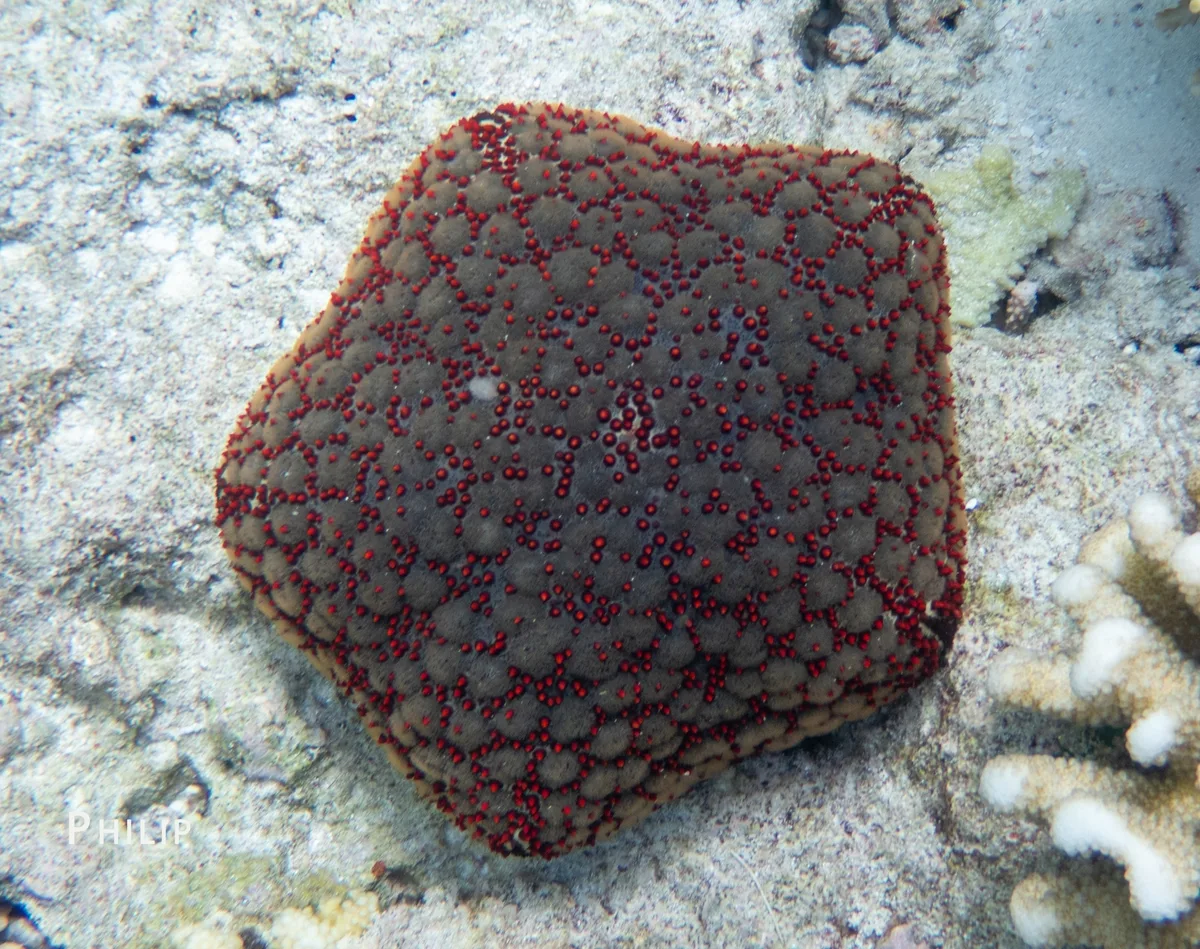
A cushion star does not pick its food up. It pushes its stomach out through the mouth on its underside, spreads it over a patch of coral, sponge or algal film, digests the patch where it lies and then draws the stomach back in. Feeding happens outside the body, and what is left behind is a clean spot the shape of the animal.
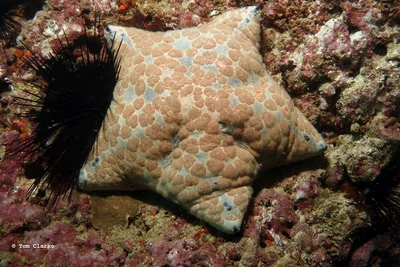
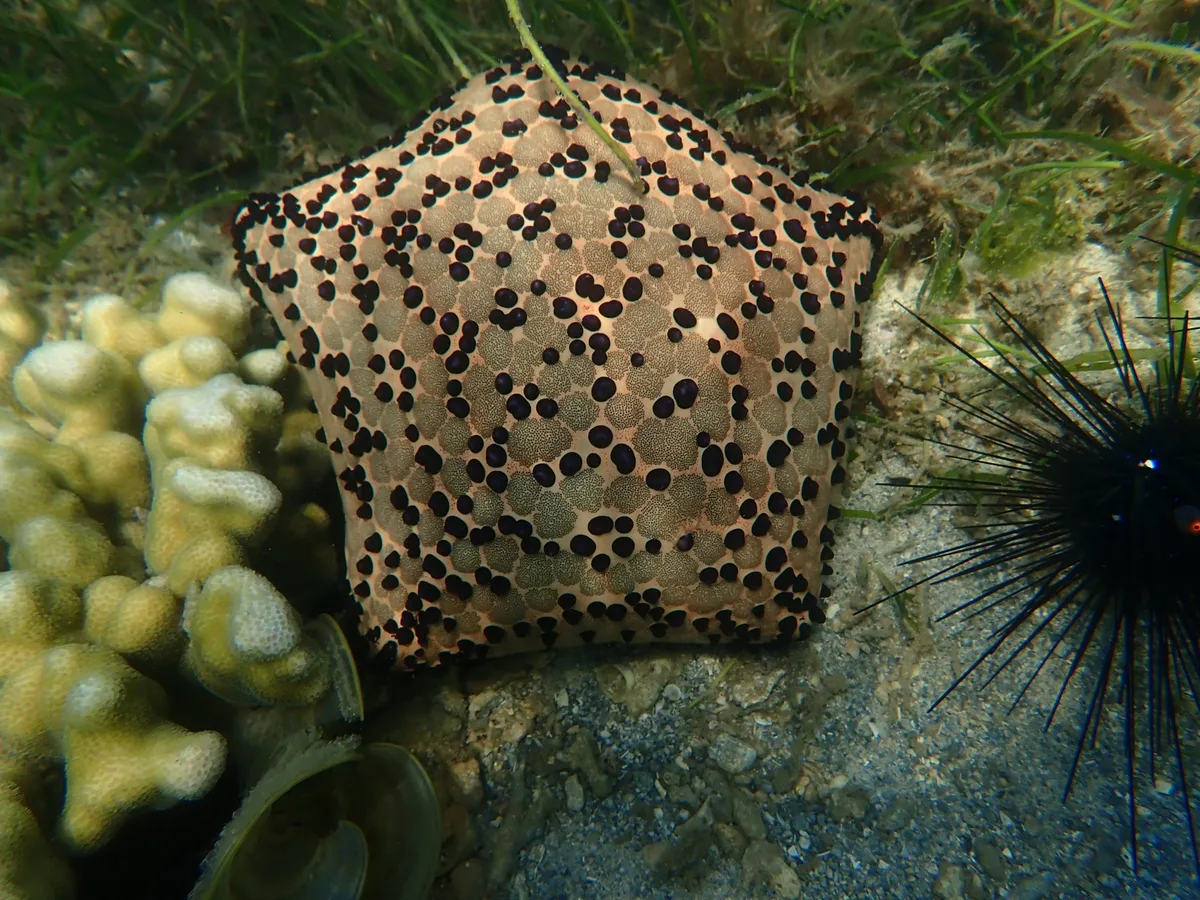
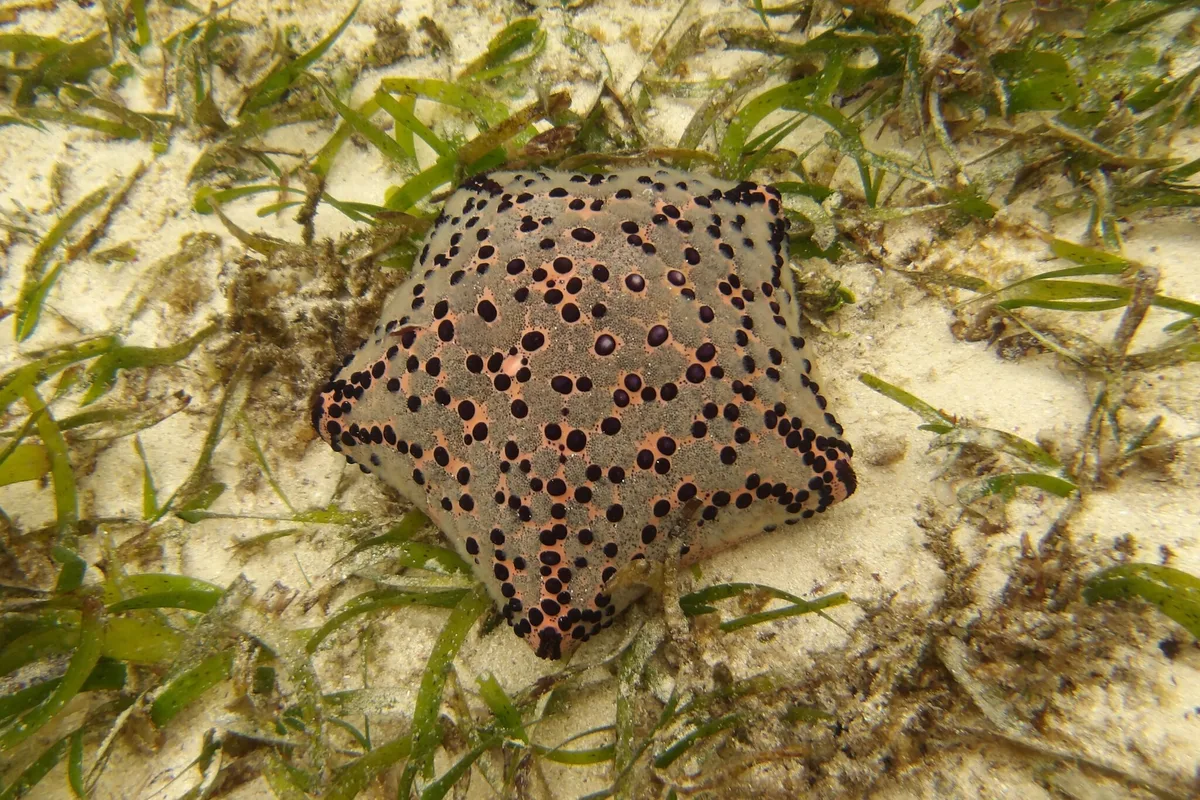
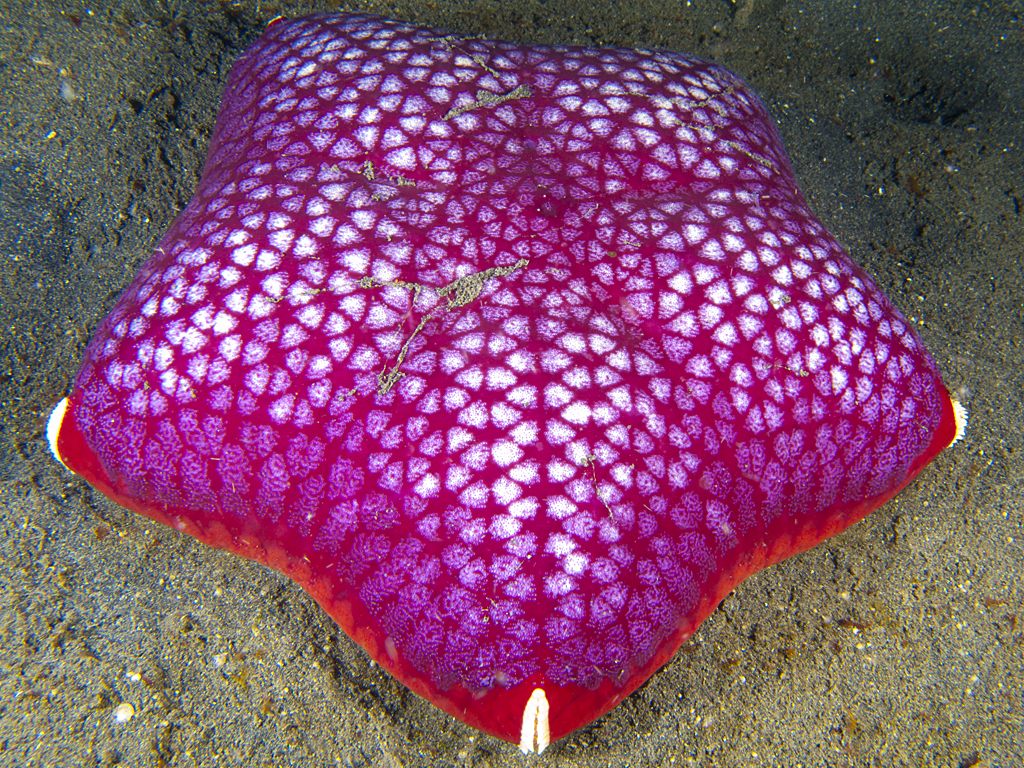
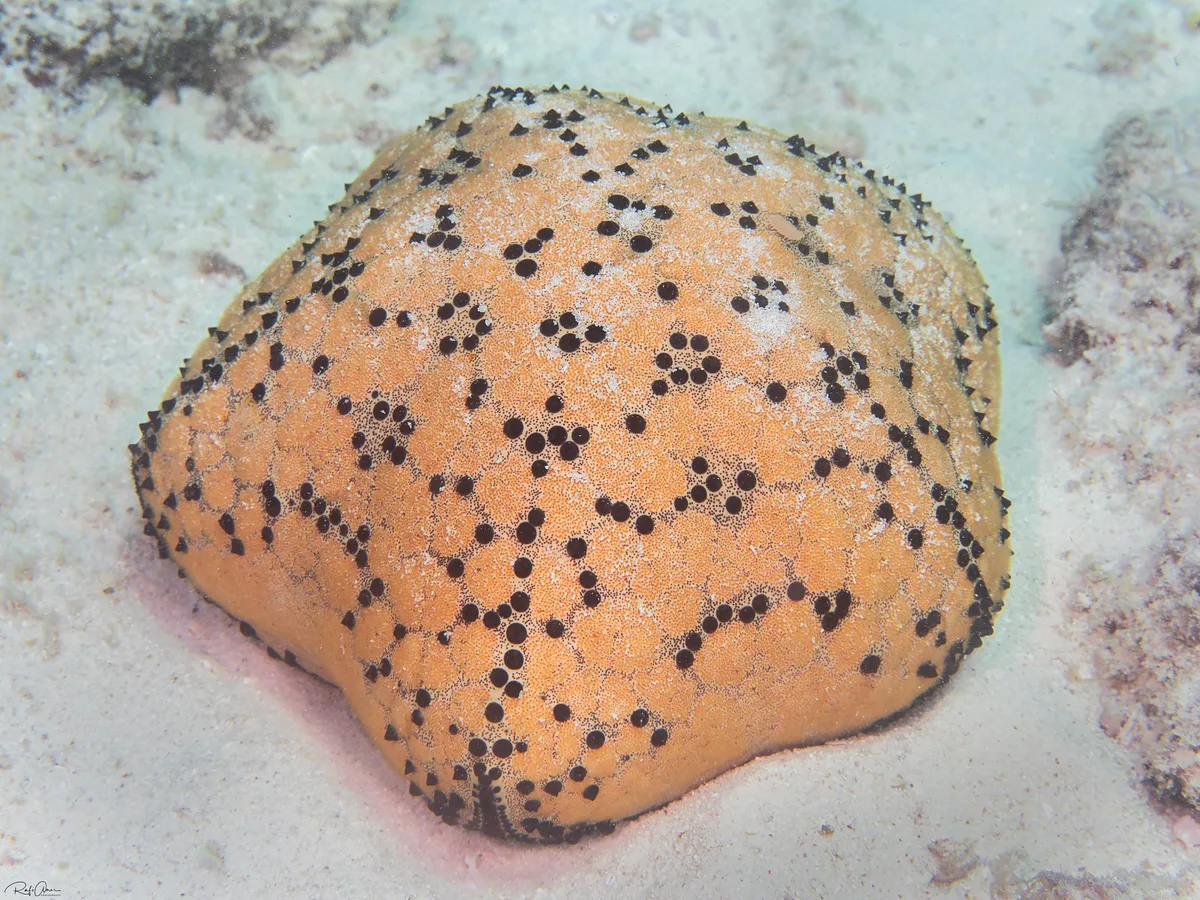
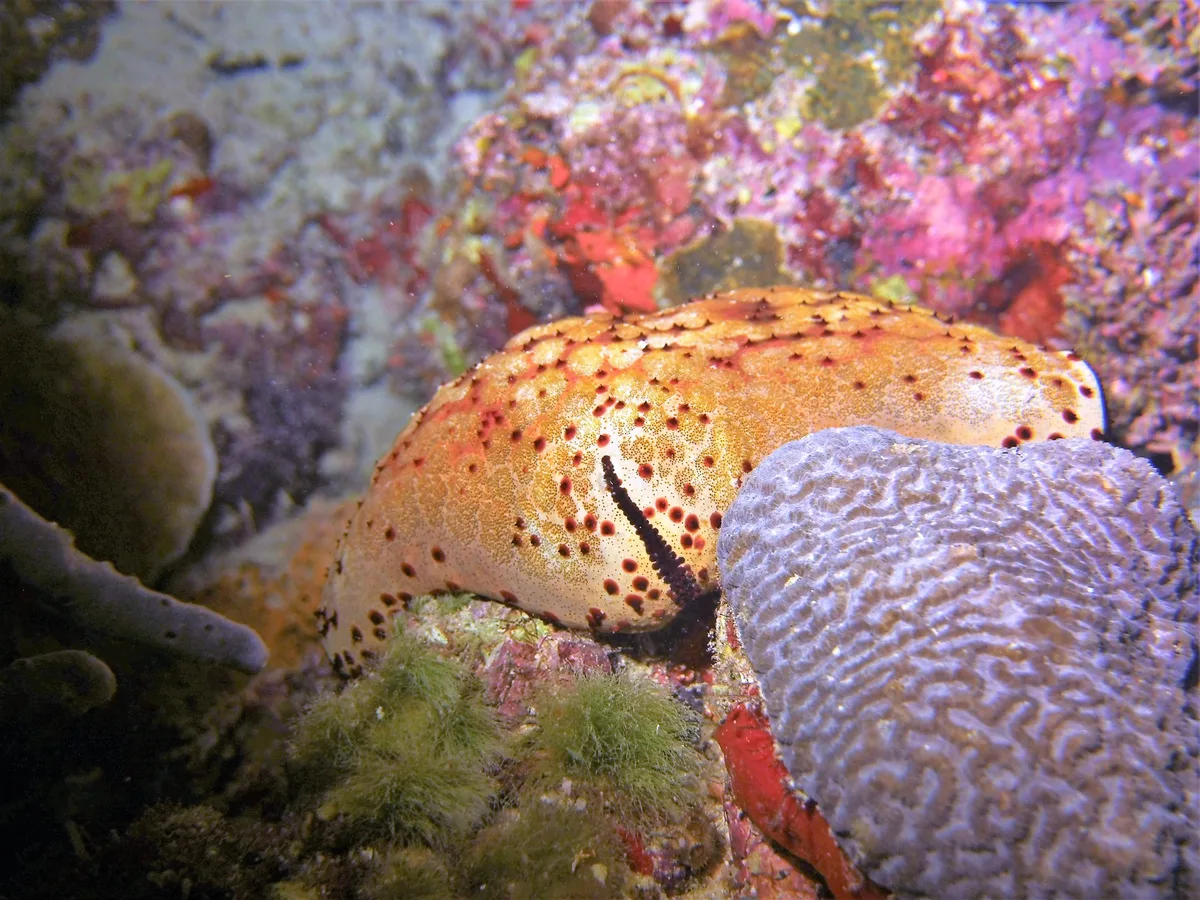
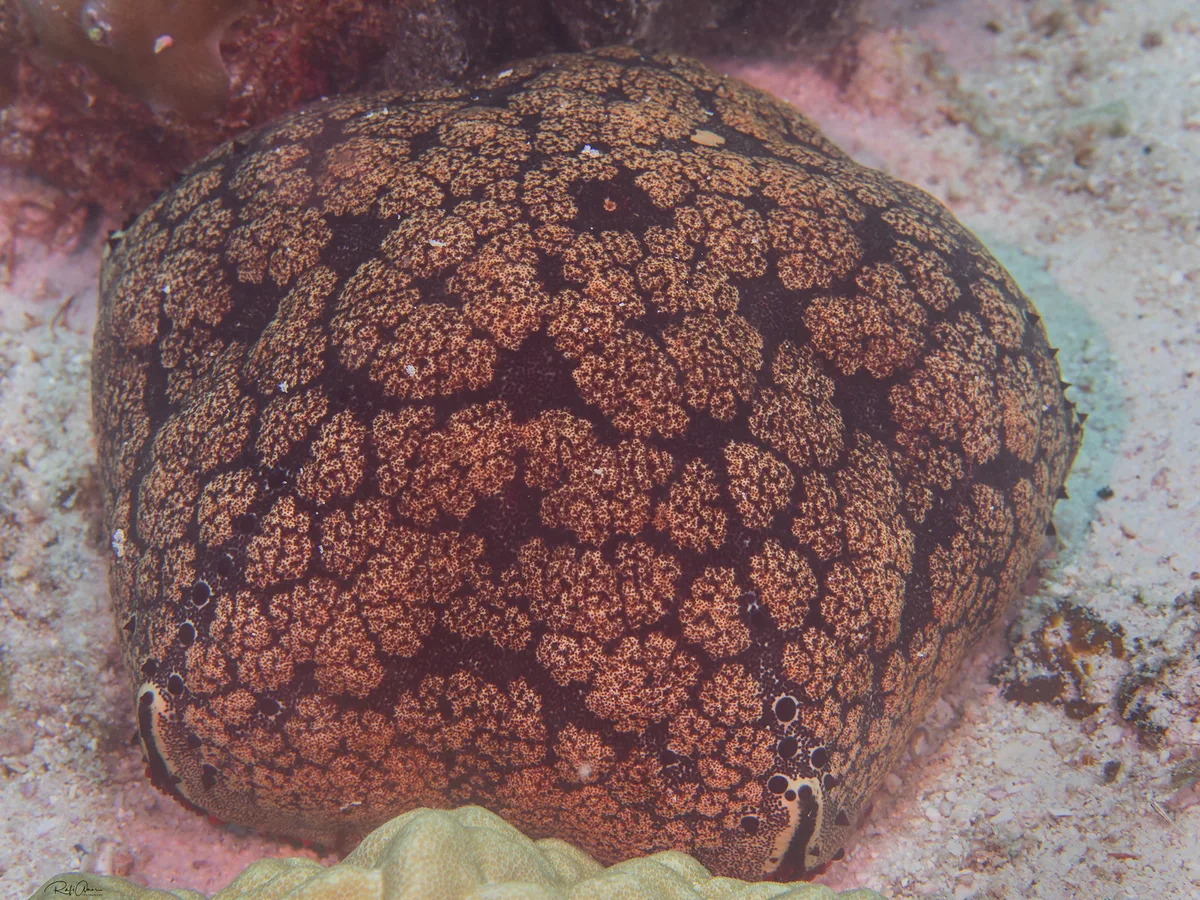
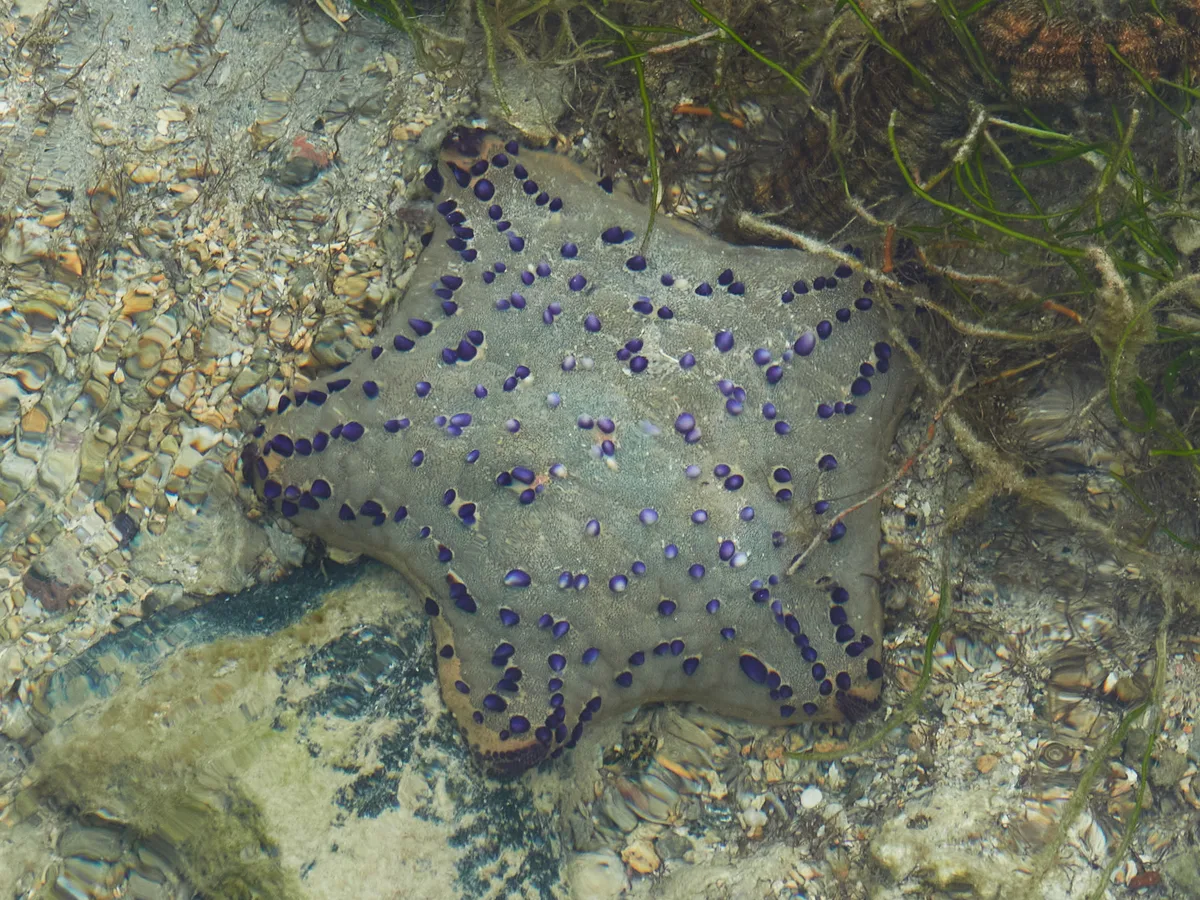
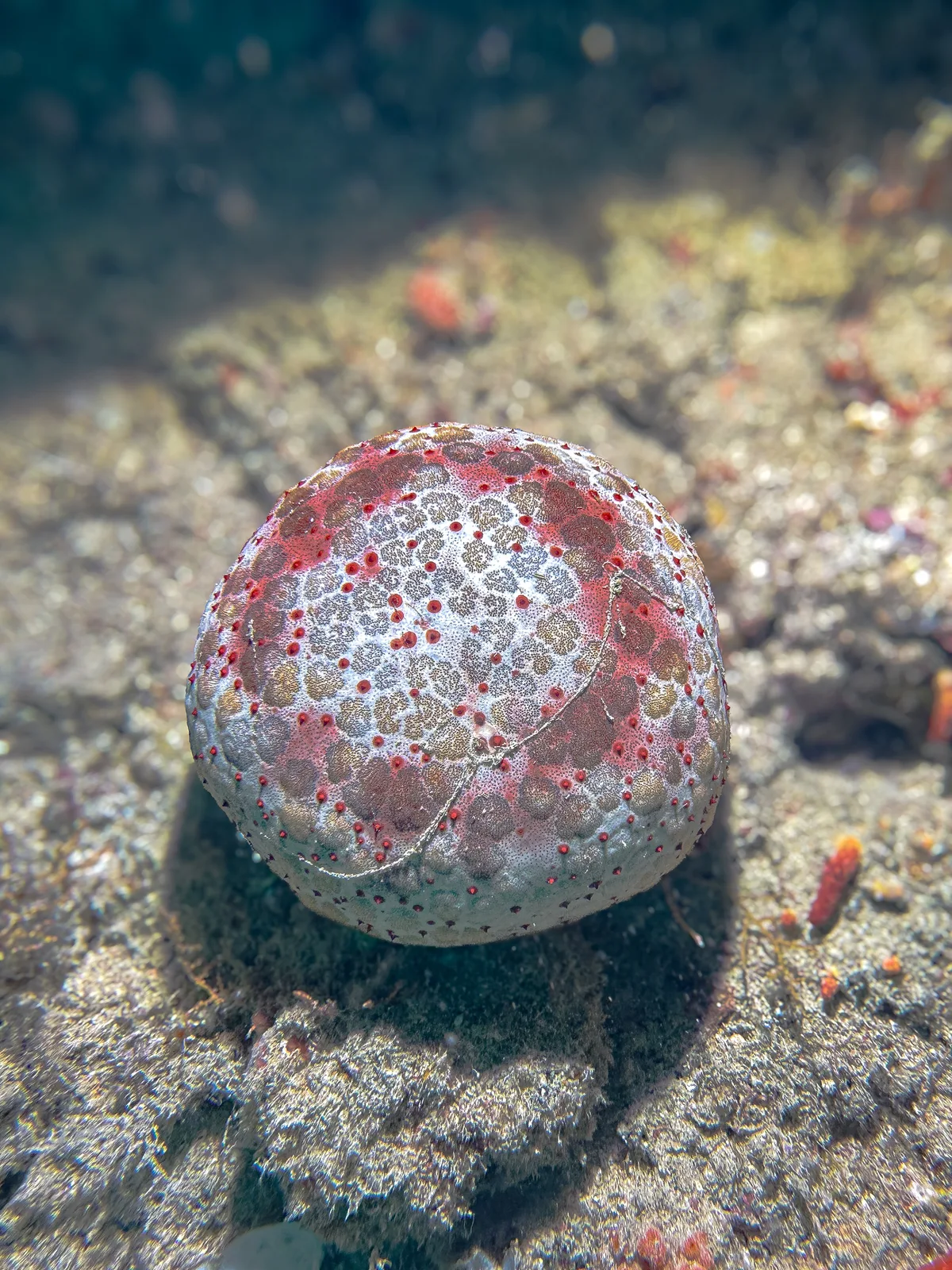
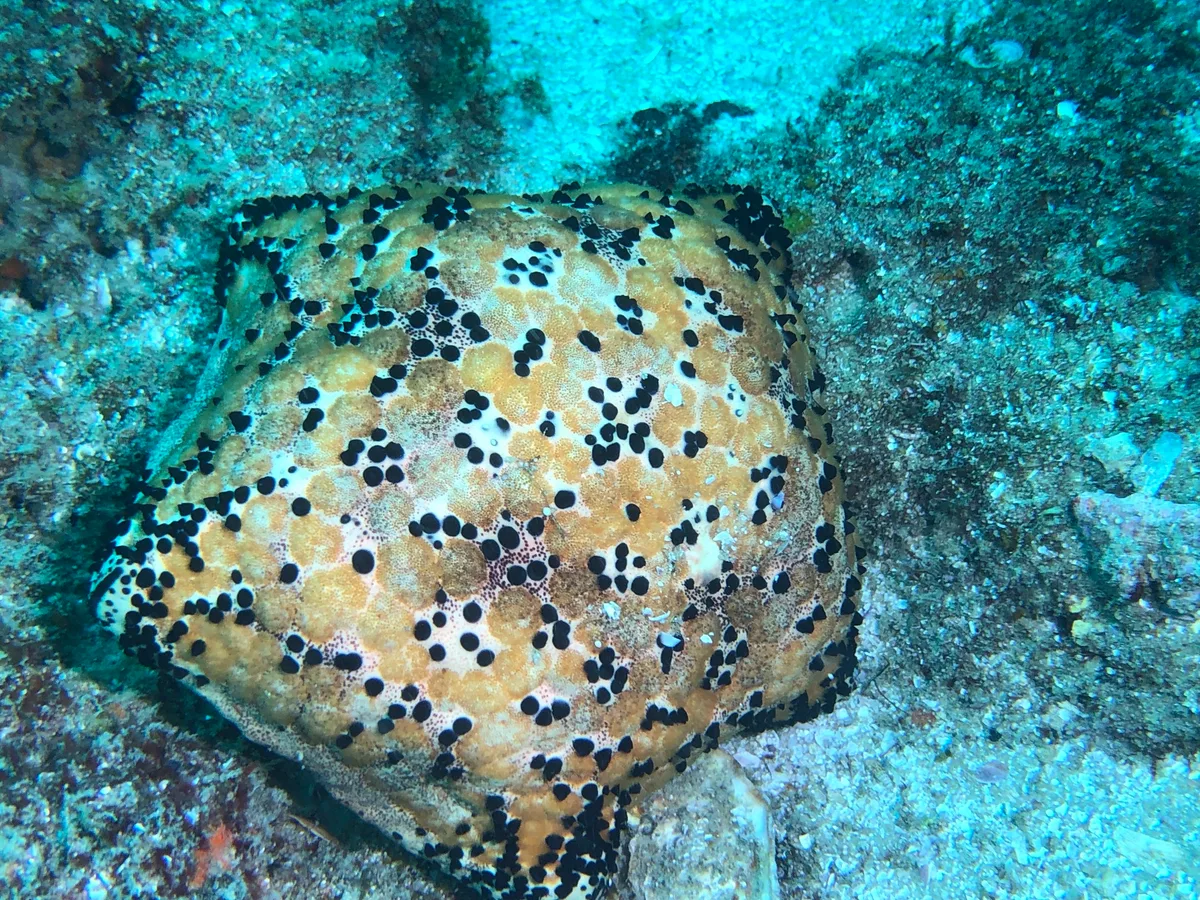
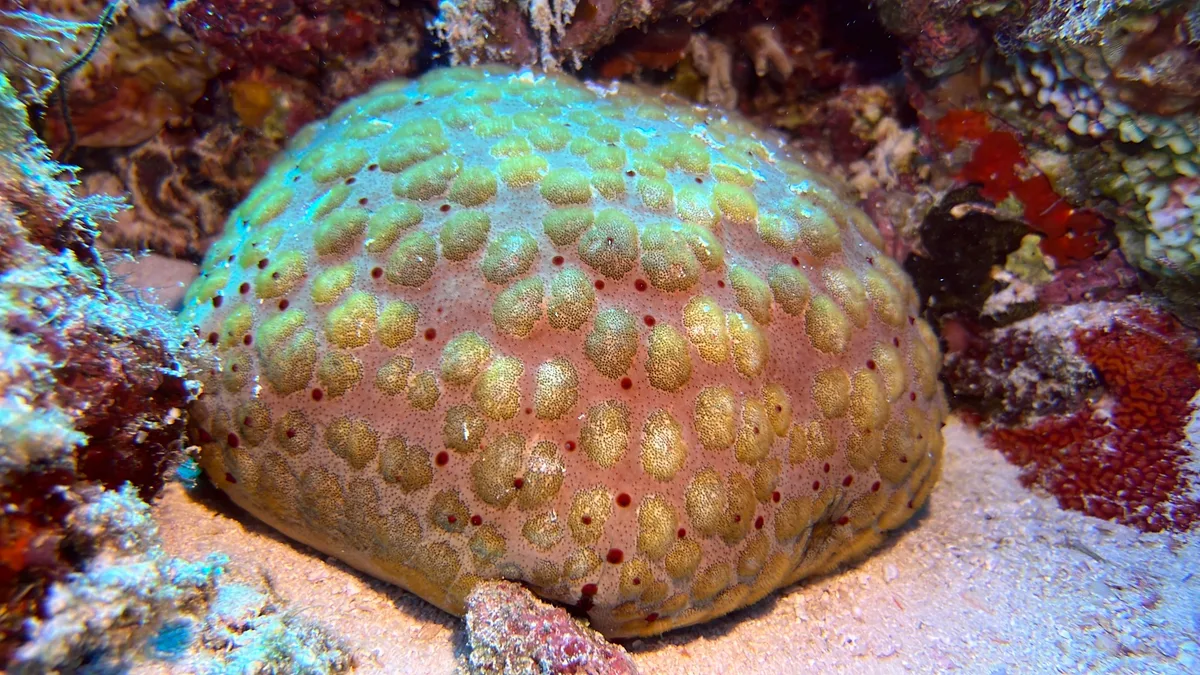
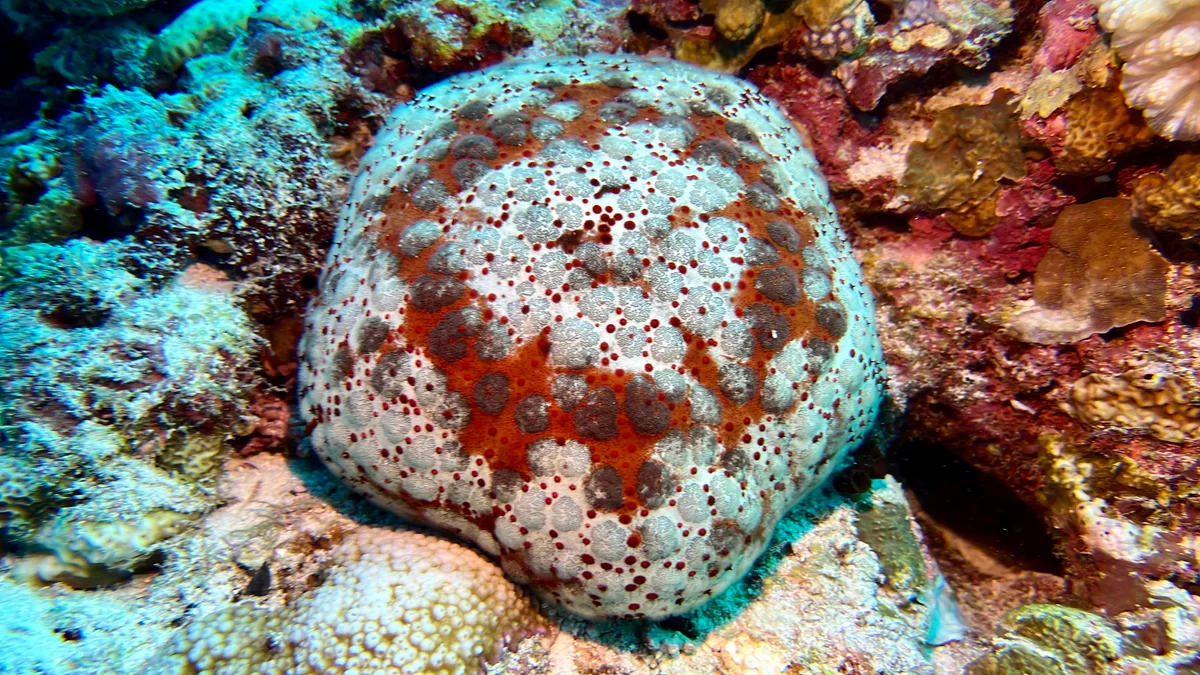
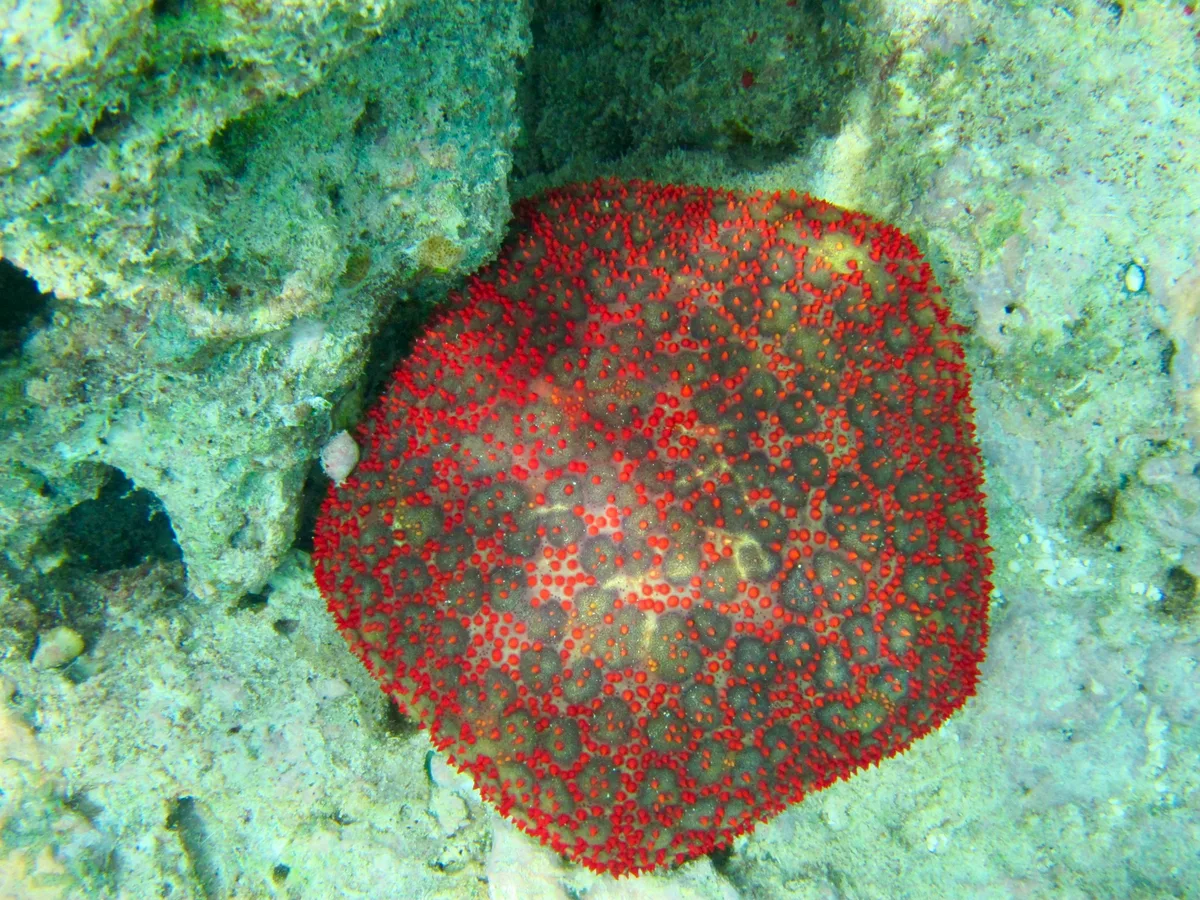
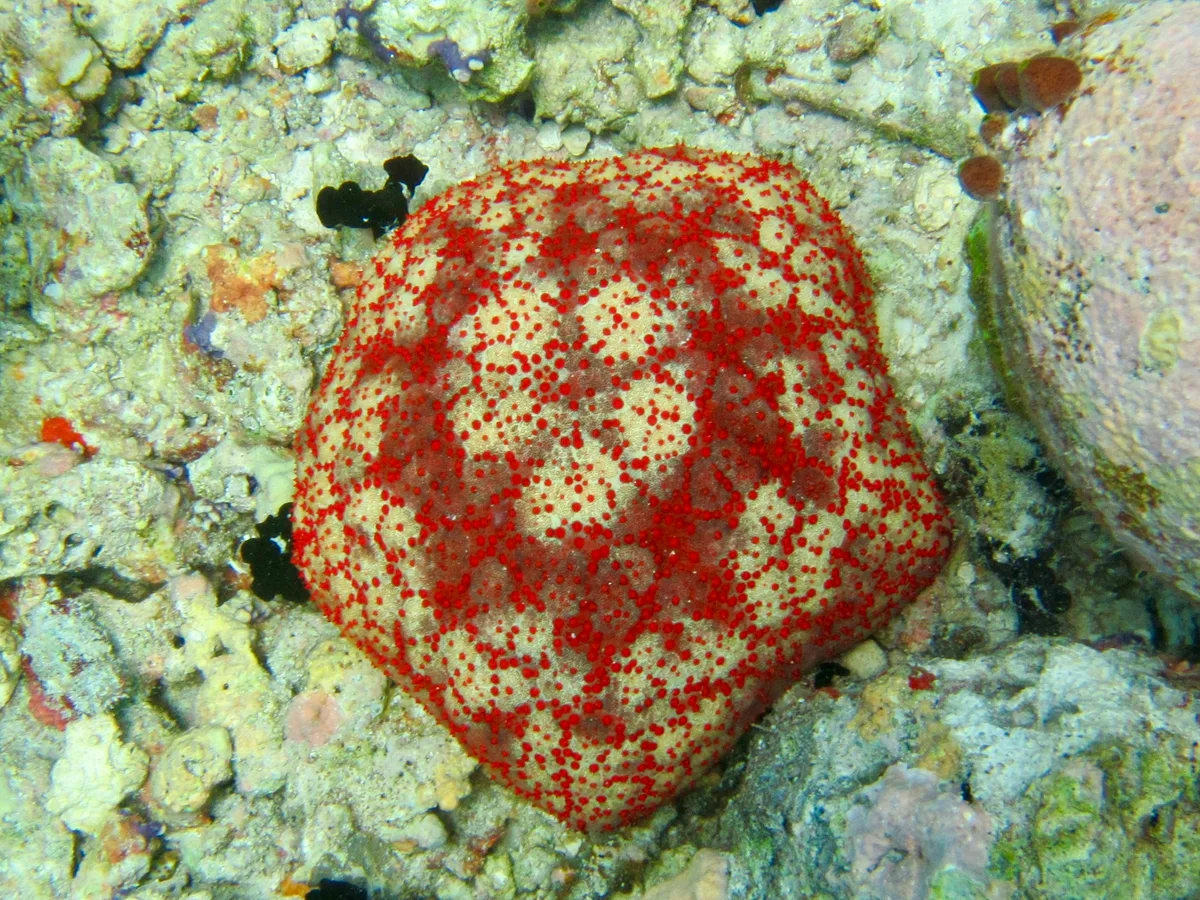
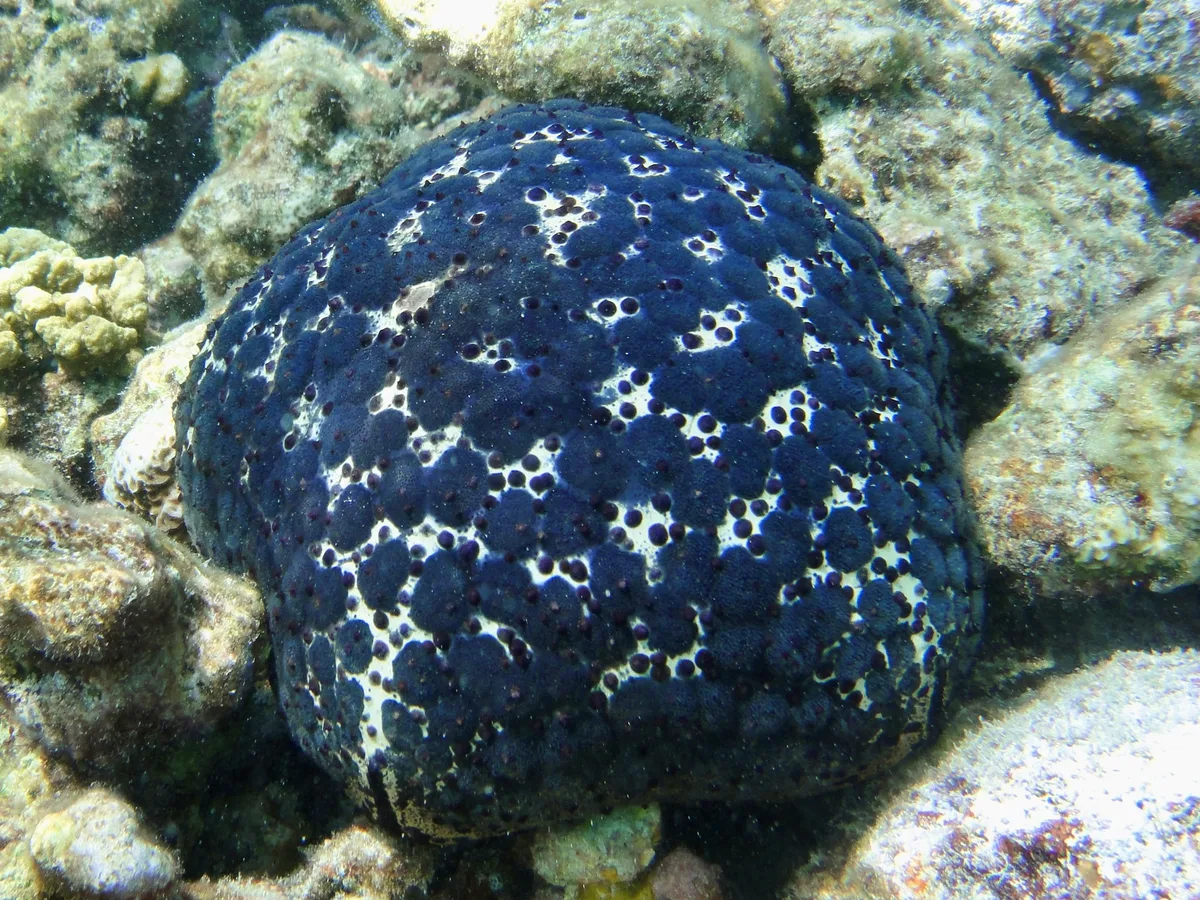
What you see is a swollen pentagonal cushion up to 30 cm (12 in) across with no arms to speak of, mottled brown, orange or greenish, its whole upper surface packed with blunt granules and low tubercles. The five-part symmetry survives only in the outline. Two cushion stars live in this sea and they are easy to mix up: this one carries dark granules over the surface, while the Arabian cushion star, Culcita coriacea, is the smoother, paler one. Look at the granules before you name it.
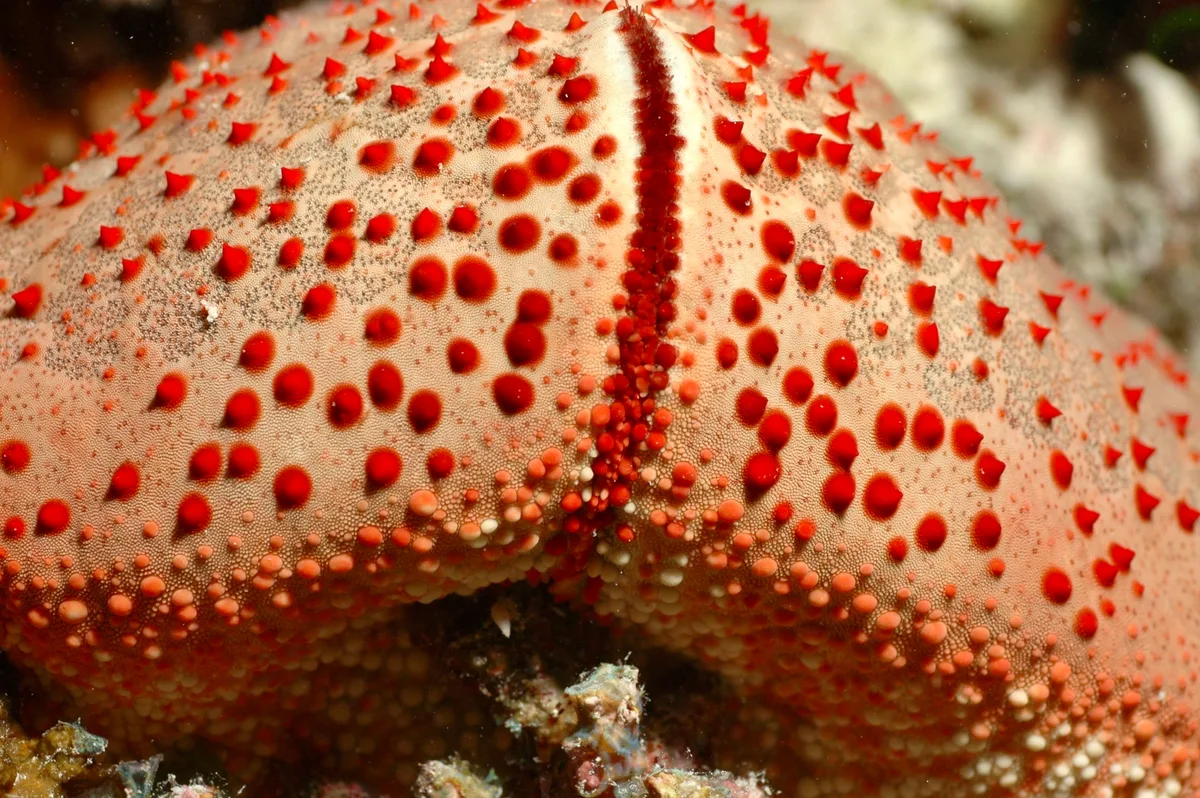
Turn it over and the machinery shows. Hundreds of tube feet run in grooves along each of the five ambulacra, every one of them a small water-filled cylinder that stretches, grips and lets go. They work in relays rather than together, which is why the animal moves at the pace it does. The whole hydraulic system is fed through the madreporite, a small perforated plate on the upper surface that acts as the intake valve, letting seawater into the canals that drive the feet.
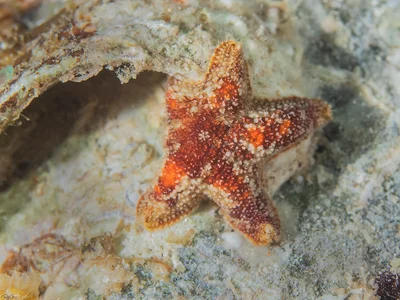
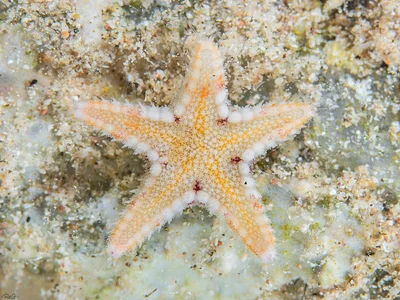
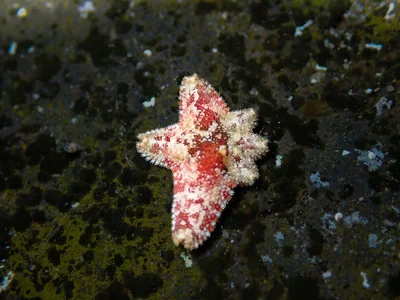
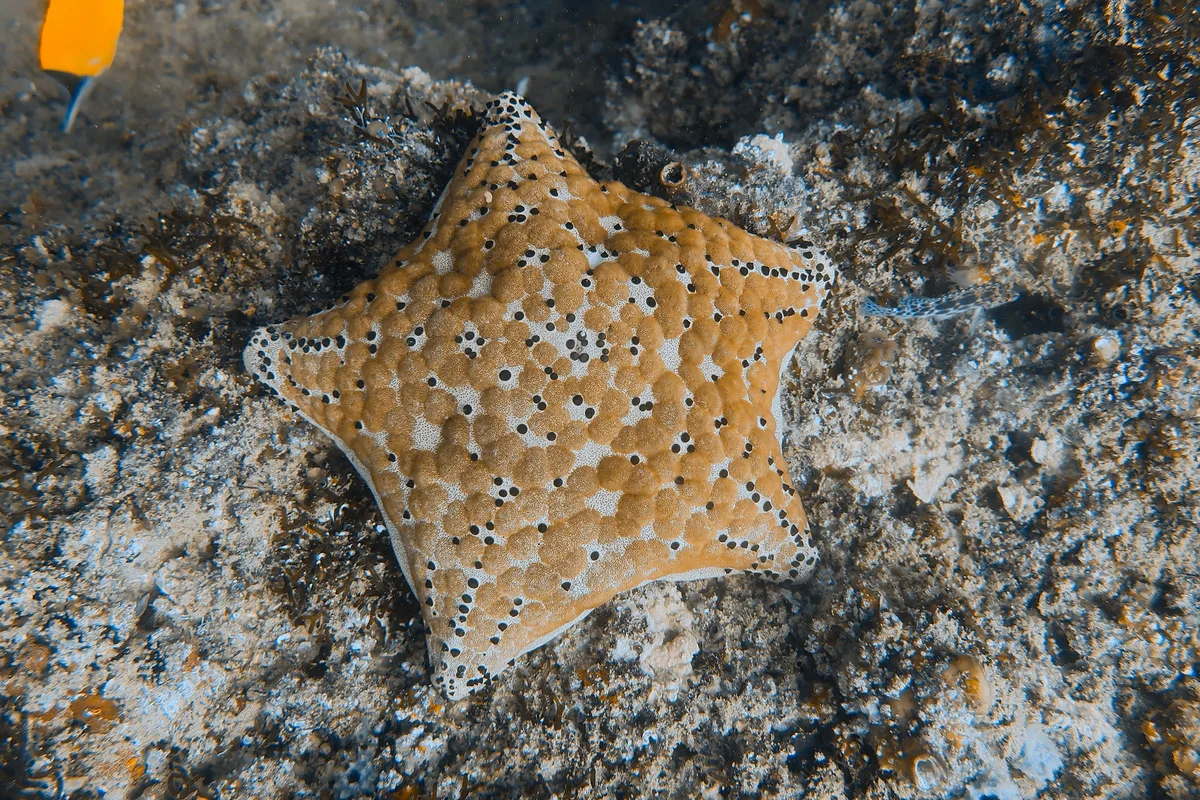
Juveniles look nothing like the adult. They are flat, plated and genuinely star-shaped, and a young one on rubble reads as a different animal entirely until it starts to swell.
It lives on sand and rubble among coral heads, recorded between about 3 and 21 m (10 and 70 ft). It is the less usual of the two cushion stars here, and worth a second look when you find one: small commensal shrimp shelter underneath, and the spines are blunt and harmless to a diver.
- swollen pentagonal cushion with no arms to speak of
- surface covered in blunt granules and low tubercles, the granules dark
- mottled brown, orange or greenish
- underside flat, with grooves of tube feet
- up to 30 cm across