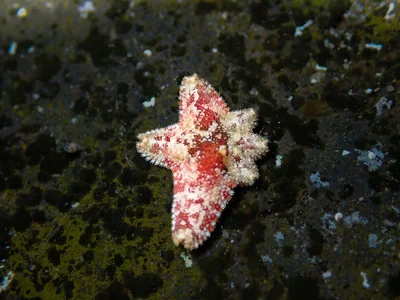
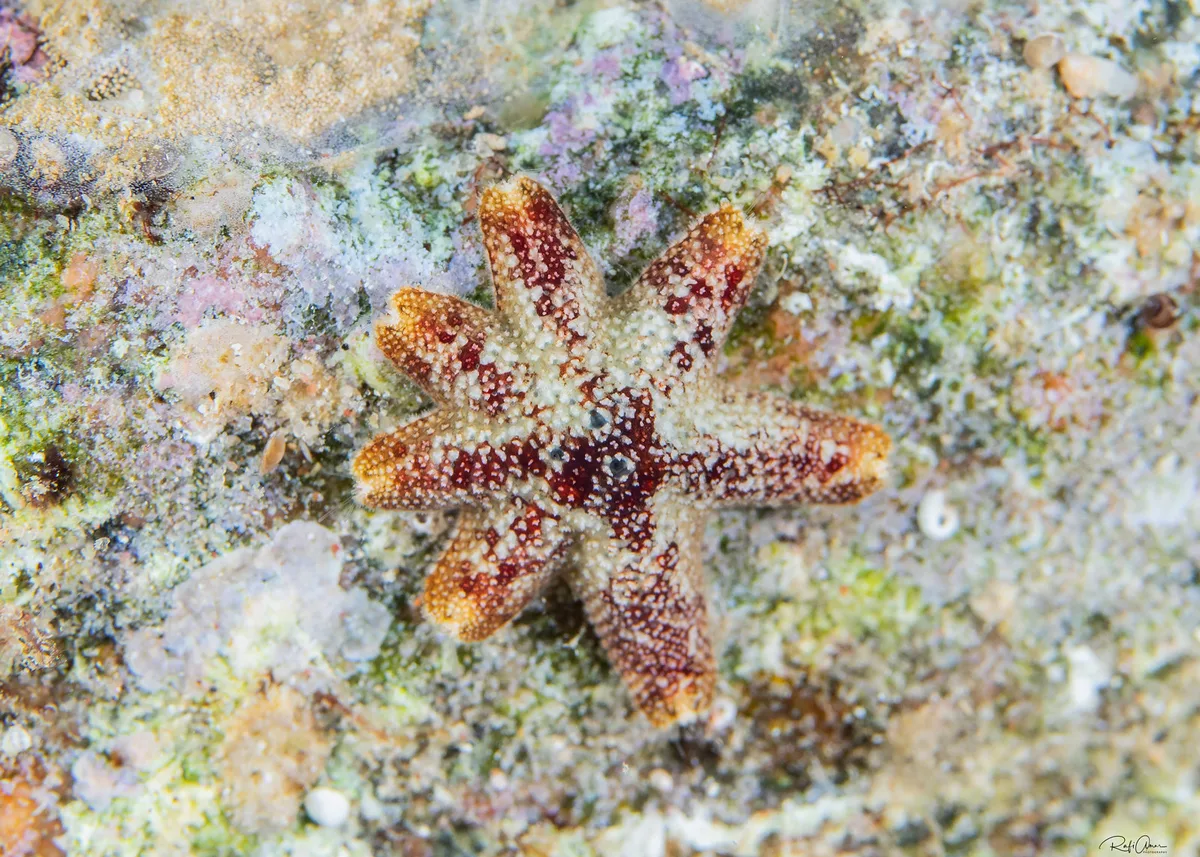
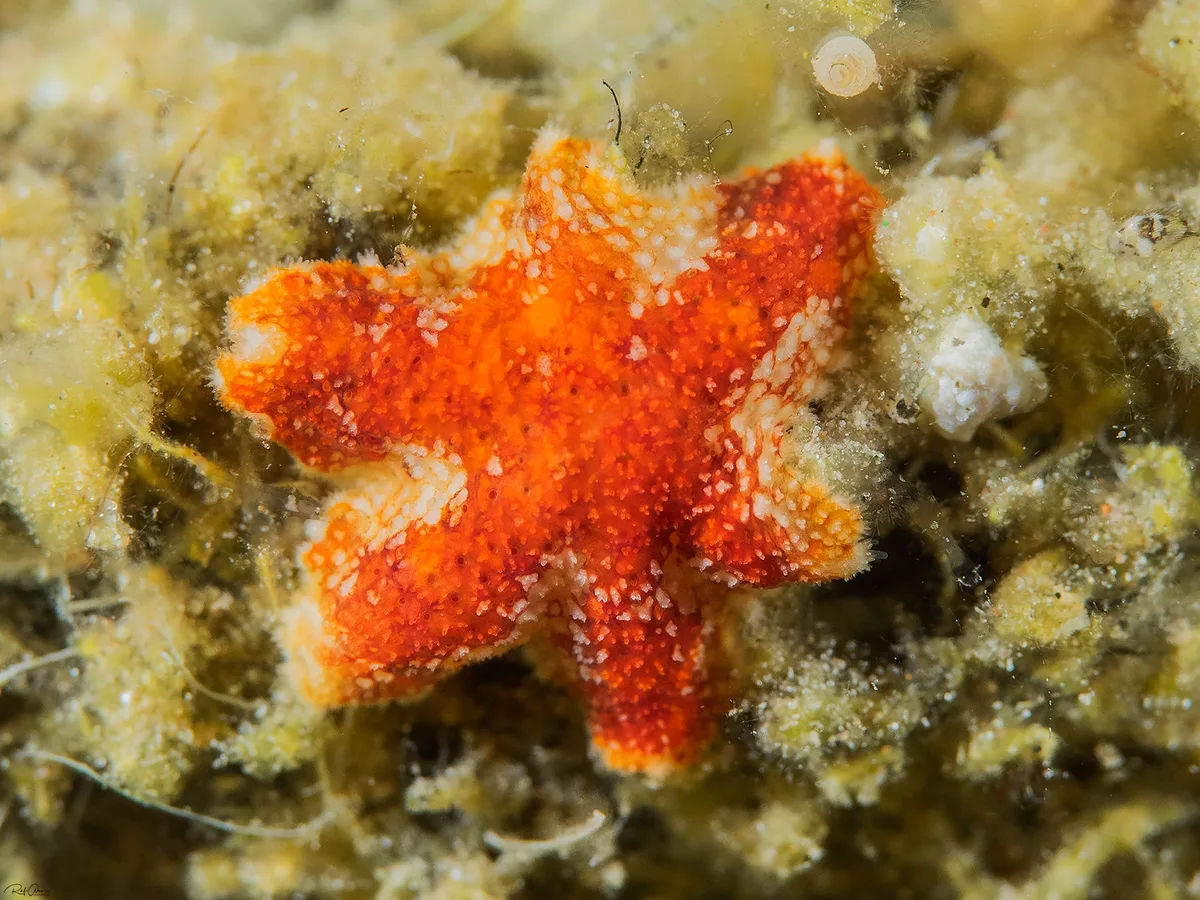
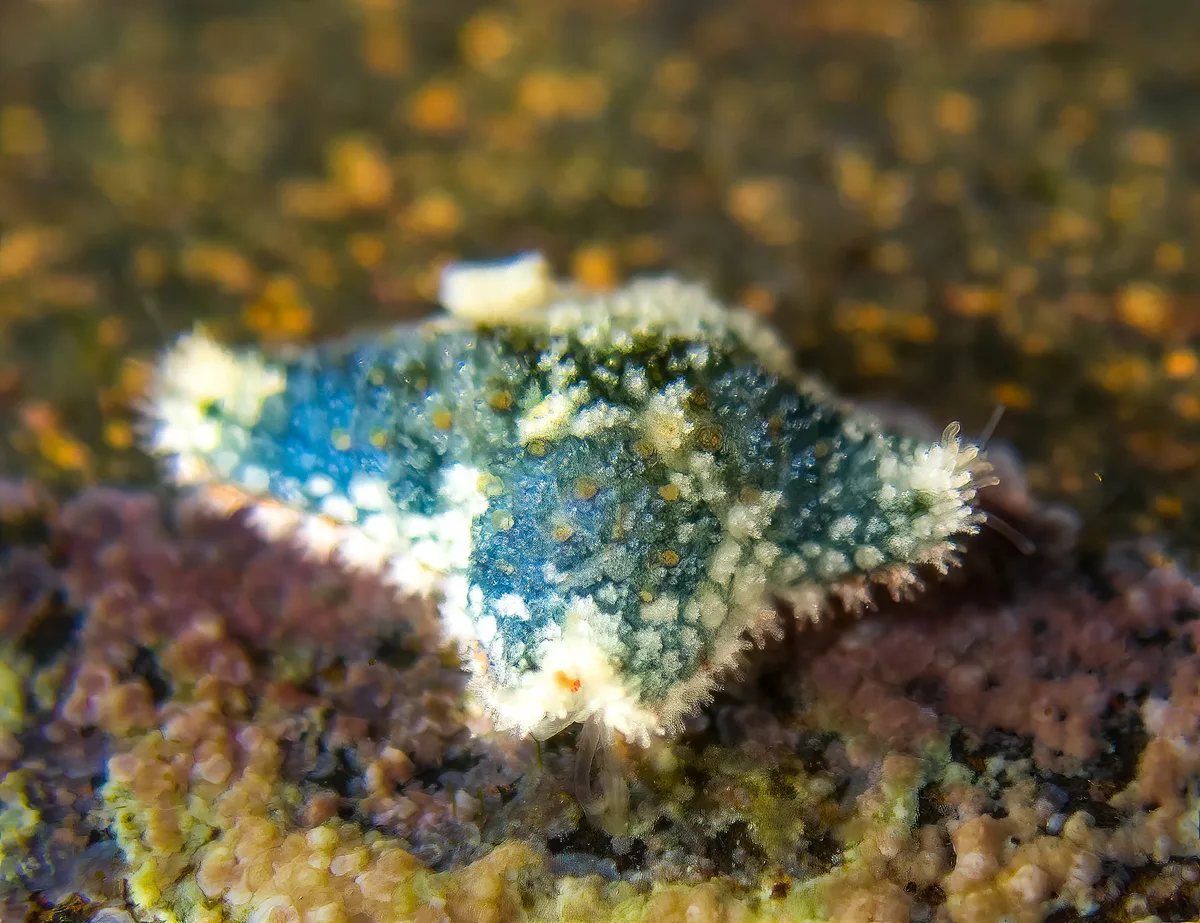
A star small enough to sit on a fingernail, rarely exceeding 2 cm (0.8 in), mottled gray-green to brown, and almost always found with arms of unequal length. That asymmetry is the signature: this species splits itself in two to reproduce, tearing across the disc and regrowing the missing half, so most individuals are caught partway through rebuilding.
It lives clamped to the undersides of stones and rubble in the shallows down to about 15 m (50 ft), grazing the film of algae and detritus there, and a single turned stone can reveal a dozen. Splitting means a population can build quickly from one animal, and it also means the tiny stars under one rock are frequently clones.
Anyone lifting a stone to look should put it back the same way up - the animals under it live in the dark, and an overturned slab kills the whole community on its underside within a day.
- tiny star, rarely more than 2 cm across
- arms usually unequal, some regrowing
- mottled gray-green to brown
- found clinging under stones, not in the open