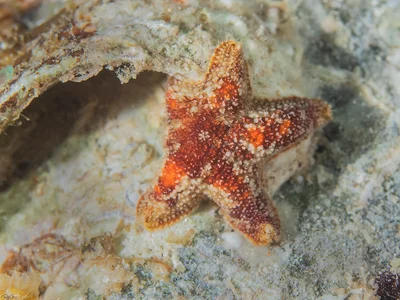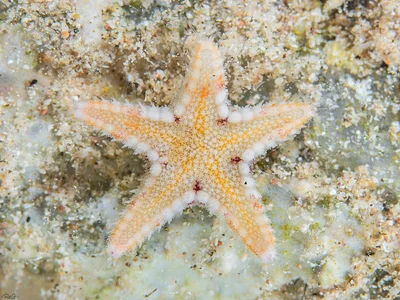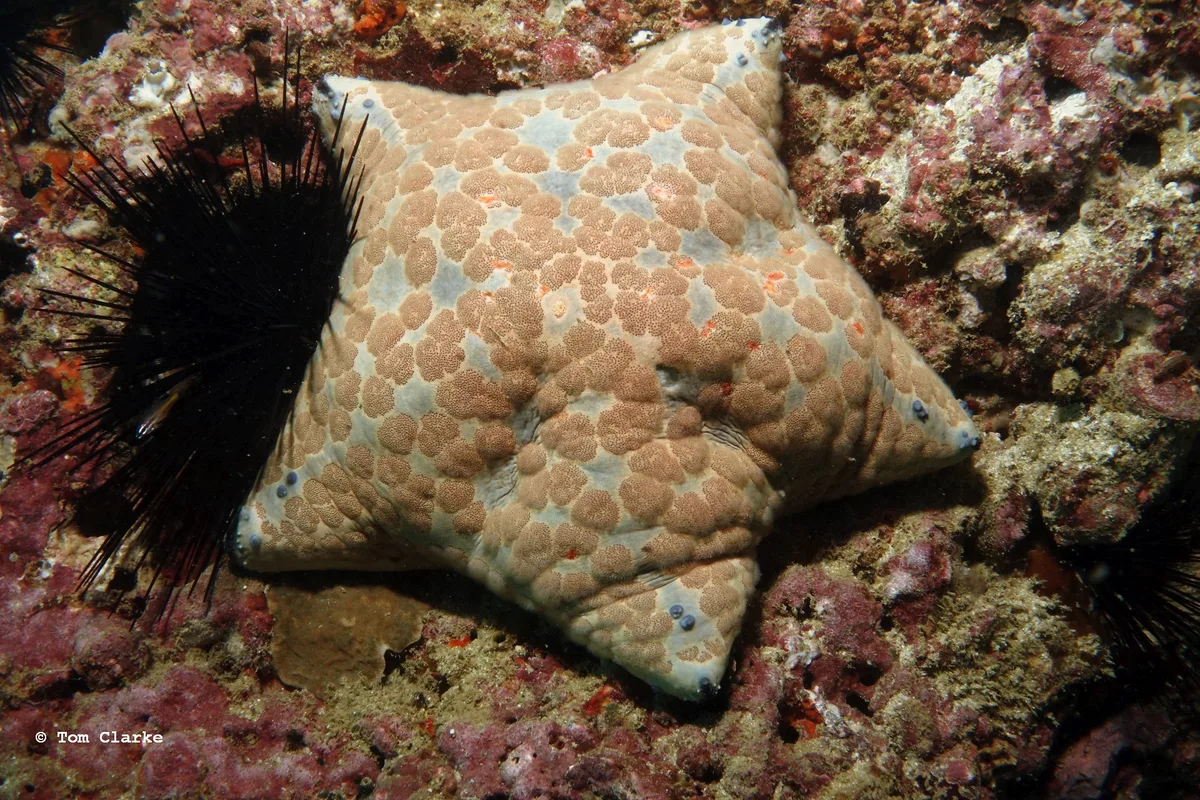
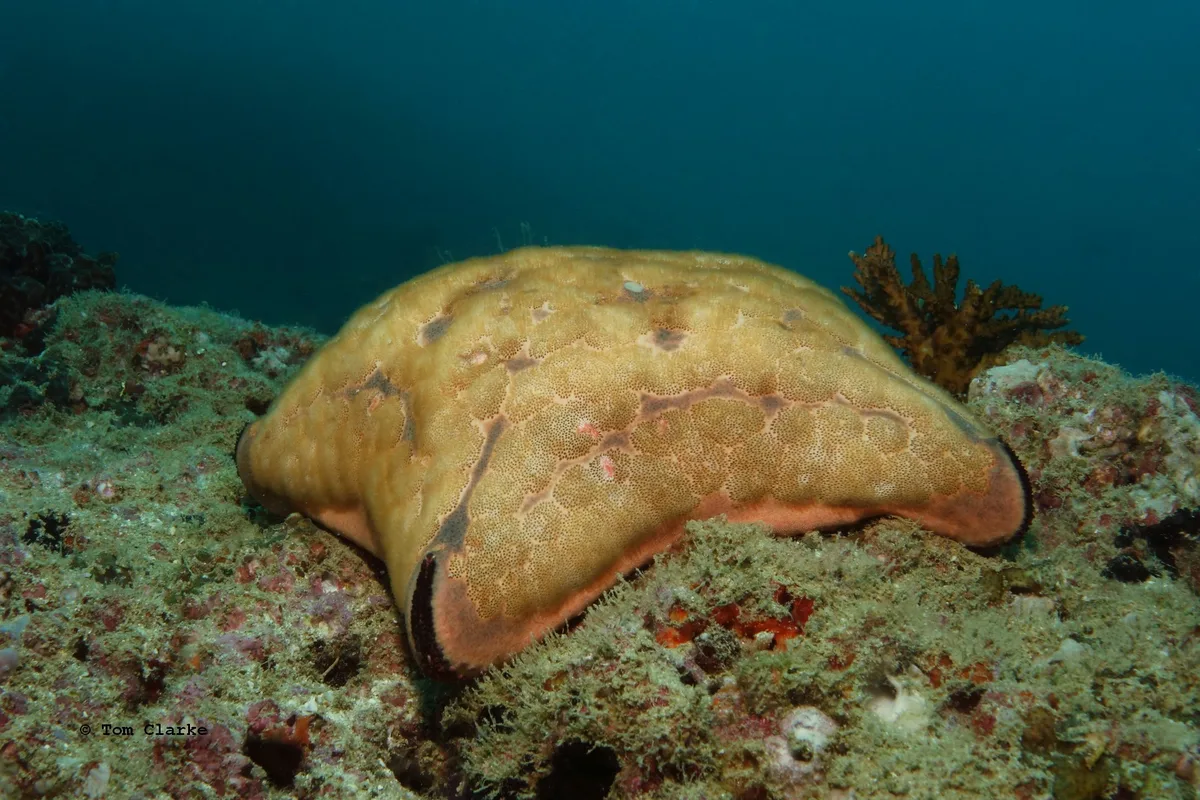
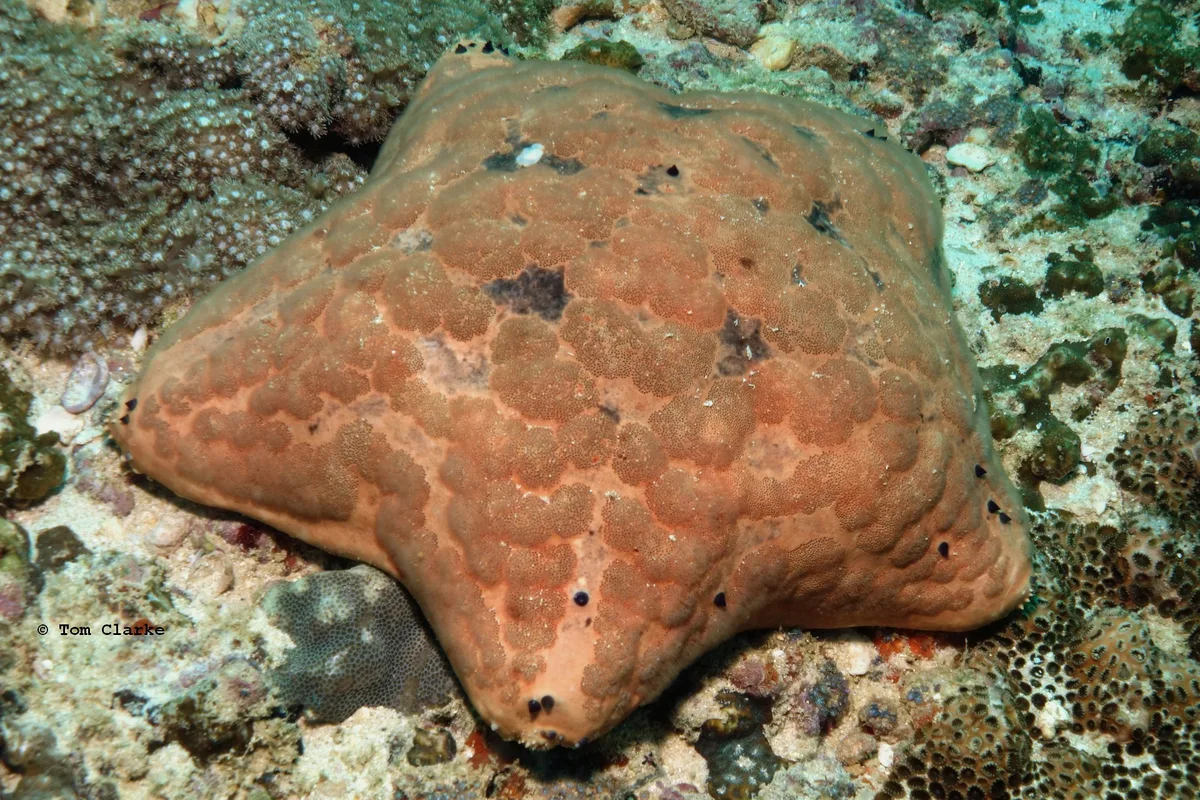
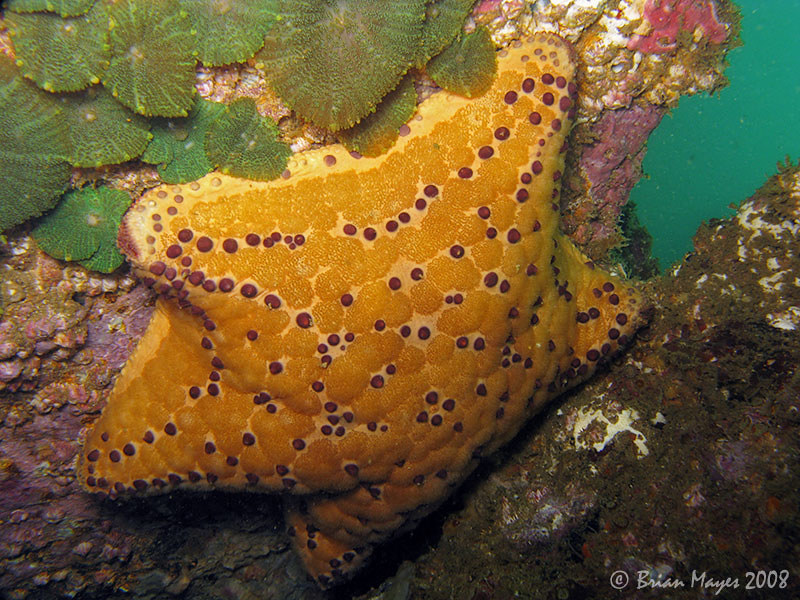
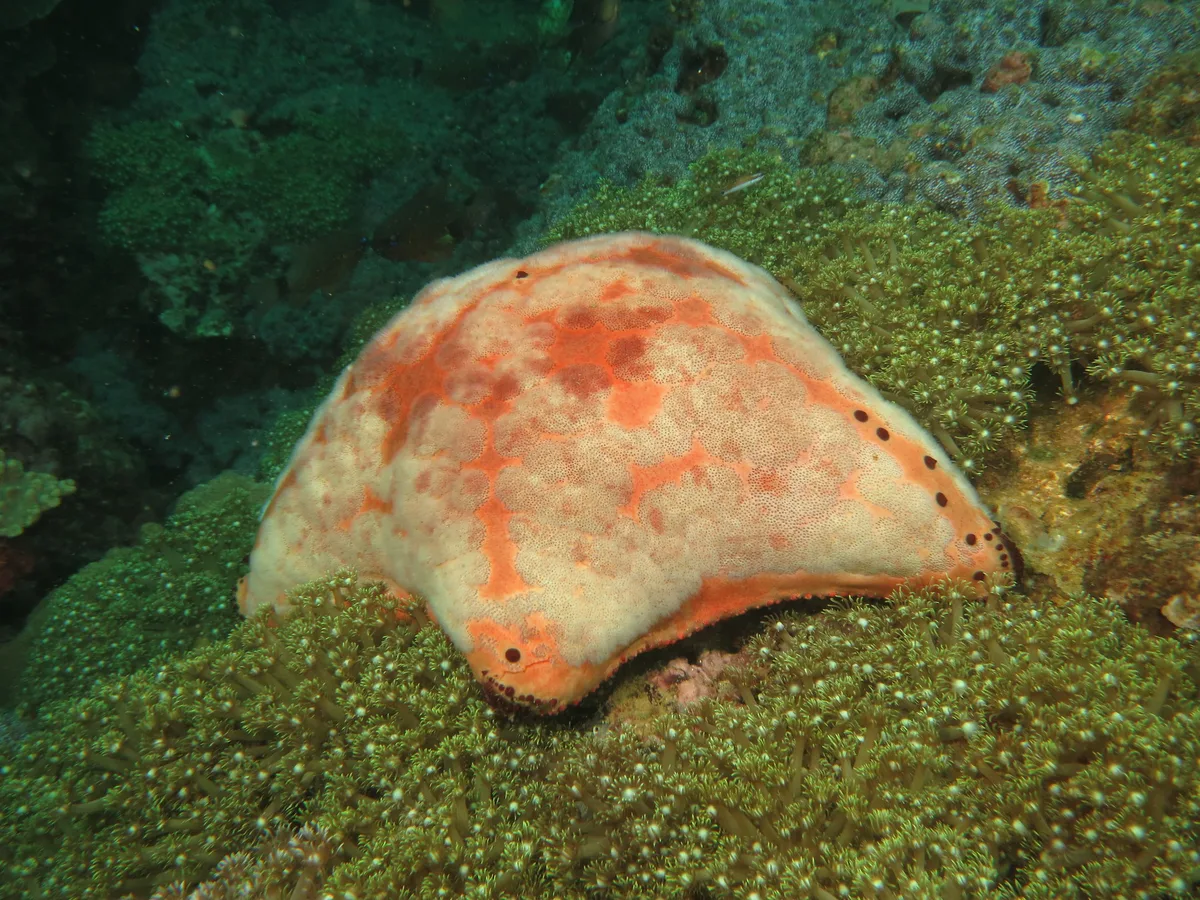
The plainer of the two cushion stars here, reaching about 25 cm (10 in): a smooth leathery pentagon in dull brown or olive, without the studded spines of its relative, sometimes marked with paler blotches. Where the two occur together the surface texture settles the identification faster than color, which varies in both.
It keeps to coral rubble and hard bottom on sheltered reef from about 1 m to 30 m (3 to 100 ft), and its range centers on this sea and the Arabian peninsula rather than spreading across the whole Indo-Pacific. Feeding is the standard cushion star method: the stomach is pushed out through the mouth and laid over algal film, detritus or a coral surface, so the animal digests its meal externally and absorbs the result. Under the flat underside there is a maze of grooves lined with tube feet, and lifting one out of curiosity tears those feet loose from the substrate - a good reason to photograph rather than turn it over.
- smooth leathery cushion, no obvious spines
- dull brown to olive, sometimes with pale blotches
- pentagonal outline with rounded corners
- diameter up to 25 cm