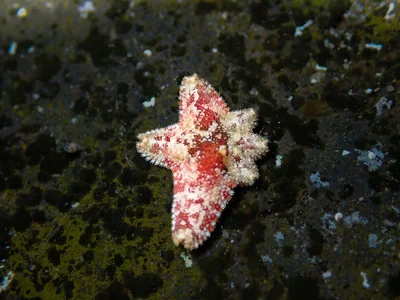
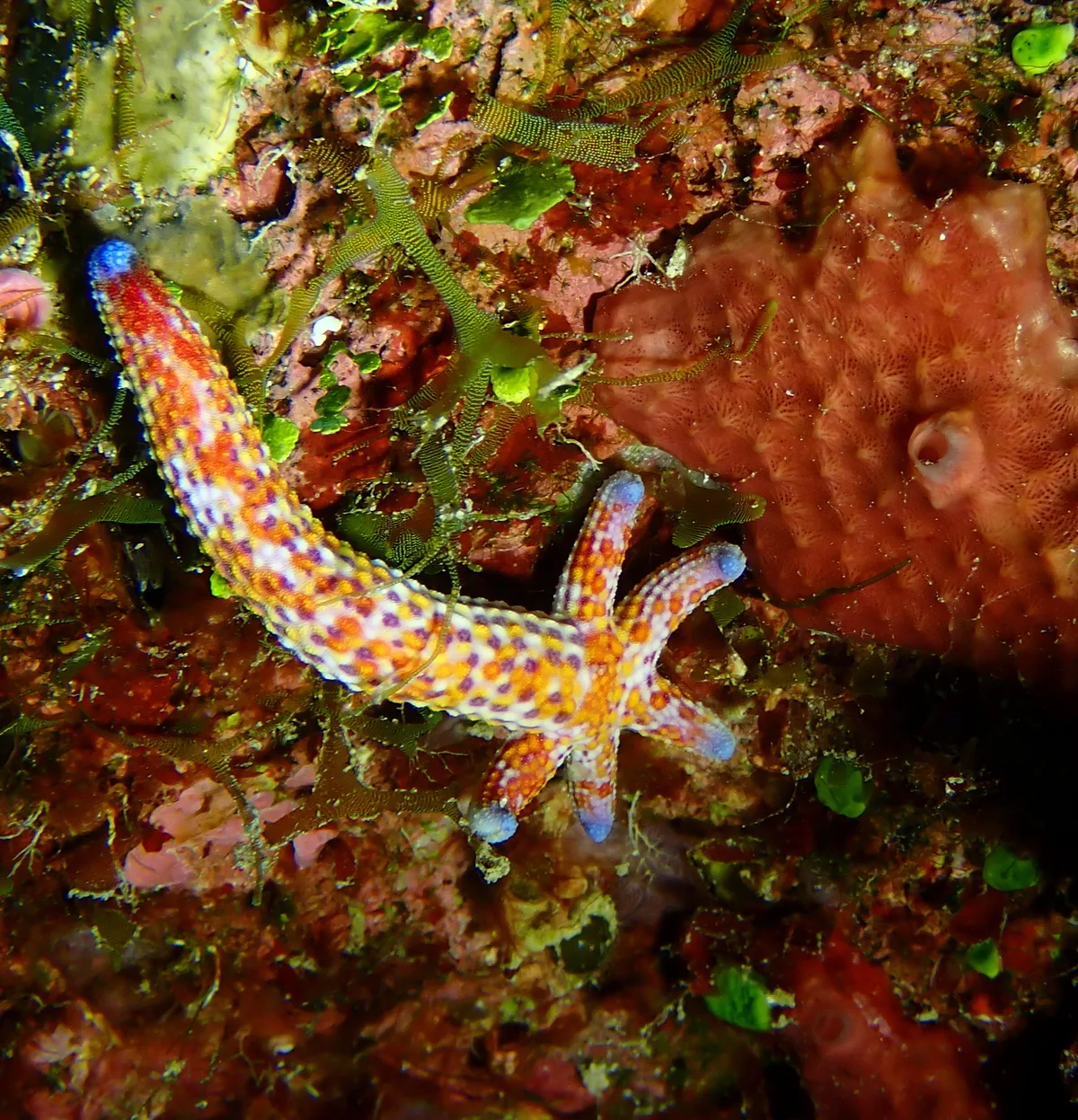
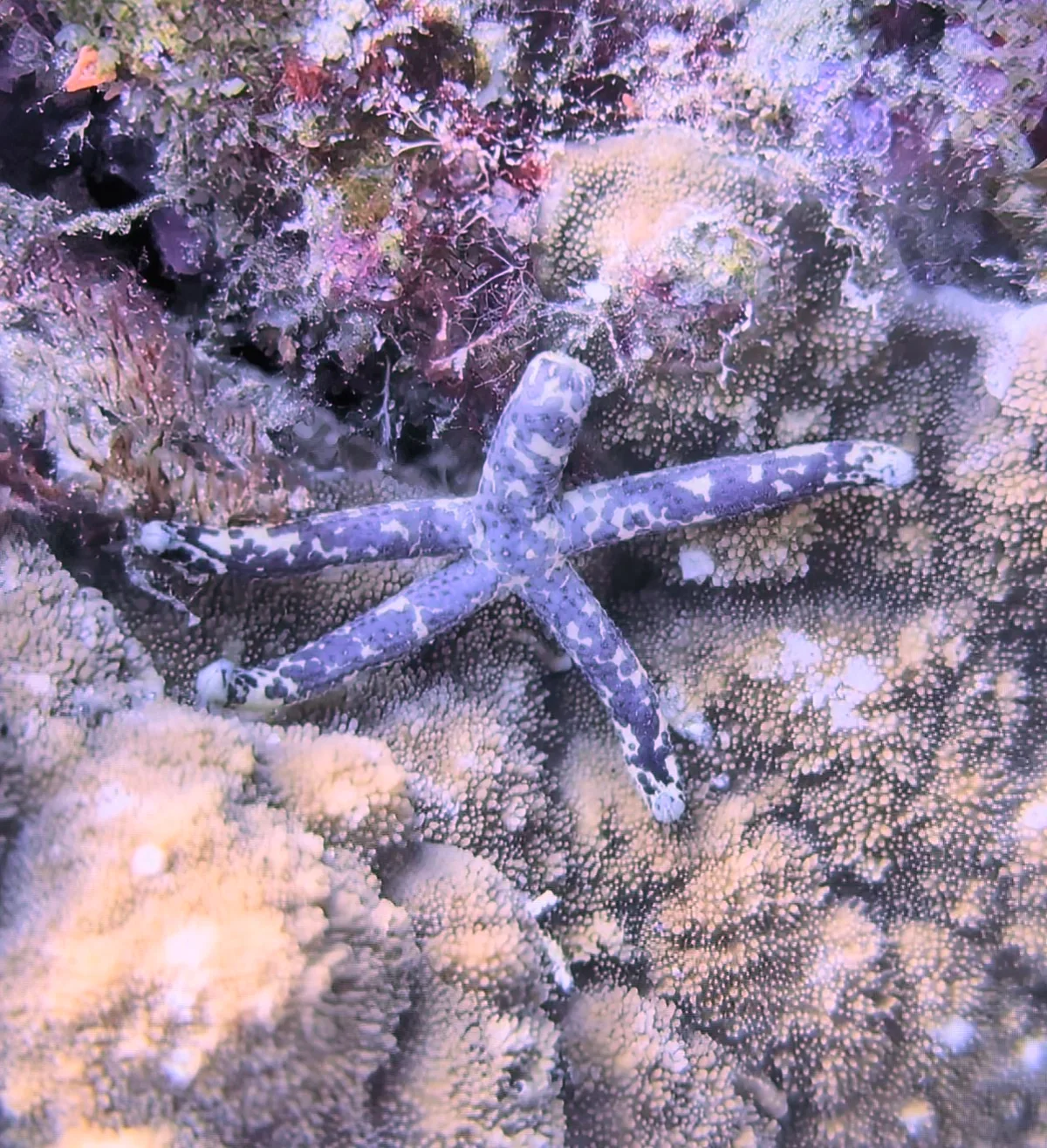
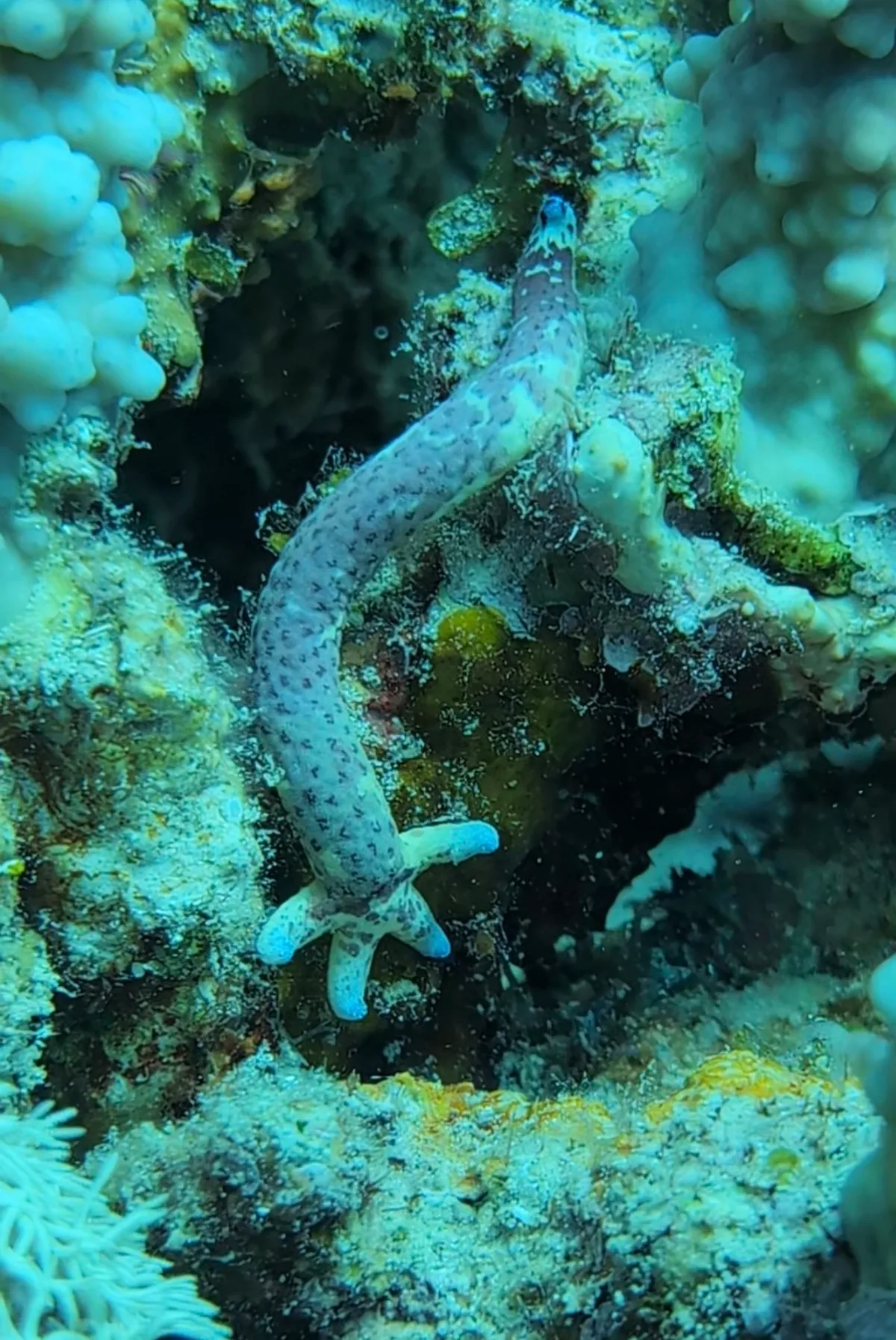
This star reproduces by throwing an arm away. The break is deliberate, usually about a finger's width out from the disc, and the discarded arm does not die: it crawls off on its own tube feet, lives for months as a self-contained animal, and grows a small disc with four stubby new arms at the torn end. The result is a long arm with a tiny star budding off one end, a shape divers call a comet, and it is one of the odder things to find under a torch on a rubble slope. The parent regrows what it shed.
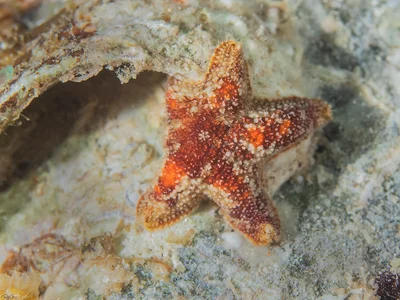
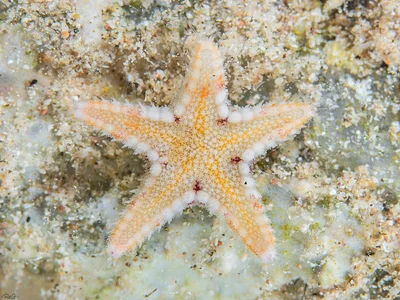
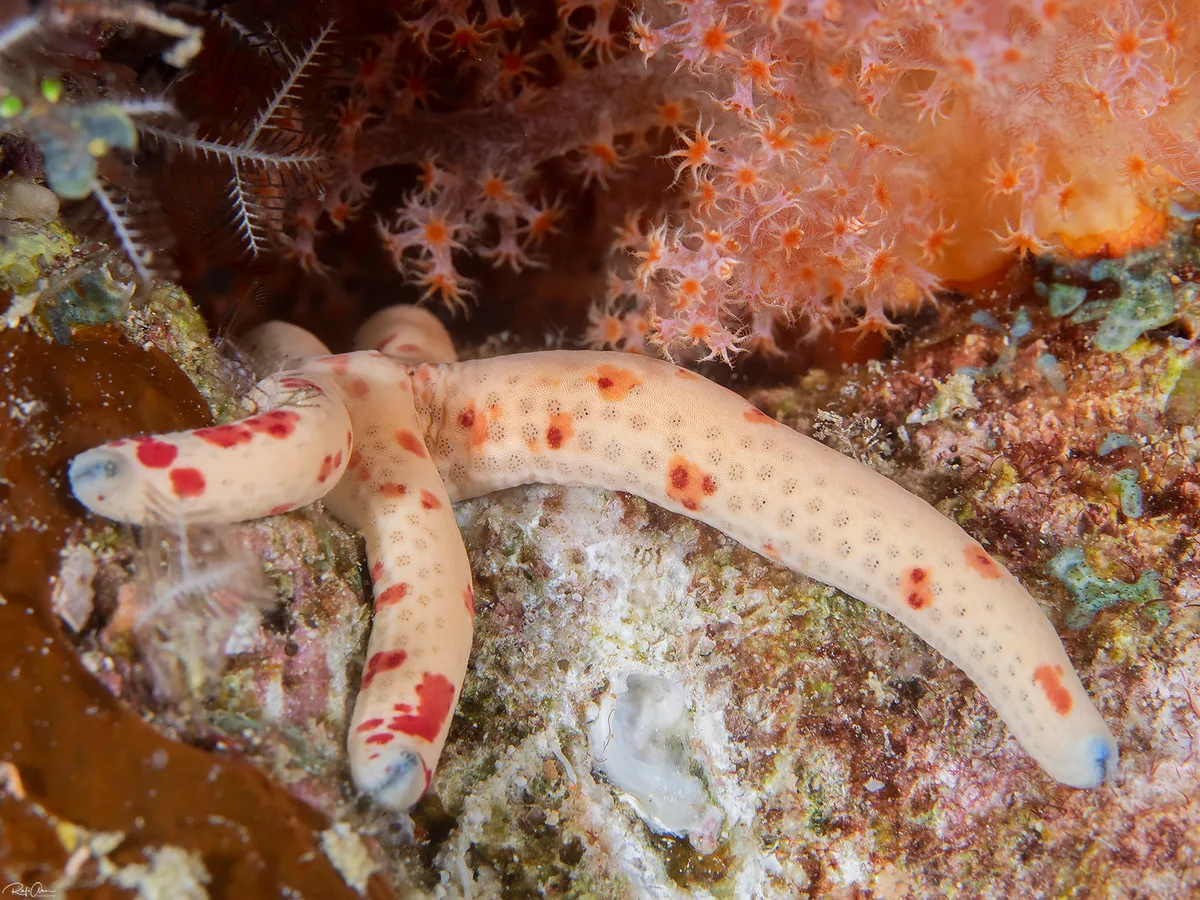
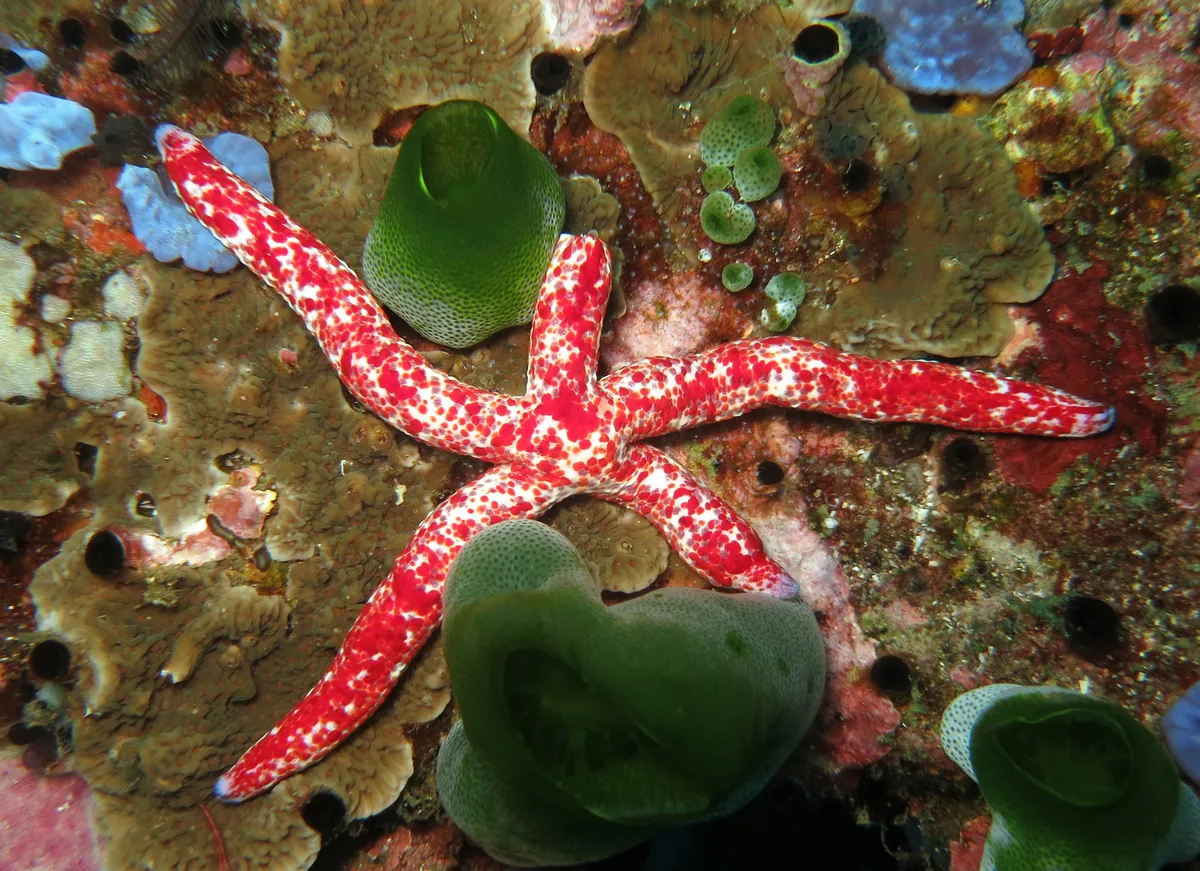
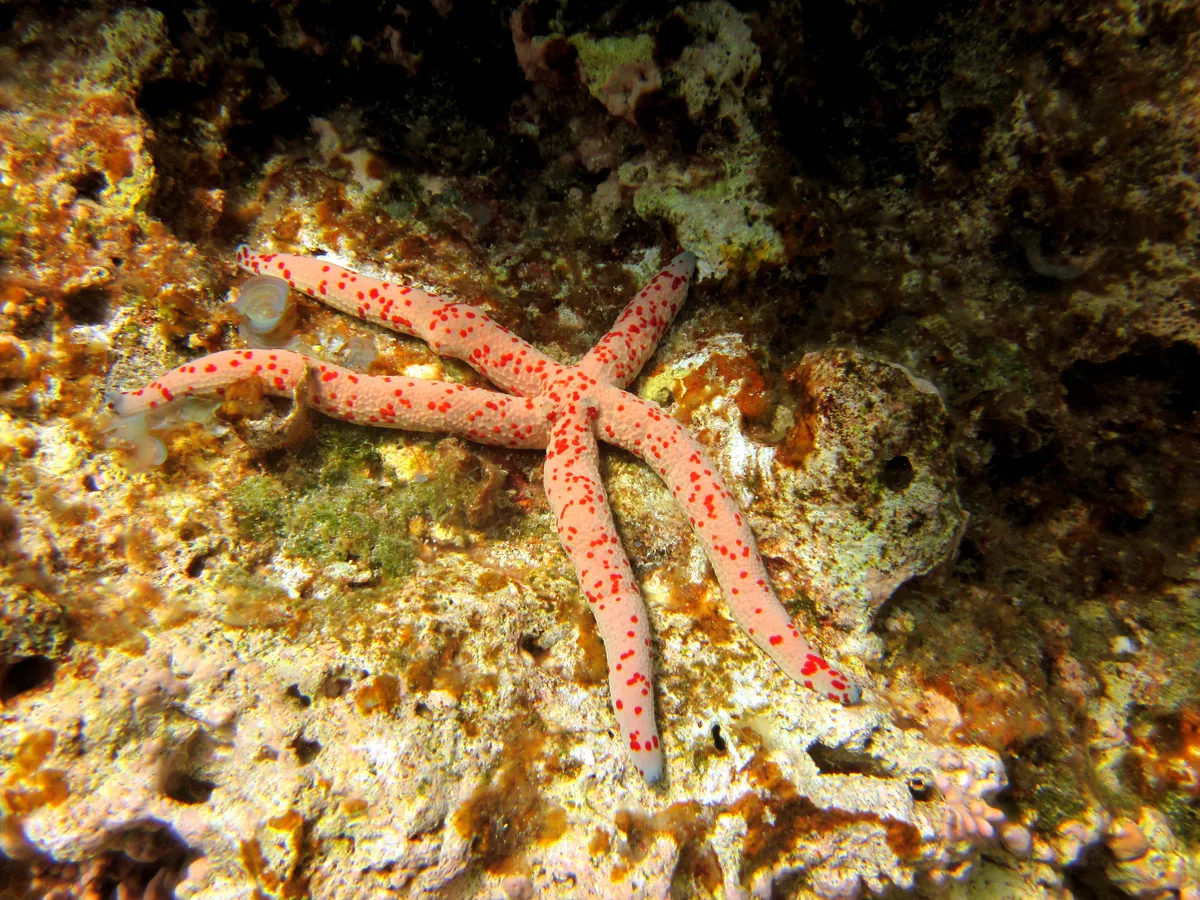
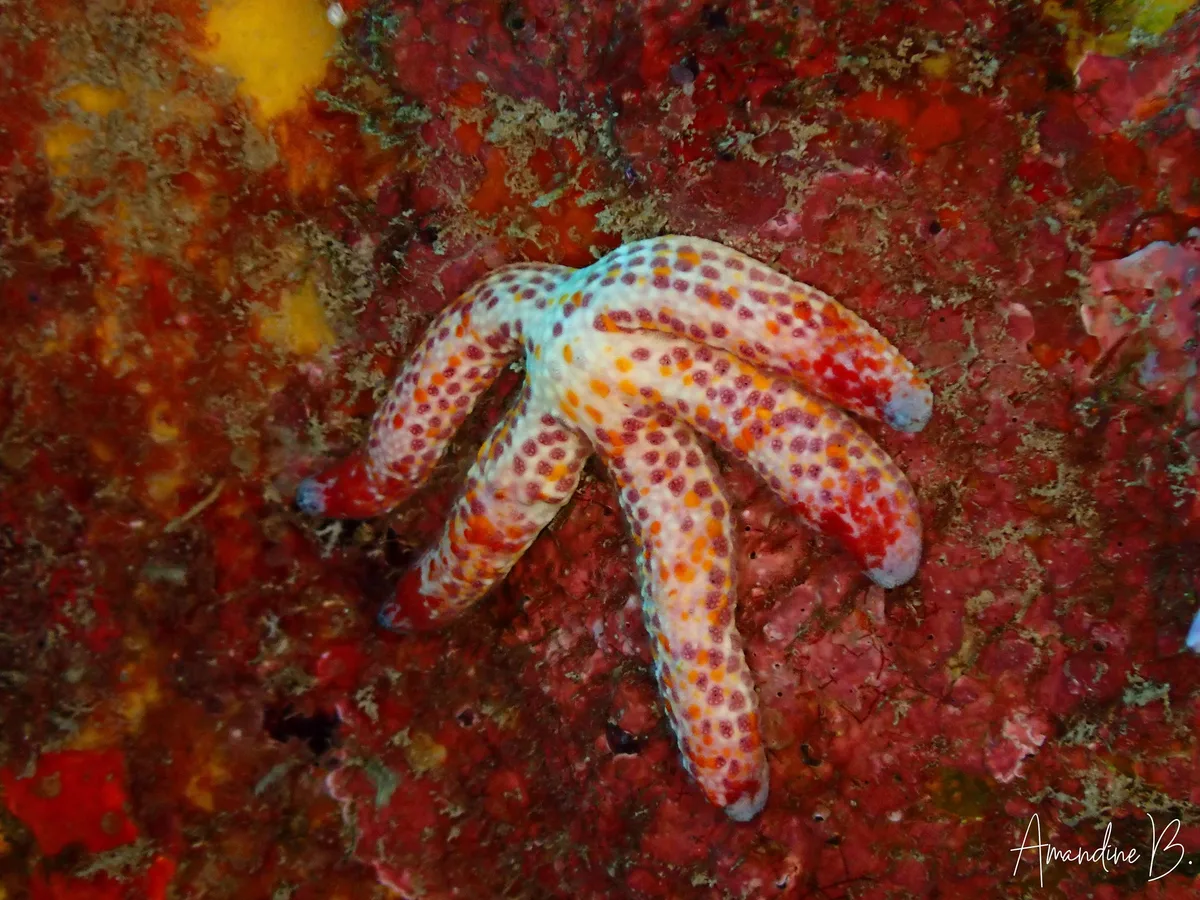
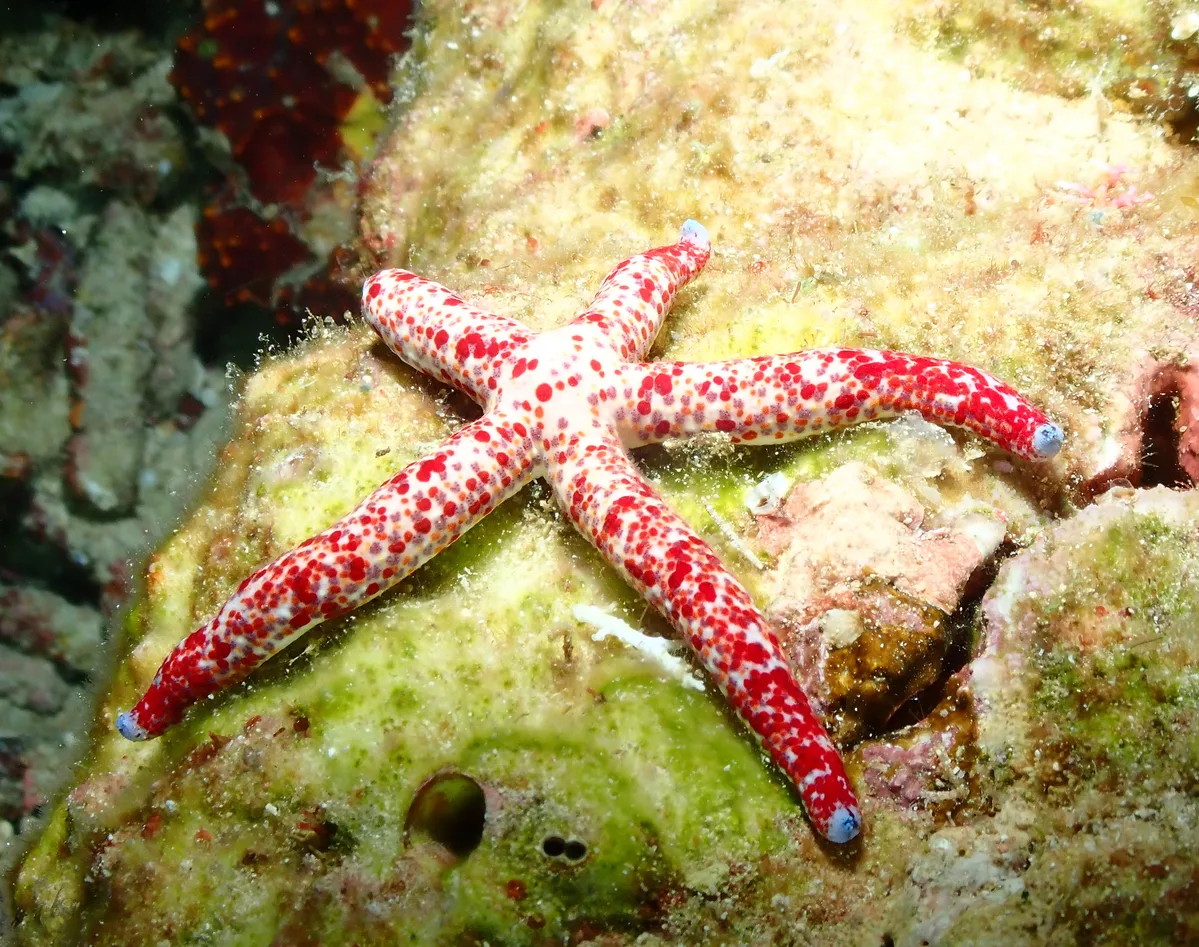
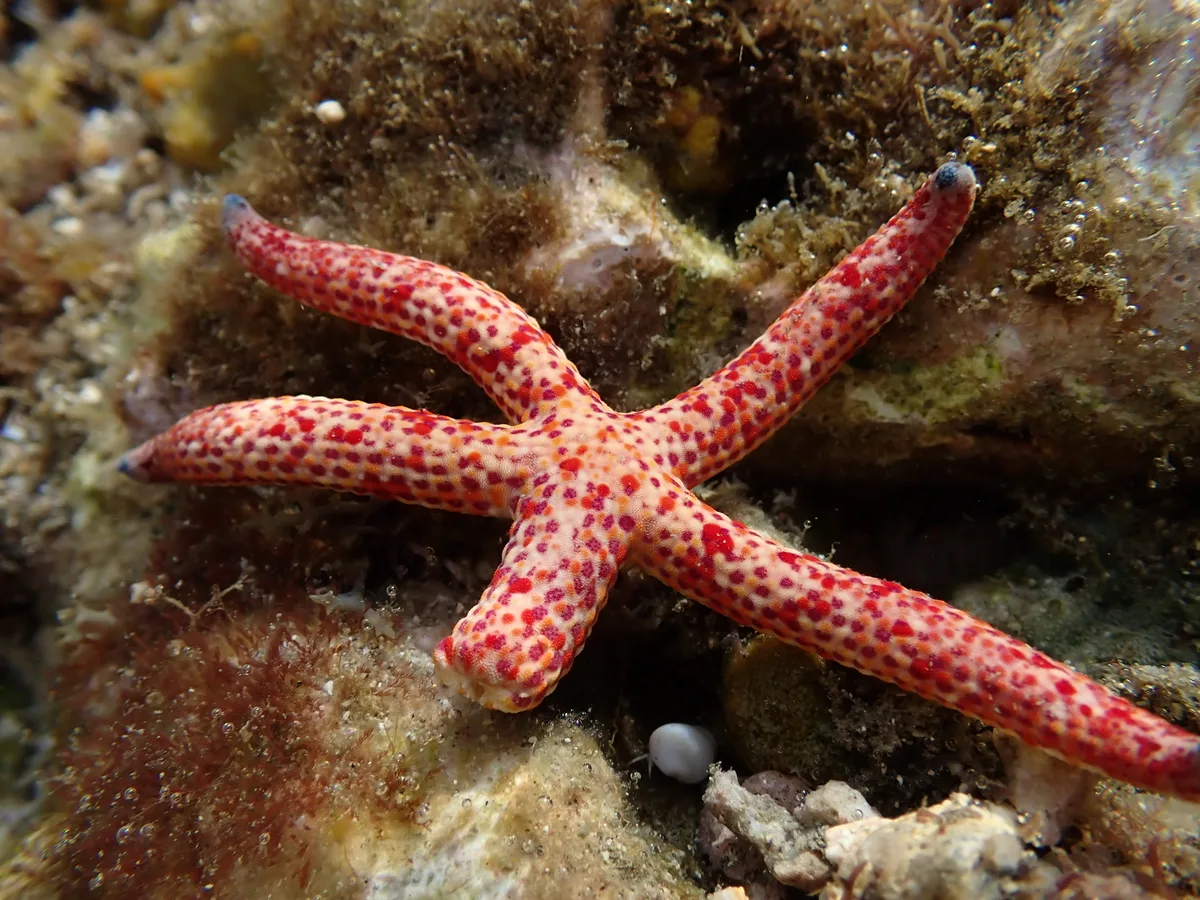
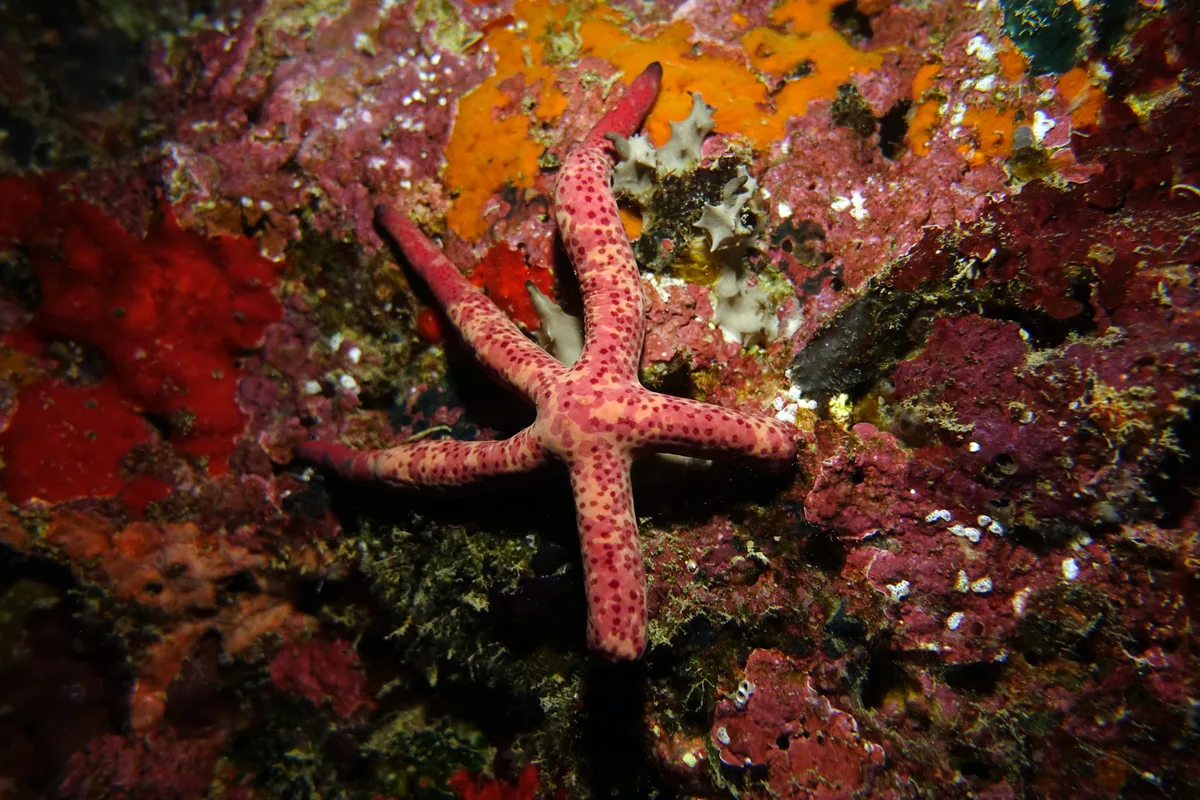
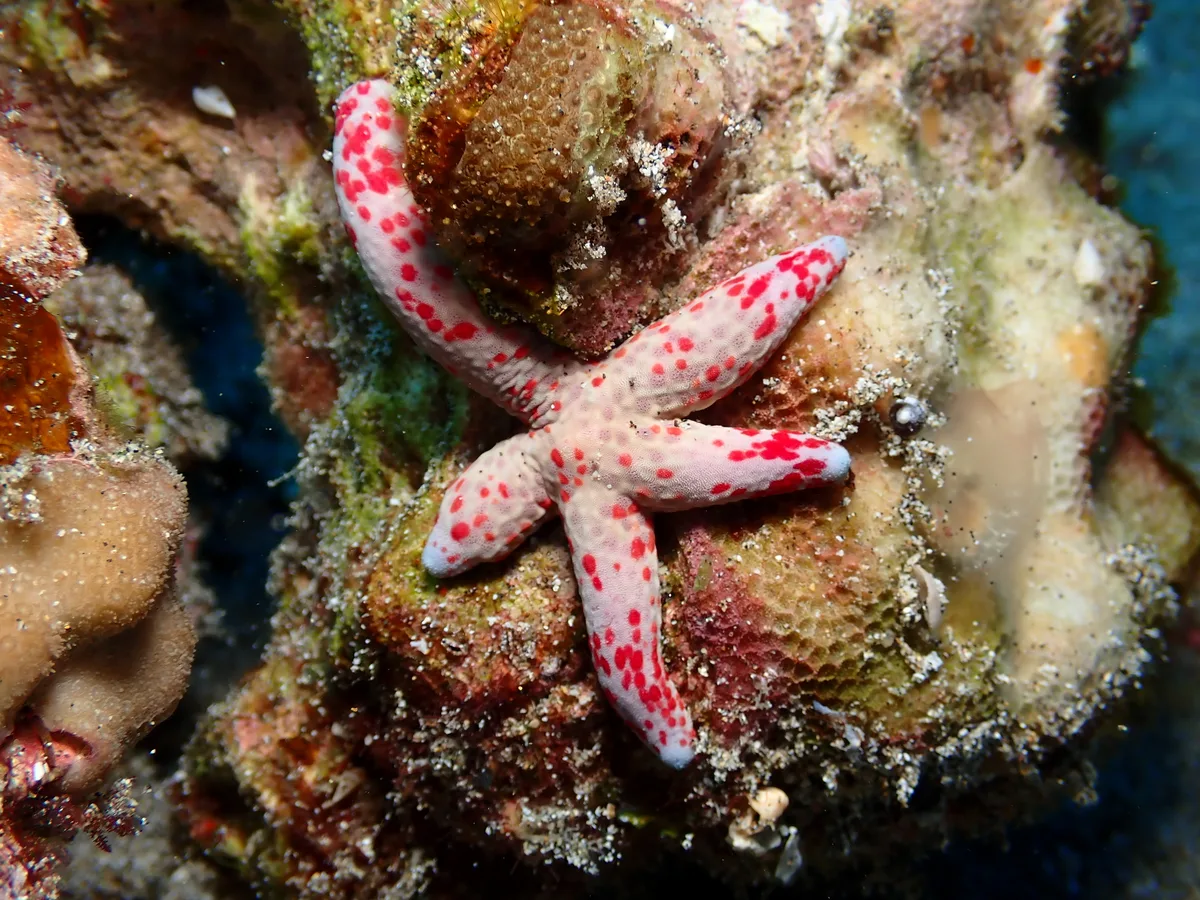
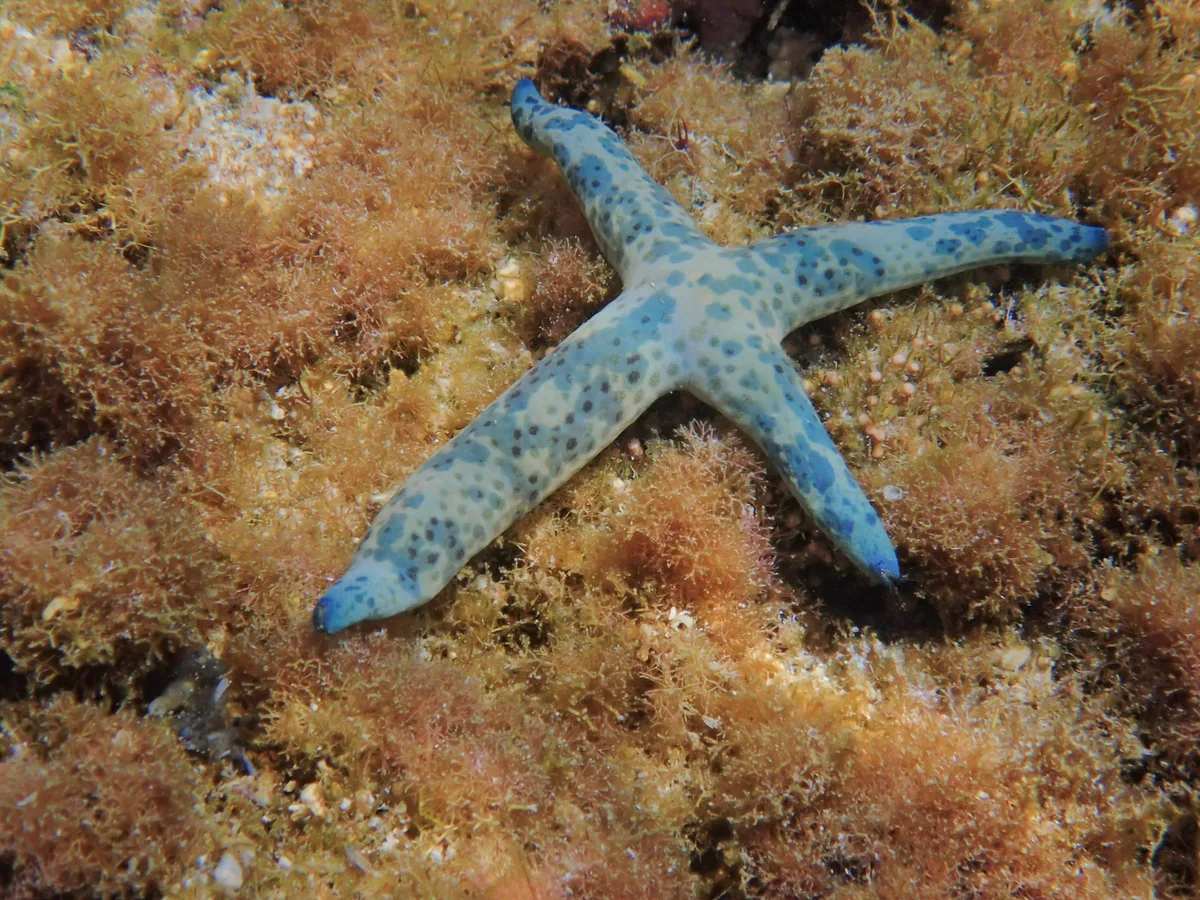
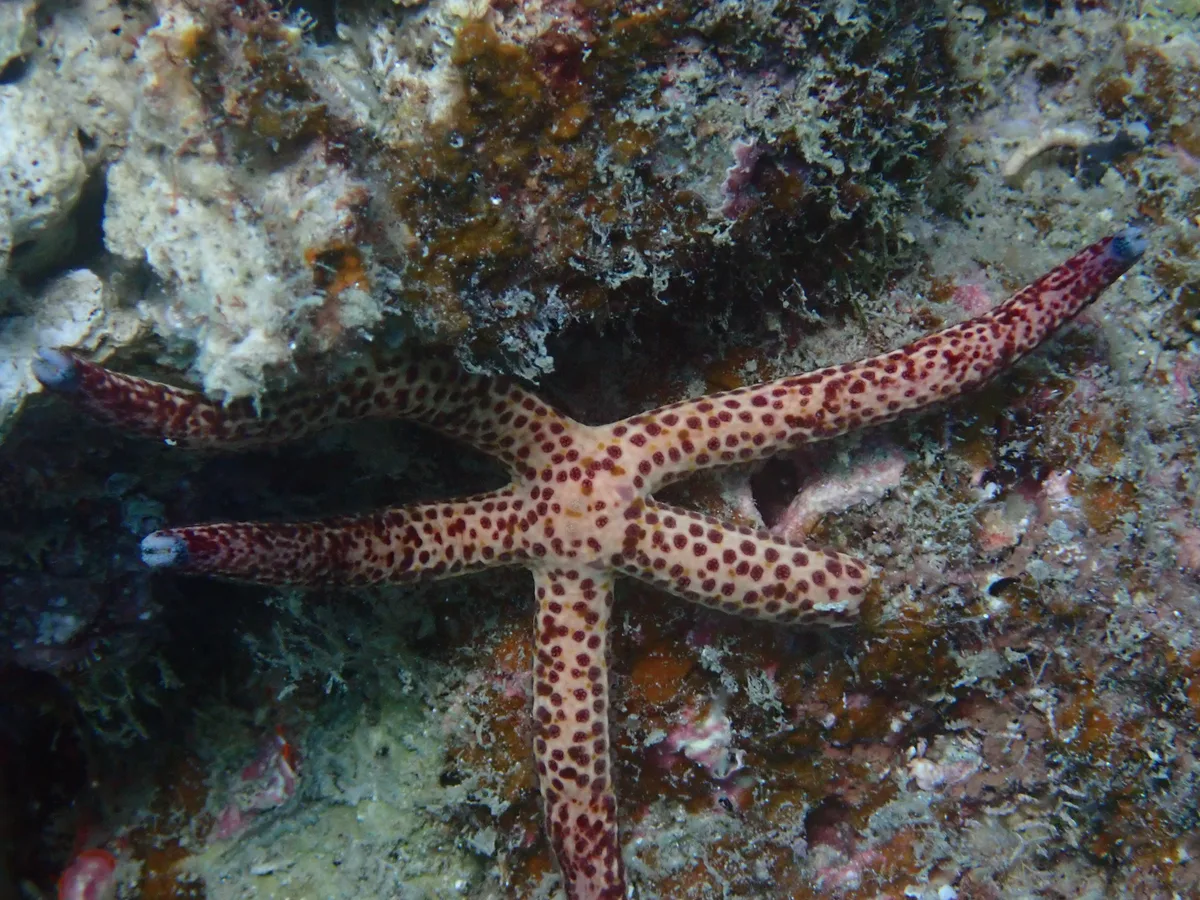
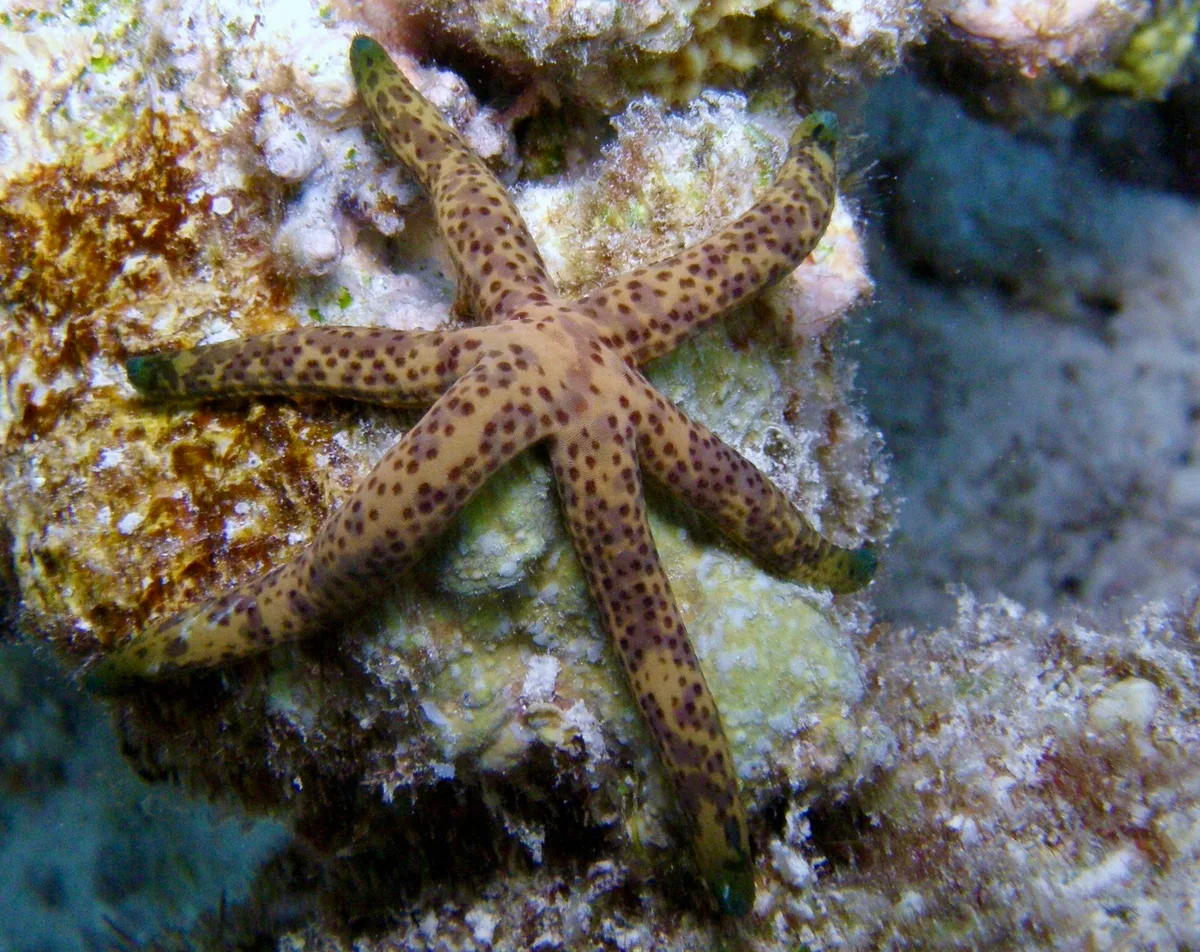
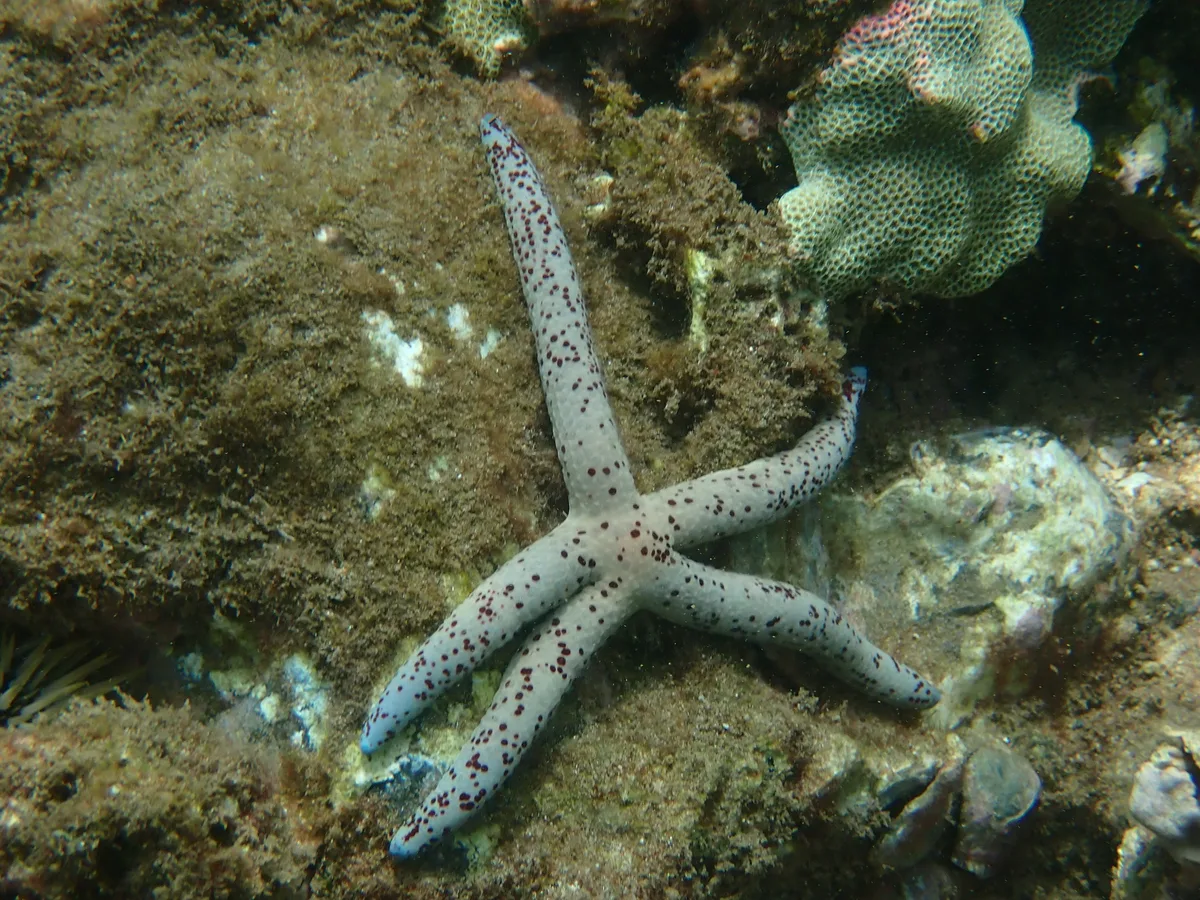
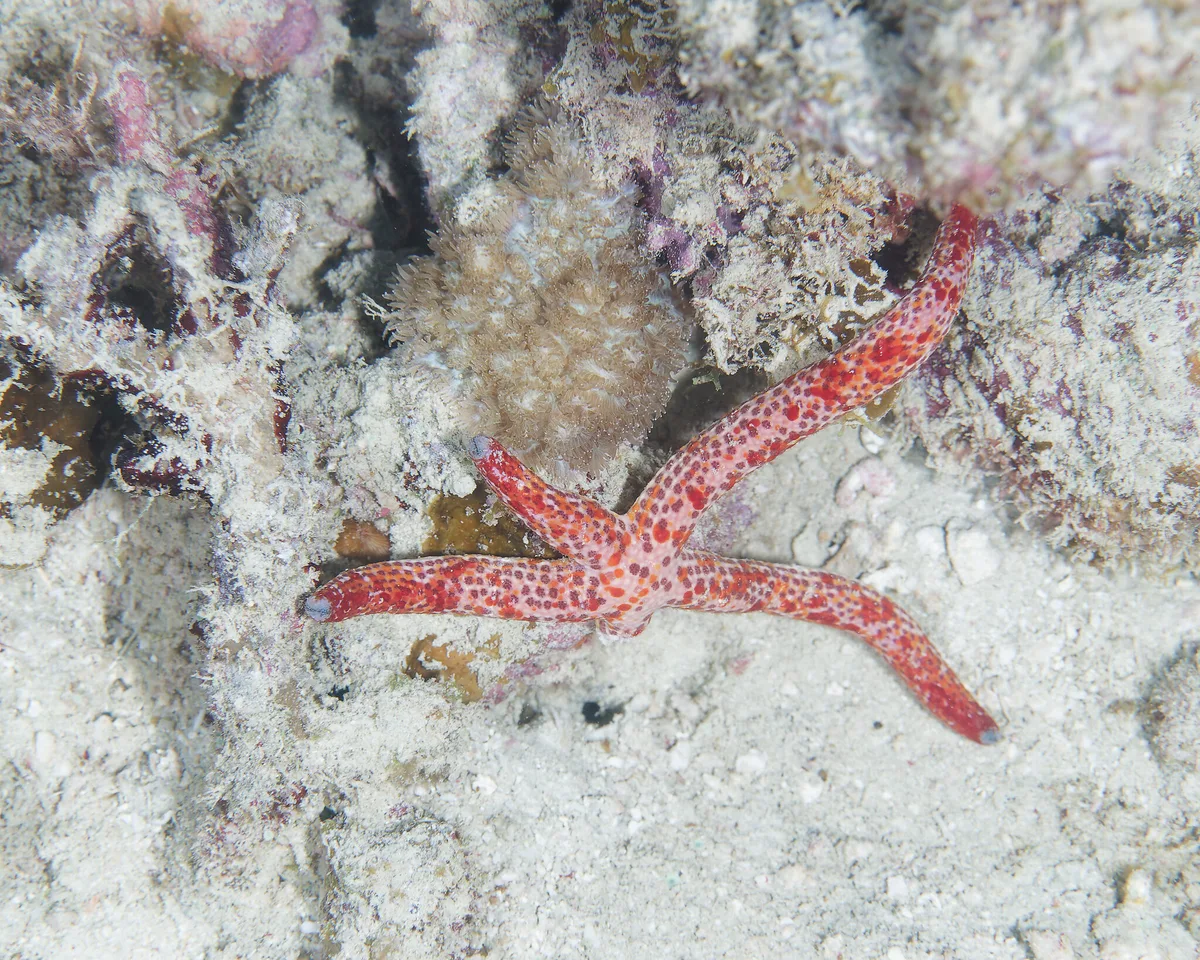
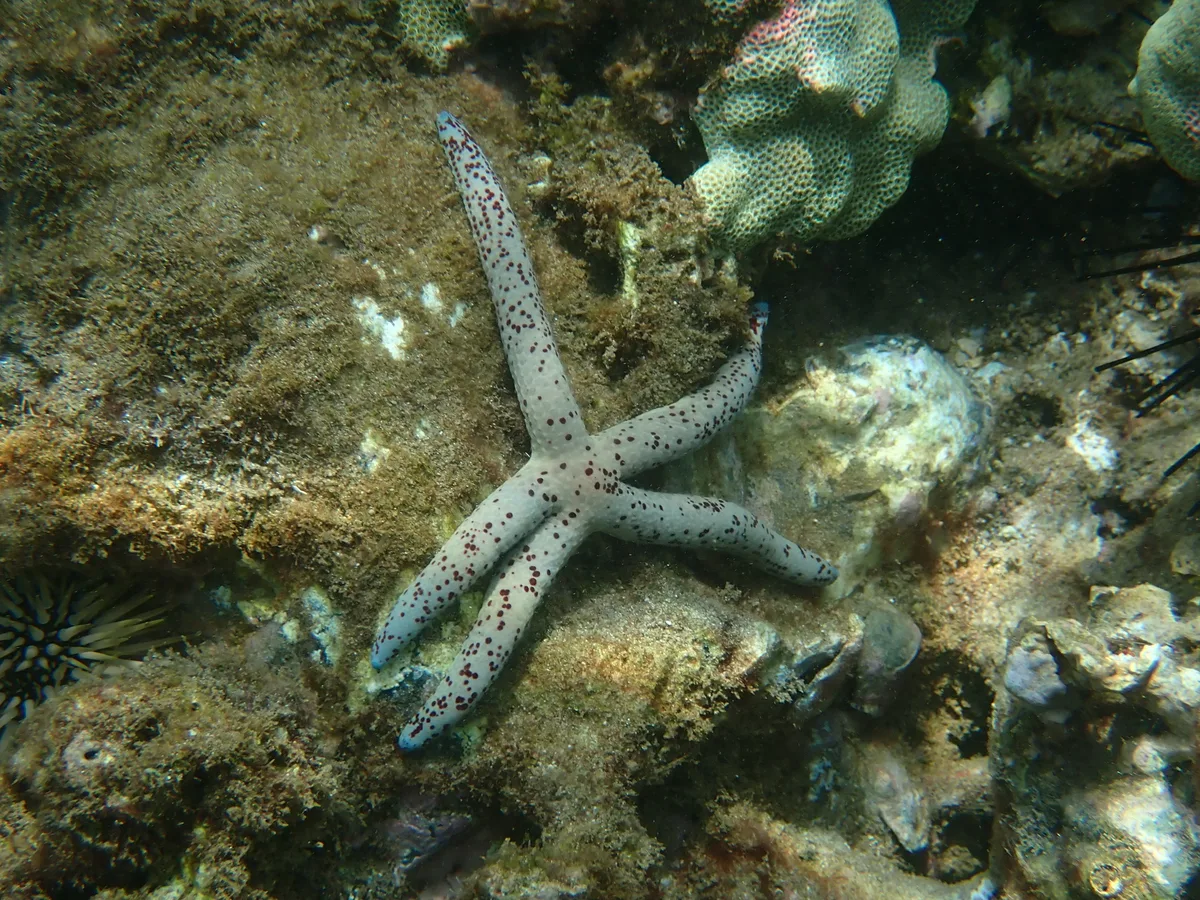
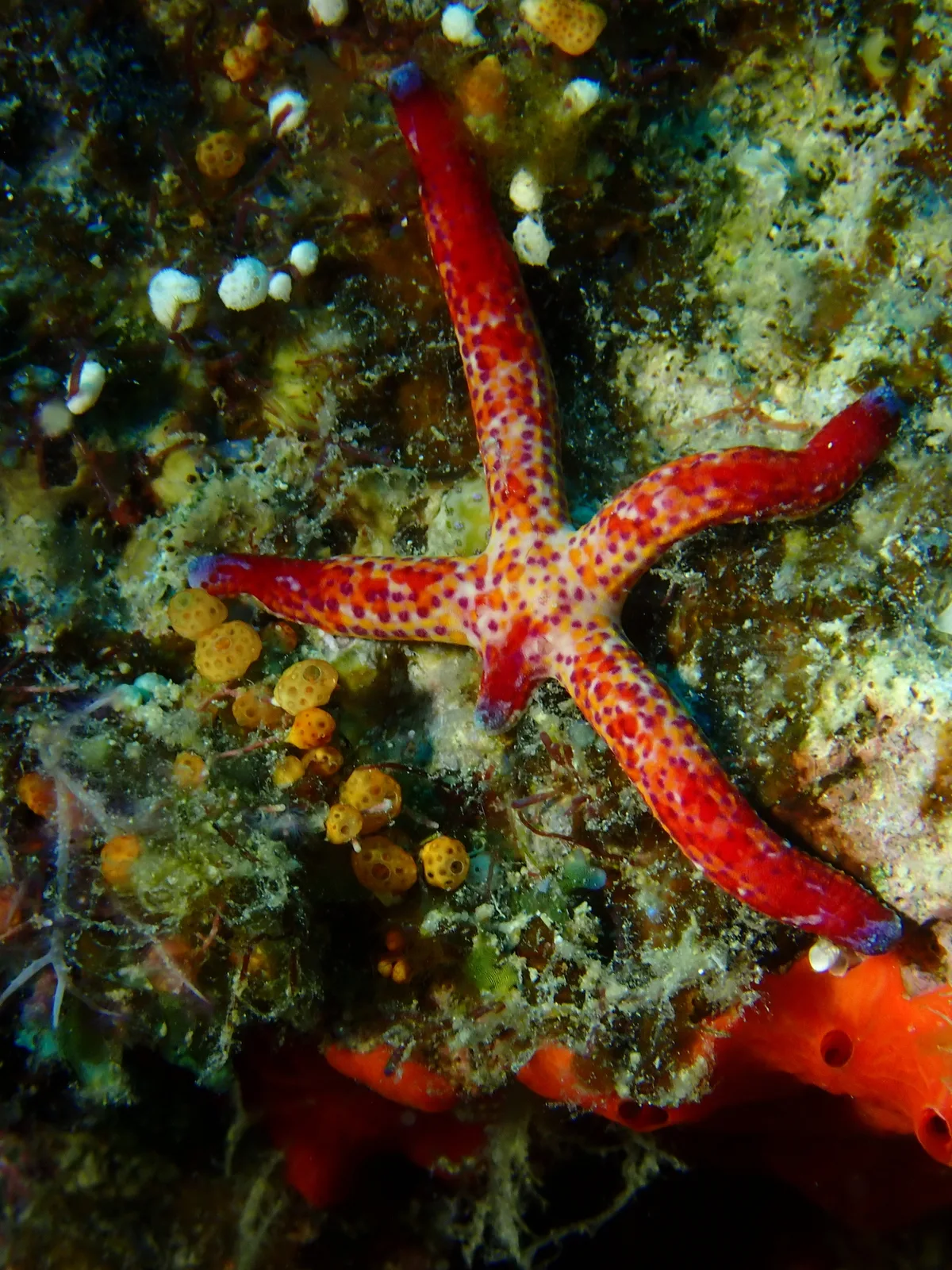
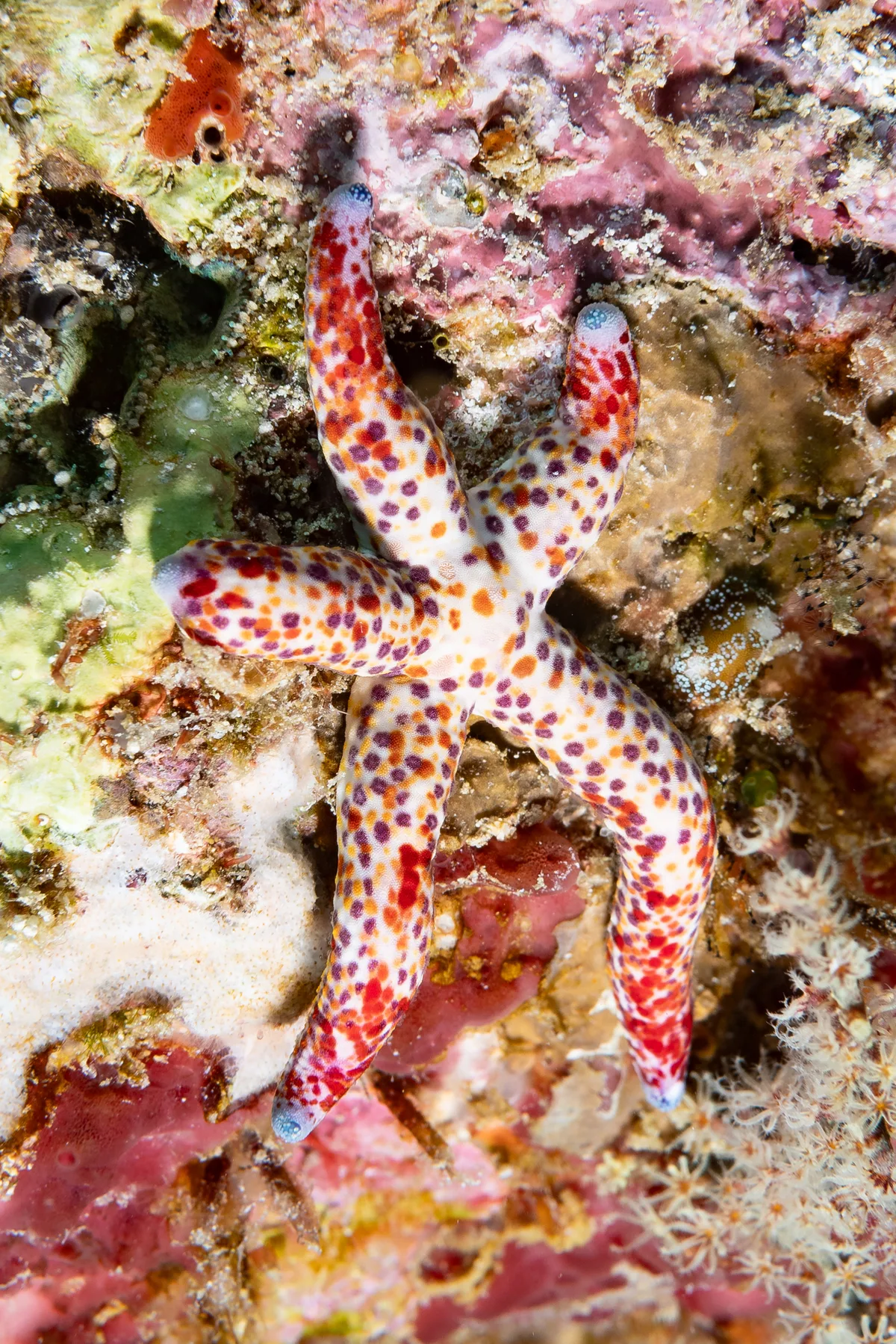
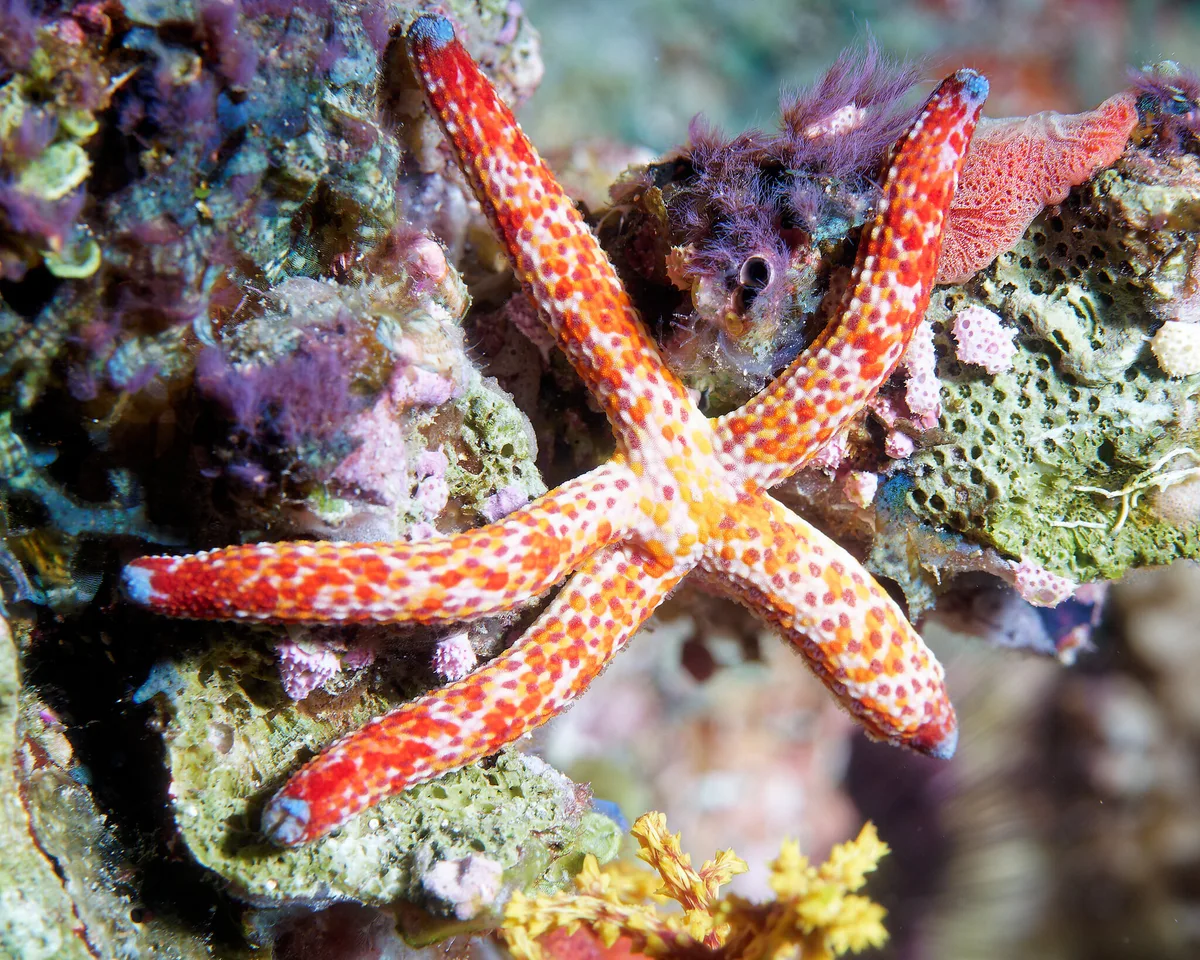
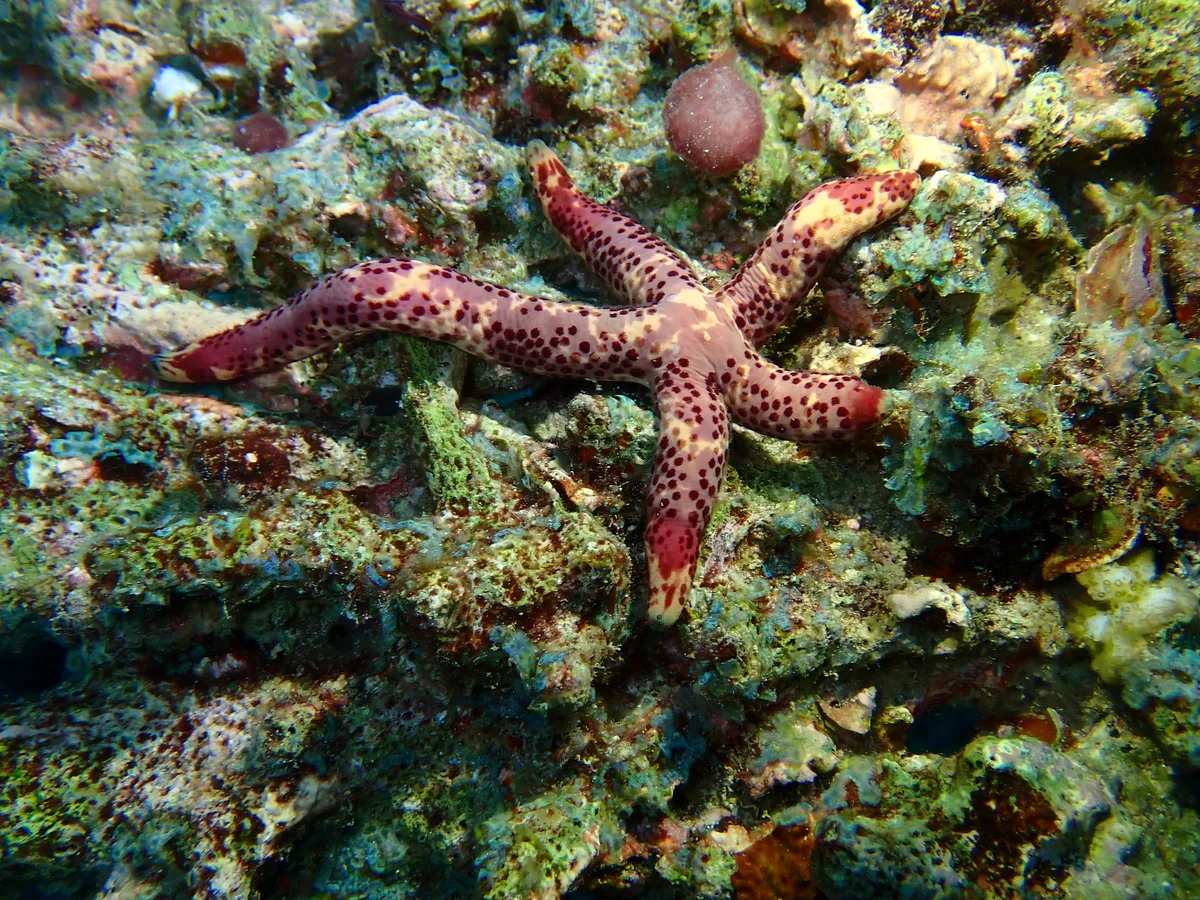
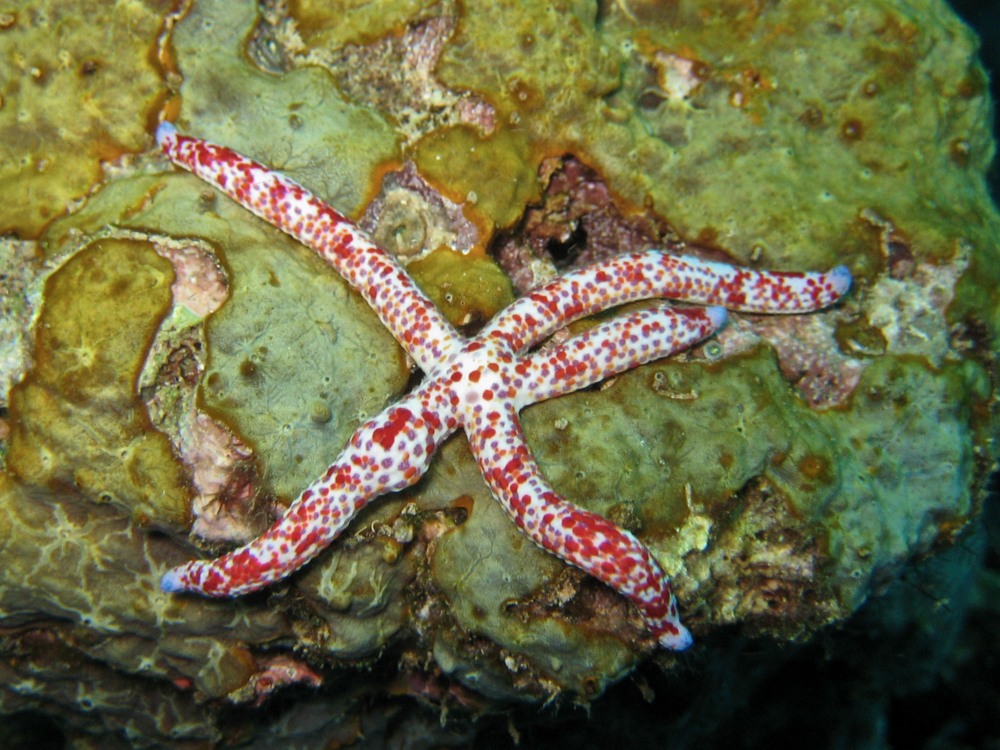
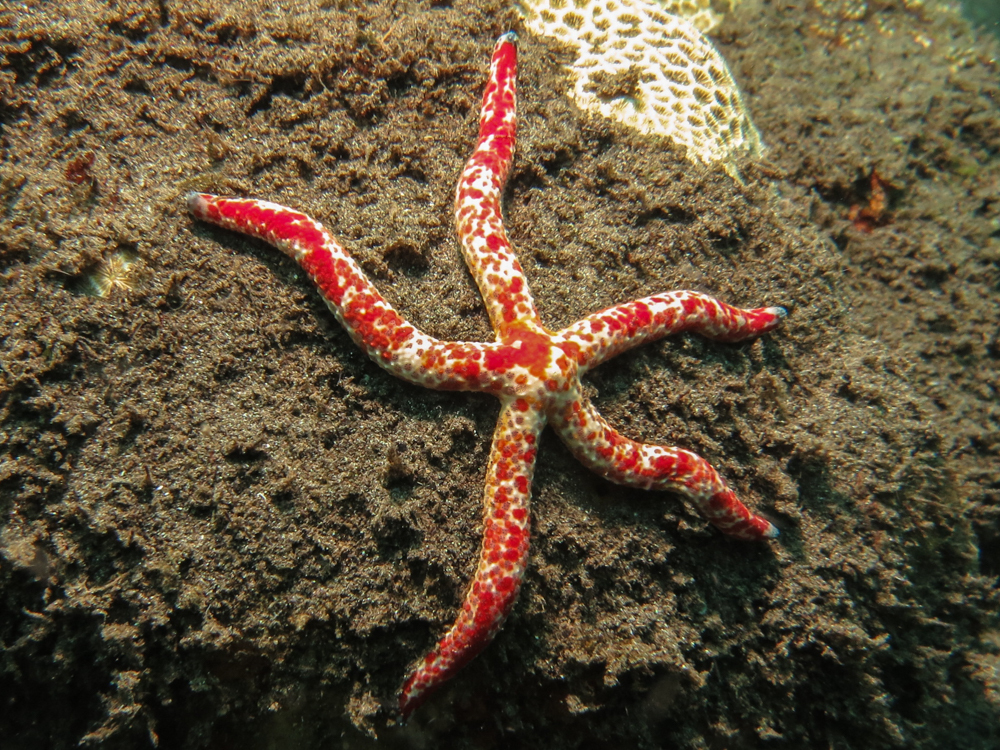
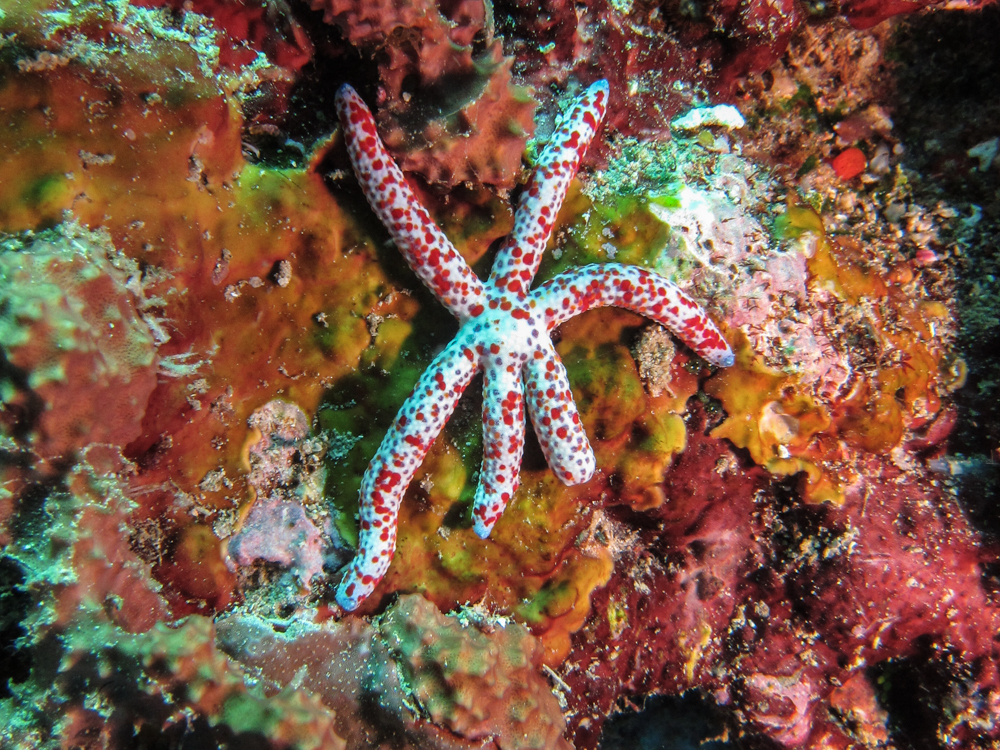
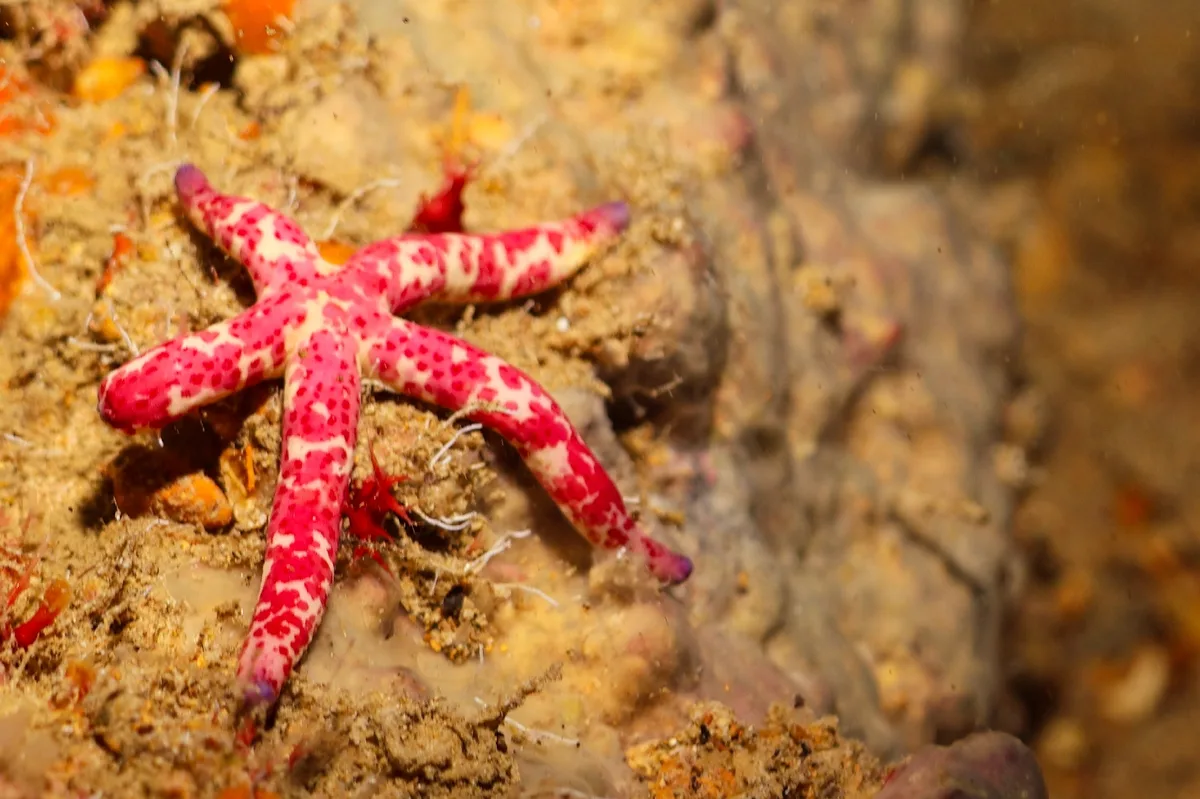
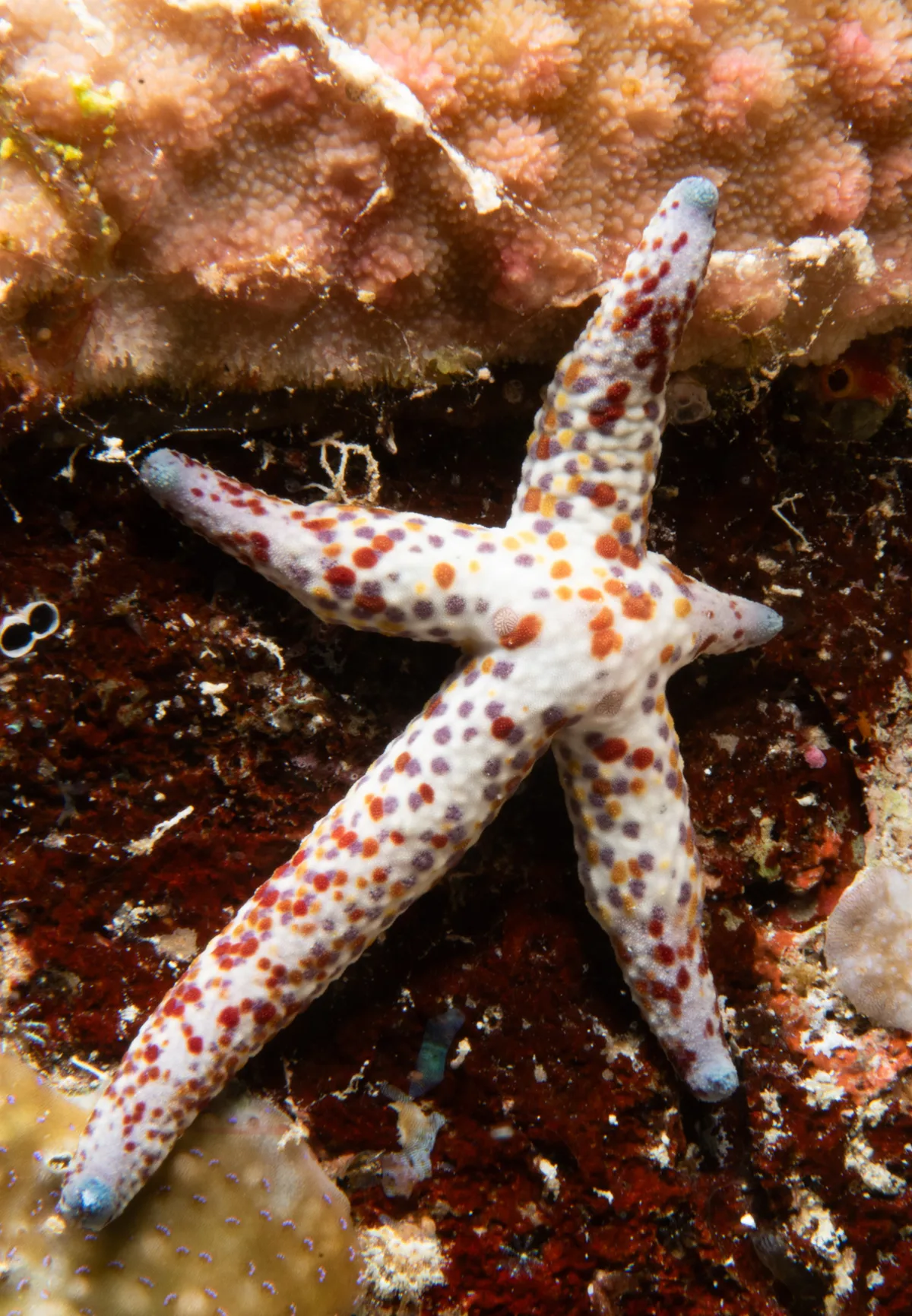
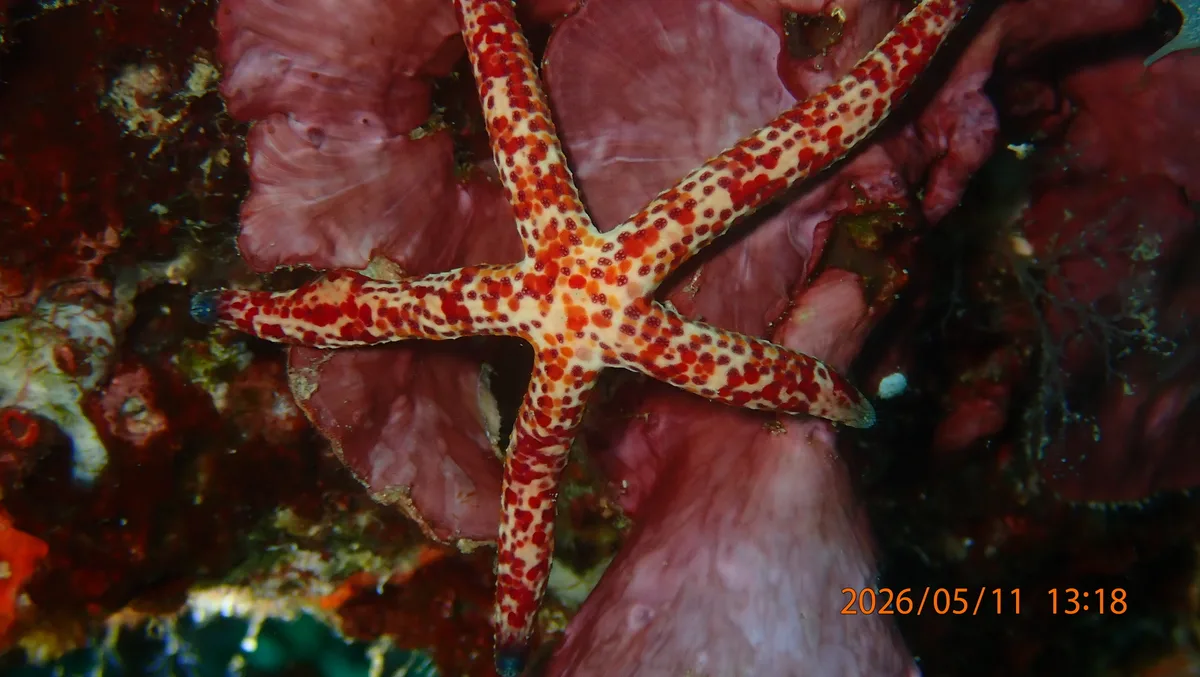
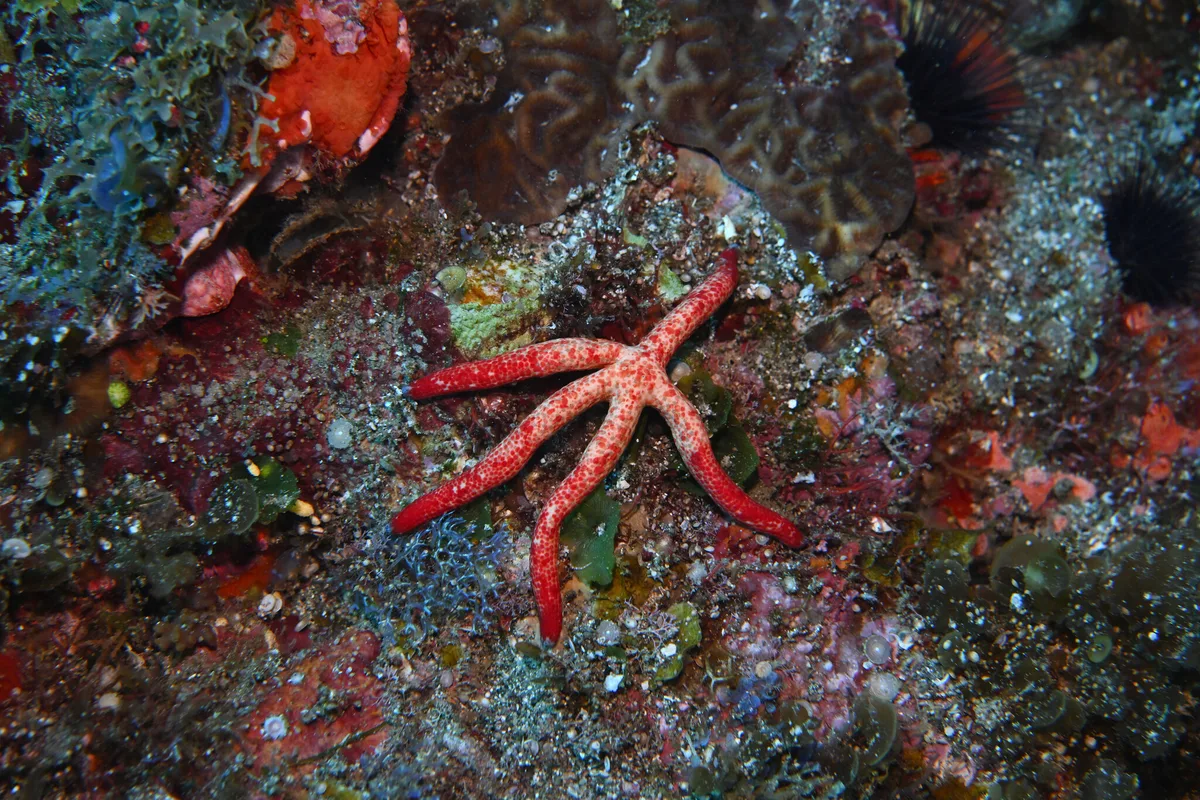
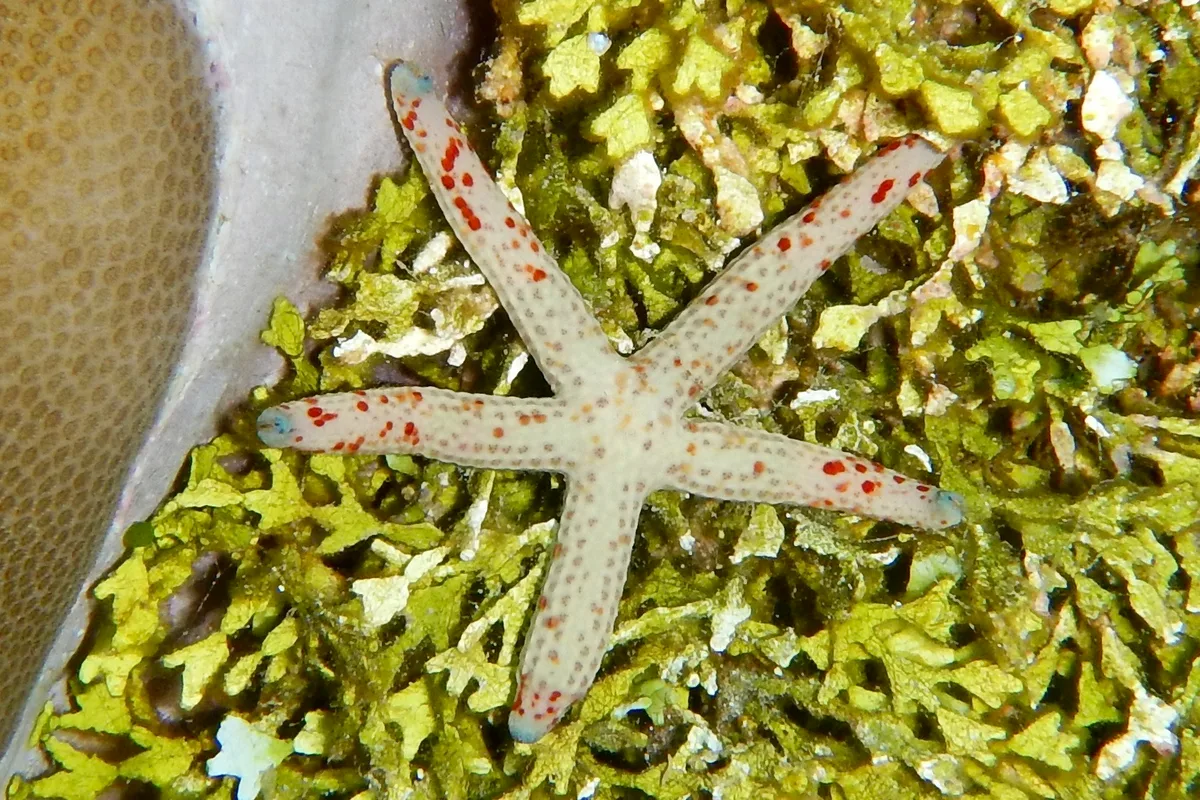
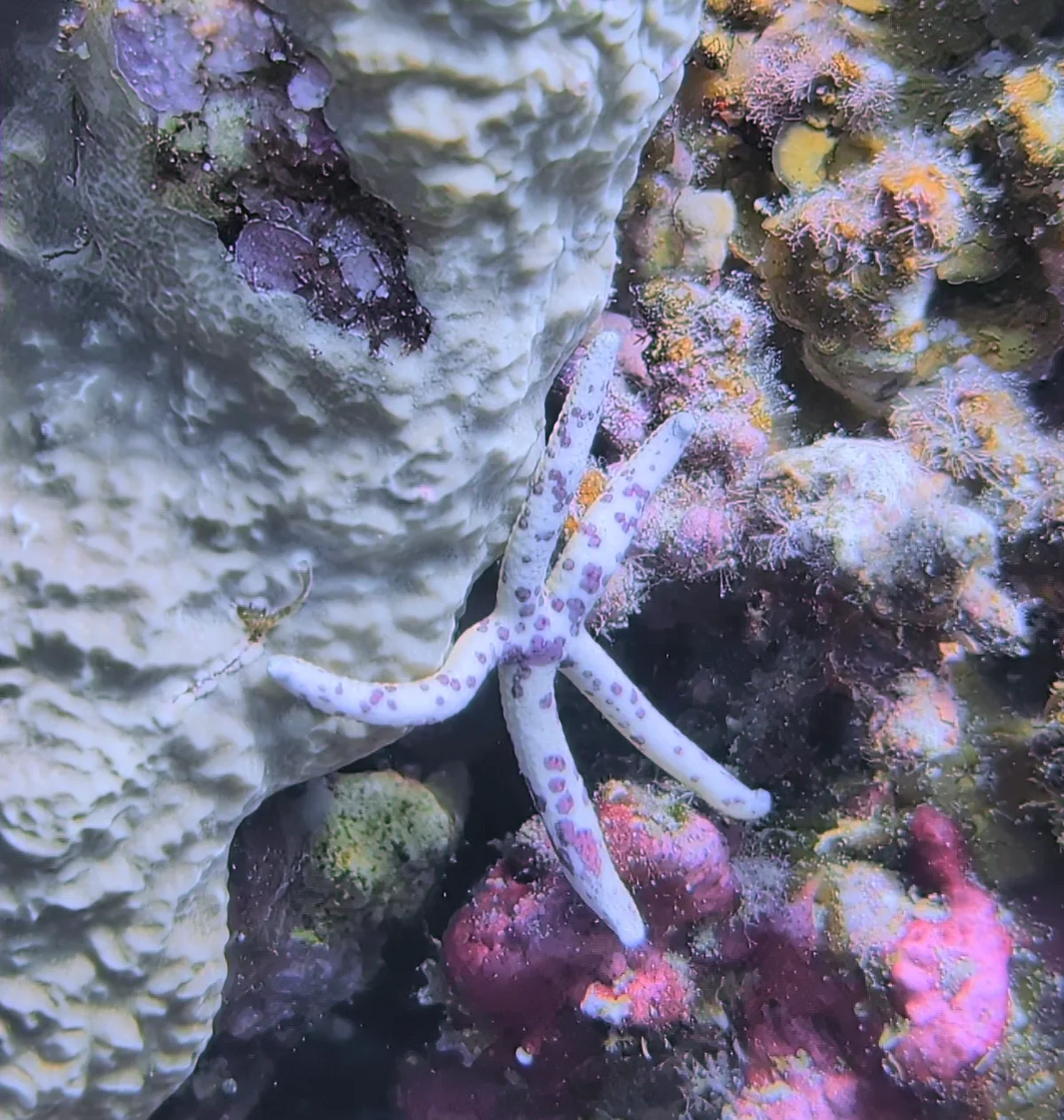
The intact animal is a small disc with five slender cylindrical arms, mottled pink and cream and speckled darker. Arms of unequal length are the norm rather than a defect, and they are the giveaway: this is a body that is constantly either shedding or rebuilding.
Underneath, each arm carries a double row of tube feet in a groove. Every foot is a water-filled cylinder that extends, sticks and releases, and they work in relays, a rolling wave down the arm rather than all together. The water that drives them enters through the madreporite, a small sieve plate on the upper surface. Feeding is done the same way as in other sea stars, with the stomach pushed out through the mouth and laid over the rock so that the film of algae and microbes on it is digested in place.
It lives on rubble and coral rock from the shallows down to about 70 m (230 ft), out of sight by day and grazing at night. It is common here once you know what to look for.
The consequence of all that arm-dropping is that a stretch of reef can be dominated by clones. An animal that never has to meet a mate can spread across a rubble field on its own, and it also spawns in the ordinary way, releasing eggs and sperm into the water.
- five slender cylindrical arms on a very small disc
- arms often of visibly unequal length
- mottled pink and cream, speckled darker
- sometimes a single long arm with a tiny disc and stubby new arms at one end