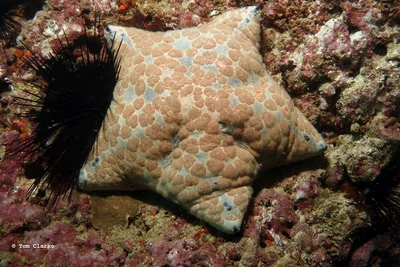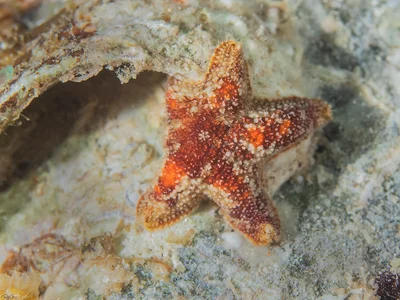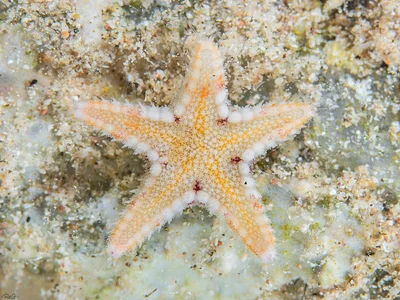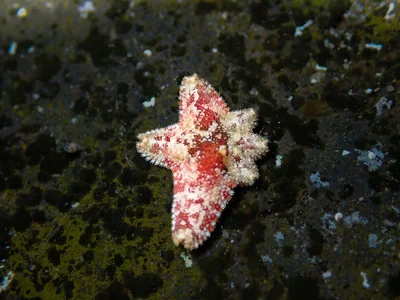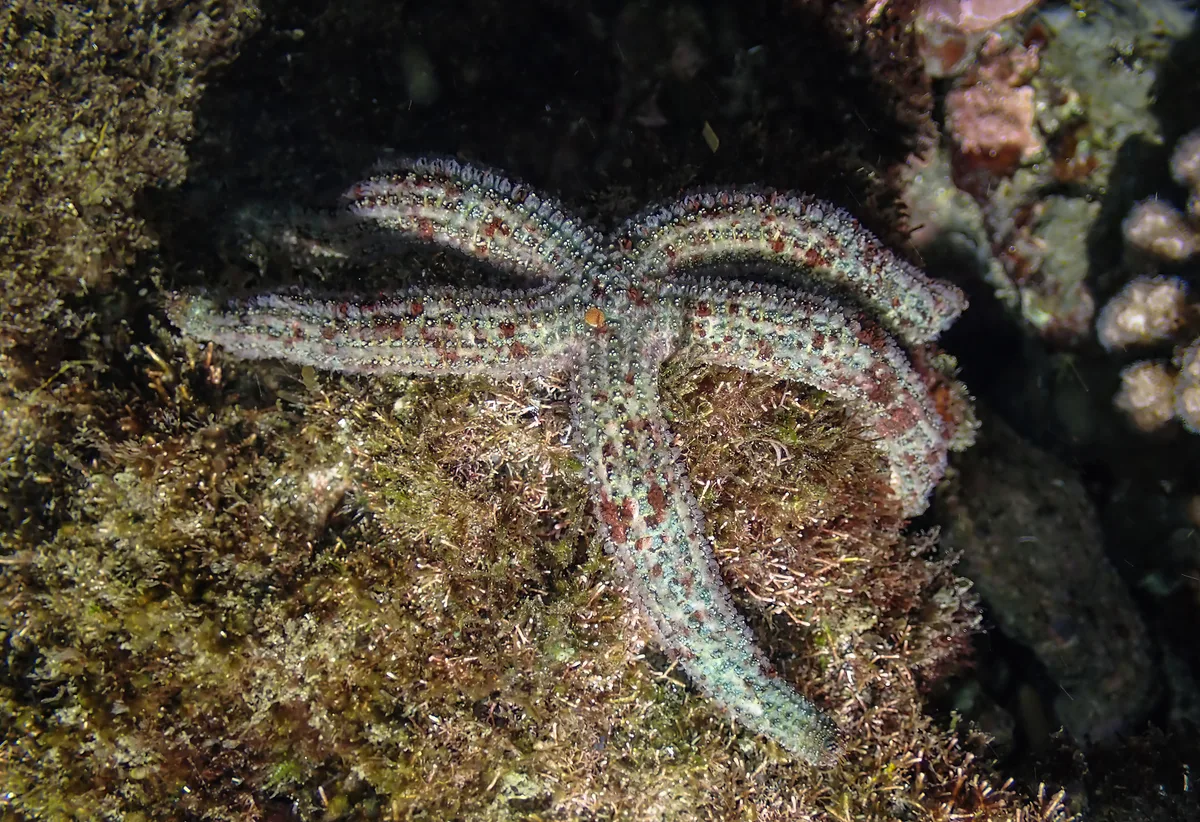
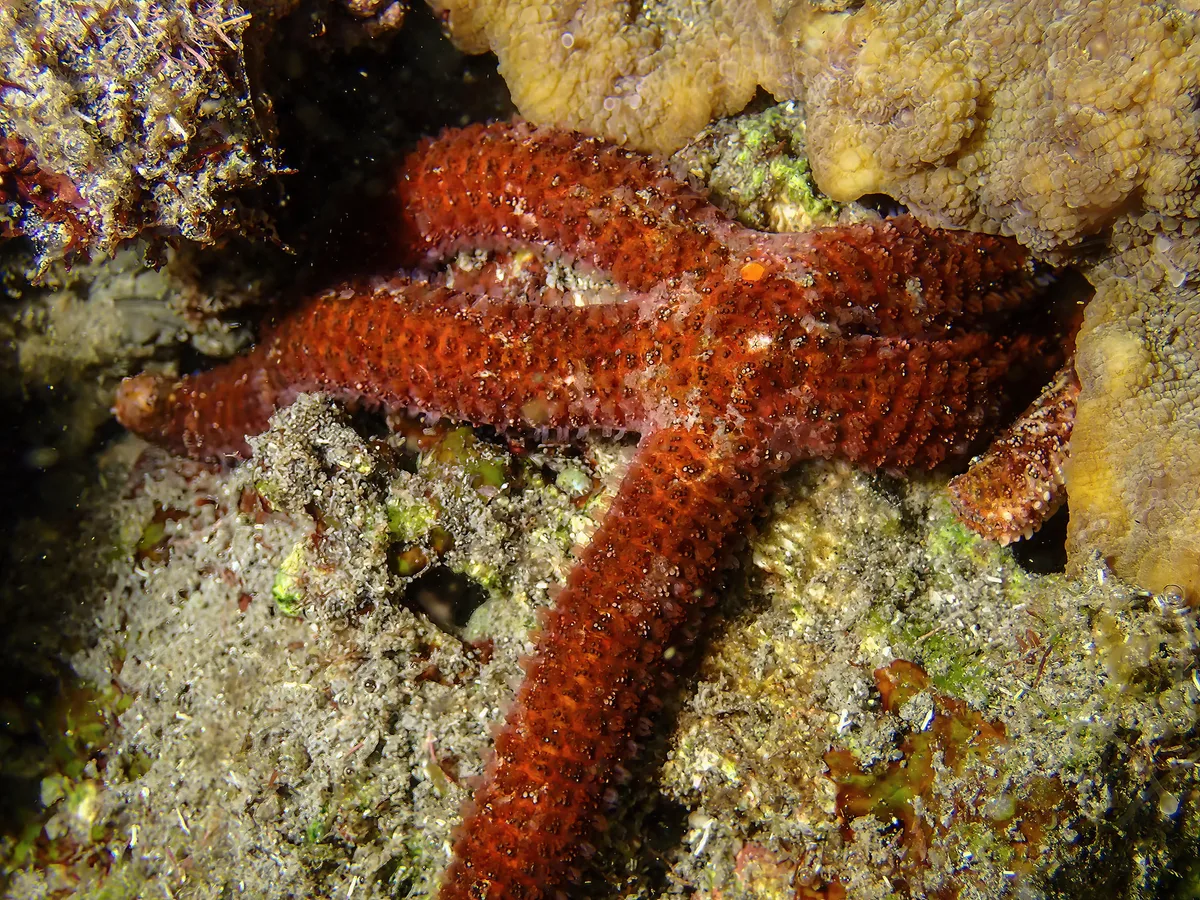
A star of about 20 cm (8 in) built from five straight cylindrical arms of near-even thickness along their length, the upper surface tiled with neat longitudinal rows of flat plates. Color runs reddish brown to gray, usually mottled, and the tidy plating is the character to look for - it gives the animal a segmented, almost machined appearance quite different from the granular or warty species around it.
It shelters under coral slabs and in rubble from about 1 m to 25 m (3 to 80 ft), coming out at night to graze surface film. Daytime records are few and the species is genuinely hard to find here, though it is widespread across the Indo-Pacific; most sightings on this coast come from divers turning a torch into overhangs rather than from open ground. Lamarck named it in 1816, in the first great wave of echinoderm description, and the name simply records the shape of the arms.
- five straight cylindrical arms of even thickness
- upper surface tiled with neat rows of flat plates
- reddish brown to gray, often mottled
- diameter up to 20 cm