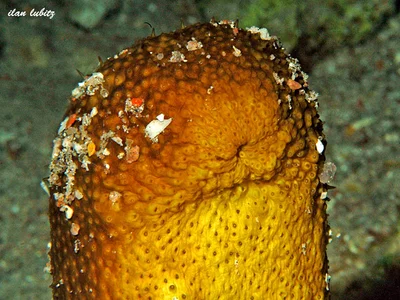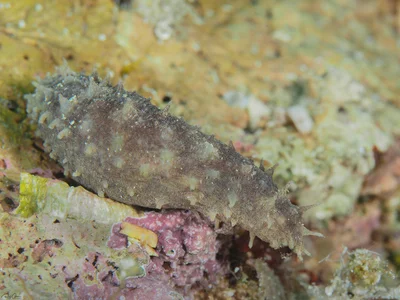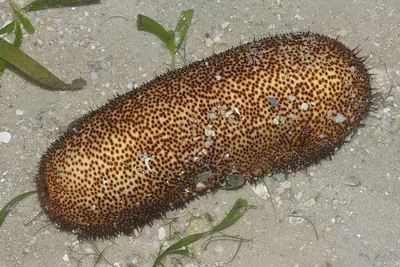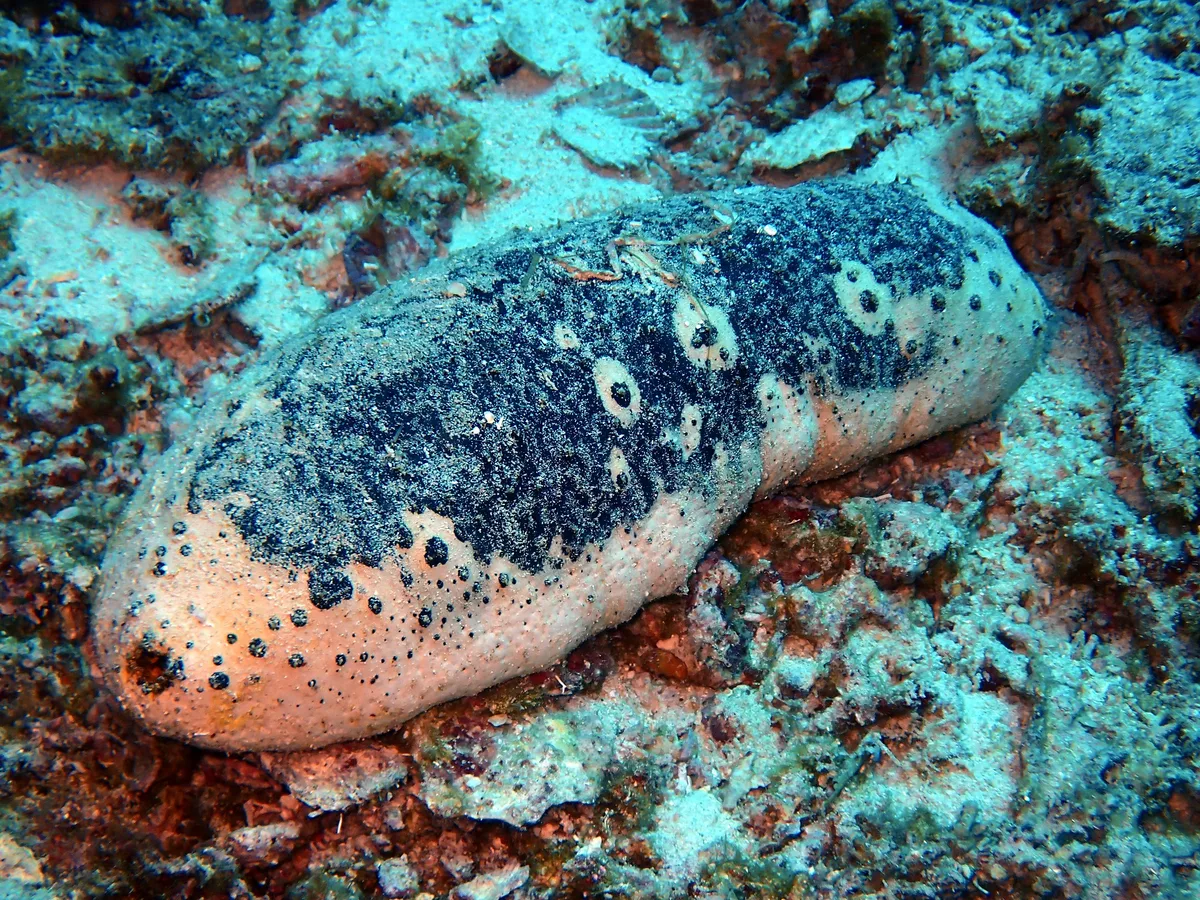
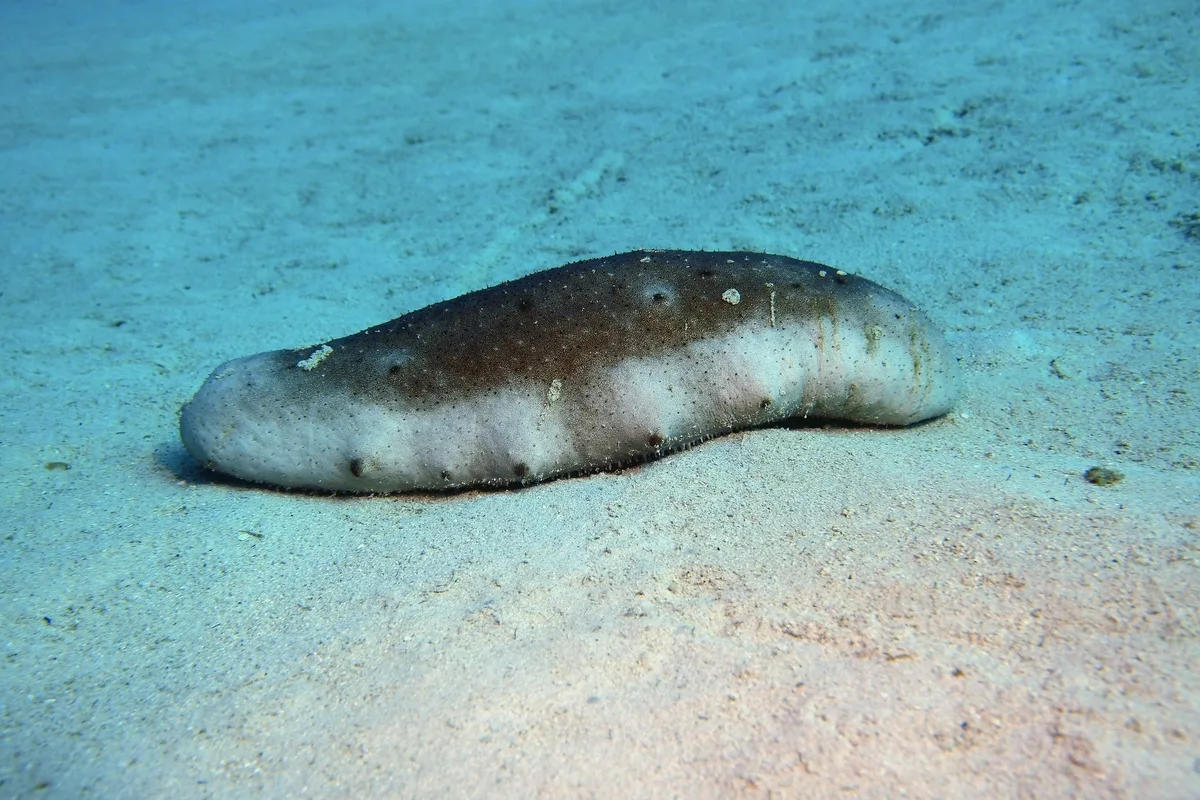
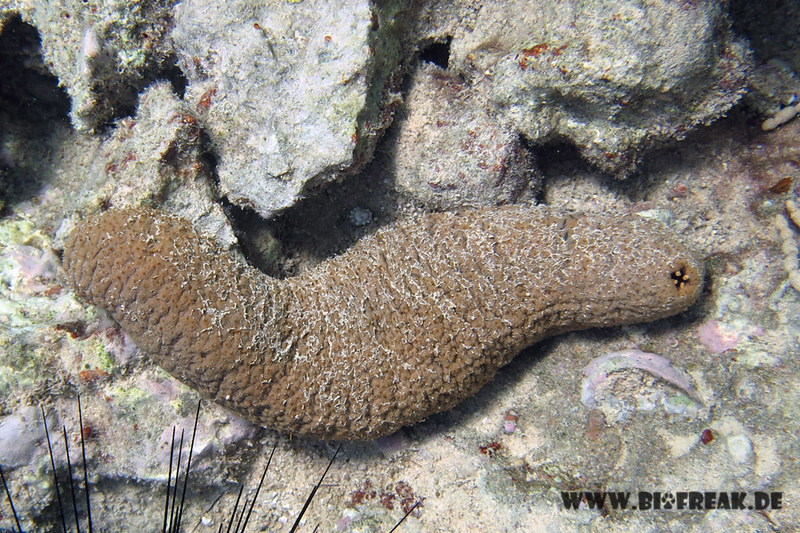
A heavy, pale sea cucumber blotched with brown, reaching about 60 cm (24 in) and unmistakable at close range: a row of blunt teat-like projections runs along each flank, and the body wall is thicker than in any other local species. Large individuals are startlingly solid, closer to a sandbag than to the soft animals more often met in the shallows.
It occupies sand and seagrass in deeper lagoons, from about 5 m to 40 m (16 to 130 ft), keeping to open bottom and feeding at night. That body wall is exactly what makes it one of the most valuable sea cucumbers in world trade, and stocks across the tropics have collapsed under the pressure; the species was listed on CITES Appendix II in 2020, so international trade now requires permits. It is genuinely uncommon here, and a sighting is worth reporting rather than assuming it is one of the ordinary brown species. Sea cucumbers of this size take years to mature, which is why a fished-out area can stay empty for a decade after the boats move on.
- heavy pale body blotched with brown
- row of teat-like projections along each side
- very thick body wall
- length up to 60 cm
Why it's threatened
Threat classification from the IUCN Red List.