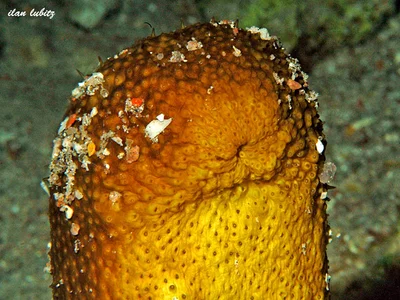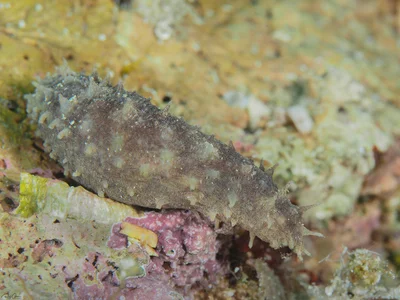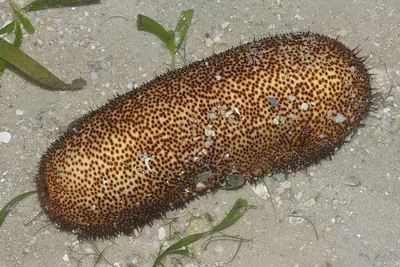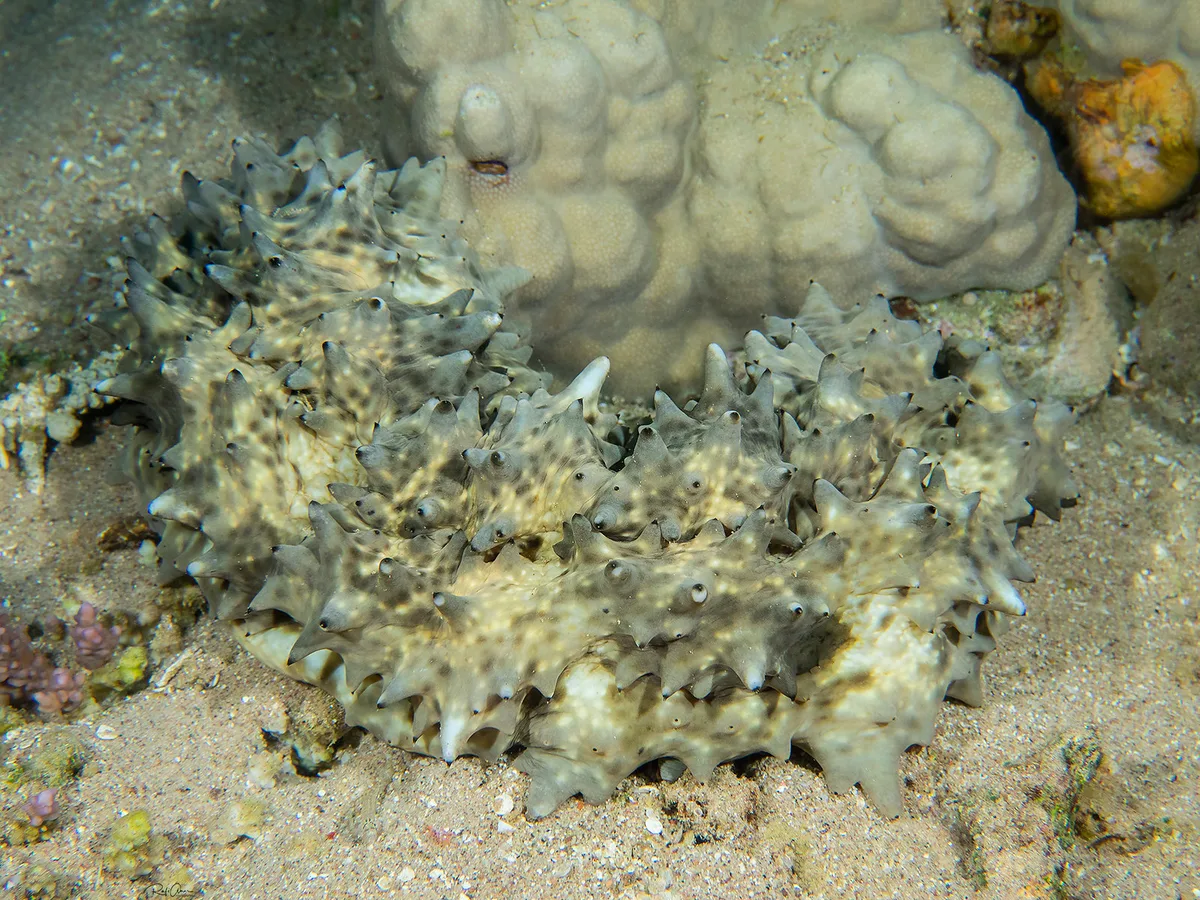
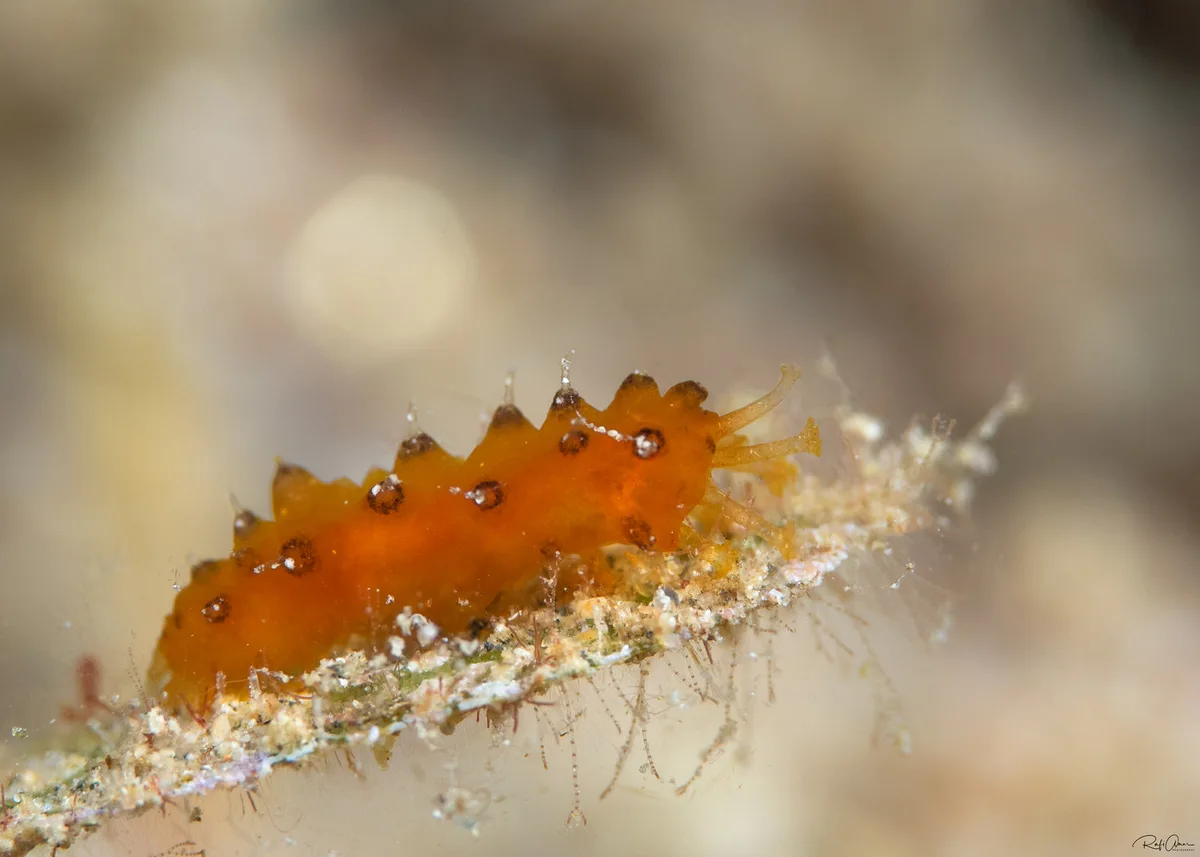
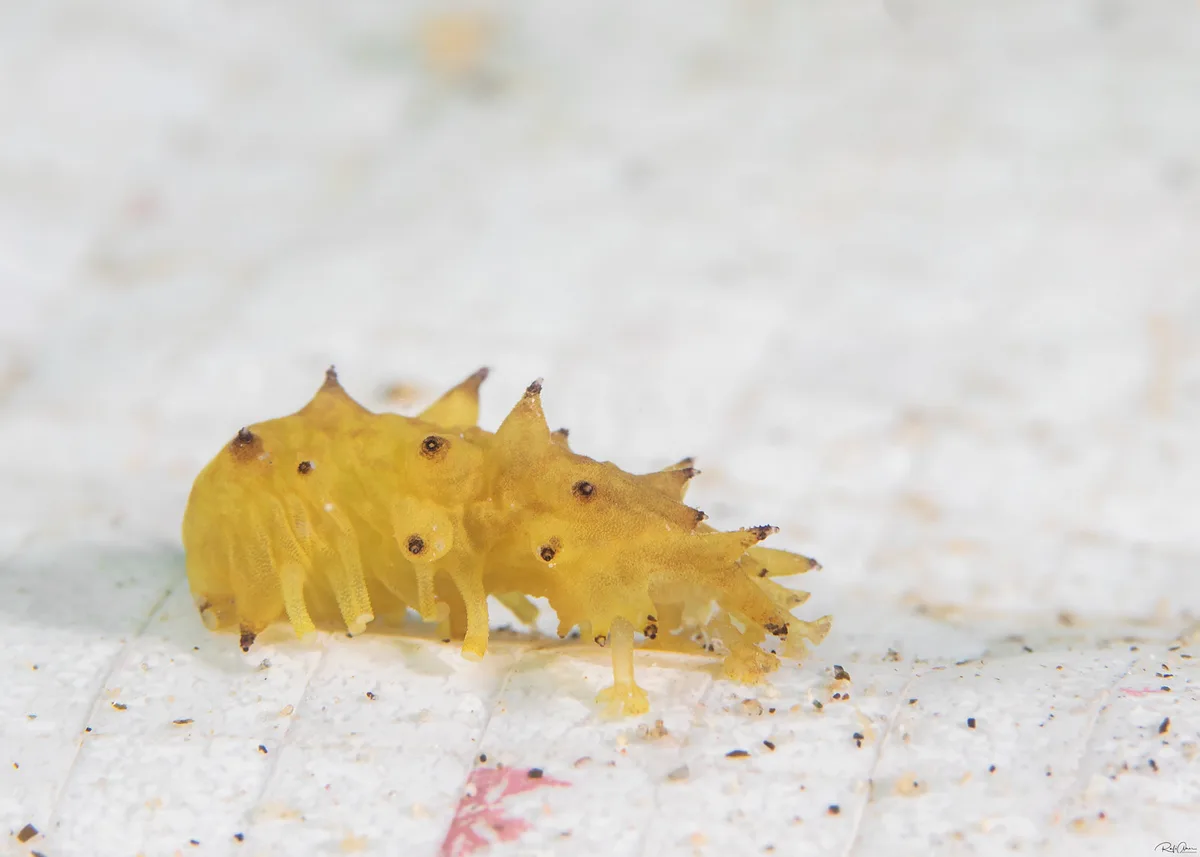
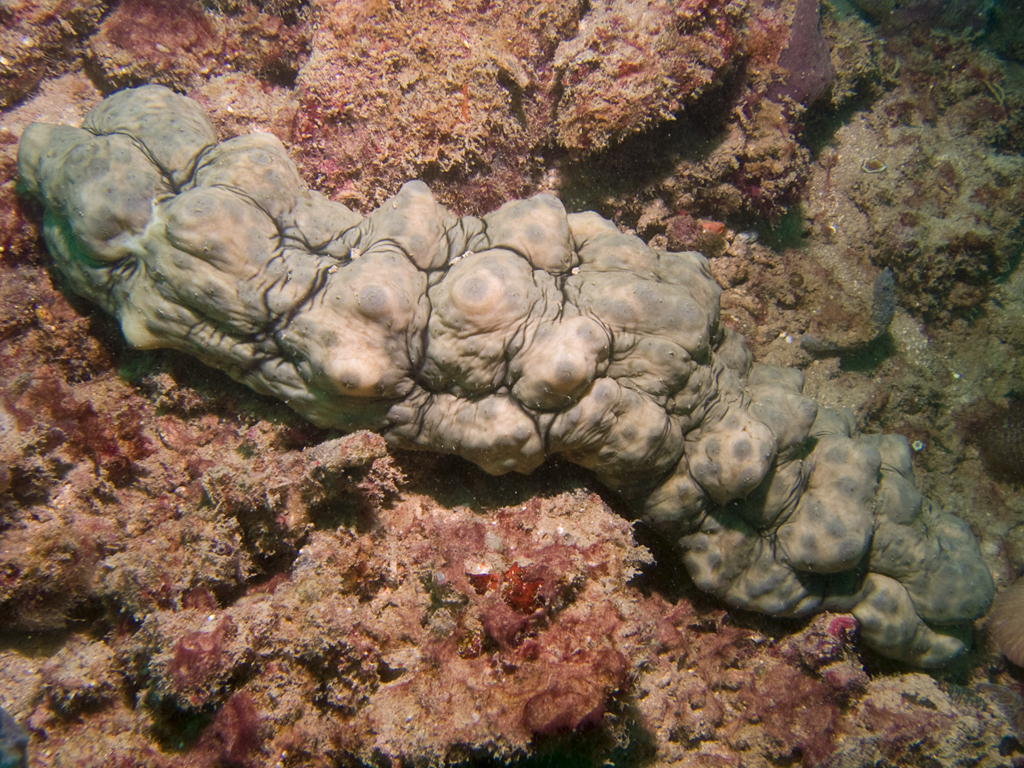
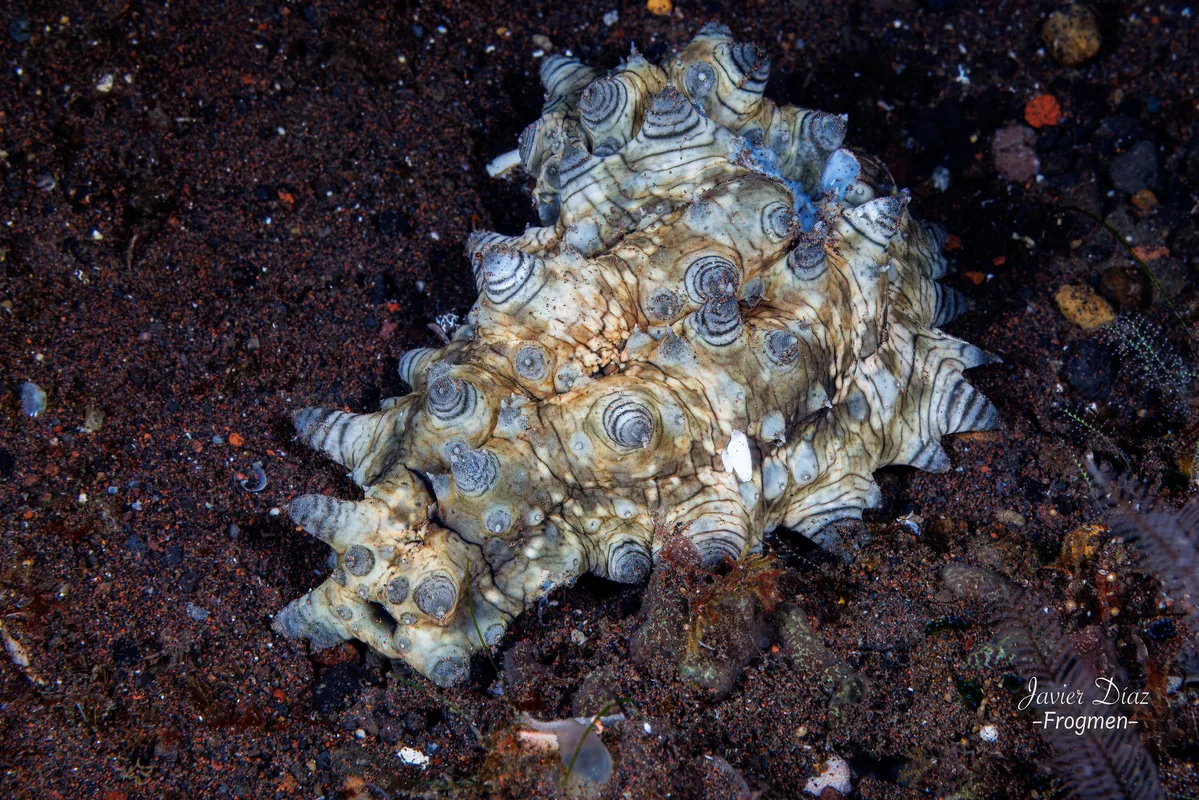
A squarish-bodied sea cucumber to about 25 cm (10 in), covered in large knobby tubercles and colored so variably - mottled brown, olive, rust, sometimes with pale saddles - that color is no help in naming it. The tubercles and the angular cross-section are the useful marks; Holothuria species beside it are rounder and smoother.
It lives on coral rubble and hard bottom near reef from about 1 m to 25 m (3 to 80 ft), hiding by day and grazing surfaces at night. Its most remarkable trick is in the skin: the body wall can switch within seconds between stiff and almost liquid, a property of mutable collagenous tissue that lets the animal pour itself into a crevice a fraction of its own width. Pushed too far, a stressed individual will begin to disintegrate outright, which is why specimens handled by divers sometimes seem to melt. The same material has drawn a good deal of research attention, since nothing in vertebrate anatomy does anything comparable.
- square-sided body with large knobby tubercles
- highly variable color, mottled brown to olive
- soft body wall that slackens when handled
- length up to 25 cm
Why it's threatened
Threat classification from the IUCN Red List.