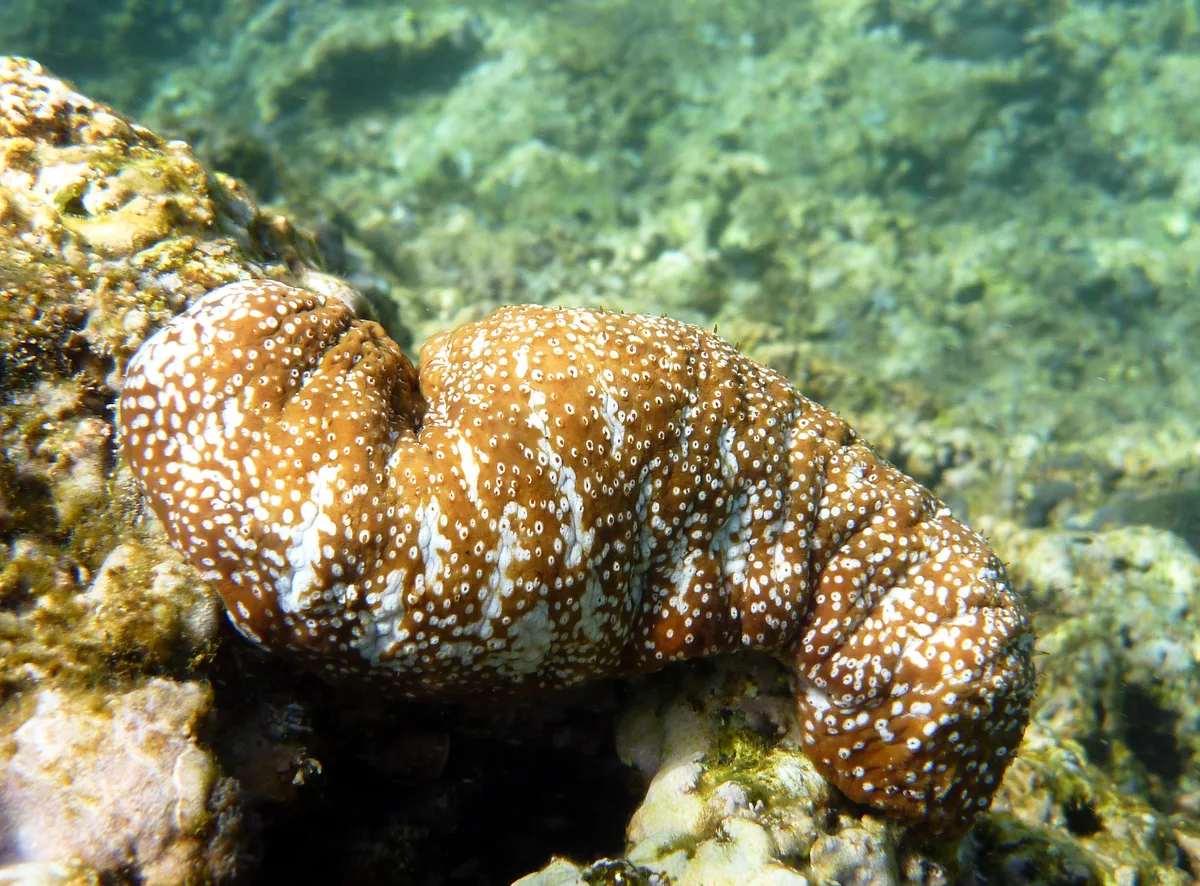
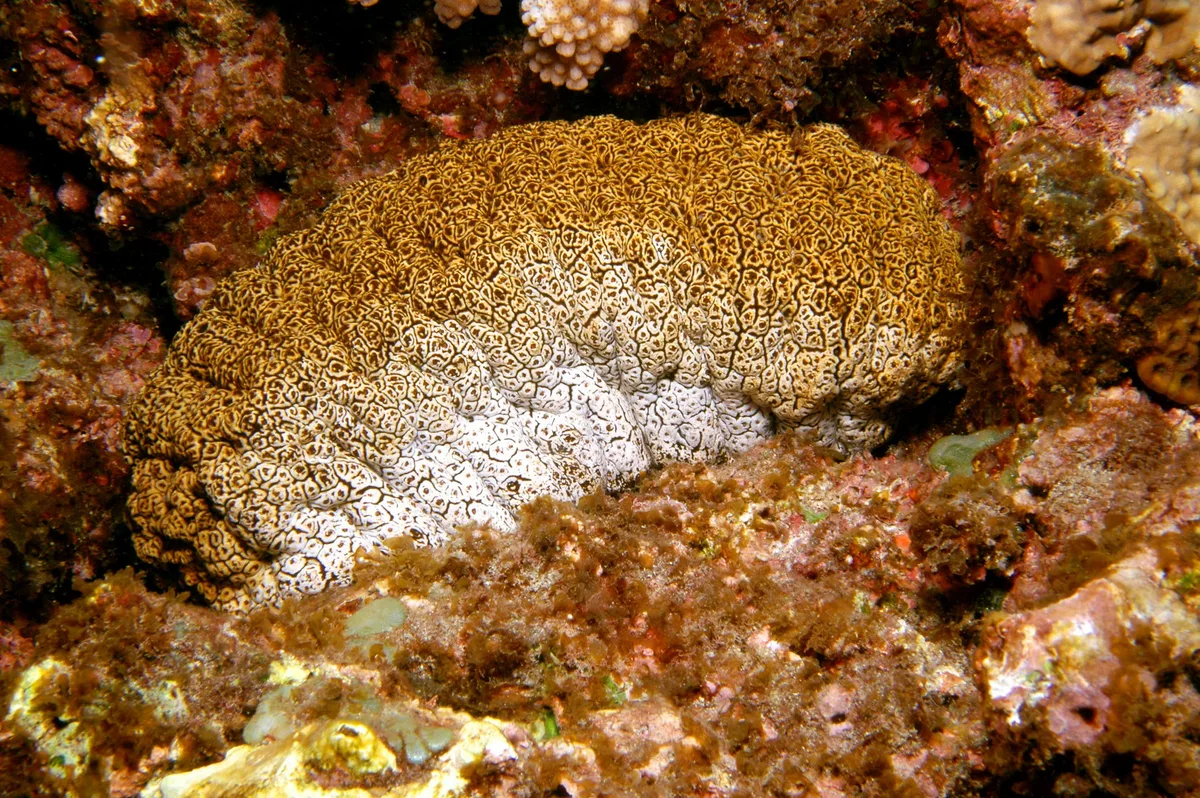
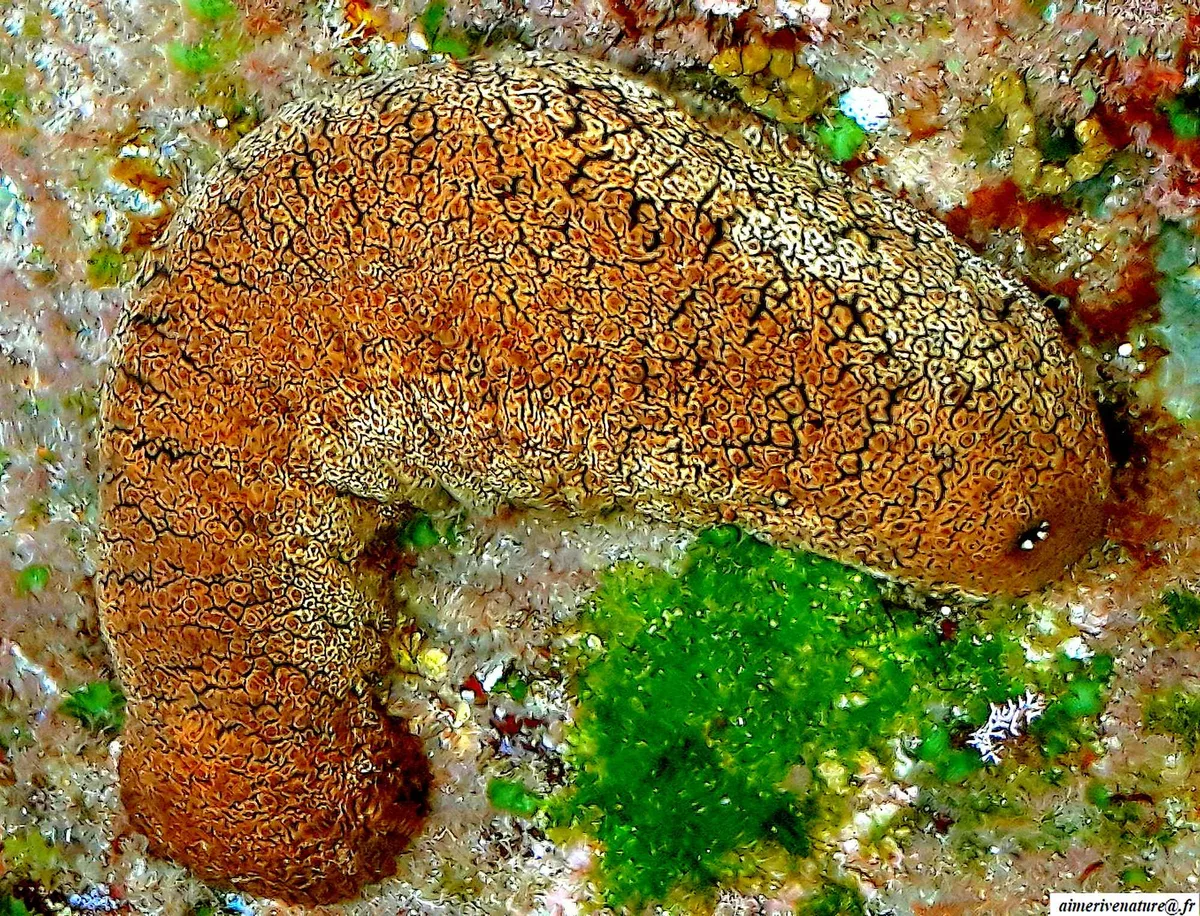
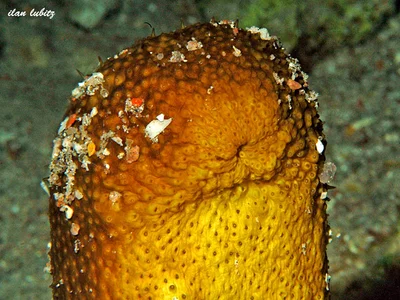
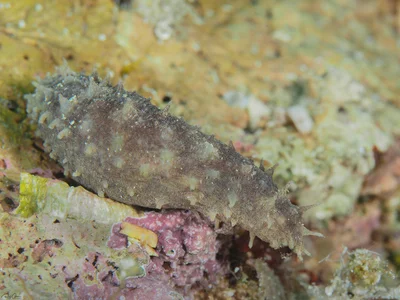
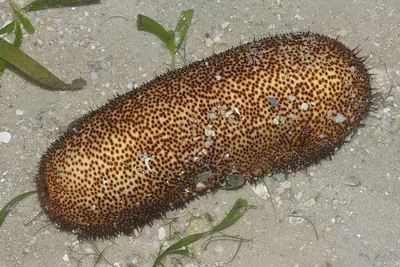
A tough, flattened sea cucumber to about 30 cm (12 in), dark brown and deeply wrinkled above, abruptly cream or pale below. The flat sole grips bare rock rather than sand, and the body wall is noticeably harder than in most relatives - an animal built for a place where a soft one would be torn loose.
That place is the surge zone: reef flats and rocky shallows from the waterline down to about 10 m (33 ft), where it sits wedged in a hollow through the day and moves out over the algal turf at night to graze detritus and the film of organisms coating the rock. Its grip is strong enough that prying one free by hand can injure it, and there is no reason to try. Commercially it is among the most valuable species in the family, which has emptied the accessible shallows in much of the tropics; the reefs along this coast, with their steep drop and limited flats, hold it in patches rather than the dense beds seen elsewhere. Look on exposed platforms at the top of a wall, not on the sand below.
Although heavily targeted, Actinopyga mauritiana is difficult to fish because it is found on the exposed reef crest, and is somewhat cryptic (found in crevices). Although not one of the most important species (medium value) for fishery purposes, it can be expected that this species may become more popular after the depletion or reduction of other species of higher commercial importance and value. This scenario was seen in Fiji, after the decline of Actinopyga miliaris as well as in Torres Strait (Australia) after the decline of Holothuria scabra (Kinch et al. 2008a).
Excessive commercial harvest of this species is reason for concern in some of its range. Choo (2008) states that Actinopyga mauritiana is of commercial importance in China, Japan, Malaysia, Indonesia and Philippines. In Seychelles, it is one of the most important commercial species, along with five others, where it is considered to be overexploited (Aumeeruddy and Conand 2008). Depletion of wild stock in Egypt has prompted the study and possible development of an aquaculture venture (Gabr et al. 2004).
Threat classification from the IUCN Red List.
Comments
Please, sign in to leave a comment
Continue with a social account - yours will be created automatically.