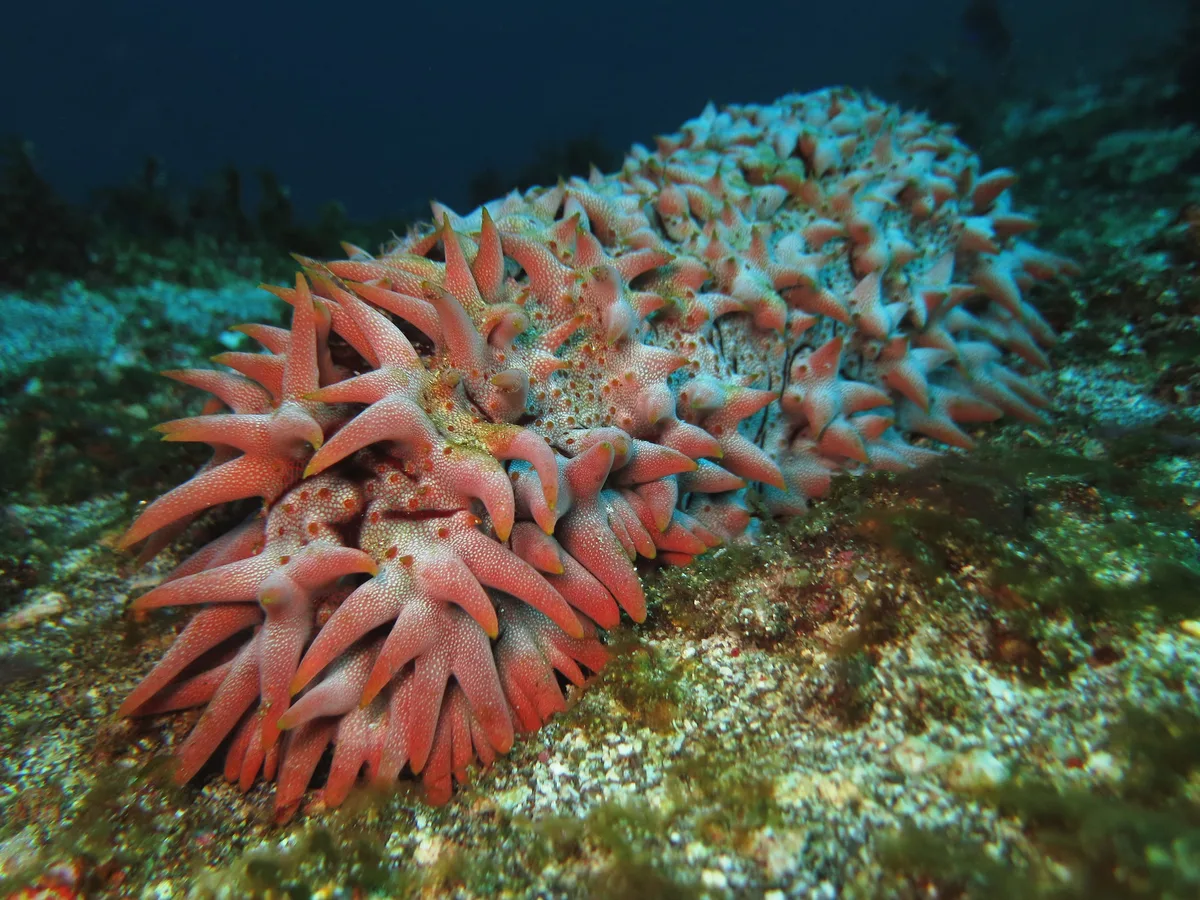
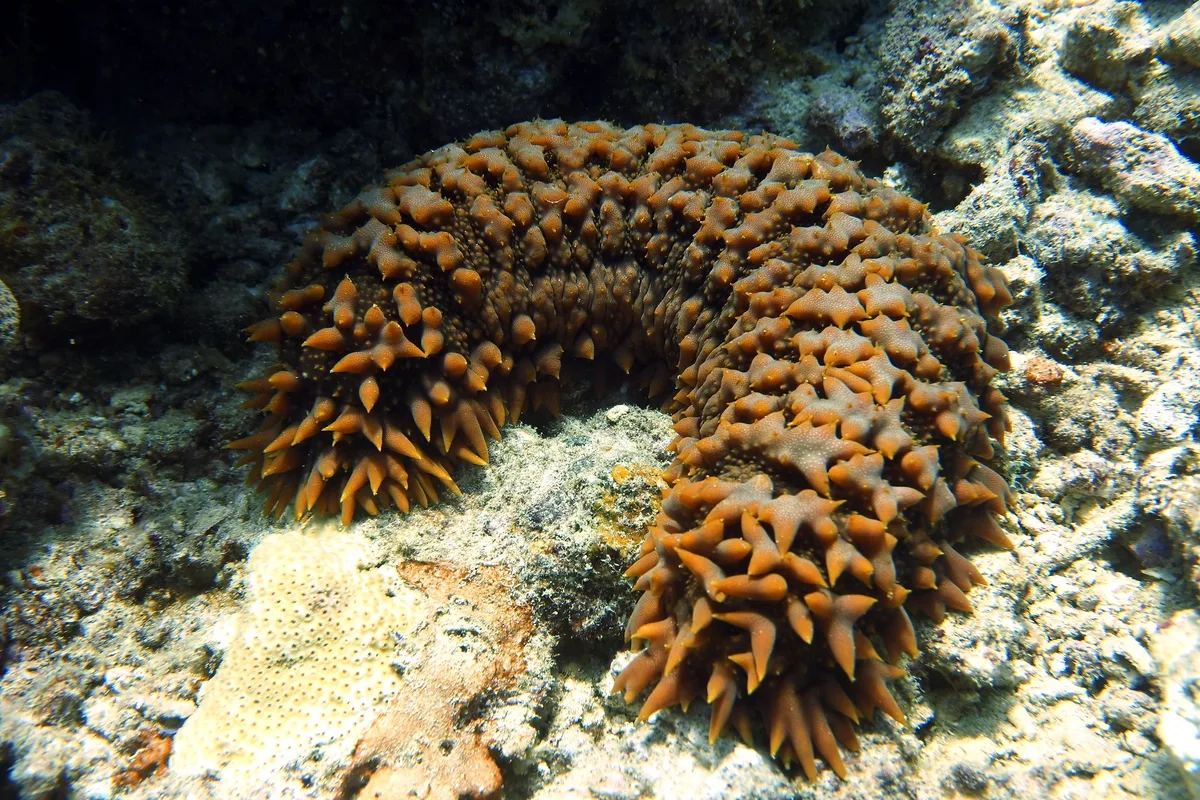
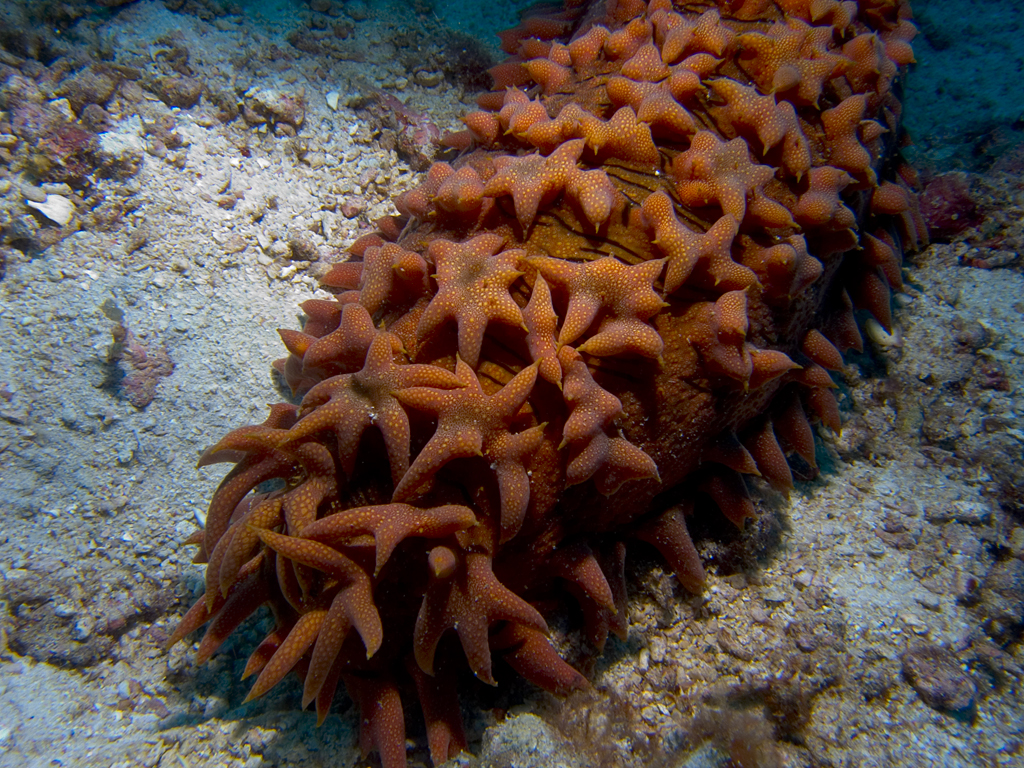
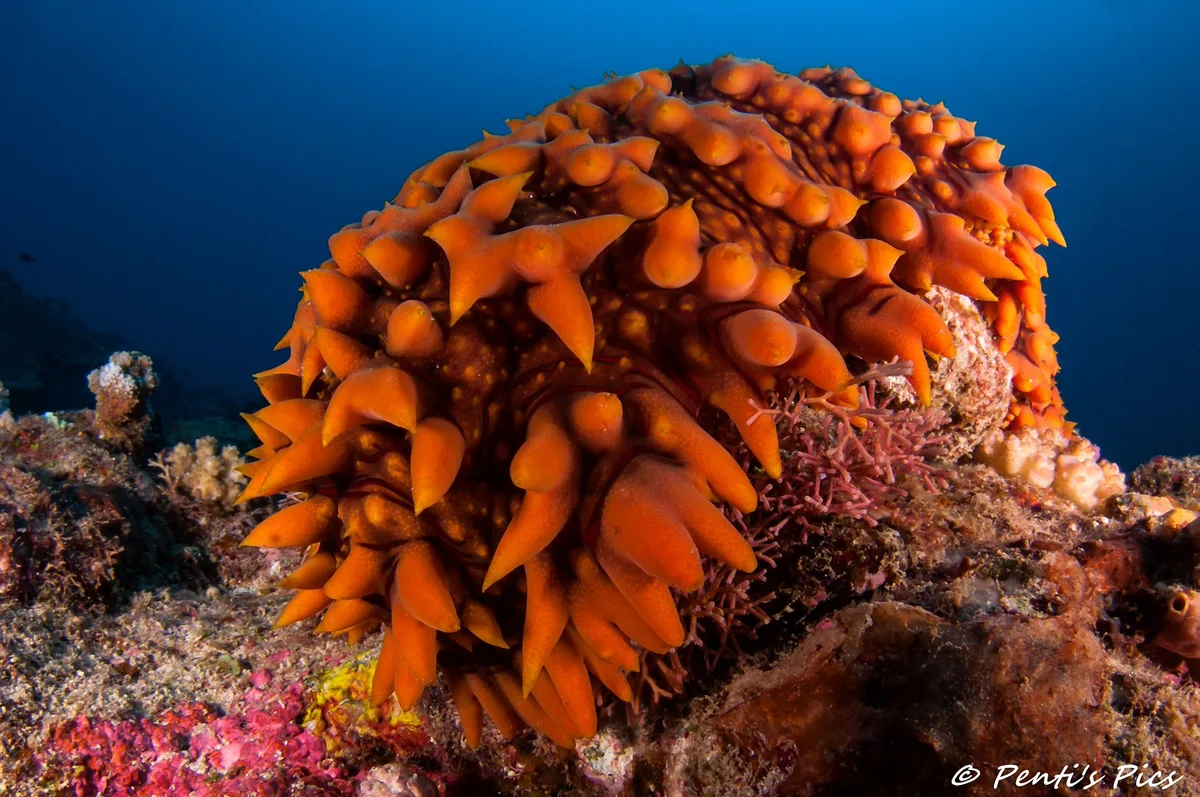
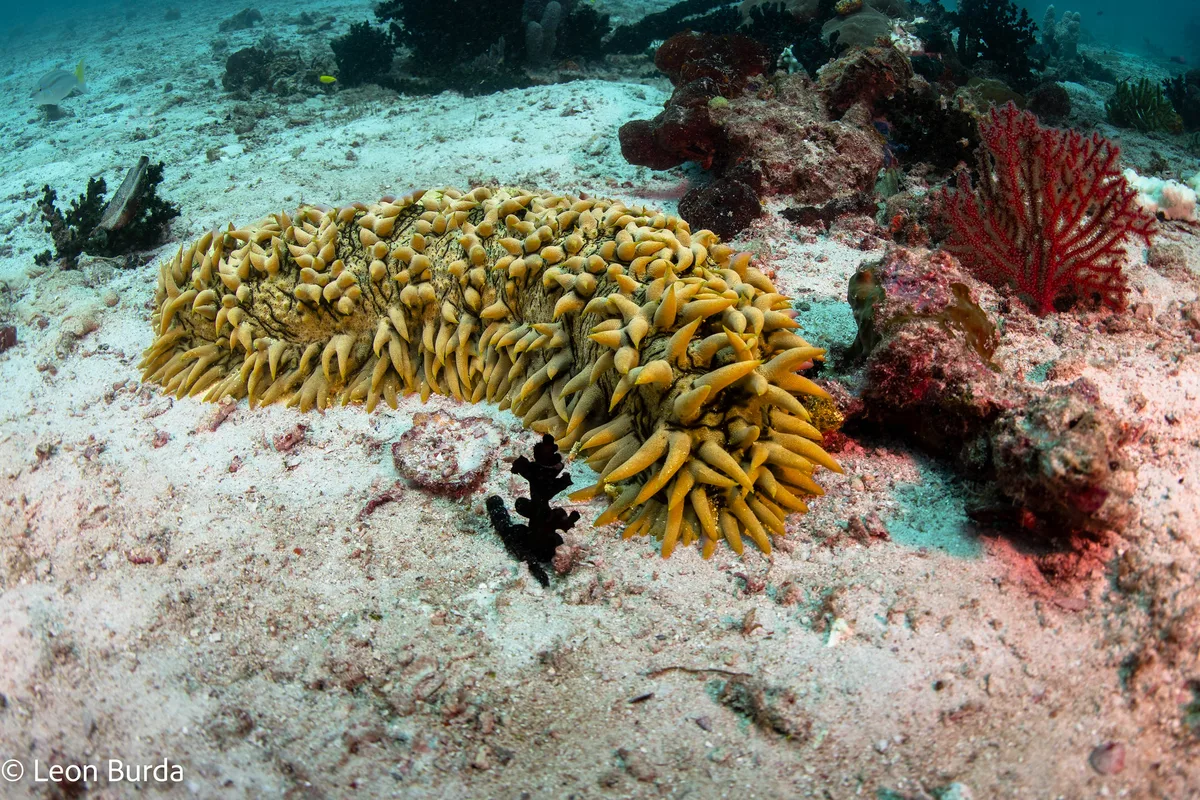
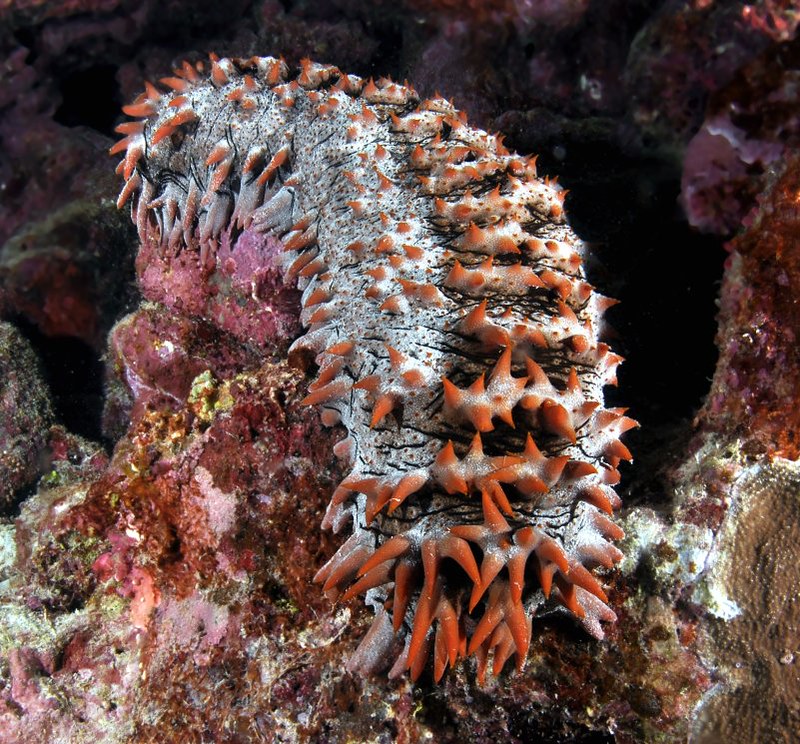
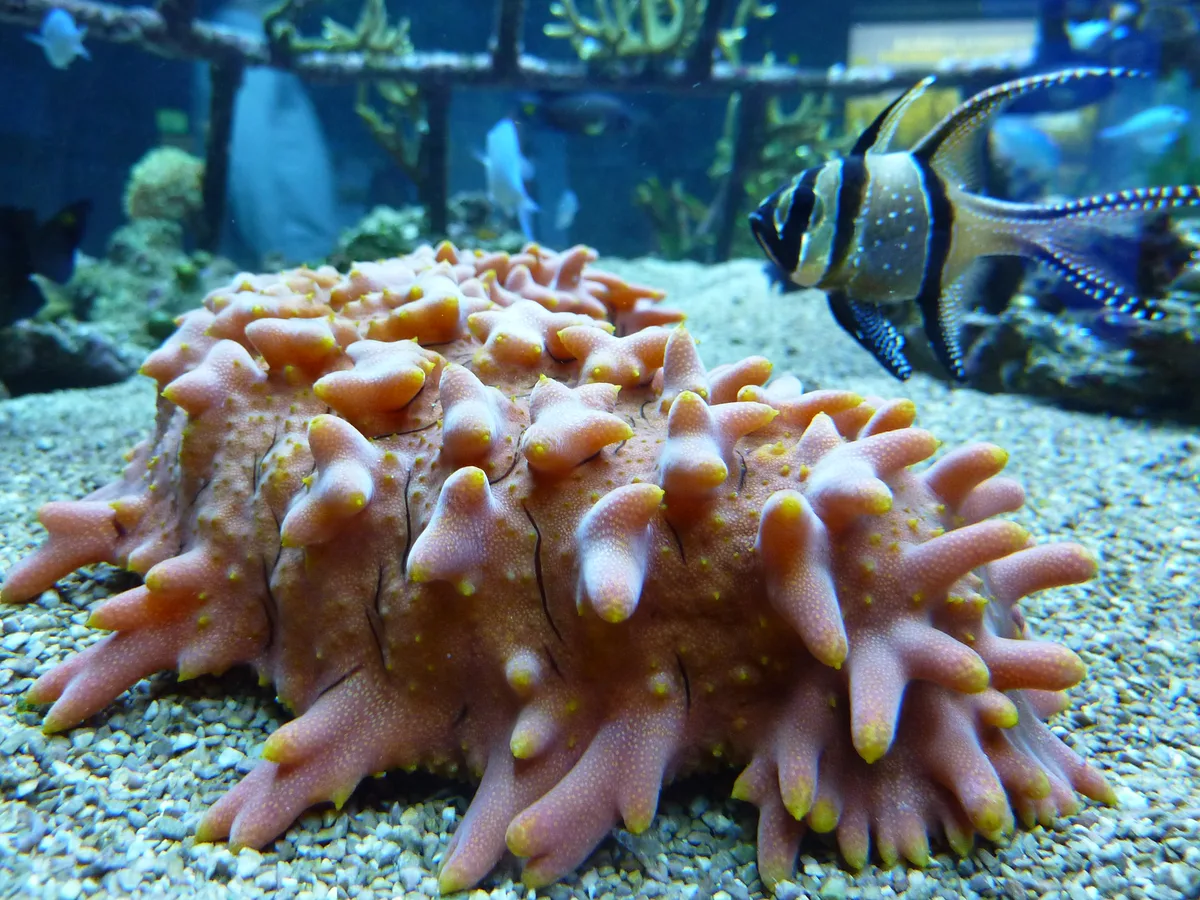
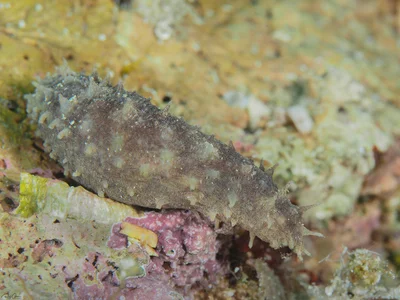
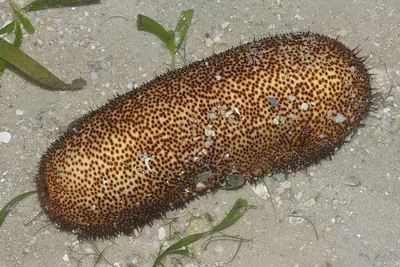
The largest sea cucumber on these reefs, reaching a meter (39 in) and heavy in proportion, orange to reddish brown, with the back covered in star-shaped clusters of papillae that give the species both its scientific and its common name. Nothing else here approaches that size and texture, so an adult is identifiable at a glance from several meters away.
It lives on sand and rubble slopes below reef, from about 5 m to 30 m (16 to 100 ft), feeding at night and lying still through the day. Size and a thick body wall have made it one of the most sought-after species in the sea cucumber trade, and it has been fished out across much of its range; the IUCN lists it as endangered, trade in the genus has needed CITES permits since 2023, and it is uncommon enough along this coast that many divers with hundreds of dives here have never seen one. Its reproduction makes recovery slow - eggs and sperm are released into open water, so scattered survivors rarely manage successful fertilisation, and a depleted population can stay depleted for many years.
This species has a medium-high market value. It is targeted throughout its range, and fishing pressure has dramatically increased in the past 25 to 50 years, since the 1960s, and is expected to continue, even as stocks are depleted. When this occurs, other species are often targeted in their place. Even as a high value species for fishery purposes, this species has been targeted as a result of the decrease in Holothuria scabra (Choo 2008).
This species is one of the most exploited holothurian species in Madagascar. It is classified in the category of medium commercial value species. Its exploitation reaches semi-industrial levels, and fishermen use scuba diving to collect this resource (Rasolofonirina pers. comm. 2010).
Threat classification from the IUCN Red List.
Comments
Please, sign in to leave a comment
Continue with a social account - yours will be created automatically.