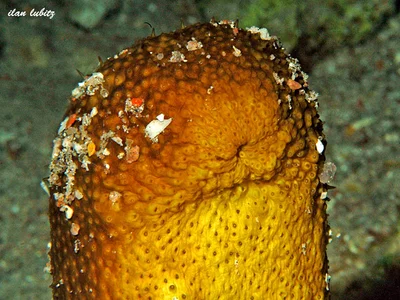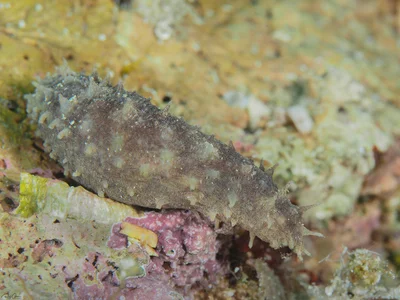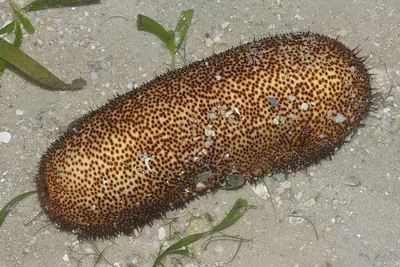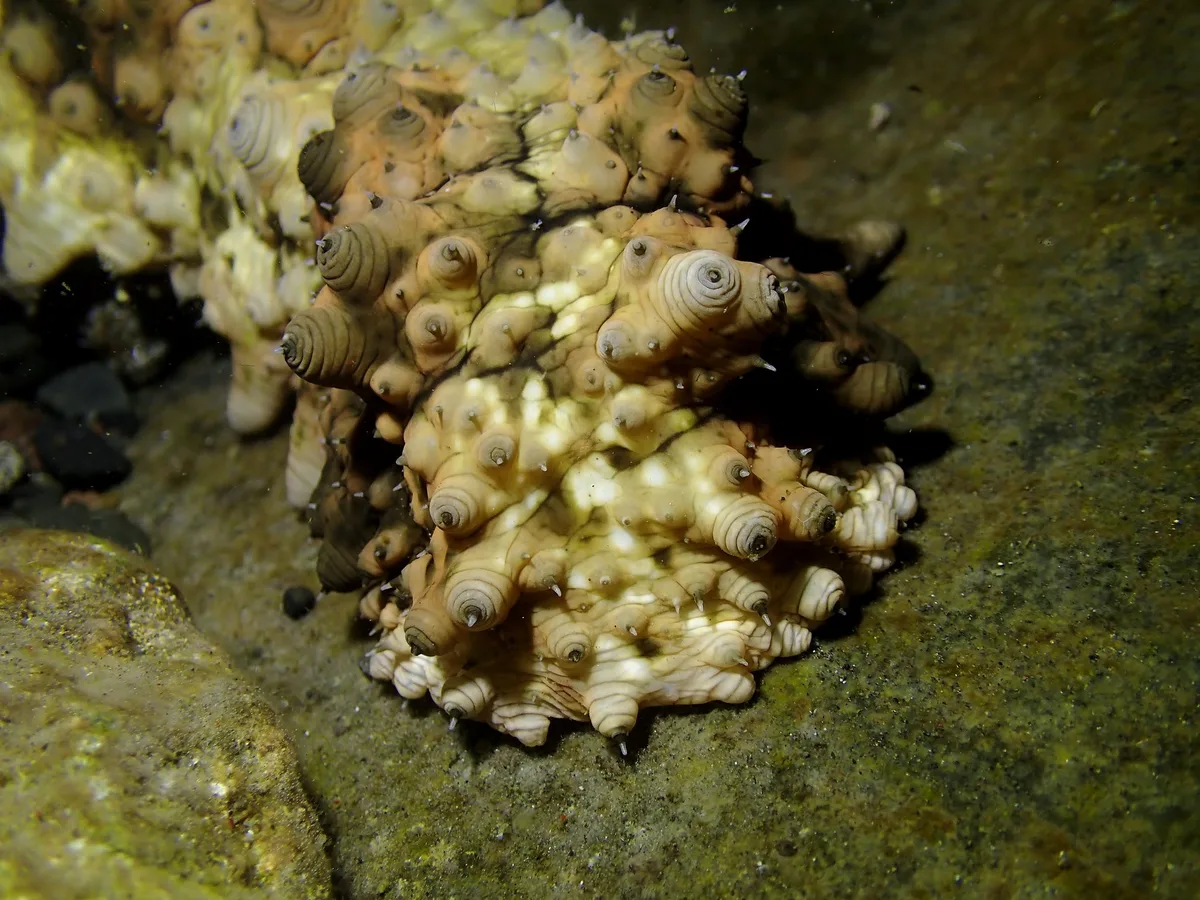
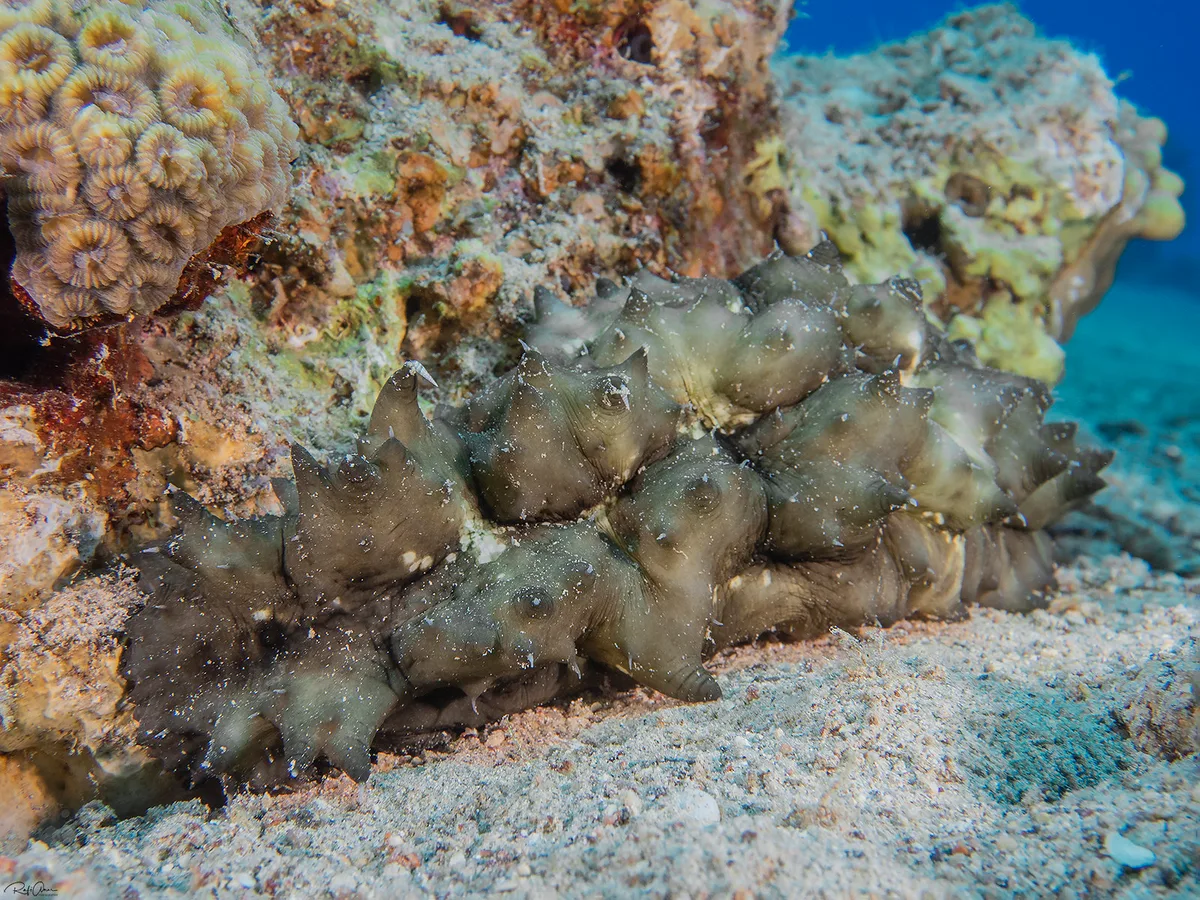
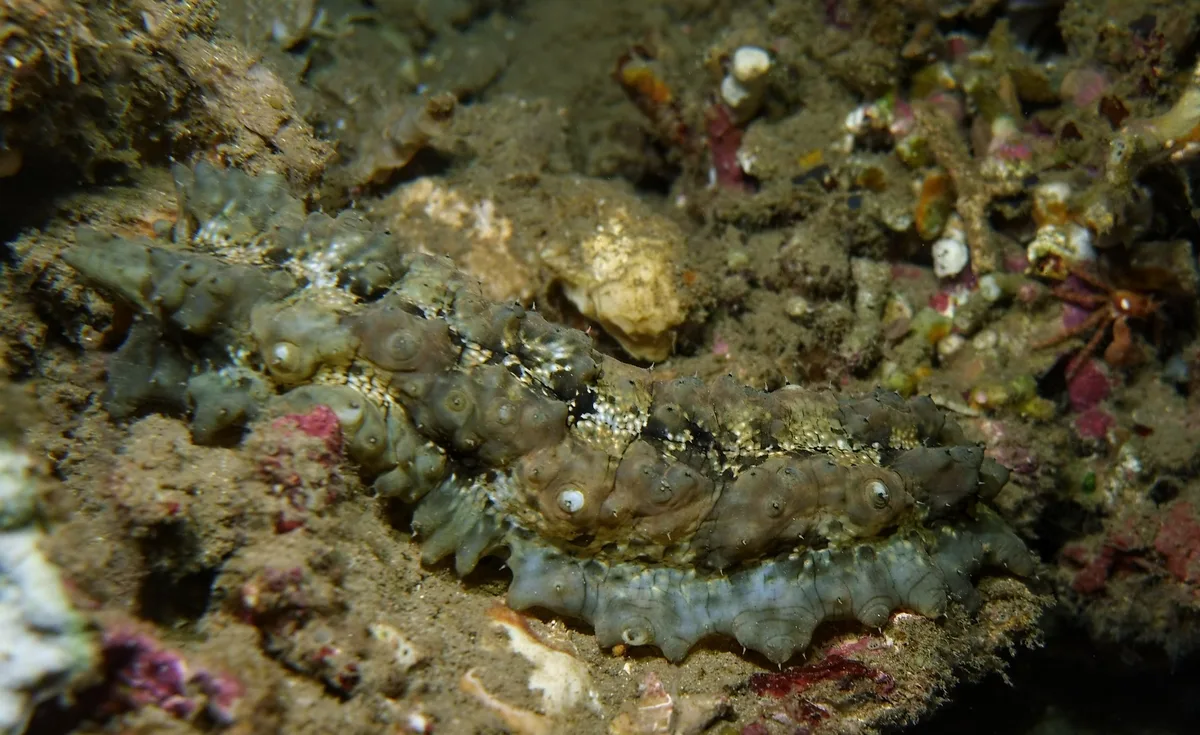
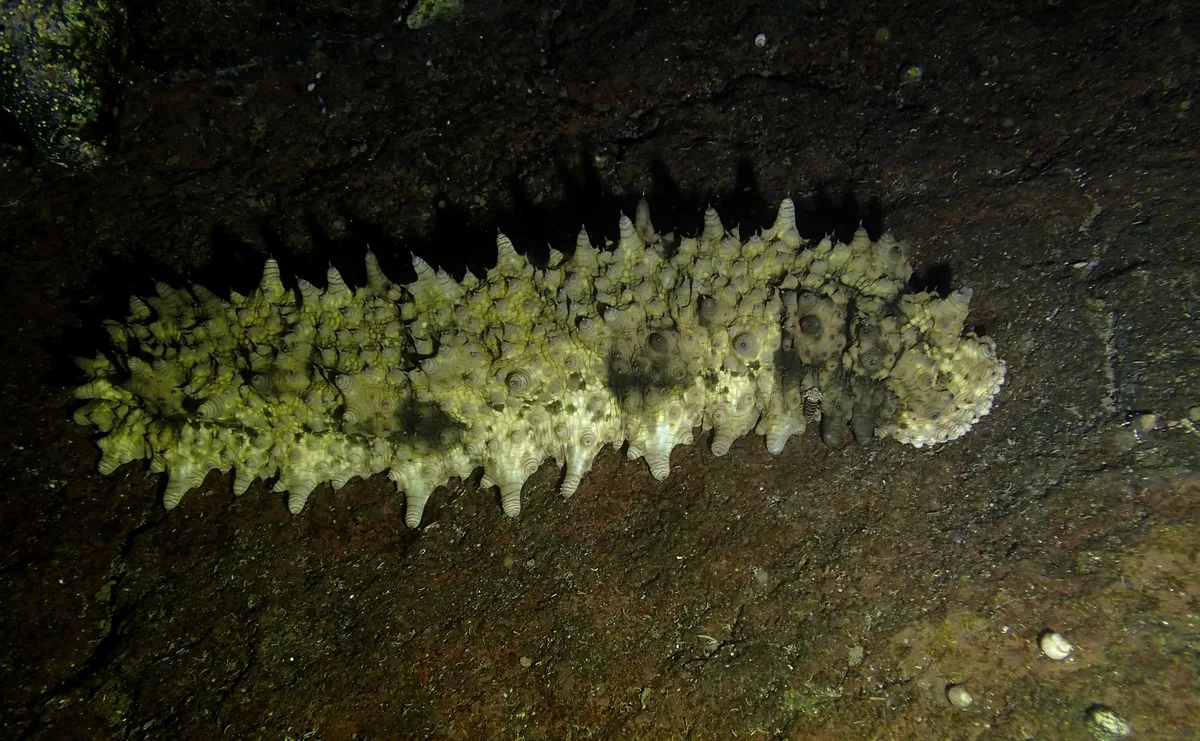
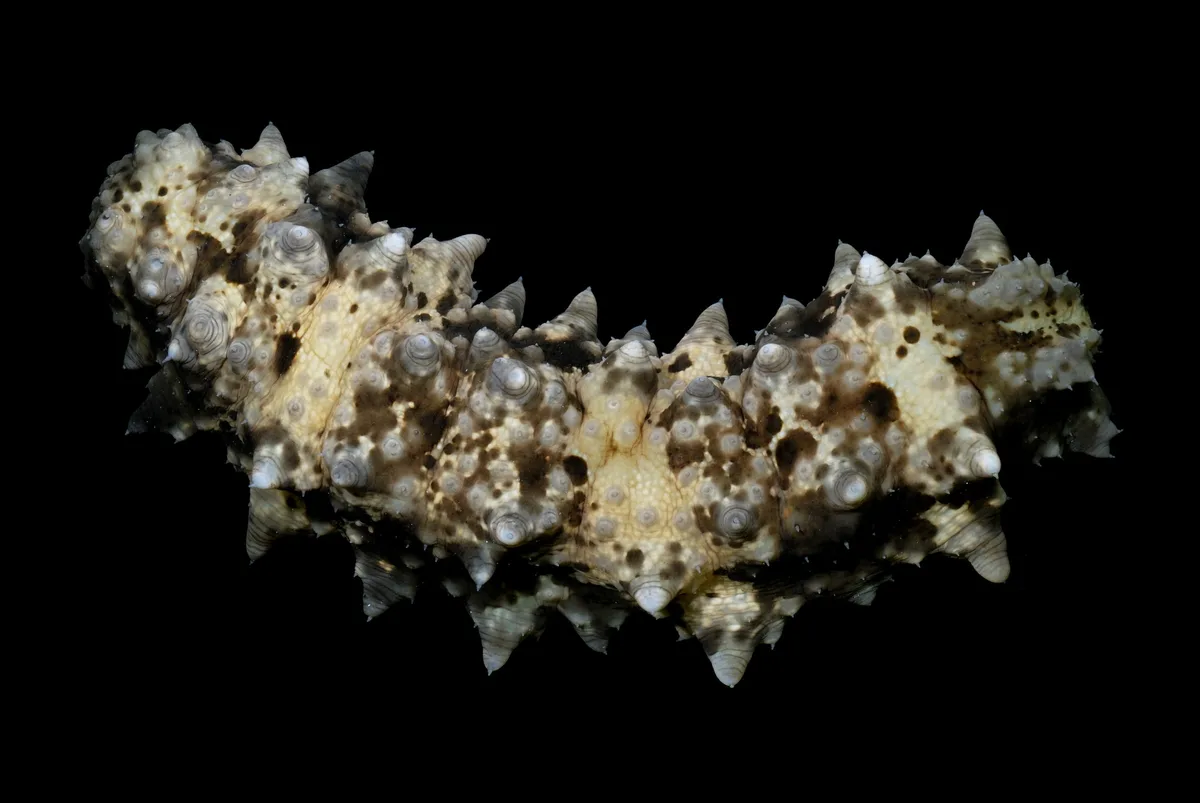
A beige, squarish sea cucumber to about 20 cm (8 in), its sides and back carrying rows of large wart-like tubercles that give the species its name. The body is smaller and paler than the related warty species, and the tubercles are blunter, though worn or sand-covered animals can be genuinely hard to tell apart underwater.
It occupies rubble and sand pockets among coral from about 1 m to 20 m (3 to 65 ft), tucked out of sight during the day and feeding over open surfaces after dark. Like the rest of its genus it has a body wall of mutable collagenous tissue, able to soften enough to flow into a crevice and stiffen again once inside, and it is correspondingly fragile in the hand. Identification within this group has been muddled for a long time, and several names in circulation cover more than one species; genetic work over the past two decades has begun to sort them out, which is why a photograph from this coast is worth keeping with a location and depth attached.
- beige body with large wart-like tubercles
- squarish cross-section
- tubercles arranged in rows along the sides
- length up to 20 cm
Why it's threatened
Threat classification from the IUCN Red List.