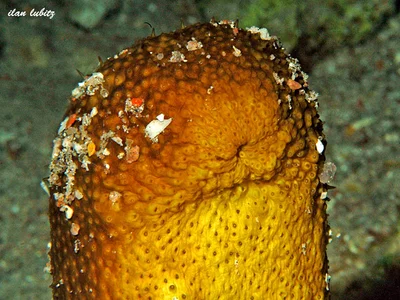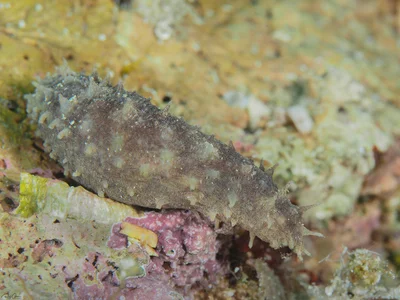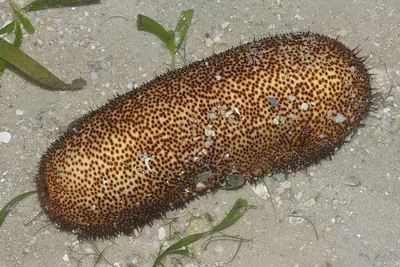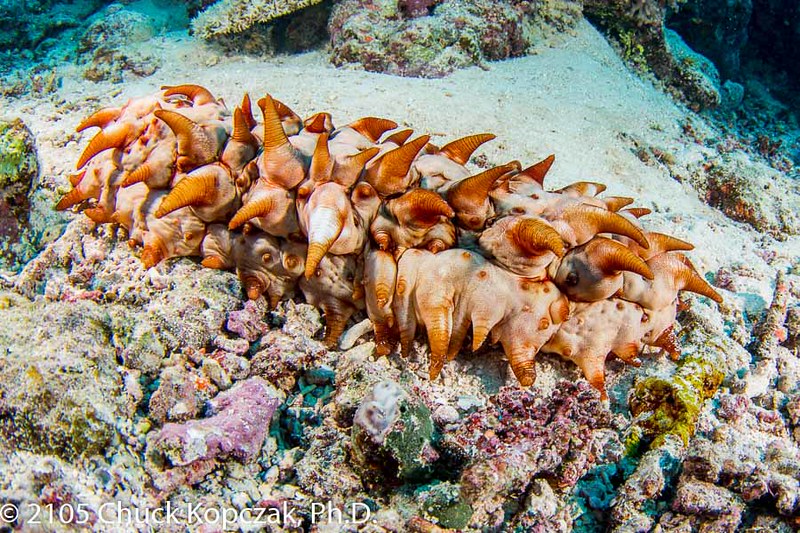
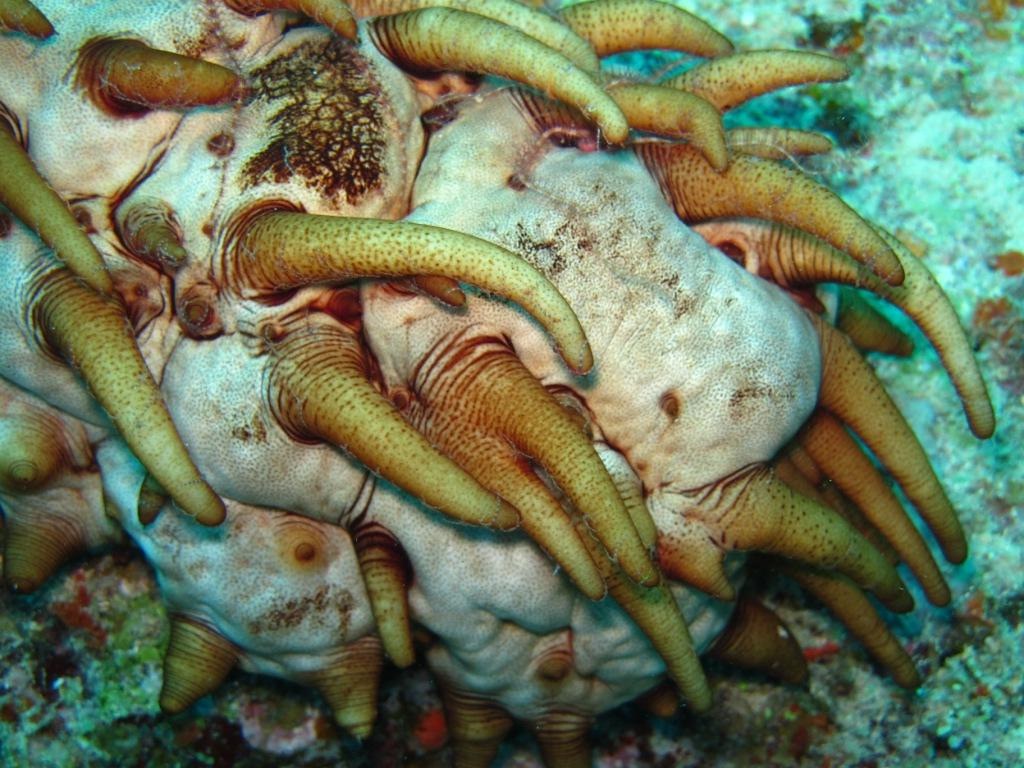
A brownish sea cucumber reaching about 50 cm (20 in), noticeably larger than the warty species it was long confused with, and separated from it by the papillae: here they are tall and sharply pointed rather than blunt knobs. The cross-section is squarish, the body wall soft, and the general coloring dull enough that the outline does most of the identifying.
It lives on sand and rubble at the base of reef, from about 2 m to 30 m (7 to 100 ft), sheltering by day and moving out to feed at night. Cherbonnier described it in 1967, and the name says exactly what the problem had been - specimens had been filed under the older species for years. Confusion of this kind runs right through the family, because preserved animals shrink and lose color, and the skeletal ossicles that settle the question require a microscope. For a diver the practical approach is to photograph the papillae in profile, which is the character that separates the two at a glance.
- brownish body with sharply pointed papillae
- papillae taller and more pointed than in the warty species
- squarish cross-section
- length up to 50 cm
Why it's threatened
Threat classification from the IUCN Red List.