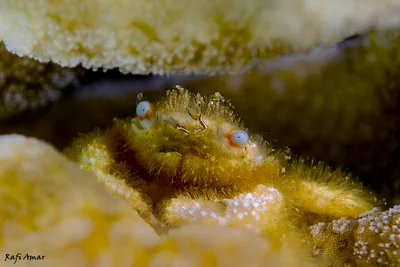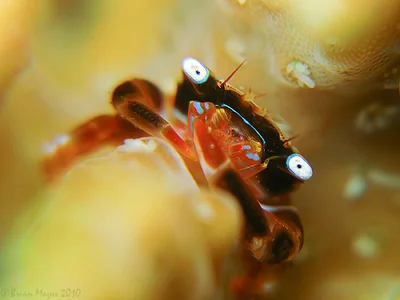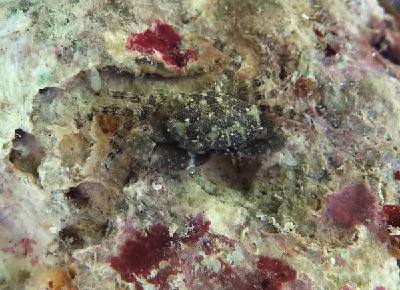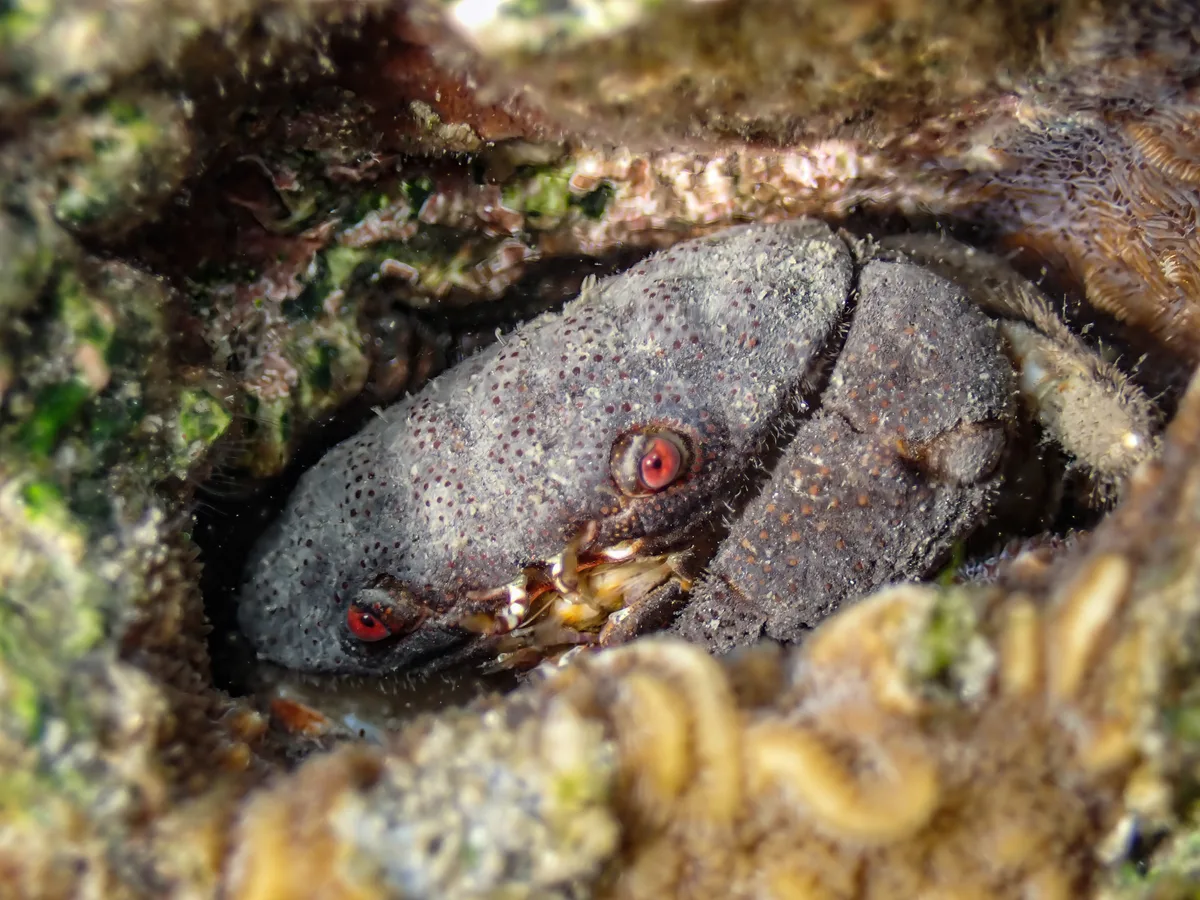
Eating this crab can kill you. Its flesh carries tetrodotoxin, the same nerve poison that makes a pufferfish lethal, along with saxitoxin, and cooking destroys neither. In a survey of reef crabs at Kenting in southern 🇹🇼 Taiwan, close to half the Actaeodes tomentosus tested came back toxic.
The crab does not manufacture any of it. It takes the poison up through what it eats and stores it, and its blood carries a protein that binds saxitoxin, which may be part of how it survives carrying its own cargo. None of this is a threat in the water. It cannot inject anything, and picking one up will get you a pinch and nothing worse. The danger begins only if it goes into a mouth.
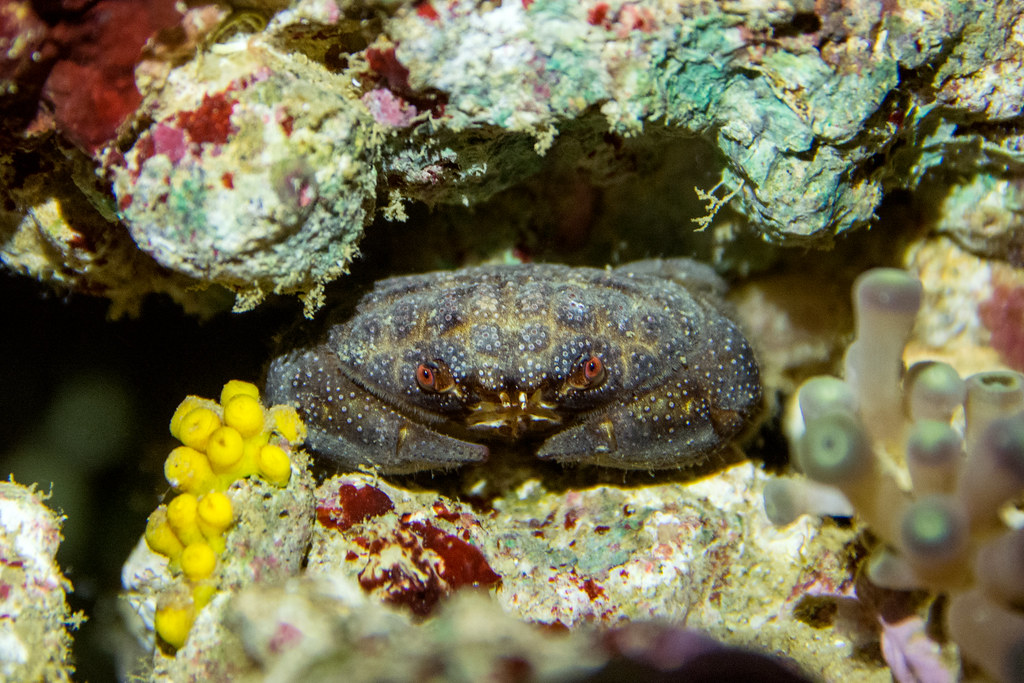
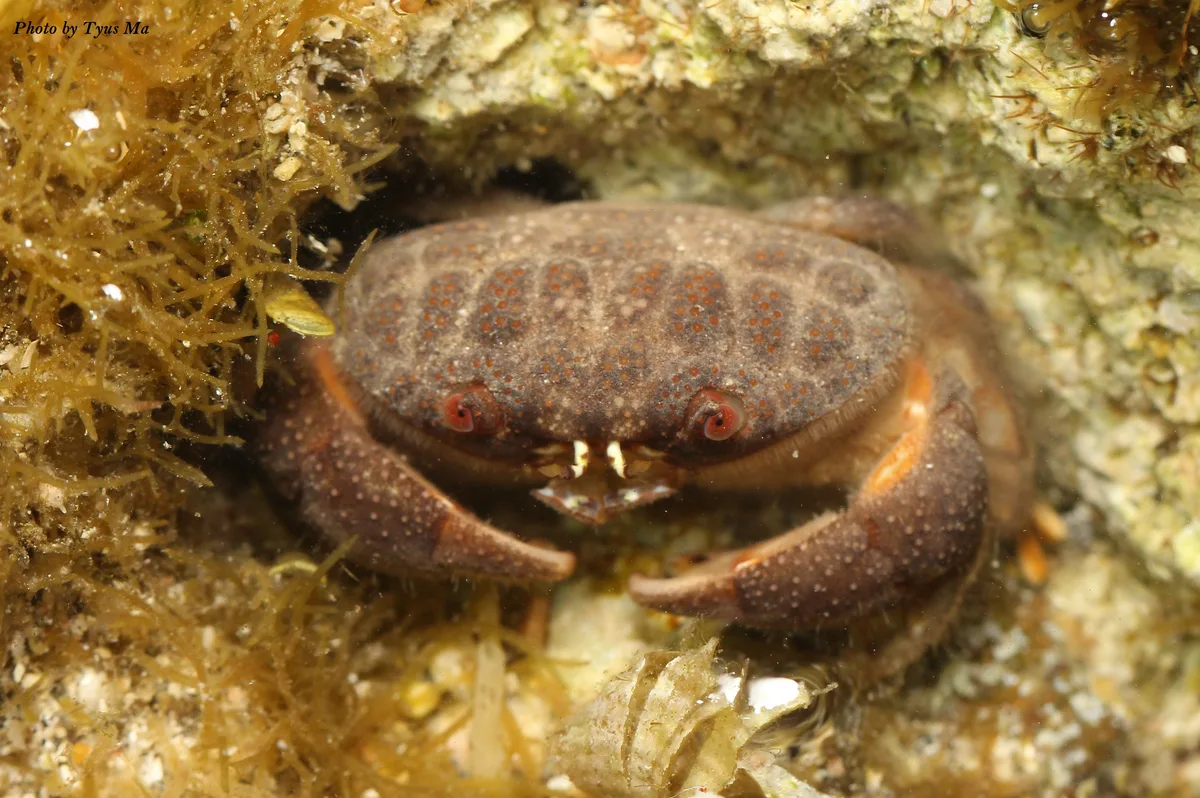
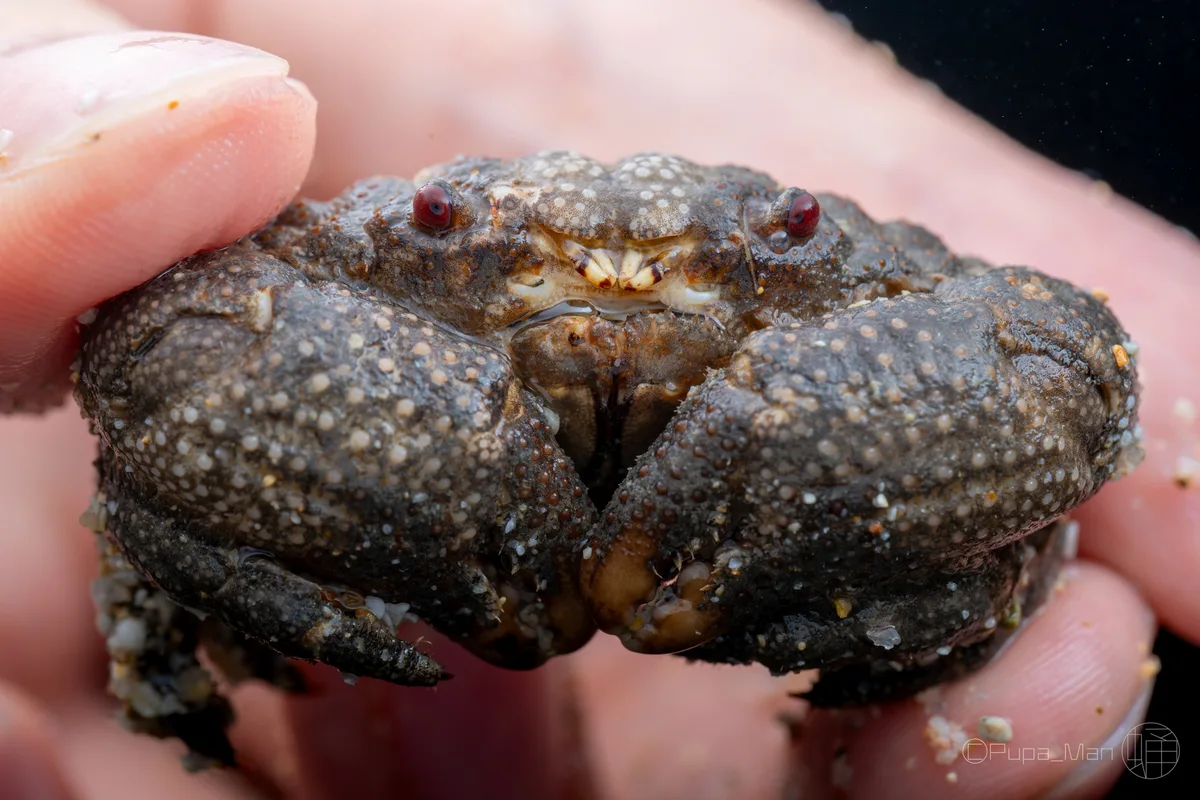
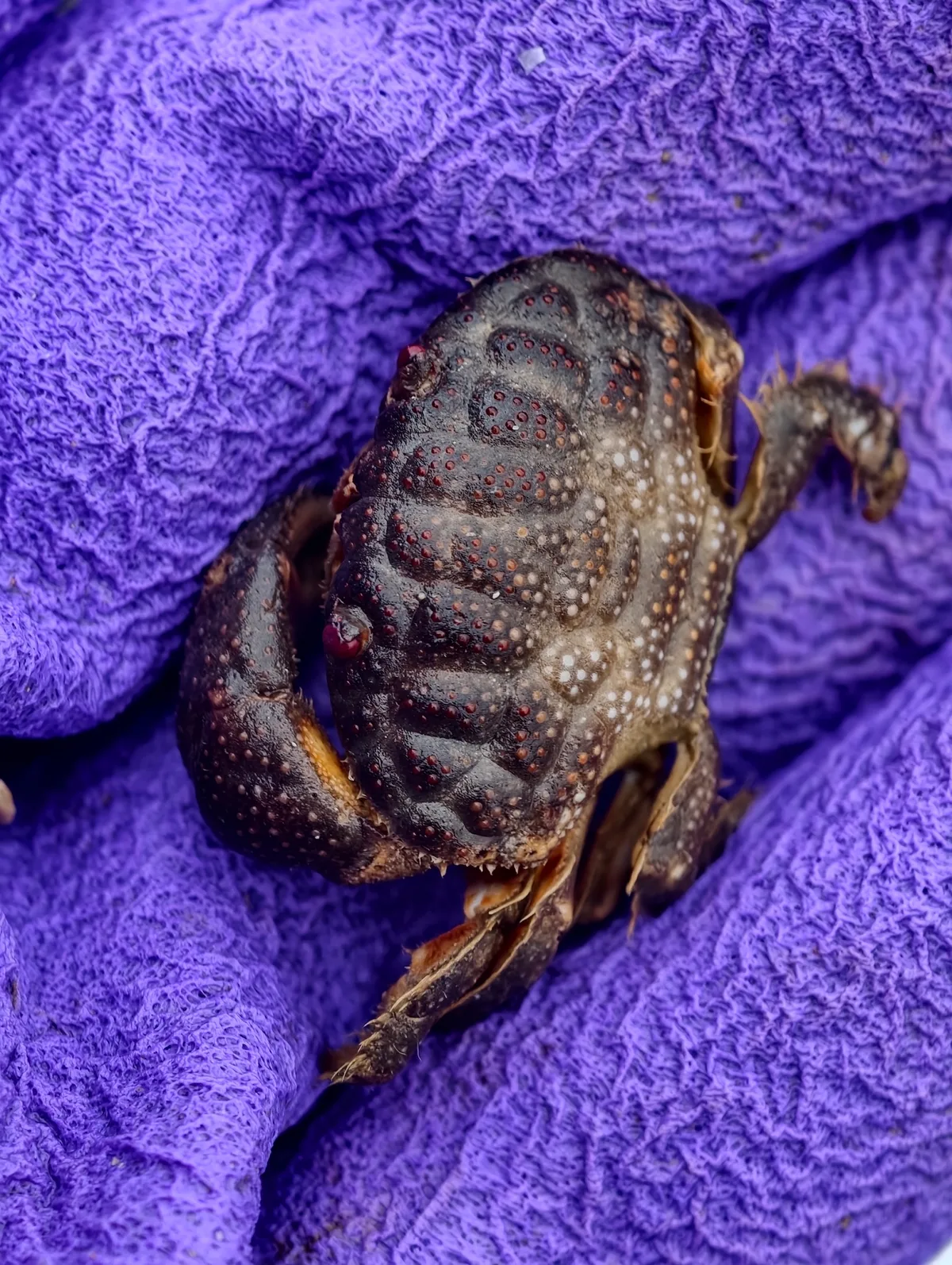
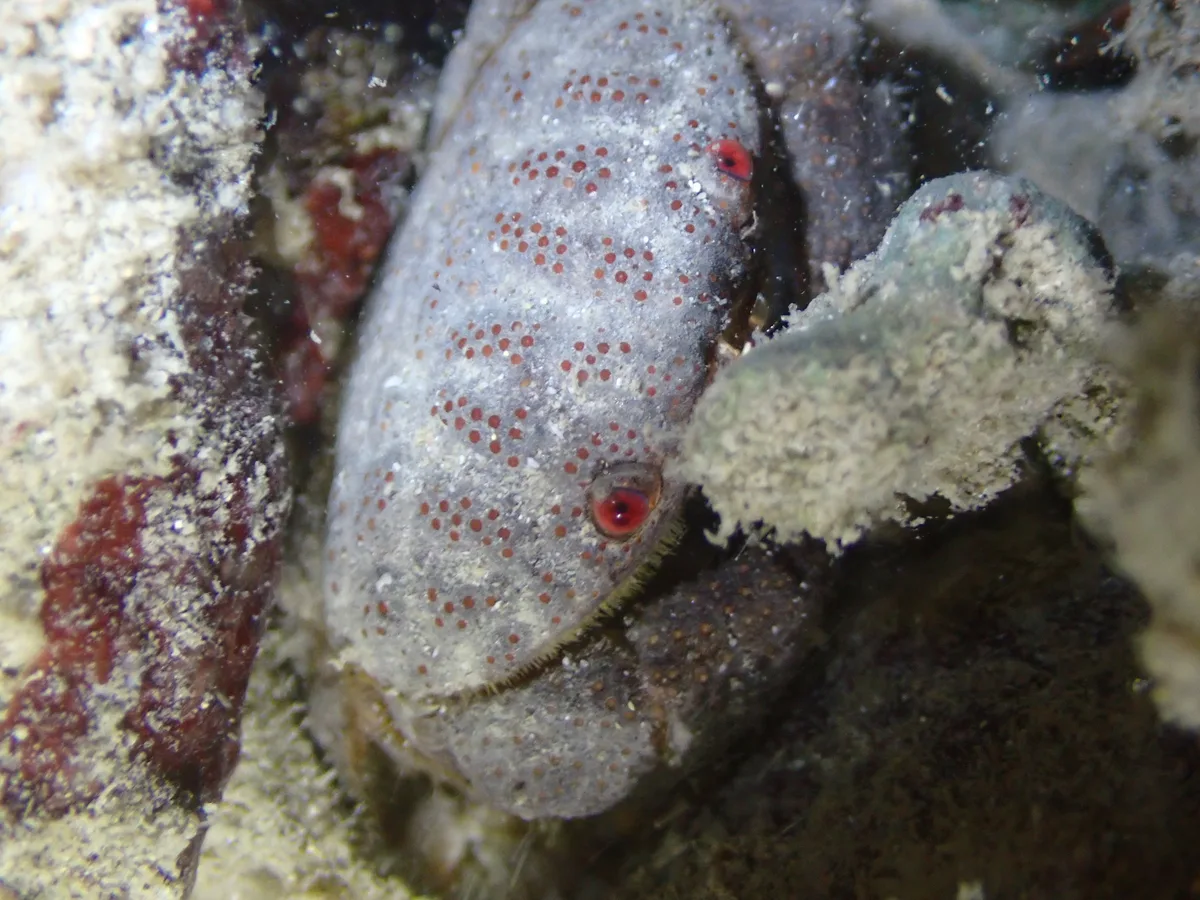
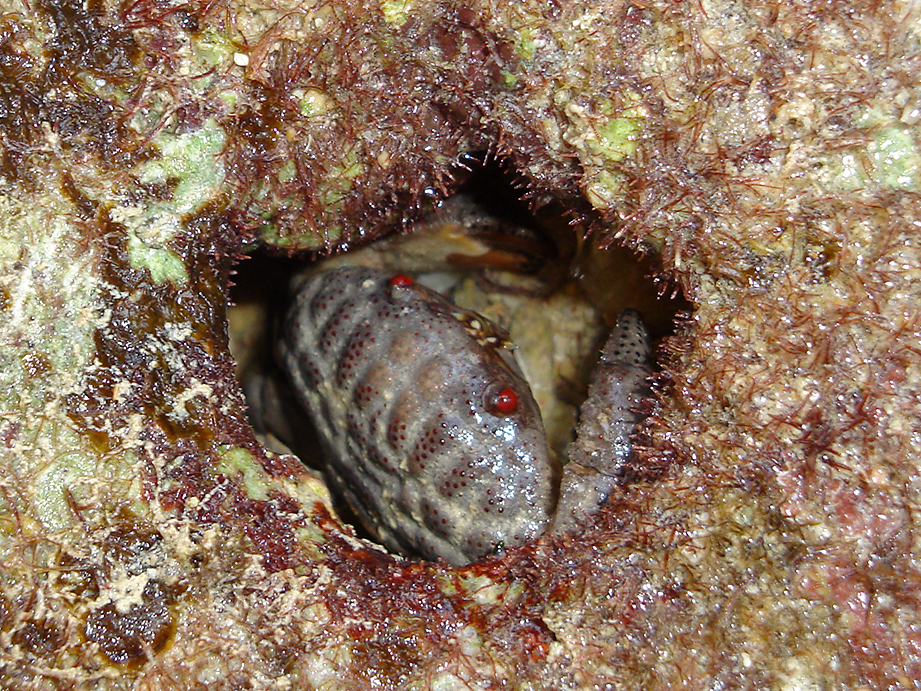
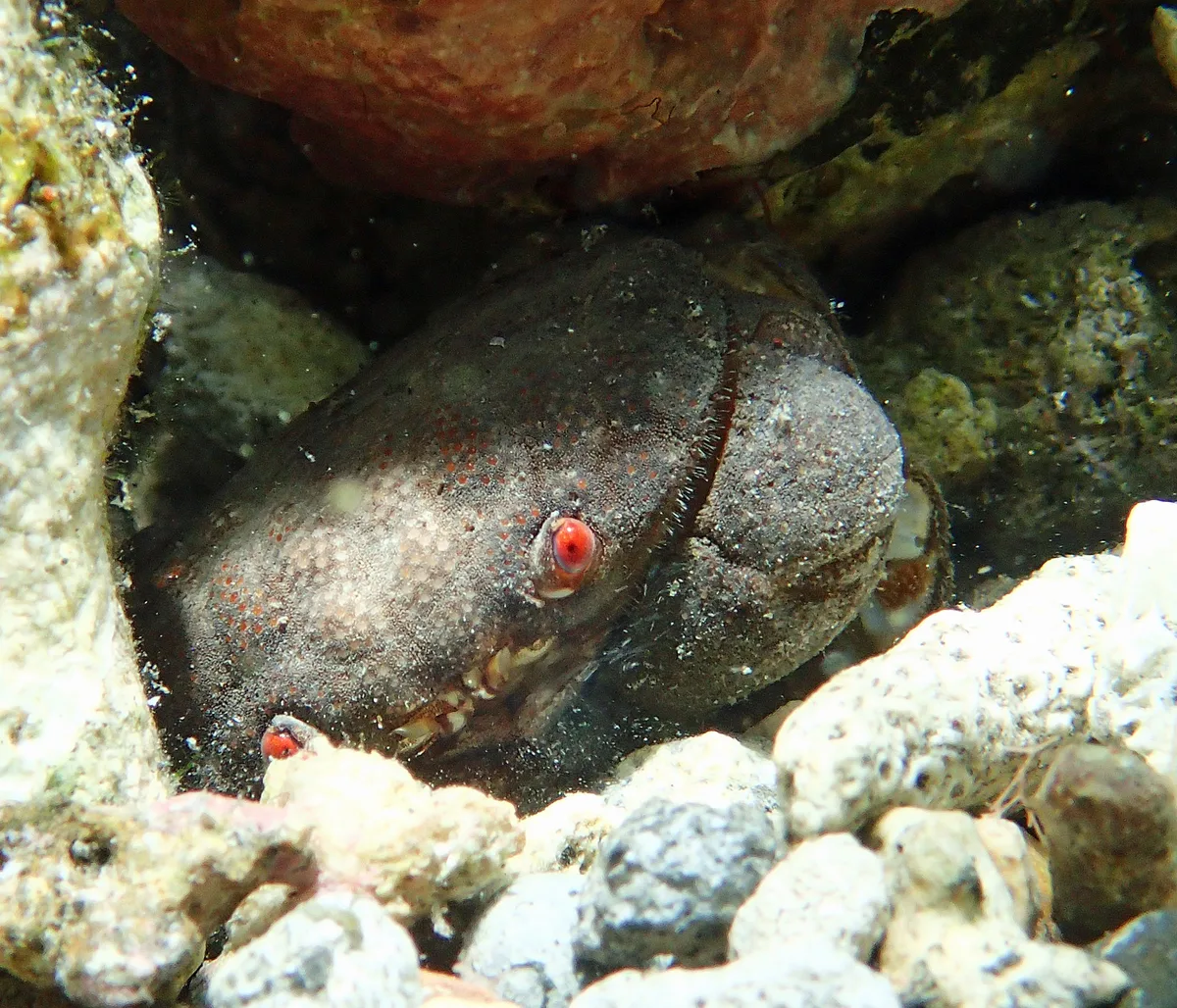
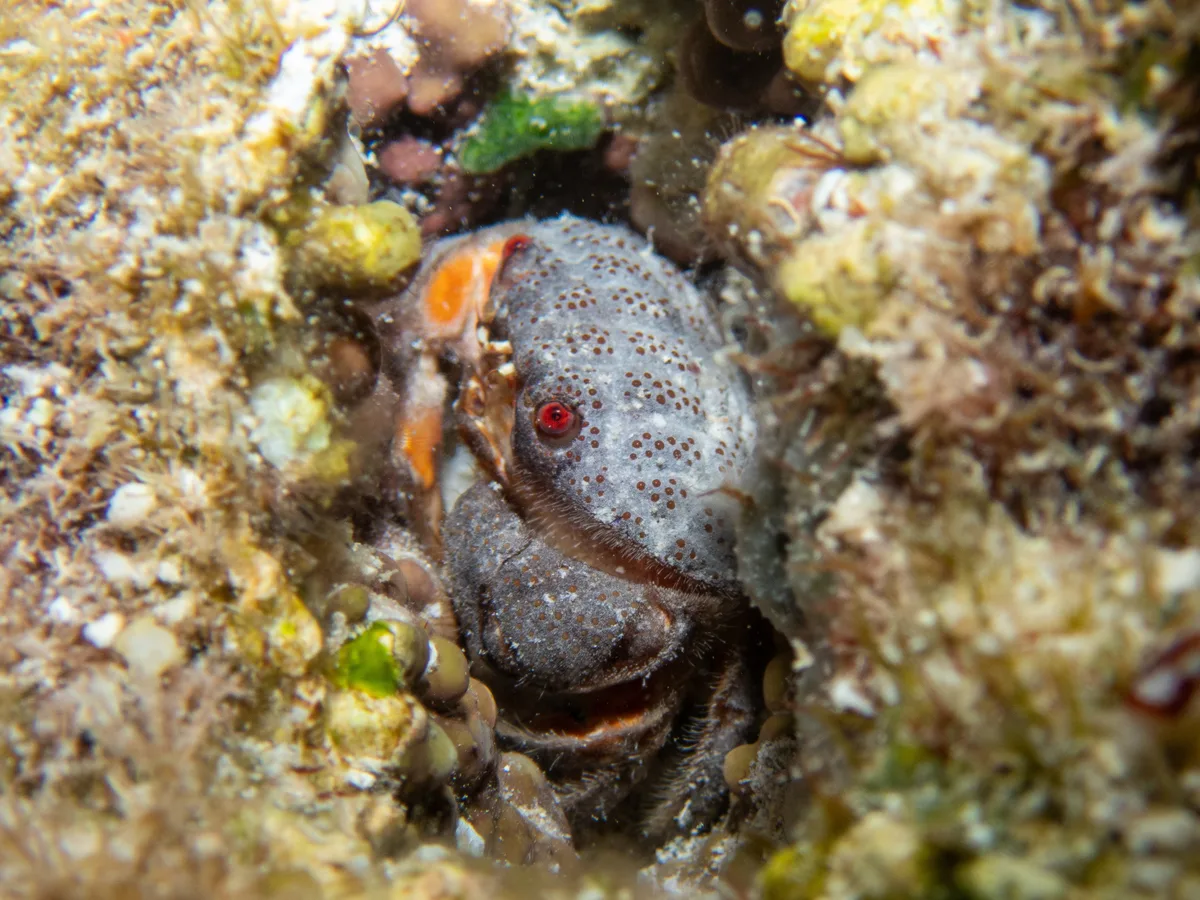
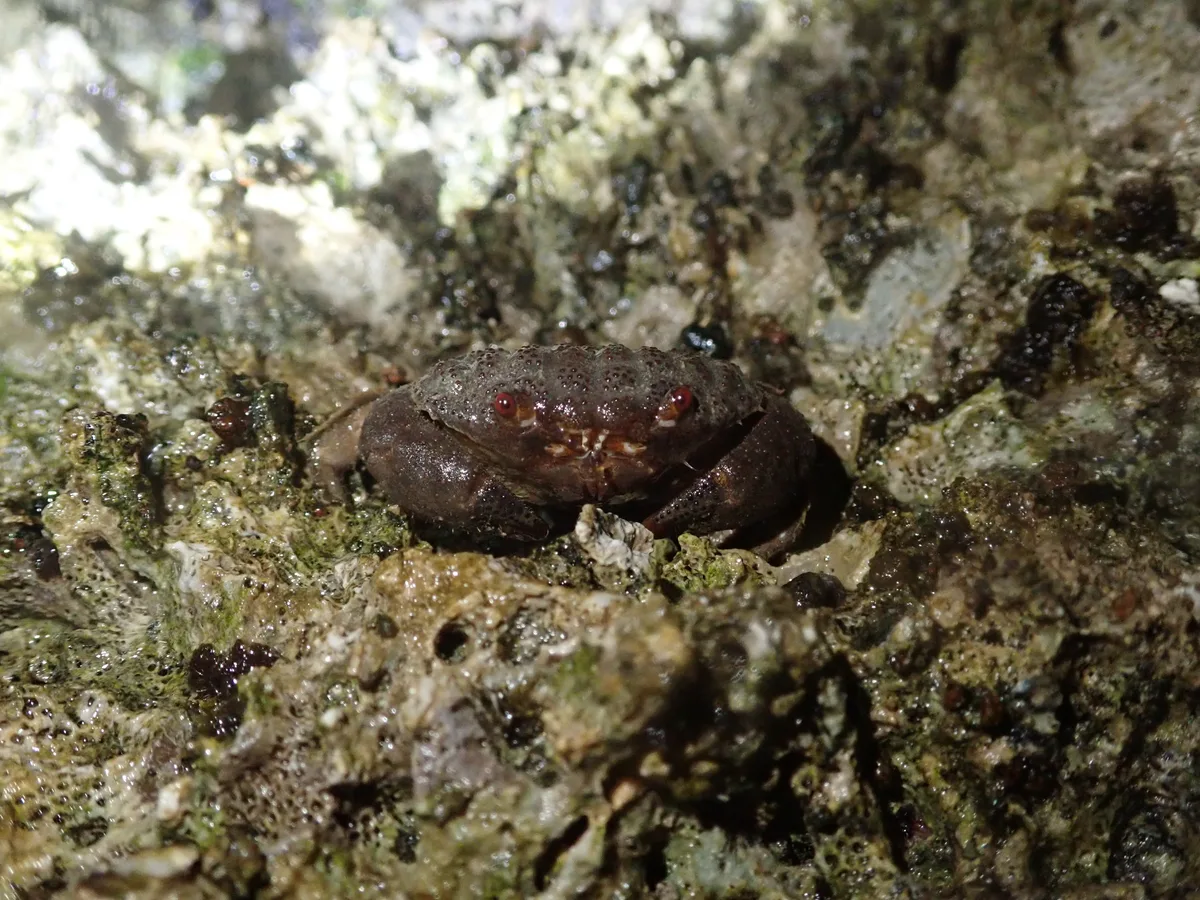
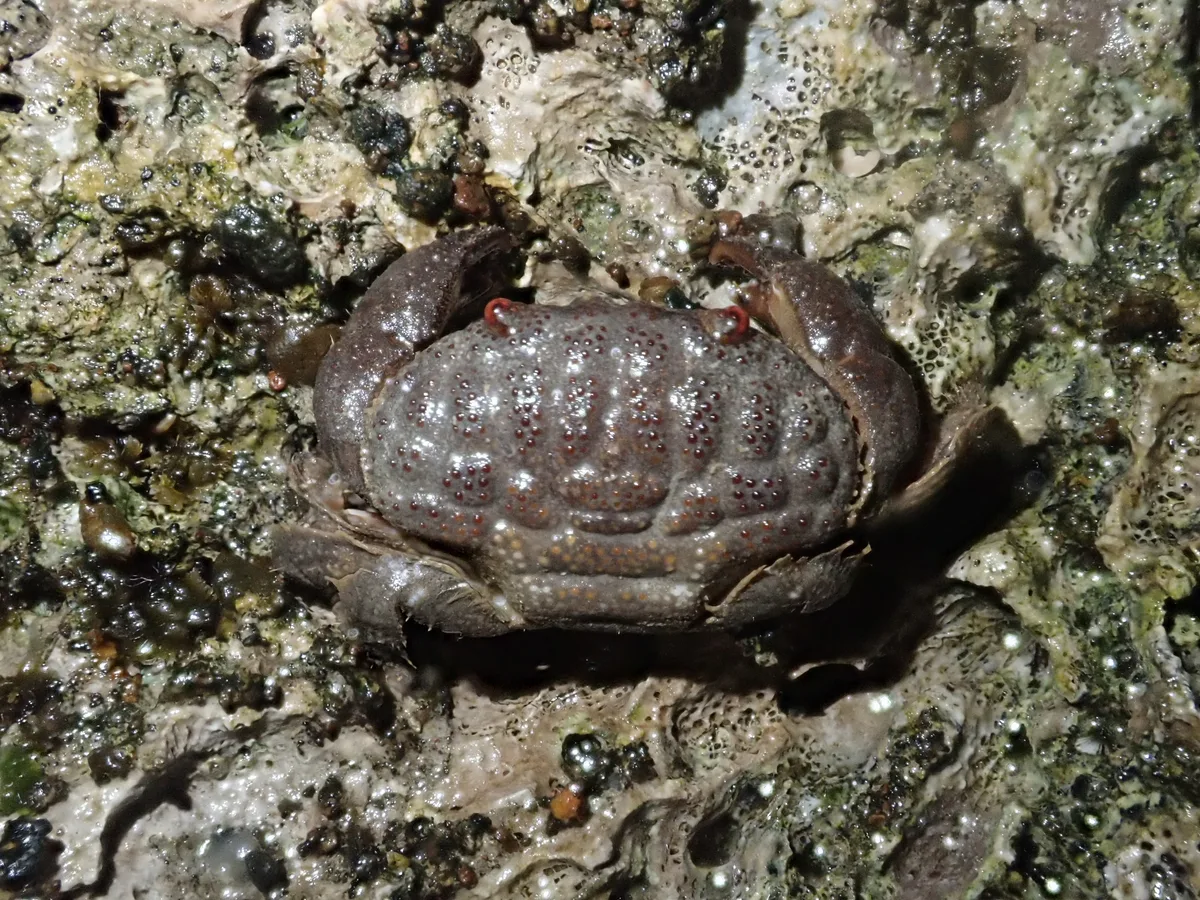
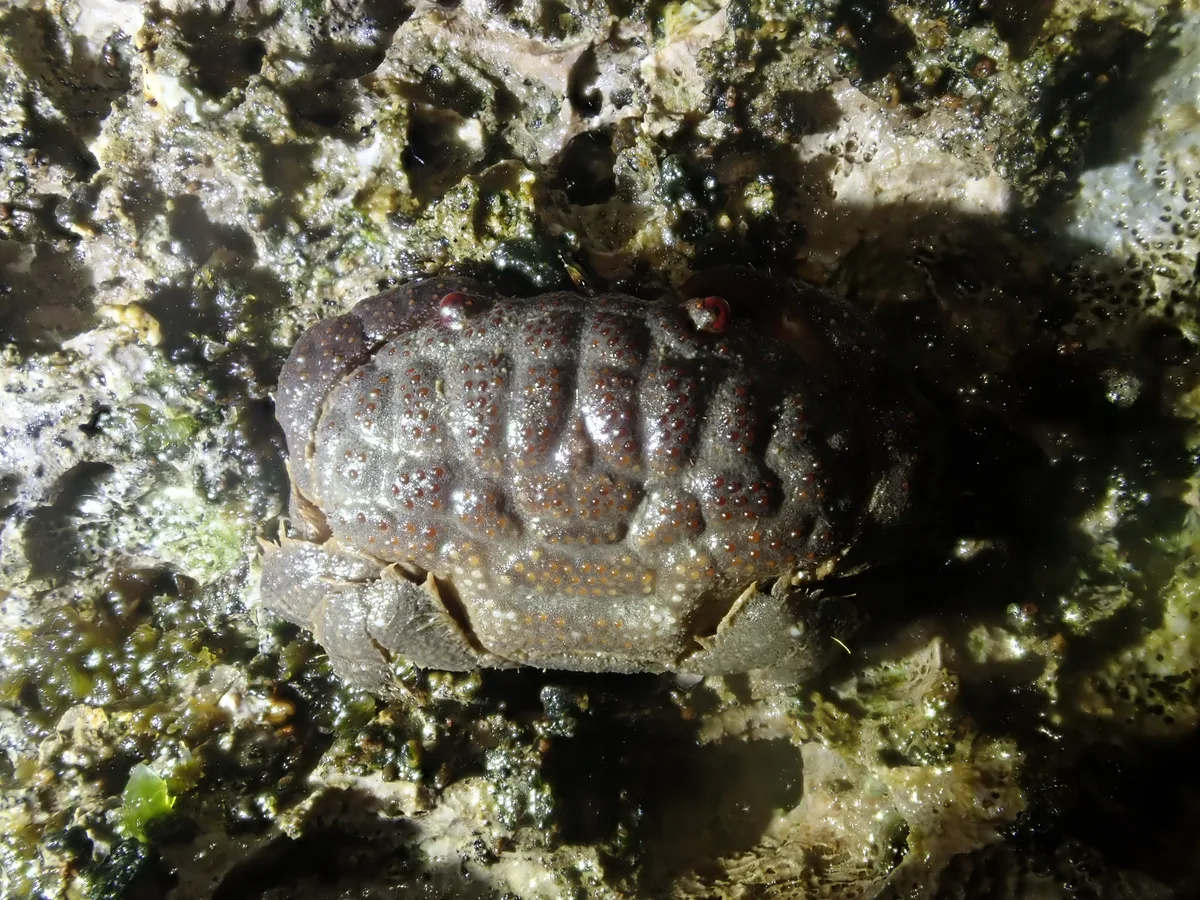
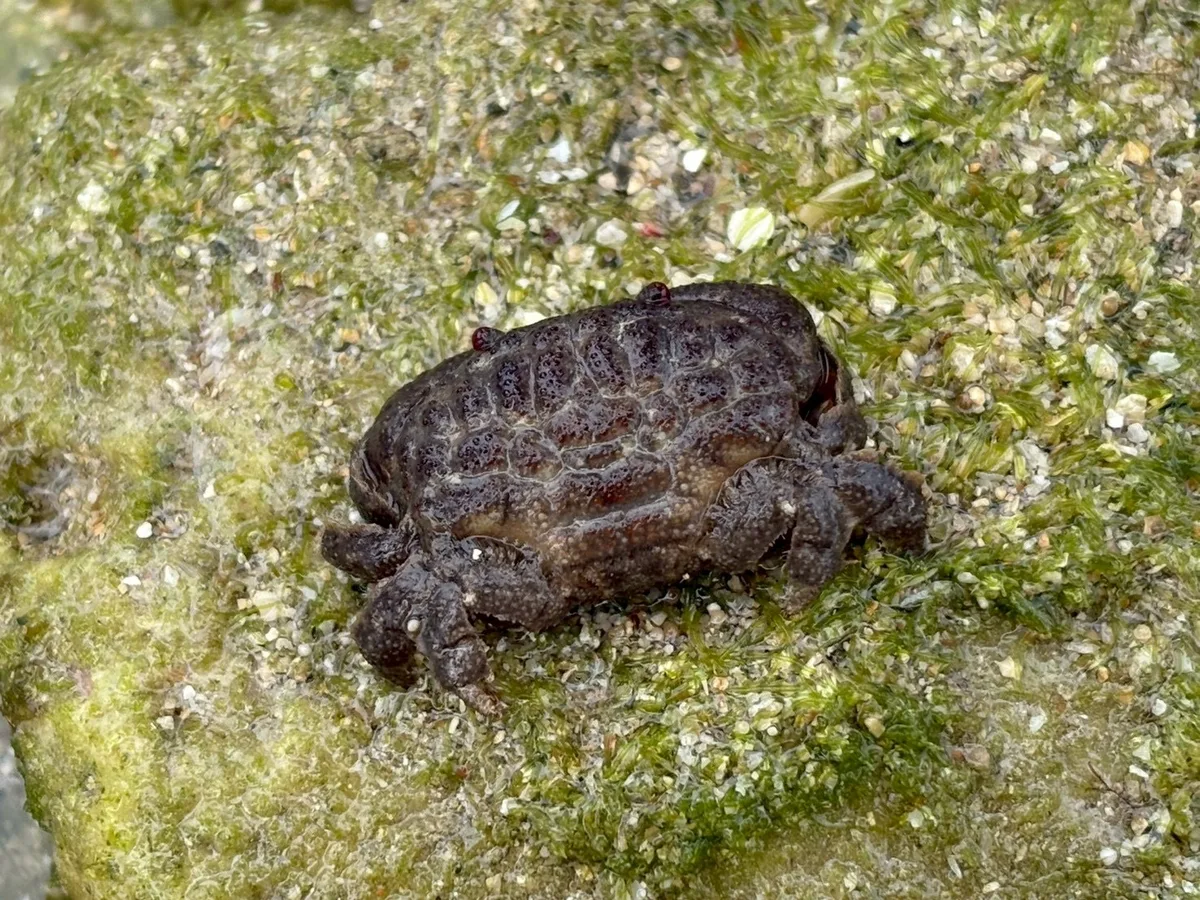
It is a small animal, about 2 cm across a rounded, heavily built carapace, opaque violet to dull purple with red dots near the eyes. The species name means felted, and it refers to the short dense hair over the shell and legs, which collects a film of sediment and turns the crab into a lump of the reef; the regional guide describes the shell as smooth, which is how a clean one photographs. The two claws are not a matched pair. One is thick and blunt for crushing, the other finer for picking apart what the first one breaks.
By day it is wedged into a crevice in rock or dead coral, and it is recorded from the intertidal down to 100 m, though almost every one you meet will be shallow. It comes out after dark to work over algae, detritus and anything small enough to hold.
Growing means backing out of its entire skeleton in one piece. For hours after that the new shell is soft, the claws will not close on anything, and the crab stays hidden until it hardens.
- rounded, heavy carapace in opaque violet to dull purple
- red dots on the carapace near the eyes
- short dense hair over shell and legs that holds a film of sediment
- unequal claws, one thick and blunt, the other finer
- up to 2 cm across the carapace