
30 species in Jacks, Amberjacks, Pompanos
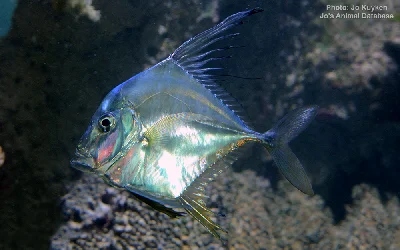
Alectis
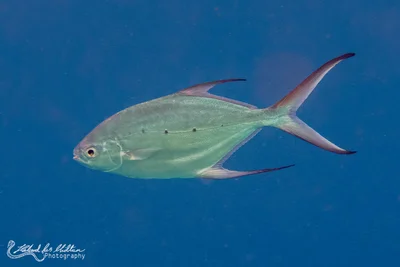
2Deep, flat and silver, like a plate held on edge, with a forehead that drops almost vertically. The young trail thread-like filaments several times their own body length; the adults lose them completely and look like an entirely different fish.

Alepes
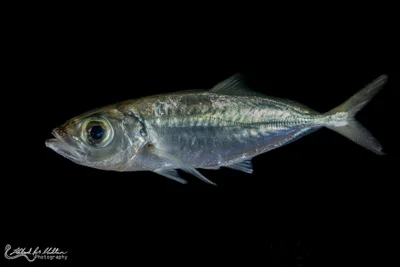
2Scads: small schooling jacks of shallow inshore water, and the only ones on this page that live on plankton rather than on fish. The diet is shrimps, copepods and decapod larvae, which is where the English name of the commoner one comes from. One of the two has been through the Suez Canal and now lives in the Mediterranean as far west as Malta.
Carangoides
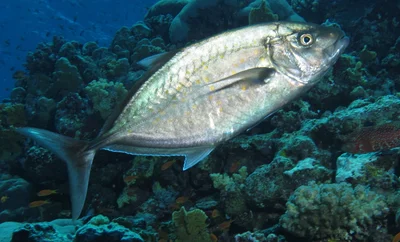
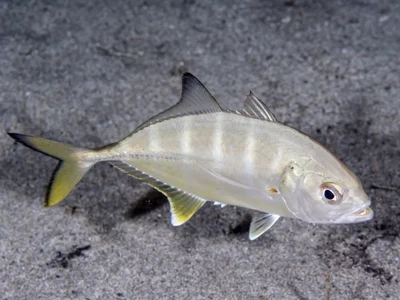
6Separated from Caranx by the head. The mouth is small for a jack and the forehead runs in a gentle curve instead of dropping steeply, and several of them trail long filaments from the front of the dorsal and anal fins when young, losing them as they grow.


Caranx
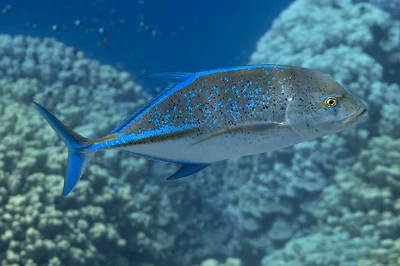
4The hunters, and the largest jacks here. Steep blunt forehead, deeply forked tail, and a flank carrying almost no scales at all - just a row of hard bony scutes along the stalk in front of the tail. Several of them flush dark while working a school and pale again once it is over.



Scomberoides
3The queenfish. Long, strongly compressed bodies with a row of dark blotches along the flank, and a first dorsal that is not really a fin - a row of short separate spines instead. They work the surface and the shallows rather than the drop-off.


Trachinotus
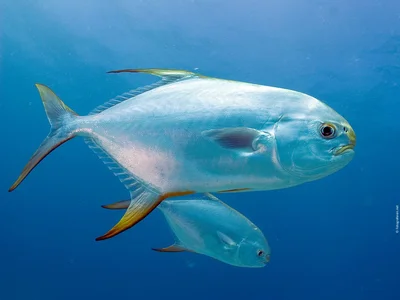
2Pompanos and darts, built for moving water: deep compressed bodies, sickle-shaped fins, blunt snouts, and a life spent in the wash and over open sand rather than out along the drop-off. What they do there splits the genus - one of the two here crushes shellfish with a toothless mouth, the other hunts small fish inside the surf line.
Other genera
11




Other torpedo-shaped groups
Similar silhouette underwater - worth a look if this was not your animal.


Last Update: August 23, 2026