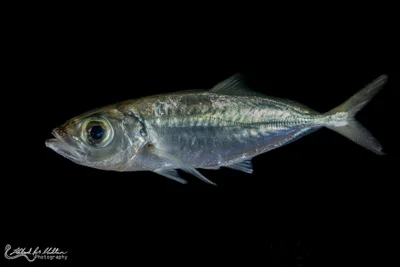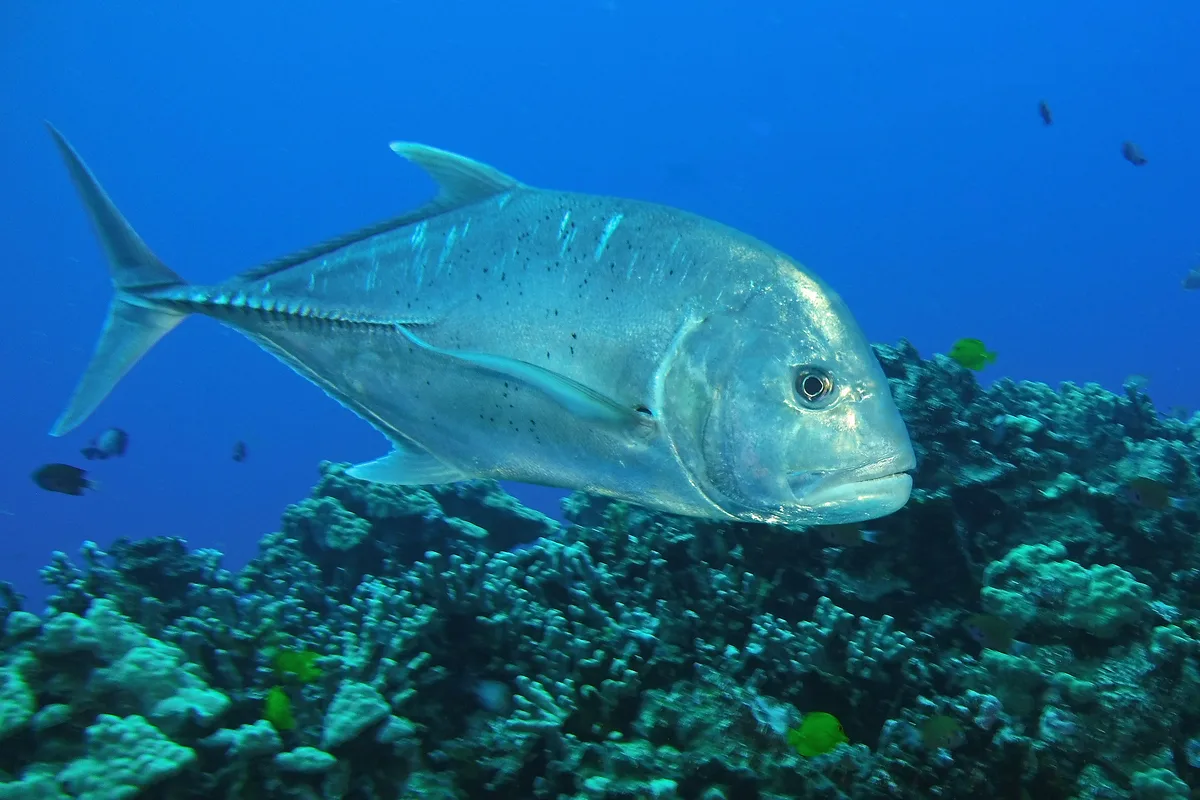
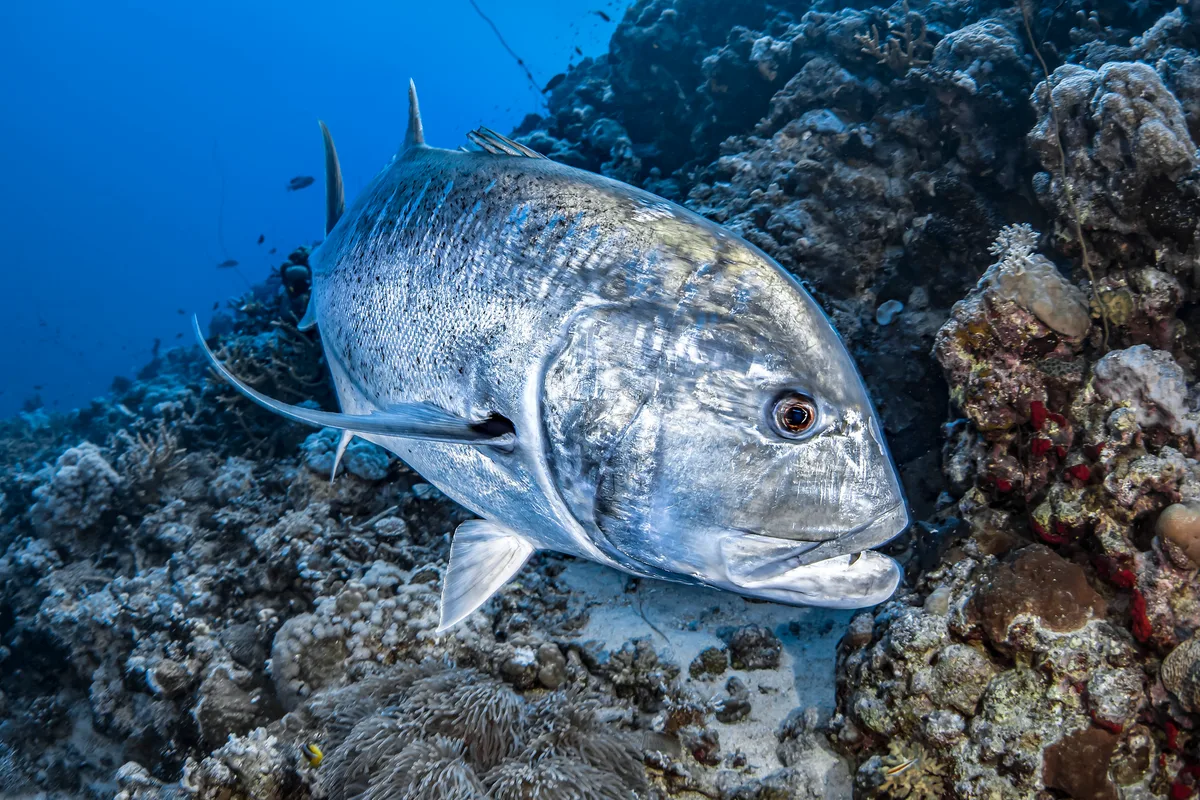
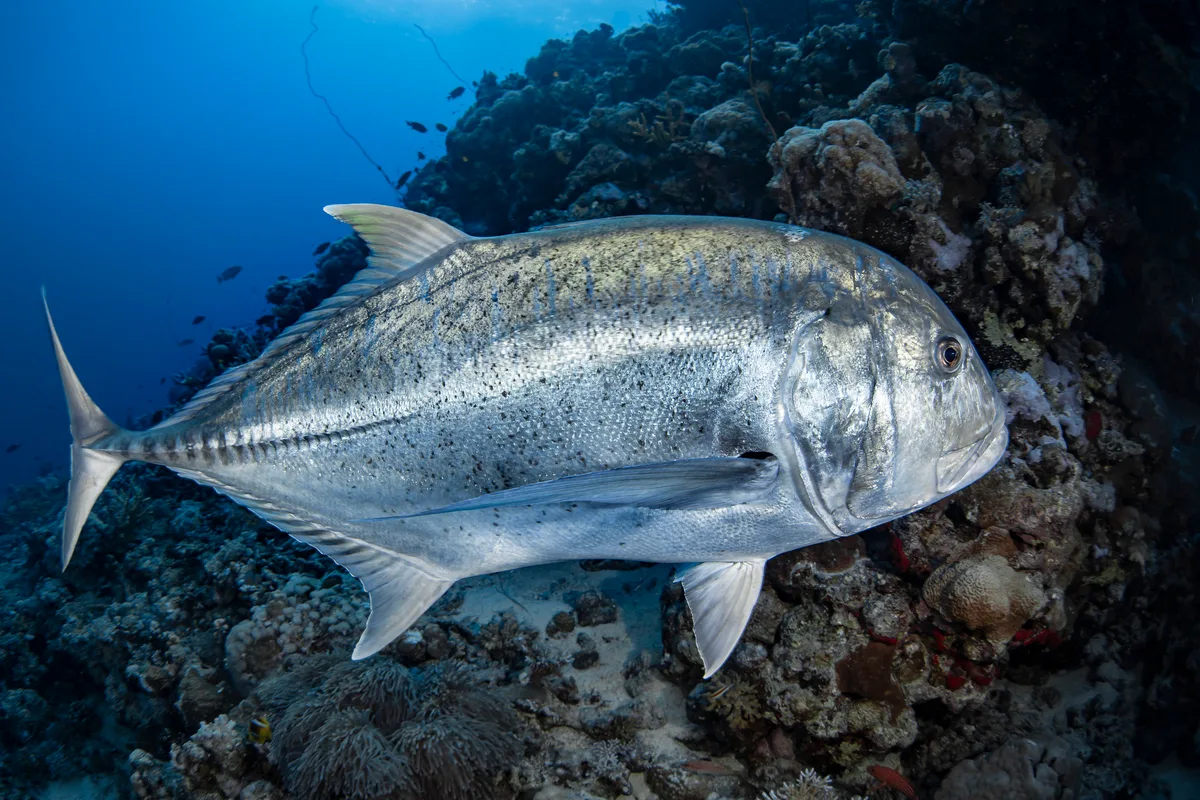
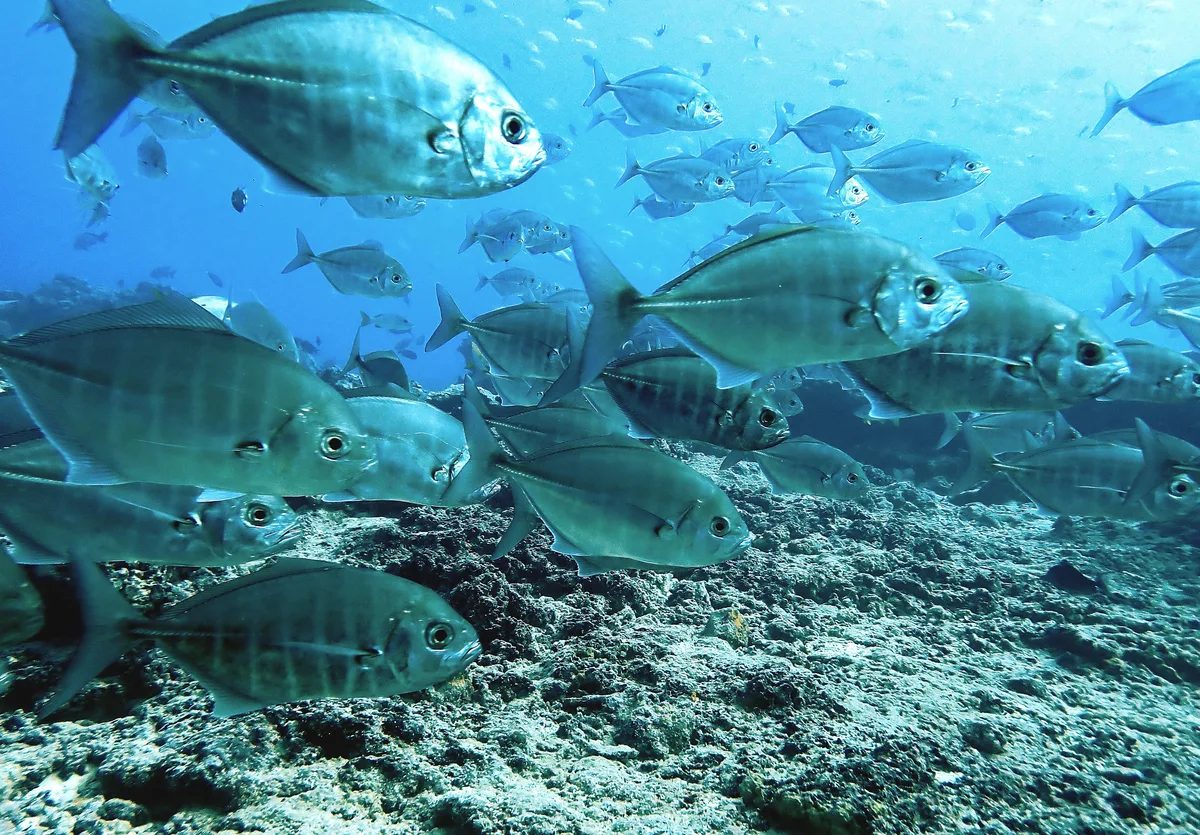
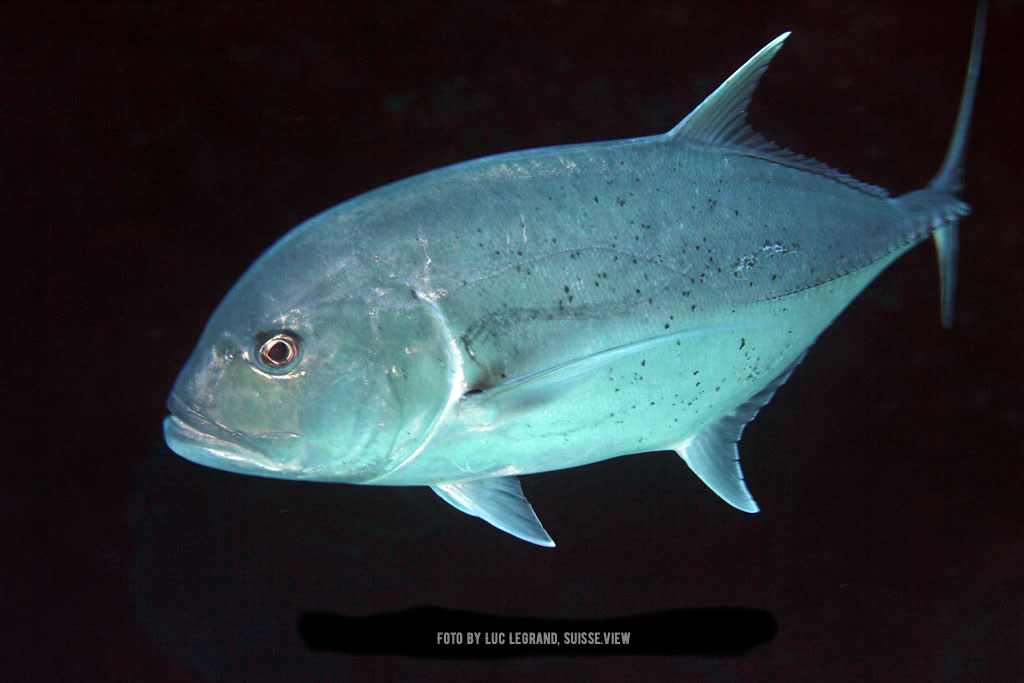
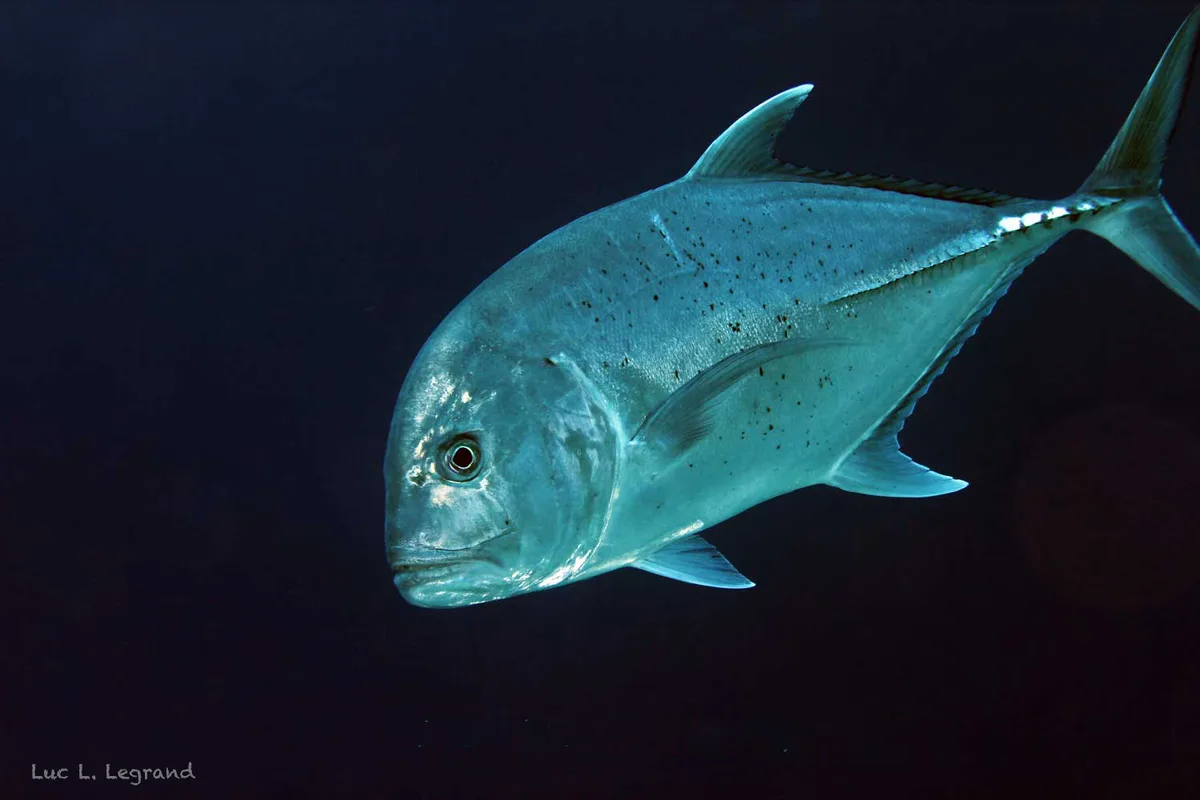
The heaviest jack in the sea: up to 1.7 m (5.5 ft) and 80 kg (176 lb), silver, blunt-headed, built like a shield on edge. Old males turn almost black, which is why a big dark one and a big silver one on the same reef are the same species at different stages.
It hunts by arriving. A giant trevally accelerates from open water into a school with enough force to knock fish out of the water, and it will take prey in centimeters of surge, run up onto sand chasing it, and hunt through the wash of a breaking wave. Birds are on the menu: the species has been filmed catching terns in flight, tracking a bird's speed and angle from below the surface and intercepting it - which requires correcting for refraction.
It also works with other predators. Trevally follow reef sharks, morays and octopus to take what they flush out, and groups of them coordinate to drive schools against a wall, taking turns rather than colliding.
It is a prized game fish, slow-growing, late-maturing and easily fished out of a reef where it aggregates to spawn. Large individuals carry ciguatera in parts of its range.
- heavy silver fish with a steep blunt forehead and a deeply forked tail
- males turn near-black with age; females stay silver
- no scales along most of the flank, just a row of hard scutes before the tail
- length up to 1.7 m
Why it's threatened
Threat classification from the IUCN Red List.