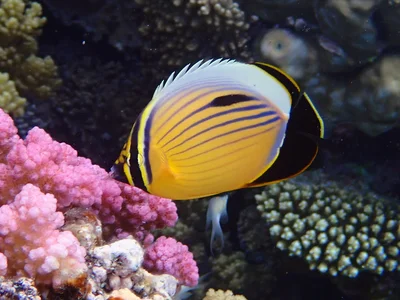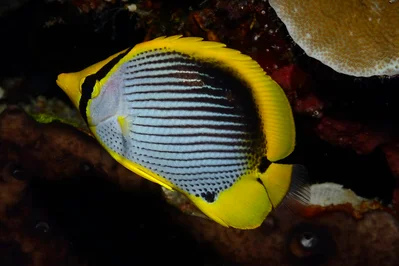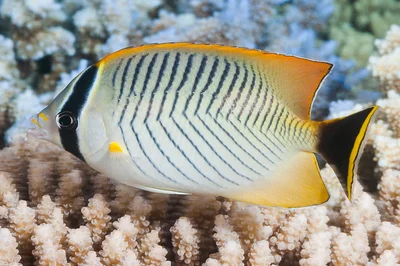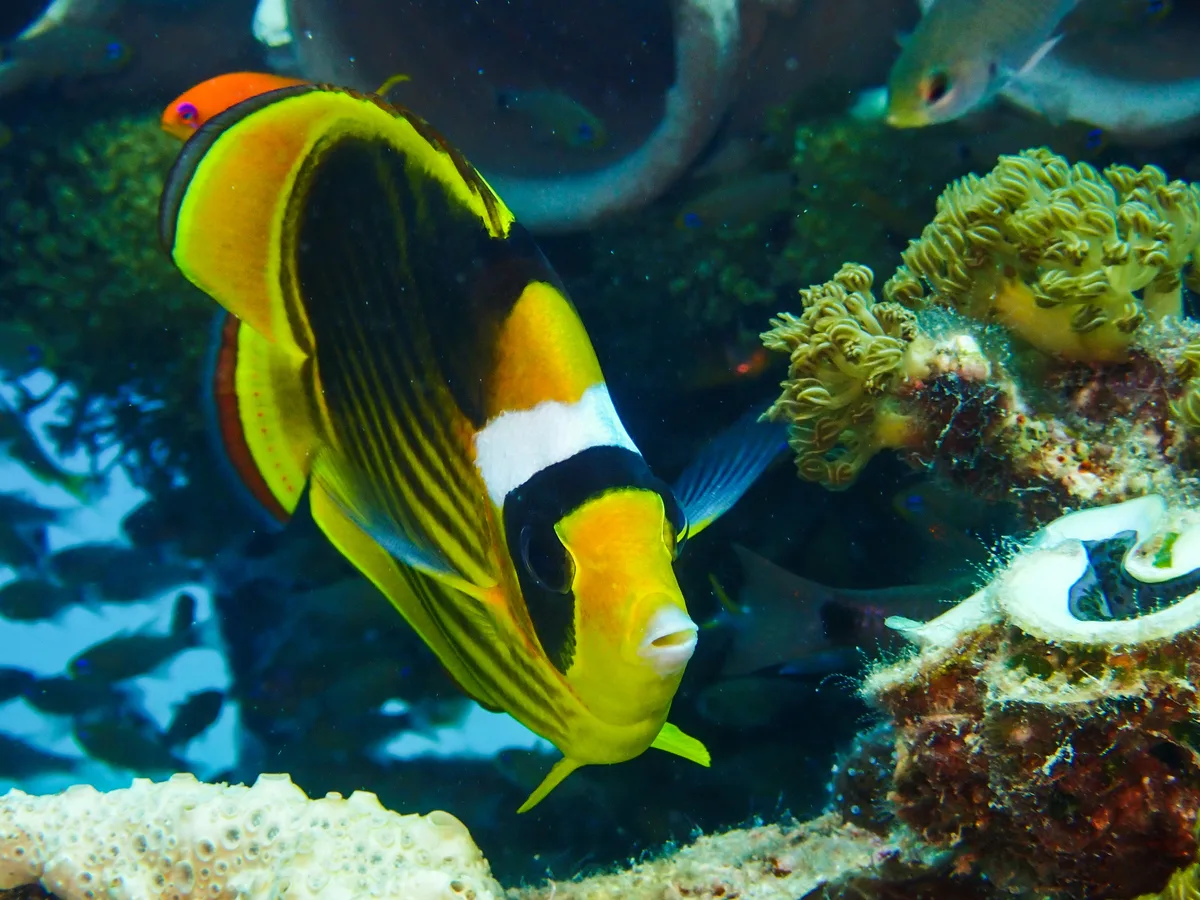
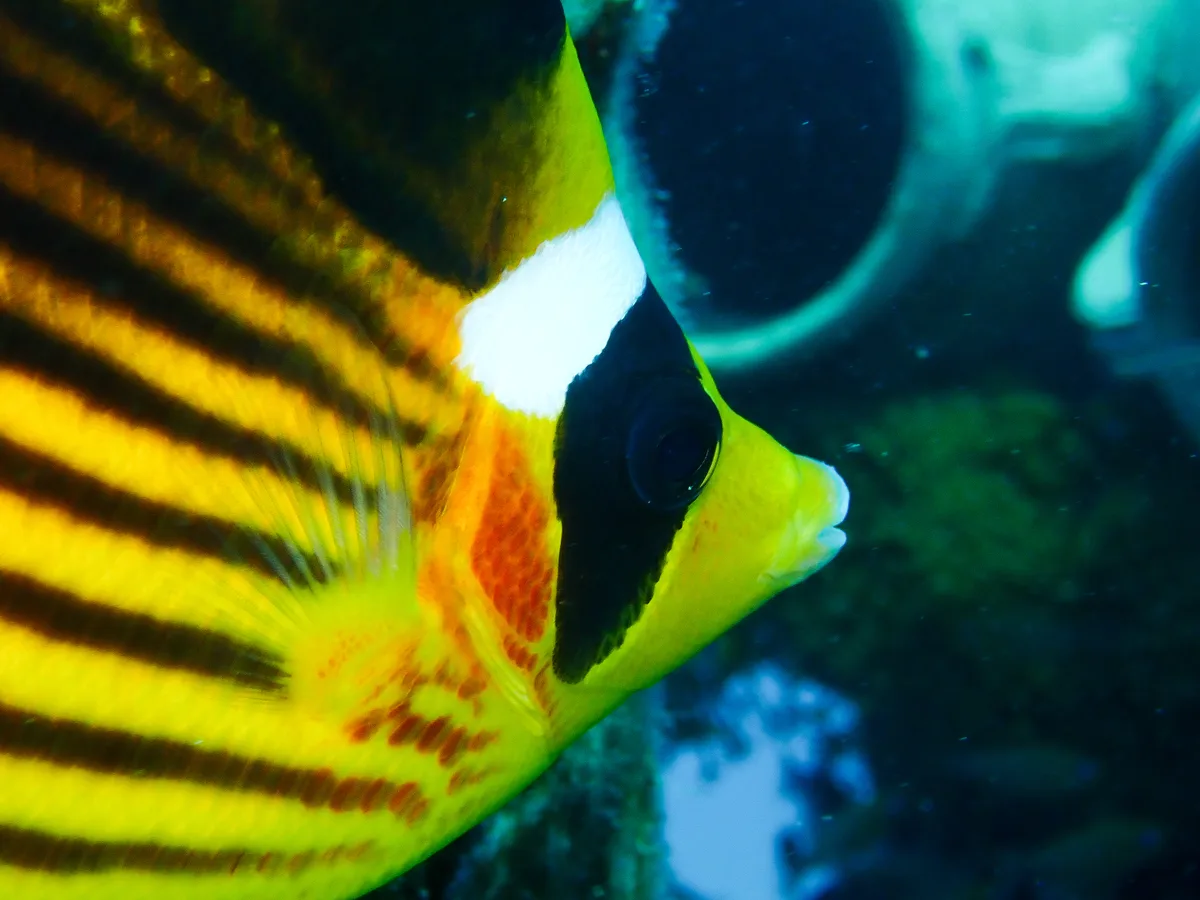
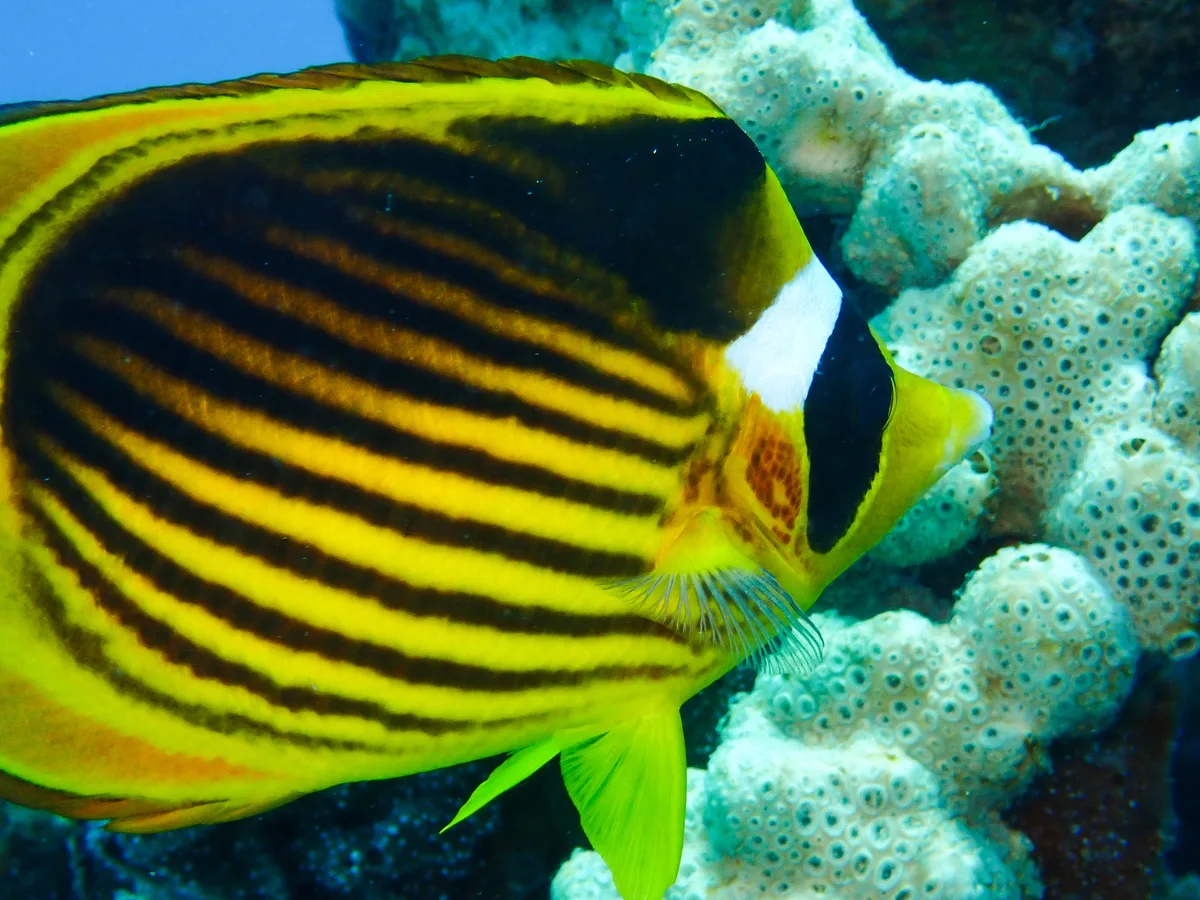
A deep-bodied yellow butterflyfish crossed by a series of dark, slightly diagonal stripes running up and back across the flanks. A black bar drops through the eye, bordered behind by a clean white band, and a black band runs along the base of the dorsal fin and around the rear of the body. The upper edge of the dorsal fin is orange-red, and the tail base stays plain yellow. Length reaches about 25 cm (10 in), large for the family.
The species is endemic here, one of the fish a diver can see on nearly every 🌊 Red Sea reef and nowhere else on earth. Adults pair for life and patrol coral-rich slopes and lagoons from just below the surface to about 25 m (80 ft), feeding through the day on coral polyps, small invertebrates and algae. Pairs stay within sight of one another and will circle back if separated. At night the fish retreat into the reef and take on a dull blotched pattern that makes them hard to recognize by torchlight. Dive guides and older checklists often call it the raccoon butterflyfish, borrowing the name of a similar Indo-Pacific species, Chaetodon lunula, which does not reach this sea - the black blotch on the tail base of that one separates the two at a glance.
The genus. Chaetodon Linnaeus 1758 - chaeto- (bristle) + odon (tooth). ETYFish
The species. Chaetodon fasciatus Forsskål 1775 - banded. ETYFish
- yellow body crossed by dark diagonal stripes
- black bar through the eye, white band behind it
- tail base plain yellow - no black blotch
Why it's threatened
Threat classification from the IUCN Red List.