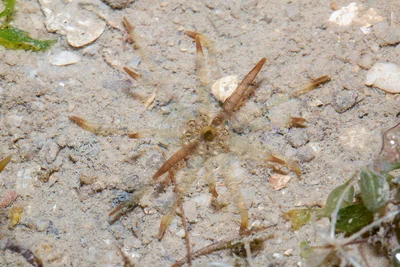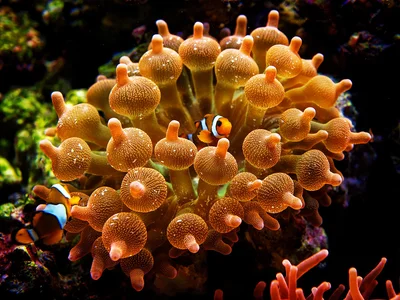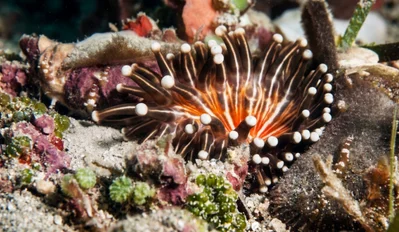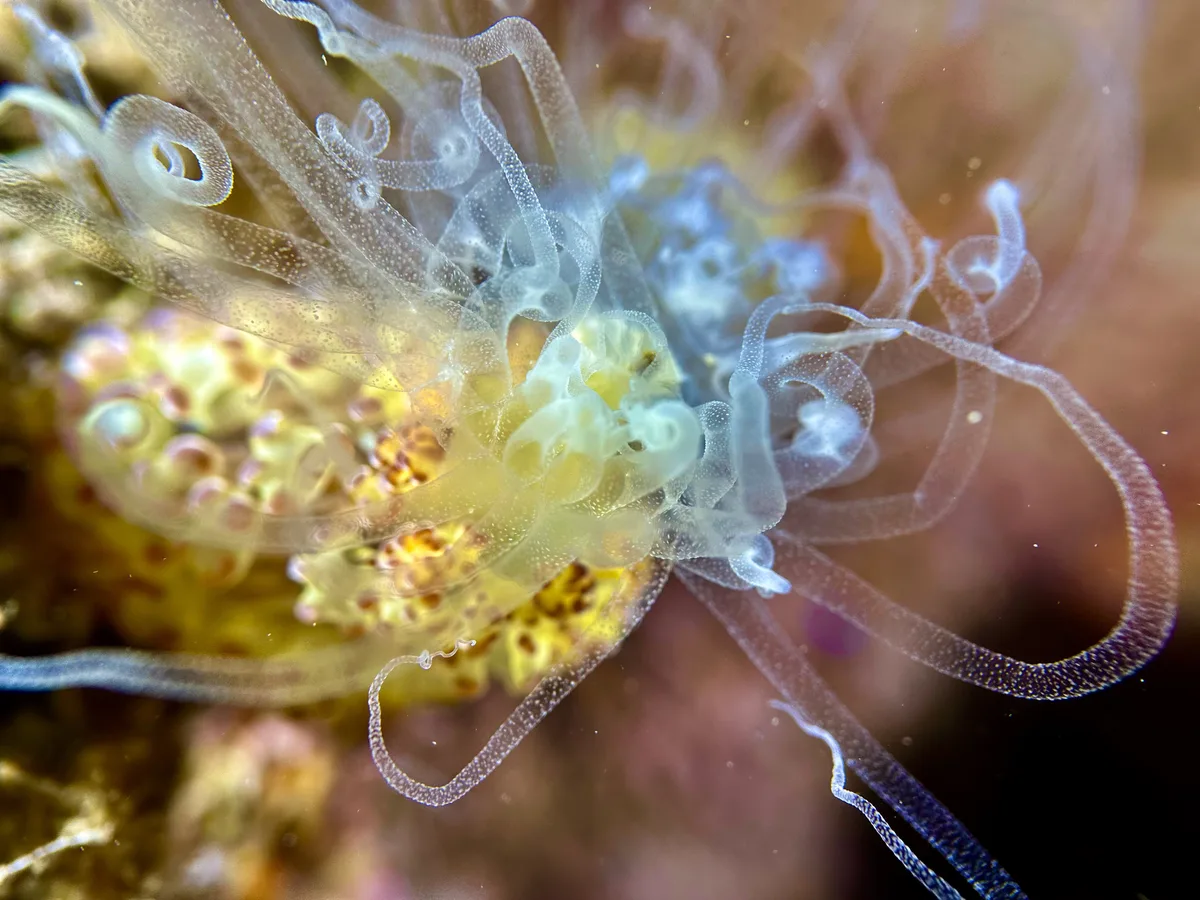
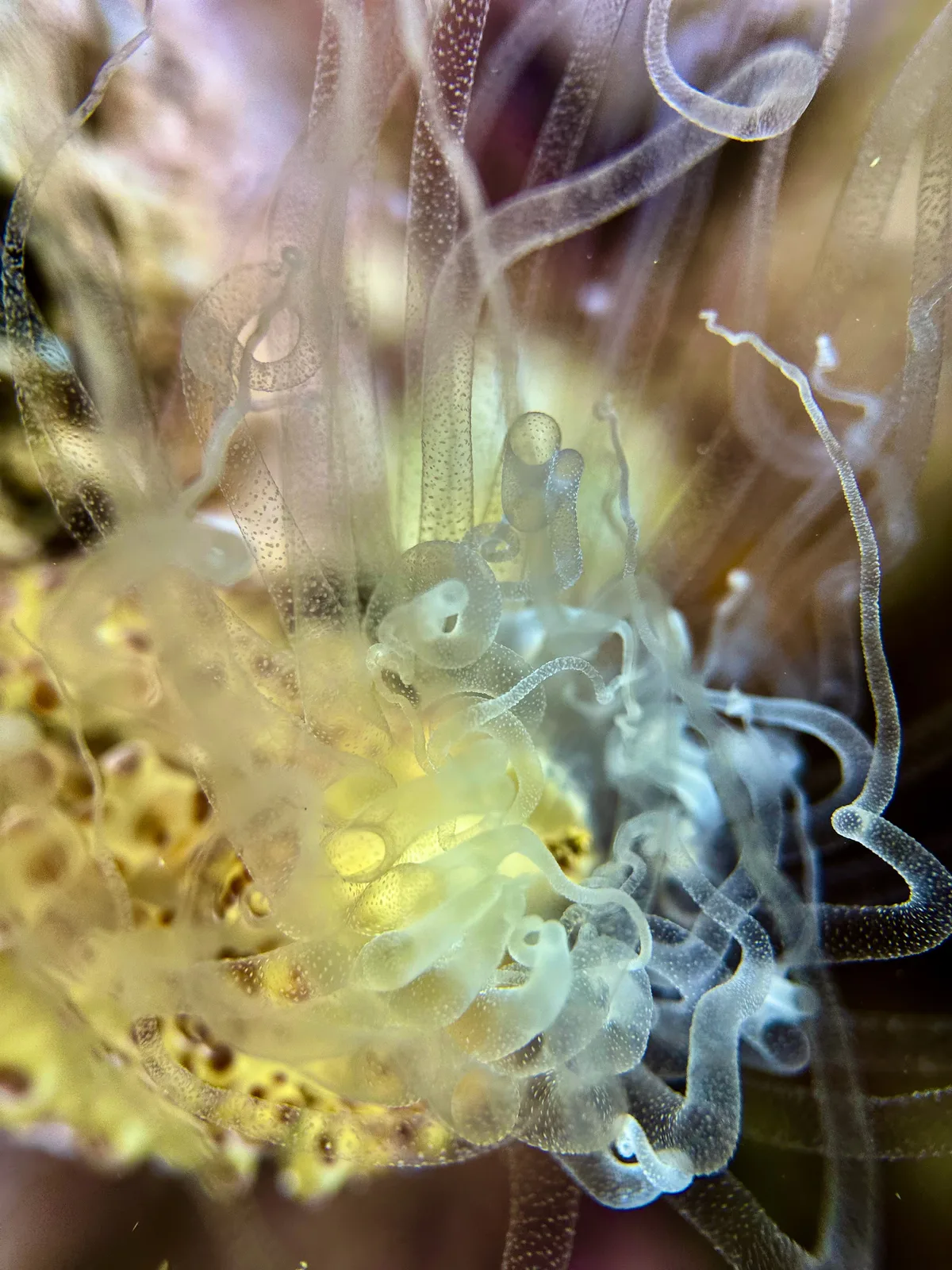
Alicia pretiosa possesses an elongated, highly contractile column, or stalk, which can extend up to 30 cm (12 inches) when fully active. The stalk is covered in dense clusters of papillae resembling white or reddish berries. These papillae are heavily armed with powerful nematocysts, making the anemone highly venomous. Its oral disc is small, surrounded by short, simple tentacles. During daylight hours, the anemone typically retracts its entire body into a crevice or buries itself within the substrate, remaining completely hidden.
This species inhabits reef slopes, walls, and rubble areas, often anchoring itself in sand or rocky fissures. It is typically found at depths ranging from 5 to 30 meters (16 to 100 feet). As a strict nocturnal predator, it extends its stalk and tentacles after dark to form a 'net' with its potent stingers. It preys on passing invertebrates and small fish, which are paralyzed upon contact and drawn to the oral disc. Despite its formidable defenses, Alicia pretiosa is preyed upon by the nudibranch Limenandra barnosii, a specialized sea slug that consumes the anemone's tissues.
- elongated, tree-like stalk
- dense clusters of berry-like, white or reddish capsules