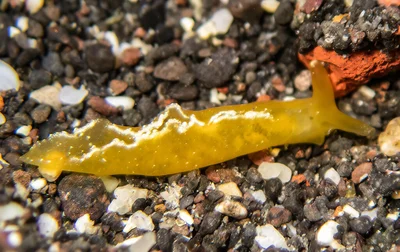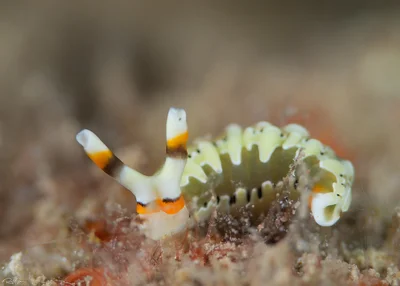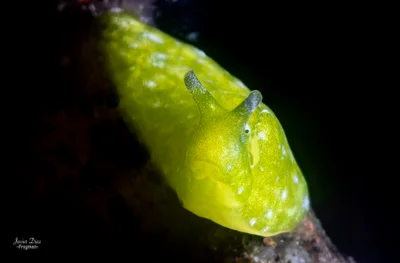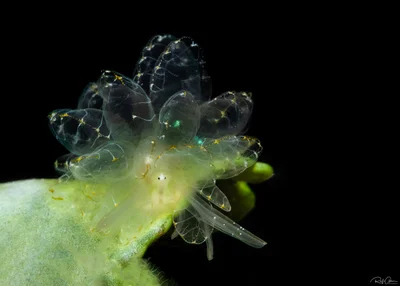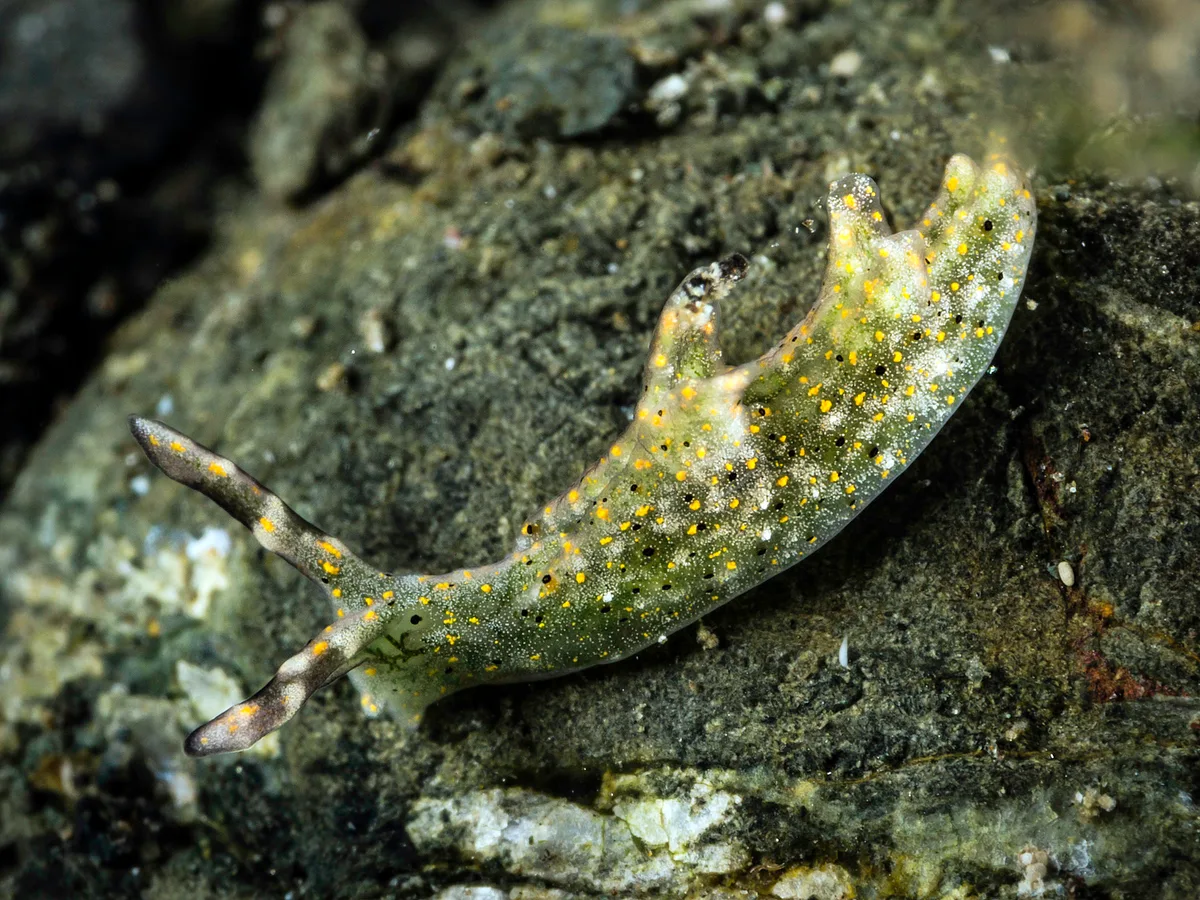
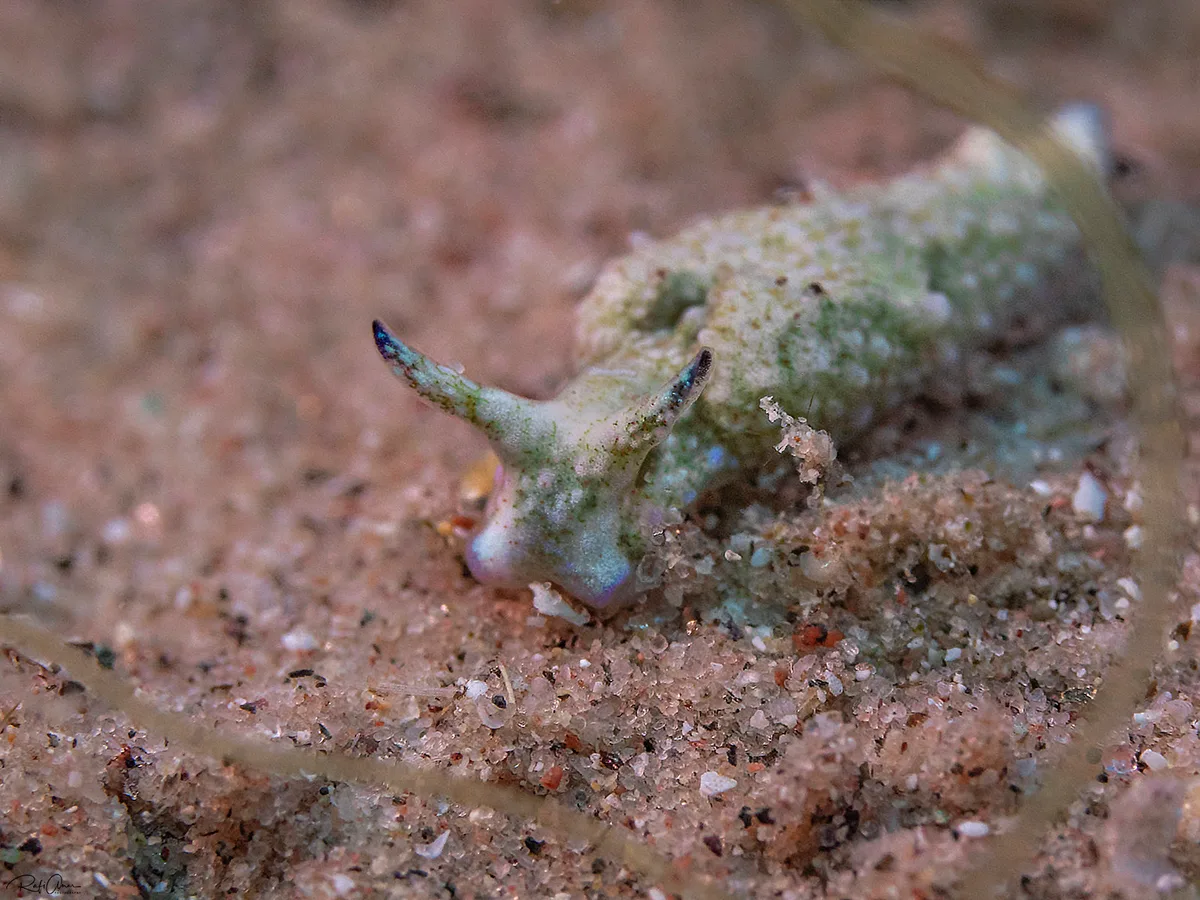
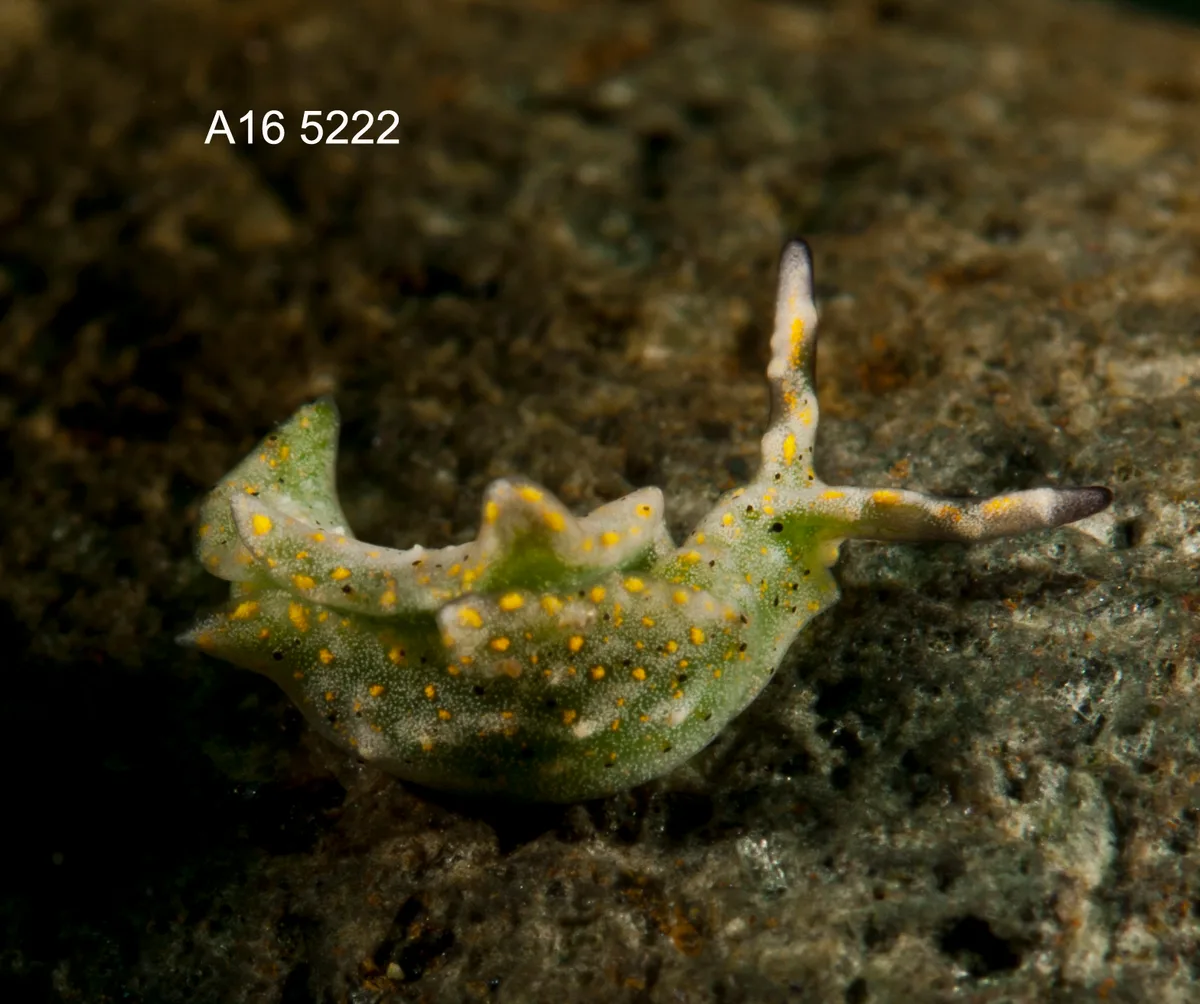
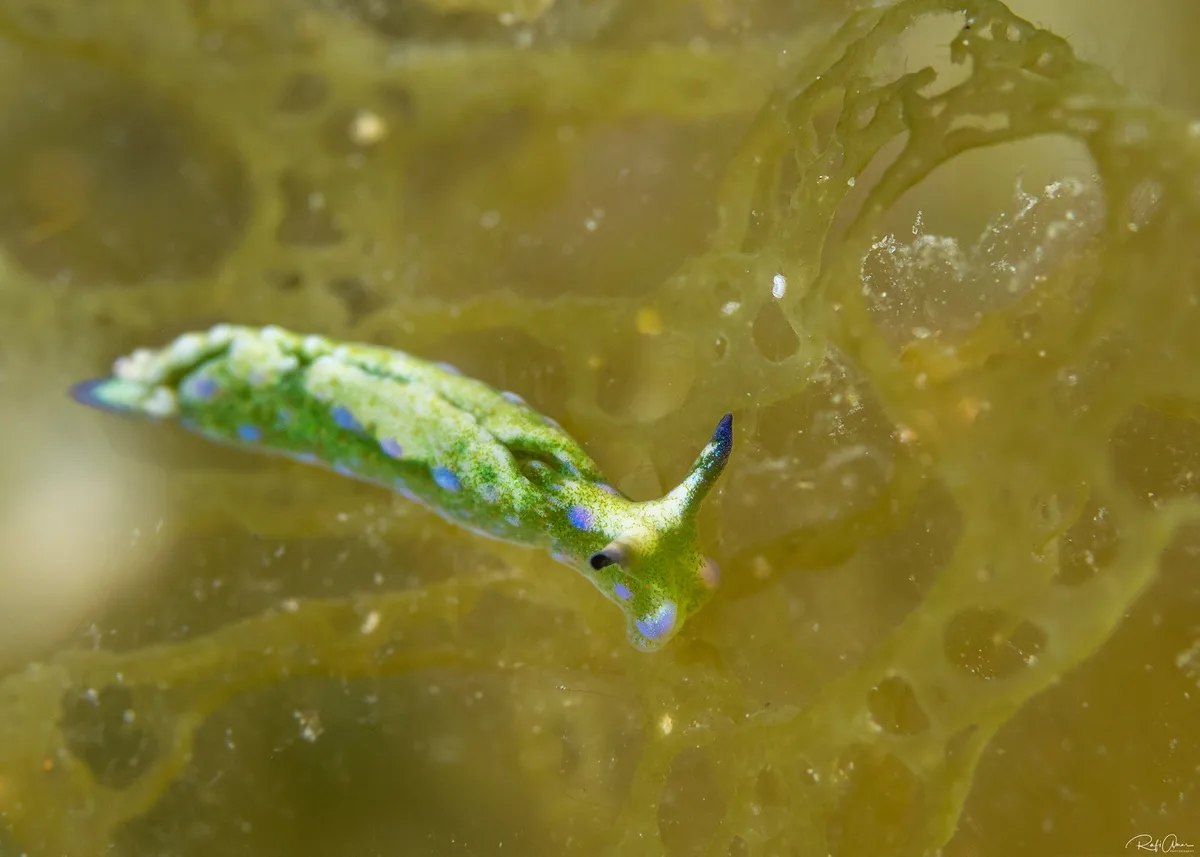
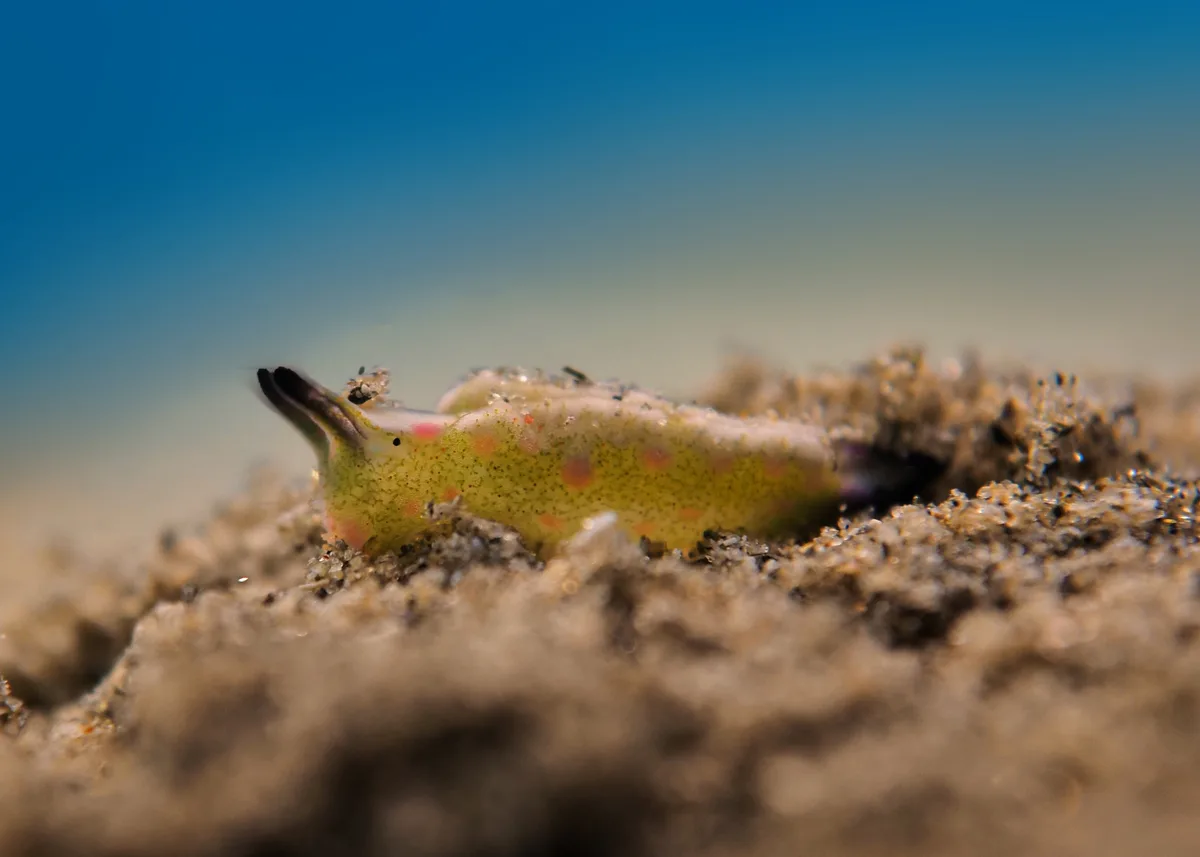
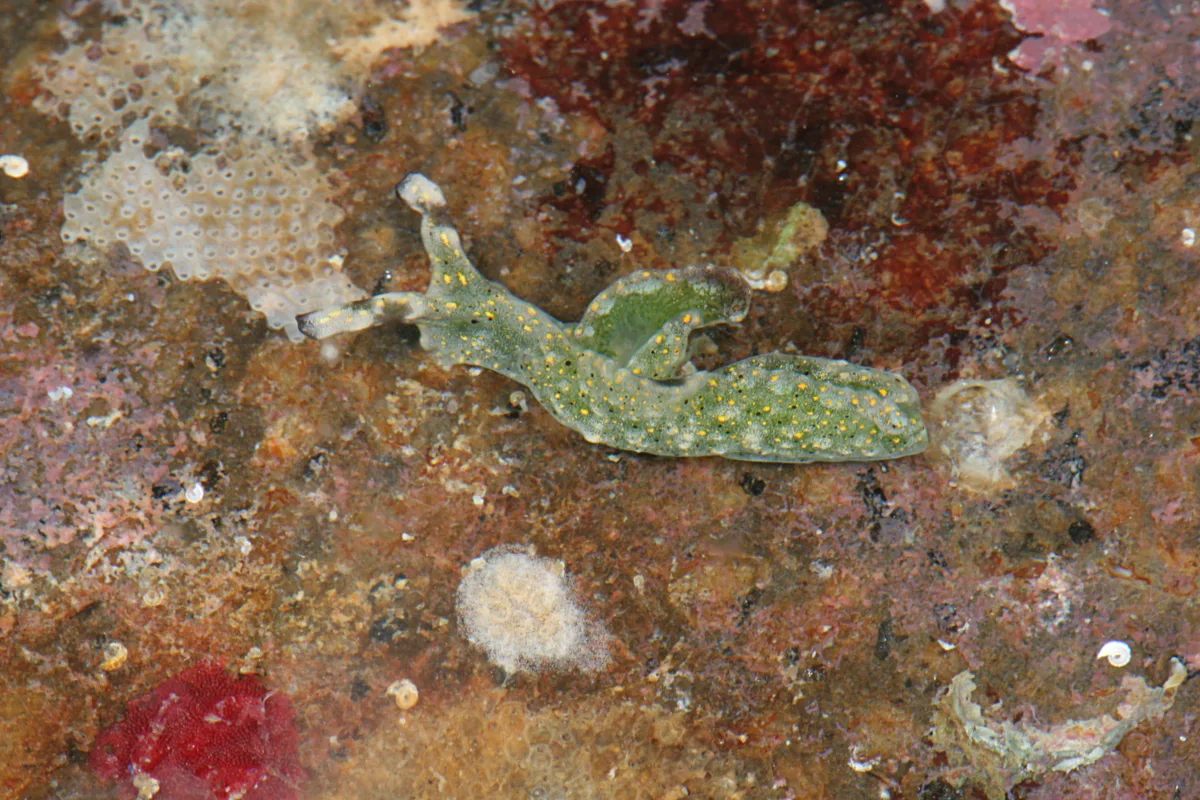
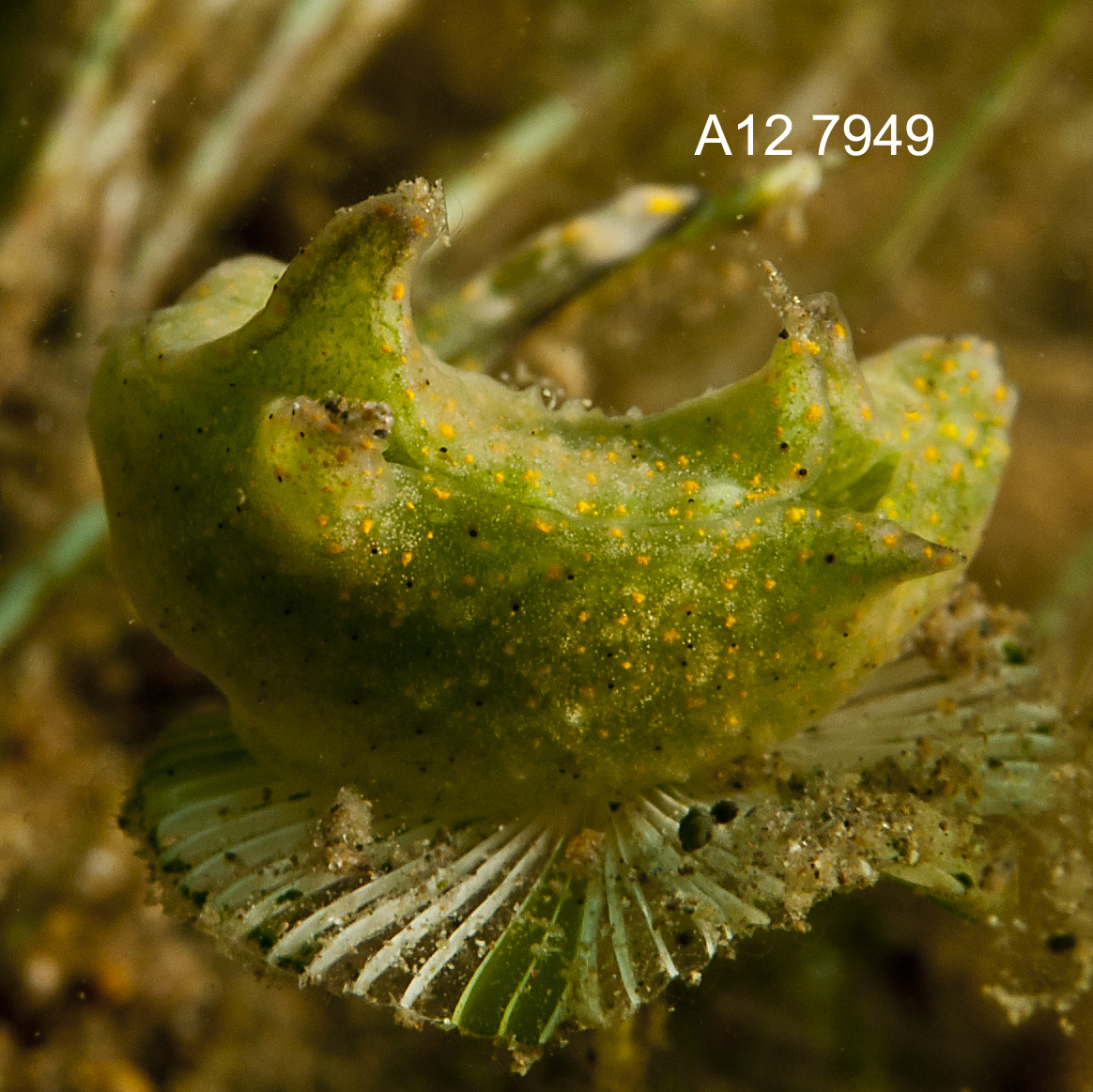
Six photographs of this species exist in the world's largest public record of wildlife sightings. Two of them are from Eilat, and both were taken by the photographer whose pictures fill the regional guide to this sea.
Heller and Thompson described it in 1983 from that single small slug and drew side flaps divided into lobes instead of running as a straight sheet, which is where the name comes from. The drawing looked so unlike an Elysia that later workers wondered whether the specimen had been damaged in collection. Living animals photographed at Eilat in 2005, at 28 m, showed the lobes were real.
The color is green with large purplish or brown blotches, the skin raised into tubercles tipped white or yellow, and the head and front lobes carrying maroon to brownish patches. The Eilat animals had blue on the tubercles and on the rhinophore tips. The regional guide photographs one from Abu Dabab at 15 mm, which is about as large as this species gets.
What it eats is not known. Sacoglossans pierce a single algal cell with a one-toothed radula and drain it, and many of them keep the chloroplasts alive in their own tissue afterwards, but nobody has watched this one feed and nobody has measured whether its stolen plastids do any work. Guesses in the literature run to fine green weeds like Microdictyon and Boodlea, and the few animals found were near seagrass.
For twenty years the species was called a 🌊 Red Sea endemic, and that has quietly stopped being true. Terrence Gosliner, who has described more sea slugs than anyone alive, logged one at Batangas in the 🇵🇭 Philippines, two more have been photographed at the same site, and one has turned up in Milne Bay in Papua 🇵🇬 New Guinea. Six records for the whole world, split between two oceans, is not a range. It is the amount somebody has looked.
Which is the useful part. A photograph of this animal with a date, a depth and the weed it was sitting on measurably adds to what is known about the species worldwide. That cannot be said of many animals in this catalogue.
- side flaps divided into distinct lobes, not a straight sheet
- green with large purple-brown blotches, or plain green in the Red Sea animals
- tubercles tipped blue, white or yellow, and dark rhinophore tips
- sits on fine net-like green weed, not on coral
- up to 1.5 cm