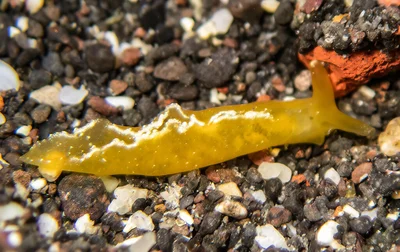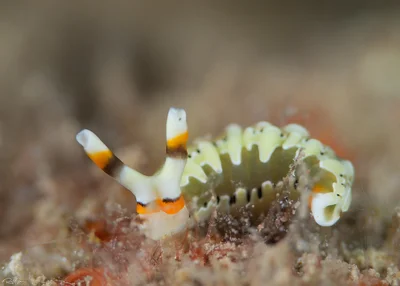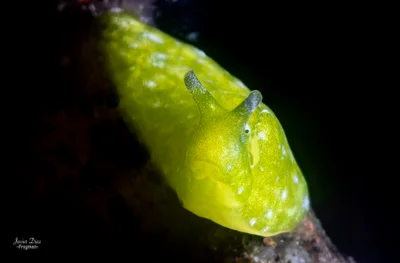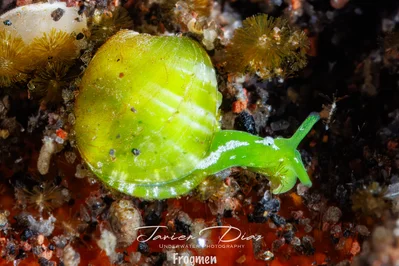
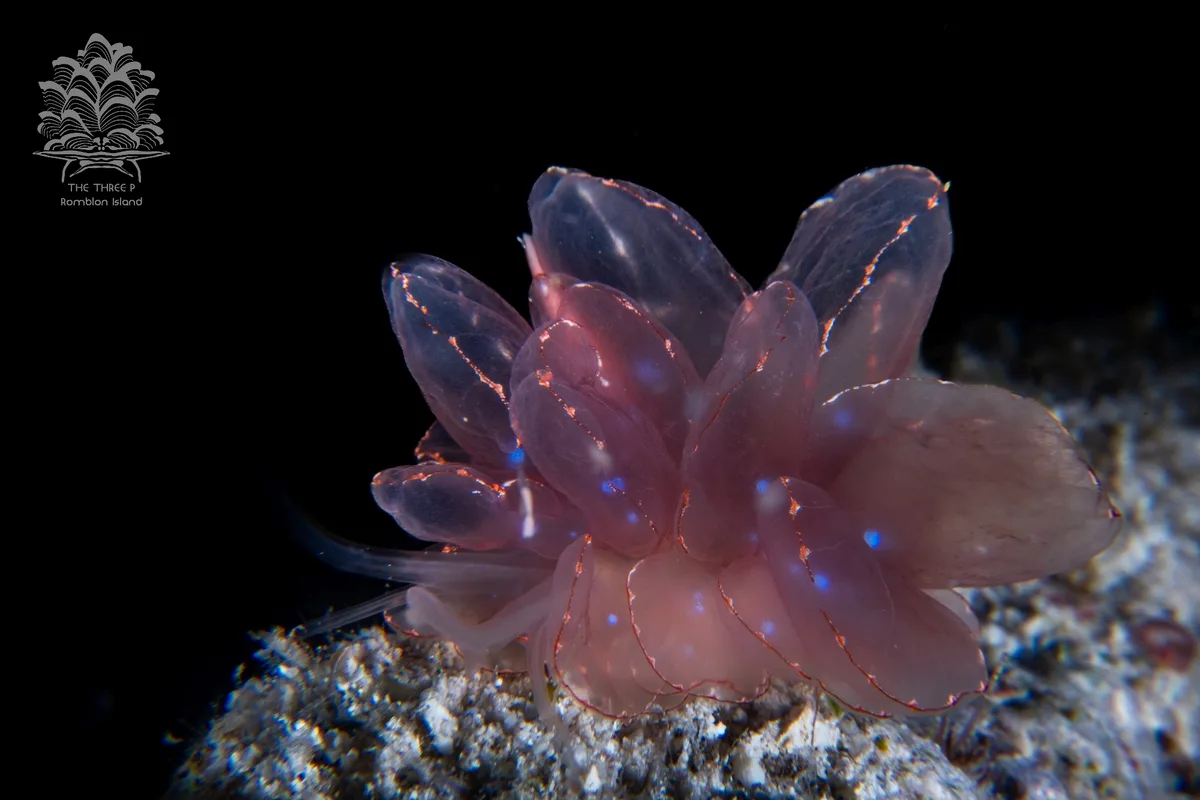
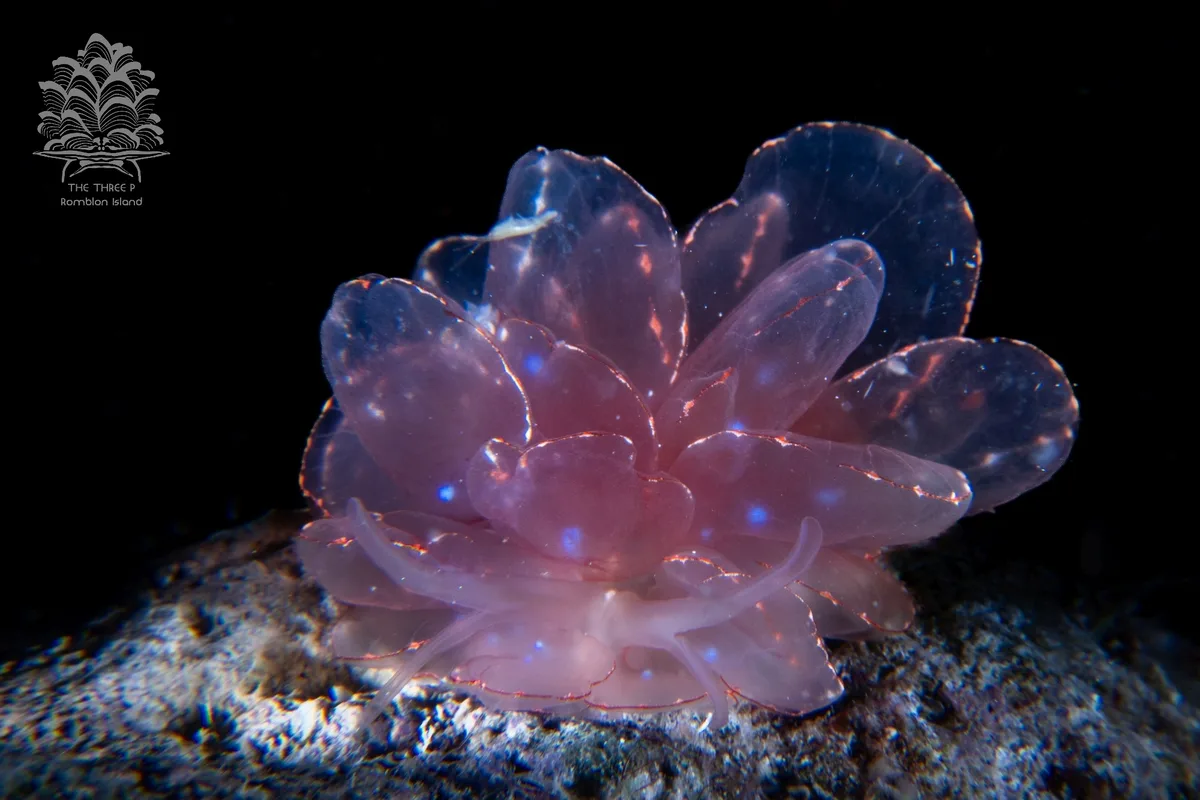
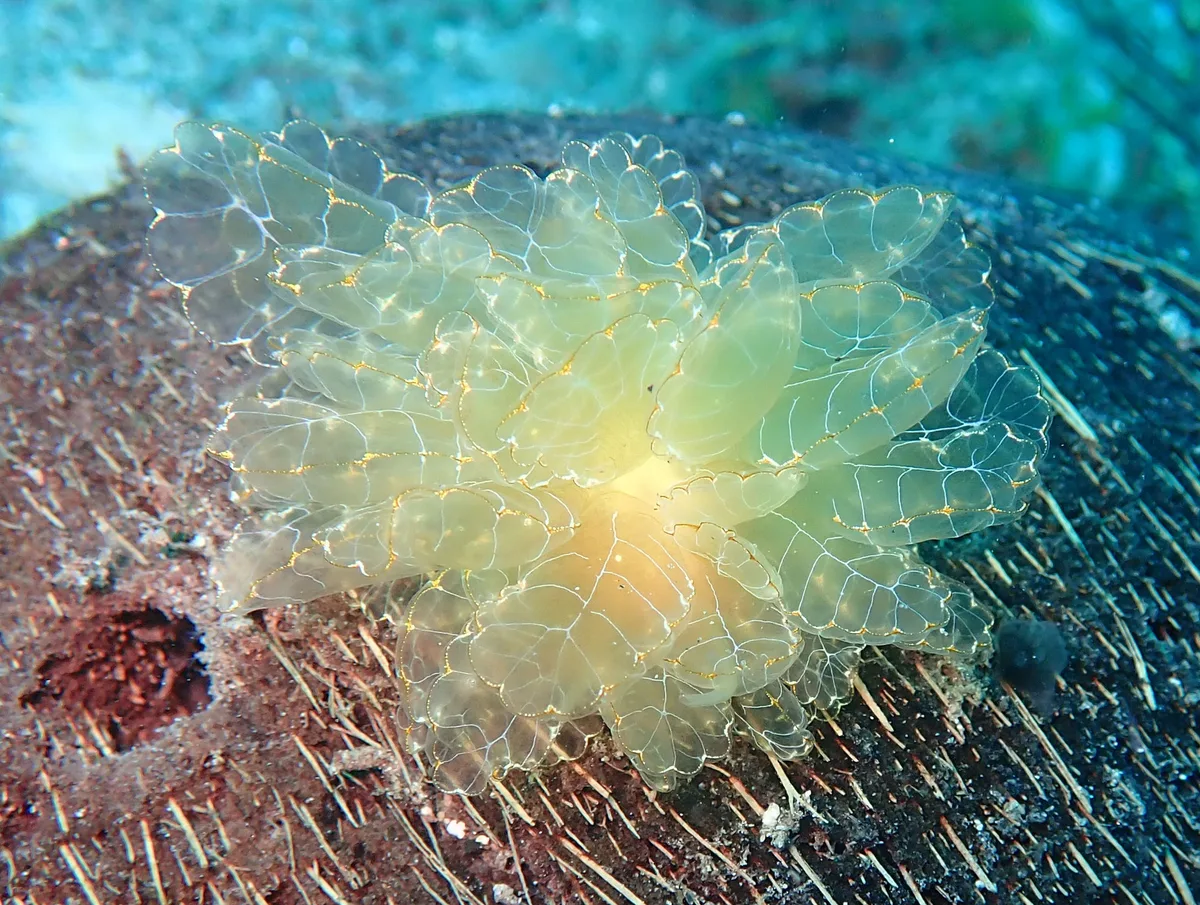
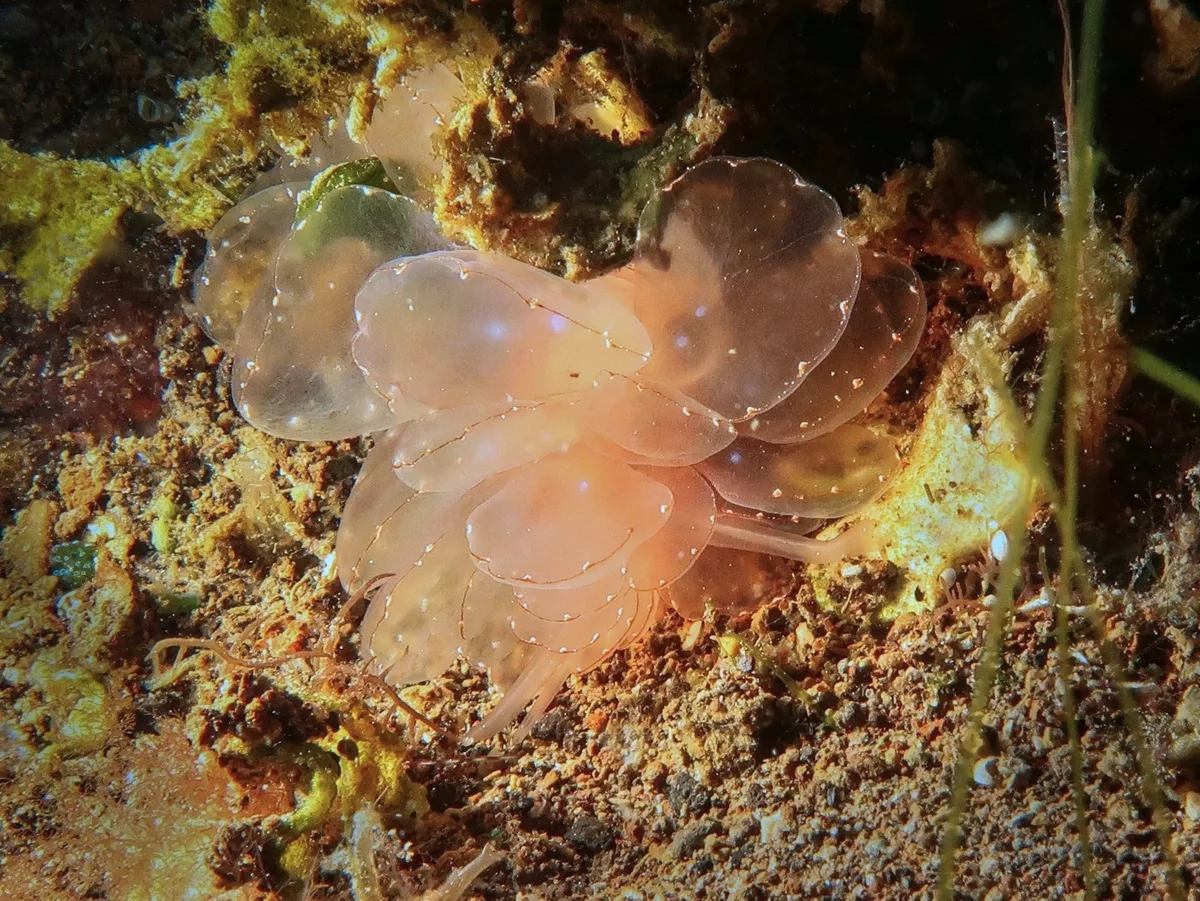
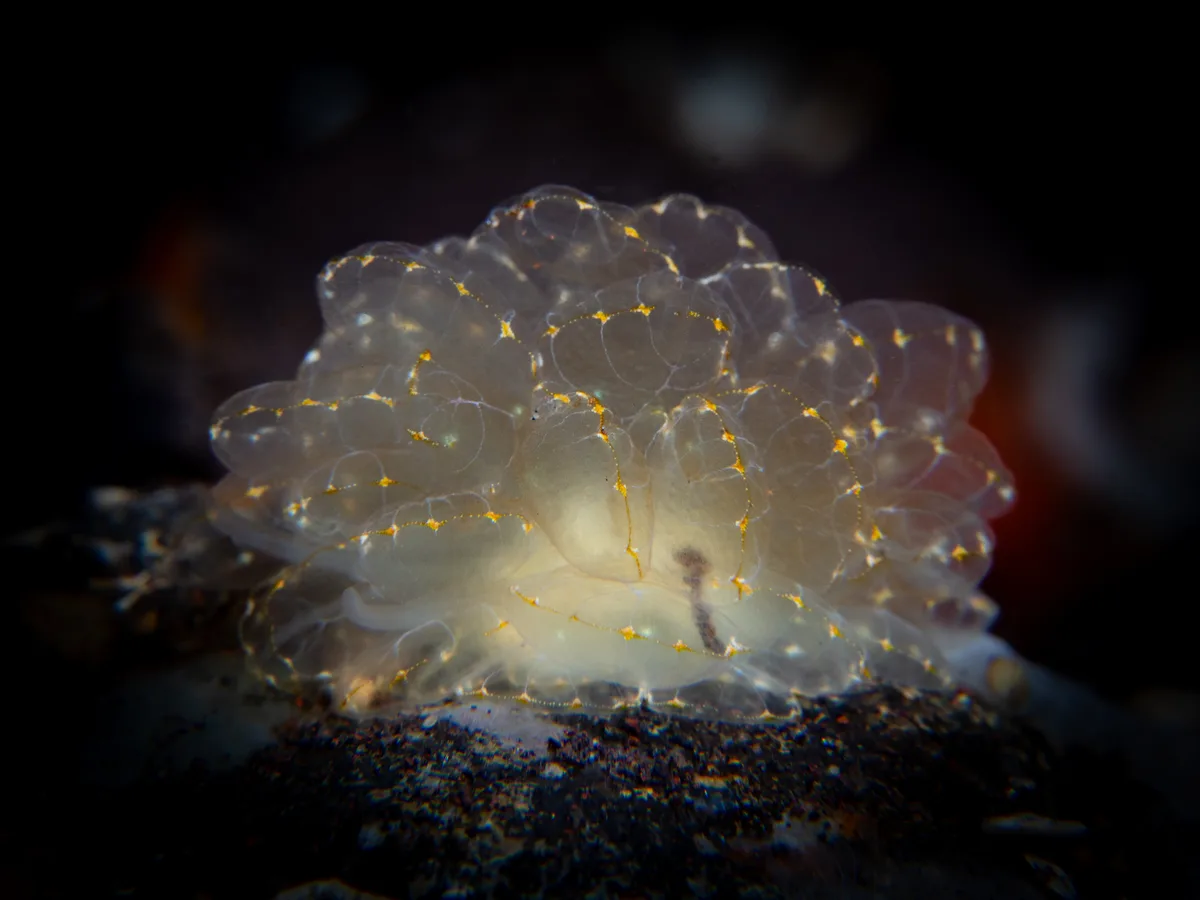
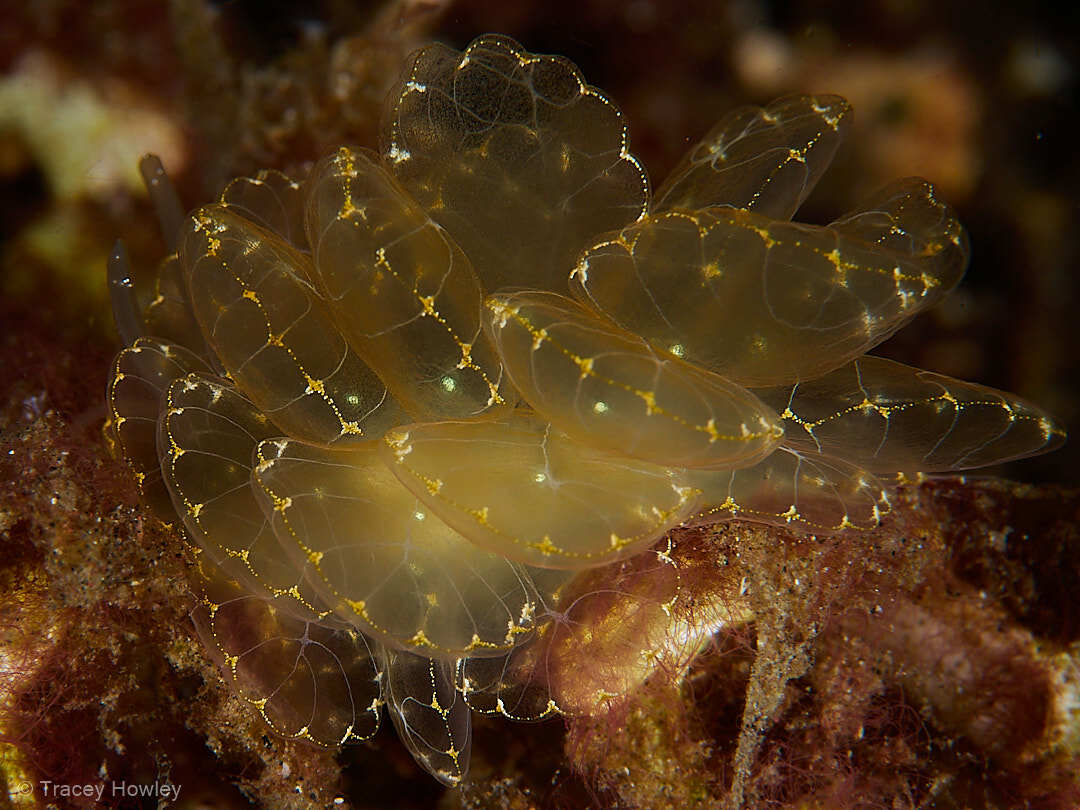
Every slug on this page runs on stolen chloroplasts except this one.
When researchers measured photosynthesis across the sacoglossans, species by species, Cyerce came out at effectively nothing. The group's famous trick, piercing an algal cell and keeping the chloroplasts alive afterwards, stops at this genus. It drains cells like the rest of them and then digests what it takes. Whatever the leaves on its back are for, it is not solar power.
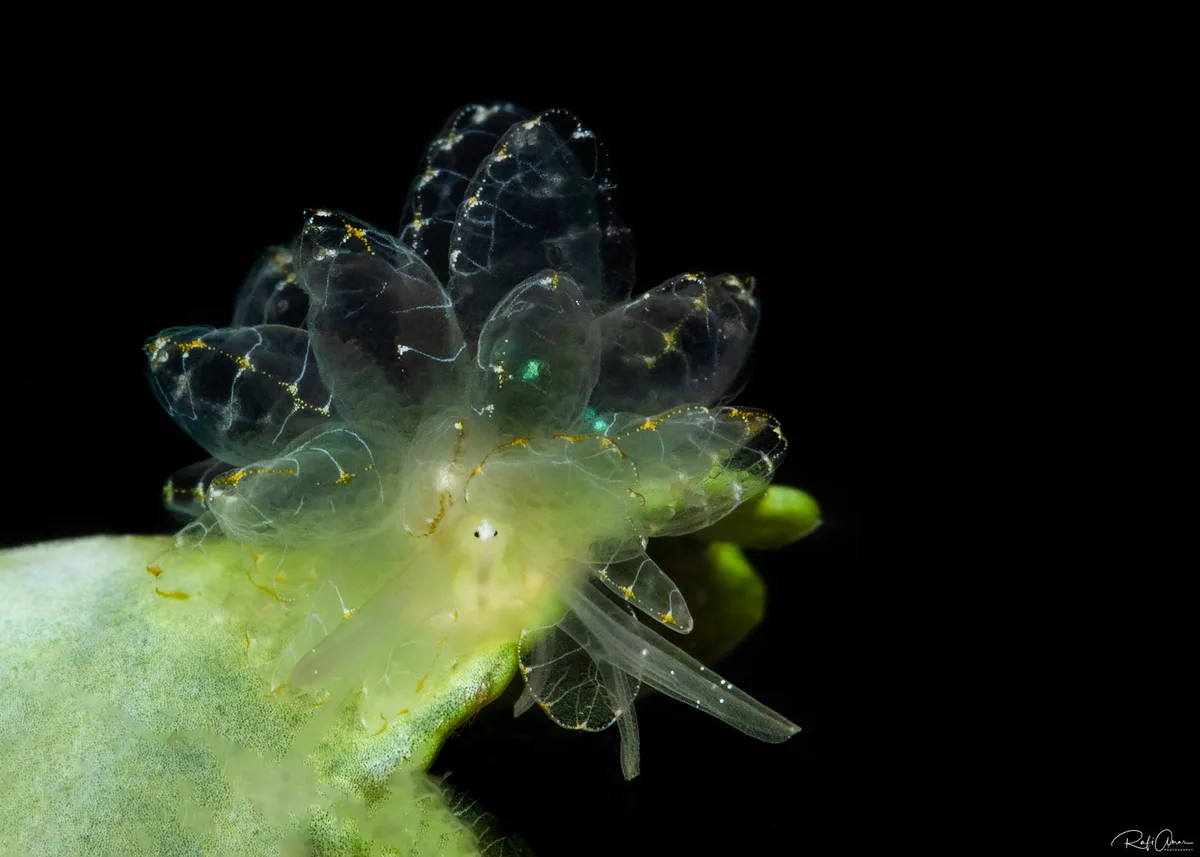
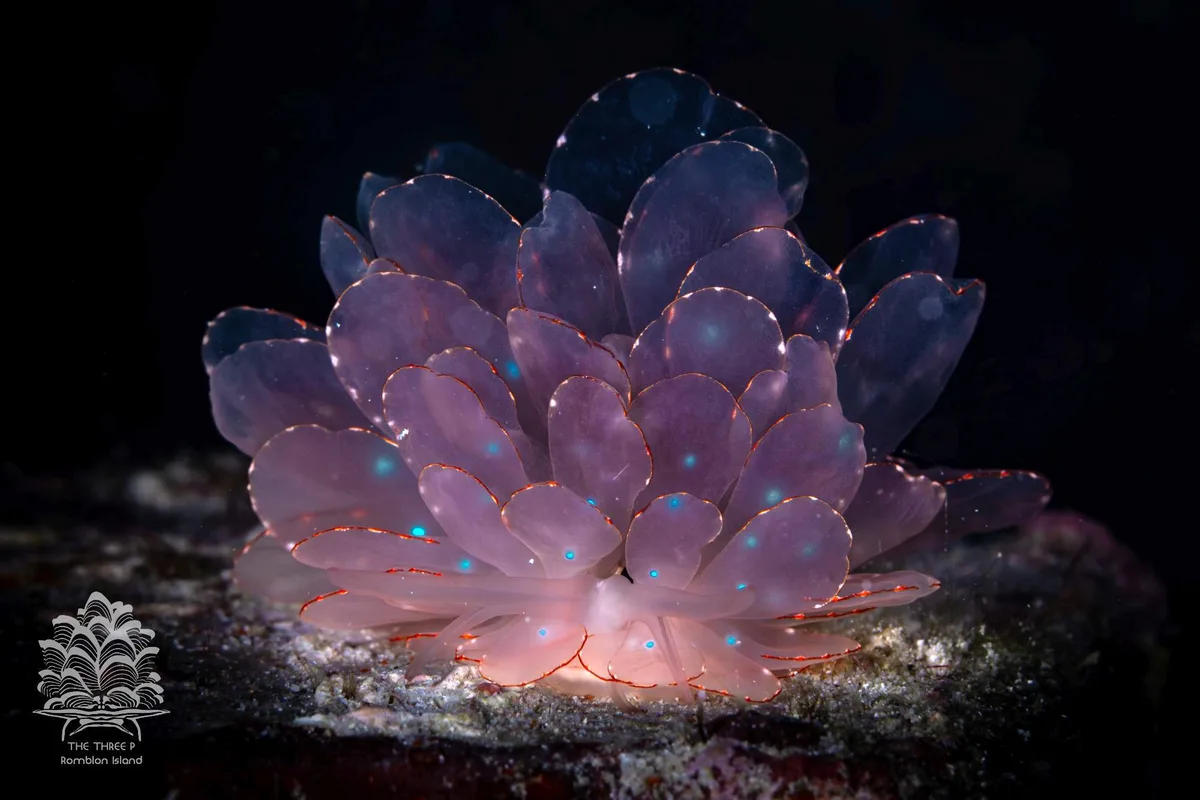
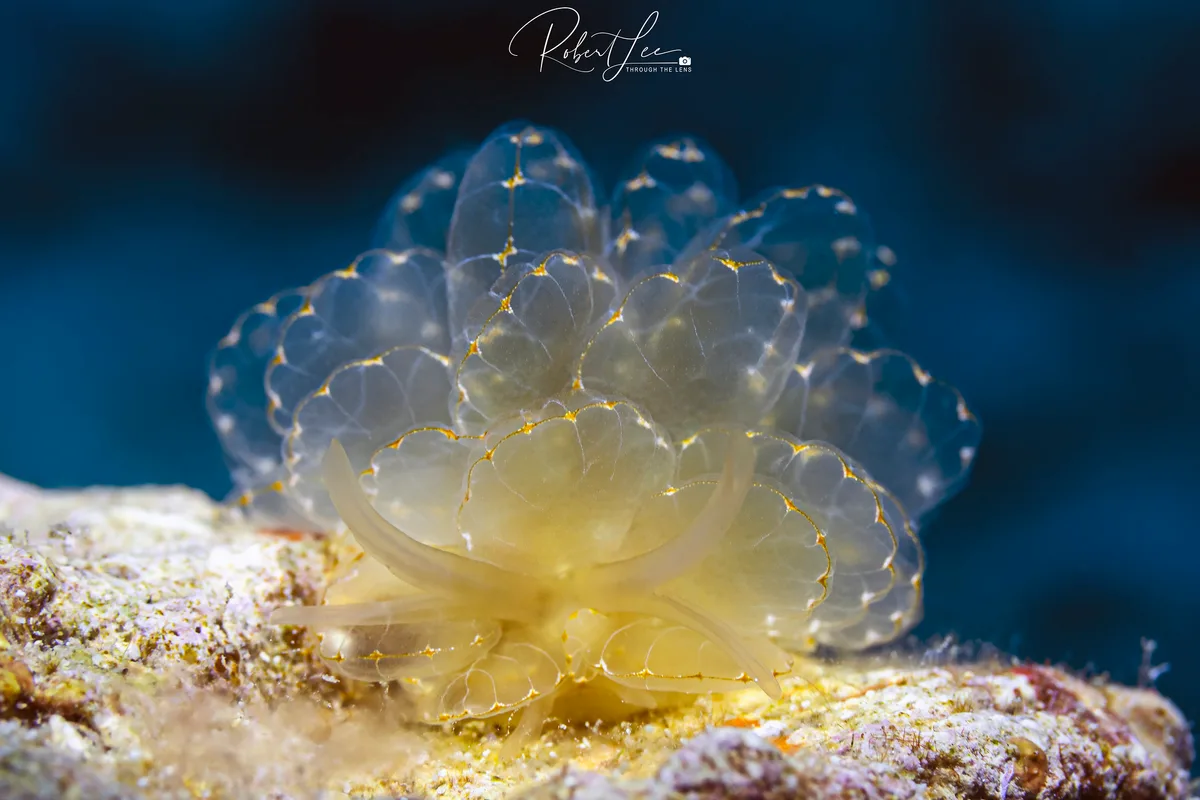
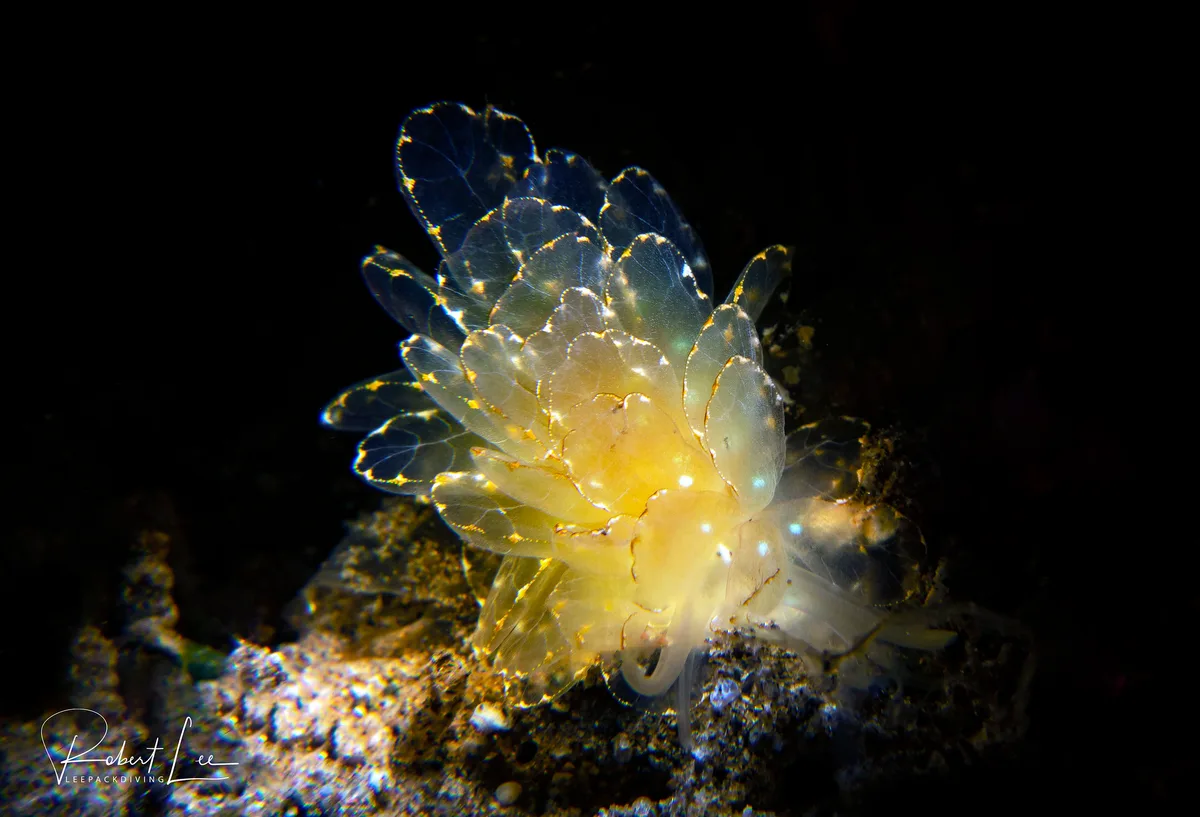
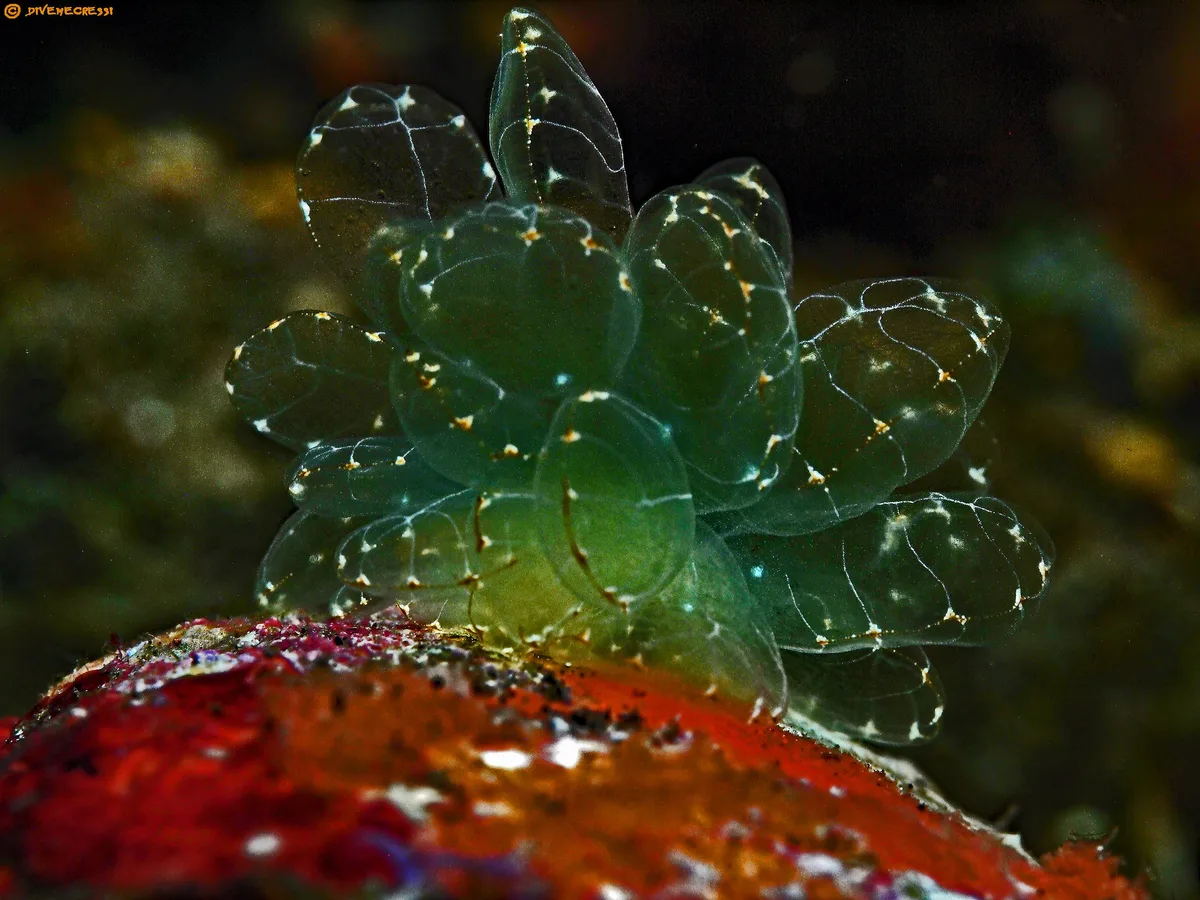
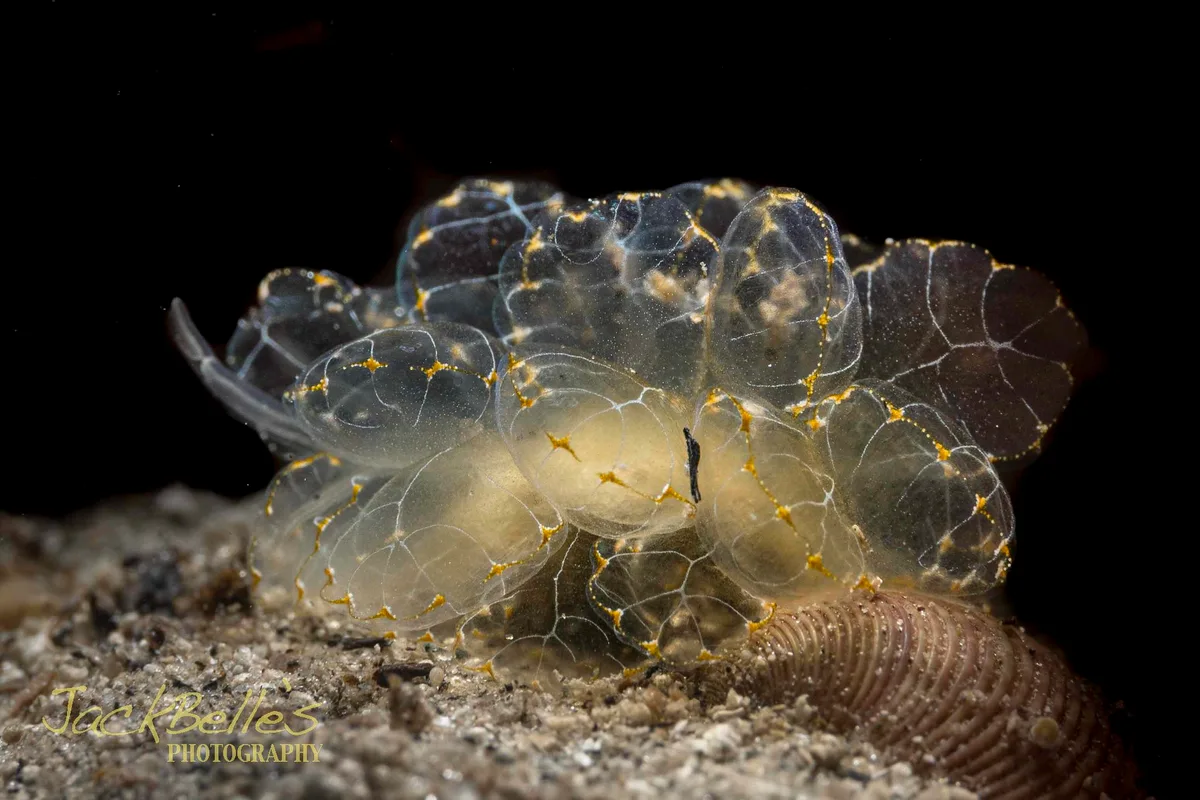
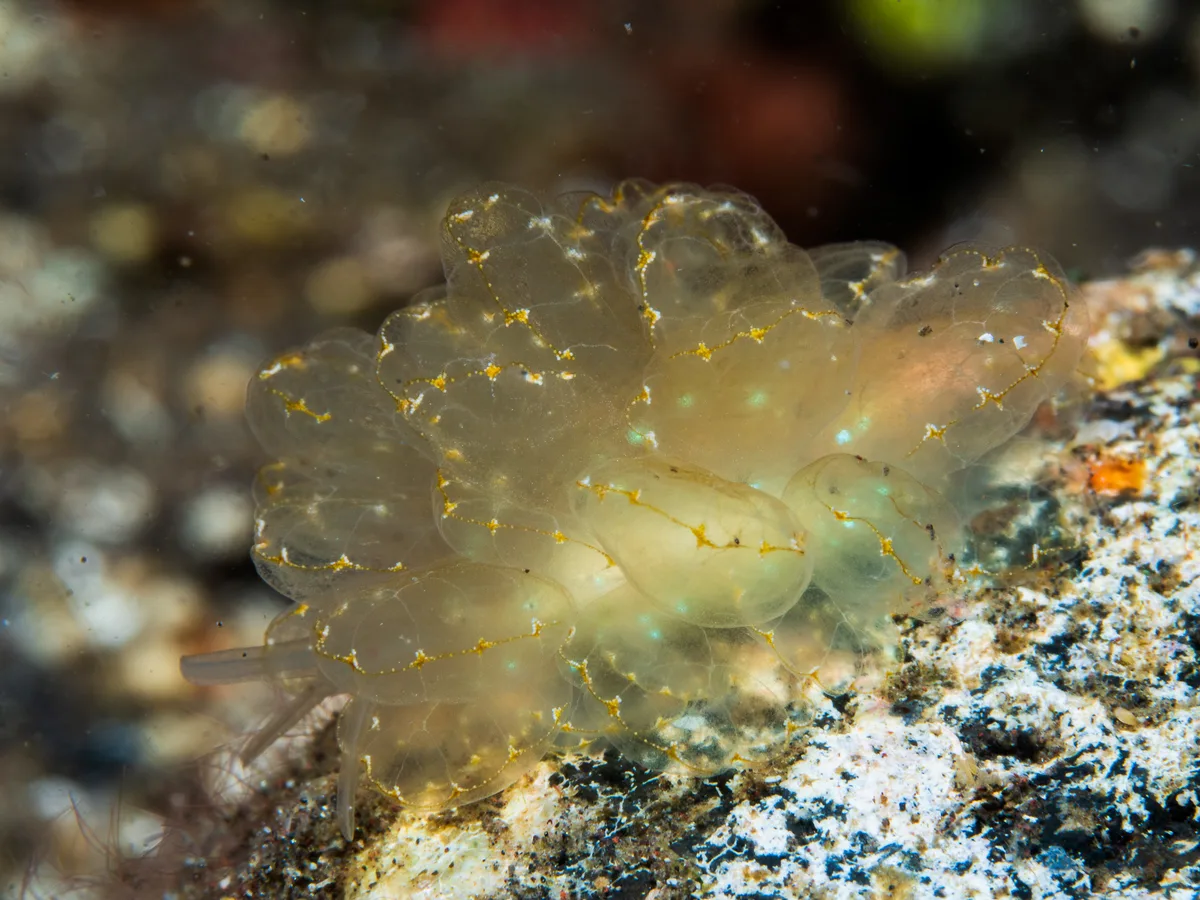
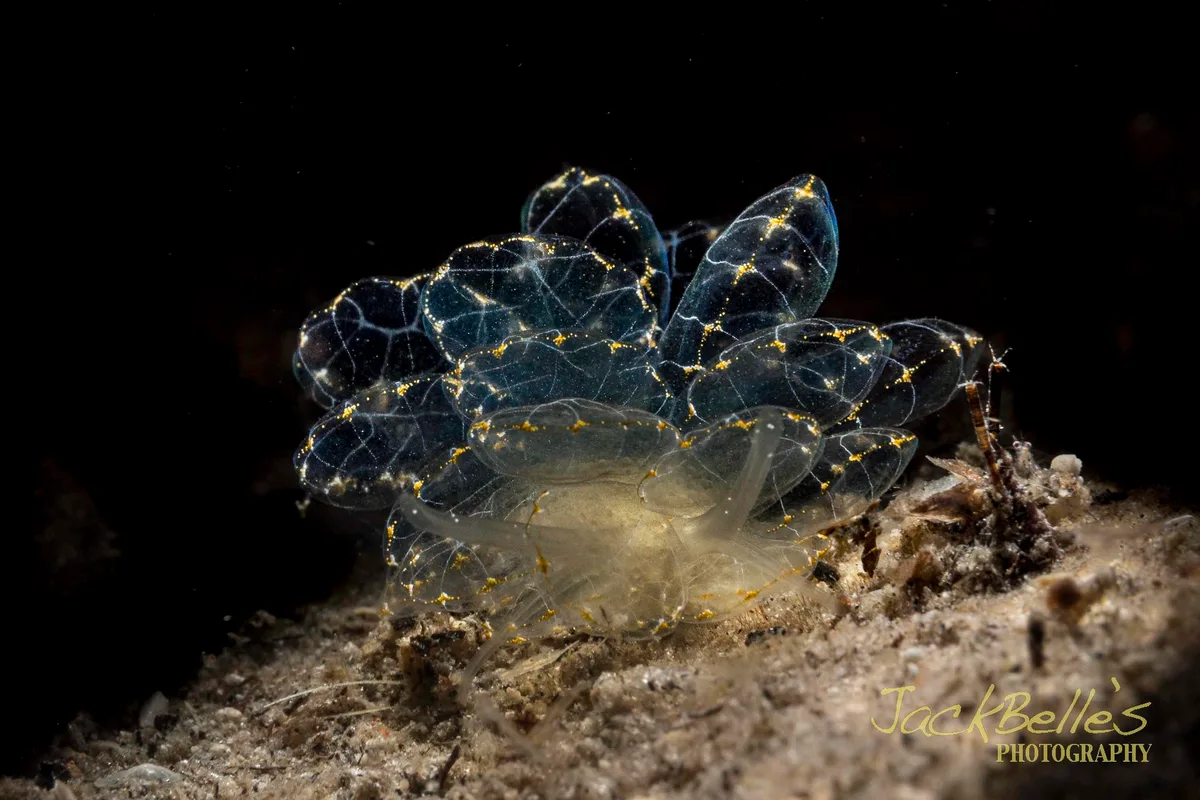
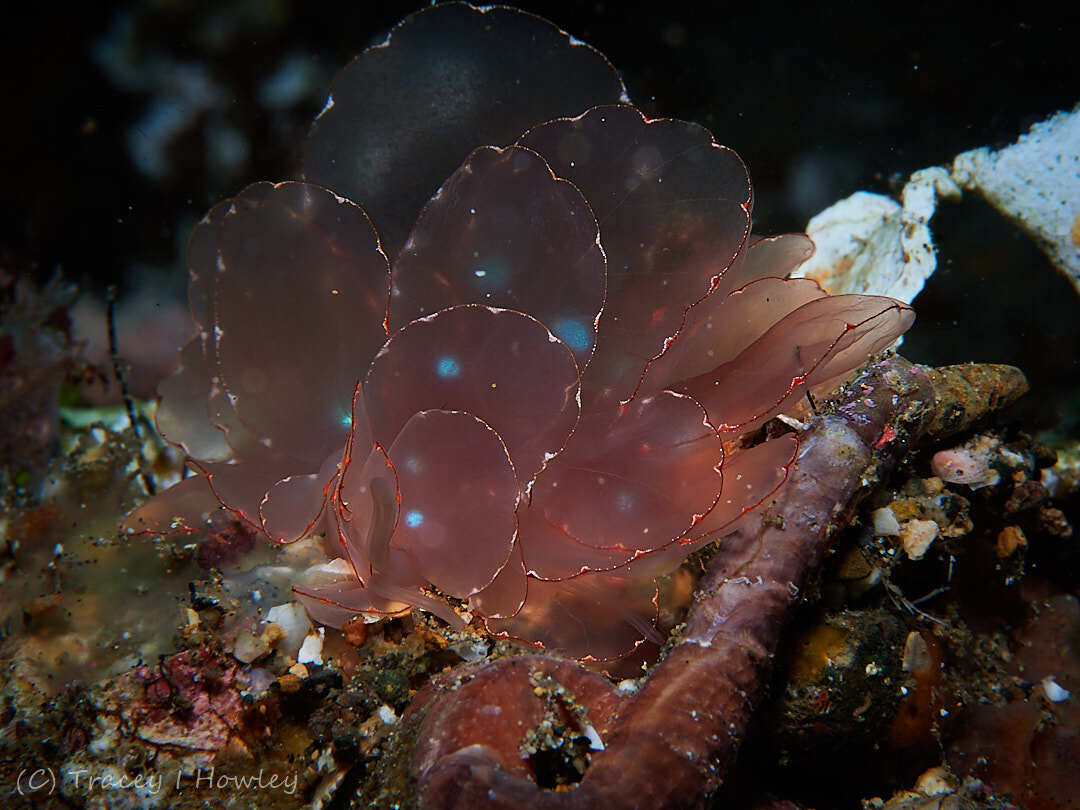
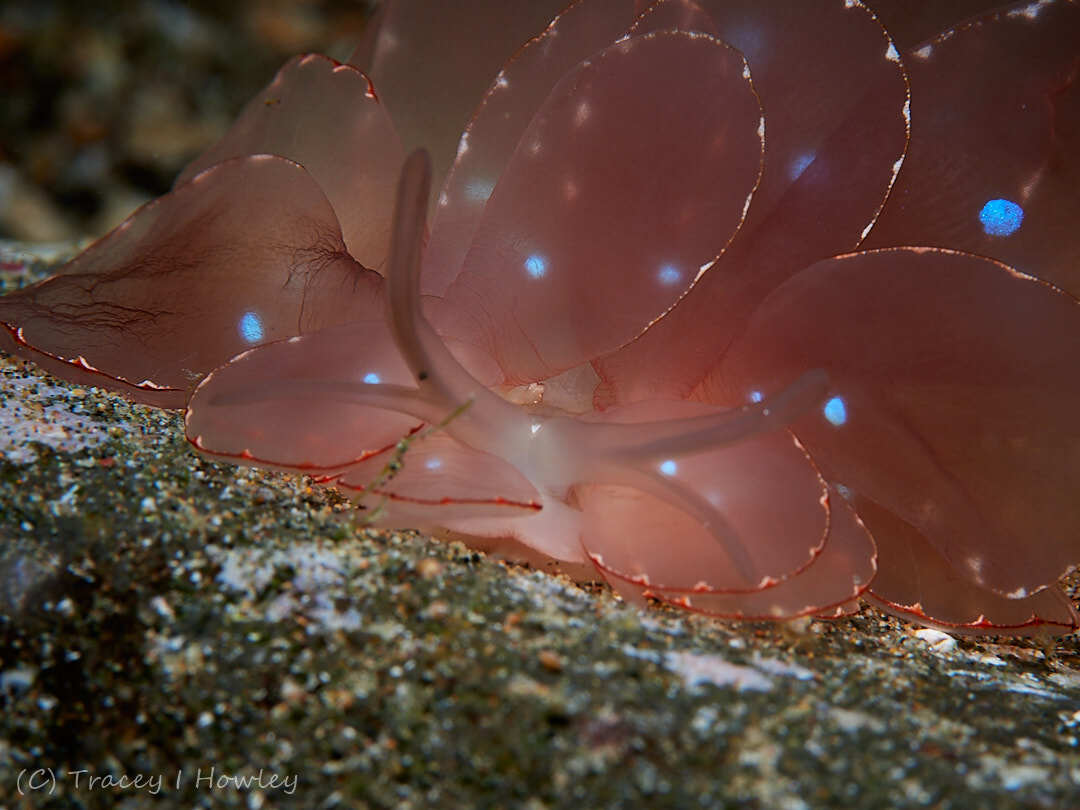
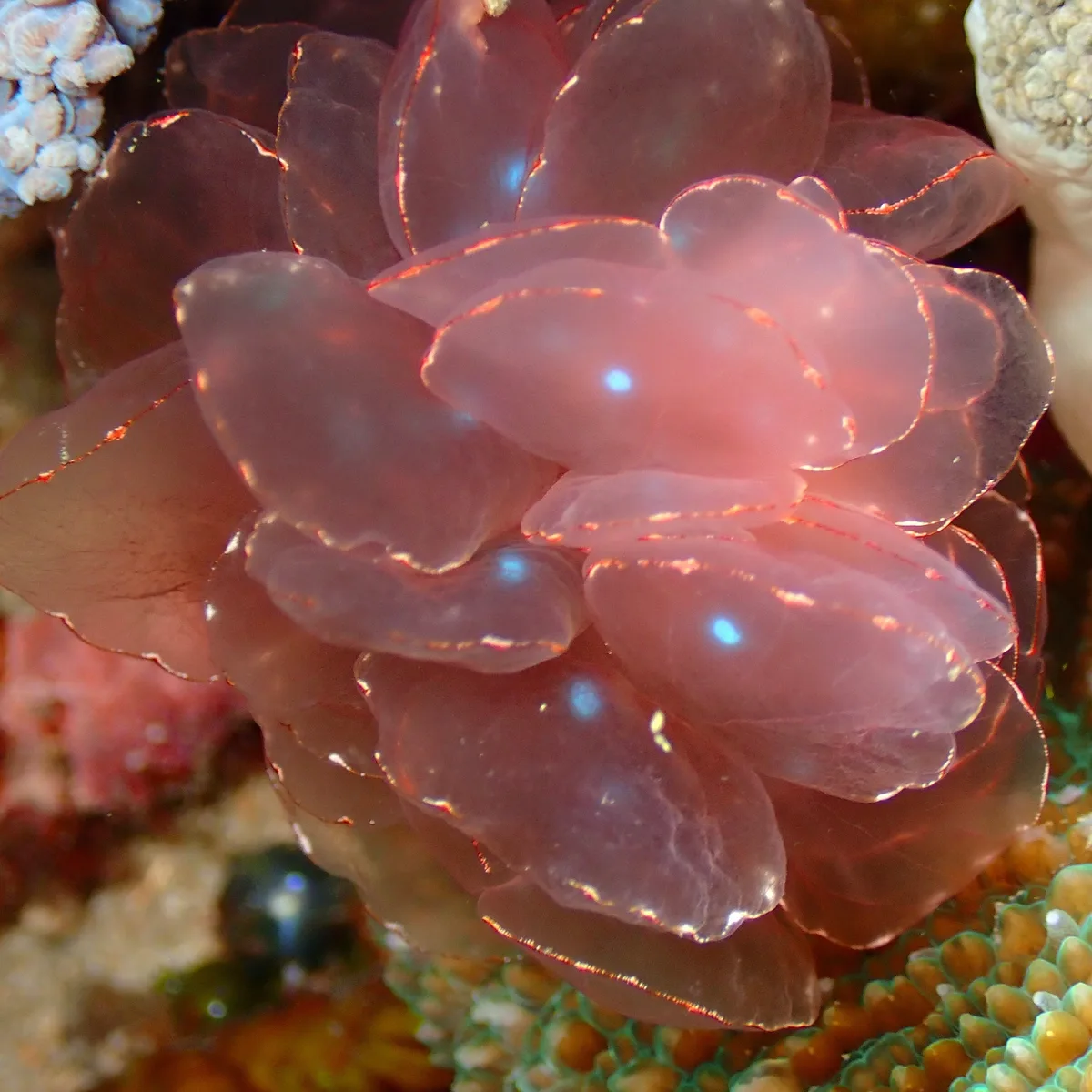
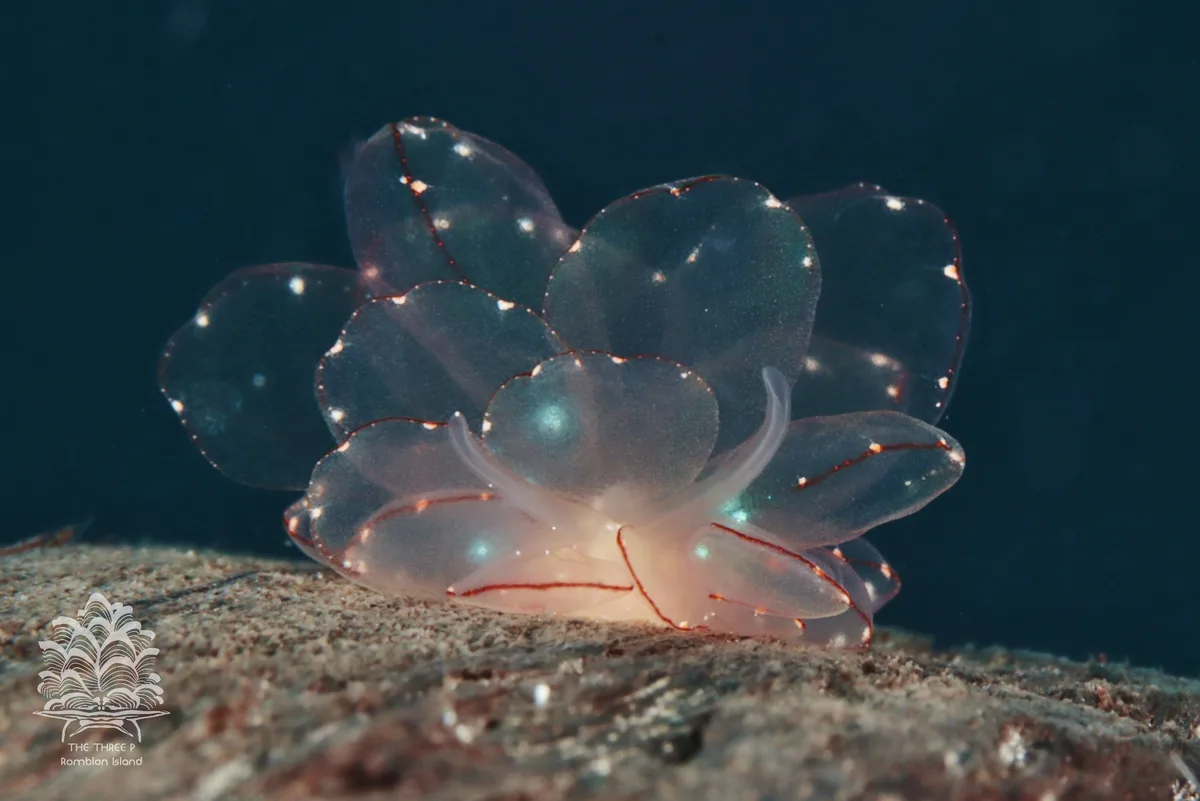
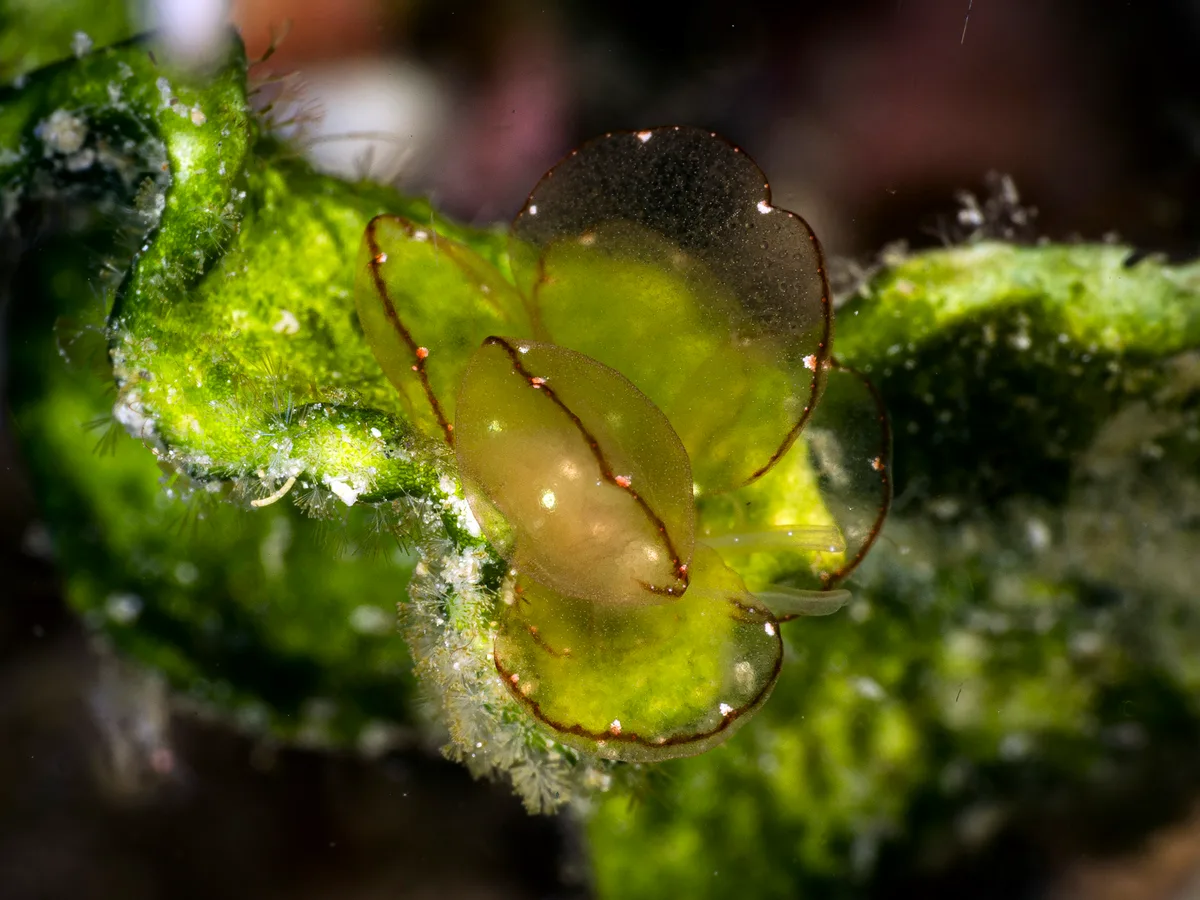
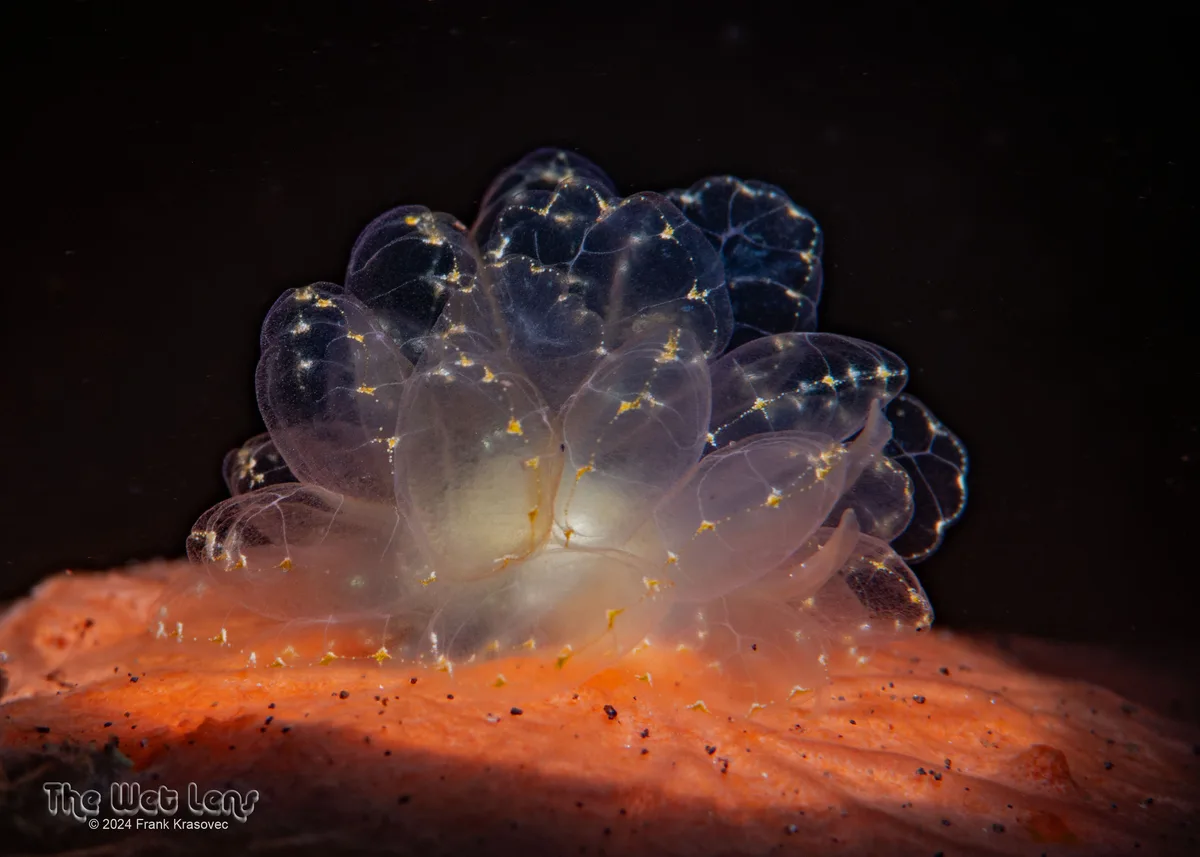
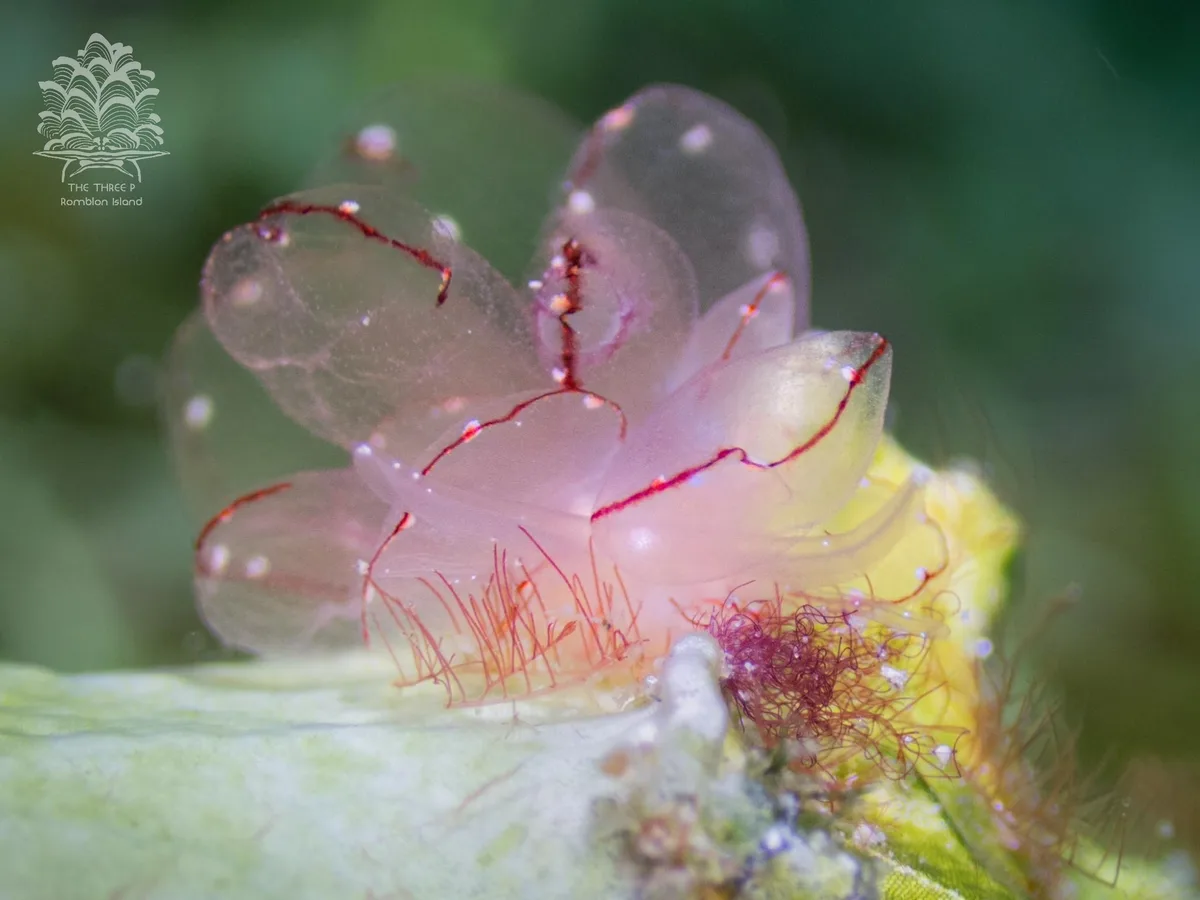
They are for defense. Instead of two side flaps this animal carries a crowd of flat leaf-shaped cerata over the whole body, and they come away at a touch. A predator that grabs one is left holding a twitching leaf while the slug crawls off, and the leaves grow back. In its relative Cyerce nigricans, which has been studied properly, small glands around the ceratal margin produce compounds called cyercenes that make the mucus foul to fish, and shed cerata are replaced in eight to ten days.
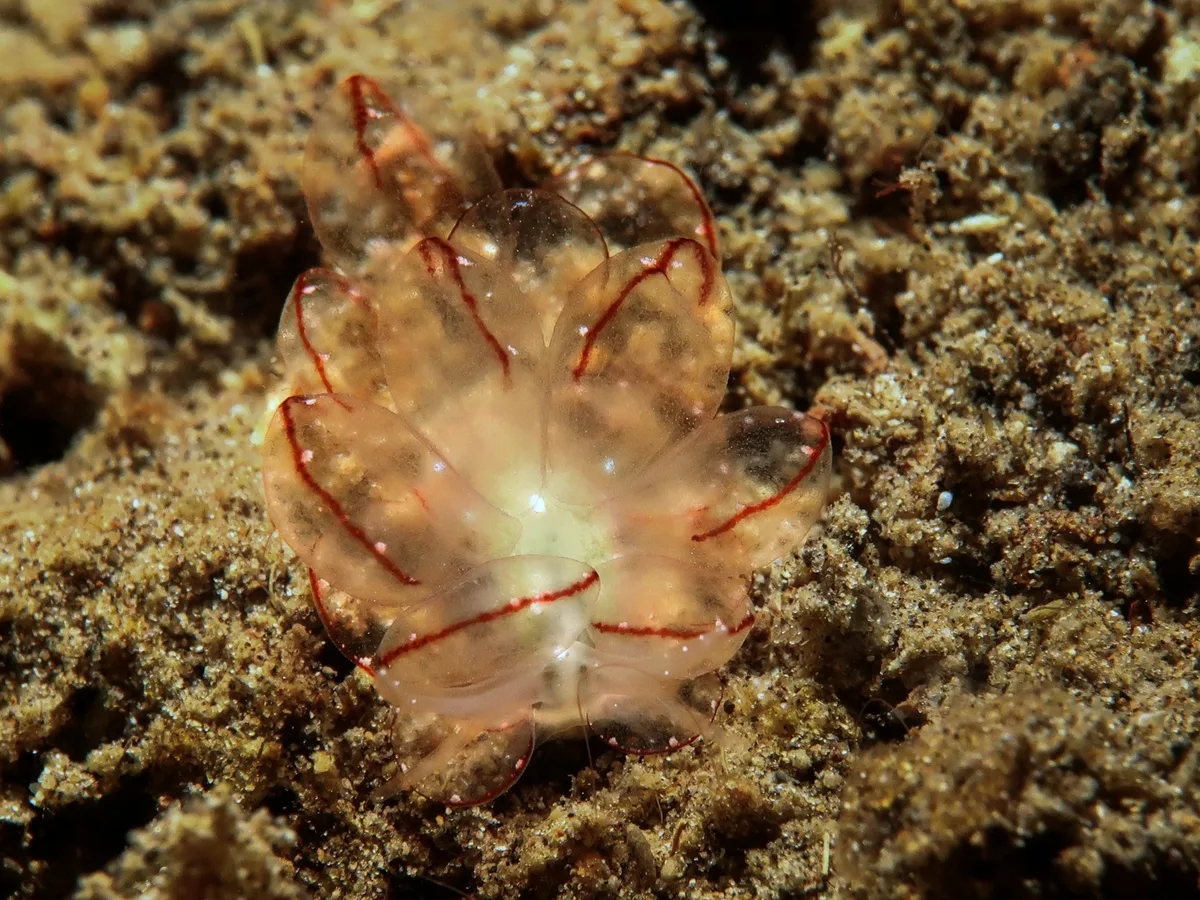
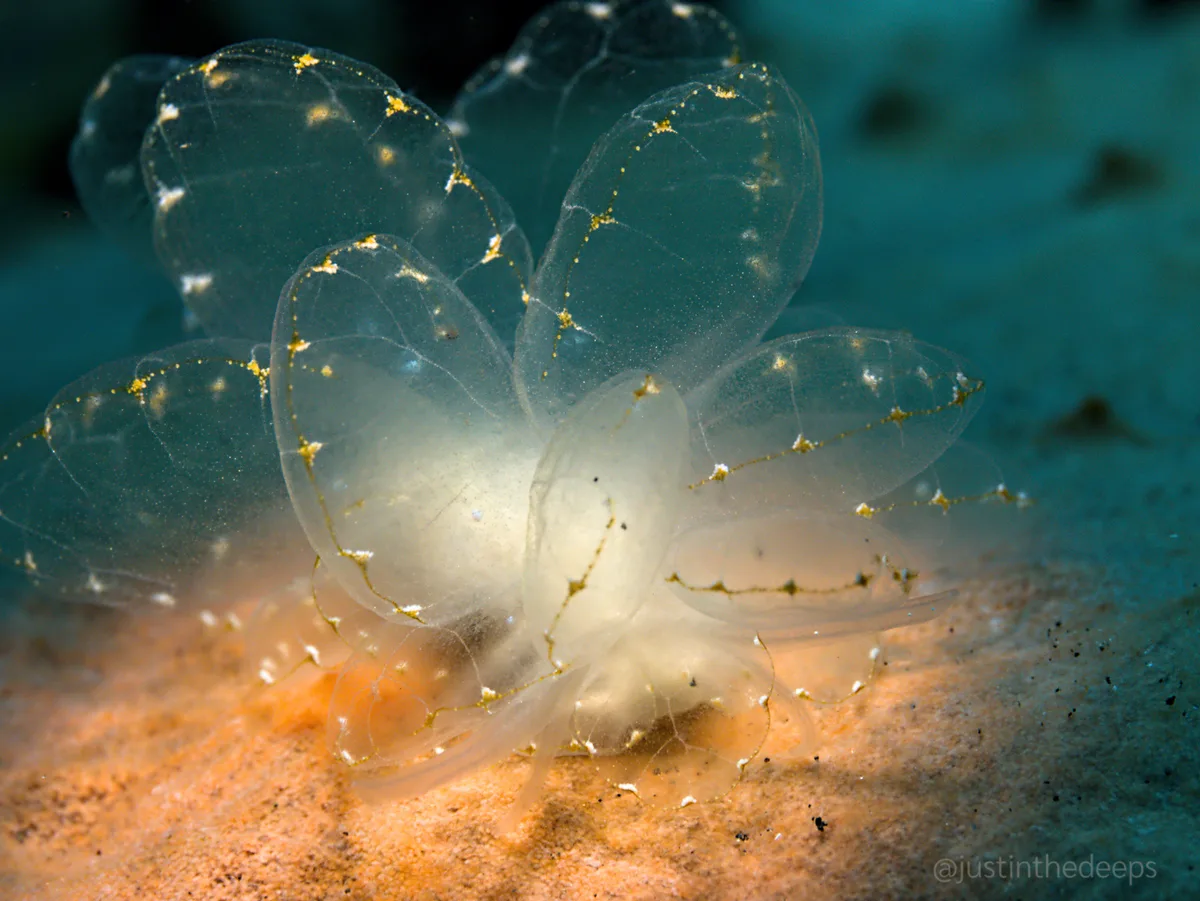
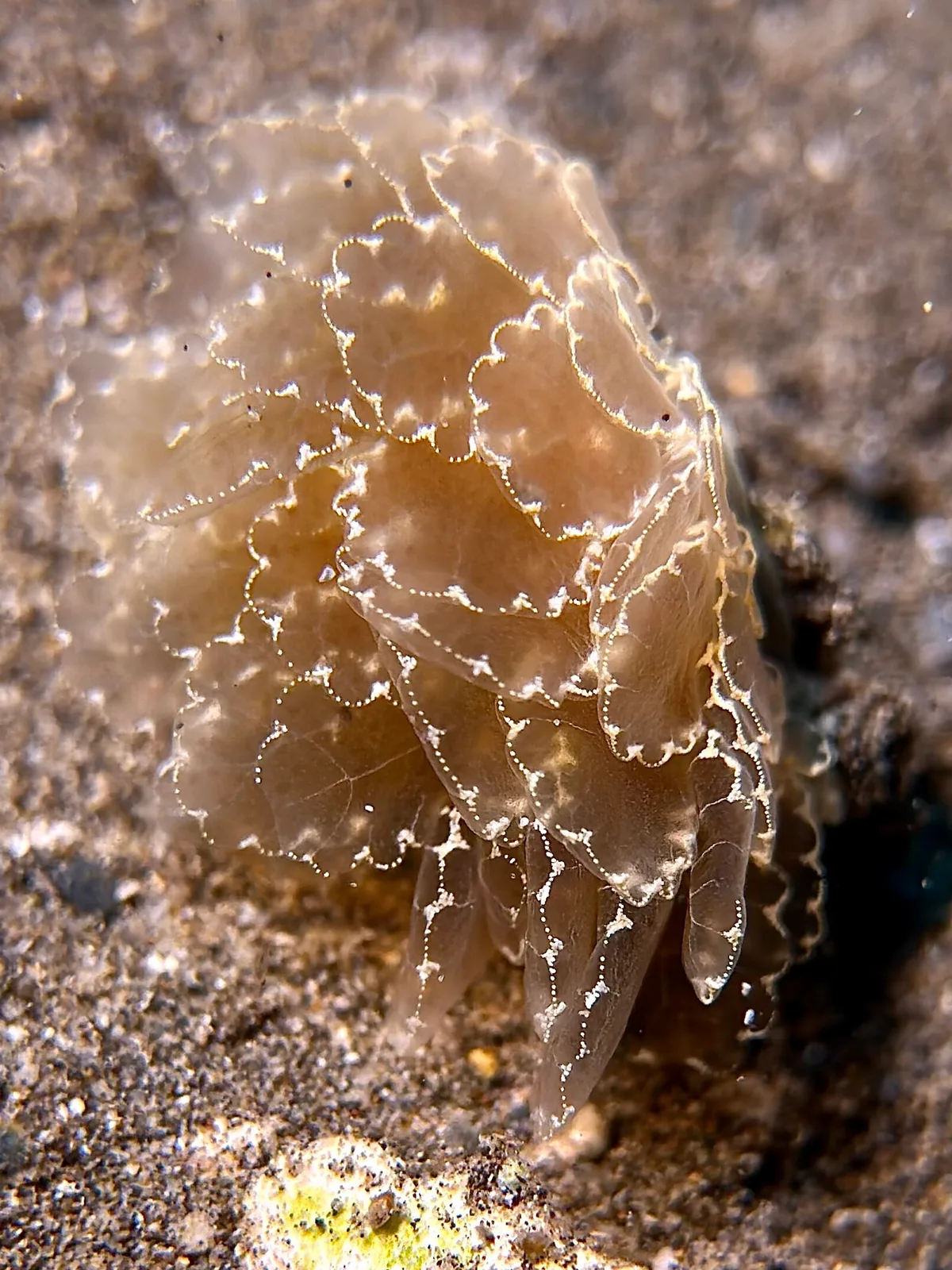
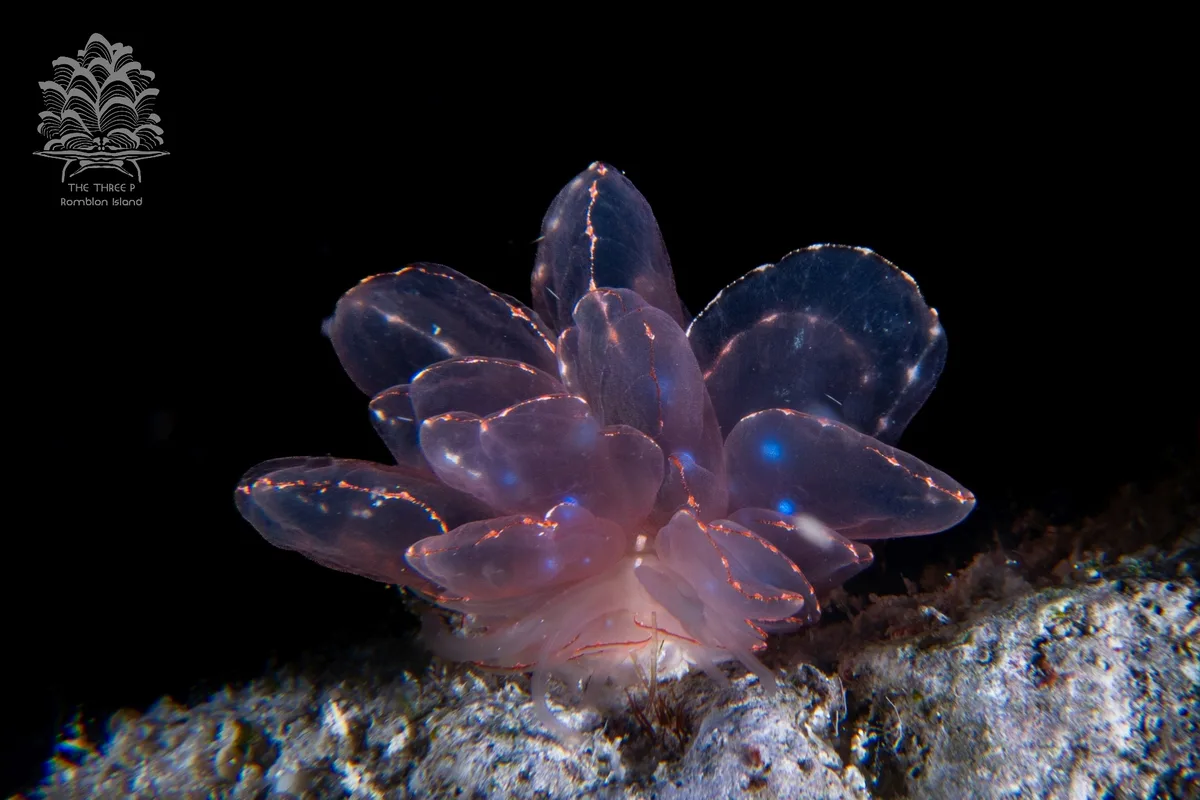
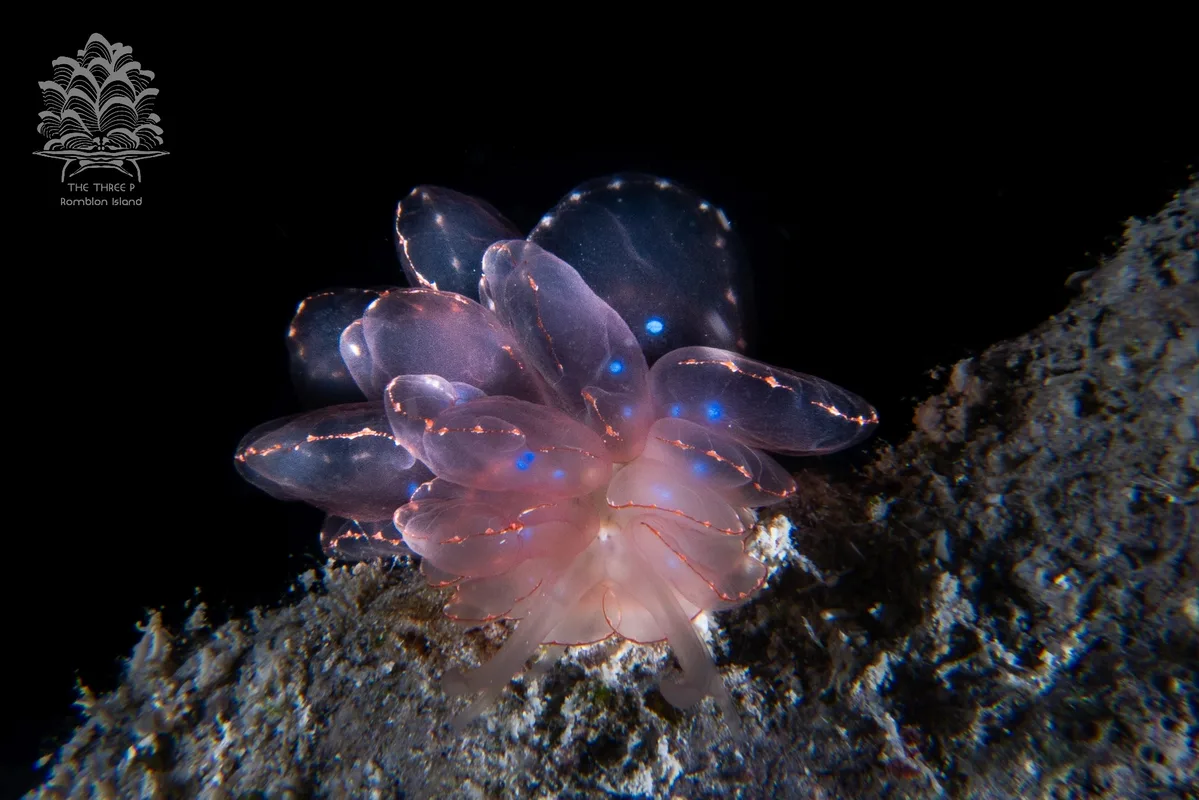
The animal is worth the look regardless. The cerata are translucent, crossed by a network of radiating white lines, often with an iridescent blue-green spot near the base of each one, and the whole slug can be nearly colorless or dark reddish-brown depending on where it has been feeding. At up to 5 cm it reads more like a bunch of petals than like a mollusk.
It is a night animal of sheltered rubble and Halimeda beds, down to about 20 m, and it is genuinely rare here. Of the 154 records of the species in the public observation databases, one is from this sea and the rest are scattered across the Indo-Pacific. A photograph of an undamaged animal is worth taking carefully, because the leaves start coming off the moment you crowd it.
- back covered in flat leaf-shaped cerata instead of side flaps
- cerata translucent with a network of radiating white bands
- often an iridescent blue-green spot at the base of each ceras
- cerata come away at a touch
- up to 5 cm