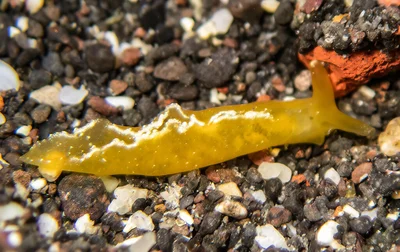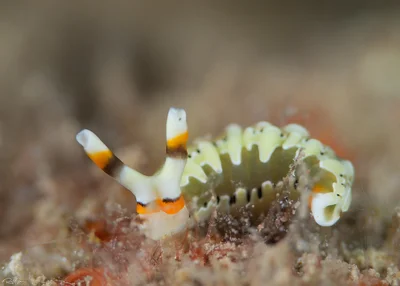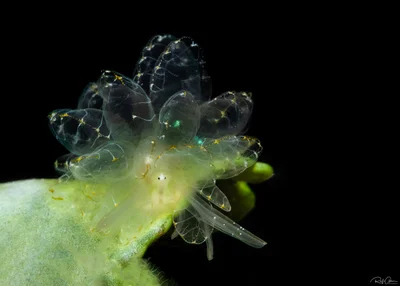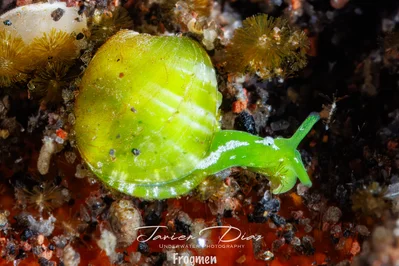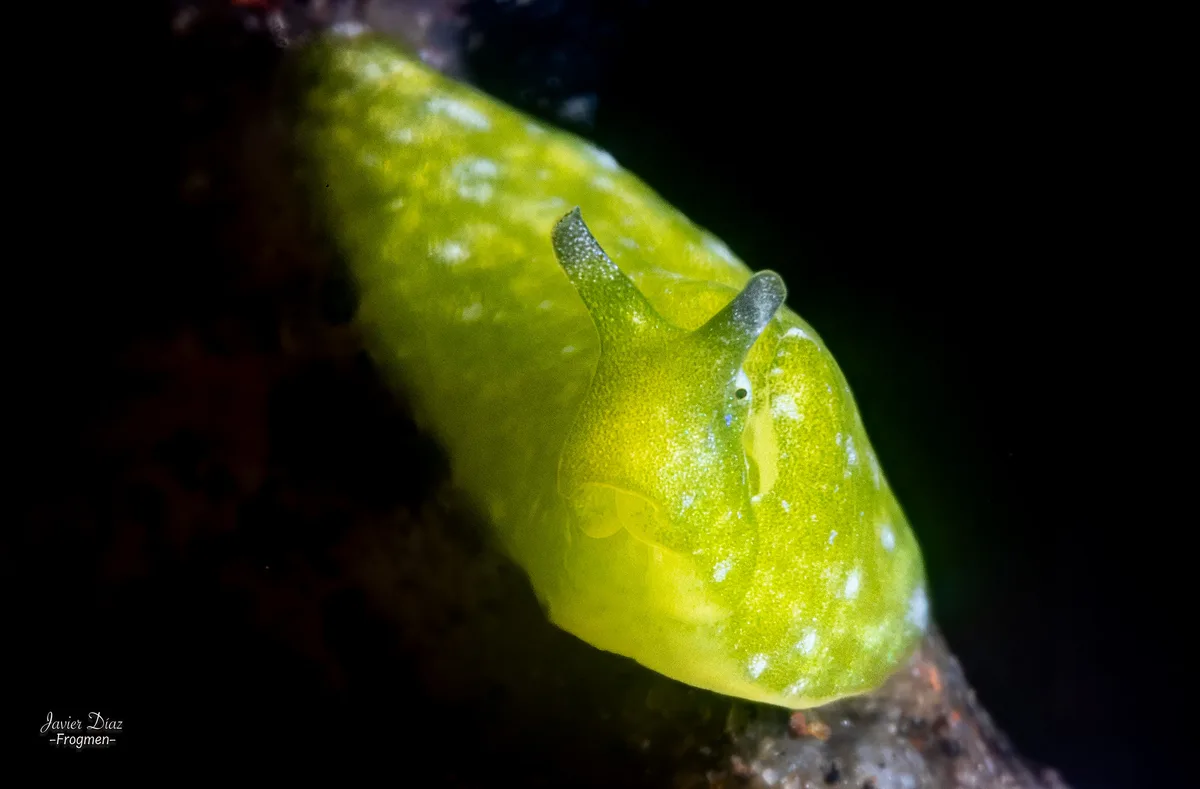
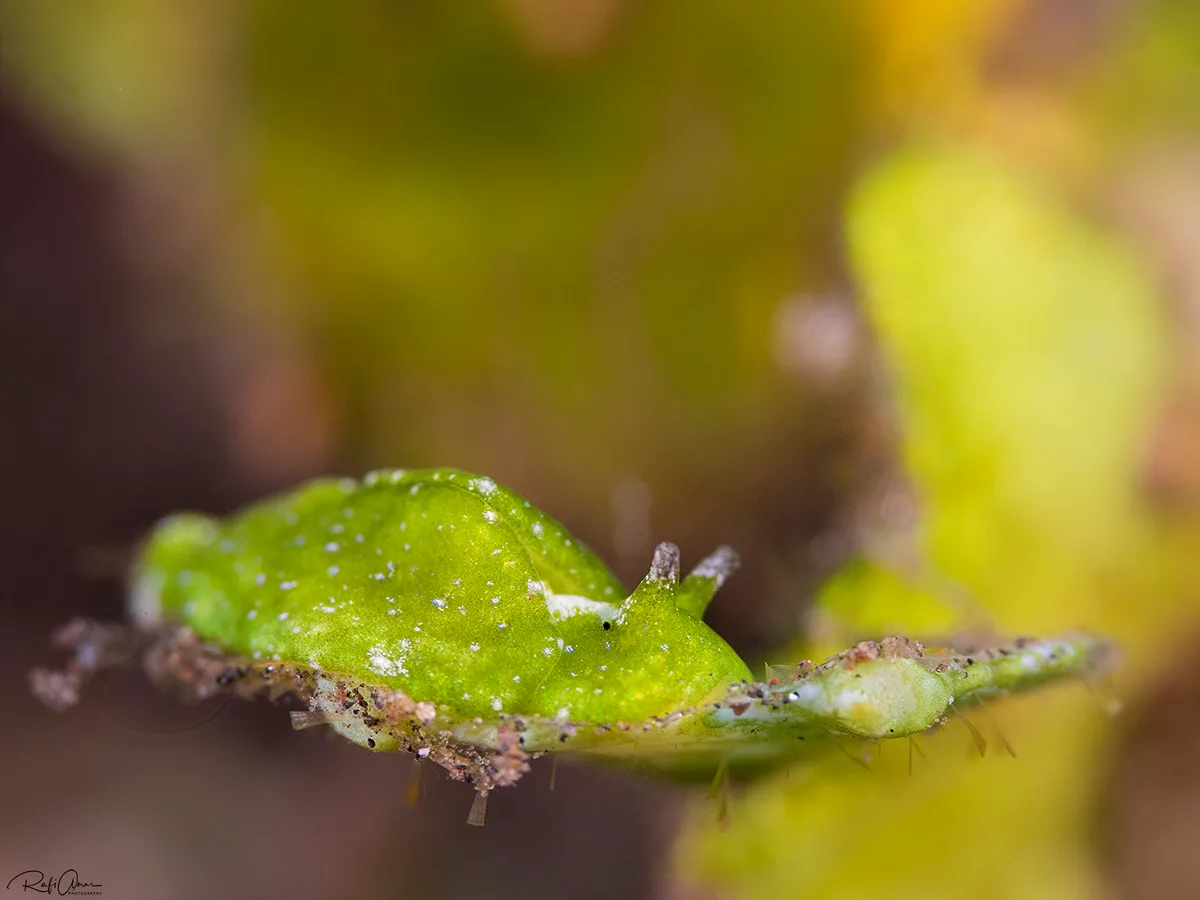
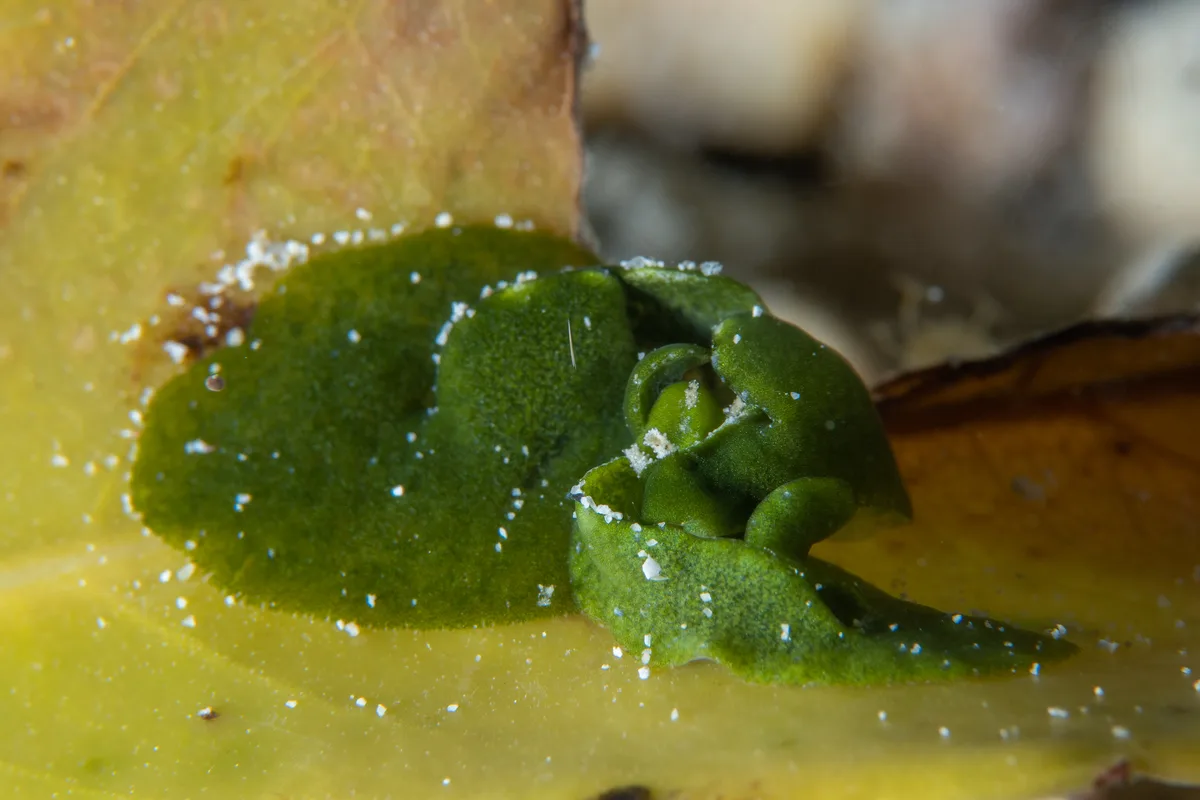
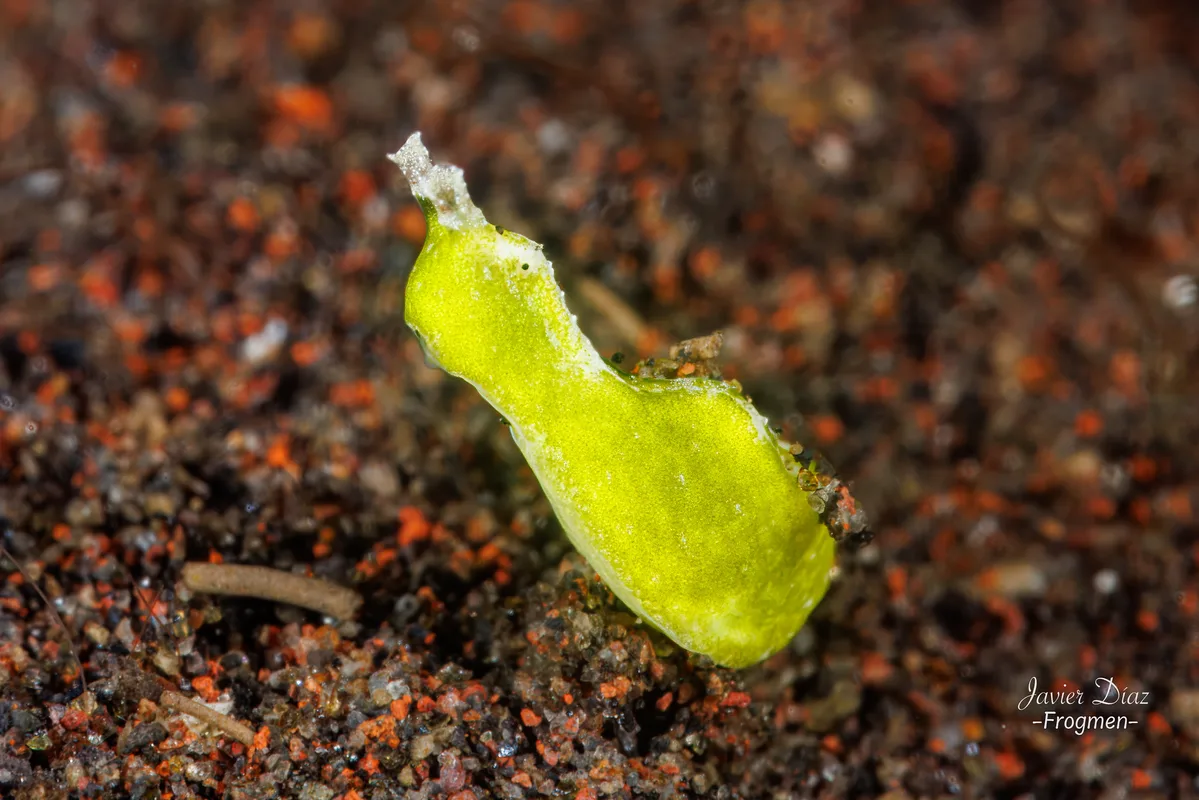
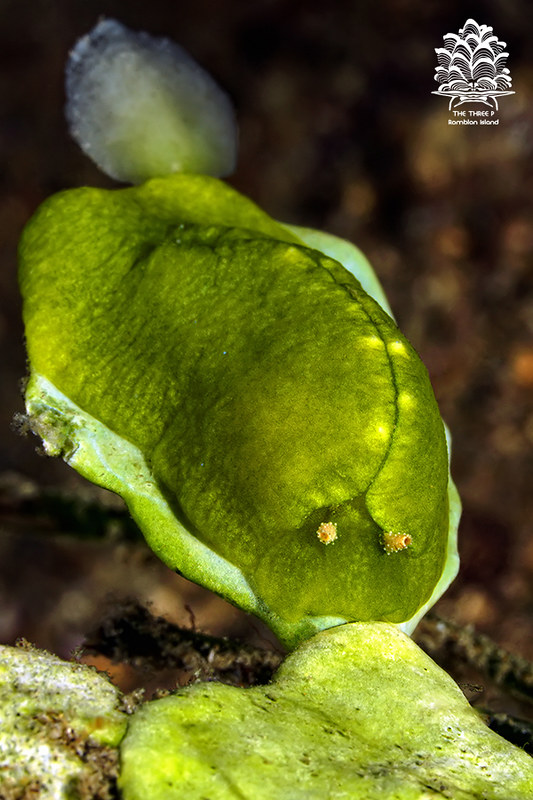
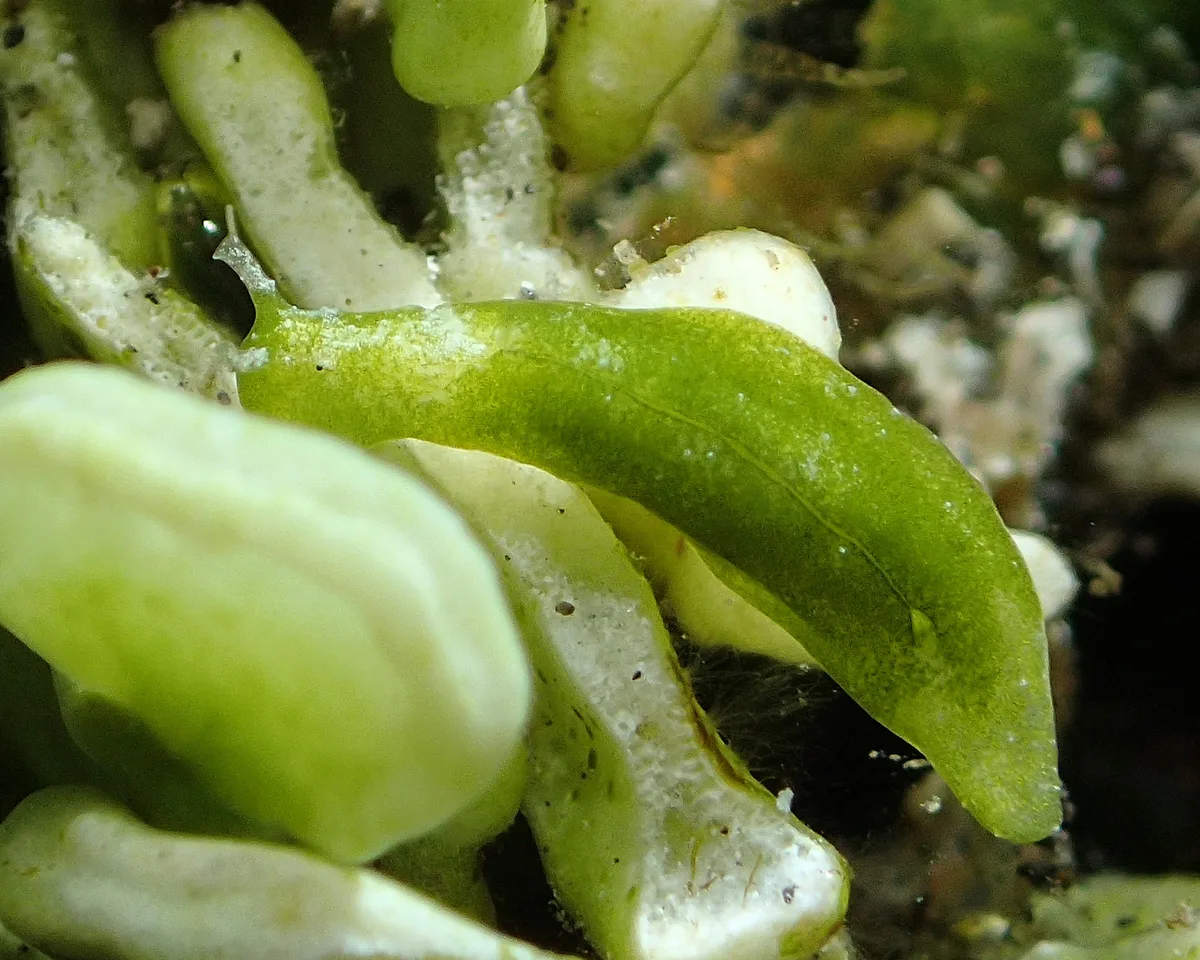
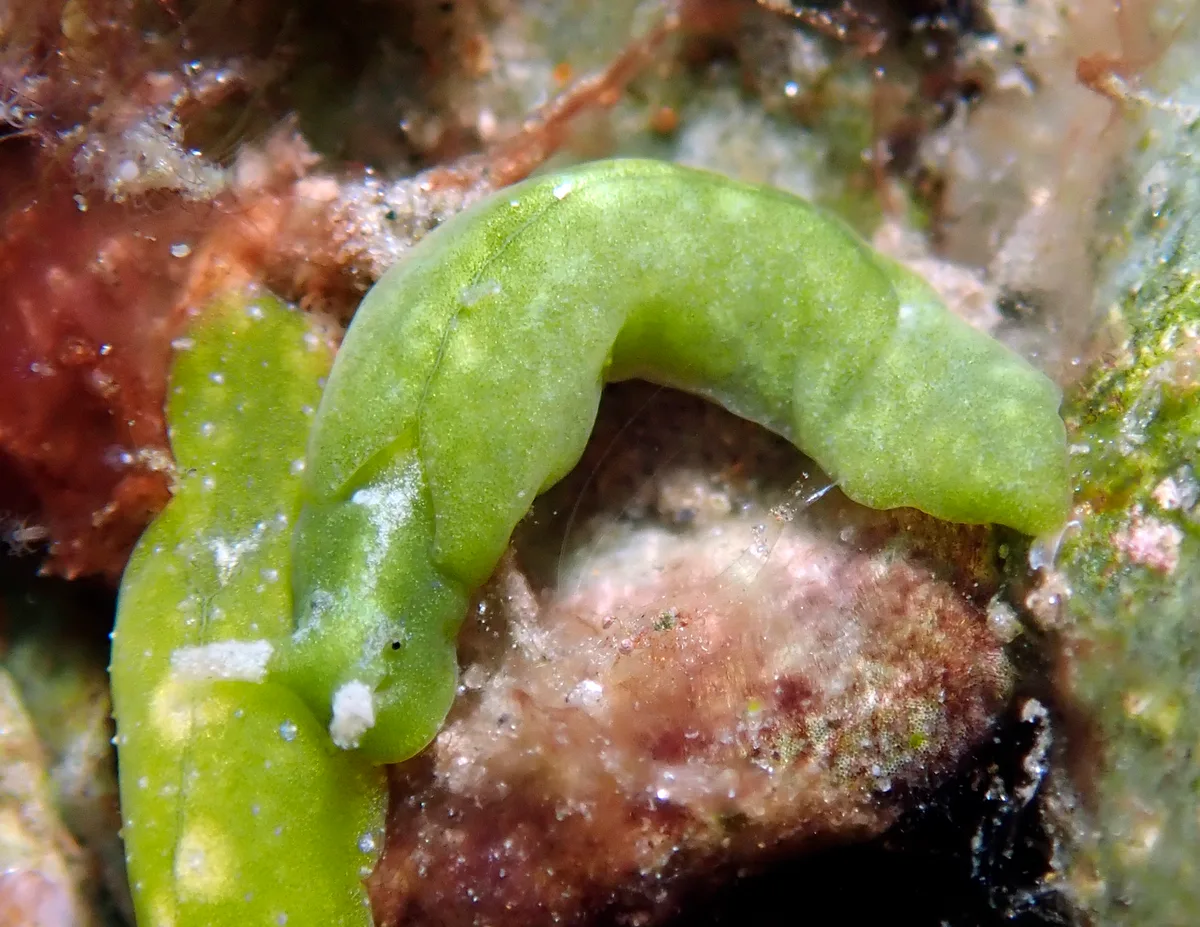
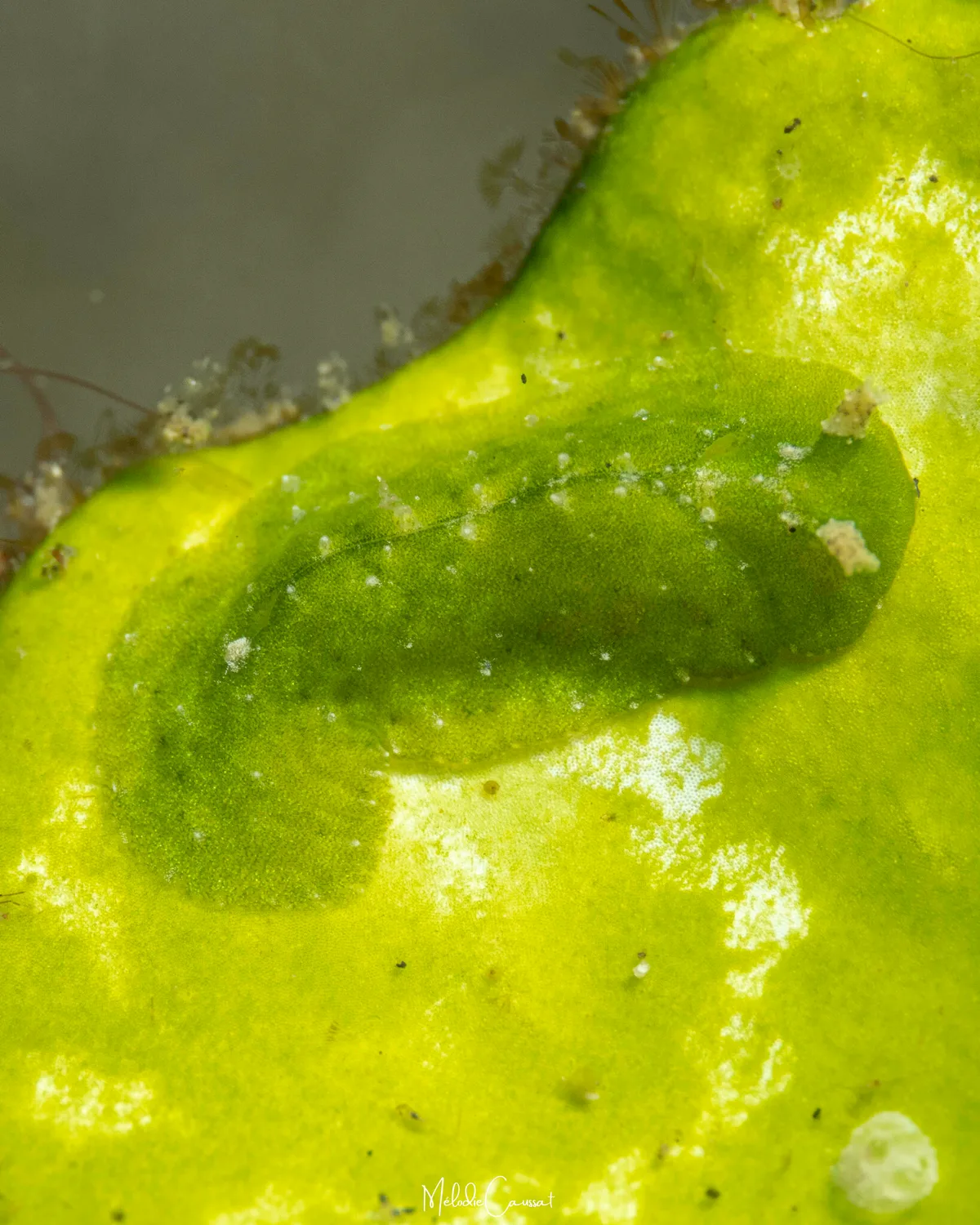
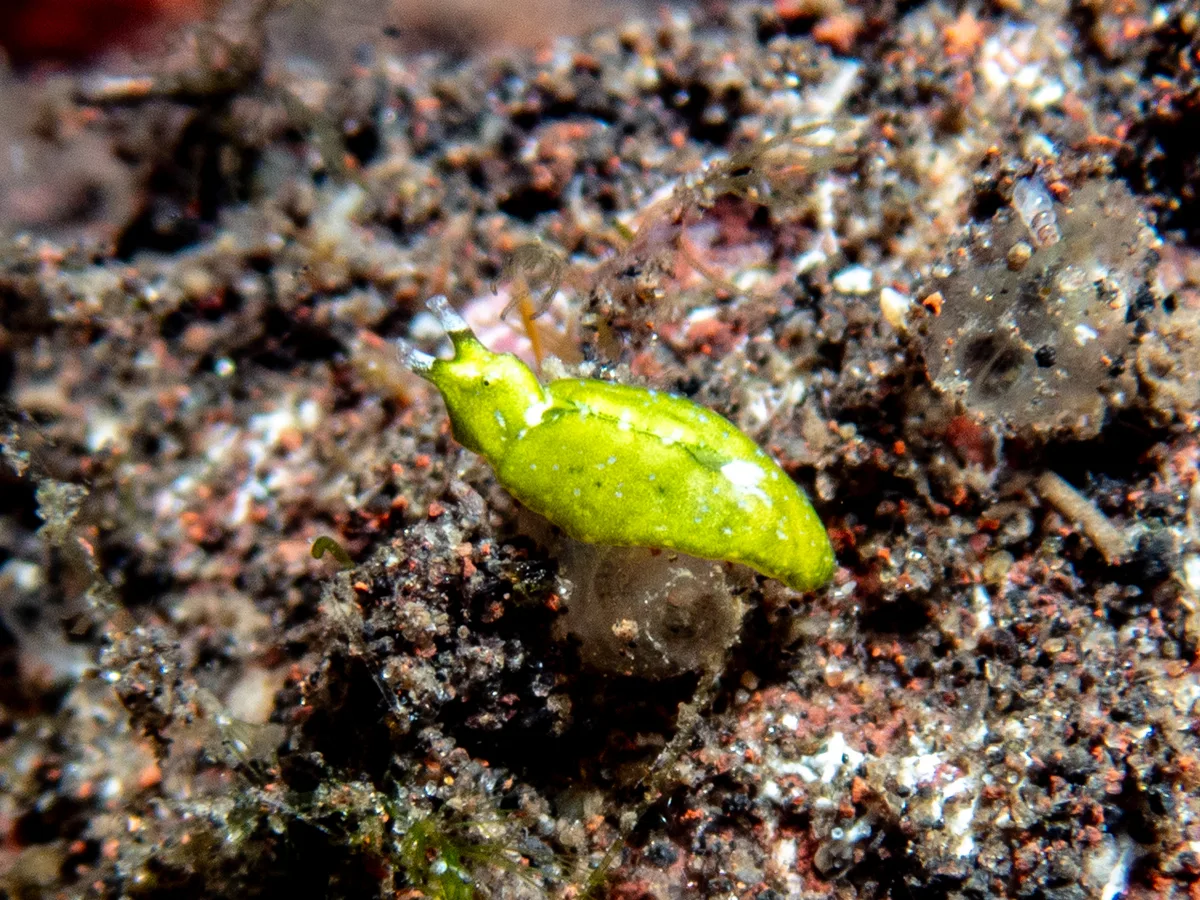
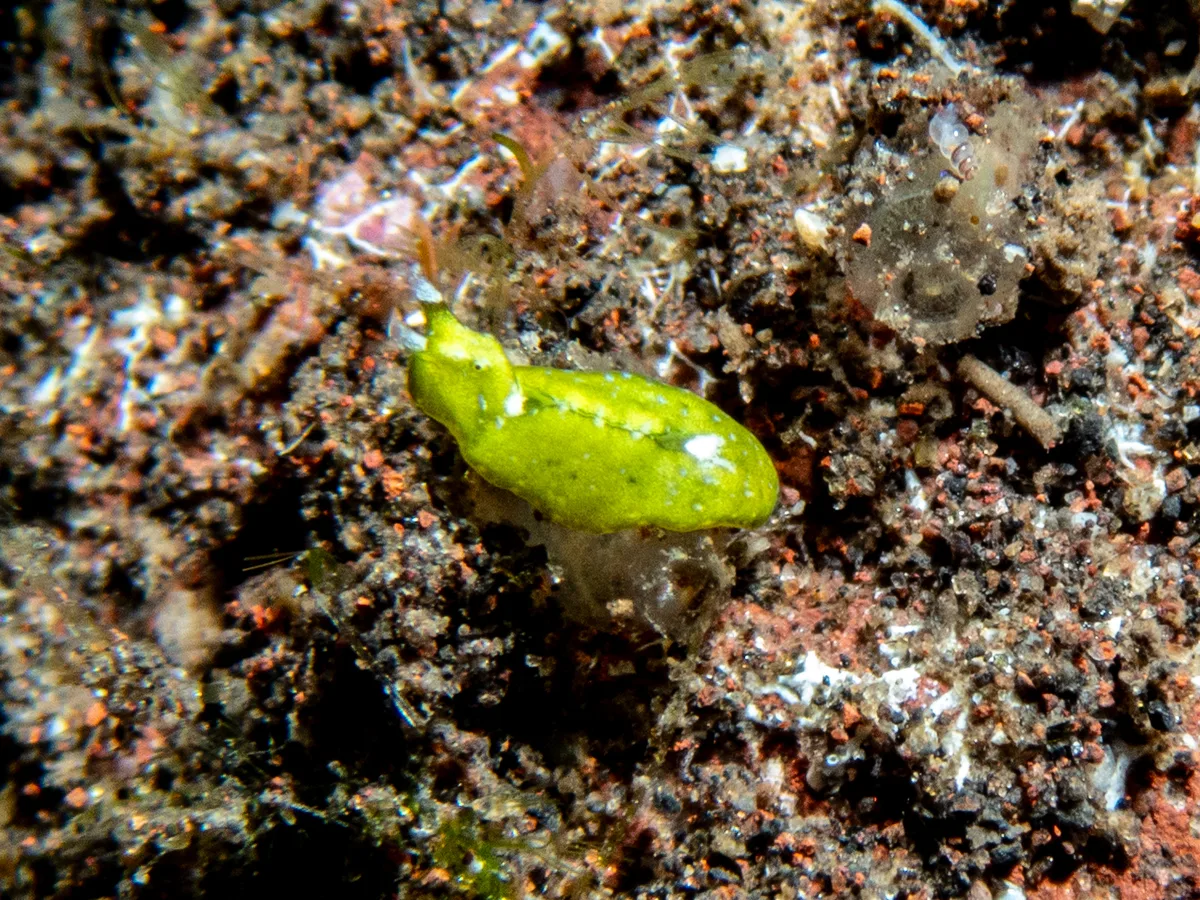
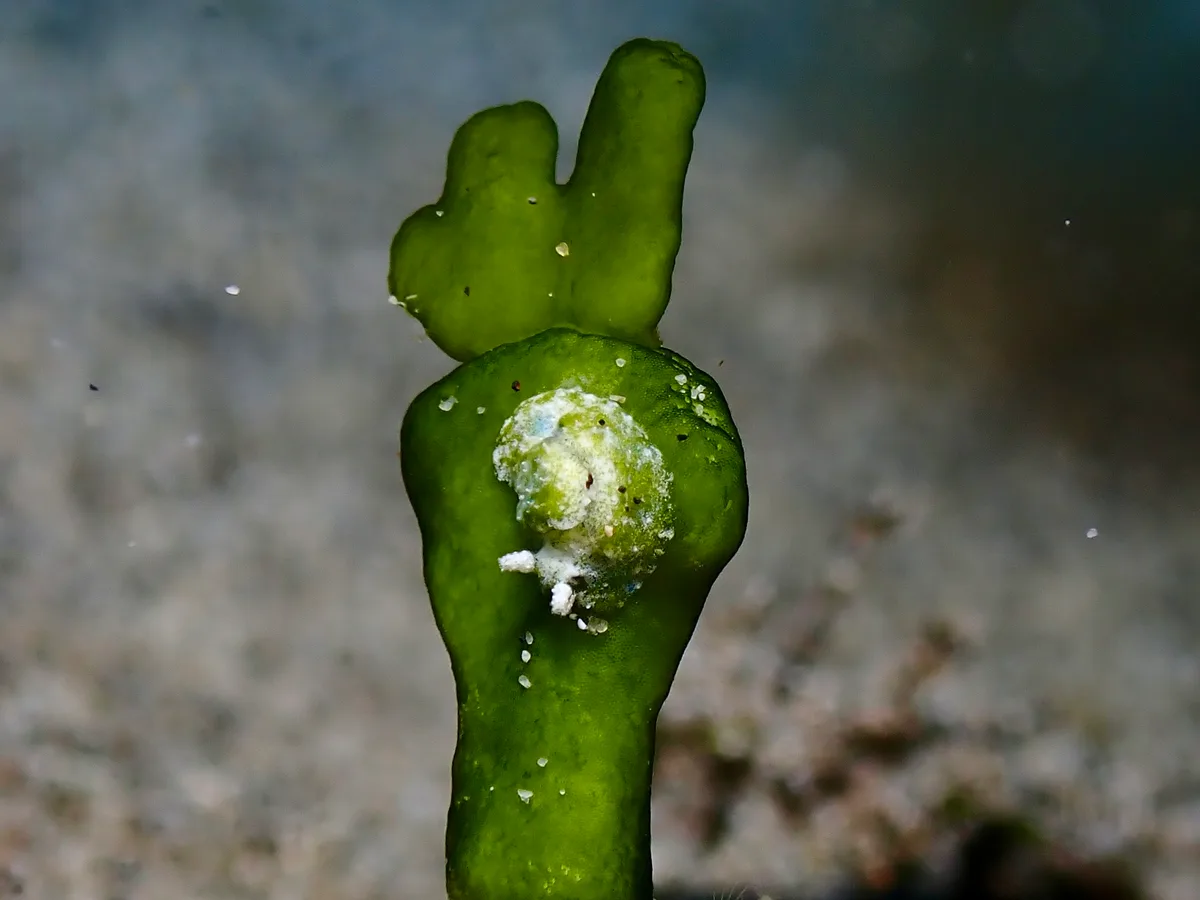
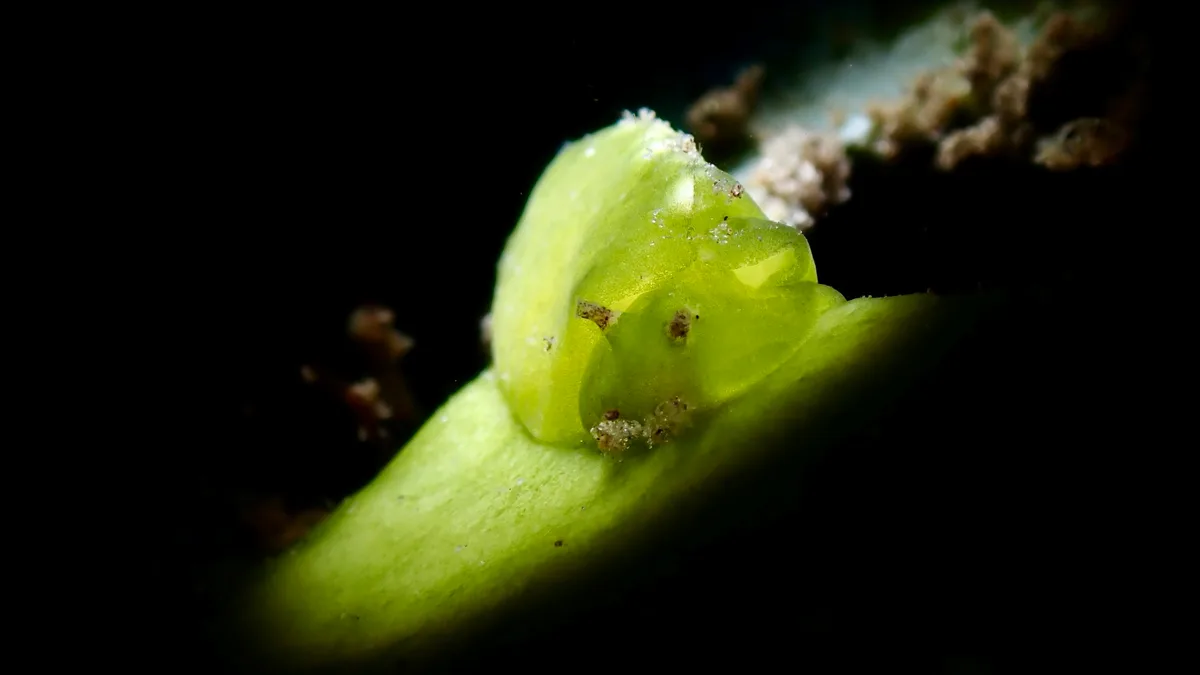
This slug is shaped by the plant it lives on. On Halimeda species with broad flattened segments it is flattened too, and the effect is strongest in the larger animals. On Halimeda with cylindrical segments the same slug is rounded to match. It is not copying a general idea of the weed, it is copying its own plant.
Halimeda is a calcified green alga, stiff with lime and chemically defended, which is why almost nothing grazes it. Getting anything out of it takes a specialist. The slug sets a single tooth against one cell wall, punctures it and drinks the contents, then moves to the next. There is no chewing and no visible damage, which is another reason the animals are hard to find.
What it drinks includes chloroplasts, and these are kept alive in its own tissue for a while. Measurements put this species among the short holders: photosynthesis in a starved animal fell away inside about two weeks, against months for the sand-dwelling Plakobranchus ocellatus. The stolen machinery has to be topped up constantly, which is one more reason this slug never leaves its weed.
The puzzle underneath that is still open. A chloroplast needs a stream of proteins encoded in the algal nucleus to keep running, the slug does not carry those genes, and how the borrowed organelles keep working at all, whether for two weeks or ten months, is argued over in the literature.
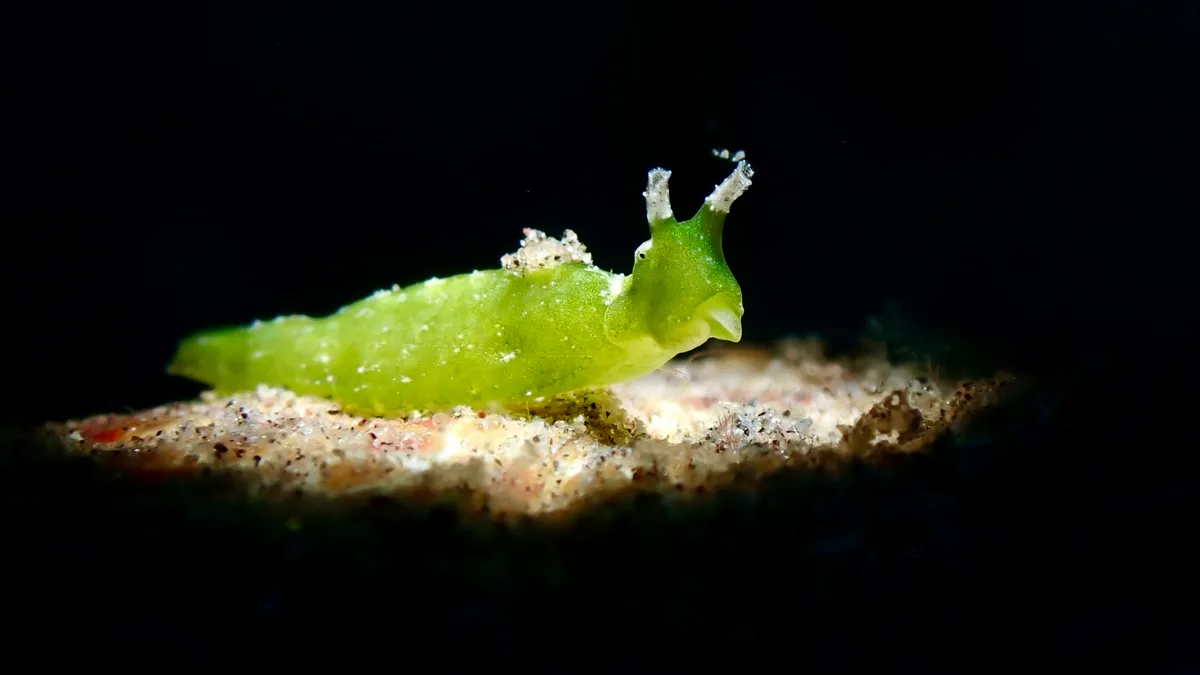
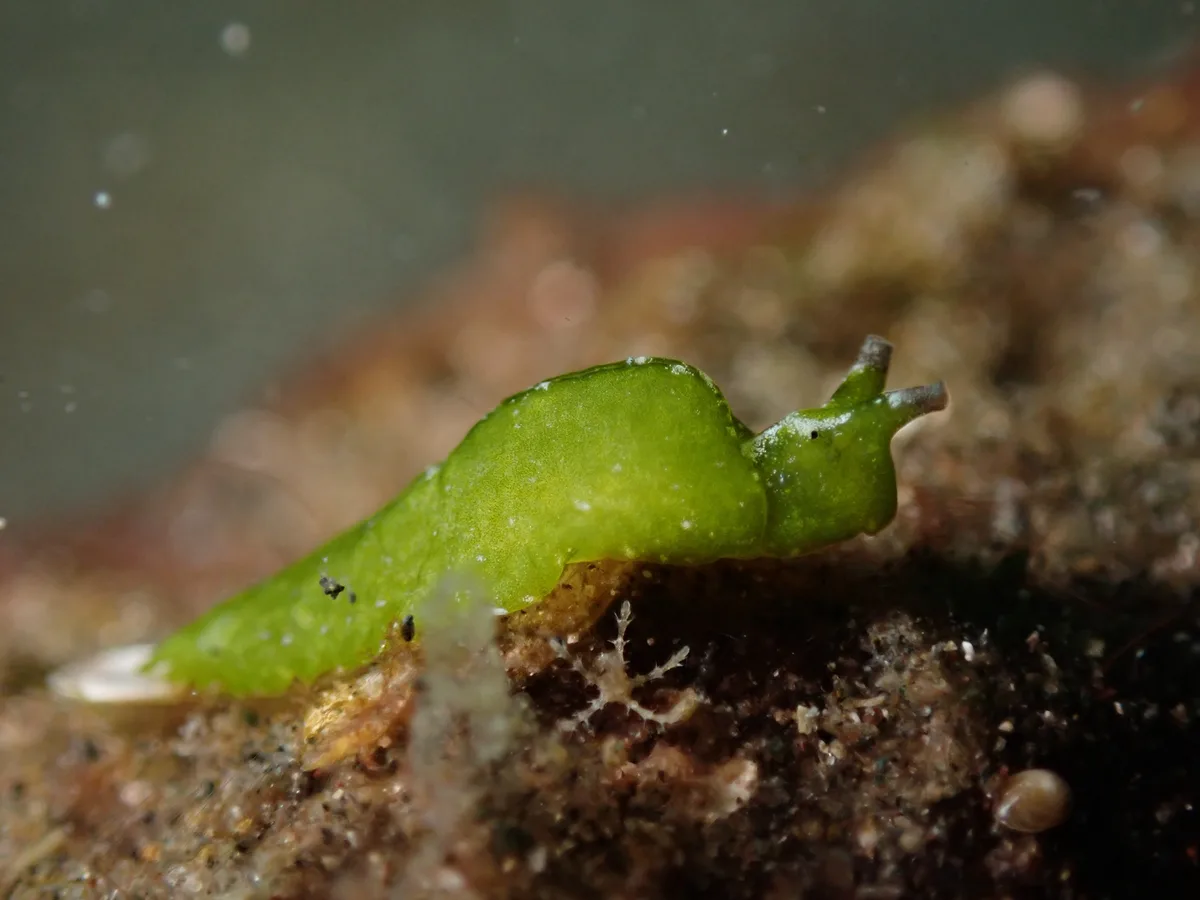
Look for green with fine white lines and white-tipped rhinophores, usually under a centimeter although the regional guide records 35 mm. The practical method is to pick a rubble slope with plenty of Halimeda, hold one plant and look along the segments. Several animals can be sitting within a hand's width of each other, all of them invisible until one moves.
- green, with fine white lines and white-tipped rhinophores
- body shape follows the segment shape of its own Halimeda plant
- sits flat along a segment, not on the coral
- found by searching the weed rather than by spotting the animal
- up to 3.5 cm