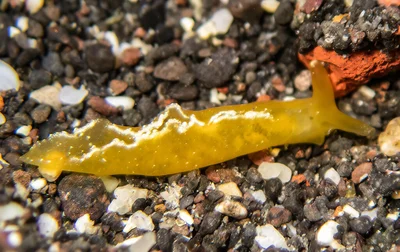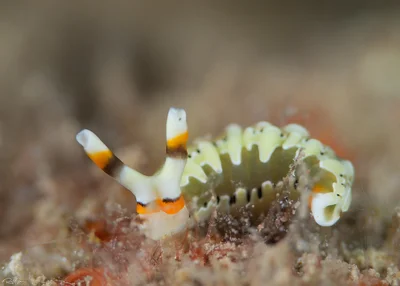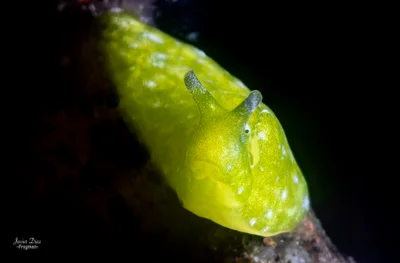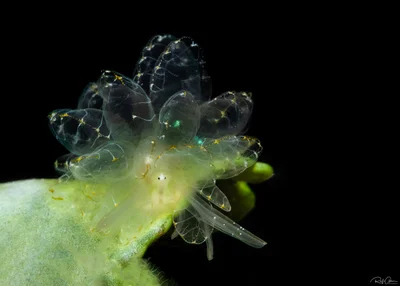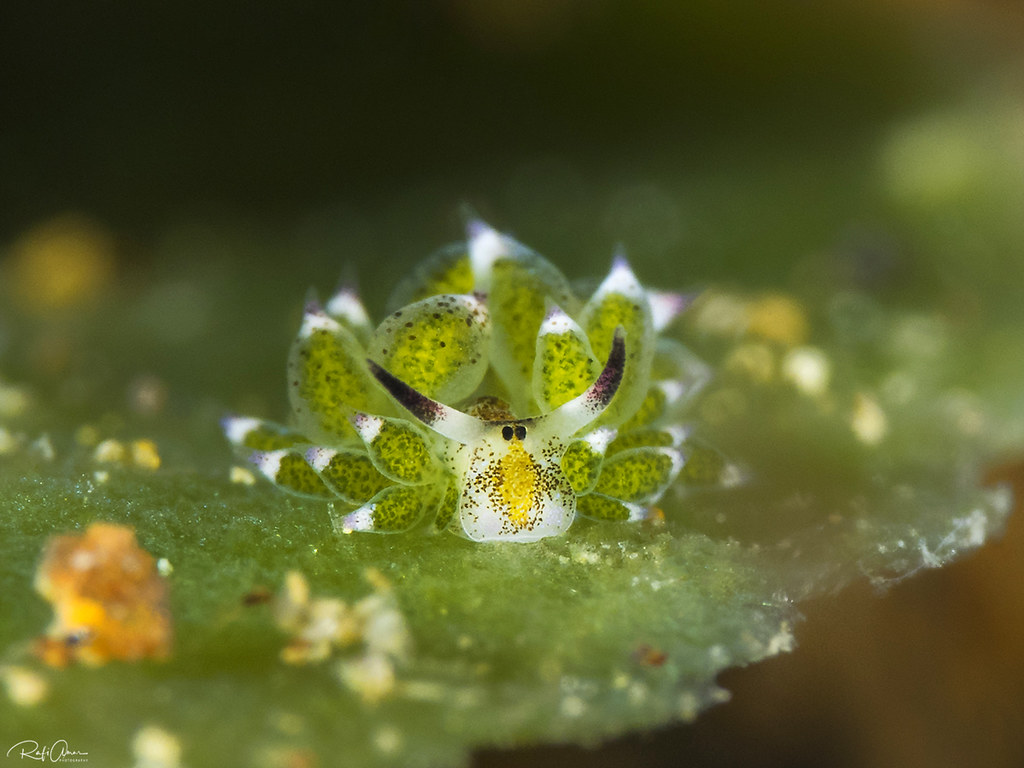
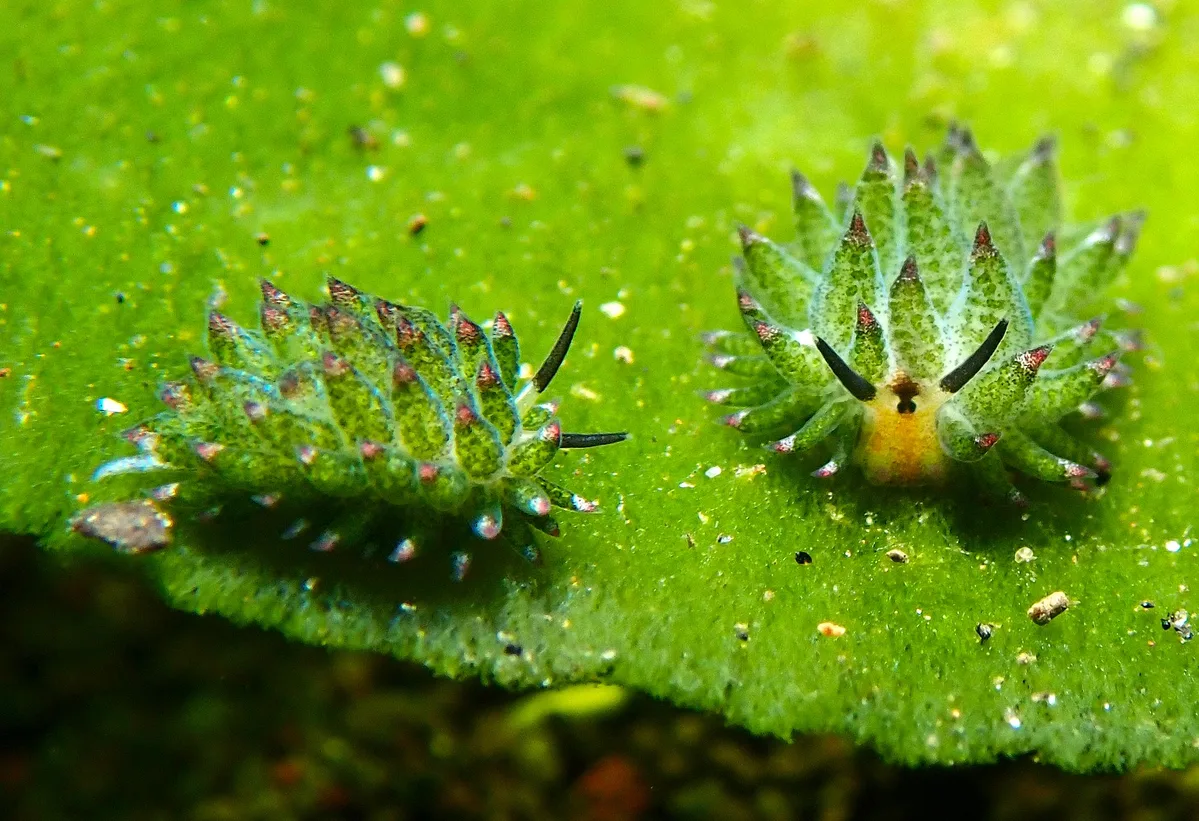
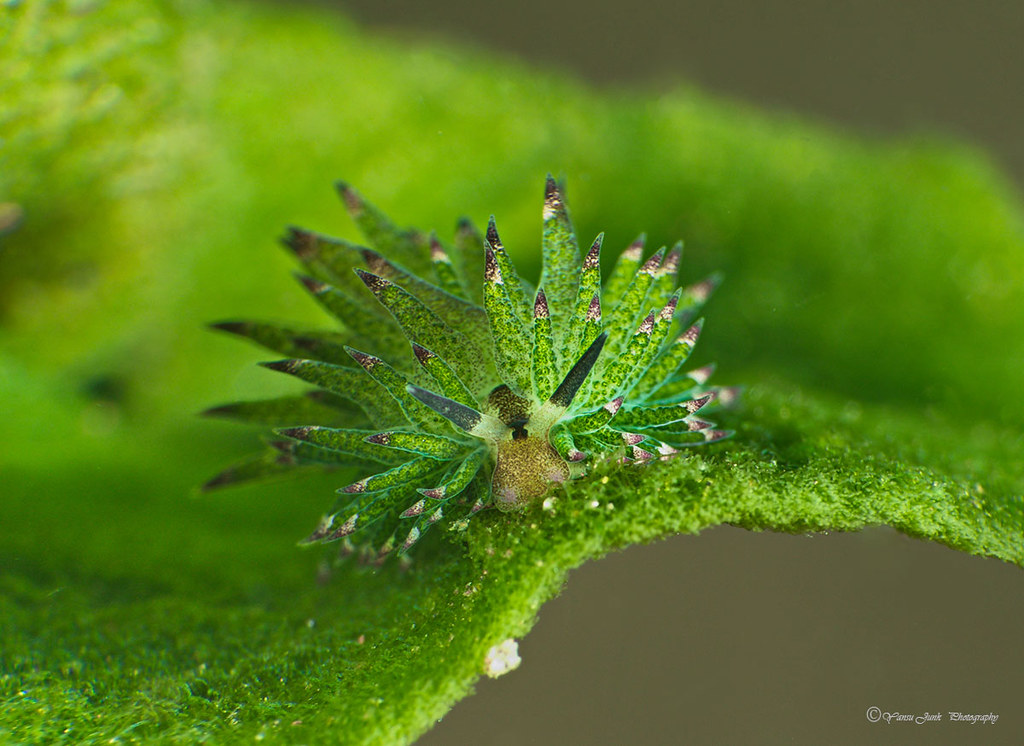
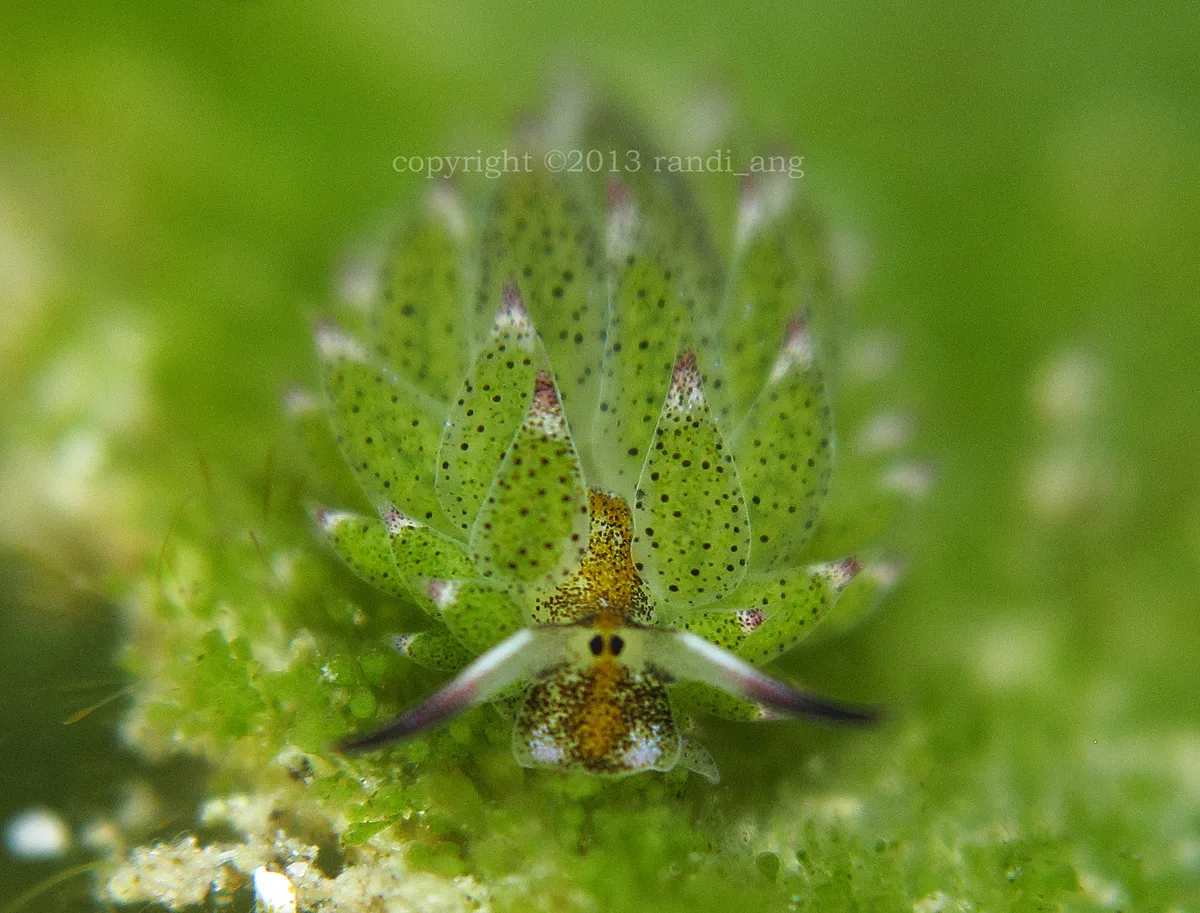
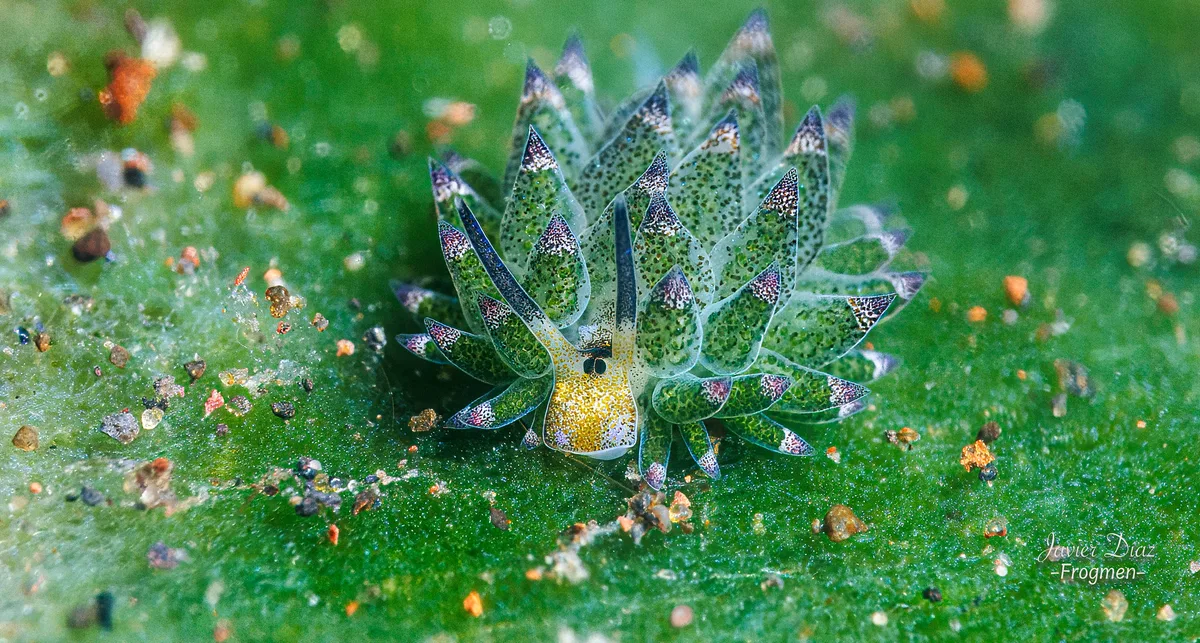
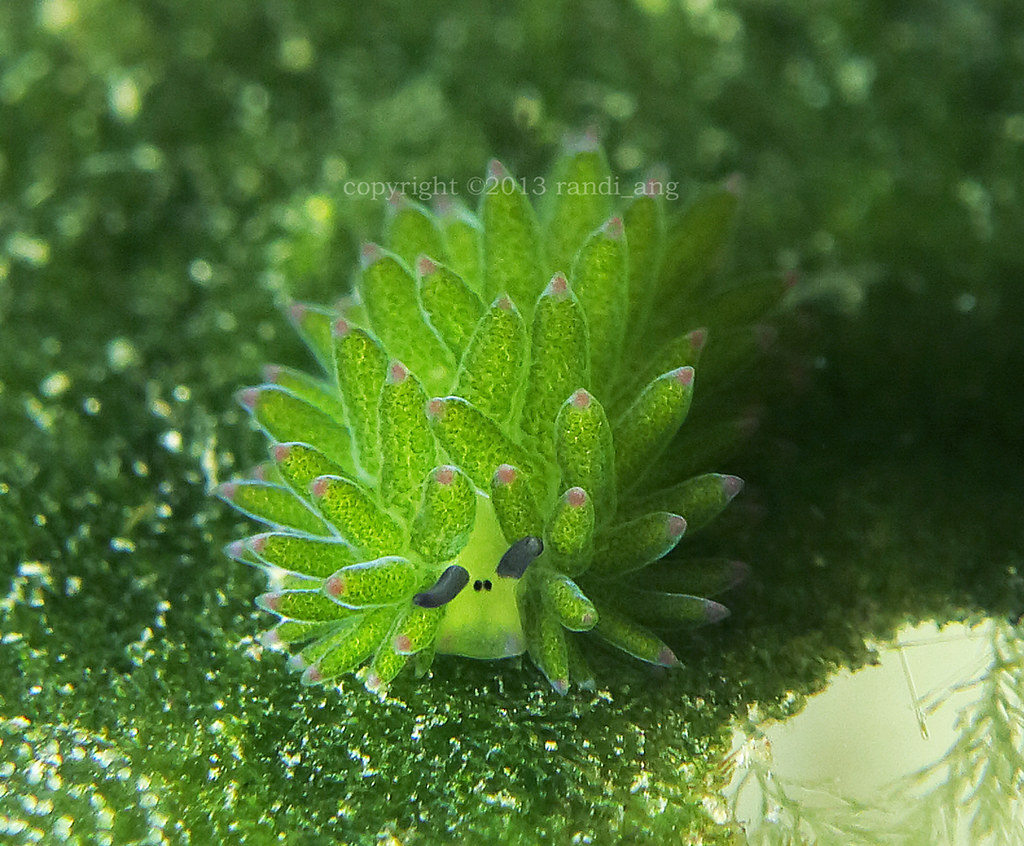
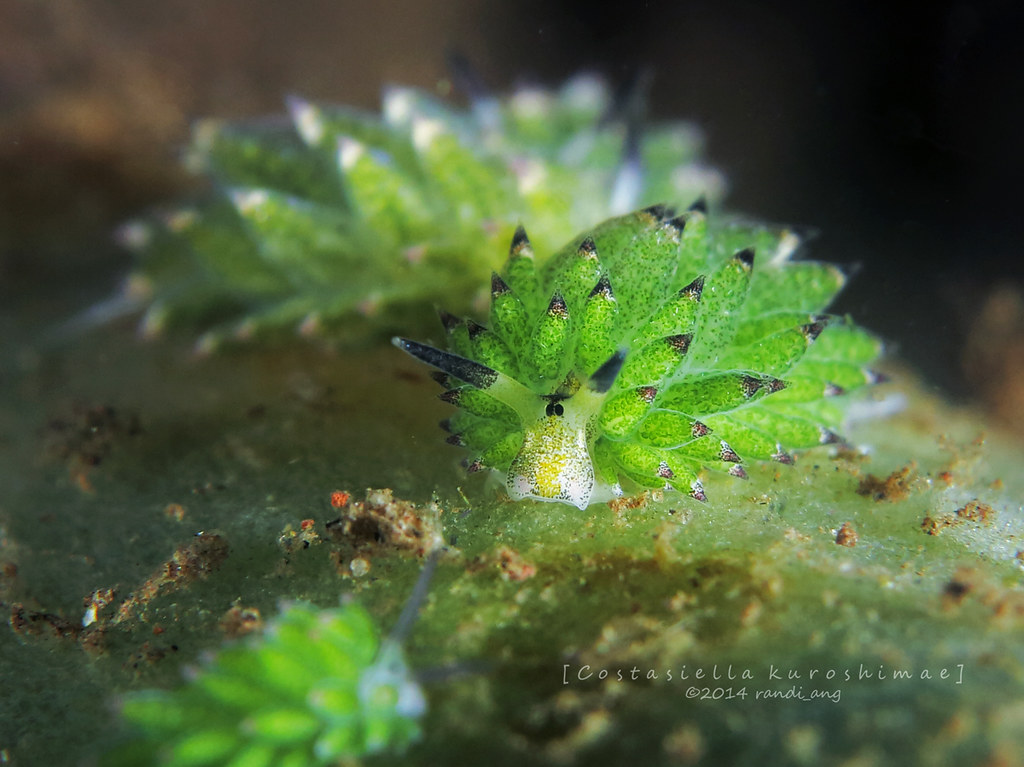
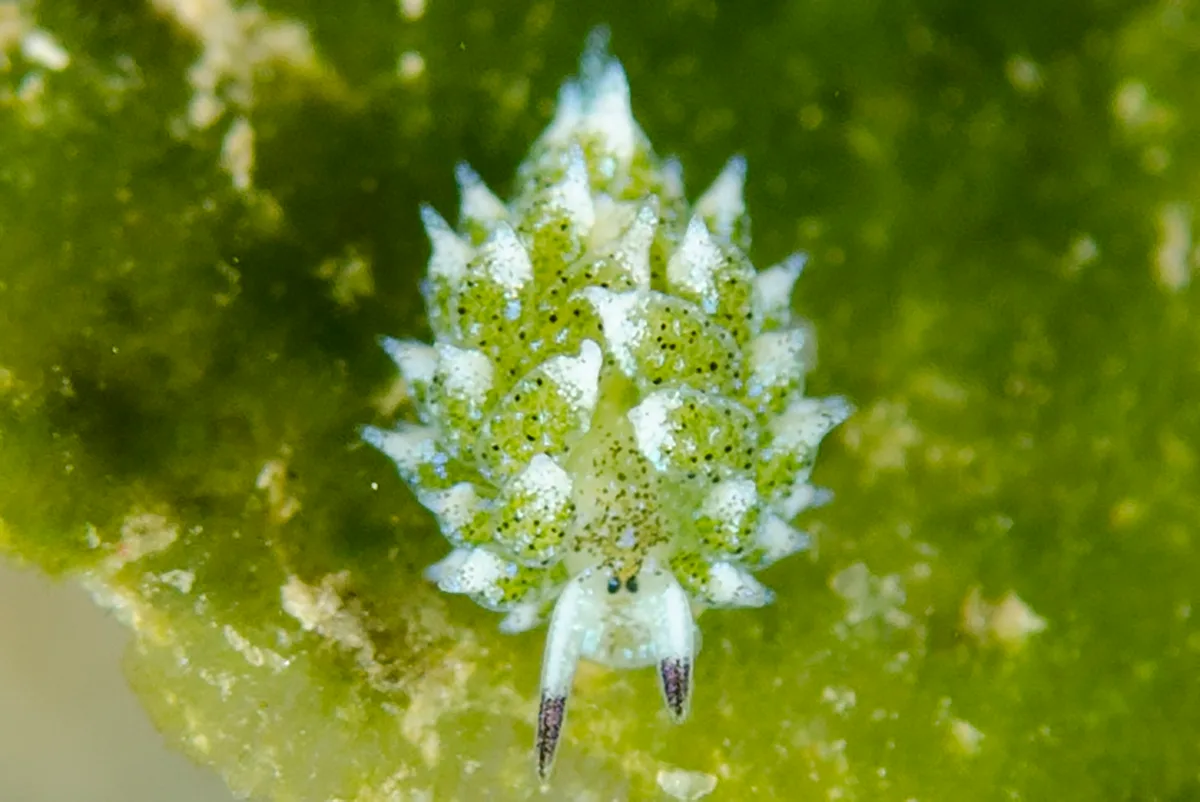
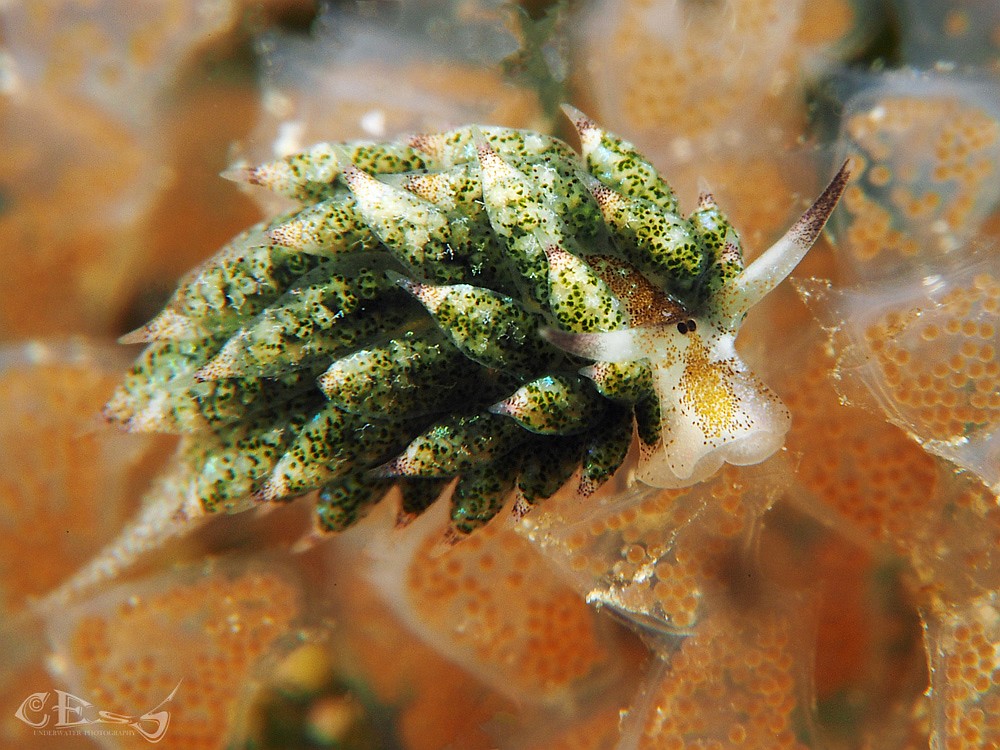
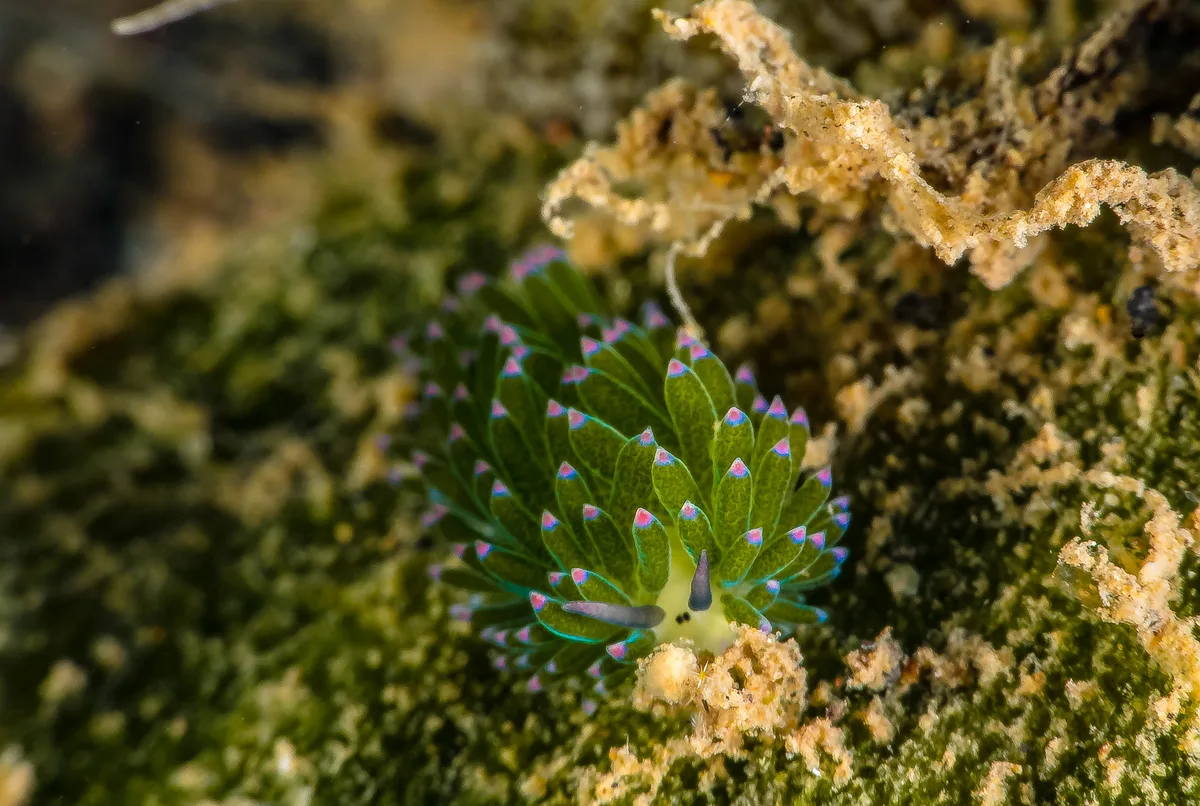
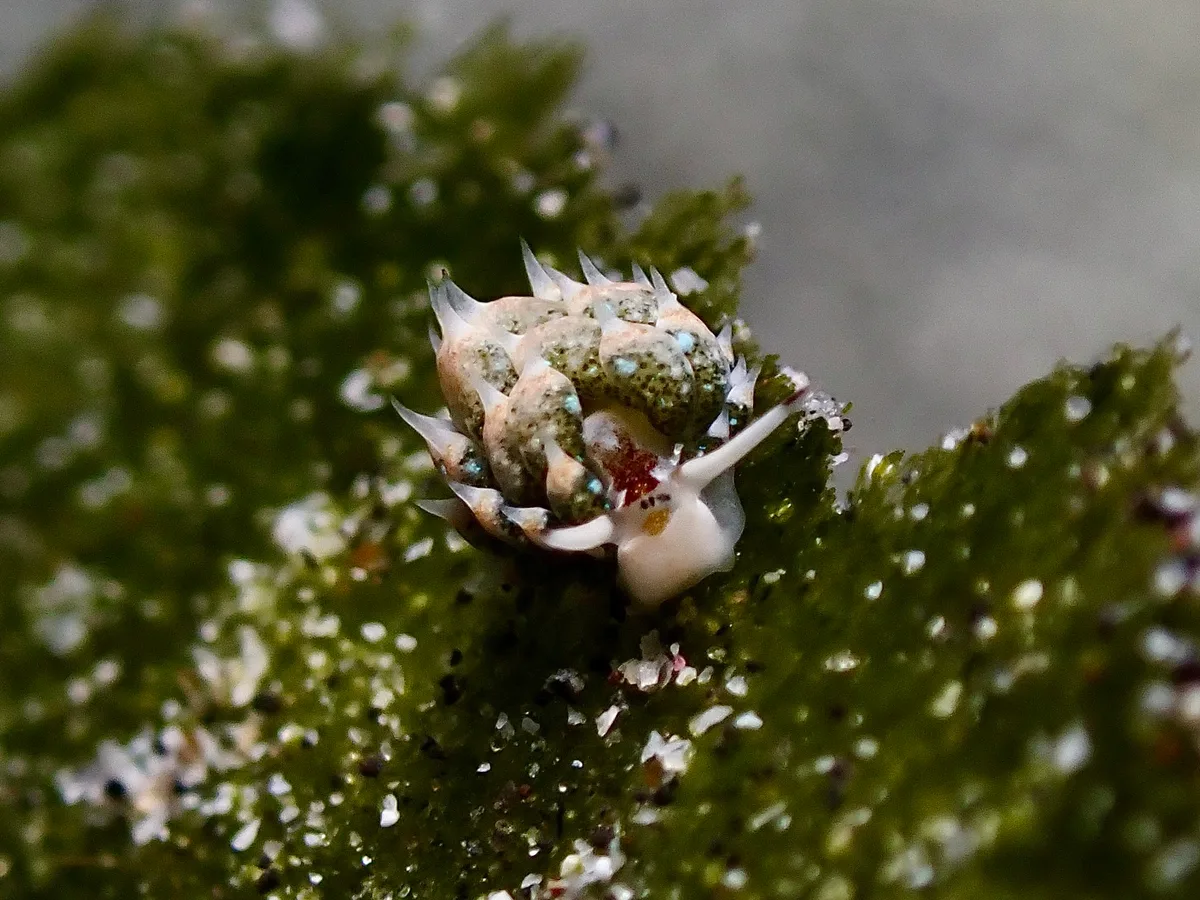
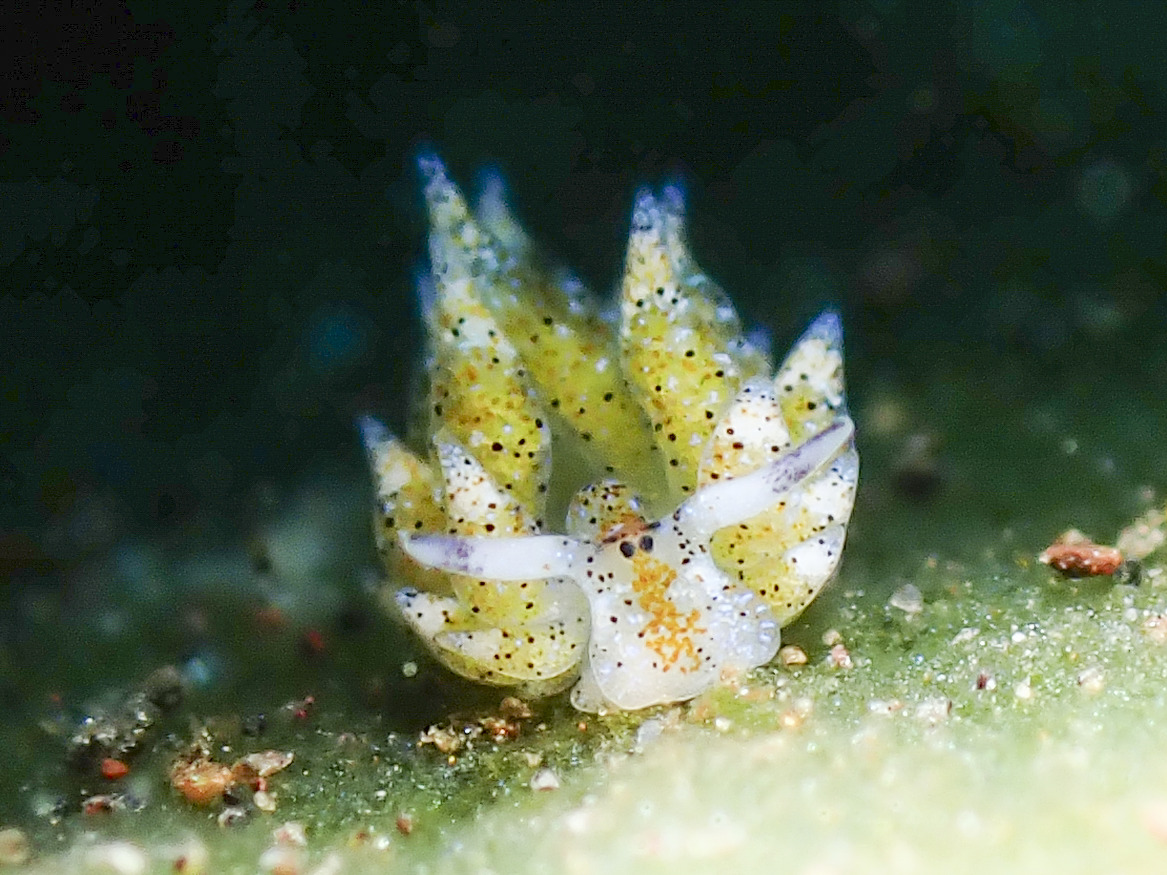
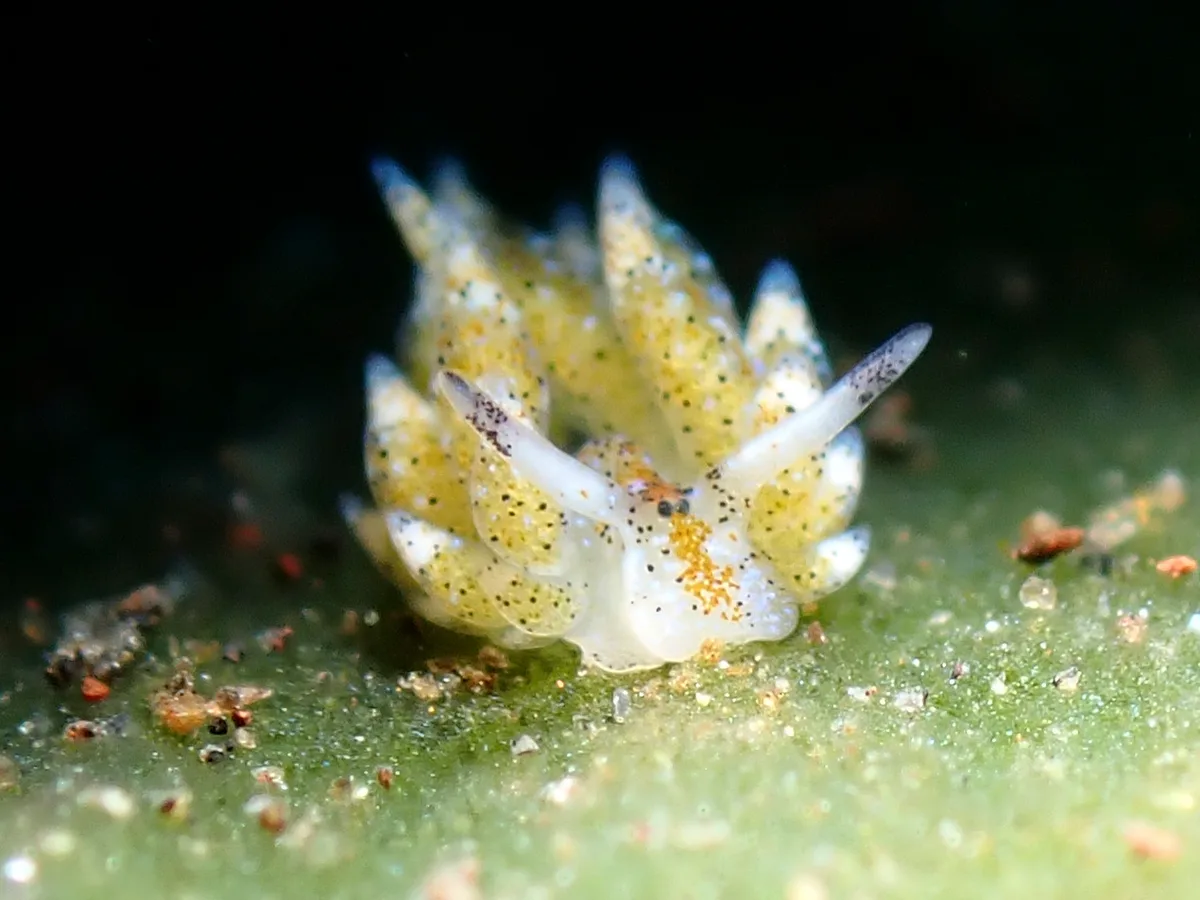
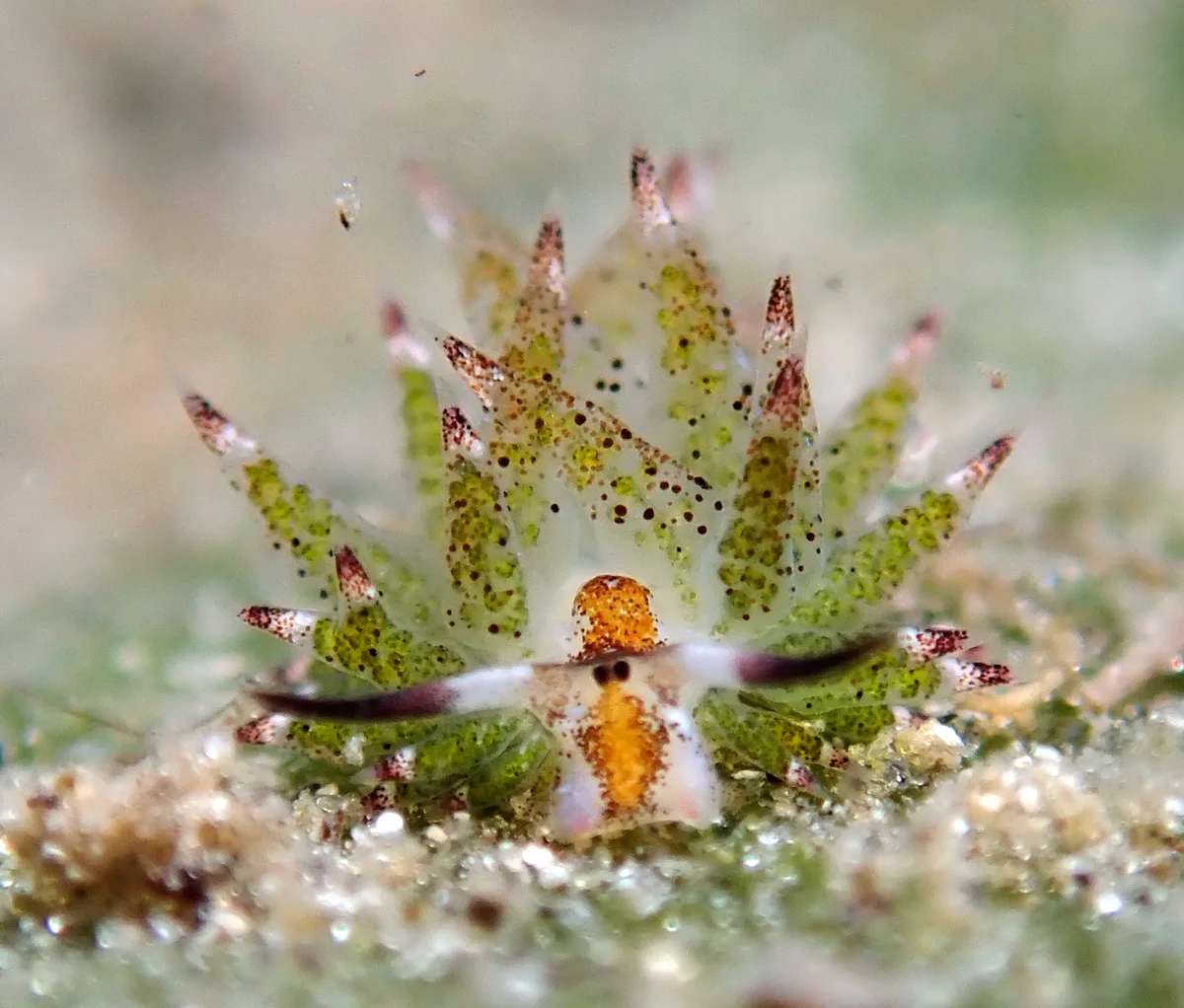
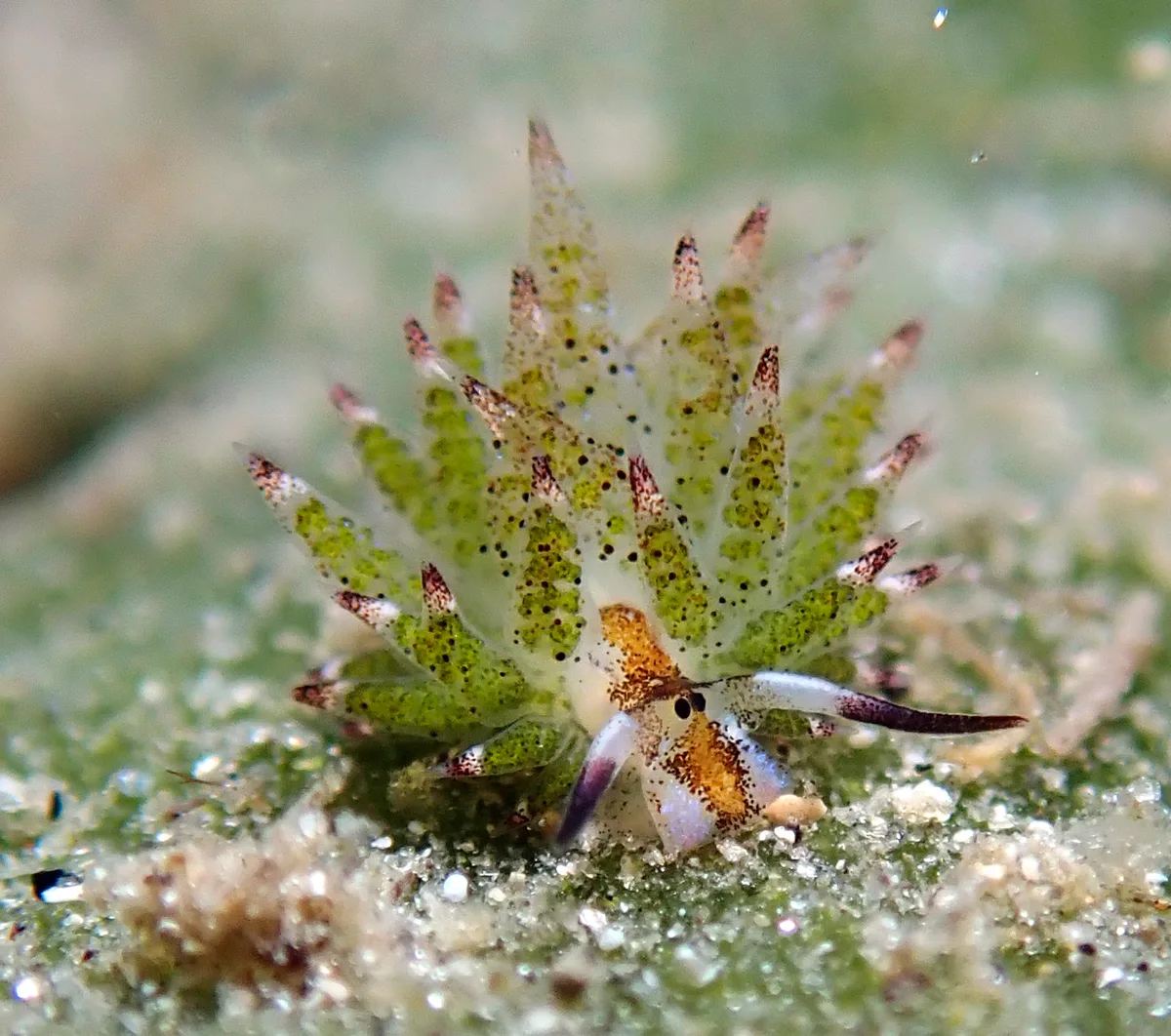
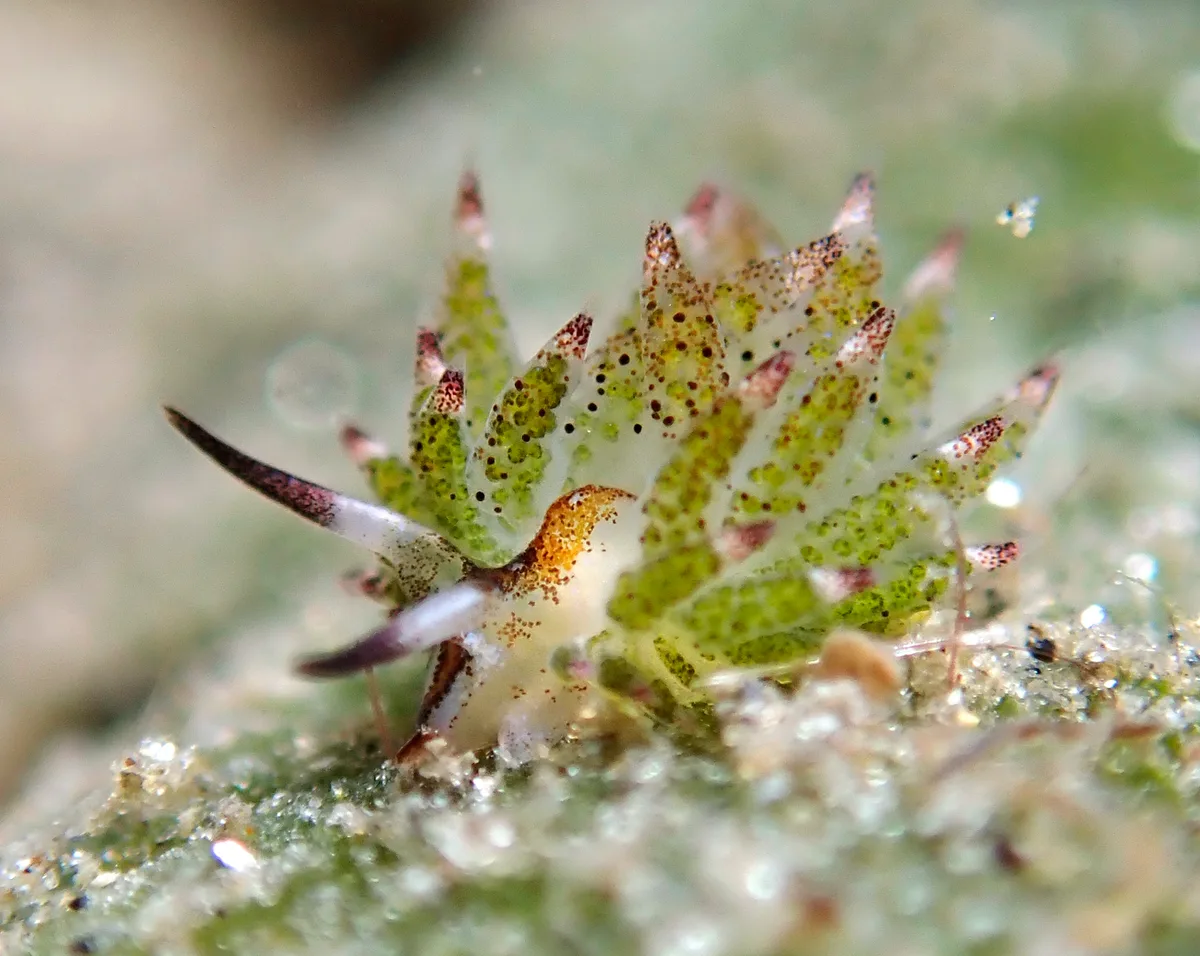
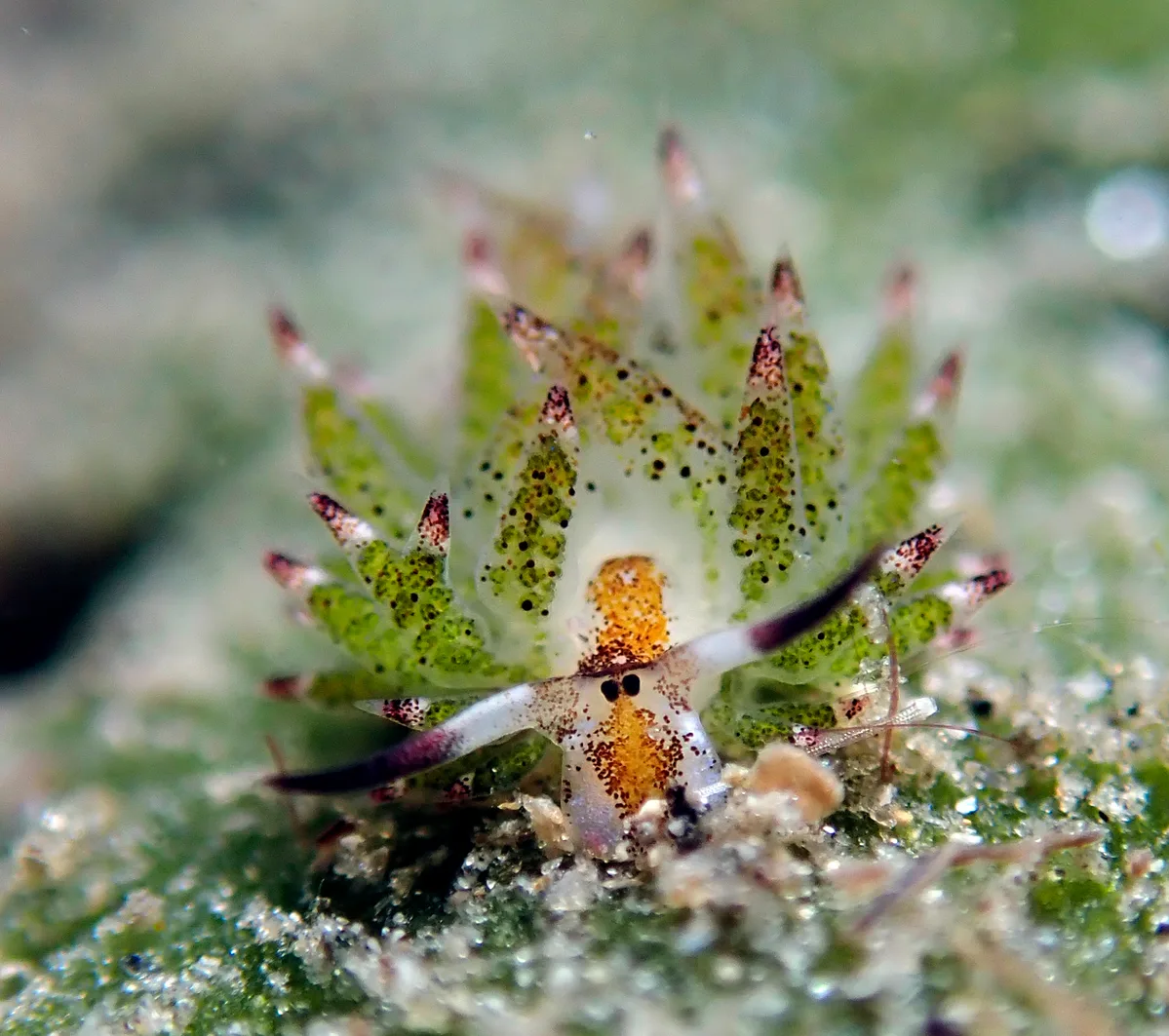
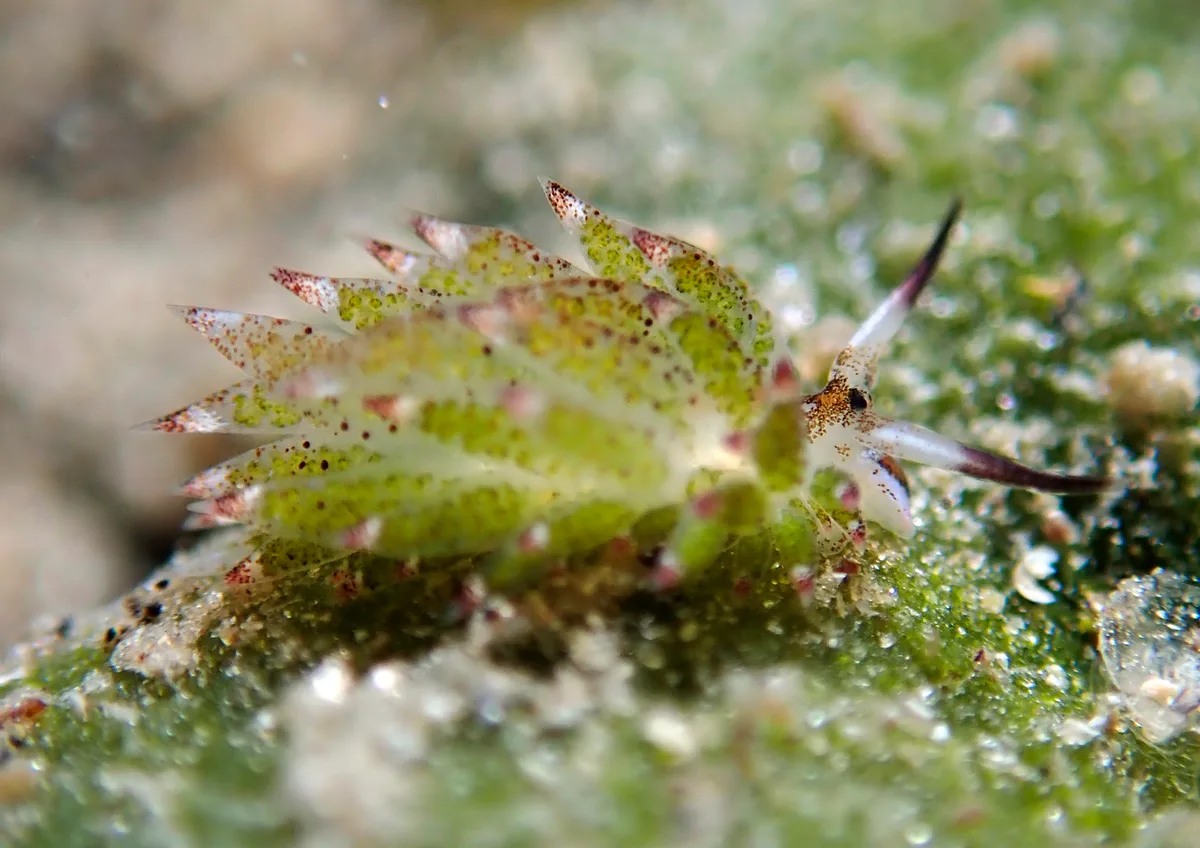
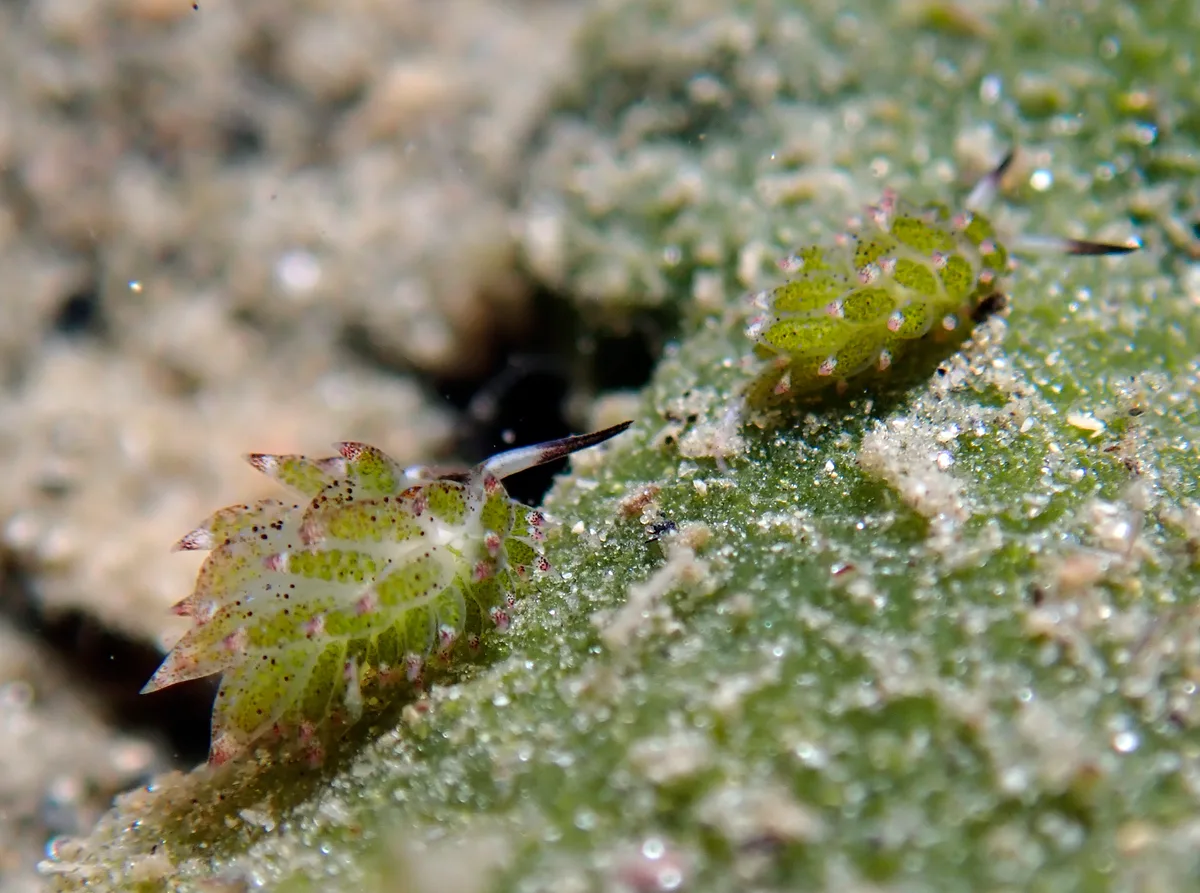
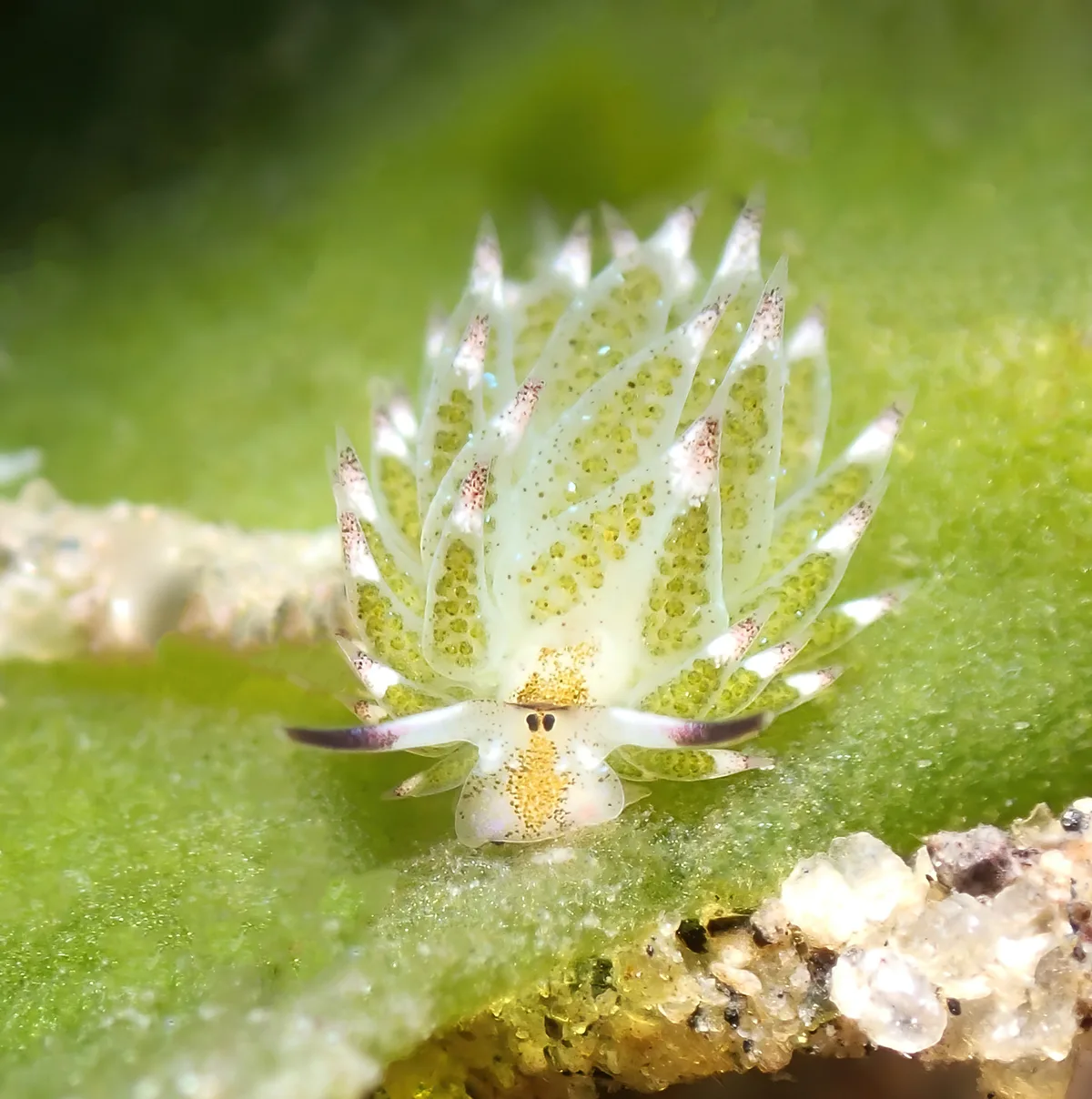
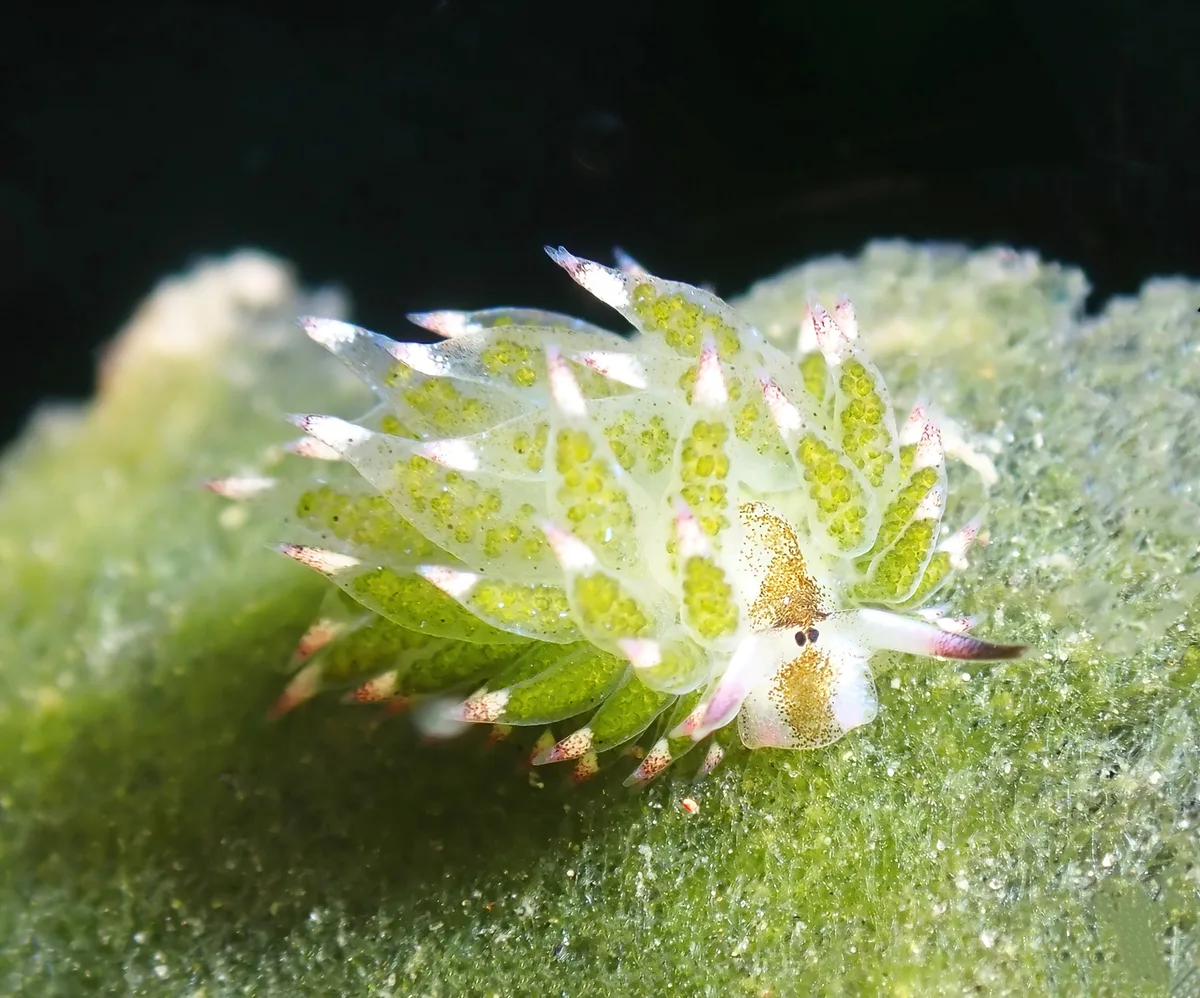
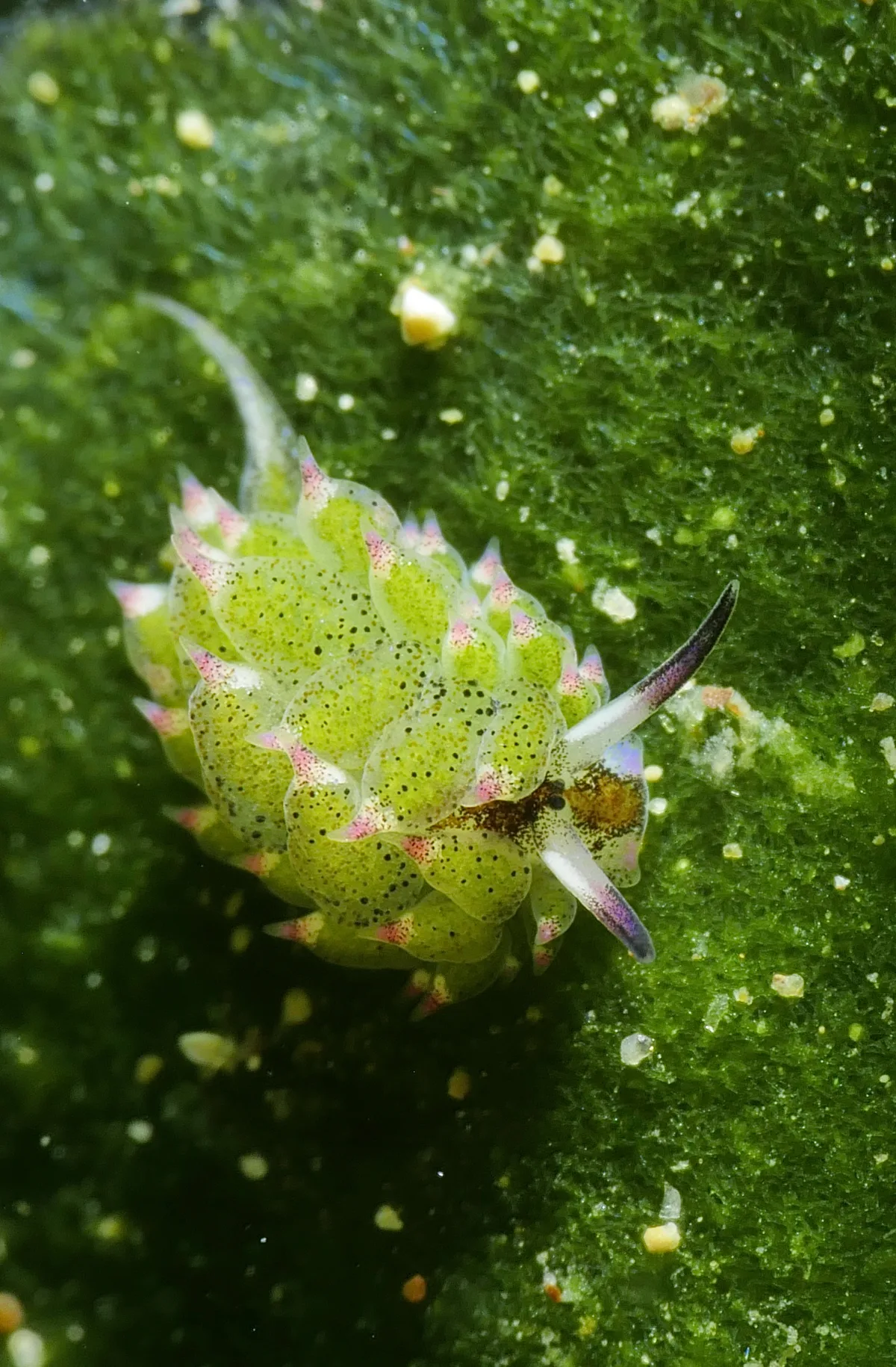
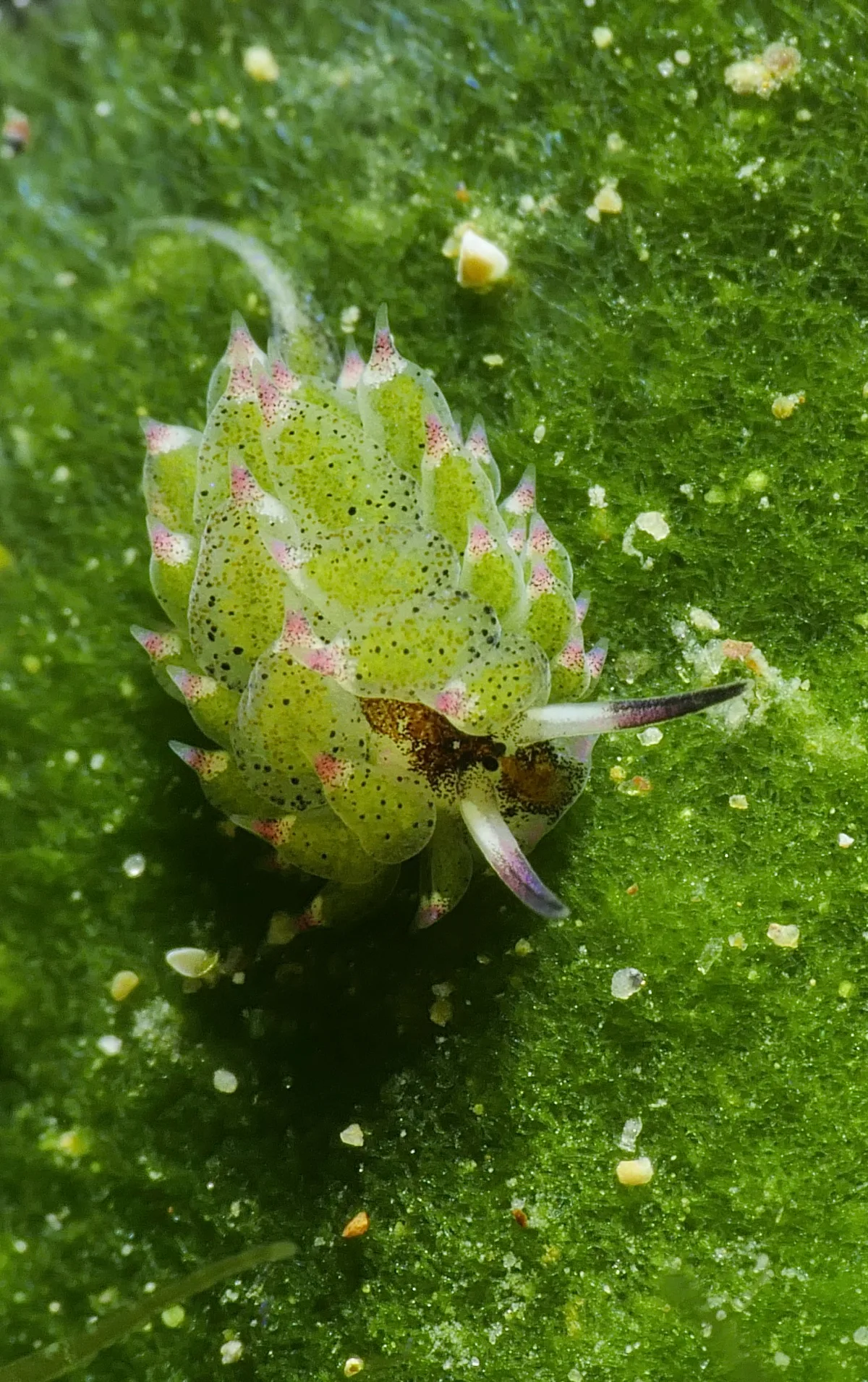
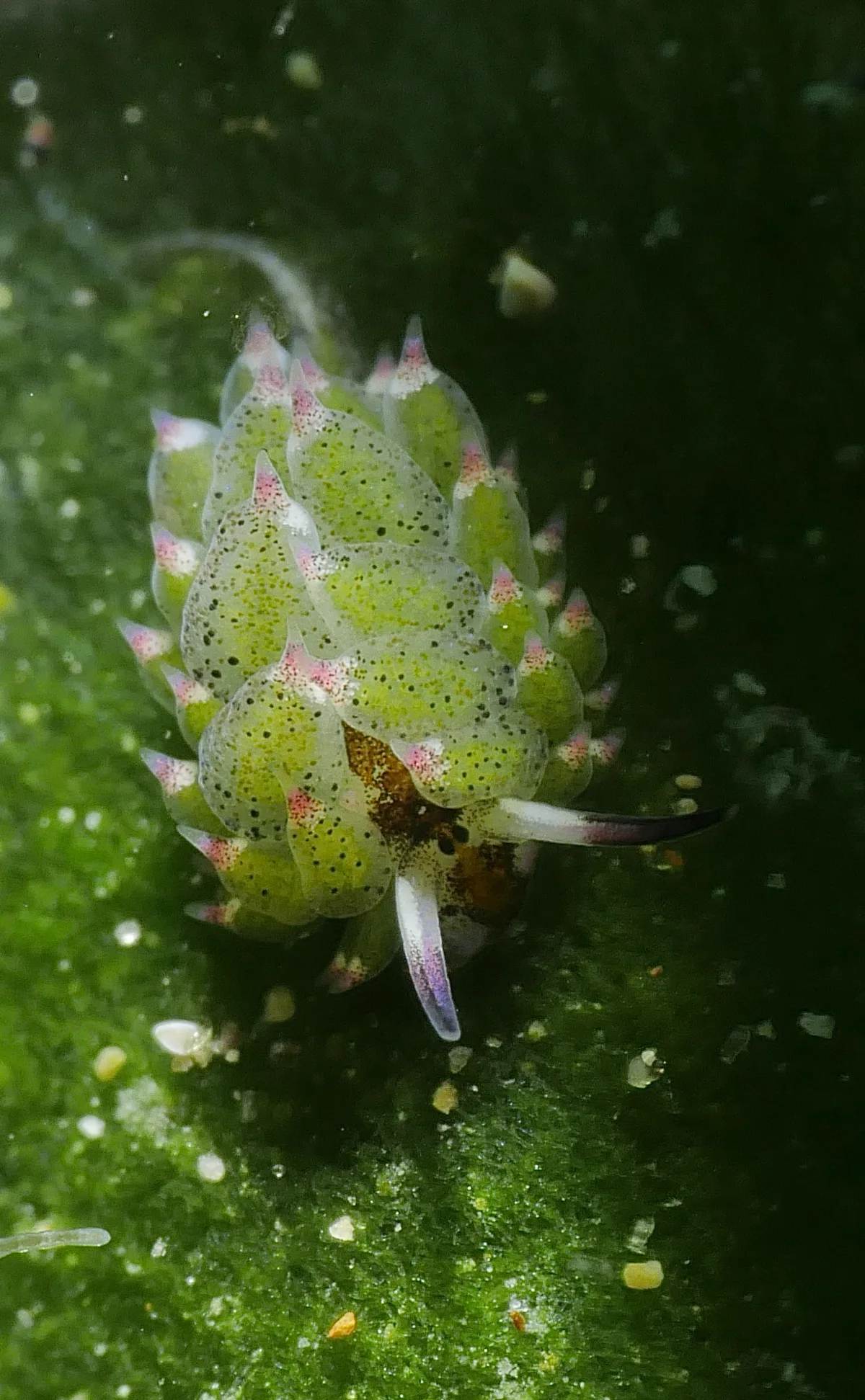
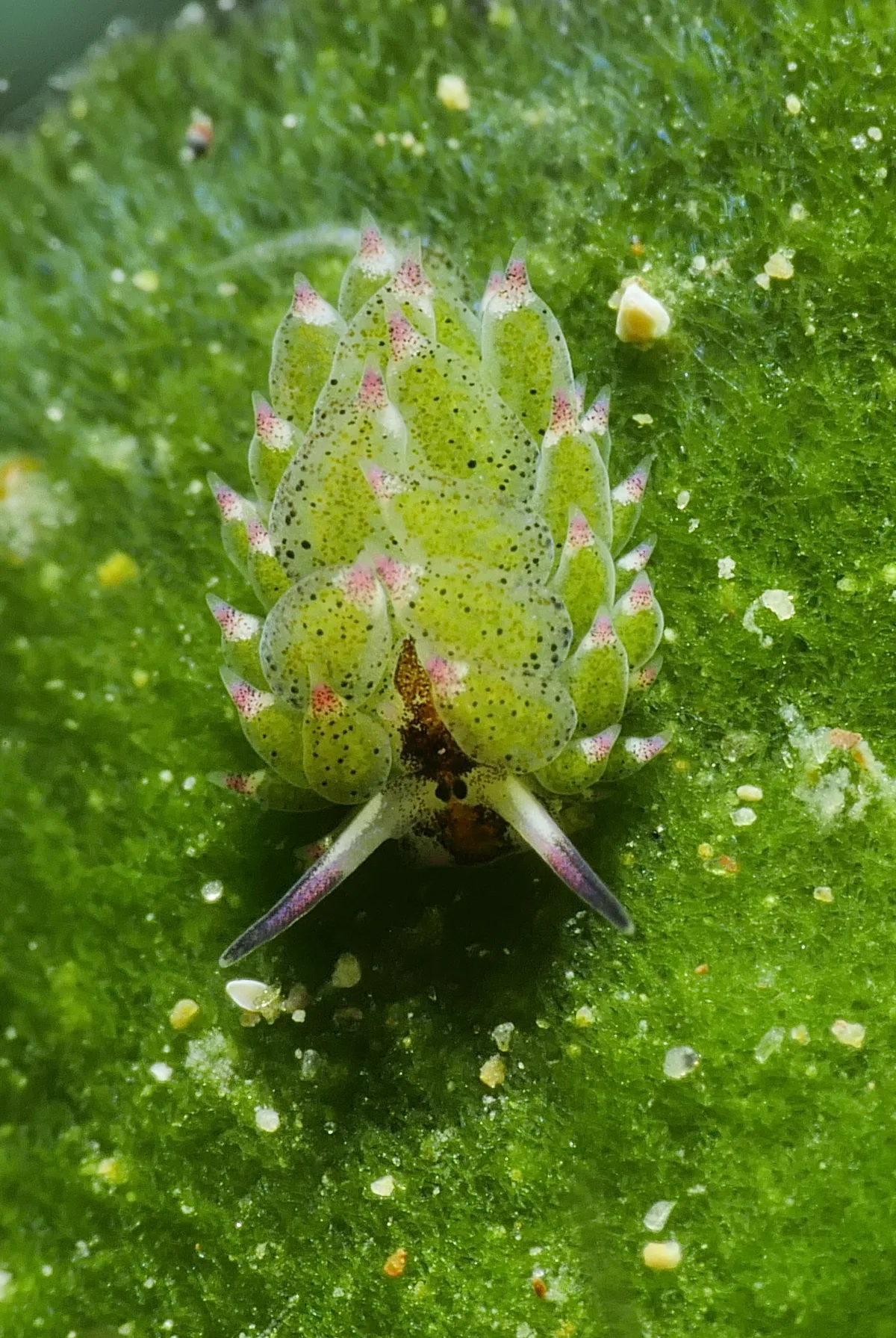
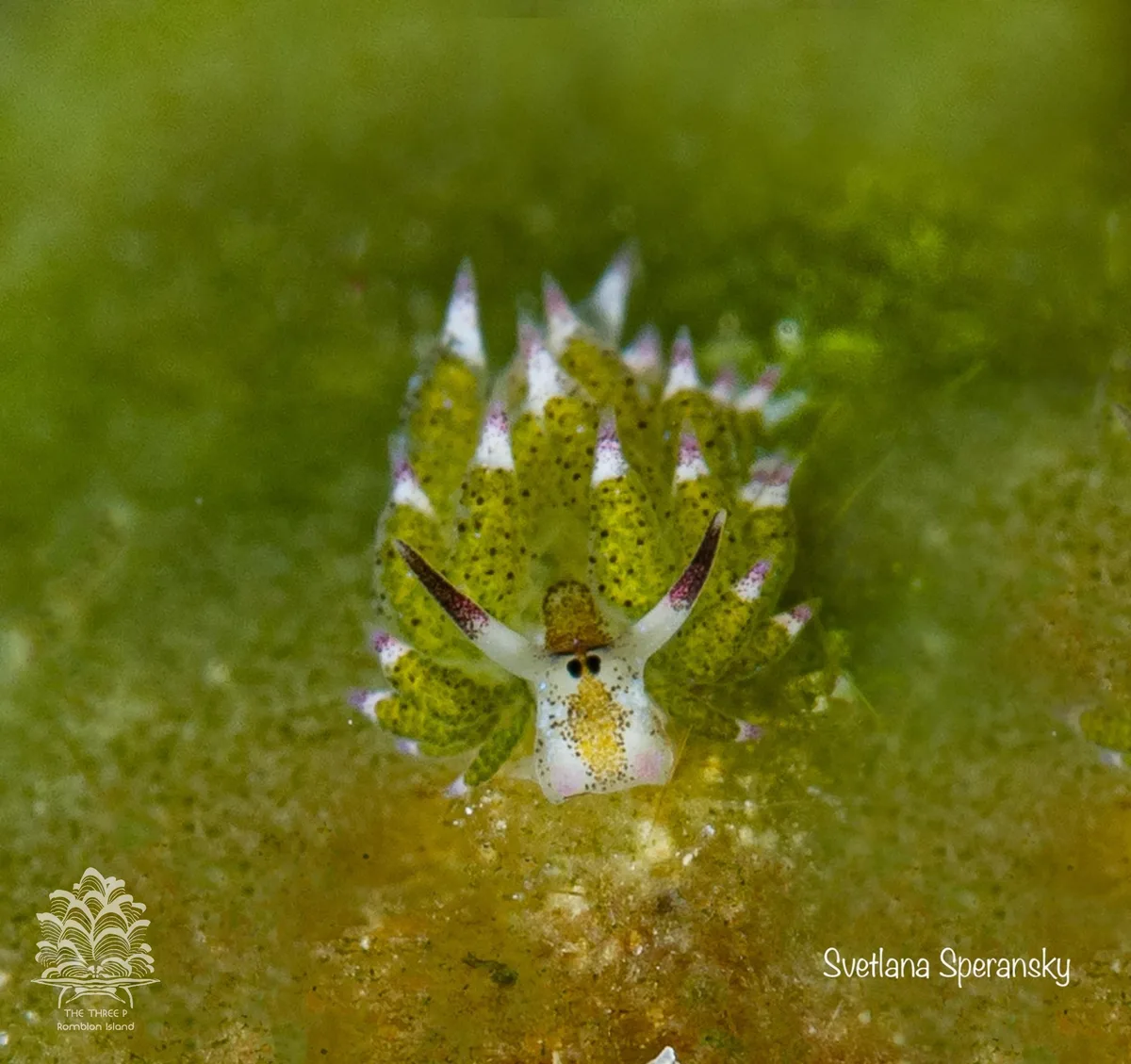
Two ringed rhinophores stand up like ears, two black eyes sit close together below them, and the back is covered in green cerata tipped with white. The animal is under a centimeter long and reads, at macro range, as a cartoon sheep grazing a lawn. The resemblance is accidental, complete, and has made this one of the most photographed sea slugs on earth.
The 🌊 Red Sea complicates the joke. The regional guide photographs at least four more Costasiella from this coast, several of them undescribed, all of them small green slugs on the same weed. The mark that actually settles it is a sandglass-shaped brown patch behind the eyes, with red-brown tips to the rhinophores. Without that, a sheep slug photograph from here is a Costasiella and no more.
The lawn is real. It lives on Avrainvillea, a soft dark-green alga that grows in protected bays and lagoons among seagrass and sand, from about 2 to 30 m, and it feeds by puncturing one cell at a time and drinking the contents. The green in the cerata is stolen chloroplasts, packed into the digestive lining that branches out into each one.
Here the internet version overstates it. When the genus was tested, this species turned out to be a short-term holder: photosynthesis in its cerata measured well below the level in the alga itself and fell away within days, while a related Caribbean species held on far longer. The sheep has to keep grazing, which is exactly what you find it doing.
The gap between those two facts is worth sitting with. Six hundred records of this slug sit in the public observation databases, from the 🇵🇭 Philippines to the Caribbean, and not one of them is from the 🌊 Red Sea. The animal is here, the guide photographs it here, and nobody has logged it.
That is because finding one is a matter of scanning algal mats centimeter by centimeter with a macro lens rather than swimming a reef. Photographers who know a patch come back with the shot. Everyone else swims over several of them a dive without registering that the fuzz on the weed contains animals.
- under 1 cm, two ringed rhinophores standing up like ears
- sandglass-shaped brown mark behind the closely set black eyes
- rhinophore tips red-brown
- green cerata with white tips, on soft green algal mats
- up to 1 cm