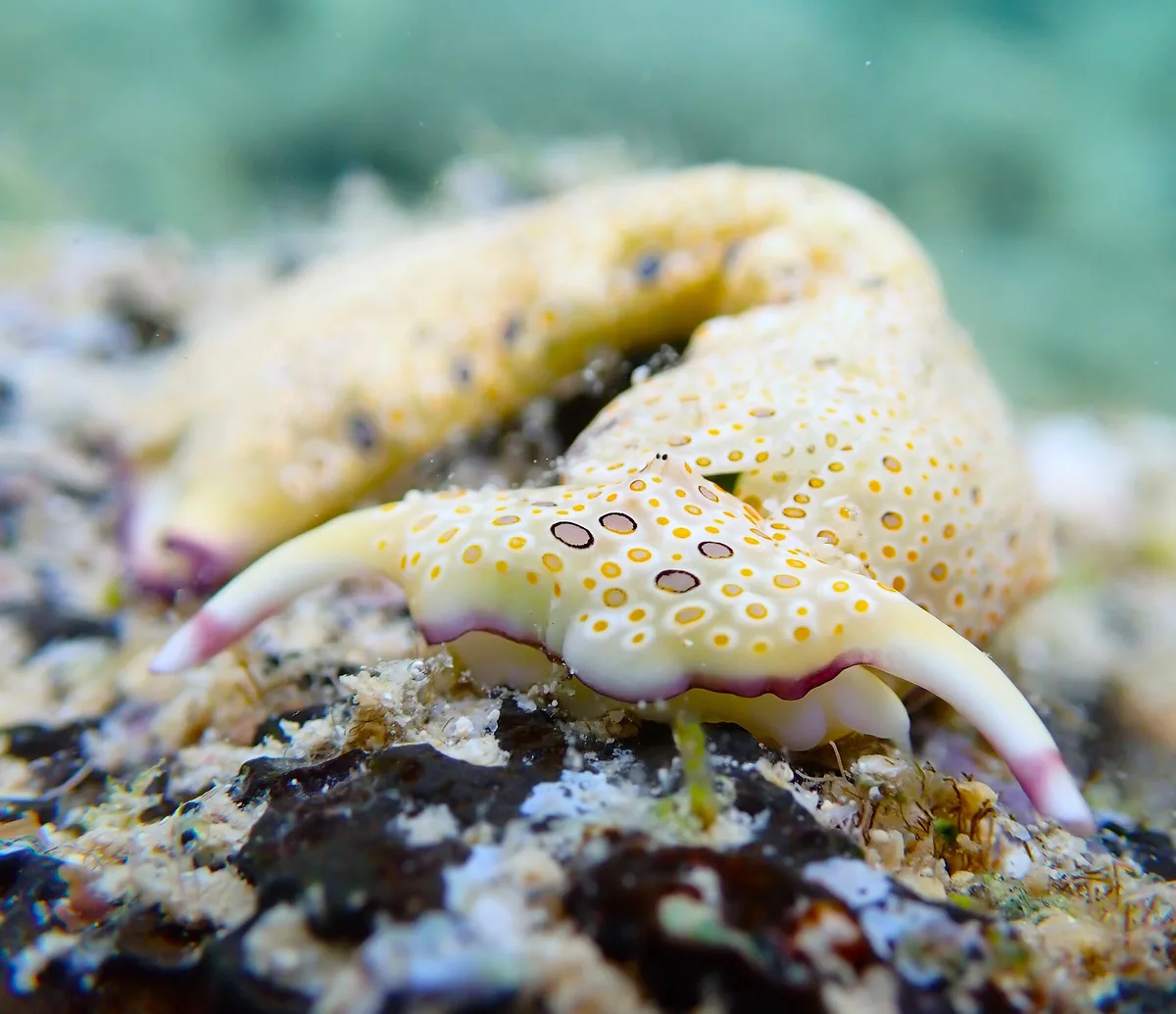
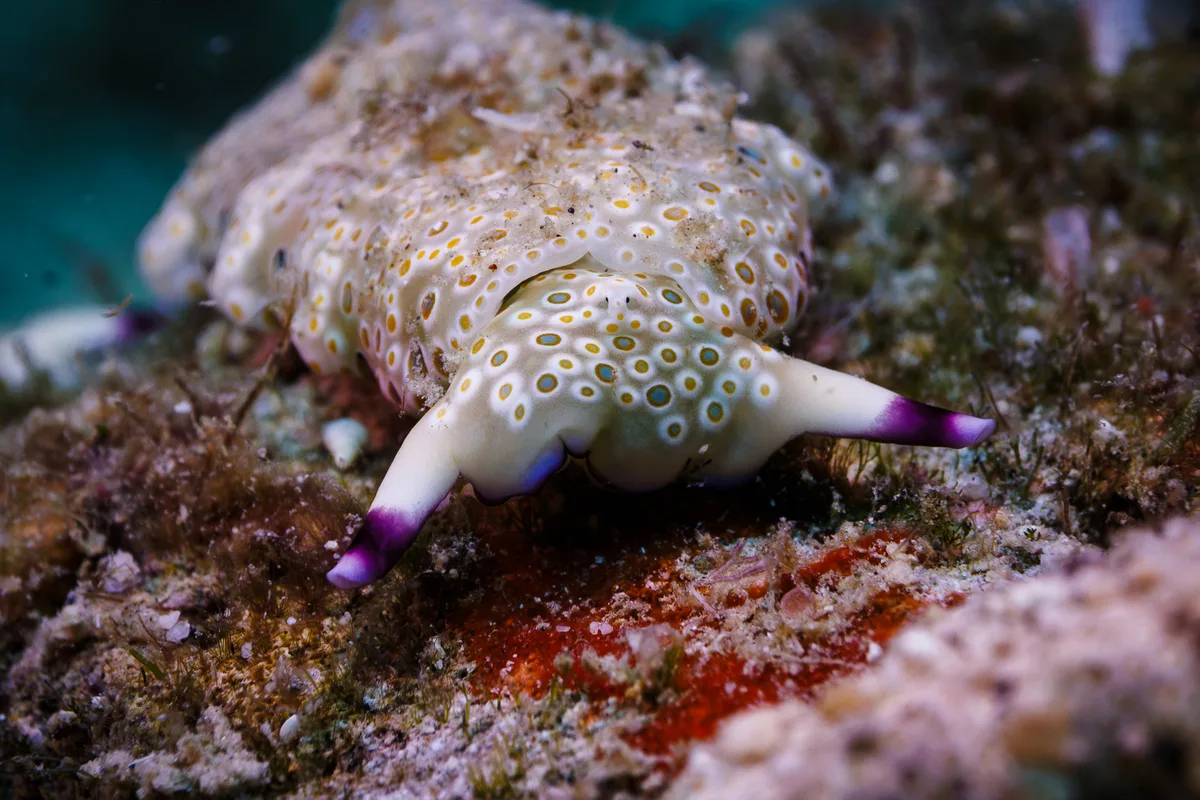
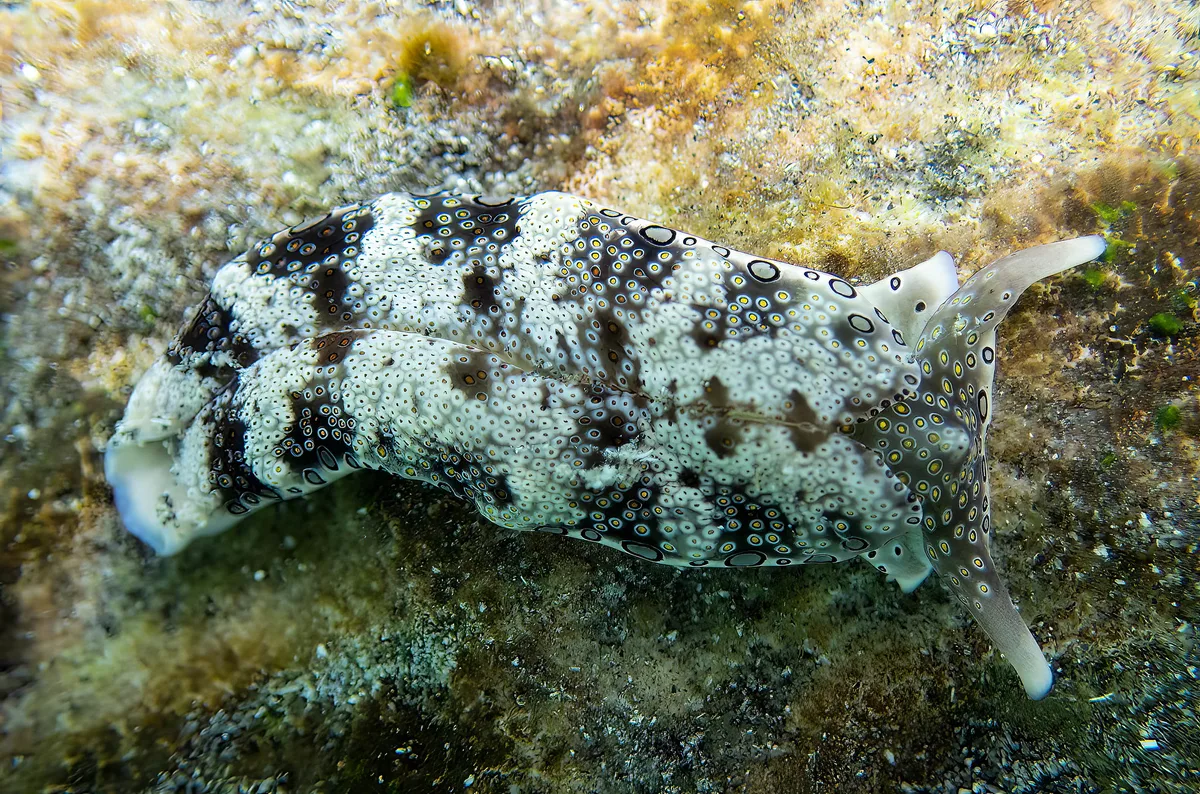
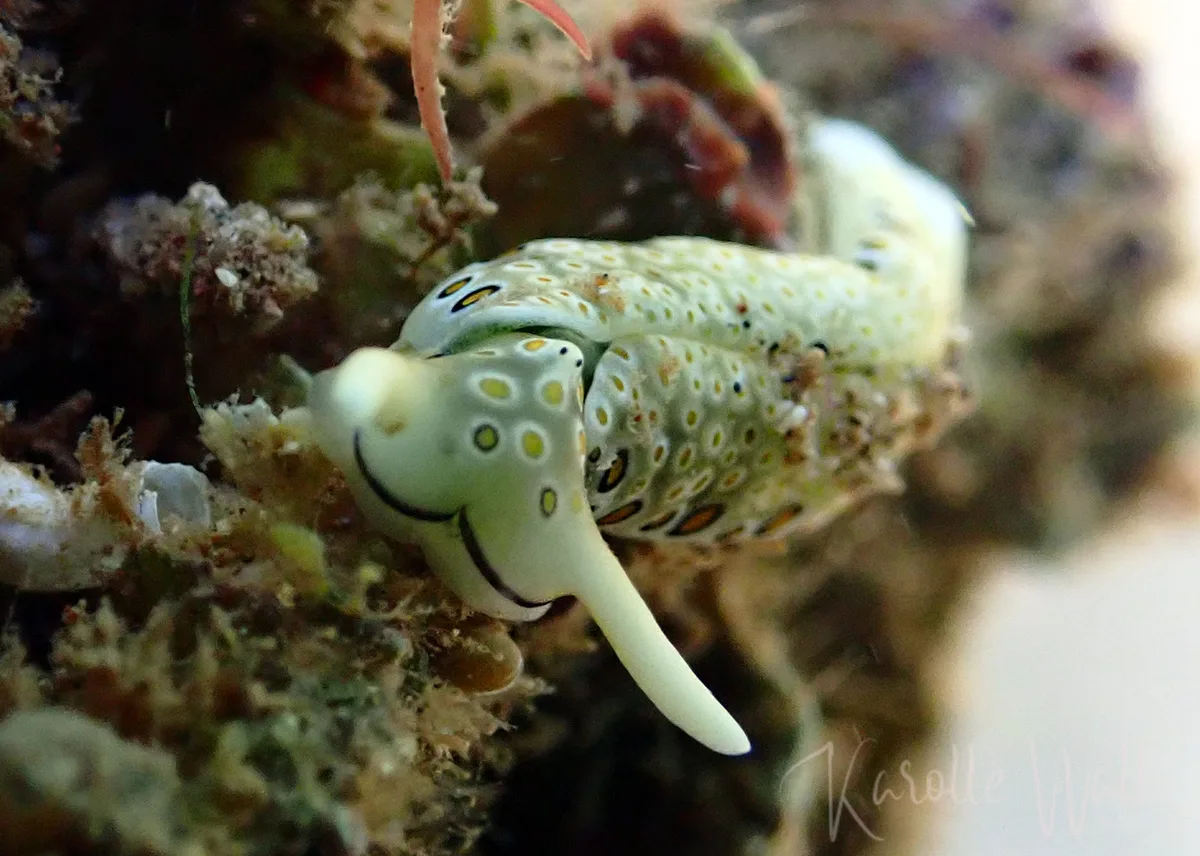
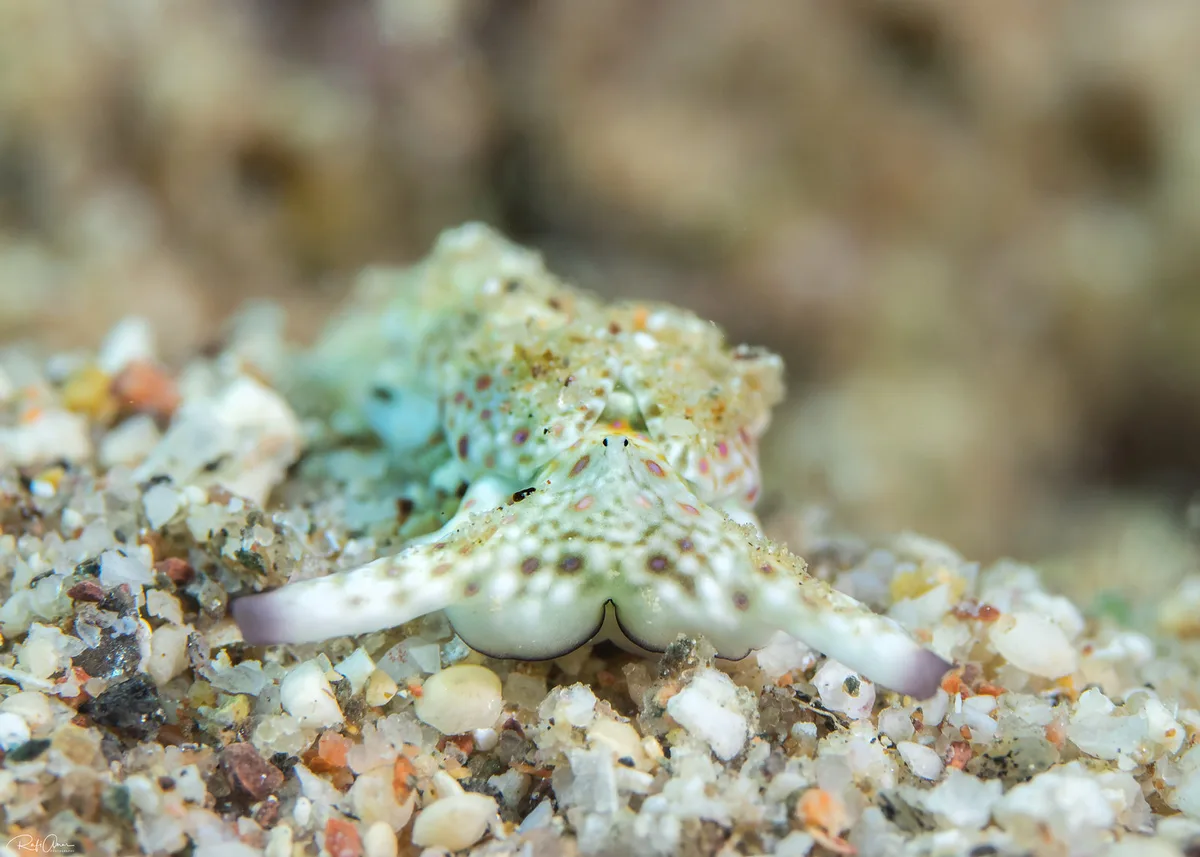
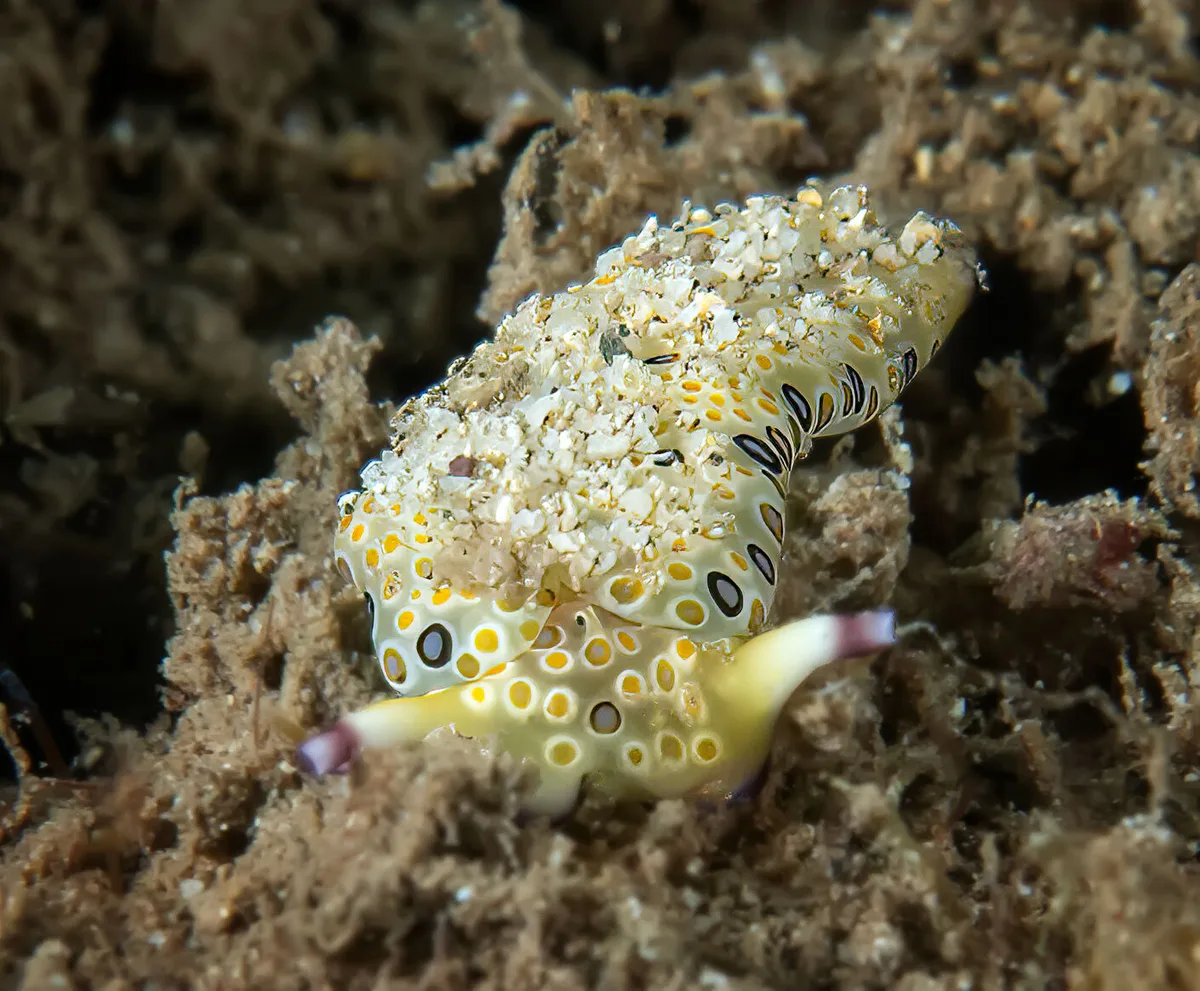
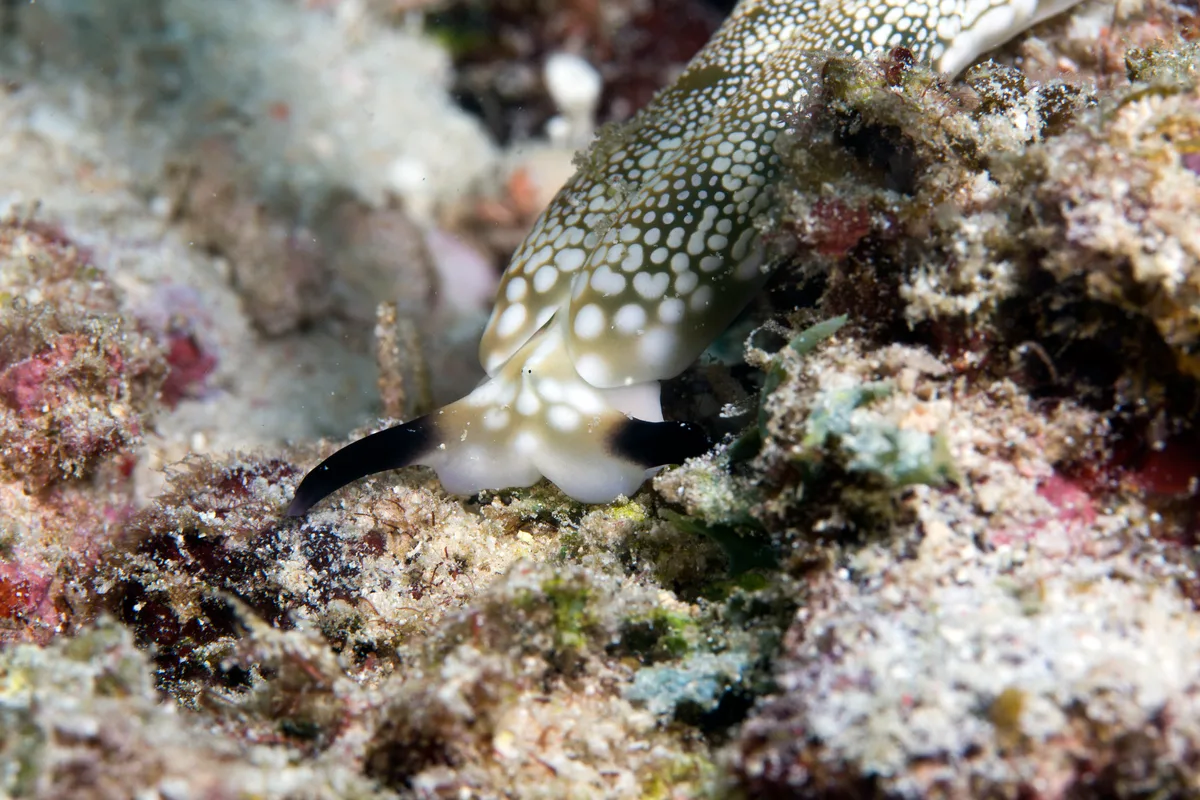
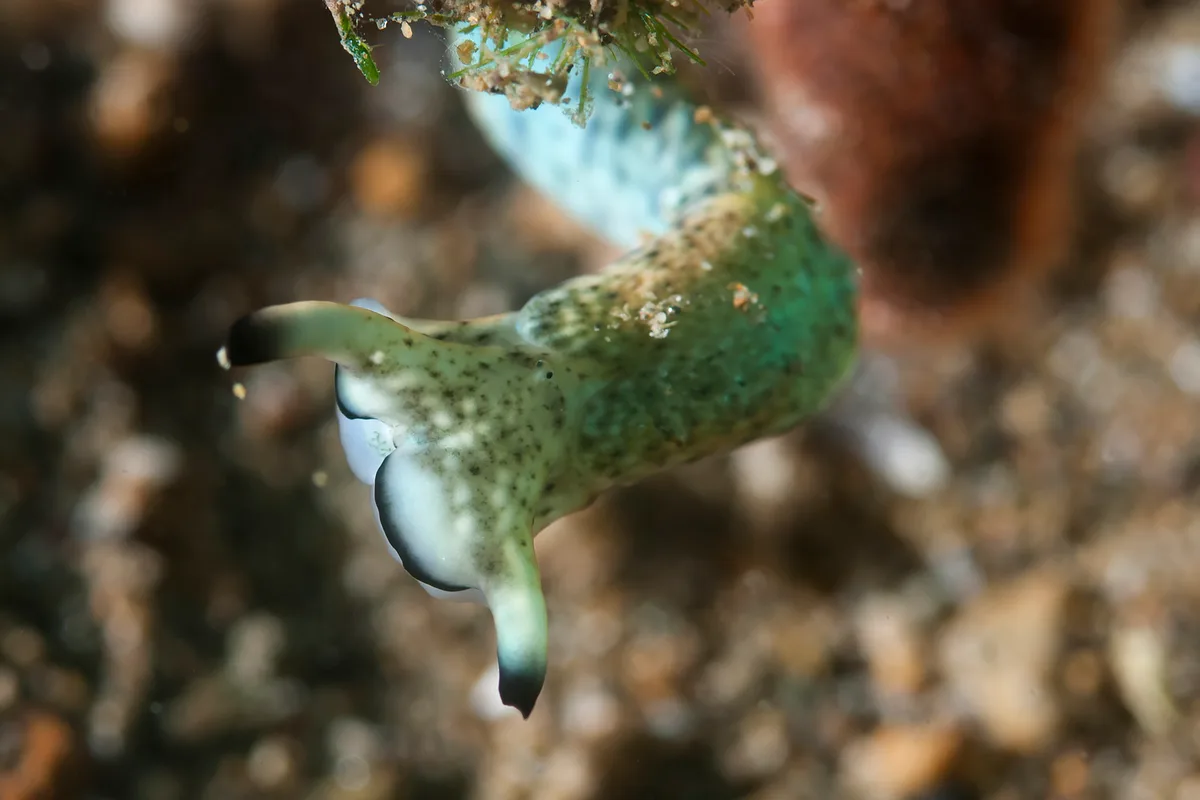
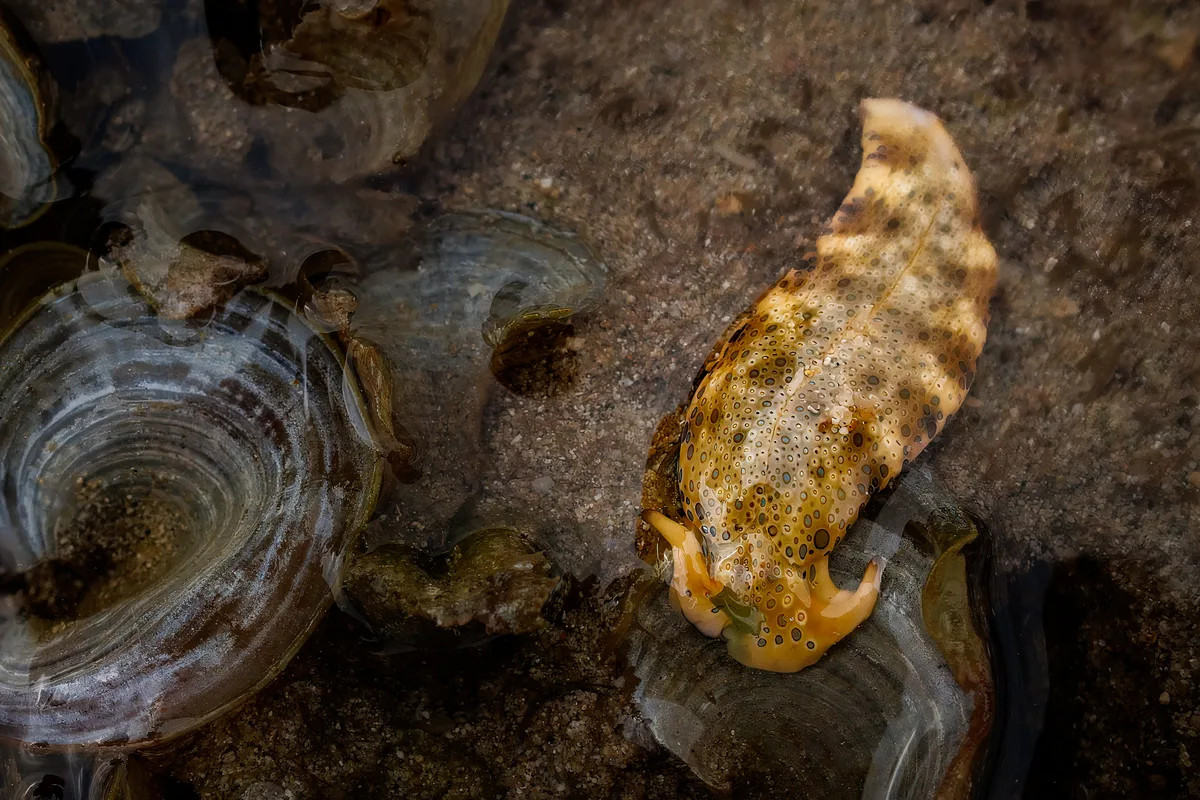
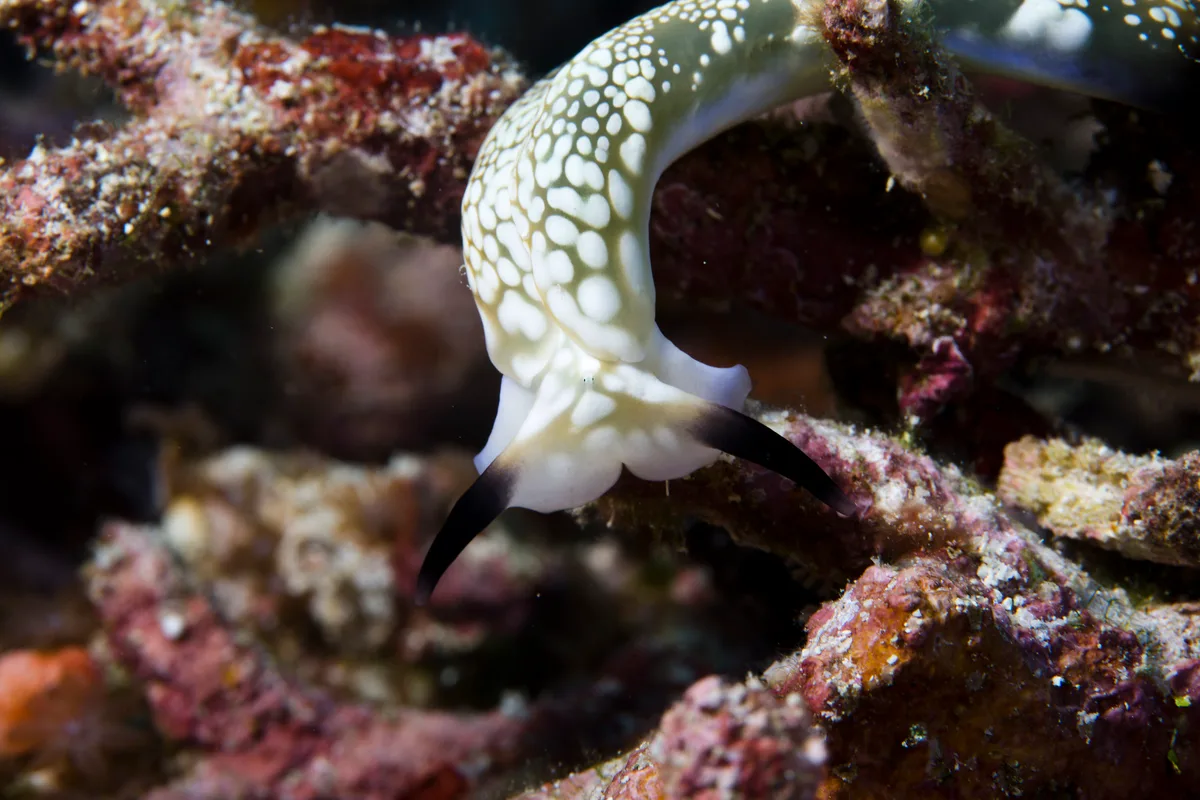
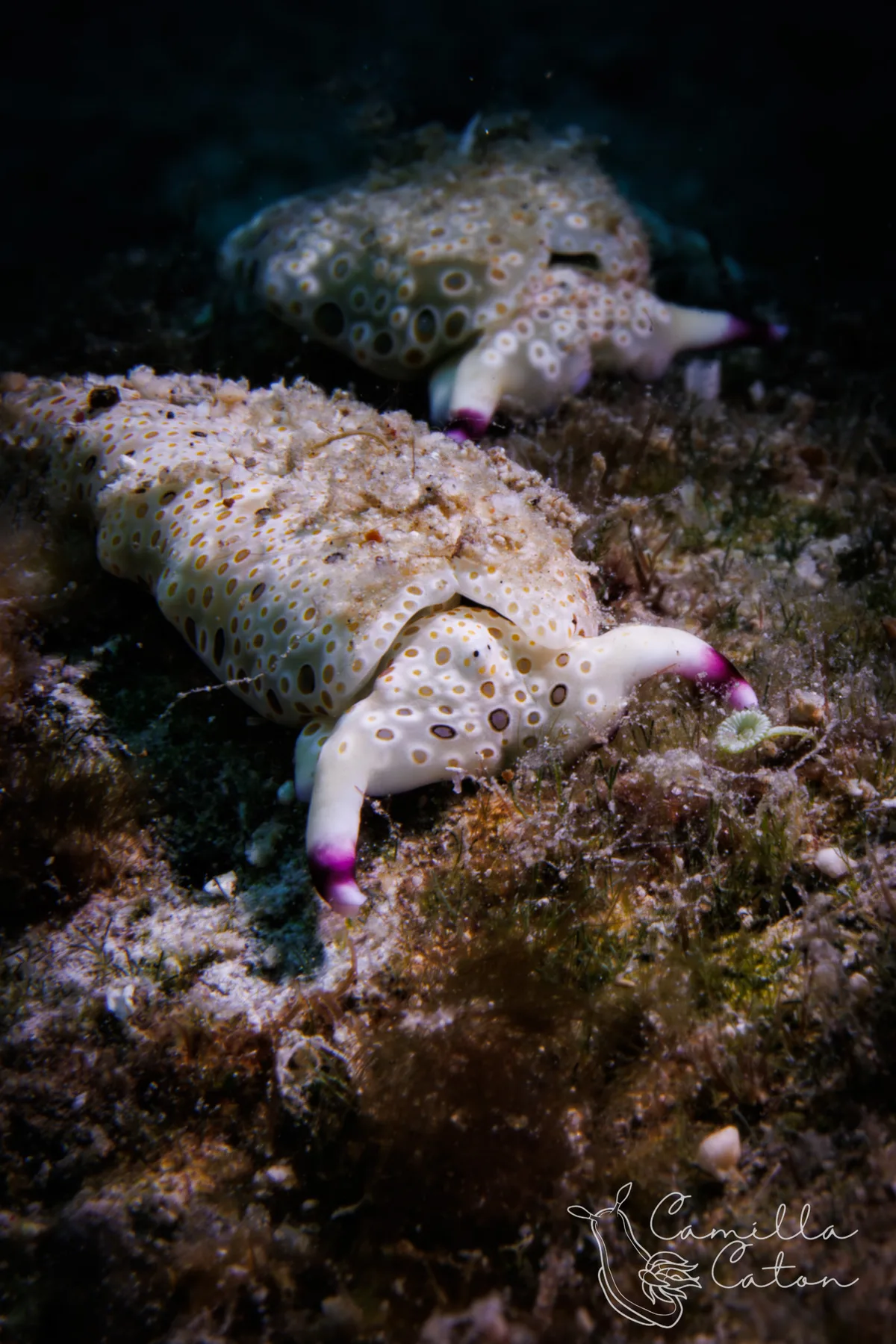
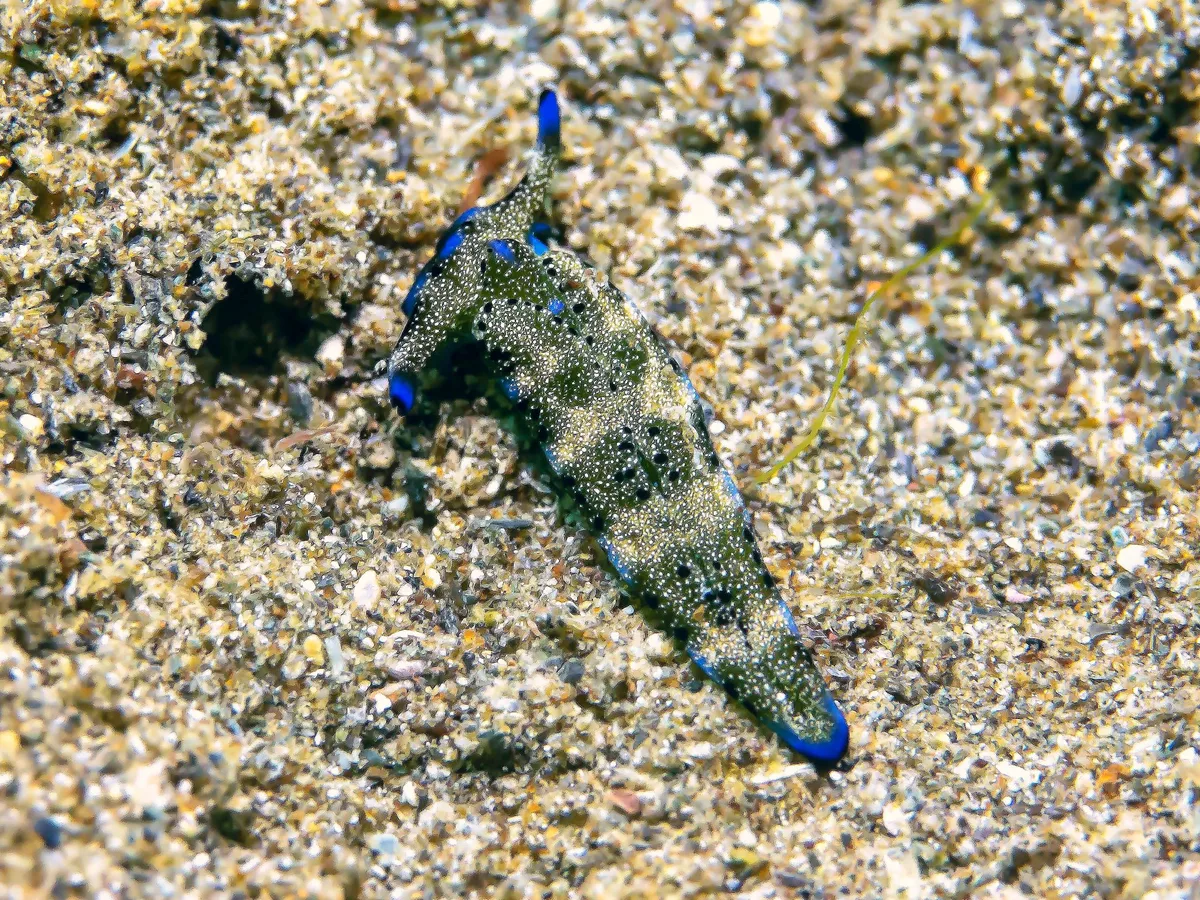
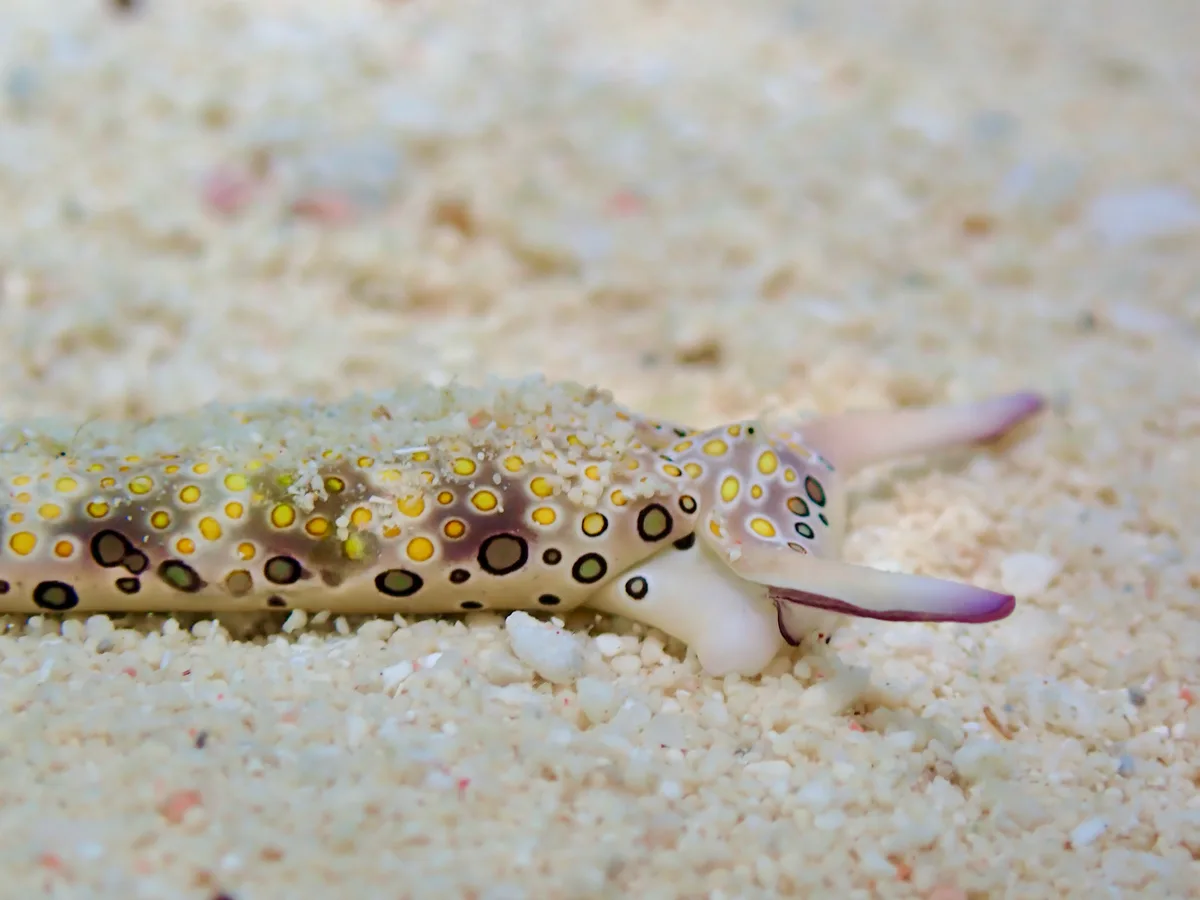
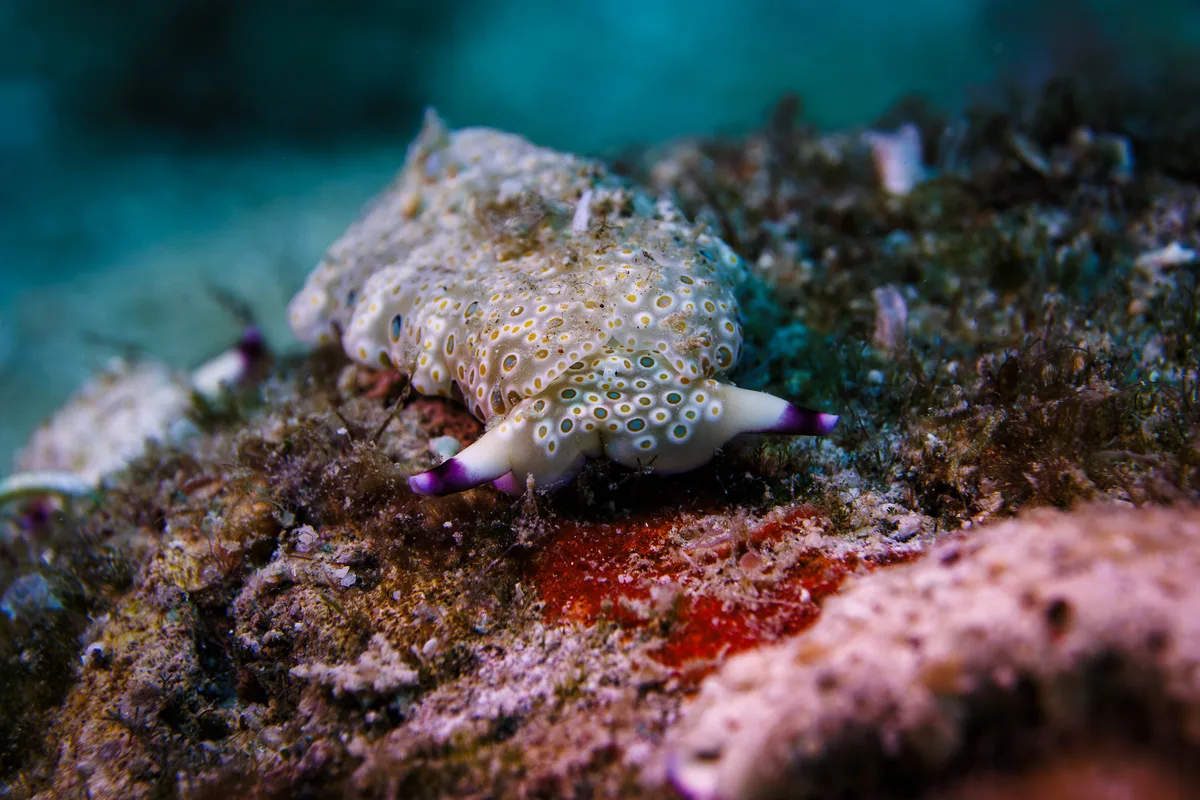
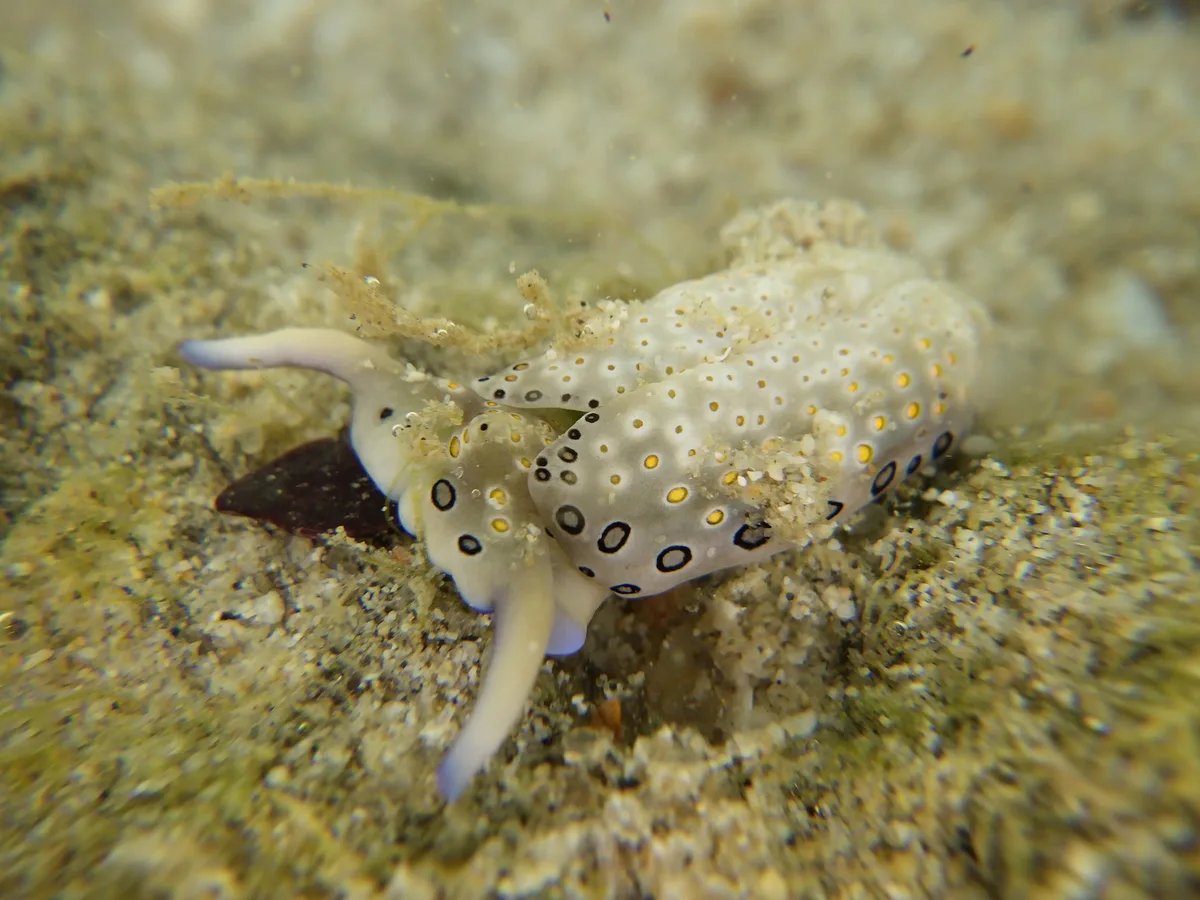
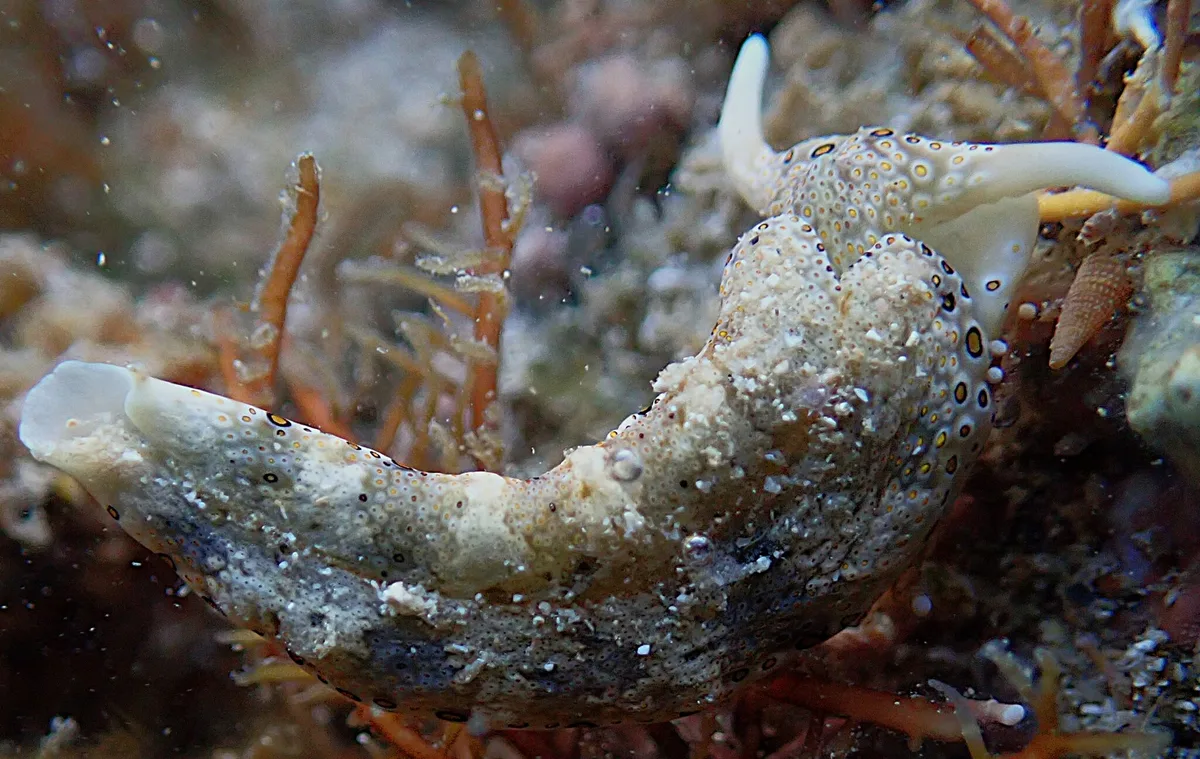
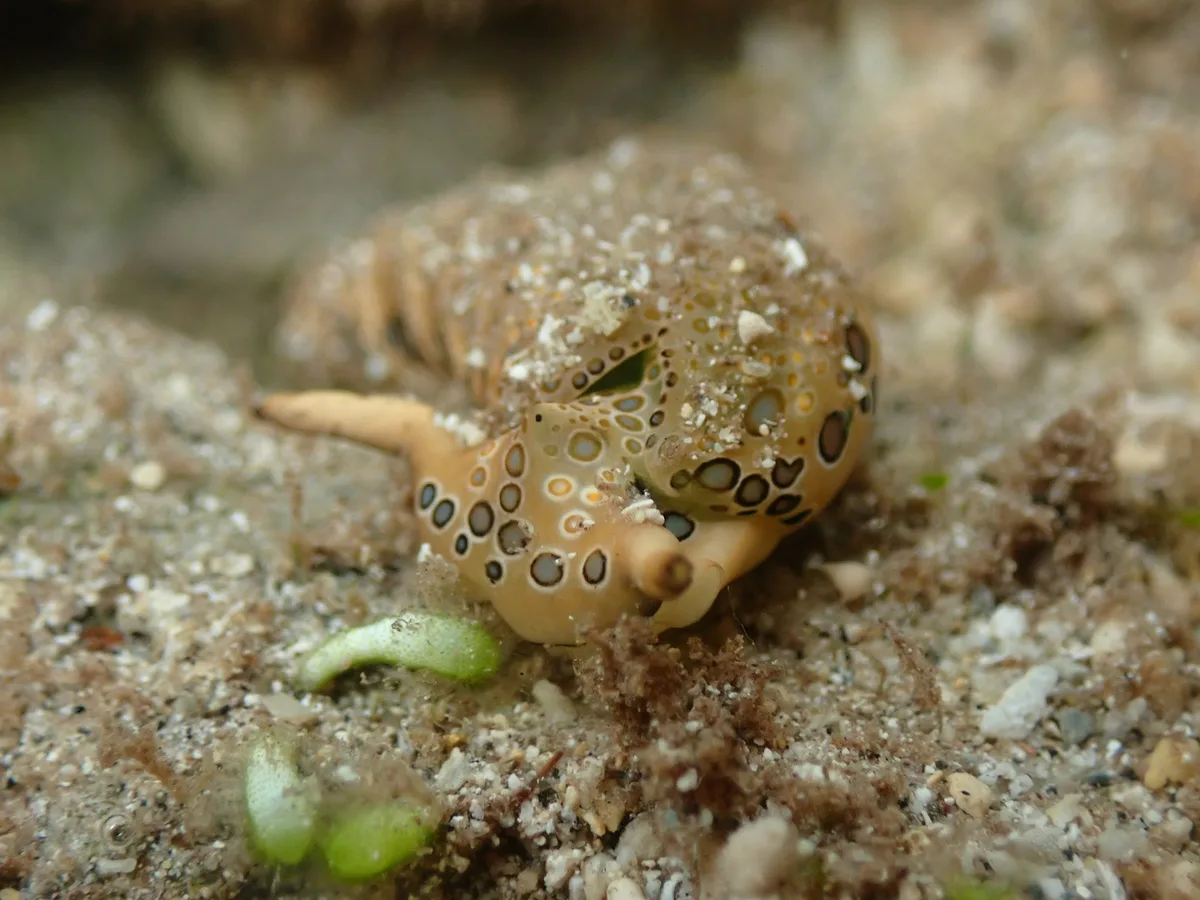
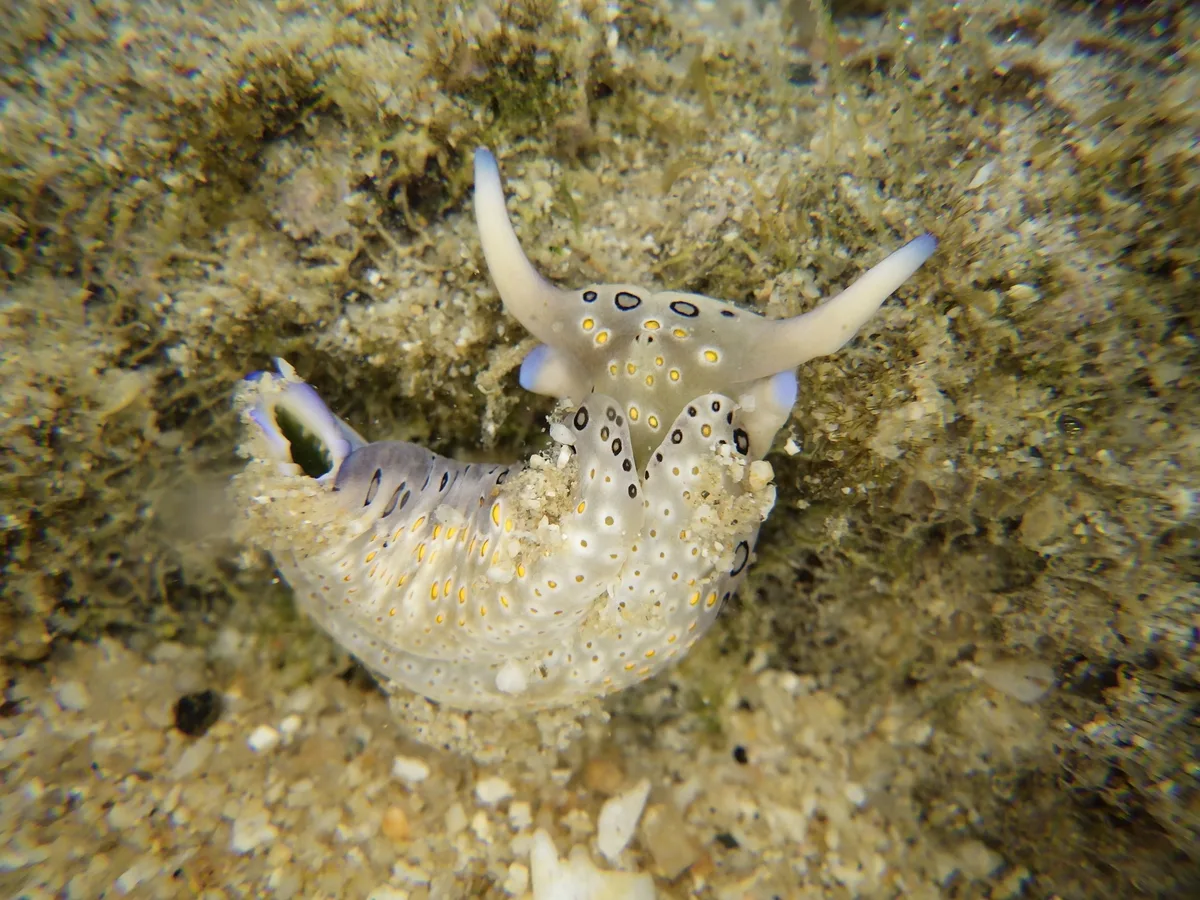
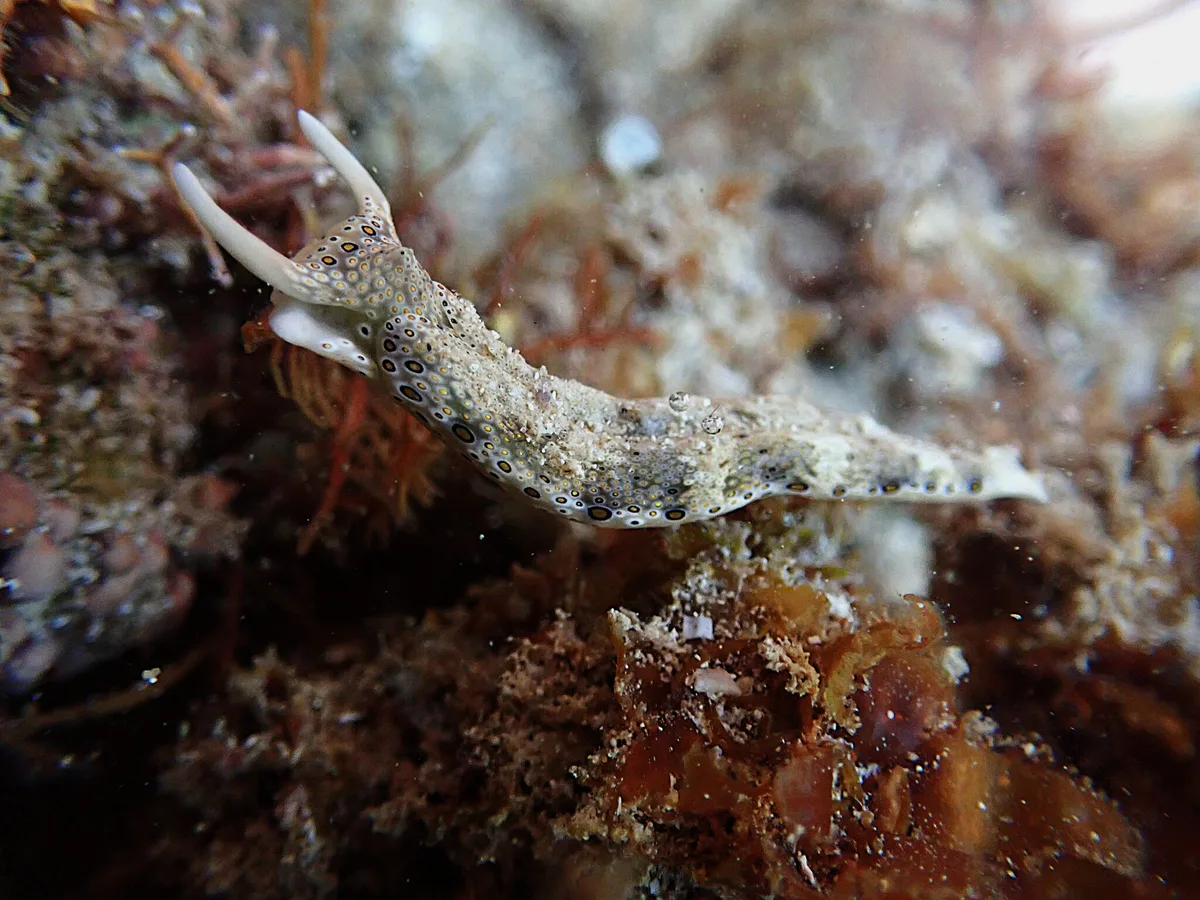
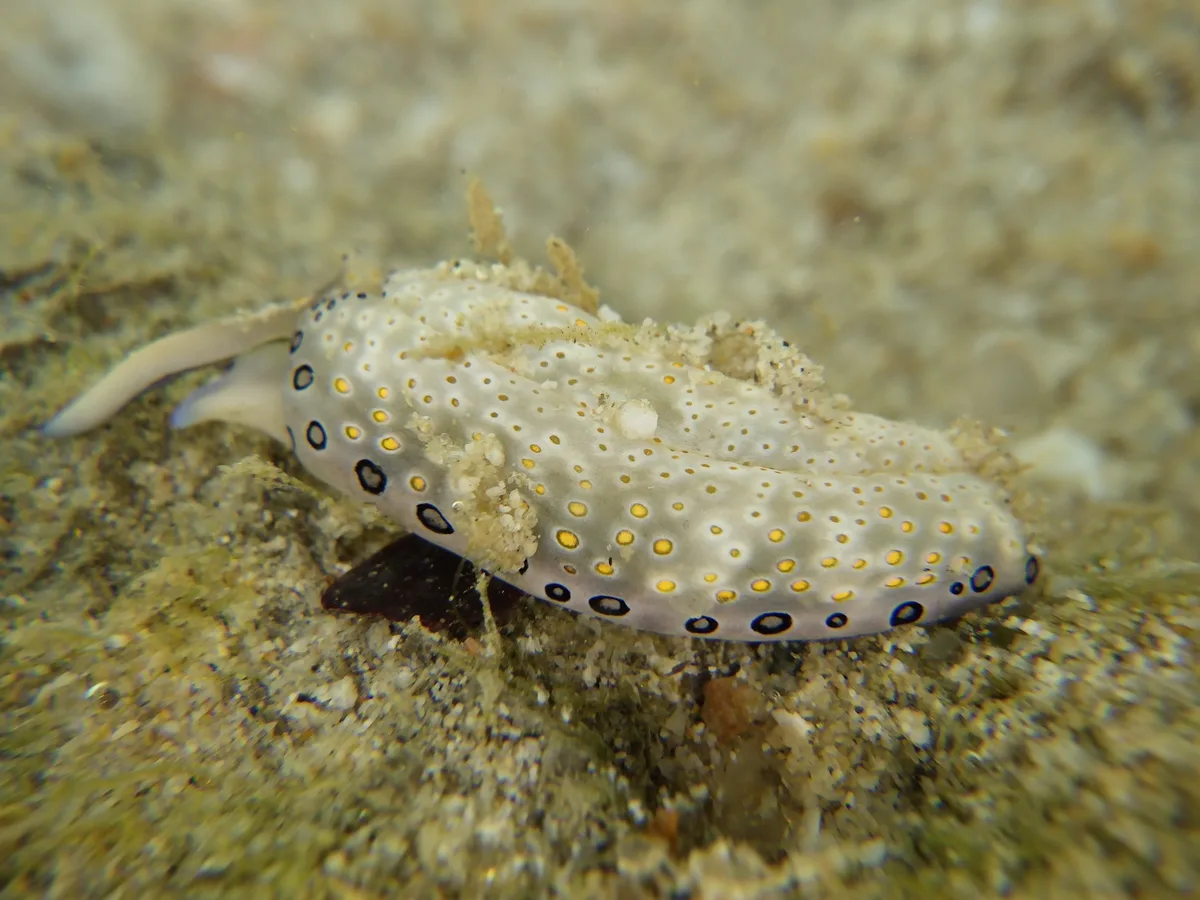
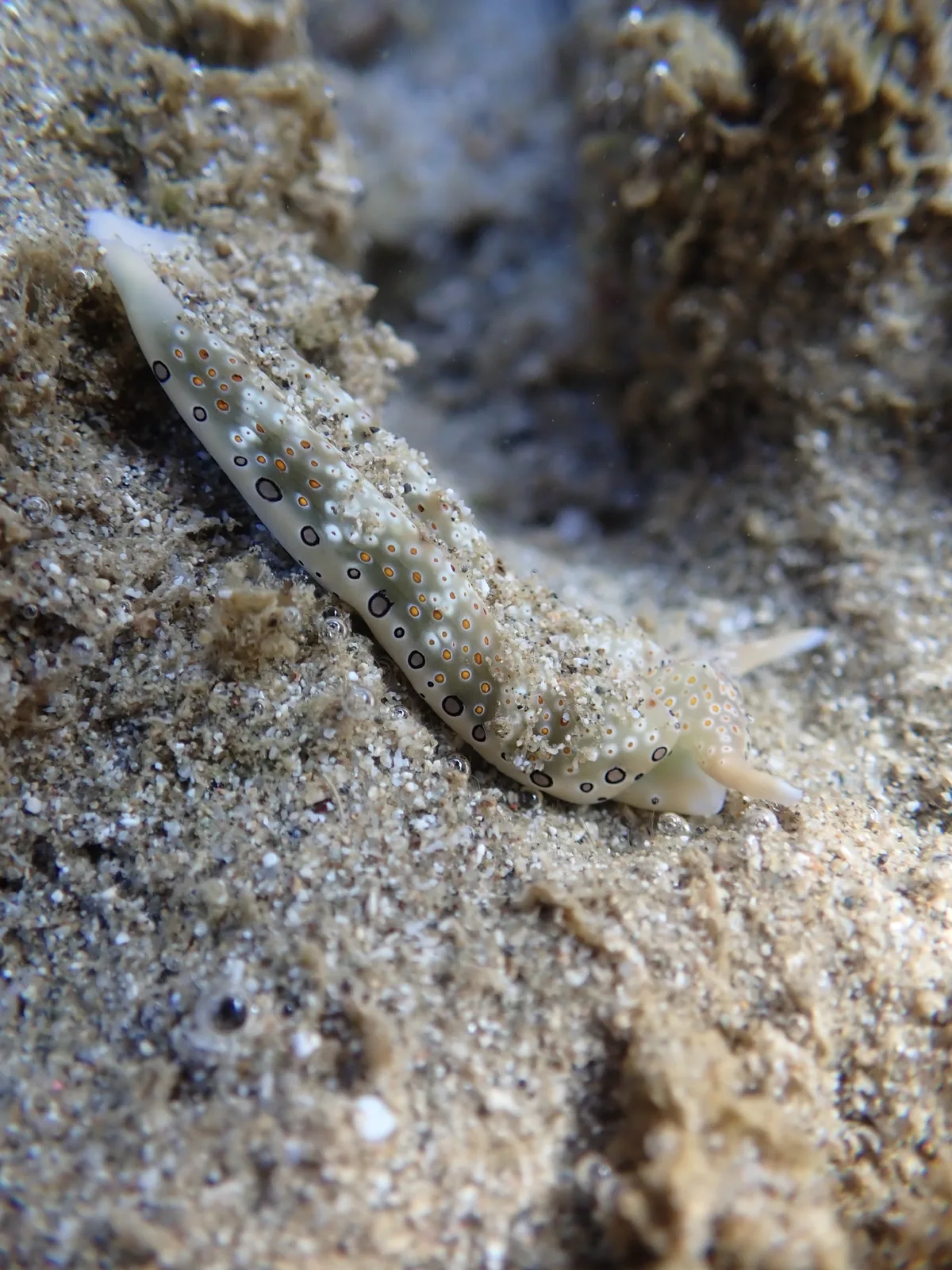
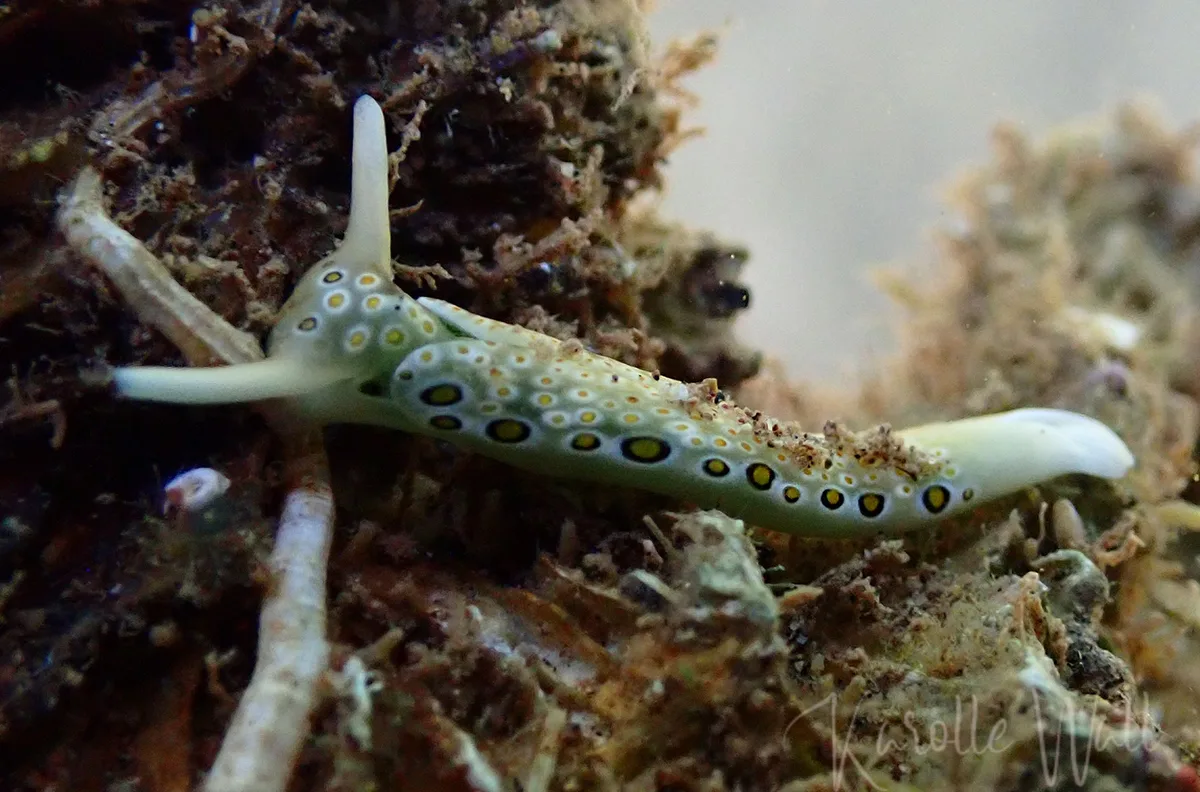
The two flaps on this slug's back are not solar panels. They are a sunshade.
The animal keeps its stolen chloroplasts in ridges running along the back, then folds the flaps over them and settles half buried in coral sand, which puts the green machinery in shade. The reading offered by Bill Rudman on the Sea Slug Forum is that full tropical sun would damage the plastids and the flaps hold the light down to a level they can work at. Either way, the sacoglossan that has gone furthest with photosynthesis is the one that keeps its chloroplasts covered.
It has gone further than any of them. Like the rest of the group it pierces a single algal cell with a one-toothed radula, drinks the contents, and keeps the chloroplasts alive in the lining of its digestive gland. In the survey that compared sacoglossans by photosynthetic yield it held the record: still measurably working after 74 days without food, and other work reports functional plastids for as long as ten months.
The solar-powered story is only half of it, though. Barcoding of wild animals shows they keep grazing, drawing plastids from at least eight species of siphonous green algae and replacing them as they go, and that the sugar from photosynthesis counts most when food runs short. The borrowed machinery is a reserve tank rather than a way of life.
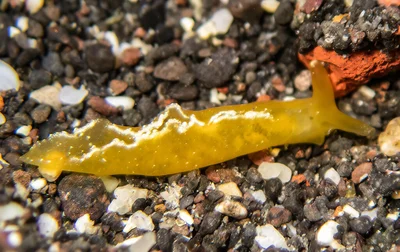
Underwater it reads as a scrap of debris: flat, brown to olive, dusted with pale spots each ringed in dark, up to 6 cm long, out on the sand and seagrass flats that most divers cross on the way to the reef. Genetic work has split the name into five to eight distinct species across the Indo-Pacific, and nobody has yet settled which of them is the 🌊 Red Sea animal, so a photograph with a date, a depth and a place attached to it is worth keeping.
- flattened body with two side flaps folded over the back
- brown to olive, dusted with pale spots each inside a dark ring
- green shows only when the flaps are lifted
- lies half buried on open sand, not on the weed
- up to 6 cm