This slug can throw away everything below its neck and grow it back.
In 2021 two researchers in 🇯🇵 Japan watching animals published as Elysia cf. marginata recorded something nobody had seen in a mollusk. An animal would work a split around its own neck over several hours and then walk away from its whole body: heart, gut, reproductive organs and both flaps left behind. The heads of young slugs were feeding on algae again within hours. About a third of them had regrown a complete body, heart included, in roughly twenty days. Heads from older animals never fed and died within days.
The discarded body is the strange half. It kept moving on its own for days and in some cases months, its heart still beating and its flaps still responding to touch, and it never grew a new head. It simply faded.
Why an animal would do this became clearer from the second species in the same study. Among 82 field-caught Elysia atroviridis carrying parasitic copepods, three shed their bodies and two of them had regenerated inside a week. The head appears to be walking away from an infested body rather than dying with it, and the chloroplasts it carries in its own tissue may be what keeps it fed while it rebuilds.
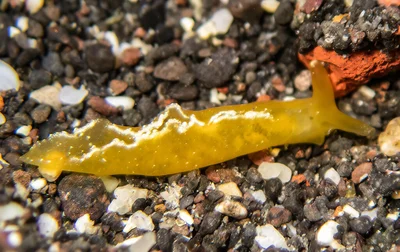
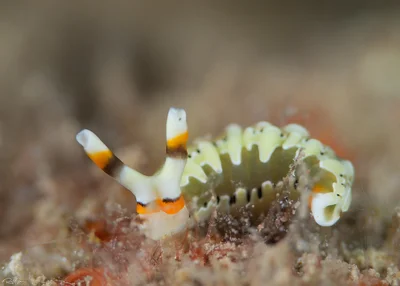
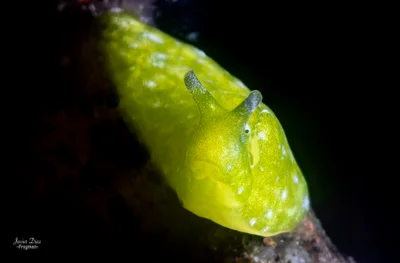
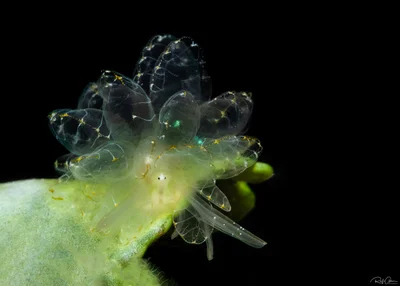
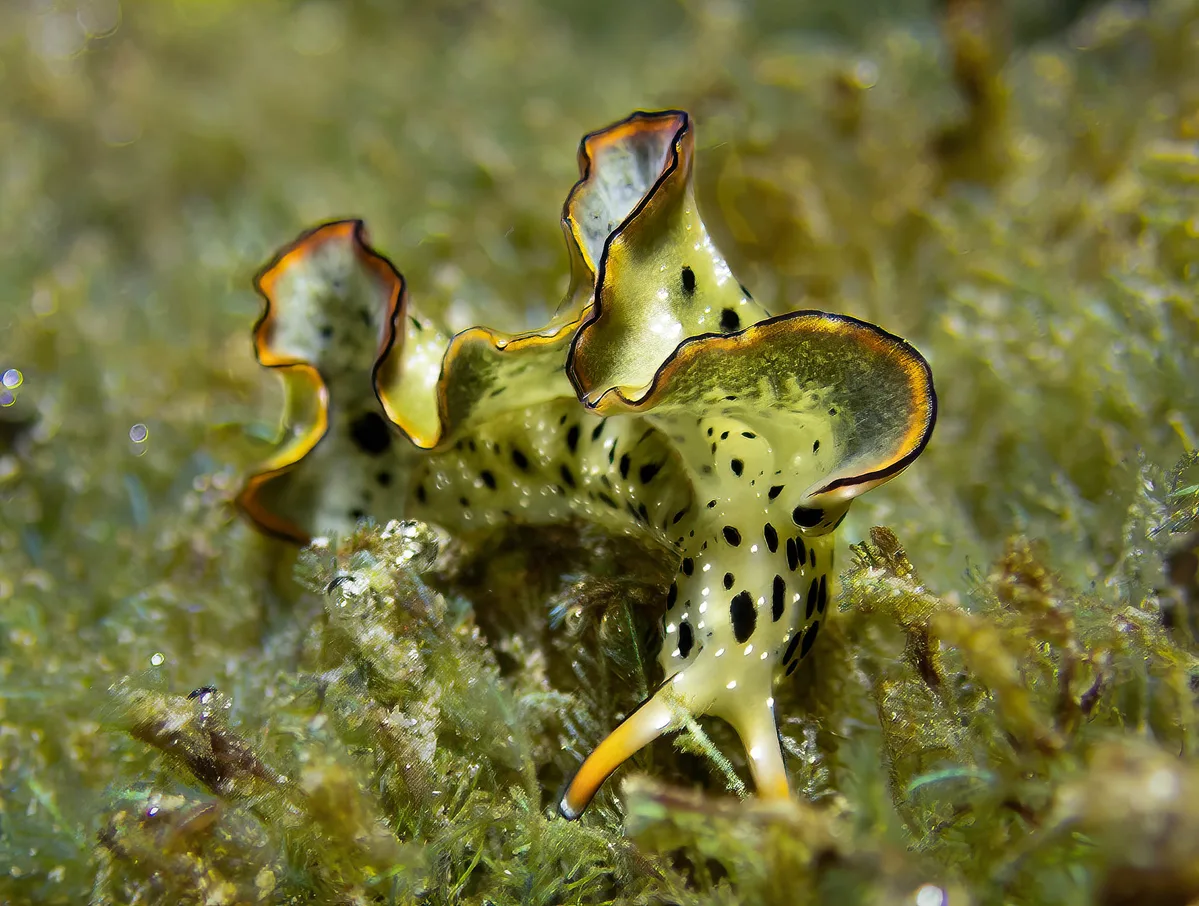
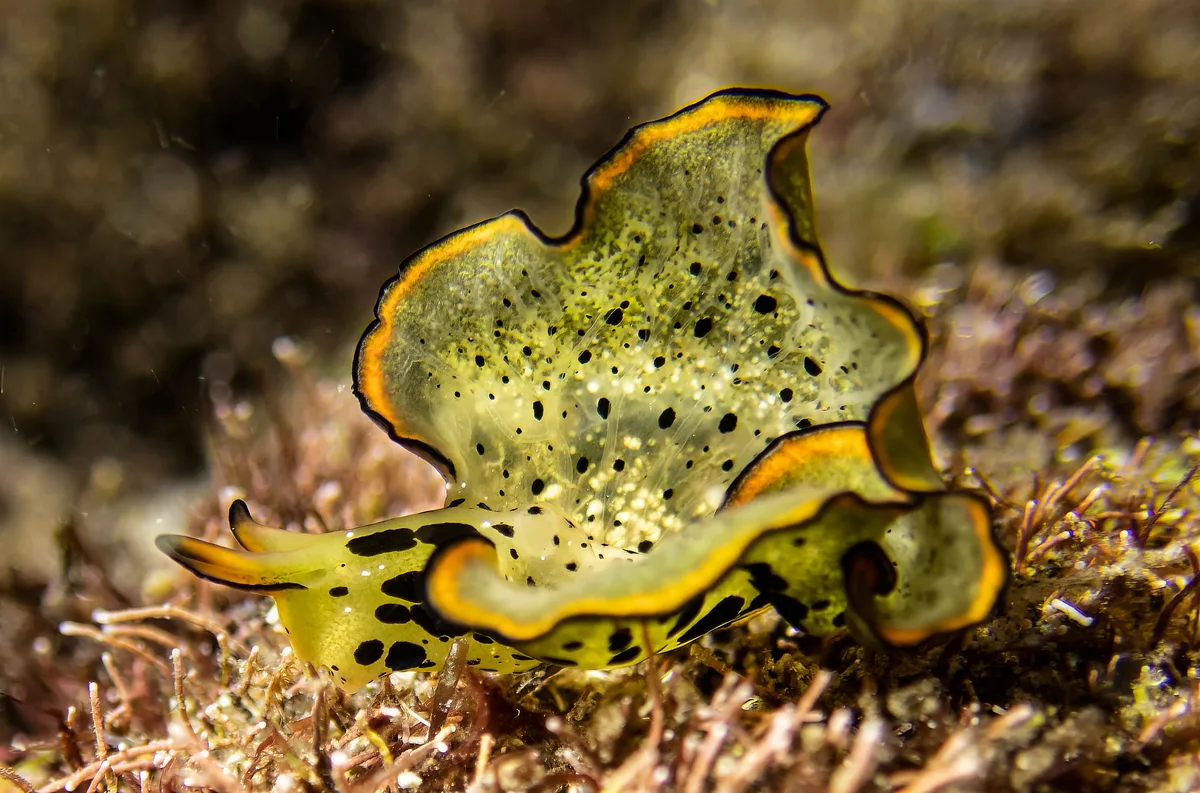
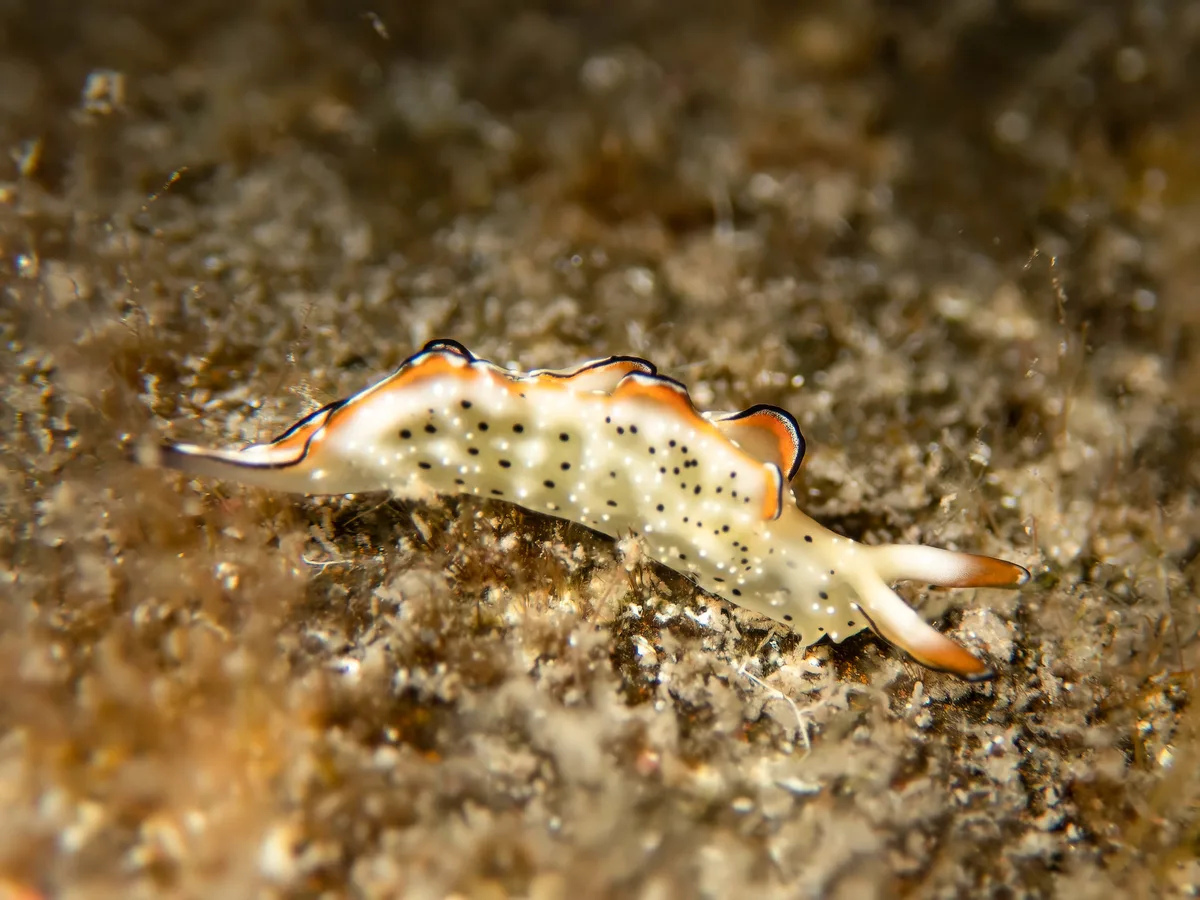
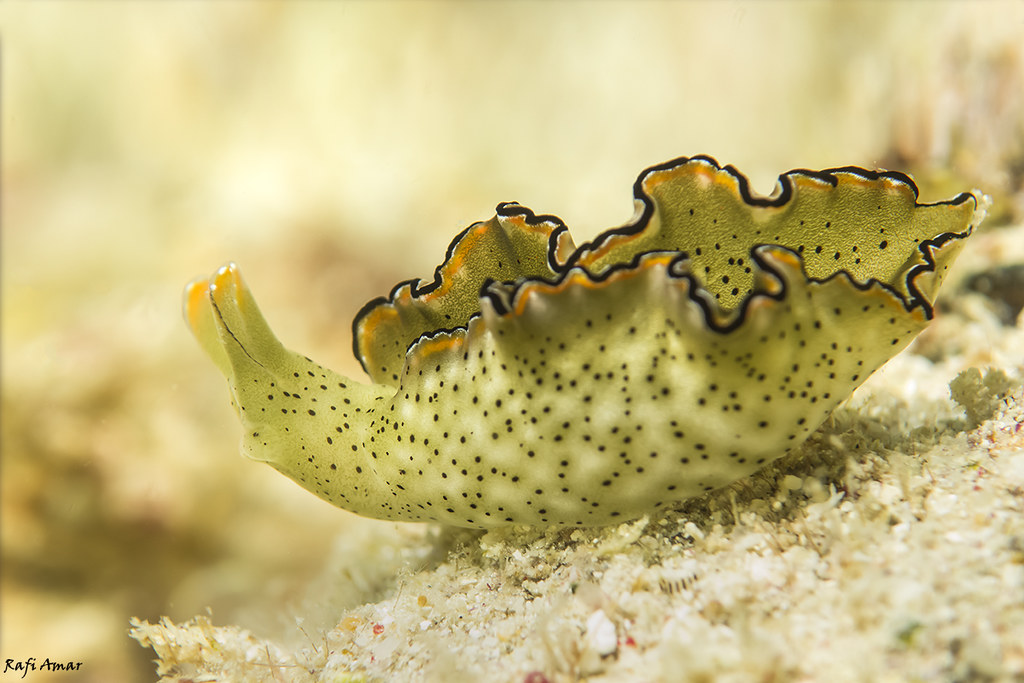
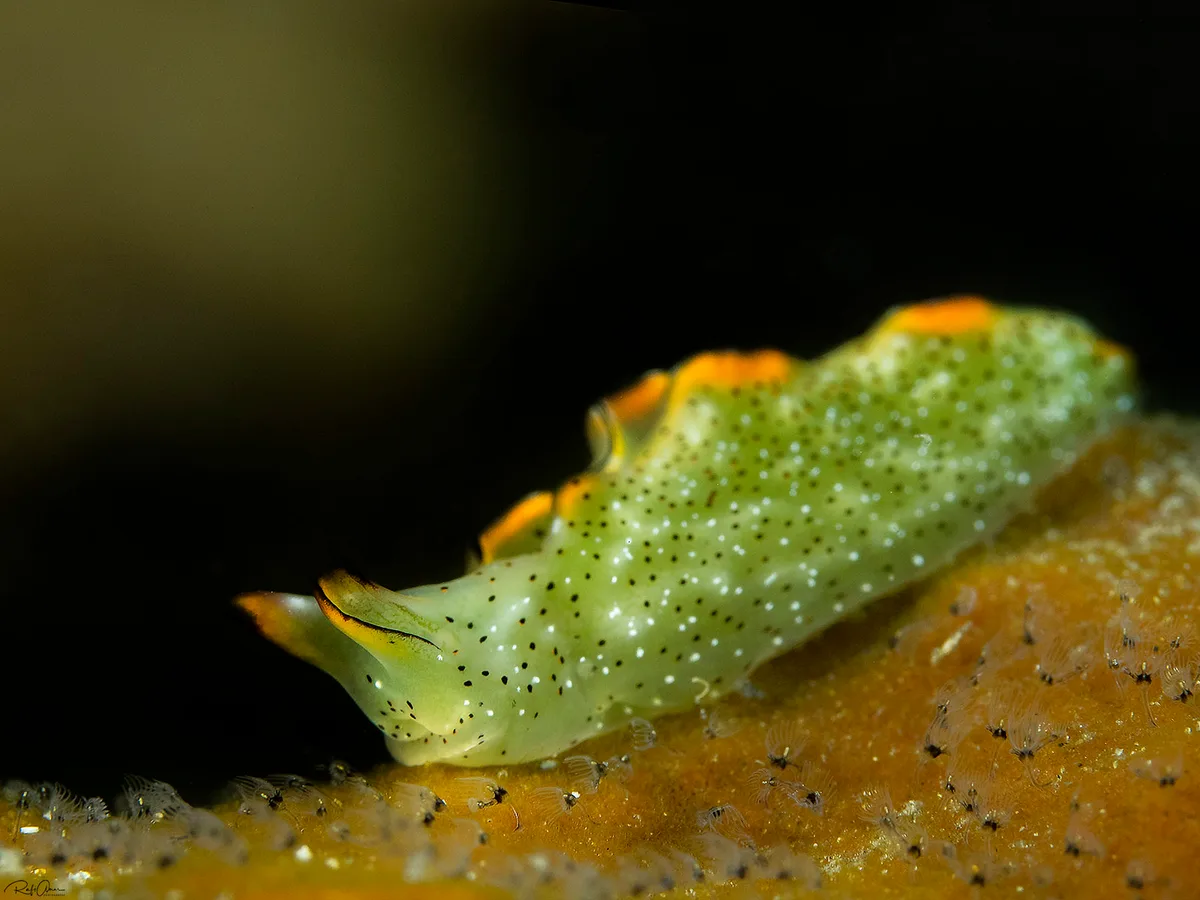
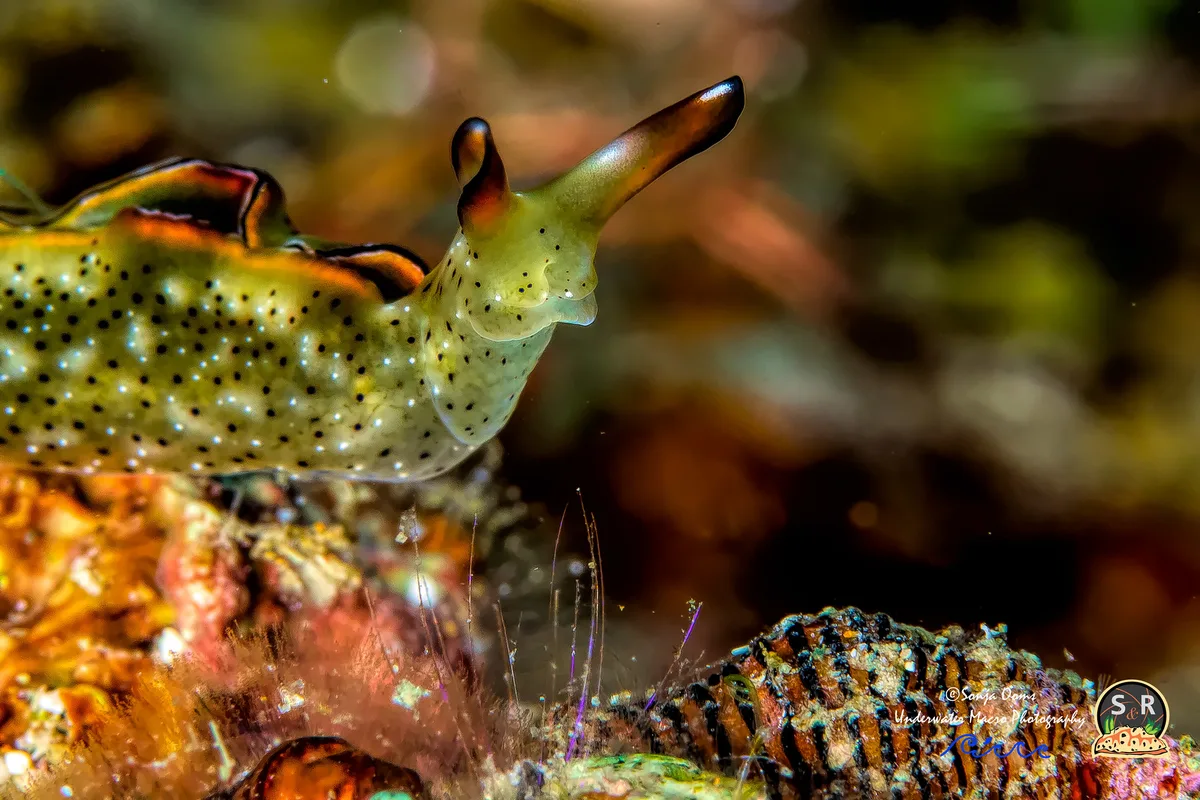
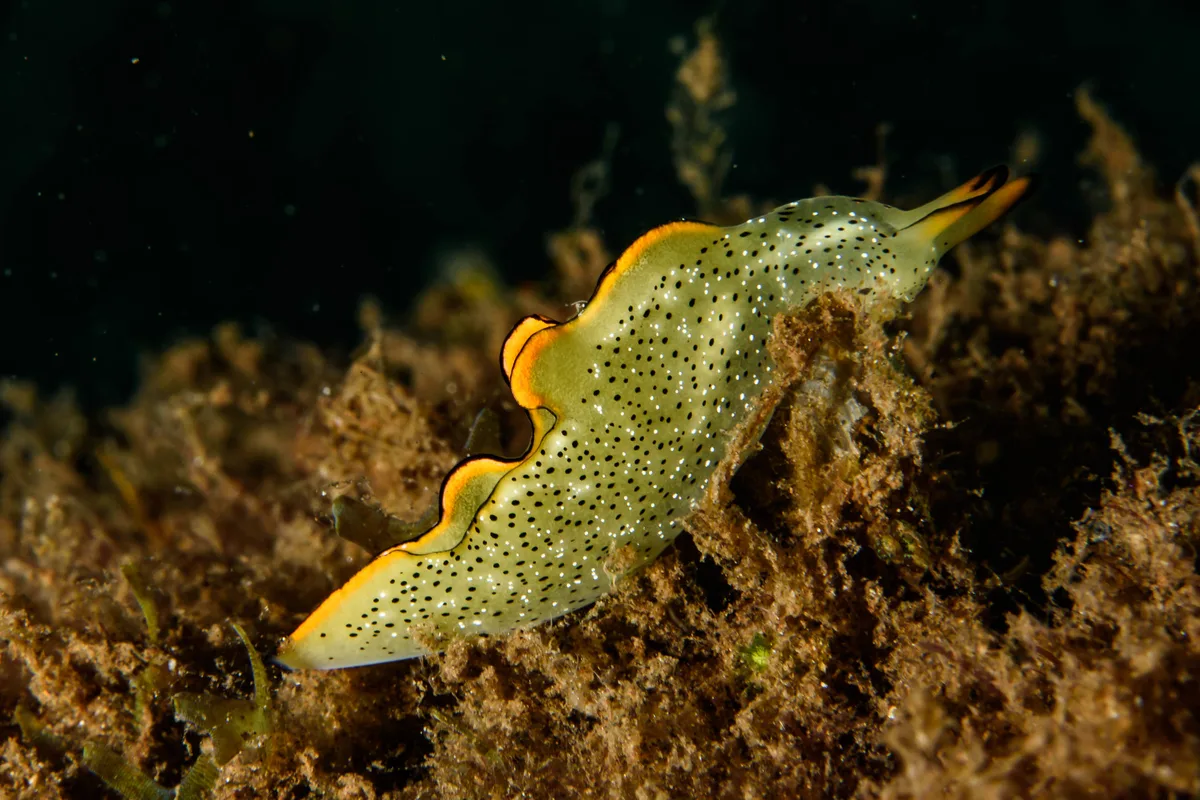
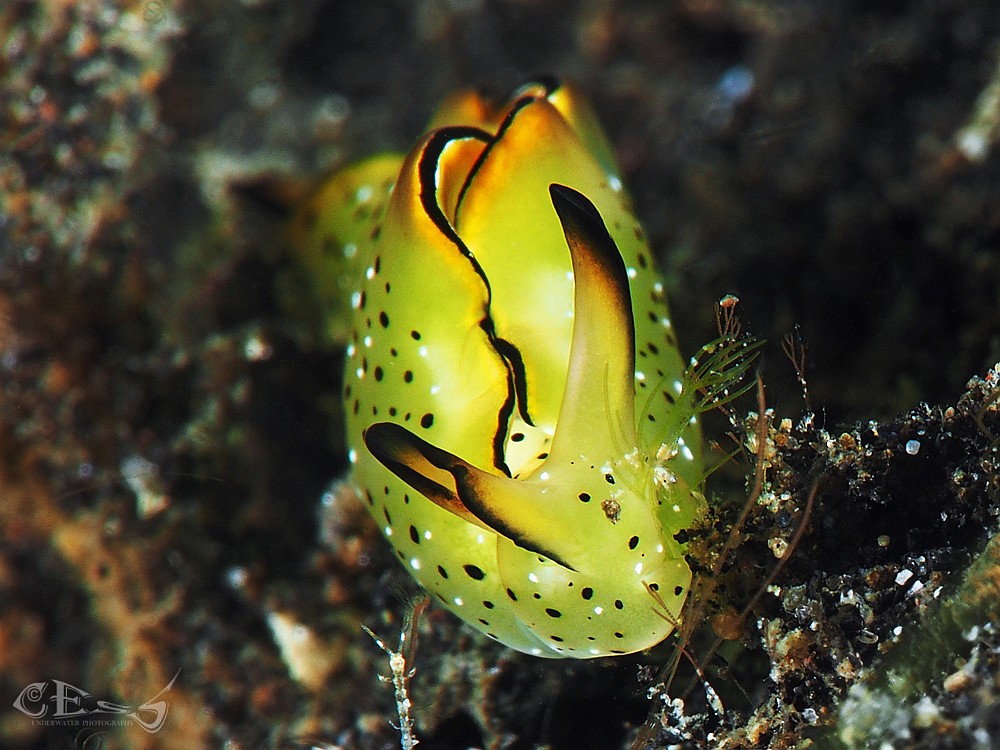
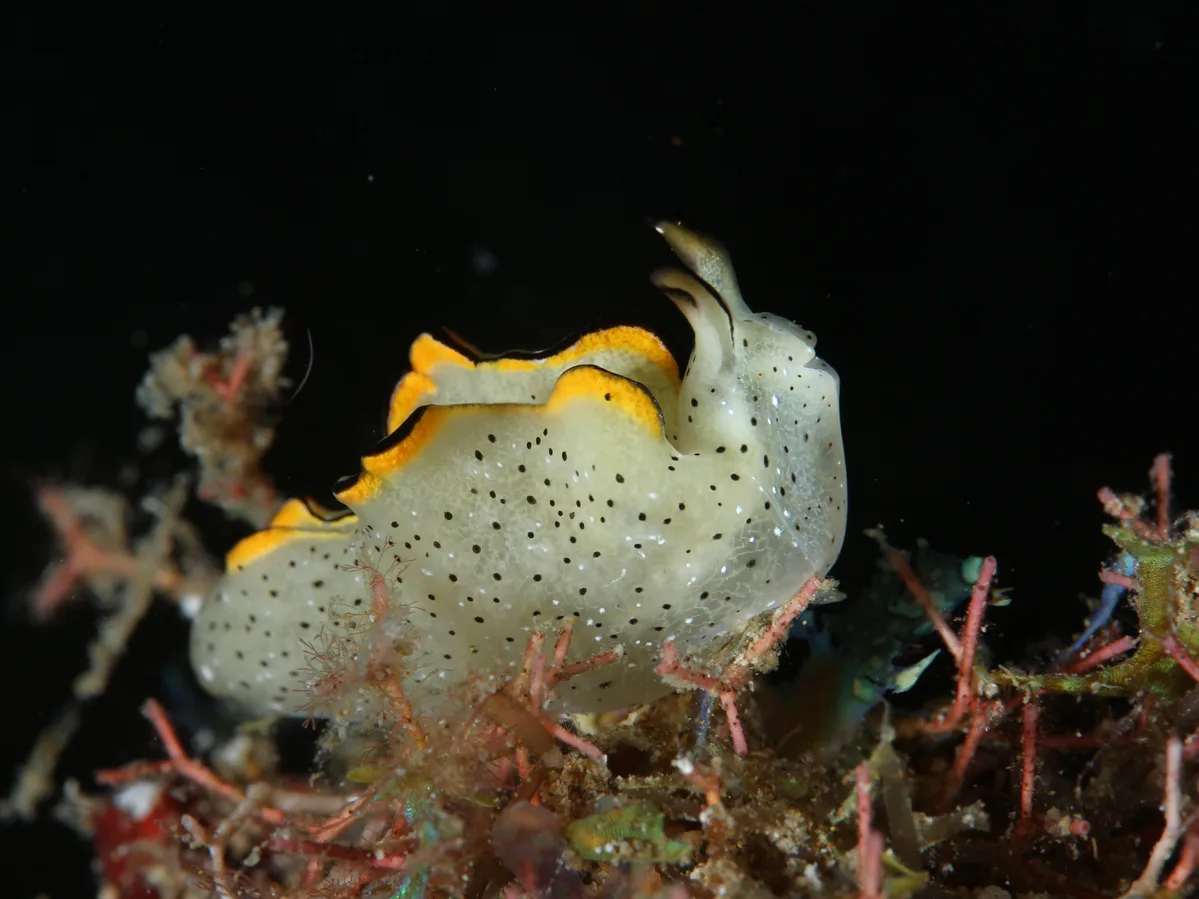
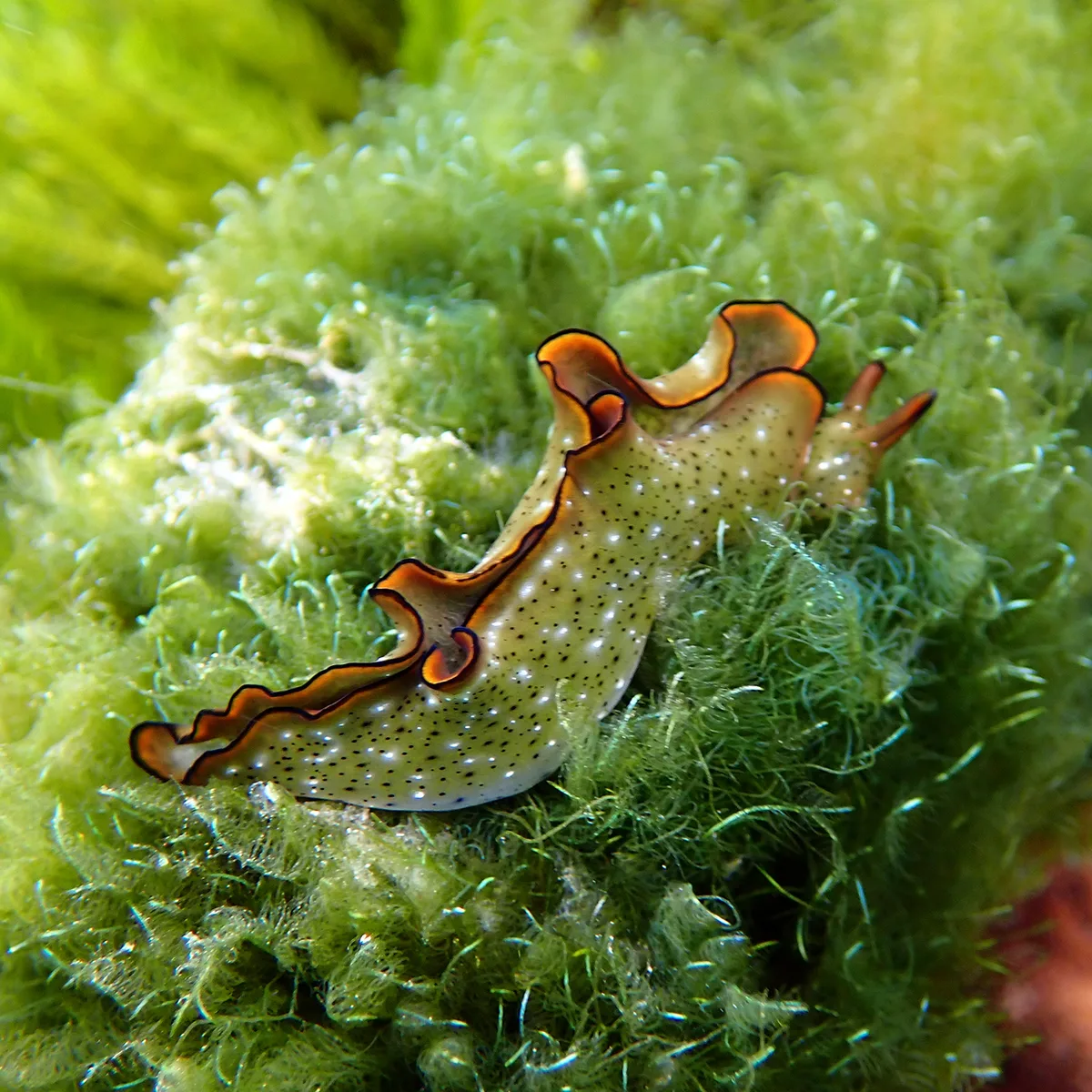
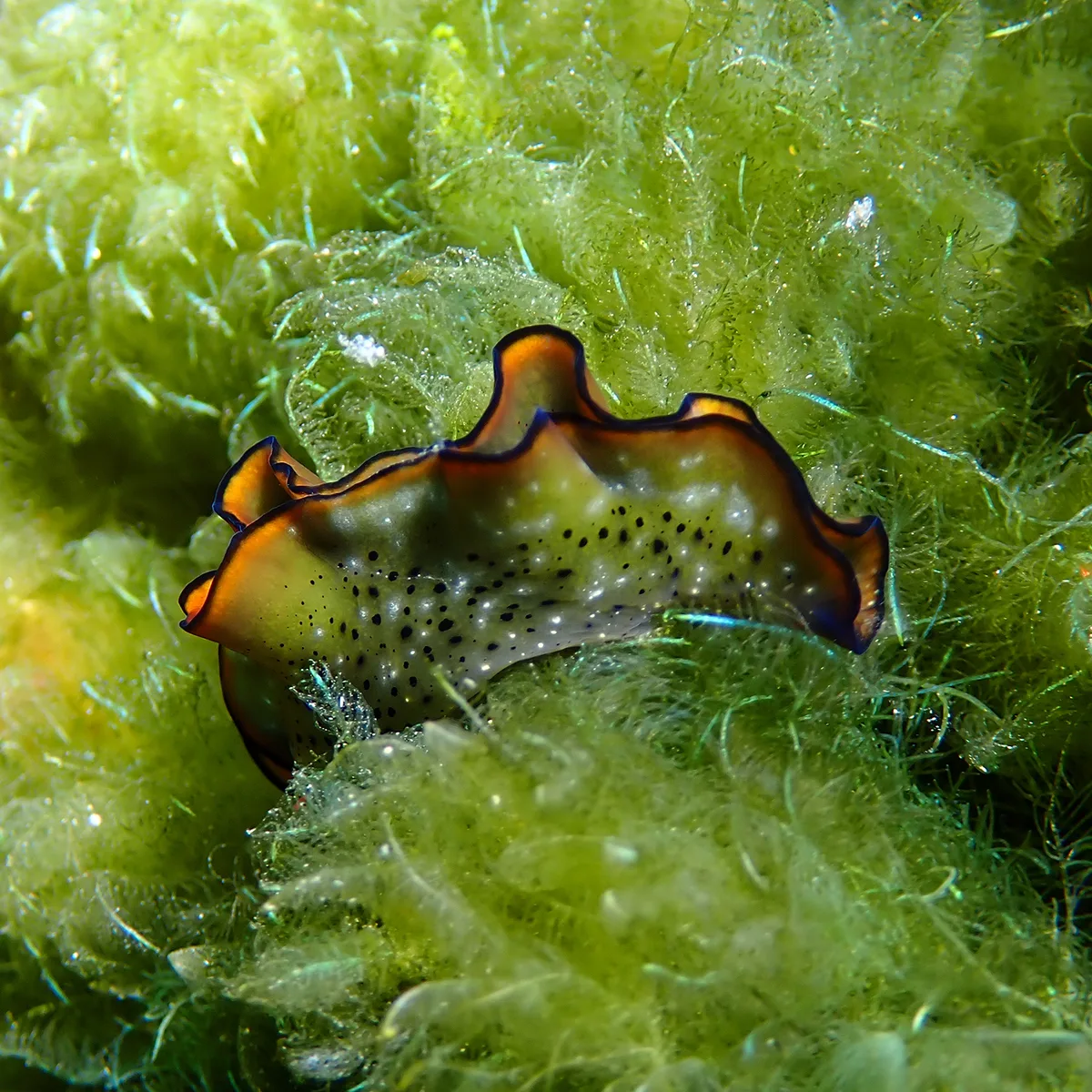
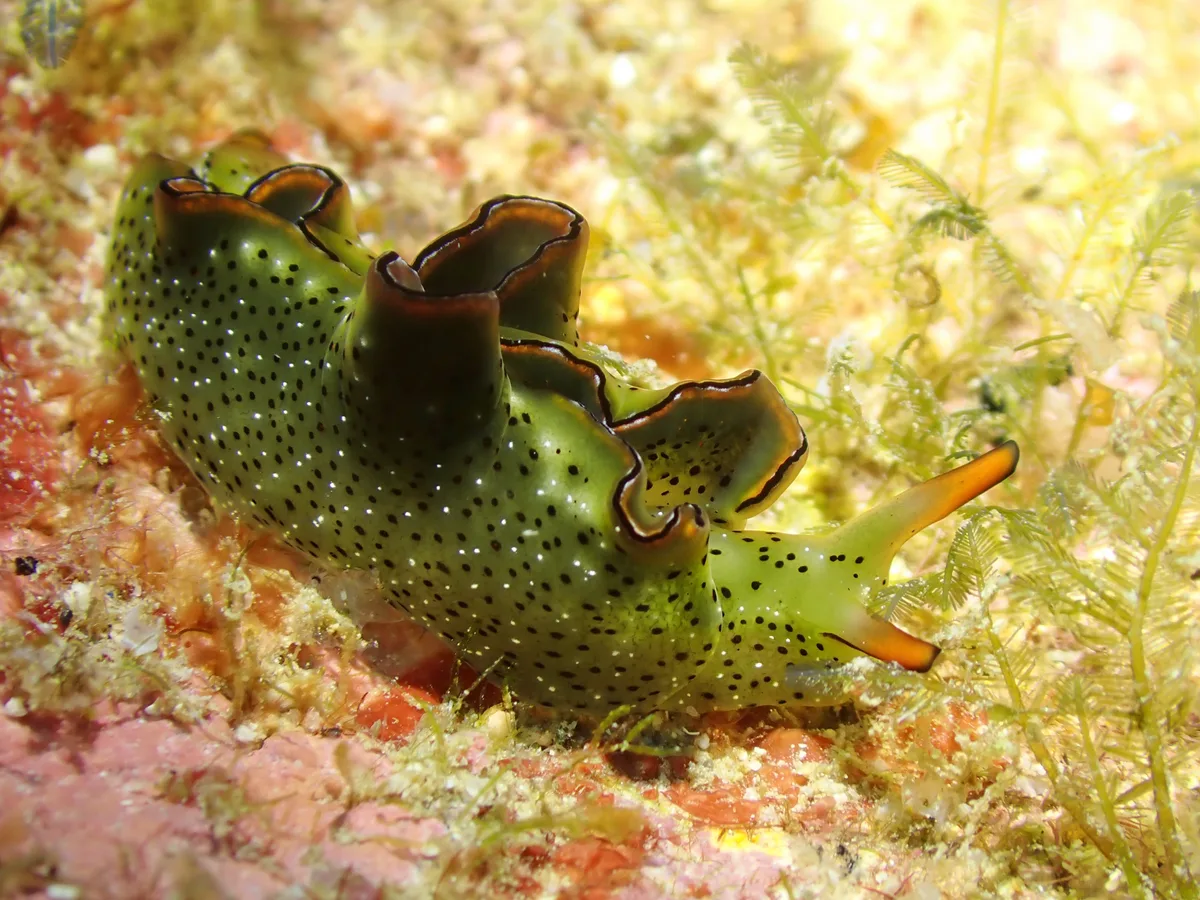
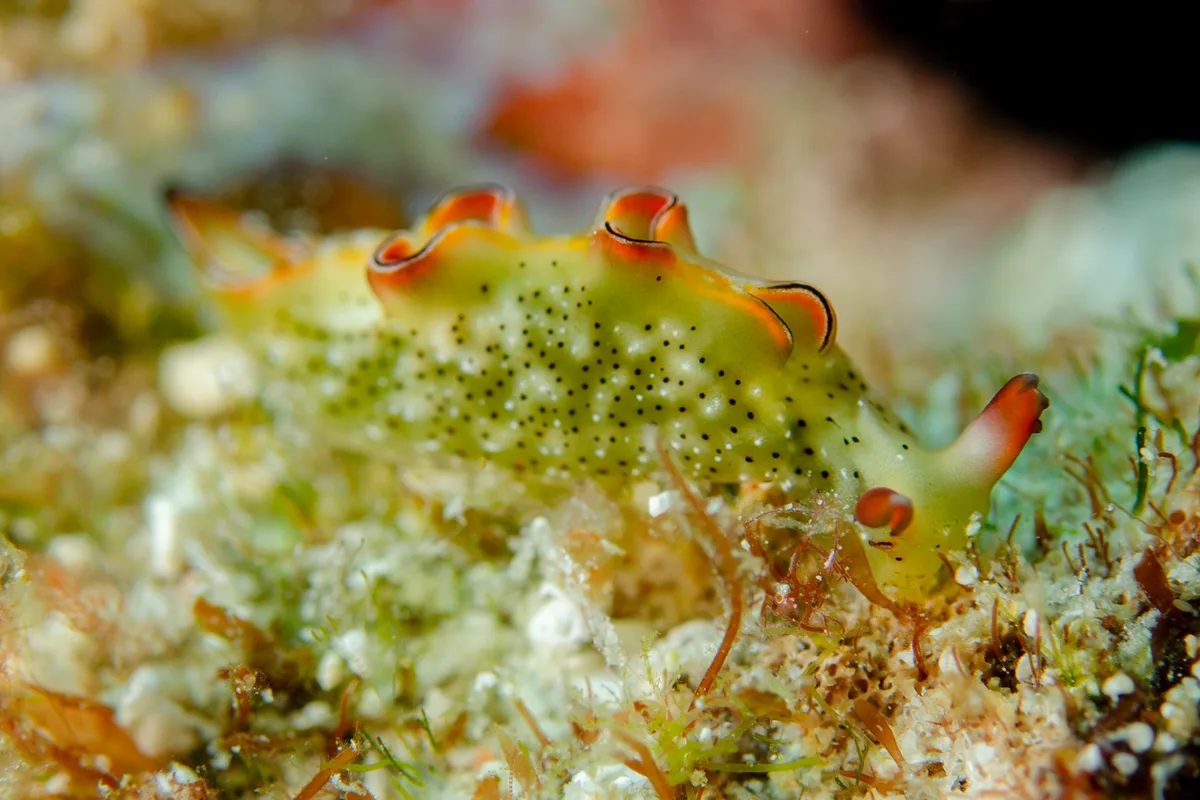
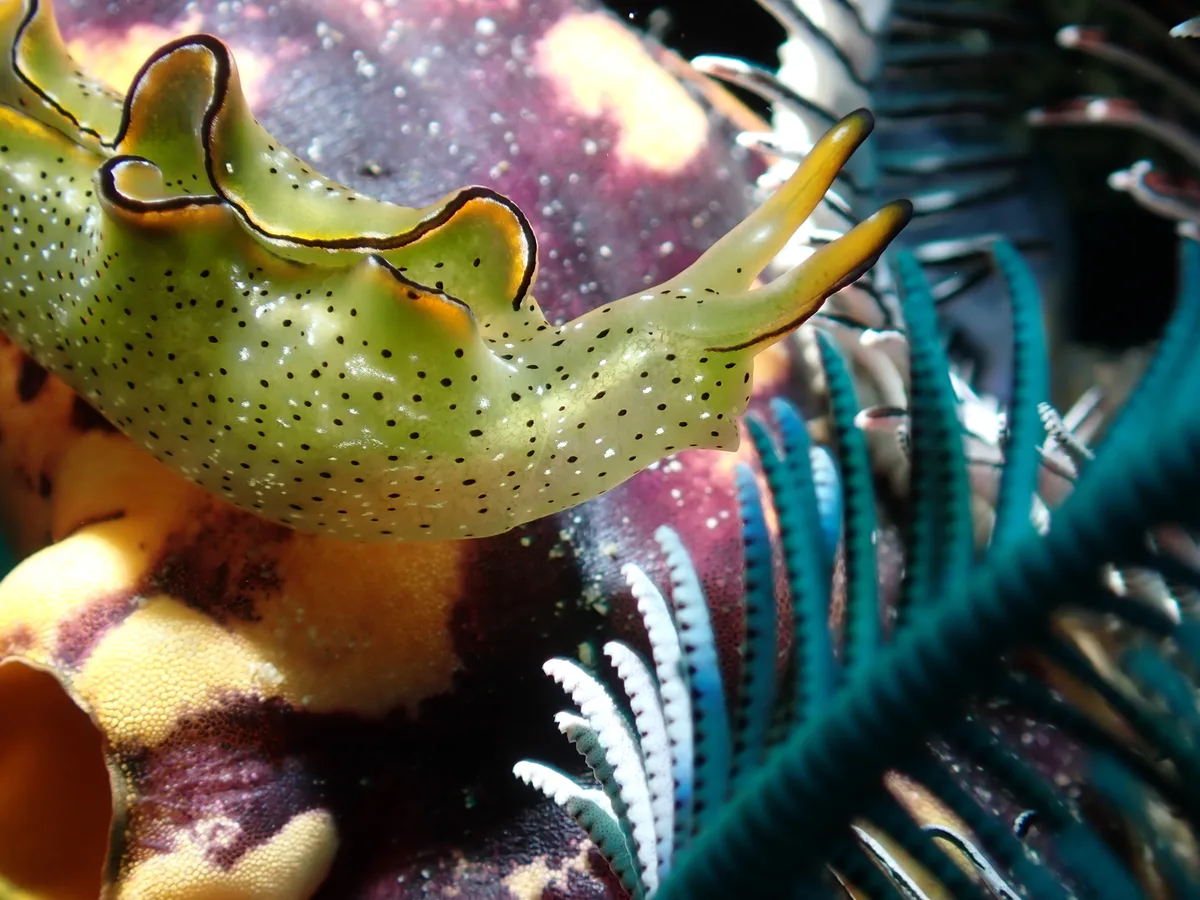
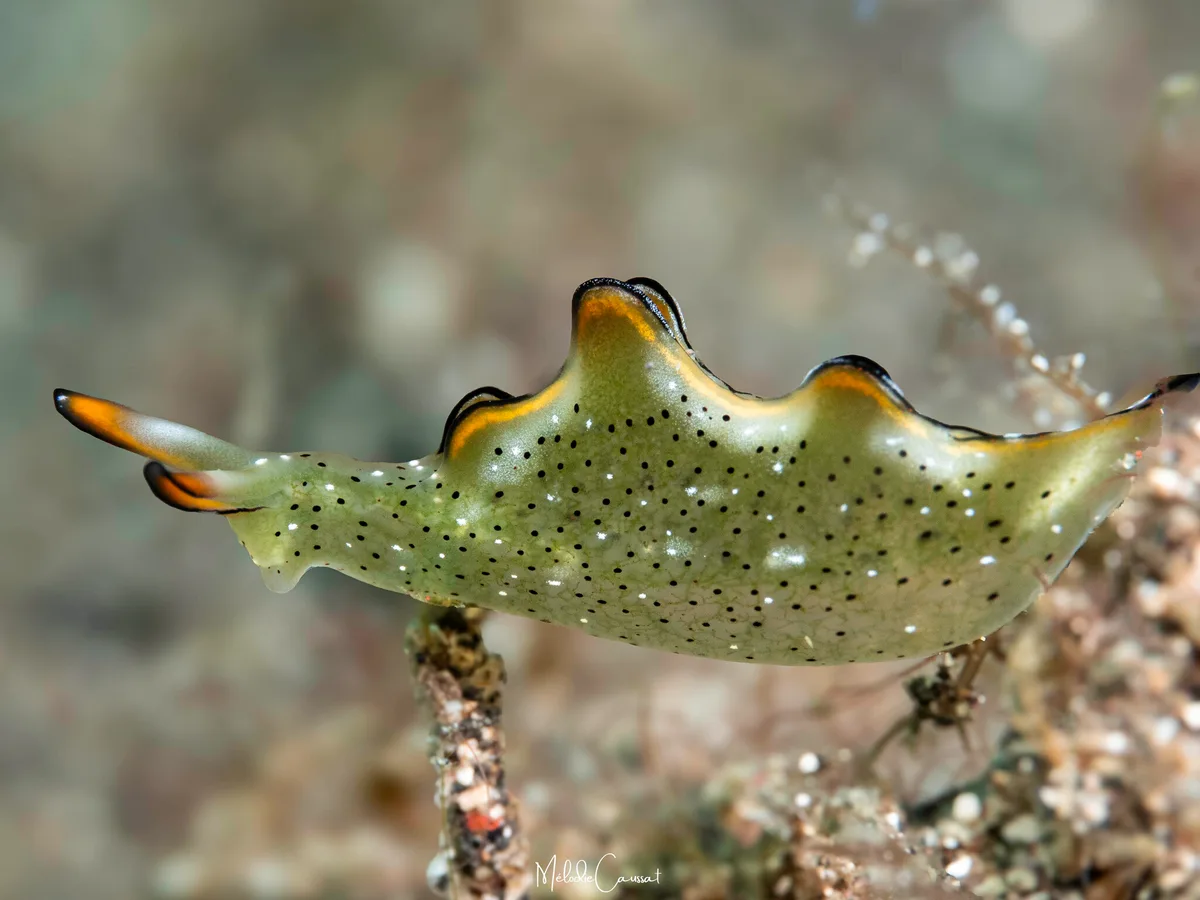
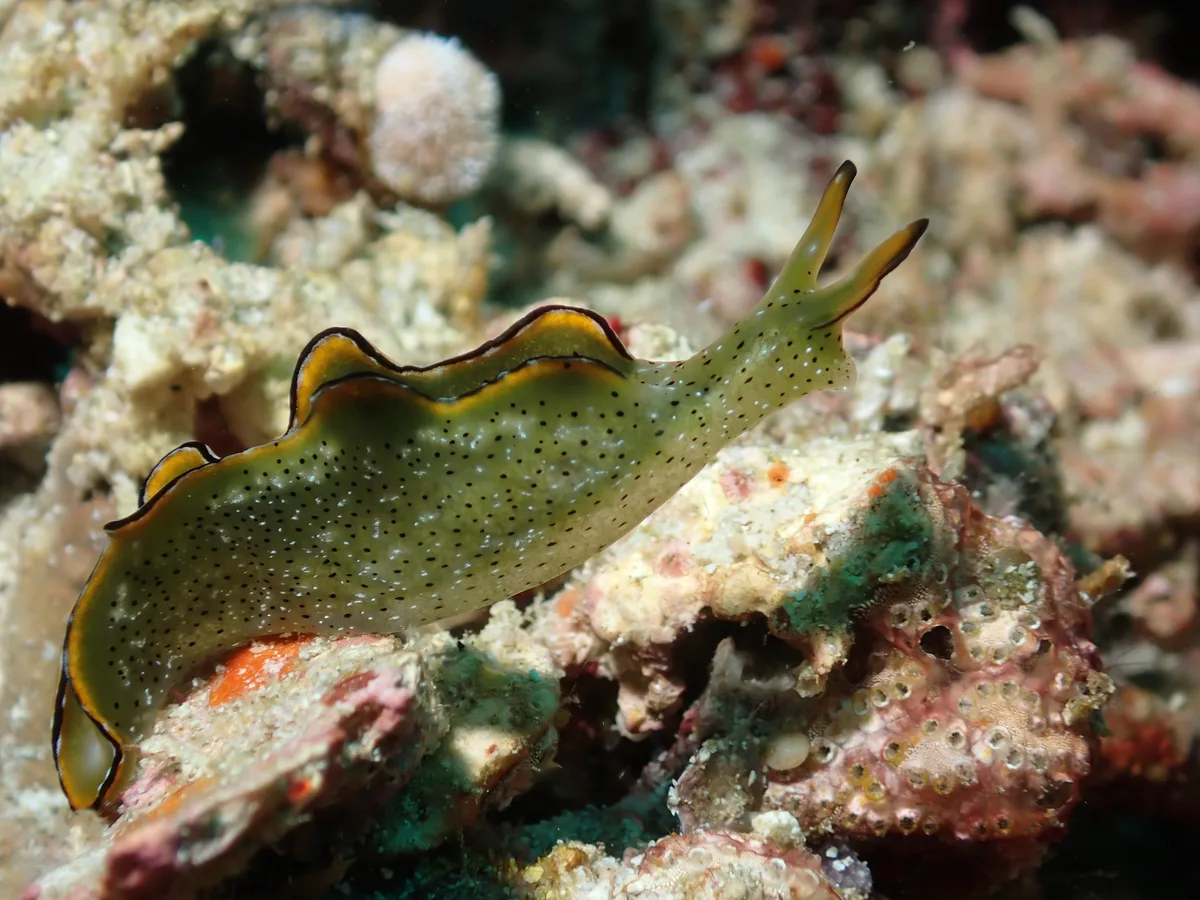
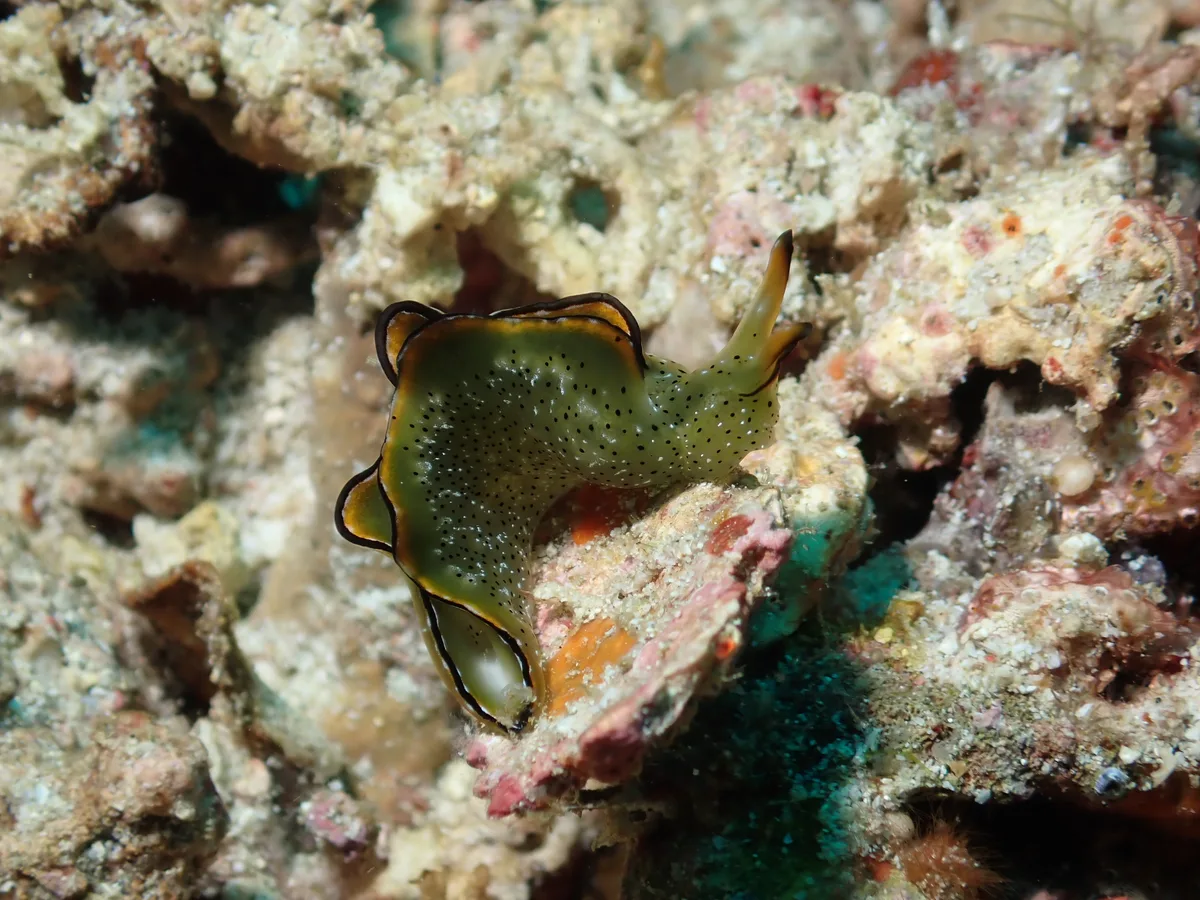
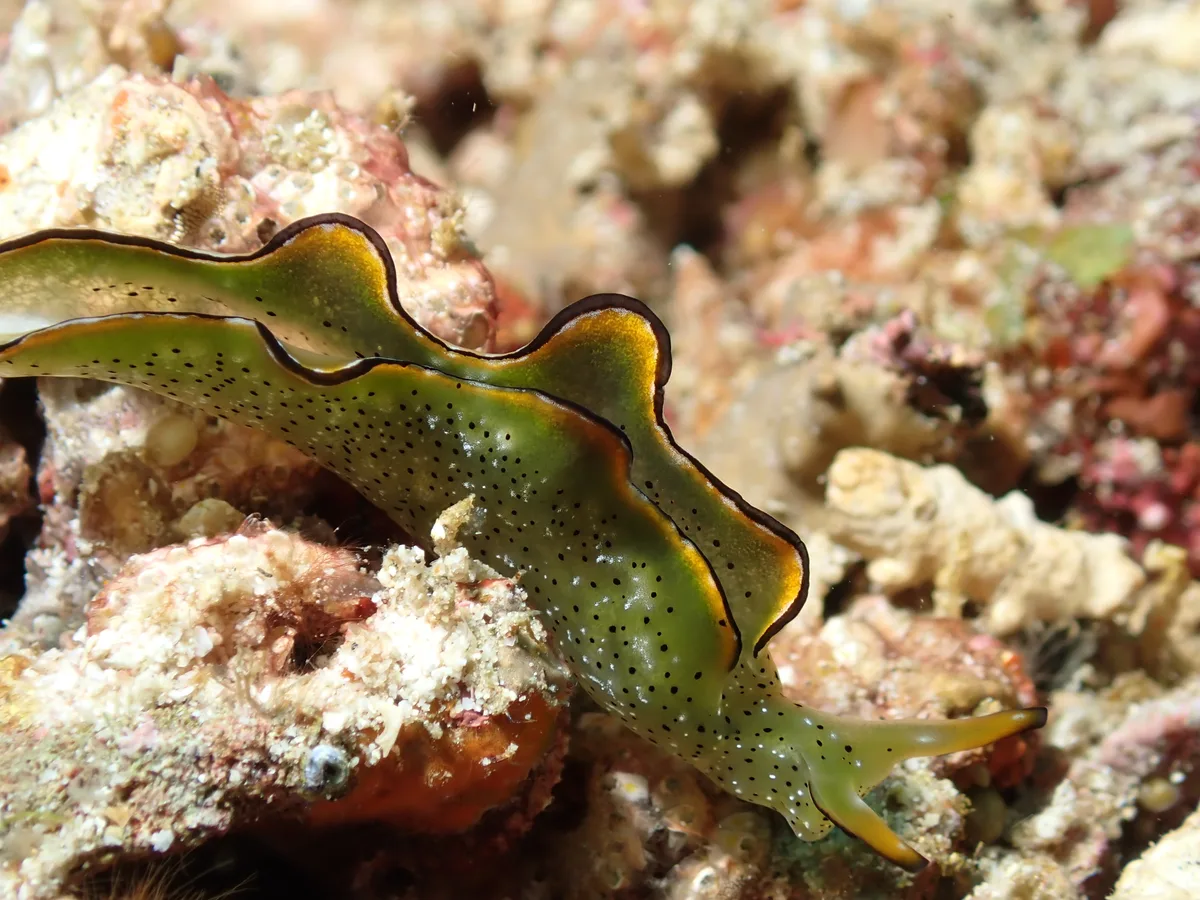
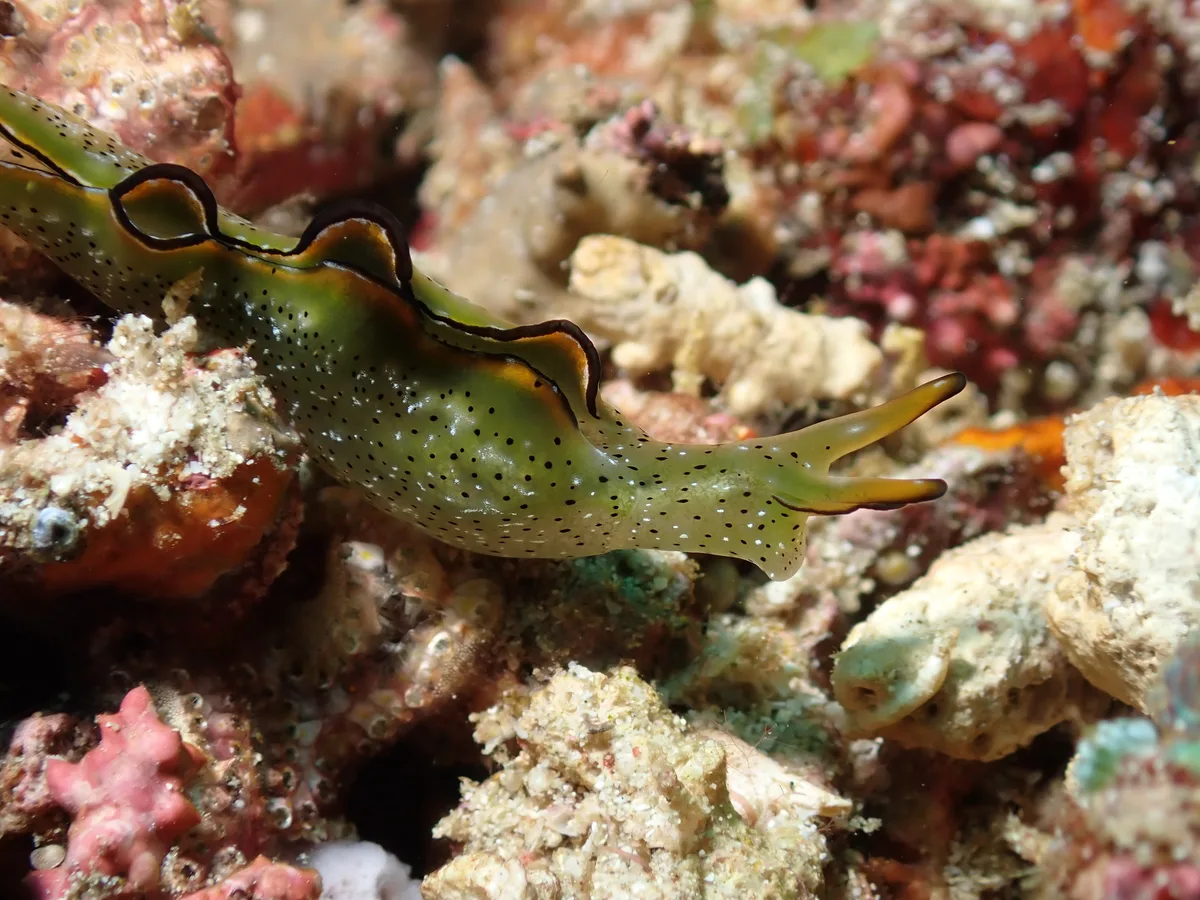
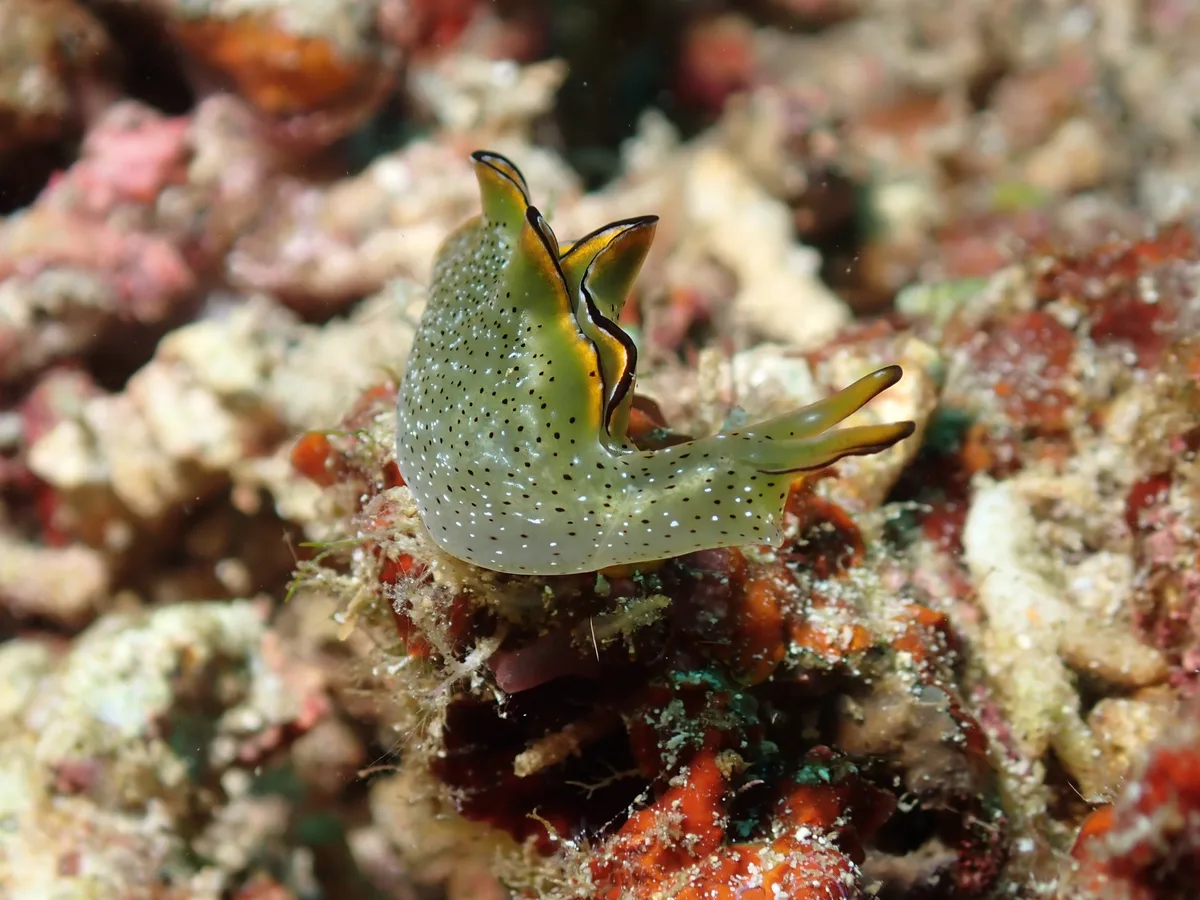
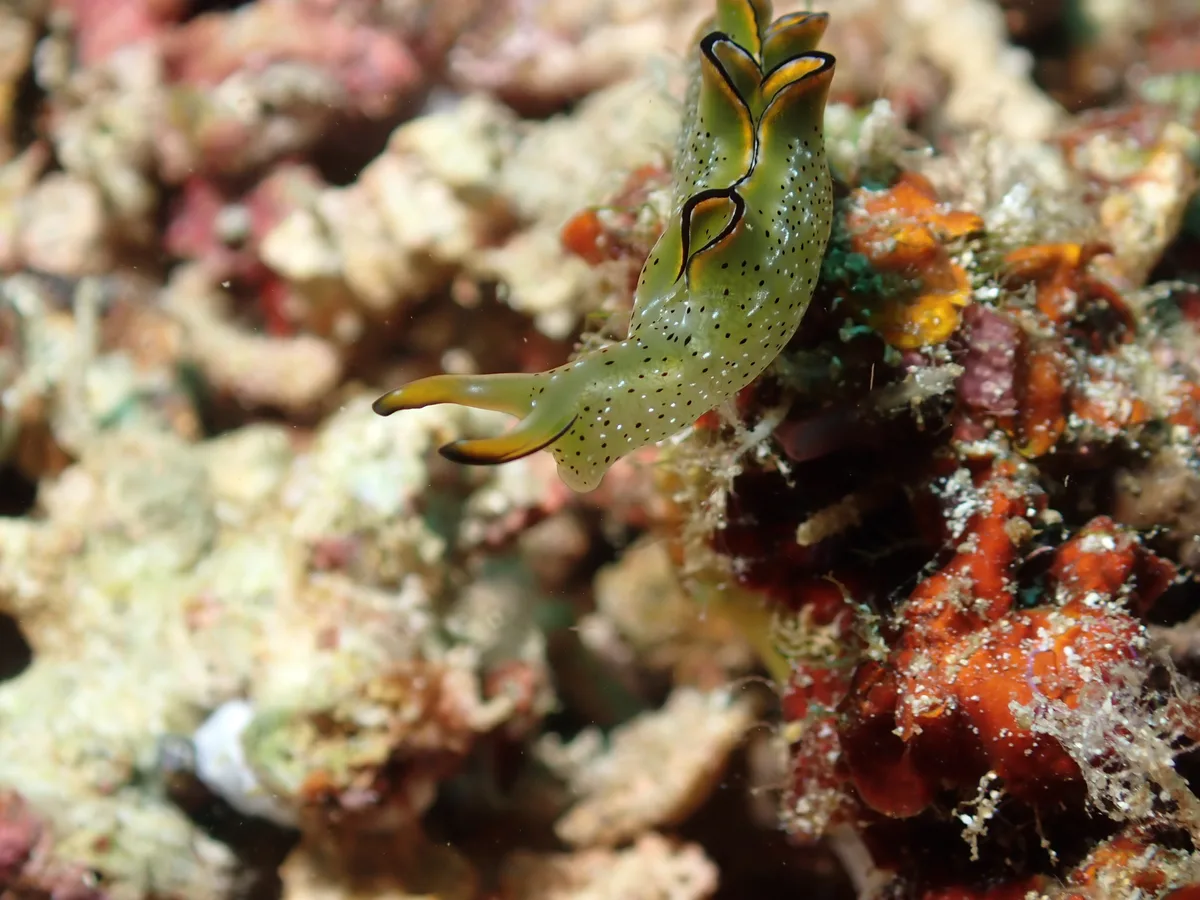
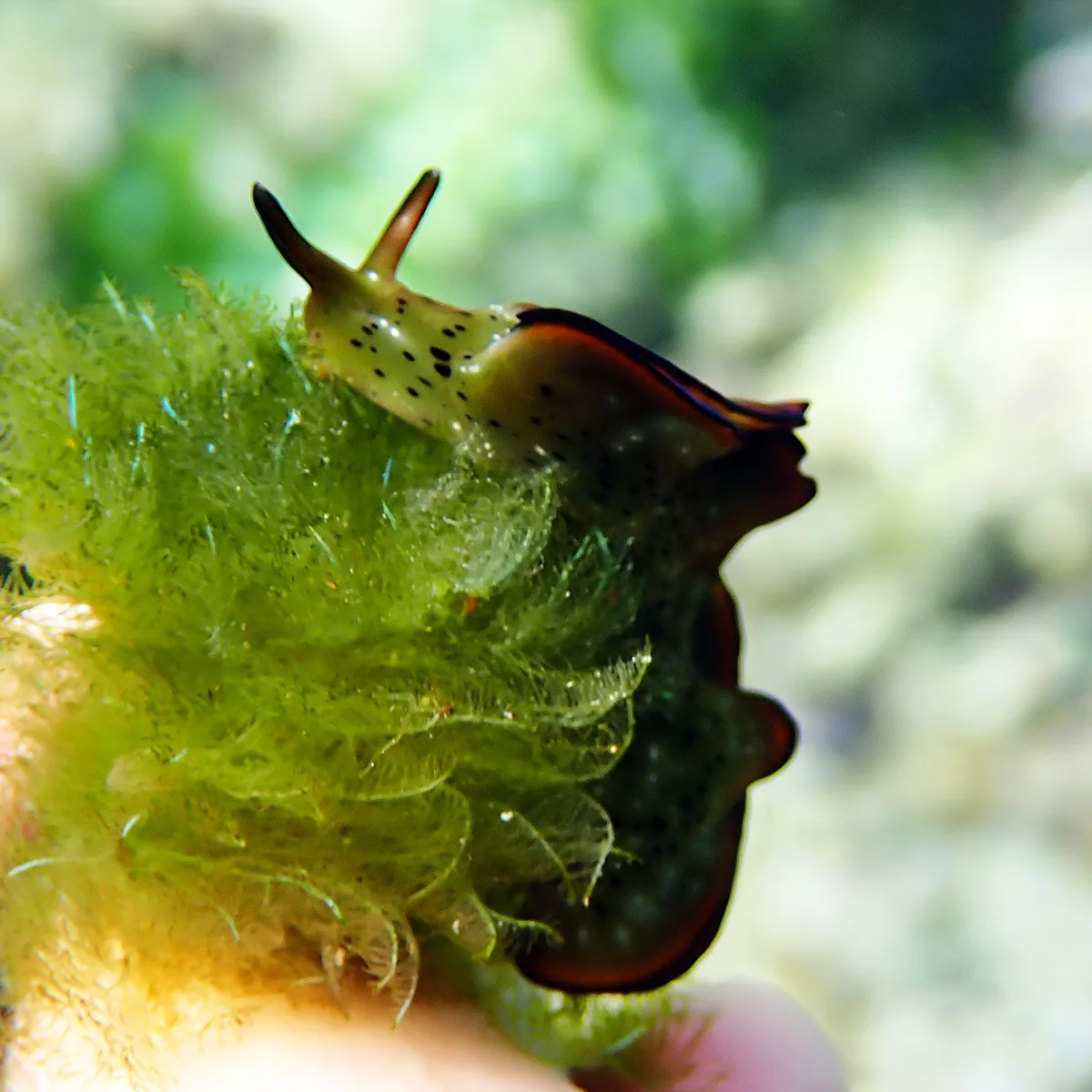
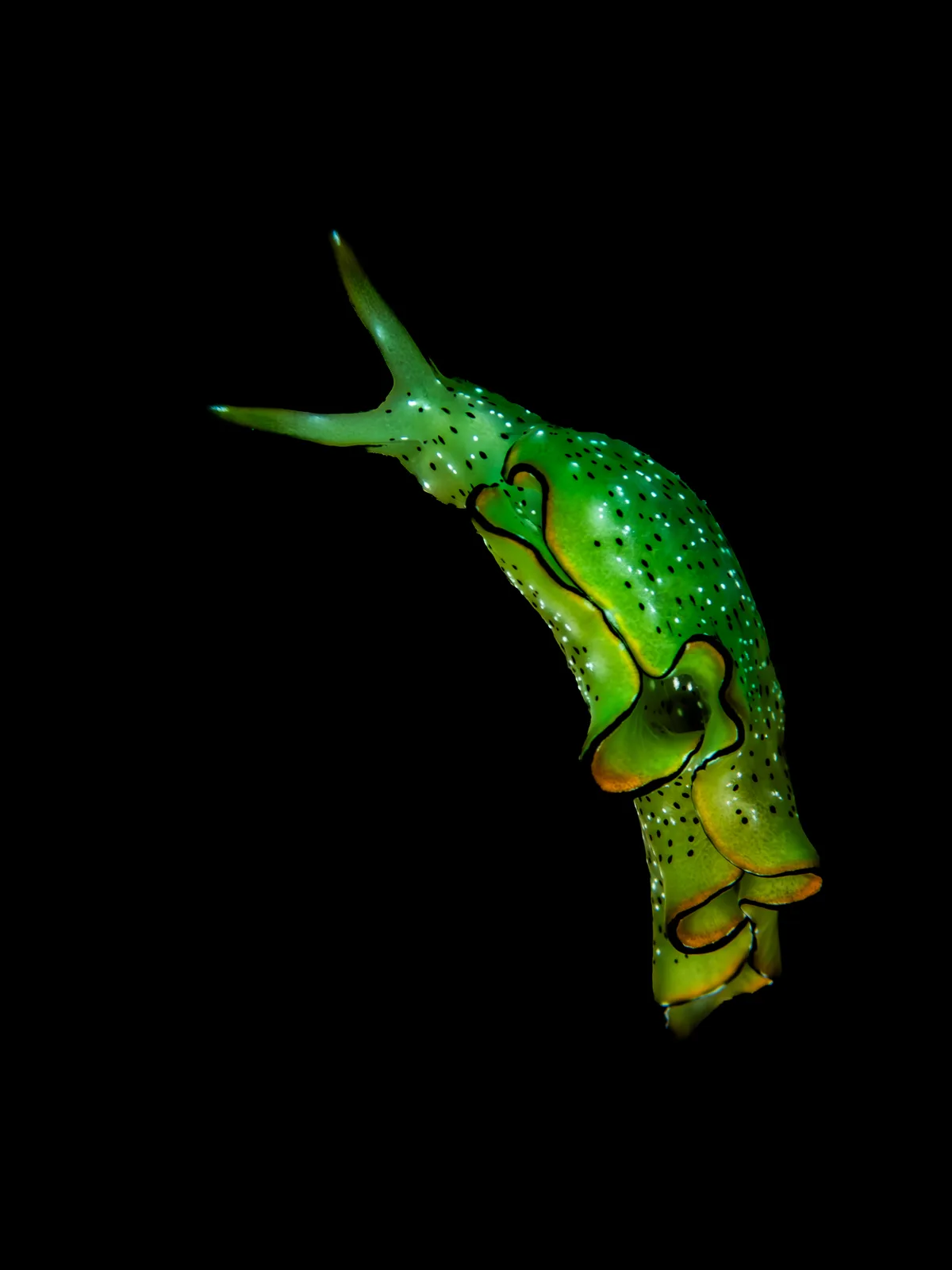
In the water it is a green slug up to about 5 cm with tall wavy side flaps, the margin orange with a dark edge, the body between them flecked black and cream. It sits on green algae on sheltered reef and rubble in the shallows, in easy diving depths, and looks like nothing much until you know what it can do.
- tall side flaps with an orange margin and a dark edge
- green body flecked with black and cream dots
- flaps held raised and wavy rather than folded flat
- up to 5 cm