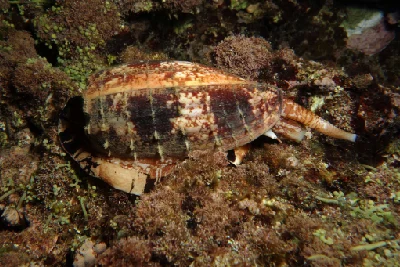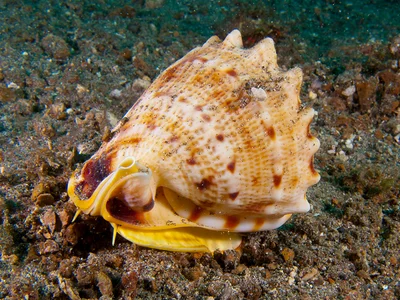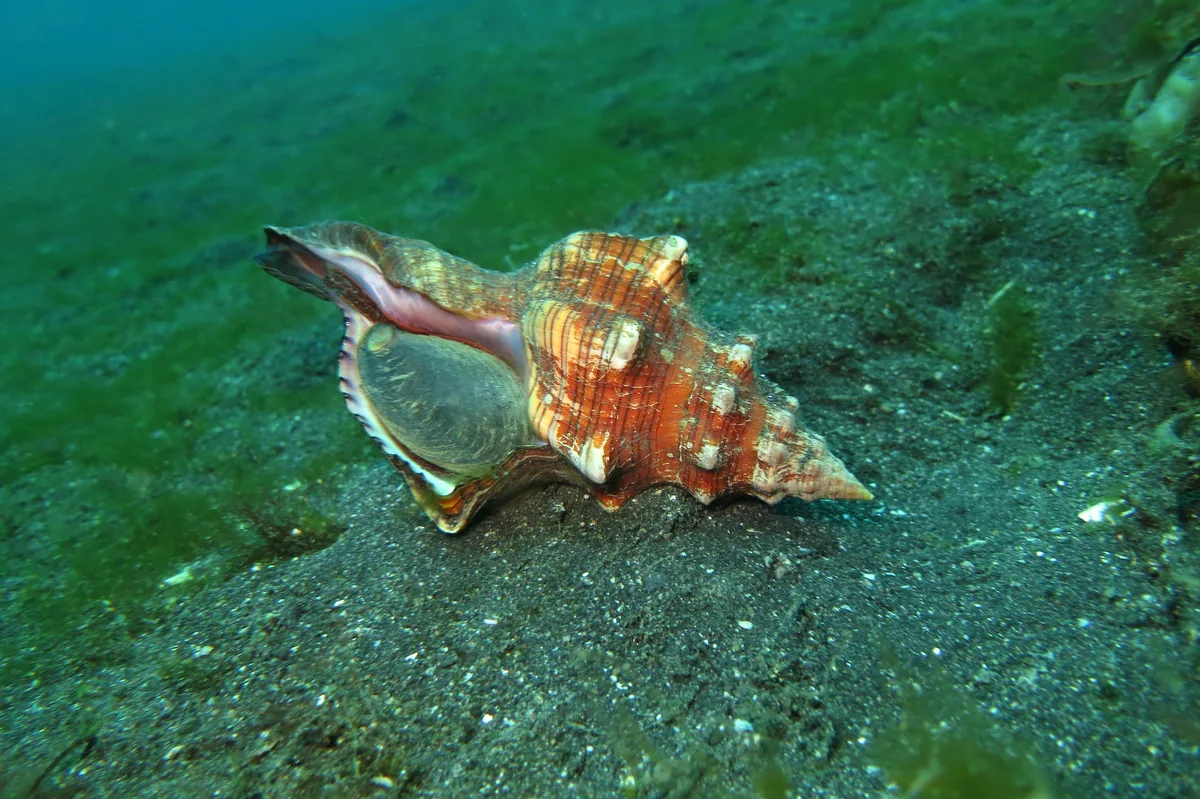
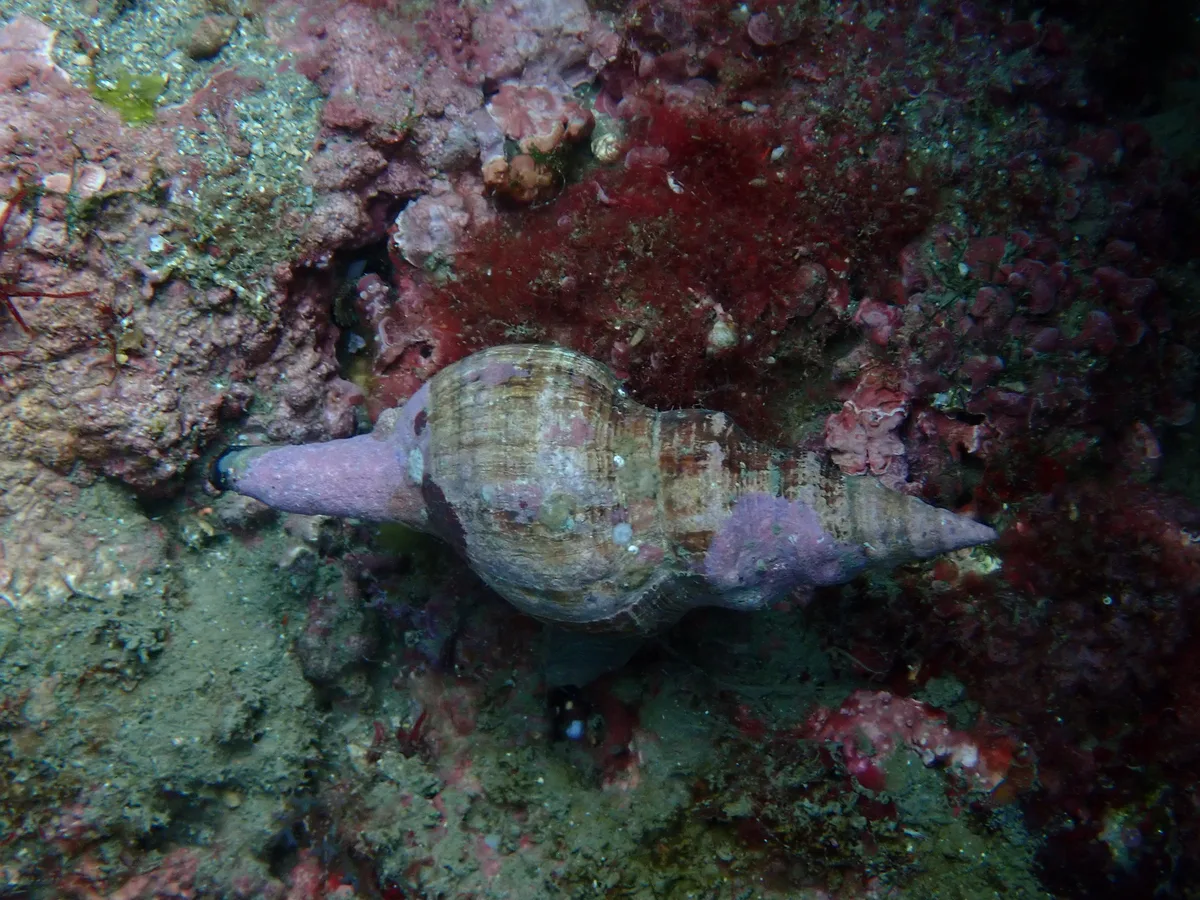
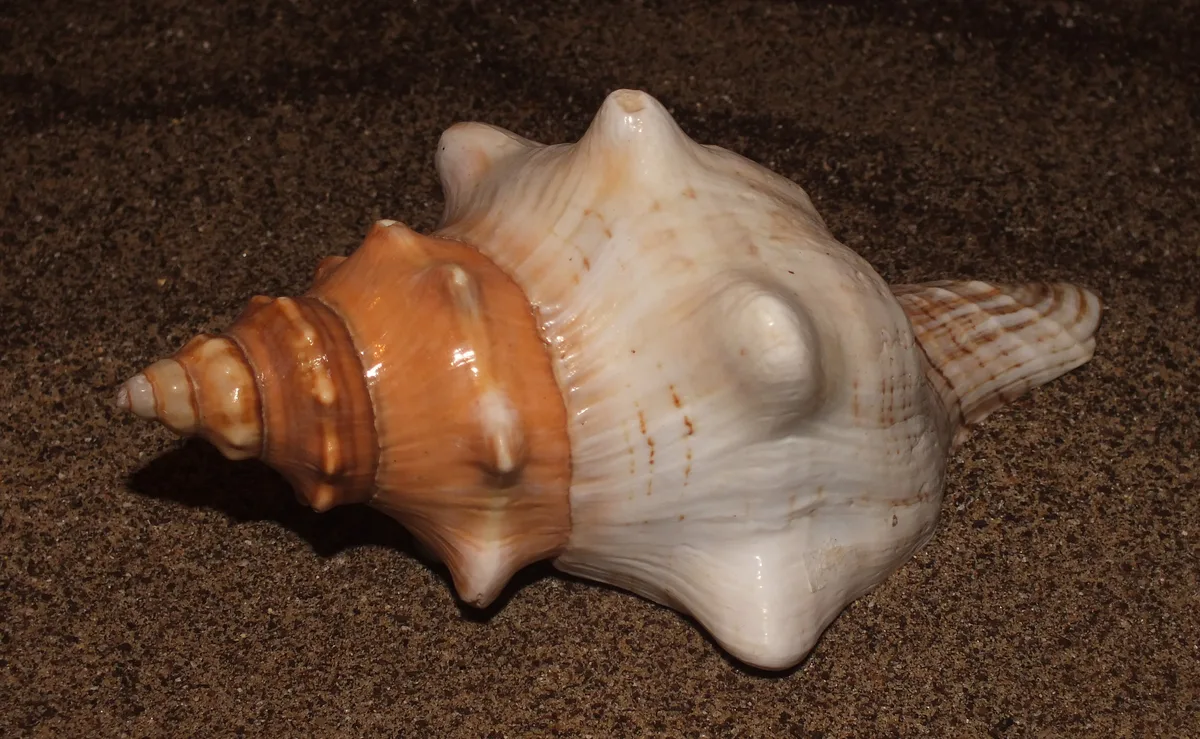
A large spindle of a shell, knobbed along each whorl and drawn out into a long straight canal at the front, up to 20 cm (8 in). The shell is usually crusted and dull, but the animal inside is bright orange-red, and on a night dive that color under a torch is what gives it away.
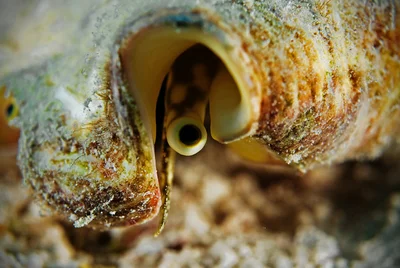
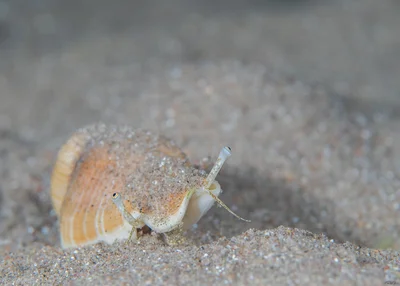
The long canal at the front is a snorkel. It houses the siphon, which draws water over the gill and, more importantly, over the sensory organ that reads scent, letting the snail track prey across open sand. What it tracks is other molluscs - it hunts clams and snails, holds them with the foot and rasps in through the shell.
The name is a museum problem rather than a field one. This animal has been shuffled between Pleuroploca, Fasciolaria and Fusinus over the last century, and databases still disagree, which is why an older shell book and a current checklist can list what is plainly the same animal twice under two names. The animal on the sand has not changed at all.
- large spindle-shaped shell with a long straight siphonal canal
- row of blunt knobs on each whorl, ridged with fine spiral cords
- bright orange-red body and foot, often the first thing seen
- shell to 20 cm