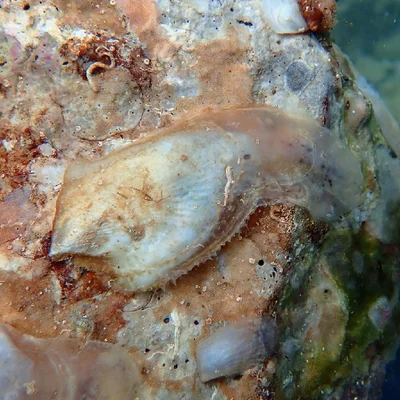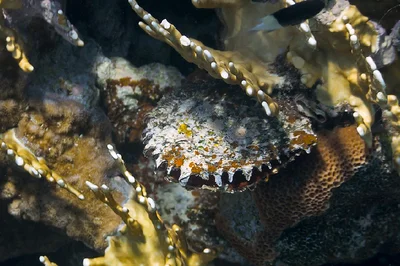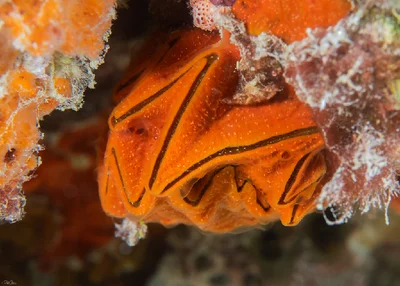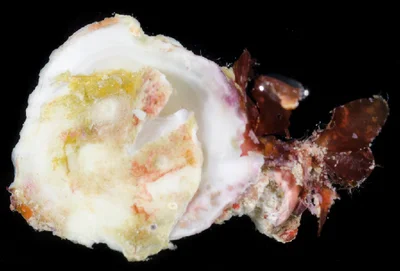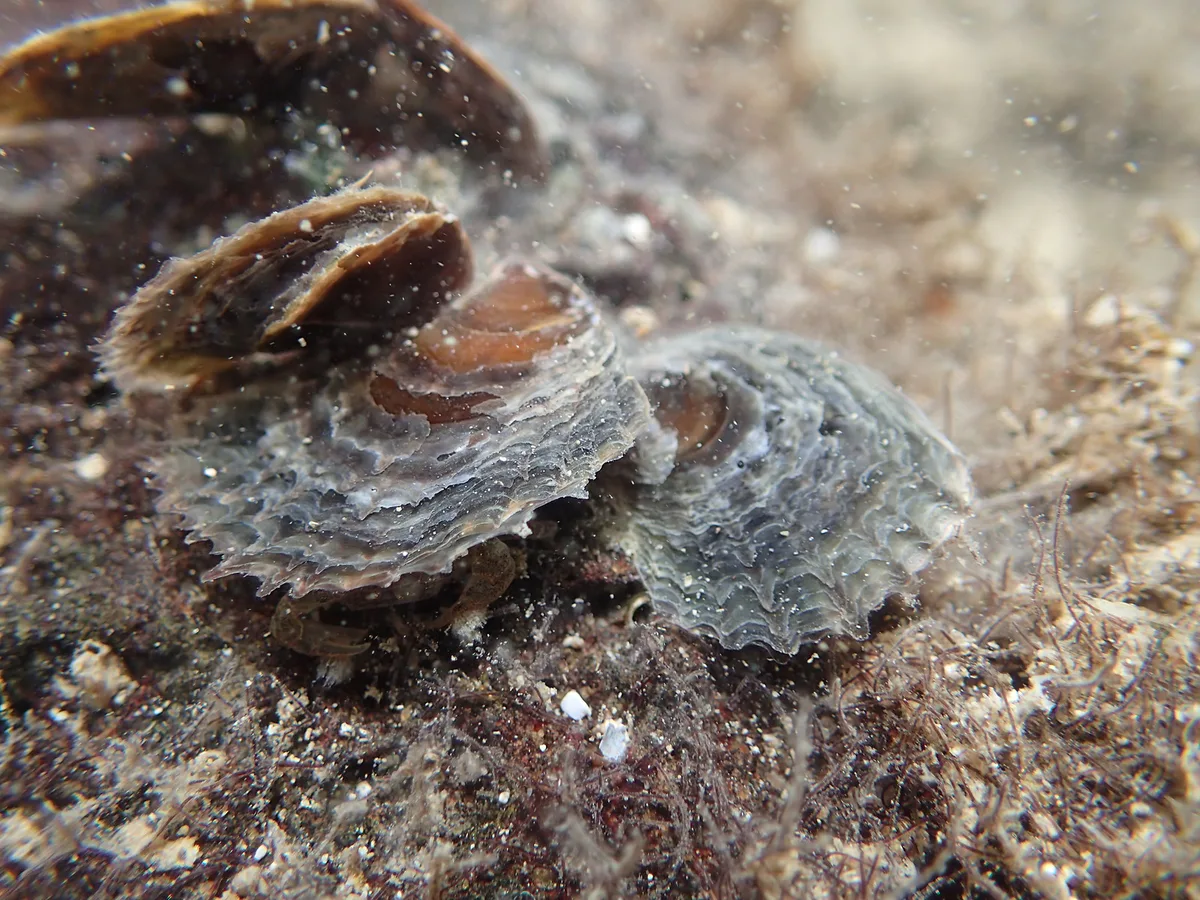
An irregular, fan-shaped bivalve that grows in clumps, each animal byssally attached to the rock and to its neighbors, so a colony builds into a mass of overlapping shells. The valves are thin and flake at the margins, purplish brown outside with a patchy nacreous interior, and the hinge carries the row of short parallel grooves that marks the tree oysters. Height reaches about 12 cm (5 in), with shape depending entirely on how crowded the colony is.
Colonies occupy rock crevices, dead coral, undercuts and mangrove roots from the low tide line down to about 15 m (50 ft), preferring shaded, sheltered spots with some water movement. All members filter plankton and organic particles from the water. The clumps themselves become habitat, holding sediment, worms, brittle stars and small crustaceans between the shells - the same reef-building role that makes oysters a keystone group in temperate estuaries, played out here at the scale of a single crevice. Individual animals can be pulled free without breaking them, since the attachment is byssal rather than cemented, and the exposed byssus is a dense mat of fibers anchored to several points at once. The species is collected for food across parts of the Indo-Pacific but is not fished in the 🌊 Red Sea, where colonies stay small and scattered.
- irregular fan-shaped shell growing in clumps
- hinge with a comb-like row of parallel grooves
- purplish brown, edges thin and flaking