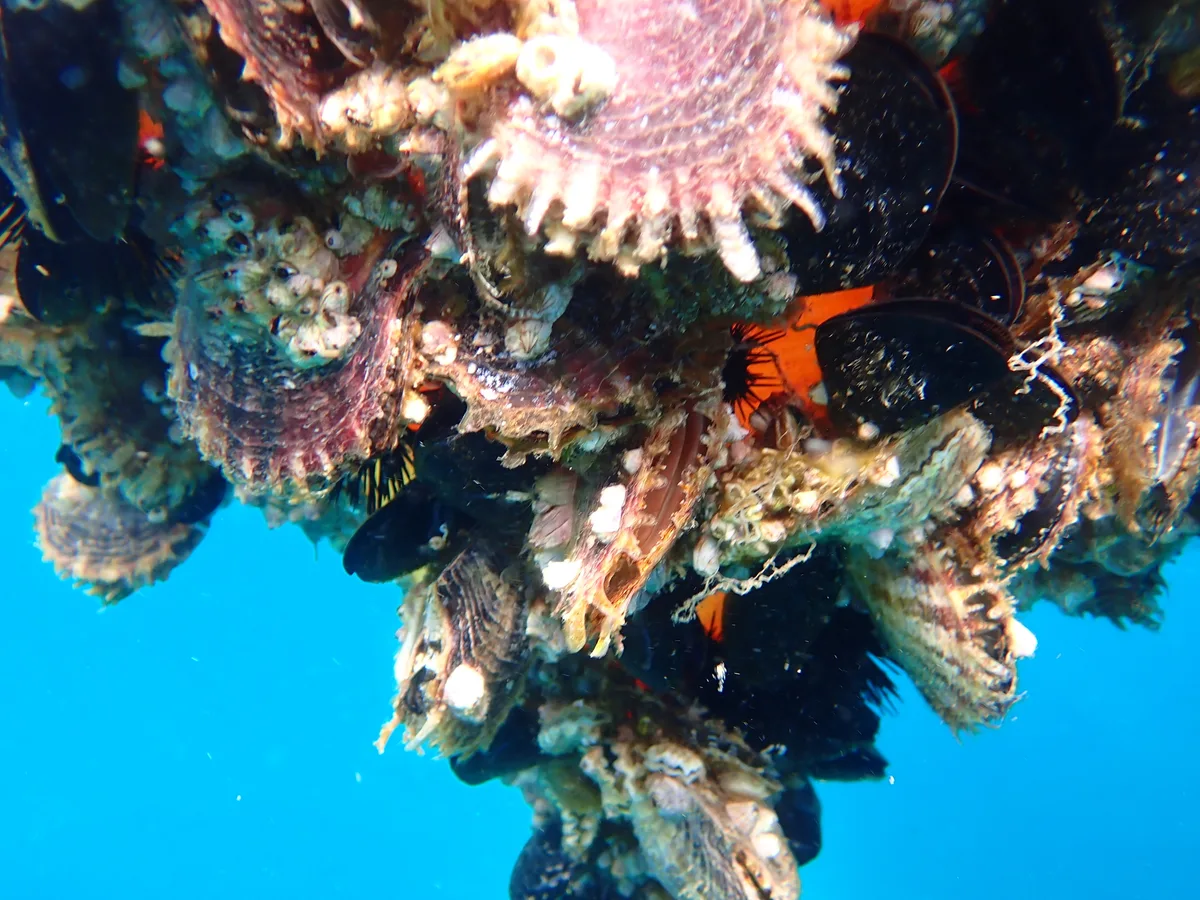
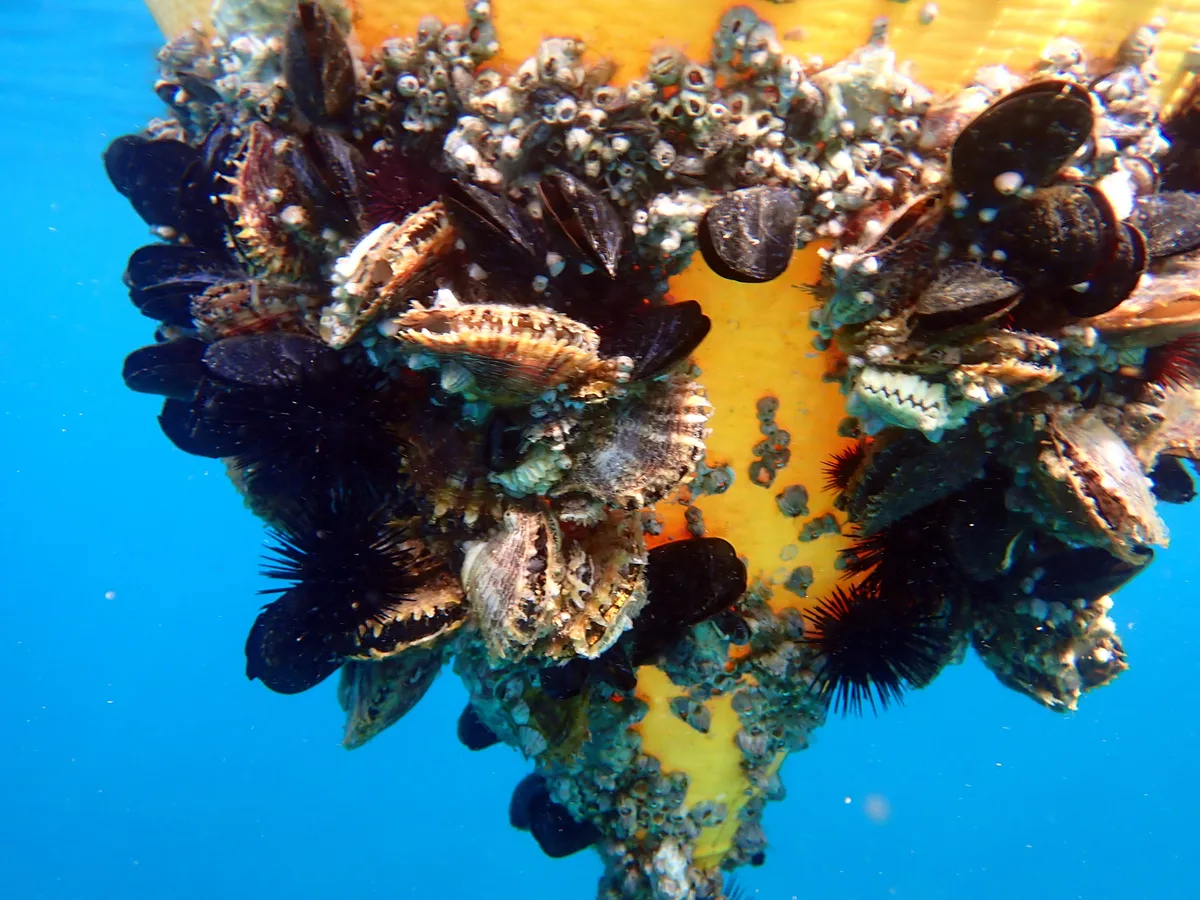
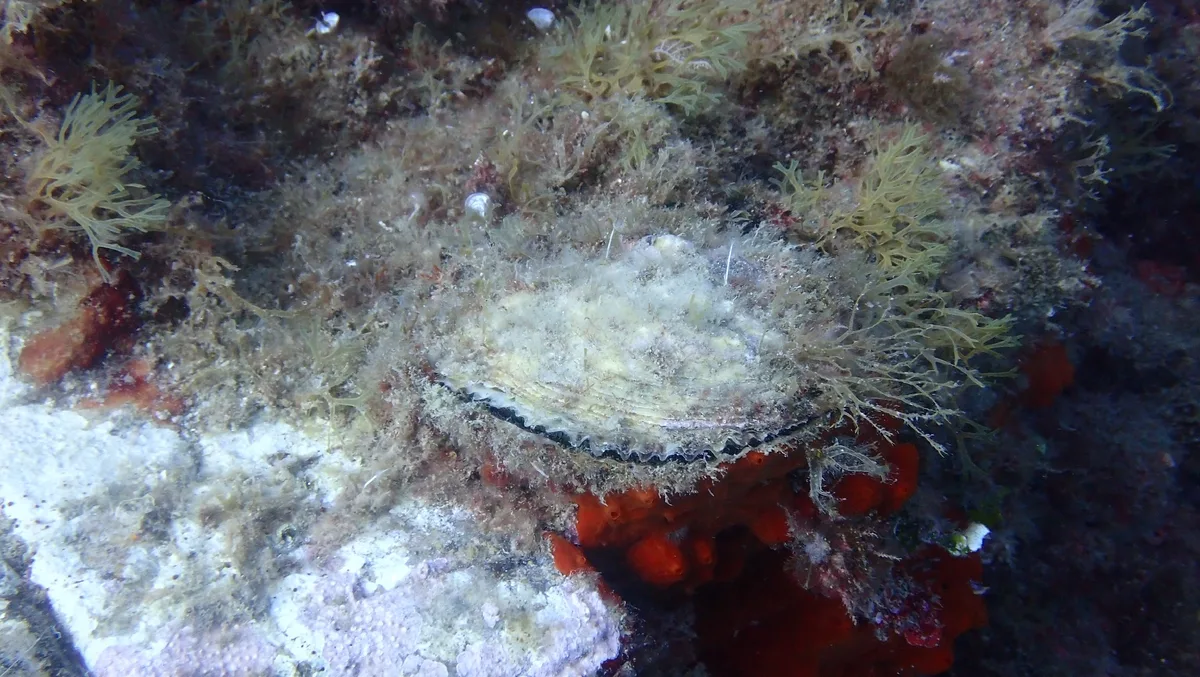
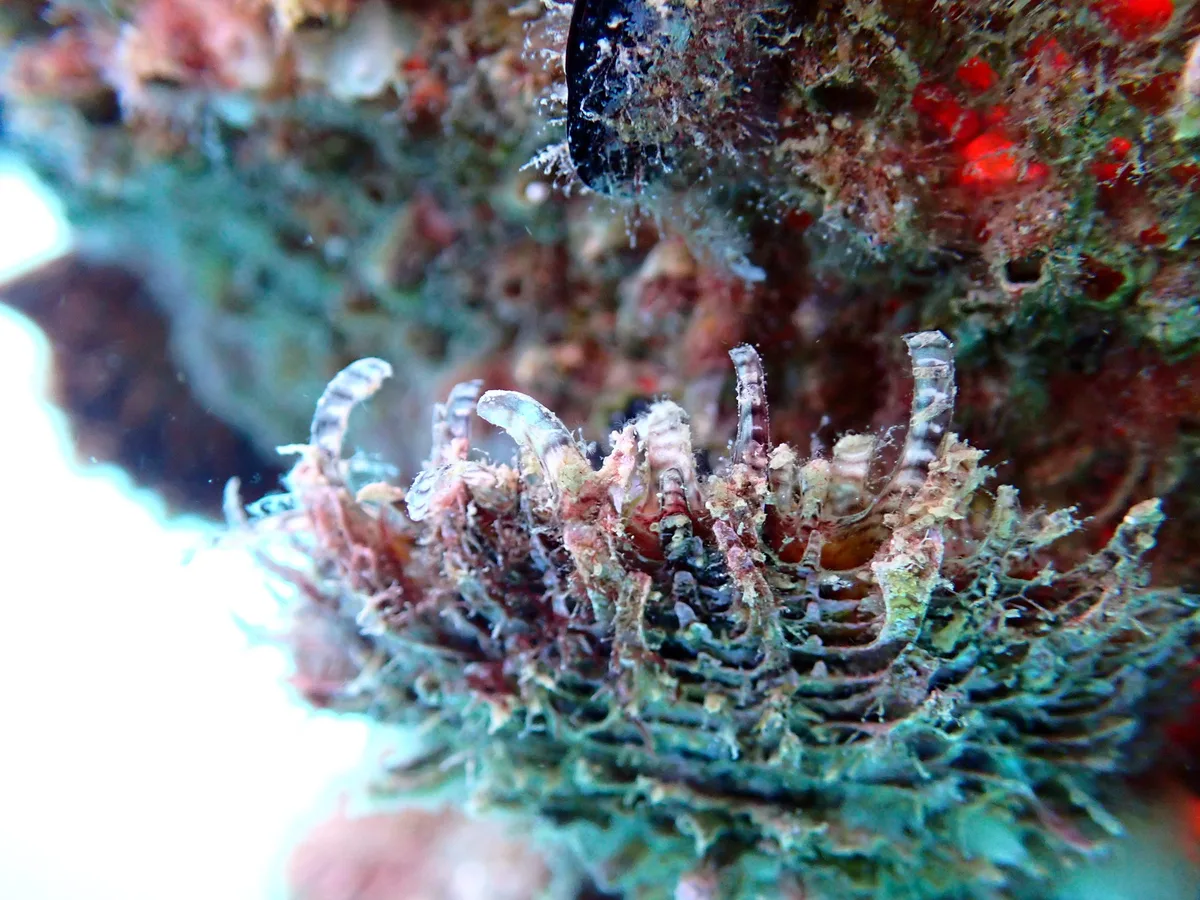
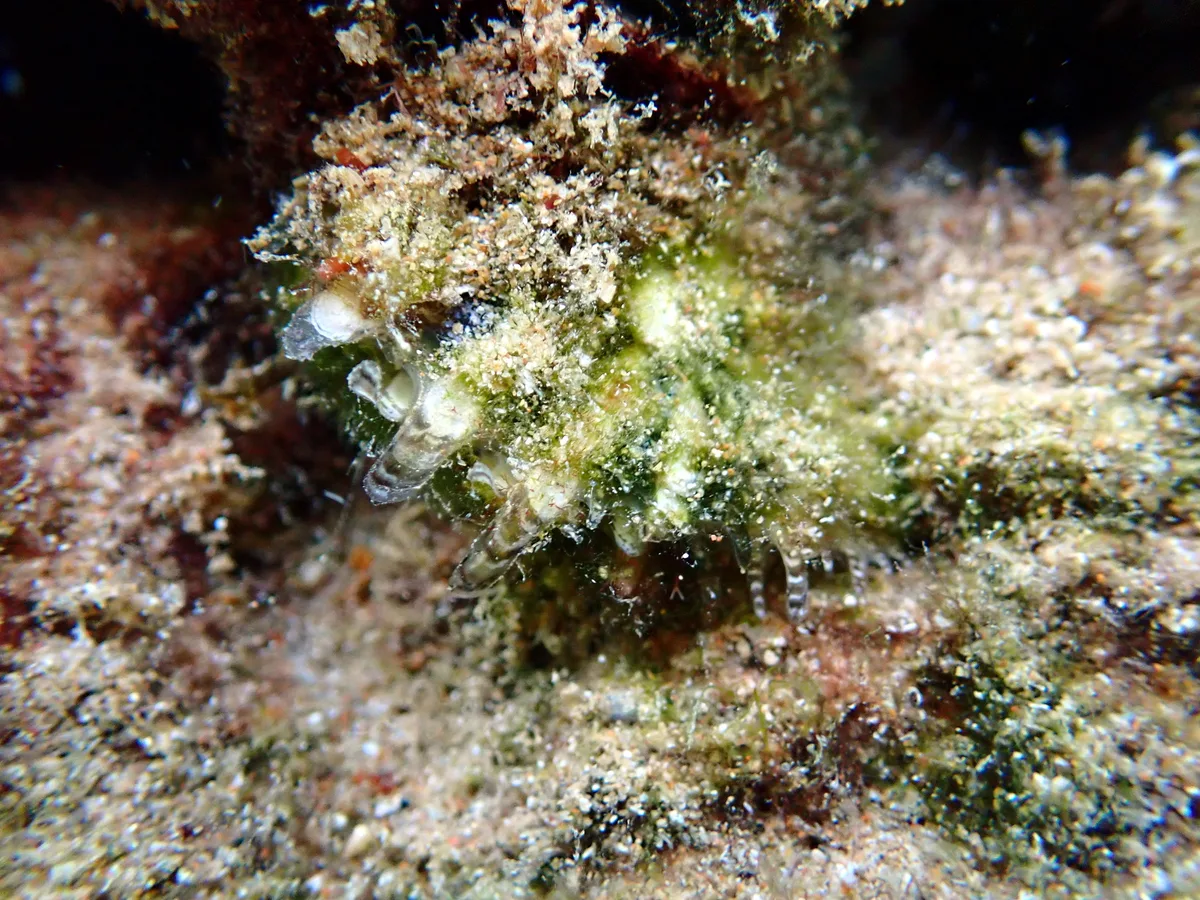
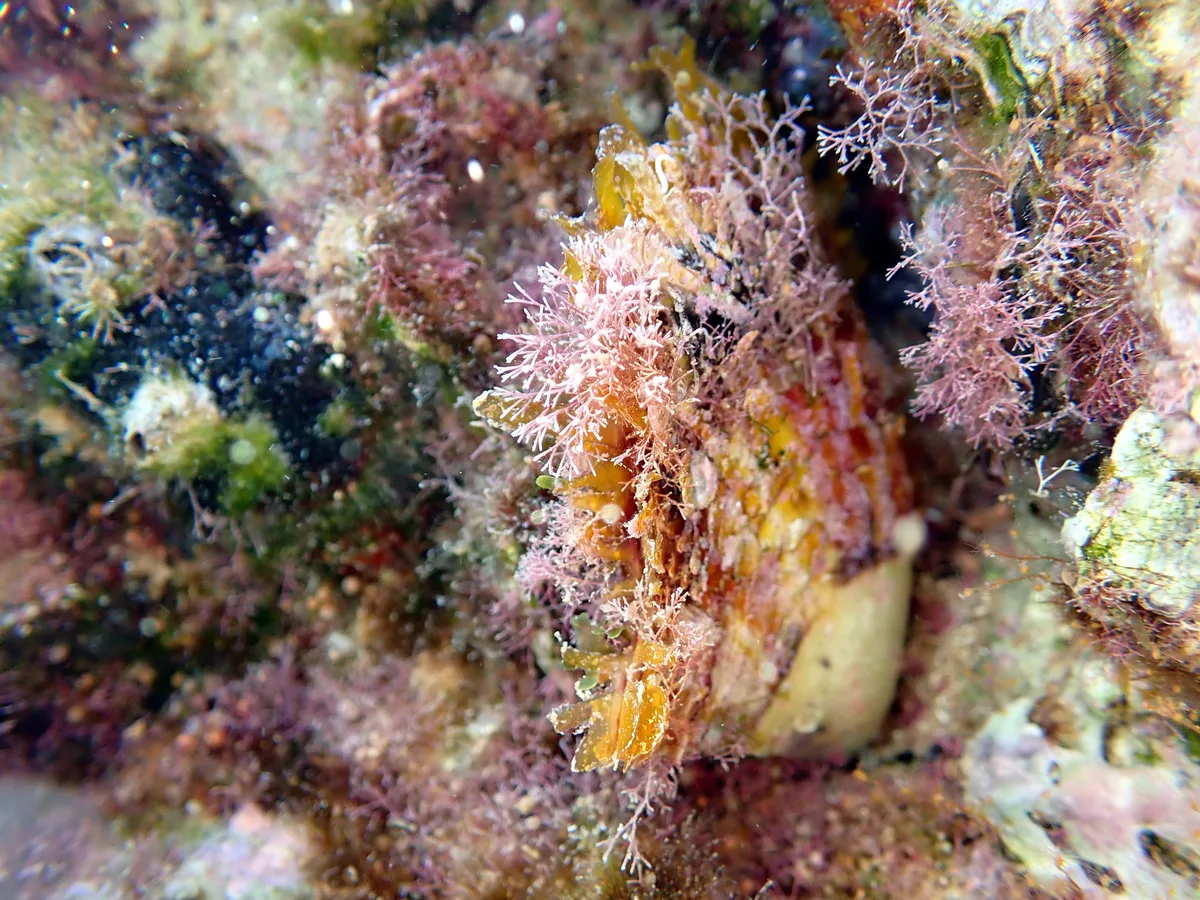
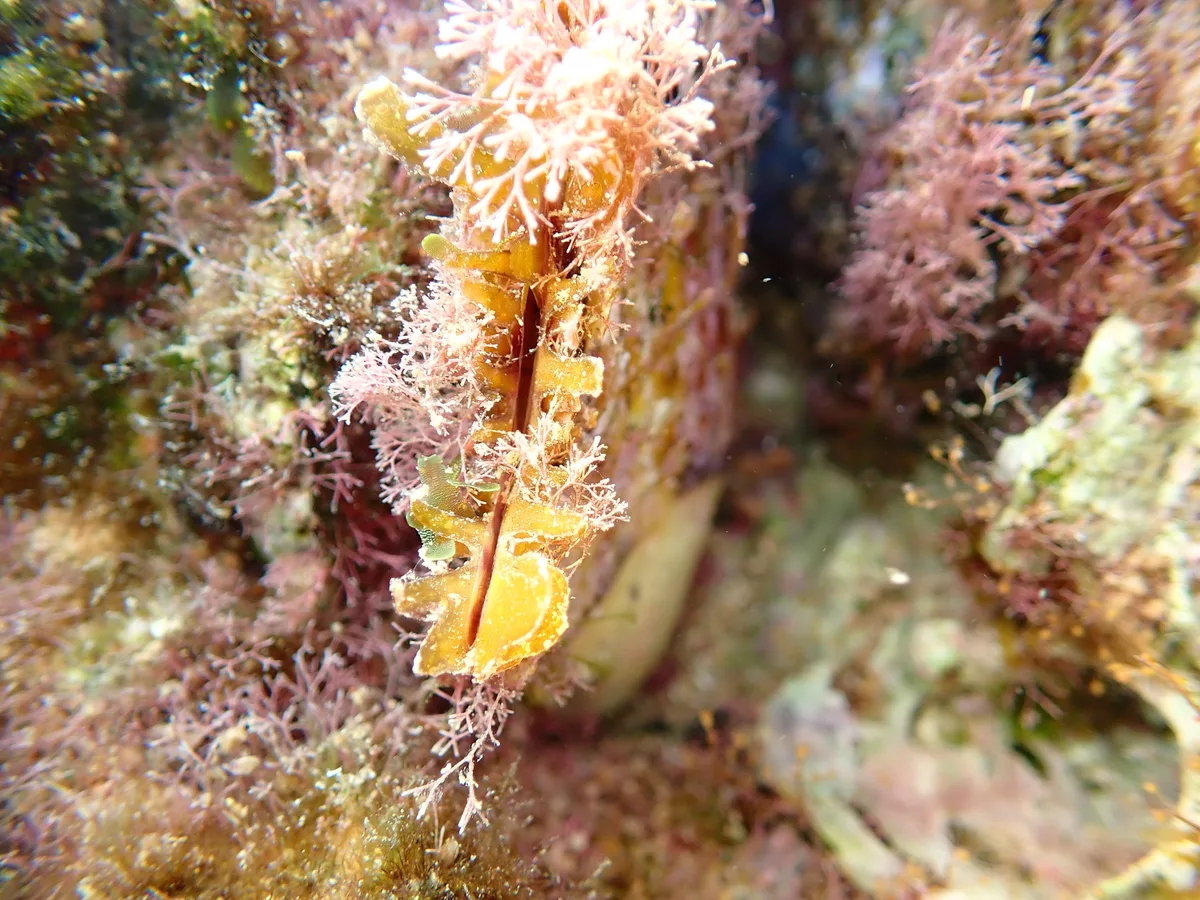
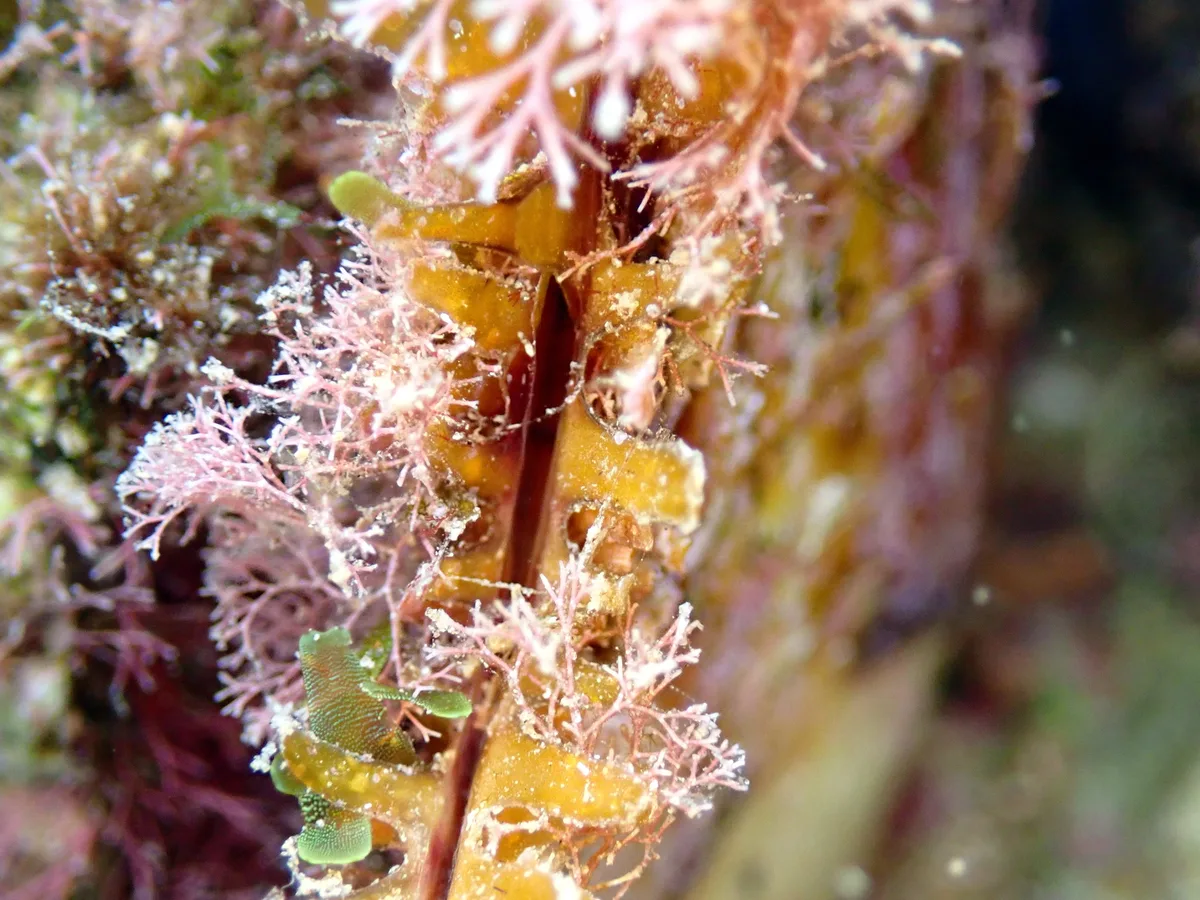
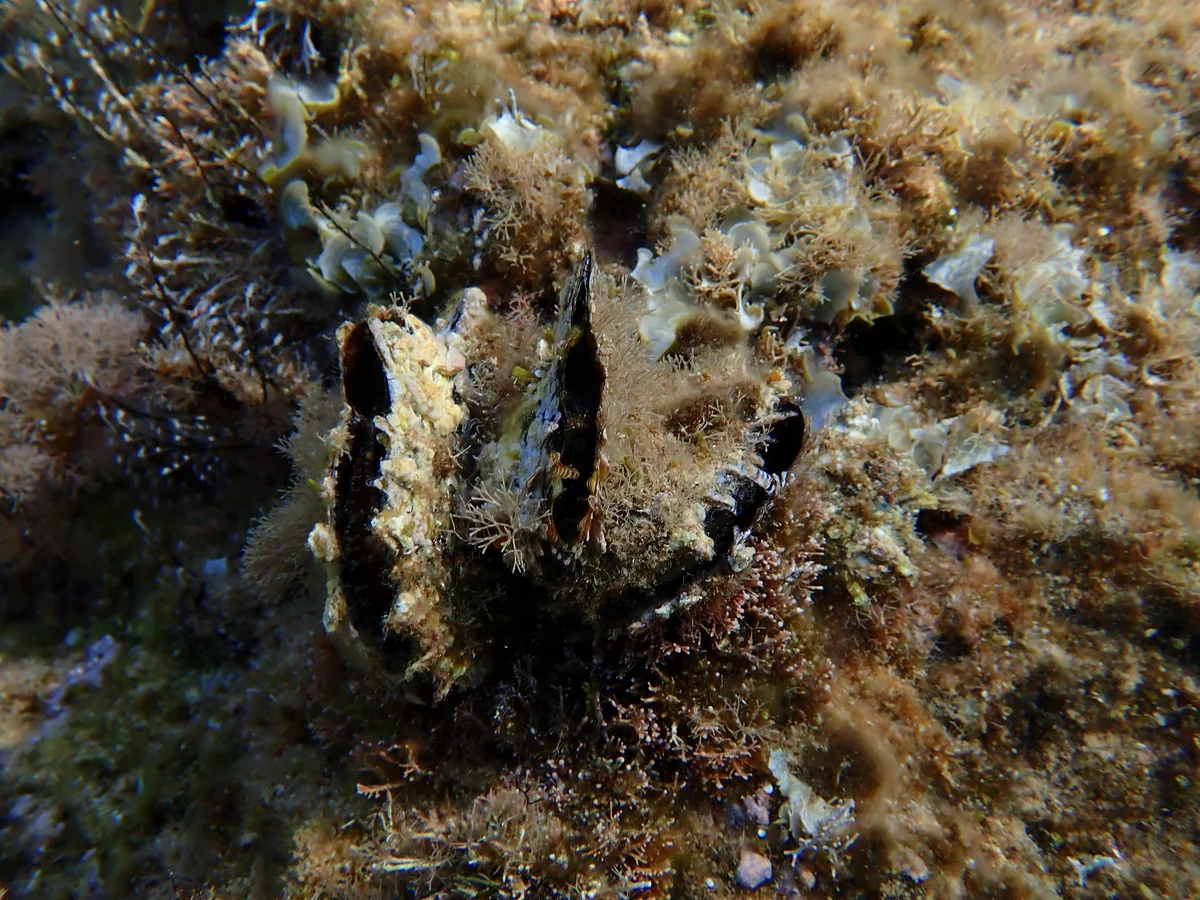
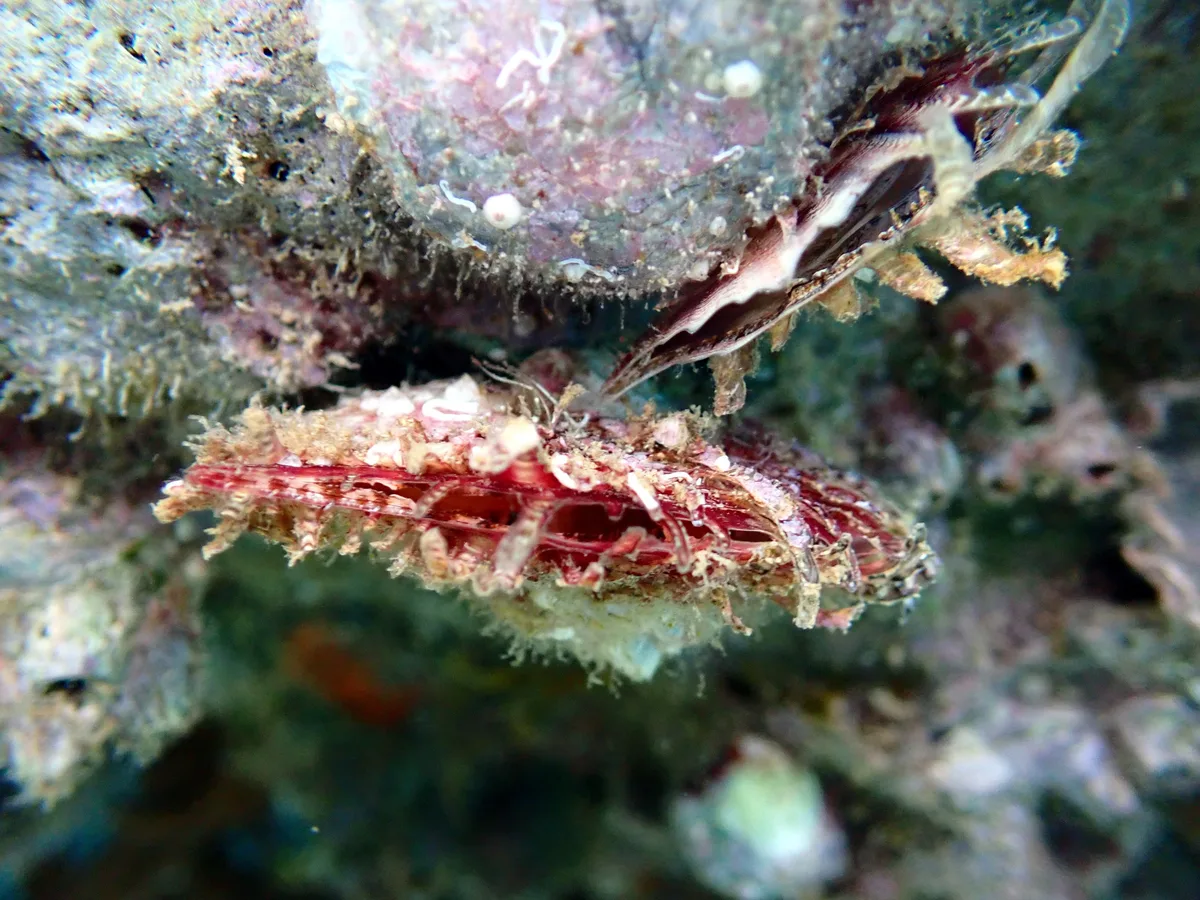
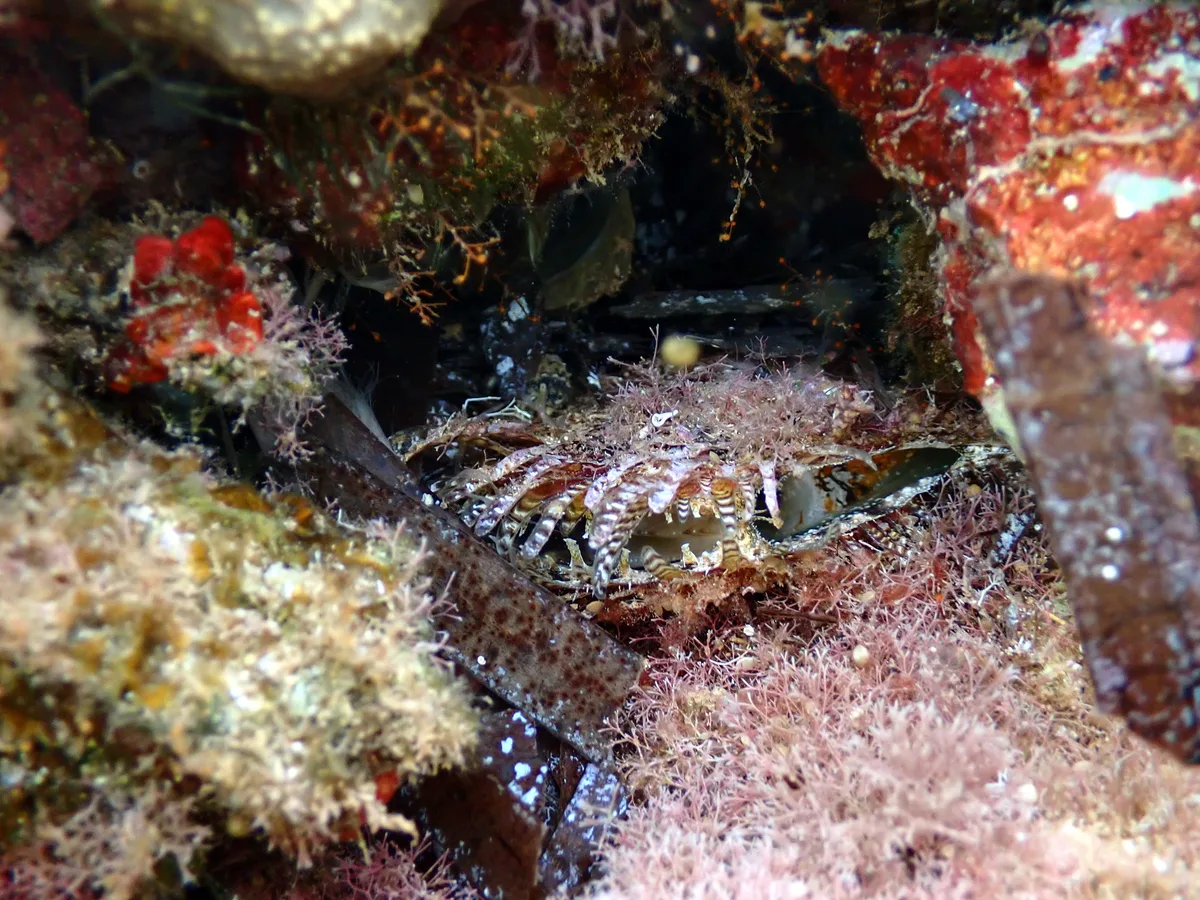
This oyster went through the Suez Canal (🇪🇬 Egypt) and took over the Mediterranean, and it was early: it was recorded off the Egyptian coast in 1874, five years after the canal opened, the first bivalve to make the crossing. It is now established from the Levant to Greece, Malta, Italy and the Gulf of Gabes, and the animal that did it is this unremarkable palm-sized shell.
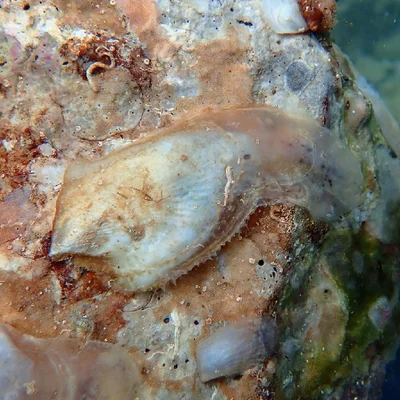
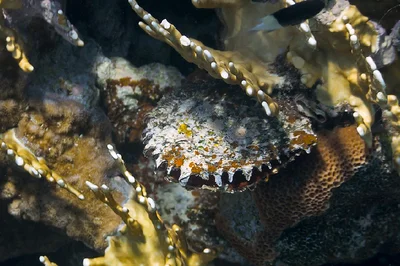
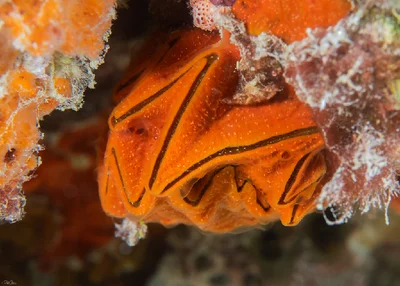
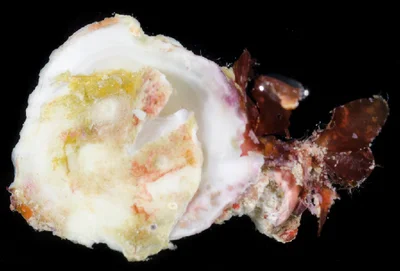
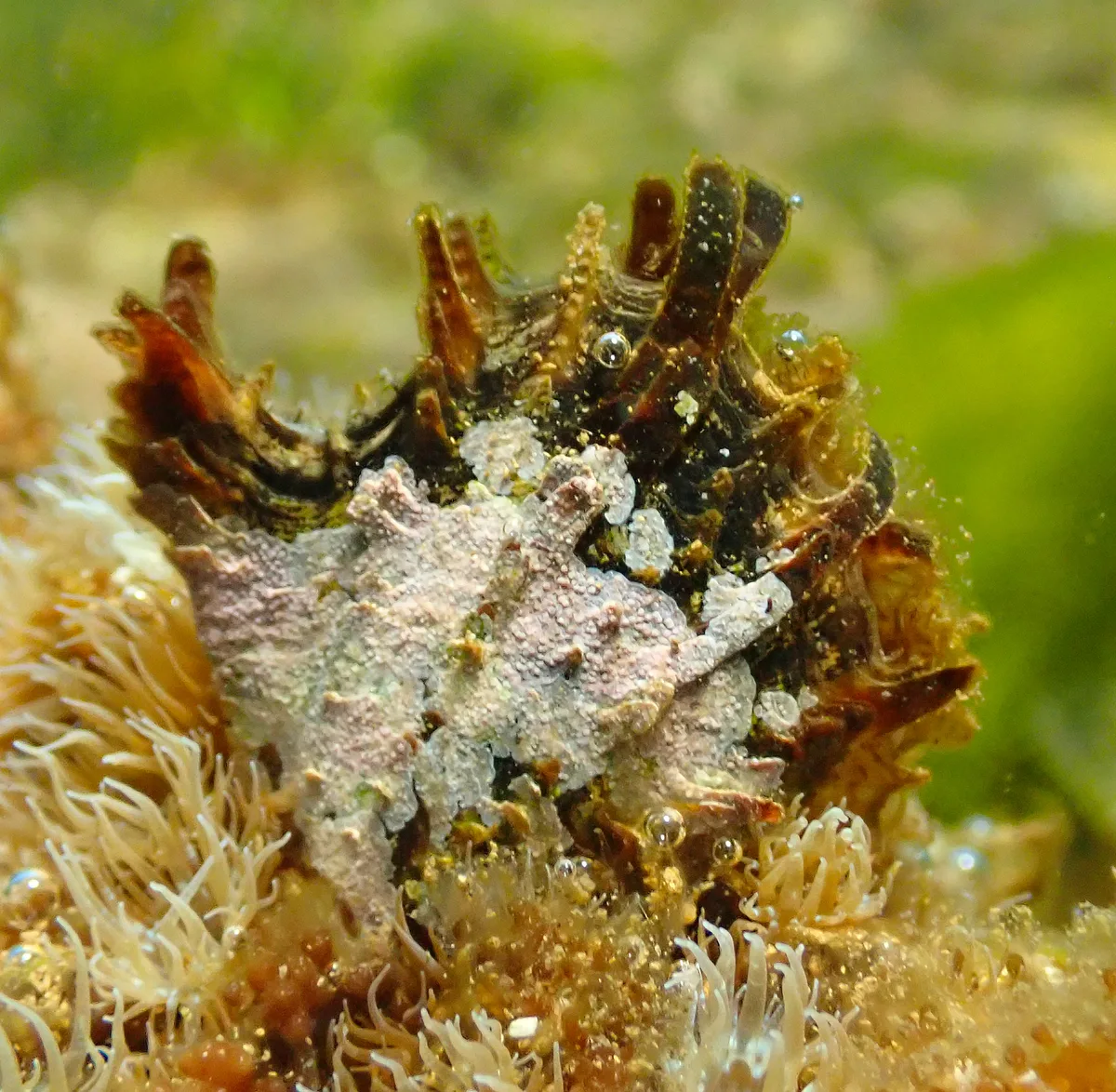
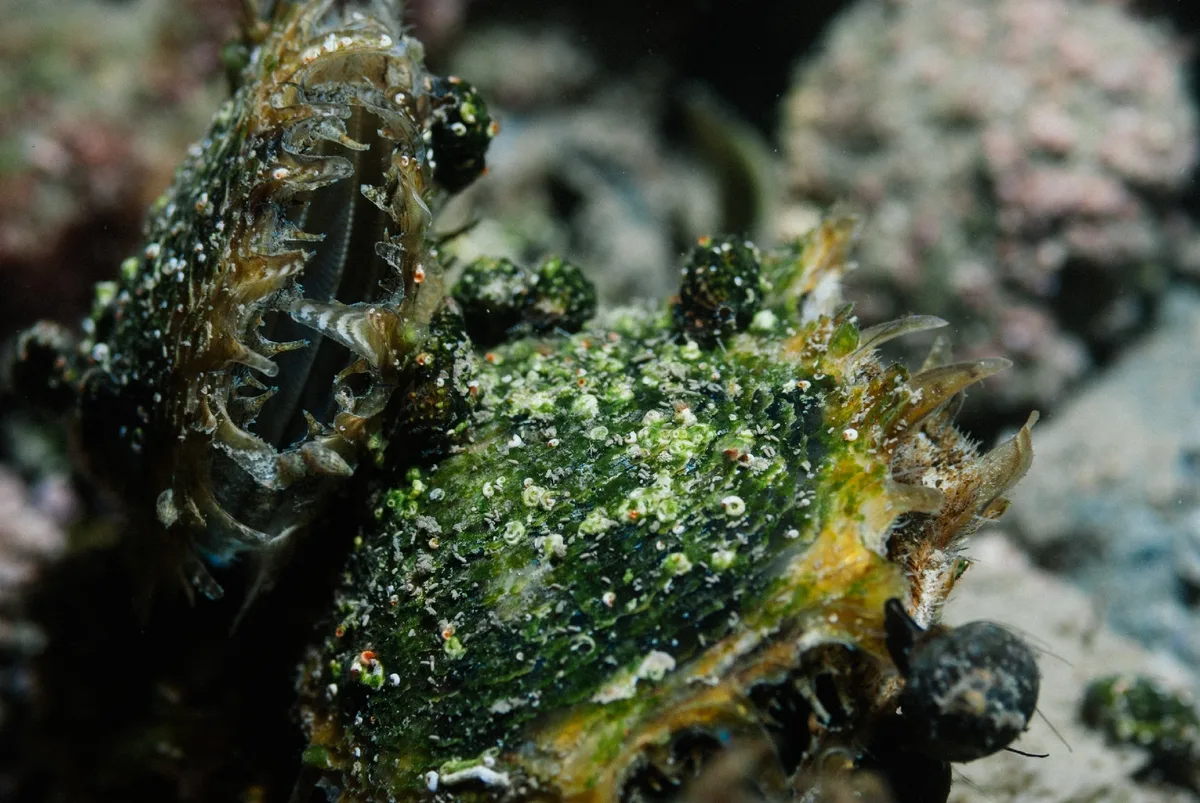
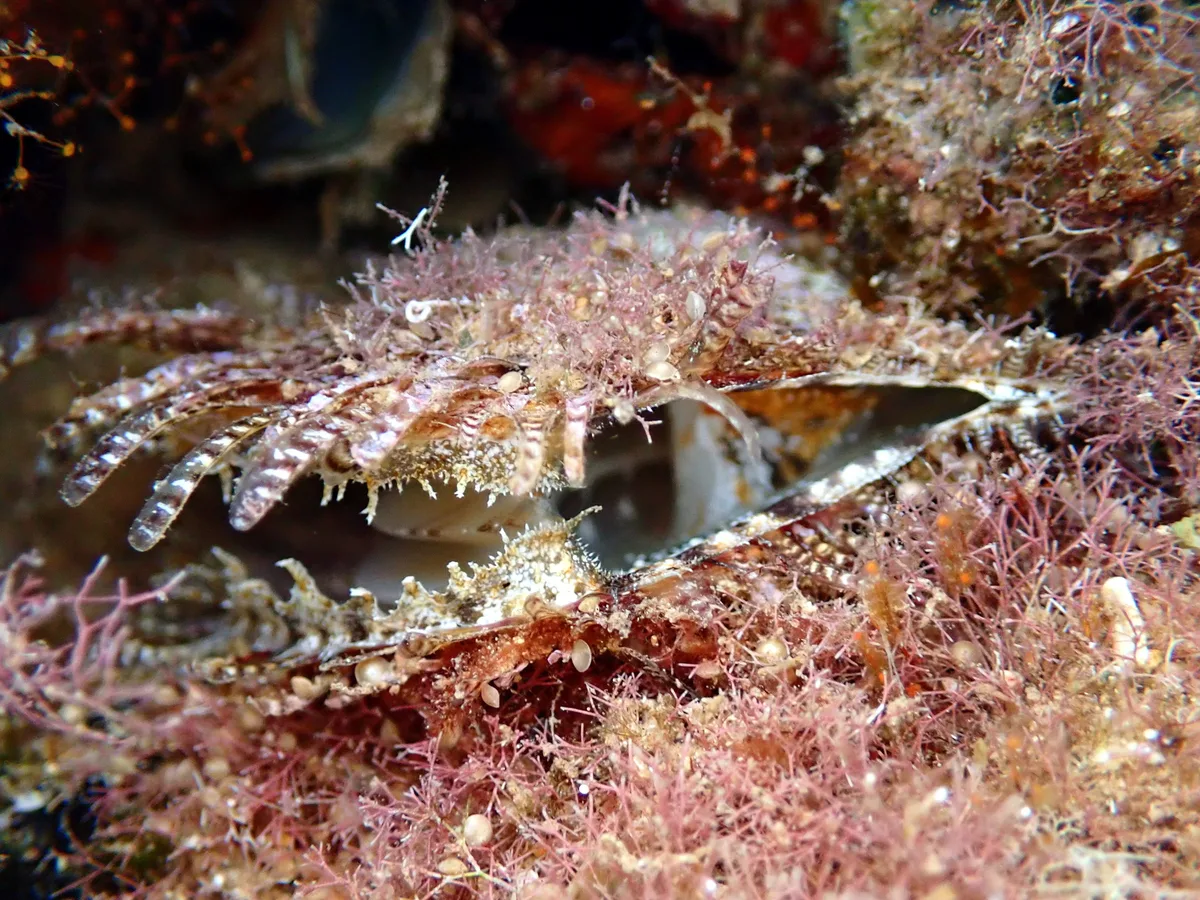
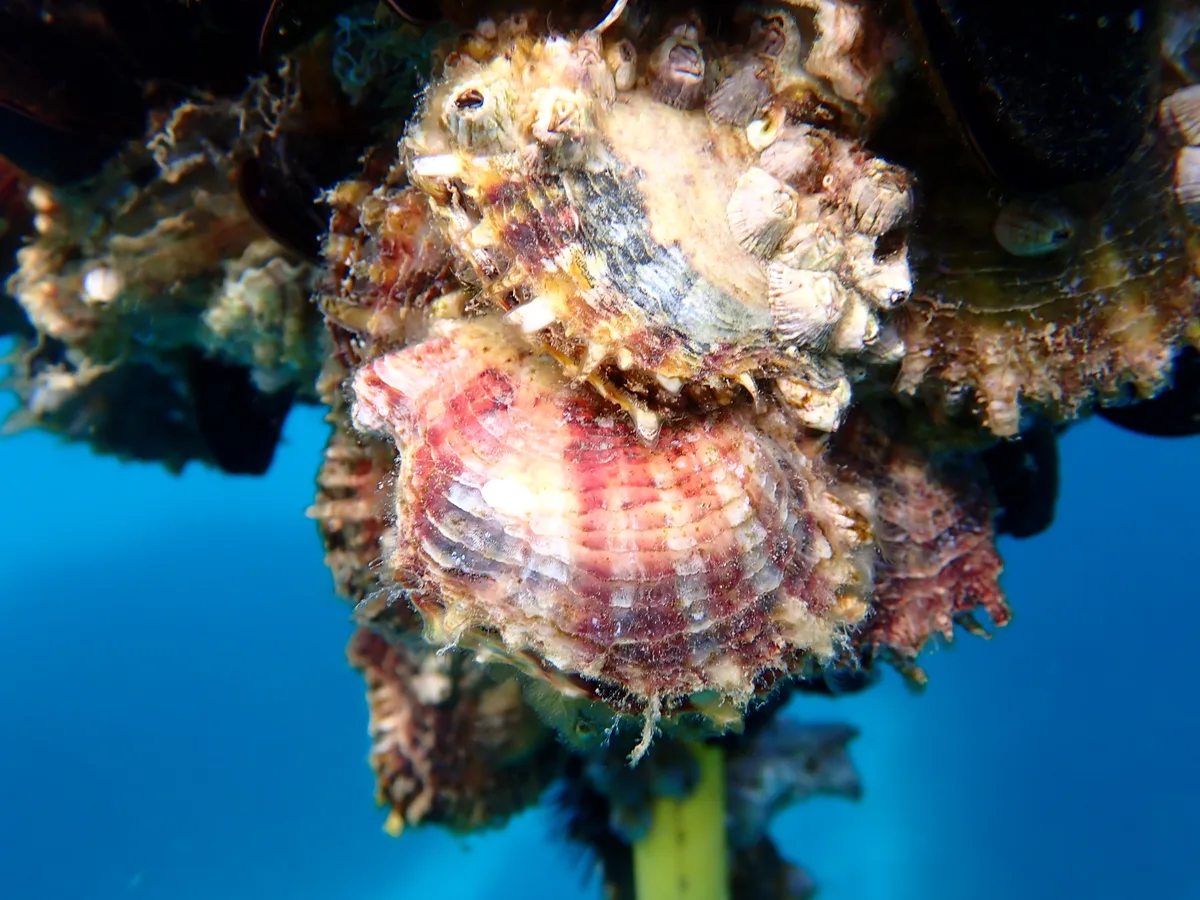
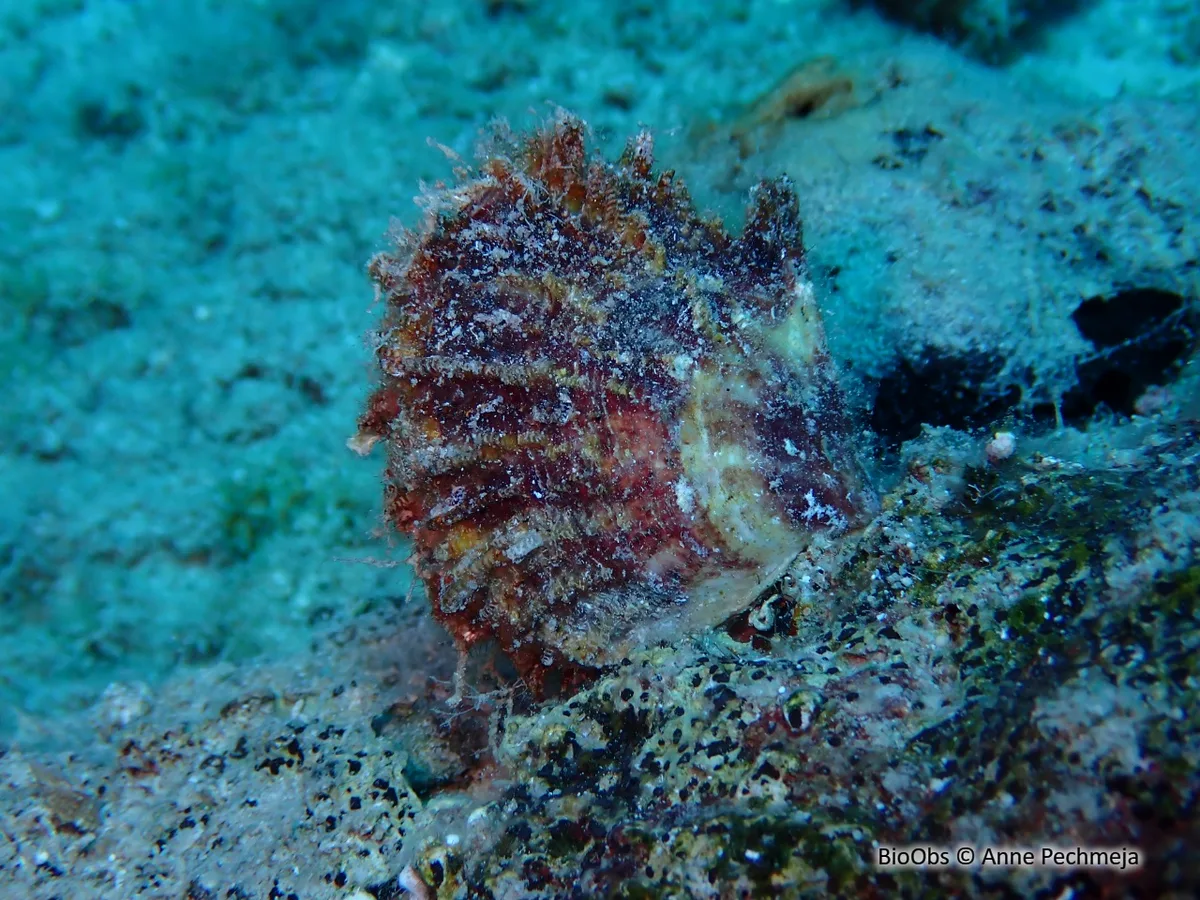
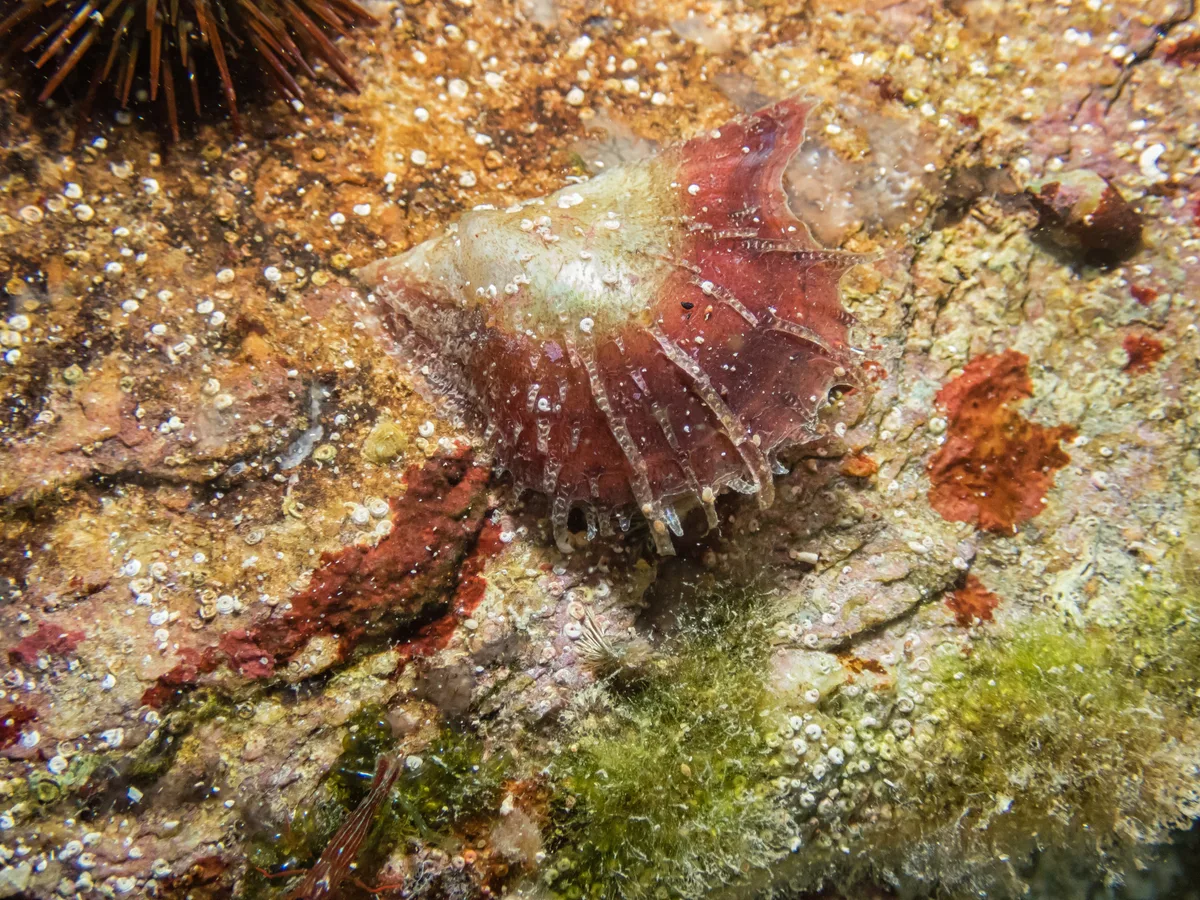
The shell is small, flat and light, nothing like the heavy blacklip pearl oysters: a straight hinge with a short wing at each end, built of thin overlapping layers that flake at the margin. The outside is pale brown, greenish or yellowish with darker rays running from the hinge to the edge, which is what radiata records. Inside is nacre. Shell height reaches about 10 cm (4 in), though most are nearer 6.
It does not cement itself down. A tuft of horny byssal threads ties it to rubble, dead coral, a seagrass rhizome or any other solid thing, and an animal torn loose by surge can spin fresh threads and reattach. Look for it on shallow rock, rubble and seagrass, several in a patch. It has been taken as deep as 150 m (490 ft) but is commonest between 5 and 25 m (16 and 80 ft).
Inside the shell is a mollusc that gave up its head. No face, no eyes worth the name, no rasping tongue: the gills, which in a snail only breathe, are here the feeding organ, sieving particles out of the water with a haze of beating cilia and running them to the mouth in strings of mucus. Everything the animal eats it takes out of the water passing between the valves.
This is the pearl oyster of the old Gulf and Arabian fisheries, the one thousands of breath-hold divers went down for before the trade collapsed. Its pearls are small and its shell is too thin to have been worth much for mother-of-pearl, but there were enough of it to build an industry on.
- small flat shell, straight hinge with a short wing at each end
- pale brown to greenish with darker rays running to the margin
- byssal threads tying it to rubble, dead coral or seagrass
- thin overlapping layers, nacre inside
- up to 10 cm