
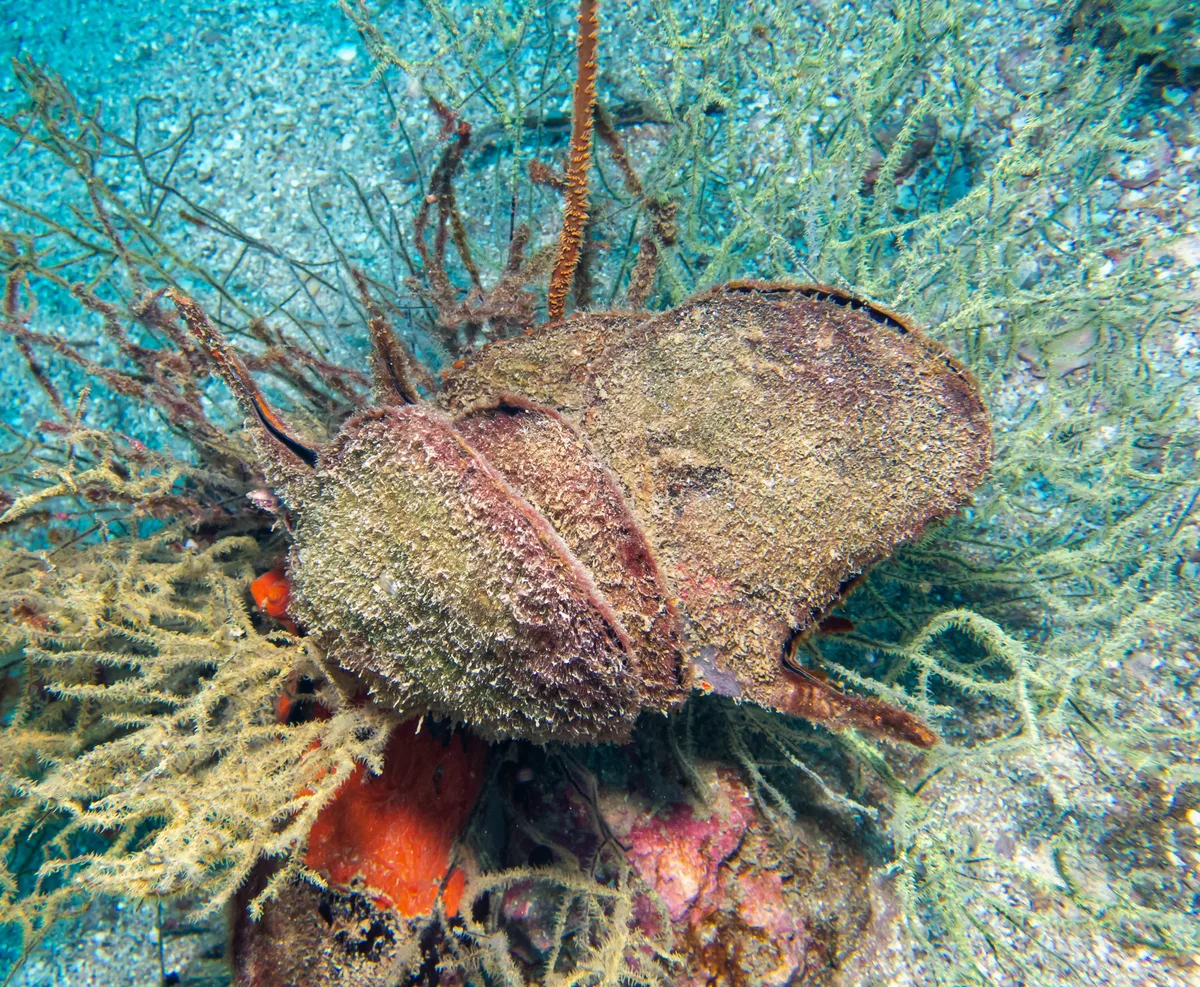
The sheet of nacre inside this shell is broad enough that people farm it. A plastic hemisphere is cemented against the inner surface, the mantle coats it in layer after layer of nacre, and months later the lump is cut out as a mabe, a half-pearl. It is done with this species in 🇯🇵 Japan, 🇨🇳 China, the 🇵🇭 Philippines, 🇮🇩 Indonesia and 🇹🇴 Tonga. Nobody does it in the 🌊 Red Sea, where the animal turns up as scattered singles rather than beds.
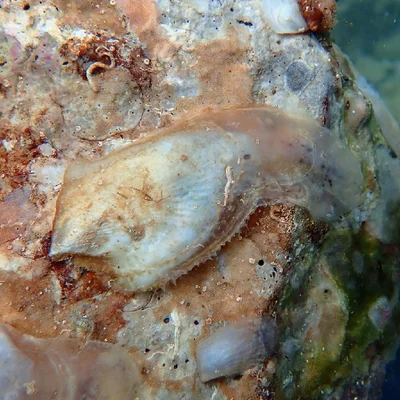
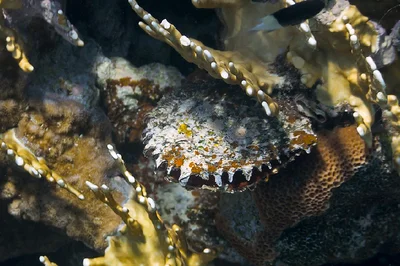
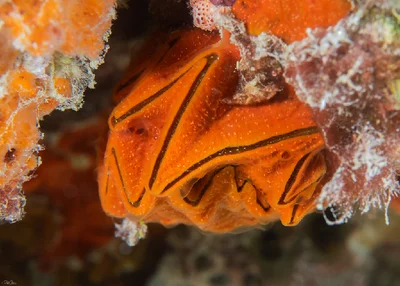
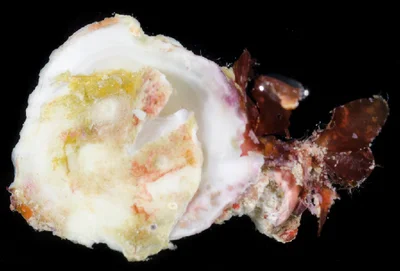
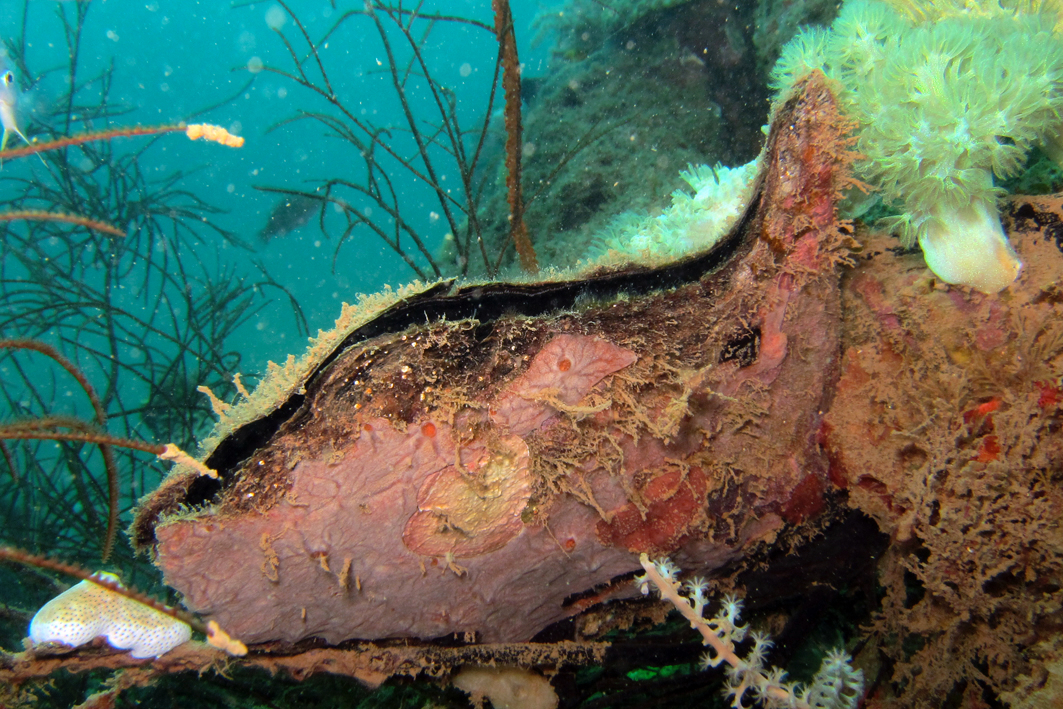
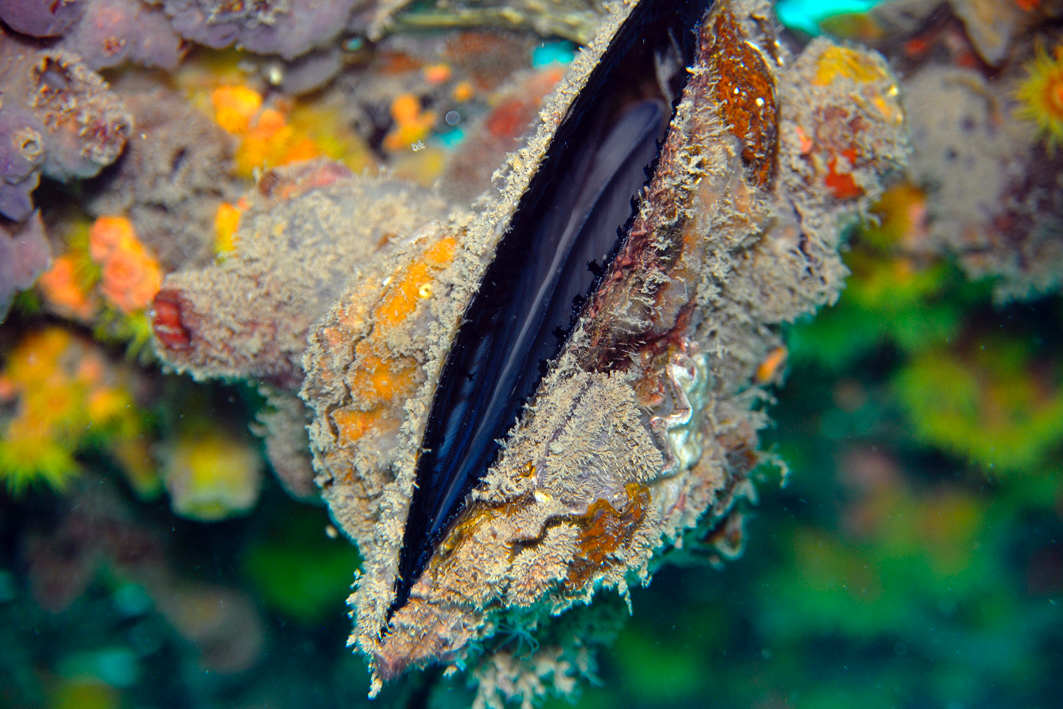
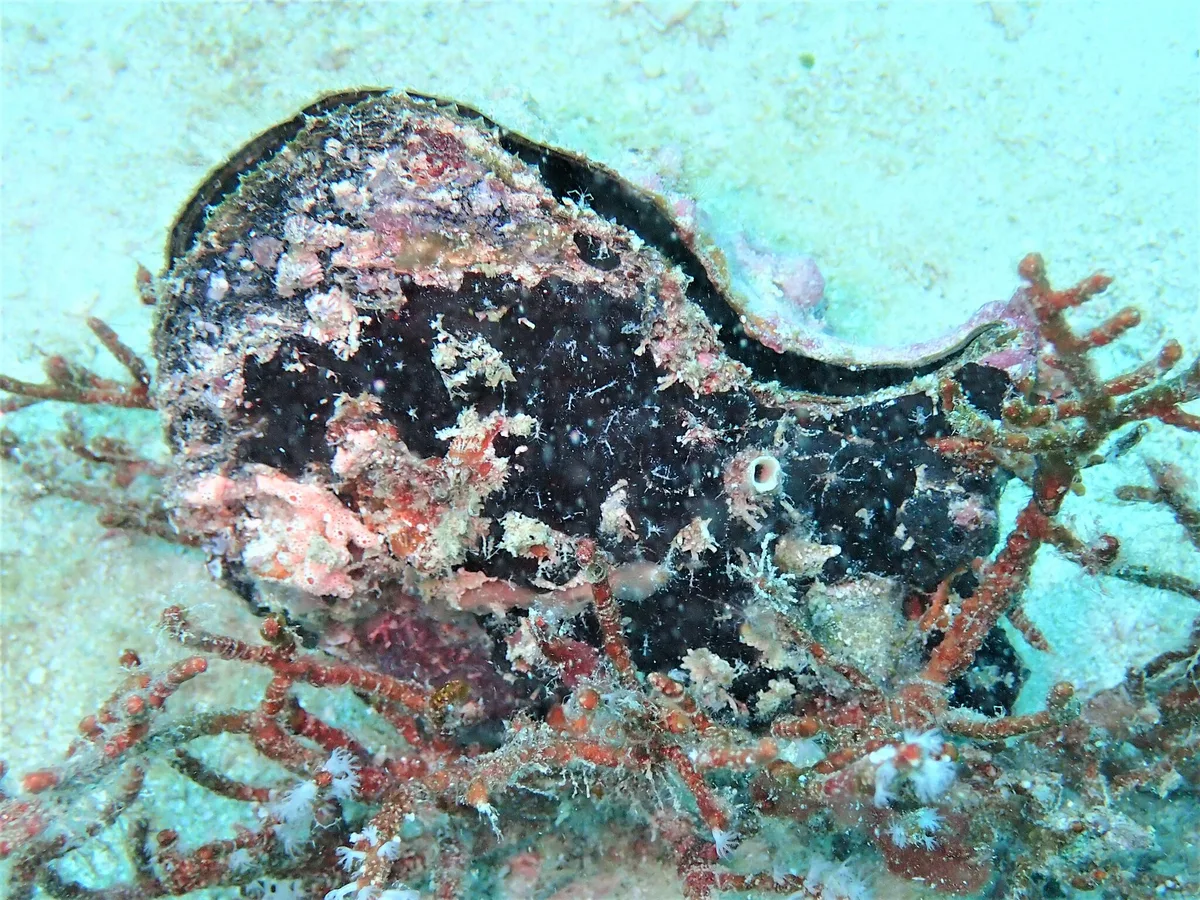
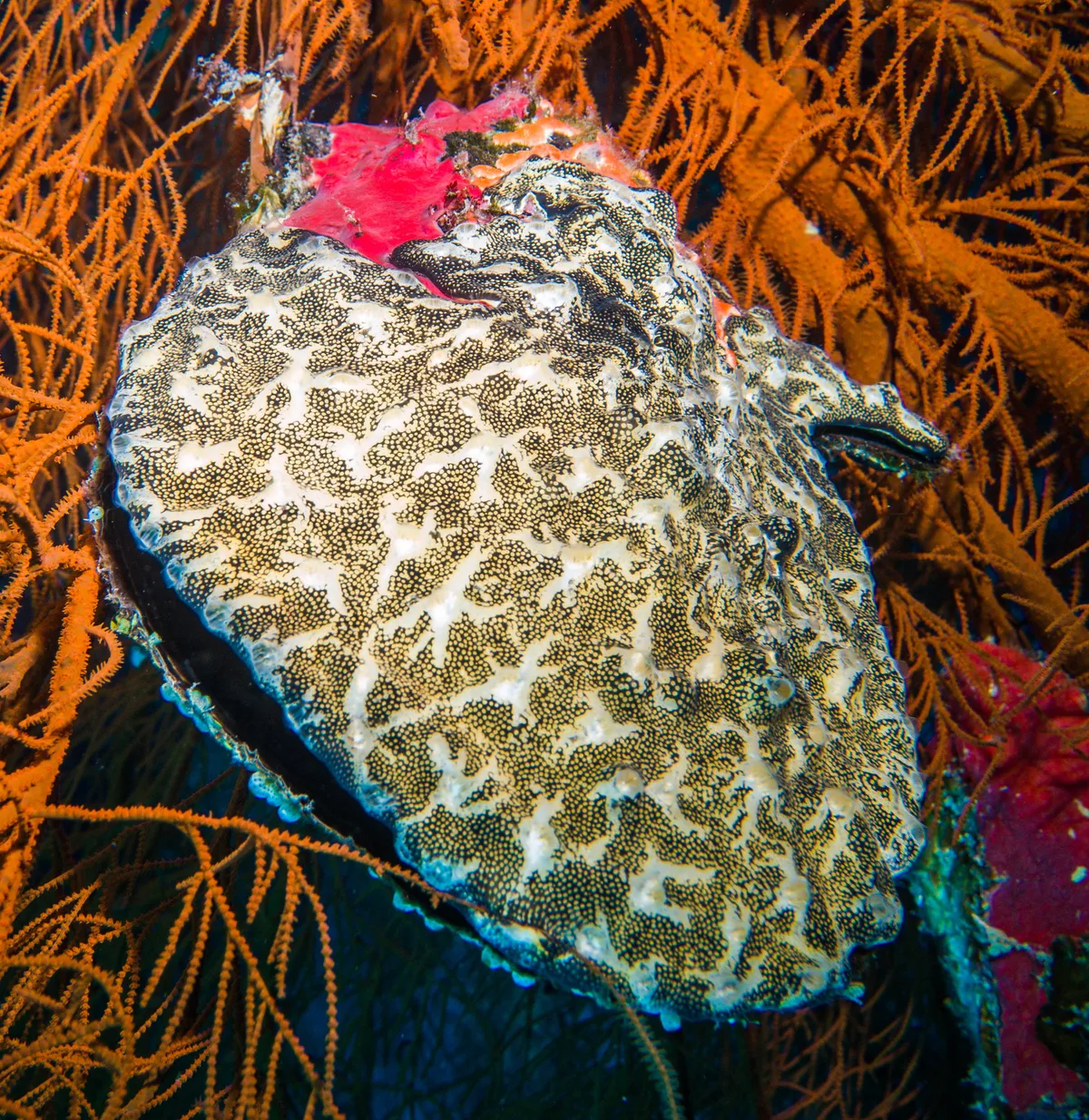
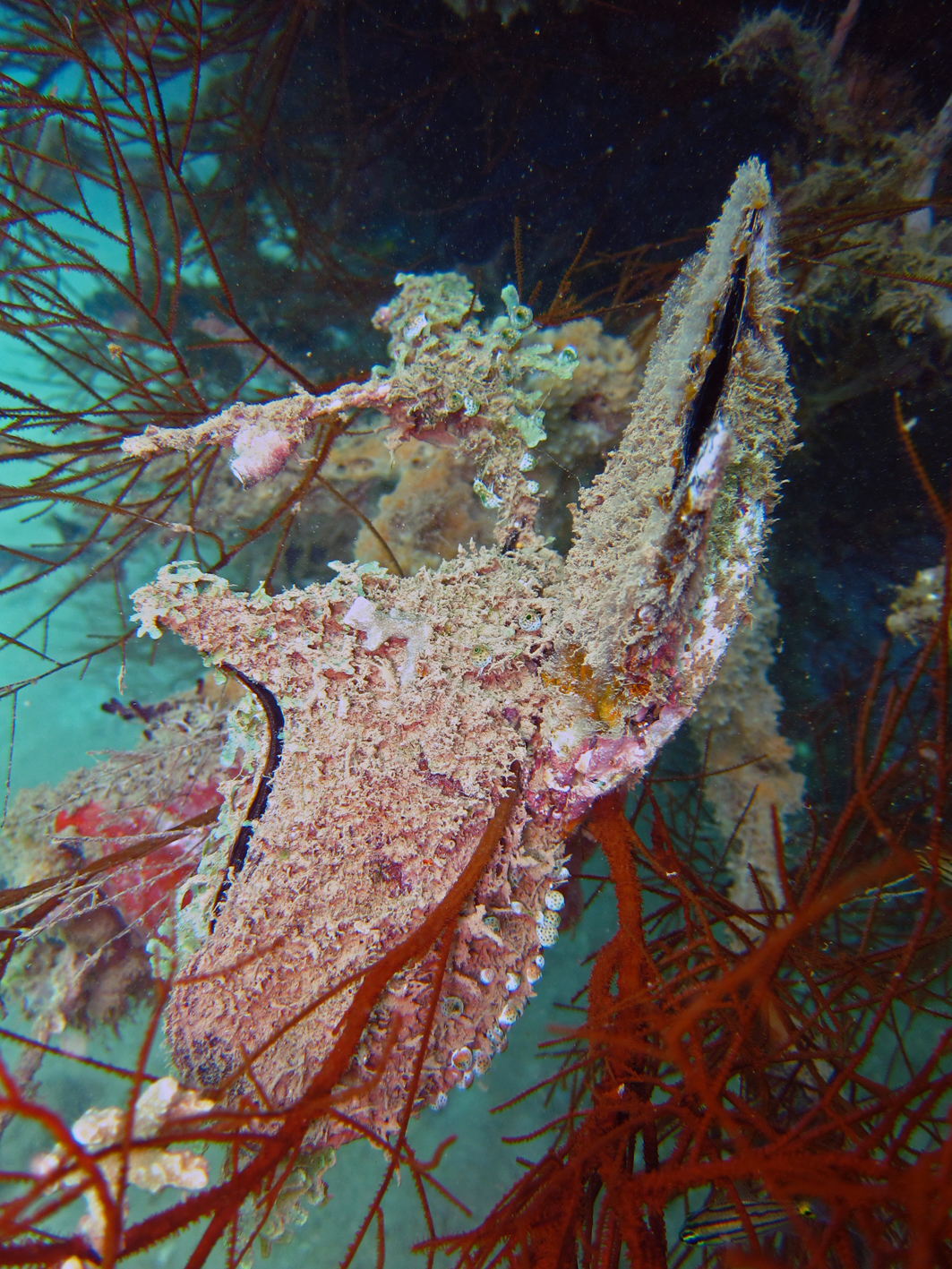
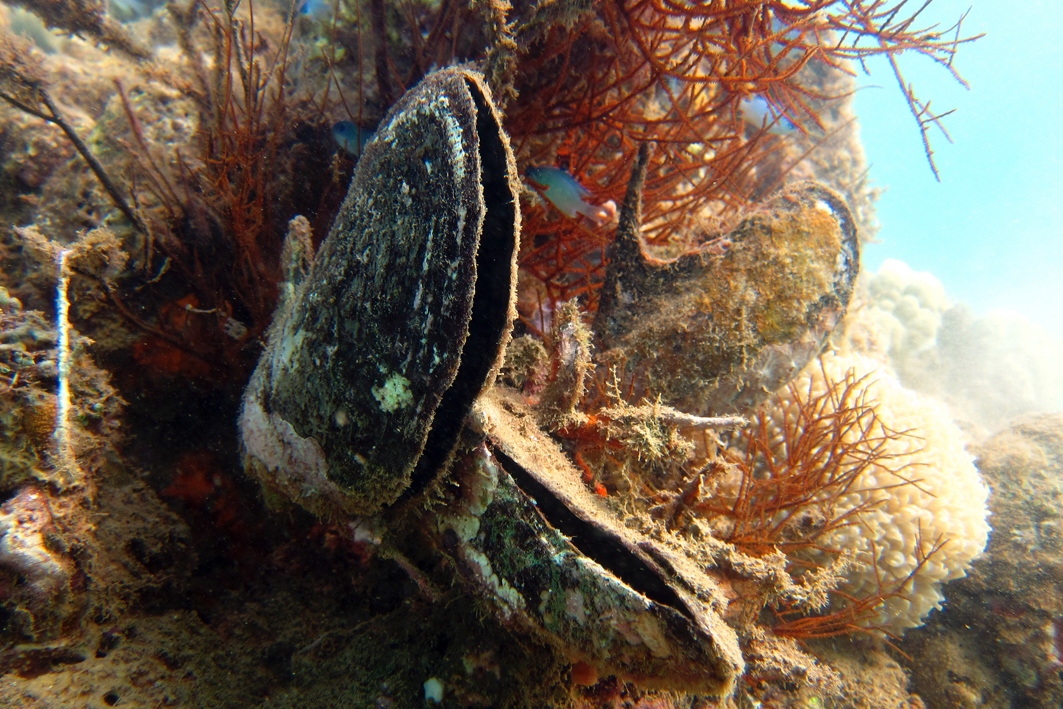
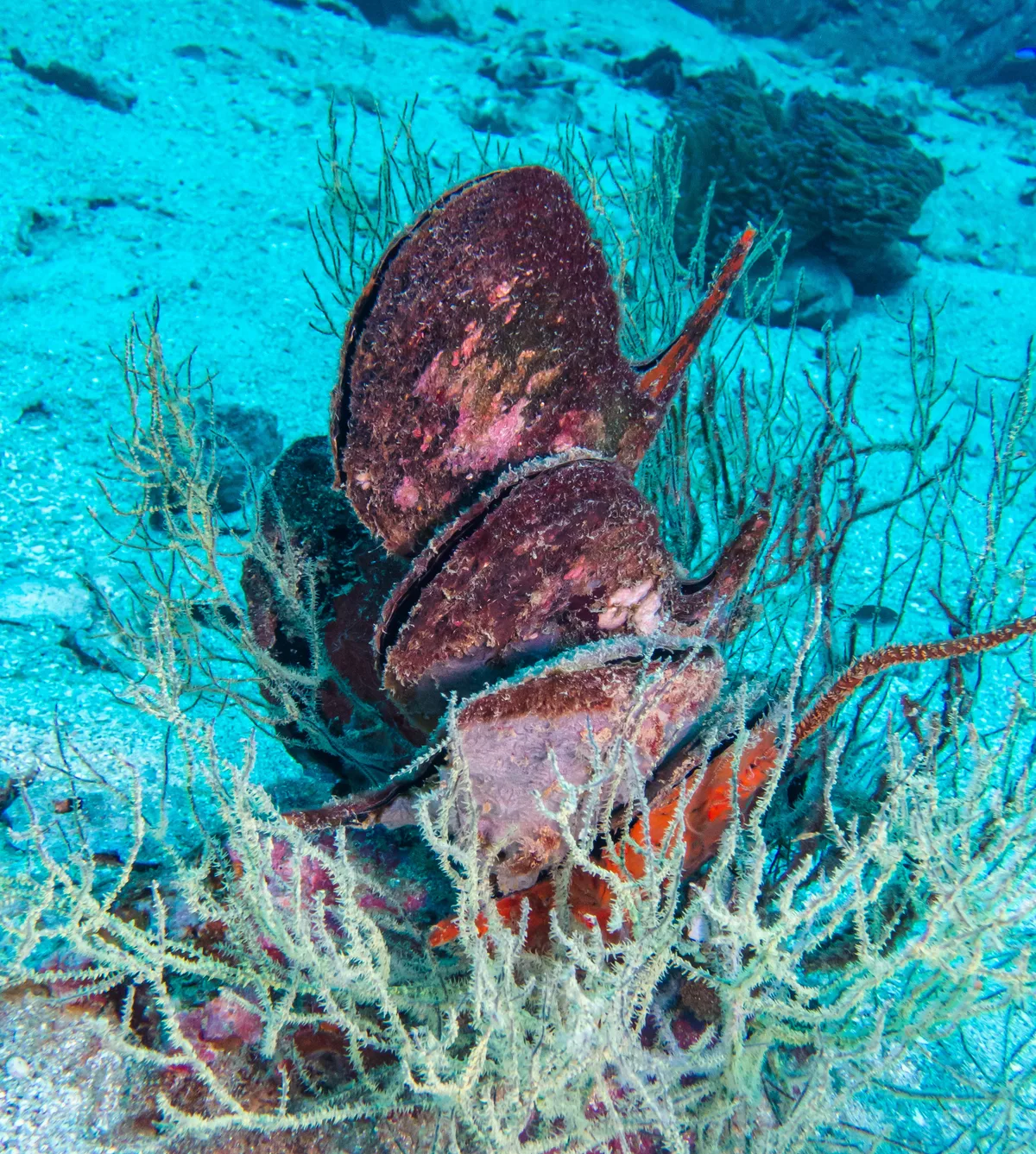
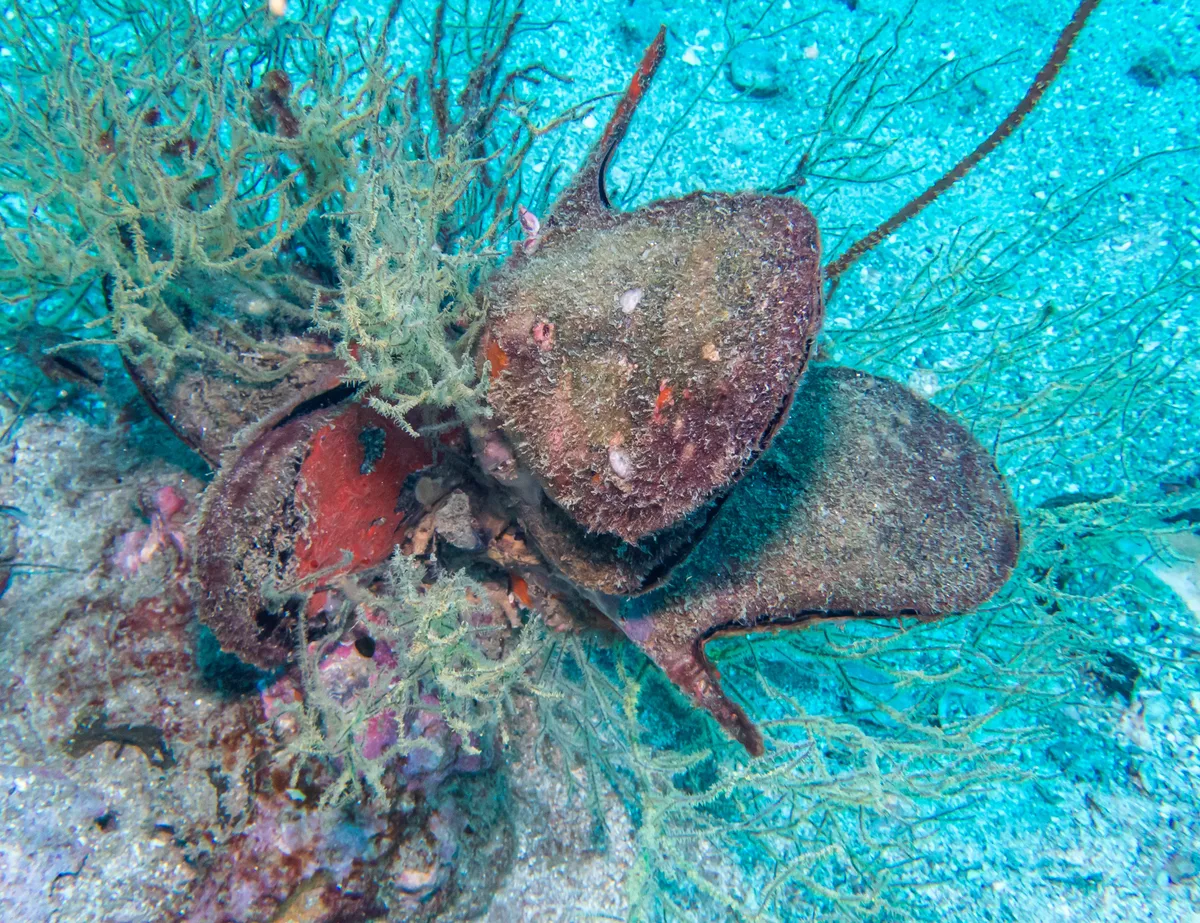
It is the largest of the winged oysters, reaching about 30 cm (12 in) of shell length, two to three times any other Pteria on the reef. The hinge is long and straight with a heavy wing at the rear end, the outside brown to black, the inside a wide sheet of nacre with a dark border. Young shells are thin and flexible at the margin. Old ones grow thick and heavy and are usually loaded with sponge, algae and other growth, so the shape rather than the surface is what you go on.
Strong byssal threads fix it to gorgonians, black coral, rock and wreckage, anywhere raised into moving water, from the shallows to about 35 m (115 ft). It attaches rather than cements, which is why an old shell can be found still gripping a dead branch. On the 🌊 Red Sea wrecks it is usually the one large bivalve standing off the steel at an angle.
Inside is a mollusc with no head at all. The gills, which in most molluscs only breathe, are the feeding organ here: a curtain of ciliated filaments that strains plankton and suspended particles from the water crossing them and delivers the catch to the mouth in mucus. Nothing is hunted, chewed or chosen.
Told apart from the Egyptian winged oyster by size and color: this one is two to three times larger, blacker, and heavy in the hand, and it sits as often on wreckage and rock as on a sea fan.
- large heavy shell with a long straight hinge and a broad rear wing
- outside brown to black, usually fouled with sponge and algae
- interior a wide sheet of nacre with a dark border
- byssus-attached to gorgonians, black coral or wreckage
- up to 30 cm