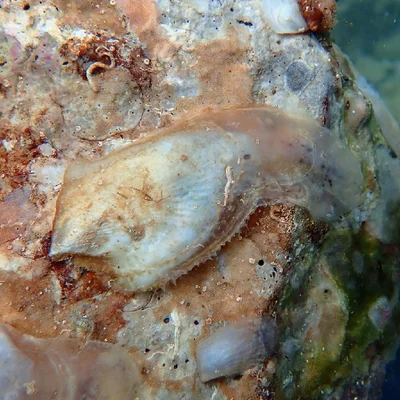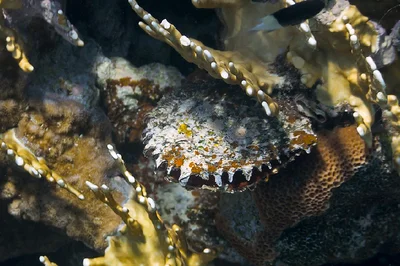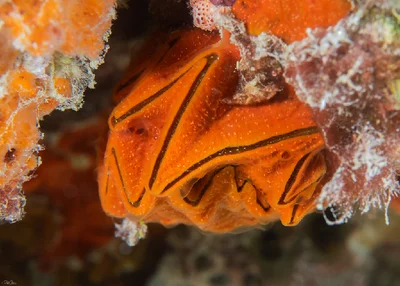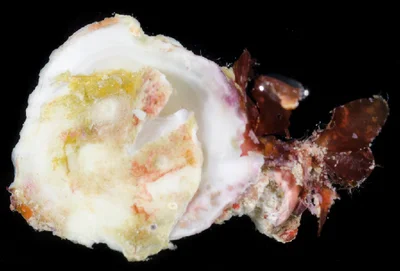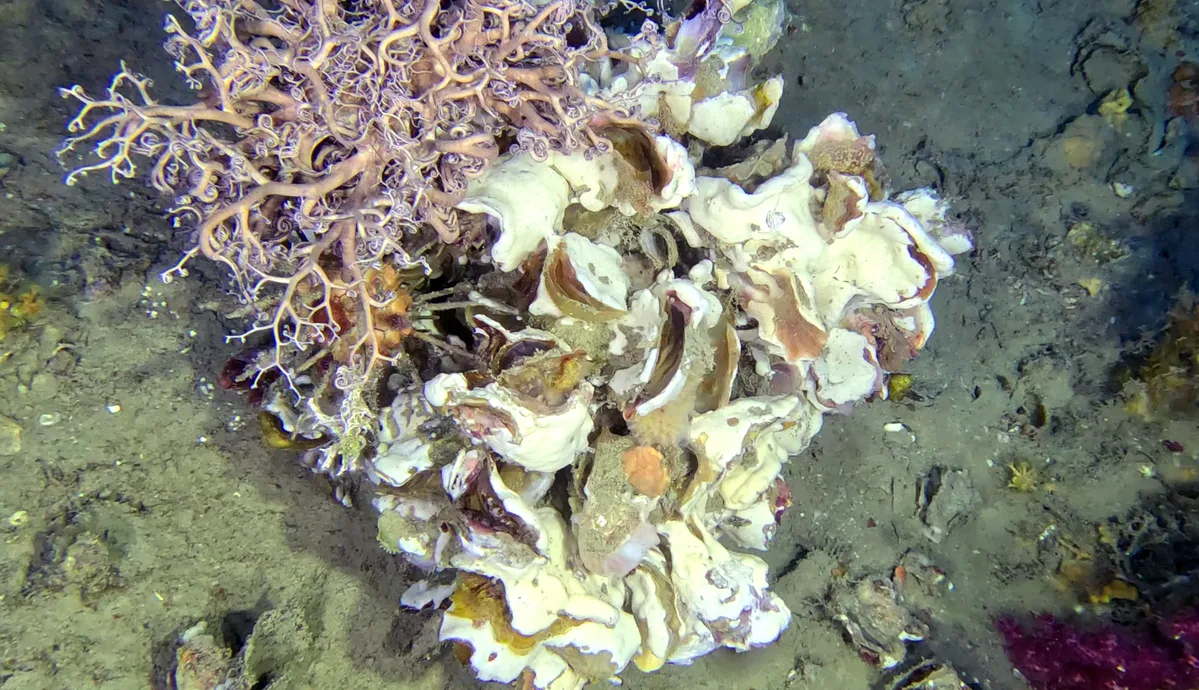
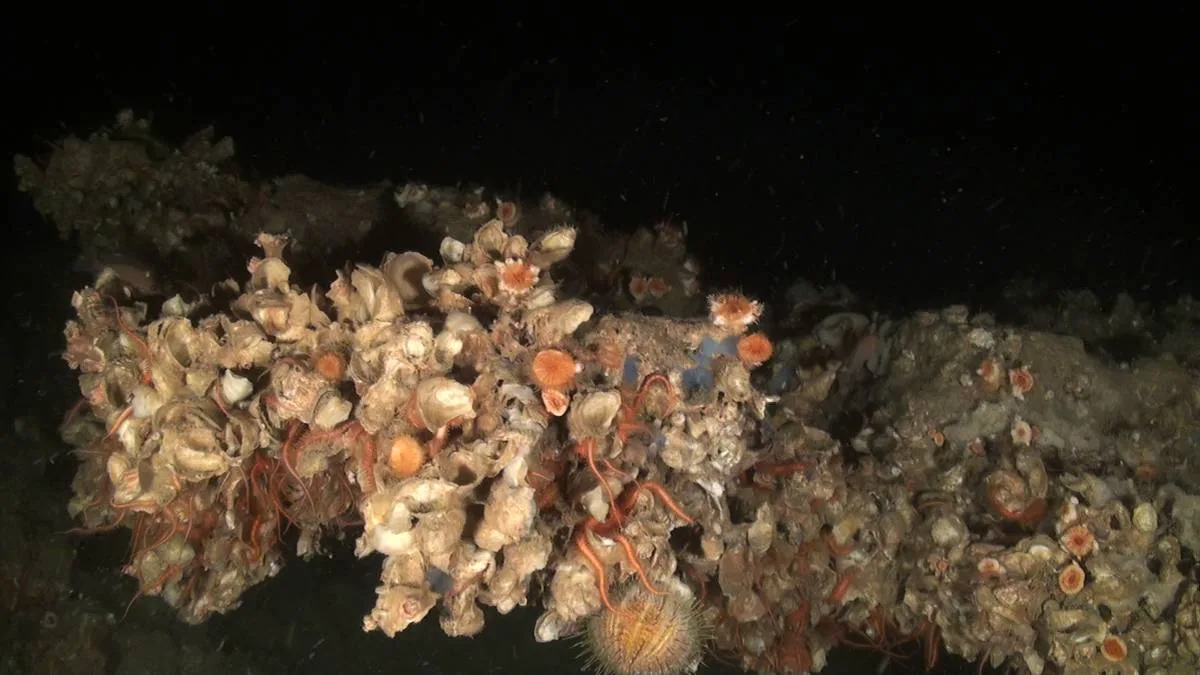
A thin, brittle, spoon-shaped oyster - cochlear is Latin for spoon - with a lower valve drawn out into a curved scoop and a flat upper valve. The surface carries fine concentric growth lamellae and no radial ribs, so it looks smoother and more delicate than the reef oysters. Shells are white to pale yellow with a pearly interior, and reach about 8 cm (3 in). Animals grow in stacked clusters, each generation cementing onto the last, building up into small reef-like masses on hard bottoms.
This is a deep-water species, found from around 40 m down to several hundred meters worldwide, and in the 🌊 Red Sea it belongs to the walls and hard bottoms below the recreational range rather than the reef proper. It filters plankton and suspended organic matter from cold, slow-moving water, and the clusters it forms provide shelter for brittle stars, worms and small crustaceans. Growth is slow and individuals long-lived: shells of this species have been used to reconstruct past ocean temperatures from their growth banding, in the same way tree rings are read on land. Divers meet it only on the deepest walls, and most records come from dredging, submersibles and material washed up after storms.
- thin, brittle, spoon-shaped shell
- concentric growth lamellae, no radial ribs
- grows in stacked clusters on deep rock