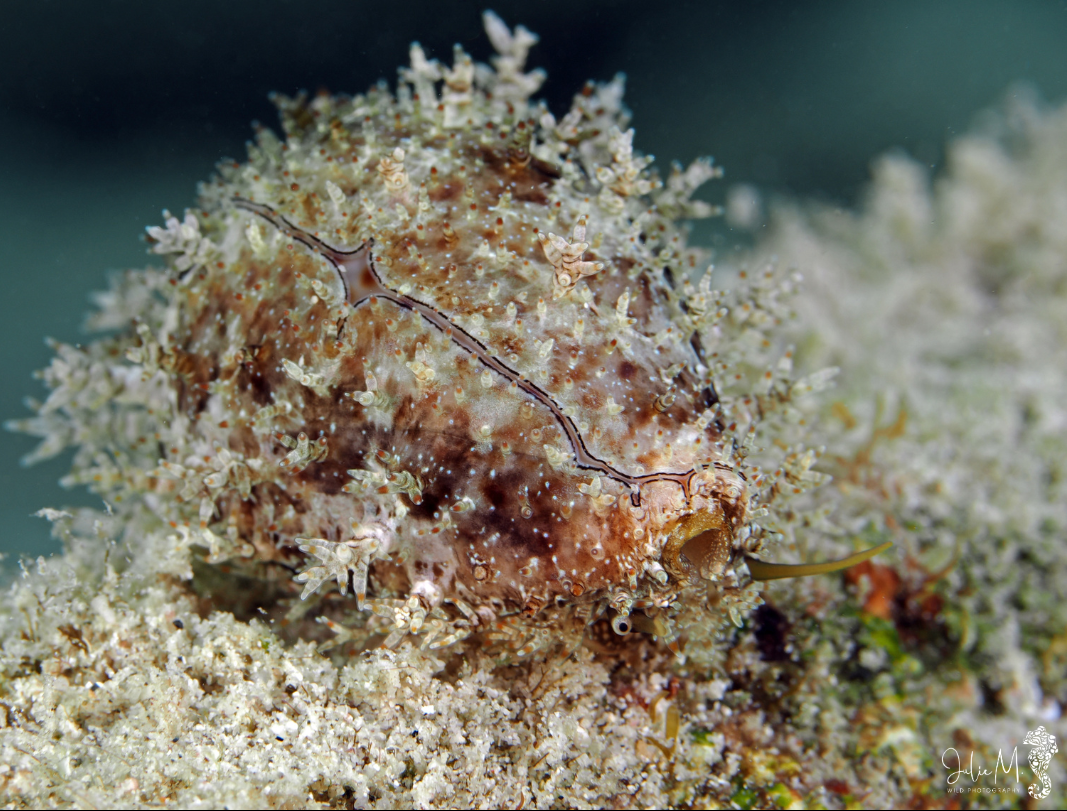
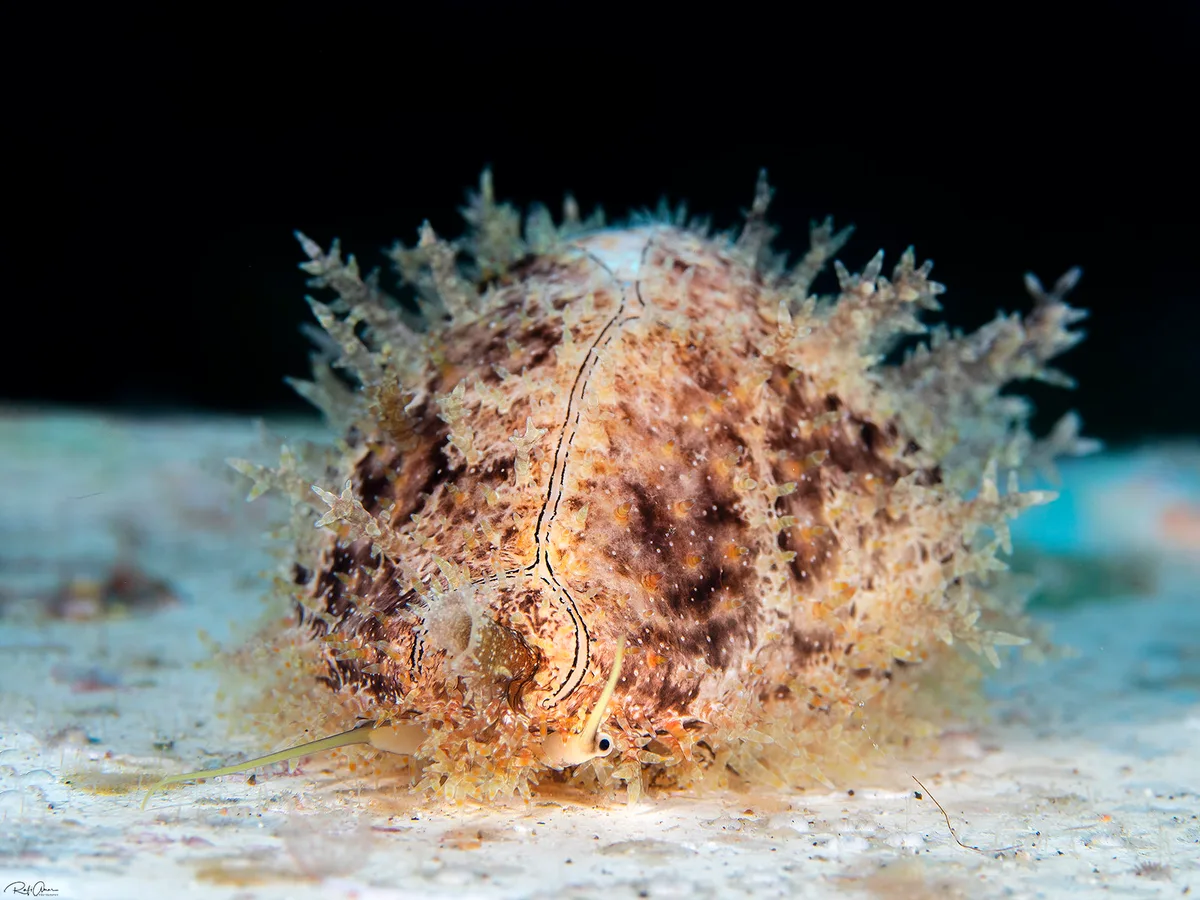
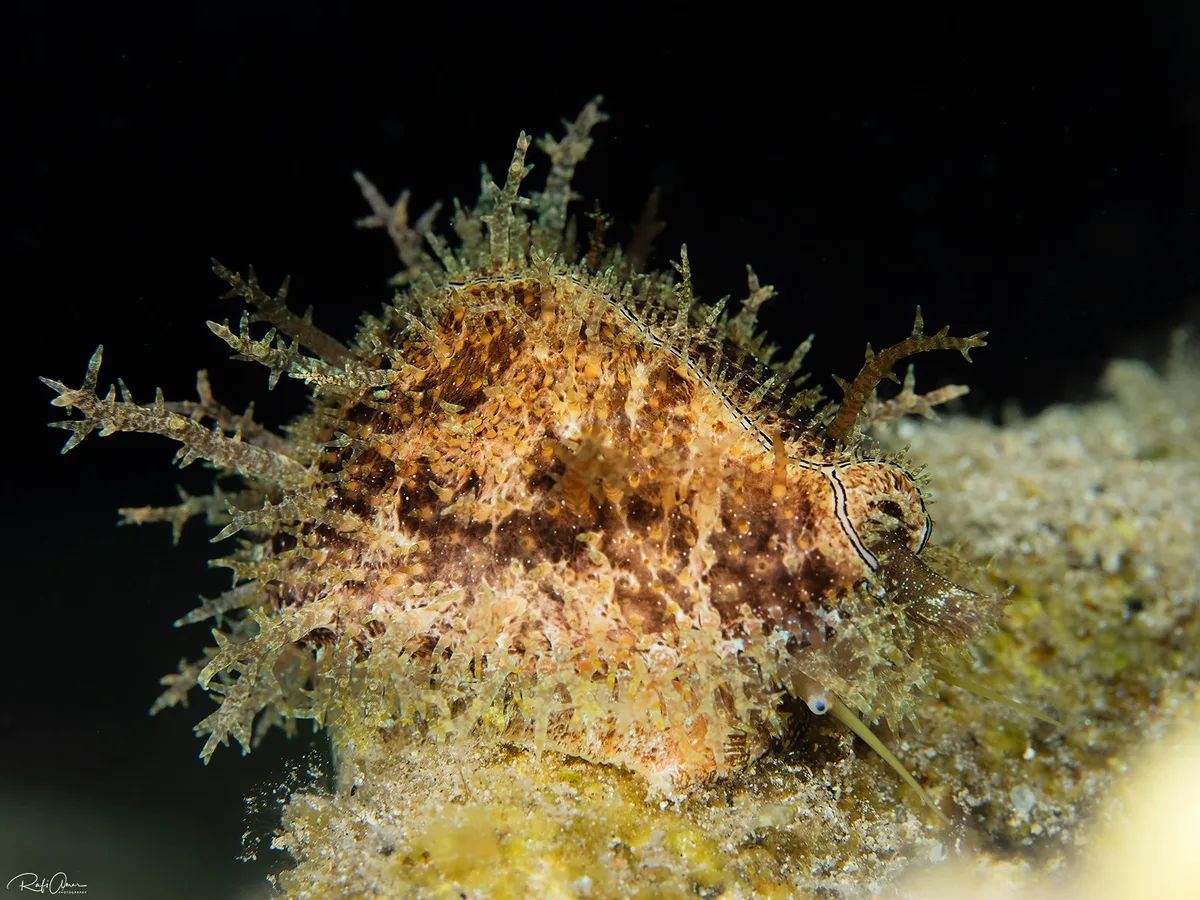
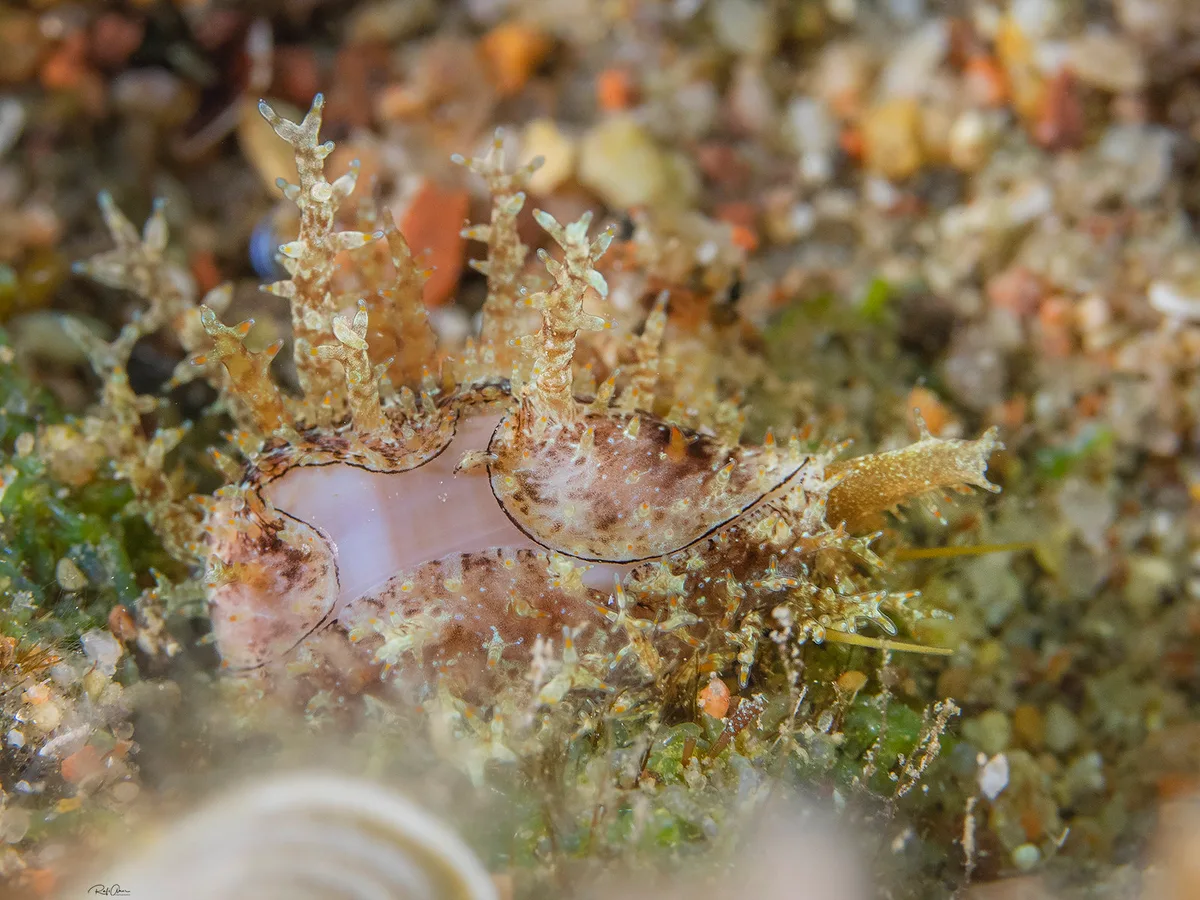
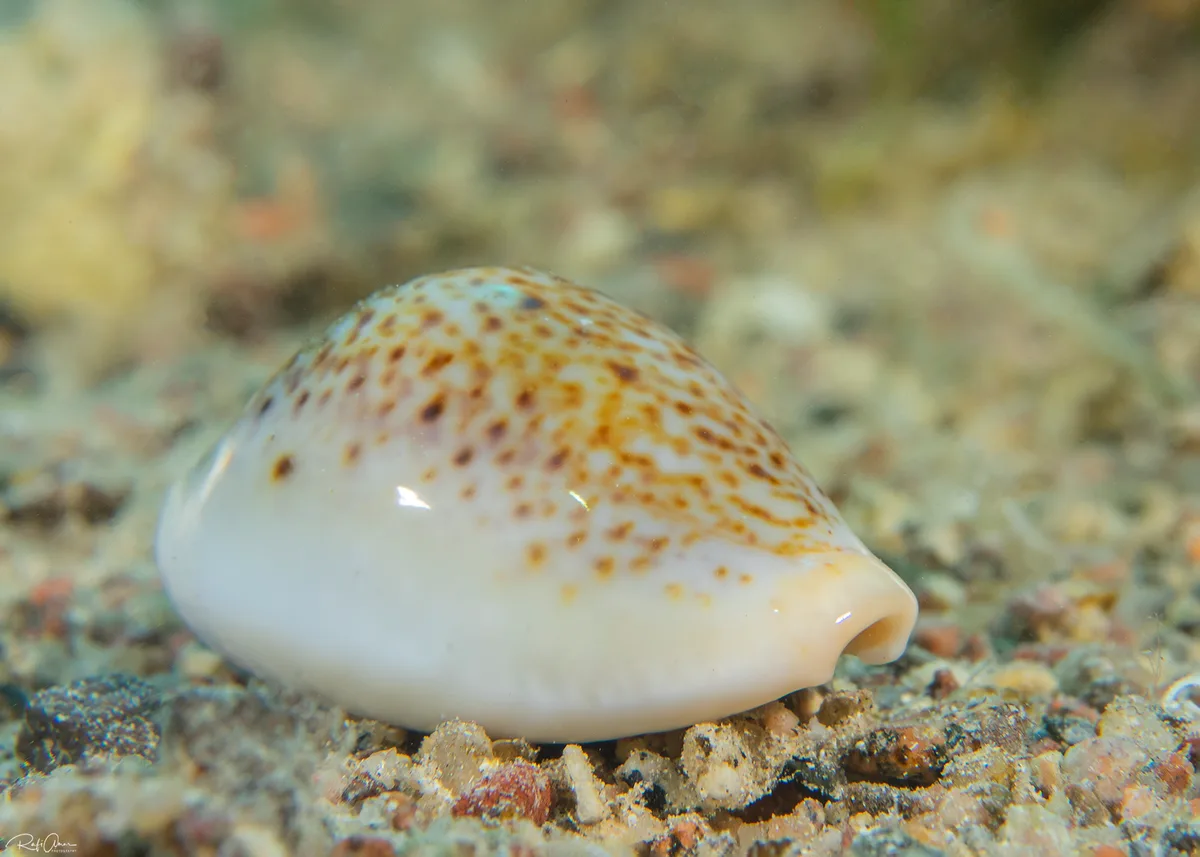
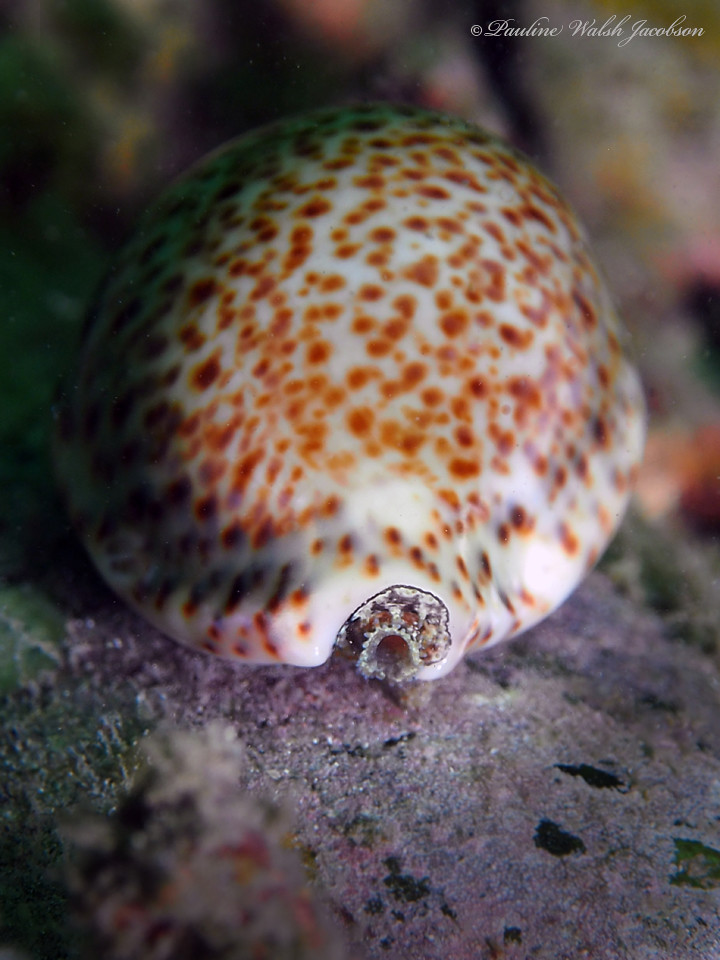
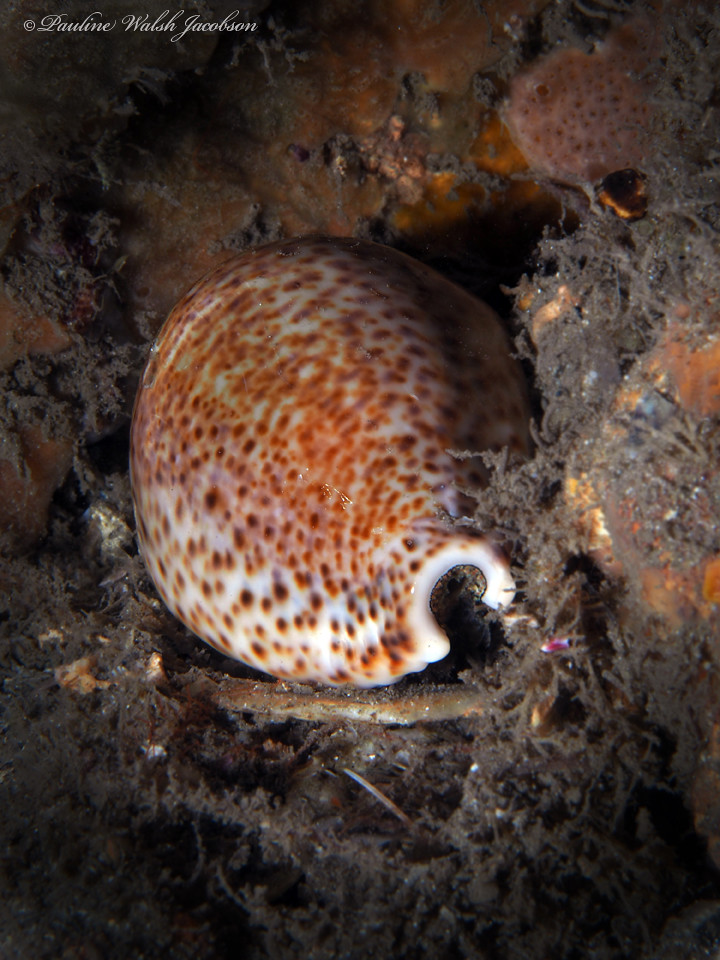
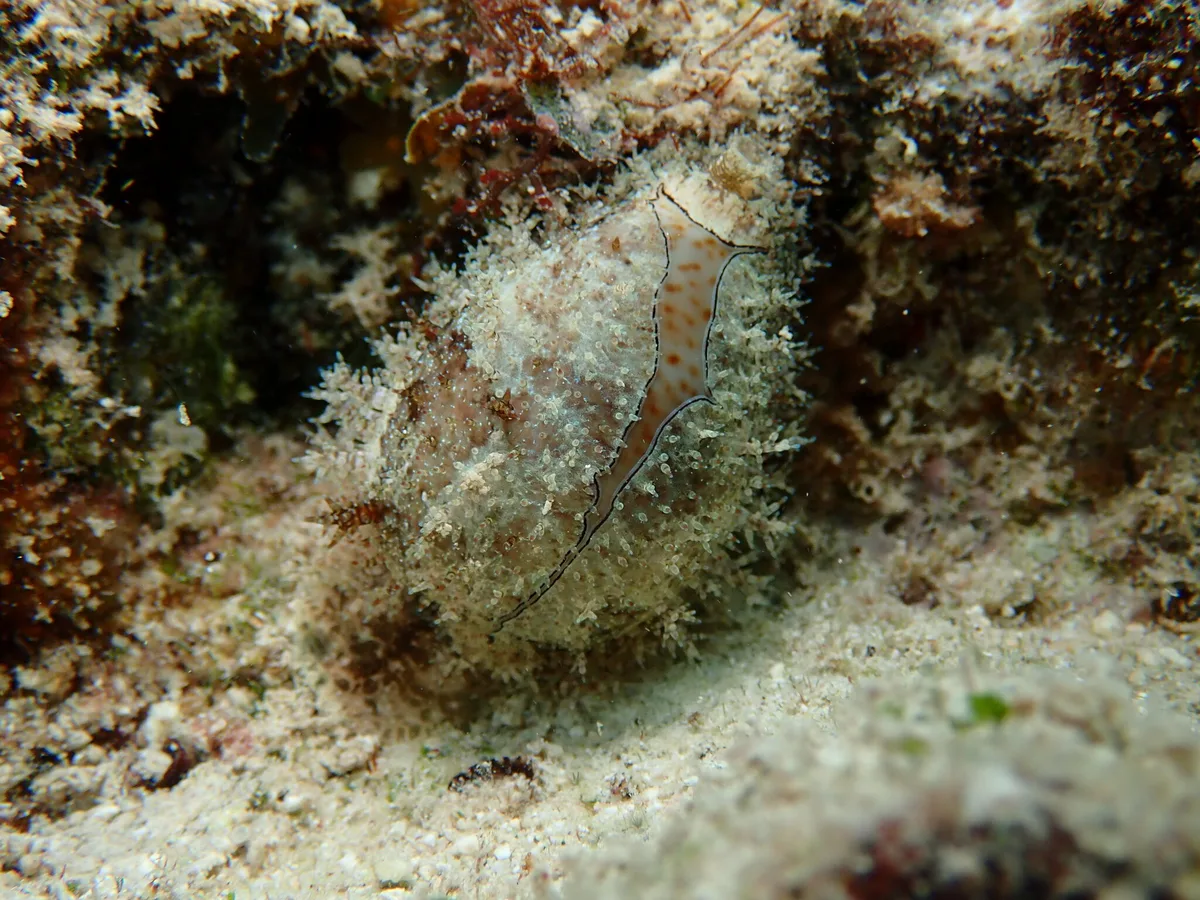
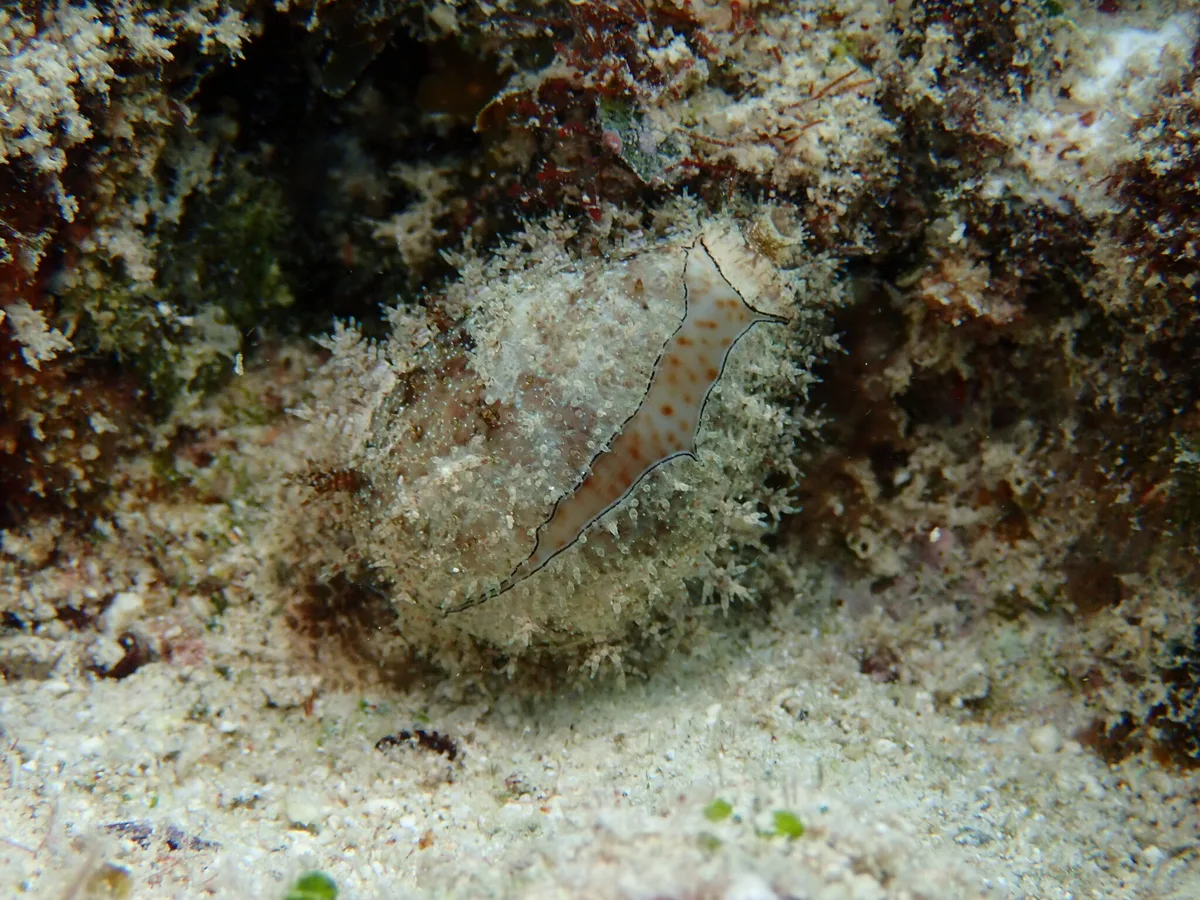
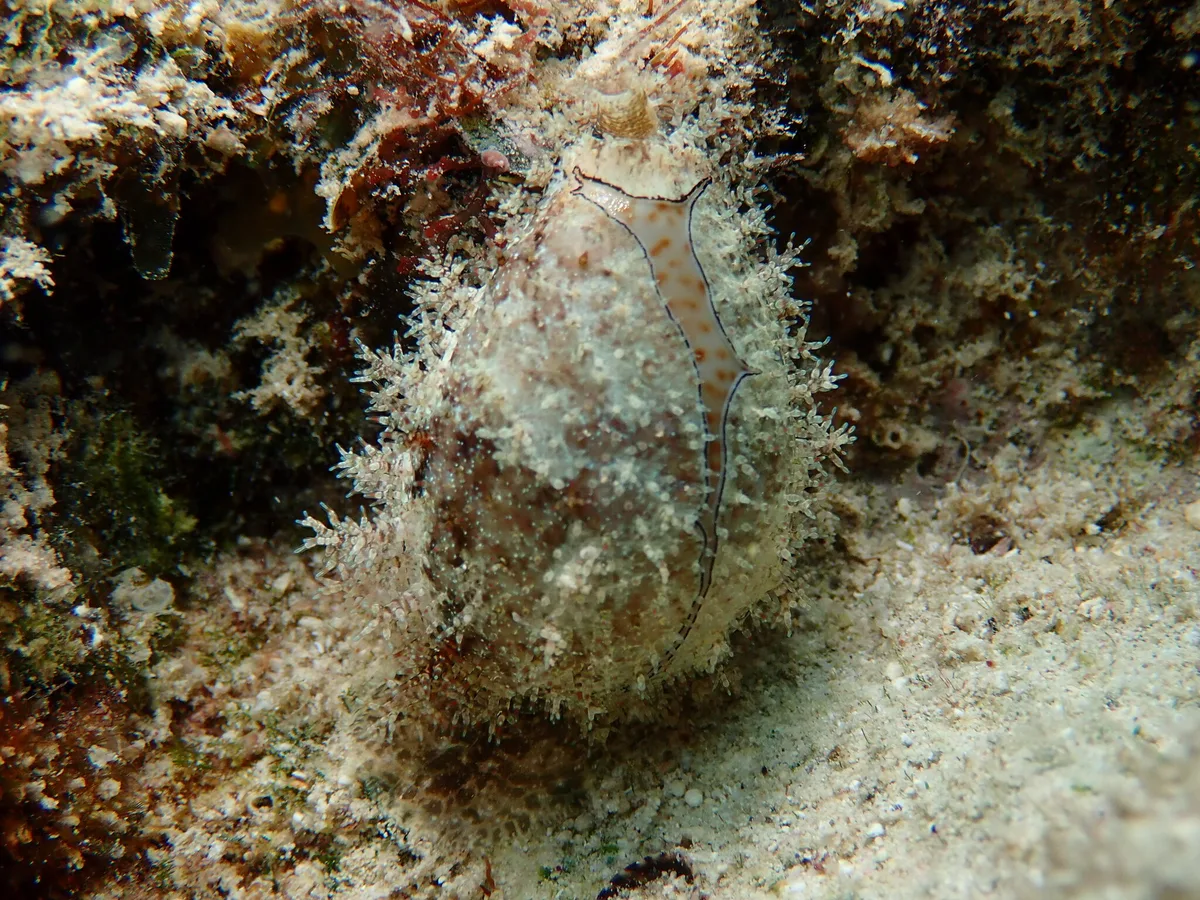
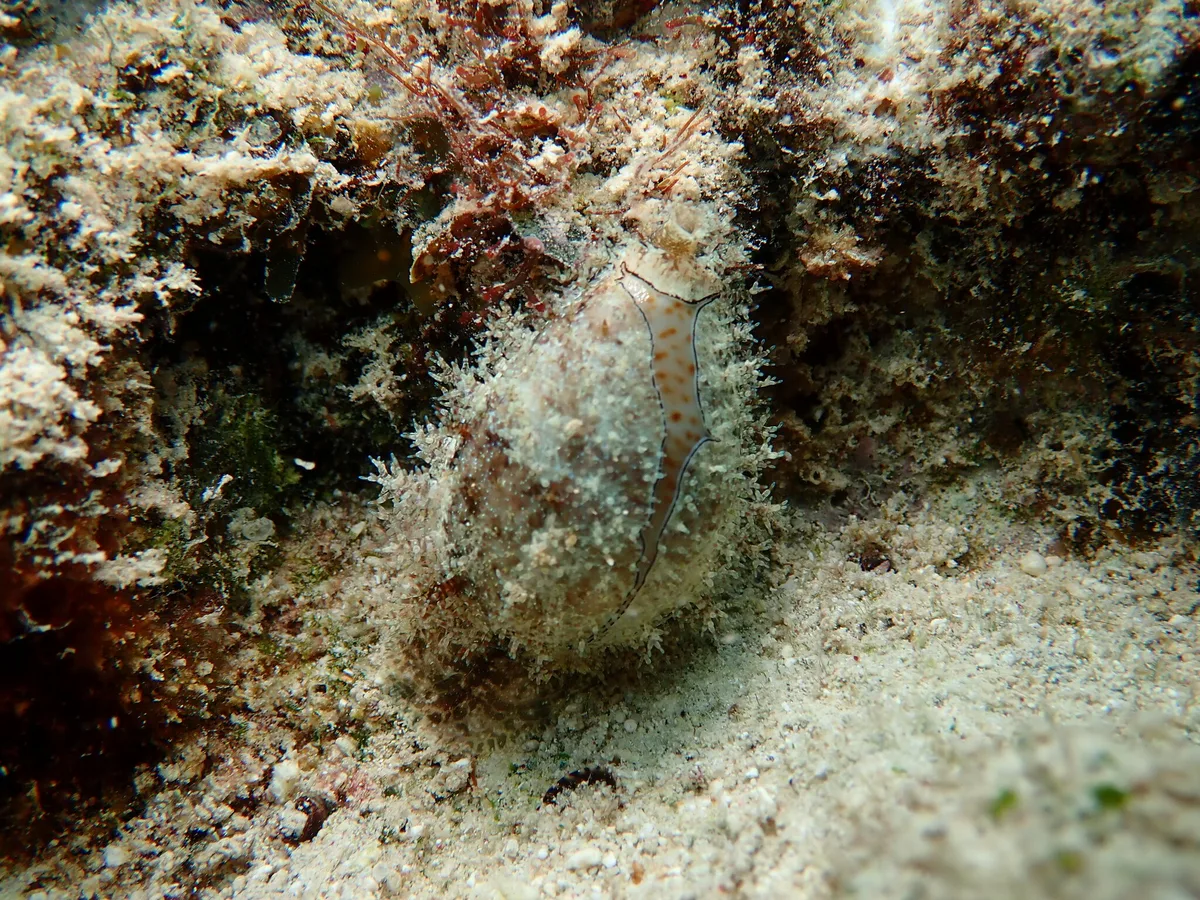
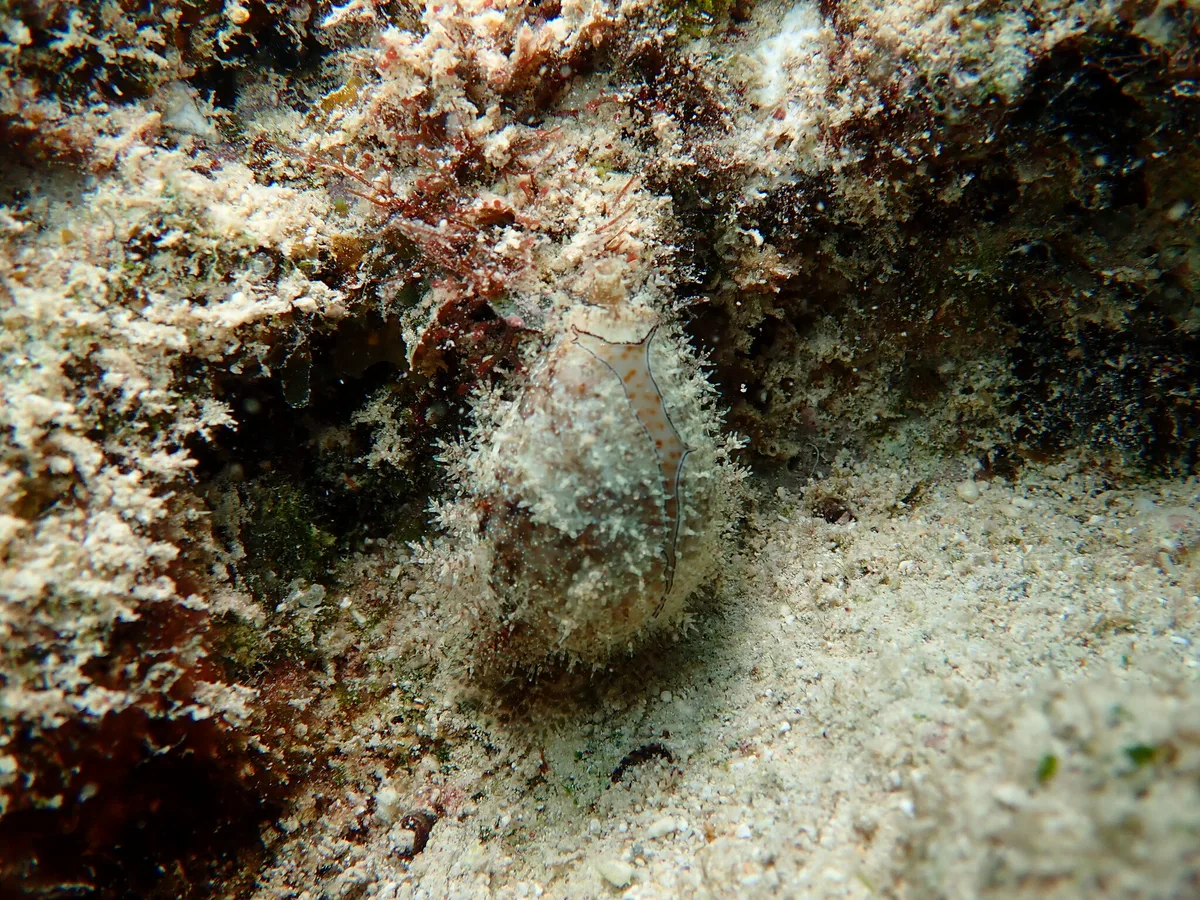
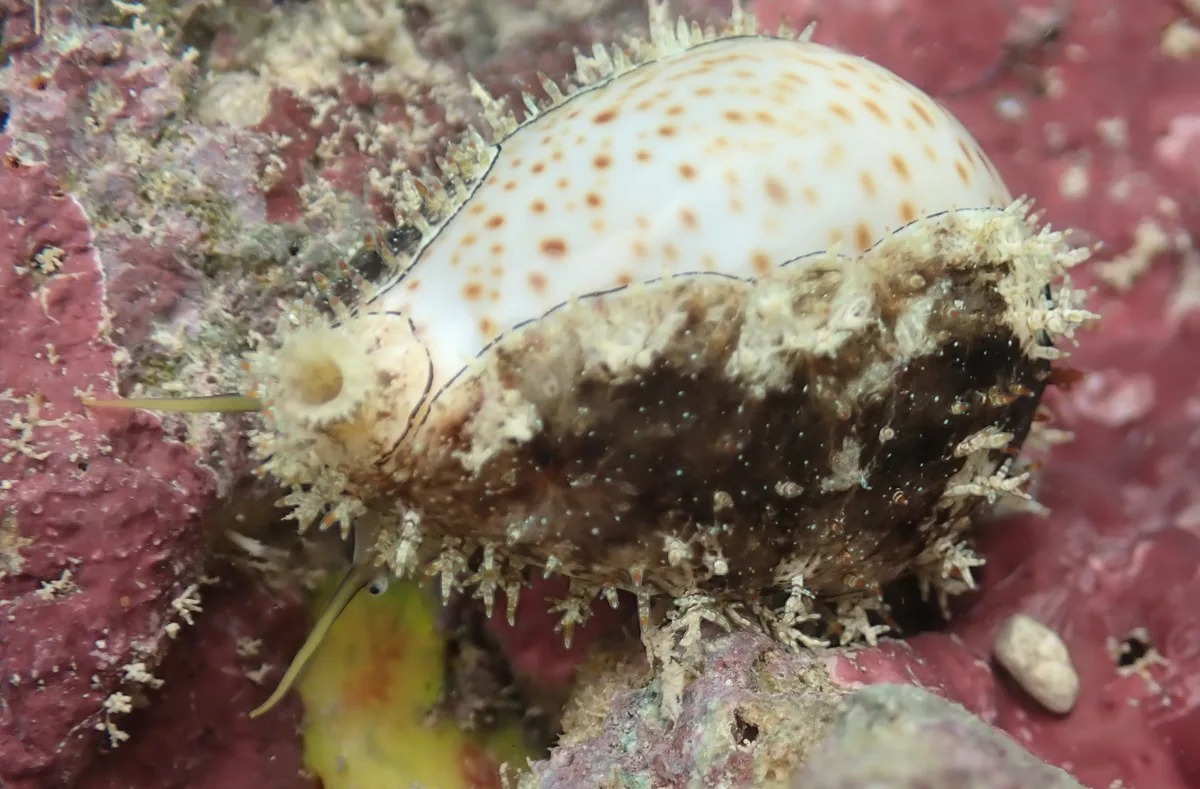
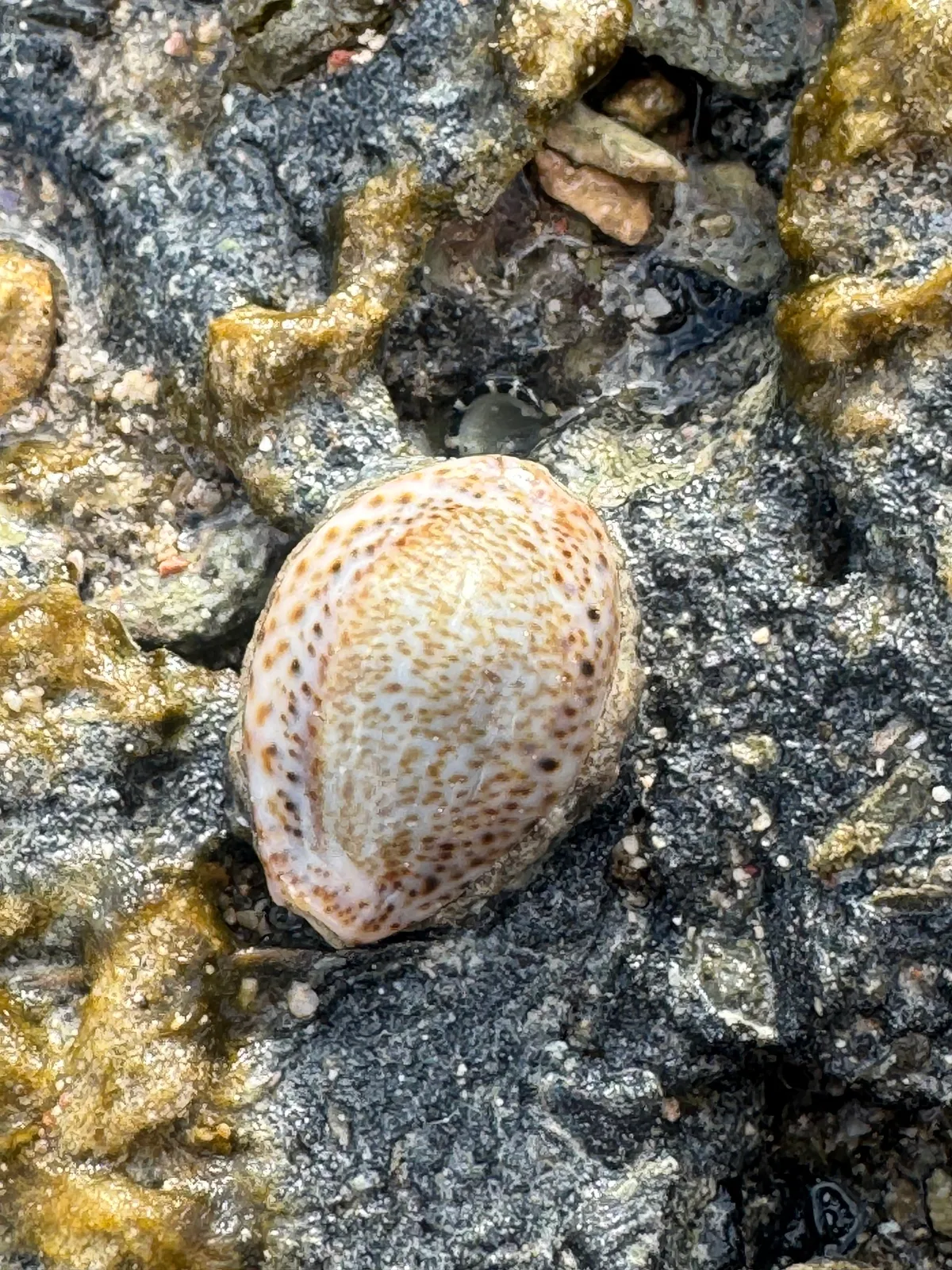
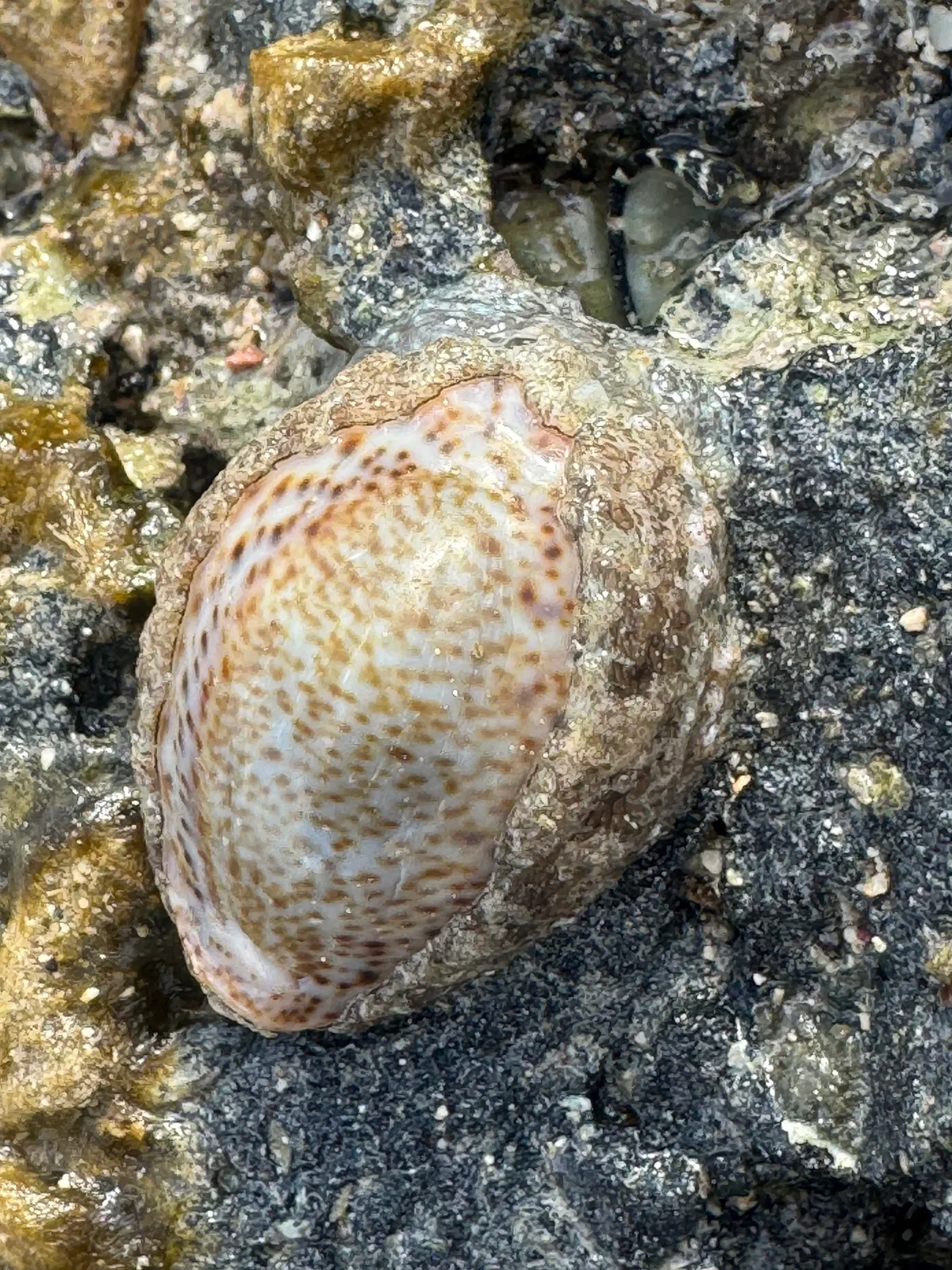
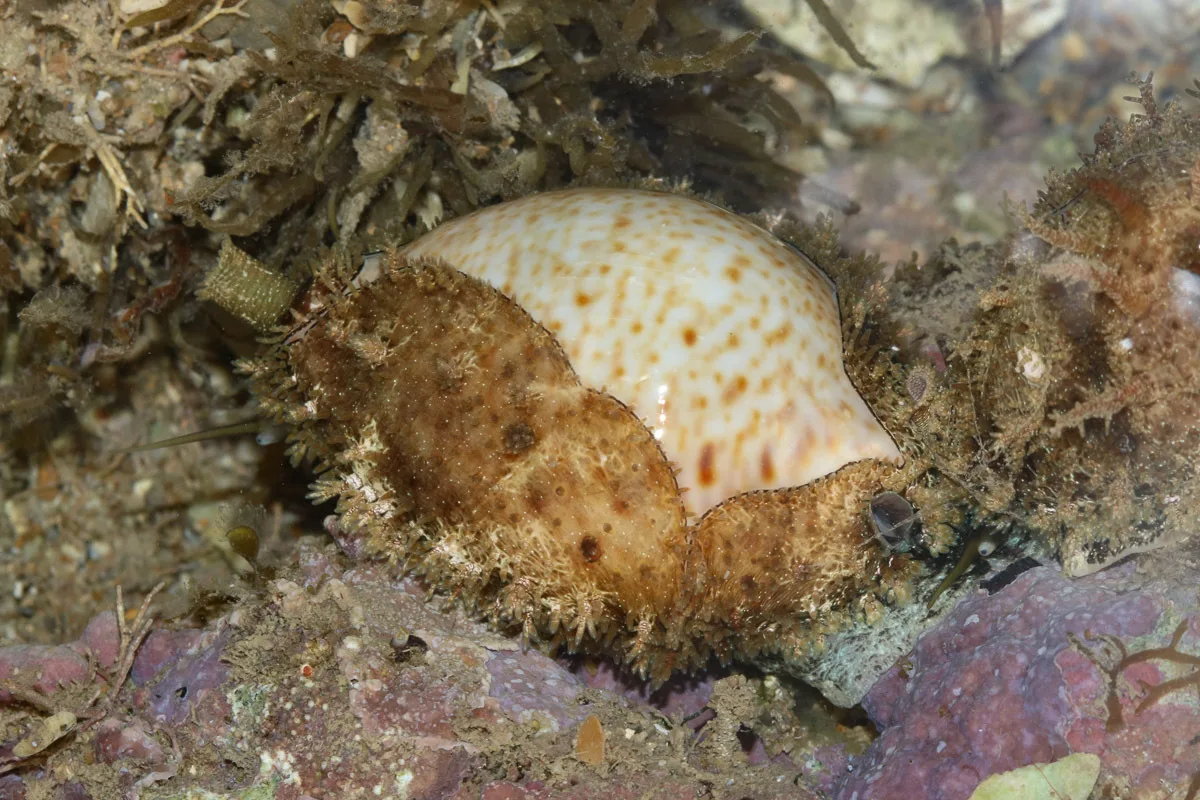
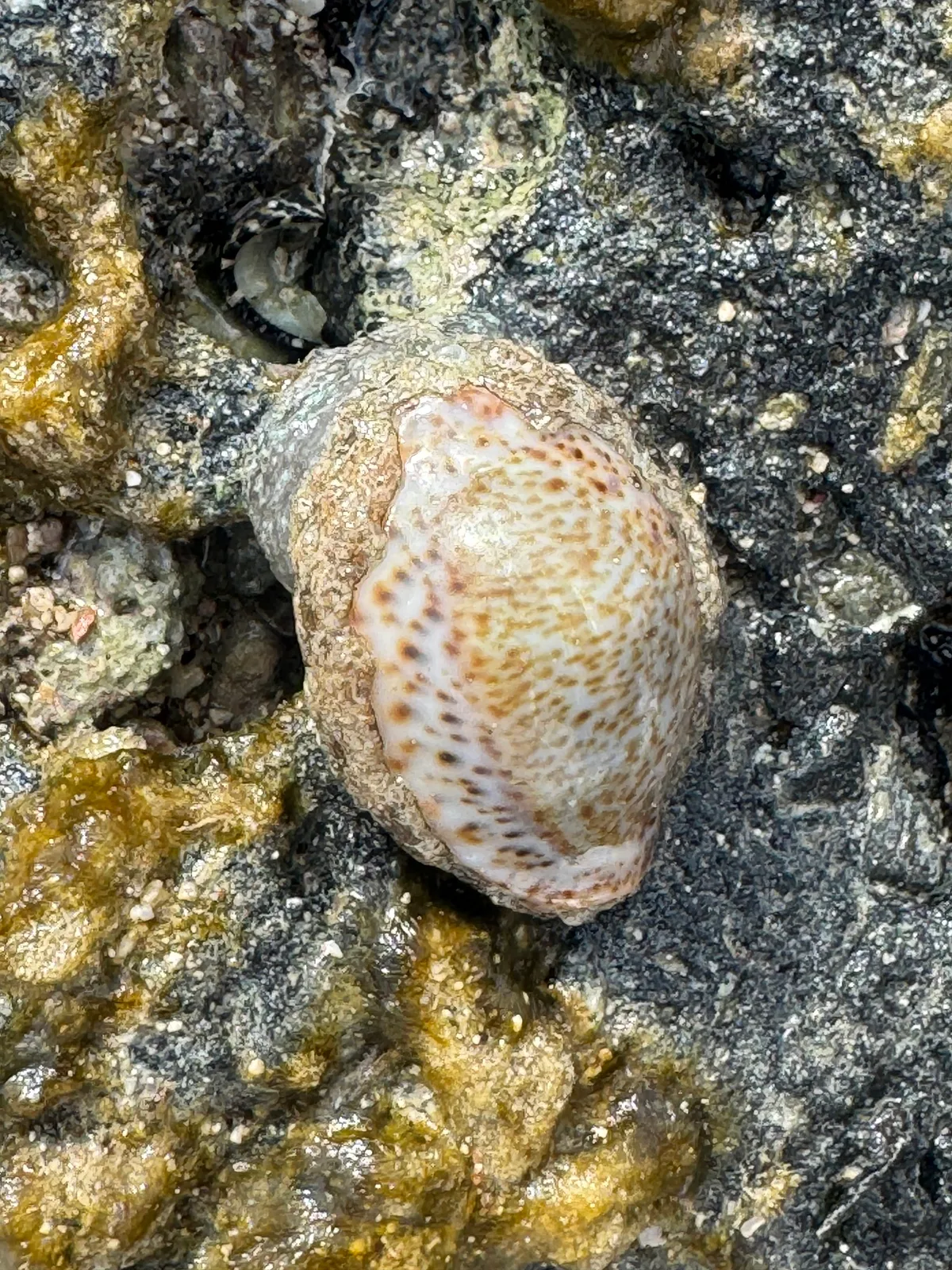
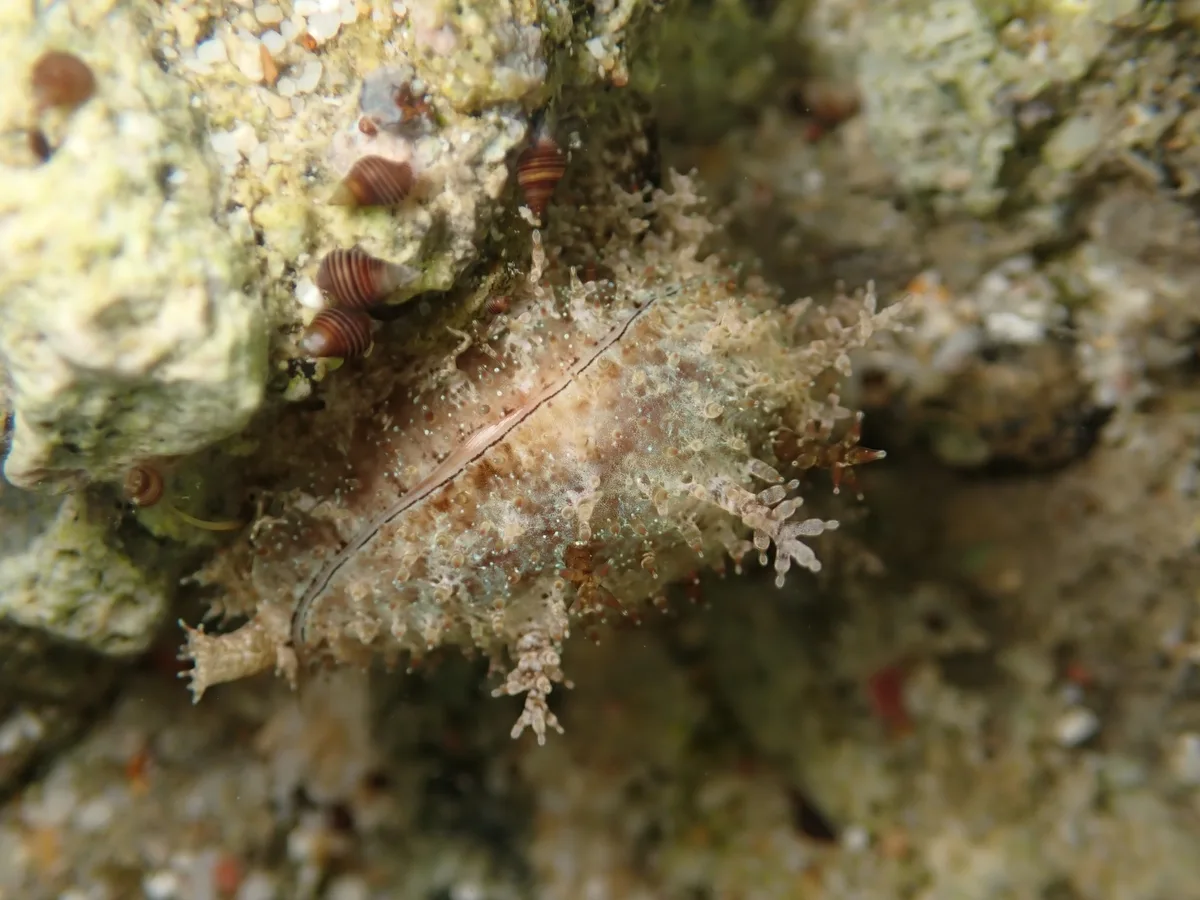
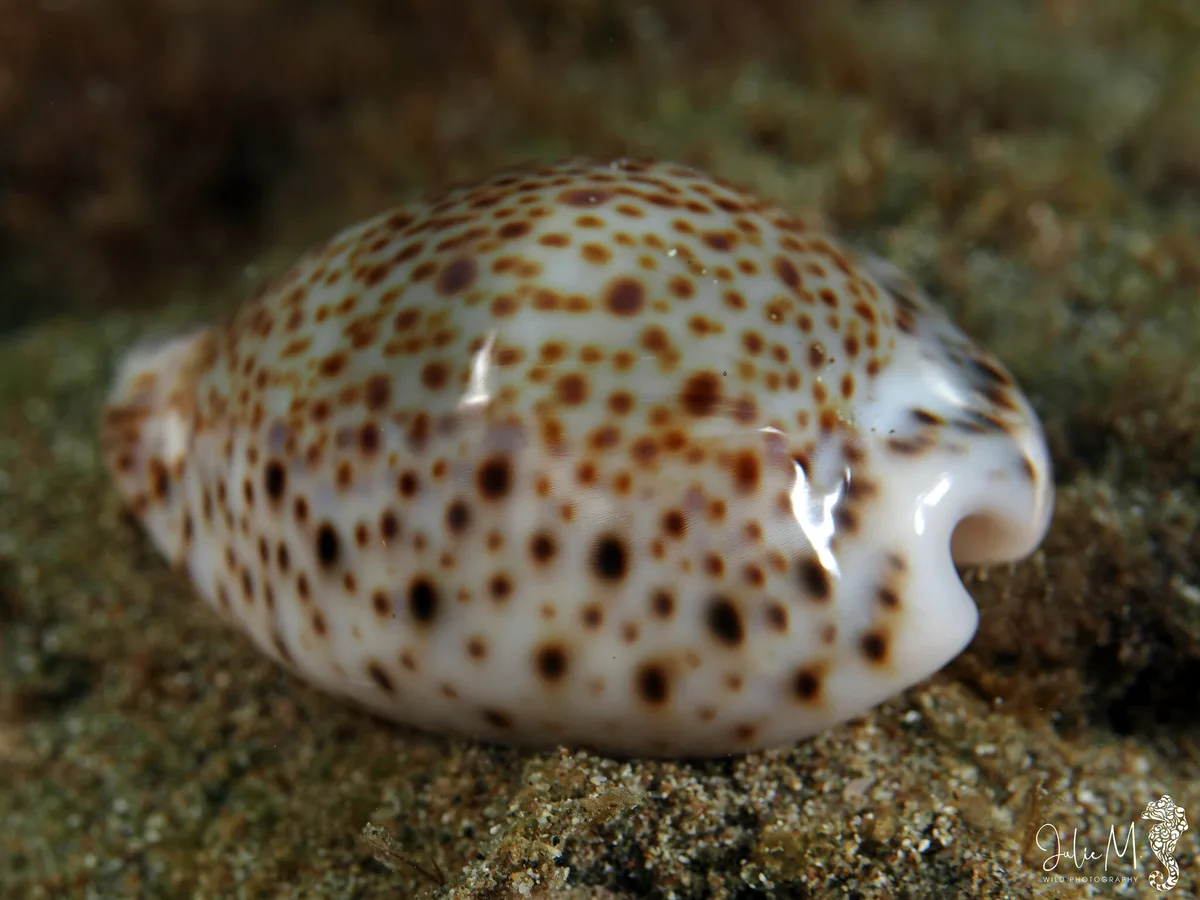
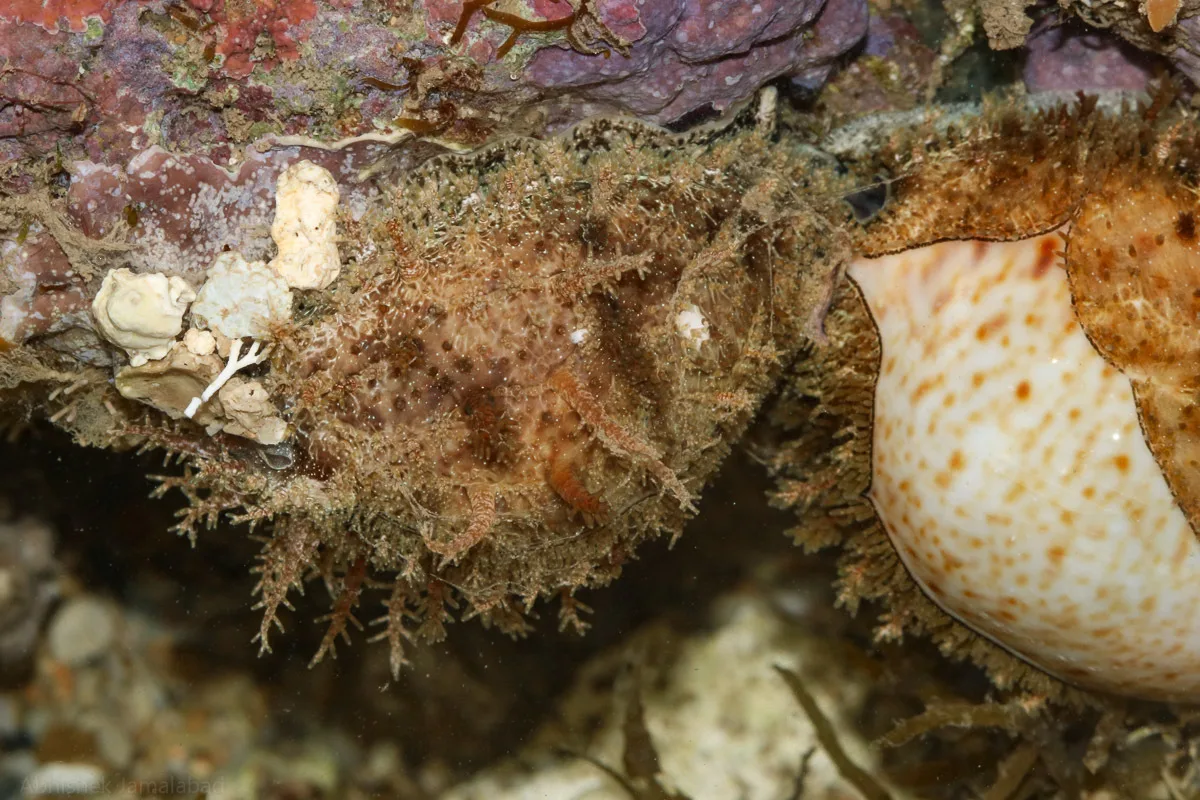
This is the cowrie you can find without getting wet.
It lives intertidally, on rock flats and rubble between the tide marks, under loose stones at low water. That single fact separates it from every other species on this page: the rest are reef animals that need a dive or at least a snorkel, and this one is a beachcombing find. Turn stones back the way they were and the animals under them survive; leave them face up and they cook.
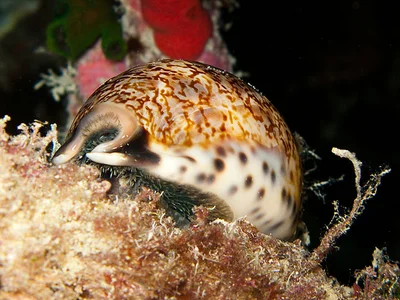
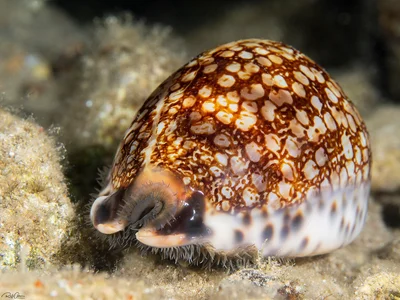
The shell is white to pale, dusted all over with small brown dots, which is what the name records: turdus, the thrush, for a speckled breast. Up to six centimeters (2.4 in), which is large for something living in the roughest, most exposed band of the shore.
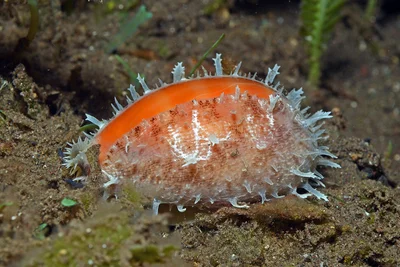
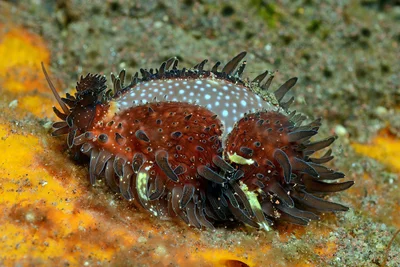
Like every cowrie it is wrapped in its own mantle in life, two flaps that rise from the foot and fold up over the back until they meet along the middle. The mantle builds the shell from the outside and polishes it as it goes, so an animal alive under a stone is glossy and the empty shells further up the beach are not.
Lamarck described it in 1810. Its range runs from this sea down the East African coast, and it is common at the right state of tide.
- white to pale shell dusted all over with small brown dots
- found between the tides, not on the reef proper
- up to six centimeters, large for a shore cowrie
- under loose stones on rock flats at low water