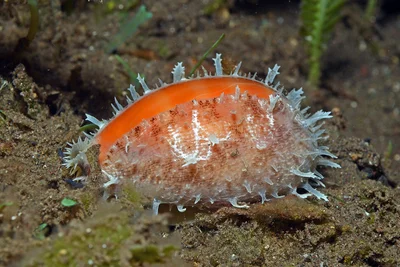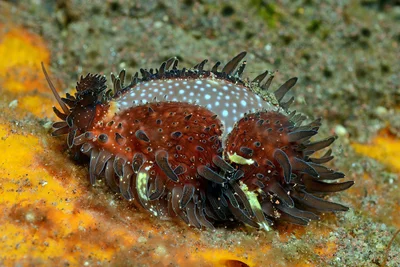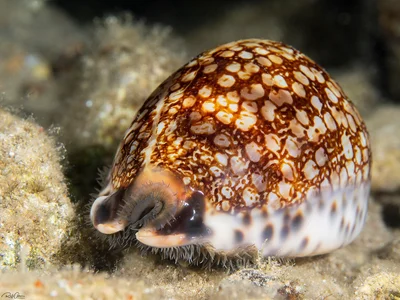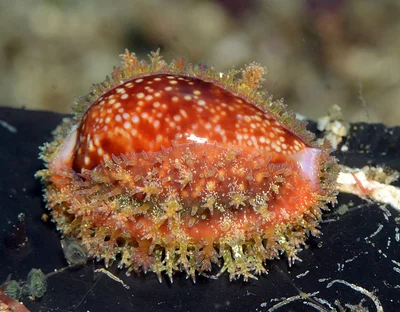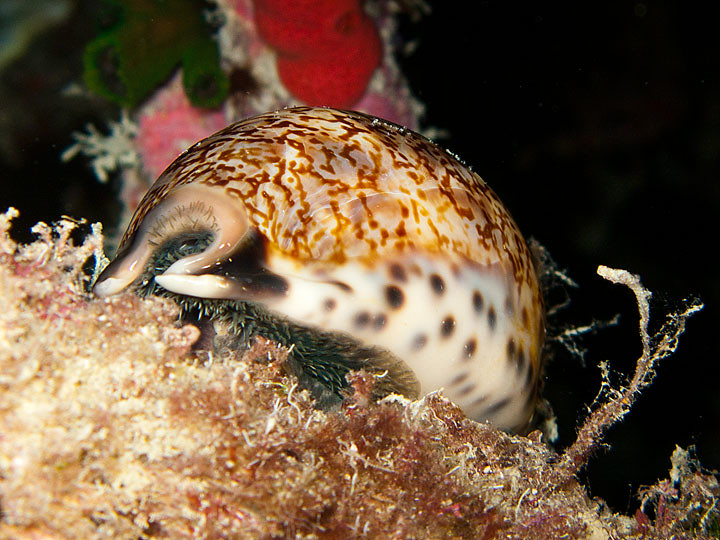
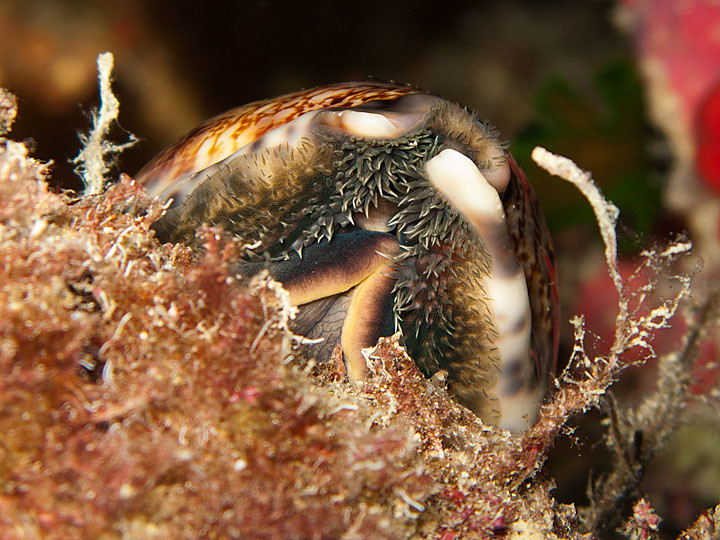
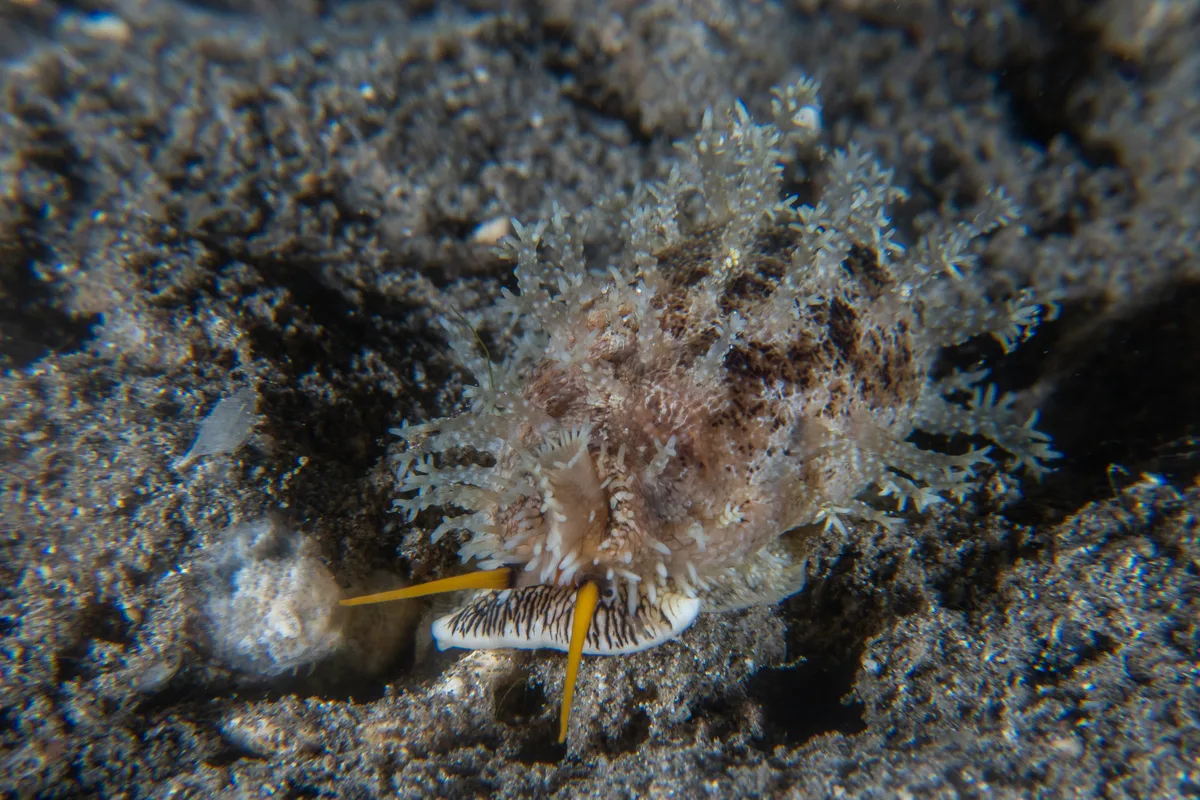
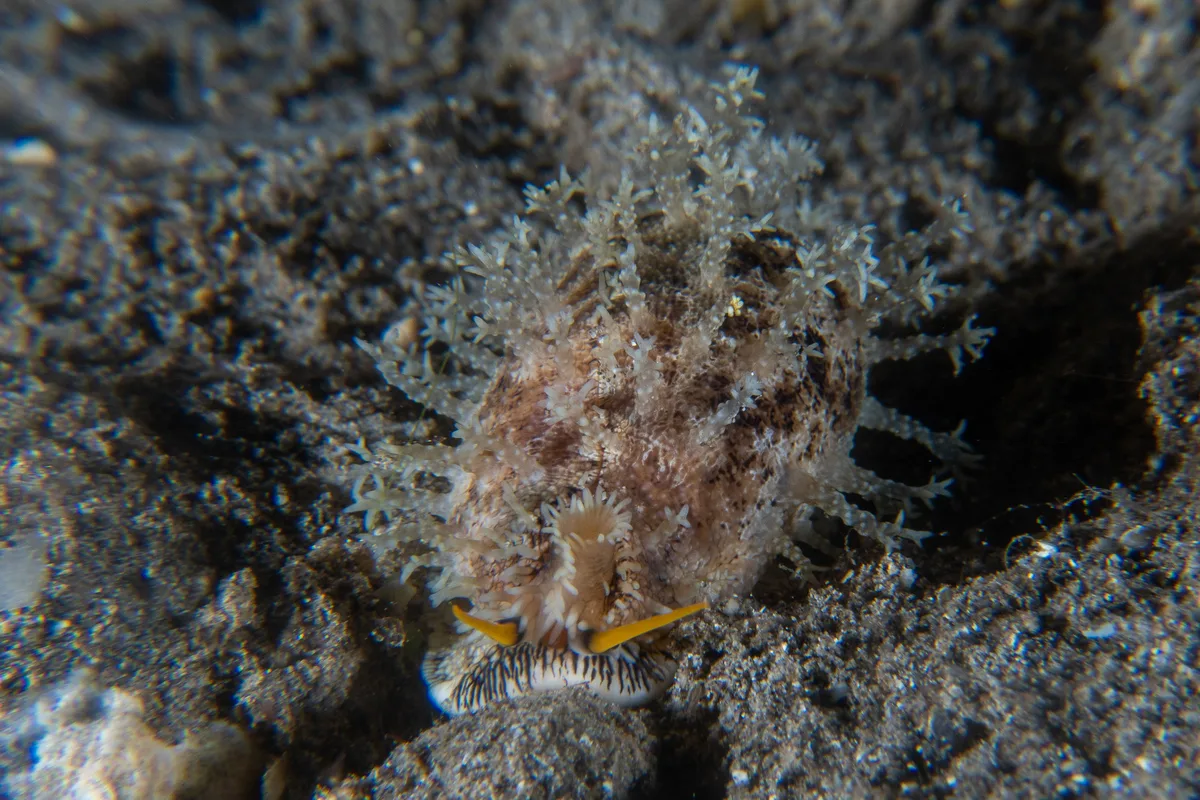
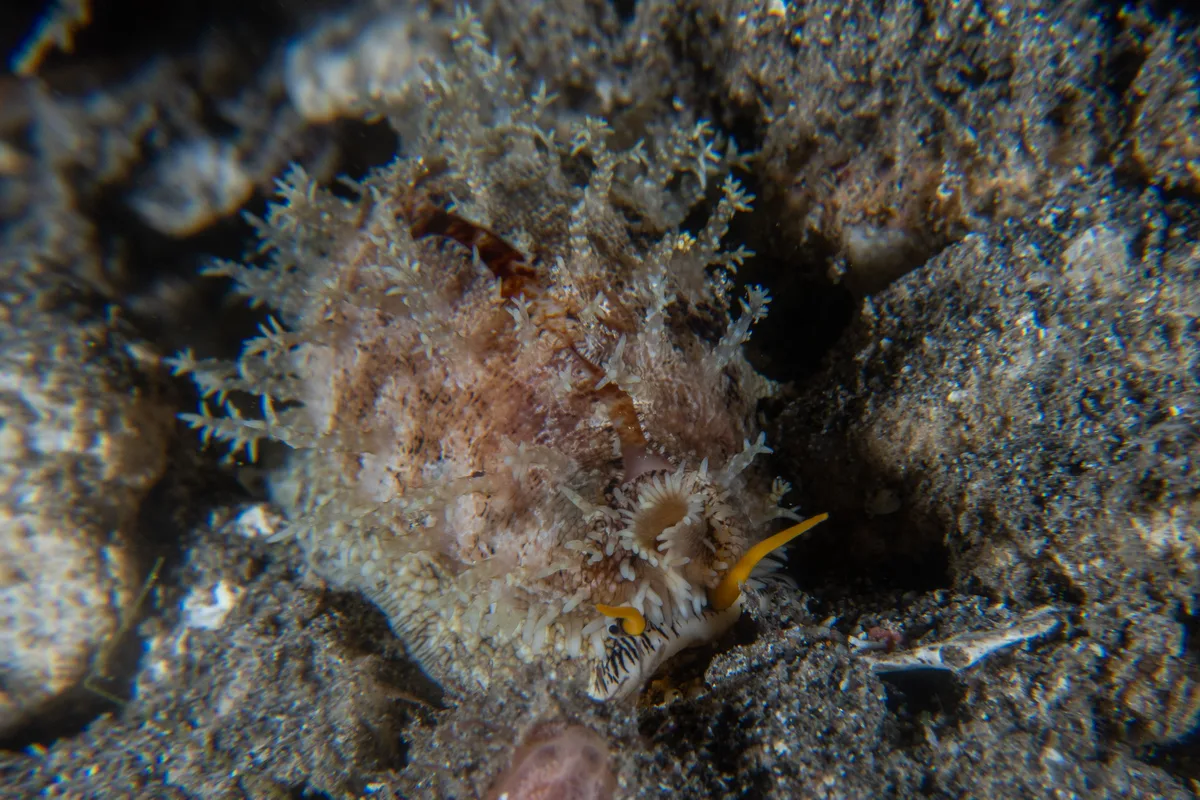
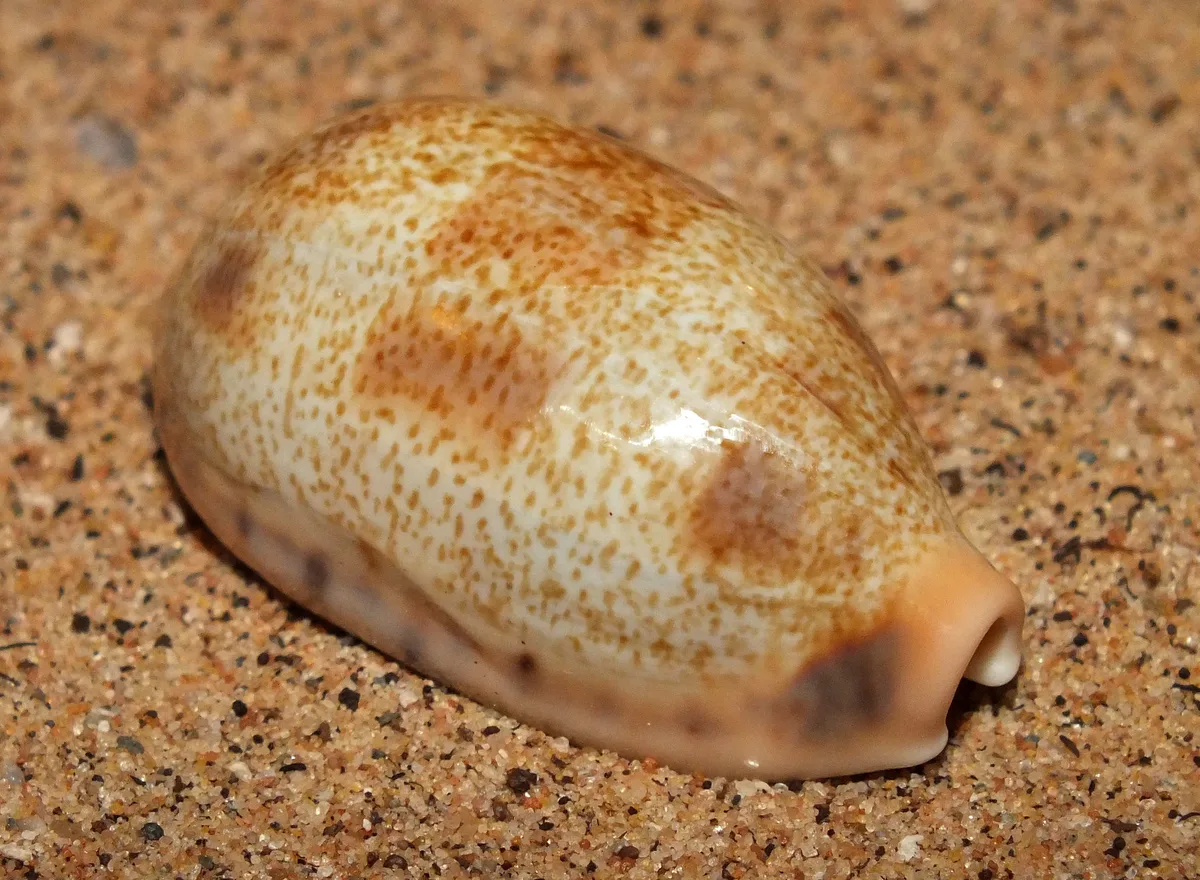
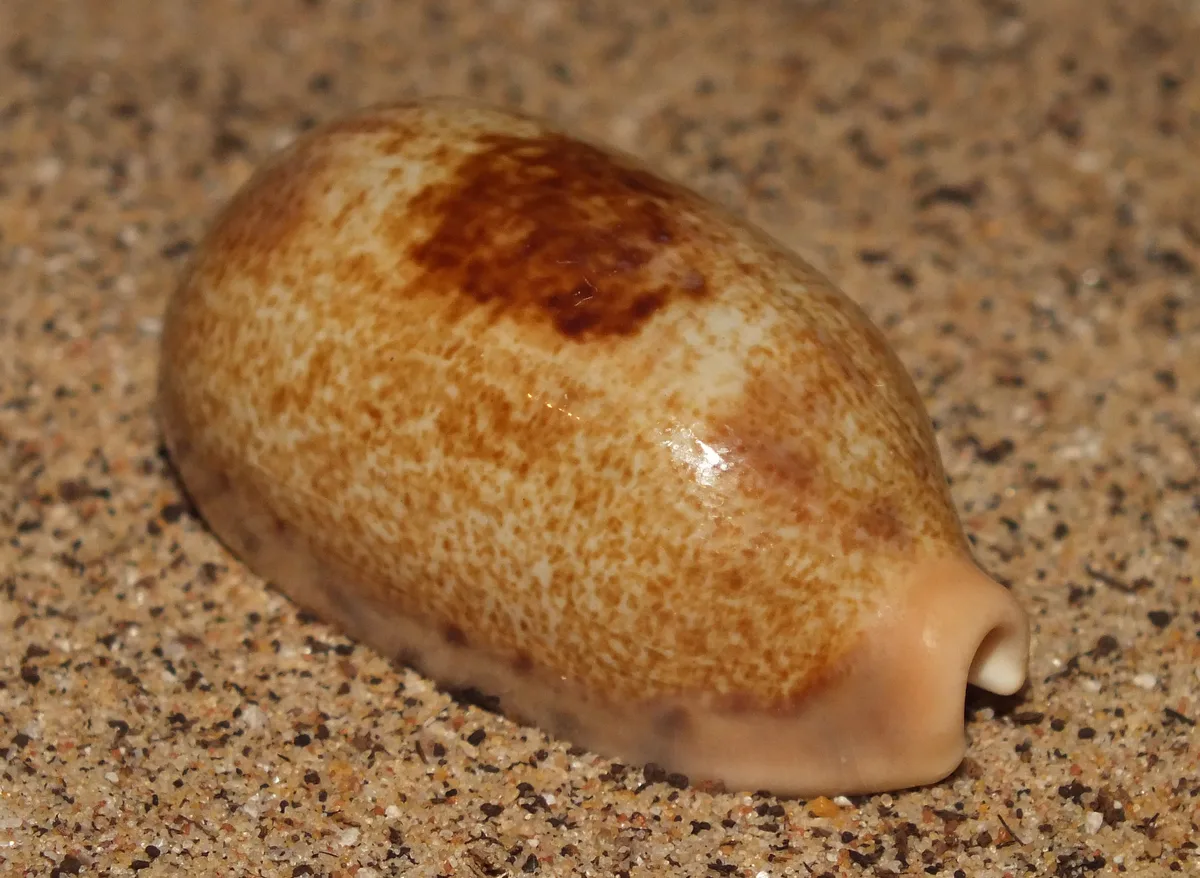
An elongated cowrie, creamy with pale brown transverse bands and a scatter of dark spots along the thickened margins, up to 7 cm (2.8 in). The stretched outline is the quickest separation from the rounder species sharing the same rubble.
It is one of the commonest cowries on shallow reef flats here, grazing algae at night and packing itself under rubble by day, often several under one slab. Broken and worn shells wash up constantly, which is why it is usually the first cowrie anyone picks up on a beach and the last one they see alive.
Cowrie shells are also the reason a handful of small animals kept turning up in graves and hoards thousands of kilometers inland. The trade moved them from the 🌊 Indian Ocean to the Sahel, to the Baltic, to the Americas, and archaeologists use them as a marker of long-distance contact - a snail from this reef flat as a dating tool for somebody else's history.
- elongated creamy shell crossed by pale brown bands
- dark spots scattered along the thickened margins
- narrower and longer than the round cowries beside it
- shell to 7 cm