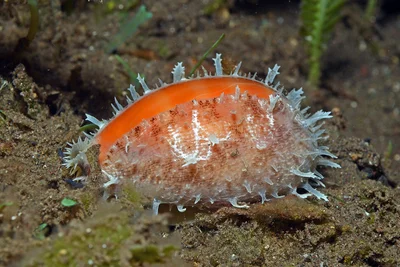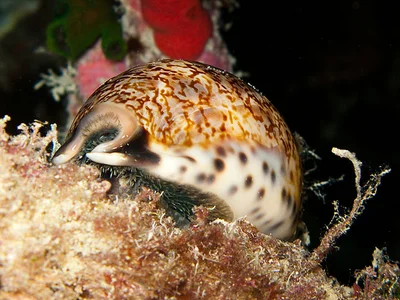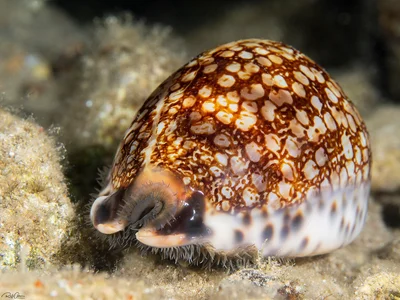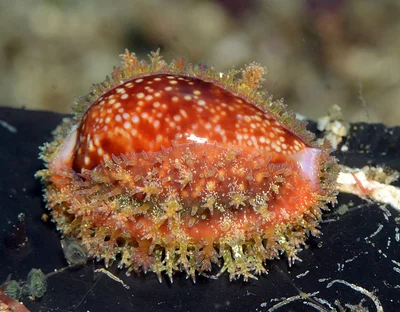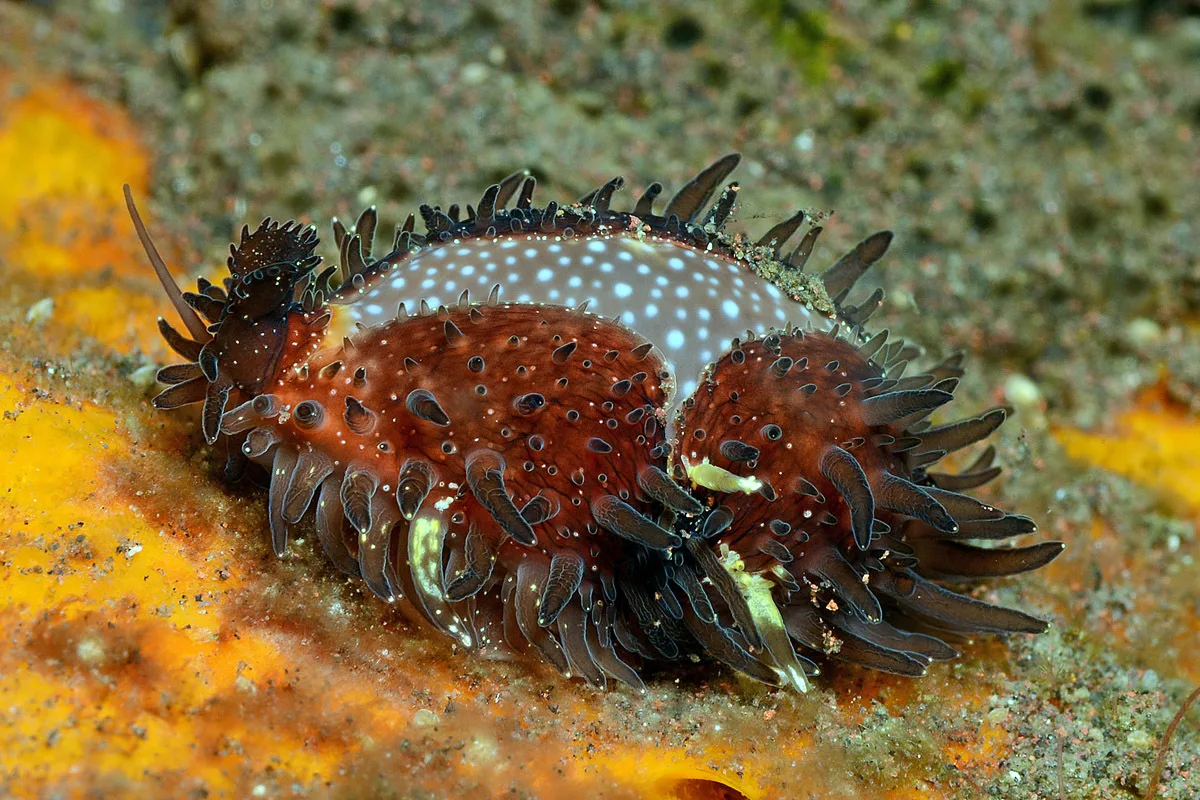
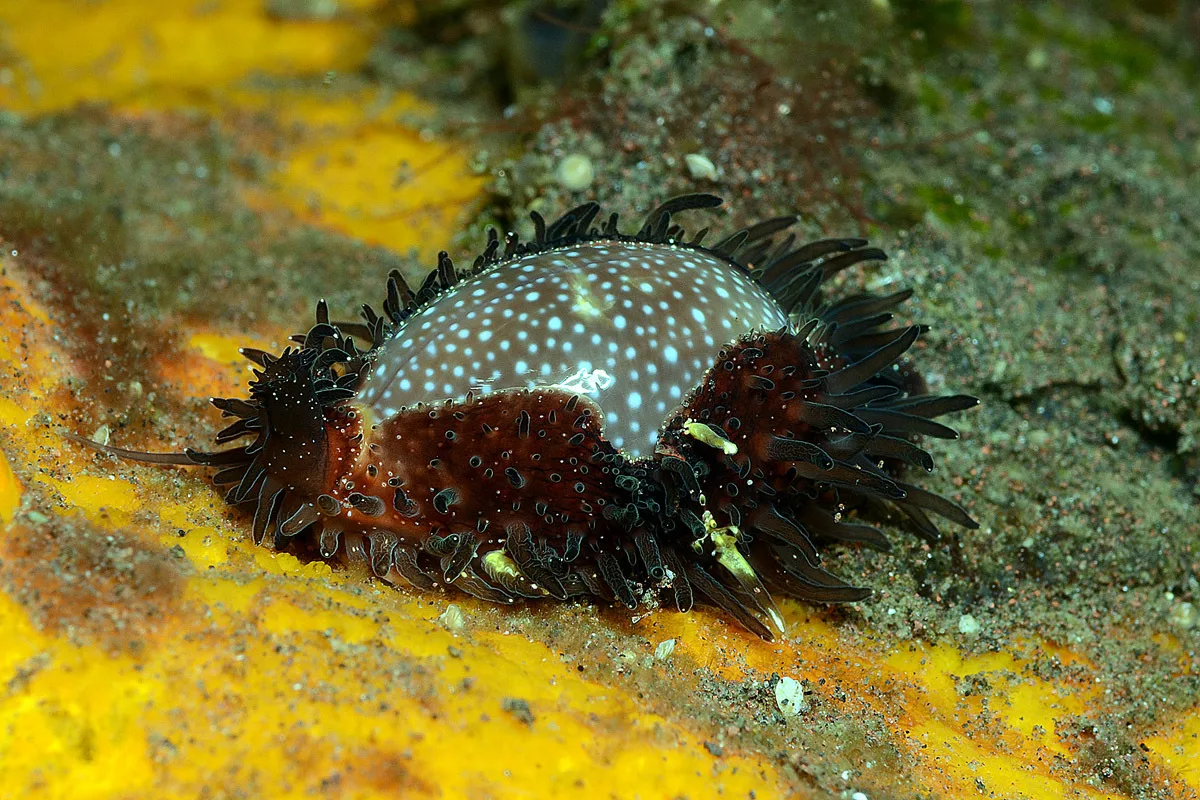
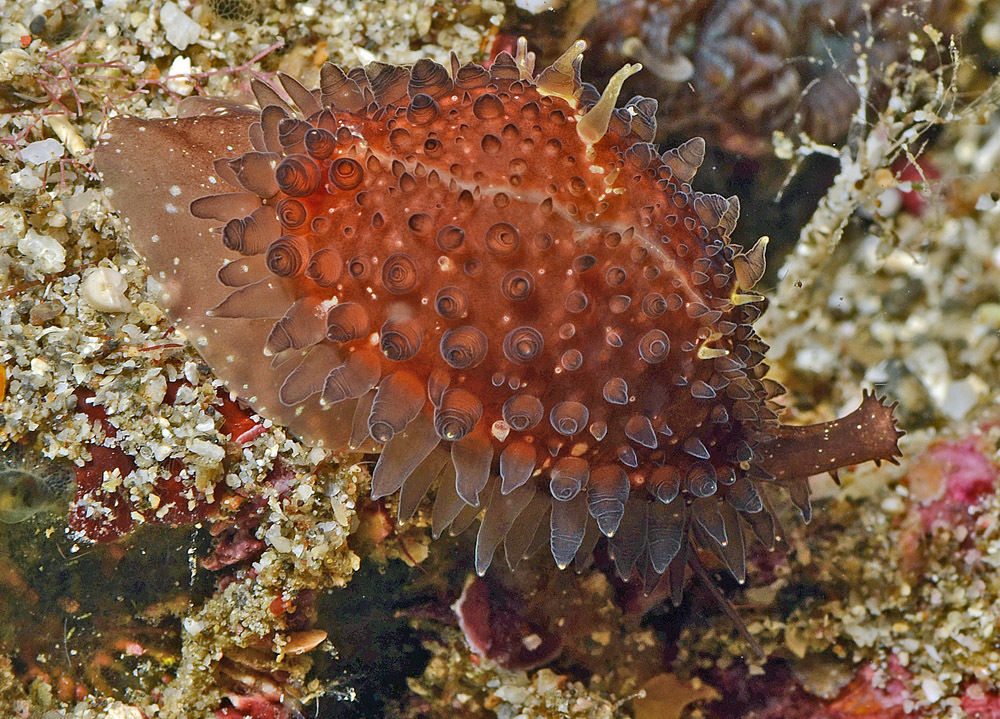
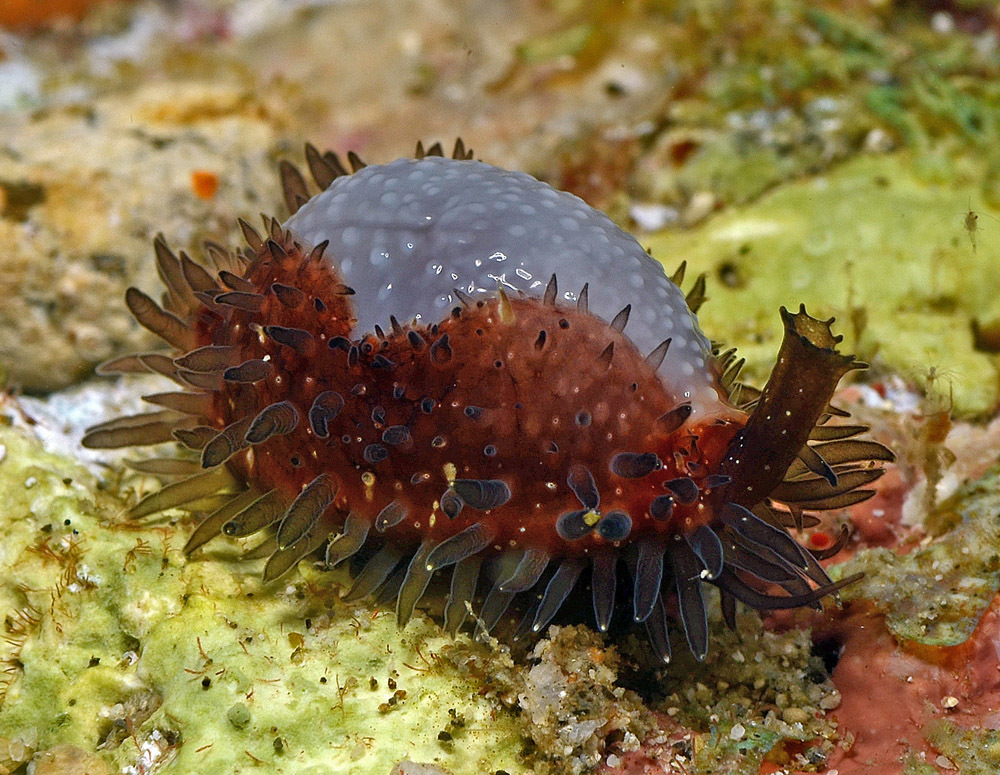
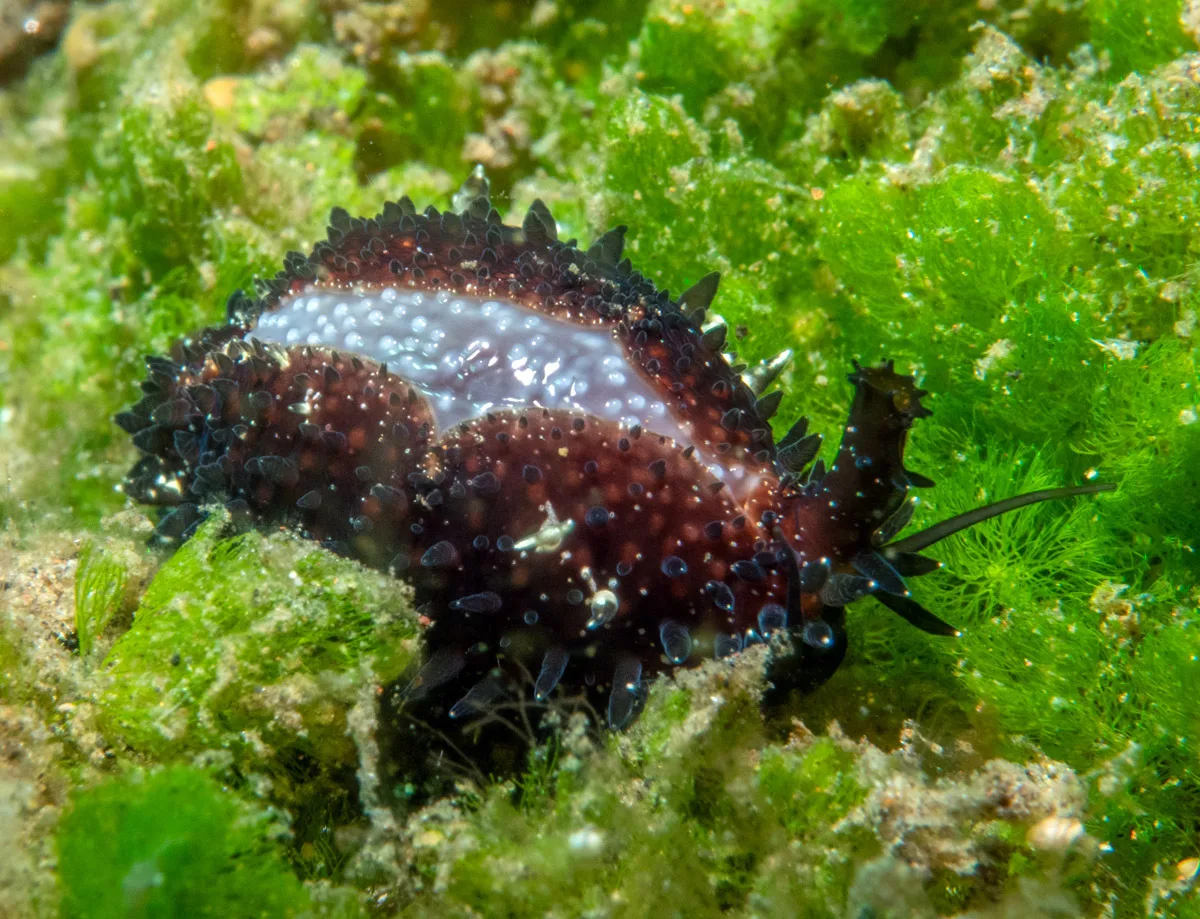
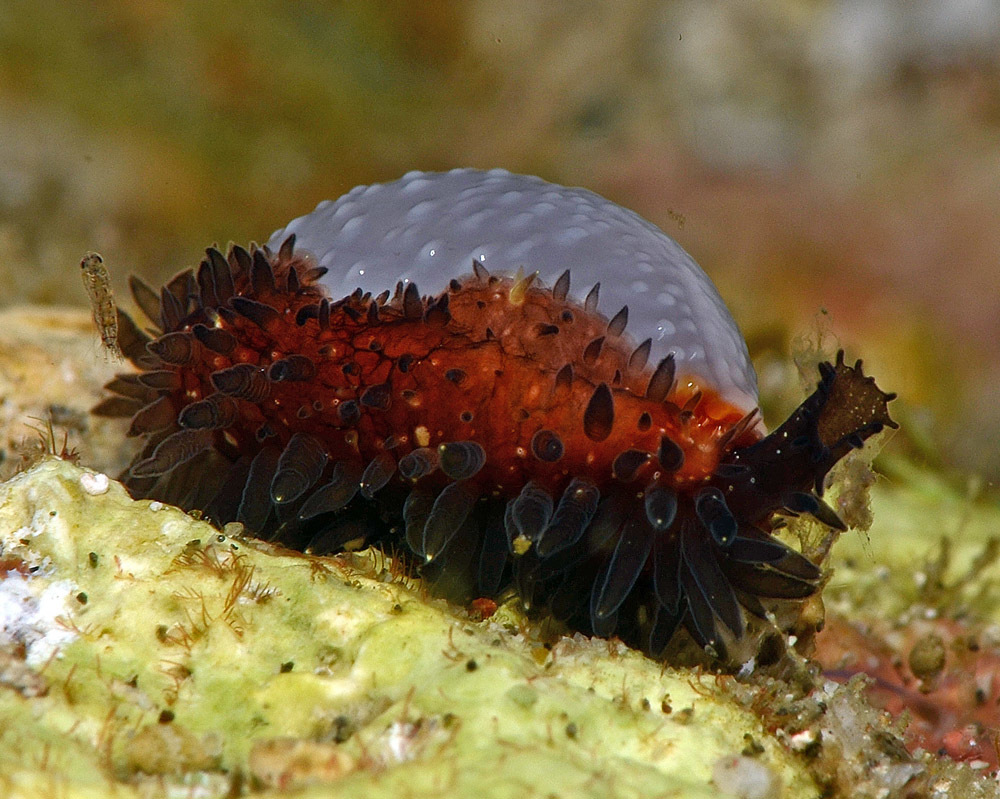
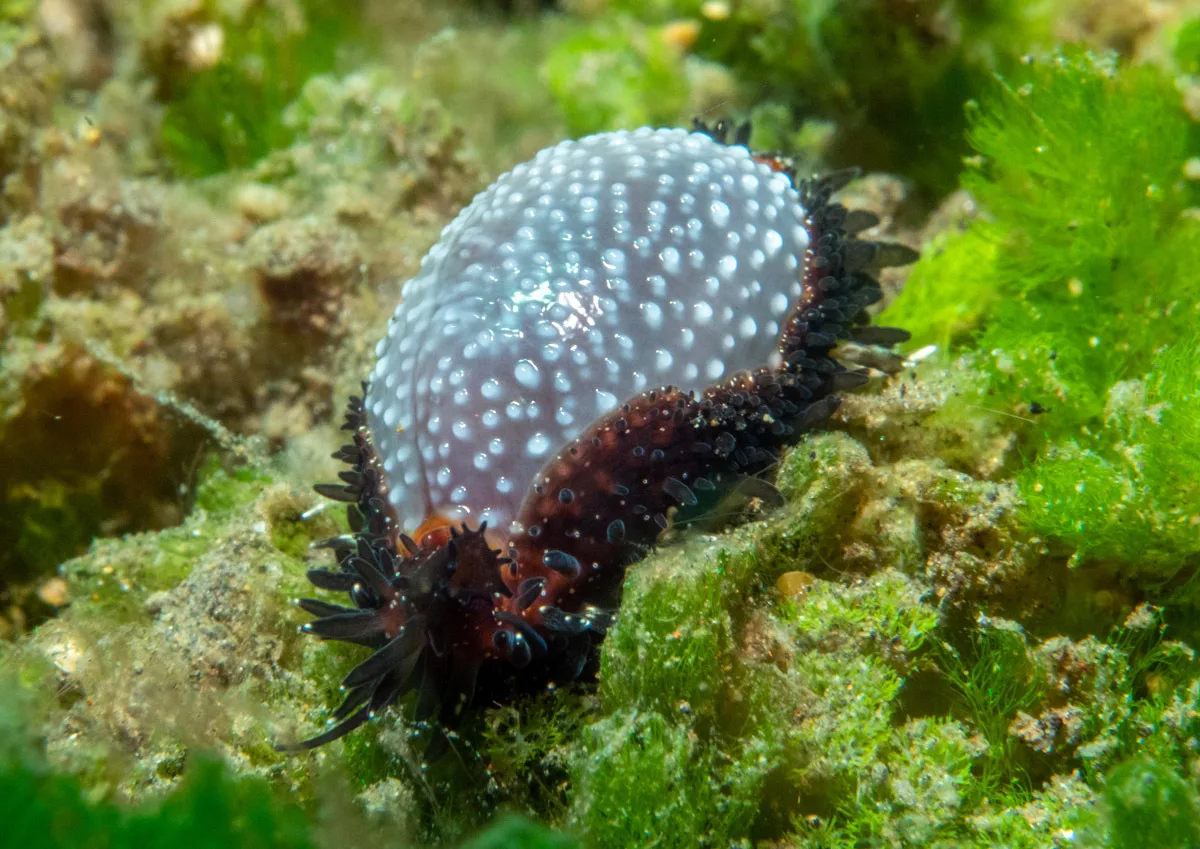
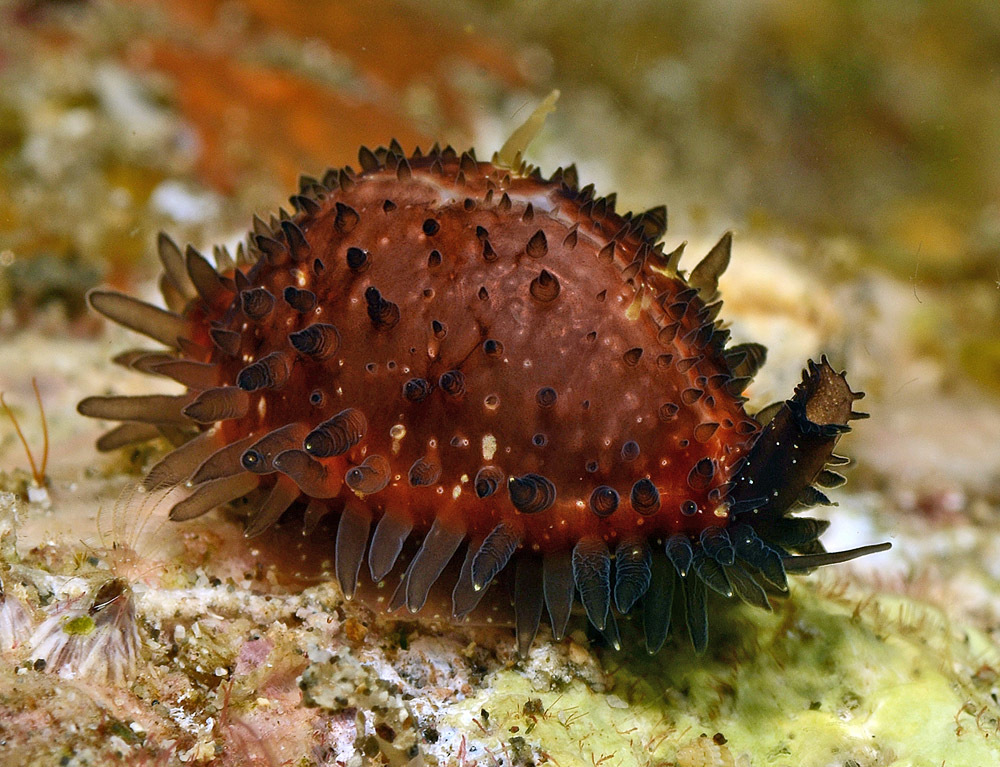
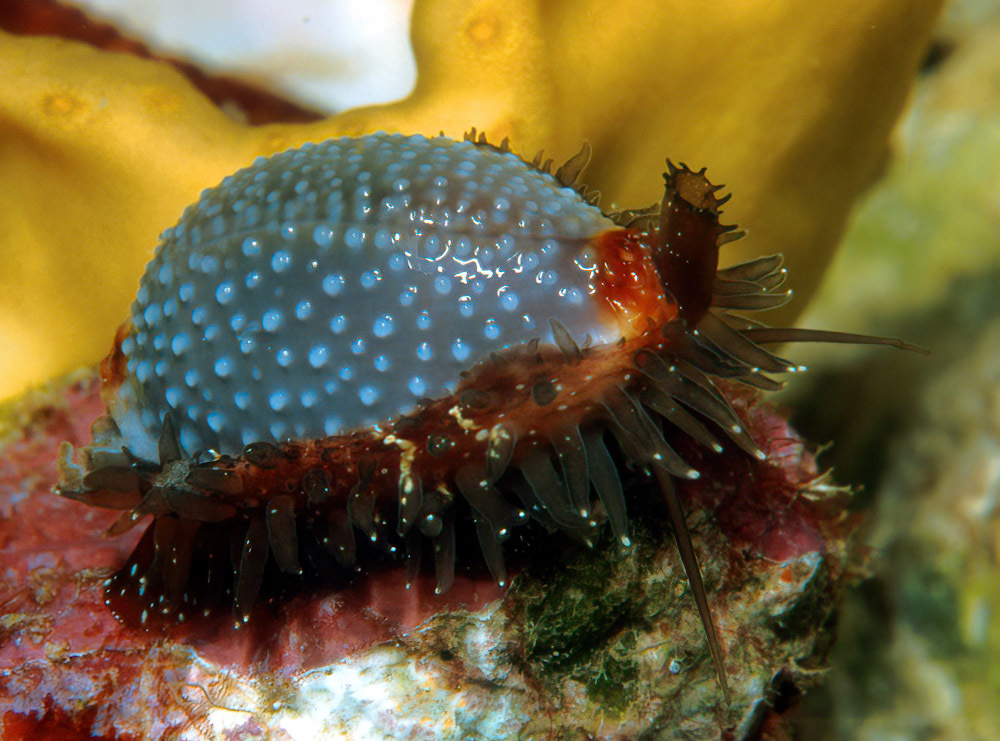
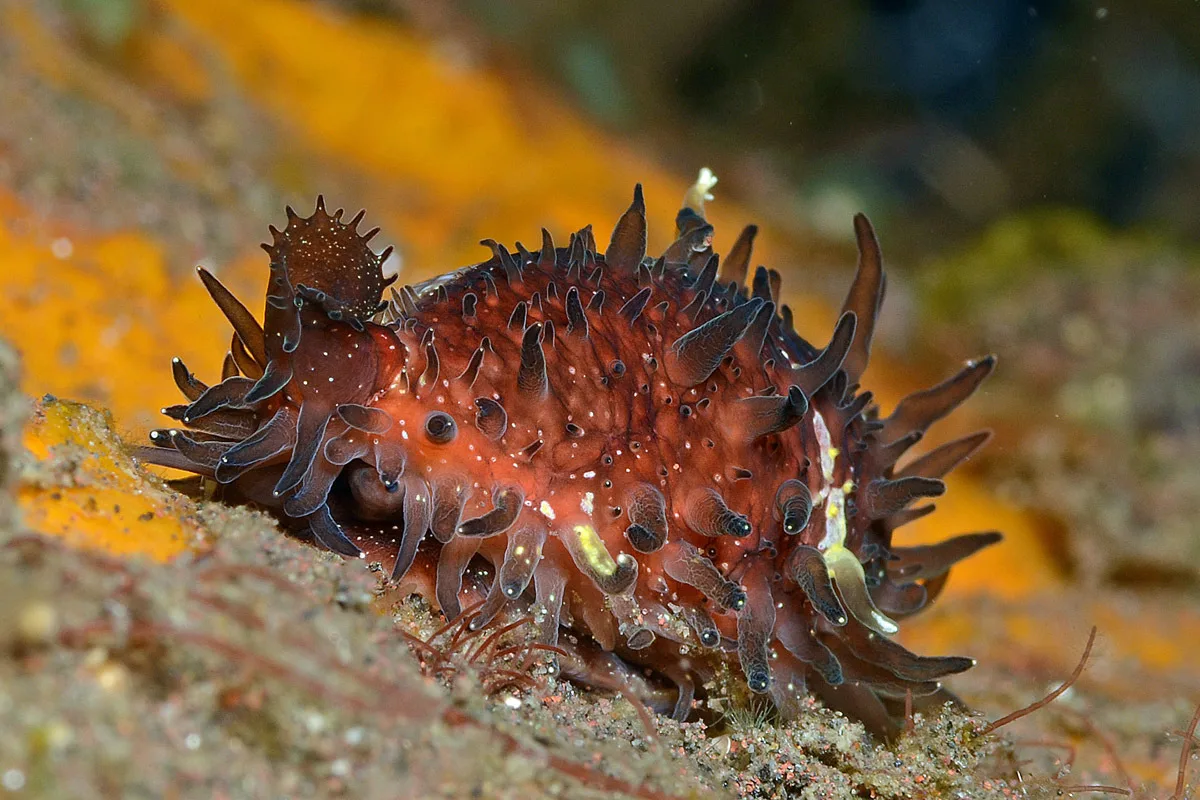
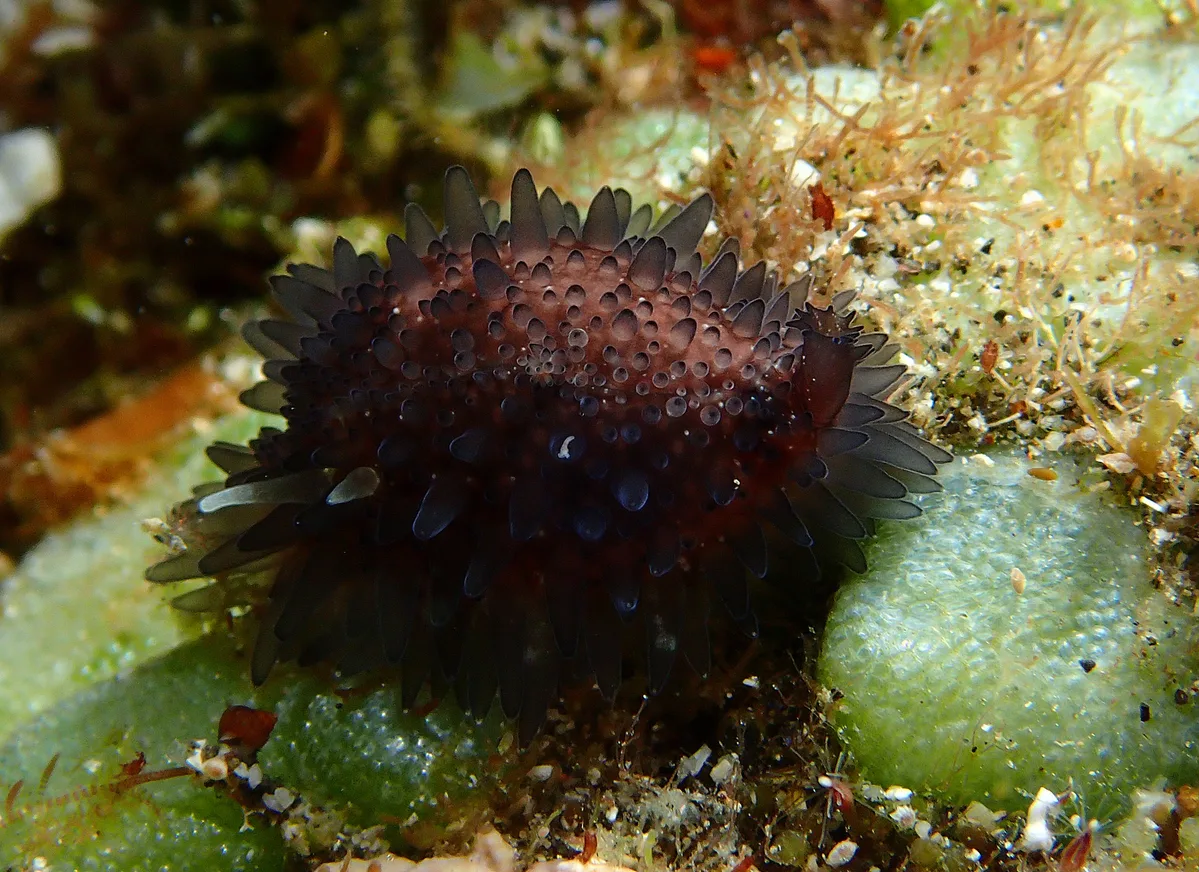
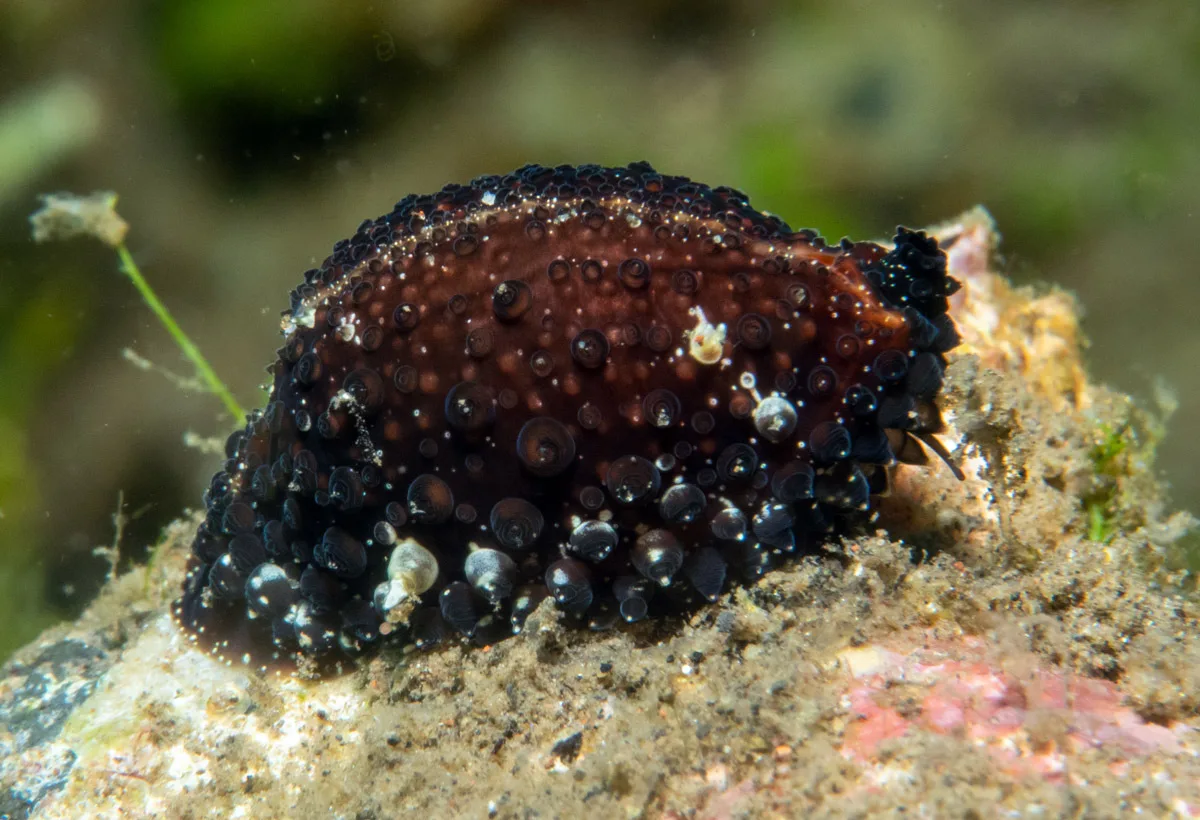
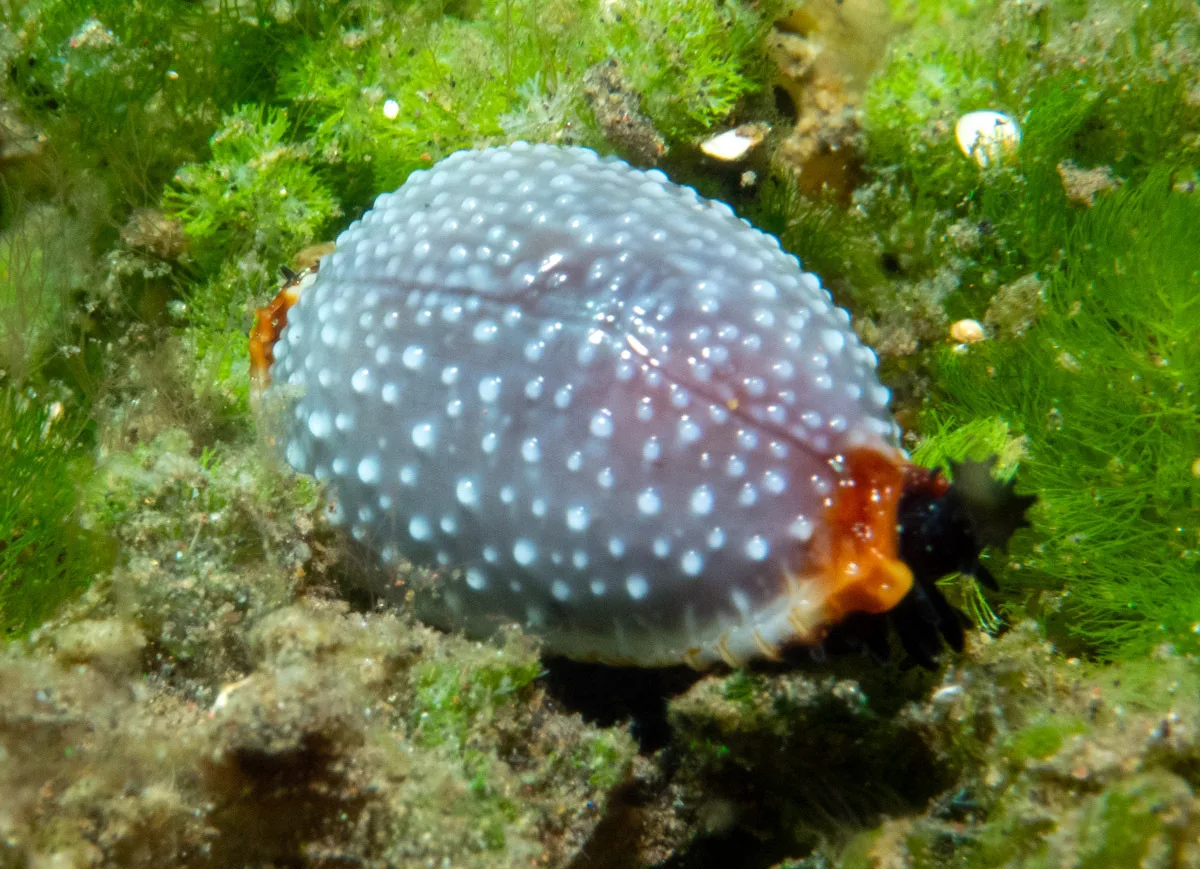
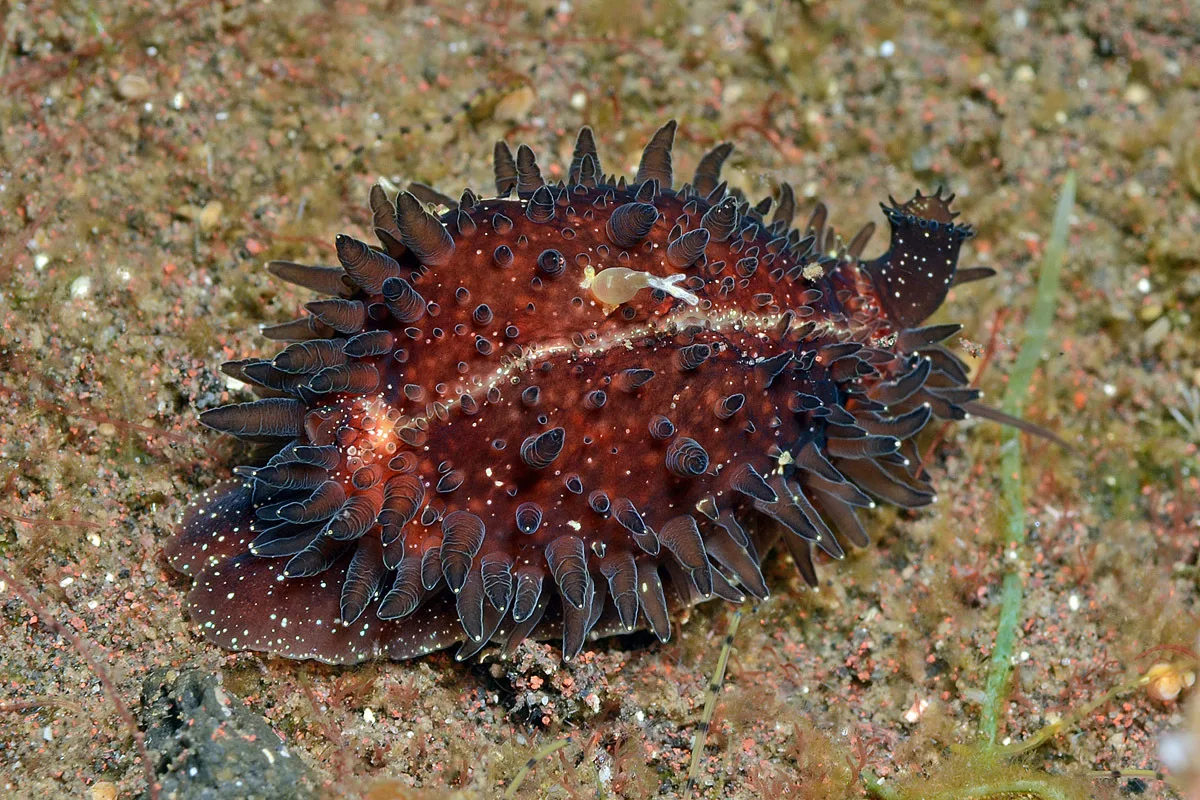
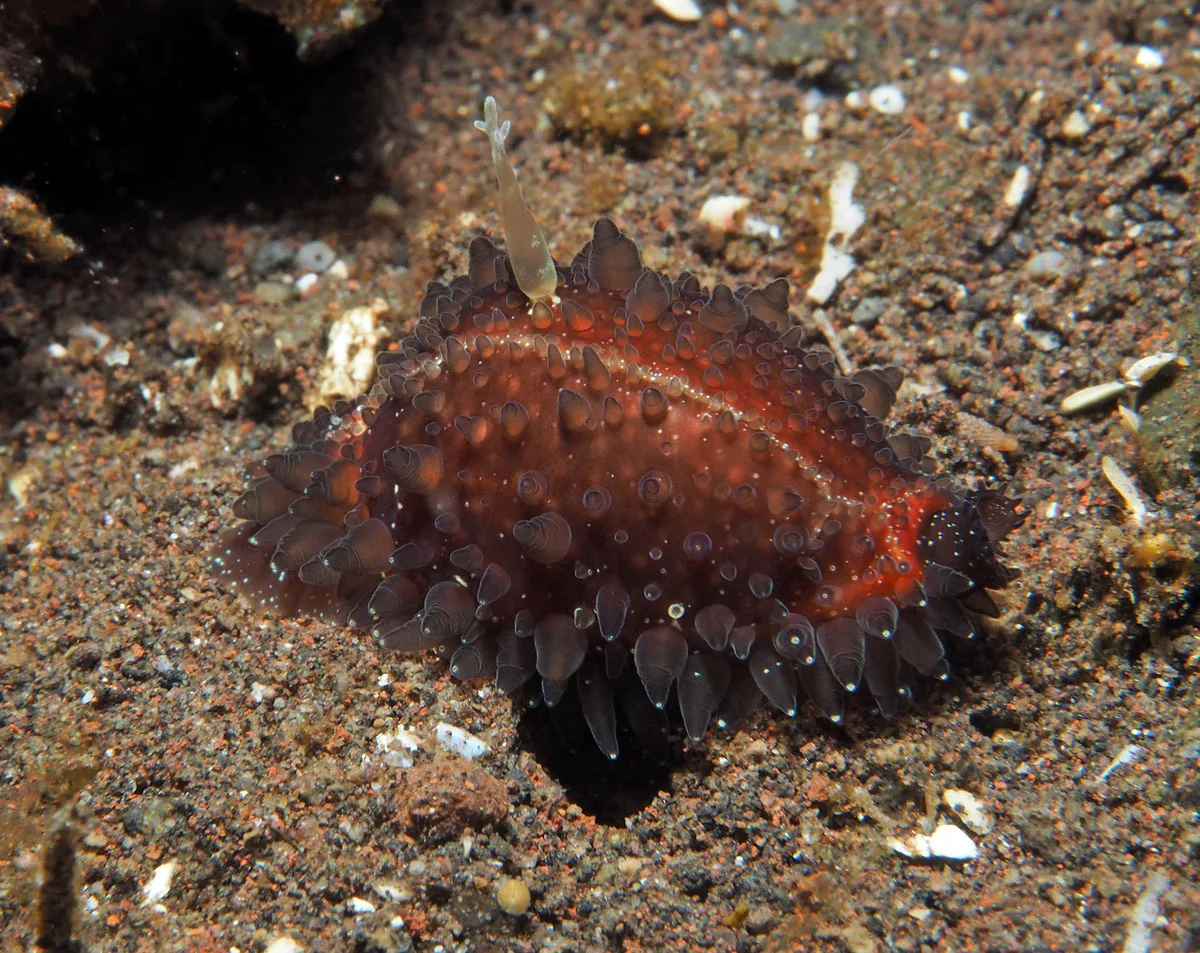
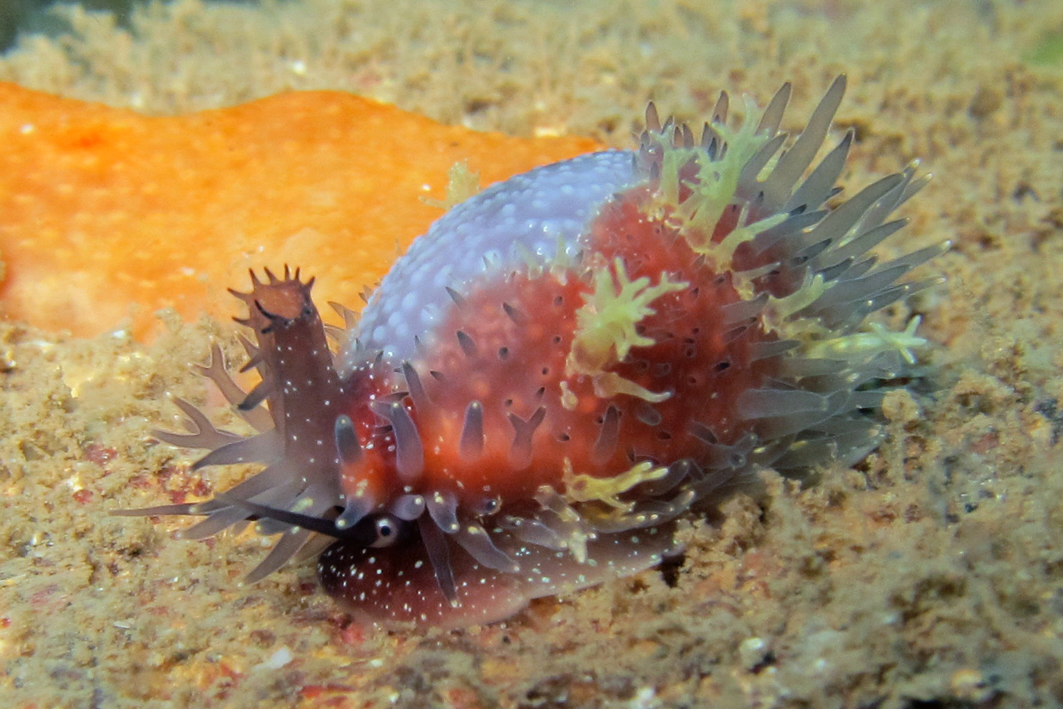
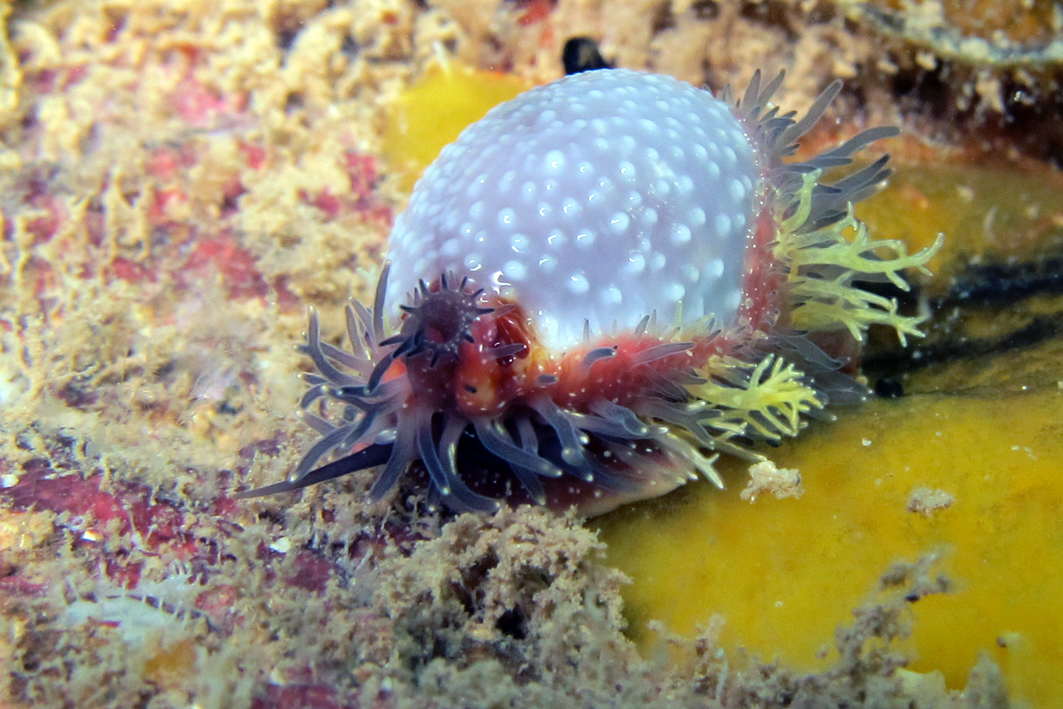
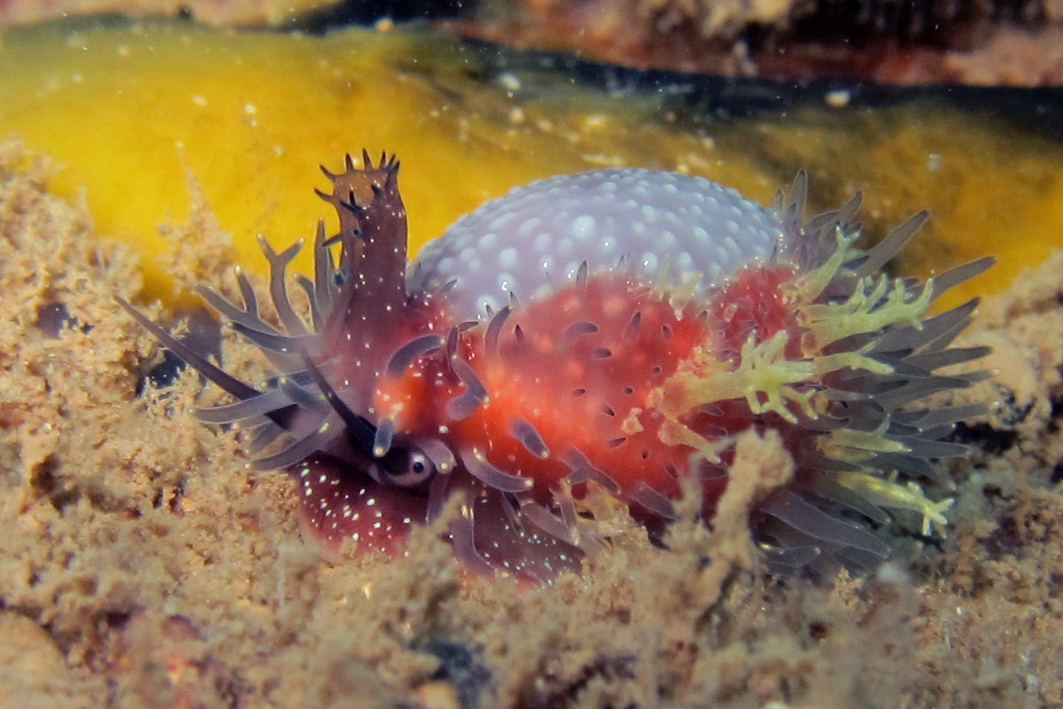
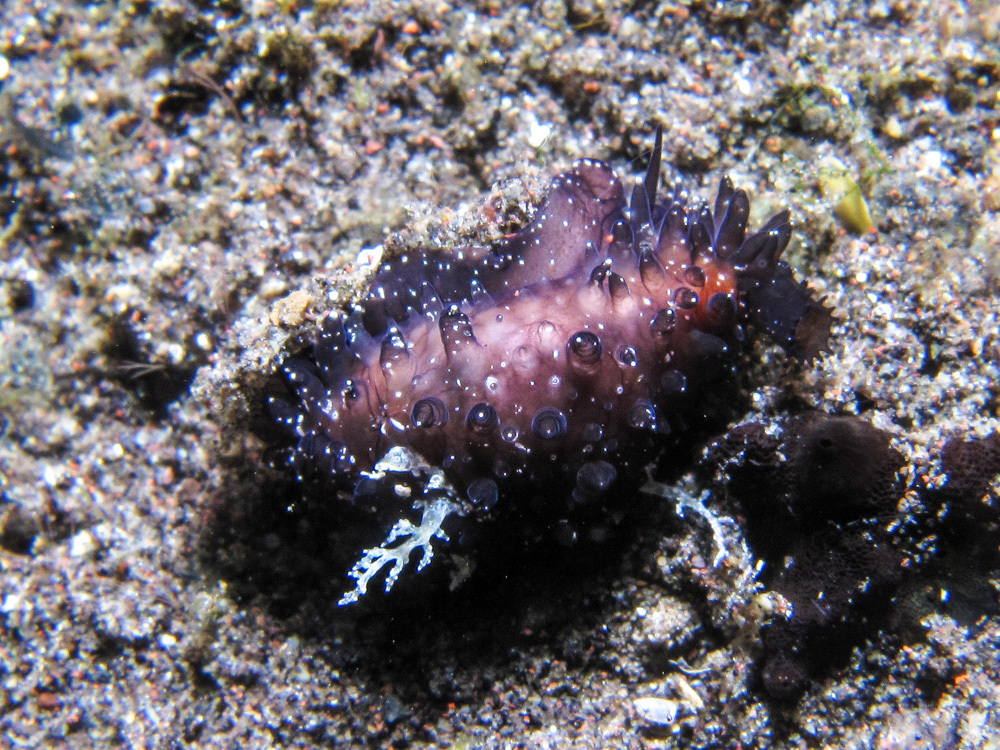
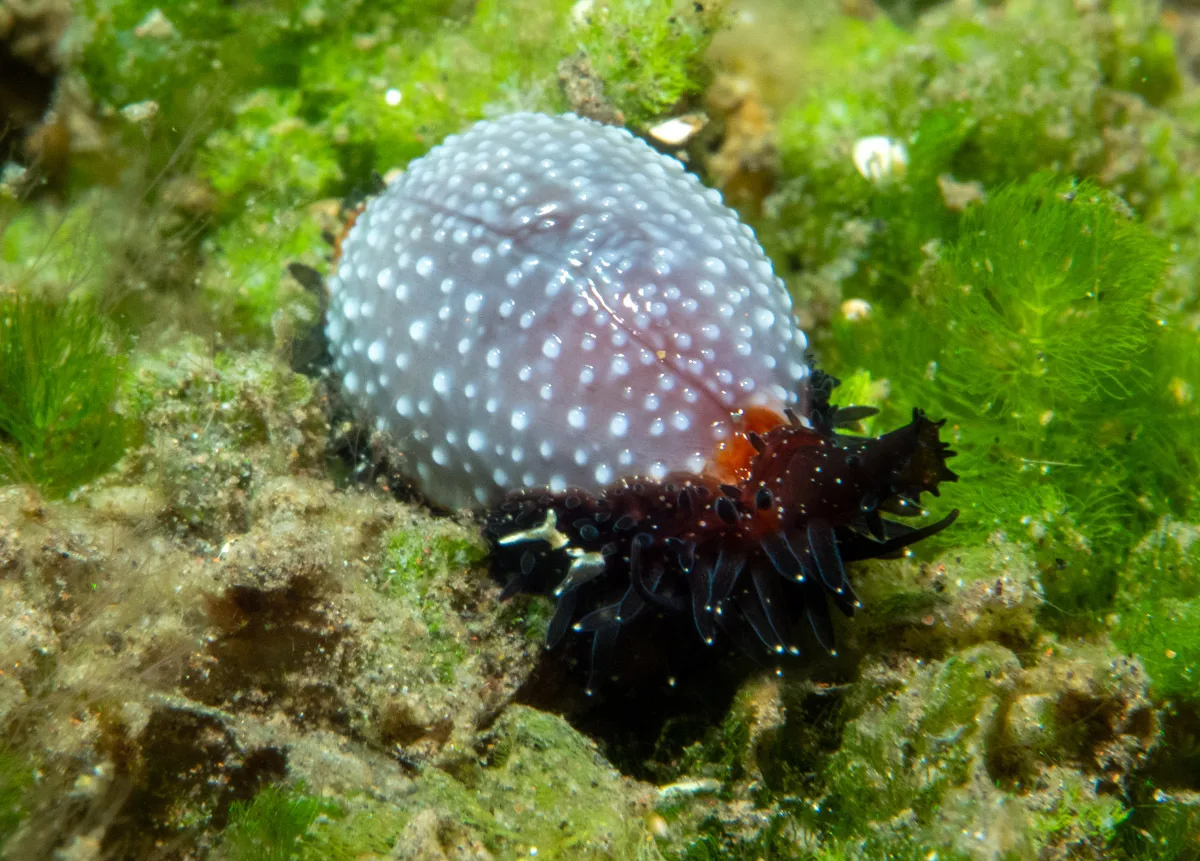
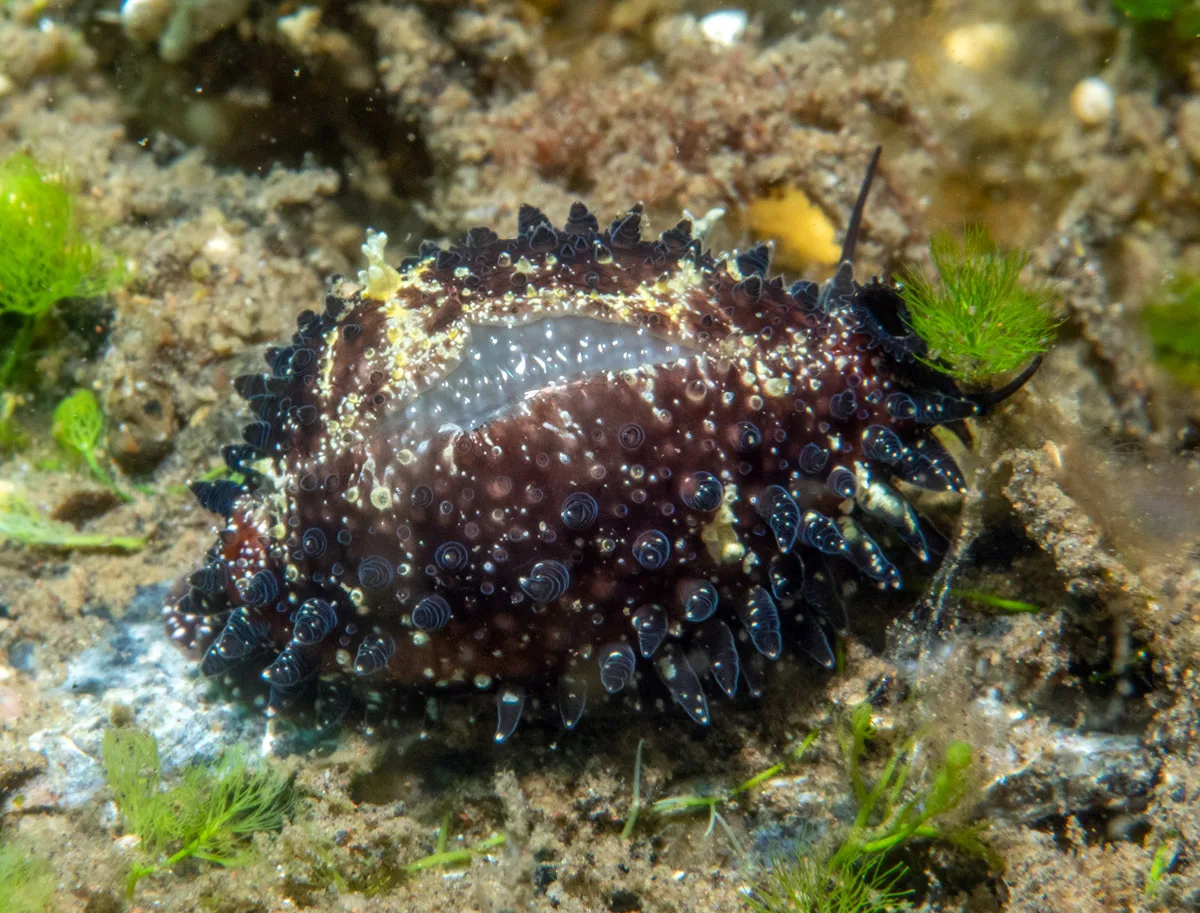
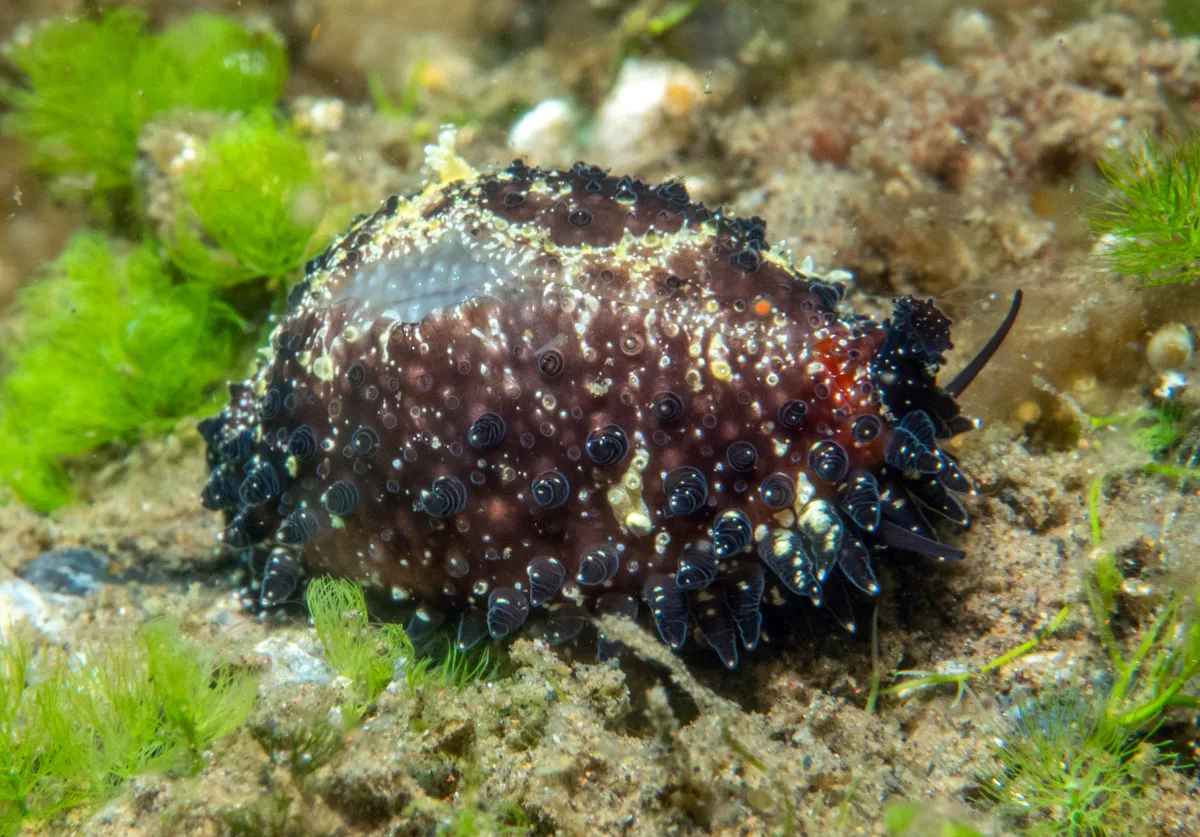
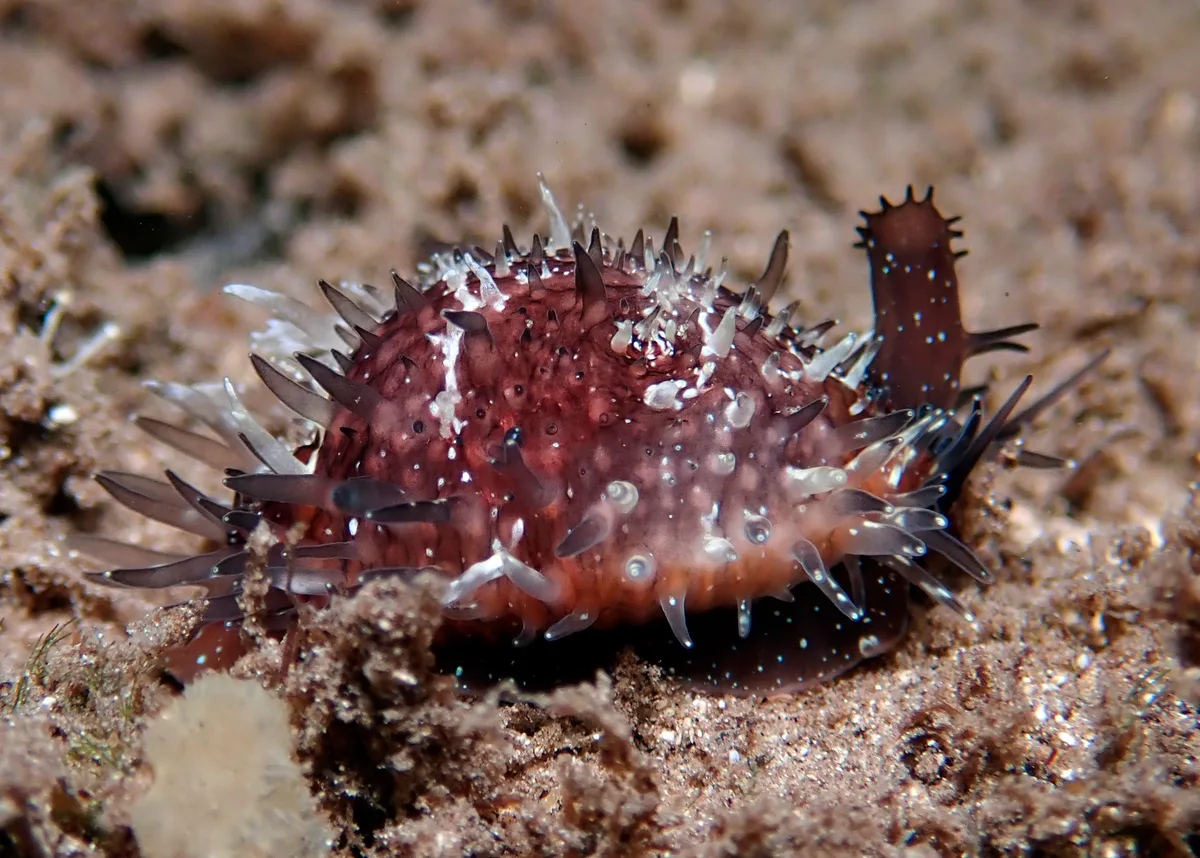
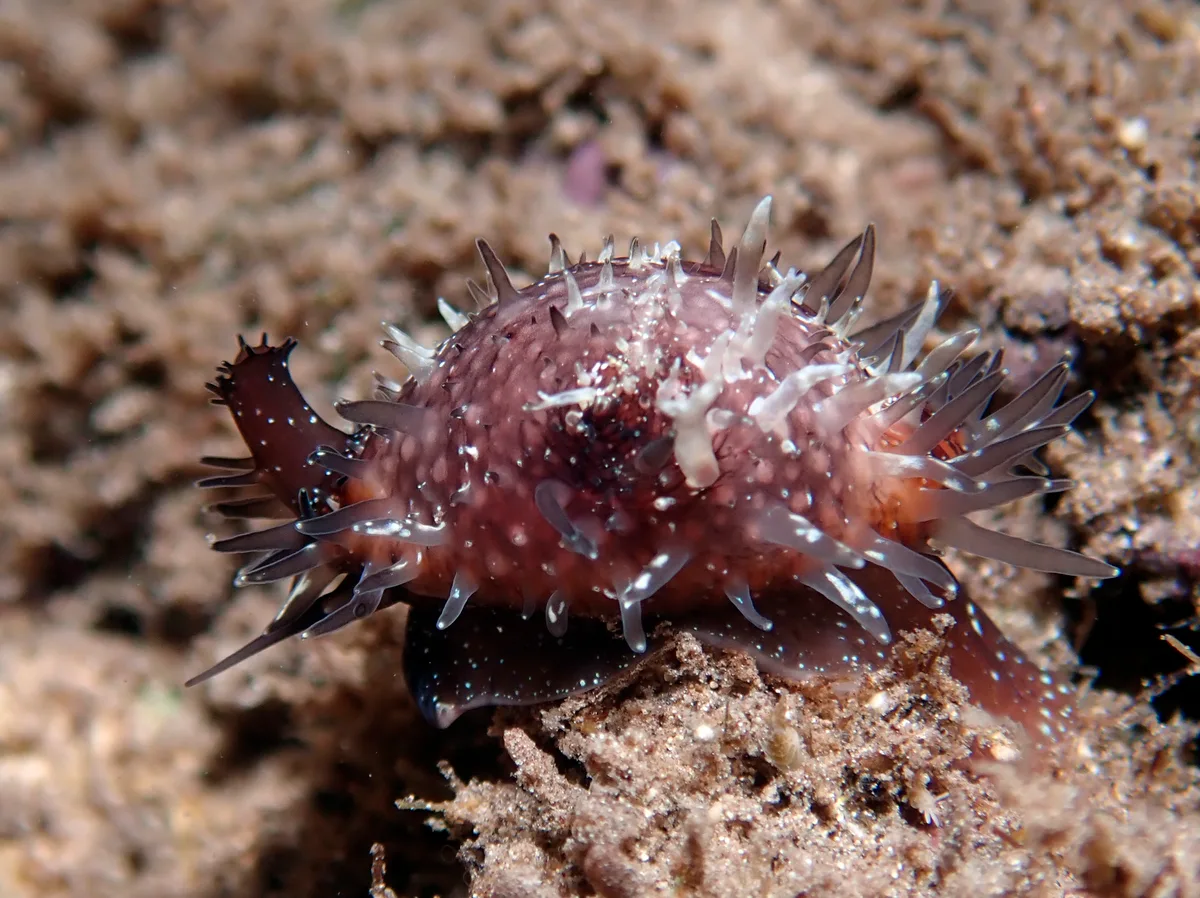
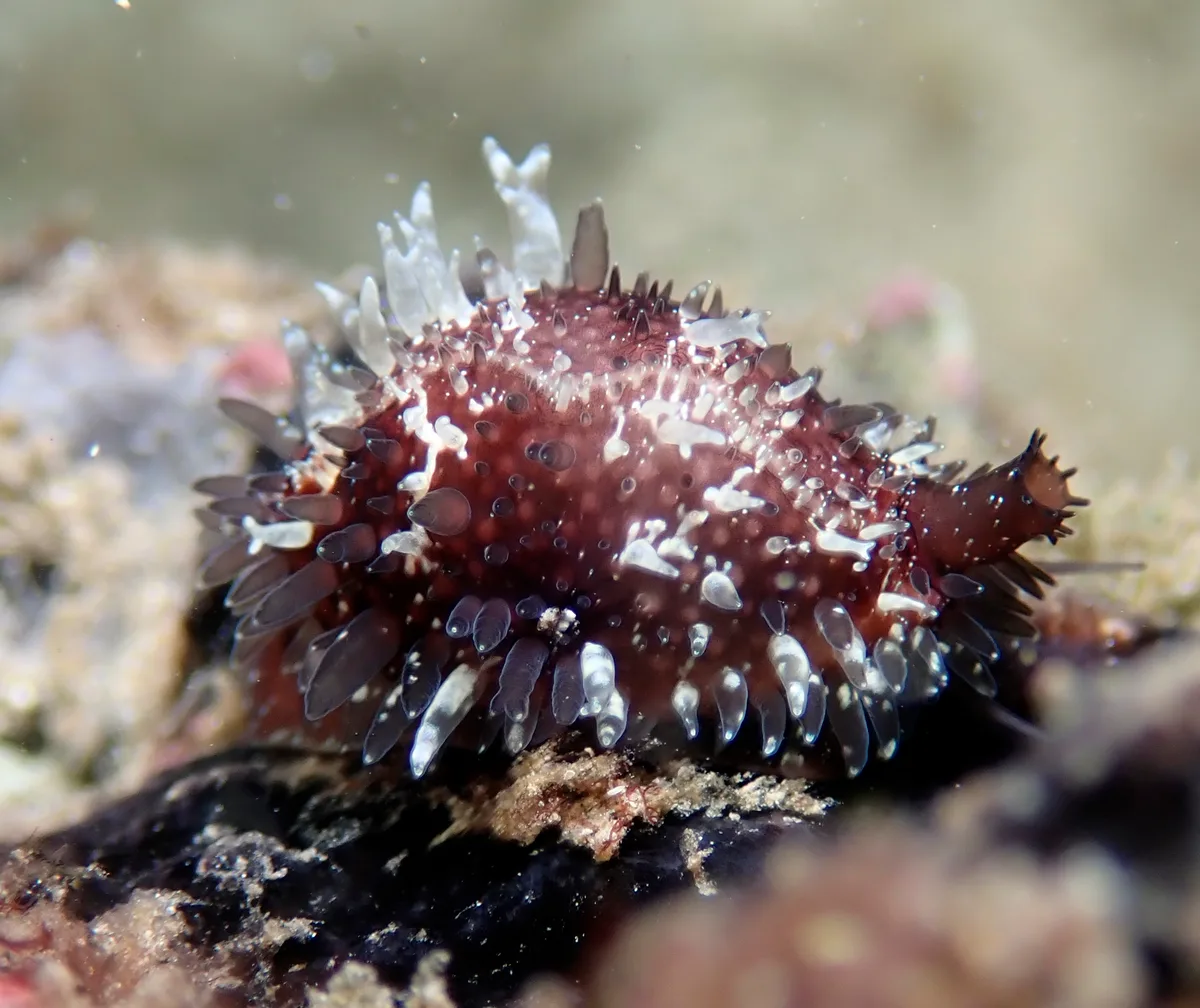
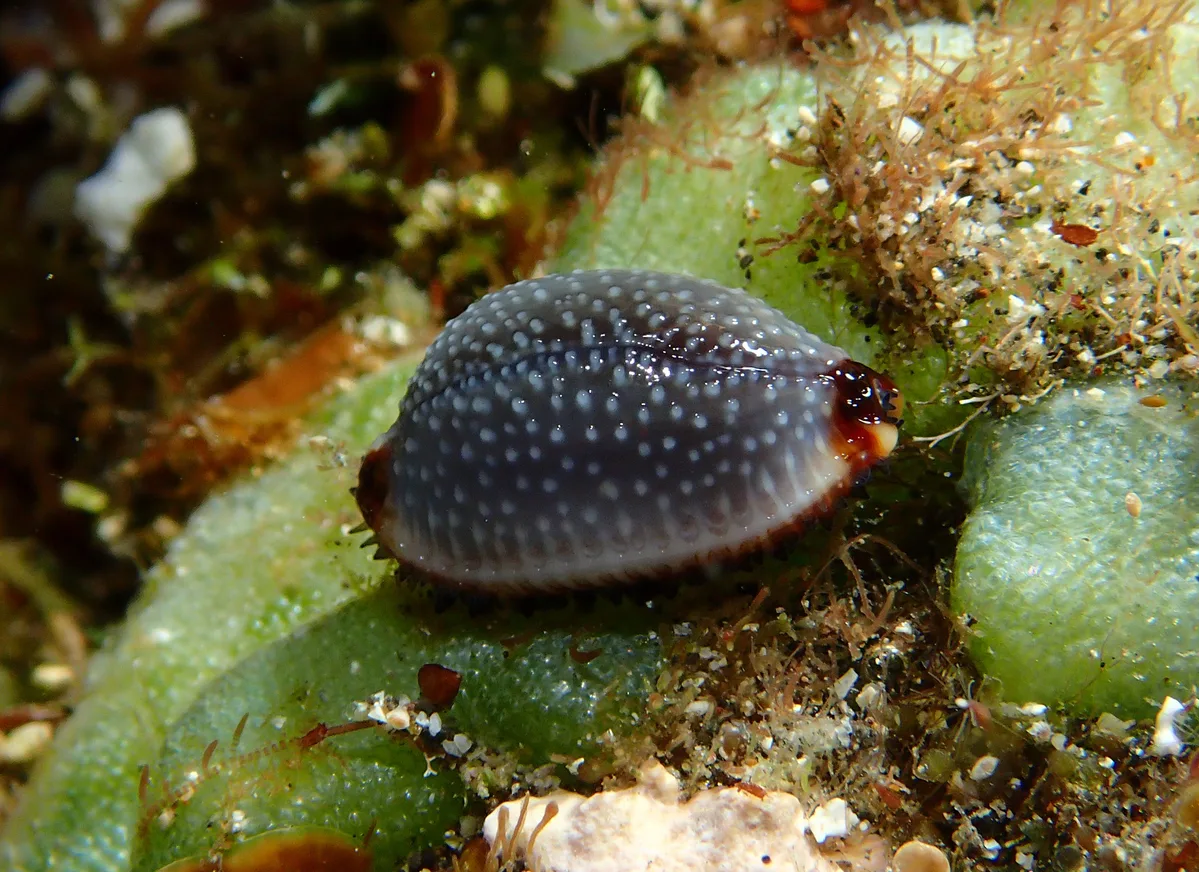
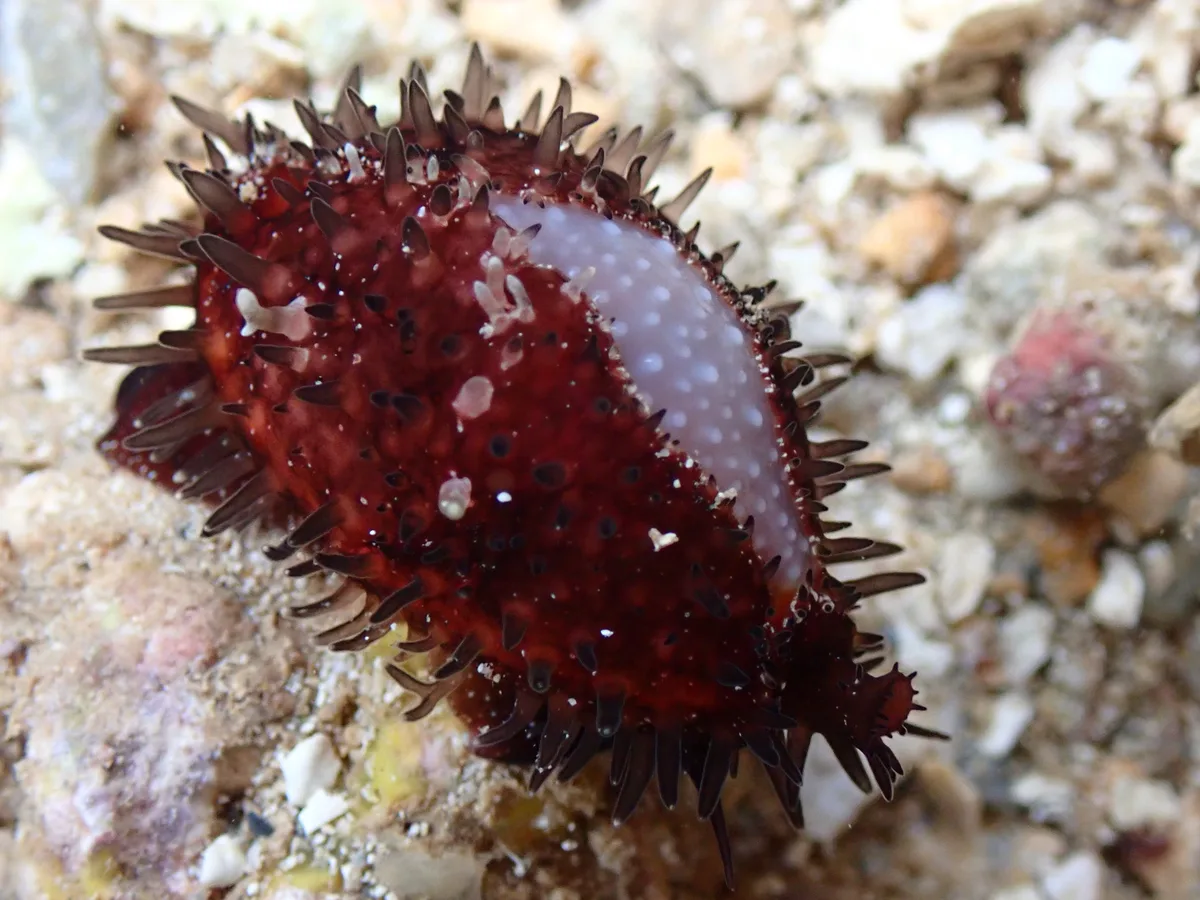
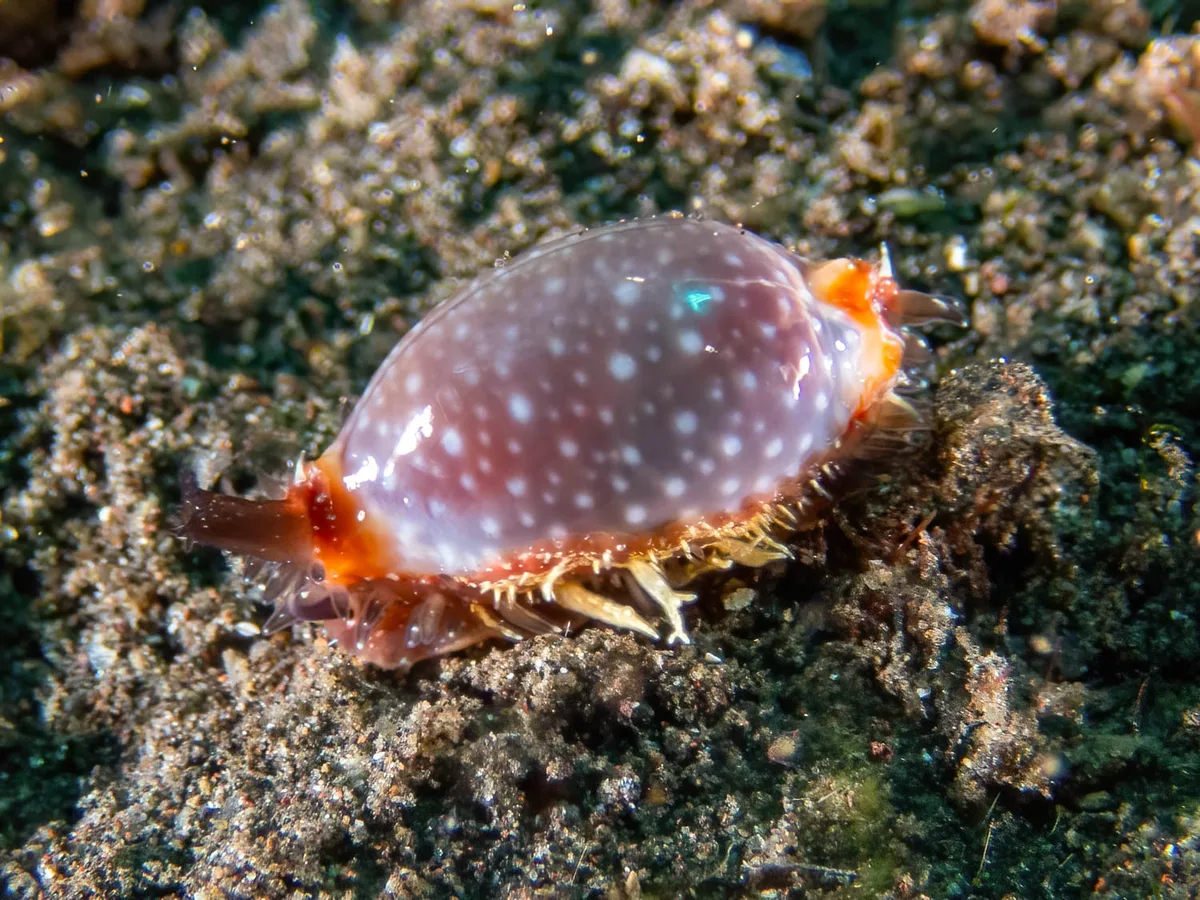
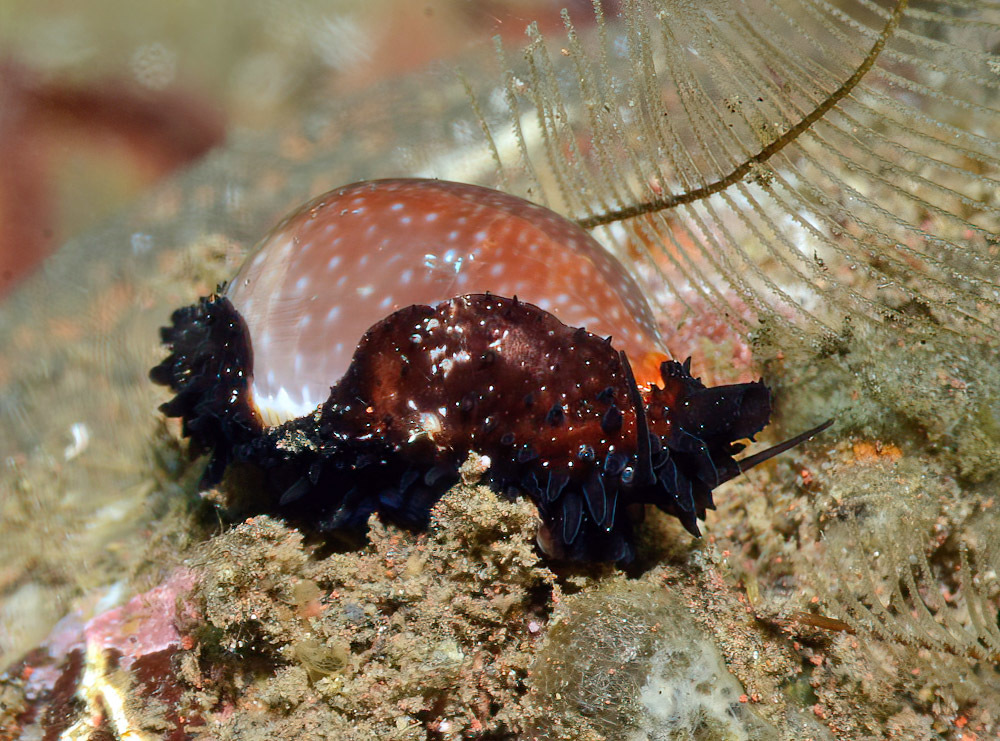
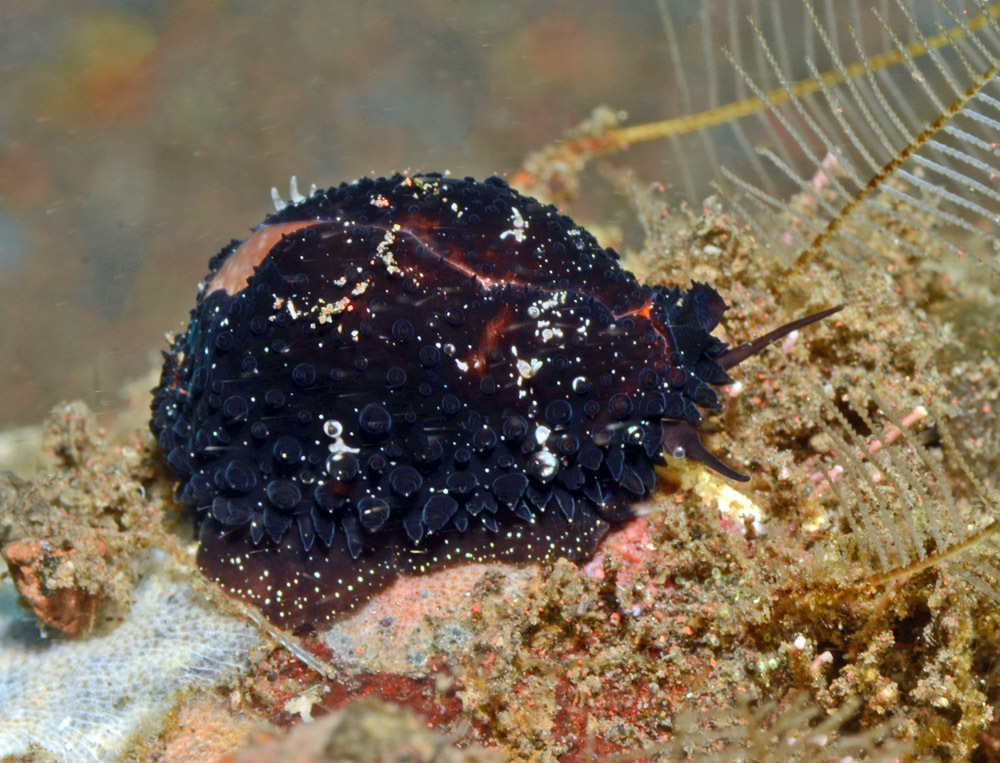
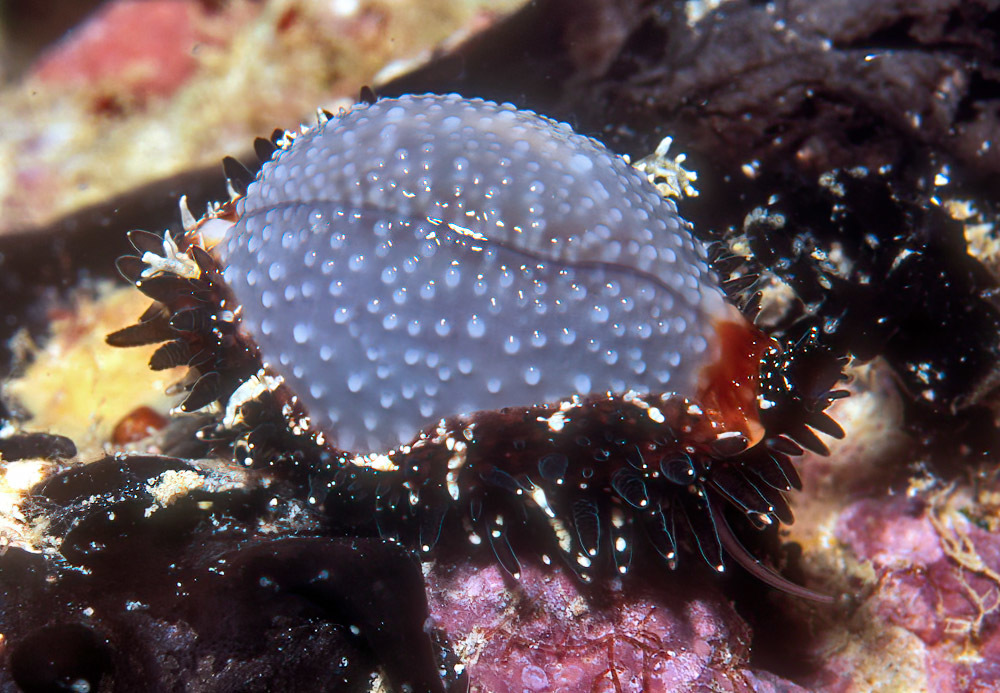
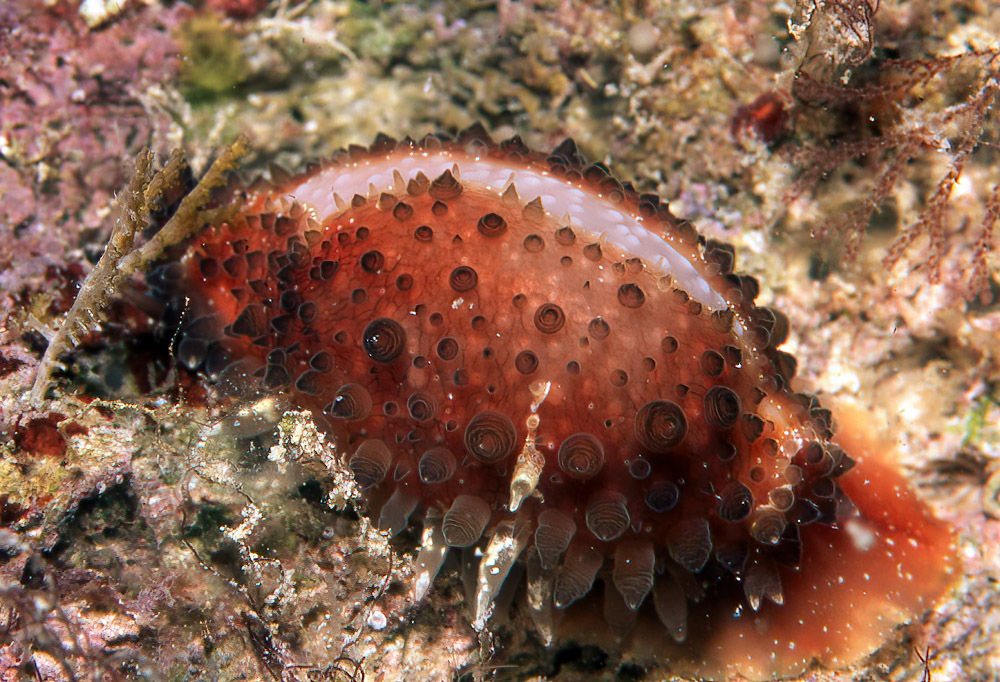
Every other cowrie on this reef is smooth. This one is covered in bumps, and that alone identifies it.
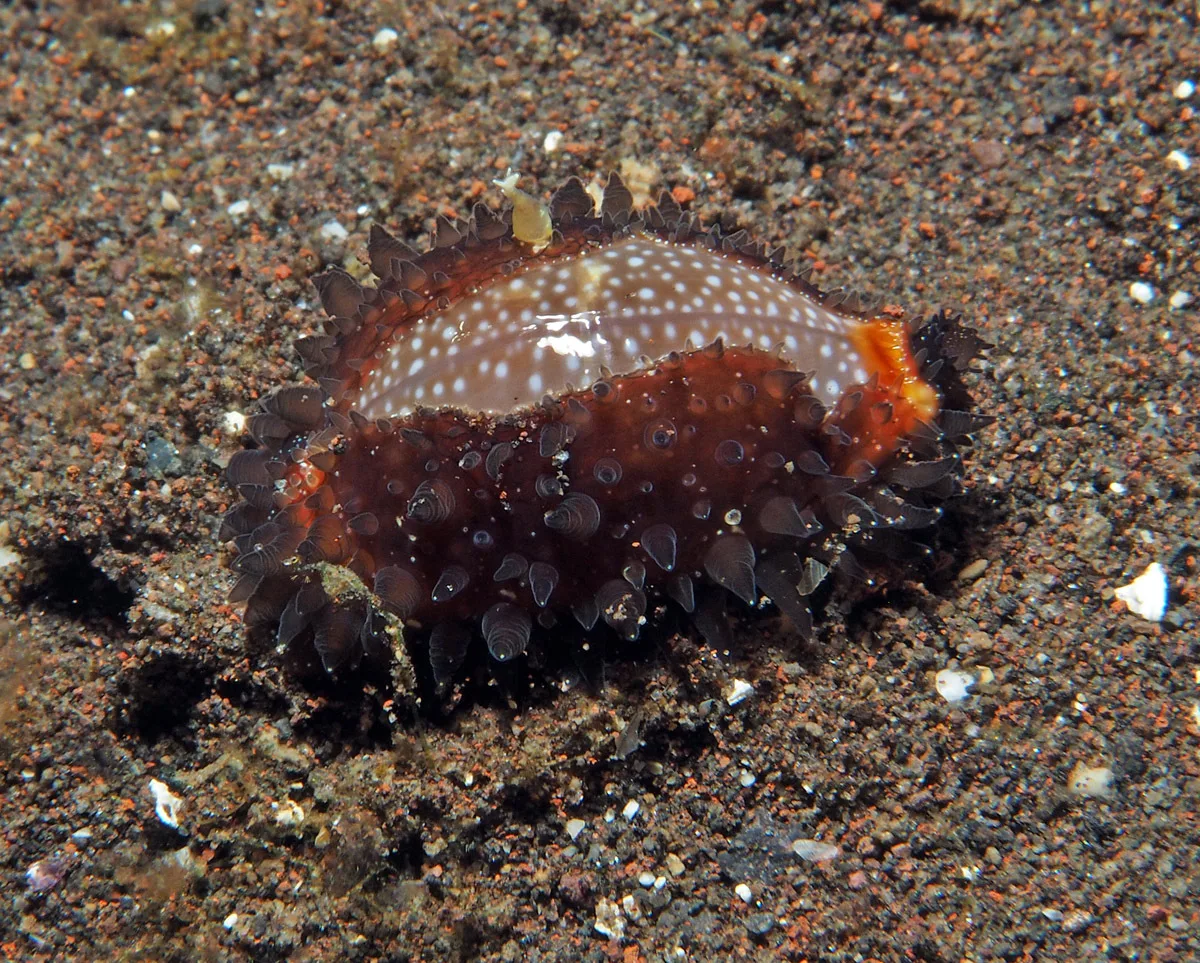
The reason it is remarkable takes a moment. A cowrie shell is polished because the animal's mantle folds up over it from both sides and lays down new material from the outside, working the surface as it goes. Almost every species in the family ends up mirror-smooth as a result. Here the same process produces a surface densely covered in fine raised pustules, like a cluster of grapes, which is what staphylaea means and what the English name records.
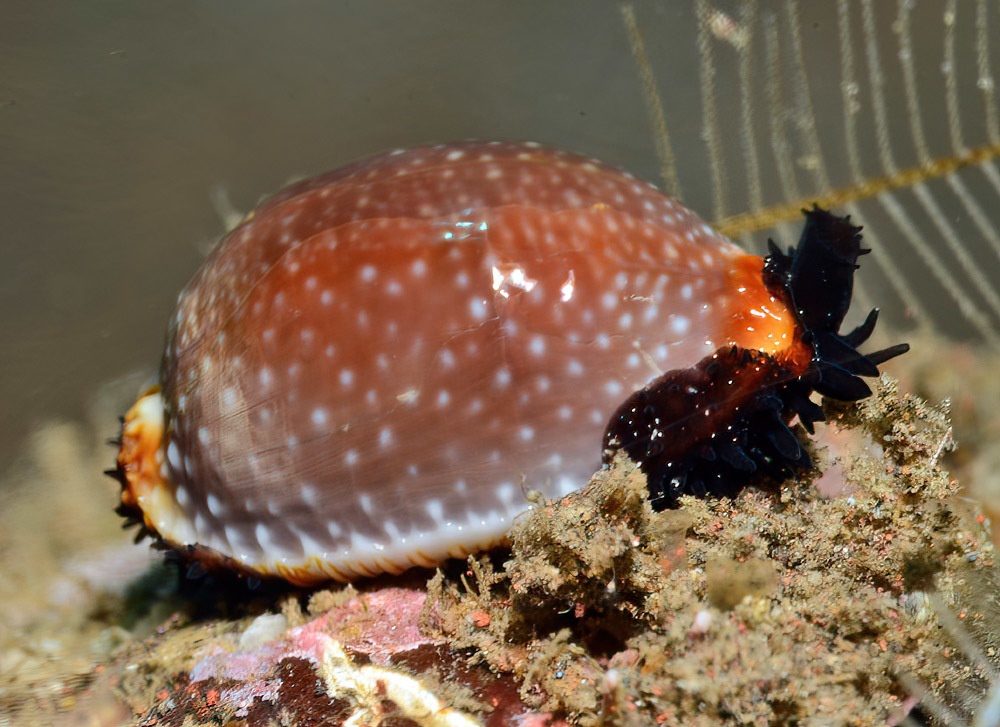
The rest of the shell is bluish gray to red-brown with both ends orange, and at under three centimeters (1.1 in) it is small and squat, more of a pebble than the long oval most cowries make.
It lives shallow, under stones by day, out grazing after dark, and it is the one member of the family you could sort out of a handful in the dark by feel alone.
Linnaeus named it in 1758, using the same word twice for the genus and the species, which is his way of saying this was the animal the group was built around.
- shell finely pustulose, covered in small raised bumps rather than polished smooth
- bluish gray to red-brown, with both ends orange
- small and squat, under three centimeters
- the only cowrie here you can identify by touch