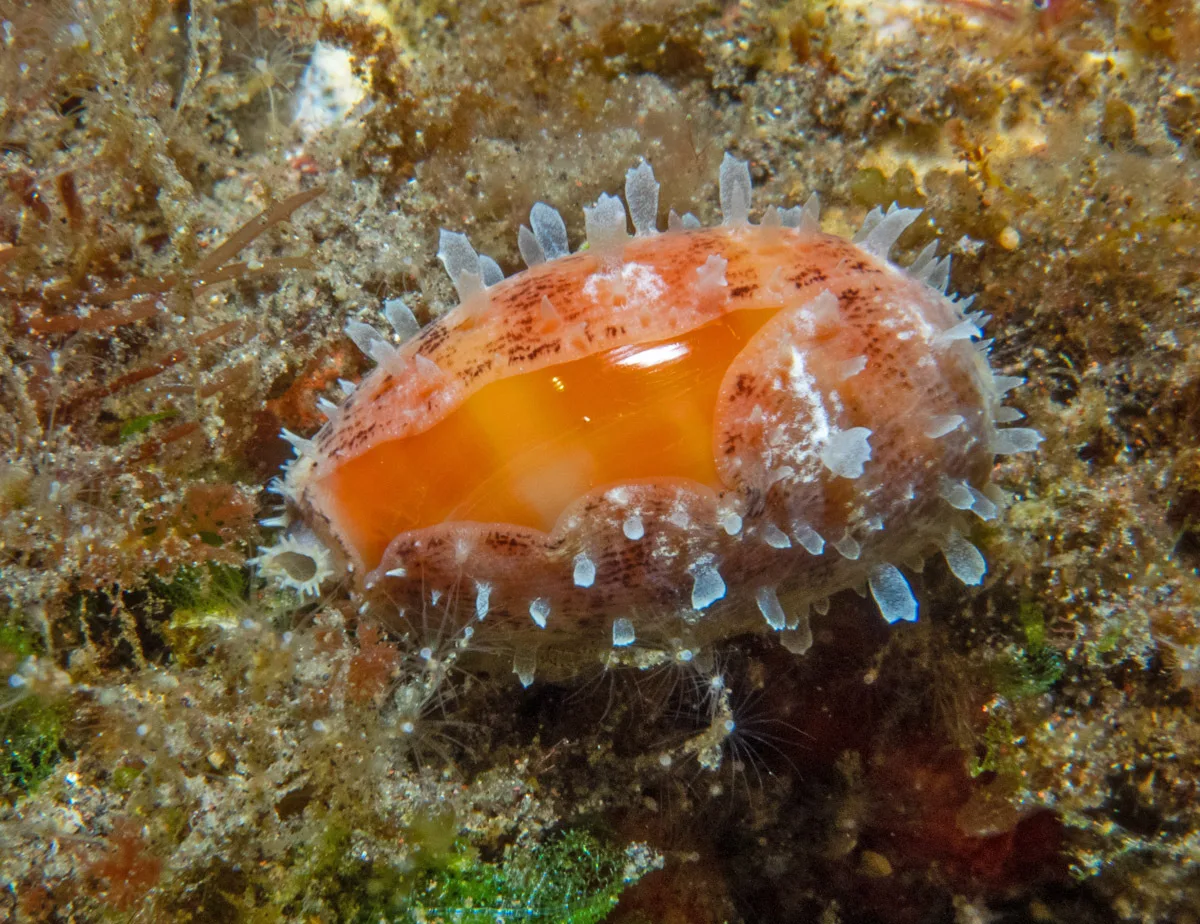
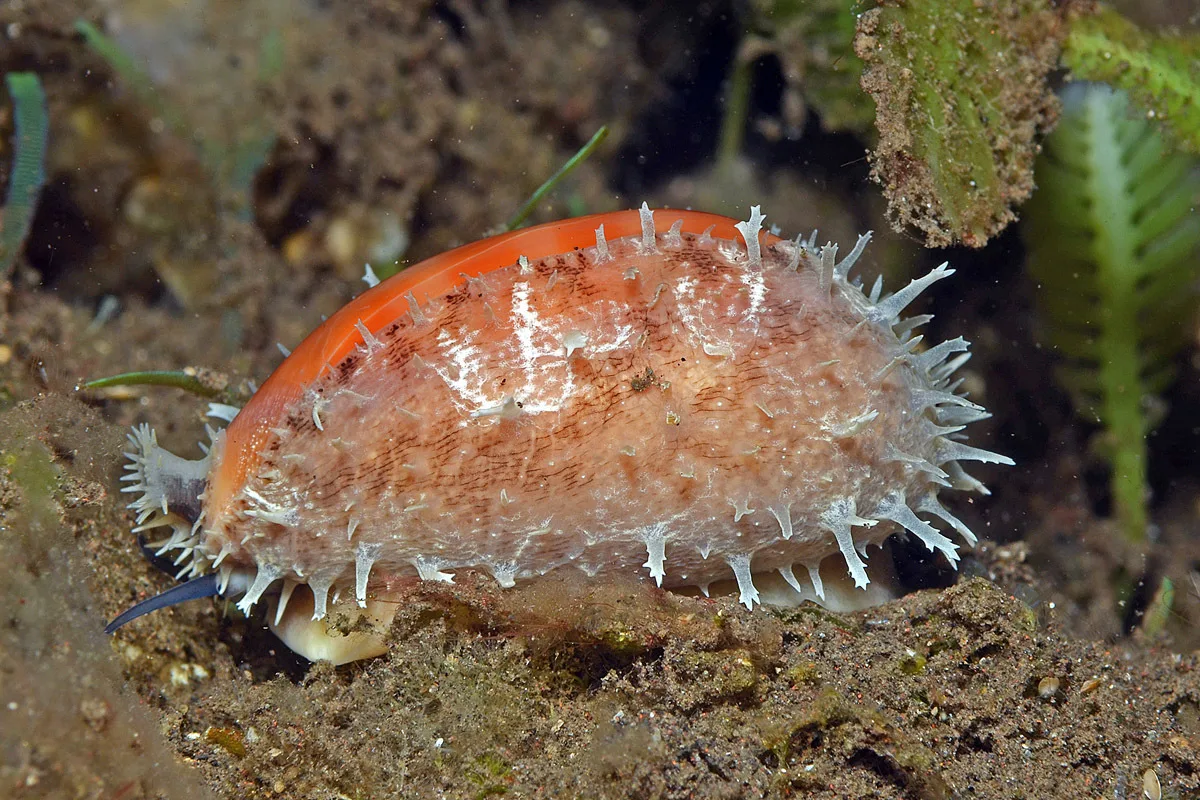
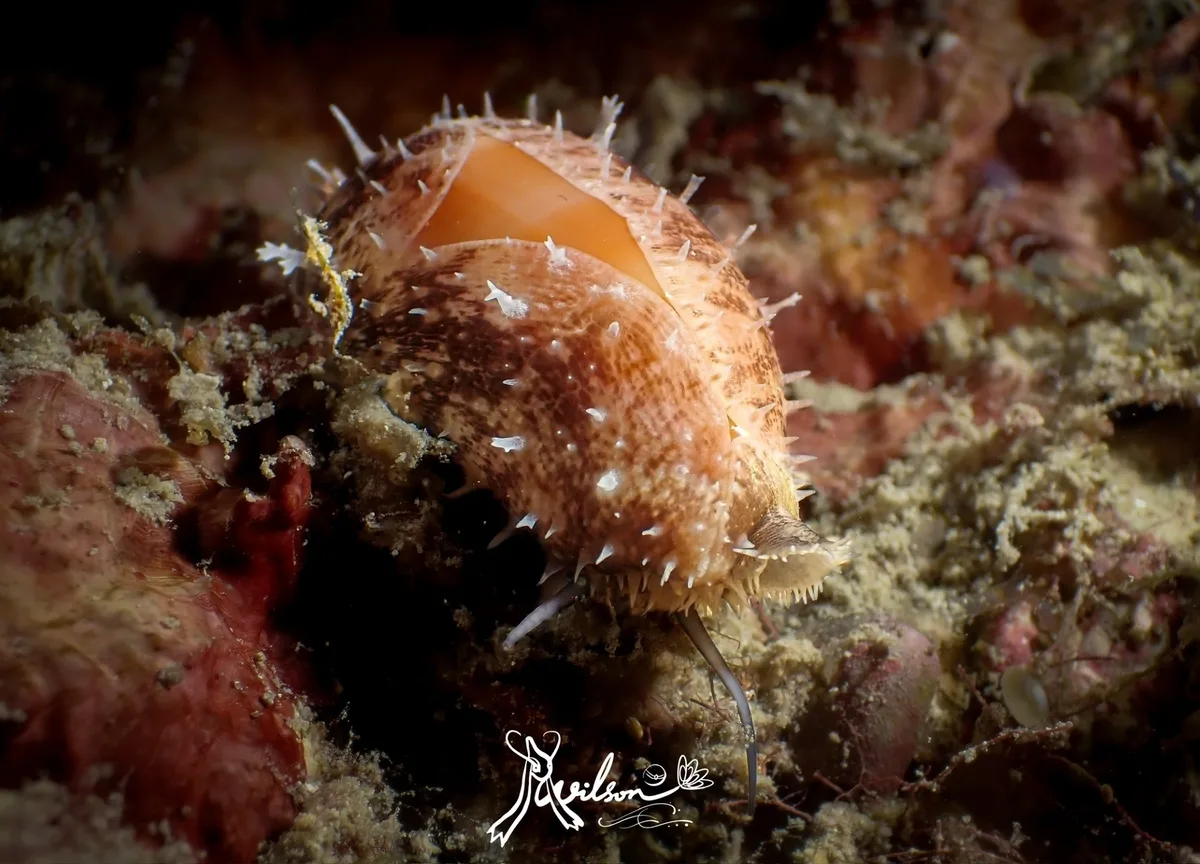
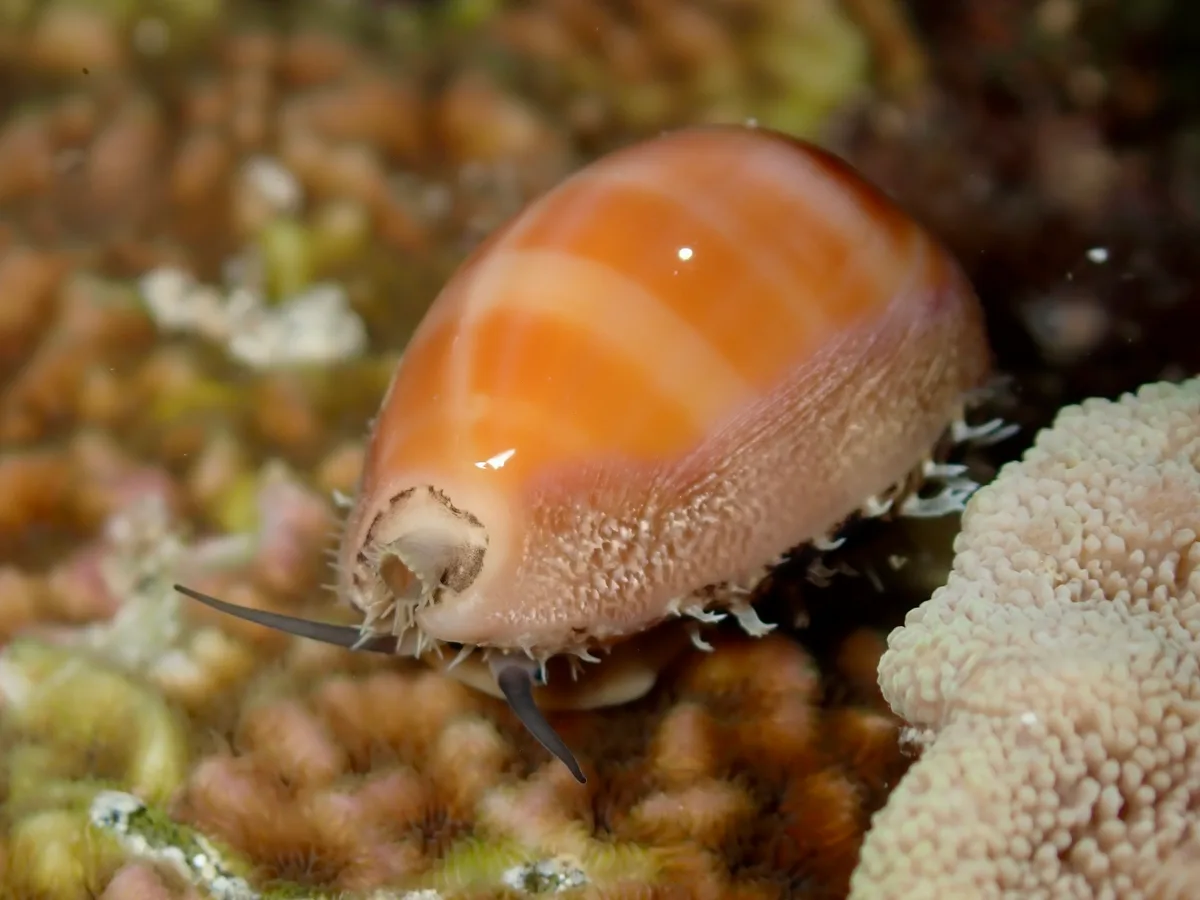
The color that settles this one is on the part you have to turn over.
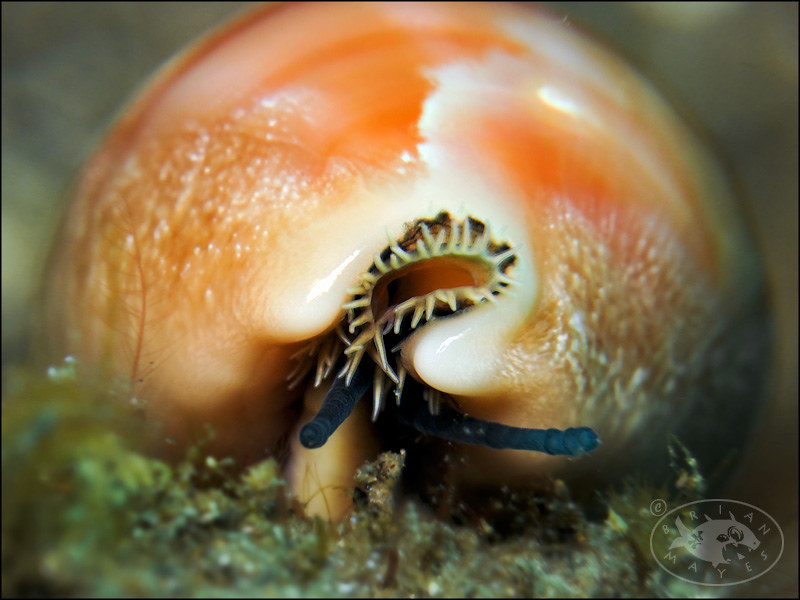
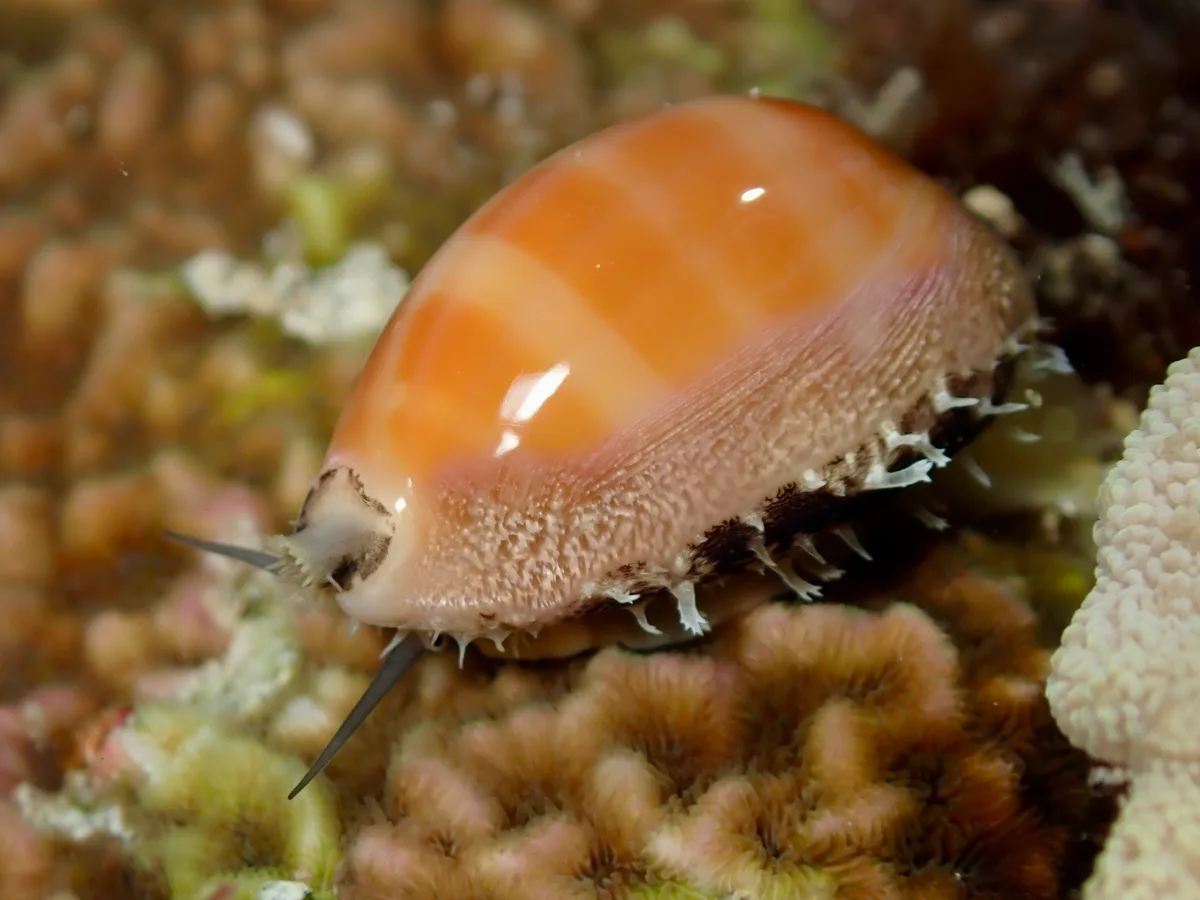
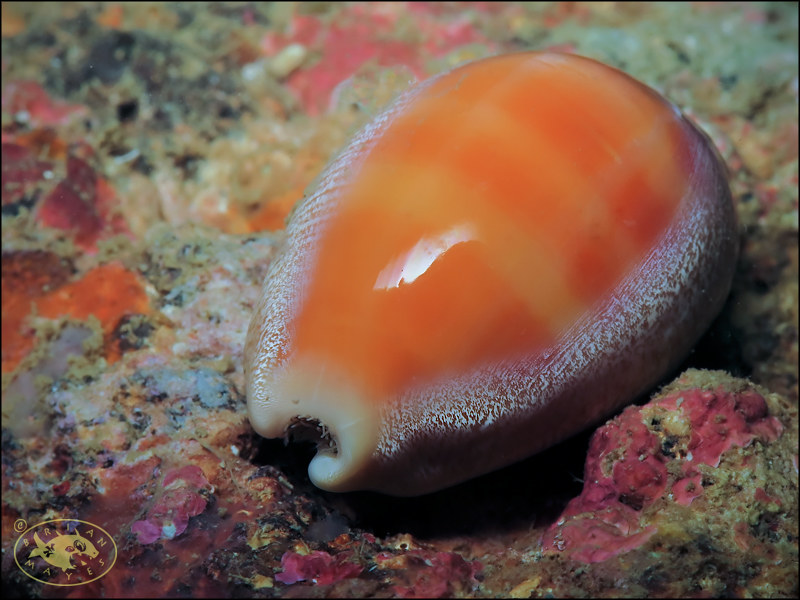
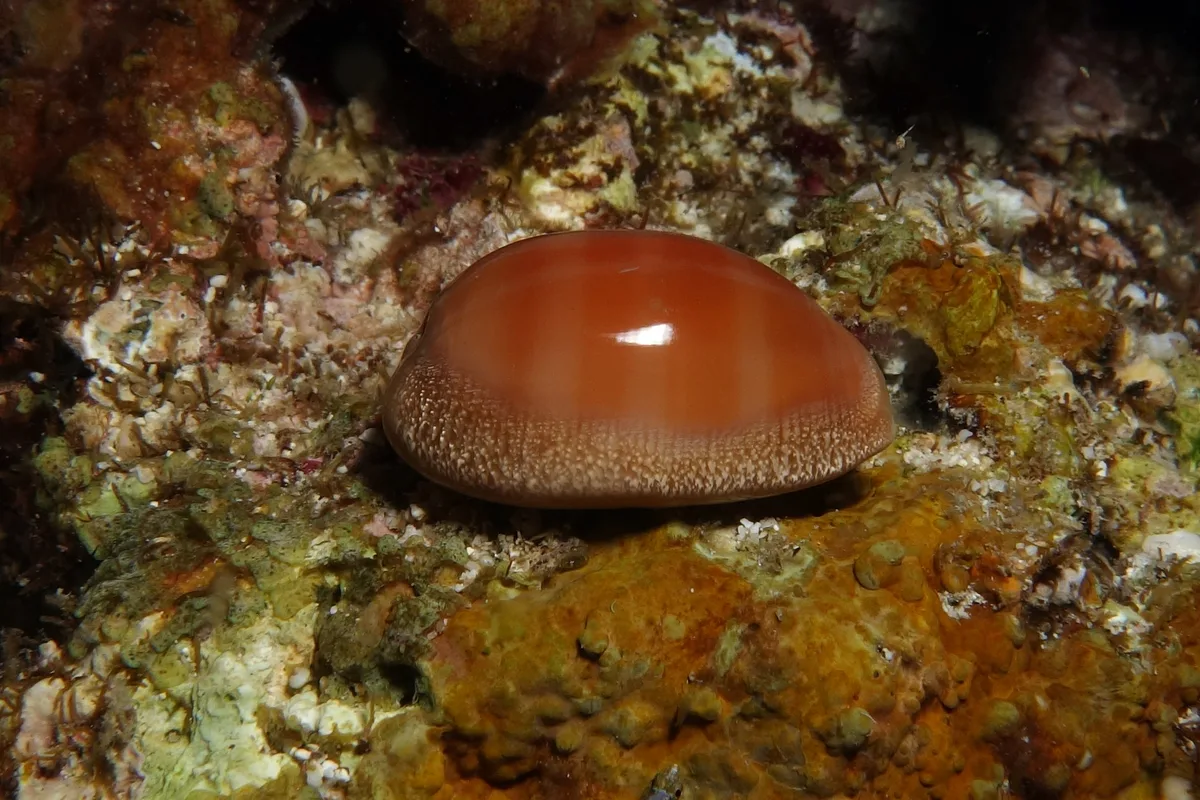
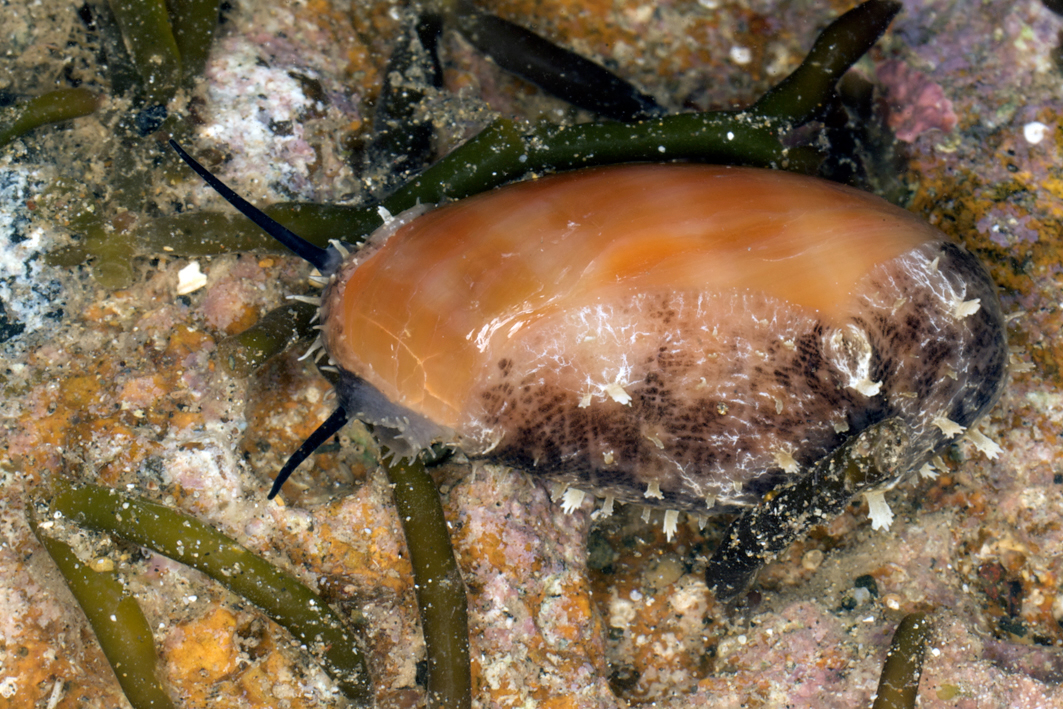
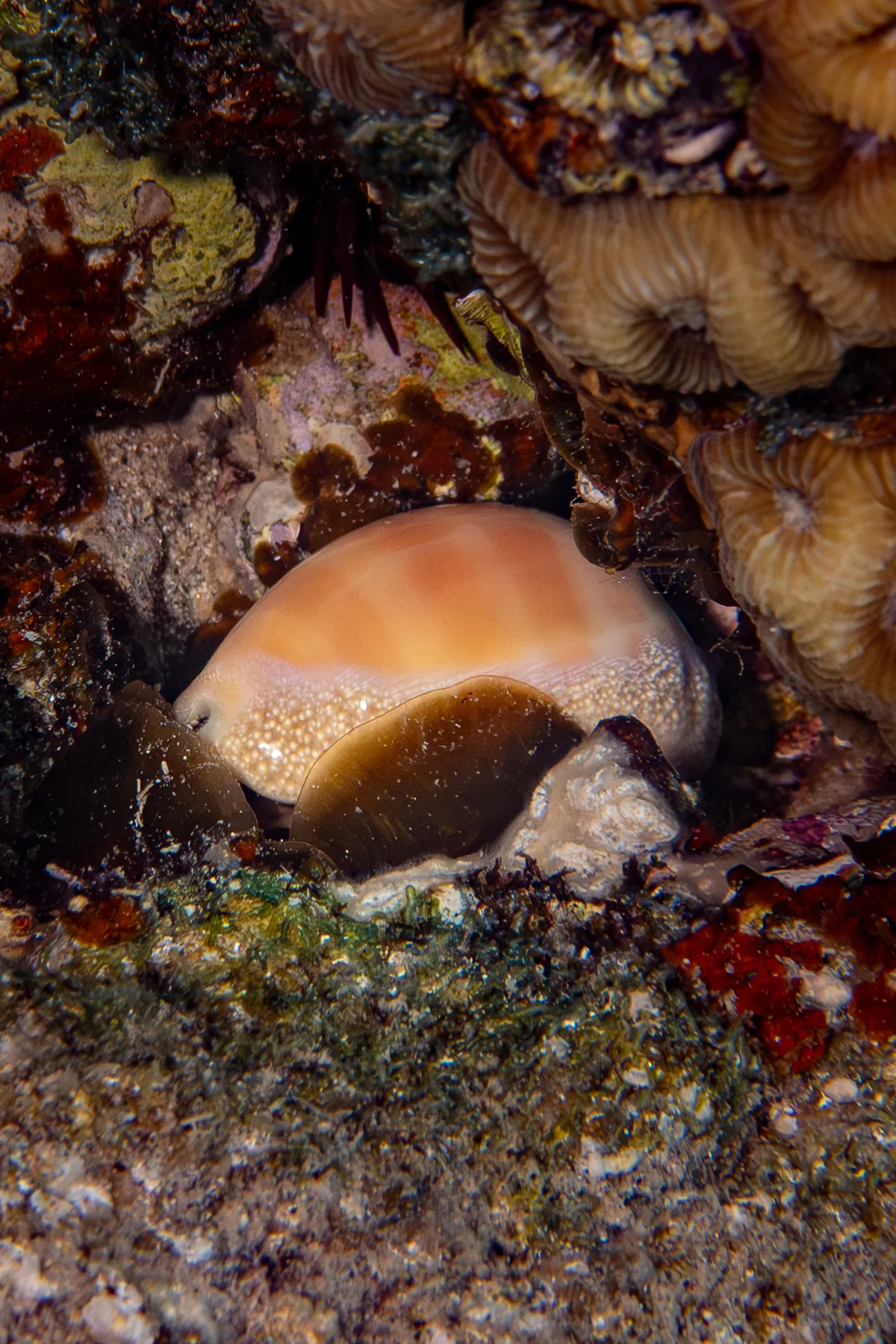
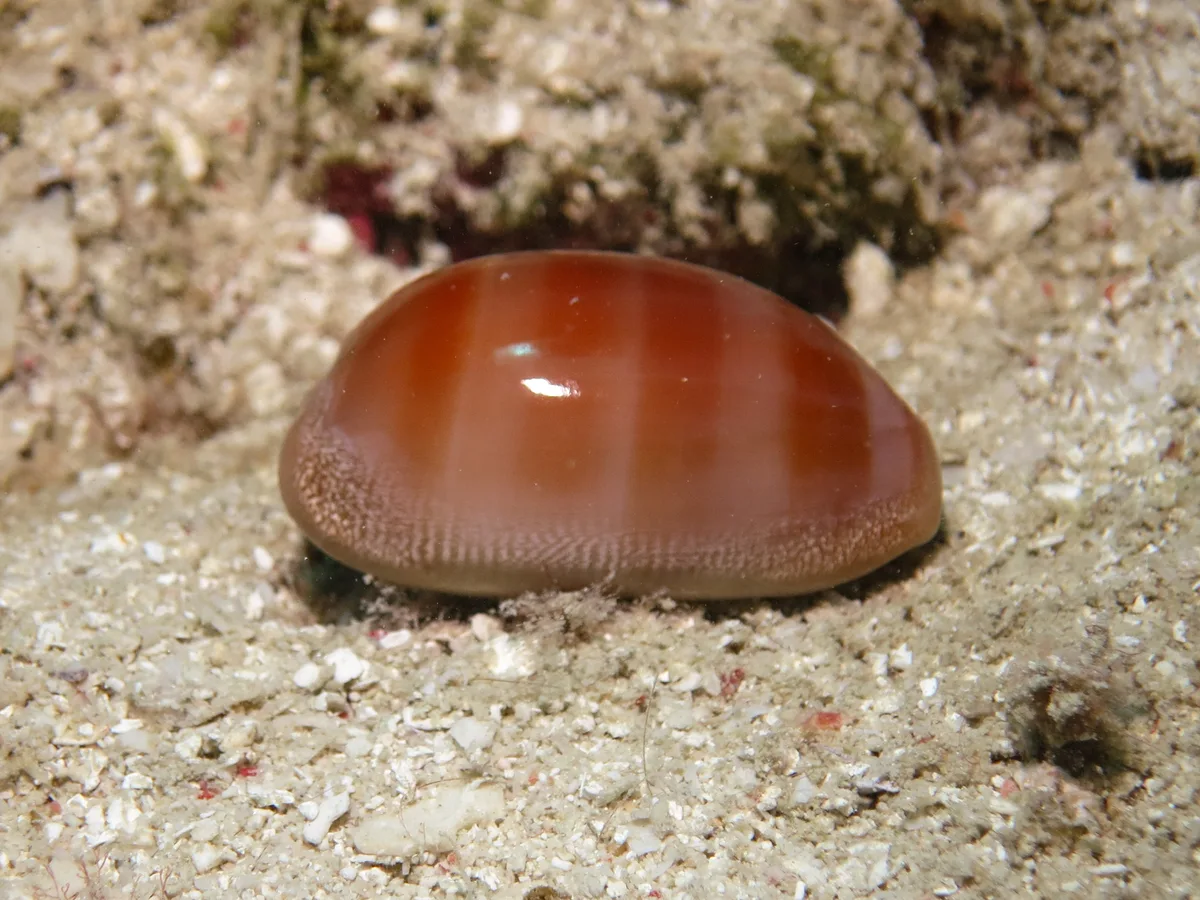
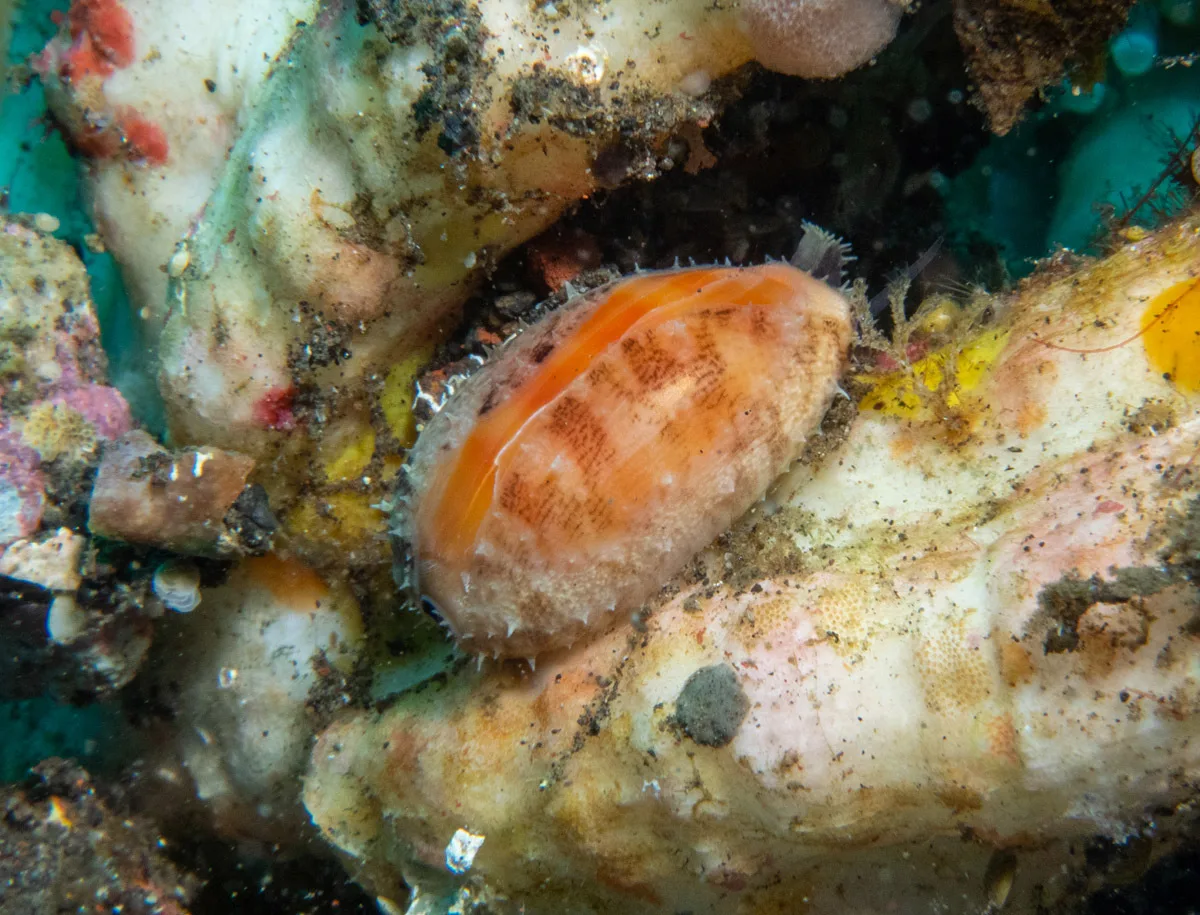
The upper side is orange-brown crossed by broad paler bands, plain and unspotted, which puts it in a small group of similar shells. The underside is where it separates: the long narrow slot running the length of the shell is violet, and the rows of fine teeth along both its edges are violet too. Nothing else here has that. The old English name for the species is the purple-mouthed cowrie and it is the more useful of the two.
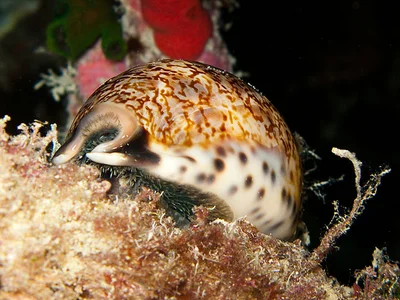
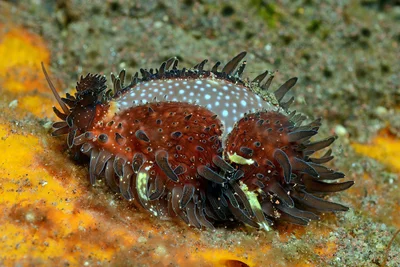
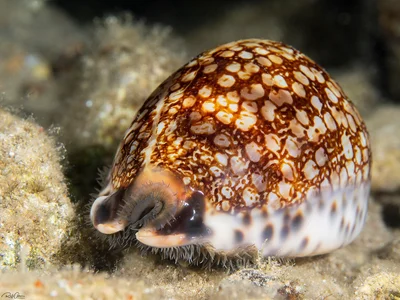
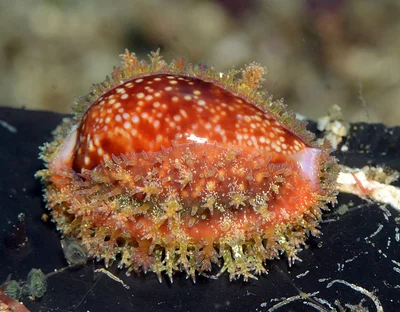
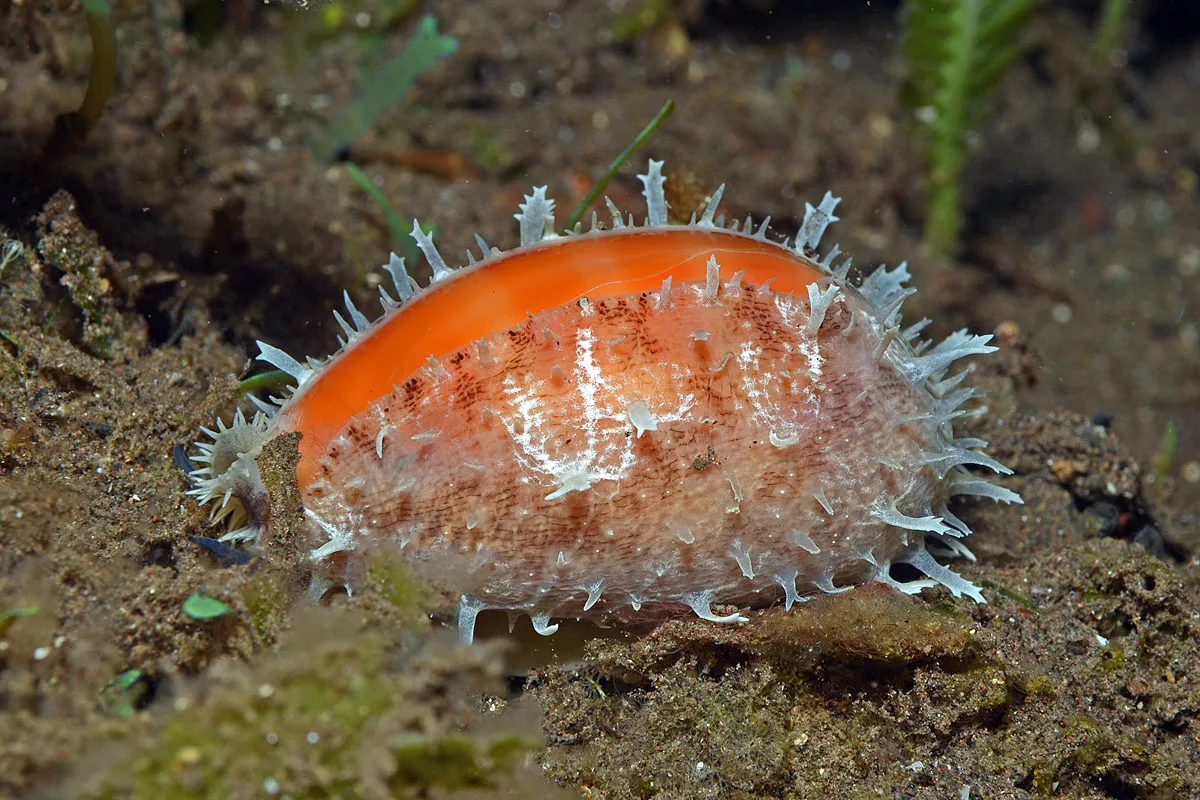
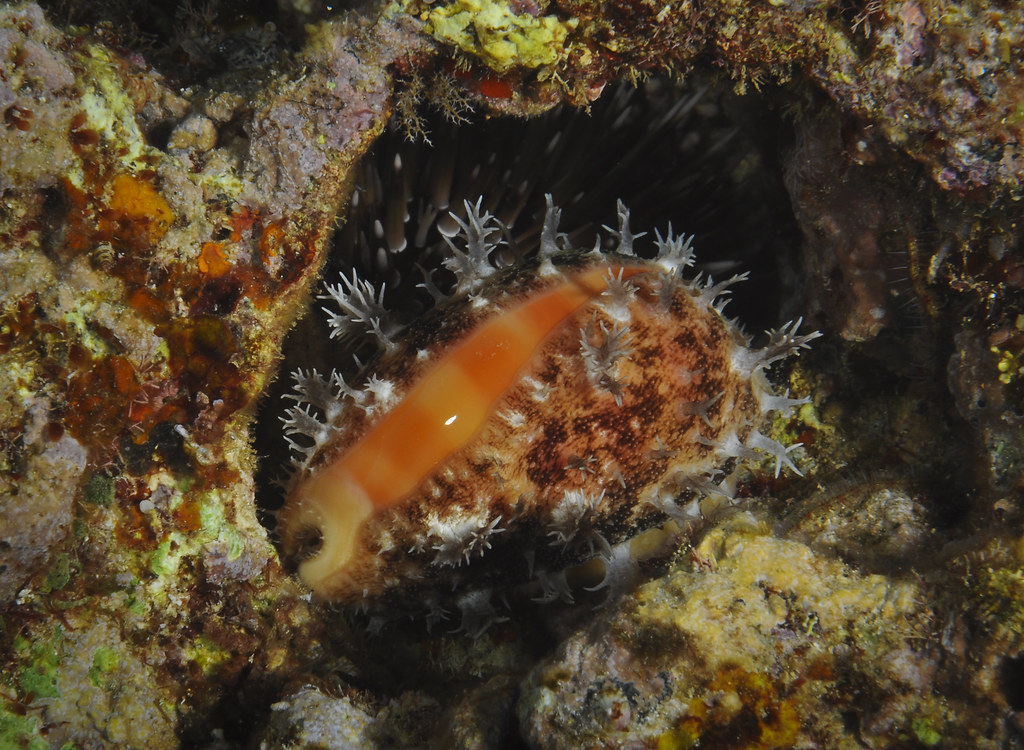
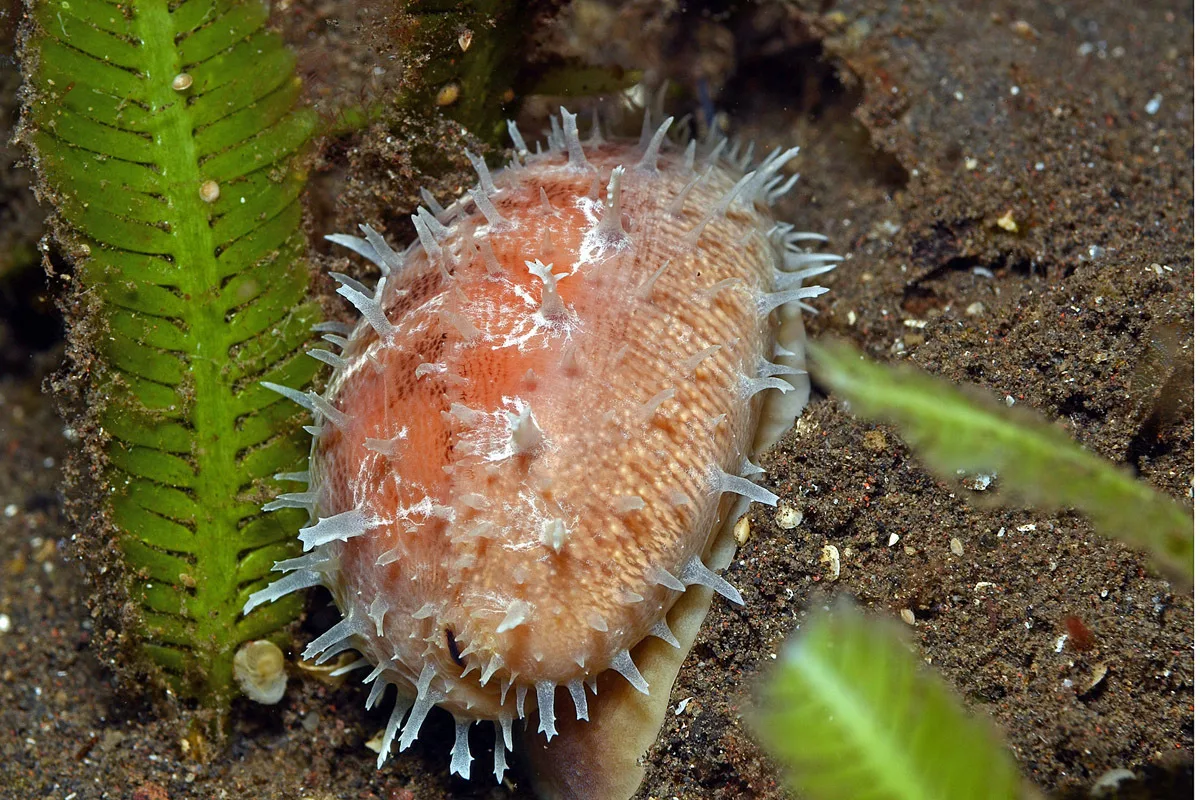
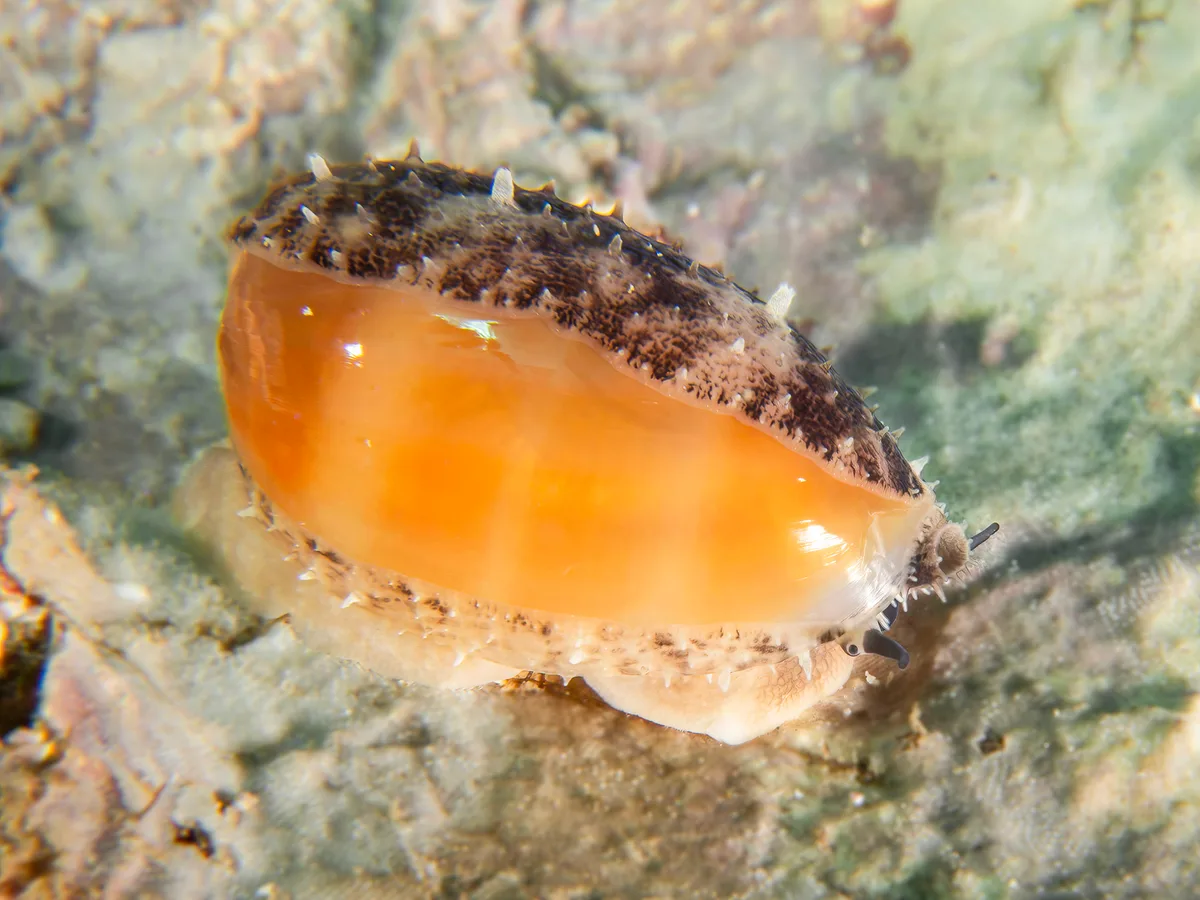
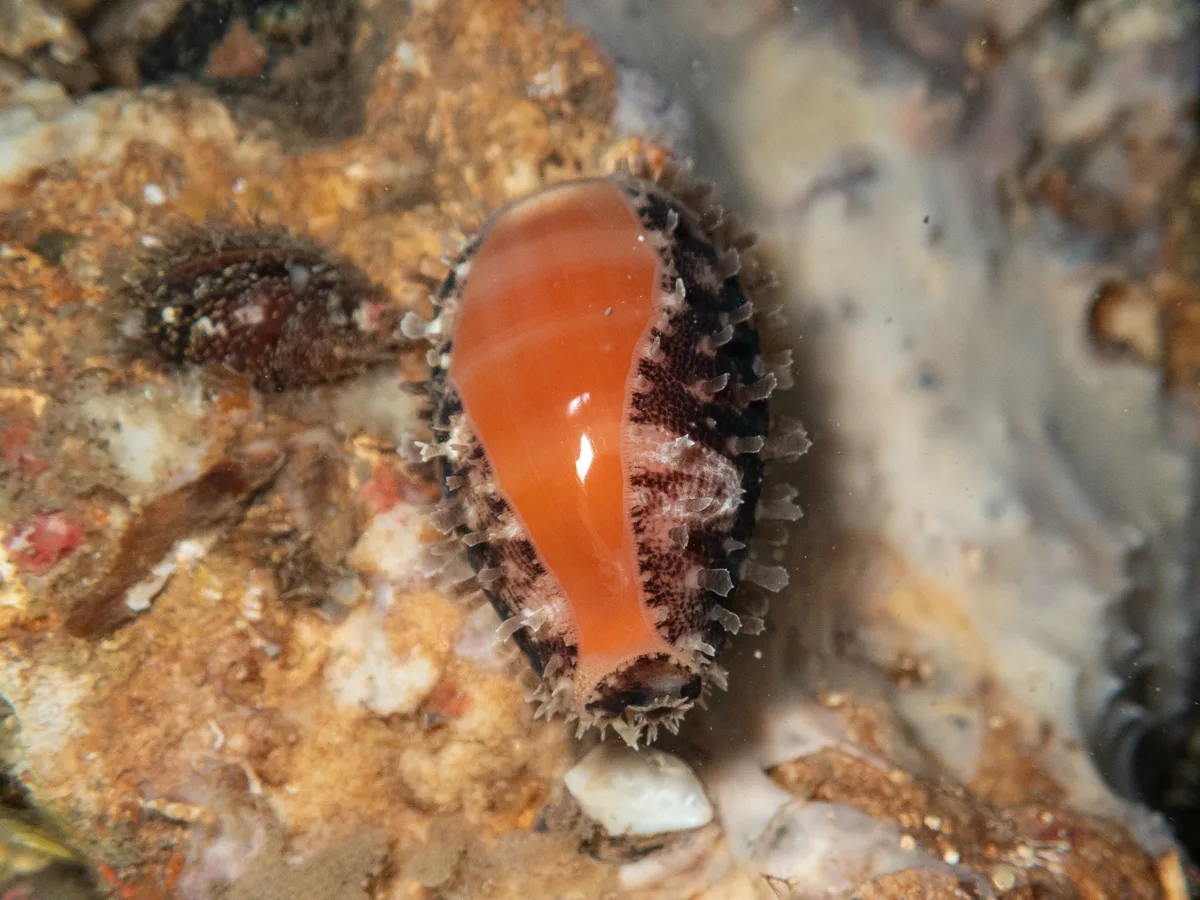
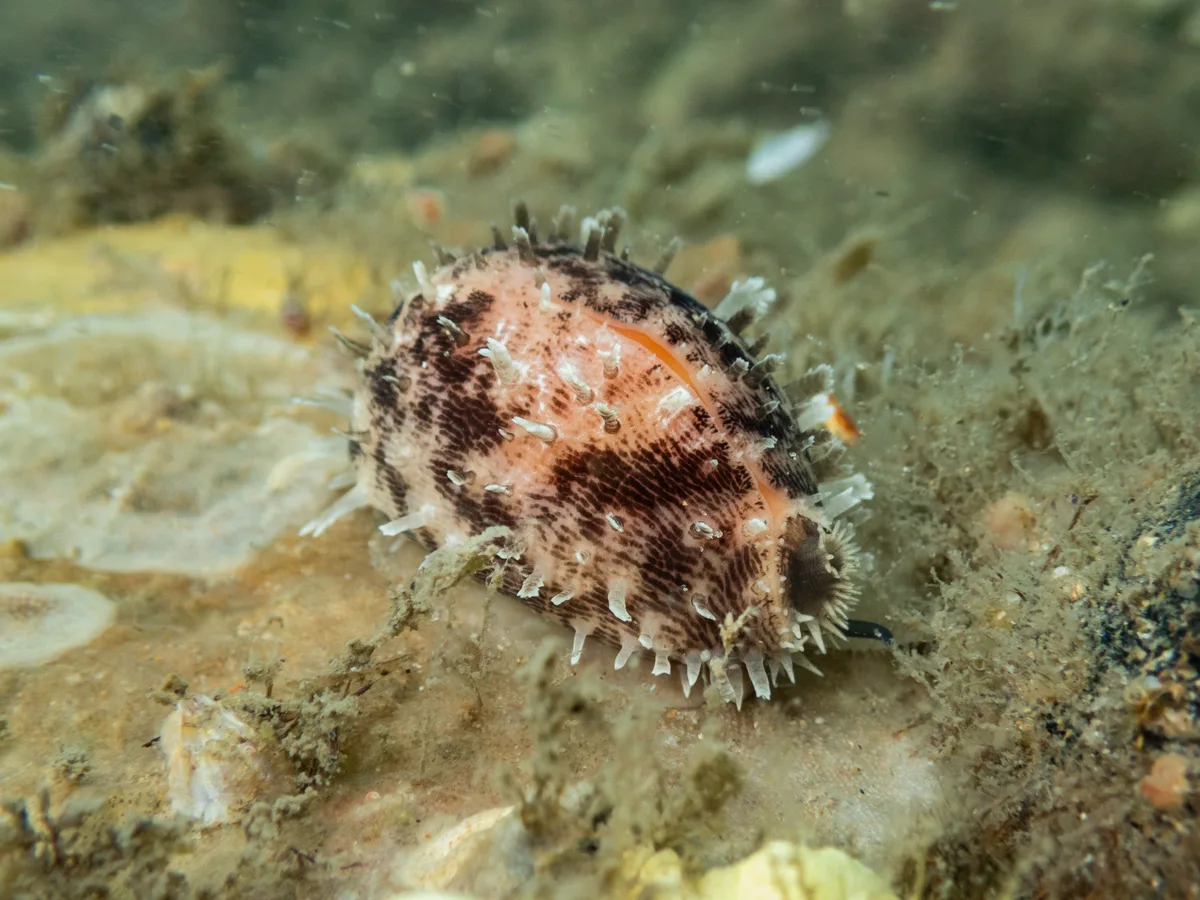
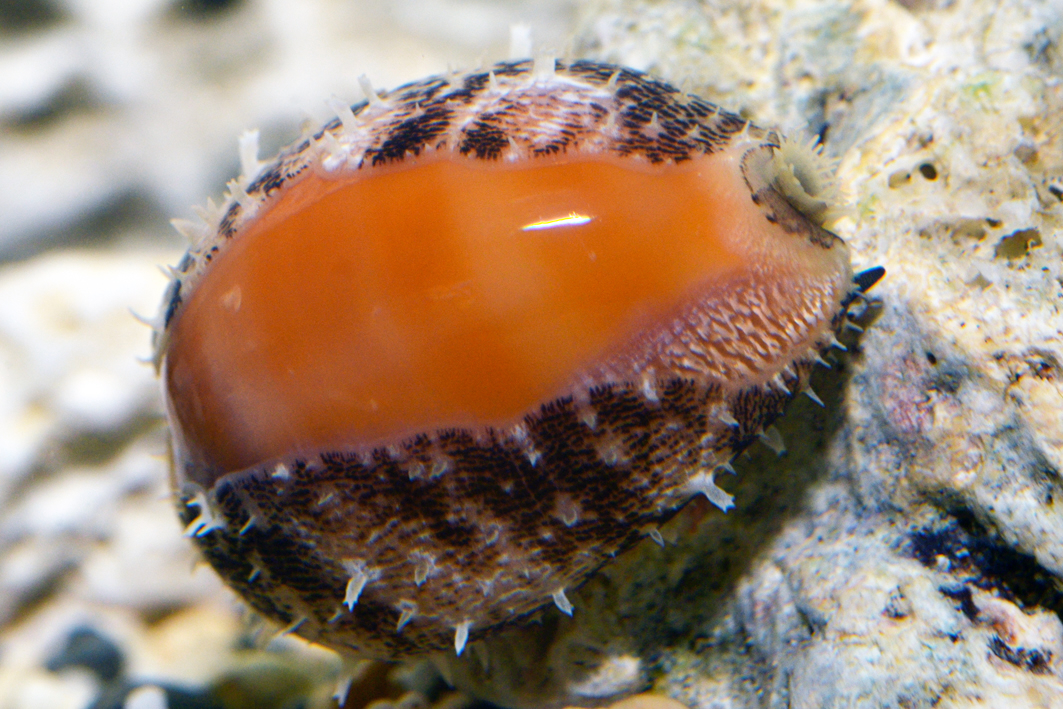
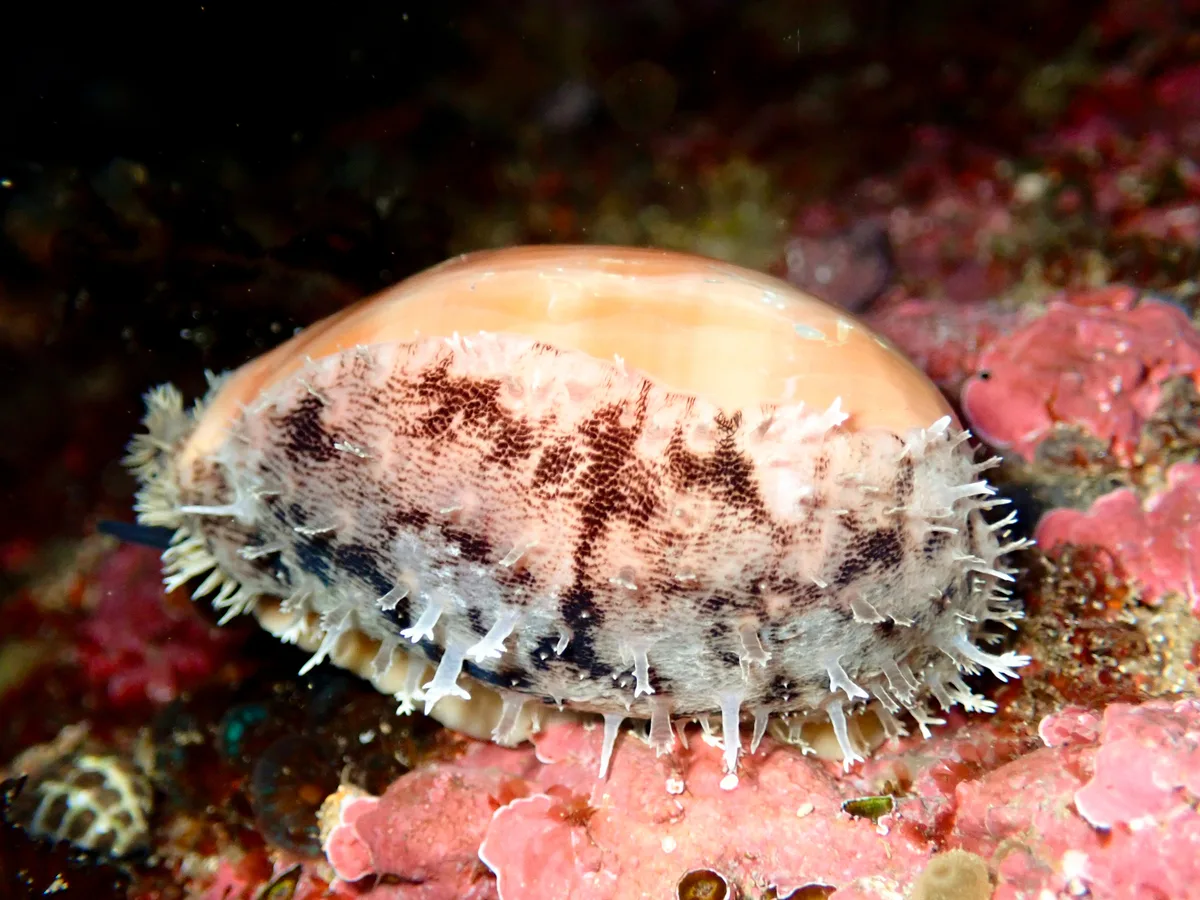
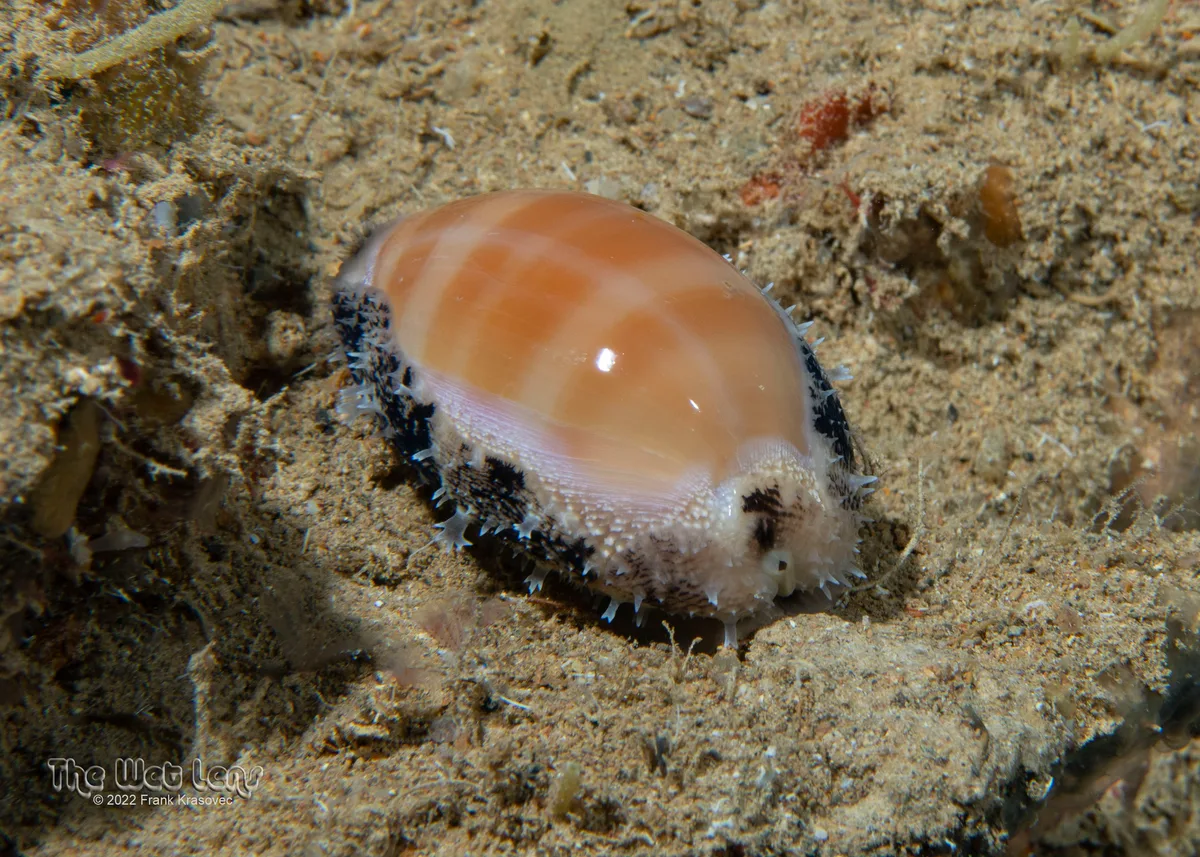
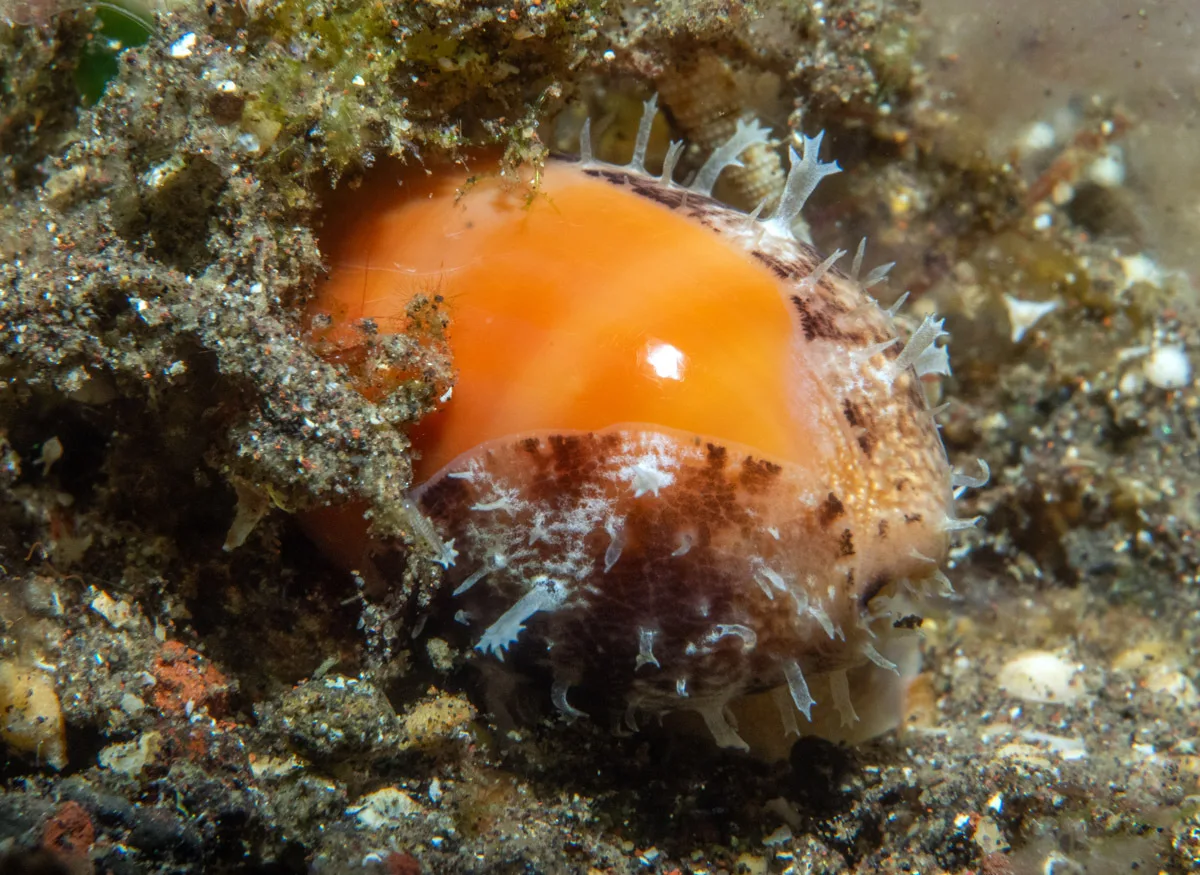
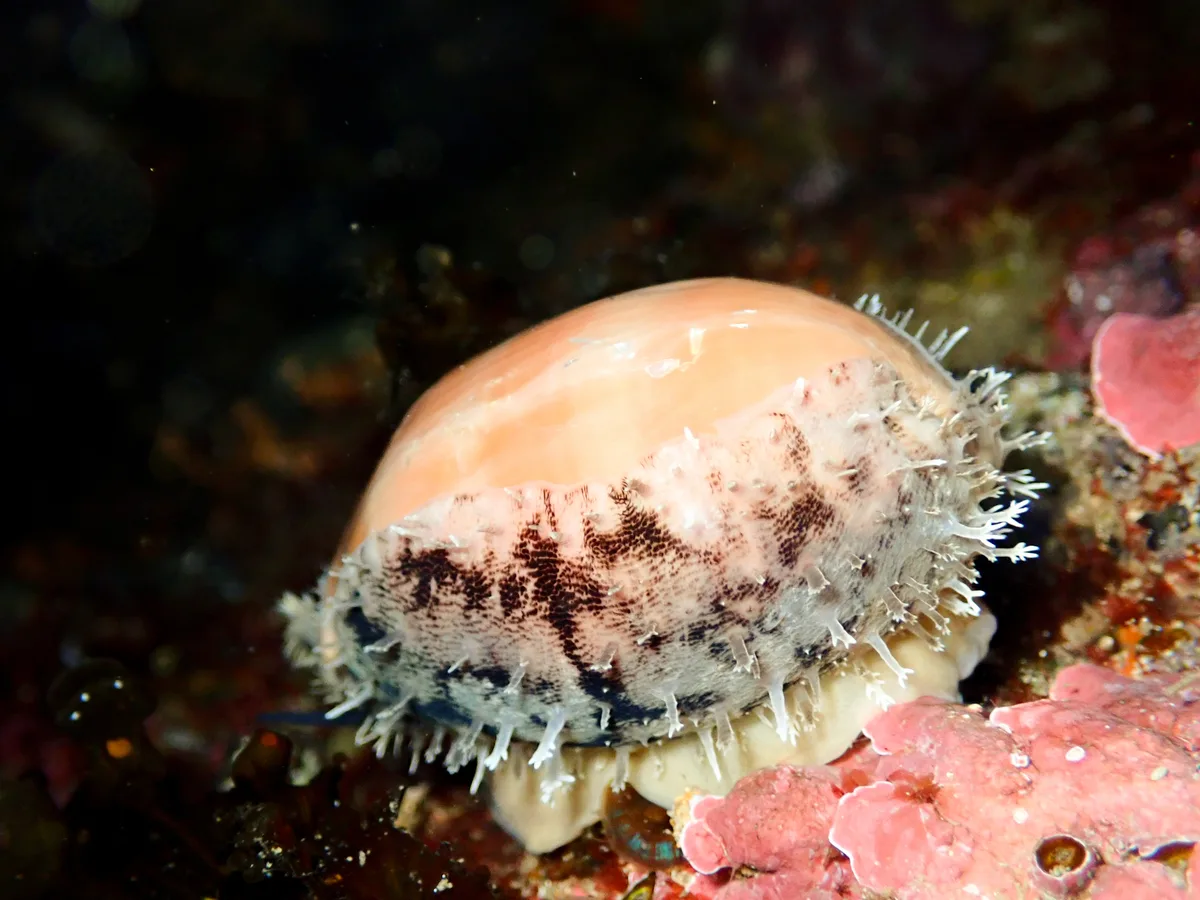
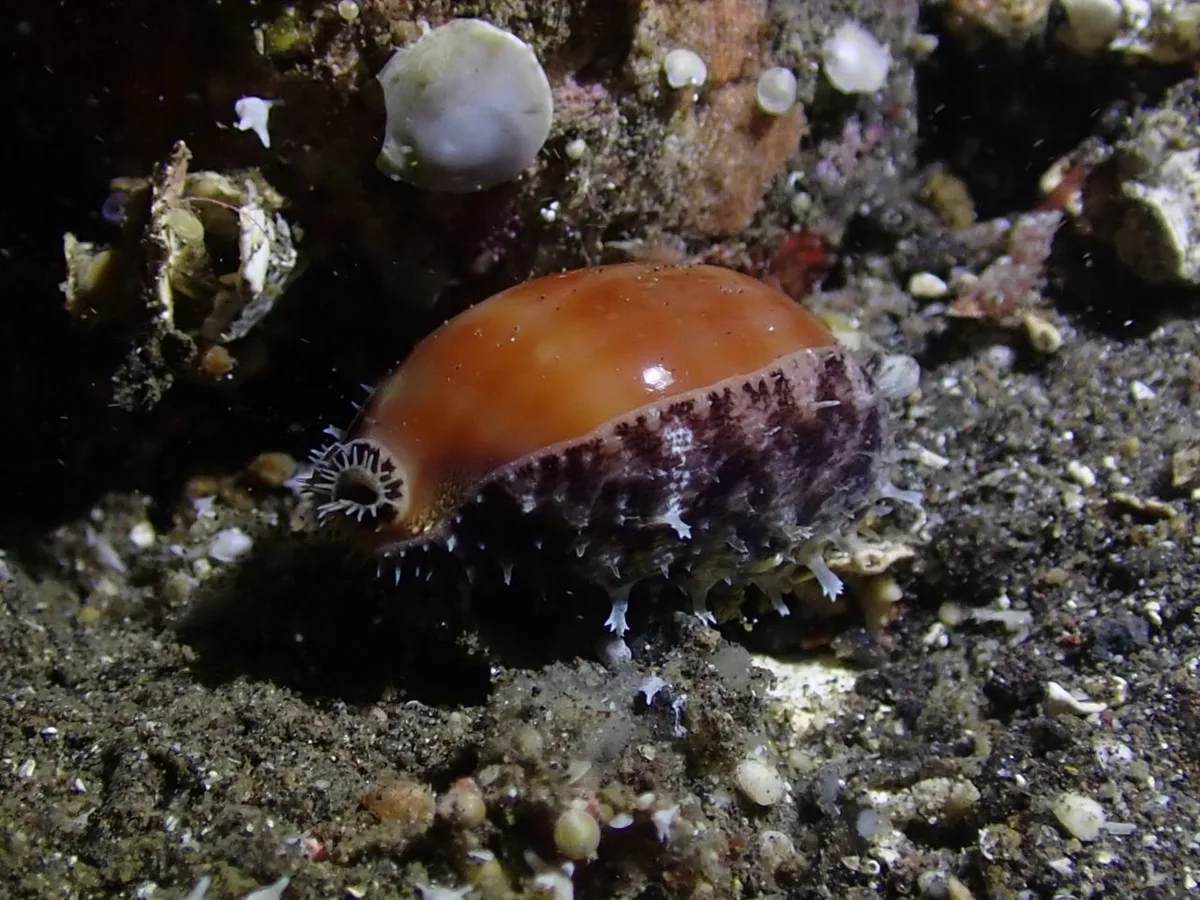
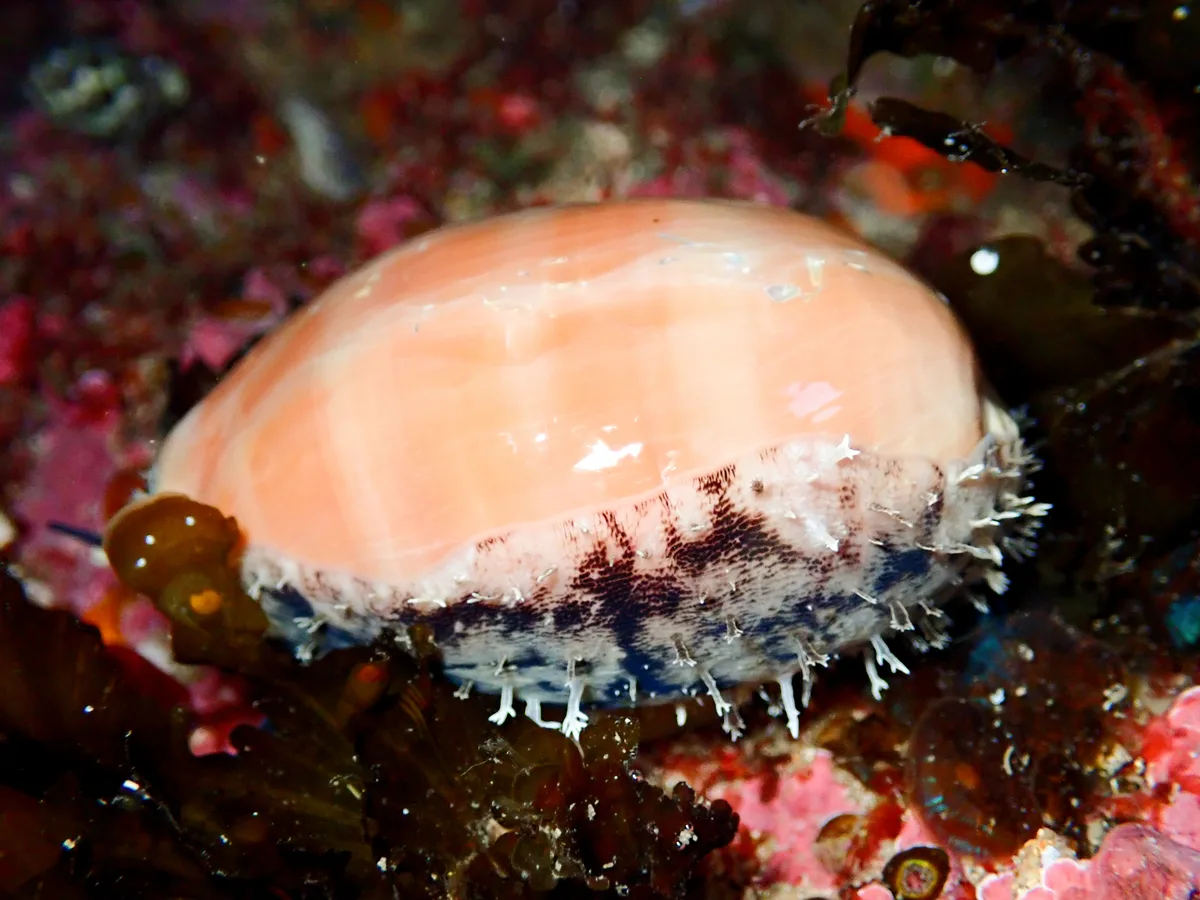
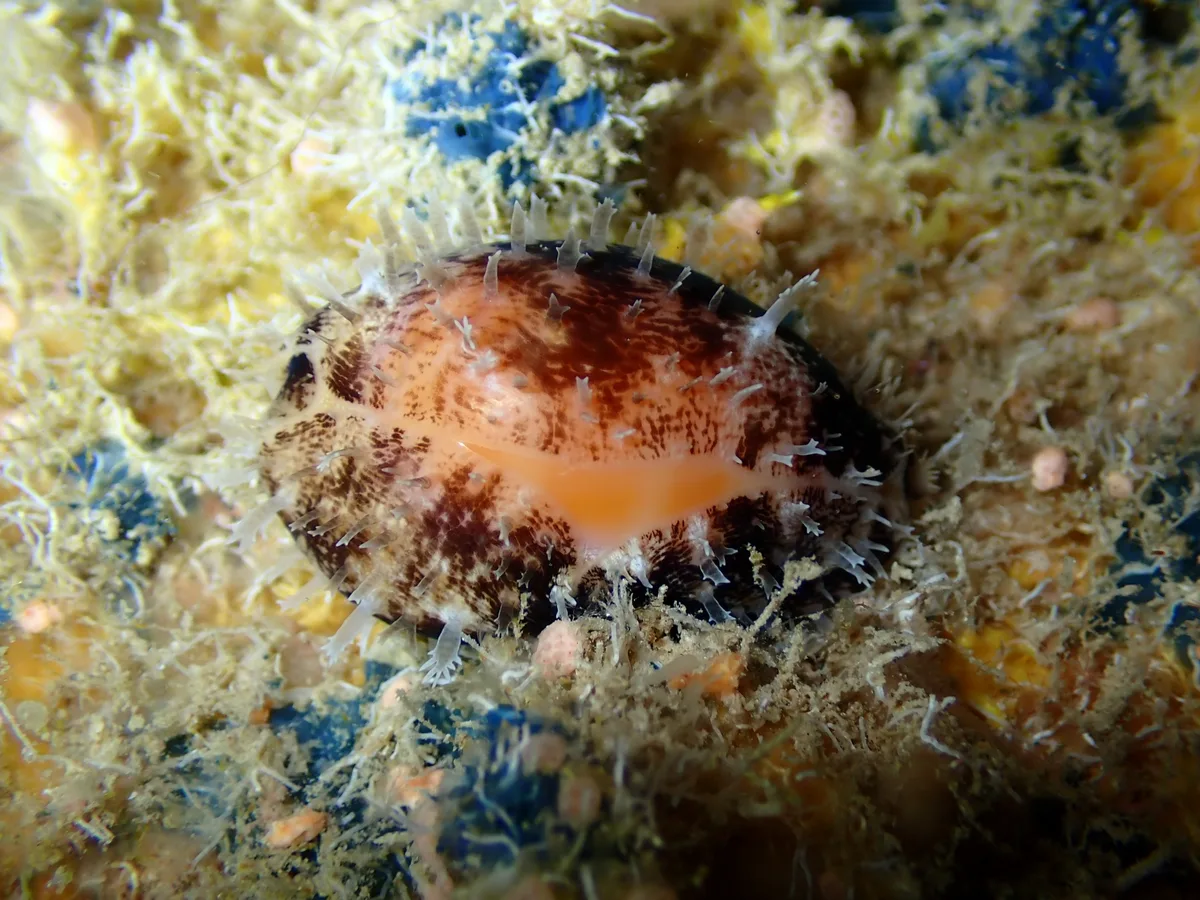
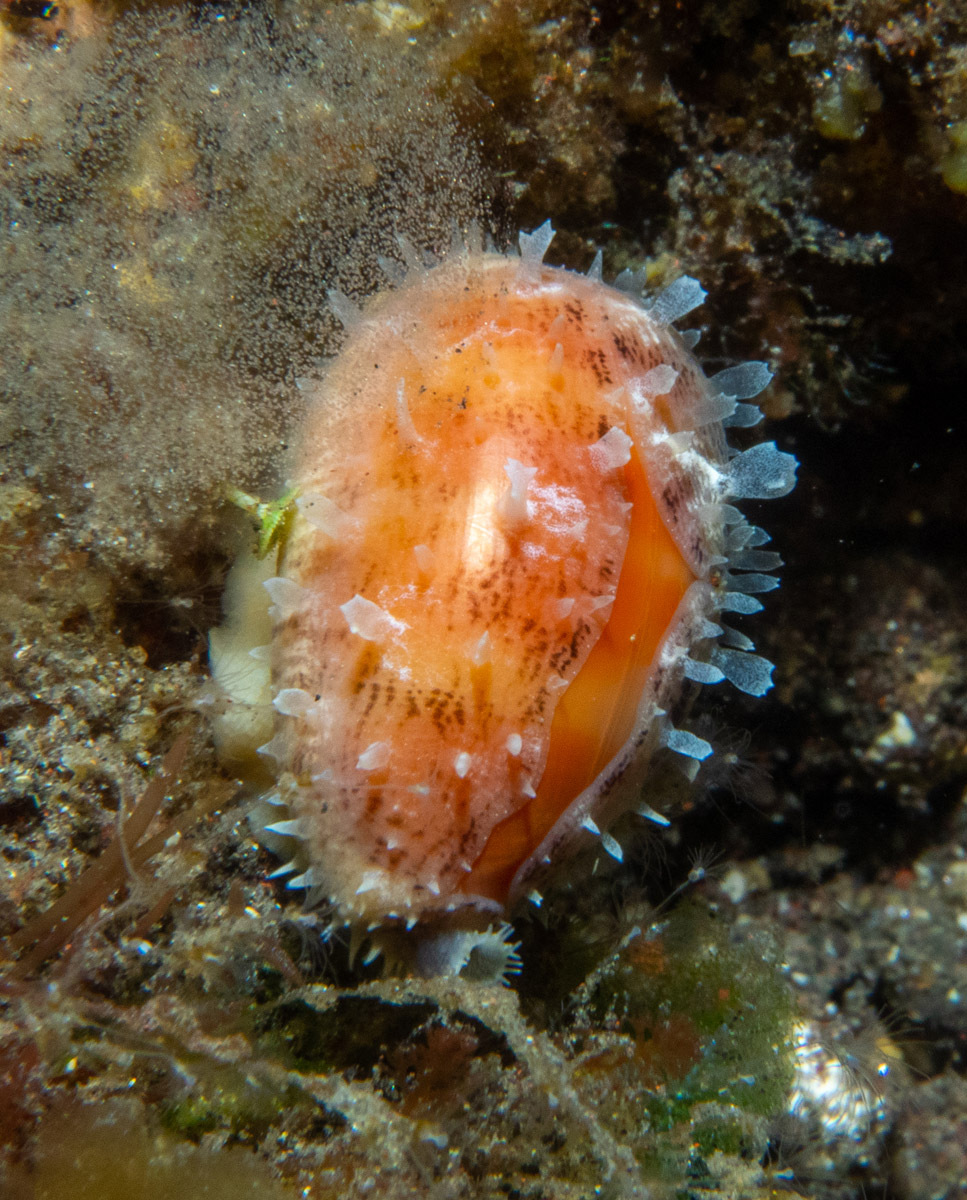
Alive, none of this shows. Cowries carry two flaps of mantle that rise from the foot, fold up over the back and meet along the middle, wrapping the shell completely, and on this species the mantle is mottled reddish-brown. That mantle also builds the shell from the outside as the animal grows and keeps it polished, which is why a live one gleams and a beach shell goes dull.
Six and a half centimeters (2.6 in), out at night, wedged under a ledge or deep in a crevice through the day.
It has a large relative on this reef that looks almost the same and is simply bigger, so on a shell of this size in the middle range, check the violet before deciding.
- orange-brown shell crossed by paler bands, with no spots at all
- the slot underneath is violet, and so are the teeth along it
- mantle mottled reddish-brown
- up to six and a half centimeters