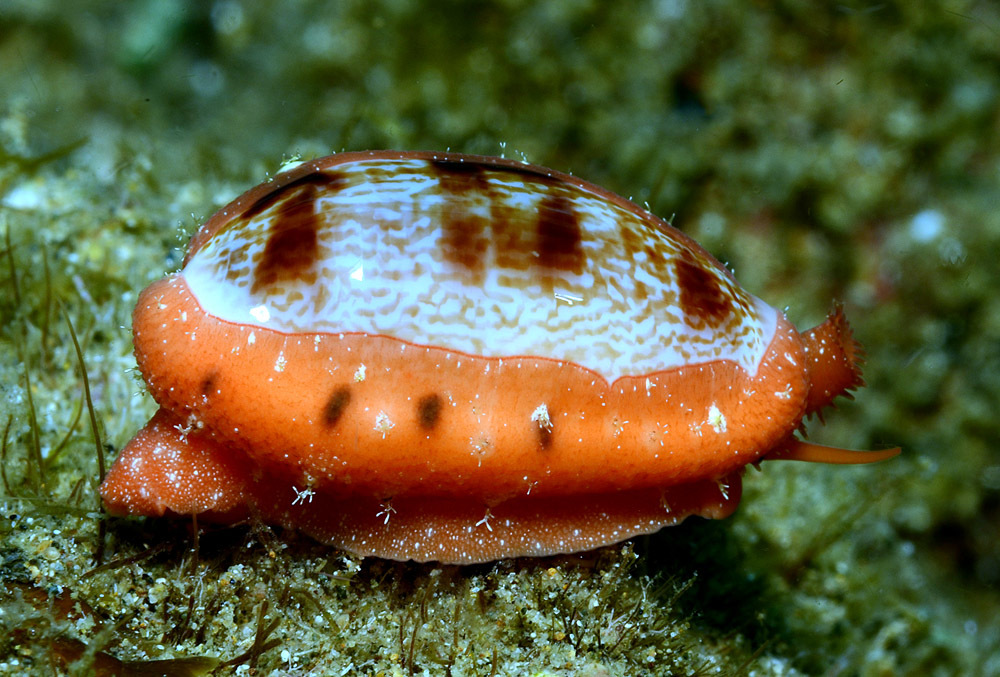
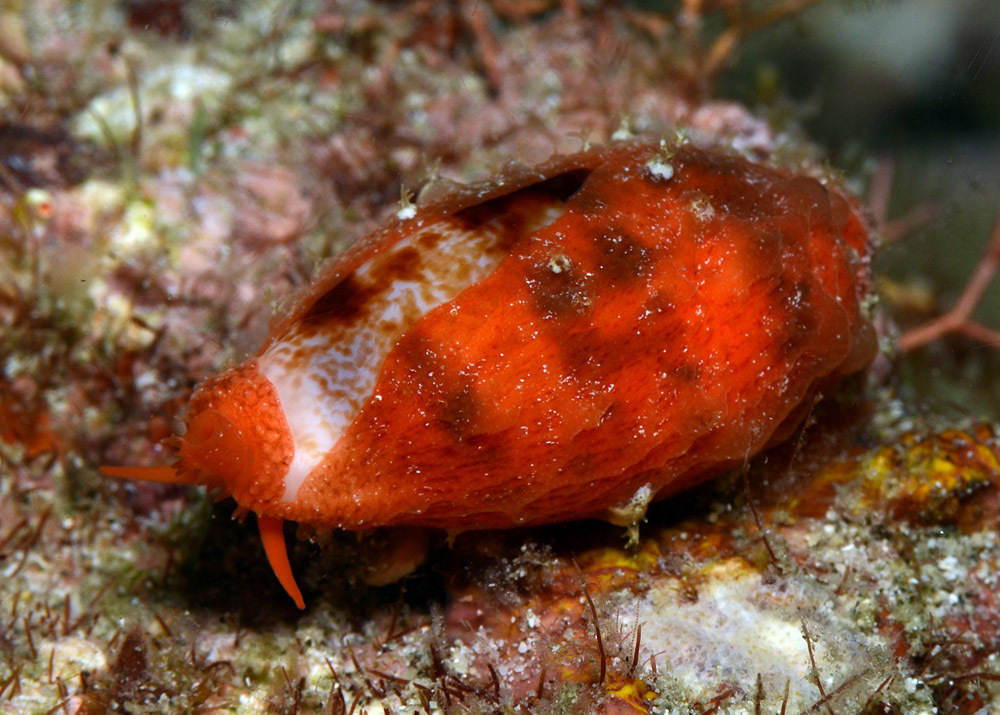
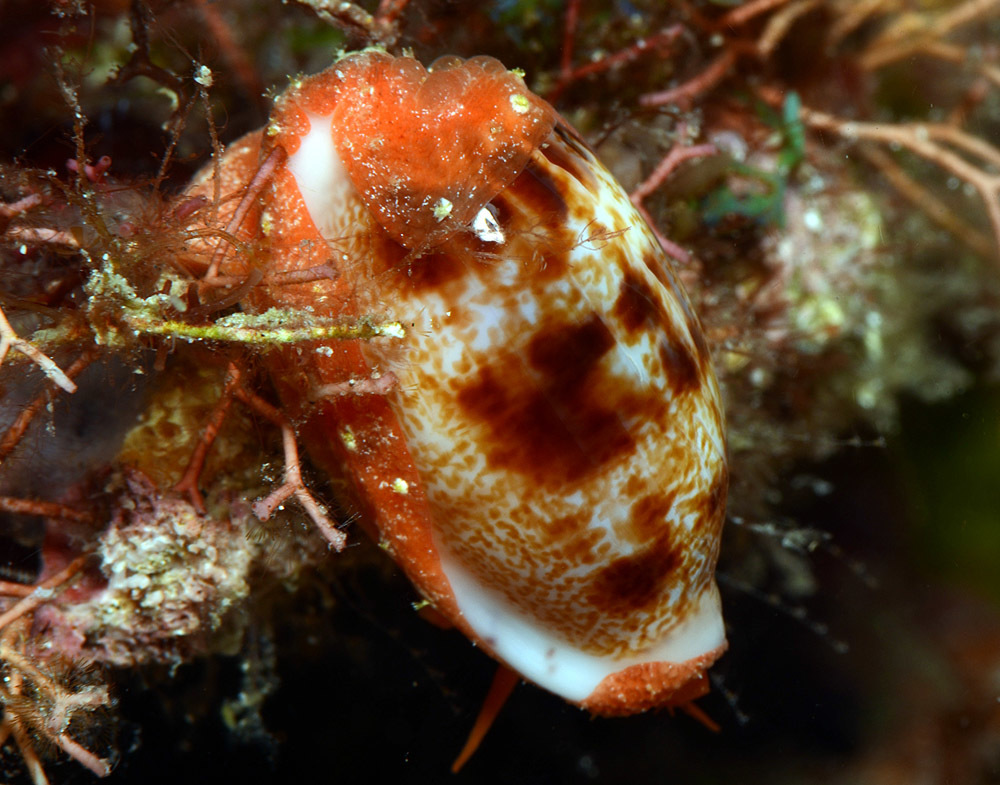

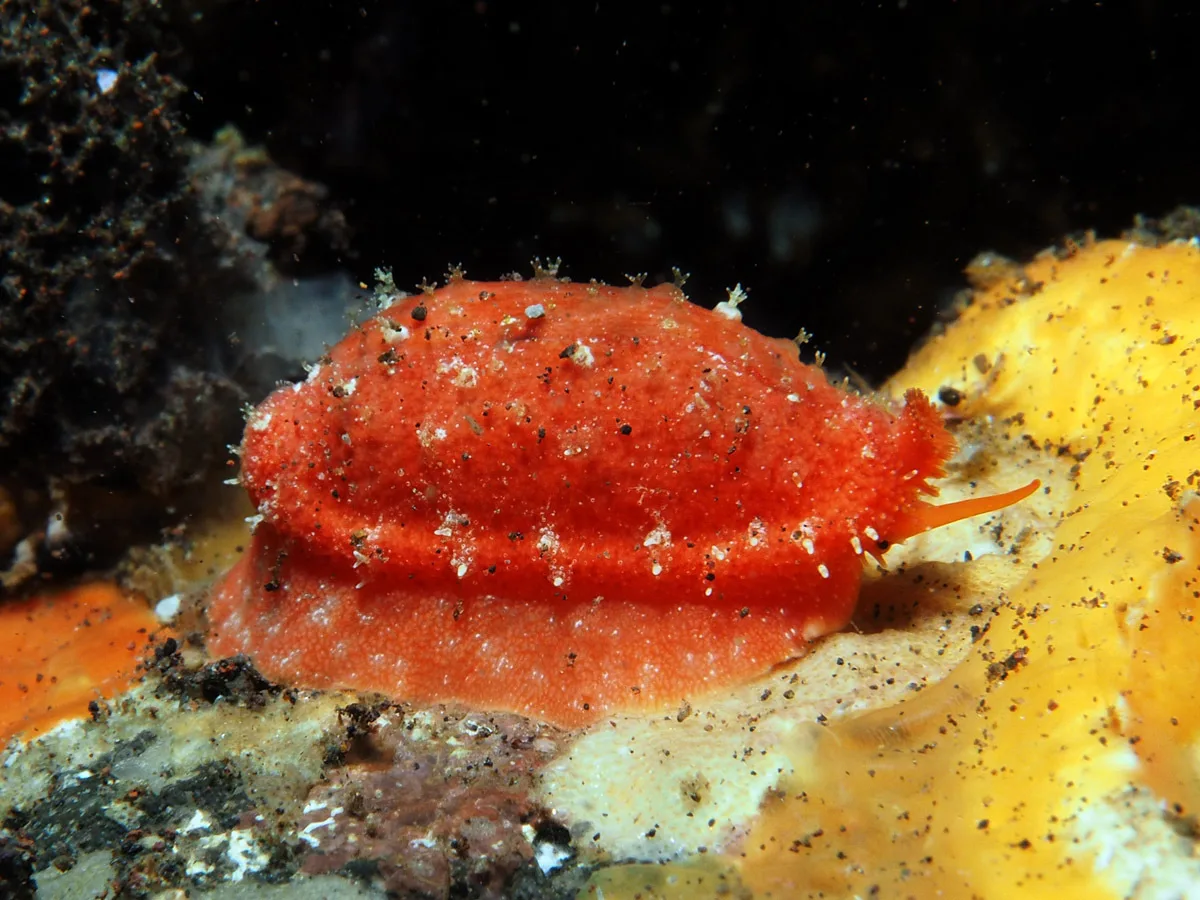
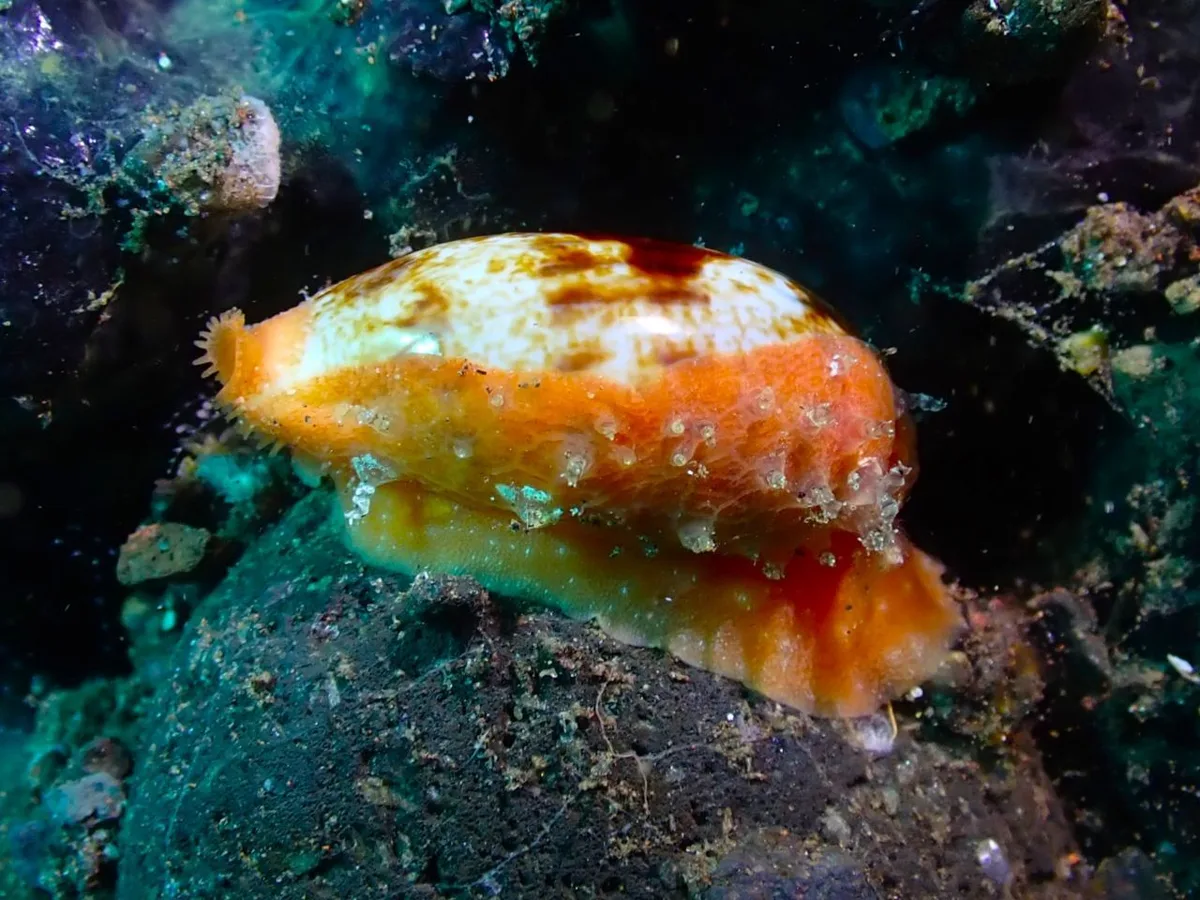
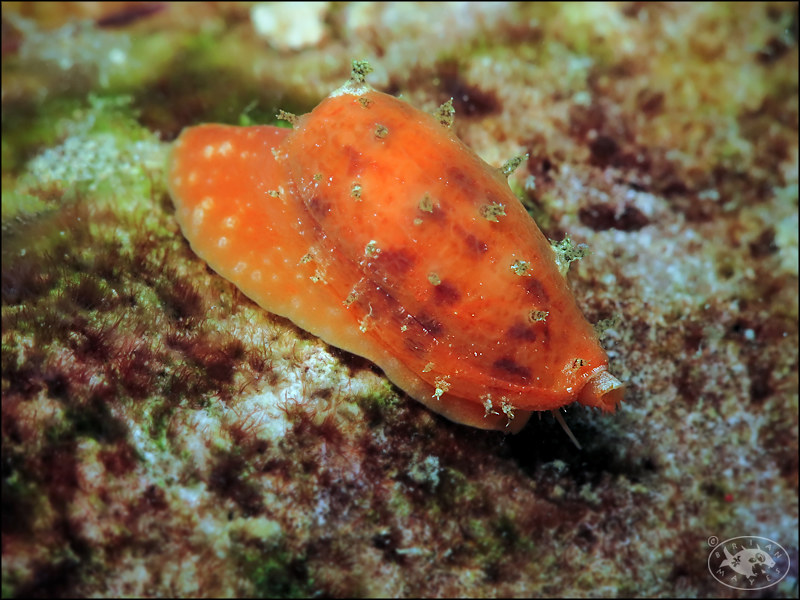
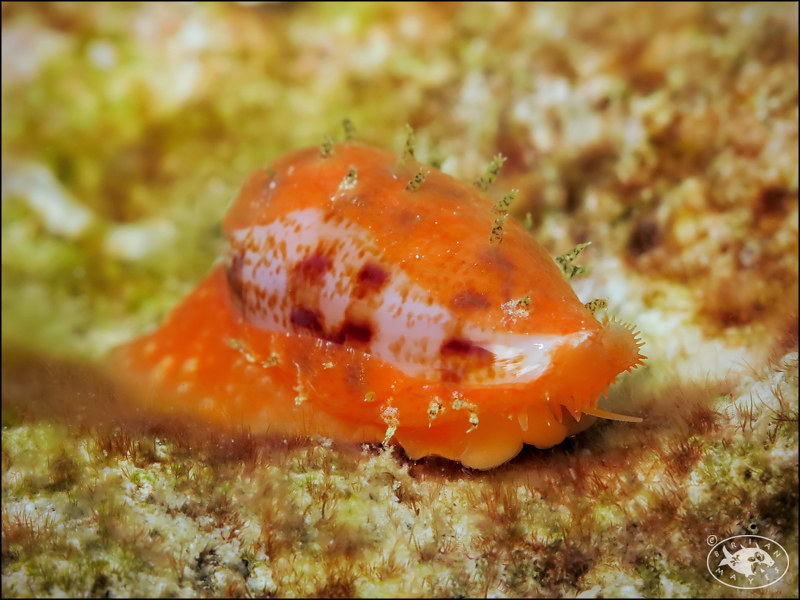
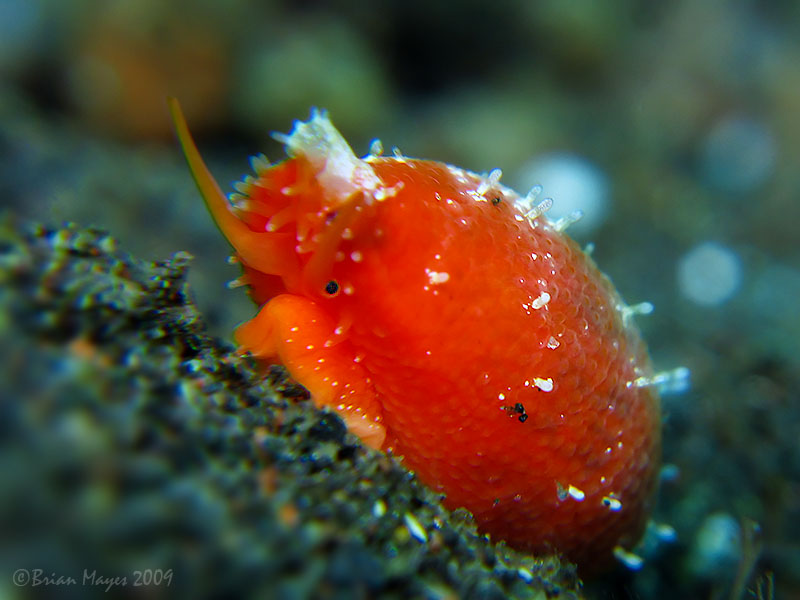
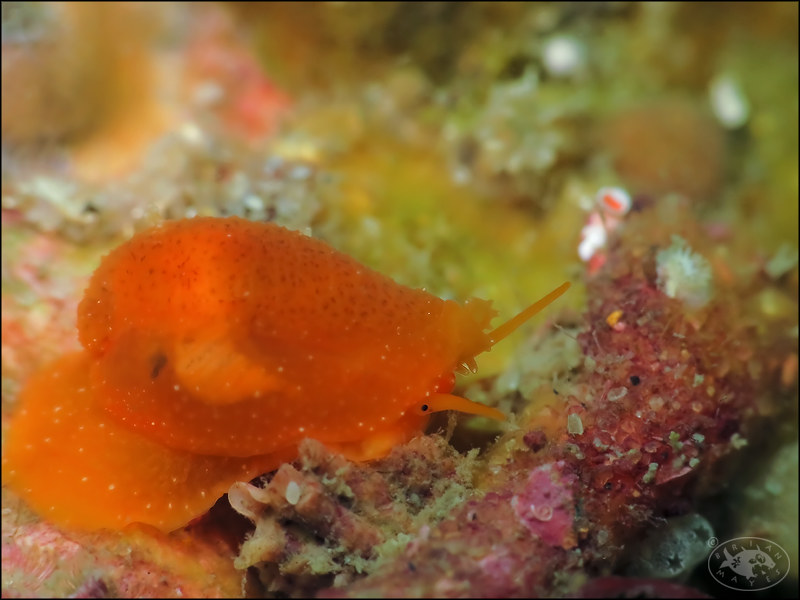
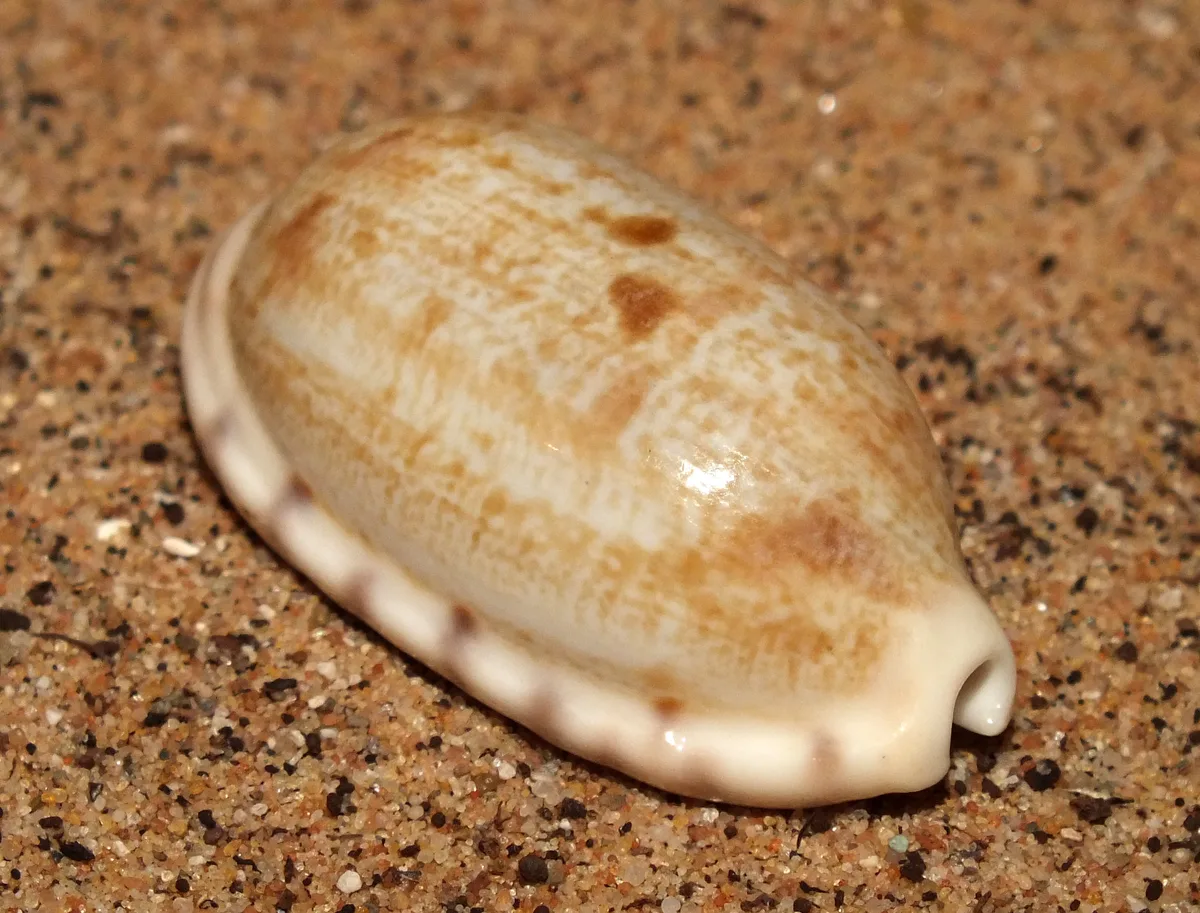
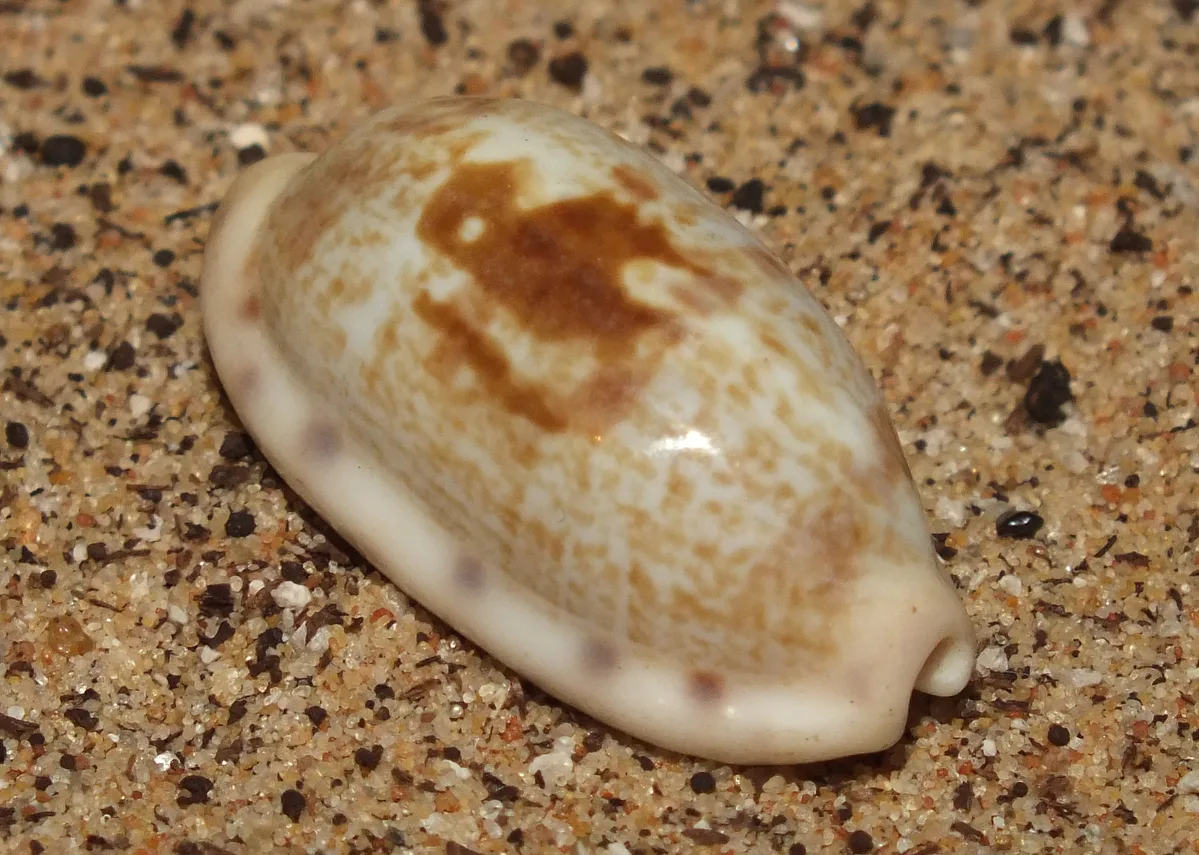
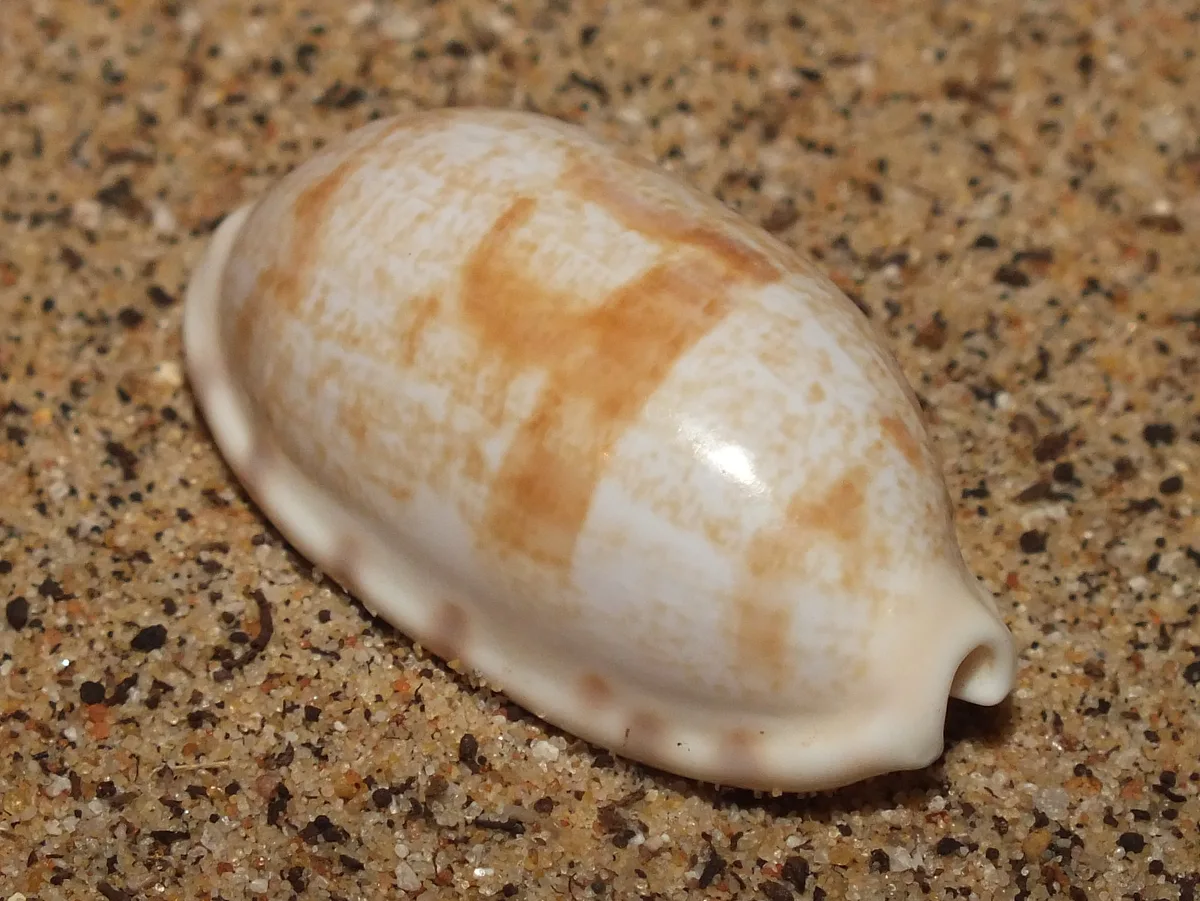
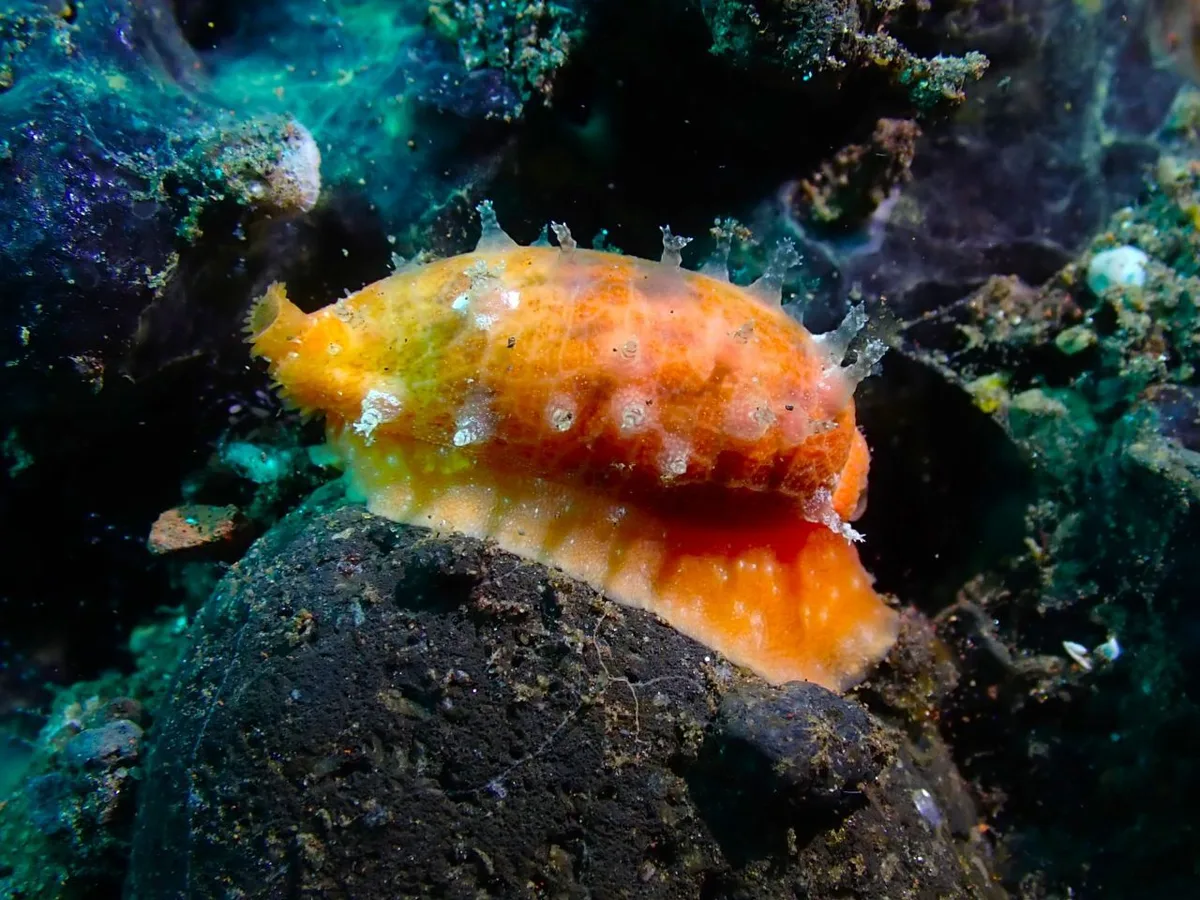
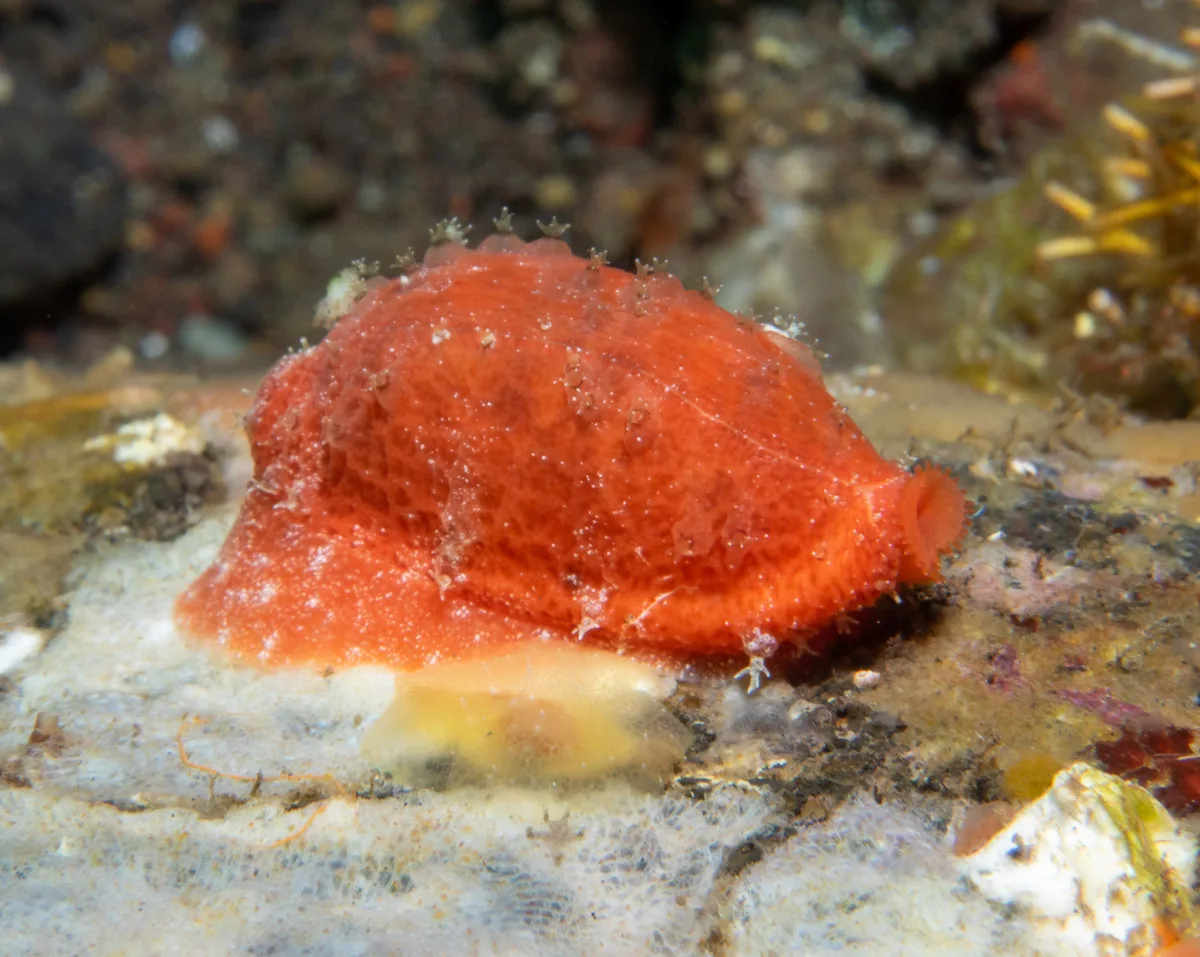
Shape first with this one, because the outline names it before any pattern does.
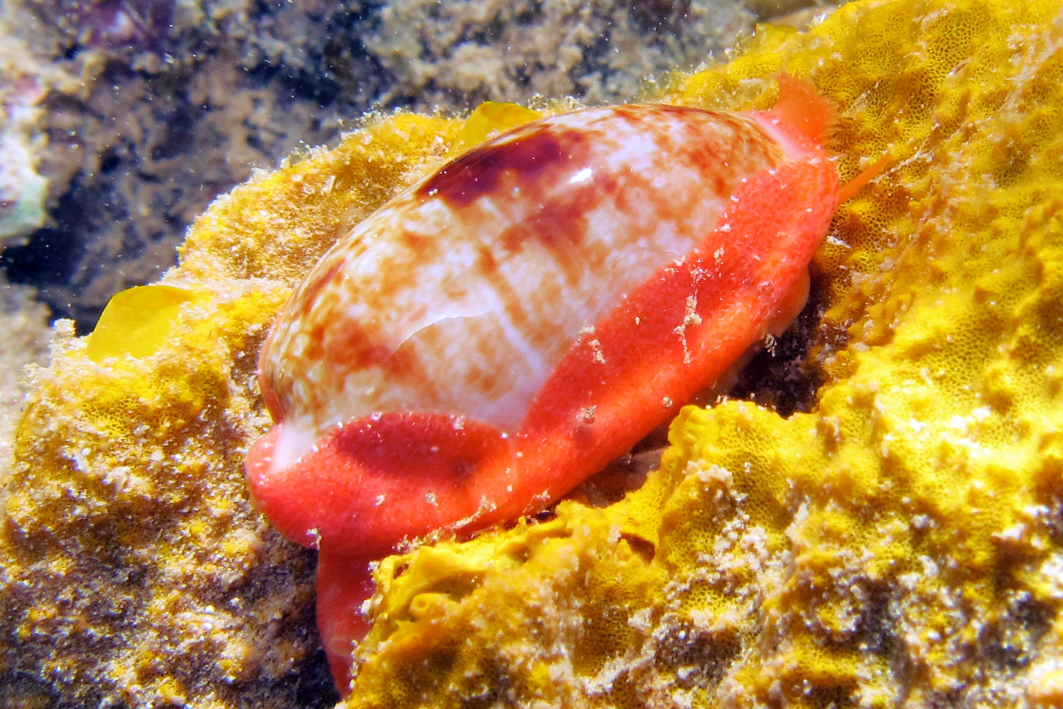
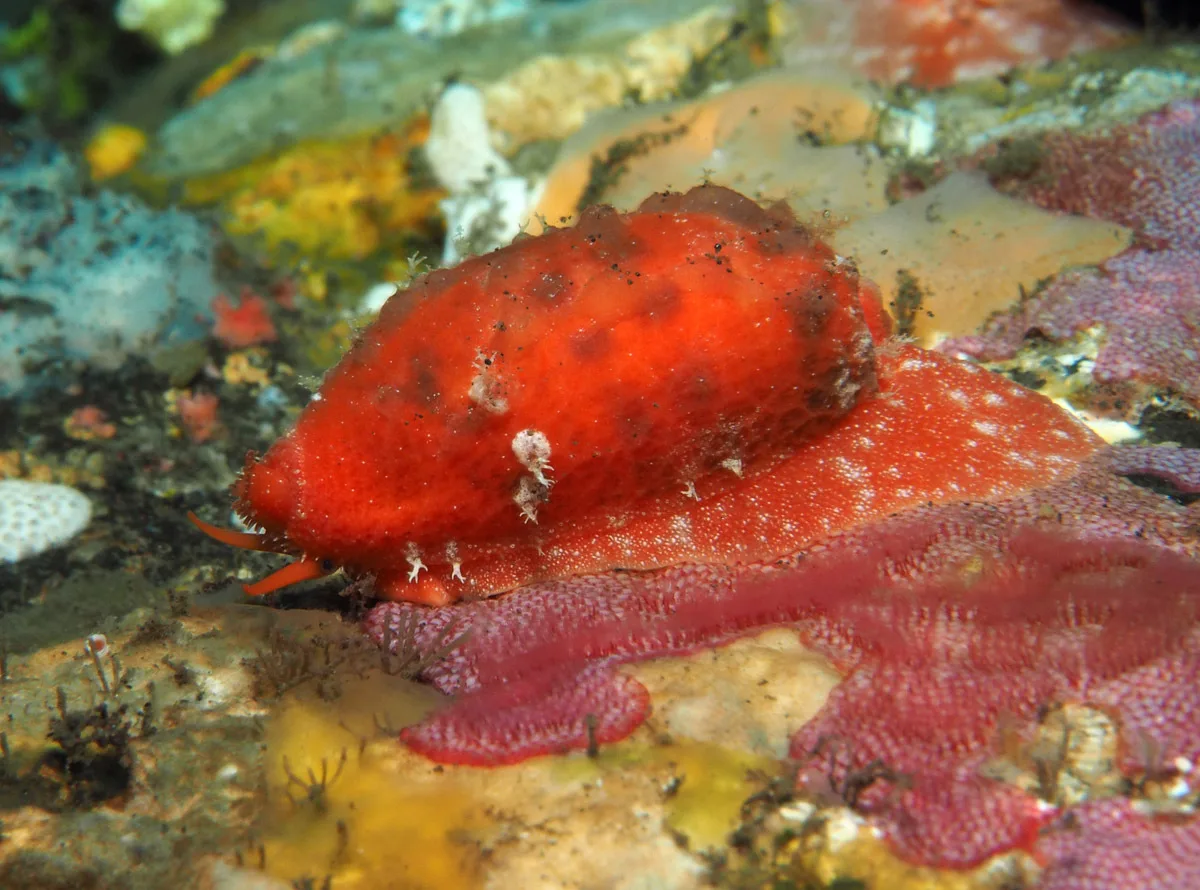
Most cowries are rounded ovals, wider than they are deep, and comfortable in a closed hand. This one is drawn out and narrow, tapering toward the ends, so it reads as a long shell rather than a squat one. That is what teres refers to and it holds whatever the animal is doing.
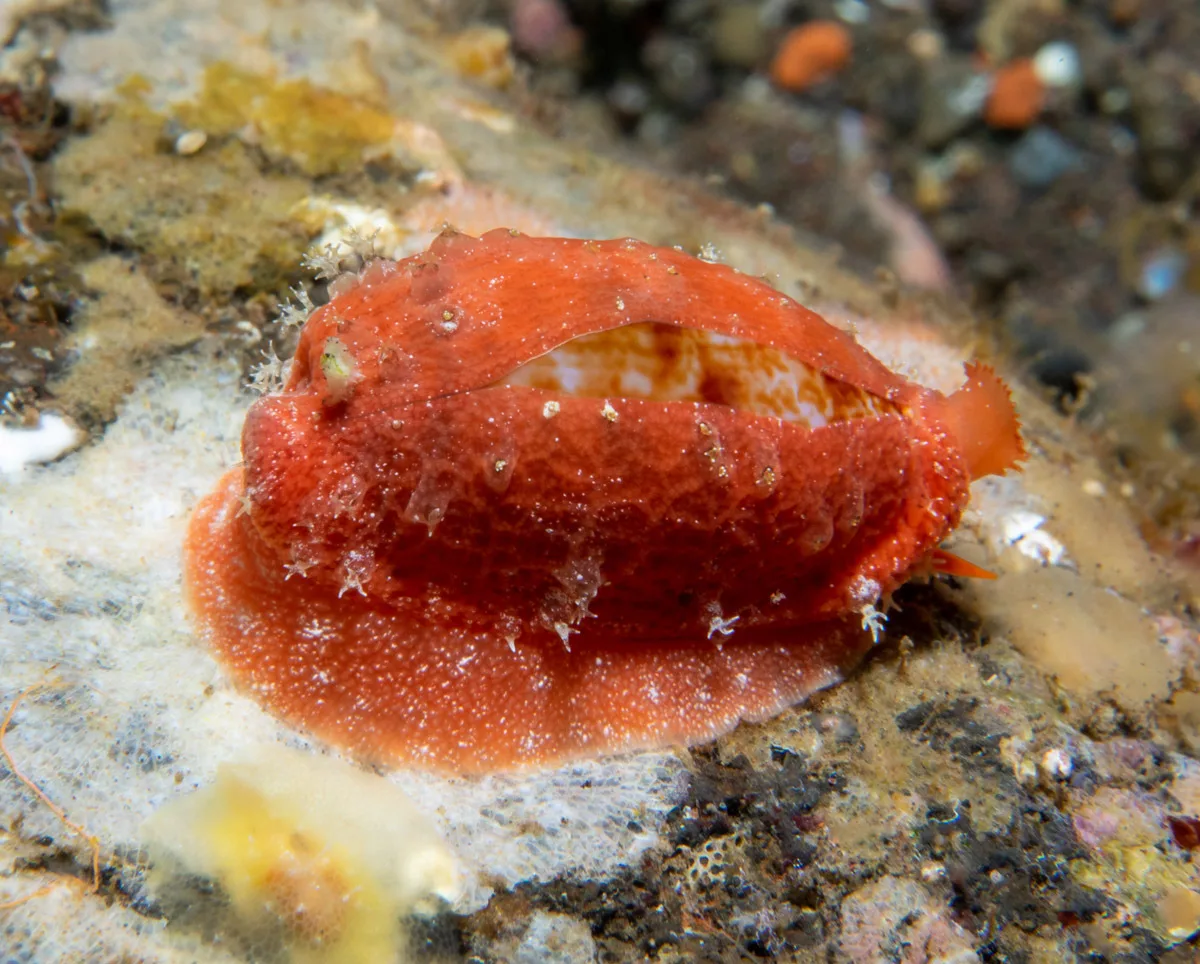
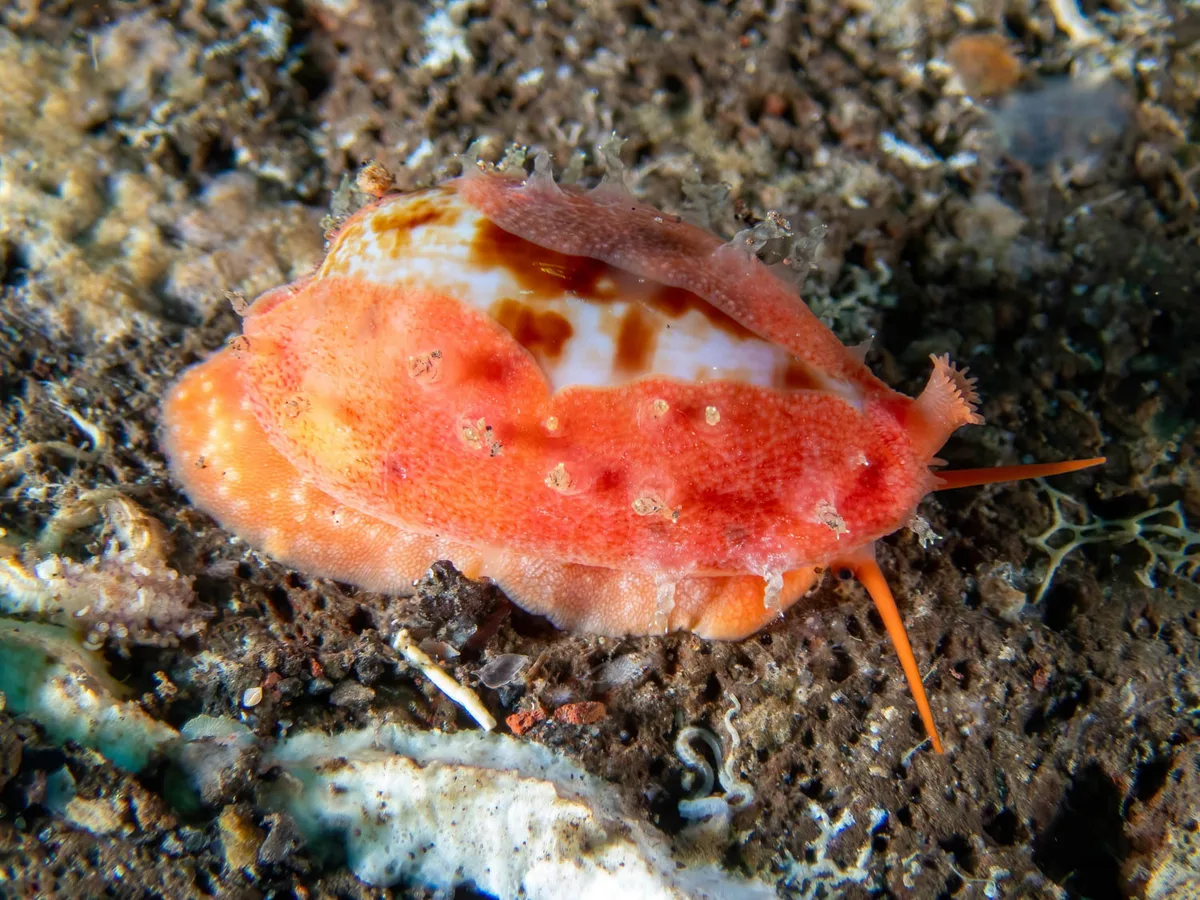
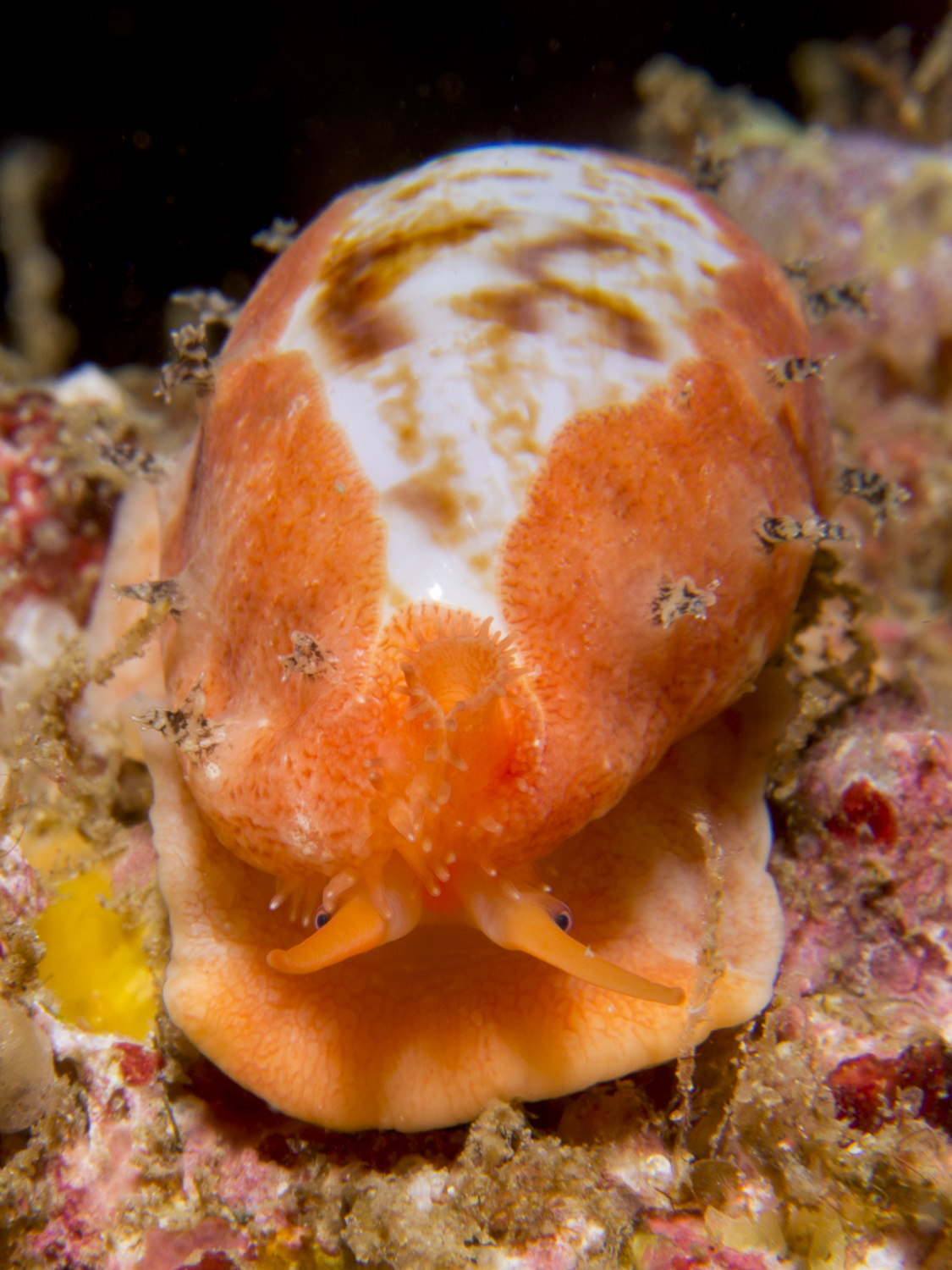
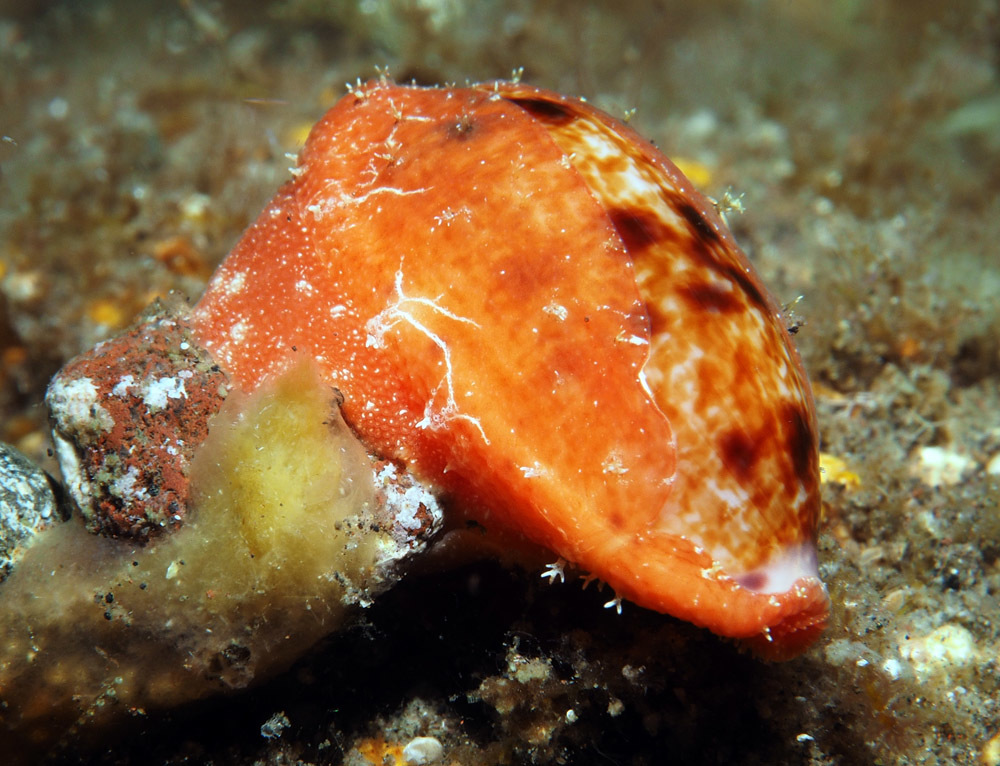
The pattern is the confirmation: a yellowish white ground crossed by wide dark brown bands, few in number and broad, quite different from the fine lines and dot fields on the small species it shares rubble with.
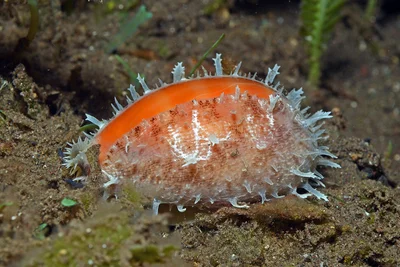
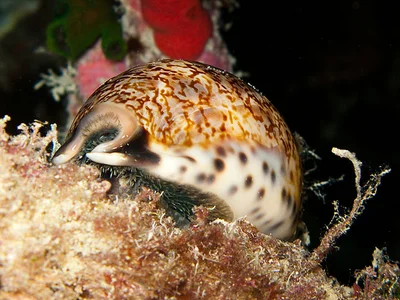
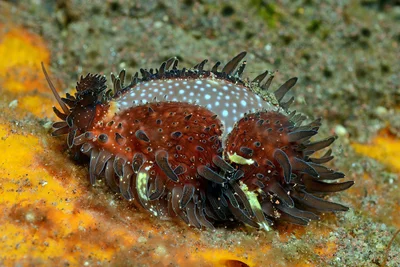
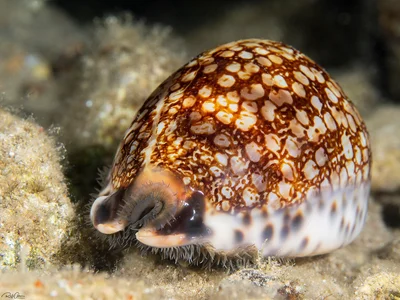
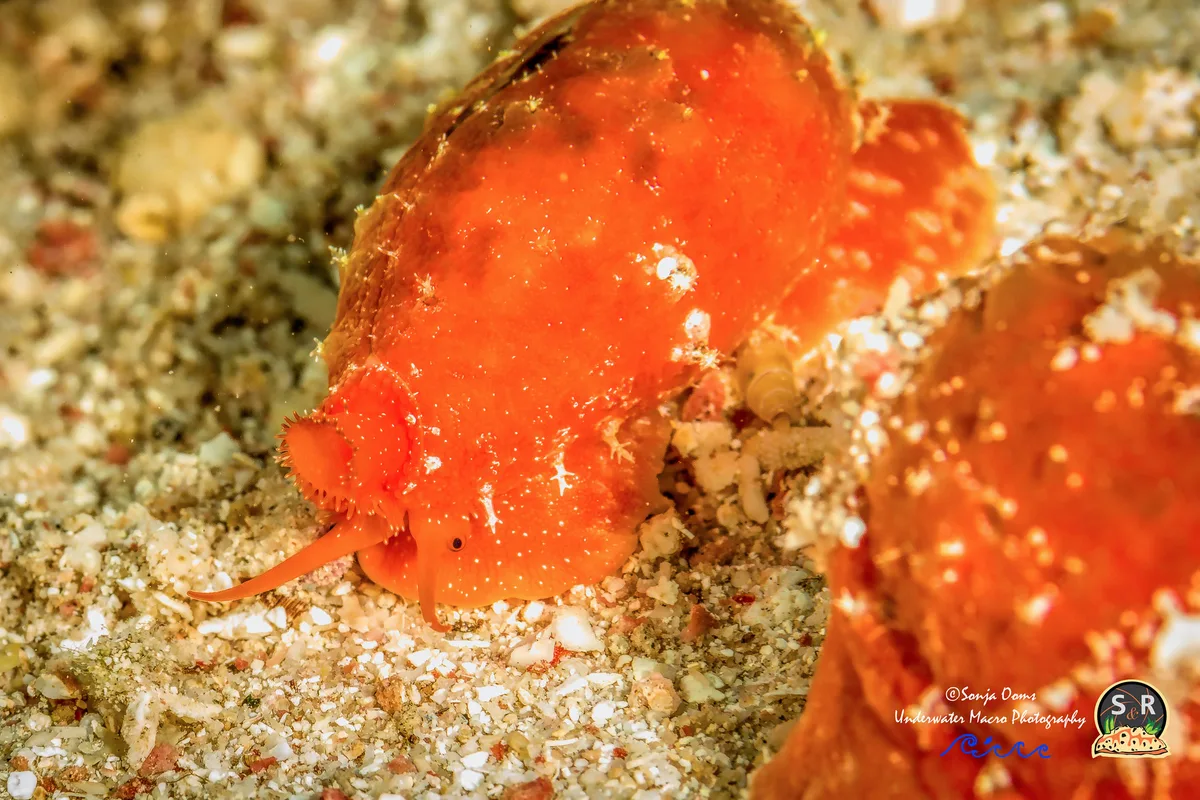
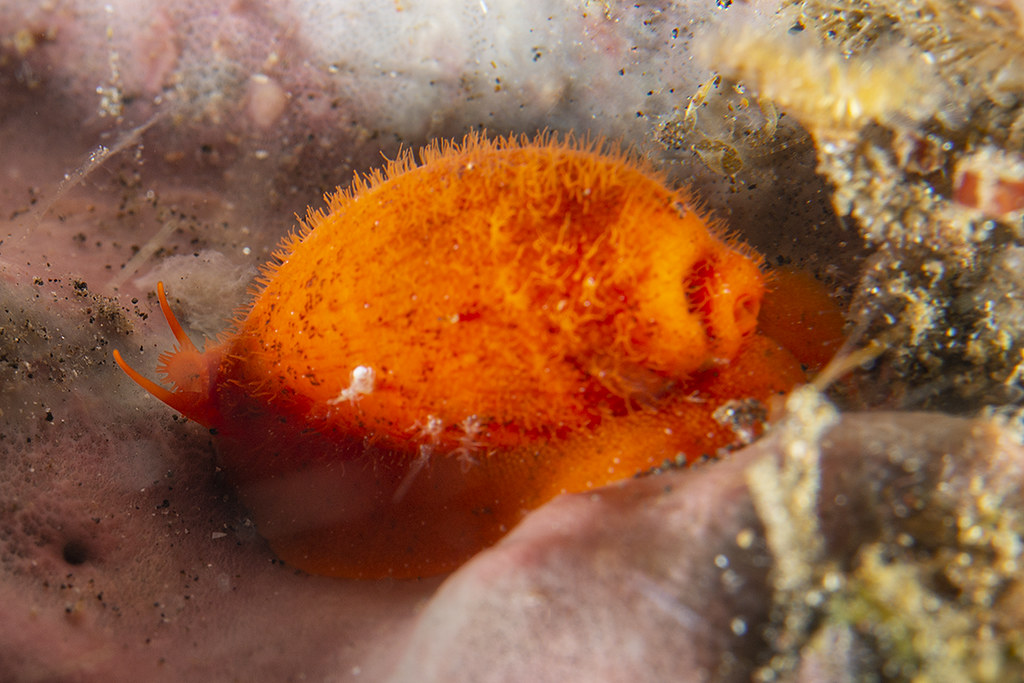
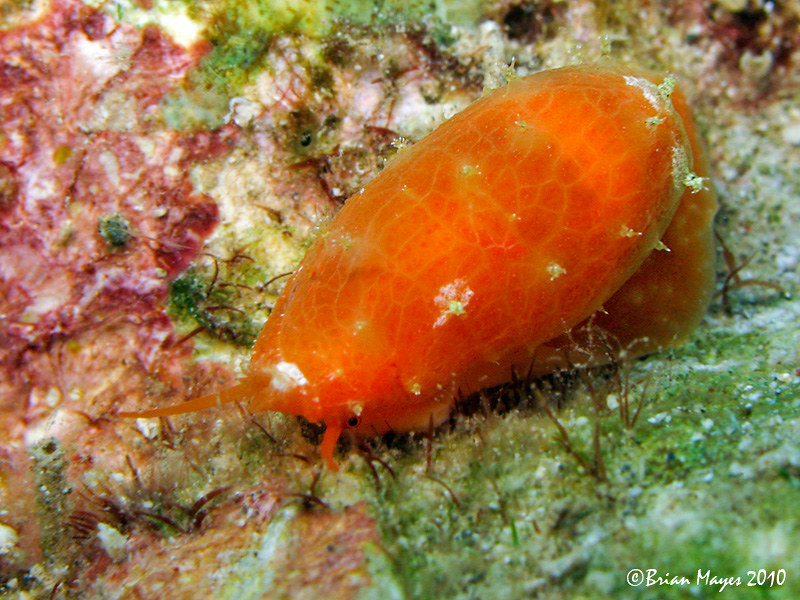
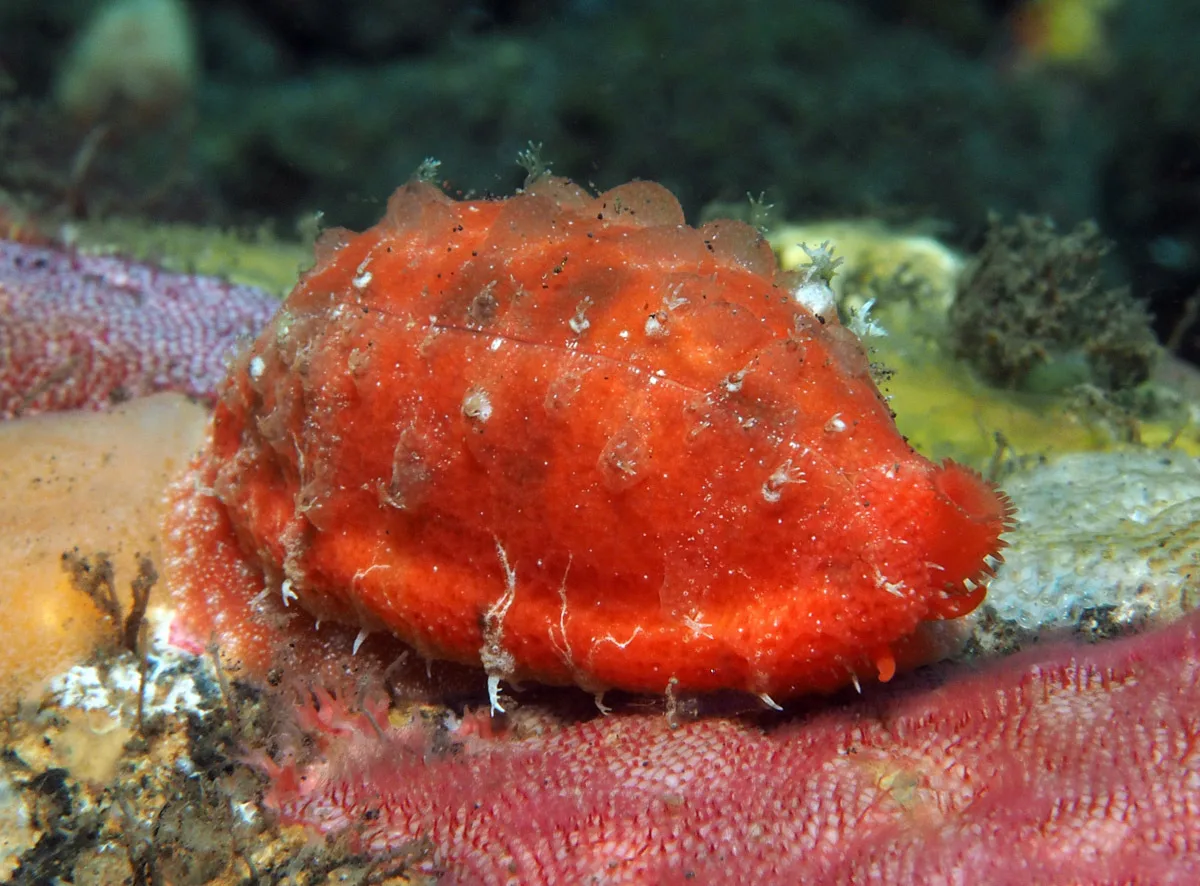
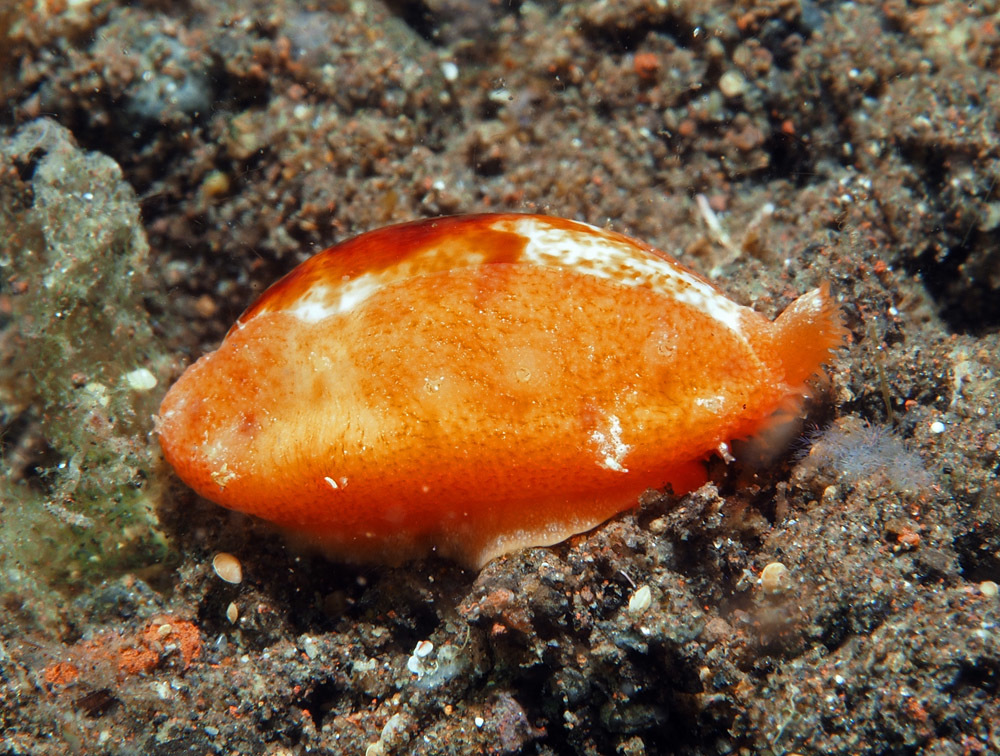
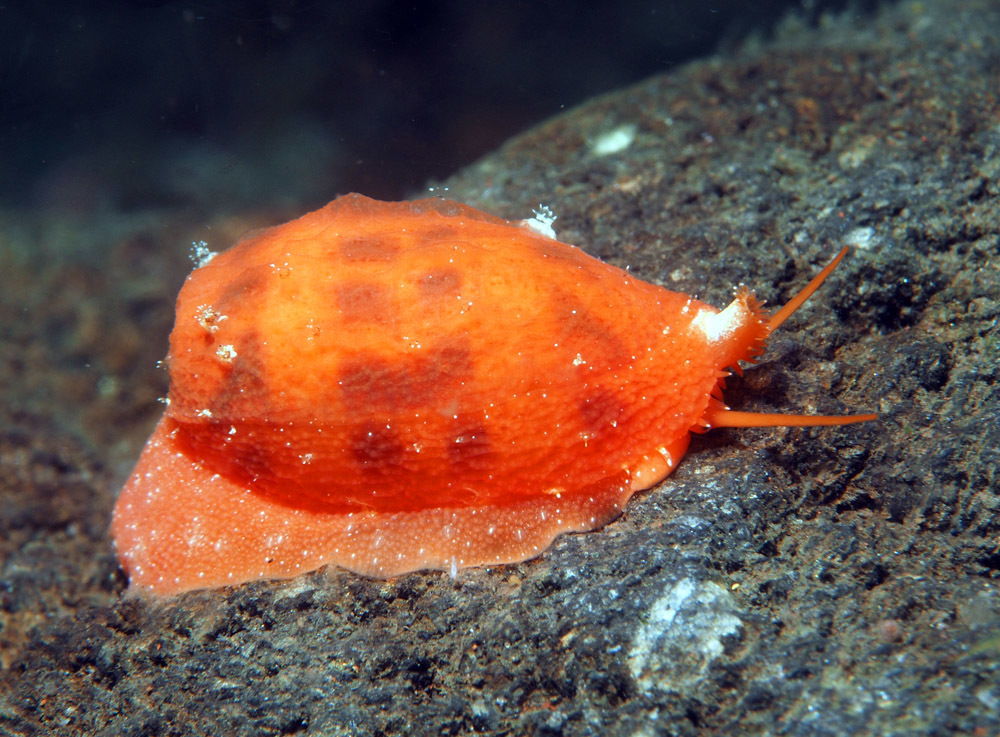
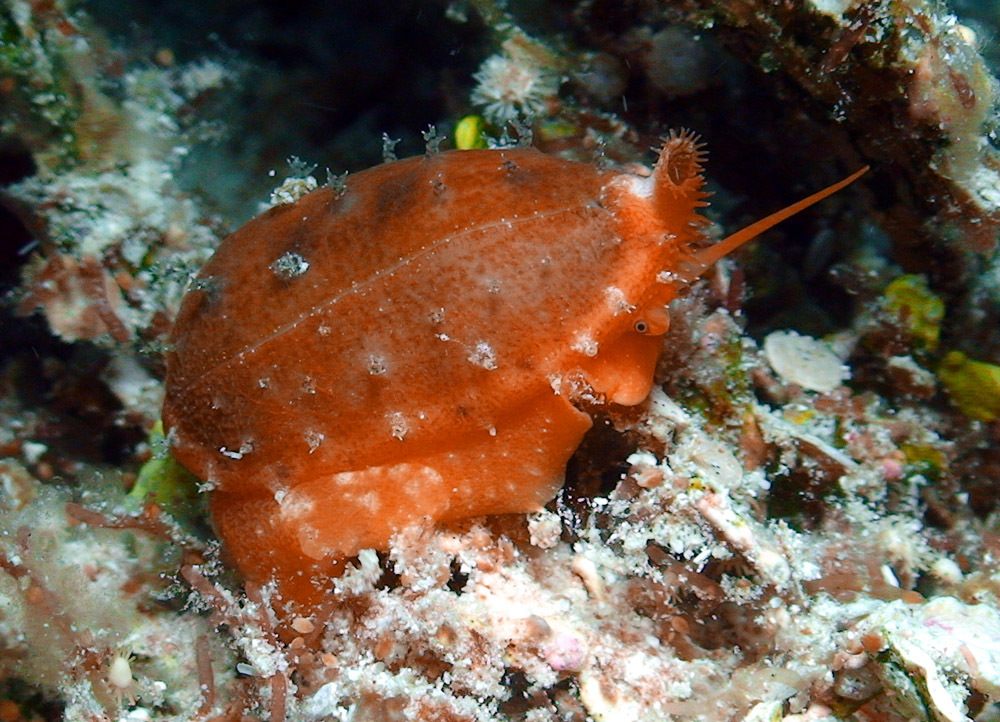
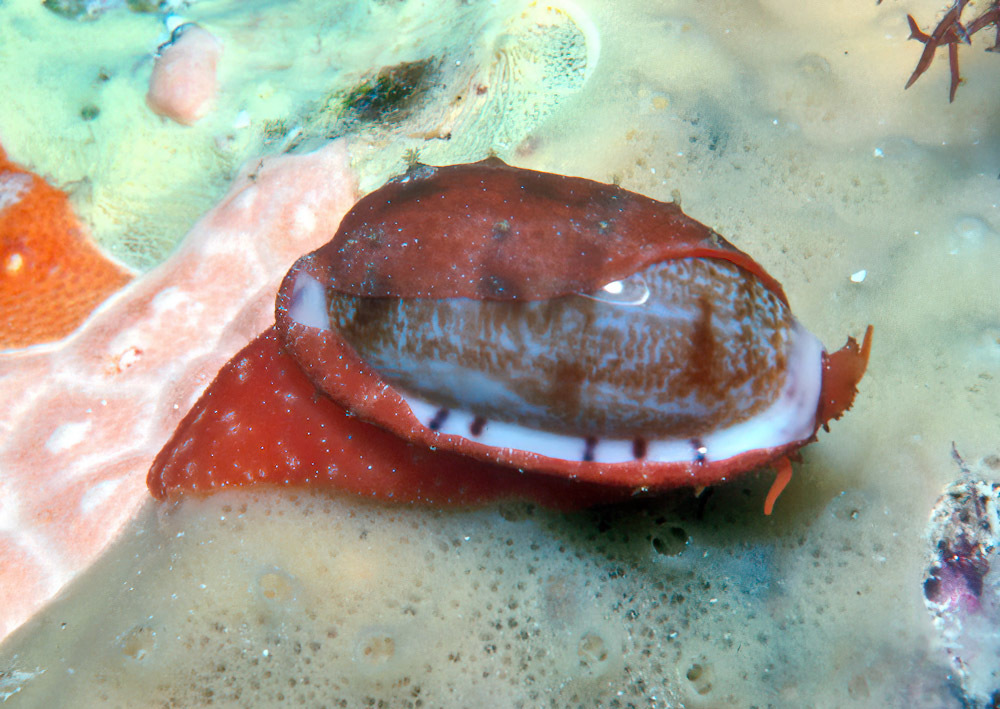
Like the rest of the family it disappears under its own tissue in life. Two flaps of mantle rise from the foot, fold over the back and meet along the middle, hiding the shell entirely and building it from the outside as the animal grows. That building is what makes a cowrie glossy, and it is maintenance rather than a finish: the shine stops when the animal does.
Up to nearly five centimeters (1.9 in), under stones through the day, out grazing after dark. Gmelin described it in 1791.
- long and narrow, drawn out and tapering rather than a rounded oval
- yellowish white ground crossed by wide dark brown bands
- the bands are broad and few, not fine lines
- up to nearly five centimeters