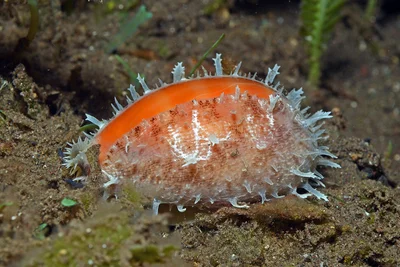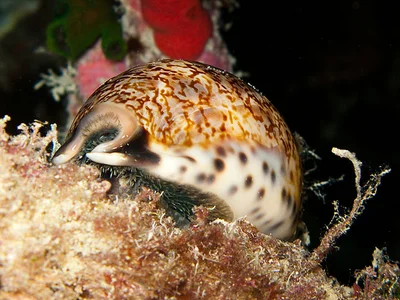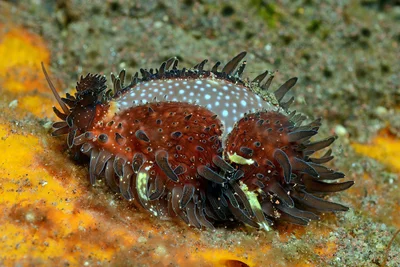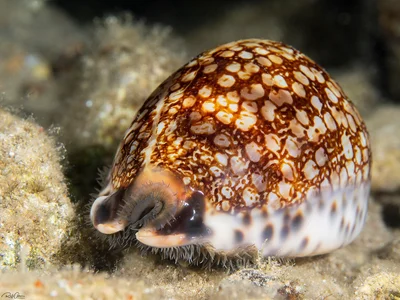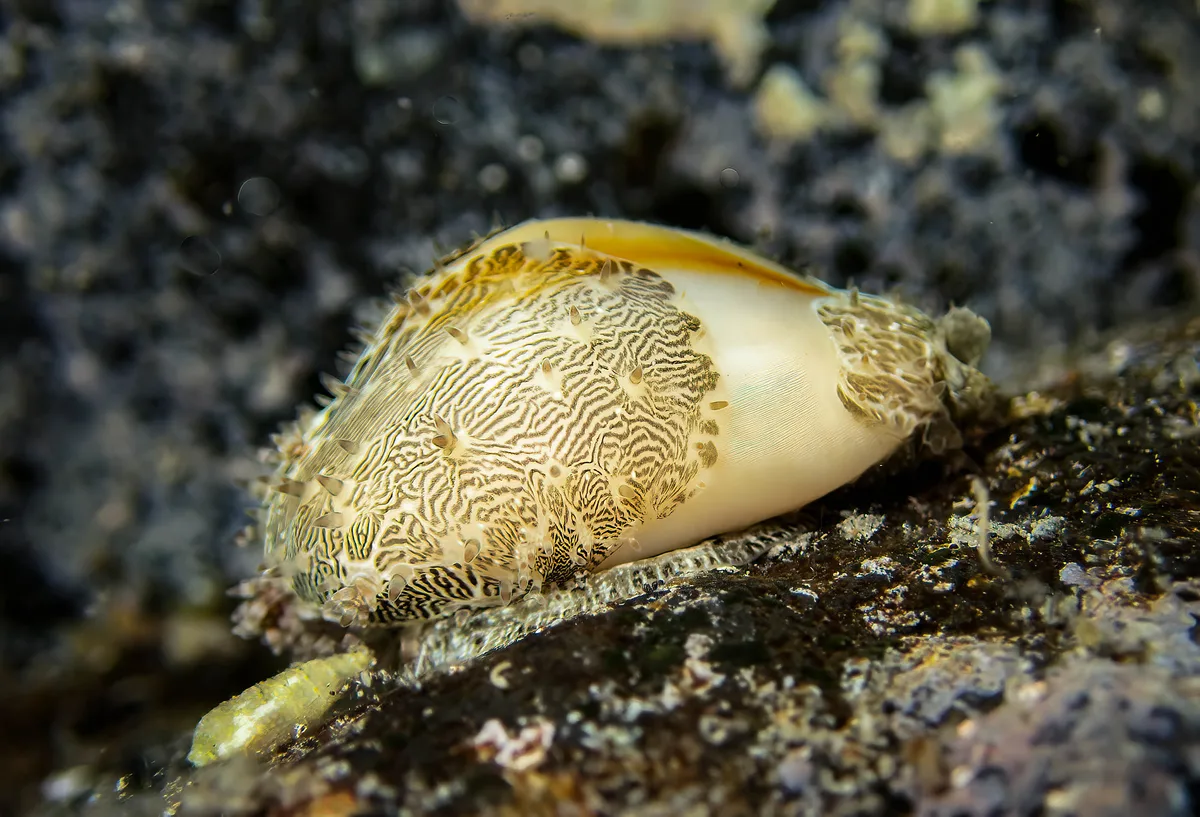
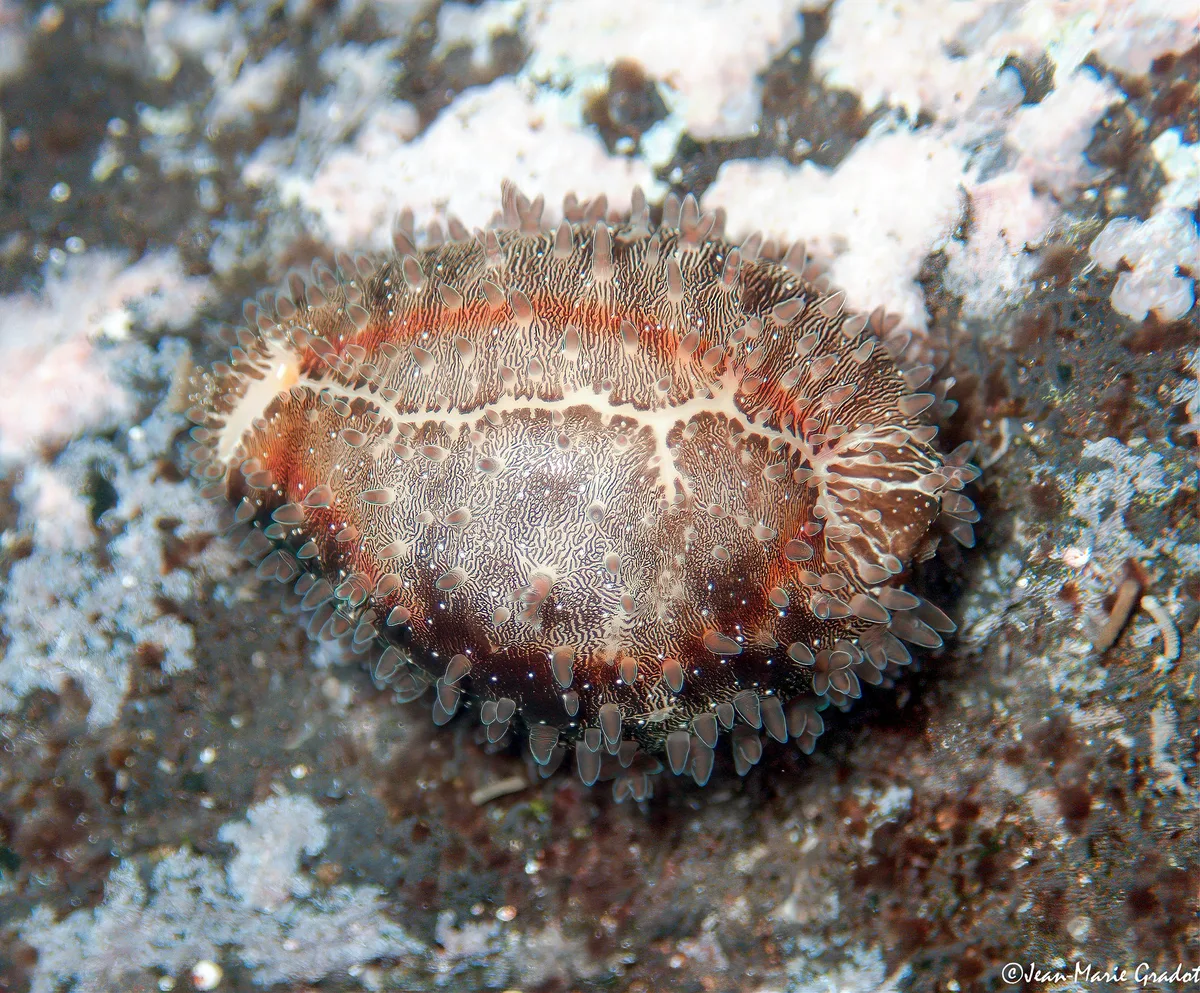
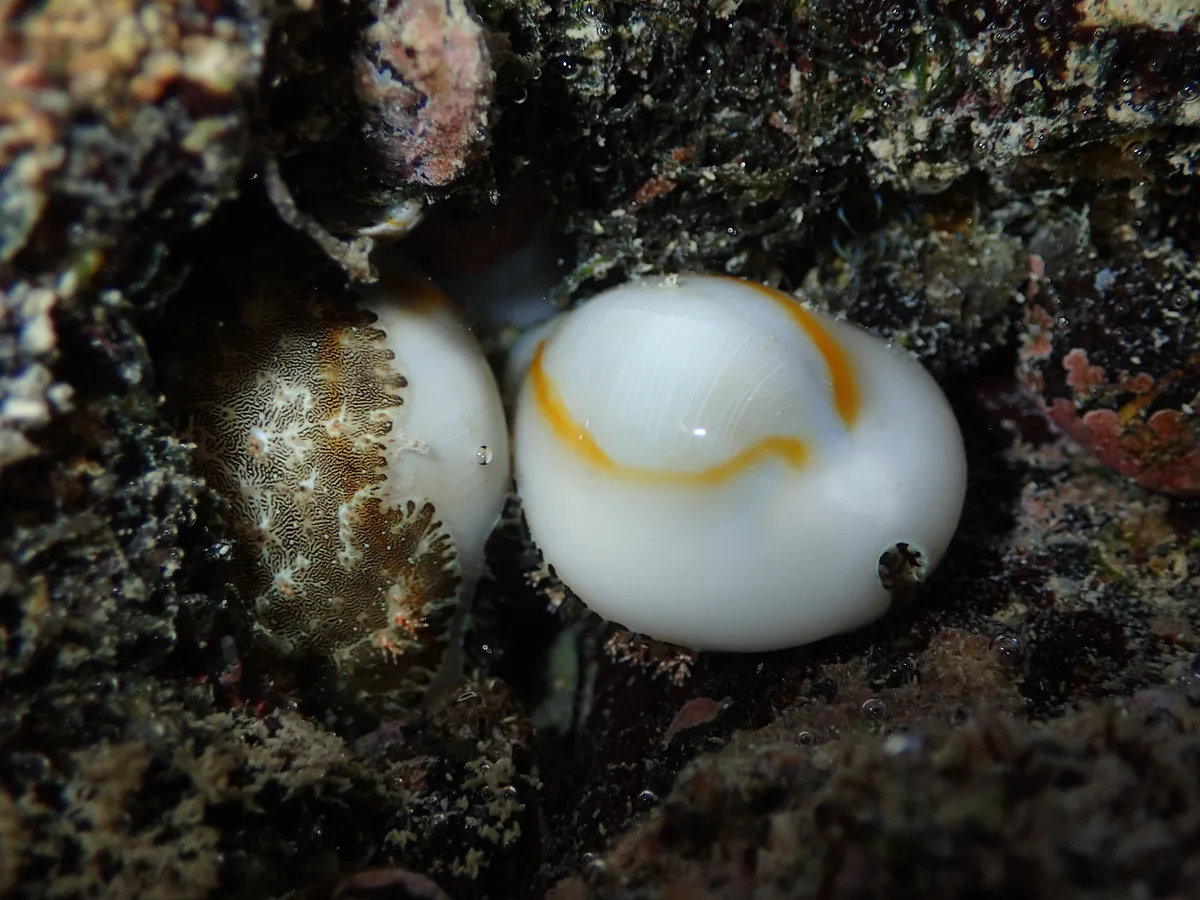
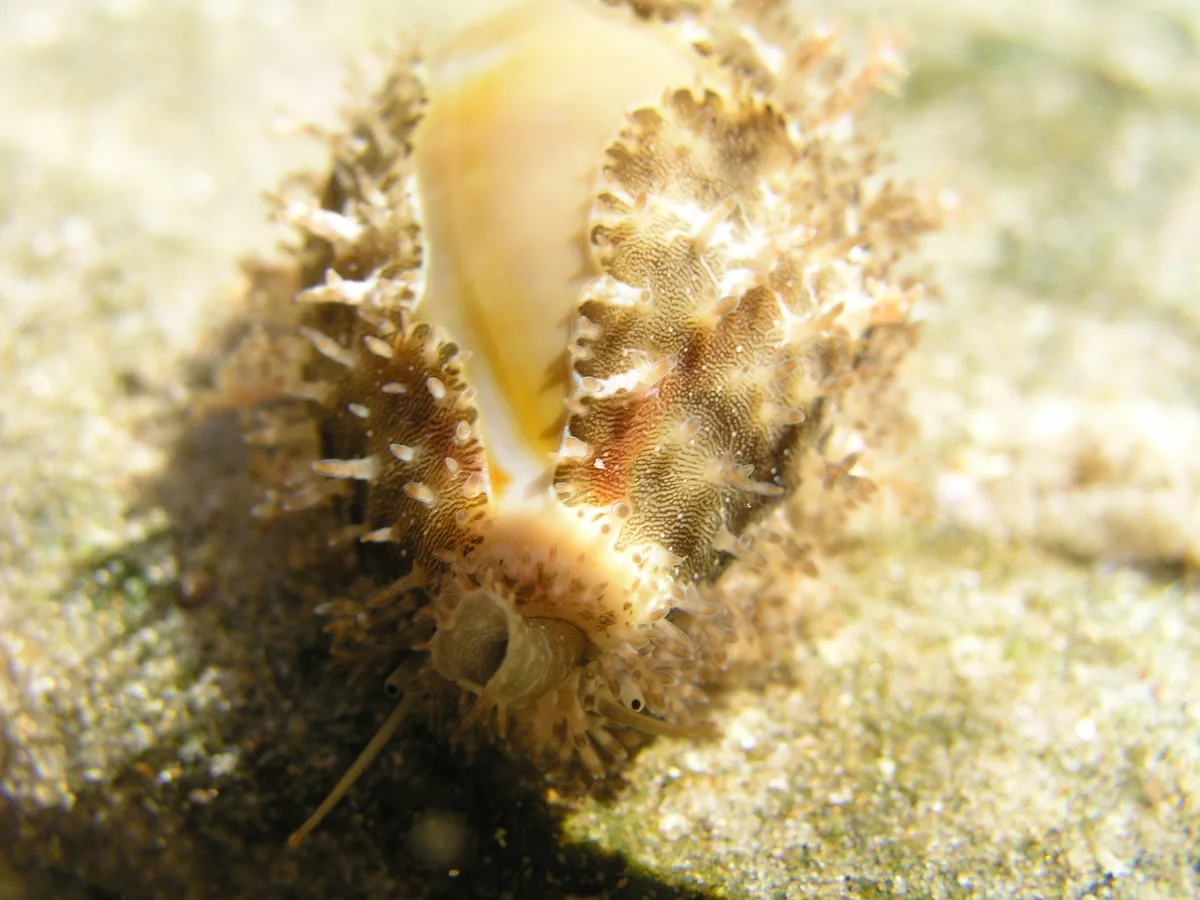
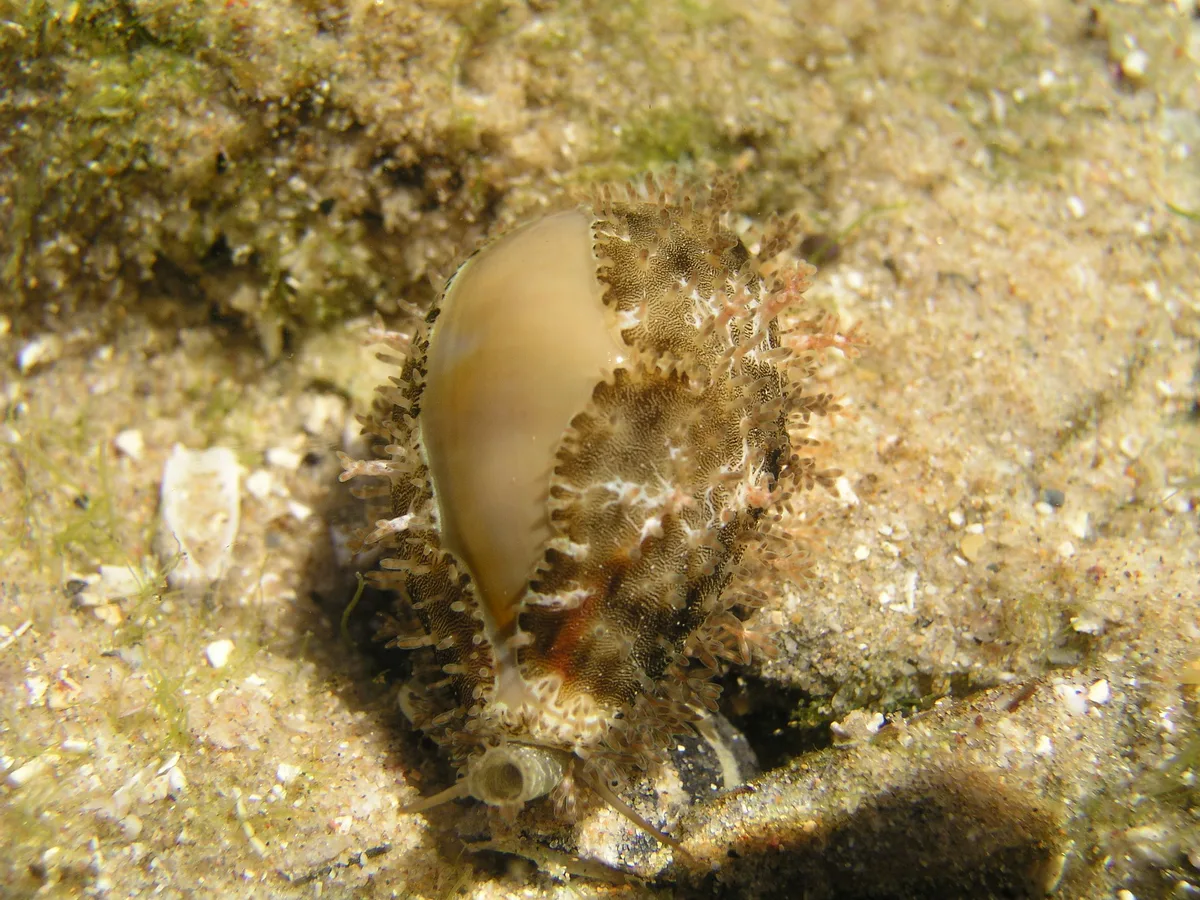
Pale, small and marked with a clean gold ring around the back, which is the only field mark anyone needs: nothing else on the reef flat wears that. Up to 5 cm (2 in), and usually smaller, with the flattened underside and thick margins the family shares.
It grazes algae film off rock and dead coral, working at night and hiding under rubble by day. Like its close relative it was traded as money, and the two travel together through the historical record as well as through the shallows - large lots shipped out of the 🌊 Indian Ocean often contained both.
The animal grows its shell in an unusual order. A young cowrie has a thin shell with a visible spire that looks like an ordinary snail; only at maturity does it thicken the margins, roll them inward and bury the spire under a final layer, at which point growth in size stops for good. An adult shell is therefore finished, not merely large.
- small pale shell with a distinct gold or orange ring on the back
- flattened underside, thickened margins
- hides under rubble by day, out on the flat at night
- shell to about 5 cm