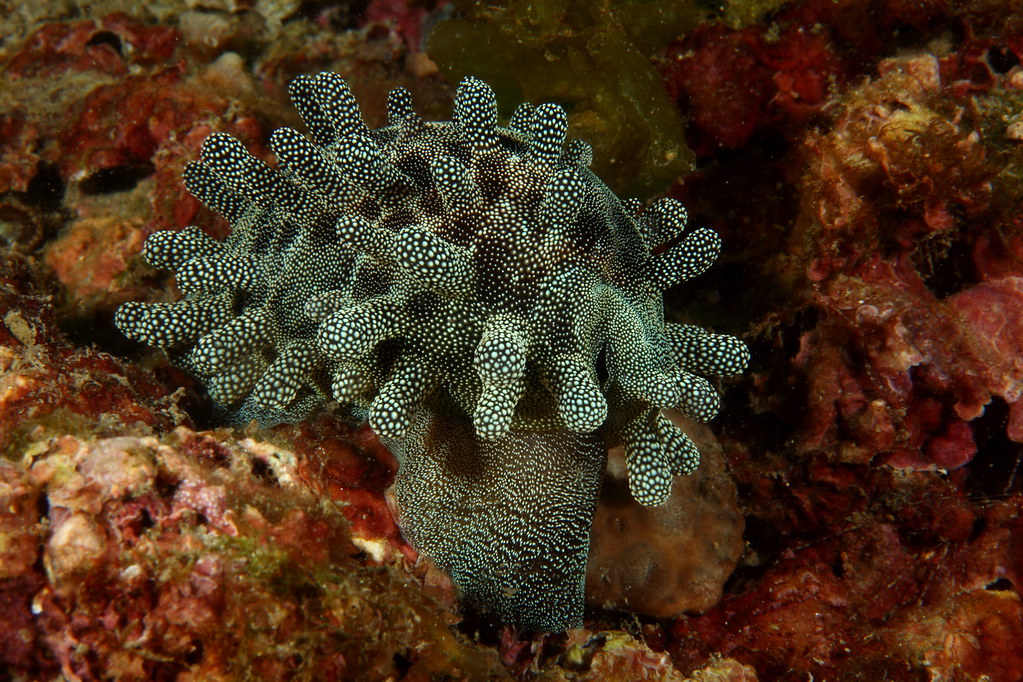
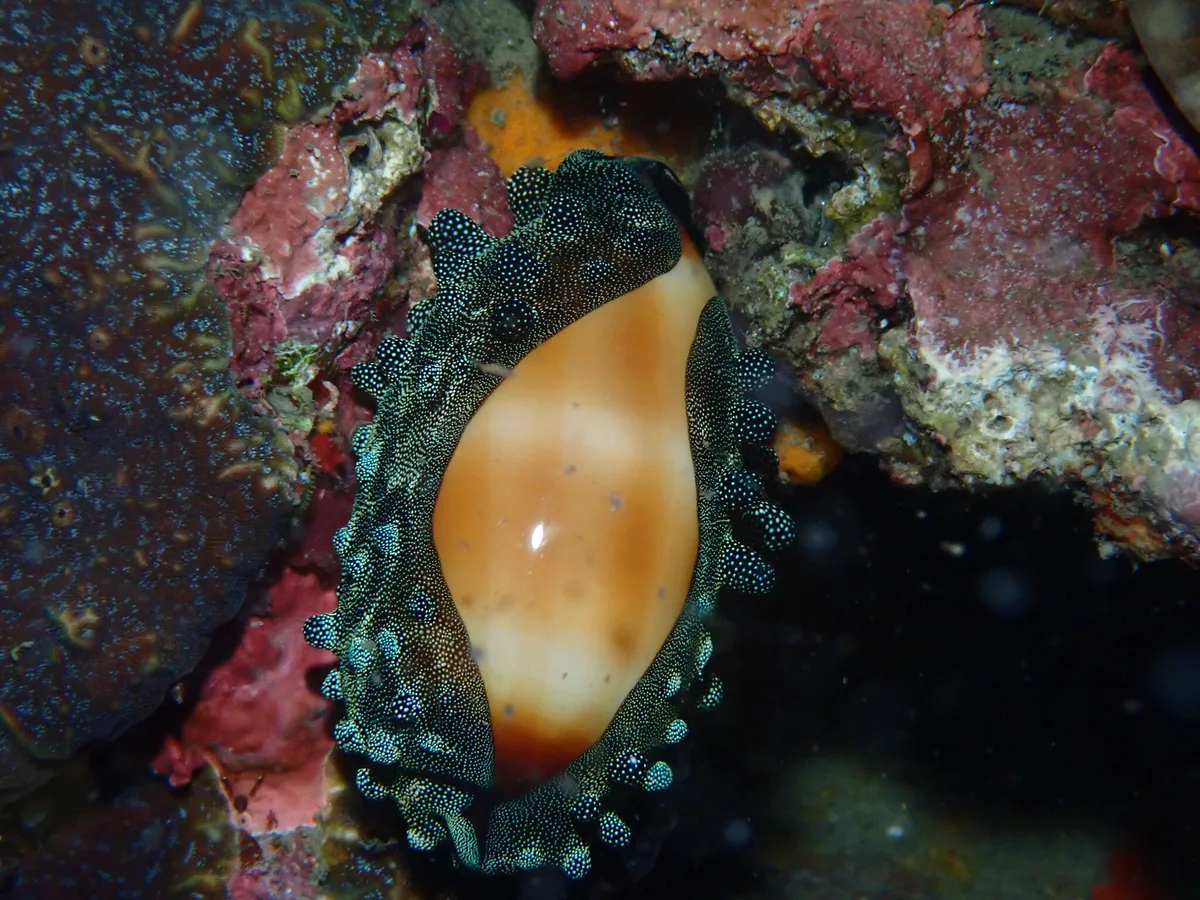
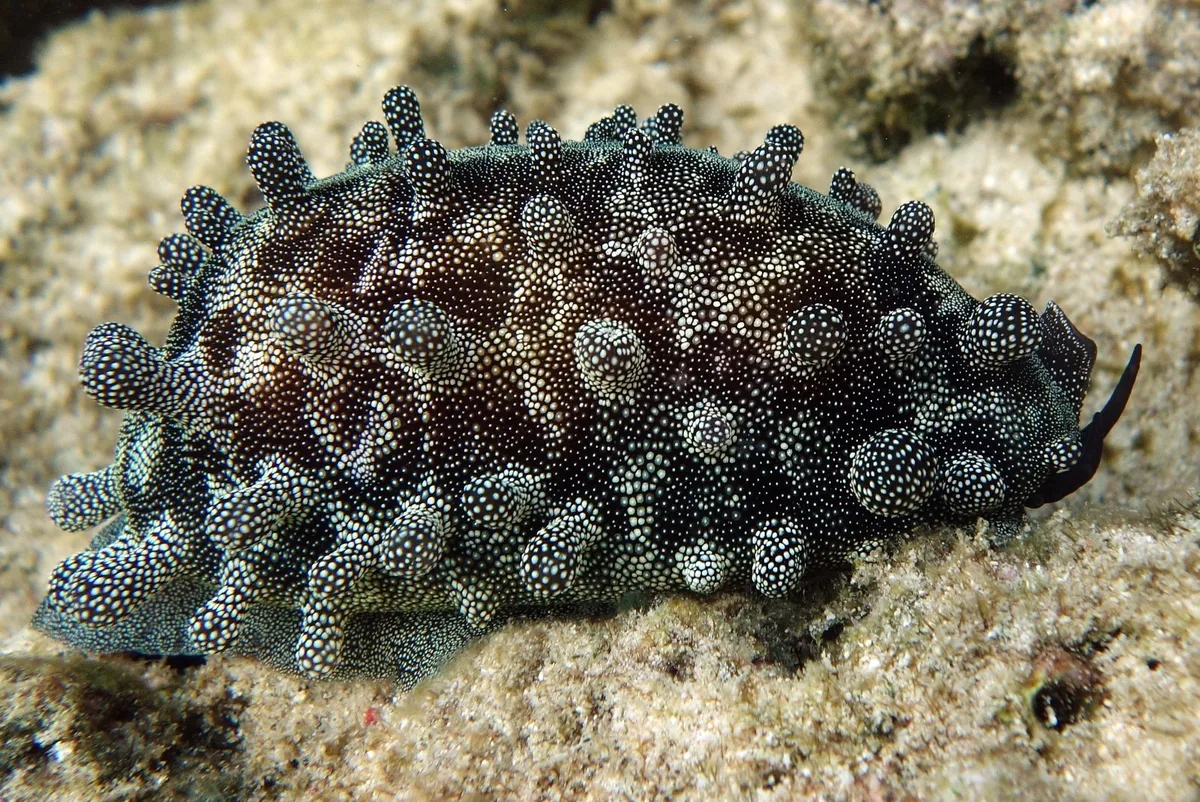
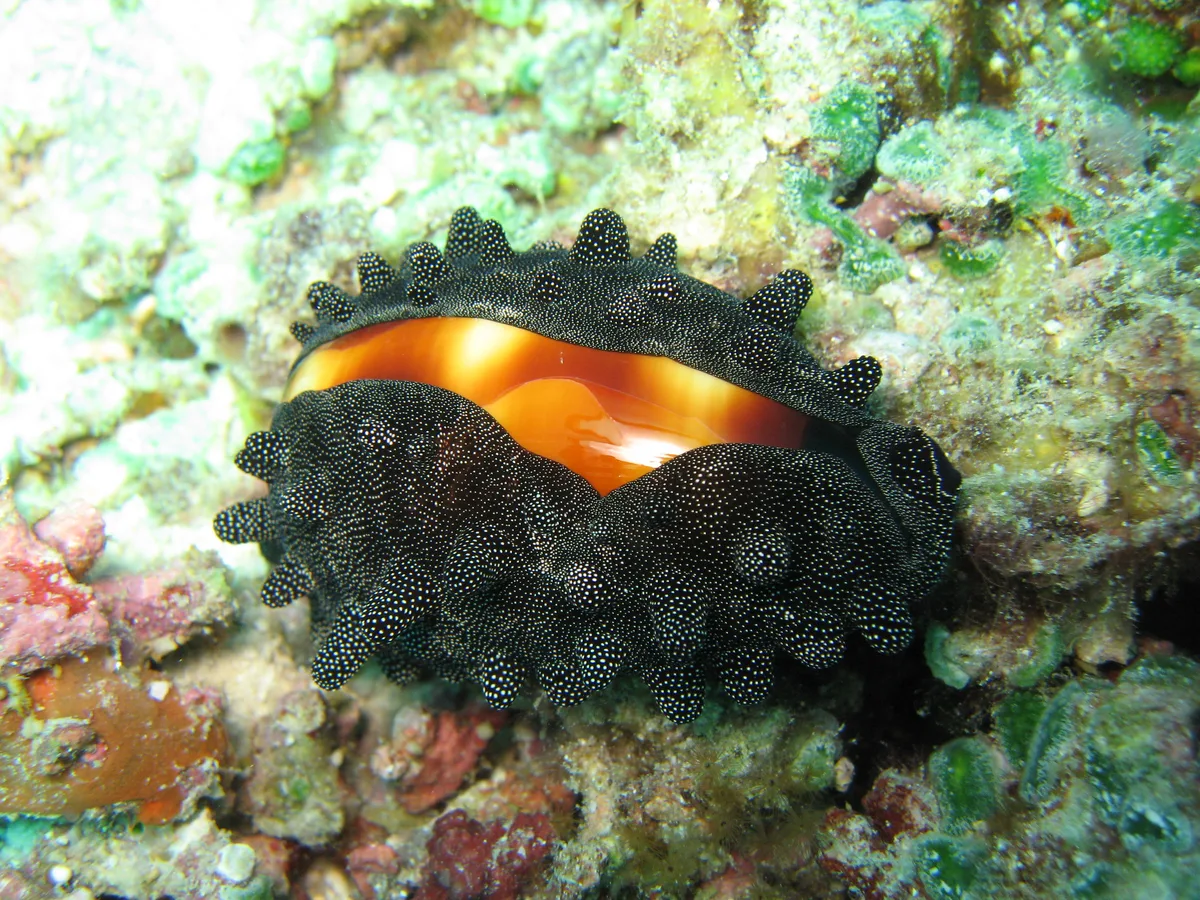
The name is about the animal, not the shell, and that distinction is the key to the whole family.
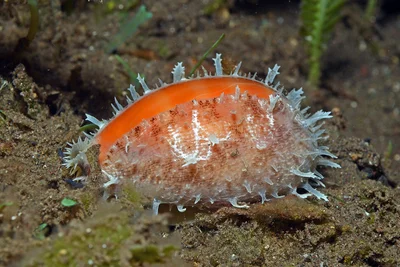
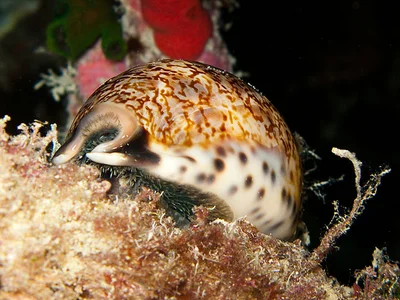
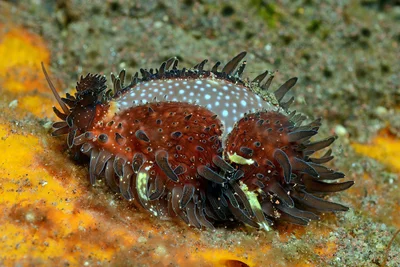
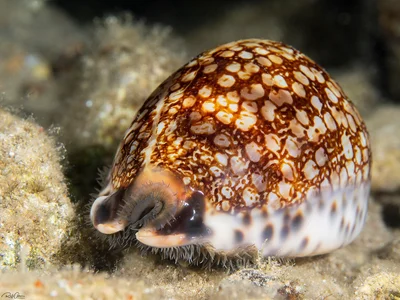
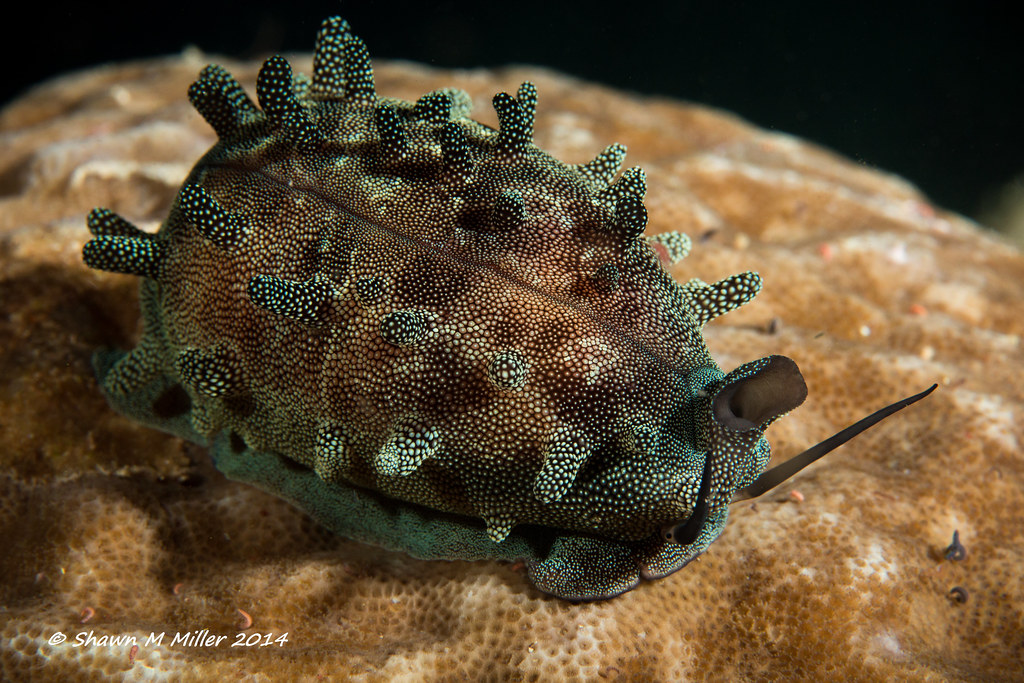
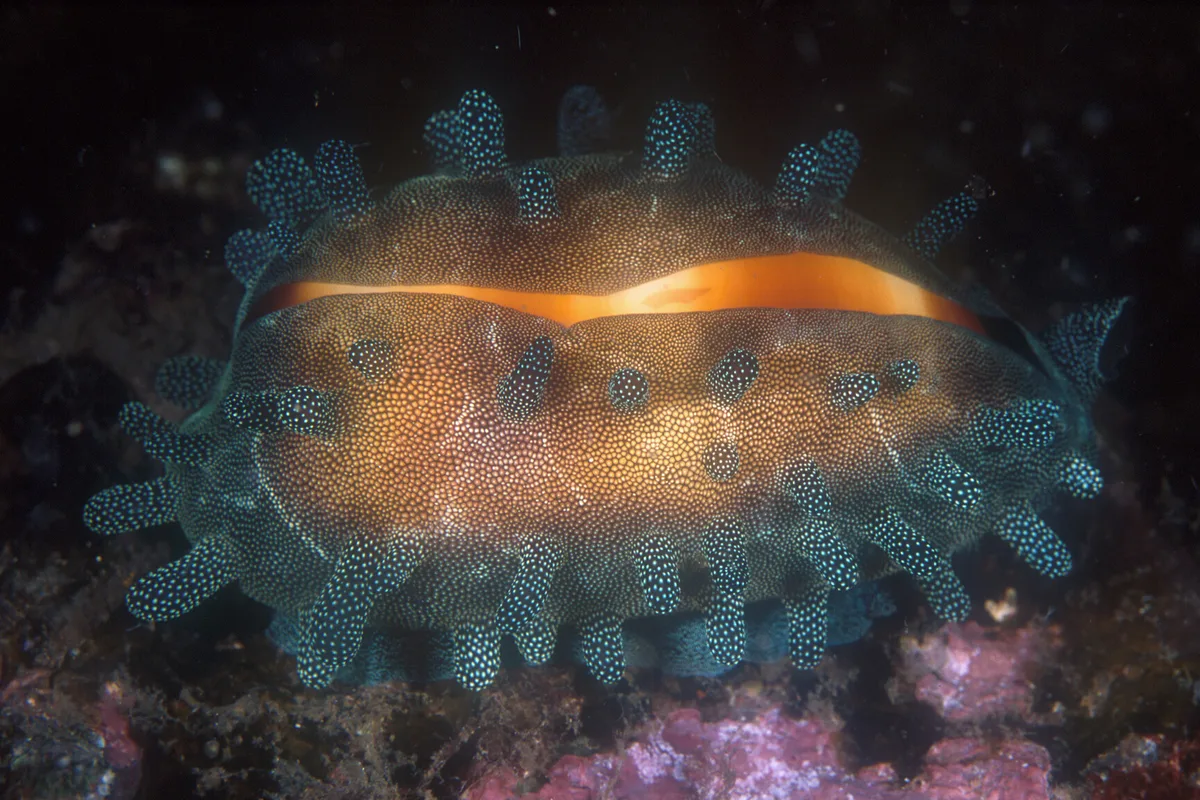
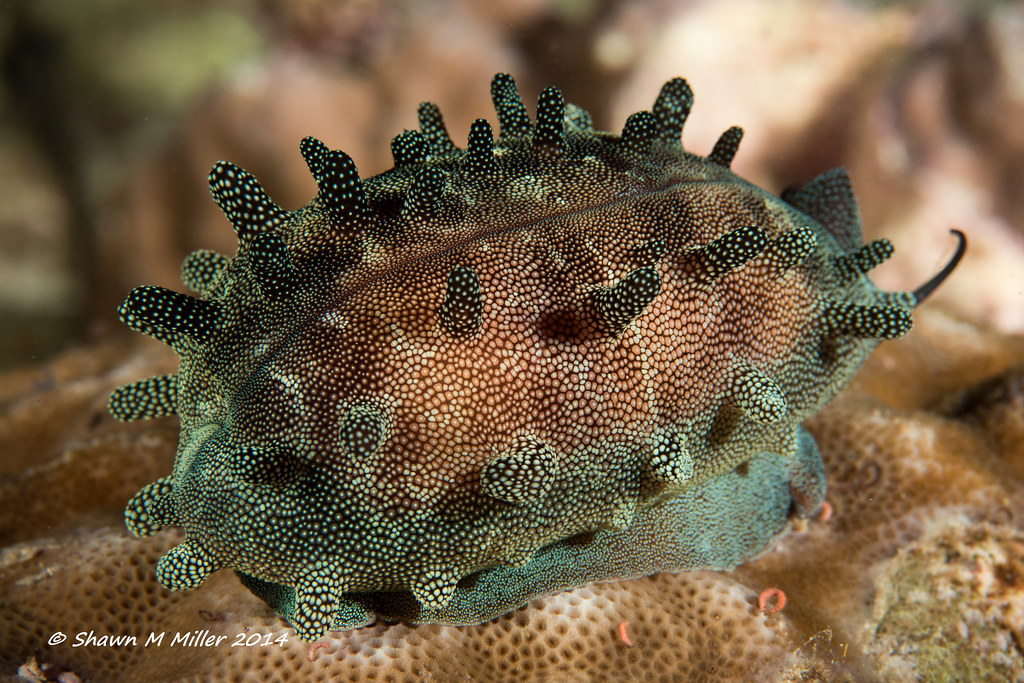
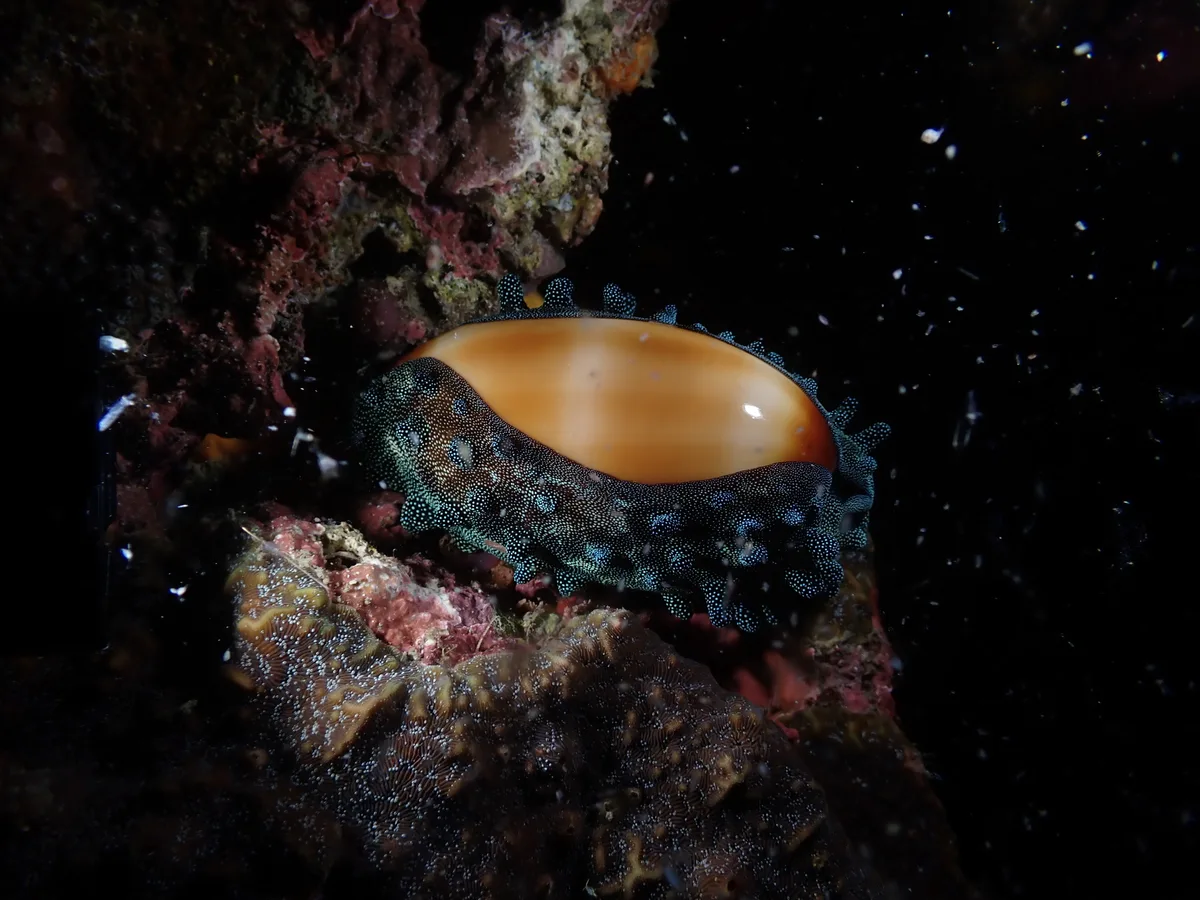
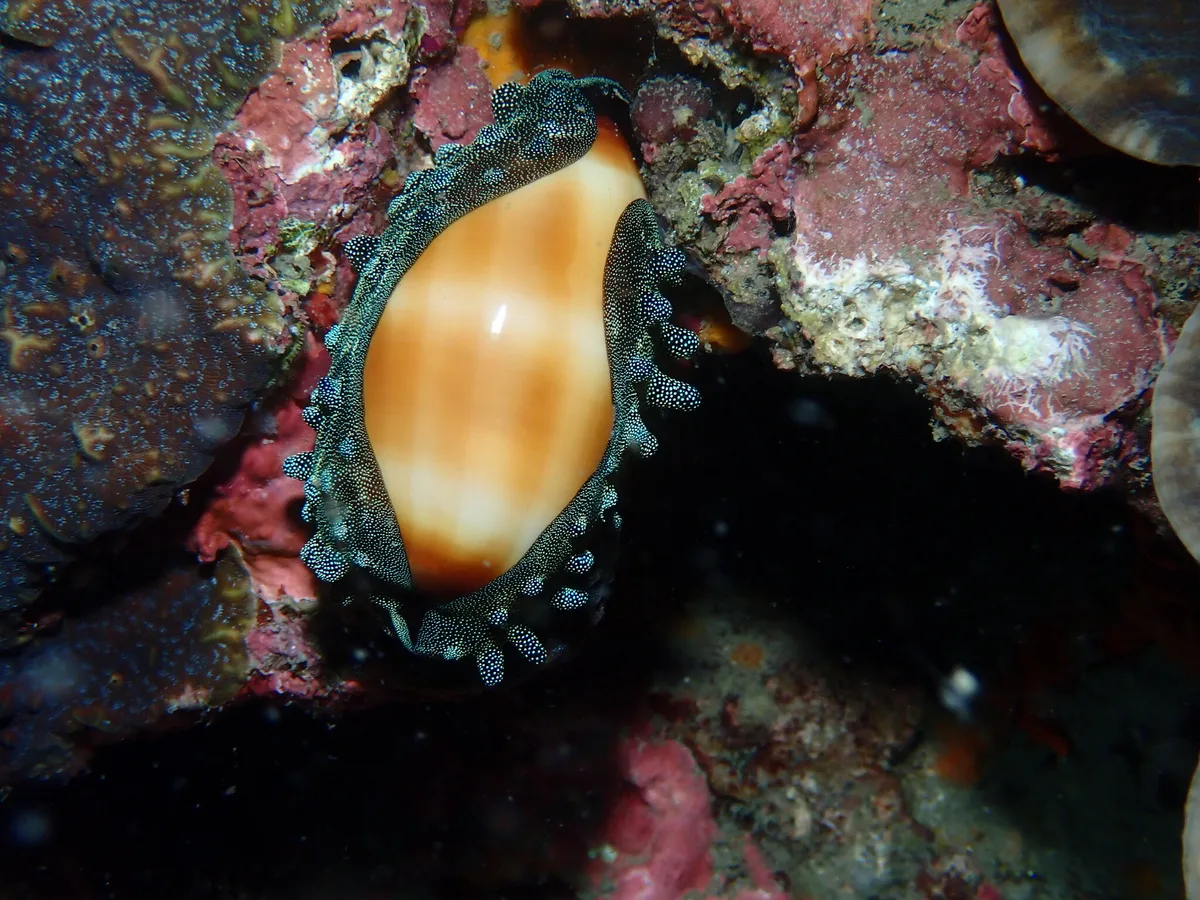
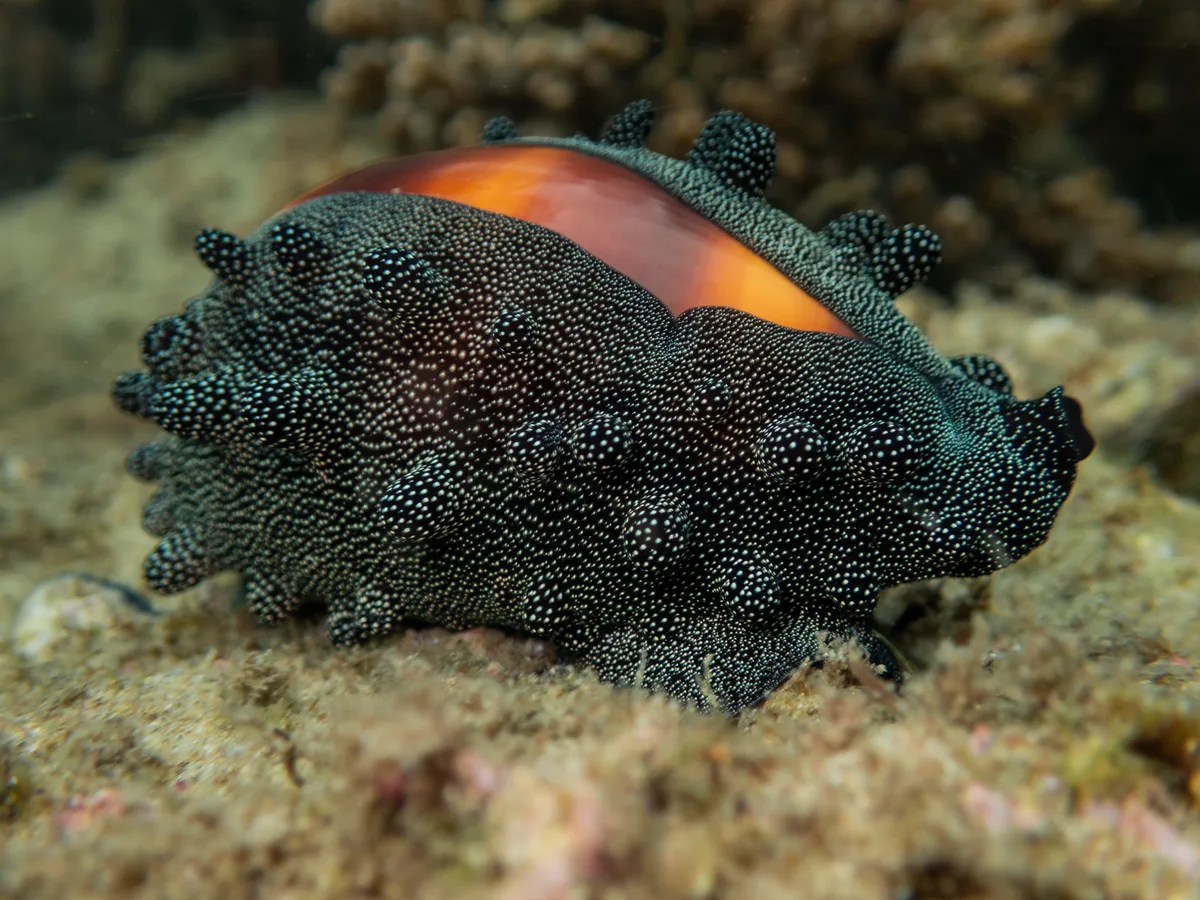
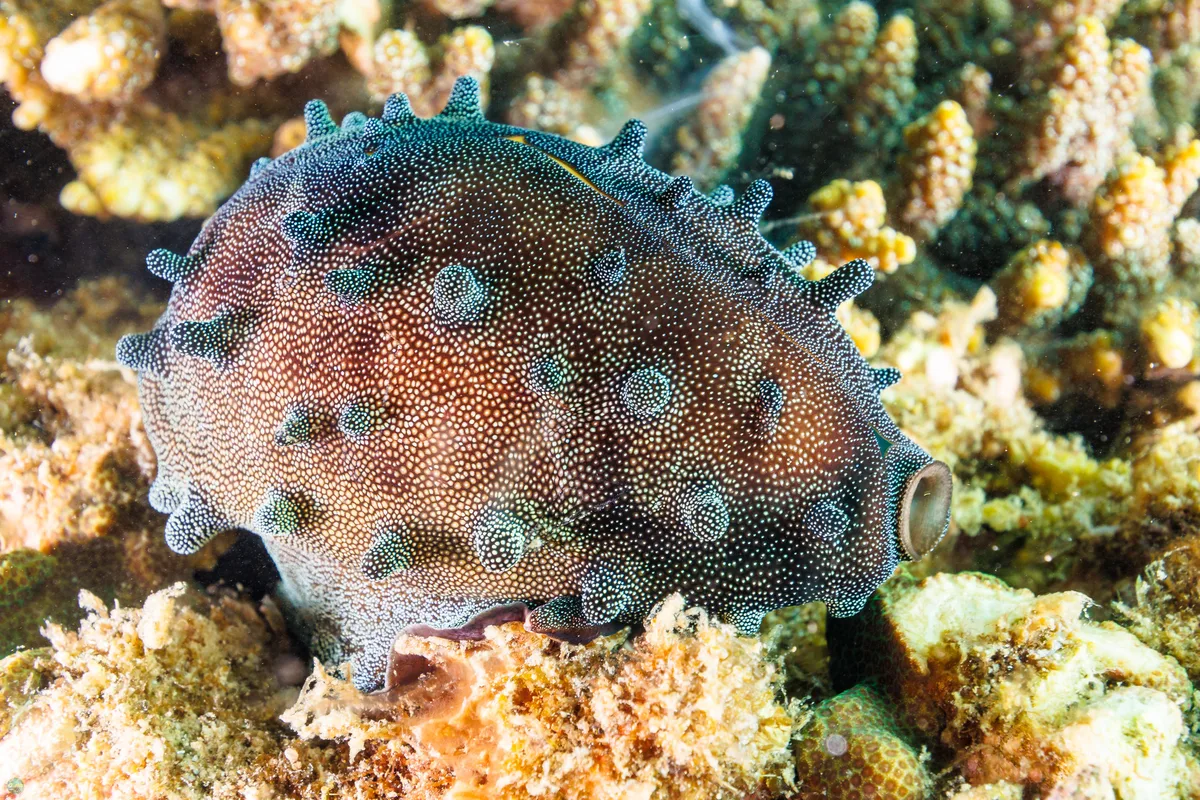
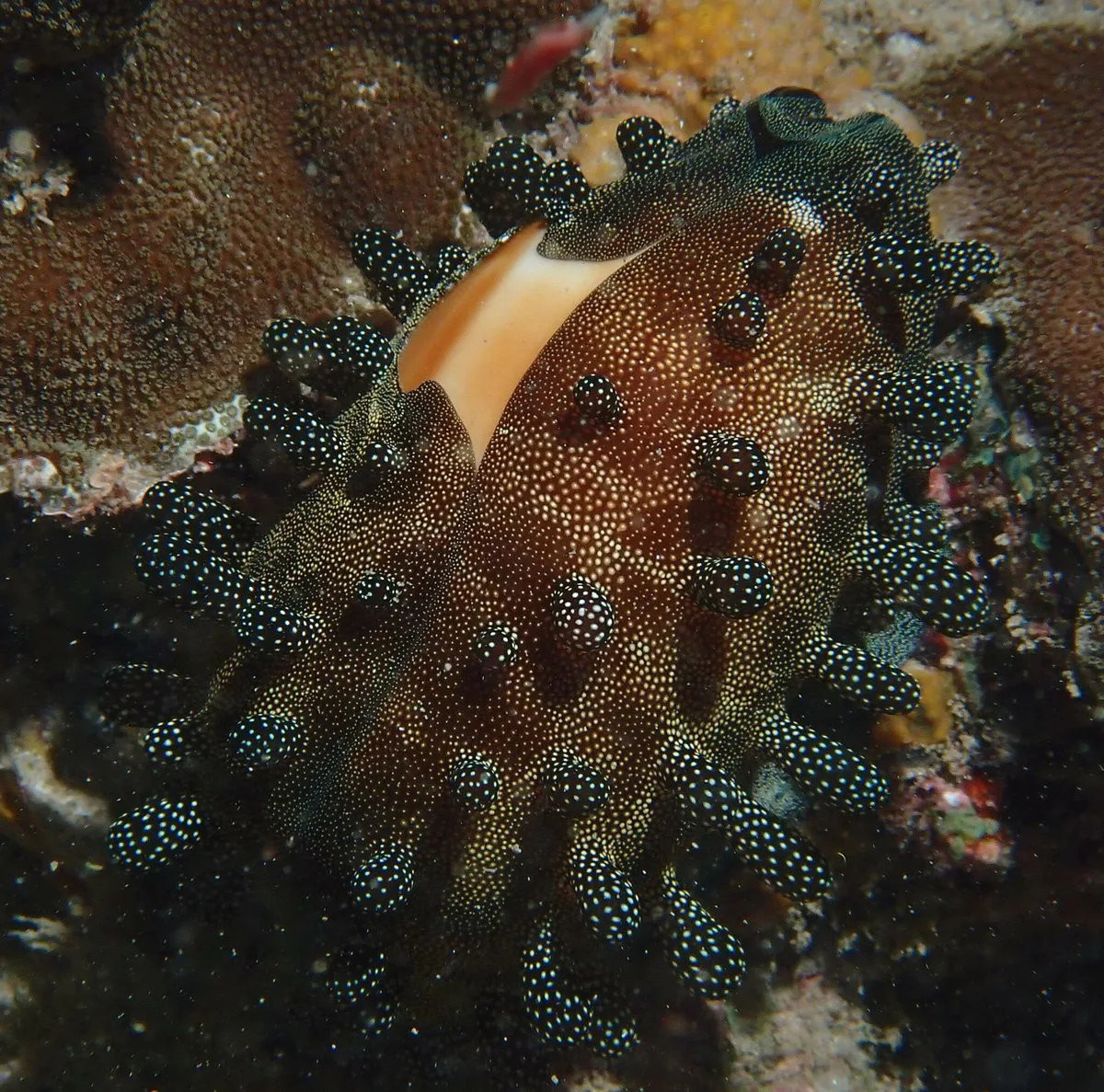
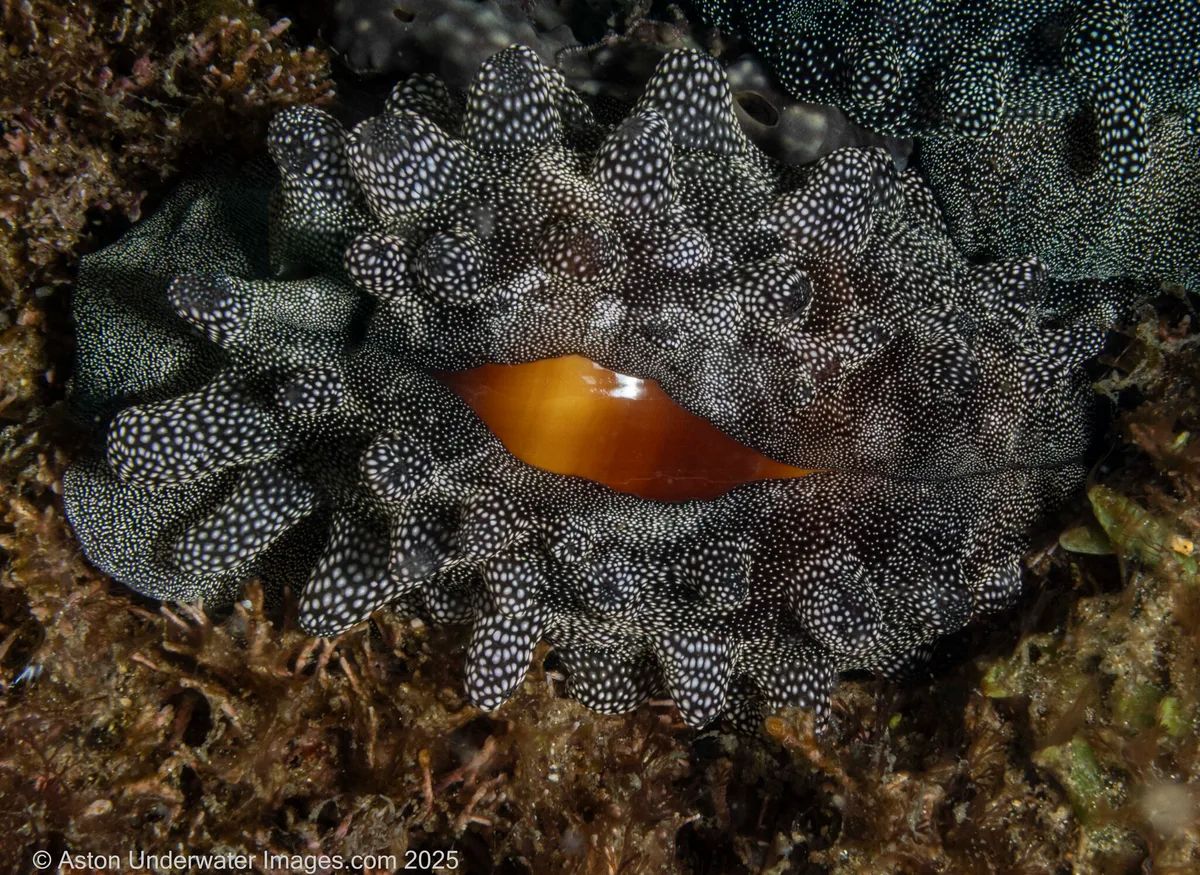
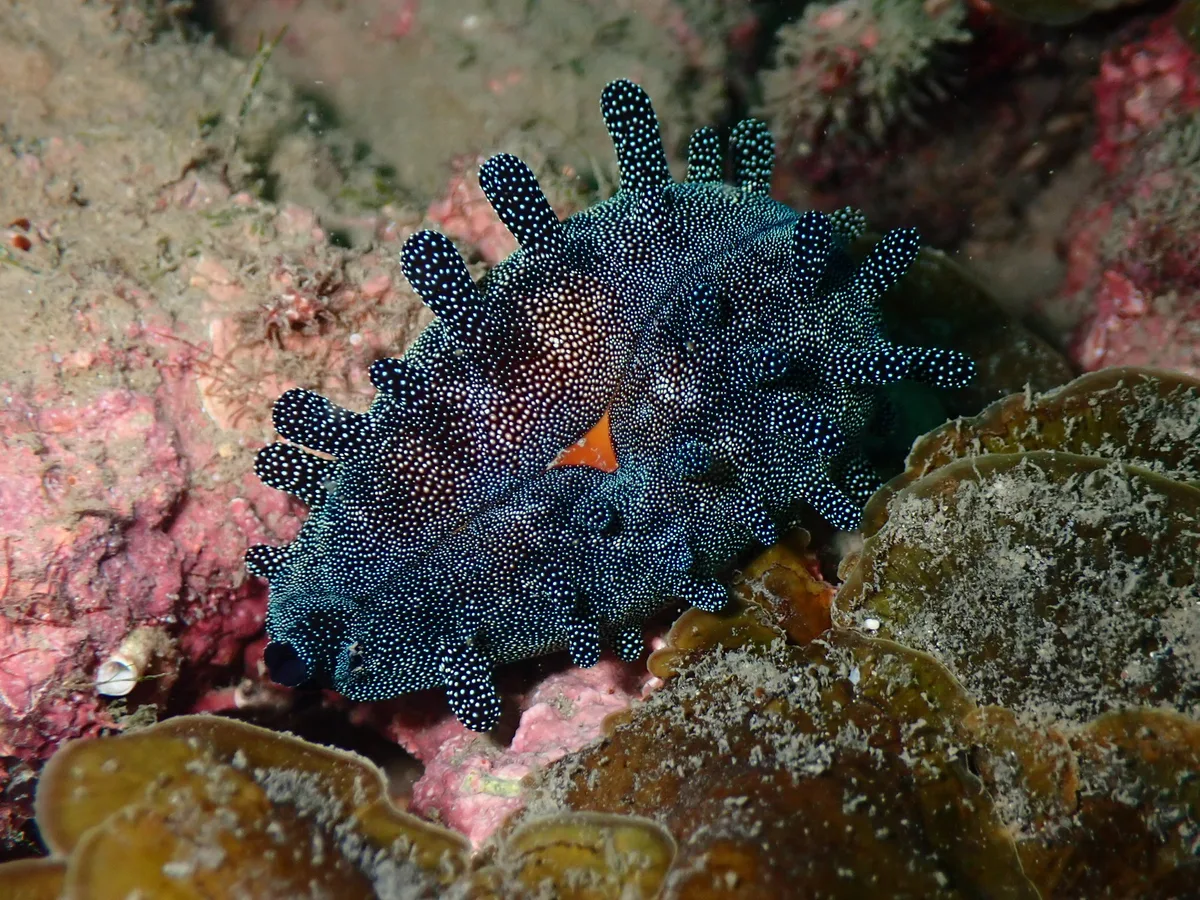
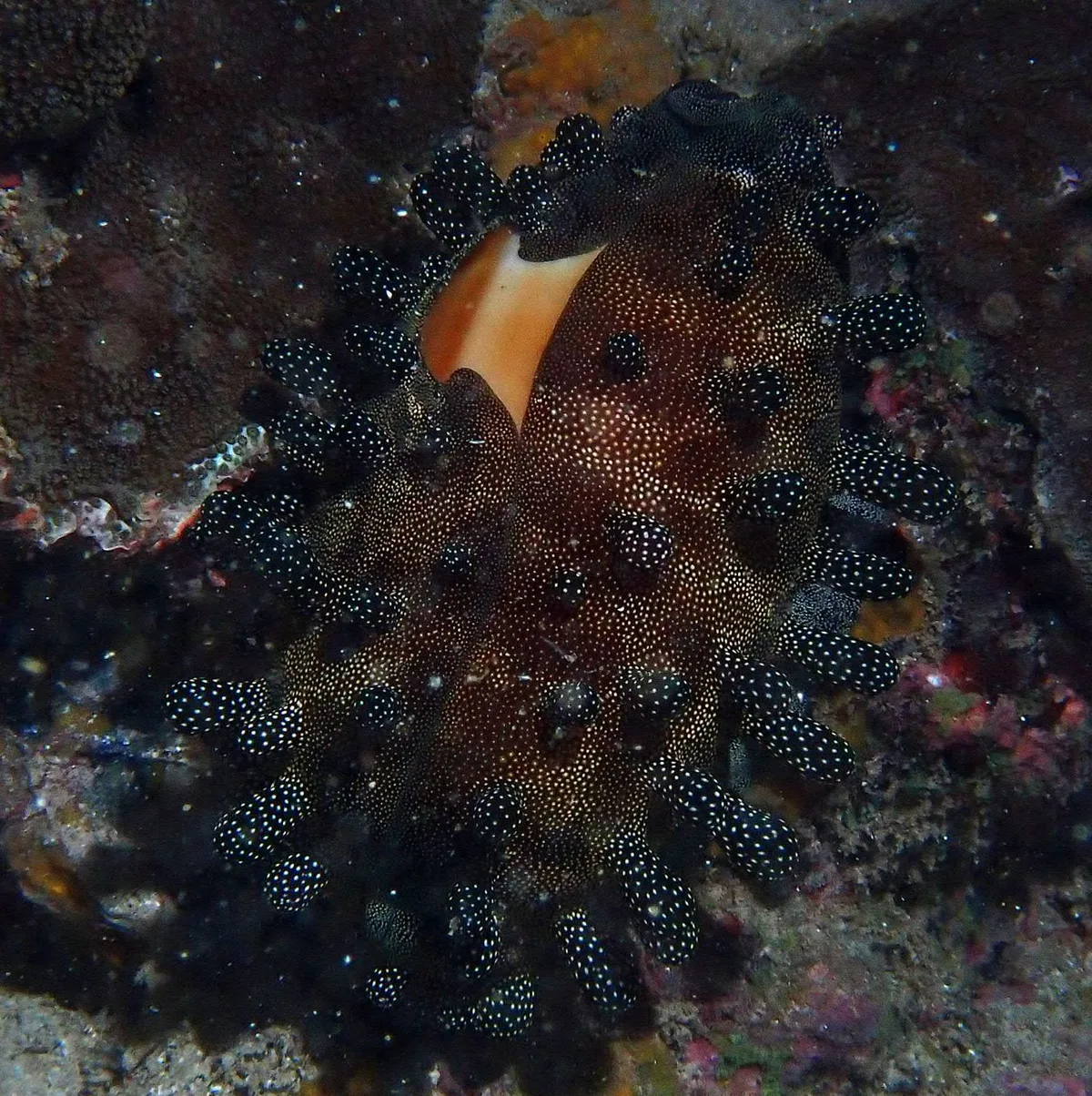
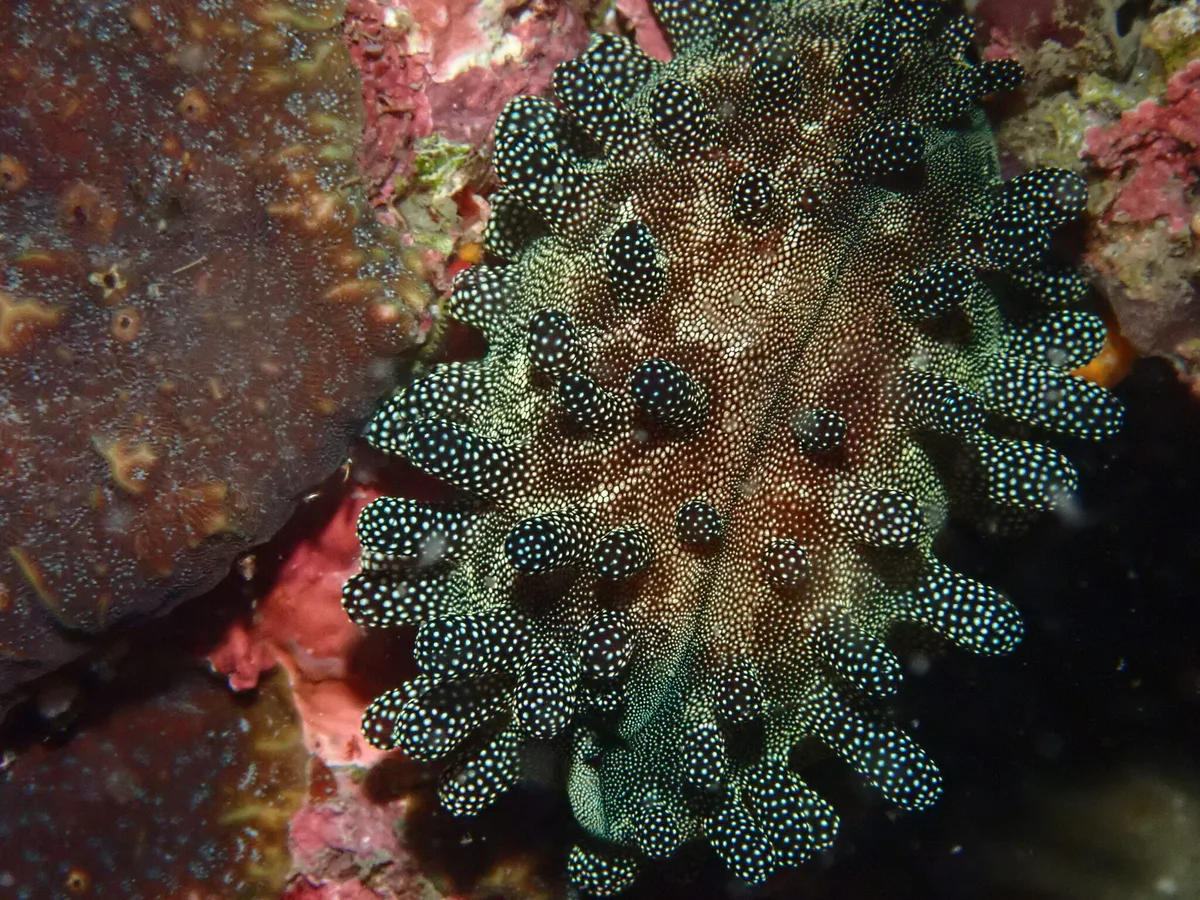
A cowrie shell is a polished object with the spire buried inside it and a long narrow toothed slot underneath. What most people never see is that in life the shell is not the outside of the animal at all. Two flaps of mantle rise from either side of the foot, fold up over the back, and meet along the middle, so a living cowrie is wrapped in its own tissue. That mantle lays down new shell material from the outside, and it is what keeps the surface mirror-smooth: a live cowrie gleams, a shell picked up on a beach goes dull, because the polishing stopped.
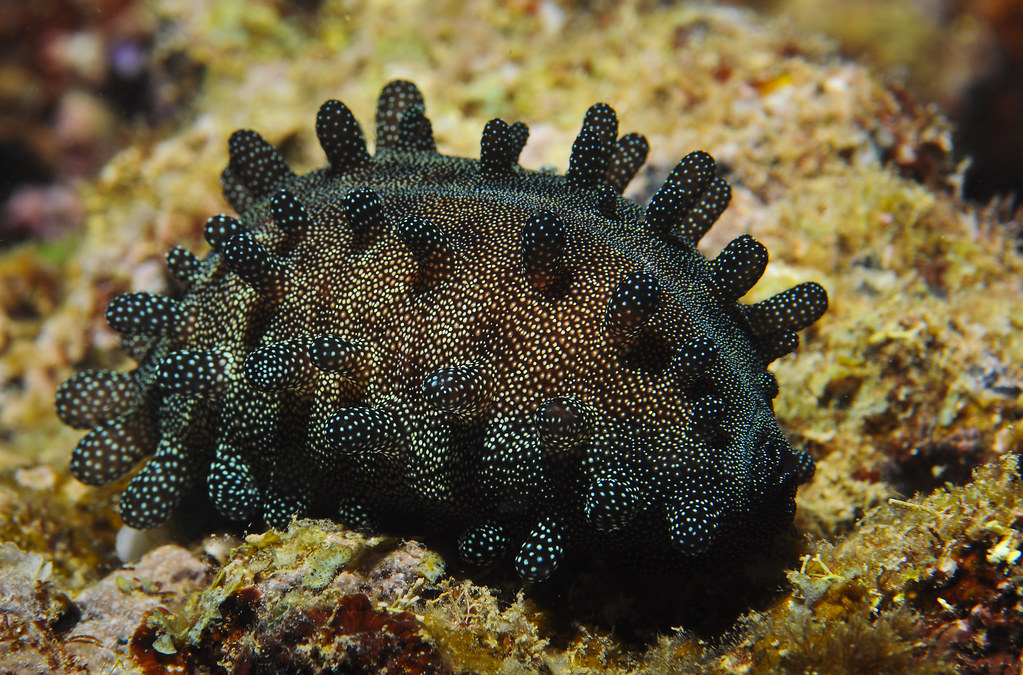
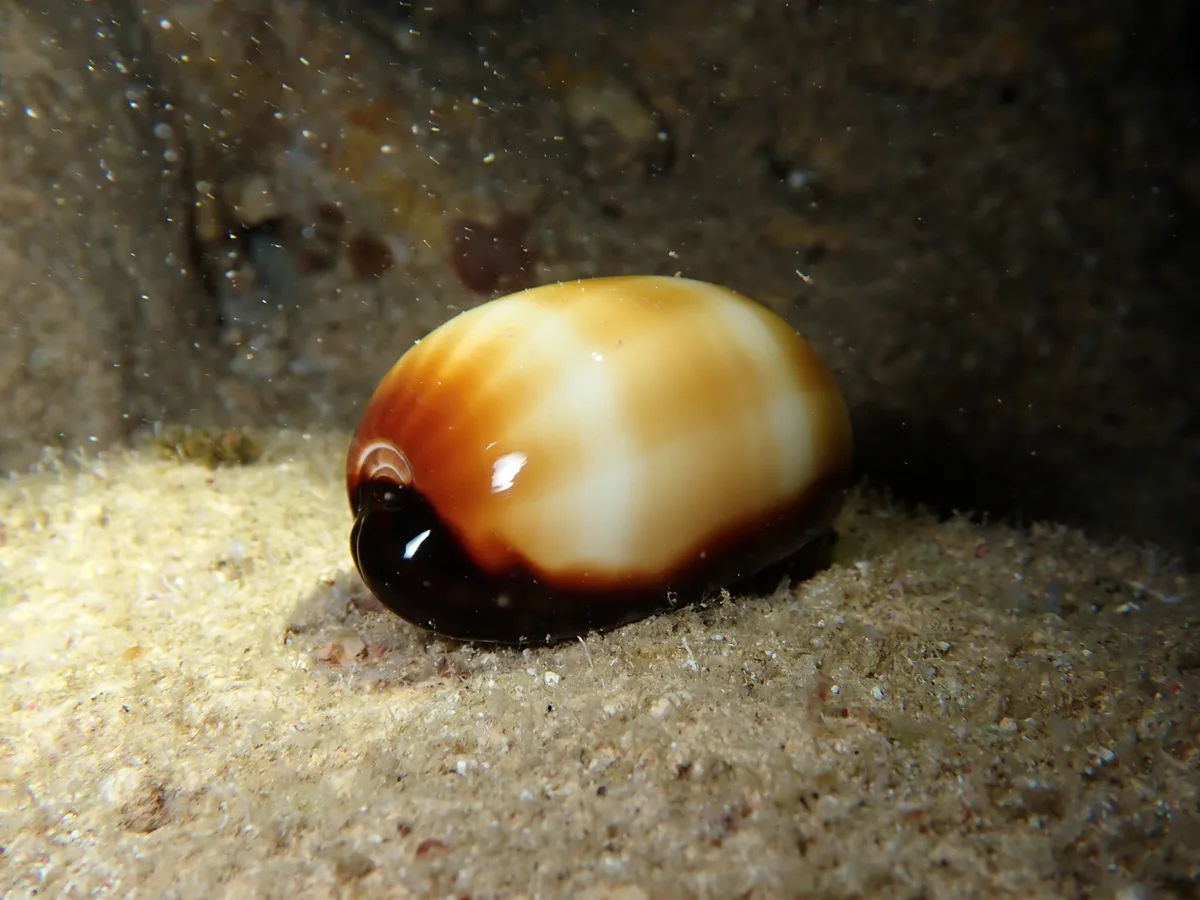
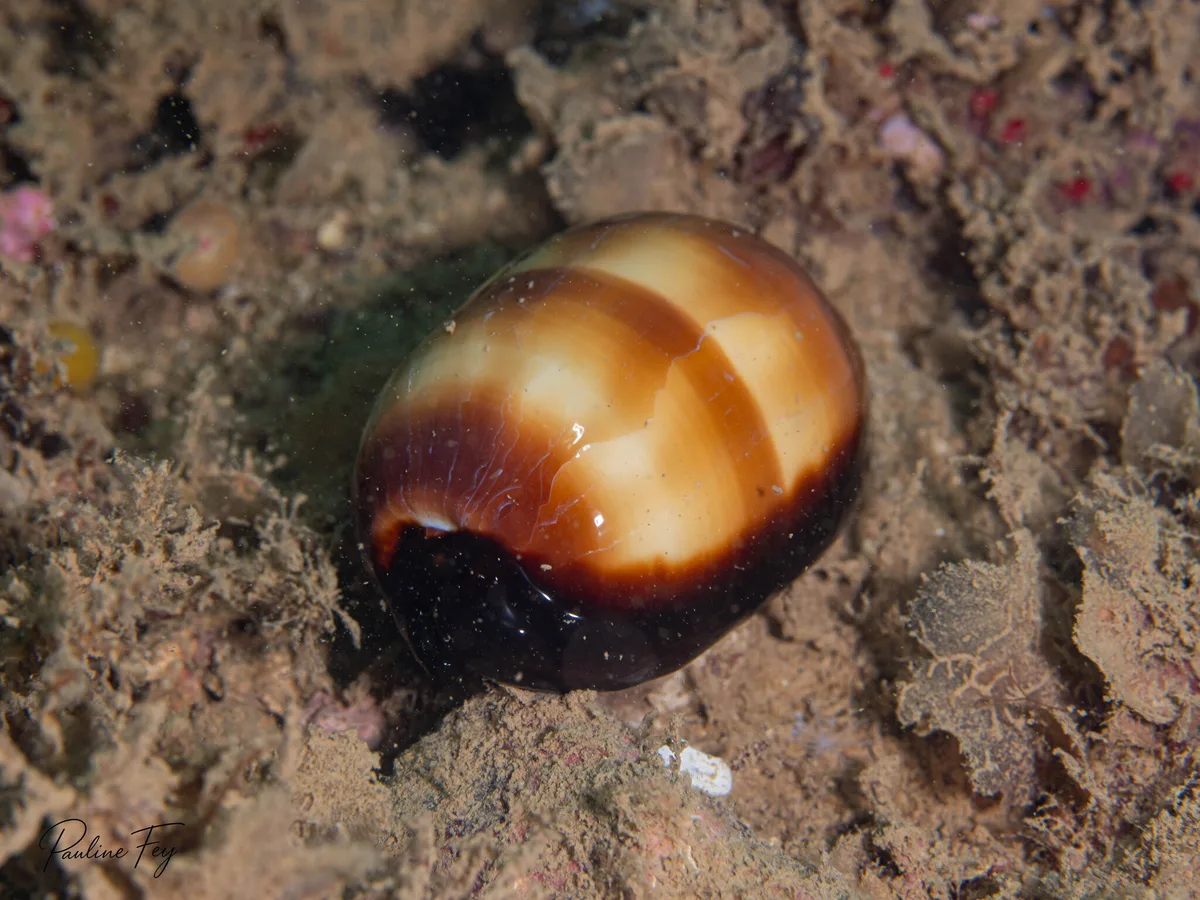
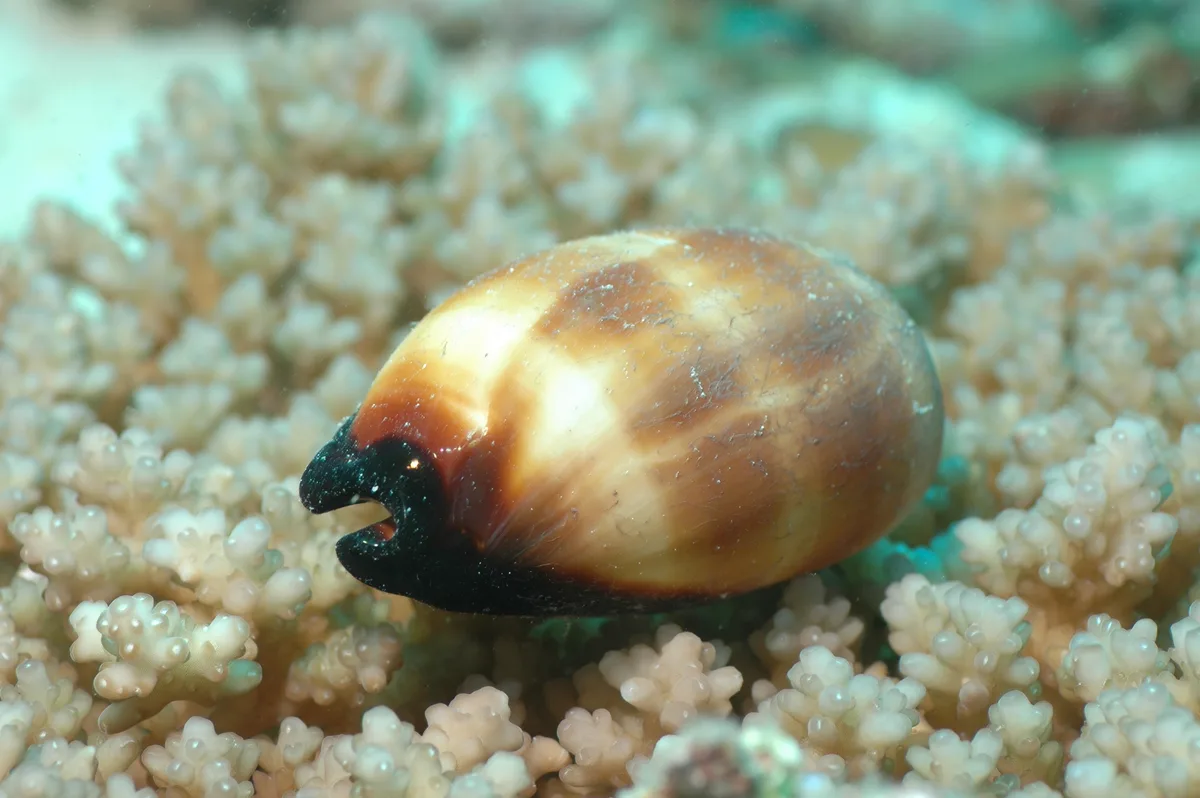
On this species the mantle is near-black and velvety, which is where talpa, the mole, comes from. Pull it back and the shell underneath is a different animal entirely: yellowish to tan, crossed by three or four broad red-brown bands, with darker ends.
At over eleven centimeters (4.4 in) this is the largest cowrie on the reef, big enough that a hand can barely close around it.
It spends daylight jammed deep under a ledge or in a crevice and comes out after dark to graze. Linnaeus named it in 1758, in the book that started scientific naming, and shell collectors have wanted it ever since.
- large: over eleven centimeters, the biggest cowrie on this reef
- yellowish to tan shell crossed by three or four broad red-brown bands
- the living animal is almost black and velvety, quite unlike its own shell
- underside and shell ends darker than the middle