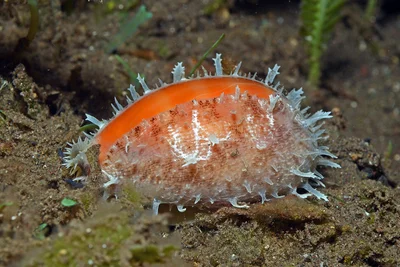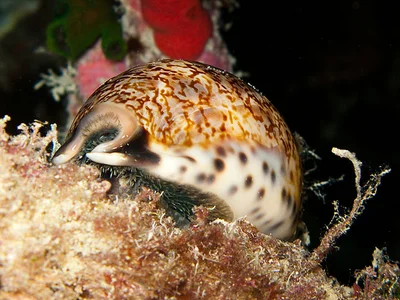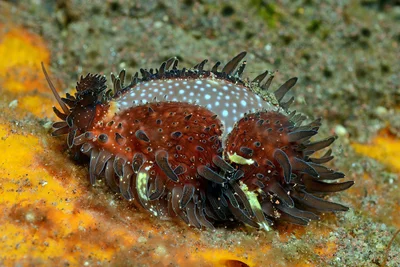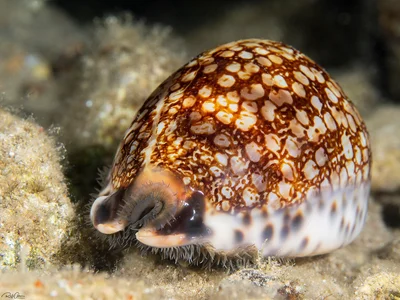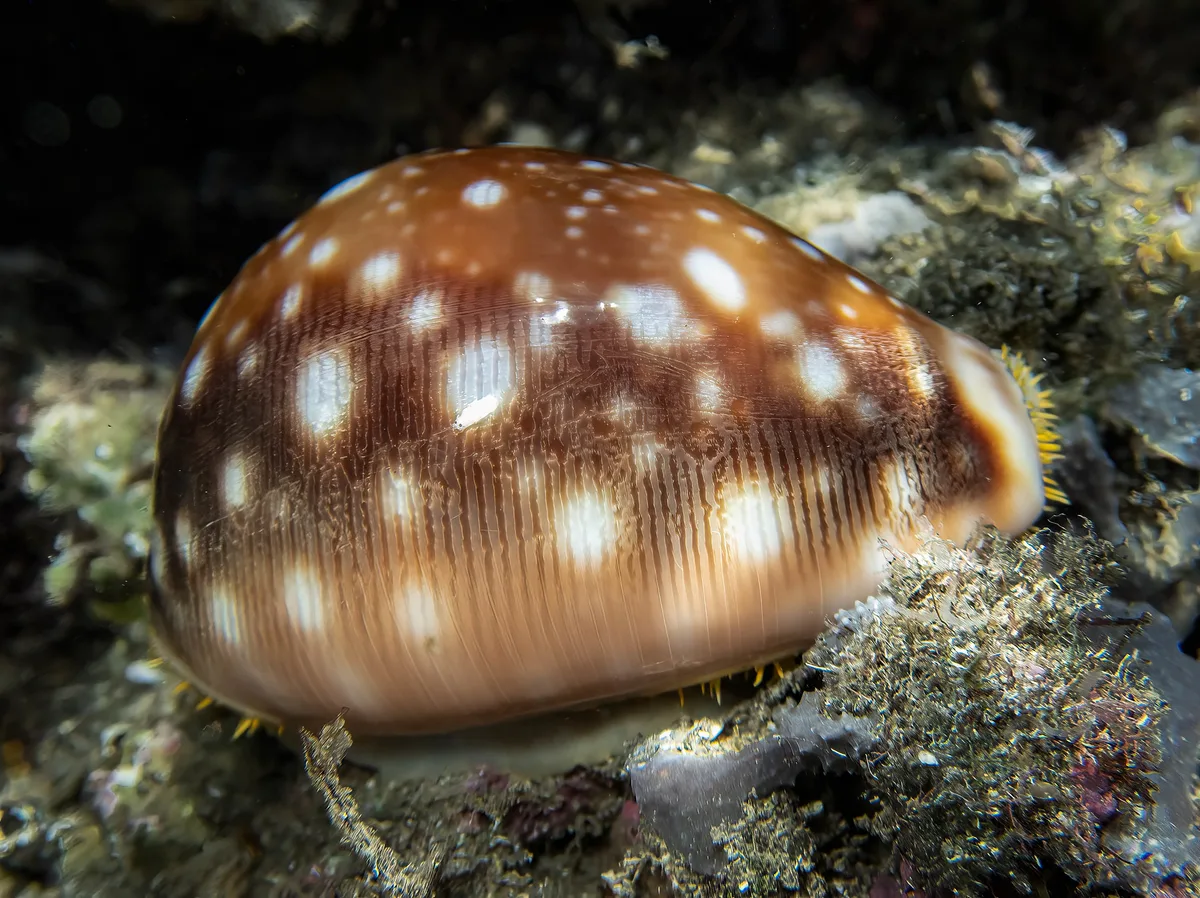
One of the bigger cowries here, up to 10 cm (4 in), fawn to tan with white spots of noticeably different sizes scattered across the back and faint pale bands crossing it. The sides are paler and finely speckled brown, which separates it from the plainer species at a glance.
Size makes it a target. The larger cowries have been collected for the shell trade for as long as there has been one, and a big polished specimen sells for real money, so the biggest animals disappear first from any reef with traffic. A living one under a ledge is a better find than the same shell in a shop, and it stays a find only if it is left there.
The name means calf, from the Latin vitellus, and refers to the spotted hide the shell was thought to resemble. Linnaeus named a great many cowries in 1758, and the pattern of naming them after animal skins and coats runs right through the family.
- large fawn to tan shell scattered with white spots of different sizes
- pale bands crossing the back, faint but visible
- sides paler than the back, with fine brown speckling
- shell to 10 cm