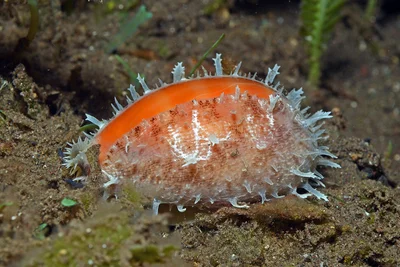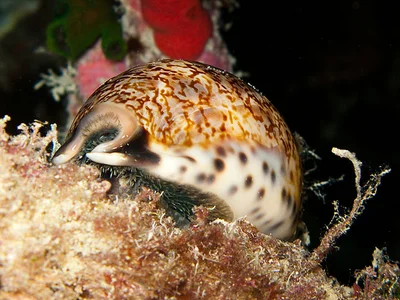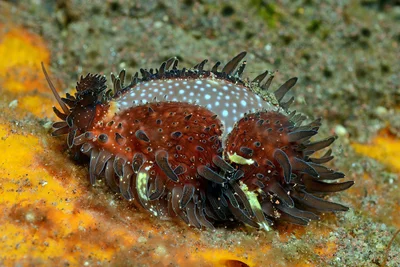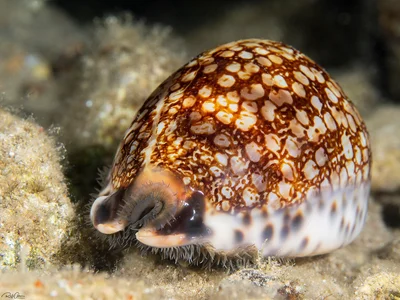
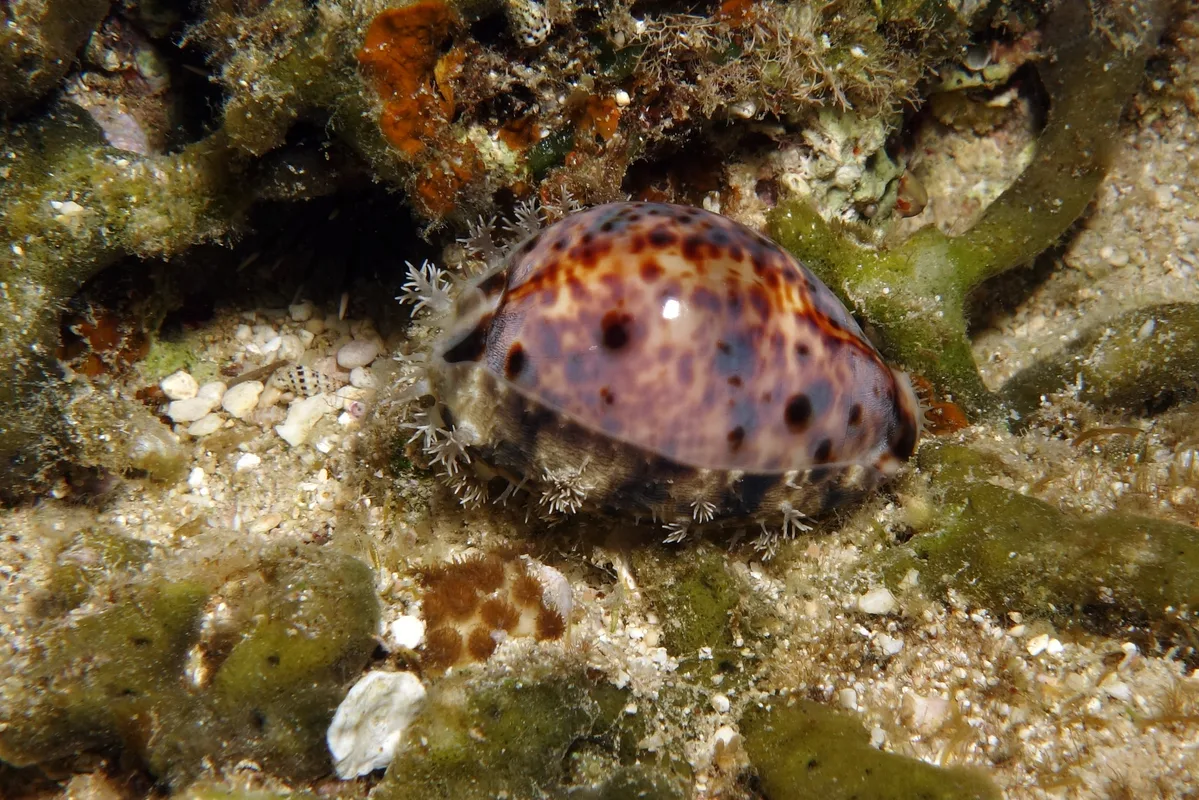
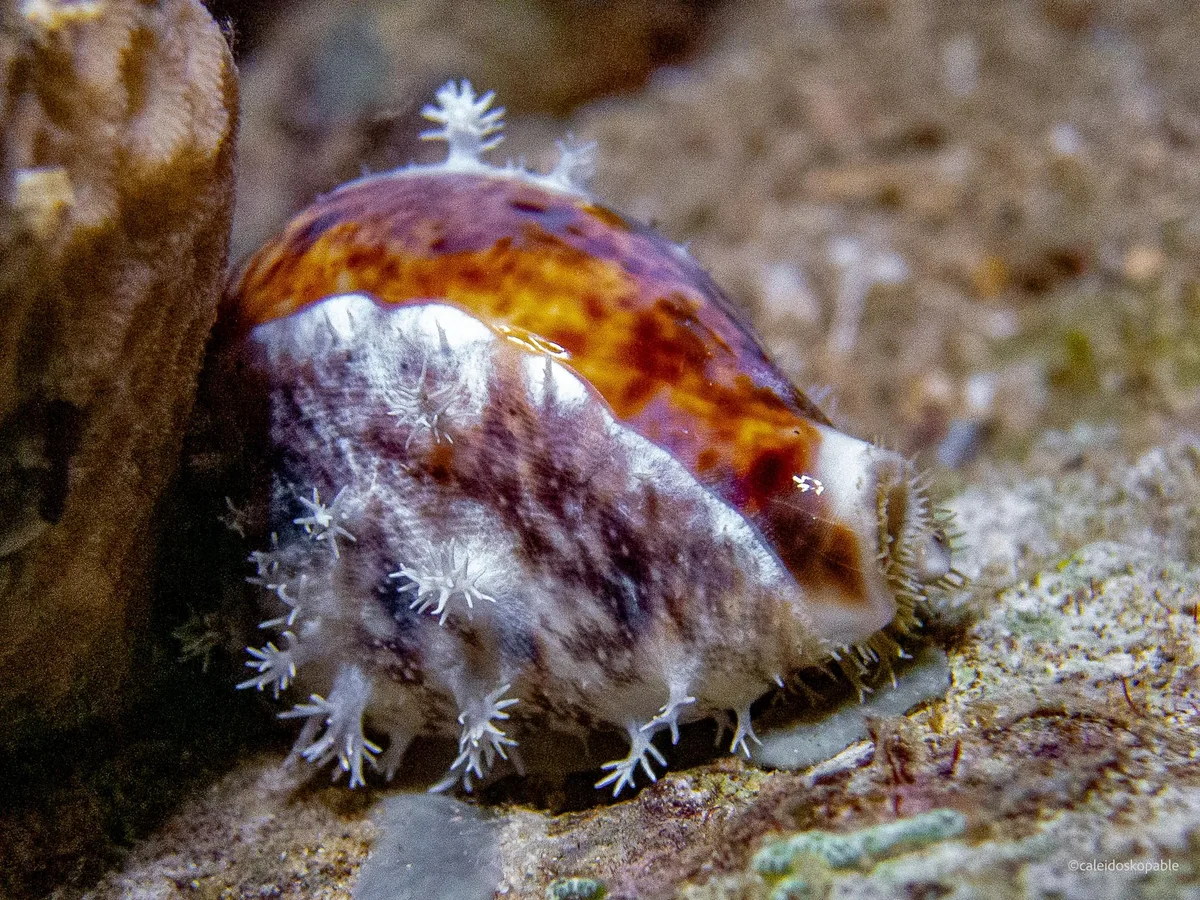
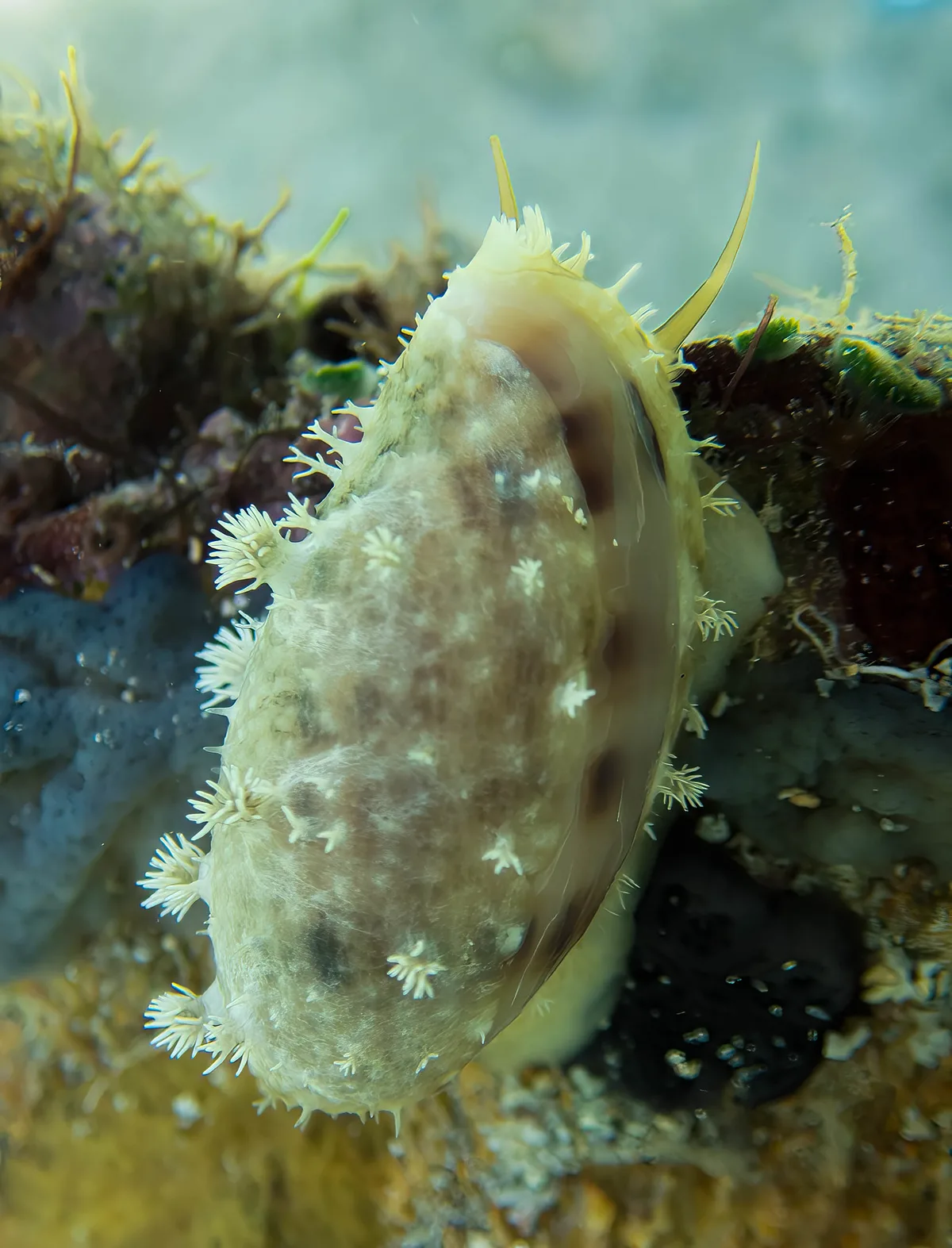
Most cowries hide their shell under an opaque mantle. This one does not, and the effect is worth catching.
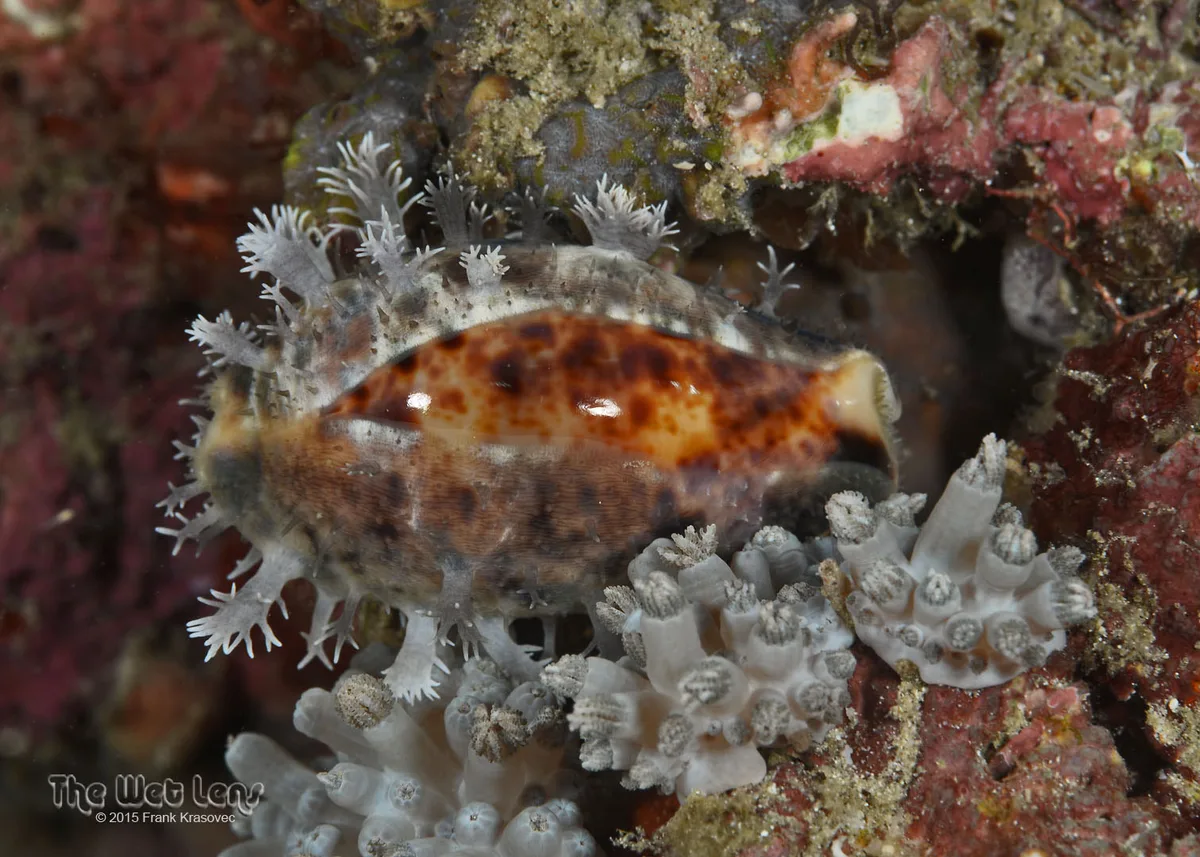
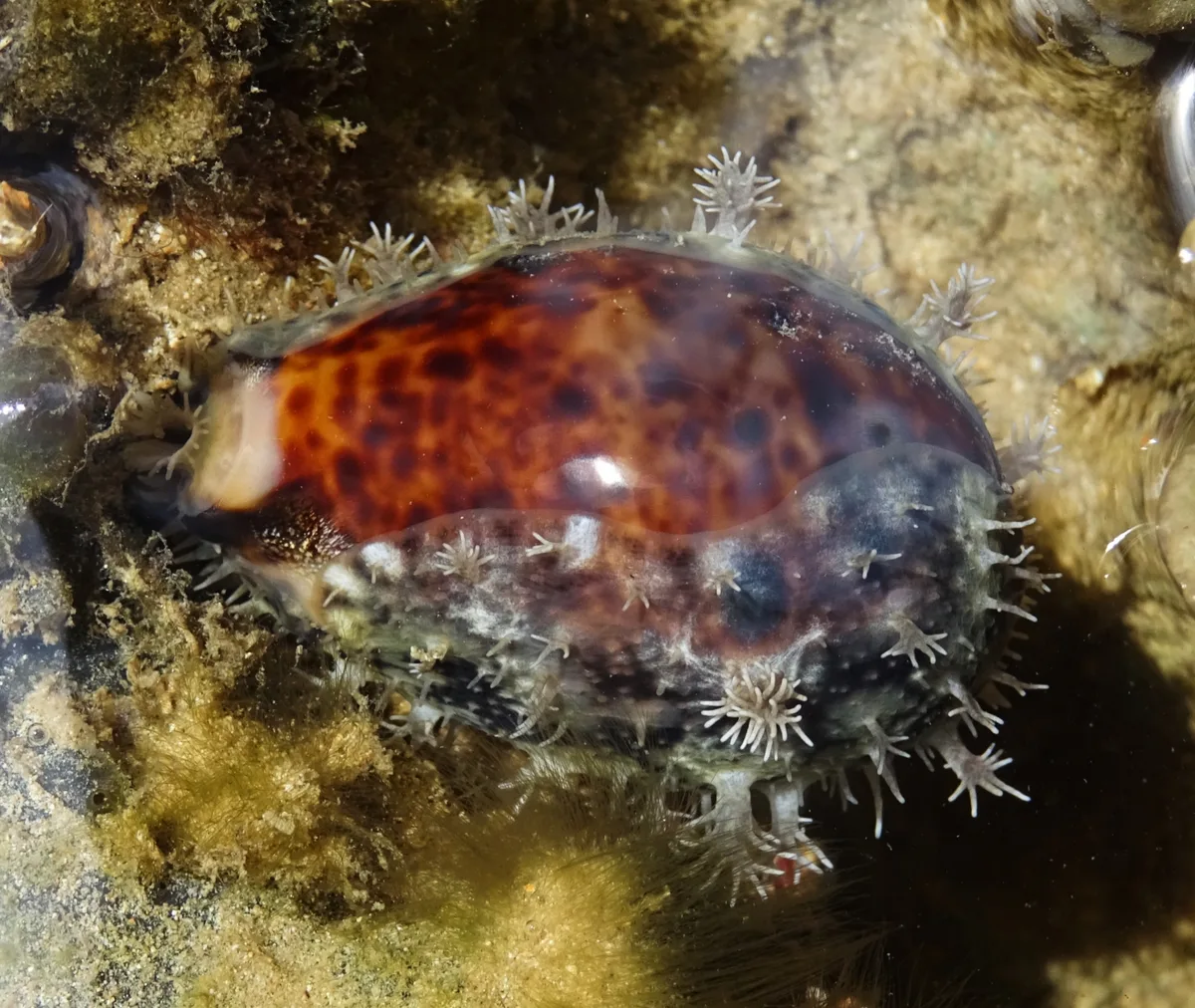
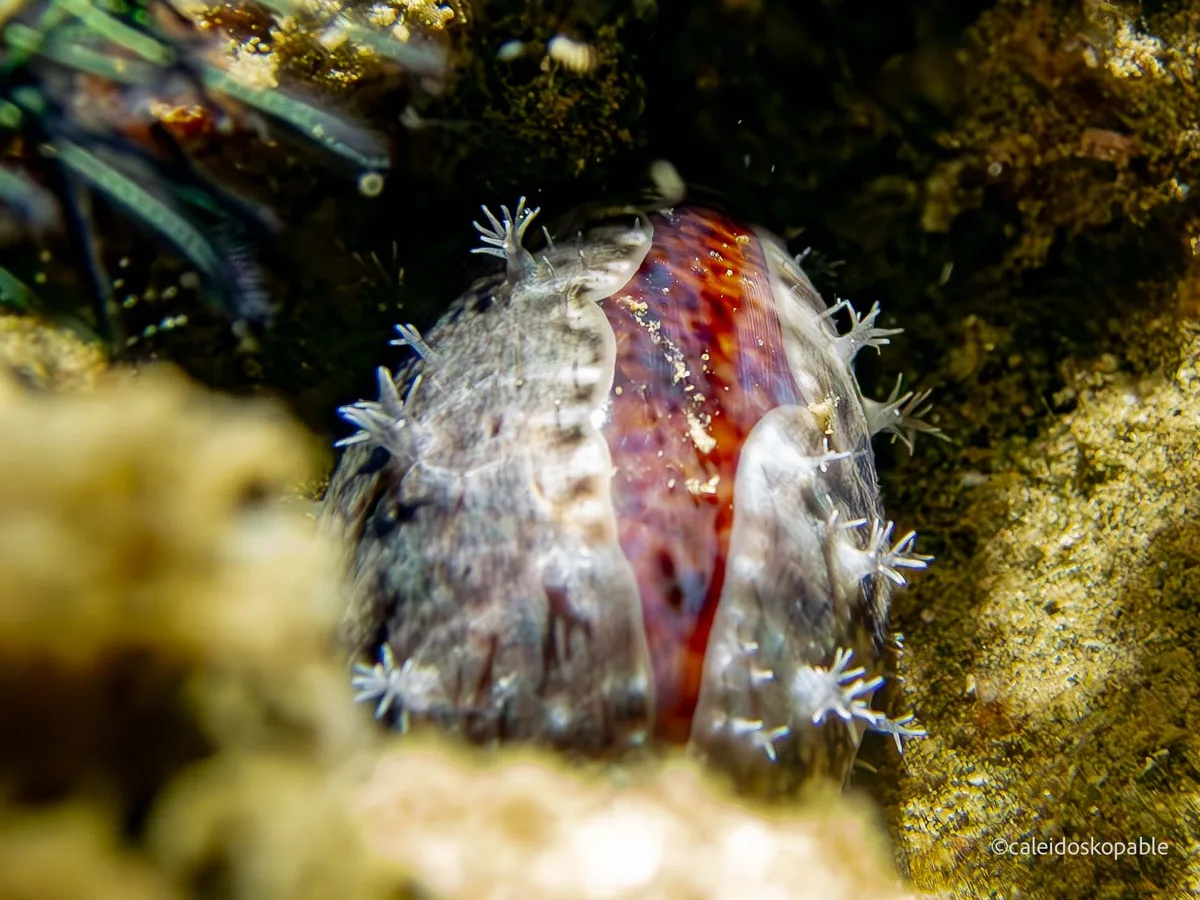
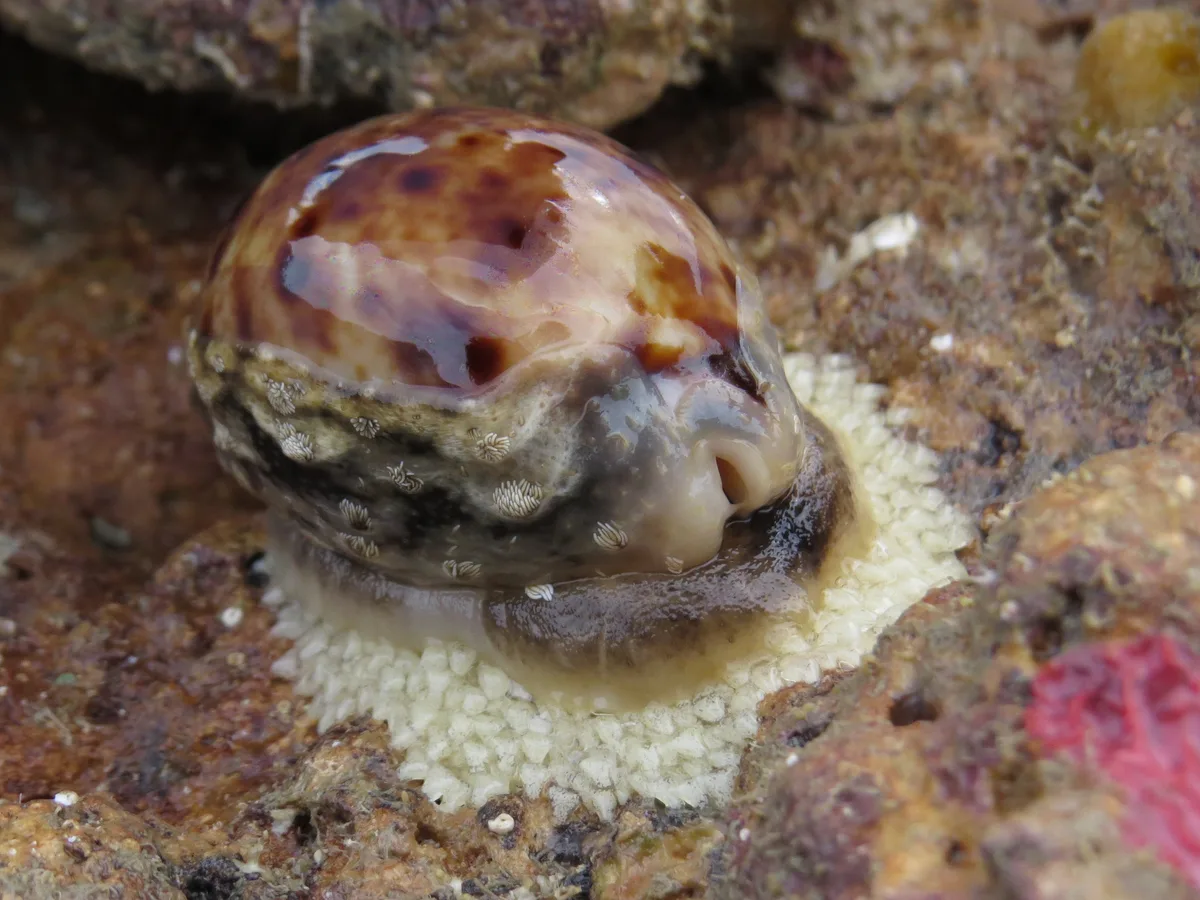
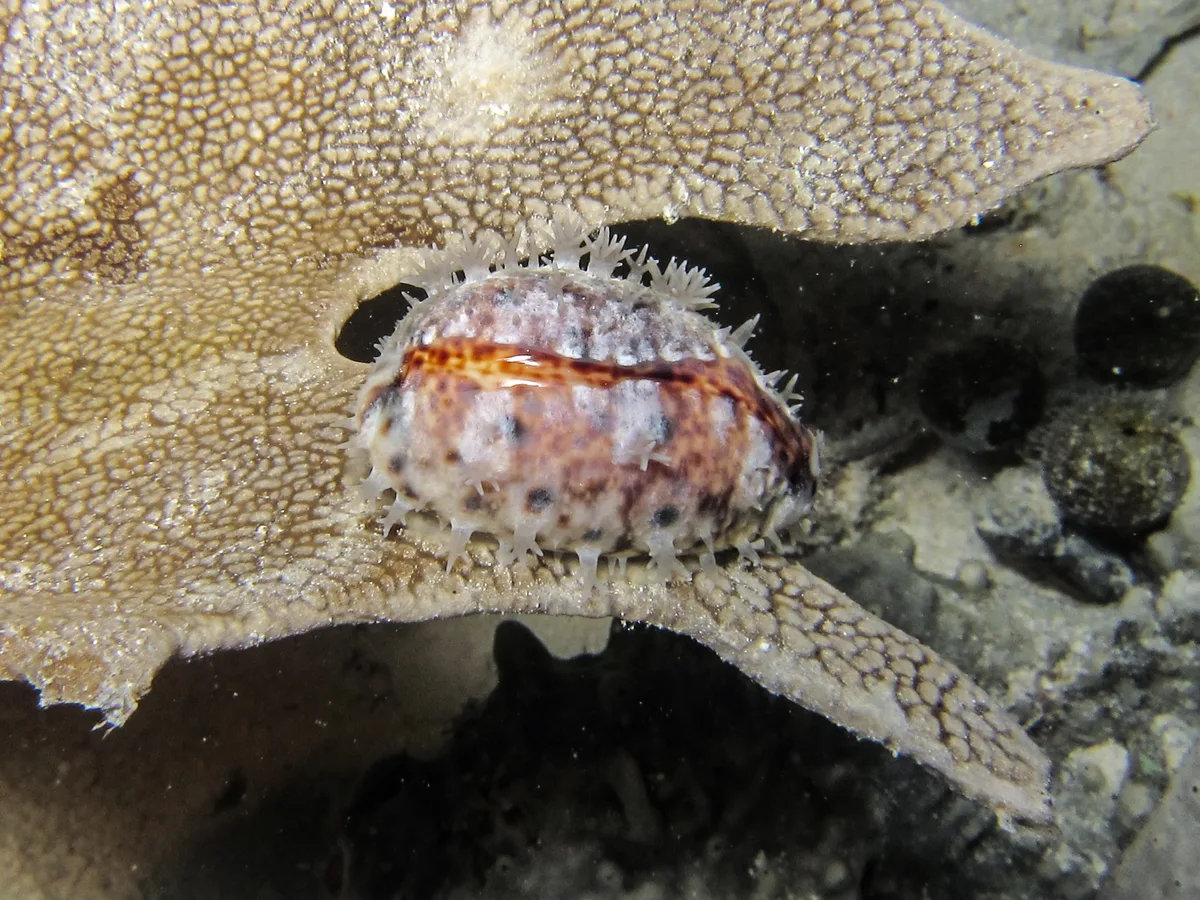
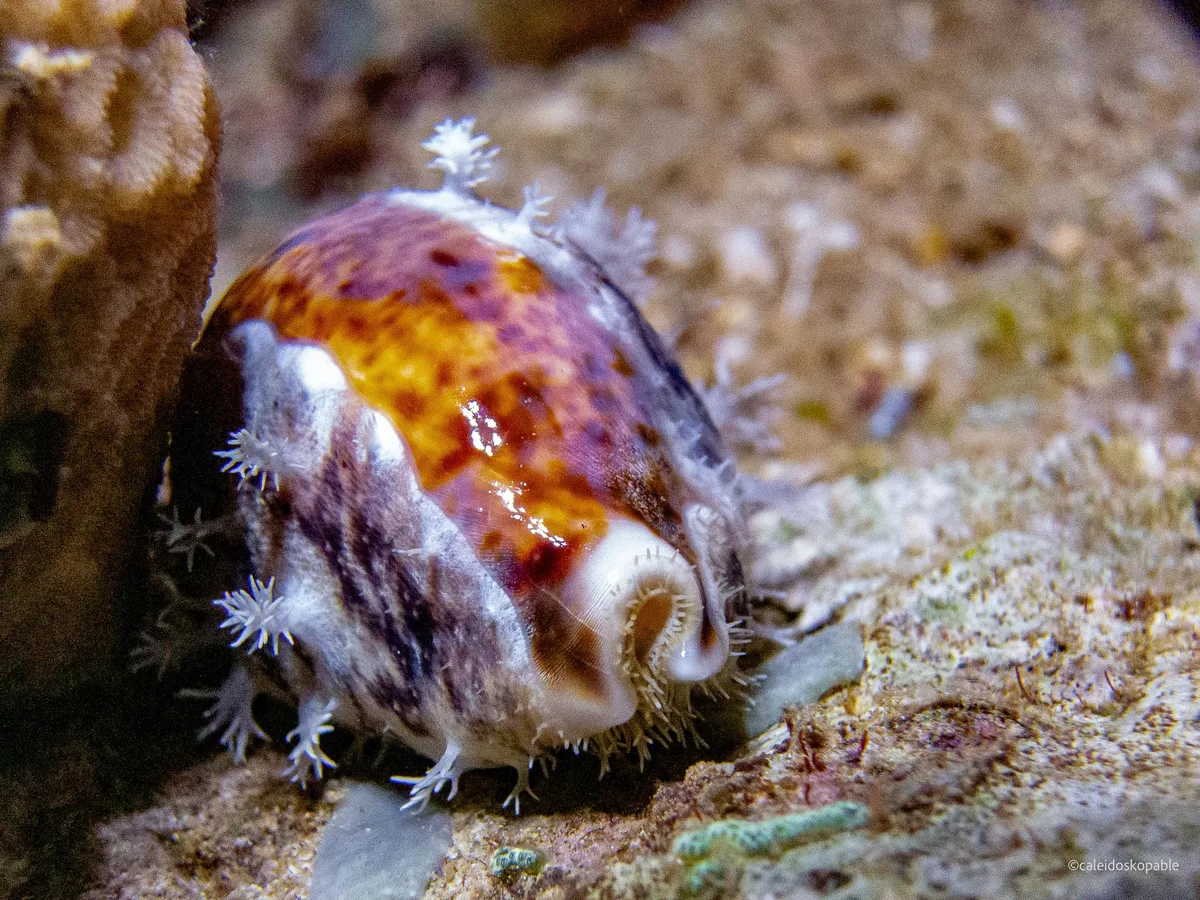
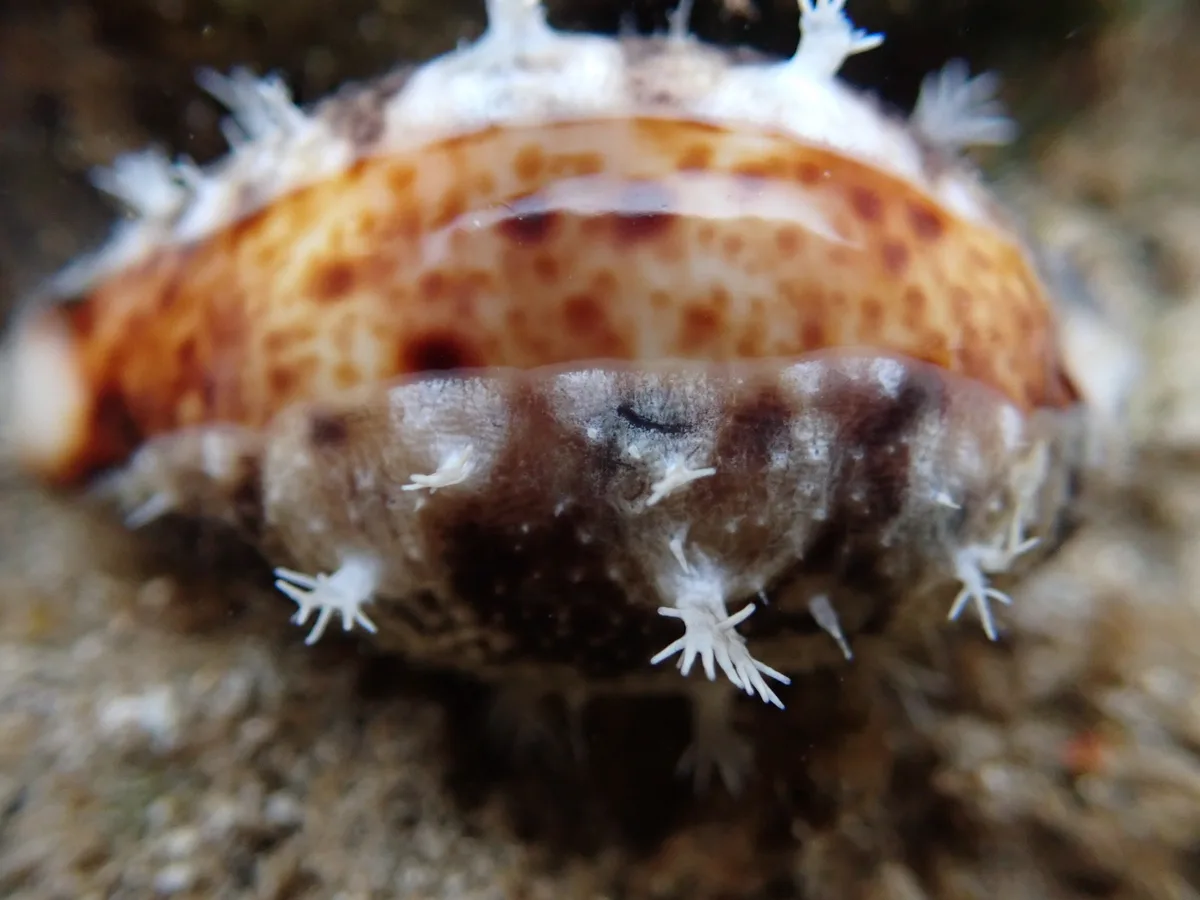
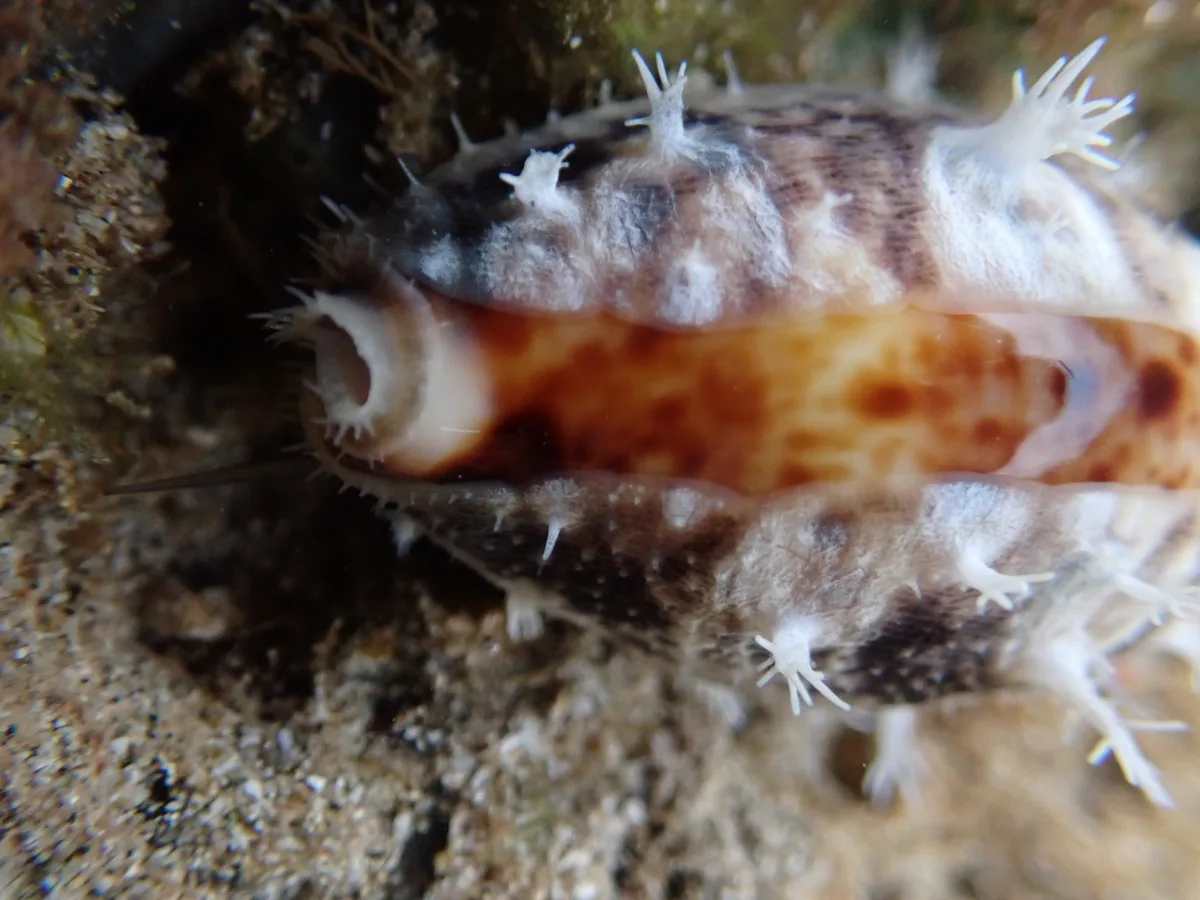
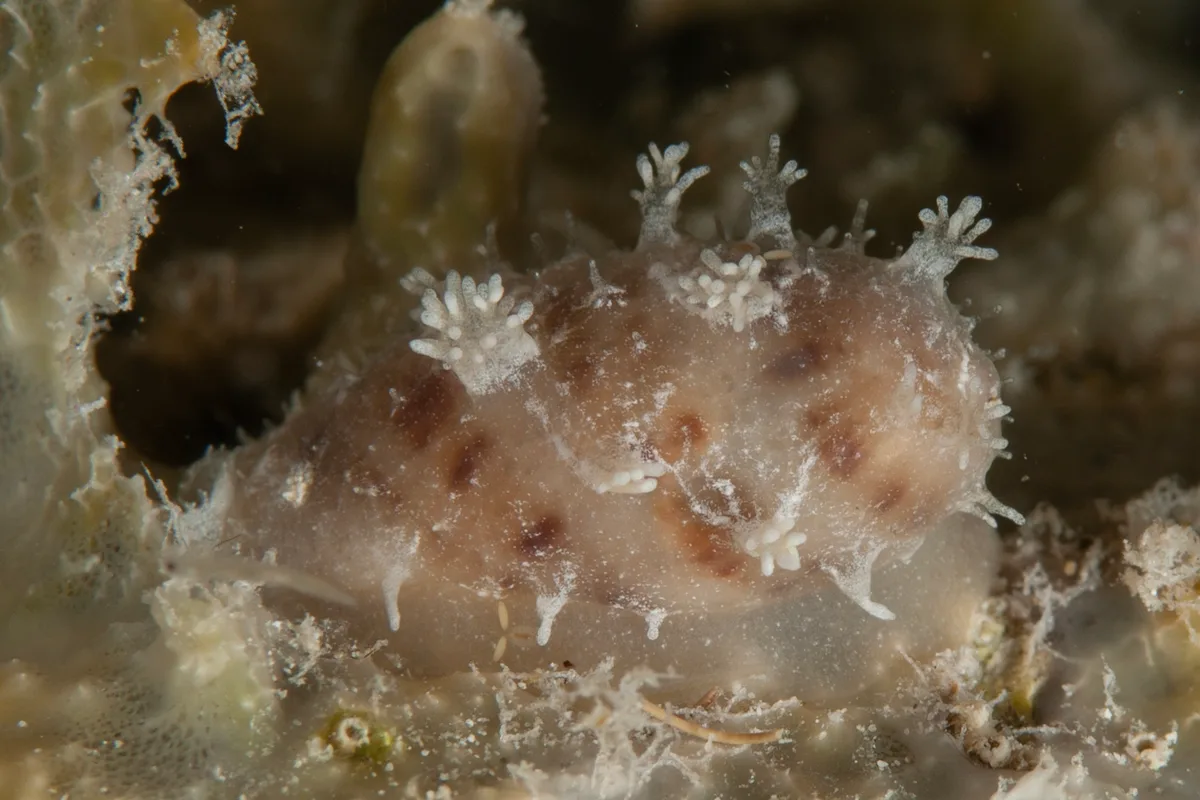
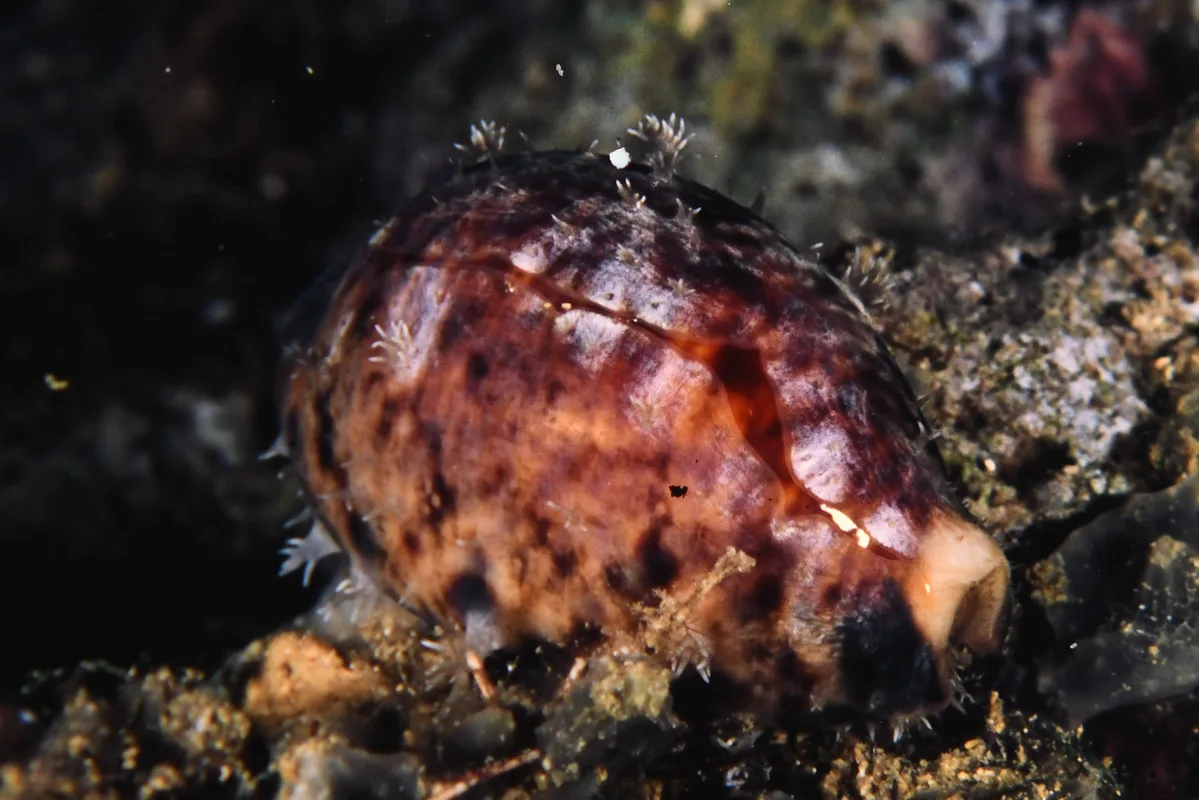
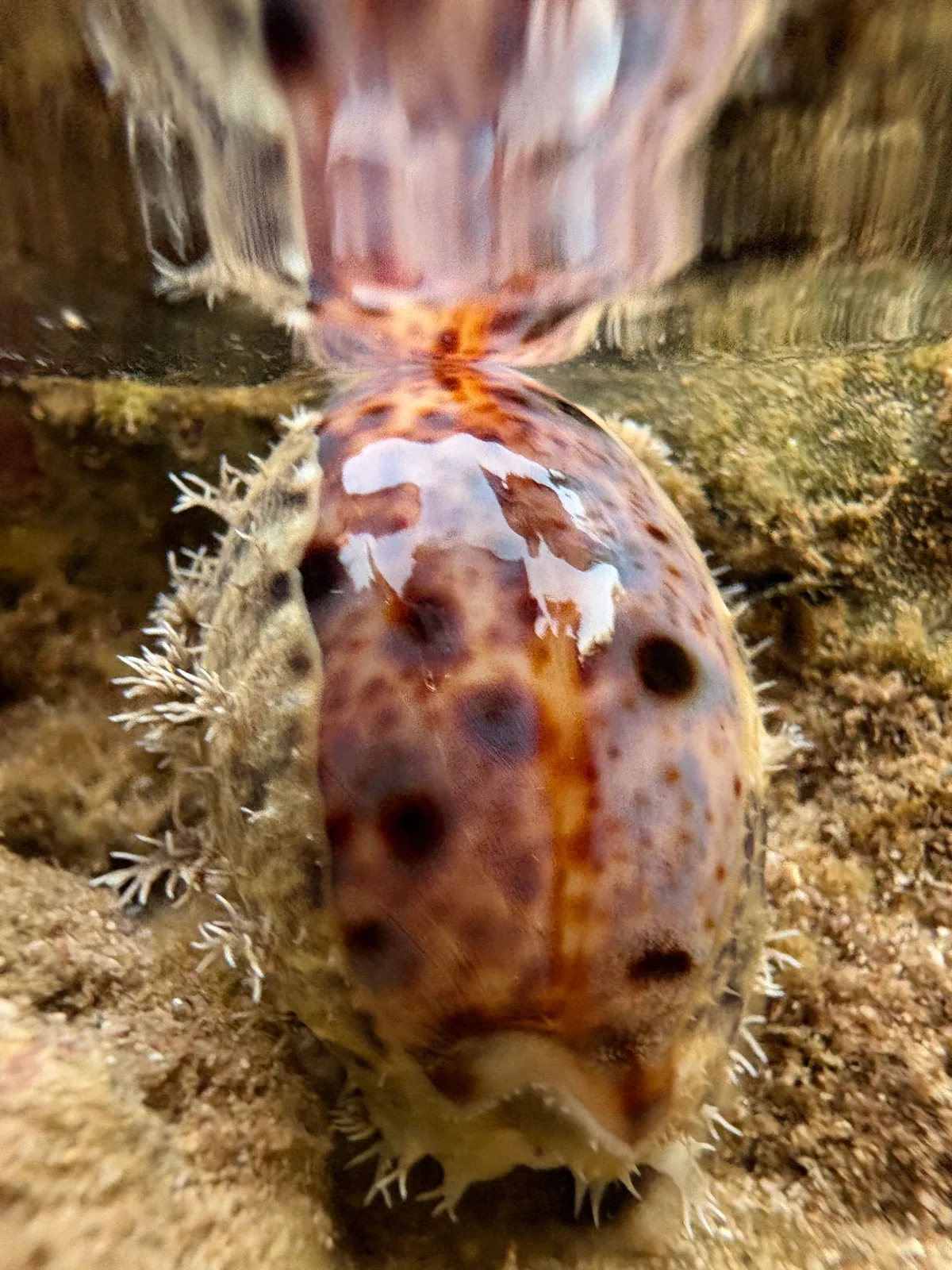
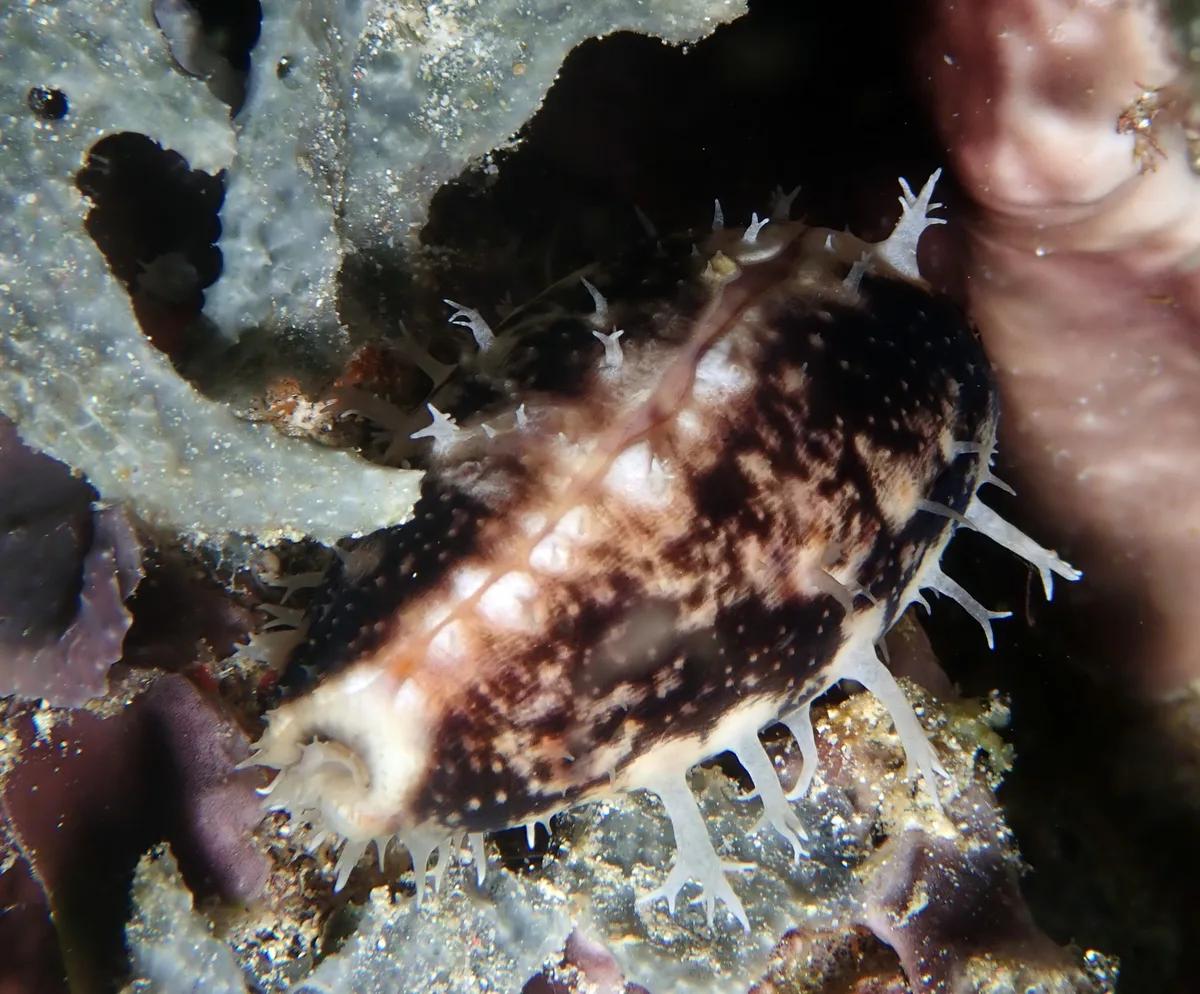
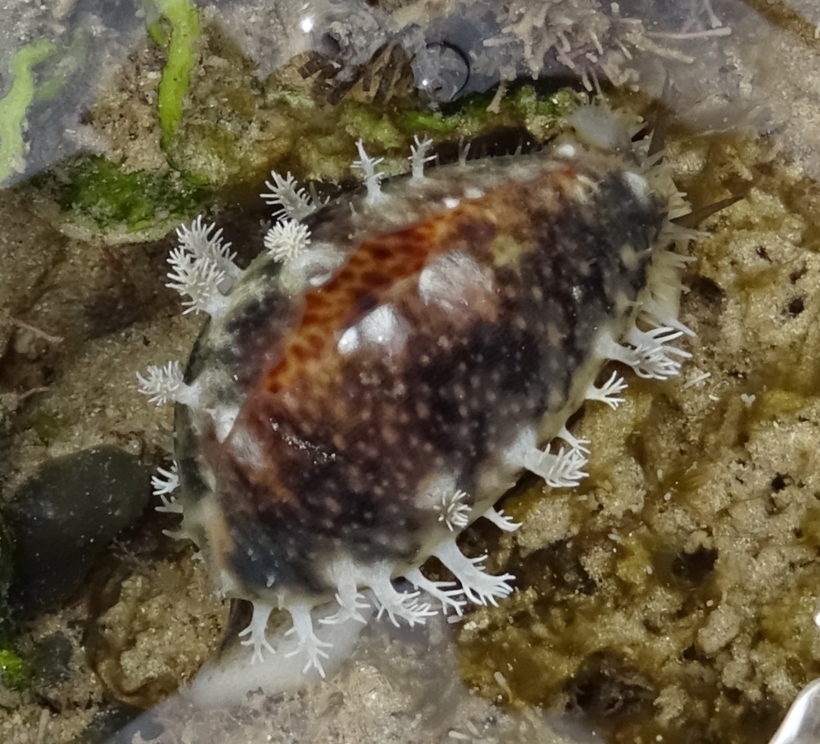
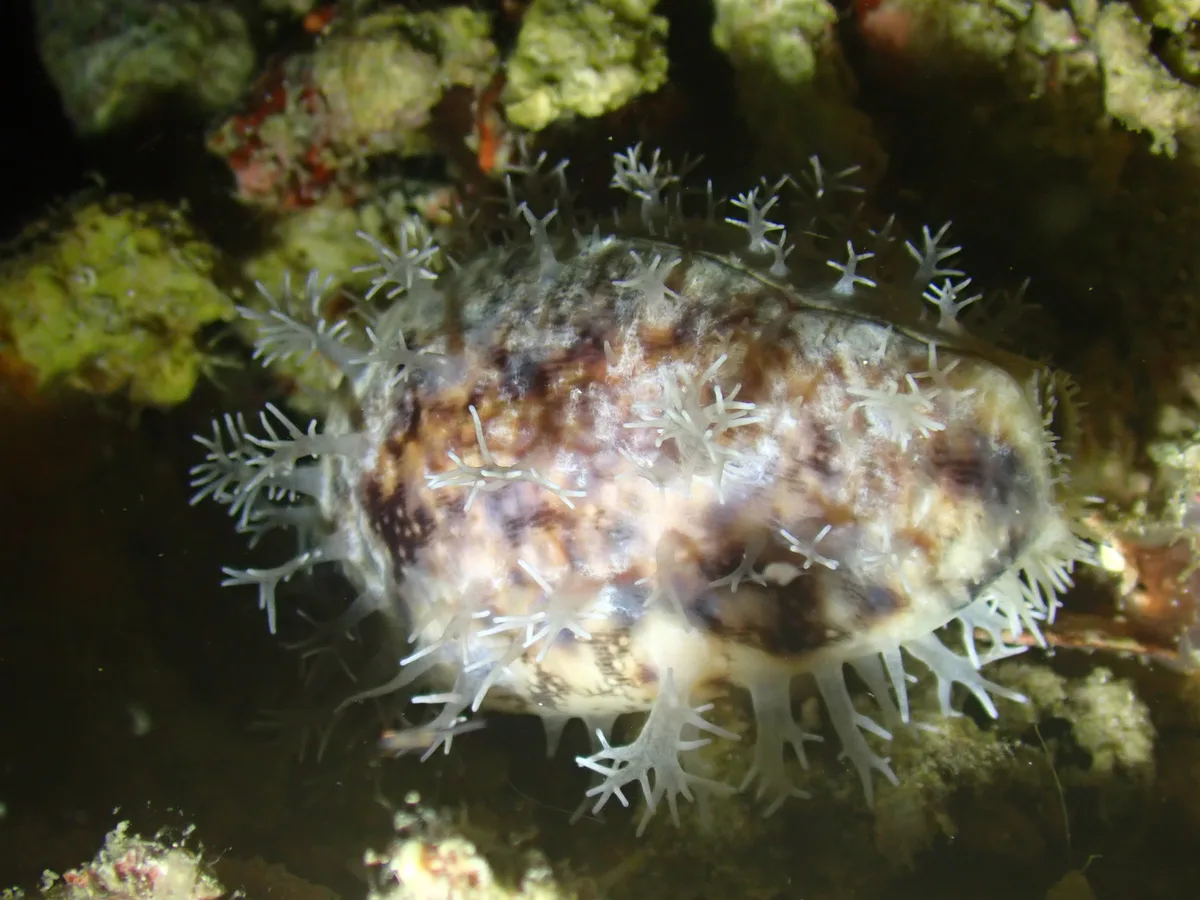
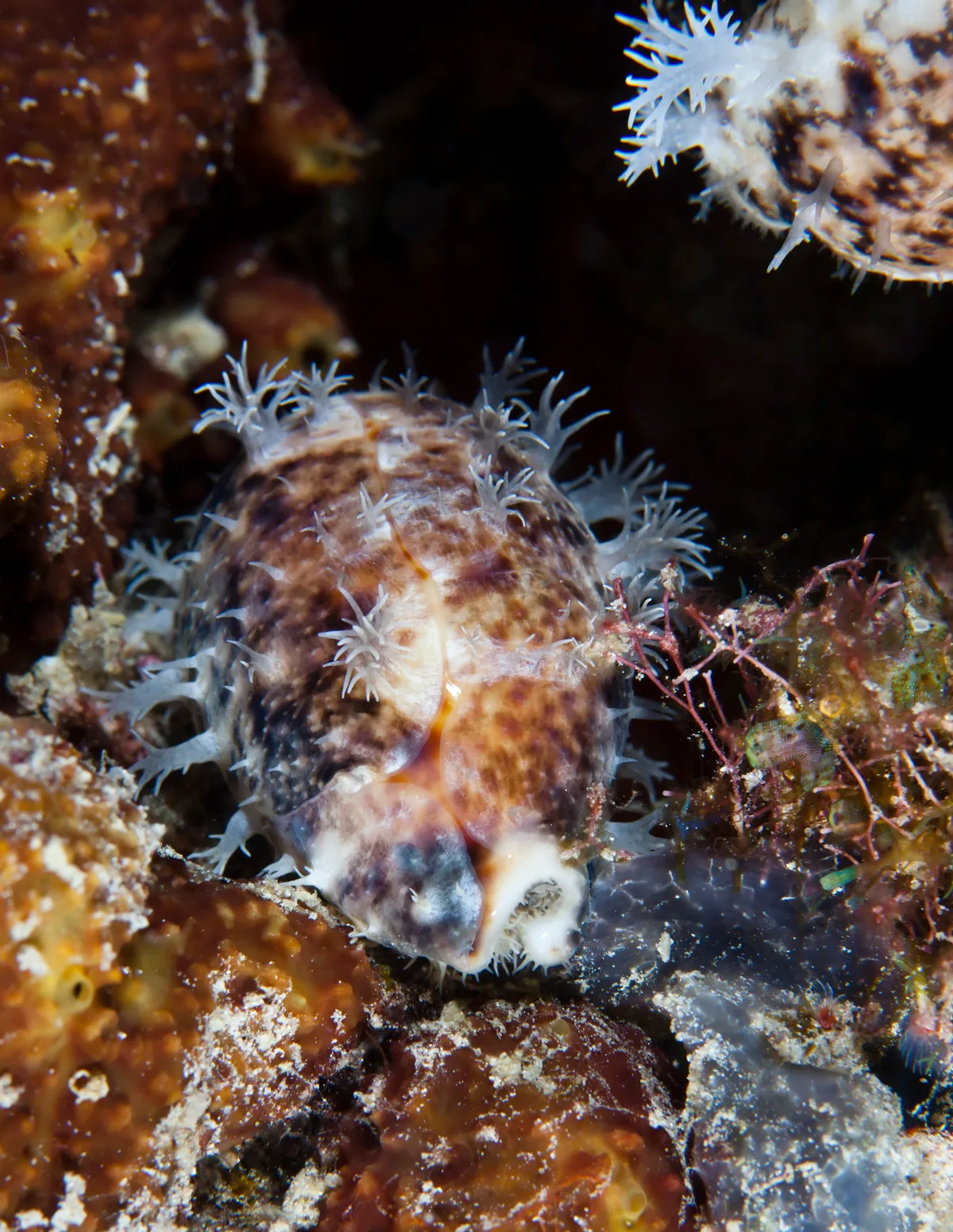
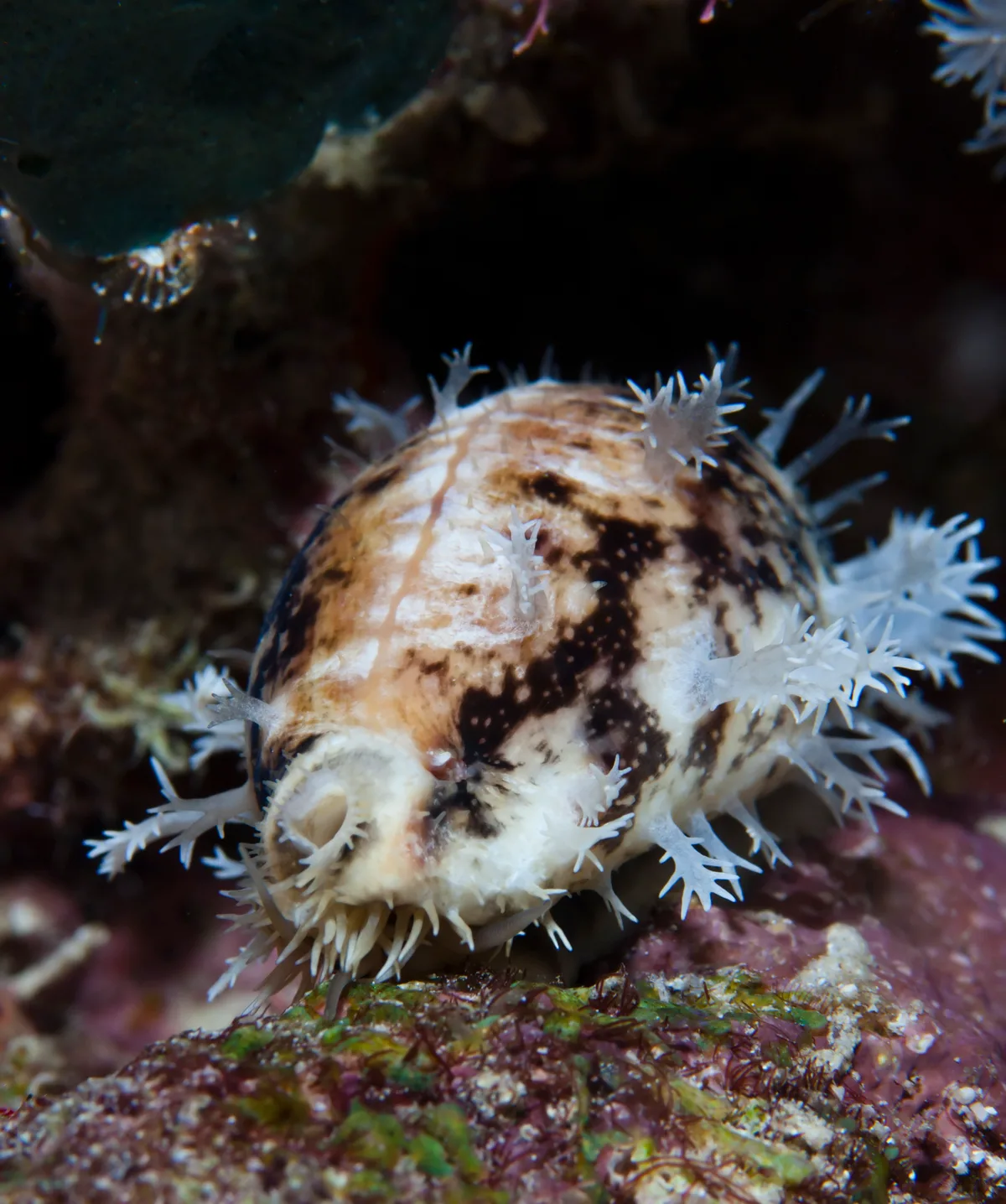
The living animal wraps its shell in two flaps of mantle that fold up from either side and meet along the back. On this species those flaps are translucent, and covered in fine branching papillae that stand up off the surface like a low hedge. Light goes through them, so the brown spots of the shell underneath show as blurred shapes seen through frosted glass, with the papillae standing over the top. A cowrie in that state does not look like a shell at all; it looks like a piece of the reef that has grown a fur.
That mantle is also the shell's maker. It lays down new material from the outside as the animal grows, which is why a live cowrie is polished and a dead one on the sand goes chalky and dull.
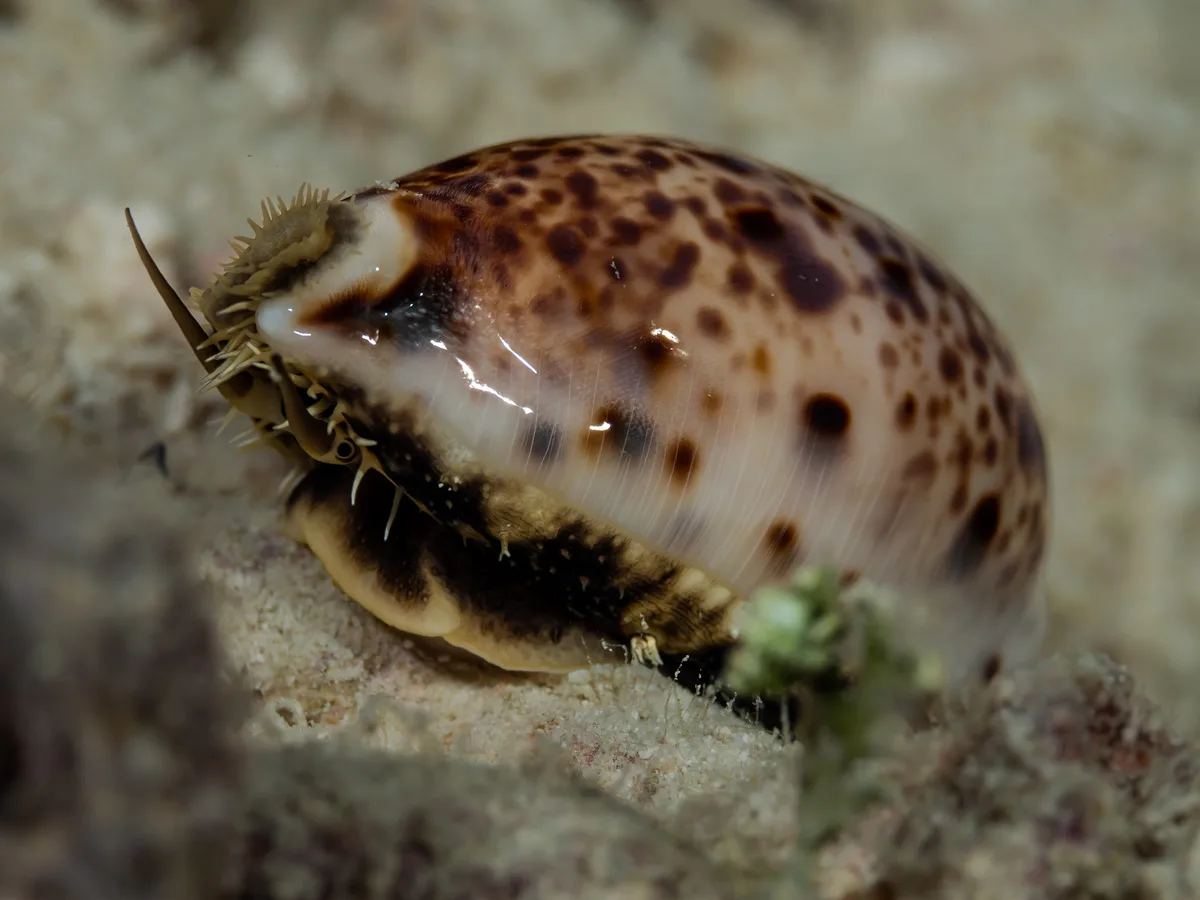
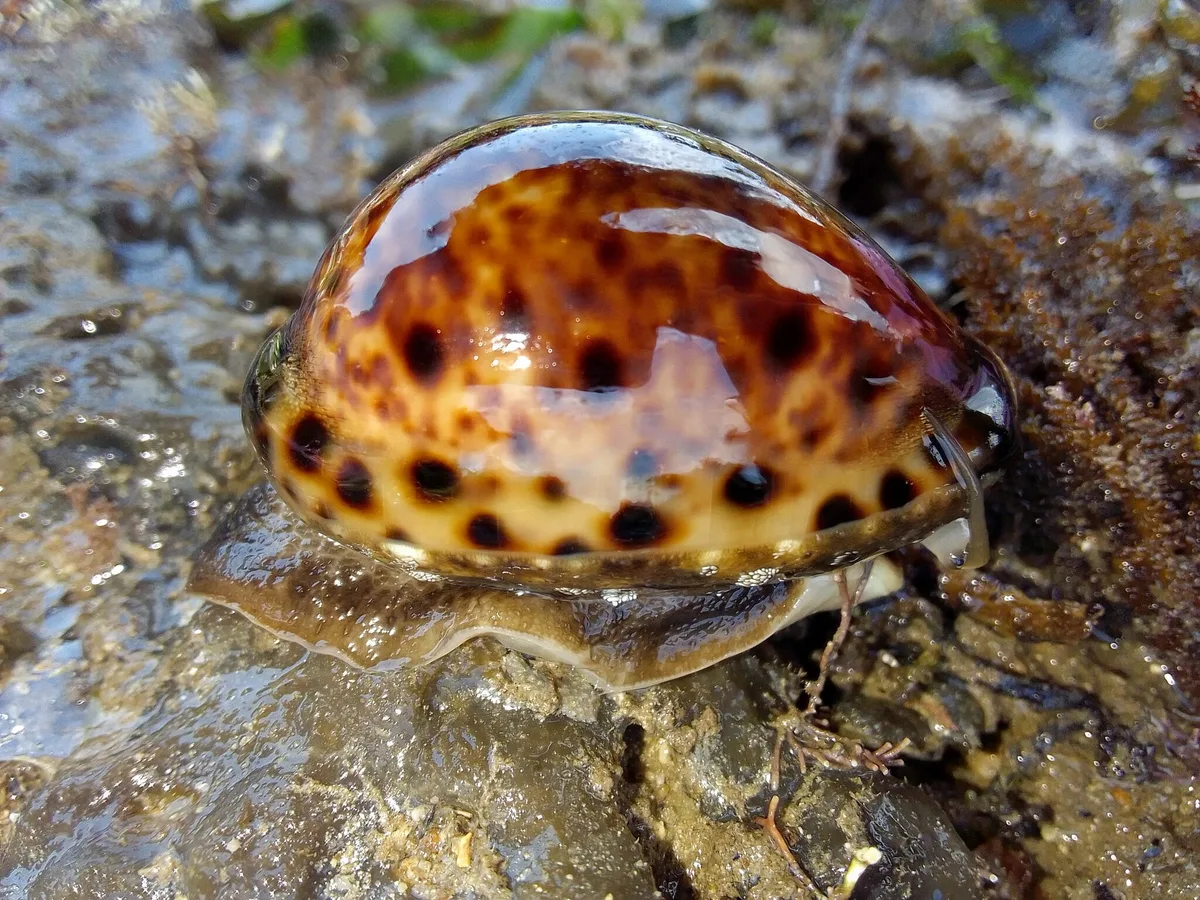
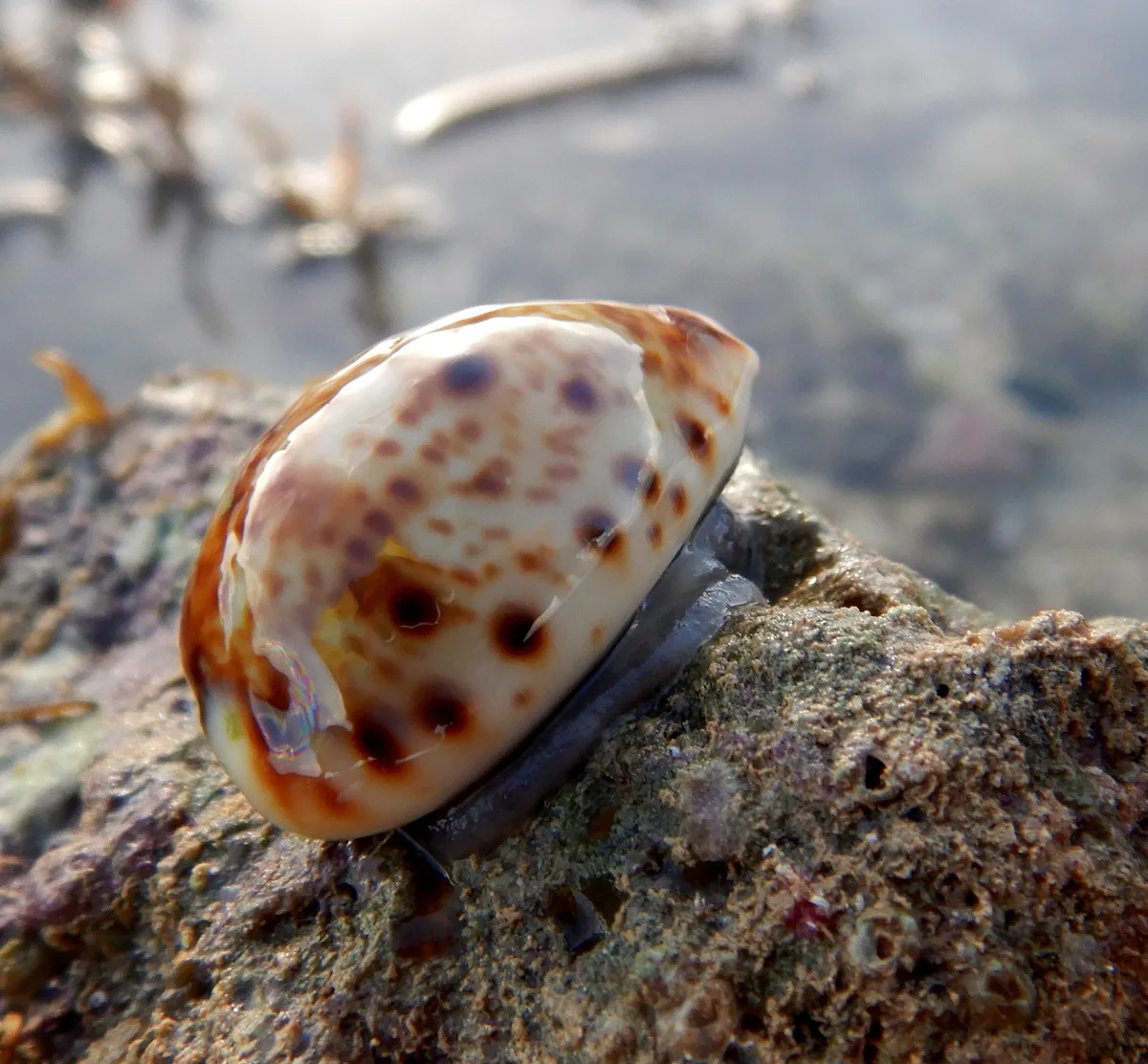
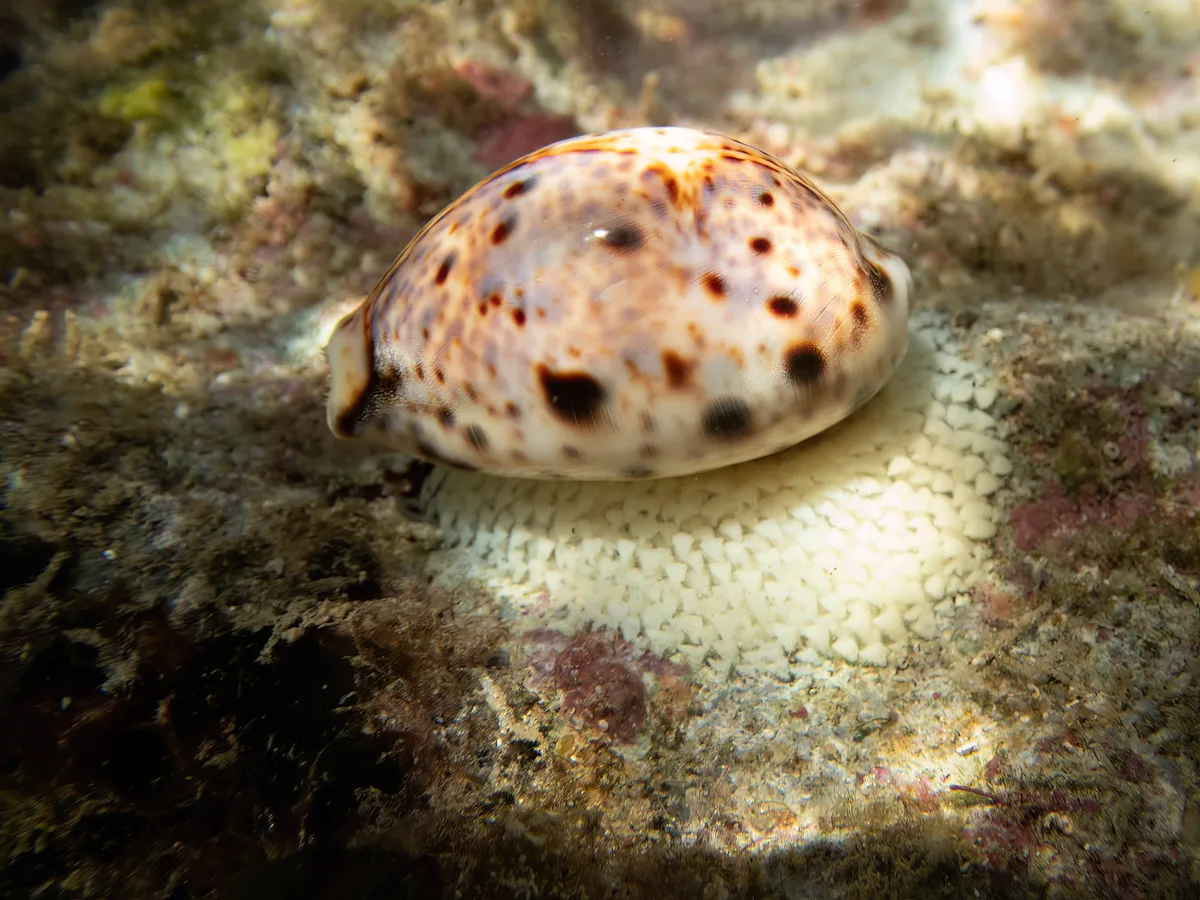
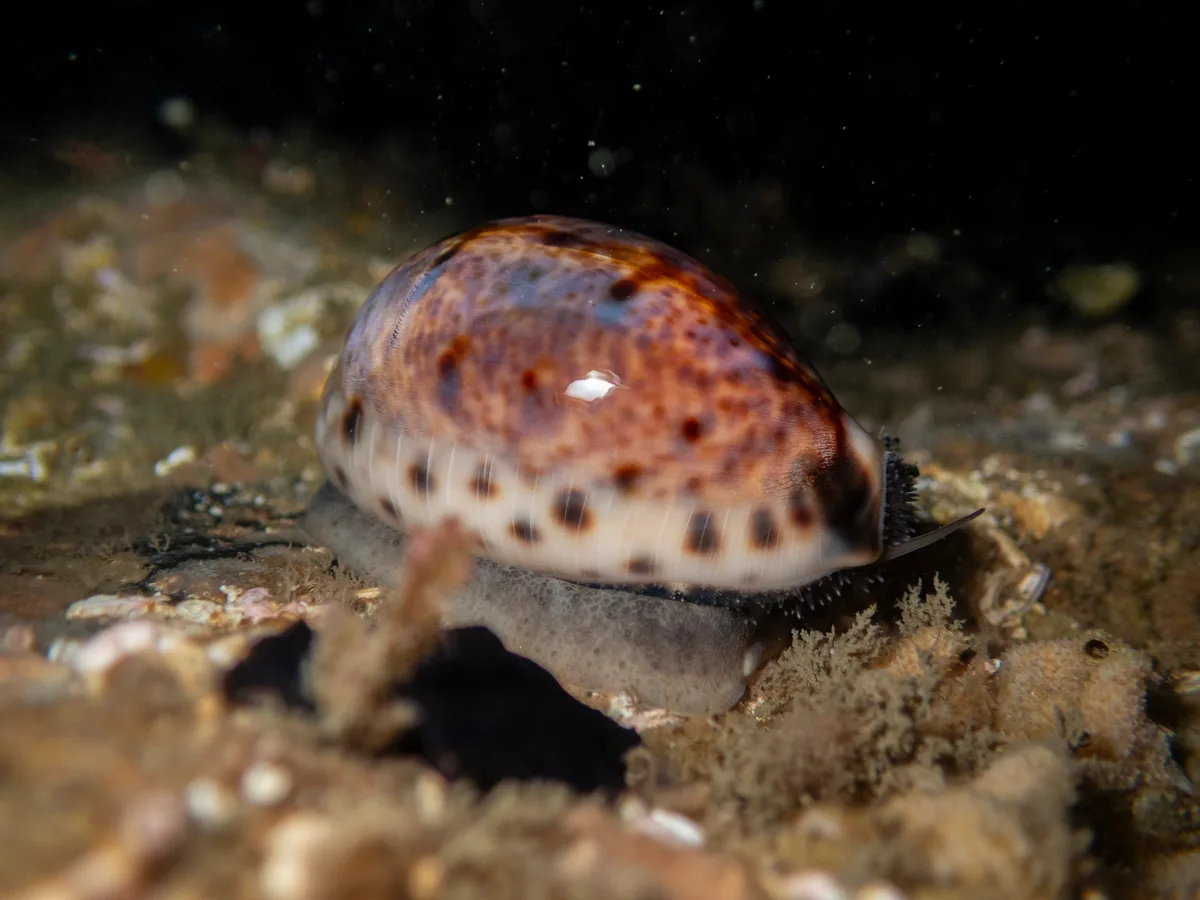
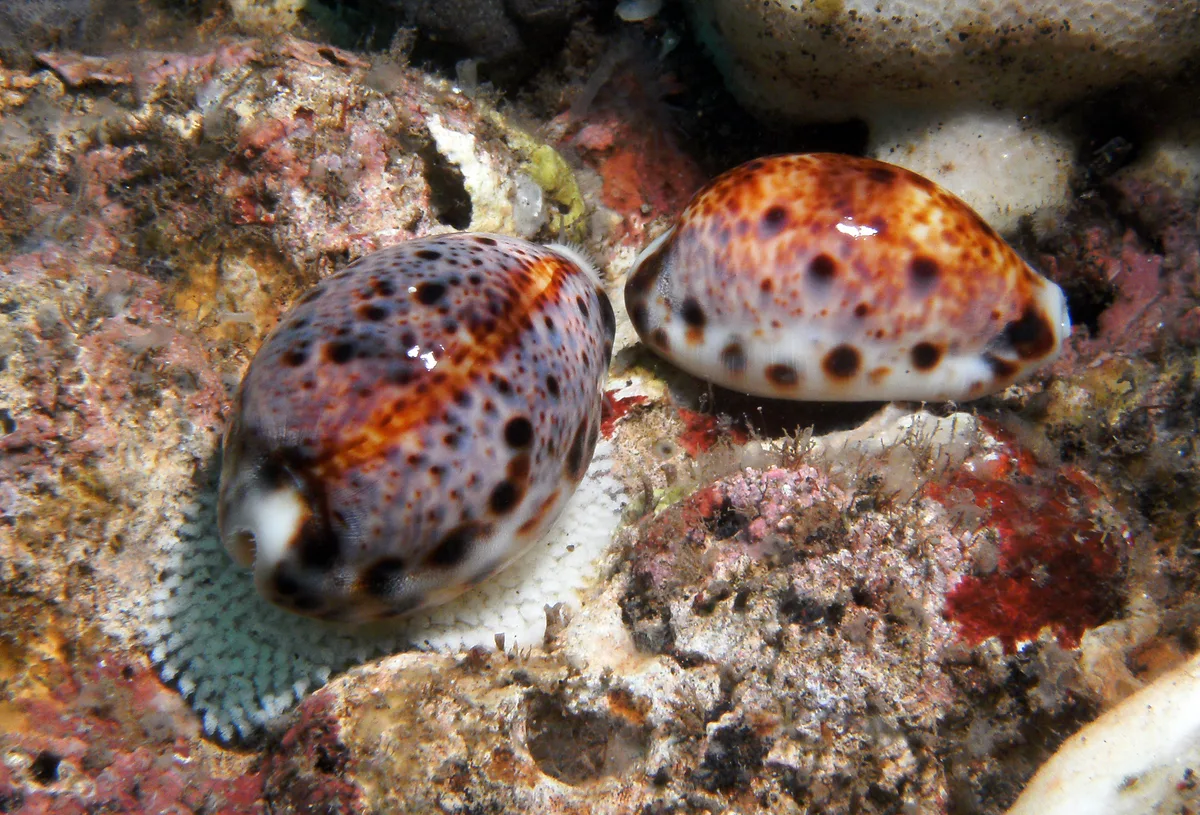
Pull the mantle away and the shell is white to tan with dark brown spots of unequal size, and it is those spots the name refers to: lynx, for a spotted cat.
Up to eight and a half centimeters (3.3 in), out at night on reef slopes and rubble, wedged under a ledge through the day. Linnaeus named it in 1758.
- white to tan shell scattered with dark brown spots of uneven size
- mantle translucent, so the shell's spots show through it
- mantle surface covered in fine branching papillae
- up to eight and a half centimeters