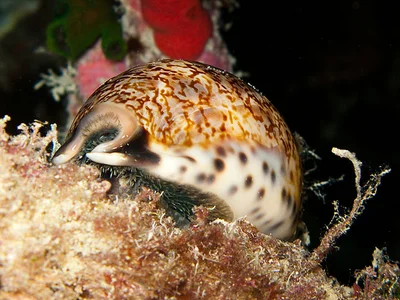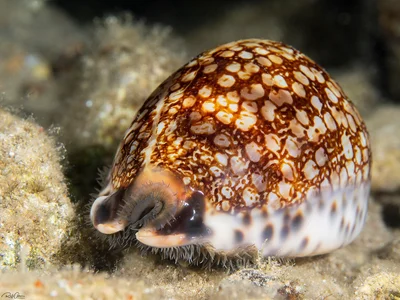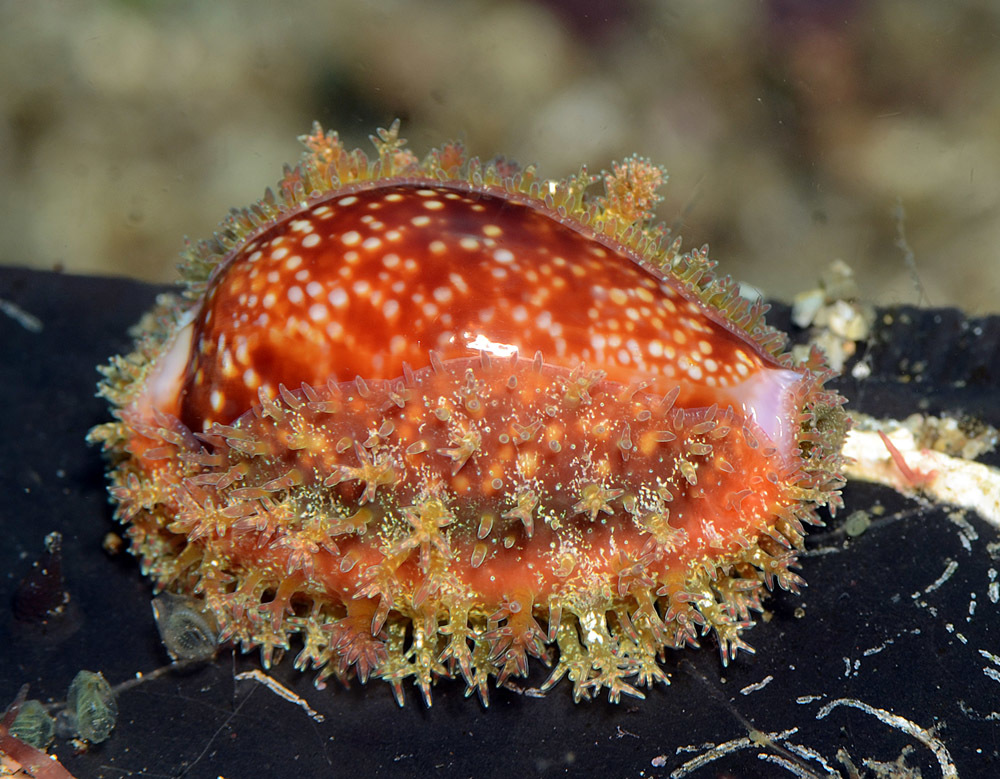
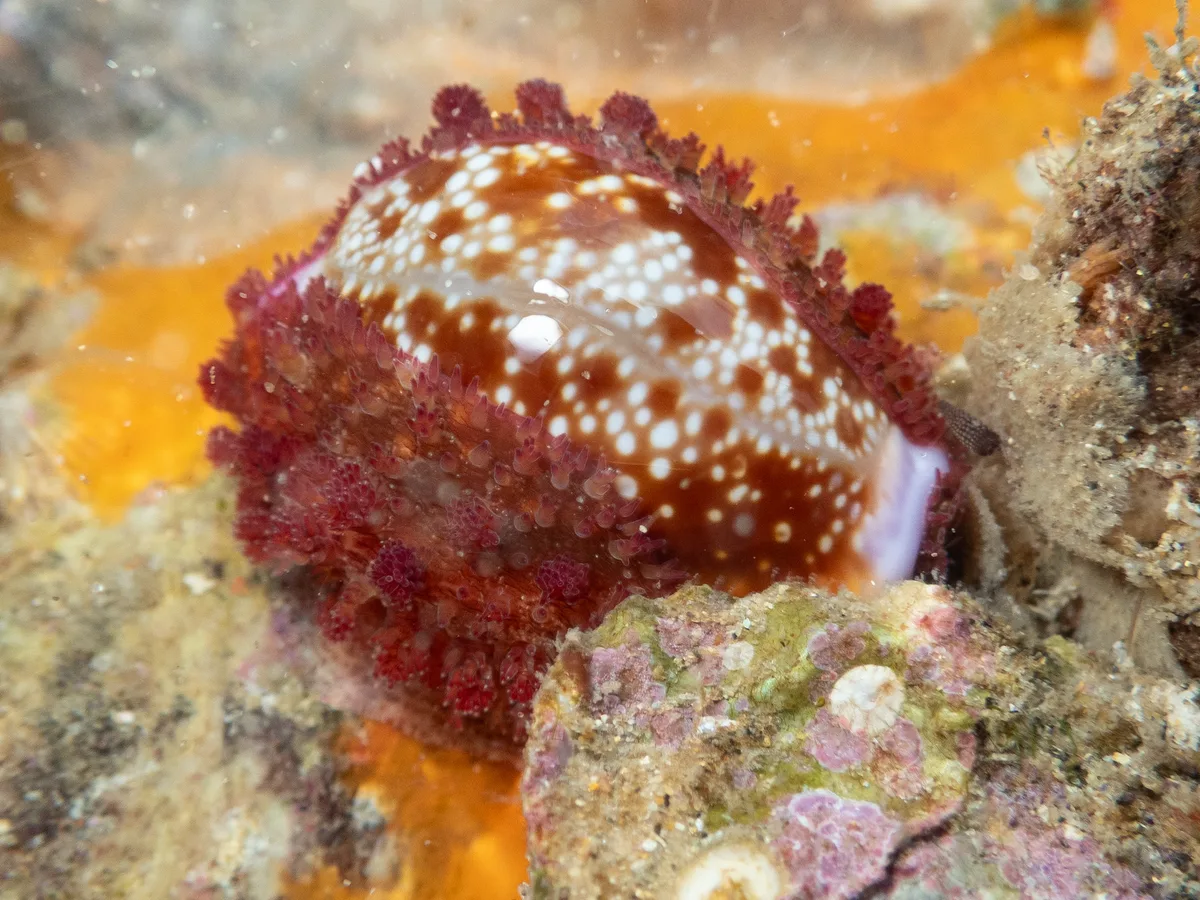
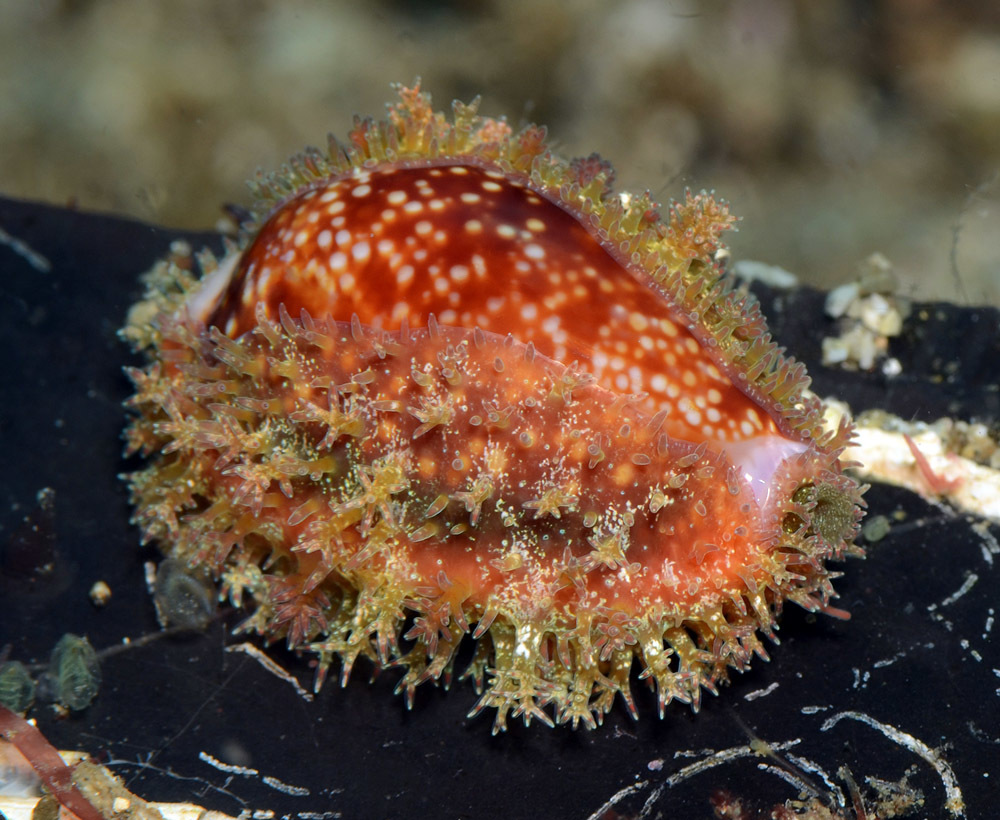
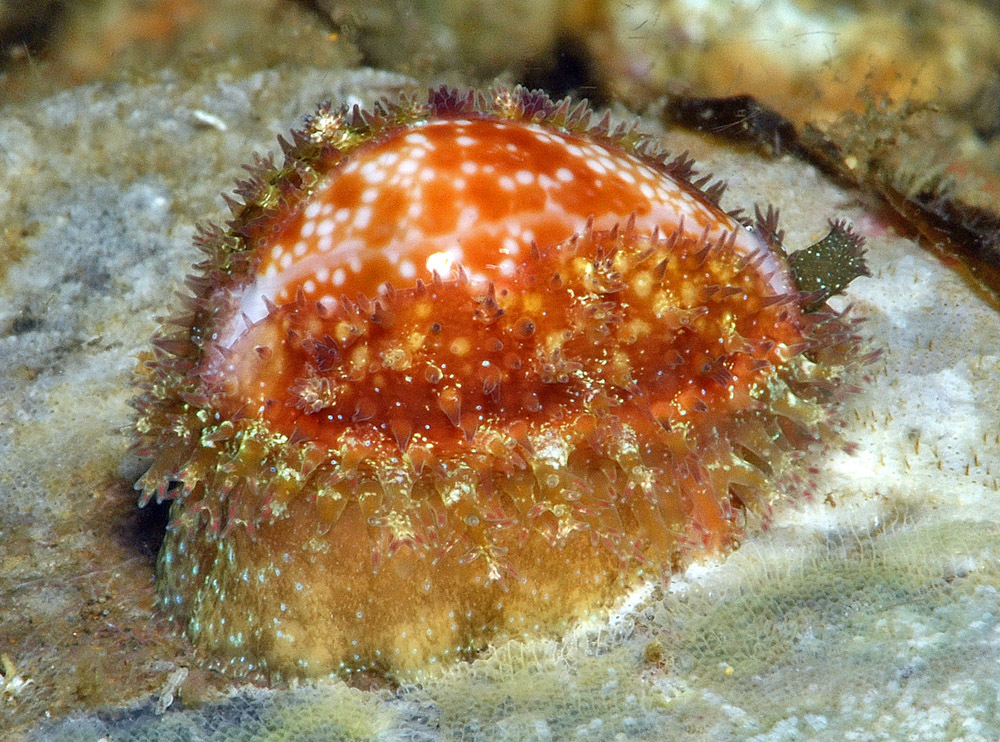
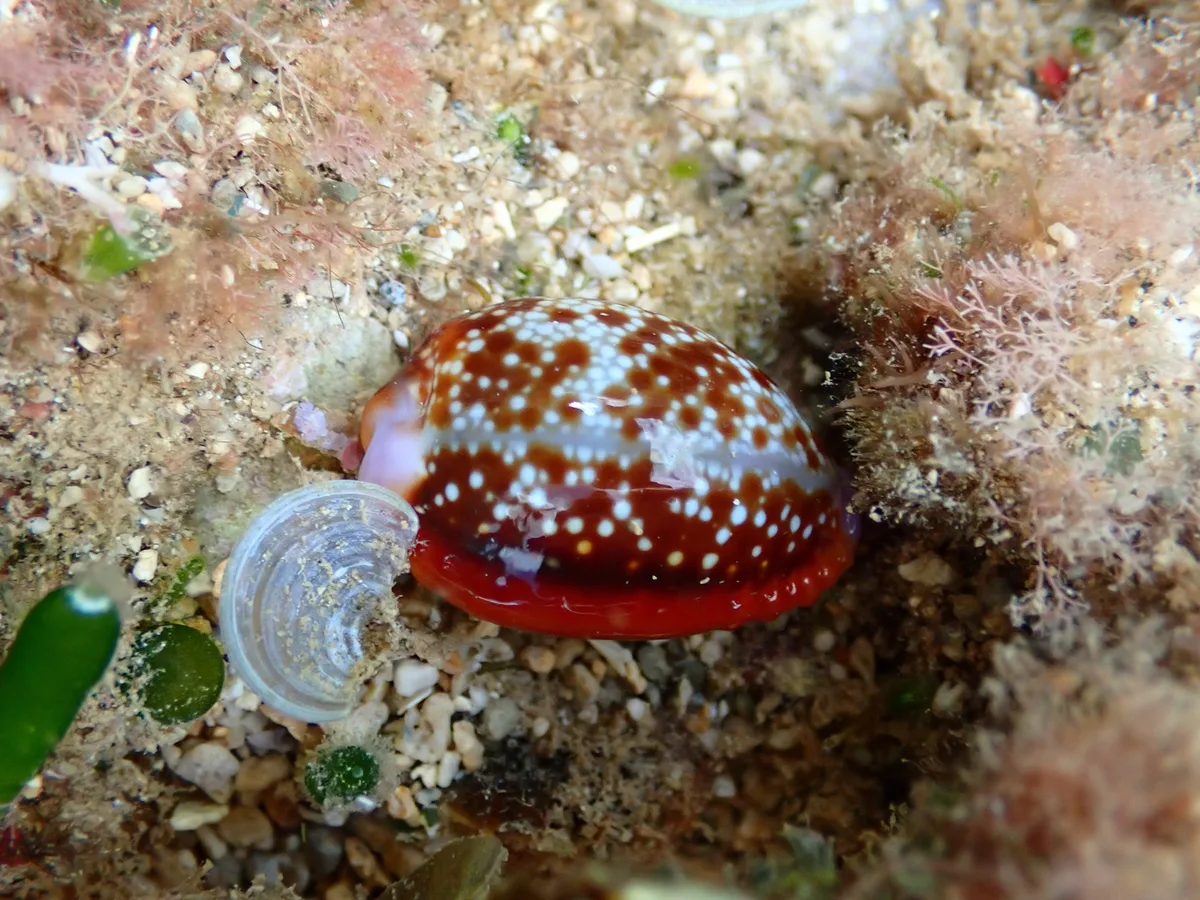
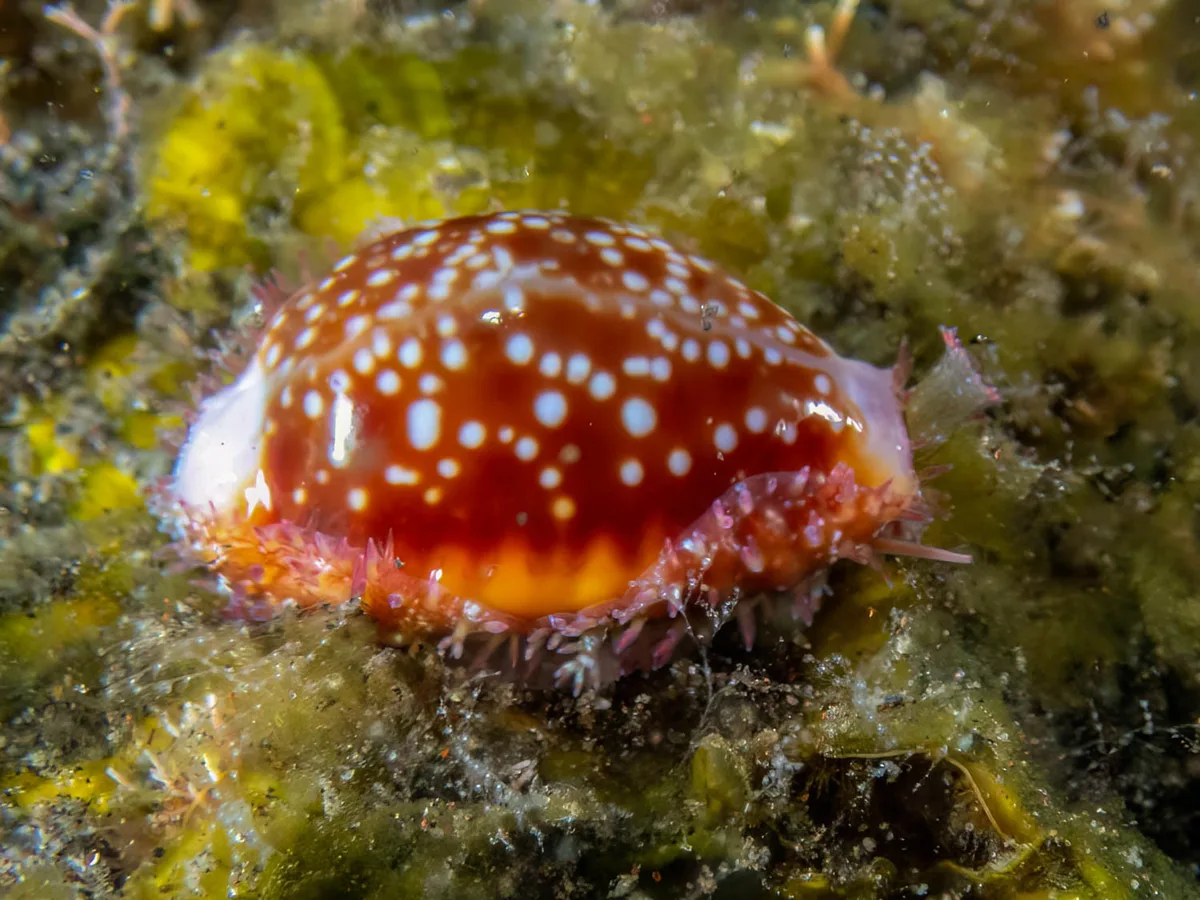
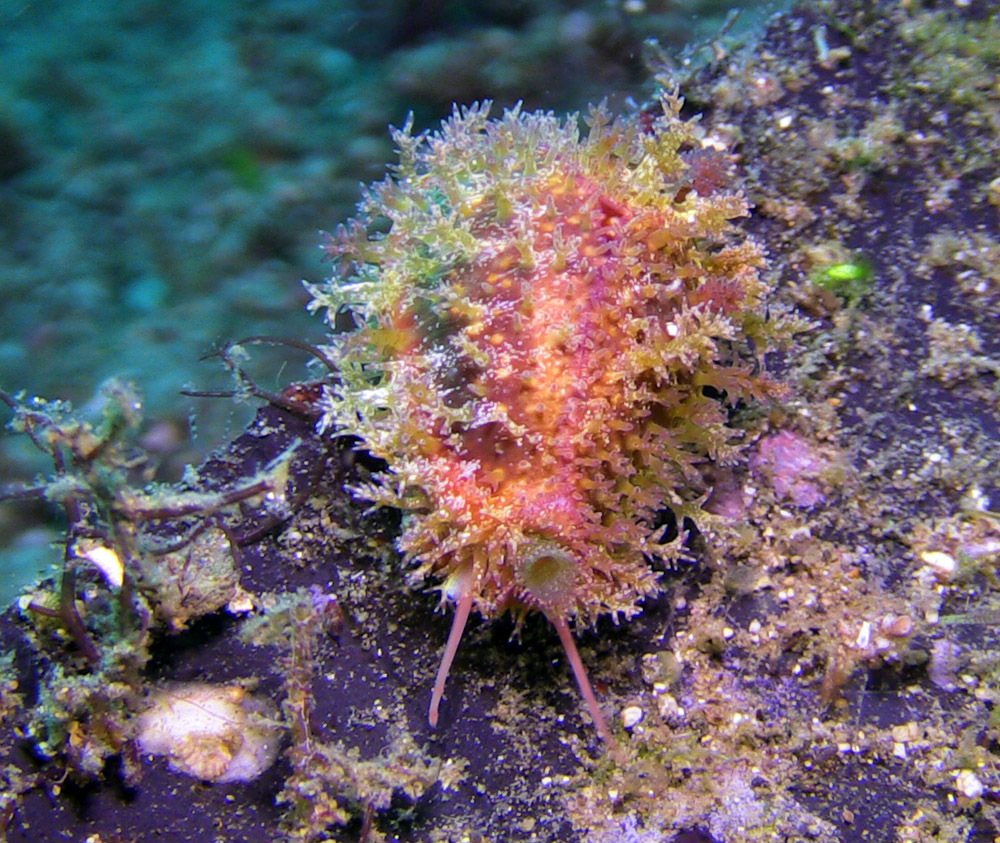
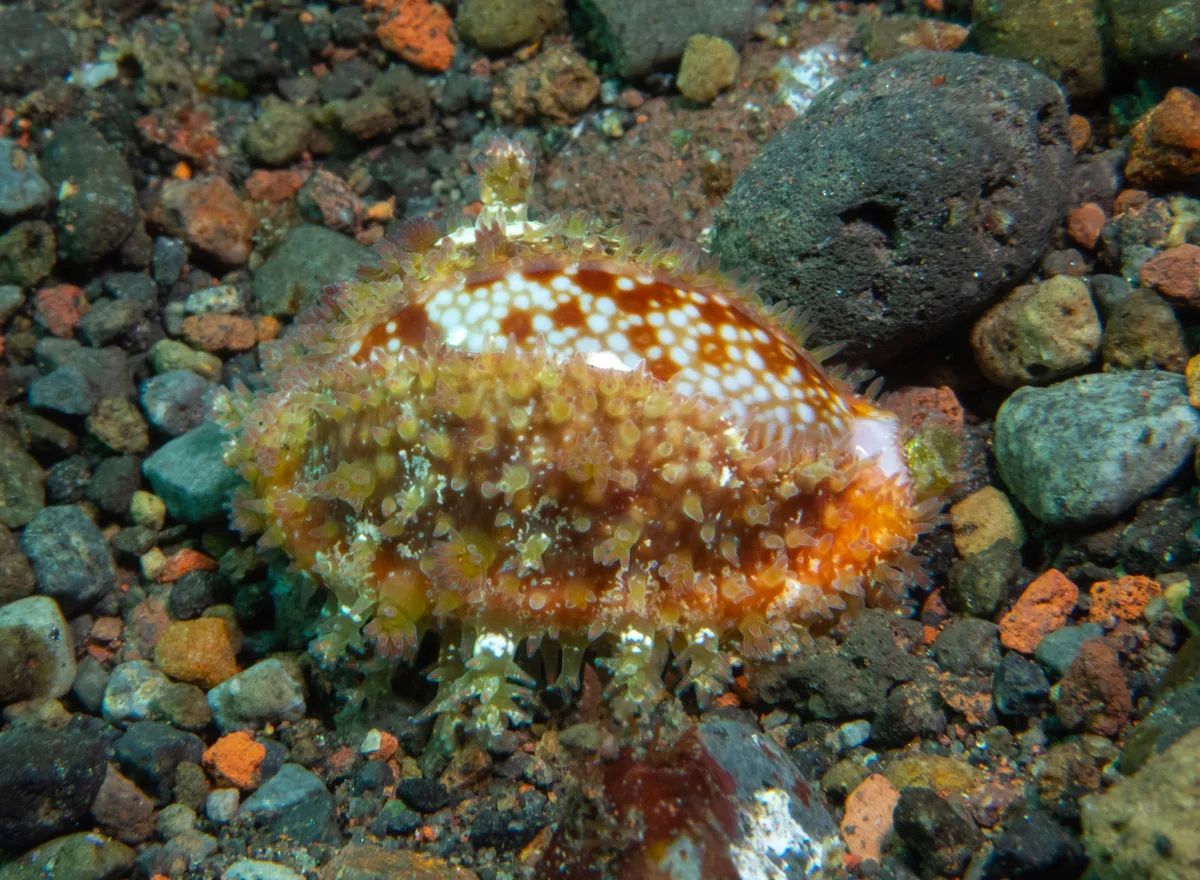
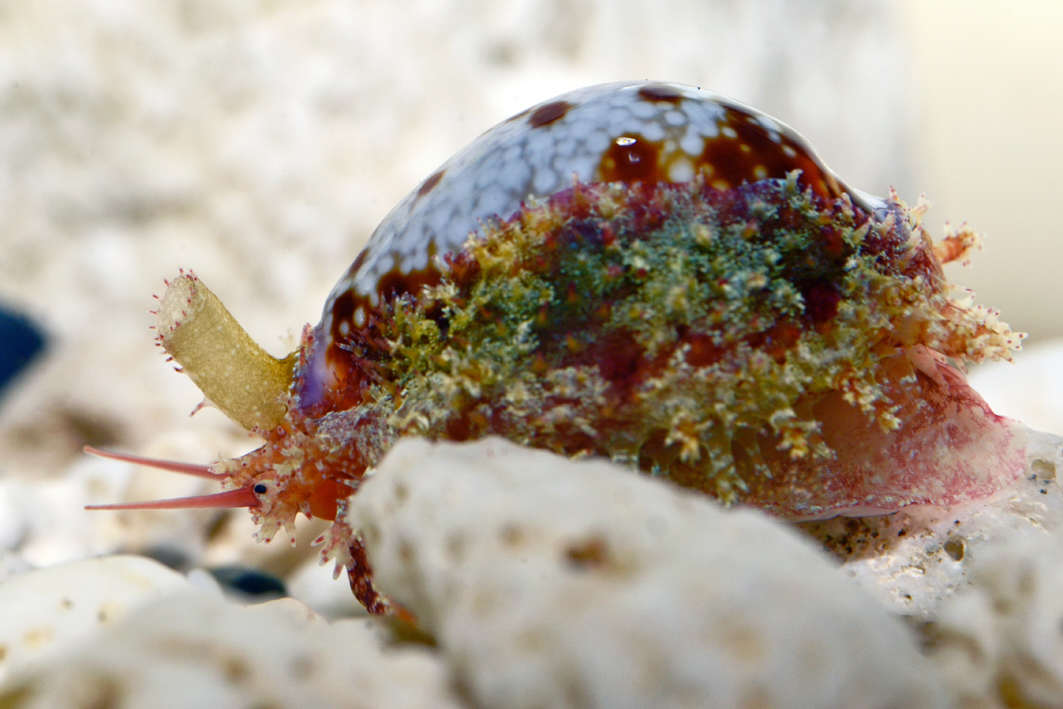
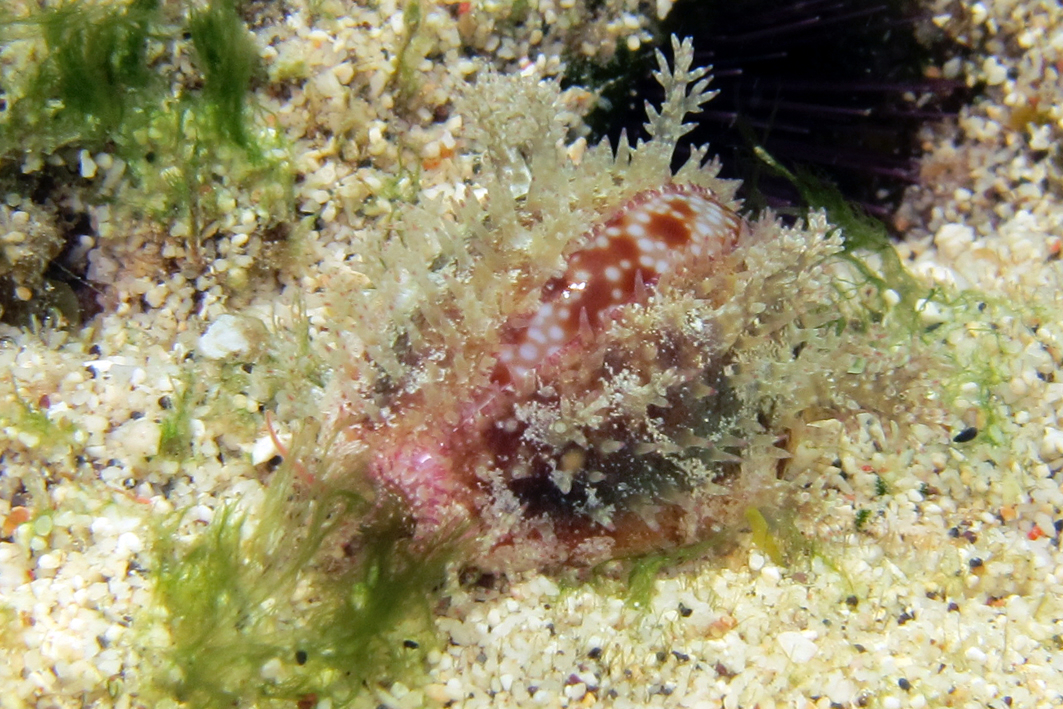
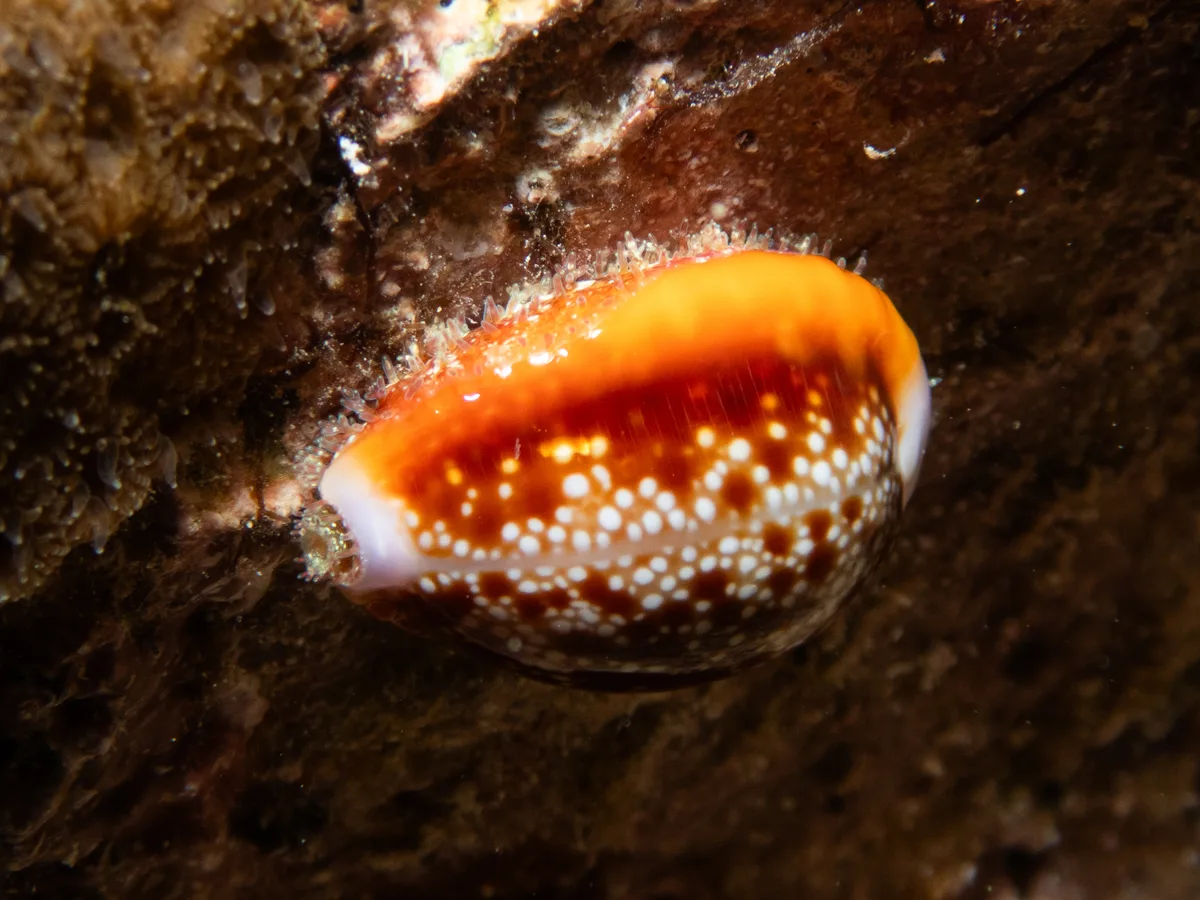
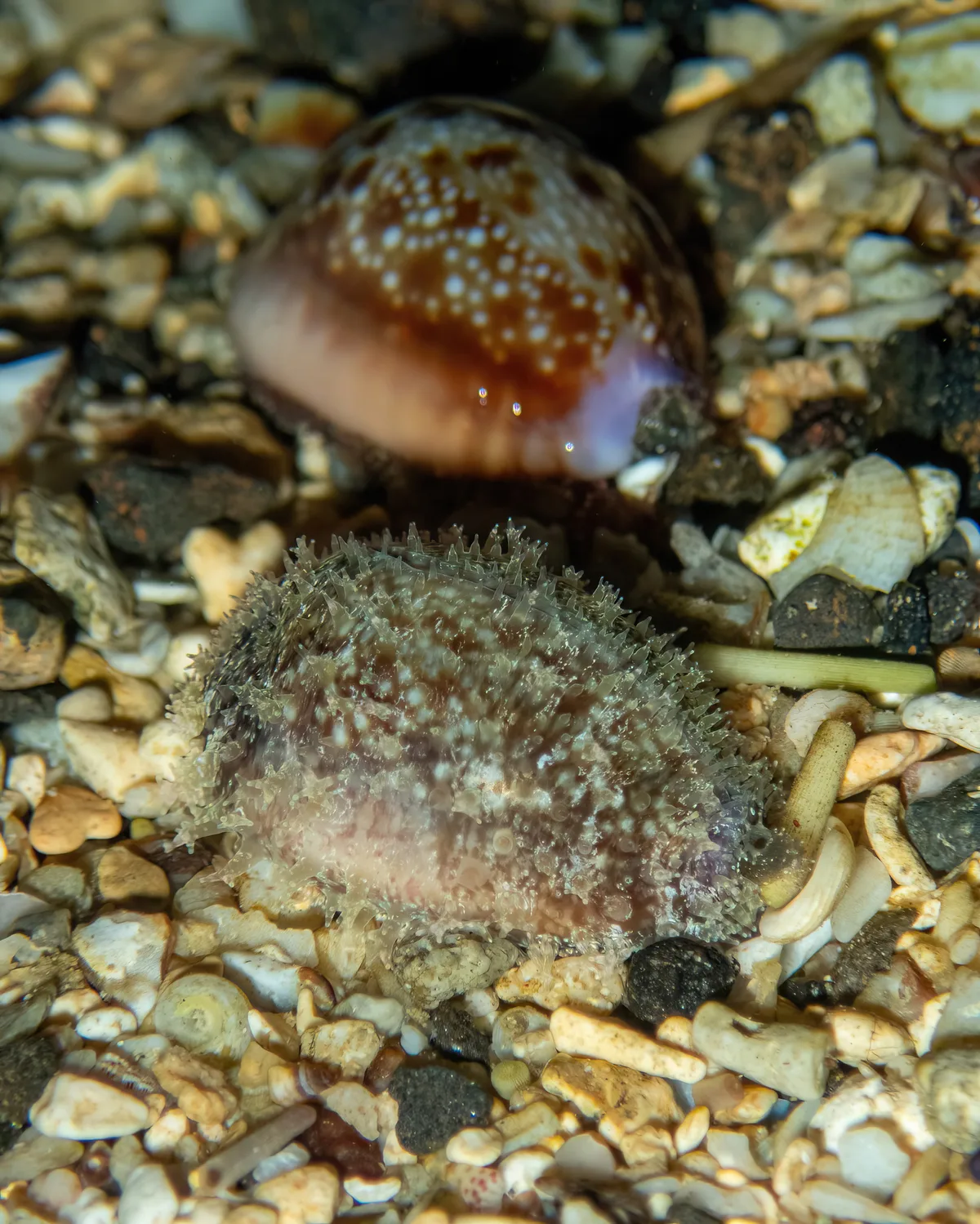
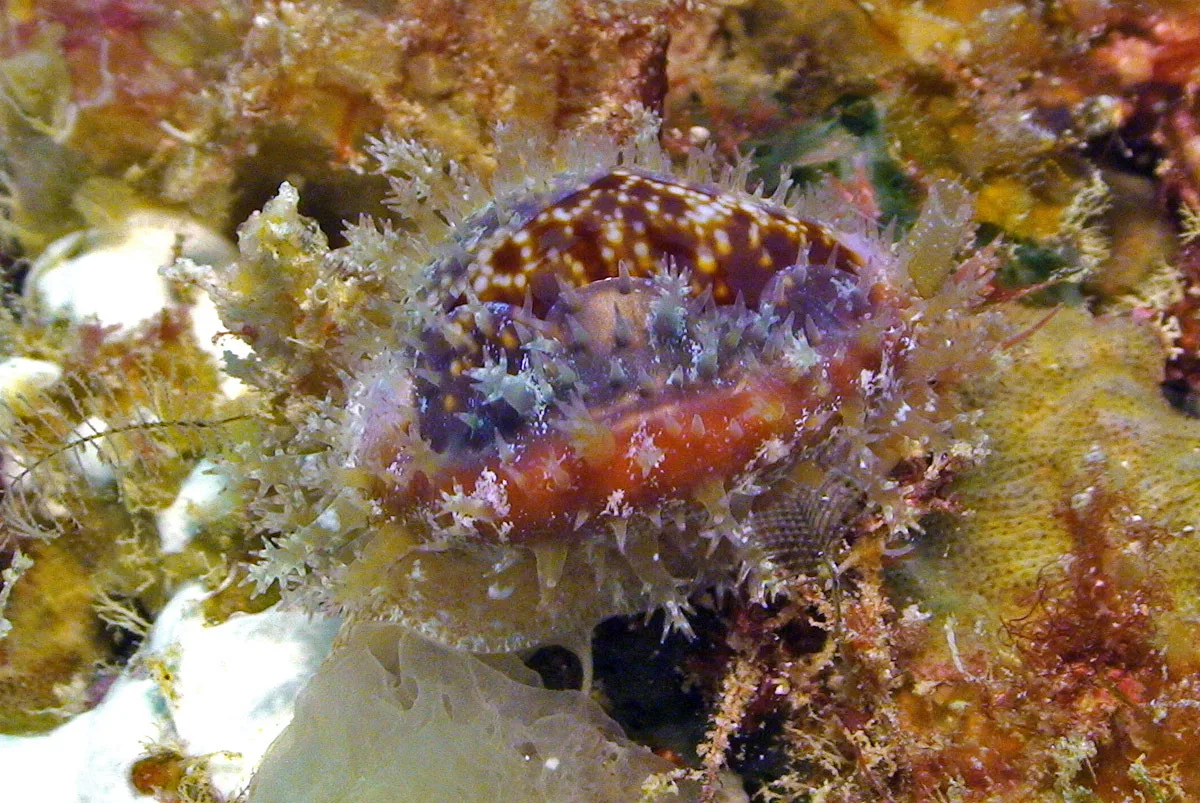
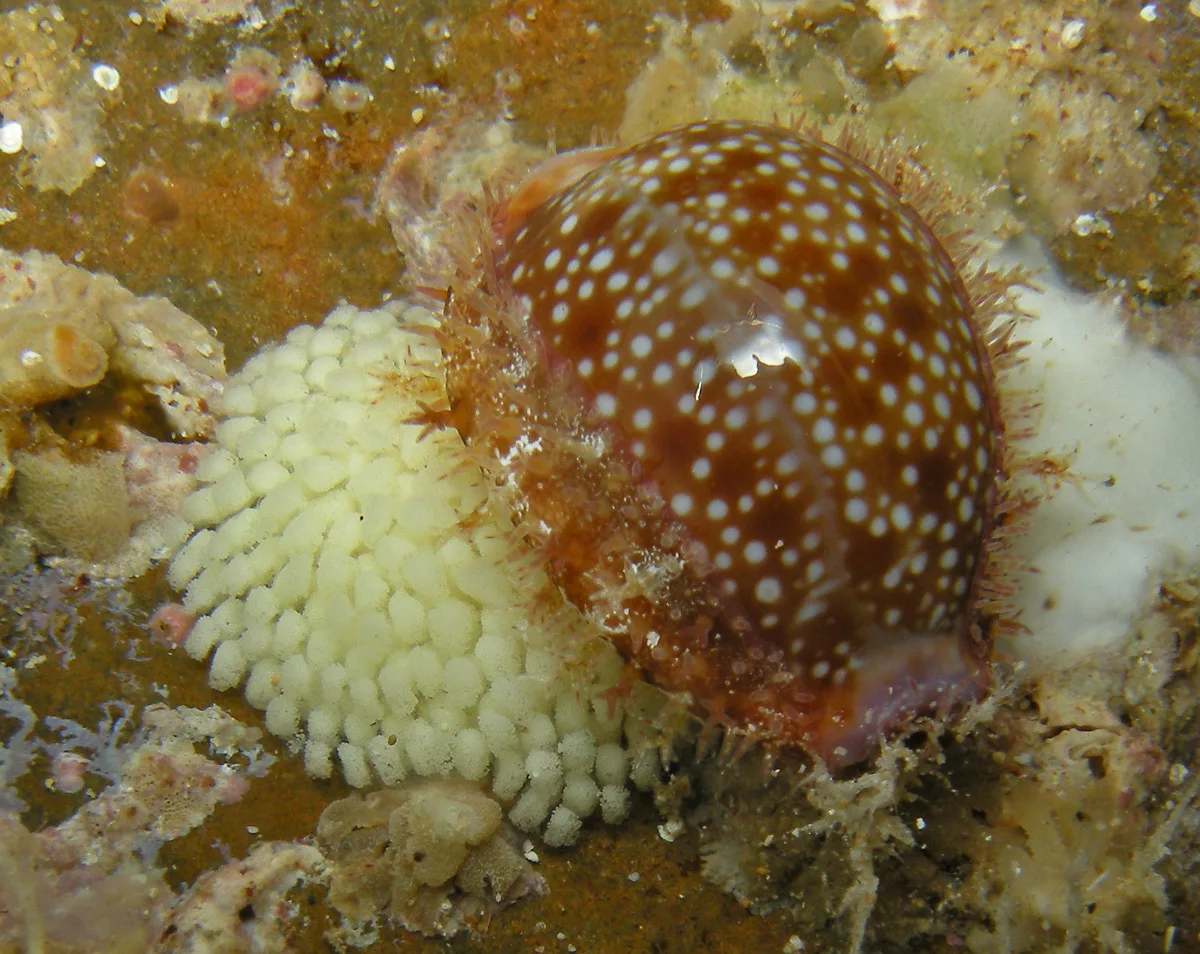
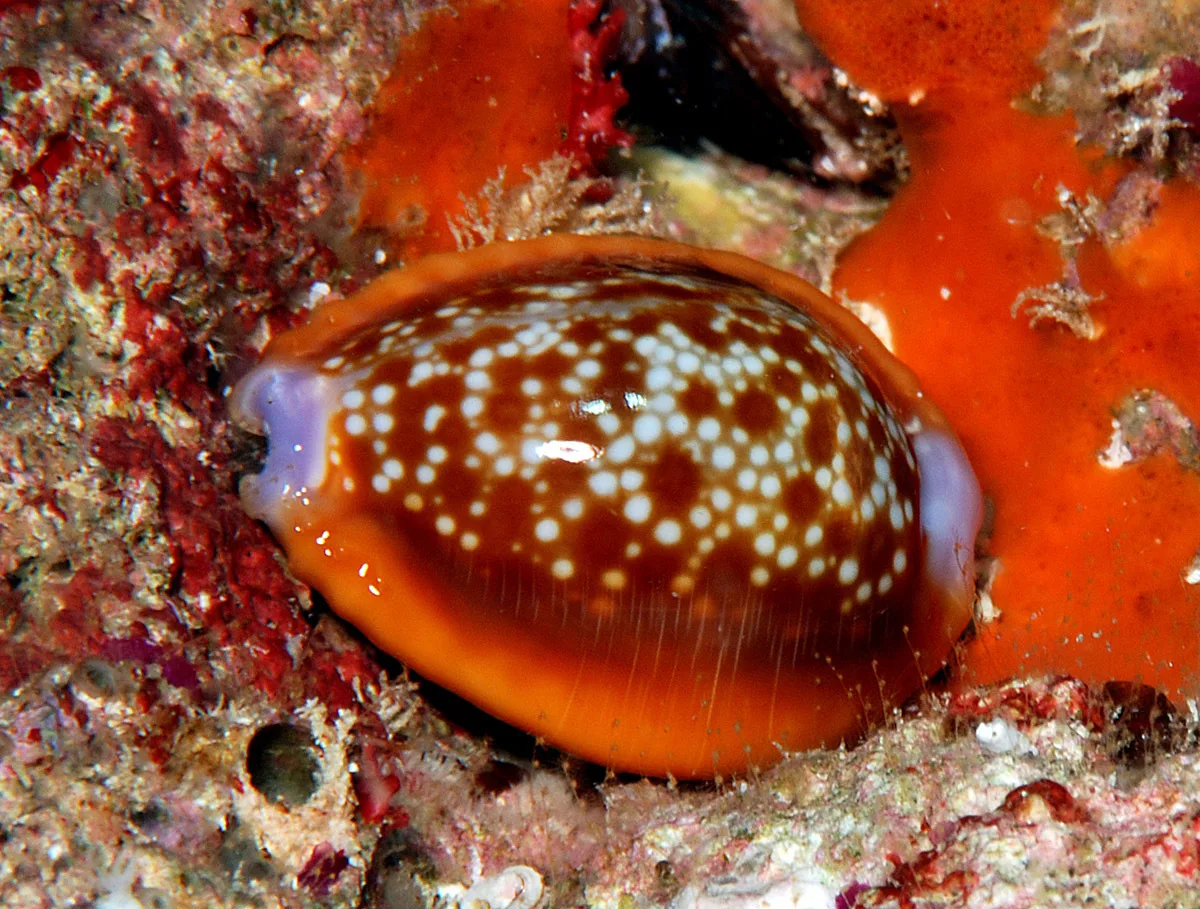
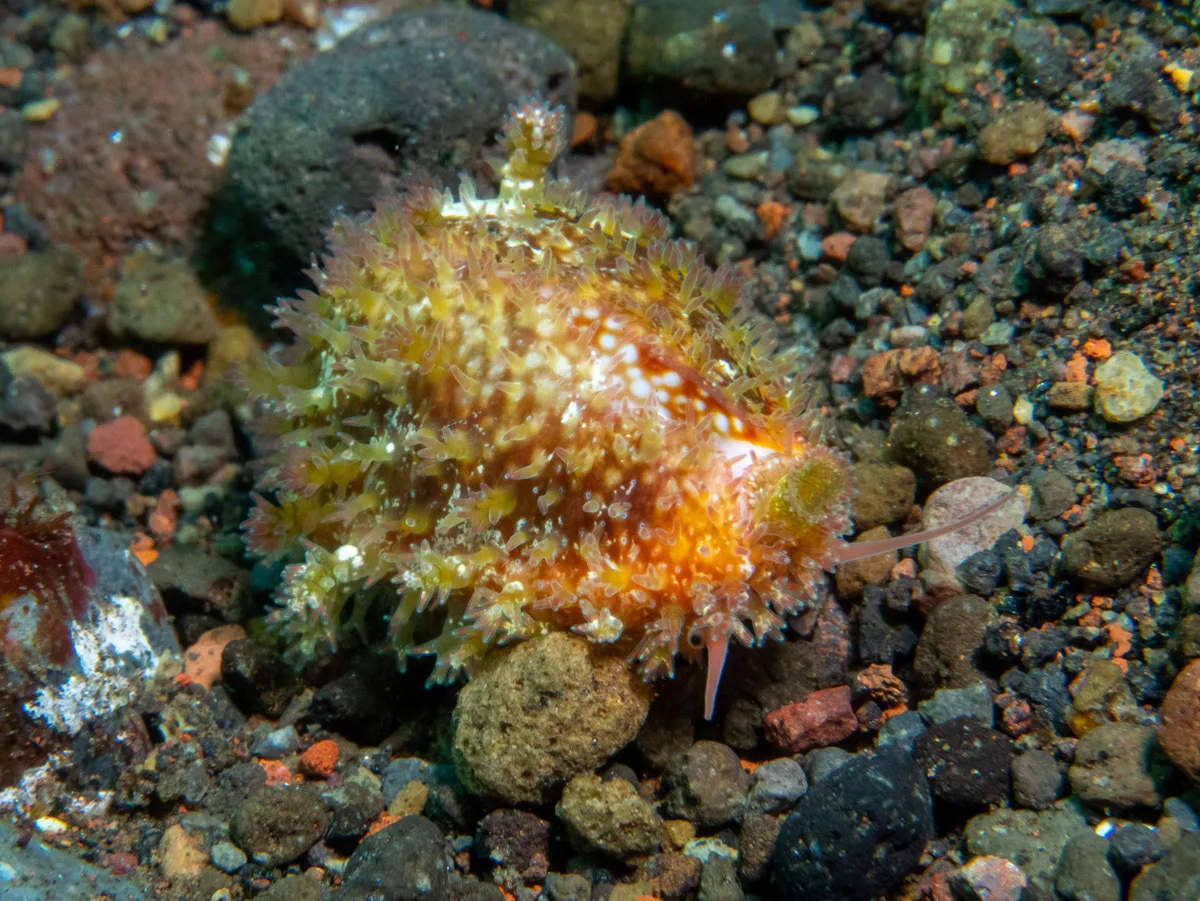
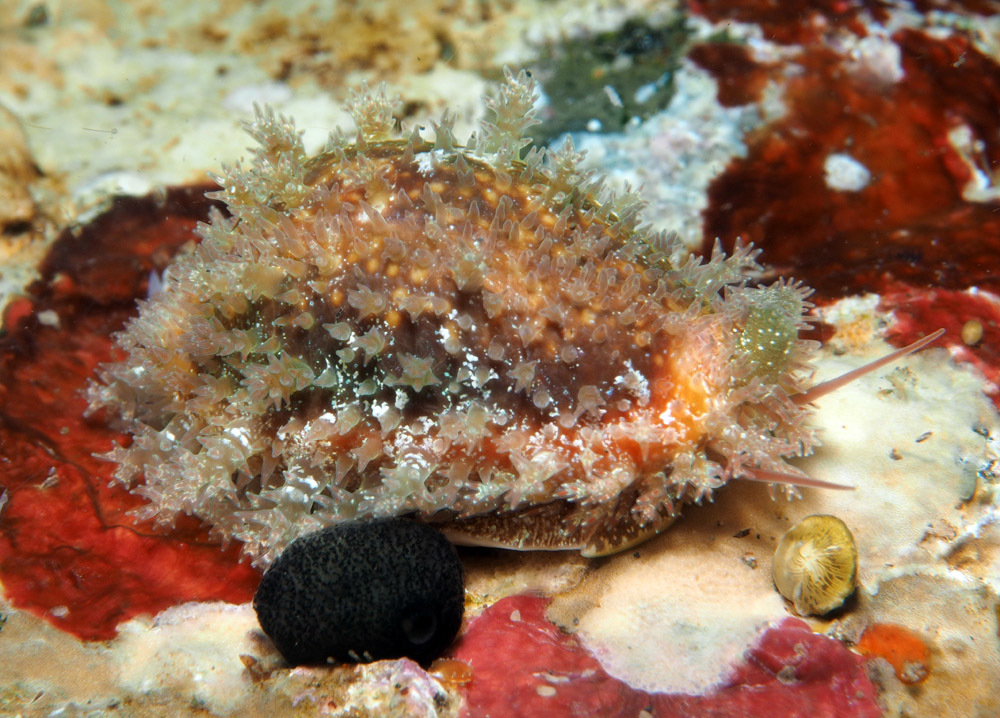
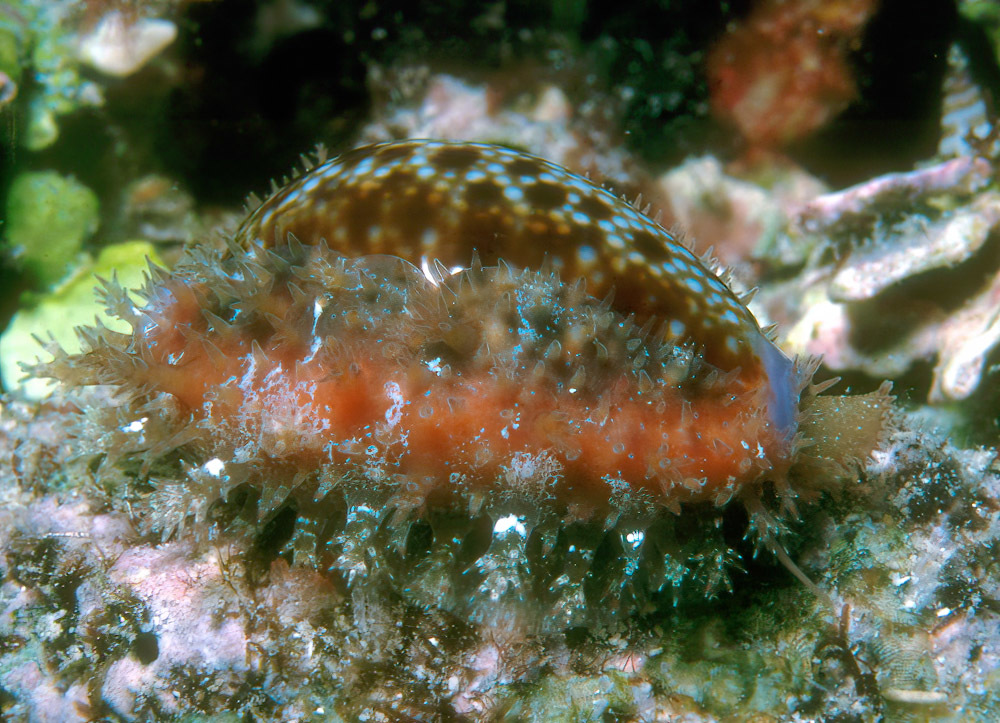
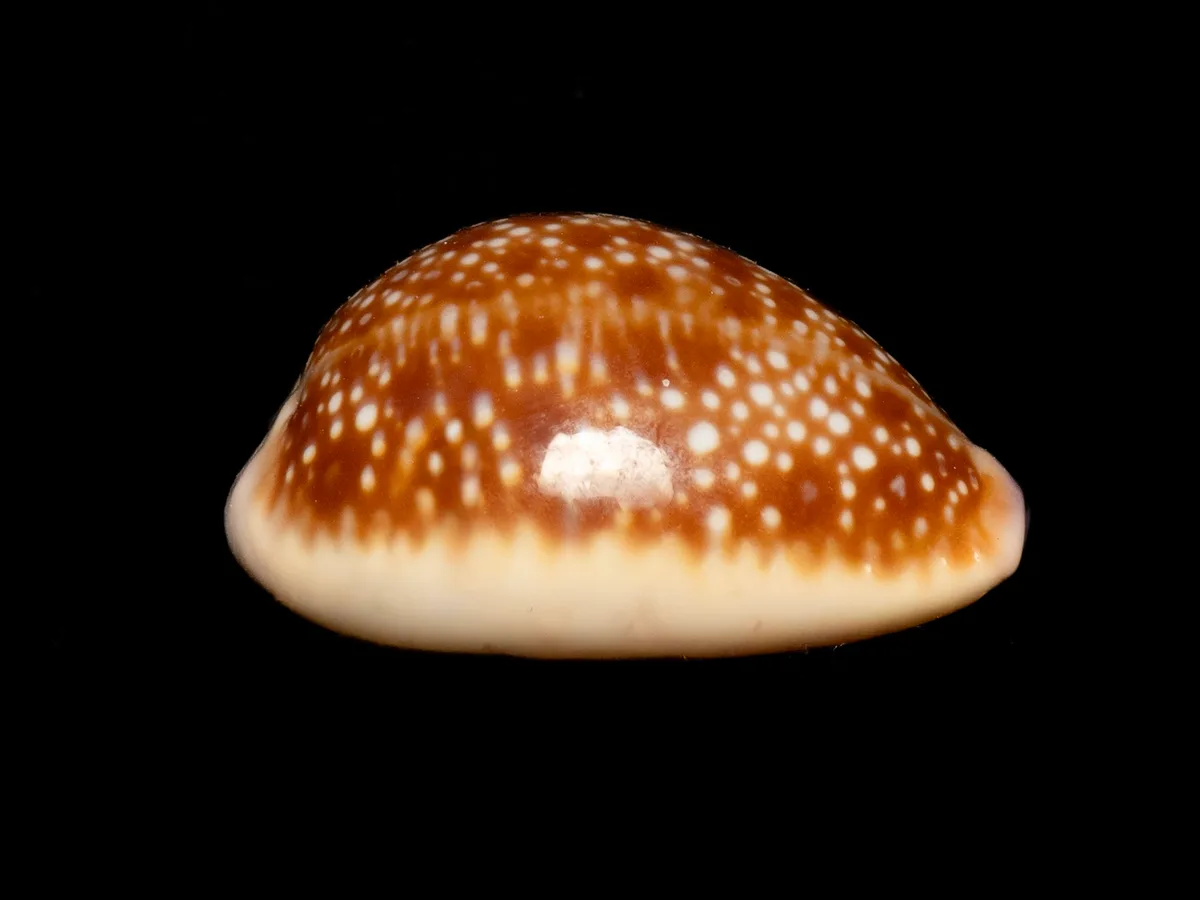
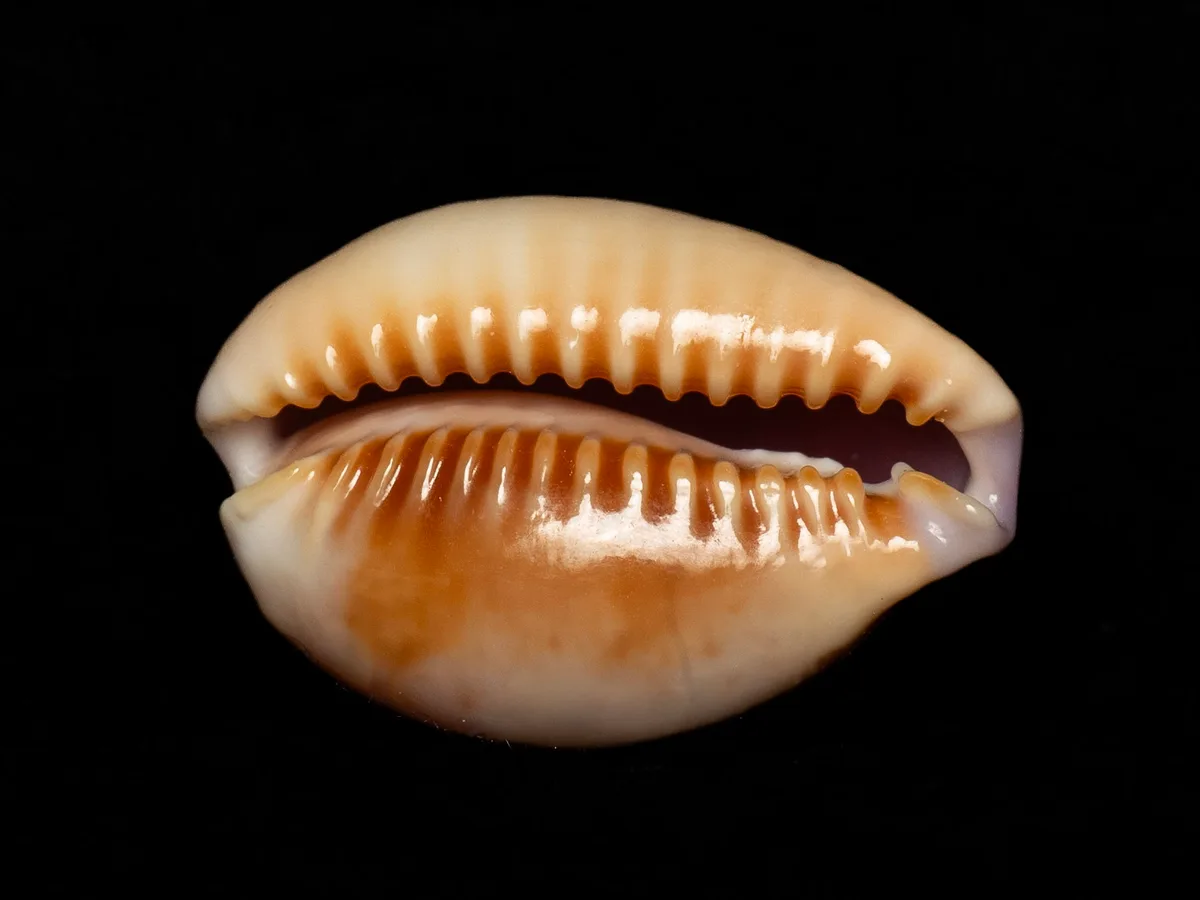
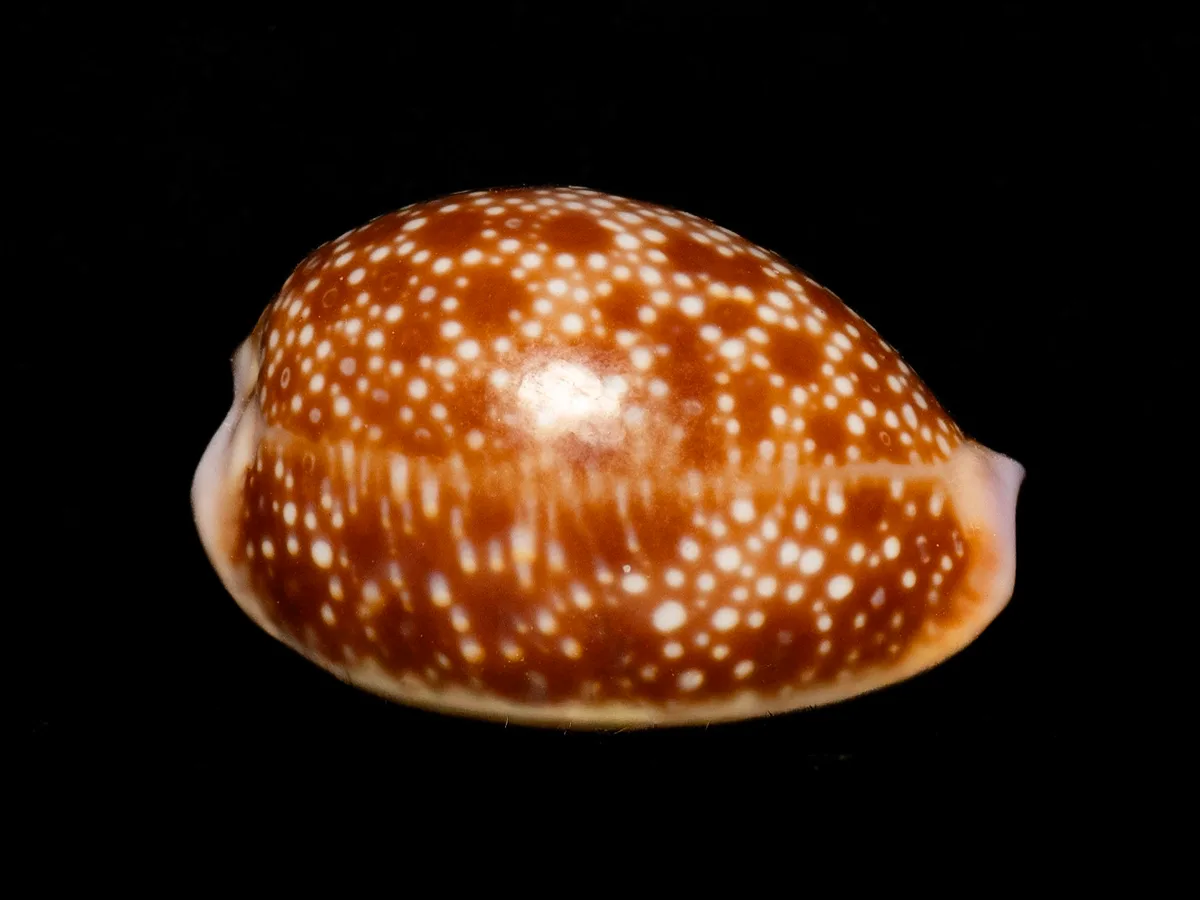
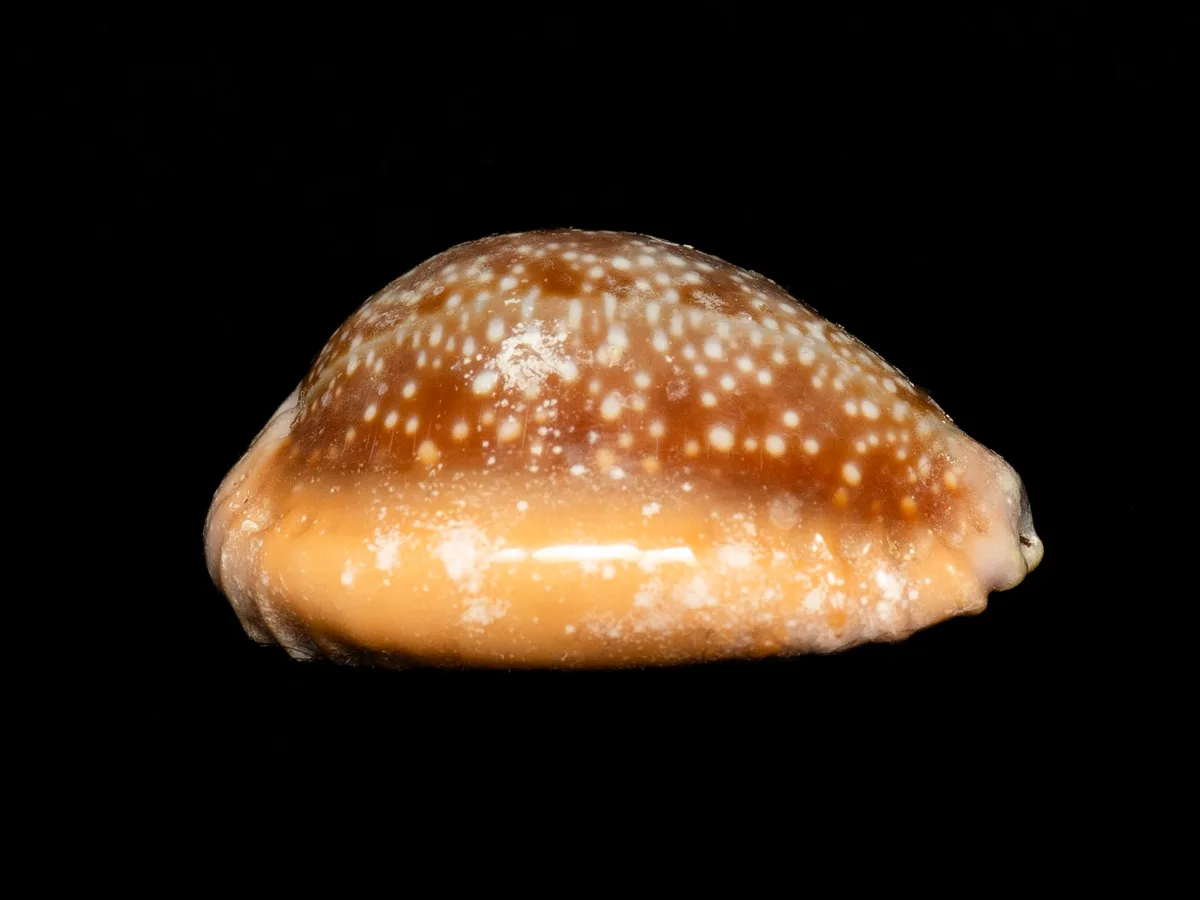
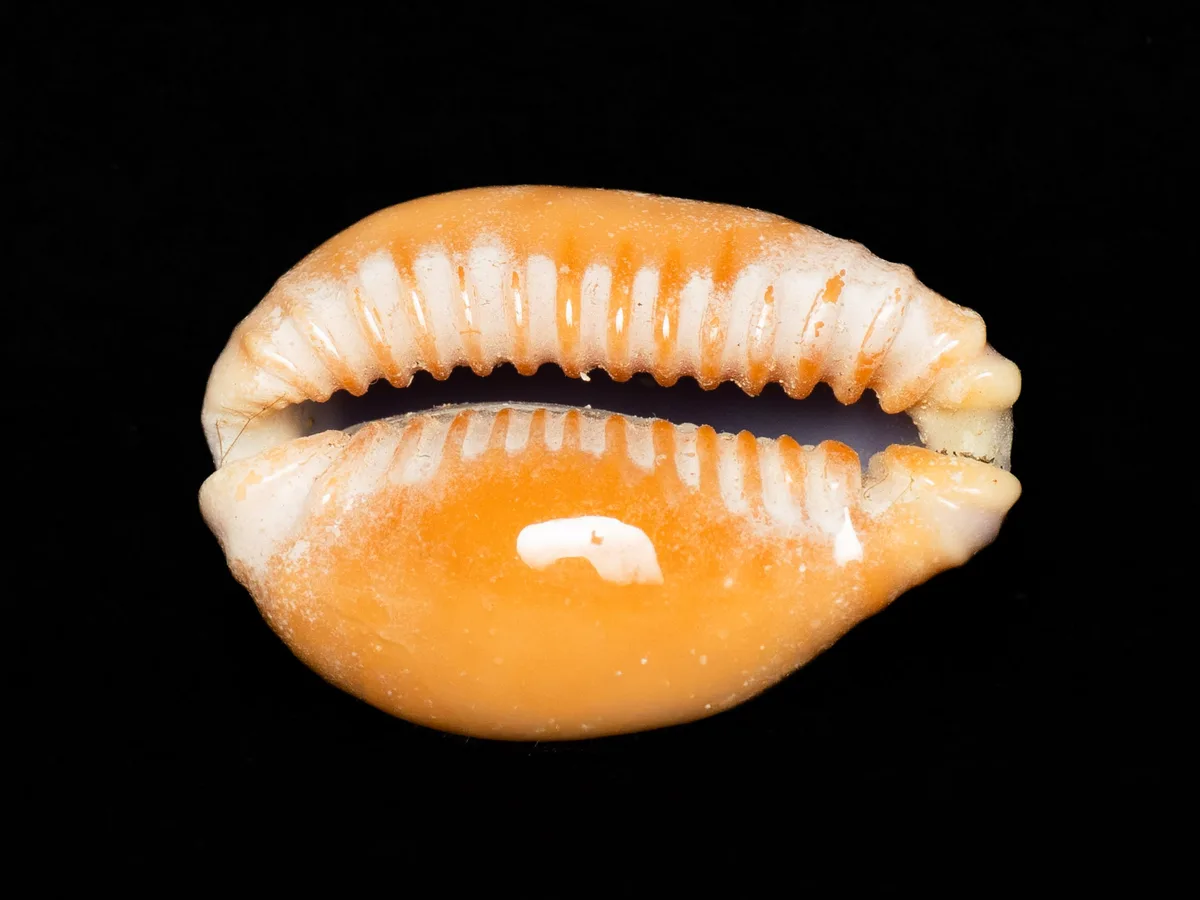
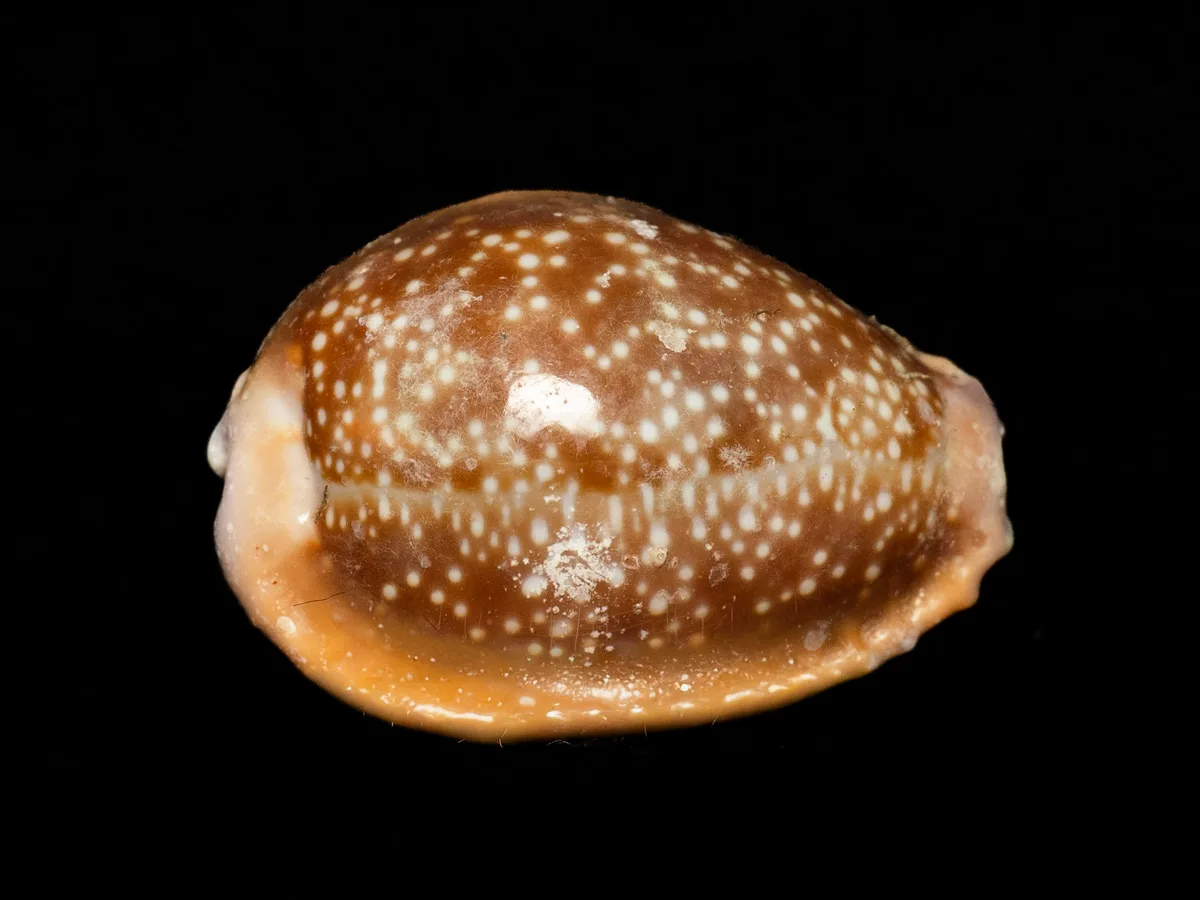
Two kinds of spot on one shell, which is unusual and is the quickest way to name this one. Against a red-brown ground it carries darker brown spots and, mixed among them, opaque white ones, so the pattern reads as speckled rather than dotted.
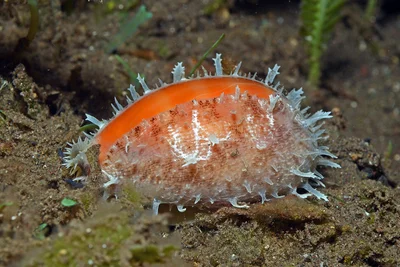
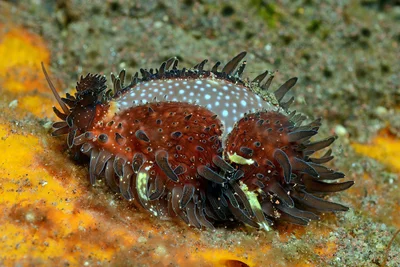
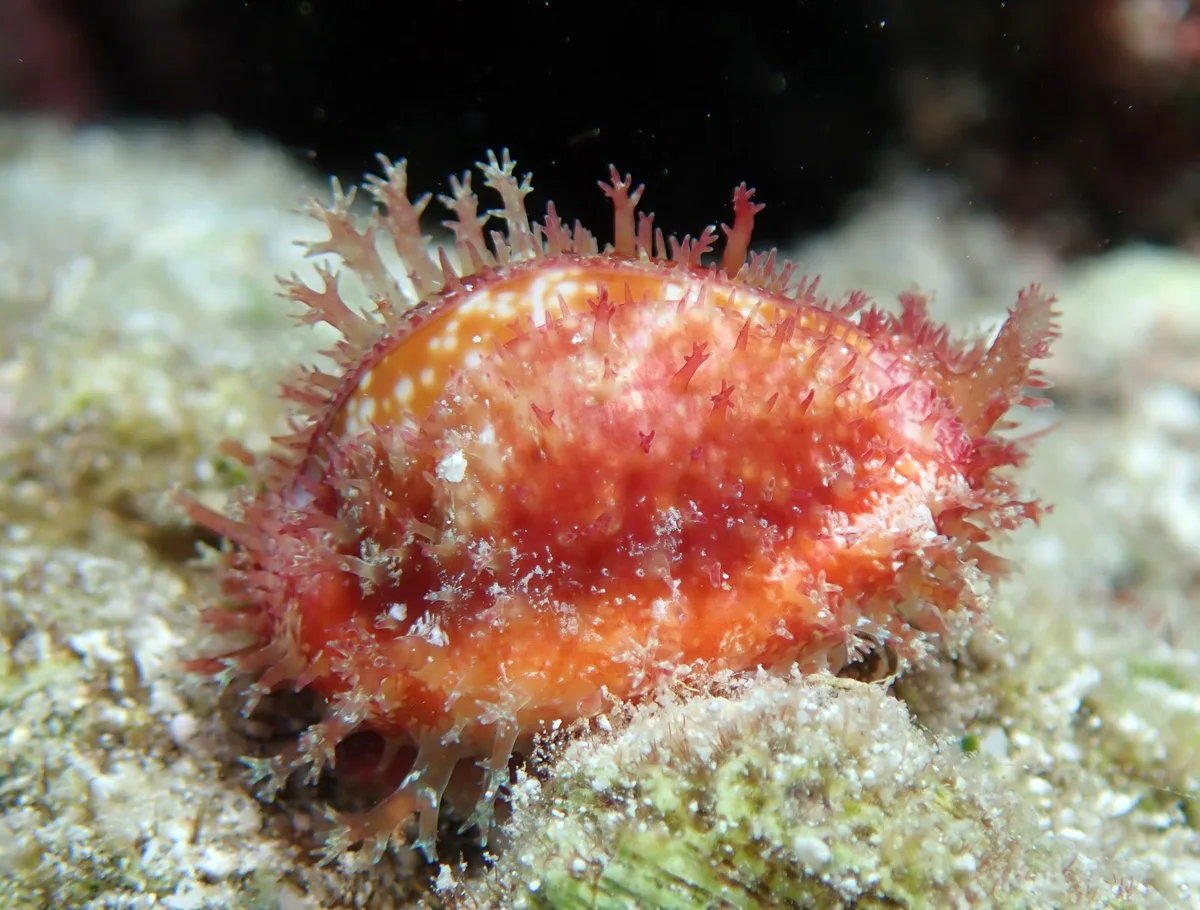
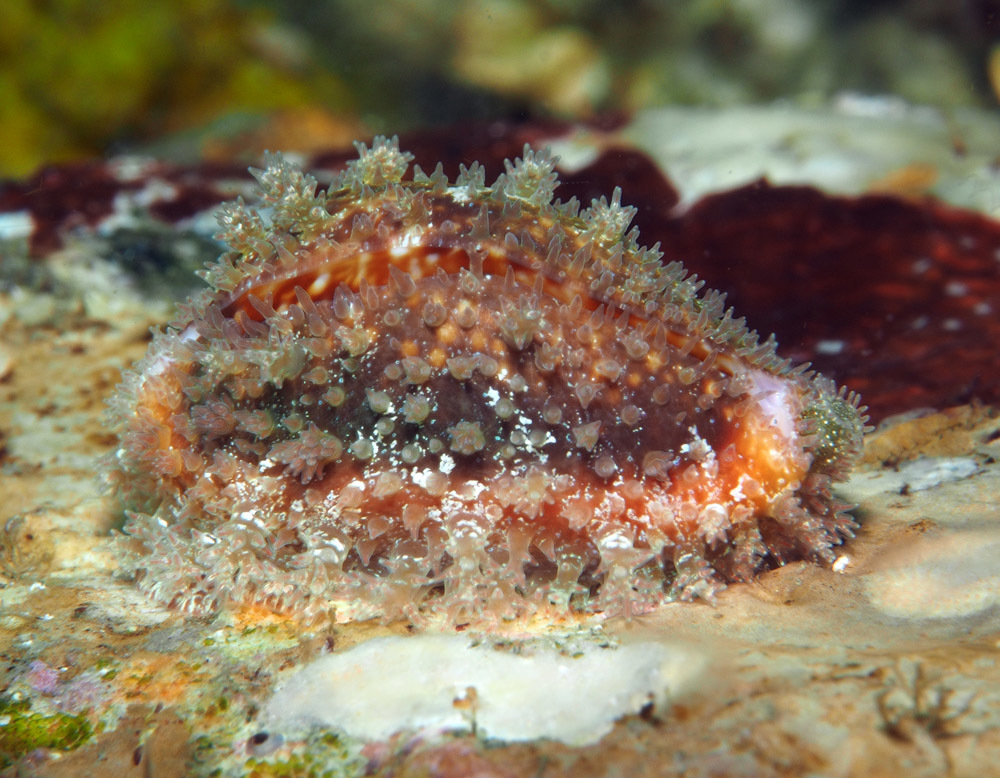
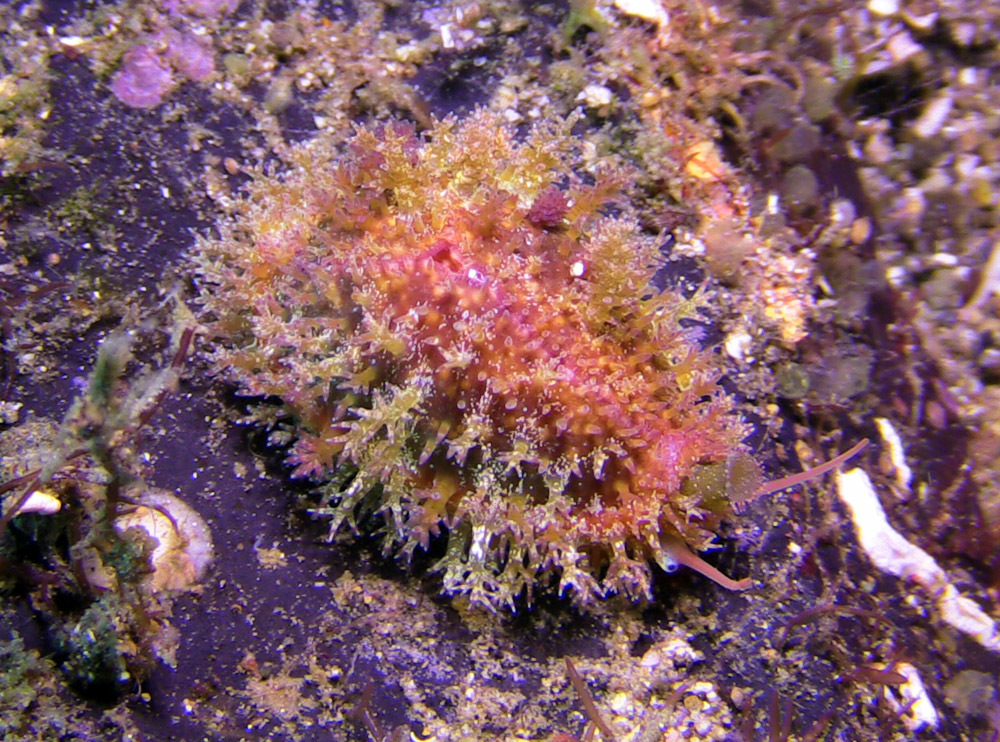
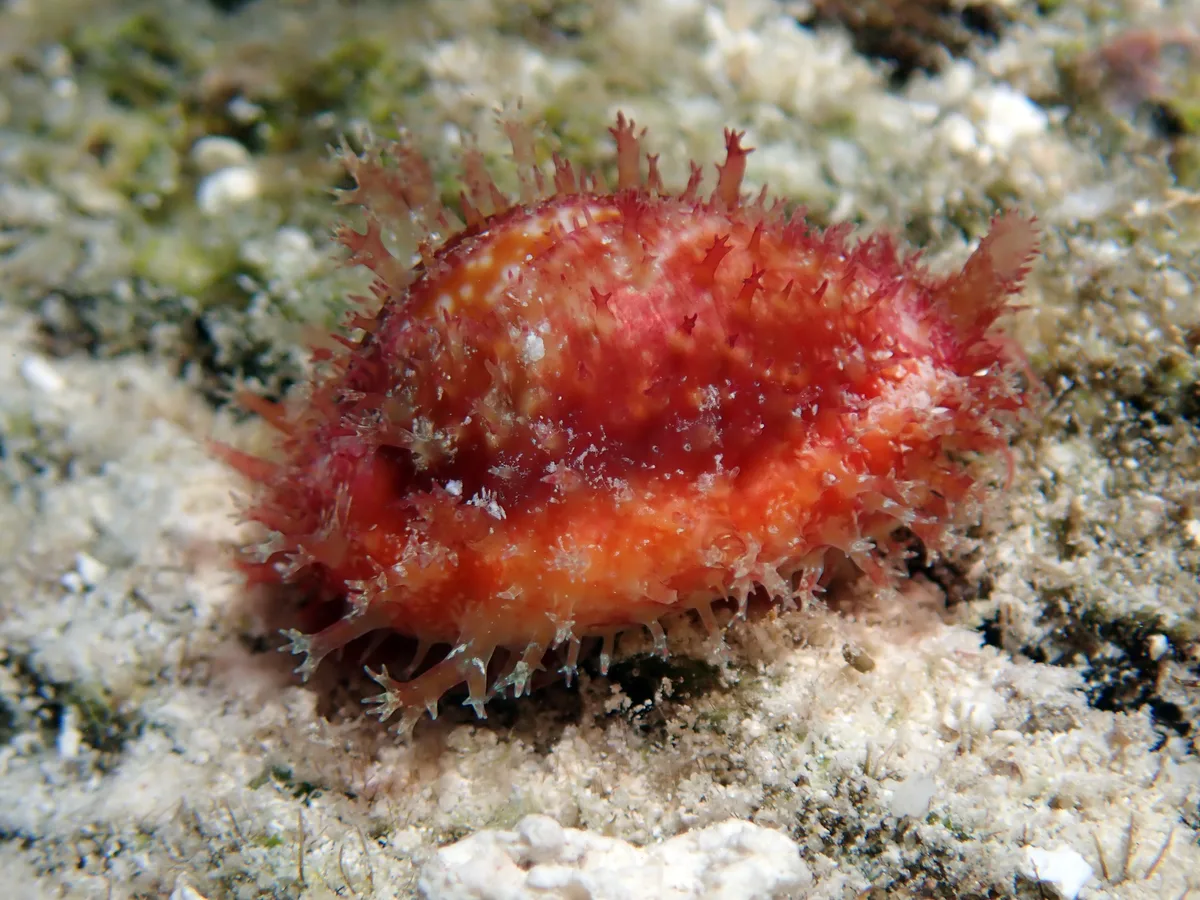
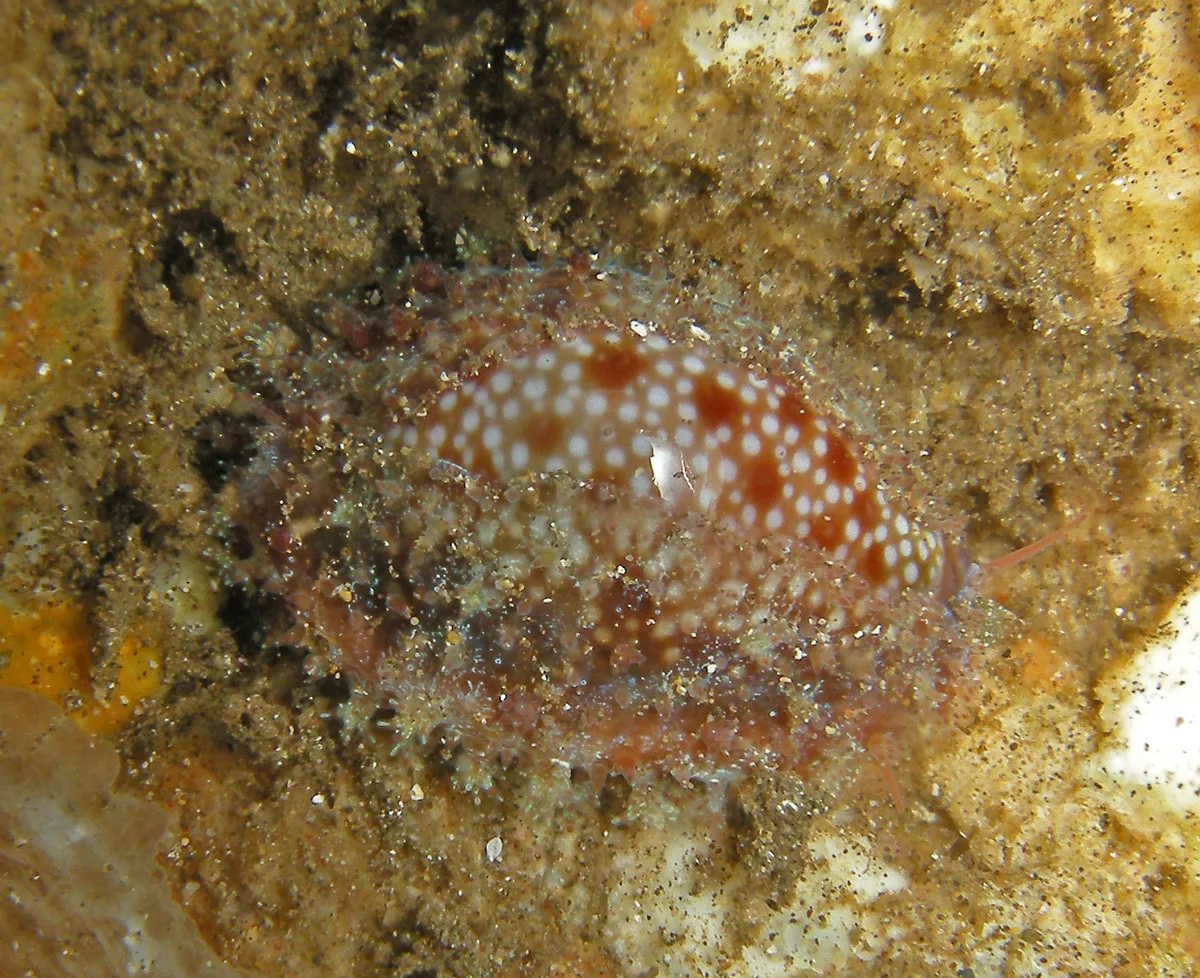
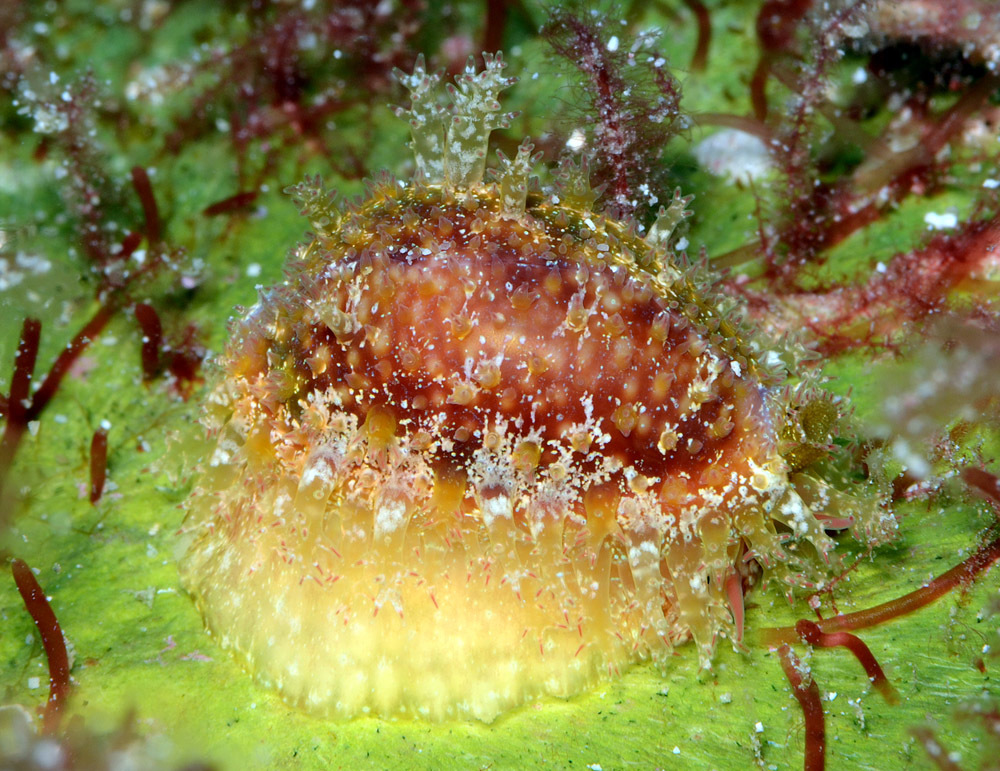
Alive, the shell is mostly hidden. Cowries wrap themselves in their own mantle, two flaps that rise from the foot and fold up over the back until they meet along the middle, and here that mantle is studded with bright pink papillae standing up in a field. Between the pink and the branching outline, an animal that would be a glossy brown pebble on a shelf becomes something that reads as encrusting growth on the reef.
The mantle is not only cover. It builds and polishes the shell from the outside as the animal grows, which is why cowries alive have that mirror surface and cowries dead lose it.
Under four centimeters (1.4 in), common on shallow reef and rubble, under stones through the day and out grazing at night.
Linnaeus described it in 1758, and the English name is for the shell's color: helvola means honey-yellow.
- red-brown shell carrying both darker brown spots and opaque white ones
- mantle bright with pink papillae standing up over the shell
- small: under four centimeters
- ends of the shell usually paler than the middle