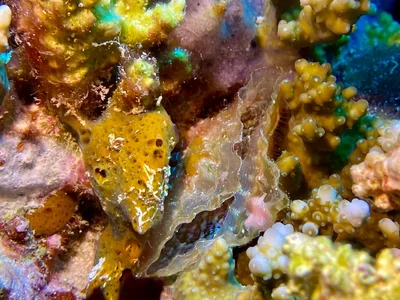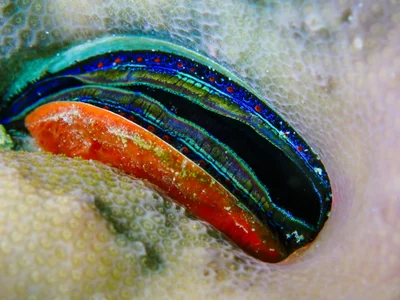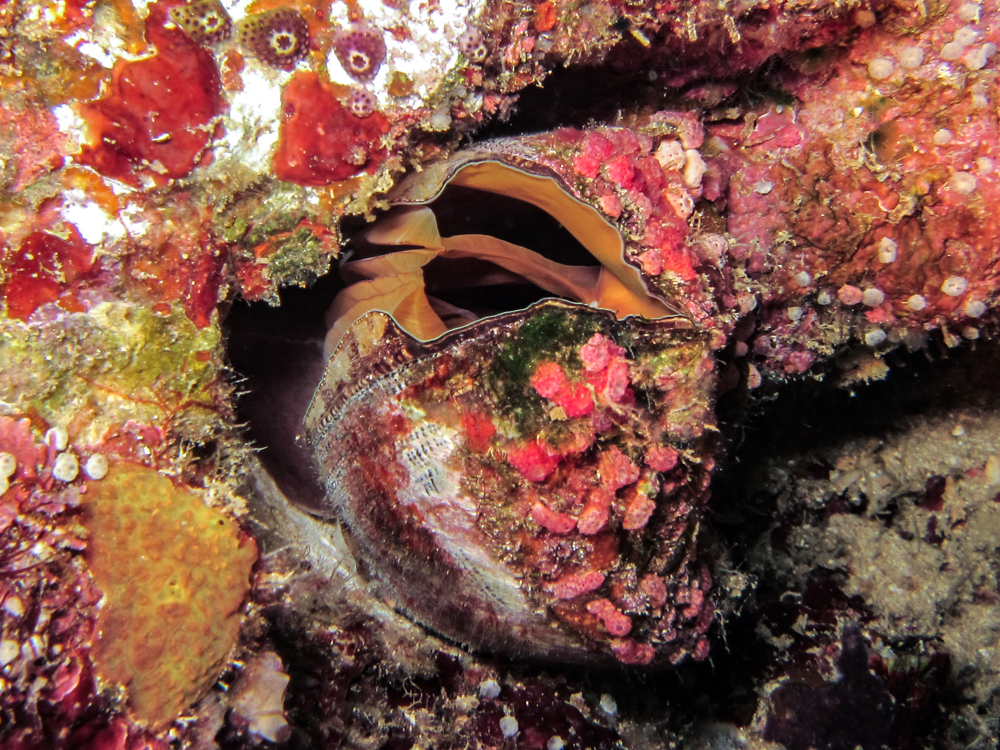
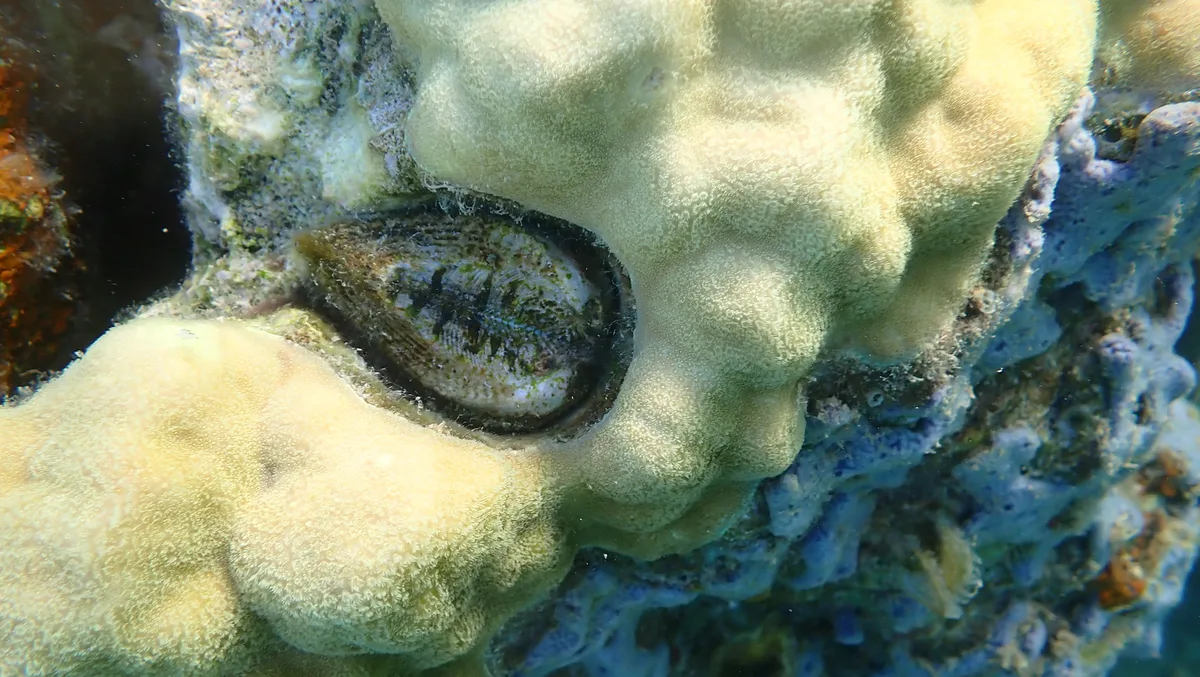
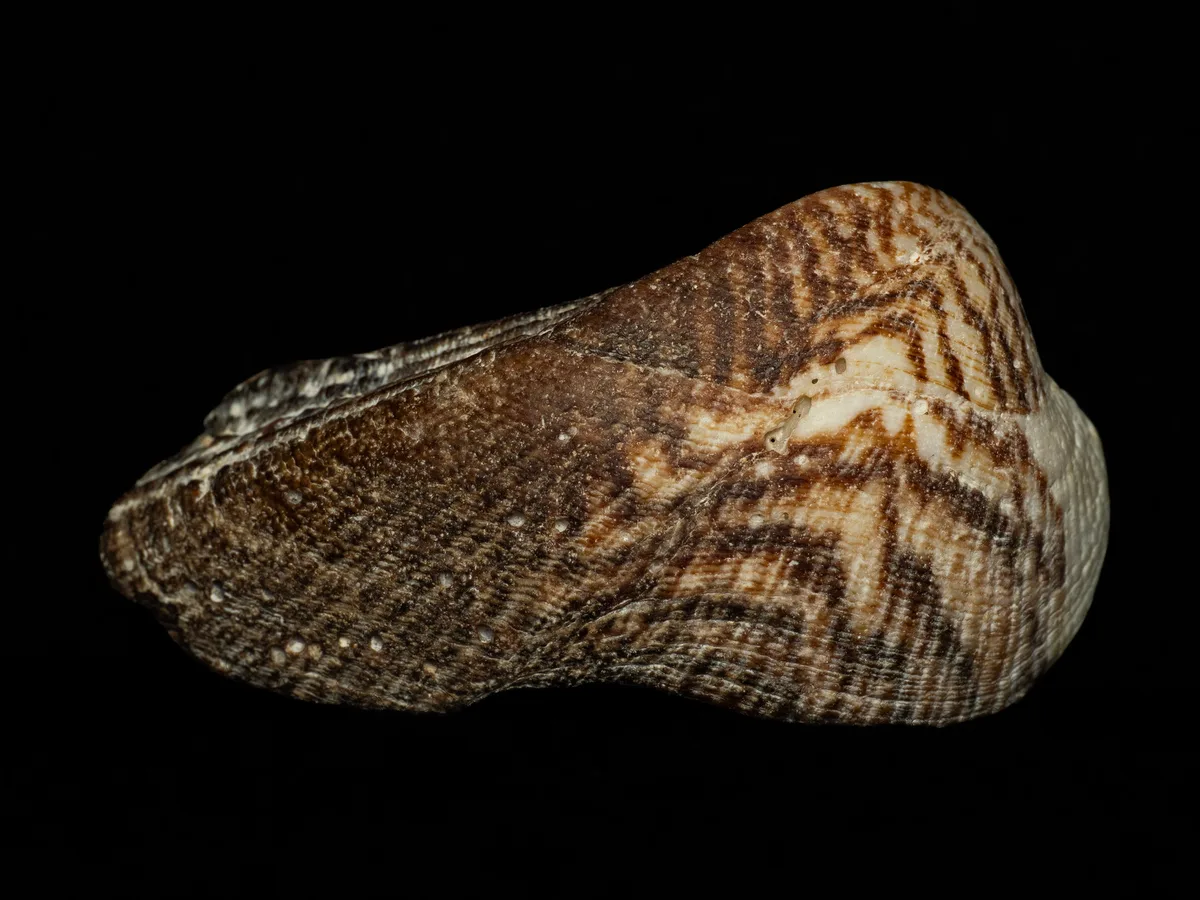
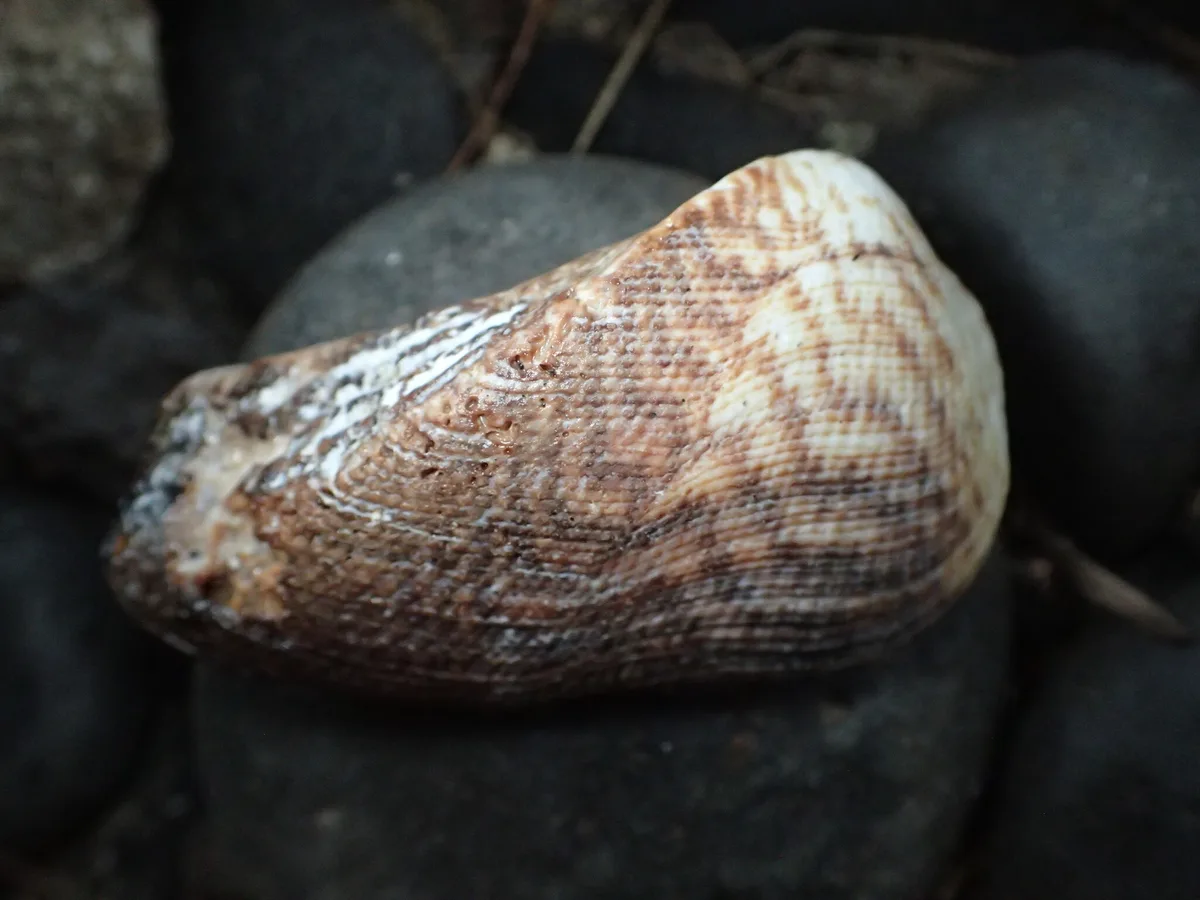
A boxy ribbed shell up to 9 cm (3.5 in) long, banded brown and cream in a pattern that gives it its name, fastened to coral or rock where the current runs. Ark shells are easy to place once the hinge is noticed: it is a long straight line with a broad flat area between the beaks, quite unlike the curved hinges of most bivalves.
Arks are also among the few molluscs with red blood. Most bivalves use hemocyanin, which is colorless to blue; this family carries hemoglobin, and the tissue is startlingly red for an animal in a shell. It is thought to help in water that runs low on oxygen, which suits a filter feeder packed into reef crevices.
The animal holds on with byssal threads through a gap in the shell and can release and re-attach, so unlike a cemented jewel box it is not committed for life. On a reef with current, look along the shaded flanks of coral heads: they sit in rows where the water moves best.
- boxy ribbed shell attached to coral, not buried
- zebra-like brown and cream banding on the ribs
- straight hinge line with a wide flat area between the beaks
- shell to 9 cm