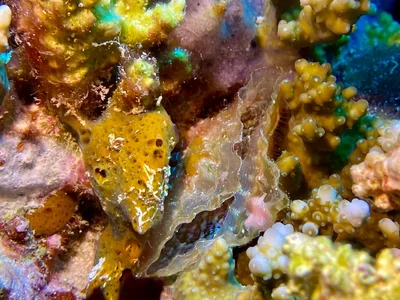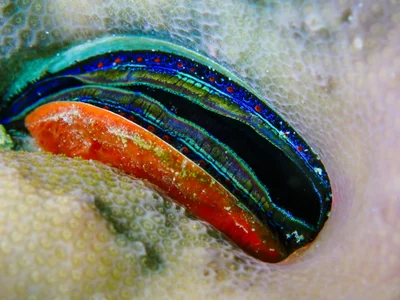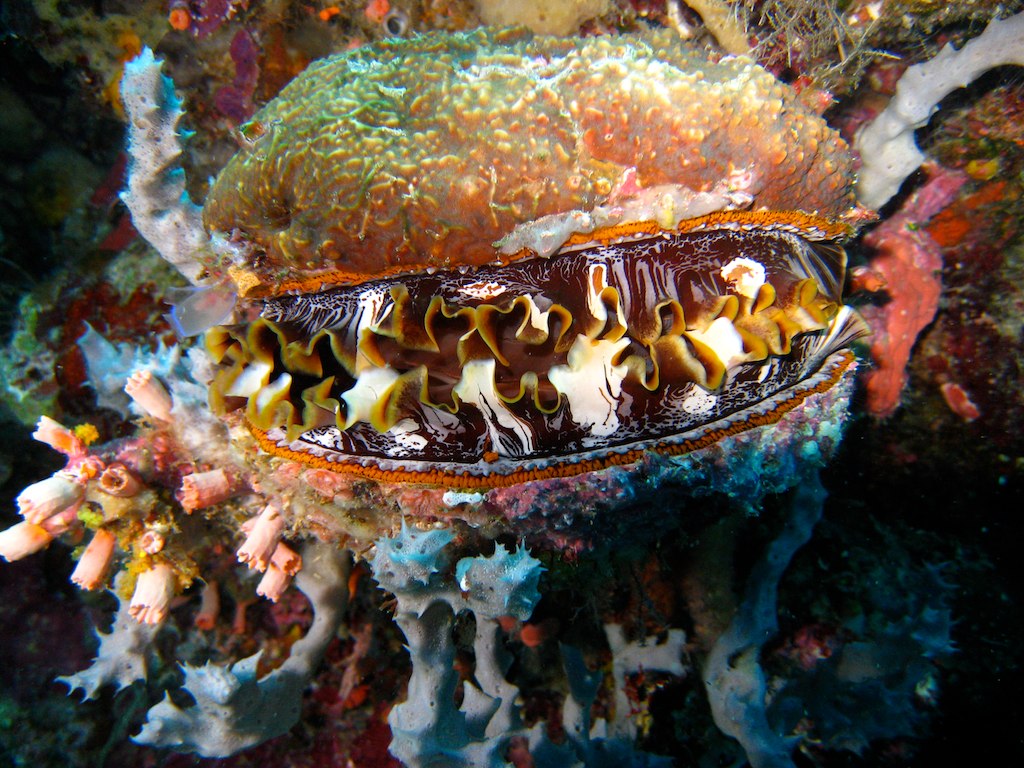
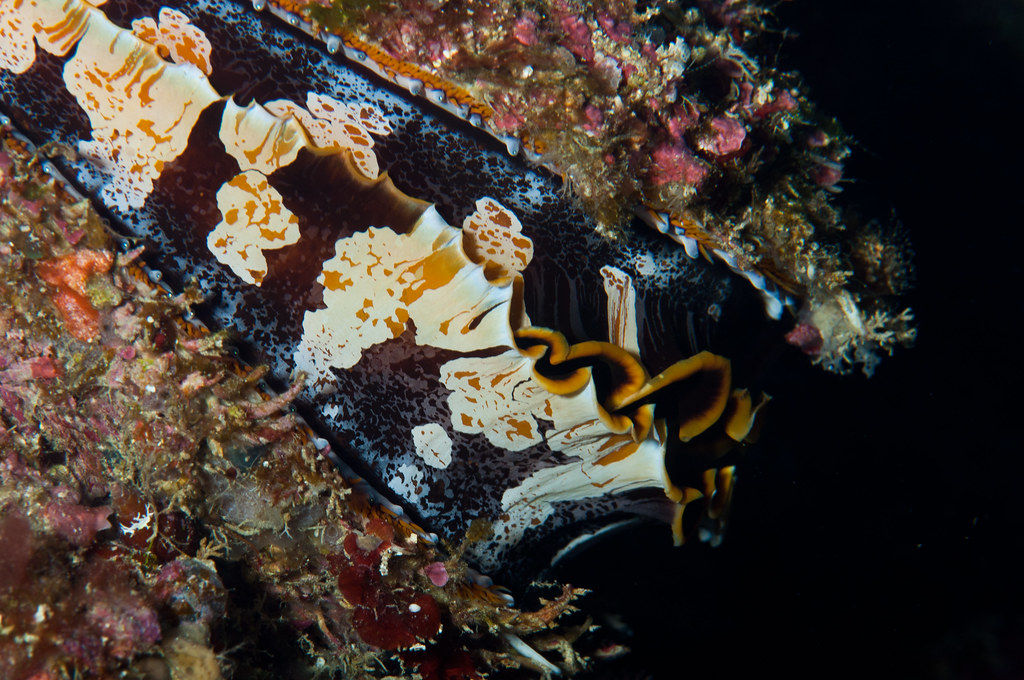
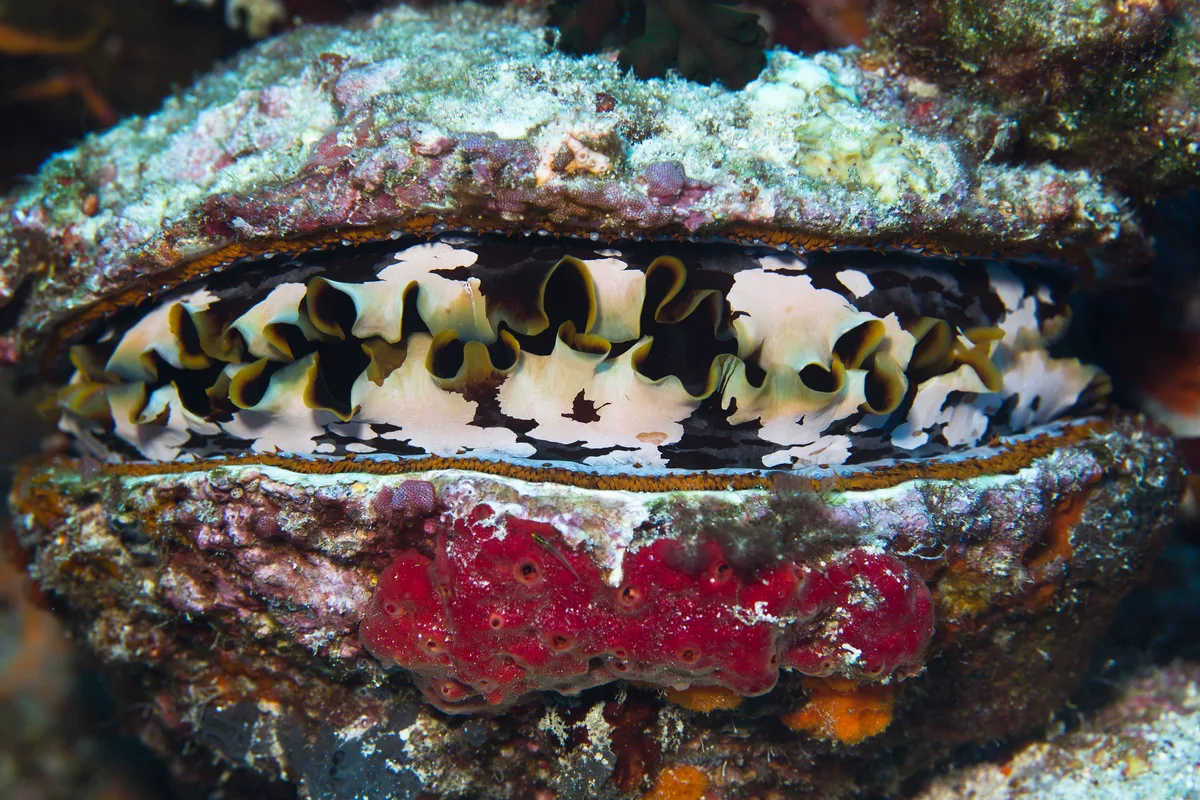
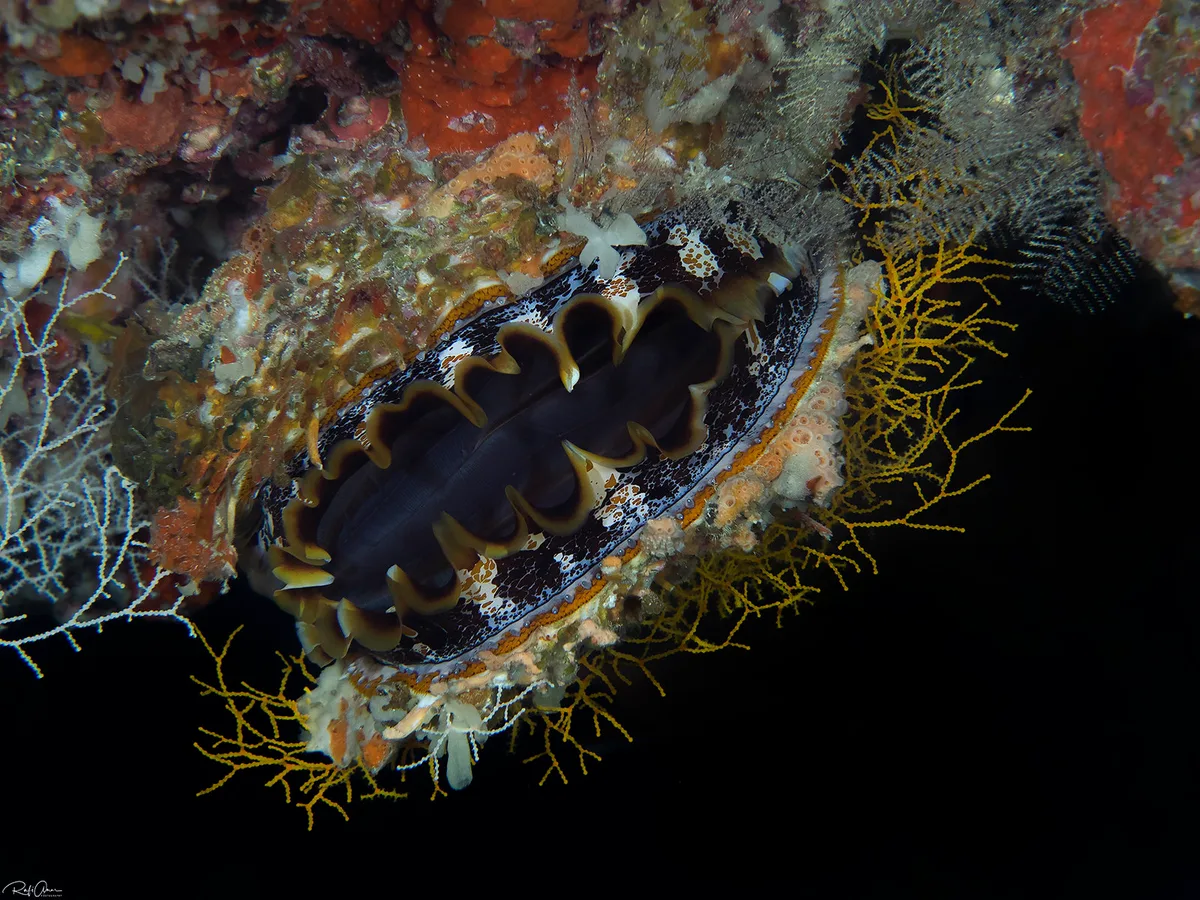
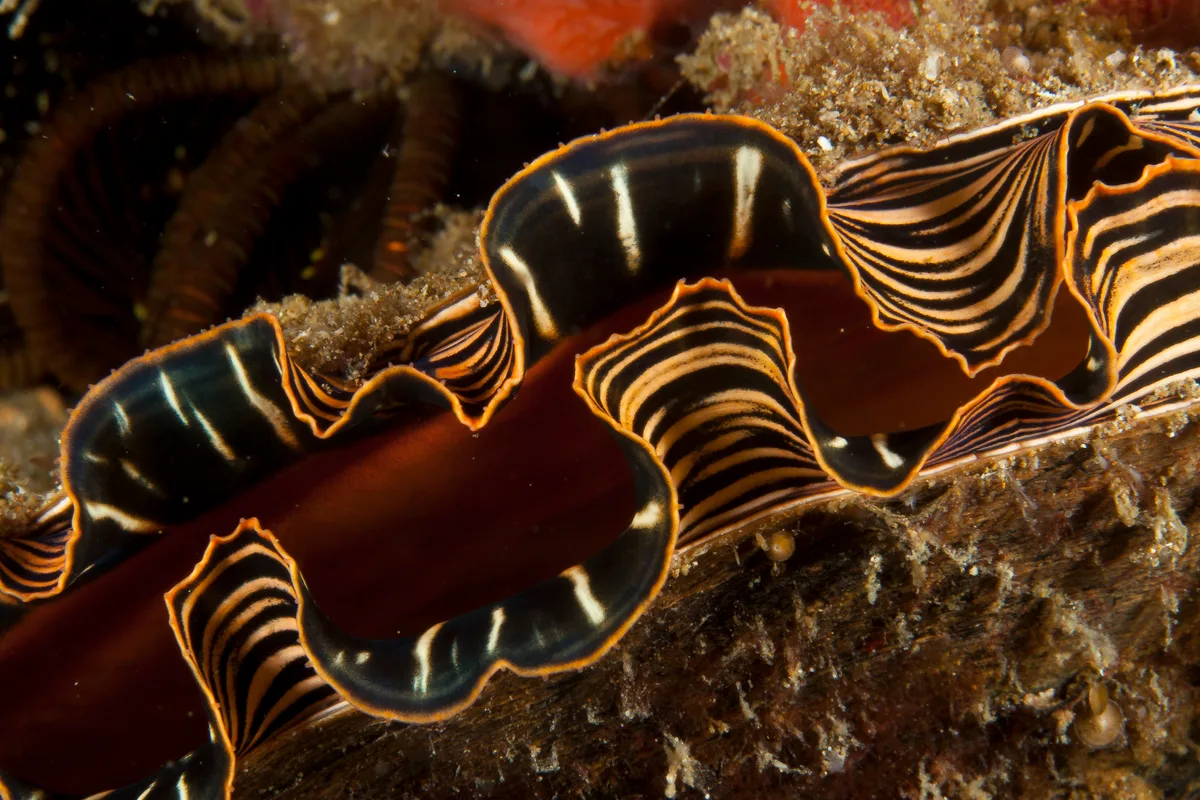
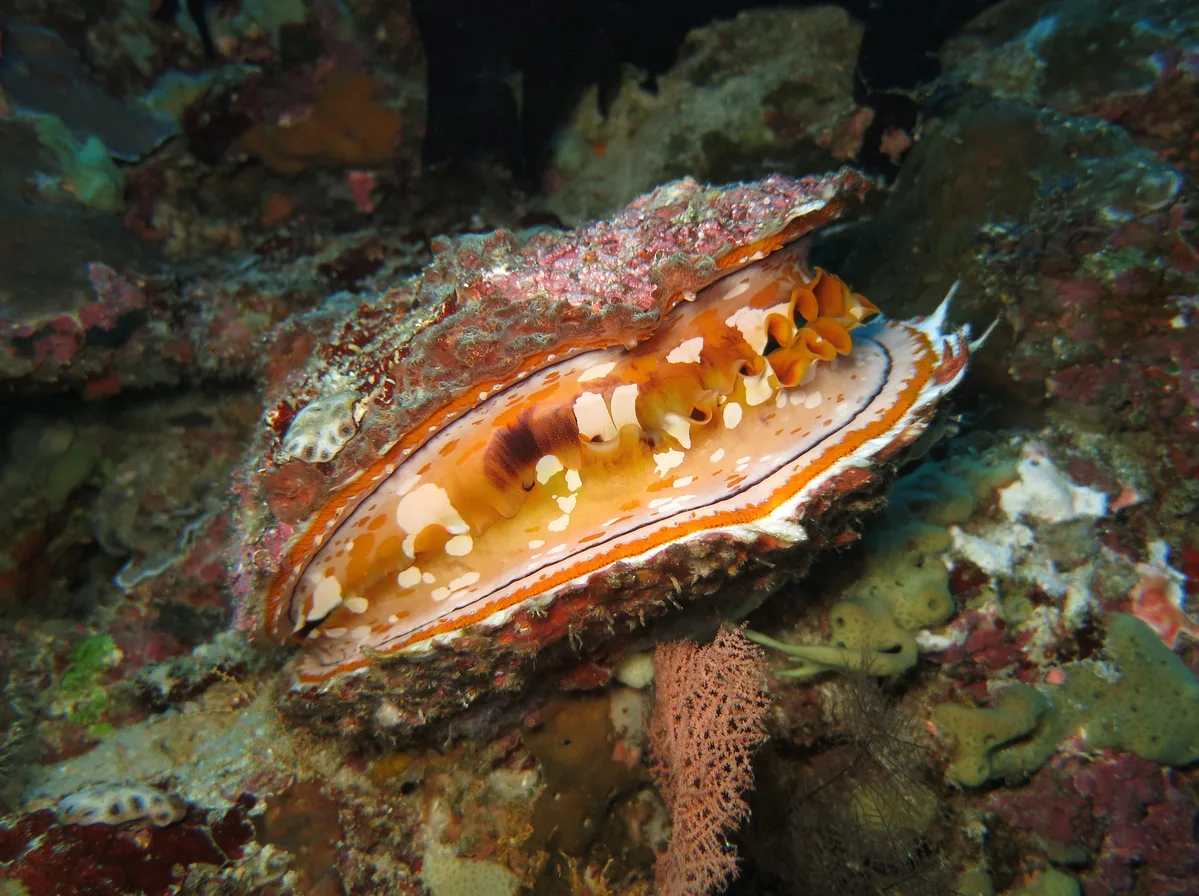
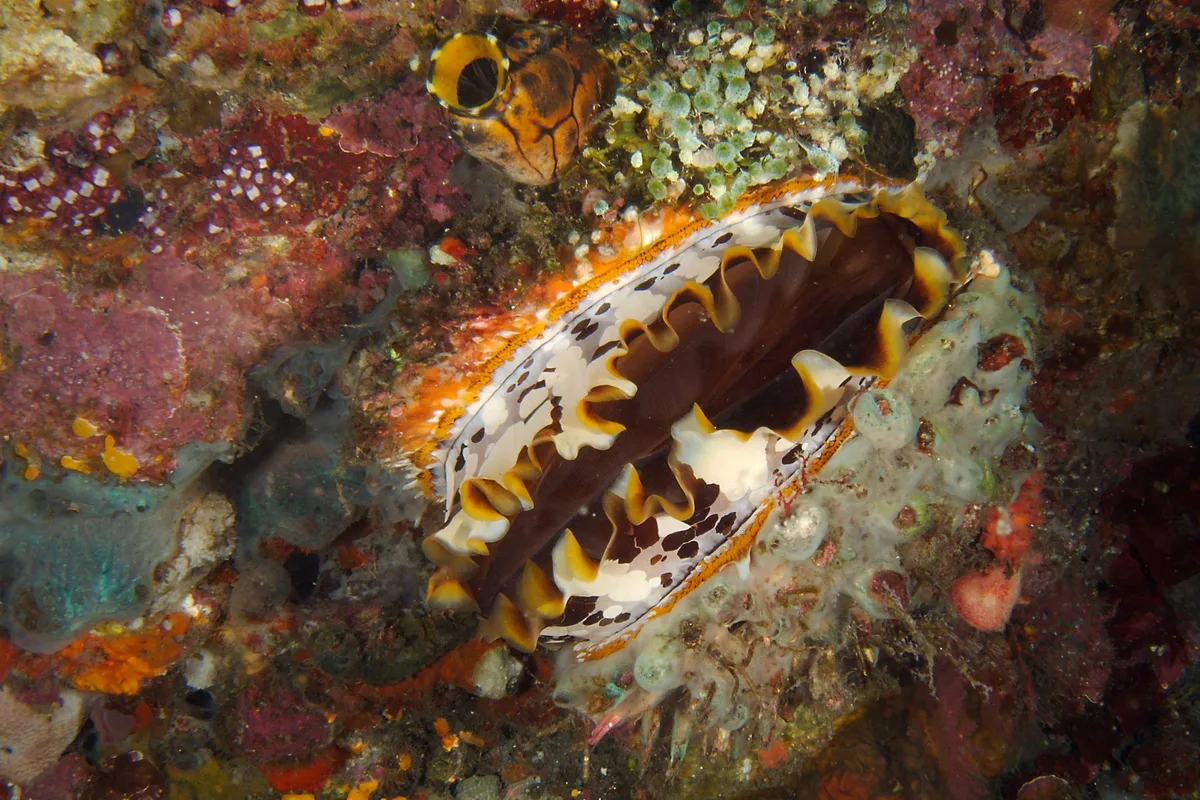
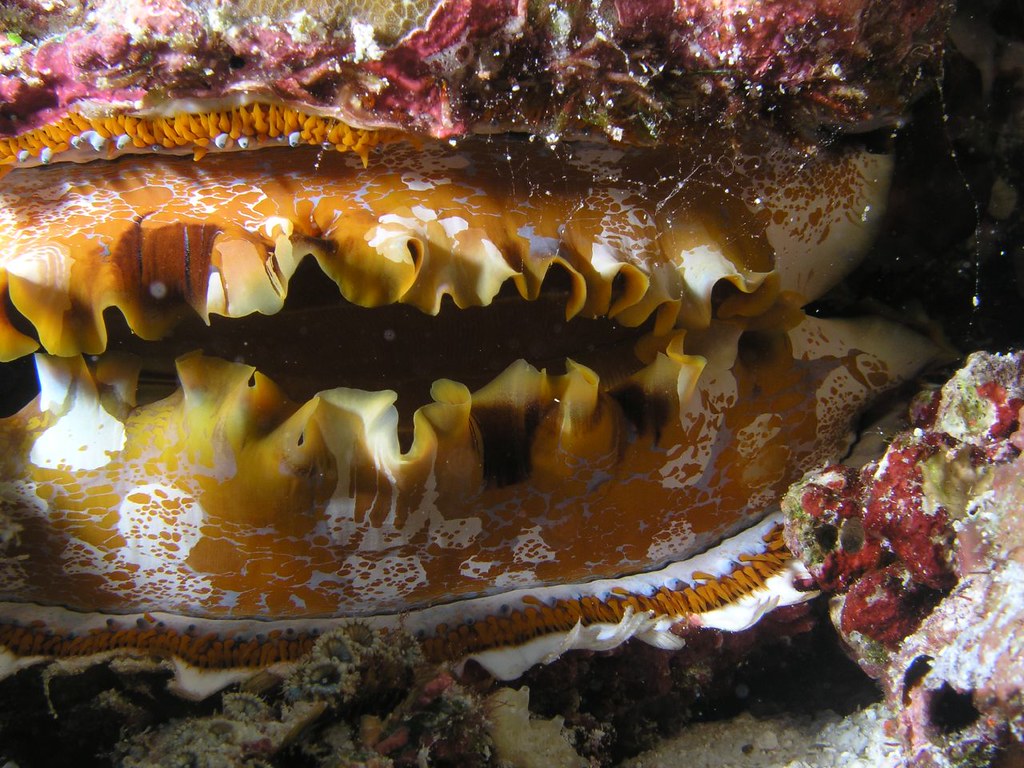
A big thorny oyster cemented to the reef face, up to 22 cm (8.7 in) across and so overgrown with sponge and coralline algae that the shell itself is usually invisible. What gives it away is the gape: a wavy line of orange or red mantle, lined with dozens of small dark eyes, held open a few centimeters and closing hard the moment a shadow crosses it.
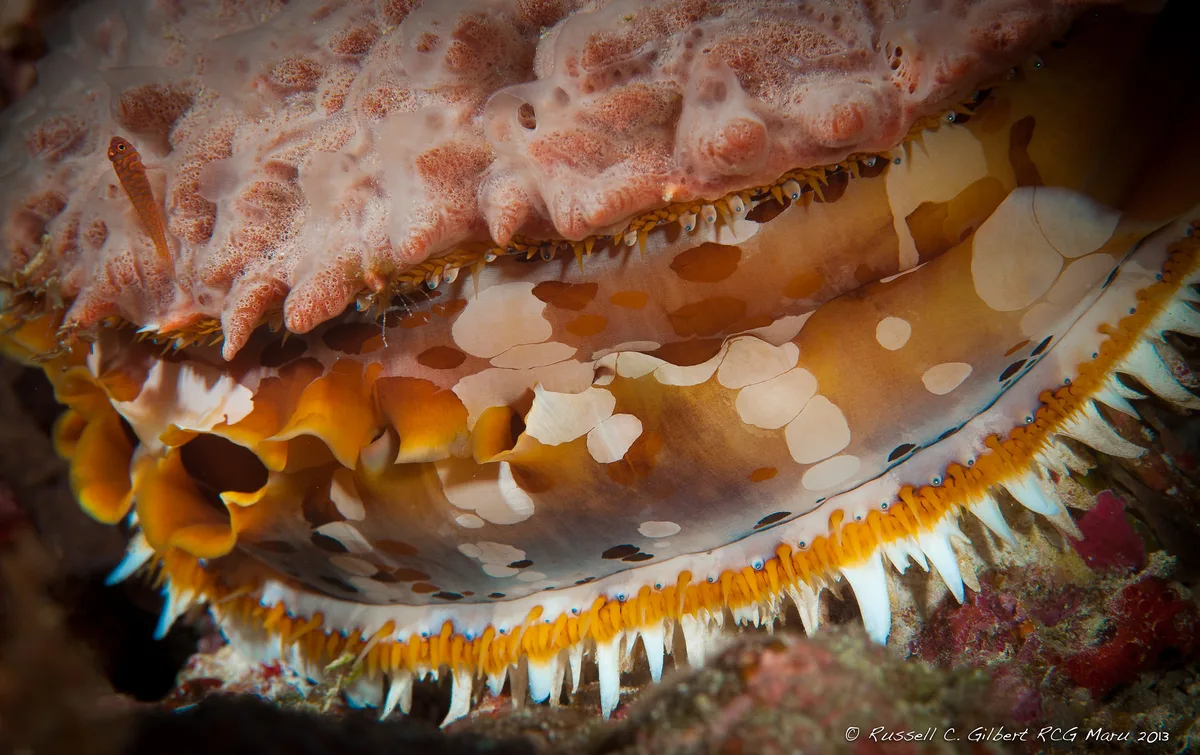
Those eyes are the surprise. Each is a real optical eye with a lens and a mirror behind it, and there are rows of them along the mantle edge. They resolve almost nothing, but they detect a change in light and a moving shape, which is all a bivalve needs to know that something is approaching. Photographers learn to approach slowly and from below, and to wait a minute after the first closure.
The cemented life explains the spines. A free-living scallop swims away from trouble; this animal glued itself down as a juvenile and has been armoring and camouflaging ever since. The spines collect the growth that hides it, so the disguise is grown rather than made.
- large shell cemented to the reef, usually overgrown with sponge and coralline algae
- wavy orange or red mantle edge lined with dozens of tiny eyes
- closes hard the moment a shadow passes
- shell to 22 cm, spines mostly hidden by growth