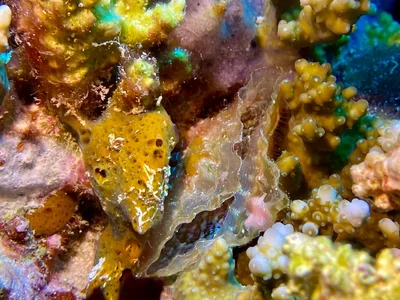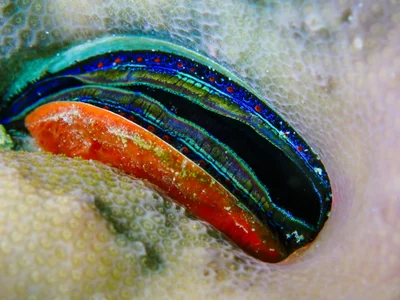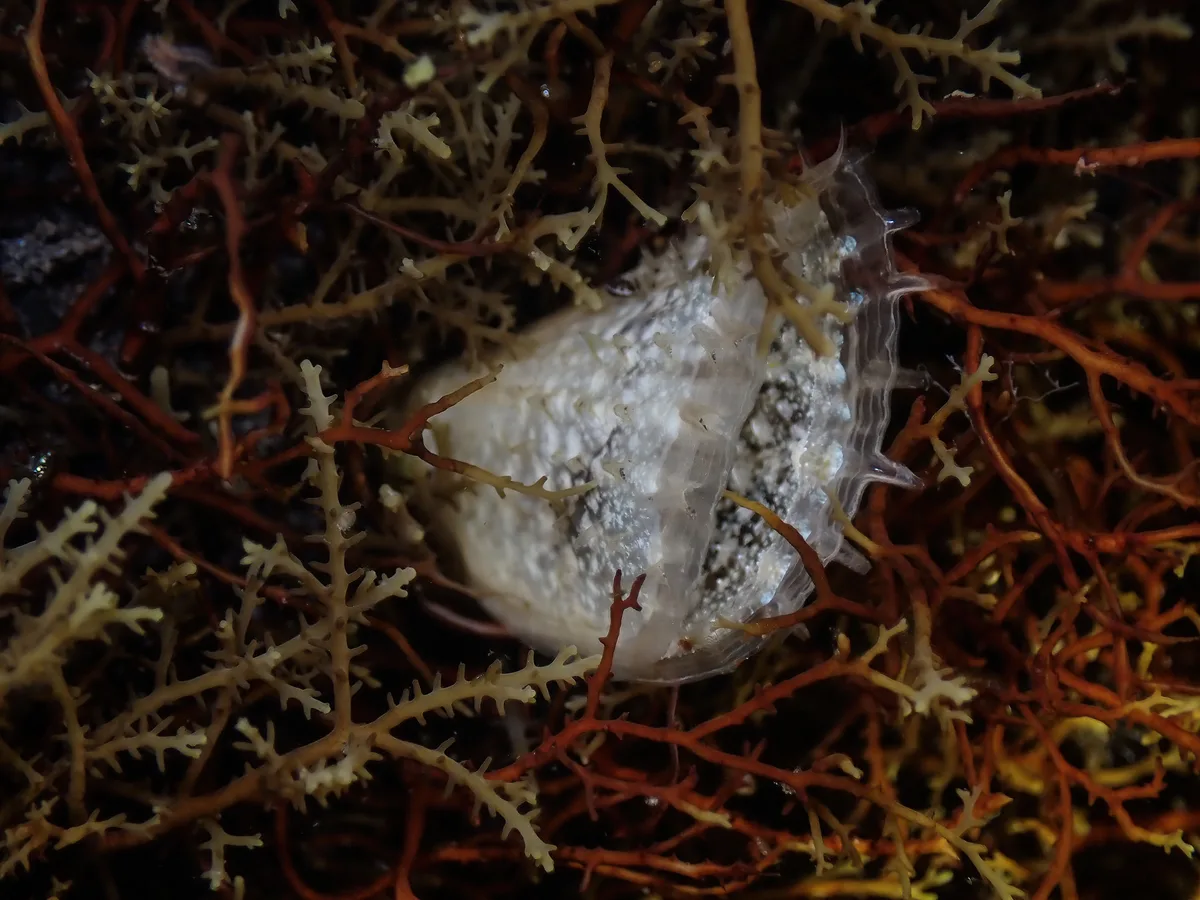
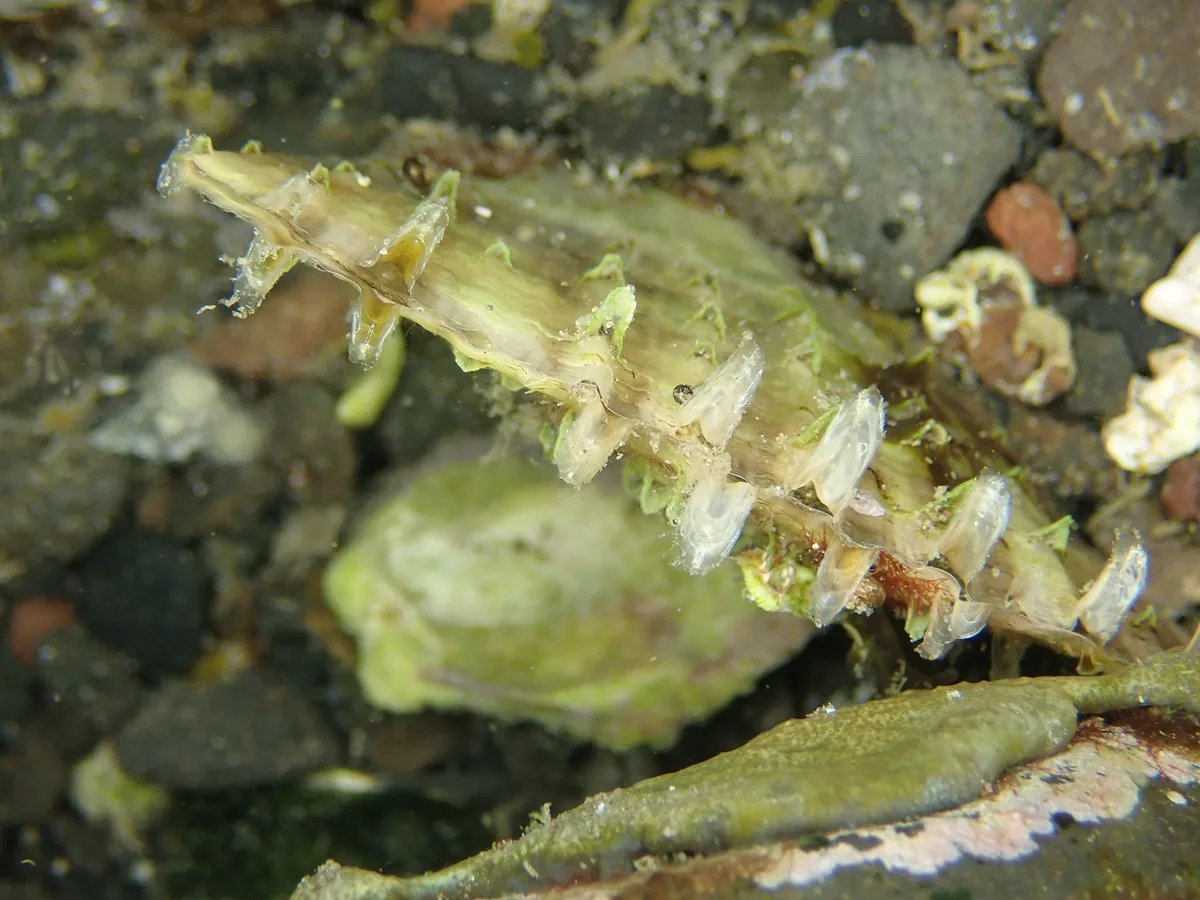
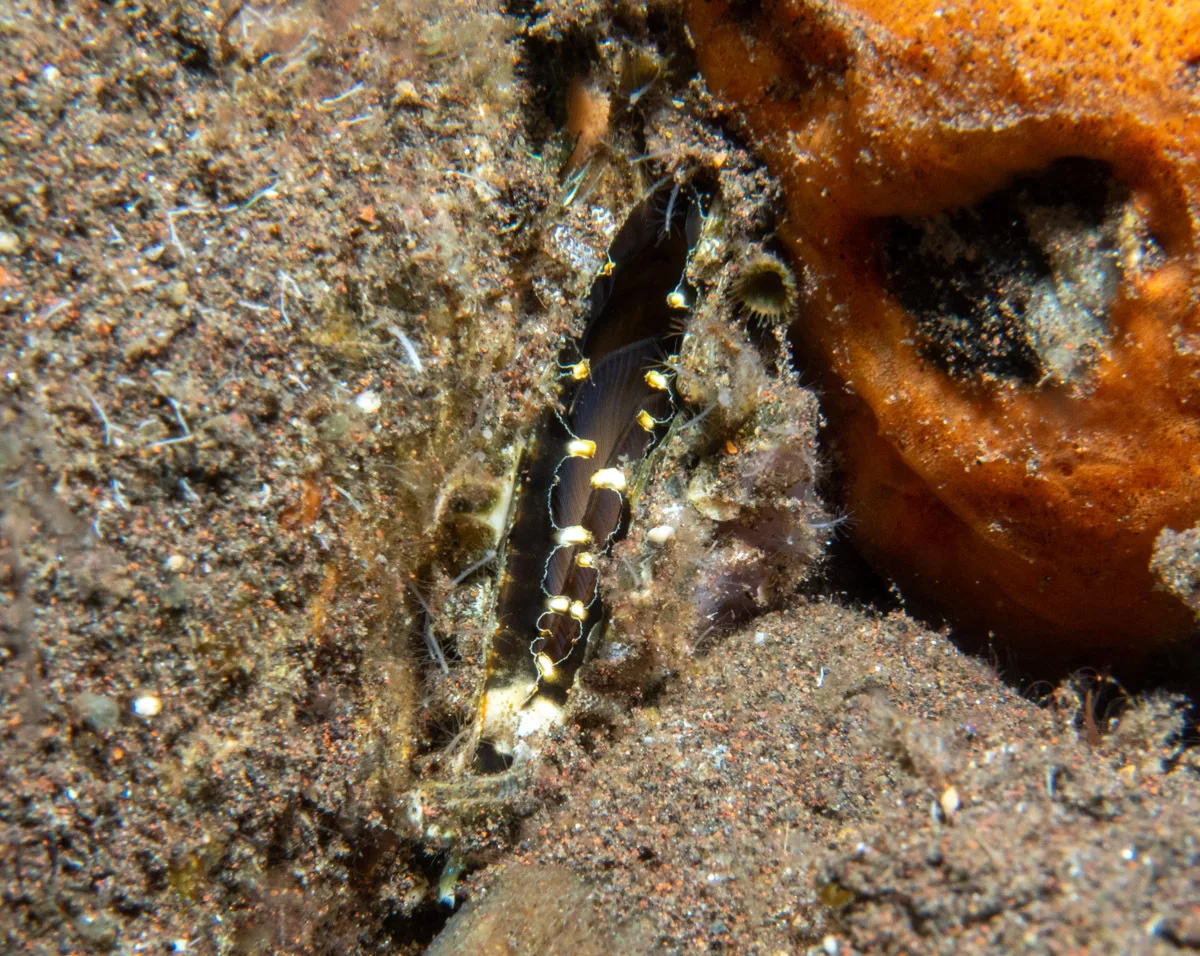
A brittle fan standing point-down in the sand with only its wide upper edge showing, up to 15 cm (6 in) long, ribbed with about a dozen lines that often carry short open spines. Divers usually meet it by accident, because a buried pen shell is a hard edge in soft ground and it cuts.
The animal anchors itself with byssus, a bundle of protein threads spun from a gland in the foot and hardened in seawater. In the Mediterranean, the same material from a larger relative was woven into sea silk, a cloth so fine and so laborious that surviving pieces sit in museums. The threads hold the shell upright in shifting sediment while the top edge filters passing water.
A broken pen shell does not heal well, and the animal spends its whole life in one spot, so a seagrass meadow with pen shells in it is a meadow that has been left alone. That makes them a decent field indicator of how much traffic a patch of sand actually gets.
- brittle fan-shaped shell standing upright out of the sand
- about a dozen ribs, often carrying short open spines
- only the wide upper edge shows, the point is buried
- shell to 15 cm