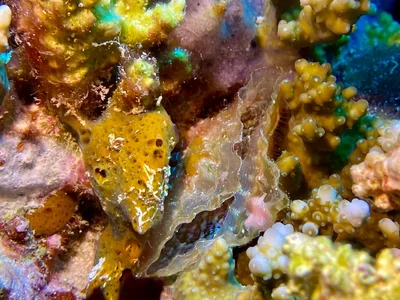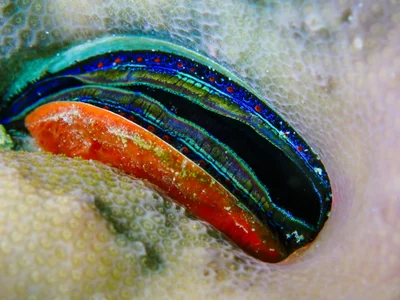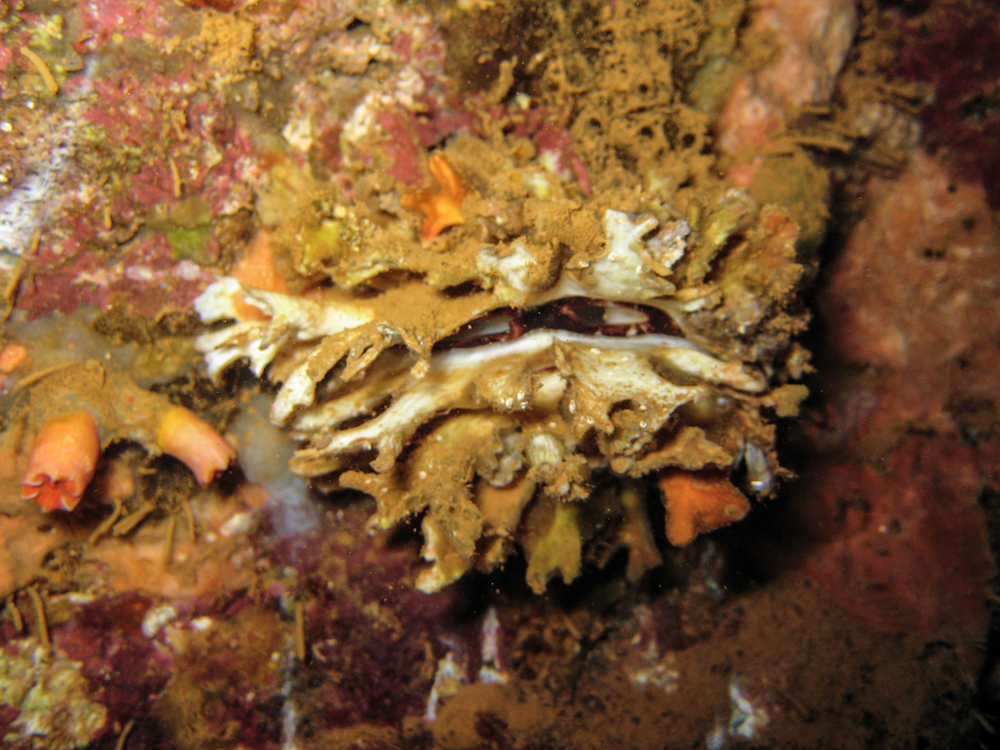
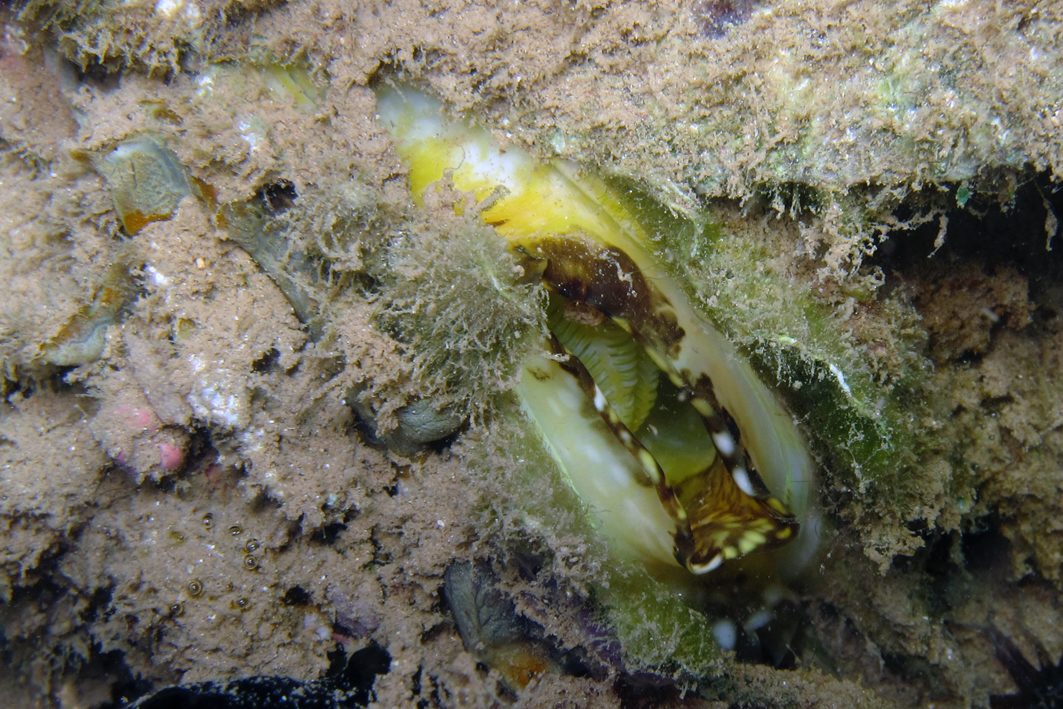
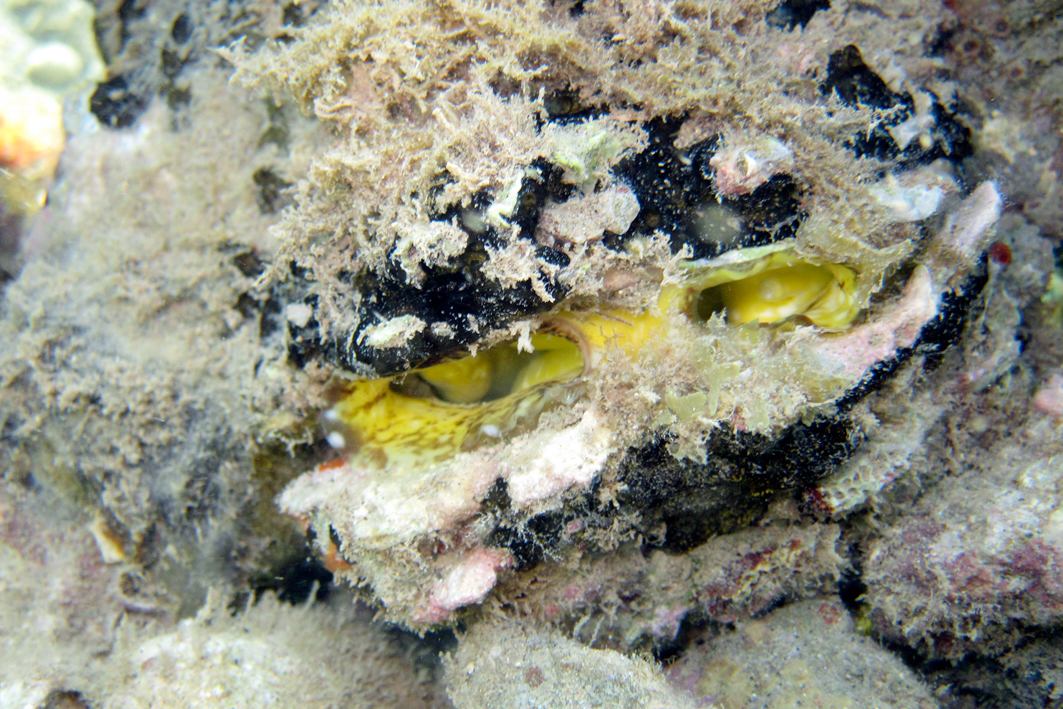
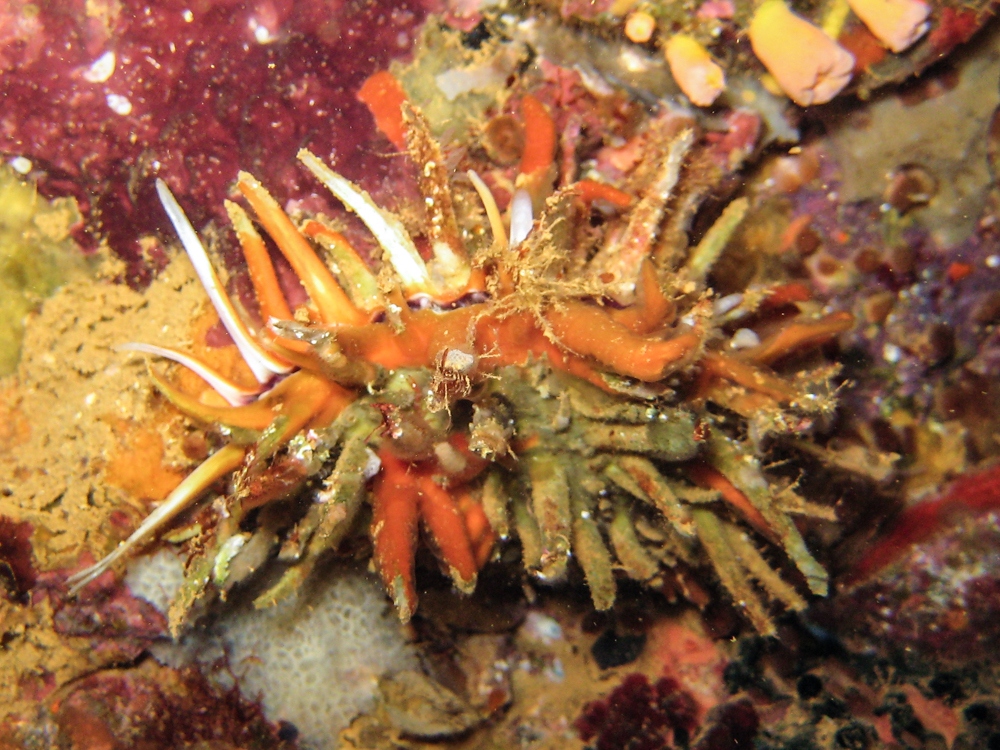
A jewel box shell glued to the rock by its lower valve, the upper one working as a lid, and the whole outer surface drawn out into leaf-like frills and plates up to 14 cm (5.5 in) across. Those frills are almost always crusted with coralline algae and small encrusting life, so the animal reads as a lumpy patch of reef until it closes.
Cementing is unusual among bivalves and it changes the geometry of the animal: the two valves stop being mirror images, one becoming a deep cup and the other a flatter cover. Larvae settle, attach and are committed. Everything after that is growth in place, filtering water through the narrow gape.
The common name is old and comes from the shell trade, where these were prized for exactly the frilly ornament that makes them hard to see alive. Empty valves are collected far more often than living animals are noticed, which says more about how well the camouflage works than about how rare they are.
- lower valve cemented to rock, upper valve acting as a lid
- outer surface drawn out into leaf-like frills and plates
- frills usually crusted with algae and small growth
- shell to 14 cm