syn. Enoplometopus (Enoplometopus) occidentalis, Nephrops occidentalis
up to 10 cm5-40 mLeast Concern
22
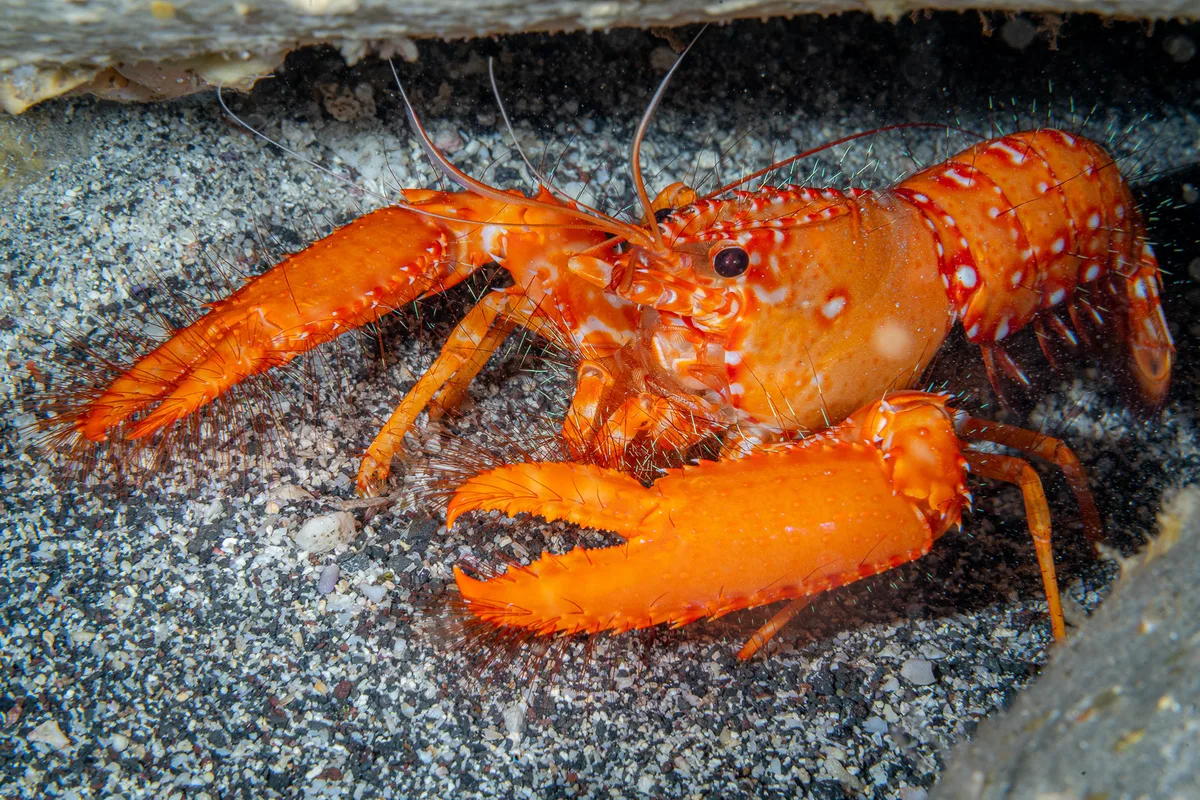
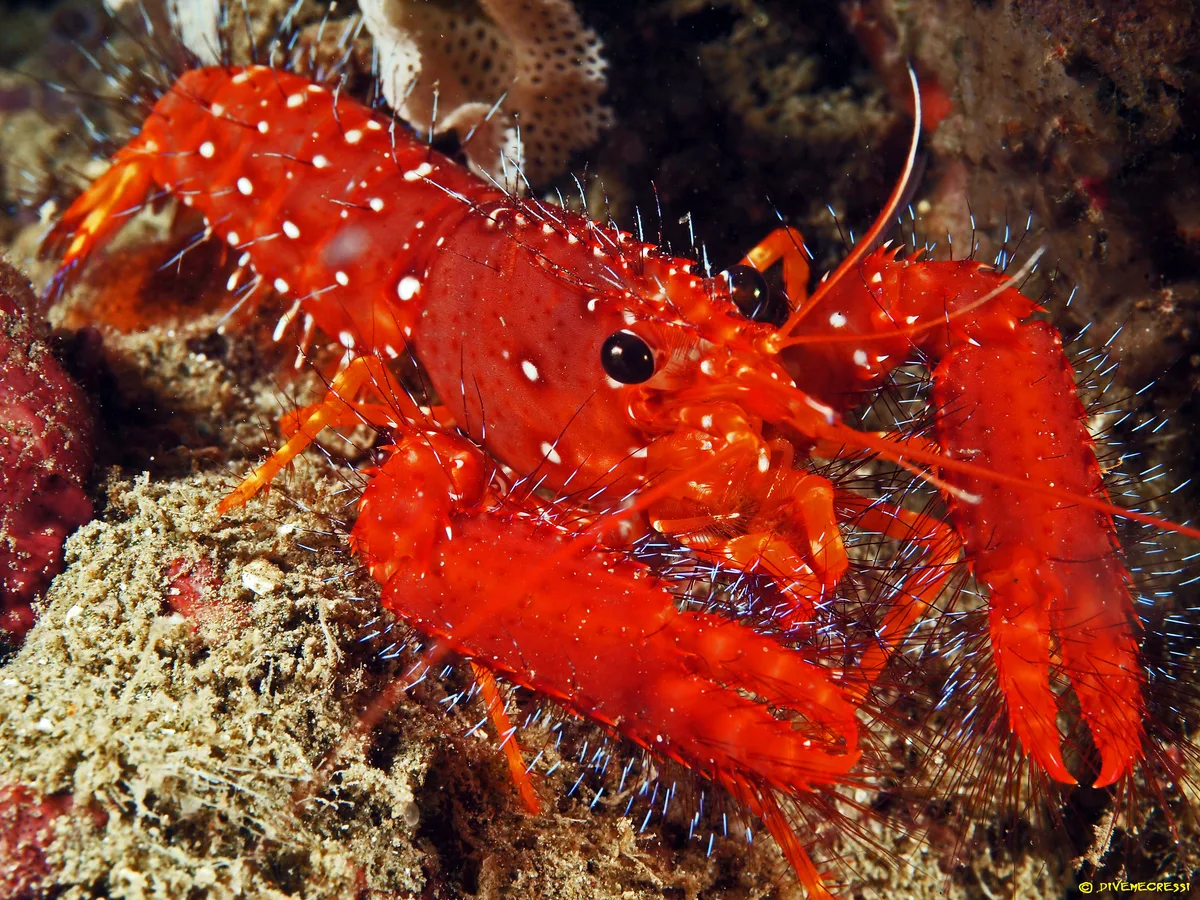
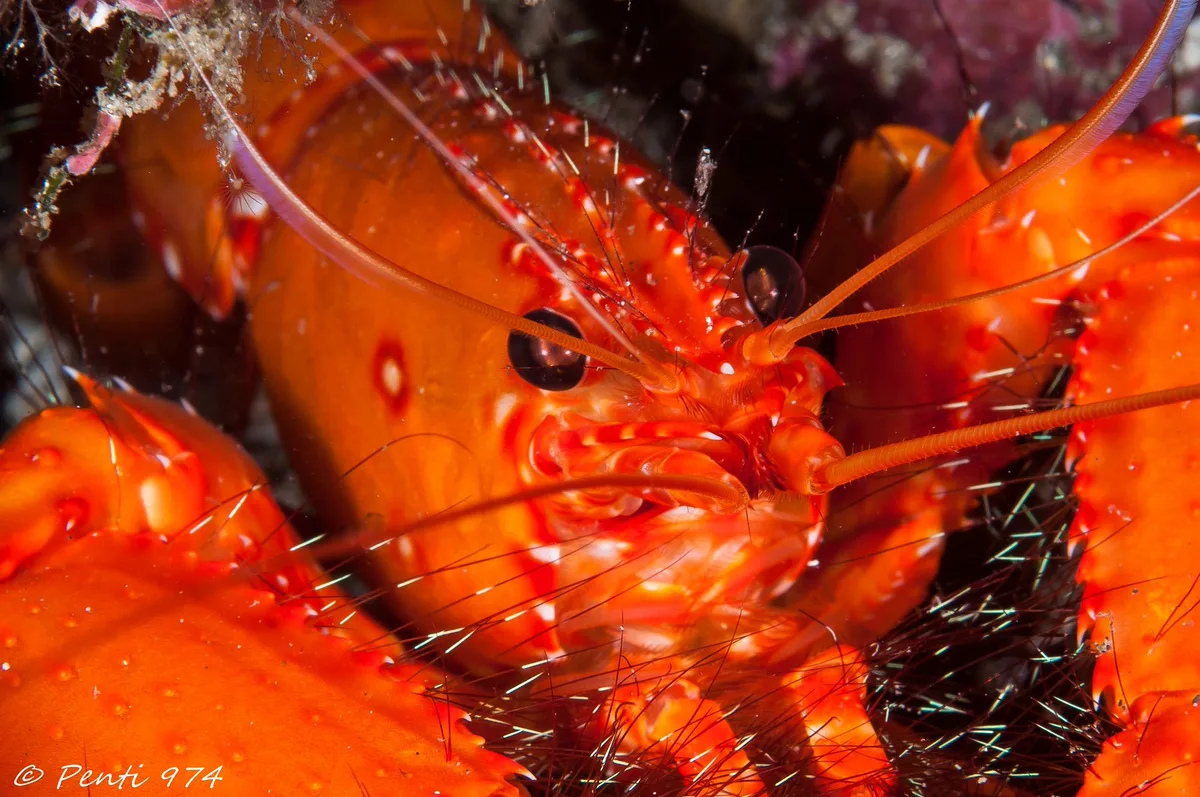
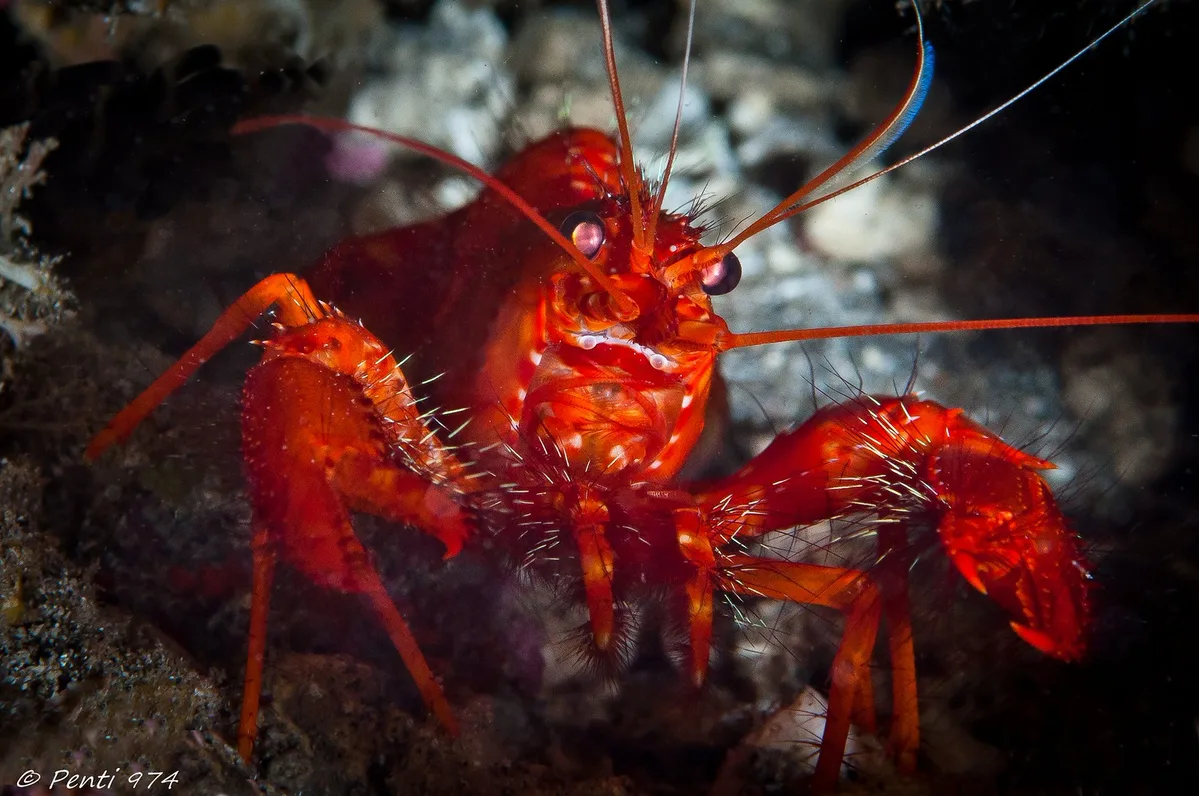
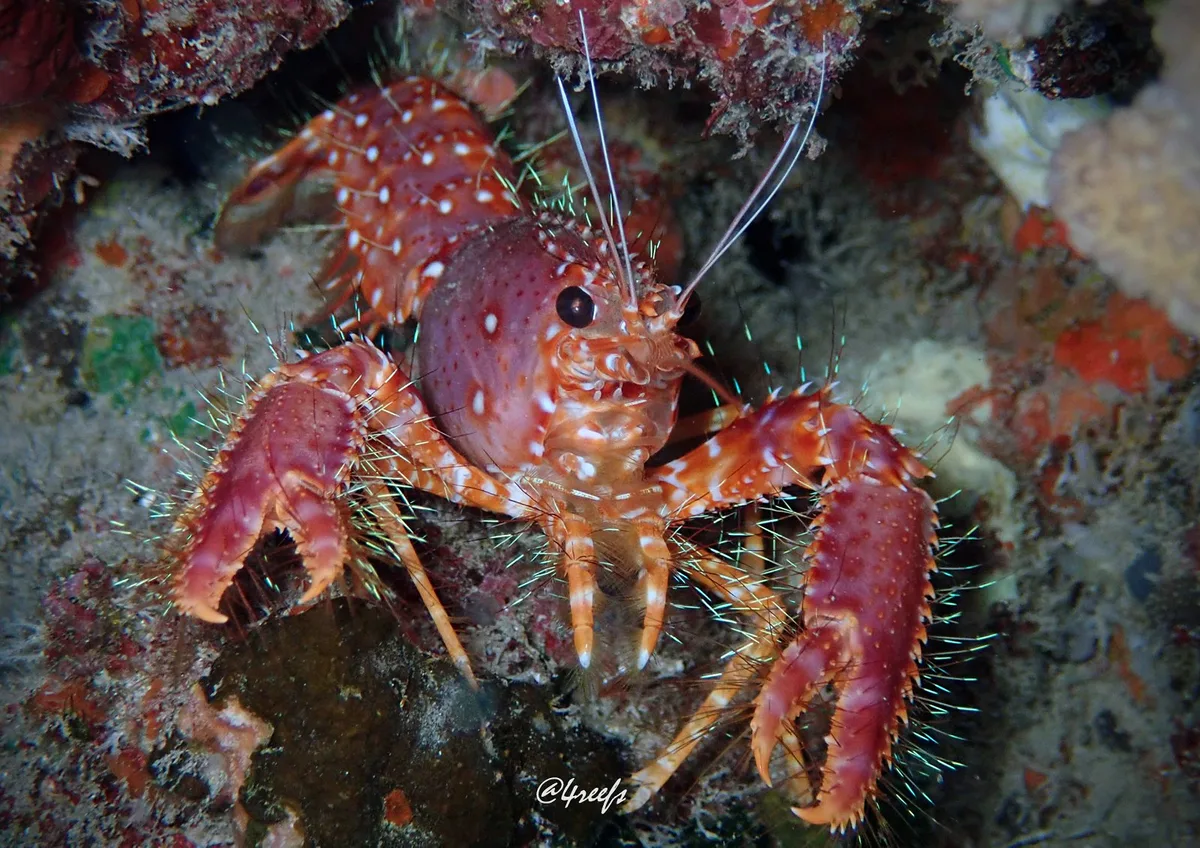
A small lobster of about 10 cm (4 in), brilliant orange-red and marked with white spots, carrying true claws on the first pair of legs - the feature that separates it at a glance from the clawless spiny lobsters sharing the same reef. The claws are noticeably hairy, the antennae long and white, and the whole animal is colored for a place where red light does not reach.
It lives deep in crevices and caves from about 5 m to 40 m (16 to 130 ft), pressed so far back that daylight never touches it, and comes out only at night to pick over the rock for small invertebrates and carrion. Divers meet it by putting a torch into a hole rather than by finding it in the open, and even then usually see claws and antennae rather than a whole animal. That red coloring, which looks conspicuous under a torch beam, is effectively black at the depth it lives - a common solution among reef animals that never see the surface.
How to recognise it
bright orange-red with white spots
true claws on the first pair of legs, unlike spiny lobsters
small, under 10 cm
hairy claws and long white antennae
Why it's threatened
Biological resource use
Intentional use: (large scale) [harvest]
This is a highly prized species in the aquarium trade industry (Daum 1982, Chan 1998, Calado et al. 2003). It has an estimated commercial value of $30 U.S. per specimen (Calado et al. 2003). Specimens are currently harvested from wild populations for the aquarium trade (Calado et al. 2003). In Hawaii, a total of 5,878 individuals were caught for the aquarium trade between 1967-2003 (Walsh et al. 2004). No catch data for this species is available and it is unknown if the harvesting of wild specimens has any significant effects on its population size. However, this species is widely distributed and it is therefore unlikely that it is experiencing a significant decline in population size.
Threat classification from the IUCN Red List.
Comments
Please, sign in to leave a comment
Continue with a social account - yours will be created automatically.