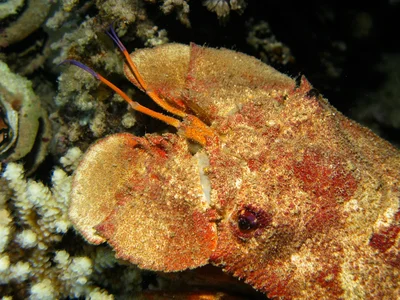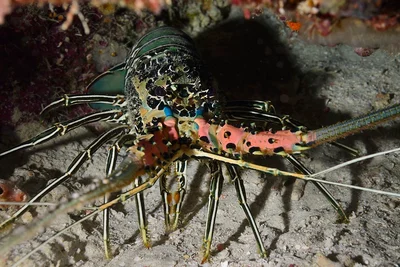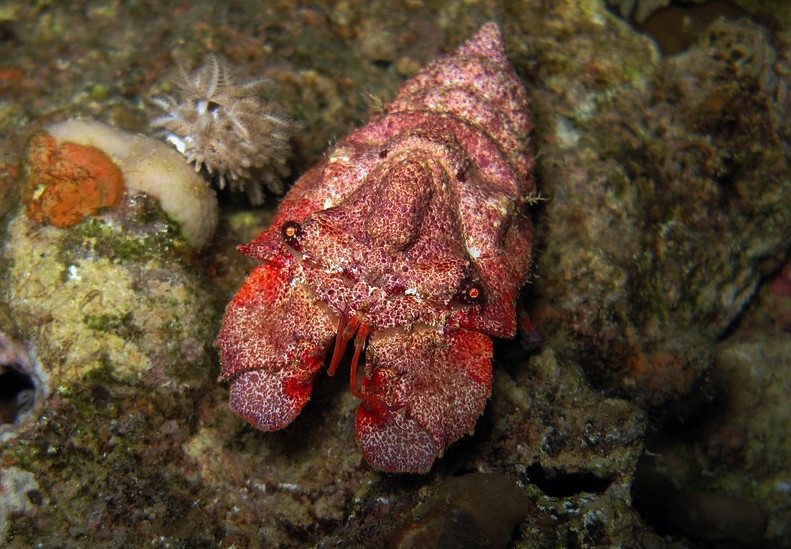
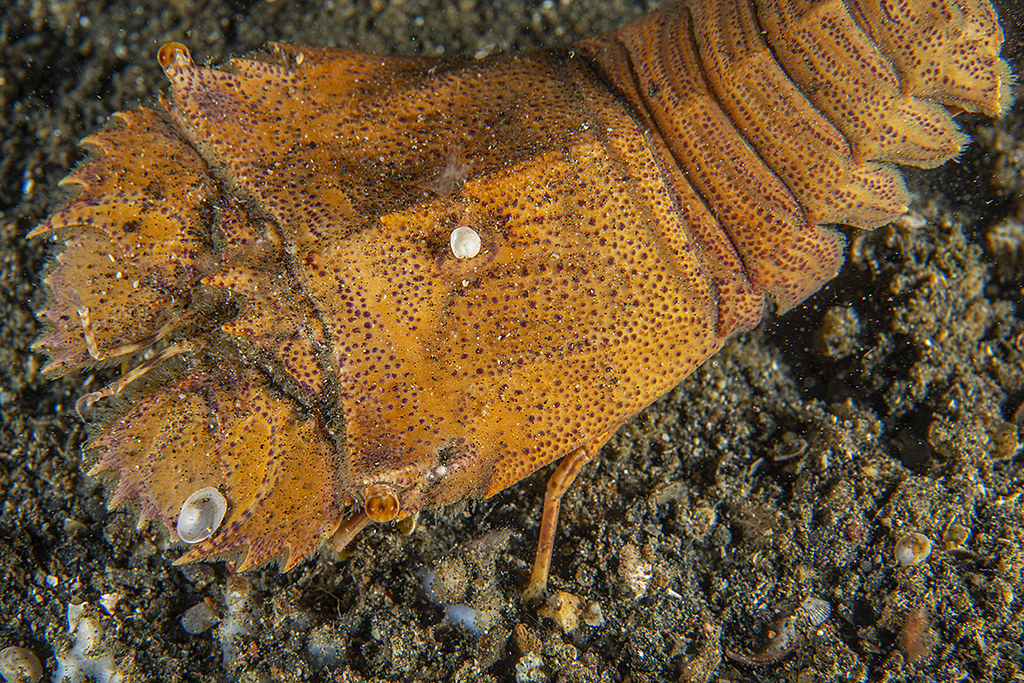
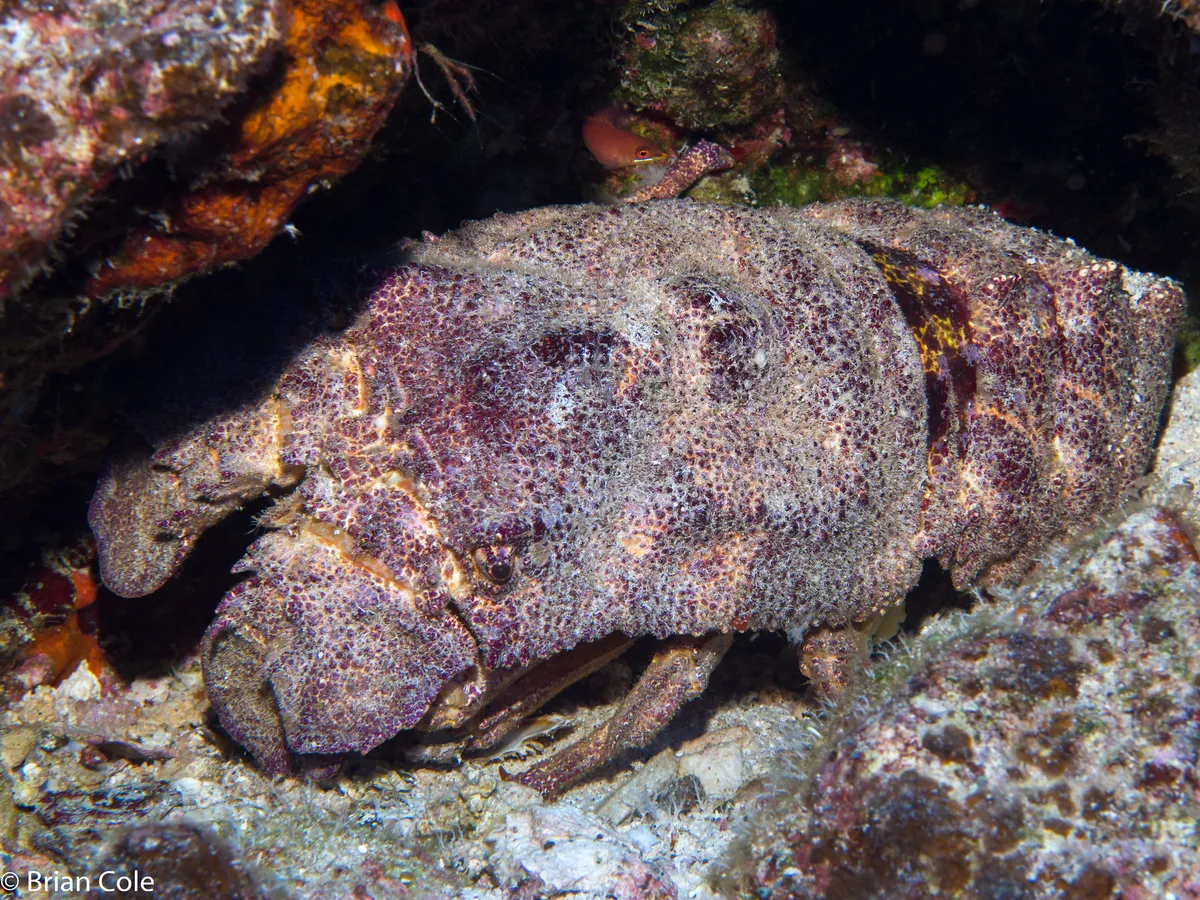
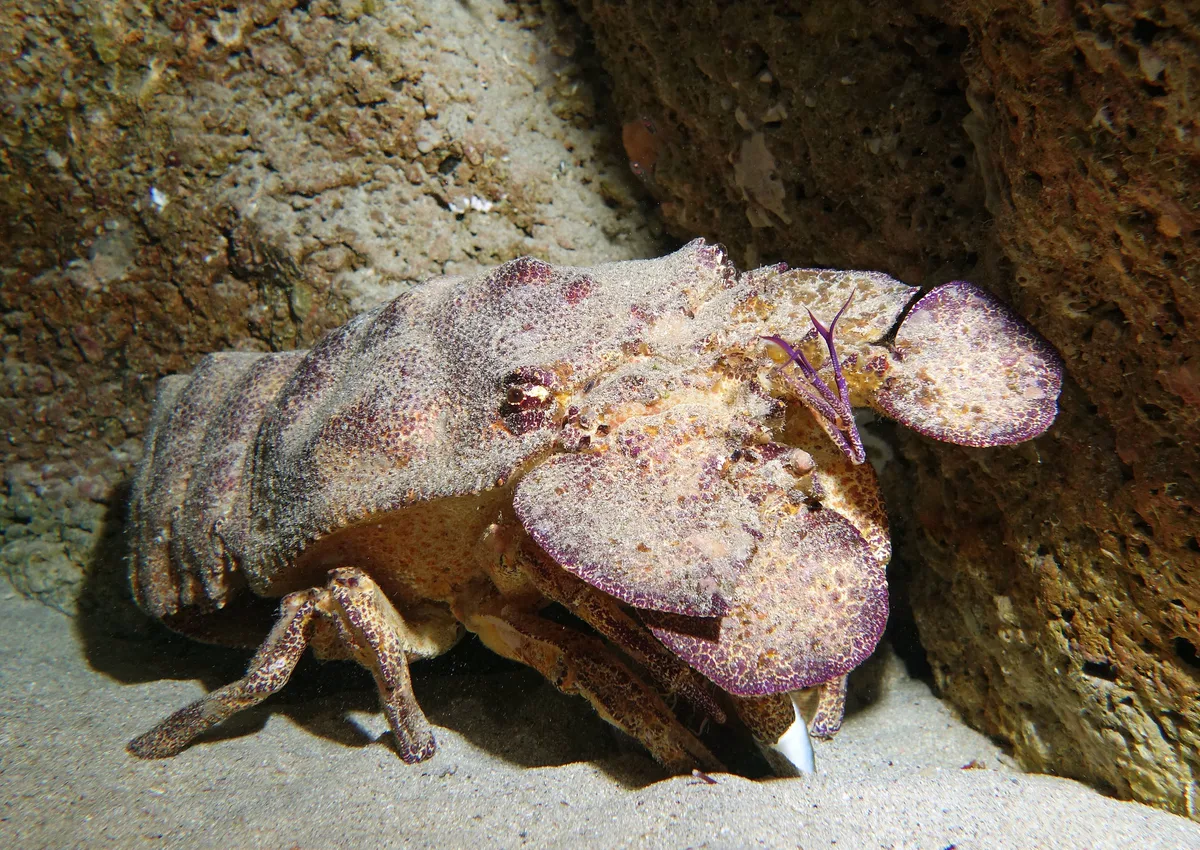
A slipper lobster to about 50 cm (20 in) and the largest crustacean many divers here will ever see. In place of the whip antennae of a spiny lobster it carries two broad flat plates like a pair of shovels - modified second antennae, used for digging and for wedging the animal into a crack. The body is flattened, reddish brown, and the shell rough and pitted enough that a motionless animal reads as part of the rock.
It keeps to caves and deep ledges on reef walls from about 5 m down to 100 m (16 to 330 ft), well back from the entrance by day, and emerges at night to feed on bivalves and other slow prey pried open with its legs. Sightings are uncommon and almost always inside a cave with a torch. Slipper lobsters are prized as food and slow to mature, a combination that has emptied accessible sites elsewhere in its range; here it survives mostly because the animals sit deeper than a free diver can comfortably reach.
- flattened body with no antennae, only broad flat plates at the front
- reddish brown, the shell rough and pitted
- large size, up to 50 cm
- wedged deep in a cave, rarely in the open
Why it's threatened
Threat classification from the IUCN Red List.