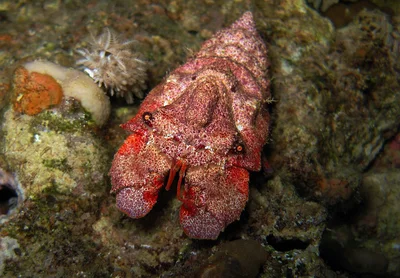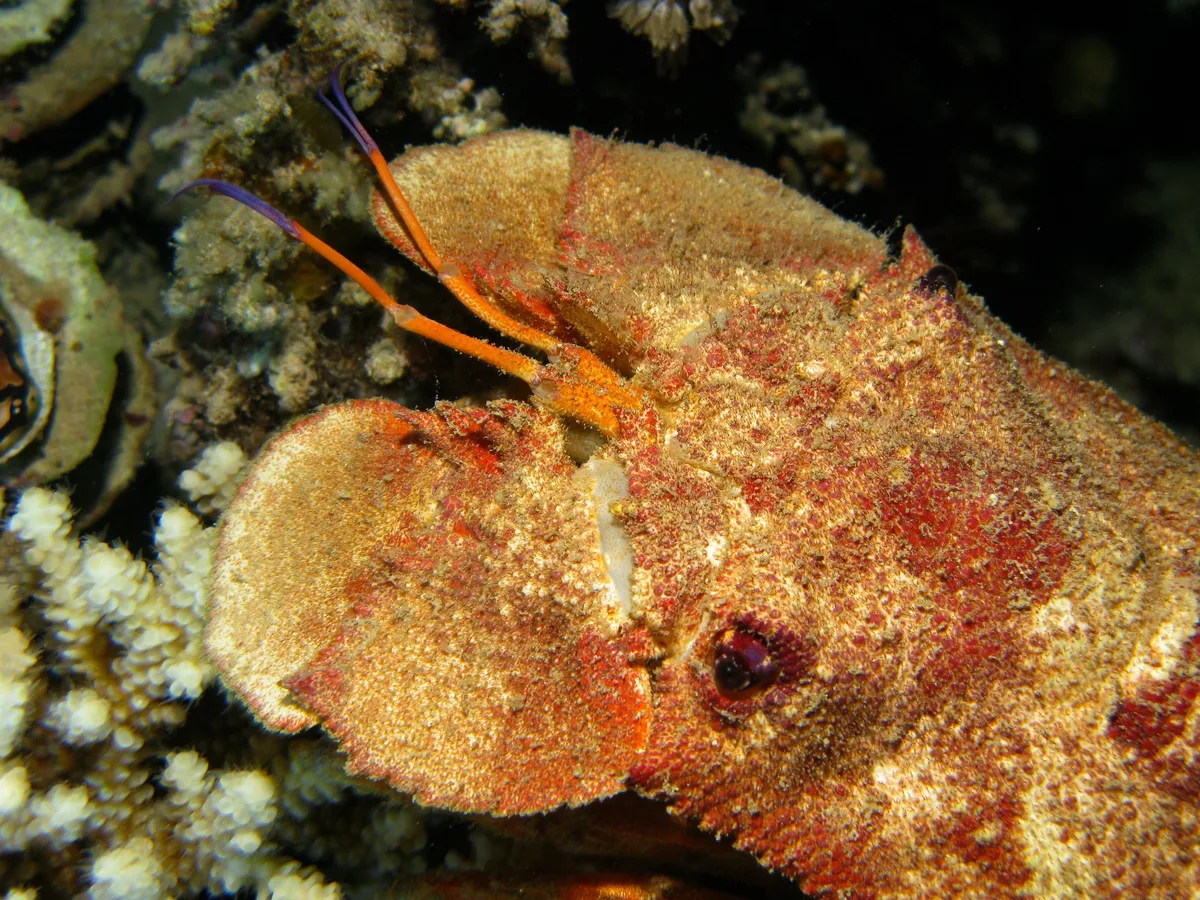
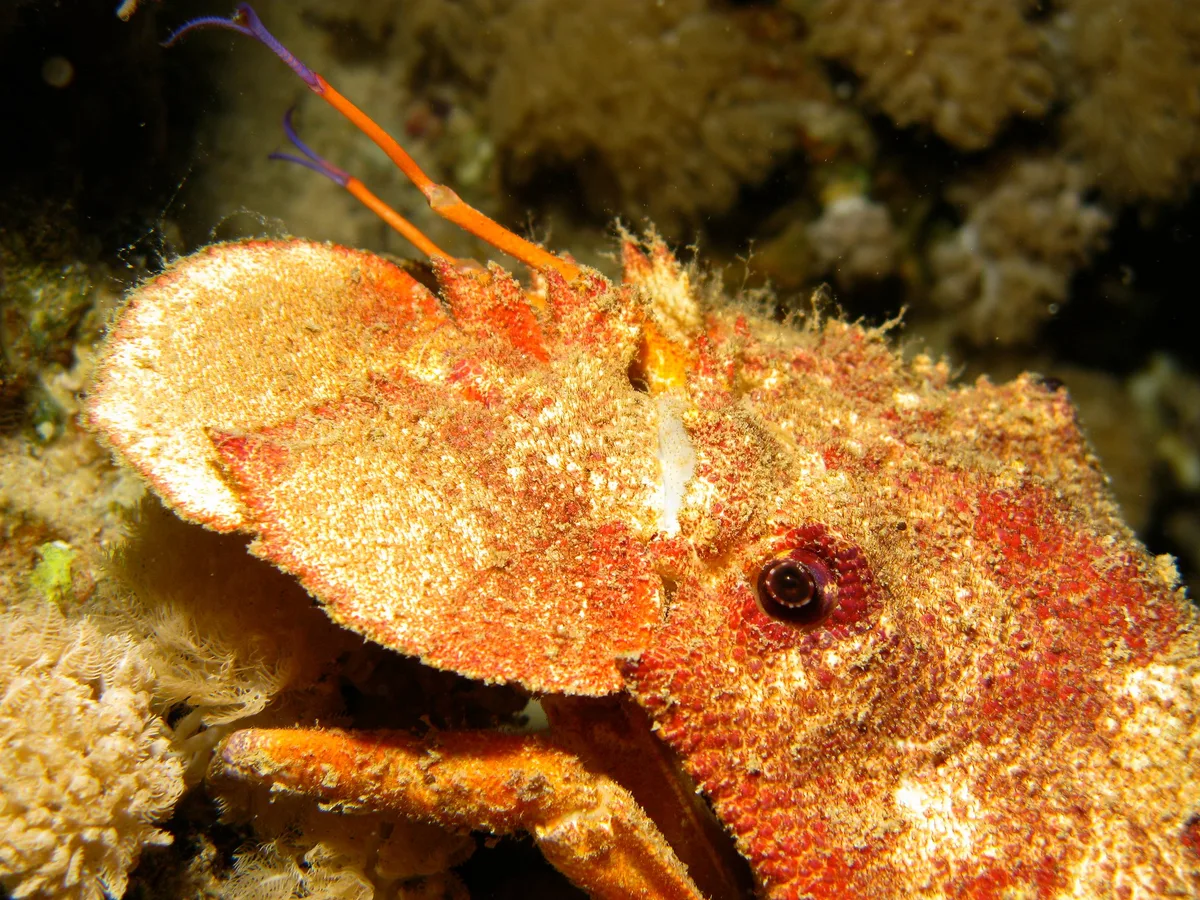
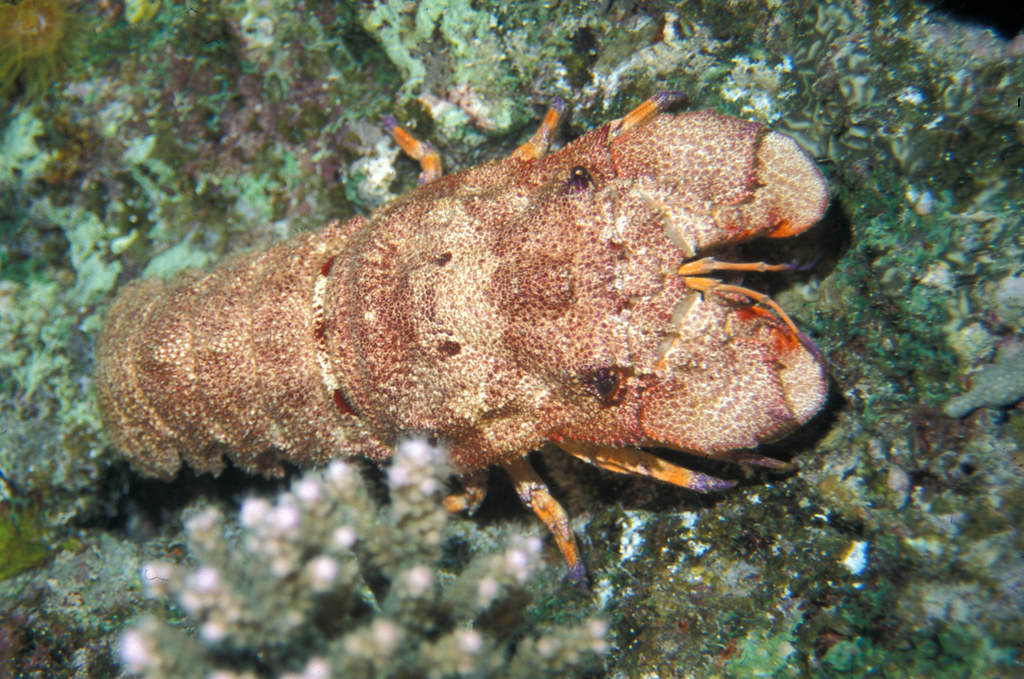
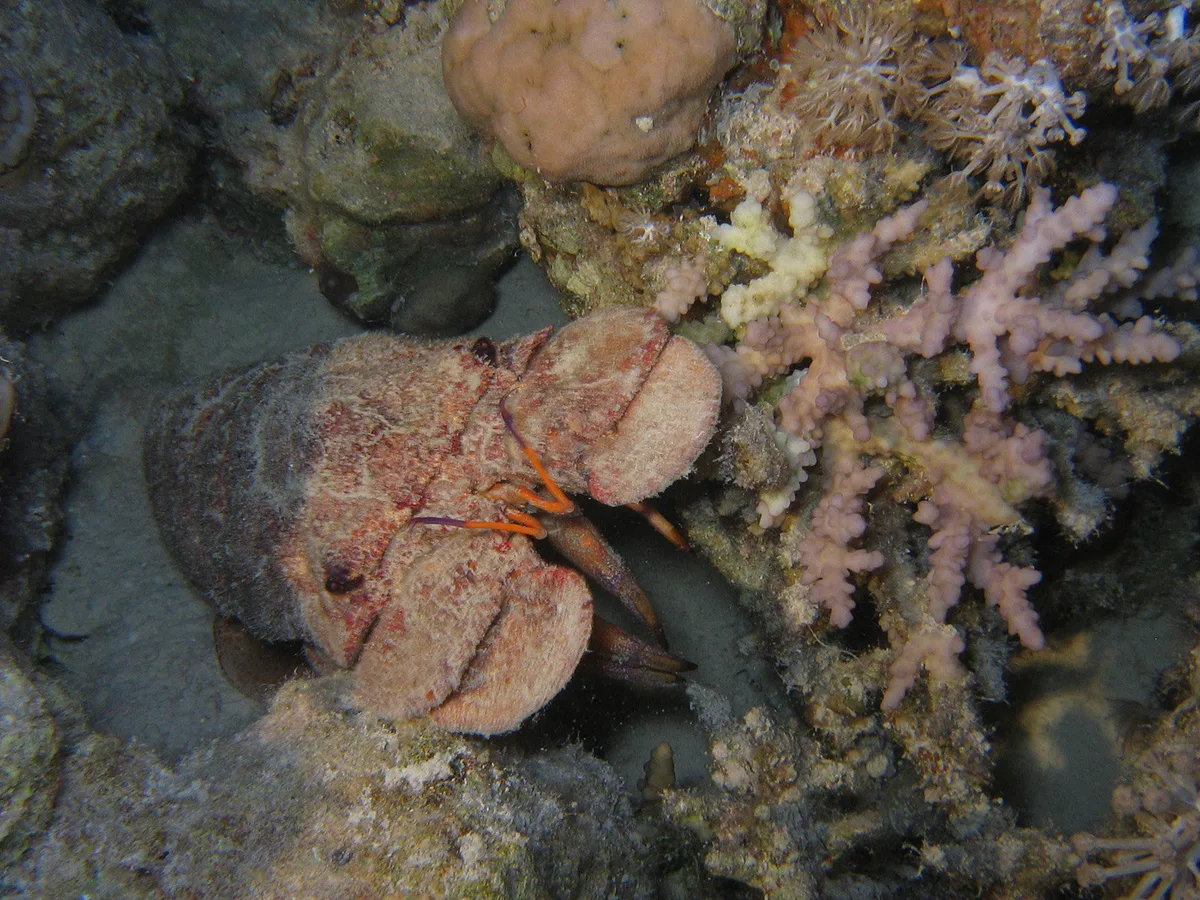
A slipper lobster of about 30 cm (12 in), sandy brown to reddish, smaller and less craggy than the Aesop slipper lobster it shares caves with. The build is the same: a flattened body, no whip antennae, and two shovel-like plates at the front that do the work of digging and bracing.
The name is a description of its diet - tridacnophaga means clam-eater - and it refers to giant clams. The lobster works at the shell edge with its legs until the mantle can be reached, feeding on an animal most predators cannot open at all. It shelters in reef caves and rubble by day, within reach of the clam beds it depends on, from about 3 m to 40 m (10 to 130 ft), and moves at night. It was described in 1967 from material collected in this sea, and remains known from very few records anywhere - both because it is genuinely uncommon and because a slipper lobster deep in a cave looks like every other lump of rock. A photograph of one is worth keeping.
- flattened slipper-lobster body, no whip antennae
- sandy brown to reddish, smaller than its relatives
- shovel-shaped plates at the front of the head
- length up to 30 cm
Why it's threatened
Threat classification from the IUCN Red List.