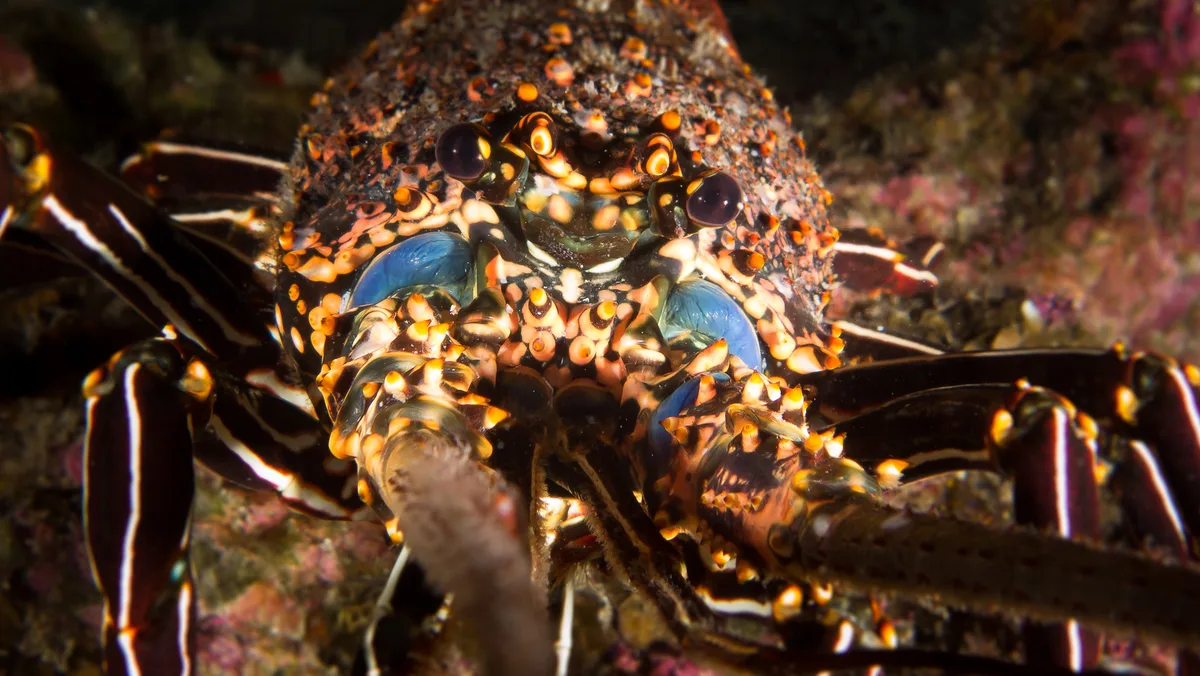
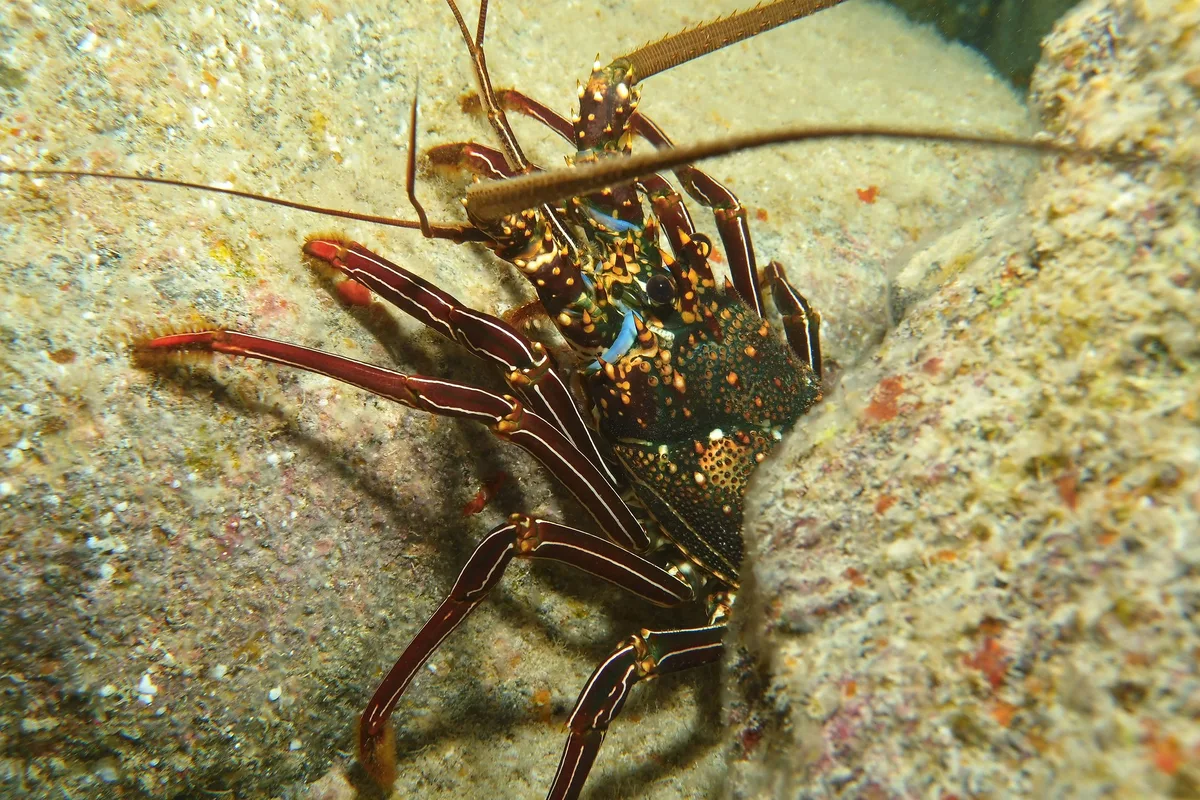
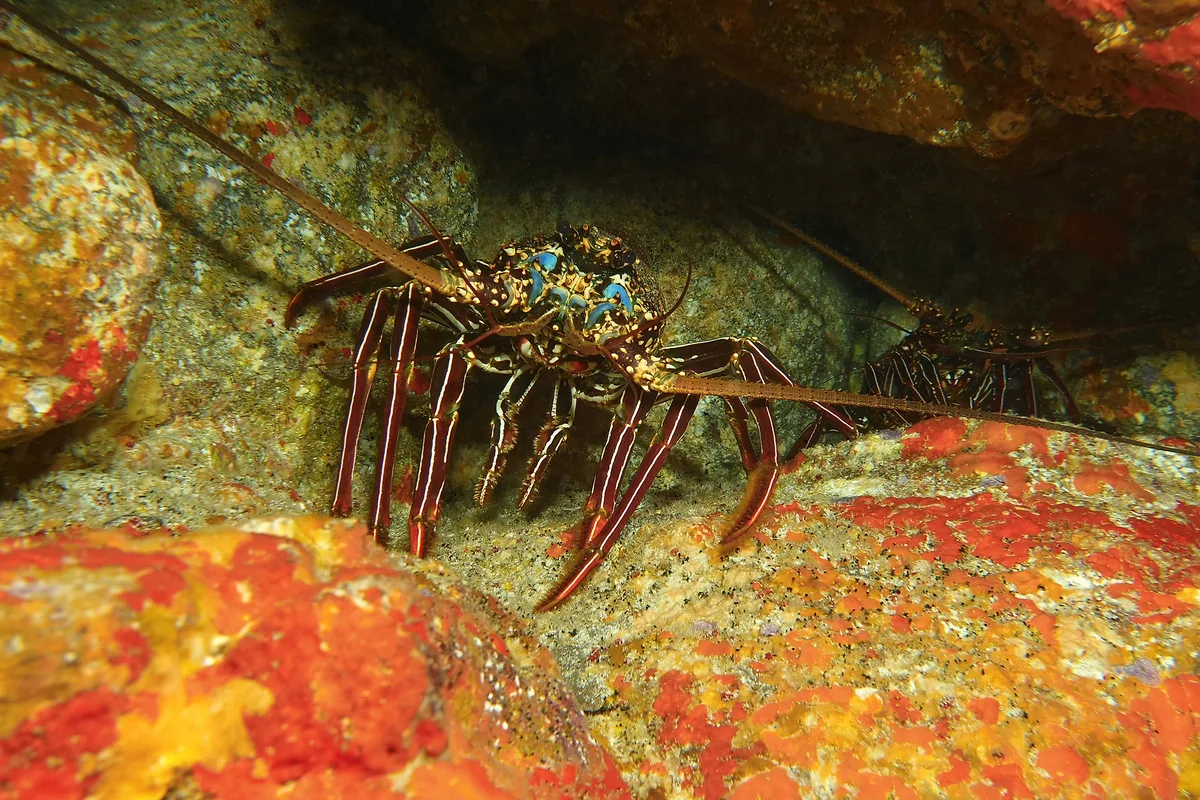
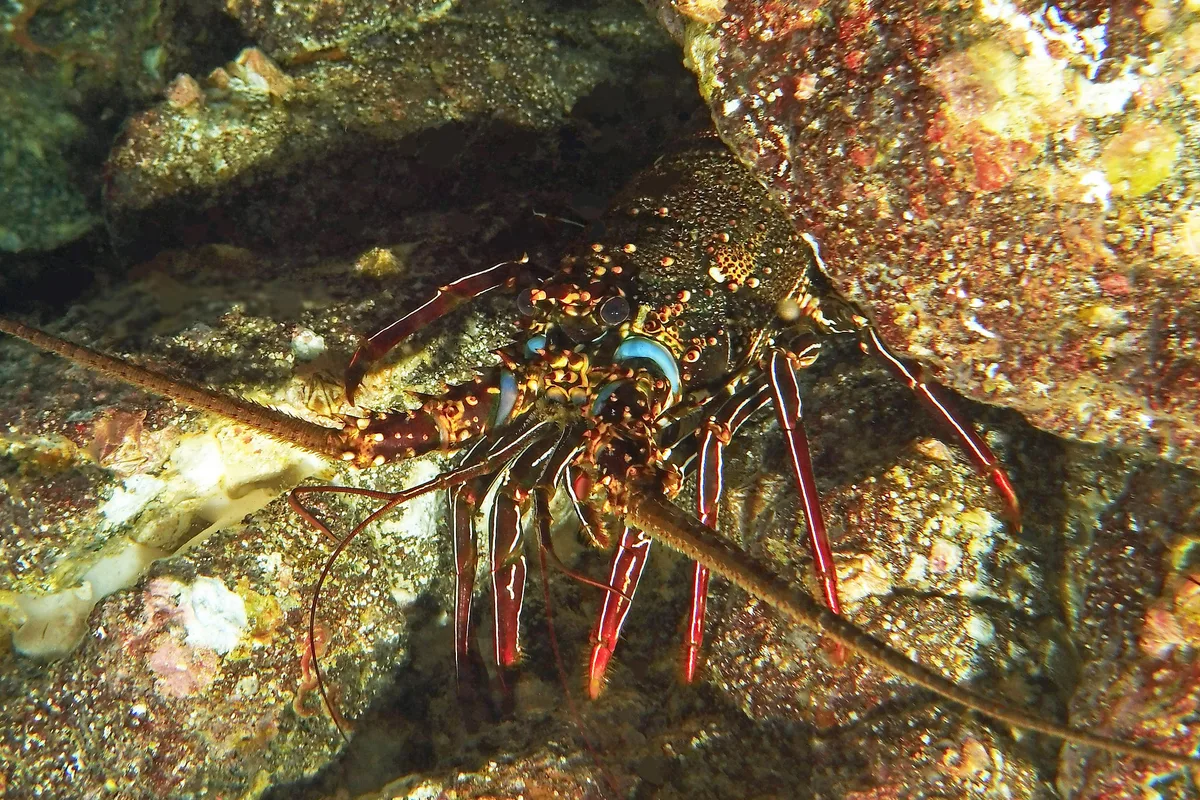
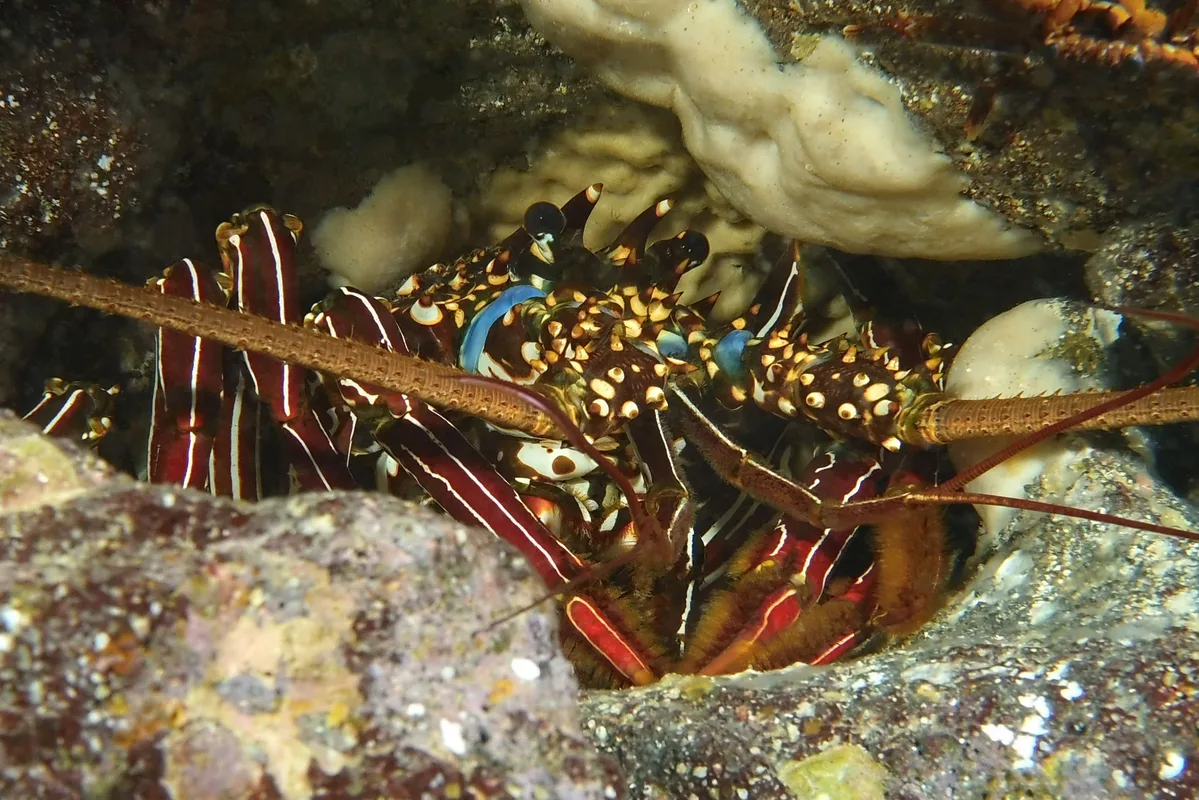
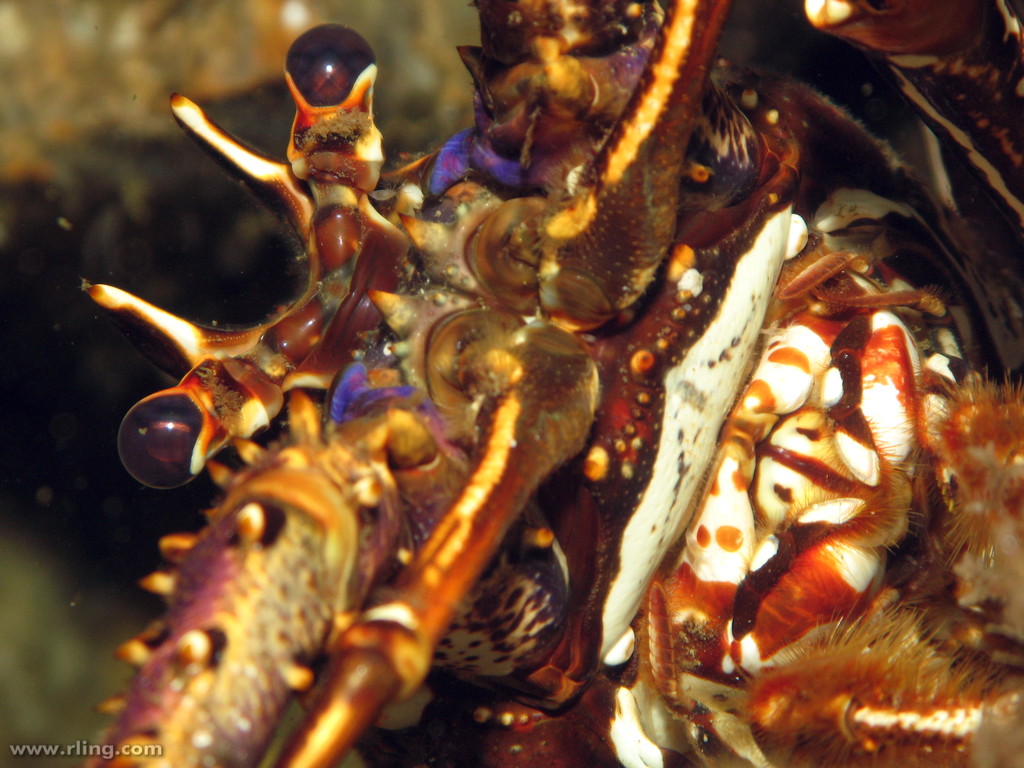
A heavy spiny lobster to about 40 cm (16 in), dark green through nearly black, with white or cream stripes running down the legs and a pair of antennae longer than the body. There are no claws on any leg - the whole defense is armour, spines and the ability to reverse into a hole faster than a hand can follow, backed by a rasping file at the base of each antenna that produces a sound audible underwater.
It occupies the surge-swept front of the reef, from the shallows to about 20 m (65 ft), wedged in caves and under ledges through the day with only antennae showing, and coming out at night to hunt snails, urchins and carrion across the rock. Of all the spiny lobsters this is the one that favors rough water, which is why it turns up on exposed outer walls rather than in sheltered bays. Larvae drift as flat, transparent phyllosoma for months before settling, a stage so unlike the adult that it was described as a separate animal for a century. Fishing pressure keeps numbers down near settlements, so the big animals are on reefs that are awkward to reach.
- long banded antennae, thicker than the legs, waving from a hole
- no claws on any leg
- dark green to almost black body with pale leg stripes
- length up to 40 cm
Why it's threatened
Although this species is harvested across its range, declines are localised and not known across the entire range.
Threat classification from the IUCN Red List.